During an interview, a Colombian National Police official described the police’s progress since an unprecedented institutional crisis: “before 1993, street officers had a 5th grade education,” while today, “the police recruits officers and agents that are professionals with university [degrees].”Footnote 1 These advancements reflect the police’s institutional development, driving improved performance and societal trust (Ahmad, Hubickey, and McNamara Reference Ahmad, Hubickey and McNamara2011). These professionalizing efforts, however, reversed comprehensive reforms enacted in 1993, including oversight and structural reforms to address widespread corruption and extralegal violence. Underscoring this paradoxical institutional development, news reports subsequently implicated this police official in the “fellowship of the ring,” a sprawling system of police corruption and sexual abuse (Semana 2016).Footnote 2 Recently, Colombia’s police faced widespread outrage following grave protest repression between 2019 and 2021, leaving dozens of protestors dead.
How can we explain this reform gap, reflecting improvements in some areas of institutional development while leaving others unaddressed? Scholarship on police reform has focused on the failure (Ungar Reference Ungar2002), politicization (Eaton Reference Eaton2008), or cyclical nature (Macaulay Reference Macaulay and Francis2012) of reforms. But why do some police forces improve capacity and performance, yet fail to curb extrajudicial violence and pervasive corruption? These conditions characterize Latin America’s top performing police forces—including Colombia’s National Police and São Paulo’s Military Police—which have largely resisted pressure for structural reforms.
I argue that police forces evade societal and political pressure for reform by engaging in strategic policy substitution, leveraging their structural power (González Reference González2020) to negotiate with politicians to replace reforms that threaten bureaucratic autonomy with favorable reforms that preserve it. I demonstrate how police act as veto players, thwarting high-threat structural and oversight reforms demanded by advocates to address violence and corruption by enacting low-threat operational and marginal reforms. Drawing on case studies from Colombia and Brazil, I demonstrate that operational reforms preferred by police can produce constrained institutional change. Such reforms may improve performance and societal trust, but by preserving bureaucratic autonomy, they increase the police’s structural power and ability to resist deeper structural reforms, complicating efforts to address extrajudicial violence.
From the United States to Colombia and Nigeria, rising protest against police violence in recent years underscores how police, the institution to which the state delegates its monopoly of legitimate force, shape politics and citizenship. I show how, although societal pressure may bring about reform, police exert a countervailing pressure on political leaders, limiting the ability of reform to address egregious human rights violations and constraining the responsiveness of democratic governments to citizens’ demands for police reform.
Understanding the Reform Gap: Catalysts and Content of Reform
How does the reform gap in policing—a discrepancy between the locus of deficiency and the locus of reform—emerge? Although this process has remained underexplored in the literature, scholars of institutional change provide varied explanations of reforms. Some have highlighted drivers and facilitators of reform, including political competition (Geddes Reference Geddes1994; Grzymala-Busse Reference Grzymala-Busse2007), scandals and crisis (Ungar Reference Ungar2002; Weyland Reference Weyland2008), and social movement mobilization and electoral competition (Garay Reference Garay2017). Other work identifies factors that shape policy content and implementation, including reform sequencing (Falleti Reference Falleti2005), policy coalitions (Mayka Reference Mayka2019), and civil society involvement (Rich Reference Rich2019). For other scholars, institutional change not only emerges from these external factors, but also endogenous processes and “change agents” (Mahoney and Thelen Reference Mahoney and Thelen2009) that produce gradual and self-reinforcing change (Greif and Laitin Reference Greif and Laitin2004; North Reference North1990). Endogenous theories often cannot explain the timing of reform and underestimate the role of external catalysts that generate pressure for reform. Meanwhile, theories about external pressures or drivers of reform often indicate little about its content, overlooking why enacted reforms often differ considerably from the substantive problems that led to demands for reform in the first place.
Scholars of police reforms, meanwhile, focus on various reform outcomes, but largely neglect the reform gap. U.S.-based accounts of policing focus on programmatic reforms targeting specific deficiencies: professionalizing administrative reforms to prevent politicization (Epp Reference Epp2009, 37), community policing to remedy alienation from communities (Moore Reference Moore1992), and problem-oriented policing targeting inefficiency in fighting crime (Goldstein Reference Goldstein1979). By contrast, scholars of Latin American police have examined the erosion of enacted reforms due to politicization (Eaton Reference Eaton2008; Sabet Reference Sabet2012; Ungar Reference Ungar2002), blocked reforms due to partisan squabbles (Davis Reference Davis2006), police resistance and societal contestation (Caldeira Reference Caldeira2000; Fuentes Reference Fuentes2005), failed reforms due to poor performance (Call Reference Call2003), and “pendulum swings” (Saín Reference Saín2015) of reform. But the policing literature has focused little on the reform gap and the constrained institutional change it produces, allowing police to improve capacity and performance while corruption and extrajudicial violence persist.
Explaining the reform gap requires eschewing common dichotomies—exogenous versus endogenous, programmatic versus politicized. Instead, these processes may interact to shape the onset and content of reform. External political pressures may serve as catalysts for reform, but internal processes may determine its content. Reform may be neither programmatic nor entirely doomed to failure; reform may be enacted, while leaving crucial substantive problems unaddressed. While failed police reforms are a more common outcome in the Latin American context, understanding the reform gap—and the uneven institutional development it yields—can provide important insights regarding the enduring challenges of police reform and why democracies continue to struggle with extrajudicial police violence (Bonner, Seri, and Kubal Reference Bonner, Seri and Kubal2018; González Reference González2020), despite waves of reform.
Explaining the Reform Gap: Policy Substitution and the Strategic Uses of Reform
Why do some police succeed in improving capacity and performance while evading political pressure to address police violence and corruption? I explain this reform gap through a sequential framework (Falleti and Mahoney Reference Falleti, Mahoney, Mahoney and Thelen2015) of exogenous and endogenous processes through which police leverage their structural power to constrain reform substantively and temporally. Exogenous pressures, such as scandals, typically serve as catalysts for reform (Sherman Reference Sherman1978; Ungar Reference Ungar2002), but endogenous processes such as police-politician accommodation determine whether reform will be implemented, and strategic policy substitution shapes its content.
Control of the state’s coercive authority enables police to shape an indispensable condition of governability—order and security. The ability to grant politicians cooperation, or to credibly threaten to withdraw it and generate disorder and violence, endows police with considerable agency and structural power (González Reference González2020). Politicians are incentivized to accommodate police, granting greater autonomy in exchange for cooperation with political objectives—from selective enforcement (Holland Reference Holland2015) to illicit financing of electoral campaigns (Eaton Reference Eaton2008; Flom Reference Flom2019). This structural power grants police greater leverage than other bureaucracies to act as veto players in reform processes and to impose their preferences. In the sections that follow I discuss police preferences over reform, and propose a sequential framework to explain how police thwart political pressure for reform.
Disaggregating Reform: Police Preferences and Locus of Reform
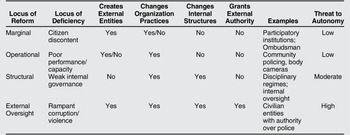
To understand how police intervene in reform processes to generate the reform gap, we must disaggregate reforms by police preferences and institutional objectives. Police reform is the successful enactment of a written policy intended to permanently change internal structures, rules, or procedures within the whole organization. If we posit maximizing autonomy as the main objective of bureaucracies (Lipsky Reference Lipsky2010), police preferences over policy options correspond with pursuing greater autonomy. The threat to autonomy depends on the locus of reform, or organizational target. I identify four types of reforms based on organizational target: marginal, operational, structural, and external oversight (refer to table 1). Although these are ideal types, this categorization allows us to hypothesize about police preferences and resistance to different types of reforms.
Disaggregating police reform: Locus of reform and threat to autonomy

As table 1 suggests, reforms are not interchangeable. Different types of reforms are needed to address distinct institutional deficiencies, and they require varying degrees of change to organizational practices and structures. We must therefore disaggregate reforms. Marginal reforms create external entities related to policing, but without necessitating formal changes to police structures or practices. Such policies include the creation of participatory councils, Ombudsmen’s offices, and municipal secretariats, which seek to remedy citizen dissatisfaction (González Reference González2019), fear of crime, and low civilian involvement in security (Acero Reference Acero, Dupuy and Gamboa2005), but pose little threat to police autonomy since external entities lack formal authority over police.
Politicians and police officials may instead enact operational reforms, policies referring to practices entailed in carrying out formal police duties. These reforms, such as community policing (Moore Reference Moore1992), problem-oriented policing (Goldstein Reference Goldstein1979), and new public management (den Heyer Reference den Heyer2011) are typically enacted to improve performance in fighting crime. Since such reforms are implemented internally by police, they minimize threats to autonomy.
For entrenched institutional malfeasance, leaders may enact structural reforms, or policies involving internal police structures, rules, and procedures, including changes to disciplinary regimes, internal oversight bodies, or promotion systems. These represent more profound reforms but are typically implemented by police, posing a moderate threat to police autonomy.
If widespread corruption, violence, and misconduct undermine institutional legitimacy, however, leaders may instead turn to external oversight policies granting civilian entities authority over police, a considerable threat to autonomy. Colombia’s police commissioner (Goldsmith Reference Goldsmith, Goldsmith and Lewis2000), and Buenos Aires Province’s Ministry of Security (Arslanian Reference Arslanian2008) are rare examples of civilian institutions endowed with robust authority over police.
A Sequential Framework of Police Reform
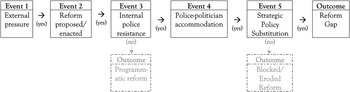
Disaggregating reforms elucidates how police shape which policies are proposed, enacted, or discarded, substituting high-threat reforms with low-threat reforms. This suggests that the sequencing and content of reform have important implications for policy outcomes and institutional change (Falleti Reference Falleti2005). I propose a framework based on a sequence of events to explain police reform outcomes, particularly the reform gap (see figure 1): 1) external pressure, 2) reform proposed/enacted, 3) internal police resistance, 4) politician-police accommodation, and 5) strategic policy substitution.
A sequential framework of police reform

Policing scholars have demonstrated that external pressure, whether scandals or broad citizen discontent, is a key catalyst of reform (Sherman Reference Sherman1978; Ungar Reference Ungar2002; González Reference González2020). External pressure can put police reform on the agenda, generating demands and reform proposals, and, if incumbents face robust political competition (González Reference González2020), reform is likely to be enacted. Two countervailing pressures shape politicians’ policy choices: citizens’ demands and internal police resistance. If politicians face little police resistance or outright support, we will likely observe the programmatic reforms described in the U.S.-based literature, in which enacted reforms match the substantive problems that generated demands for reform.
If, however, executives face citizen pressure to enact structural or external oversight reforms to address endemic corruption or extralegal violence, police resistance is likely. Although the victims of police abuses are typically marginalized citizens without political power, cross-class convergence around scandals are notable openings for reform. Politicians acknowledge that a substantive response is required—rather than, say, firing a high-ranking official. Accordingly, police see them as threats to their autonomy. Politicians, irrespective of ideology or strength, must contend with the police’s structural power, and will pursue accommodation. Police negotiate with politicians to protect their prerogatives (Eaton Reference Eaton2008; Flom Reference Flom2019) and shape reform in accordance with their preferences (Taylor Reference Taylor2014), often by threatening to withdraw their cooperation (González Reference González2020). In most instances, however, societal consensus favoring reform is short-lived, giving way to fragmentation (González Reference González2020). The result is the most common outcome observed in the literature—police successfully impose their preferences, blocking reform proposals (Mingardi Reference Mingardi1992) or eroding enacted reforms (Ungar Reference Ungar2002; Saín Reference Saín2015). For instance, Buenos Aires’s provincial police successfully dismantled comprehensive reform by convincing citizens that reform caused higher crime, leading to fragmented societal preferences and yielding a close electoral victory of a “tough-on-crime” gubernatorial candidate who refused to implement the reform (González Reference González2020, 302).
Sometimes, however, police perceive pressure for reform as enduring or likely to reemerge. In these cases, when reform is credibly proposed or enacted, police pursue strategic policy substitution—preemptively or reactively—replacing high-threat reforms that restrict police autonomy with more favorable, low-threat reforms that preserve it. Structural and external oversight measures may therefore be weakened or rolled back, substituted with lower-threat operational or marginal reforms. Strategic policy substitution functions as a form of “hidden politics” (Hacker Reference Hacker2004). It enables police to relieve pressure for reform, convincing at least part of the citizenry that changes will occur, while preserving bureaucratic autonomy. Politicians, meanwhile, can claim a “win,” satisfying at least part of the citizenry’s demands, without antagonizing police. Notably, strategic policy substitution is not merely a function of weak institutional environments, in which rules go unenforced and change repeatedly (Levitsky and Murillo Reference Levitsky and Murillo2013)—an apt descriptor of failed or cyclical police reforms. As the case studies show, substituted operational and marginal reforms endure, even as they generate a reform gap.
The outcome of many reform processes is thus that police neither defeat reform altogether nor enact purely programmatic reforms. Instead, a reform gap emerges: while reforms are ultimately adopted, they reflect police preferences for preserving autonomy, leaving underlying institutional deficiencies unaddressed. Indeed, scholarship on U.S. and Latin American policing demonstrates that marginal and operational reforms that preserve autonomy are more likely to be enacted and obtain compliance. Researchers have shown that marginal judicial reforms can successfully reduce torture (Magaloni and Rodriguez Reference Magaloni and Rodriguez2020) and operational reforms such as community policing may temporarily reduce killings (Magaloni, Franco-Vivanco, and Melo Reference Magaloni, Franco-Vivanco and Melo2020). Scholars have further shown that operational reforms initiated by police commanders obtain greater compliance (Mummolo Reference Mummolo2018), while externally imposed operational reforms may generate resistance from frontline officers (Gripp Reference Gripp2019), including substituting one abusive practice for another (Hausman and Kronick Reference Hausman and Kronick2021). Accordingly, a multi-site experimental study of community policing concluded that “societies may need to implement structural changes first for incremental police reforms such as community policing to succeed” (Blair et al Reference Blair2021, 1).
Along with relieving pressure for reform, enacting operational reforms as strategic policy substitution may also improve capacity and performance. Yet, as the case studies demonstrate, substituting operational reforms for structural or external oversight measures may leave pervasive abuses unaddressed. Furthermore, capacity and performance improvements increase the police’s structural power in the long term and, consequently, their ability to resist deeper reforms to address enduring violence or corruption. By contrast, police forces that do not engage in strategic policy substitution may succeed in blocking or undoing reforms in the short term, but may face iterative enactment and abandonment of profound reforms, such as Buenos Aires provincial police’s “pendulum” of reform (Saín Reference Saín2015).
The Police Reform Gap in Latin America: Structural Deficiencies, Operational Reforms
Police reforms in Latin America and the Global South are often characterized by failure and contradictions, from politicized reforms in Argentina, Brazil, and Mexico (Davis Reference Davis2006; Eaton Reference Eaton2008; Hinton Reference Hinton2006; Sabet Reference Sabet2012) and ineffective postwar reforms in El Salvador (Call Reference Call2003), to human rights reforms that paradoxically increase police and vigilante violence, as in India (Wahl Reference Wahl2018) and South Africa (Smith Reference Smith2019).
A less well-known outcome, however, is the reform gap prevalent among Latin America’s more capable police forces, including Colombia’s National Police and São Paulo’s Military Police, which achieved improvements in capacity and performance, while egregious corruption and violence persisted. Even Chile’s Carabineros, long considered a trusted and high-capacity police force (Dammert and Malone Reference Dammert and Malone2003), faced a crisis following revelations of massive corruption (La Tercera 2019) and deadly repression of protests (BBC News 2019). Rather than constituting “basket cases,” these police forces are perhaps the best-case scenario for police reform—high-capacity and well-resourced bureaucracies—but comprehensive reforms to confront entrenched structural problems remain elusive.
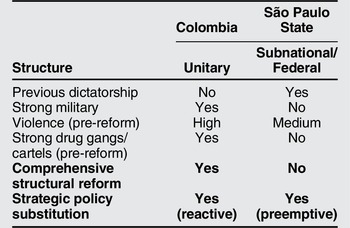
Colombia’s National Police and the Military Police of São Paulo State, Brazil, are considered highly effective by regional standards, yet underscore why the reform gap is highly consequential: operational and marginal reforms improved capacity and performance while leaving violence and corruption unchecked. Although the police forces share similar functions (prevention and repression of crime), militarized structures, and size, the cases represent most-different systems, varying in structure,Footnote 3 experience with dictatorship, military strength, and pre-reform levels of violence and drug gang/cartel strengthFootnote 4 (refer to table 2).
Most-different systems design

Despite these structural differences, both police forces responded to threats to their autonomy through strategic policy substitution, imposing a remarkably similar program of operational reforms to thwart structural and oversight reforms. They drew on new public management (NPM), which “modernizes” police organizations by incorporating private sector management strategies (den Heyer Reference den Heyer2011). They also invested in community policing (Moore Reference Moore1992) and problem-oriented policing—harnessing resources and partnerships to address targeted security problems (Goldstein Reference Goldstein1979, 250–58). Notably, Colombia’s police engaged in strategic policy substitution after the enactment of ambitious comprehensive reform legislation, while São Paulo’s police sought to prevent deeper reform proposals from being enacted. Strategic policy substitution can be both reactive and preemptive. Police concede that they will be unable to simply block proposals or erode enacted reforms, underscoring the importance of sustained broad-based societal pressure as a catalyst for reform – even if the enacted reform ultimately differs from original demands.
Drawing on evidence from archival work, ethnographic research, and eighty interviews with police and government officials and civil society advocates,Footnote 5 I conduct comparative sequential analysis (Falleti and Mahoney Reference Falleti, Mahoney, Mahoney and Thelen2015) of reform processes in Colombia and São Paulo State, Brazil, elucidating how the sequence of 1) external pressure, 2) reform proposed/enacted, 3) internal police resistance, 4) politician-police accommodation, and 5) strategic policy substitution results in the reform gap. Although operational reforms improved performance, capacity, and societal trust, they increased police forces’ structural power and ability to resist subsequent external oversight reforms, even as endemic problems persist. As the analysis that follows underscores, the content and sequencing of reforms are highly consequential. Measures intended to address pervasive corruption and violence and policies intended to improve capacity and performance are not interchangeable, and the latter may render the former more difficult to achieve.
Reactive Policy Substitution in Colombia: The National Police’s Reform Gap
Following prolonged institutional crisis and scandal, Colombia’s National Police underwent profound reforms in 1993—including marginal, operational, structural, and external oversight measures. Shortly thereafter, however, the police began to resist, convincing politicians to undo key external oversight reforms. The National Police then implemented its own operational reforms, including community policing, new public management strategies, and problem-oriented policing. The National Police subsequently saw important improvements in performance and societal trust. Nevertheless, it continues to engage in extrajudicial violence and corruption, with few efforts to strengthen oversight and accountability. This case illustrates how strategic policy substitution can produce a reform gap that addresses some problems but leaves deeper institutional deficiencies unaddressed.
Prolonged Crisis and External Pressure for Reform (1990–1993)
During the 1980s and early 1990s, the Colombian National Police (PNC) underwent dramatic institutional decay, leading to widespread violence, corruption, and complicity with drug trafficking (González Reference González2020, 171). The National Police proved incapable of addressing skyrocketing homicide rates (Franco Agudelo Reference Franco Agudelo1997, 95). It became the target of widespread killings by cartels and guerrillas (Goldsmith Reference Goldsmith, Goldsmith and Lewis2000, 172), and committed rampant killings, massacres, enforced disappearances, and torture against citizens (González Reference González2020, 181). The then-Defense Minister warned police officers that, without reform, “the future of the institution will be in question, and it is very possible that the support of the citizenry will be irreparably lost” (Presidencia de la República 1994, 25).
Despite the National Police’s profound crisis, it leveraged its structural power to evade reform, even in the context of broader institutional change. During the 1991 Constitutional Assembly, for instance, the police shaped pertinent constitutional provisions. According to one senator, “the final form adopted by the Assembly, definitively and without much debate, was introduced by the police itself” (El Tiempo 1993). The National Police also convinced legislators to shelve reform bills introduced in 1992. According to then-Defense Minister Rafael Pardo Rueda, the police convinced legislators “that it was taking corrective measures, and the Congress wouldn’t challenge the opinions of the institutions of the Public Force … So the reform [bill] that was making its way [through Congress] very slowly was a reform to avoid reform.”Footnote 6
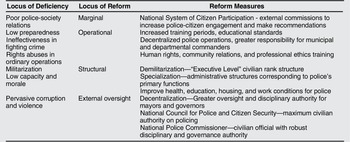
Conditions shifted rapidly in March 1993, when the rape and murder of a little girl in a police station catalyzed long-overdue reform (Camacho Reference Camacho1993). According to the then-Presidential Security and Defense Advisor, the case “was a scandal. It opened the doors to allow a broad reform process and posed a political obligation on the government.”Footnote 7 This widespread pressure prompted the creation of a consultative commission to propose reforms (Camacho Reference Camacho1993; Presidencia de la República 1994). The content of the 1993 reform legislation is summarized in table 3, suggesting close correspondence between the locus of deficiency and the locus of reform. For instance, reformers sought to improve police-citizen relations by creating marginal participatory commissions, but recognized that operational decentralization would strengthen capacity and performance, while robust external oversight was seen as necessary to root out endemic corruption and violence. The reformers’ multidimensional diagnosis yielded a comprehensive set of reforms specifically intended to address each deficiency by targeting distinct institutional arenas (Presidencia de la República 1994). This reflects an understanding that reforms aren’t interchangeable, and a concerted effort to avoid a reform gap.

Police Resistance to External Reforms (1993–1995)
Police resistance began shortly thereafter. They targeted measures that threatened bureaucratic autonomy, particularly the Commissioner’s Office, an external oversight institution. One high-ranking police official appointed as liaison to the Commissioner complained that the Commissioner “wanted to seem like he controlled the police … So they put in someone else and they took the [Commissioner’s] Office and put it outside of the police [organogram] to make it clear, ‘you are not in charge here. You receive complaints, analyze, investigate, and pass it on. But you don’t have authorities [over the police]’.”Footnote 8 A Defense Ministry advisor who helped draft the reform observed that the first Commissioner “arrived with bold steps, and the police didn’t like it, so they blocked him until they toppled him.”Footnote 9 The Commissioner was gradually marginalized (El Tiempo 1994), underfunded, and ultimately eliminated in 1997 (Decree 1670). Another external oversight entity, the National Council on Police and Citizen Security “has met very few times, three or four times in more than twenty years, and it doesn’t function,” according to the then-presidential advisor for security and defense.Footnote 10
The National Police also resisted structural reforms, particularly the Executive Level—a civilian rank structure intended to demilitarize the police—which now coexists with the previous militarized system. The former Presidential Advisor for Security and Defense agreed that “the commission wanted to eliminate the police’s militarized character by changing the rank structure … But, of course, no general wanted to become an Inspector or something like that, so they created the Executive Level but maintained [the previous structure].”
Structural Power and Accommodation (1994–1996)
The National Police succeeded in constraining this far-reaching reform due to its structural power, undergirded by its control of the government’s policy priority—the war on drugs—which made the police a key linkage to a powerful ally and financial backer, the United States. This leverage increased under President Ernesto Samper, who was charged with implementing the 1993 legislation. As a former Defense Ministry advisor and security expert put it, “the Samper administration, because of the 8000 Process [drug money scandal], doesn’t have any legitimacy, let alone to govern the police, which is completely backed by the Americans, who imposed on Samper [the appointment of] the director of the police, General [Rosso José] Serrano.”Footnote 11 Facing a devastating corruption scandal and a rapidly deteriorating relationship with the United States,Footnote 12 (Semana 1997), Samper accommodated the National Police. While Samper became estranged from the United States, General Serrano was seen as “the darling son of [U.S.] anti-drug authorities” (Semana 2000) to such an extent that, as Samper’s security advisor Borrero noted, the “National Police basically began to be subsidized by the United States.”
The National Police thus had considerable leverage to demand greater autonomy. President Samper obliged, backing the elimination of external oversight and empowering the National Police’s commander, General Serrano. In 1996, he told an audience of police officers that “the [National Police] does not need that monster of control that was the Commissioner for the Police. Let’s let the police regulate itself” (El Tiempo 1996).
Reactive Strategic Policy Substitution through Operational Reforms (1994–1998)
The National Police undertook its own reform process in response to external efforts to reform the police and limit its autonomy. As one Colombian security expert put it, “Today the [National] Police controls itself. Why? Because it knows if there is a big scandal, the government will come in… . so they exercise a lot of self-regulation out of fear that someone will come into their house.”Footnote 13
The police initiated a “Cultural Transformation Plan” (CTP), an operational reform program focused on improving police performance and public opinion through new public management—including professionalization, management and leadership strategies, evaluation, and improved training. The CTP entailed massive purges of 7,000 officers suspected of corruption (Llorente Reference Llorente1997; Serrano Reference Serrano, Sapoznikow, Salazar and Carrillo-Florez2010). The police spoke of citizens as “clients” (Serrano Reference Serrano, Sapoznikow, Salazar and Carrillo-Florez2010, 250) and officers as service providers (Policía Nacional de Colombia 1996, 32), even conducting citizen satisfaction surveys (Policía Nacional de Colombia 1996, 37). The police invested in new technology (Policía Nacional de Colombia 1996, 32) and infrastructure (Serrano Reference Serrano, Sapoznikow, Salazar and Carrillo-Florez2010, 252), undertook strategic planning to improve performance and efficiency (Policía Nacional de Colombia 1996, 34) and developed performance metrics and evaluation (Policía Nacional de Colombia 1998, 49). Police leaders also hired consultants to assess and improve recruitment strategies to attract higher-quality recruits (Policía Nacional de Colombia 1996, 44). The CTP also entailed university courses for police commanders on “management and communication techniques, negotiation, evaluation, and efficiency in time management” (Serrano Reference Serrano, Sapoznikow, Salazar and Carrillo-Florez2010, 251).
The CTP included community-policing strategies, known as Local Security Fronts. The Fronts sought to engage citizens in identifying and addressing local security problems (Serrano Reference Serrano, Sapoznikow, Salazar and Carrillo-Florez2010, 248). The Fronts, however, are a marginal institution that grants citizens little participation and impose few obligations on police (González Reference González2019). The National Police also adopted problem-oriented policing to address gang and youth crime and special patrolling strategies (Policía Nacional de Colombia 1998, 15-18), and implemented plans to combat kidnapping and extortion (Serrano Reference Serrano, Sapoznikow, Salazar and Carrillo-Florez2010, 252).
The CTP is illustrative of reactive strategic policy substitution, part backlash against measures that challenged police autonomy and part adoption of operational changes that improved performance. Considered jointly with the executive orders and legislation that reversed key elements of the 1993 law, the CTP demonstrated that the National Police had learned the risks of not correcting institutional deficiencies and improving its performance. As a former Defense advisor put it, “the police learned the lesson, ‘if we don’t reform ourselves, they’ll reform us’.”Footnote 14
The Emergence of the Reform Gap and Uneven Institutional Development
The National Police’s approach generated a substantial reform gap. While performance has advanced considerably since the adoption of these operational reforms, profound structural deficiencies and egregious rights violations persist. But deeper police reforms remain, as one Colombian scholar observed, “urgent and structural, but unlikely” (Vargas Velásquez Reference Vargas Velásquez2020).
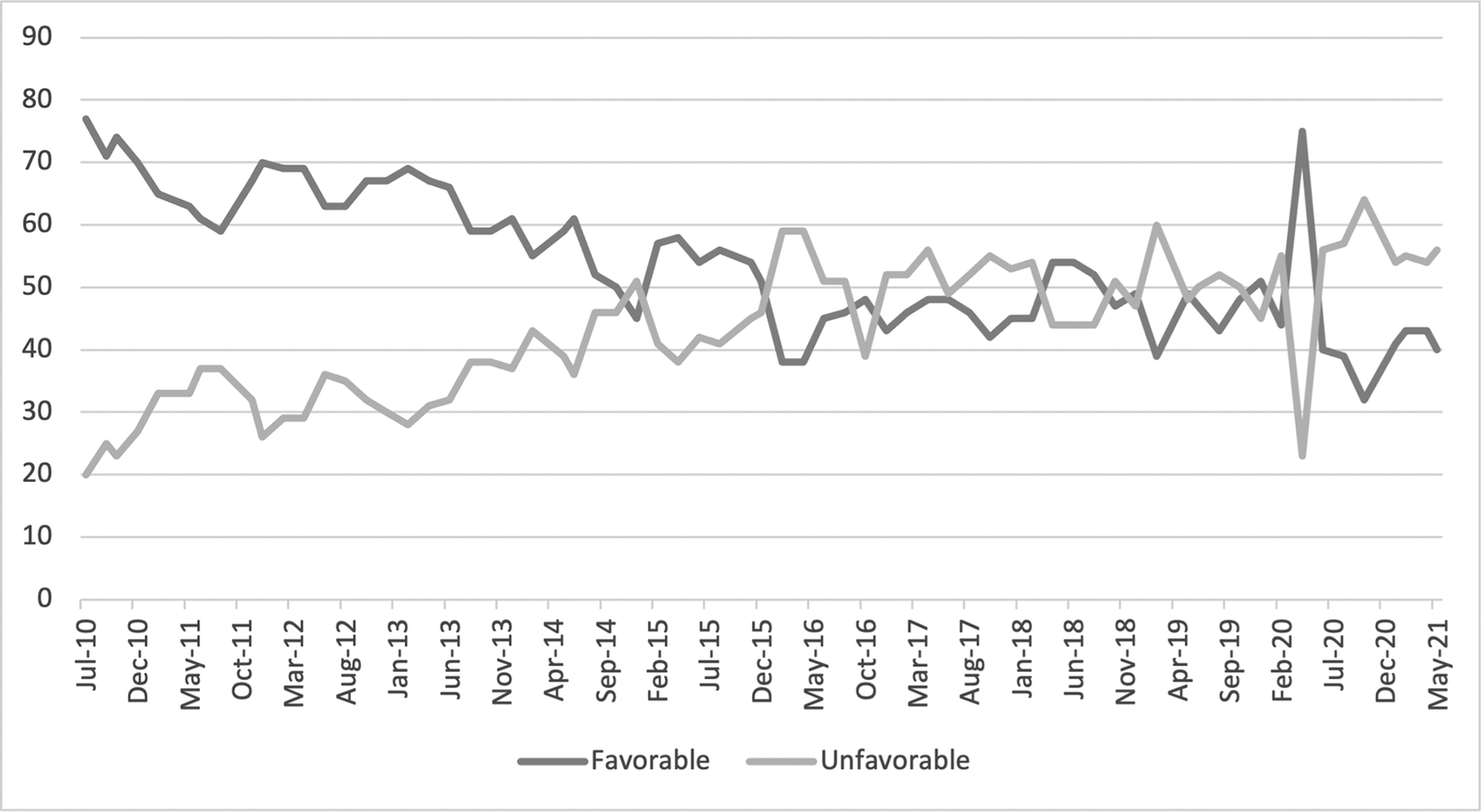
Decades after the “cultural transformation plan,” the National Police reflects uneven institutional development. On the one hand, operational reforms improved the National Police’s capacity and performance. The National Police has presided over important gains in Colombia’s security conditions, including dramatic reductions in homicide rates (UNODC 2013), dismantling the Cali Cartel, enhancing intelligence capabilities, and reducing crimes such as kidnapping and extortion (Serrano Reference Serrano, Sapoznikow, Salazar and Carrillo-Florez2010, 252). Today, the Colombian National Police advises Central American police forces, which face extraordinary levels of drug violence (El País 2019). Moreover, between 2000 and 2013, the National Police maintained favorable approval ratings above 60%.Footnote 15
The National Police also experienced dramatic improvements in officers’ skills and capacity. As a then-Major observed, “when it comes to training, there are new requirements in human rights, international humanitarian law, and other aspects [such as] psychology, social work, that you didn’t see before. Previously you focused on managing a firearm and off you go, to the street. With three, four months in the street, you were ready to go. Not today.”Footnote 16
State officials and civil society experts also suggest that, unlike the pre-reform period, the National Police commits fewer grave human rights violations than the military. A human rights official with the Inspector General’s Office observed that “the violations of human rights and international humanitarian law by the army are far greater than by the police.”Footnote 17 A human rights lawyer agreed: “extrajudicial executions by the police are far fewer than those committed by the army.”Footnote 18 An official with the Inspector General’s Office Police Division suggested that improved education and training may be the cause of fewer unlawful searches and detentions: “They’re more prepared intellectually, they are trained to not commit those errors. Of course, it still happens, but not in the magnitude we saw previously.”Footnote 19
Despite these advancements, entrenched deficiencies persist—including brutal protest repression, extrajudicial violence, and corruption—culminating in the police’s most grave political crisis in nearly three decades. The National Police has faced large-scale corruption scandals, including a massive drug-trafficking and bribery scandal in Barranquilla in 2003 (Semana 2003b), and the complex and still opaque case of the so-called “fellowship of the ring,” an expansive “male prostitution ring,” wherein cadets and low-ranking officers were coerced into sexual acts and relationships with high-ranking officials and congressional politicians (Semana 2016; El Espectador 2014).
Egregious extrajudicial killings that signal structural problems and weak external oversight also persist: from the fatal shooting of teenager Diego Felipe Becerra and its extensive coverup in 2011 (El Tiempo 2013); to the 2017 killing of seven rural workers in Tumaco, subsequently claiming FARC dissidents killed them (Defensoría del Pueblo de Colombia 2017); and the killing of various victims throughout the country, particularly Afro-Colombians, under the guise of enforcing COVID-19 restrictions (Semana 2020; El Tiempo 2020a; New York Times 2020). In accordance with these racialized killings, civil society organizations documented persistent racial and class disparities in treatment and police abuses in Colombia’s major cities (Lam and Ávila Ceballos Reference Lam and Ceballos2013).
But the most salient manifestation of arbitrary coercion by the Colombian police has been the repression of protests by its specialized “anti-disturbance” unit, ESMAD. Long criticized for abuses, the ESMAD faced growing scrutiny starting in 2019 following widespread repression of anti-government protests that the Supreme Court of Justice described as “systematic, violent, and arbitrary” (Suprema Corte de Justicia Reference de Justicia2020). By mid-2021, the National Police drew national and international condemnation over its violent repression of months-long protests, yielding dozens of deaths, sexual violence, torture, and other abuses against protesters. The police’s actions drew criticism from the European Union and the United Nations, even leading some congressmen to call for withdrawing or conditioning U.S. funding to the National Police (El Espectador 2021b; Washington Post 2021).
Increased Structural Power and Constrained Institutional Change
A key consequence of the police’s successful policy substitution has not only been this marked contrast between improved performance and institutionalization, and the persistence of arbitrary violence and corruption, but also how operational advancements bolstered the police’s structural power and ability to thwart deeper reforms to address entrenched structural problems. Years after President Samper vowed to “let the police regulate itself,” external oversight and accountability still appear elusive. The human rights lawyer cited earlier argued that, among “the state’s security forces, the greatest impunity lies with the National Police… holding [officials] accountable in court has been more difficult with the police.” Even officials with the Inspector General’s Office Police Division pointed to the continued challenge of investigating charges of police abuses, even as the egregious acts of violence from decades ago have diminished.Footnote 20 One reason for this may be the agency’s unwillingness to challenge police autonomy. As the head of that agency put it,
I don’t believe that other state entities should question the actions of another state entity with the purpose of weakening it and leaving it at the mercy of criminals. [We should have] an institution that adheres to the law, that respects legality, but that is firm in its action, that we don’t sow doubt or weakness that subjects our police officers to massacres or killings or injuries.Footnote 21
But the clearest evidence of the ongoing reform gap and the police’s ability to thwart meaningful structural and external oversight reforms was the outcome of two reform commissions convened after the aforementioned corruption scandals, and the response to growing outrage over police repression since 2019. In the former, the commissions made a clear recommendation to strengthen external oversight; in both instances, this recommendation went unheeded. A 2004 reform commission created following the Barranquilla cocaine scandal due to “corrupt conduct by police in some regions [and] excess[ive] use of force,”Footnote 22 urged the government to strengthen internal disciplinary controls and create external oversight entities within the Defense Ministry.Footnote 23 One commission member recalled that “improving the structure of police oversight, both internally and state oversight of the police to prevent corruption, this was the most important objective. But these [recommendations] would require laws … such as the creation of a national council that involved other state entities in policing, but this hasn’t been possible.”Footnote 24
A decade later, another commission convened in response to the “fellowship of the ring” scandal similarly emphasized the need for external oversight. One 2015 commission member drew a direct linkage between the police’s autonomy and massive corruption cases:
We dealt with issues that led to the [fellowship of the ring], and that’s why we made the recommendation—which, by the way, hasn’t been implemented and will probably never be implemented—that disciplinary investigations involving the police be conducted outside of the police … If, within the issues [being investigated], there is a problem involving the Director of the police - and here they say that the Director of the police was part of the “fellowship of the ring”—if it involves the Director of the police, what can an investigator that is subordinated to the Director do with respect to the Director? Nothing. That’s why it’s ideal that [these investigations] be independent, because in our view there was no independence.Footnote 25
When I asked to explain further why he believed the commission’s recommended reforms were unlikely, he reasoned, “I have a hunch, [due to] the symptoms. Nothing has happened. [Such independent oversight] would require a political decision, and it is a major political decision. But in this political moment the idea isn’t to make waves, and this would be a big wave.” As occurred with the 2003 reform commission, the chief recommendation of the 2015 commission went unheeded, yielding a palpable reform gap.
Reform stalled, as political leaders treated police with unwavering deference despite repeated scandals. Even as public attitudes toward the National Police worsened since 2016 (refer to figure 2) and the institution came under intensifying scrutiny between 2019 and 2021 amid police repression of social protest and growing protests against police violence, security experts believed “political conditions” rendered reform “unlikely” (El Tiempo 2020c). Their assessment was proven true by President Iván Duque and his administration. Amid widespread protests against police violence in 2020, Duque visited a police station wearing the National Police’s bright green jacket in support of the institution (El Tiempo 2020b). Months later, in response to the aforementioned Supreme Court ruling mandating reforms to stop police abuses during protests, the administration asked the Constitutional Court to review the ruling and regulate the right to protest since it could lead to abuse and “discredit police authority” (El Espectador 2021a).
Attitudes toward the Colombian National Police (2010–2021)
Source: Invamer (Reference Invamer2021, 113)

In mid-2021, after weeks of defending the police amid national and international outrage over police repression of peaceful protesters—including pressure from the United States—President Duque preempted a visit by the Inter-American Commission for Human Rights to investigate abuses by announcing plans to reform the National Police (El Espectador 2021c). While the ultimate content of the reform remains to be seen, the Colombian case illustrates that, while strategic policy substitution and the police’s structural power do not make reform impossible, they enabled the police to evade structural and external oversight reforms for several years.
Preemptive Strategic Policy Substitution in São Paulo State
São Paulo’s Military Police exemplify the reform gap resulting from strategic policy substitution. Like the Colombian National Police, the Military Police deployed operational reforms to thwart proposed structural and external oversight reforms. It has since experienced remarkable institutional development, presenting the striking juxtaposition of improved bureaucratic capacity and performance alongside expansive autonomy and unchecked extrajudicial violence against the citizenry. Concerted modernization, professionalization, and specialization through operational reforms strengthened the Military Police’s structural power and ability to resist structural and external oversight reforms intended to curb alarming levels of lethal violence.
Rising Crime, a Deadly Police, and Demands for Reform (1982–1997)
Security has topped the public agenda in São Paulo since Brazil’s democratic transition due to dramatic increases in crime (Caldeira Reference Caldeira2000). Drug trafficking and organized crime grew considerably with the rise of the powerful criminal organization, Primeiro Comando da Capital (PCC) (Willis Reference Willis2015). The Military Police proved ineffective at providing adequate levels of protection (Adorno Reference Adorno2013, 412; Cárdia Reference Cárdia, Rotker and Goldman2002), driving the rise of private security (de Mesquita Neto Reference de Mesquita Neto2011, 71), alongside vigilante violence and lynchings (Cárdia Reference Cárdia, Rotker and Goldman2002, 178; Chevigny Reference Chevigny1995, 157).
Meanwhile, the Military Police engaged in widespread extrajudicial killings and corruption. In the two decades following democratization, police killed more than 11,000 civilians (Caldeira Reference Caldeira2002, 245), many extrajudicially (Chevigny Reference Chevigny1995; Ouvidoria da Polícia do Estado de São Paulo 2000). Accordingly, citizens widely perceived extensive police malfeasance, with surveys showing majorities believing that police engaged in torture (65%), death squads (75%), and complicity with organized crime (88%).Footnote 26
Despite these profound institutional deficiencies, structural reform efforts were either unsuccessful or nonexistent. Efforts to curb corruption and violence following the transition to democracy failed due to police resistance and fragmented societal preferences (Caldeira Reference Caldeira2000; González Reference González2020). Internal assessments by the Military Police during the early 1990s diagnosing low morale and recommending increased professionalism, did not bring structural policy changes (Santos Reference Santos2004, 18).
A rare instance in which police reform proposals were salient in São Paulo emerged following the Favela Naval scandal in 1997, in which police violence against young, poor, black men in Diadema was broadly televised. Low-income residents of Favela Naval and business leaders alike repudiated the police; surveys showed large majorities of respondents stating that police were too violent and demanding the resignation of the Secretary of Security and the police commander (González Reference González2020, 247).
Military Police officials recall the Favela Naval scandal as a crisis of legitimacy, an existential threat. According to a retired Lt. Colonel who worked in Diadema at the time, “there was great pressure for the elimination of the Military Police because of what was shown on television … With Favela Naval, [people] watched and said, ‘wait, what’s happening here?’ The things everyone already knew were happening suddenly went on to take national and global connotation … [so] there was a need to shift the focus of policing.”Footnote 27 Officers felt the pressure in their own families, as one Colonel noted: “It was a shameful act, to the point that police officers went home and their families asked them ‘is this how you work? Do you do this?’ Children asked this of police officers.”Footnote 28
For the first time since Brazil’s transition to democracy, structural reforms – from disciplinary code changes to outright abolition of the Military Police—were seriously considered by legislators to address rampant extrajudicial violence. According to the then-Police Ombudsman, “the administration needed to give a political response to the grave case of police violence that was Favela Naval.”Footnote 29
Police Resistance to External Pressure and Structural Reforms (1997–1998)
The Military Police acknowledged widespread discontent but rejected structural reforms. Incoming Military Police commander Col. Carlos Alberto de Camargo acknowledged in his inaugural address that “the Military Police is experiencing one of the most difficult periods in its history … the society demands better security and a more humane police.”Footnote 30 But Camargo resisted external pressure to enact structural reforms, telling a Special Commission of the Chamber of Deputies Regarding Public Security that “merely structural solutions will aggravate problems rather than diminish them, spreading uncertainty and insecurity within the police, which will lead to … a worse police.”Footnote 31
The Military Police successfully leveraged its structural power to thwart legislative structural reform proposals, including a bill to establish greater restrictions on police use of force.Footnote 32 The police Ombudsman drafted a structural reform proposal, strengthening internal oversight by reforming the Military Police’s disciplinary code, which he noted, “would directly or indirectly contribute to reducing the police’s lethal violence.” This proposal, the Ombudsman told me, “had the most resistance from the police … because that messed with the internal culture of the Military Police.” The only legislation enacted by the state legislature was a marginal reform, making permanent the Police Ombudsman’s Office, which was created in 1995 by executive order. At the federal level, Congress debated abolishing the Military Police, but this proposal also failed (Rifiotis Reference Rifiotis1999, 29).
Preemptive Policy Substitution (1997–2005)
The threat of comprehensive police reforms after Favela Naval felt sufficiently imminent to force police leaders “to shift the focus of policing” through a set of operational reforms. A Military Police Colonel who subsequently led the Community Policing and Human Rights Division, said “public clamor” following Favela Naval led to the adoption of community policing, “because we needed some way to demonstrate that we understood that we needed to make behavioral changes.”Footnote 33
This emphasis on “behavioral changes” was central to the Military Police’s strategic policy substitution, simultaneously advocating for operational reforms while rejecting structural reforms. Col. Camargo announced the priorities of his tenure, which included an emphasis on individual rights, professionalism, and a purge of corrupt officers, but focused unequivocally on community policing: “the military police will, effectively, implement community policing, which is here to stay, not as a rhetorical figure but as a way of operating by the police in close collaboration with the community.”Footnote 34 During his first months as commander, Camargo promoted community policing while resisting structural reforms, insisting that community policing entailed “cultural change”: “it does not entail structural change, meaning, for instance, the creation of institutions, but rather behavioral change, that is, in the police’s conduct.”Footnote 35
Days later, Camargo issued an order implementing community policing. Col. Castro, of the Community Policing and Human Rights Division, noted in an interview that “from 1997, 1998 we began with the Canadian model … but Canada has large differences with Latin American countries … so we found the Japanese model, the Koban system.” Beginning in 1999, the Military Police of São Paulo State signed agreements with Japan’s government for consultation on its community policing model (Ferragi Reference Ferragi2011, 94).
But community policing was only one component of the operational reforms implemented post-Favela Naval. After 1997, São Paulo’s Military Police invested heavily in new public management to improve management and professionalism (Santos Reference Santos2004, 18), a program called Gestão pela Qualidade (Management for Quality). Col. Marcos Chaves recalls that in the late 1990s while he was in the Military Police’s logistics division, “we began to create a strategic planning system … we copied a lot from what exists in private companies, we wanted a [strategic] plan that would allow us to see how the police would be in 2015, in 2020.” The Military Police developed GESPOLFootnote 36 (Management System of the Military Police), a system of personnel administration, operations, finances, communications, and performance evaluation, including a set of standard operating procedures (POPs) for police activities. Illustrating new public management’s adoption of private sector discourse and practices, a former Operations Coordinator for the Military Police, described the rationale for POPs: “Ultimately the consumer of our product is society, isn’t it? … So in order to provide a quality service, we have to create standards … We have 64 POPs, all those POPs raise the quality of our service.”Footnote 37
The Military Police also turned to problem-oriented policing, regularly engaging with municipal agencies to address security-related issues in specific jurisdictions. Col. Marcos Chaves, former commander for the city of São Paulo, observed “that approximation [between] public agencies, at different levels of government, is stronger each day. Today, the police are conducting many joint operations… When you have all those agencies together, you see that the operation has marvelous success.”
The Military Police thus succeeded in achieving Camargo’s objective post-Favela Naval, to undergo “behavioral” changes while pushing back against structural reforms.
Reform Gap: Increased Administrative Capacity and Police Lethality (2005–2019)
São Paulo’s Military Police in the twenty-first century is defined by contradictions generated by strategic policy substitution—technological and performance advancements coincided with rampant extrajudicial violence unchecked by weak external oversight structures. These contradictions were epitomized by an account Col. Álvaro Camilo proudly shared with me shortly after completing his tenure as General Commander:
Today the police are so trusted in São Paulo that a woman called 190 [emergency number] and said “two police officers brought a young man here and they killed him.” She knew she was calling the Military Police, which means she believes in the system, she believes in the police.Footnote 38
This account indeed illustrates the police’s institutional development, per Camilo’s understanding of the episode. The woman called the Military Police’s advanced emergency and operations headquarters to report an extrajudicial execution by police officers, suggesting trust in the police to, in essence, police itself. But it also signals a tension inherent in strategic policy substitution and the reform gap. The case exemplified the continuity of police autonomy despite egregious extrajudicial violence against citizens, with little external intervention: the officers denounced by the woman were subsequently absolved (Globo 2013). Despite improved capacity and performance, the grave abuses that galvanized calls for structural and oversight reforms remain unaddressed.
São Paulo’s Military Police underwent considerable institutional development since adopting operational reforms. São Paulo State boasts the lowest homicide rates in Brazil (Fórum Brasileiro de Segurança Pública 2018), following a 73% decline in homicides between 2001 and 2008 (Peres et al. Reference Peres2011, 21). Although homicide rates result from many factors aside from policing—indeed, many scholars attribute the decline to the PCC’s “monopoly of violence” in urban peripheries (Willis Reference Willis2015)—the Military Police has nevertheless claimed credit for the decline. Col. Chaves, for instance, noted that “many police forces come here to understand what we are doing, because they ask themselves how we managed to reduce homicide, a very serious crime for society, by 82% in a 10-year period.” Indeed, São Paulo’s Military Police have become regional leaders, training police forces in Brazil and other parts of Latin America in community policing and its “management for quality” system.Footnote 39 This assessment was shared even by civil society actors who are otherwise critical of police violence. As the head of Instituto Sou da Paz observed: “I think the Military Police of São Paulo has advanced a lot in the last 20 years, it’s extremely professionalized … its training improved a lot, it’s much more structured, the discussion of community policing, management, human rights, this has all advanced, especially in relation to other police forces in Brazil.”Footnote 40
The Military Police came to be perceived as so effective at management that one São Paulo mayor appointed retired Military Police colonels to head the city’s thirty-one subprefeituras (municipal districts), an act without precedent in São Paulo under democratic rule. According to former Commander Col. Camilo, this was because “the police colonel has vast experience, years managing people … it was a well trained, well qualified, and cheap workforce.” Public statements by the mayor and his officials, as well as some media reports, echoed Camilo’s reasoning (Veja Reference Paulo2012). Without discarding other political incentives for this linkage between the mayor and the police, it nevertheless reinforces the discourse of the Military Police’s high administrative capacity.
But as the Military Police achieved improved capacity and performance, alarming extrajudicial violence persists. Police killings have increased in recent years, and the Military Police has perpetrated an increasing proportion of deadly violence: by 2017, police killings were equivalent to one-quarter of all homicides in São Paulo, with 940 civilians killed by police officers (Mariano Reference Mariano2018, 10). These killings, moreover, occur largely along racial lines: nearly two-thirds of victims of police killings are black (Mariano Reference Mariano2018). State and journalistic investigations have also documented the persistence of death squads within the Military Police, finding that 150 individuals were killed by such PM-involved death squads between 2006 and 2010.Footnote 41 A more recent modality of police violence has been the use of retaliatory massacres (chacinas), in which officers kill multiple people in low-income urban peripheries following killings of other officers. The most high-profile and most deadly of such massacres occurred in May 2006 following attacks on police officers by the PCC, to which police responded by killing hundreds of civilians in the peripheries of São Paulo and Santos (Nogueira Reference Nogueira2007). A statement by Brazil’s attorney general (procurador-geral?>) denounced “the fundamental role of the Military Police during the episode” and “the context of retaliation on the part of public security agencies” in the May 2006 killings.Footnote 42 Though smaller in scale, such massacres continue today. One analysis by São Paulo’s State Council for Defense of Human Rights (CONDEPE), a civil-society-led commission of the Secretariat for Justice and Citizenship, “detected, between 2014 and 2016, 139 chacinas in the State of São Paulo, mostly in the metropolitan region, with about 230 victims … They were clearly death squads, and all with characteristics of police involvement.”Footnote 43
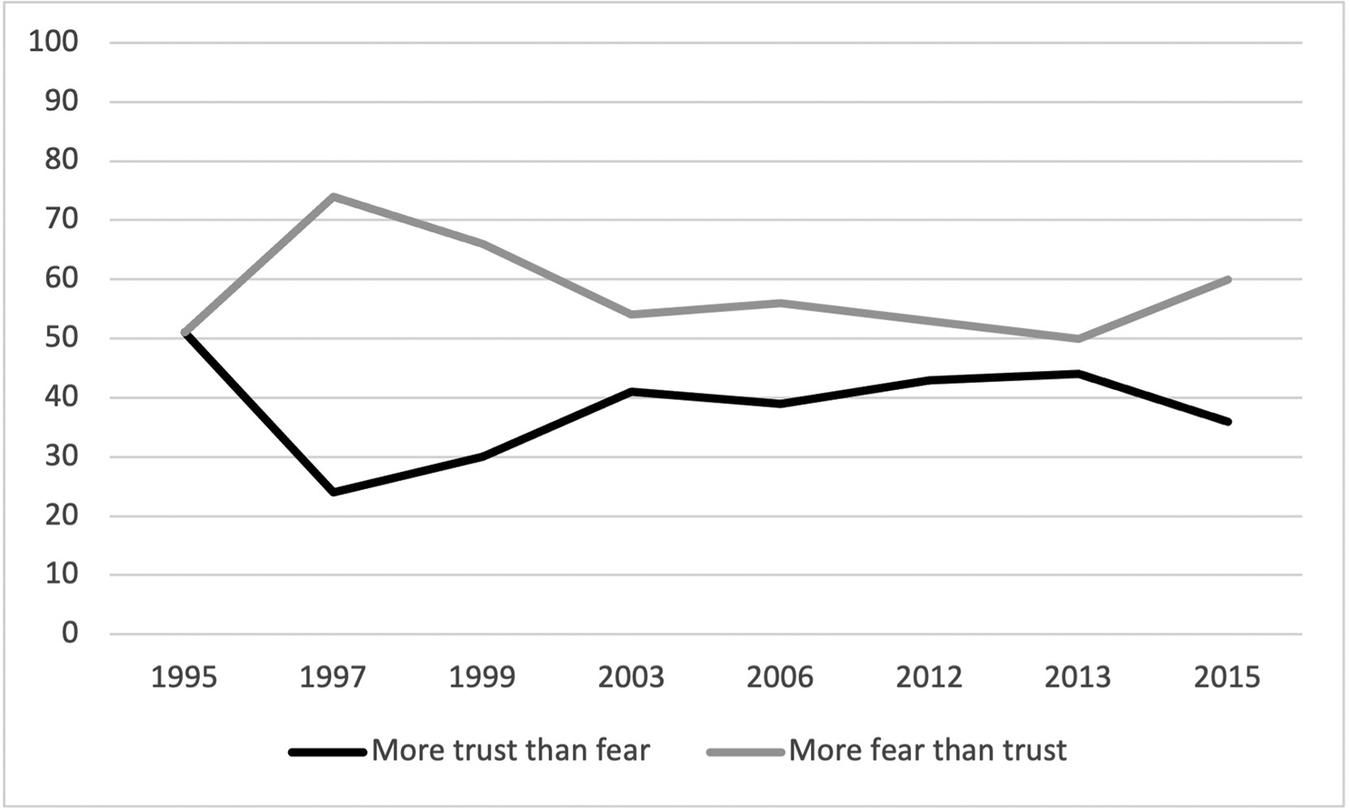
The contradiction between the Military Police’s operational advancements and the persistence of profound structural deficiencies indicated by widespread extrajudicial violence is best illustrated by the fate of the very method the Military Police developed to curb lethal force following the Favela Naval scandal—the “Giraldi Method—Defensive Shooting for the Preservation of Life.” While the Giraldi Method has been exported to train police forces in other Brazilian states (Governo do Estado de Amazonas 2012) and other countries (Ministerio de Gobierno de Ecuador 2017), a recent report by São Paulo’s Police Ombudsman’s Office declared that “the PM seldom uses the philosophy of the Giraldi Method” (Mariano Reference Mariano2018, 56). The Military Police enjoys nearly unlimited discretion in its use of lethal force, while reforms to rein in police violence have been limited to marginal measures. For instance, the Special Commission for the Reduction of Lethality—an entity created by the Secretariat for Public Security in 2000 to monitor and analyze cases of lethal police violenceFootnote 44 —has been inactive since 2011 (Pekny, Bento, and Morin Reference Pekny, Bento and Morin2017, 56). Structural measures and external oversight reforms, meanwhile, remain unlikely, even as the proportion of citizens expressing fear of the Military Police increased in recent years, and gains in trust diminished (refer to figure 3).

Increased Structural Power and Constrained Institutional Change
The juxtaposition of improved bureaucratic capacity and performance alongside egregious human rights violations reflects the striking reform gap caused by strategic policy substitution. The São Paulo case also underscores how operational reforms, when they bring about institutional advancements, increase the police’s structural power and impede subsequent structural and external oversight reforms intended to curb police abuses.
Underscoring the Military Police’s rising structural power is its cooptation of institutional arenas that ought to perform external oversight. Consider the emergence of the bancada da bala or “bullet caucus,” composed of former high-ranking police officials turned state legislators who then shield police from external interference. Consider the efforts by then-Deputy Álvaro Camilo—the former General Commander cited earlier—to undermine the independence of the police Ombudsman’s office,Footnote 45 including angrily chastising the Ombudsman for public critiques of police killings (Folha de São Paulo 2016).
The Military Police also thwarts external pressure for reforms by appealing to past operational reforms. Consider police resistance to a proposal to involve civil society organizations in human rights education for police. In a highly contentious hearing at the State Legislative Assembly,Footnote 46 dozens of uniformed Military Police officers protested what they perceived as intrusion by outsiders, particularly in an area in which they saw their organization as possessing considerable expertise. A Lieutenant Colonel who described himself as a former human rights instructor held up the Military Police’s human rights education manual and noted that the Military Police’s “construction of human rights education began in 1998. No other institution is as human rights oriented as we are.” Noting that hundreds of police officers were expelled for misconduct, he insisted, “we correct our own mistakes.” Another former police official turned legislator, Federal Deputy Major Olímpio, expressed emphatic opposition. Tacitly signaling the police’s structural power, Olímpio warned that, “it is the police that is at society’s side. When someone calls 190, the prosecutor doesn’t arrive, neither does the legislator. The only protection for society is the police.”
The Military Police continues relying on operational measures to ease external pressure. A retired Military Police Lt. Colonel and vocal critic of police violence noted the utility of appeals to community policing as a means of evading deeper reforms:
Today, [community policing] is mere propaganda. Whenever there is a serious issue with the police, they appeal to the discourse of community policing. ‘Look, the police is reforming, what is happening are isolated acts. We have projects such as community policing.’ It is used as an alibi.Footnote 47
Along with community policing, other operational measures have been used to preempt calls for deeper reforms in response to continuing high levels of police violence. In mid-2020, amid outrage over videos of police violence circulating on social media, the Military Police and the governor announced a “retraining” program and the adoption of body-worn cameras (G1 Globo 2020). Despite record levels of police killings (G1 Globo 2021), the Military Police succeeded in enacting operational measures that preserved their autonomy.
Conclusion
From the U.S.’s Black Lives Matter protests to Nigeria’s historic #EndSARS protests to Colombia’s months-long national strike, recent years have seen unprecedented popular mobilization against police violence and demands for police accountability. My analysis presents important insights about how societal pressure can compel police and politicians to enact reforms and promote institutional change. But I also offer sobering lessons about how police engage in strategic policy substitution to impose their preferences for autonomy-preserving operational measures, yielding reforms that are meaningfully different from the accountability demanded by citizens. These middle-ground reforms pose a tradeoff for reform advocates: while operational measures may improve police capacity and performance, they also increase the police’s structural power and ability to resist deeper reforms, complicating efforts to address the police impunity that generated demands for reform in the first place.
My analysis offers a nuanced perspective relative to typical accounts about police reform failures in Latin America. Rather than blocking reform altogether or lacking capacity to implement them—the more common outcomes in the region—police sometimes engage in strategic policy substitution, opening a path for constrained institutional change. But my overall conclusions about the importance of broad-based societal pressure for reform and the police’s structural power apply more broadly, underscoring the obstacles democracies face in curbing police violence and impunity.
I also raise questions about the broader prevalence of strategic policy substitution, yielding reform gaps in other policy areas as powerful bureaucracies and organizations negotiate to replace policies that threaten their interests with more favorable measures or to “blunt” reforms in their favor (Carpenter and Sin Reference Carpenter and Sin2007). Strategic policy substitution may underlie other outcomes where enacted policies fall short of substantive problems and societal demands, such as gun control or healthcare reform in the United States, posing important challenges for democratic responsiveness.
Supplementary Materials
To view supplementary material for this article, please visit http://doi.org/10.1017/S1537592722000135.
Acknowledgements
For their insightful comments and suggestions, I would like to thank Emily Clough, Christina Cross, Gustavo Flores-Macías, Janice Gallagher, Mai Hassan, Alisha Holland, Daniel Honig, Kyle Jaros, Sabrina Karim, Alexandra Killewald, Beatriz Magaloni, Lauren McCarthy, Brian Palmer-Rubin, Jessica Rich, Dan Rogger, Suzanne Scoggins, Nicholas Smith, Sandra Susan Smith, Martin Williams, Jessica Zarkin, and participants in lecture series at the American Bar Foundation, New York City’s Civilian Review Board, and Chicago Office of the Inspector General’s Public Safety Division. This research was made possible by generous funding from the Drugs, Security, and Democracy Fellowship Program, a joint initiative of the Social Science Research Council, the Open Society Foundations, and the International Development Research Centre, as well as the Bobst Center for Peace and Justice at Princeton University.