An estimated 427,910 children reside in foster care because of maltreatment in the United States in 2015 (Child Welfare Information Gateway, 2017). Among multiple other social and behavioral challenges, these children face increased risk for poor school adjustment and low educational outcomes. Children in foster care have significantly lower achievement across subject areas, including reading, writing, numeracy, and science (Fantuzzo & Perlman, Reference Fantuzzo and Perlman2007; Mitic & Rimer, Reference Mitic and Rimer2002), and higher rates of grade retention (Burley & Halpern, Reference Burley and Halpern2001; Scherr, Reference Scherr2007; Trout, Hagaman, Casey, Reid, & Epstein, Reference Trout, Hagaman, Casey, Reid and Epstein2008) compared to their peers without histories of maltreatment and foster care involvement. Their school experience is further characterized by high rates of behavior problems and receipt of disciplinary action, including suspensions and expulsion (Scherr, Reference Scherr2007; Zima et al., Reference Zima, Bussing, Freeman, Yang, Belin and Forness2000). The significance of these difficulties is highlighted by the poor long-term educational and occupational outcomes for children in foster care, including decreased rates of high school completion (Burley & Halpern, Reference Burley and Halpern2001; Cook, Fleishman, & Grimes, Reference Cook, Fleishman and Grimes1991) and lower likelihood of employment as young adults (Goerge et al., Reference Goerge, Bilaver, Lee, Needell, Brookhart and Jackman2002).
By contrast, positive school adjustment protects children against a number of behaviors for which children in foster care are at particularly high risk, including criminal involvement, substance use, and early parenthood (Campbell et al., Reference Campbell, Conti, Heckman, Moon, Pinto, Pungello and Pan2014; Reynolds, Temple, Ou, Arteaga, & White, Reference Reynolds, Temple, Ou, Arteaga and White2011). For children in foster care, higher educational attainment appears to confer even greater benefits than for youth in the general population (Okpych & Courtney, Reference Okpych and Courtney2014), including decreasing the likelihood of arrests (Lee, Courtney, & Tajima, Reference Lee, Courtney and Tajima2014). Promoting school adjustment for children in foster care thus represents an opportunity to improve their long-term academic, social, and behavioral outcomes.
The Transition to School as a Developmental Milestone
A benefit of intervening at a transitional period, such as the transition into formal schooling, is that children and their caregivers have to reorganize their cognitions and behaviors to adapt to the new situation. During this period of reorganization, cognitions and behaviors may also be particularly amenable to the influence of interventions (Pianta, Rimm-Kaufmann, & Cox, Reference Pianta, Rimm-Kaufman, Cox, Pianta and Cox1999). A growing body of evidence specifically highlights the importance of the transition into formal schooling in setting the trajectory for children's academic and social adjustment across elementary school and beyond (Abry, Latham, Bassok, & LoCasale-Crouch, Reference Abry, Latham, Bassok and LoCasale-Crouch2015; Bogard & Takanishi, Reference Bogard and Takanishi2005; LoCasale-Crouch, Mashburn, Downer, & Pianta, Reference LoCasale-Crouch, Mashburn, Downer and Pianta2008; Reynolds, Magnuson, & Ou, Reference Reynolds, Magnuson and Ou2010). This is consistent with models of positive development in which failure to successfully navigate the milestones of each developmental stage may negatively impact functioning in subsequent stages (Cicchetti & Rogosch, Reference Cicchetti and Rogosch2002). Thus, a poor transition into formal schooling for a child in foster care could presage further, cascading difficulties (Dodge, Greenberg, Malone, & the Conduct Problems Prevention Research Group, Reference Dodge, Greenberg and Malone2008). In contrast, a positive transition lays a foundation for successful navigation of subsequent developmental milestones and may have a “shielding effect” by reducing risk for involvement in later negative behaviors (Spoth, Guyll, & Shin, Reference Spoth, Guyll and Shin2009). Thus, the transition to kindergarten may be an optimal point of preventive intervention, particularly for children at high risk for poor outcomes in school and beyond.
Neurobiological Contributors to the School Transition
In referring to school readiness, researchers and practitioners typically mean the academic and behavioral skills necessary to successfully transition to school. However, understanding of school readiness has increasingly grown to encompass neurobiological contributors, such as executive function skills involved in regulating and directing cognitions, emotions, and behaviors (Blair & Diamond, Reference Blair and Diamond2008). The role of hypothalamus–pituitary–adrenal (HPA) axis functioning in the successful transition to kindergarten has received less attention. However, evidence points to a potentially important role for HPA axis functioning in the transition to kindergarten, particularly for children who have experienced early adversity.
As discussed, the transition to school represents a developmental challenge. Children must enter a new environment, learn new rules and routines, adjust to the signals and responses of a new group of peers, and be compliant with requests from unfamiliar adults. Cortisol, the hormonal end product of the HPA axis, facilitates the body's responses to environmental challenges via metabolism of stored energy, increased heart rate, and modulation of the immune system (Sapolsky, Romero, & Munck, Reference Sapolsky, Romero and Munck2000). Moderate, but short-lived, activation of the HPA axis in the face of environmental challenges is adaptive, allowing an individual to respond to the immediate demands of the environment and adjust behavior to maintain optimal longer term functioning (Blair & Peters, Reference Blair and Peters2003; Boyce & Ellis, Reference Boyce and Ellis2005). For example, a child who experiences some anticipatory stress on the first day of school is likely to be more alert and attuned to the environment; thus, the child may learn the rules of the classroom quickly, resulting in a higher likelihood of attending to lessons, avoiding conflicts with the teacher, and succeeding in the classroom. Previous research has shown that children with no histories of maltreatment or foster care involvement demonstrate an HPA axis response to the start of school characterized by a steeper diurnal cortisol slope (or greater change in cortisol levels across the day) on the first day of school, but not the fifth day, compared to nonschool days (Bruce, Davis, & Gunnar, Reference Bruce, Davis and Gunnar2002; Graham et al., Reference Graham, Yockelson, Kim, Bruce, Pears and Fisher2012).
HPA Axis Functioning in Children in Foster Care
The HPA axis appears to be particularly vulnerable to early adversity, especially maltreatment and the caregiver transitions that are typical experiences for children in foster care (Bruce, Fisher, Pears, & Levine, Reference Bruce, Fisher, Pears and Levine2009; Cicchetti, Rogosch, Gunnar, & Toth, Reference Cicchetti, Rogosch, Gunnar and Toth2010; Dozier, Manni, et al., Reference Dozier, Manni, Gordon, Peloso, Gunnar, Stovall-McClough and Levine2006). In addition to responding to environmental challenges and stressors, cortisol displays a diurnal rhythm typically characterized by levels that peak around 30–45 min after awakening and decline to near zero by bedtime (Kirschbaum et al., Reference Kirschbaum, Steyer, Eid, Patalla, Schwenkmezger and Hellhammer1990). Children who have experienced maltreatment and caregiver transitions are more likely than their peers to display atypical diurnal cortisol rhythms, particularly flattened diurnal cortisol slopes (Bernard, Butzin-Dozier, Rittenhouse, & Dozier, Reference Bernard, Butzin-Dozier, Rittenhouse and Dozier2010; Bruce et al., Reference Bruce, Fisher, Pears and Levine2009; Cicchetti et al., Reference Bernard, Butzin-Dozier, Rittenhouse and Dozier2010; Fisher, Van Ryzin, & Gunnar, Reference Fisher, Van Ryzin and Gunnar2011; Gunnar & Vazquez, Reference Gunnar and Vazquez2001). Experiences of early adversity have also been associated with blunted cortisol response to laboratory psychosocial stressors (Fisher, Kim, Bruce, & Pears, Reference Fisher, Kim, Bruce and Pears2012; Gunnar, Frenn, Wewerka, & Van Ryzin, Reference Gunnar, Frenn, Wewerka and Van Ryzin2009; MacMillan et al., Reference MacMillan, Georgiades, Duku, Shea, Steiner, Niec and Schmidt2009).
Inspired by the allostatic load model (McEwen, Reference McEwen2008), one interpretation of these findings is that repeated stressors, and a lack of adequate caregiving to provide social buffering against these stressors, lead to physiological changes that may be adaptive in the short term but exact a high toll on an individual's health and adaptive capacity in the long term (Bruce et al., Reference Bruce, Fisher, Pears and Levine2009; Cicchetti et al., Reference Bernard, Butzin-Dozier, Rittenhouse and Dozier2010; Fries, Hesse, Hellhammer, & Hellhammer, Reference Fries, Hesse, Hellhammer and Hellhammer2005). For children in foster care, experiences of maltreatment combined with inconsistent caregiving (due to multiple caregiver transitions) are proposed to lead to excessive and chronic activation of the HPA axis, which in turn results in downregulation of the HPA axis as the body strives to adapt and regain homeostasis (allostasis). Consequently, the typical functioning of the HPA axis is disrupted, and such disruptions have cascading negative effects on subsequent adjustment (allostatic load; Fisher & Gunnar, Reference Fisher, Gunnar, Lanius, Vermetten and Pain2010; Lupien, McEwen, Gunnar, & Heim, Reference Lupien, McEwen, Gunnar and Heim2009).
One negative effect of dysregulated HPA axis functioning may be decreases in the ability to respond adaptively to environmental challenges and behave appropriately in the context of those challenges. Thus, children in foster care who have experienced the types of early adversity that appear to be deleterious to HPA axis functioning might be expected to show atypical patterns of cortisol reactivity during the transition to school. The results of a pilot study demonstrated that maltreated children in foster care failed to show an increased diurnal cortisol slope across the first day of school compared to nonmaltreated children (Graham et al., Reference Graham, Yockelson, Kim, Bruce, Pears and Fisher2012). This finding may be indicative of a lack of responsivity to the transition, such that these children fail to pick up on important aspects of the new school environment and modify their behavior to the demands of the new environment. However, the implications of differences in HPA axis functioning across the start of school for subsequent school adjustment have not been examined in children with histories of significant early adversity.
Modifying HPA Axis Functioning to Improve School Readiness and Adjustment
Previous research suggests that early intervention can ameliorate dysregulated HPA axis functioning for children in foster care. Employing an intervention to create an enriched foster care environment through foster caregiver training and services to develop children's social and emotional competencies (Multidimensional Treatment Foster Care for Preschoolers), Fisher, Stoolmiller, Gunnar, and Burraston (Reference Fisher, Stoolmiller, Gunnar and Burraston2007) found evidence for normalization of diurnal cortisol levels in children in foster care over the course of the intervention, such that their cortisol levels became comparable to those of nonmaltreated children. Dozier and colleagues employed a 10-session intervention focused on enhancing caregiver capacity to respond contingently to children's needs and facilitating development of children's emerging regulatory skills (Attachment and Biobehavioral Catch-Up [ABC]; Dozier, Peloso, et al., Reference Dozier, Peloso, Lindhiem, Gordon, Manni, Sepulveda and Levine2006). Children in foster care who received the ABC intervention were found to have diurnal cortisol levels more similar to a nonmaltreated, community comparison group than to a foster care comparison group receiving an educational intervention (Dozier, Manni, et al., Reference Dozier, Manni, Gordon, Peloso, Gunnar, Stovall-McClough and Levine2006; Dozier, Peloso, et al., Reference Dozier, Peloso, Lindhiem, Gordon, Manni, Sepulveda and Levine2006). More recently, children who were at risk of entering foster care evidenced a steeper diurnal cortisol slope following the ABC intervention, suggesting improved regulation of the HPA axis, in comparison to children at risk of entering foster care who received an educational intervention (Bernard, Zwerling, & Dozier, Reference Bernard, Zwerling and Dozier2015).
Given that research with humans and animals suggests that the alterations in HPA axis functioning play an important role in mediating between exposure to early adversity and subsequent behavioral difficulties (Essex, Klein, Cho, & Kalin, Reference Essex, Klein, Cho and Kalin2002; Loman & Gunnar, Reference Loman and Gunnar2010; Sánchez, Ladd, & Plotsky, Reference Sánchez, Ladd and Plotsky2001), these promising intervention effects suggest potential for interventions to improve behavioral functioning through altering HPA axis functioning. In line with this idea, prior research suggests that a parenting intervention for young children at risk for later conduct problems reduced levels of subsequent aggression through effects on children's HPA axis functioning (O'Neal et al., Reference O'Neal, Brotman, Huang, Gouley, Kamboukos, Calzada and Pine2010). However, the potential for a targeted, short-term intervention during a transitional period to influence children's stress neurobiology, and in turn, adjustment to the school environment, has not previously been tested. In particular, as noted above, the extant research has not yet demonstrated the extent to which intervention effects on behavioral outcomes for children in foster care may be mediated through improved HPA axis functioning. Such research would speak to a broader question of whether alterations in HPA axis functioning serve as a pathway through which early intervention may ameliorate the effects of early adversity.
Goals of the Present Study
The present study focuses on the Kids In Transition to School (KITS) Program, which is designed to prepare children for the transition to kindergarten by focusing children's and caregivers’ attention on the upcoming transition, promoting skills that the children will need for a smooth transition and adjustment to school (e.g., literacy, social, and self-regulation skills), and providing practice with the activities and routines of a typical kindergarten classroom (Pears et al., Reference Pears, Fisher, Kim, Bruce, Healey and Yoerger2013). The KITS Program centers around the transition to school as a time in which a short-term, focused intervention may produce positive results with cascading effects on later school adjustment. Previous results from the randomized controlled trial (RCT) of the KITS Program with children in foster care have demonstrated improvements in children's skills and behaviors, including improved literacy and self-regulatory skills prior to the start of school (Pears et al., Reference Pears, Fisher, Kim, Bruce, Healey and Yoerger2013) and lower levels of oppositional and aggressive behaviors in the spring of kindergarten (Pears, Kim, & Fisher, Reference Pears, Kim and Fisher2012).
The present study examined potential intervention effects of KITS on children's stress neurobiology, as measured by diurnal cortisol slope on the first and fifth days of kindergarten. Extending previous research on the effects of early intervention on HPA axis functioning, we also tested whether children's diurnal cortisol slopes at the start of school subsequently predicted teacher ratings of children's school adjustment (i.e., academic performance, appropriate classroom behaviors, and engagement in learning) in the fall of kindergarten. Finally, children's diurnal cortisol slope at the start of school was examined as a potential mediator of the effect of the KITS intervention on children's school adjustment. We hypothesized that the KITS intervention would be associated with a more typical diurnal cortisol response to the start of school, specifically a steeper diurnal cortisol slope on the first day of school compared to the slope on baseline nonschool days. We further hypothesized that this more typical diurnal cortisol response to the start of school would predict higher teacher ratings of children's school adjustment in the fall of kindergarten. Finally, it was hypothesized that the intervention would predict better school adjustment via the association with children's diurnal cortisol response to the start of school (mediation).
Method
Participants
To be eligible for this study, the child had to be residing in nonkinship or kinship foster care, entering kindergarten in the fall, be a monolingual or bilingual English speaker, and not be involved in another treatment protocol closely associated with the KITS intervention. Staff members contacted caseworkers of eligible children to request consent for the children's participation. (Caseworkers are considered to be the legal guardians of children in foster care.) After obtaining caseworker consent, staff contacted the foster caregivers to invite them to participate. Consent was required from both the caseworkers and the foster caregivers. Because of the complexity of this multistep process, families were randomized to the KITS intervention group (KITS) or foster care comparison group (FCC) prior to contacting the caseworkers and caregivers and obtaining consent. This approach has been used successfully in other RCTs with children in foster care (Fisher et al., Reference Fisher, Stoolmiller, Gunnar and Burraston2007; Kim, Buchanan, & Price, Reference Kim, Buchanan and Price2017).
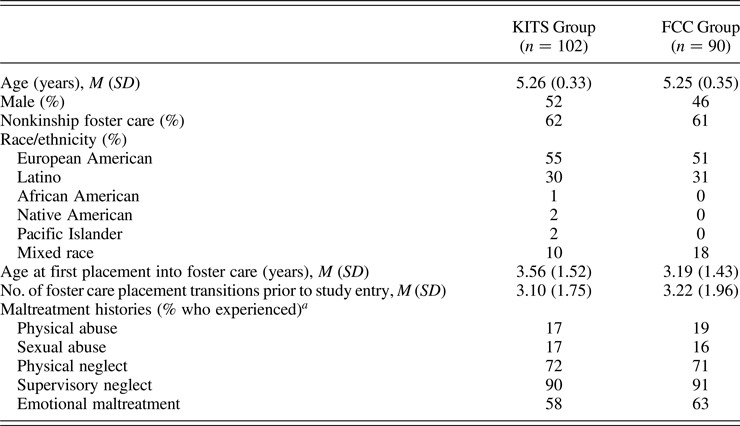
Of the 339 eligible families, 219 (113 KITS, 106 FCC; 63% assigned to KITS and 66% of families assigned to FCC) verbally agreed to participate. Twenty-seven families (11 KITS, 16 FCC) withdrew from the study before baseline data were collected, resulting in 192 participating families (102 KITS, 90 FCC). Demographic characteristics of the participating children are presented in Table 1. Information about the children's histories of foster placements was obtained from their child welfare records. In addition, those records were coded for the types of maltreatment that the children experienced using the Maltreatment Classification System (Barnett, Manly, & Cicchetti, Reference Barnett, Manly, Cicchetti, Cicchetti and Toth1993). There were no statistically significant differences between groups on any of these demographic, foster placement, or maltreatment variables. It is noteworthy that the proportions of participants in each racial/ethnic category are very similar to those of the children in foster care in the state in which this study was conducted (Child Welfare League of America, 2012).
Demographic characteristics by intervention group

Note: KITS, Kids In Transition to School; FCC, foster care comparison.
aBecause children could experience more than one type of maltreatment, percentages will not sum to 100.
Study design and procedures
At baseline (i.e., the beginning of the summer before kindergarten prior to the intervention), children completed a center-based assessment that included standardized testing of general cognitive functioning. Collection of cortisol samples occurred in the home at baseline and on the first and fifth days of school. Teacher ratings of children's school adjustment occurred in the fall of kindergarten approximately 2 months after the beginning of school.
Intervention protocol
The KITS intervention occurs during the 2 months prior to kindergarten entry (school readiness phase; 16 child sessions, 4 caregiver sessions) and during the first 2 months of kindergarten (transition/maintenance phase; 8 child sessions, 4 caregiver sessions). The intervention consists of groups for the children (2 hr, twice weekly in the school readiness phase; 2 hr, once weekly in the transition/maintenance phase) focused on increasing school readiness through promoting the early literacy skills (e.g., letter naming, phonological awareness, understanding conventions of print, and reading comprehension), prosocial skills (e.g., appropriate social interaction, social problem solving, and emotion recognition and expression), and self-regulatory skills (e.g., listening, sustaining attention, handling frustration, controlling impulses, following multistep directions, and making transitions) needed for kindergarten. In addition, the curriculum provides multiple opportunities to practice those skills in the context of typical kindergarten classroom activities and routines while teachers employ evidence-based classroom behavior management strategies designed to facilitate the development of prosocial and self-regulation skills. Groups consist of 12–15 children. One lead teacher and two assistants implement the manualized KITS curriculum.
The second intervention component consists of a caregiver group (2 hr, once every 2 weeks) focused on helping caregivers prepare children for the kindergarten transition. In addition, a group facilitator and co-facilitator use interactive teaching techniques, role plays, and home assignments to promote caregivers' use of effective behavioral management strategies and involvement in early literacy and school. Caregivers who could not attend the groups received the curriculum during home visits (or phone calls if home visits were not possible). The KITS Program is described in greater detail in other publications (Pears et al., Reference Pears, Kim and Fisher2012, Reference Pears, Fisher, Kim, Bruce, Healey and Yoerger2013).
The KITS school readiness group teachers and caregiver group facilitators complete a standardized 40-hr training program. The progress of individual families within the three school readiness domains is discussed at weekly team meetings, and strategies to address behavioral and literacy needs within the broader curriculum are planned. The children and caregivers receive supplemental materials to support the implementation of new skills, which include weekly homework assignments, weekly newsletters outlining the school readiness group topics for a given week, and home practice activities.
Attendance at school readiness groups and caregiver groups (or caregiver home visits and phone calls) was documented. The children attended an average of 69% of all of the possible school readiness group sessions, and 57% of the children attended 75% or more of the sessions. The caregivers received 61% of all of the possible sessions on average, and 55% of the caregivers received 75% or more of those sessions. Implementation fidelity for the school readiness groups was determined by trained coders in vivo or via videotape based on systematic coding of the presence or absence of key elements of the curriculum (98% of the curriculum components were covered, range = 75%–100%). Coders rated the teachers on implementation of key teaching and behavior management strategies (e.g., pre-taught expectations and ignored or redirected child noncompliance) on a 3-point scale: 1 = none of the time, 2 = some of the time, and 3 = all of the time. Teachers received a rating of 2.86 across all sessions. Implementation fidelity for the caregiver groups was determined through caregiver ratings of whether the weekly topics had been covered (100% of the components were covered).
FCC group
Children in this group received services as usual through the child welfare system. These services often include individual child psychotherapy, participation in an early childhood education program such as Head Start, and services such as speech therapy. No attempt was made to influence the type or amount of services given to children or their families in either group.
Measures
Intervention status
Intervention status was included in the analyses as a dichotomous variable: 1 = KITS group or 0 = FCC group.
Salivary cortisol (baseline and first and fifth days of school)
Caregivers collected saliva samples from their children on three consecutive days prior to the intervention (baseline) and on the first and fifth days of school. Consistent with previous studies examining diurnal cortisol slope in response to the start of school (Bruce et al., Reference Bruce, Davis and Gunnar2002; Davis, Donzella, Krueger, & Gunnar, Reference Davis, Donzella, Krueger and Gunnar1999), these collections occurred thrice daily: morning (30 min after waking), afternoon (4:00 p.m.), and evening (30 min before bedtime). Children chewed a piece of Trident Original Flavor Gum (Cadbury Adams USA, Plano, TX) for 1 min to stimulate saliva. After removal of the gum, caregivers placed a Salivette (Sarstedt, Newton, NC) directly from a plastic vial into the children's mouths. Once saturated, the Salivette was returned to the vial. Caregivers wrote the time and date of the collection on the vial and stored samples in the refrigerator until mailing them back to the research center. At the center, the samples were stored at −20 °C until being mailed to the laboratory for assay. Samples were assayed in duplicate using a competitive solid phase time-resolved fluorescence immunoassay with fluoromeric end-point detection (Dressendörfer, Kirschbaum, Rohde, Stahl, & Strasburger, Reference Dressendörfer, Kirschbaum, Rohde, Stahl and Strasburger1992). Samples from each child were included in the same assay batch to minimize within-subject variability. Duplicates varying by more than 15% were reassayed. The intraassay and interassay coefficients of variance ranged from 4.44% to 5.00% and 6.61% to 8.31%, respectively. Due to significant skew in the distributions, and consistent with recommendations in the literature (Schlotz, Reference Schlotz, Mehl and Conner2011), cortisol values for each time of day were log transformed using the natural log.
Due to research showing that food intake, health, certain medications, and sleep impact cortisol levels (de Kloet, Reference de Kloet1991), caregivers completed questionnaires covering these domains on days of saliva collection. Questionnaires were examined to ensure compliance with sampling guidelines. (See the Analysis Plan for a discussion of missing and excluded saliva samples.)
Children's school adjustment (fall of kindergarten)
Children in the study attended 87 local schools across two counties, and were in 122 different classrooms within these schools. Teachers provided ratings of children's school adjustment in the fall of kindergarten on the academic performance, working hard, learning, and behaving appropriately subscales of the Child Behavior Checklist Teacher Report Form (Achenbach, Reference Achenbach1991). These subscales demonstrated adequate internal reliability in the sample: academic performance α = 0.95, working hard α = 0.59, learning α = 0.59, and behaving appropriately α = 0.95. All subscales were significantly and positively correlated with one another (r = .40–.72, p < .001) and were therefore averaged to form a composite measure of school adjustment.
Control variables
Several variables with potential influences on children's diurnal cortisol slope and school adjustment were included as covariates in analyses to isolate the effects of intervention status.
Child gender
Gender, coded as 0 = male or 1 = female, was included in analyses due to potential gender differences in school adjustment (Maughan, Rowe, Messer, Goodman, & Meltzer, Reference Maughan, Rowe, Messer, Goodman and Meltzer2004).
Child age
Due to potential differences in the response to school depending on age at school entry, child age was included as a covariate in analyses (Gagné & Gagnier, Reference Gagné and Gagnier2004).
General cognitive functioning (baseline)
To take into account the possibility that children's cognitive functioning would influence school adjustment, we included a standardized measure of general cognitive functioning as a covariate when examining school adjustment. The children completed the vocabulary and block design subtests of the Wechsler Preschool and Primary Scale of Intelligence-Revised (Wechsler, Reference Wechsler1989). These subtests are considered to be the strongest measures of verbal and performance intelligence, respectively, and are highly correlated with other general intelligence measures (Wechsler, Reference Wechsler1989). The scaled scores for these subtests were averaged. In the general population, the mean of the individual scaled scores is 10 with a standard deviation of 3.
Overall level of behavioral difficulty in the classroom (fall of kindergarten)
Teachers used a scale of 1 = group misbehaves frequently and is almost always difficult to manage to 5 = group behaves exceptionally well to report on the overall difficulty of the class. Trained coders also conducted observations during structured classroom time on two 15-min occasions separated by a week. Coders used a scale of 1 = no instances of acting out or disruptive behavior to 5 = more than seven disruptions to indicate the overall level of disruption in the classroom. They also used a scale of 1 = students (90% or more of the class) are focused throughout the entire period to 5 = students are on-task less than 40% of the session to rate focused attention in the classroom. Scores were reverse coded such that higher scores indicated fewer disruptions and a higher percentage of focused students. The teacher and observer ratings were standardized and averaged to form a measure of overall level of classroom disruption (standardized α = 0.63).
Analysis plan
Analyses for the present study involved three steps. We first examined missing data patterns in the sample. At baseline, 156 families participated in the saliva collection procedure. Of the 1,404 possible samples across the 3 days, 158 samples were not collected (n = 80) or were excluded due to cortisol values above 2.0 μg/dl, collection outside of the specified sampling window (>30 min), inconsistent reporting of collection time, or children taking steroid medications (n = 78). Eight of the children were taking psychotropic medications. Research suggests that antipsychotic medication may affect diurnal cortisol slopes (Hibel, Granger, Cicchetti, & Rogosch, Reference Hibel, Granger, Cicchetti and Rogosch2007). However, as only 3 children were taking antipsychotics, it was not possible to test the effects of the medication on the cortisol slopes and the samples remained in the analyses. On the first and fifth days of school, 114 families participated in the saliva collection procedure. Of the 684 possible samples, 77 were not collected (n = 58) or were excluded from the analysis for the reasons outlined above (n = 19). In the fall of kindergarten, 80% of the sample (n = 152) had teacher ratings of children's school adjustment.
For the cortisol and school adjustment variables, there were no significant differences between children with and without missing data with regard to child sex, age, race/ethnicity, type of foster care, or intervention status. There was also no significant association between missingness of the teacher ratings of school adjustment and the overall level of behavioral difficulty in the classroom. In addition, there were no significant differences in children's school adjustment depending on whether the first day of school diurnal cortisol slope was missing or in the first or fifth day of school diurnal cortisol slope depending on whether school adjustment data was missing. However, children who contributed diurnal cortisol on the fifth day of school showed slightly higher levels of school adjustment (t = –2.25, df = 150, p = .03). We thus employed full information maximum likelihood estimation for further analyses, which has been known to provide unbiased estimates when data are missing at random (Arbuckle, Reference Arbuckle, Marcoulides and Schumacker1996), controlling for missingness at the fifth day of school. All 192 participants were therefore included in the subsequent models to avoid biasing results of the RCT by including only participants with complete data.
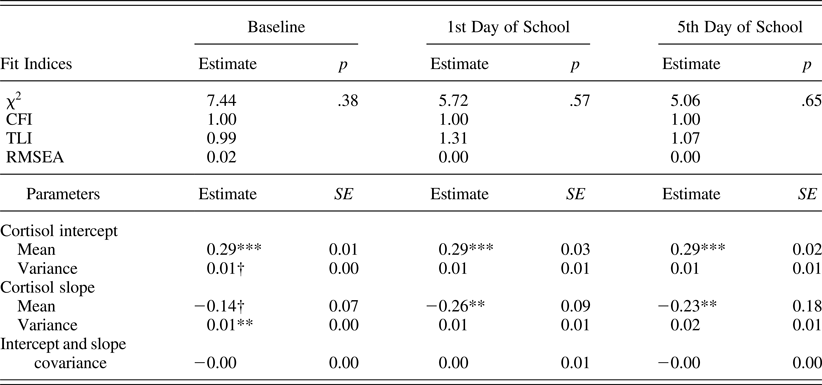
The next step of the analysis involved examining diurnal cortisol slopes for individual children in the sample. We used latent growth curve modeling to estimate diurnal cortisol slopes at baseline and on the first and fifth days of school. Within each sampling time of day, cortisol values across days were significantly and positively correlated with one another (rs = .21–.42, ps < .05–.01). Thus, for the baseline diurnal cortisol slope, we averaged the cortisol values within each sampling time of day (i.e., morning, afternoon, and evening) across the 3 days to obtain reliable baseline estimates for each time. To accommodate nonlinearity in diurnal patterns of cortisol, we fitted a linear spline model (Stoolmiller, Reference Stoolmiller and Gottman1995), which is often used to approximate nonlinearity when there are only three or four time points (Kim, Pears, Fisher, Connelly, & Landsverk, Reference Kim, Pears, Fisher, Connelly and Landsverk2010). For the baseline and first and fifth days of school models, the intercept factor was centered at the morning cortisol value. The slope factor loadings were fixed at 0 (morning) and 1 (evening) with the afternoon slope factor loading freely estimated. Time-varying covariates were included to adjust for the effect of time since awakening on each cortisol value across the day. The mean times since awakening for the morning sample (the sample most vulnerable to effects of variation in sampling time) ranged from 19.2 to 22.0 min since awakening across all baseline and school days (SD = 10.7–14.8 min). For the baseline model, time since awakening covariates were averaged across the 3 days (as was done with the cortisol values). The time-varying covariate for morning was squared to capture the nonlinear effect of time since awakening on cortisol values in the morning (Smyth, Clow, Thorn, Hucklebridge, & Evans, Reference Smyth, Clow, Thorn, Hucklebridge and Evans2013; Stalder et al., Reference Stalder, Kirschbaum, Kudielka, Adam, Pruessner, Wüst and Clow2016). The linear spline models fit the data well at baseline and on the first and fifth days of school (Table 2). The slope values for the baseline and first and fifth days of school were extracted as factor scores for each child to represent the estimated direction and magnitude of change in cortisol levels from morning to evening. There were no significant differences in baseline cortisol slopes between the KITS and FCC groups, t (153) = 1.16, p = .249. Estimation of diurnal cortisol slopes in this separate step enabled testing the proposed full mediation model described below.
Models of diurnal cortisol slope
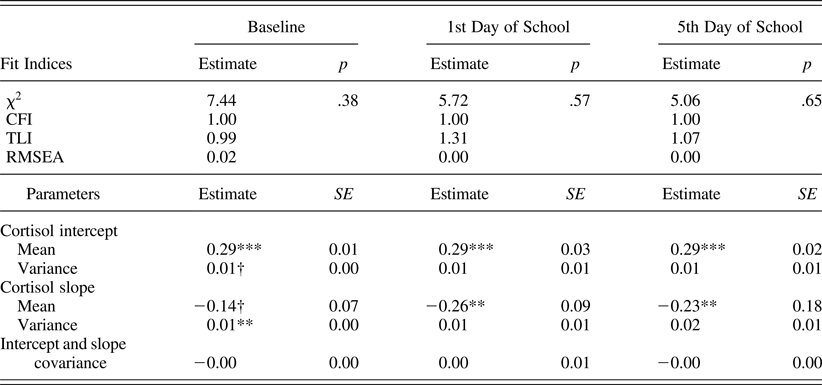
Note: CFI, comparative fit index; TLI, Tucker–Lewis index; RMSEA, root mean square error of approximation.
†p < .10. **p < .01. ***p < .001.
We used structural equation modeling to test whether the intervention significantly influenced diurnal cortisol slope on the first and fifth days of school and whether diurnal cortisol on the first and fifth days of school significantly influenced children's school adjustment in the fall of kindergarten. Intervention status was examined as a predictor of the first and fifth day of school diurnal cortisol slope with child sex and age as covariates. Children's school adjustment, the outcome of interest, was regressed on the first and fifth day of school diurnal cortisol slope and intervention status, with child sex, cognitive functioning, and overall level of behavioral difficulty in the classroom included as covariates. Note that only three children (1.6%) changed schools between the start of the school year and the assessment conducted in the fall. Because the percentage of children who changed schools was so small, it was not included as a control variable in the model. As noted above, because children who contributed the fifth day of school diurnal cortisol slope to the present analysis tended to have slightly higher levels of school adjustment, we included a covariate for missingness. For the first and fifth day of school diurnal cortisol slope, baseline diurnal cortisol slope was included as a covariate to examine the diurnal cortisol slope relative to a nonschool day prior to the beginning of the intervention. Inclusion of the fifth day of school diurnal cortisol slope in the model explored the specificity of any observed intervention effects on the first day of school. We also examined the significance of the indirect effects of the intervention on school adjustment through the first day of school diurnal cortisol slope (mediation) by employing bootstrapping to create confidence intervals. All analyses were conducted with Mplus, version 7 (Muthén & Muthén, Reference Muthén and Muthén1998–2015).
Results
Descriptive analyses
As shown in Table 2, diurnal cortisol slope means were negative for the baseline and first and fifth day of school models, indicating that, on average, cortisol levels declined throughout the day. Bivariate correlational analysis (Table 3) indicated that first day of school diurnal cortisol slope was significantly and negatively associated with children's school adjustment, suggesting greater decreases in cortisol levels across the first day of school predicted better school adjustment in children. The significant positive correlations of diurnal cortisol slope from the baseline and first and fifth days of school suggest a considerable stability in diurnal cortisol slopes over time. In addition, being female and older were also positively associated with school adjustment. Overall level of behavioral difficulty in the classroom was significantly associated with children's school adjustment and was included as a covariate in the model, although the means for the KITS and FCC groups did not significantly.
Correlations among study variables

Note: The Spearman ρ was used for correlations involving nonparametric variables.
*p ≤ .05. **p < .01.
Test for intervention effect on diurnal cortisol slope and diurnal cortisol slope on school adjustment
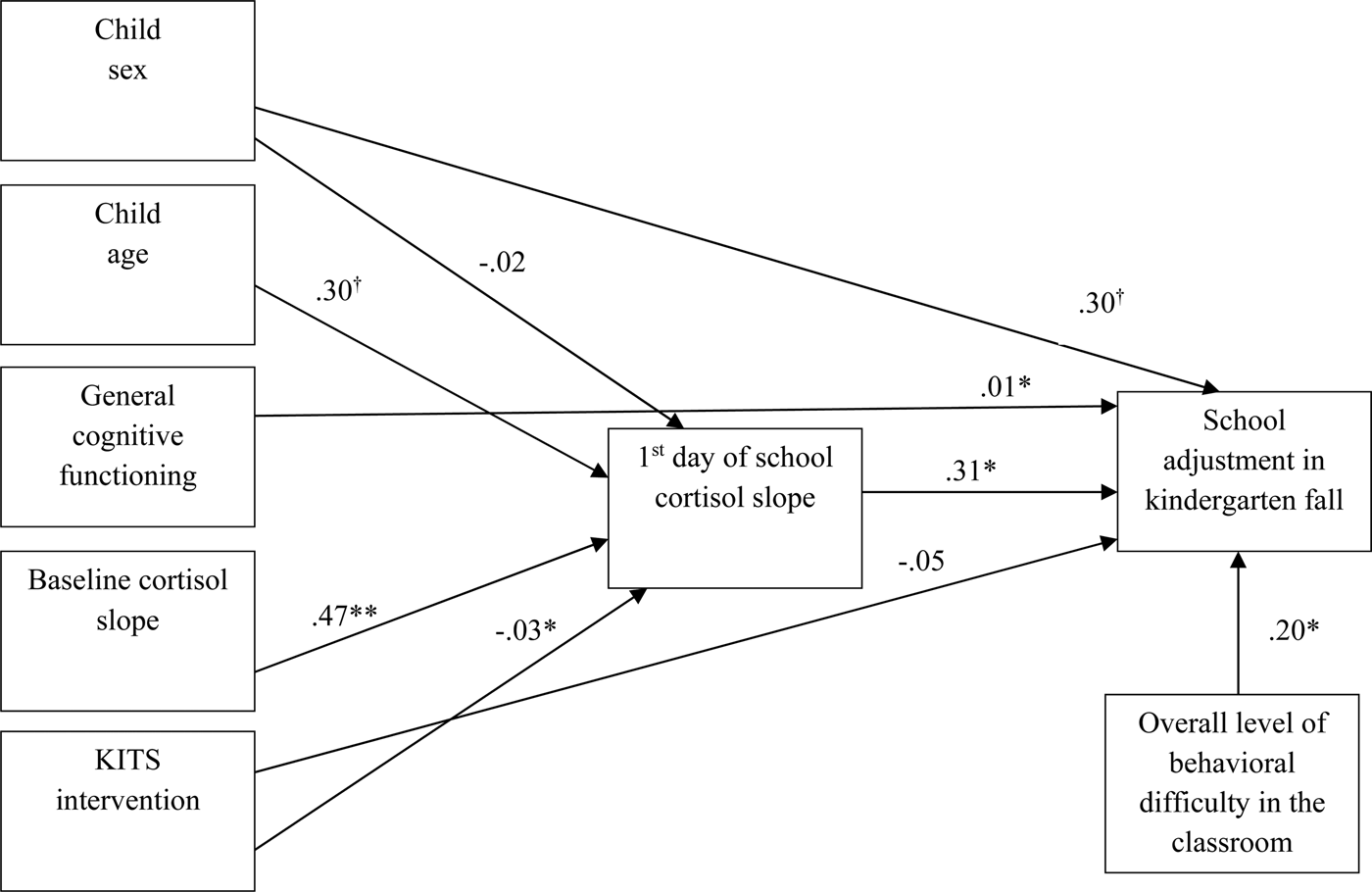
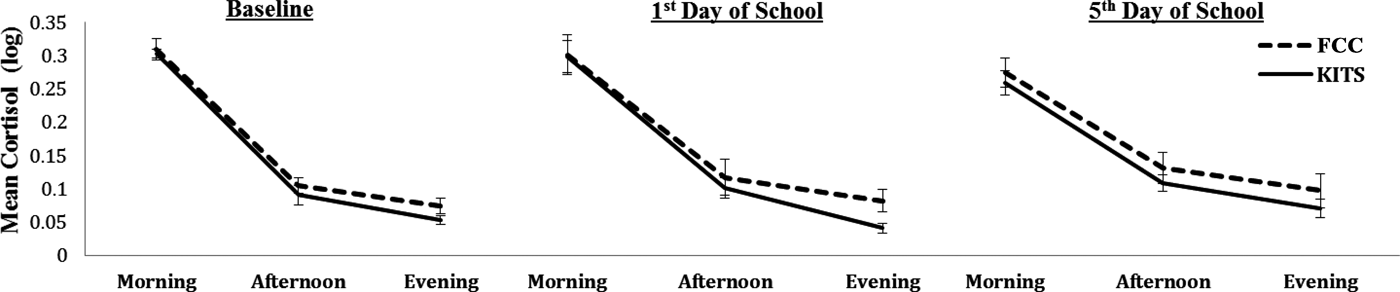
The full model fit the data relatively well, χ2 (16) = 16.46, p = .42, comparative fit index = 0.99, Tucker–Lewis index = 0.99, and root mean square error of approximation = 0.01. However, diurnal cortisol slope on the fifth day of school was not significantly associated with intervention status, school adjustment, or any of the covariates in the model, with the exception of baseline diurnal cortisol slope. Therefore, we removed diurnal cortisol slope on the fifth day of school from the final model, pictured in Figure 1, in the interest of parsimony. The final model fit the data well, χ2 (9) = 11.53, p = .24, comparative fit index = 0.93, Tucker–Lewis index = 0.92, and root mean square error of approximation = 0.04. This final, more parsimonious model was not significantly different from the full model with the fifth day cortisol slope (Δχ2 = 4.93, Δdf = 7, p > .05), and parameter estimates remained very similar. Intervention status significantly predicted diurnal cortisol slope on the first day of school. Being in the KITS intervention was associated with a steeper diurnal cortisol slope (M = –0.274, SD = 0.044) on the first day of school compared to the FCC group (M = –0.241, SD = 0.099; Figure 2). With regard to the covariates, baseline diurnal cortisol slope was significantly and positively associated with first day of school cortisol slope, suggesting some within-individual stability of the diurnal cortisol slope over time.
Diurnal cortisol slope on the first day of school mediates the intervention effect on school adjustment. Mediation supported by 95% confidence interval based on 1,000 bootstrap samples: 95% CI = [0.005, 0.272]. Standardized coefficients are presented here for ease of interpretation. The negative coefficients indicate that being in the Kids In Transition to School Intervention was associated with a steeper (more negative) diurnal cortisol slope, and the steeper negative slope was associated with higher school adjustment ratings.

Mean diurnal cortisol values across the day by group on each day. These are the mean natural log transformed cortisol values for each group at each time on each day. These values are not adjusted for time since awakening, which was included as a time-varying covariate in the models of the diurnal cortisol slopes. They are simply provided to illustrate the overall pattern for each group.

A steeper first day of school diurnal cortisol slope was significantly and negatively associated with teacher-rated school adjustment in the fall of kindergarten, indicating that a greater decrease in cortisol levels across the day predicted more positive ratings of school adjustment. There was no evidence of a significant direct effect of the intervention on school adjustment. Of the covariates, higher general cognitive functioning was also associated with higher ratings of school adjustment.
Within the intervention group, we also examined the potential influence of intervention dosage on the intervention effect on the first day of school diurnal cortisol, using a continuous variable capturing percentage of sessions children completed and adjusting for the same covariates in the initial model (child age, sex, and baseline cortisol slope). Greater intervention dosage was significantly associated with a steeper diurnal cortisol slope on the first day of school (unstandardized effect = –0.076, p = .040; standardized effect = –0.459, p = .012). This result indicates that higher levels of exposure to the intervention resulted in a larger effect on the diurnal cortisol slope on the first day of school.
We further examined group differences in cortisol values at each time on the first day of school to identify specific intervention effects. We adjusted for time since awakening and the corresponding baseline cortisol values. The FCC group evidenced a significantly higher evening cortisol value on the first day of school in comparison to the KITS group, t (95) = 2.20, p = .032. There were no other significant group differences in cortisol value at any other time of day.
Test for mediation
The indirect effect of intervention status on school adjustment via first day of school diurnal cortisol was estimated to be 0.11. The 95% confidence interval (CI) based on 5,000 bootstrap samples indicated a significant indirect effect, 95% CI = [0.009, 0.300]. Thus, the KITS intervention appears to result in better school adjustment through influencing the cortisol response to the first day of school (Figure 1).
Discussion
Effects of the KITS Program on children's diurnal cortisol slope
Findings indicated that the KITS intervention demonstrated an effect on HPA axis functioning for children in foster care during the critical and potentially challenging transition into formal schooling, which subsequently led to better adjustment to school. As hypothesized, children in foster care who received the KITS intervention showed a steeper diurnal cortisol slope on the first day of school (relative to baseline) compared to children in foster care receiving services as usual. This finding was specific to the first day of school, indicating an effect of the intervention on children's response to this developmental challenge. Although this study did not include direct comparison to a nonmaltreated, community sample, this pattern of a steeper diurnal cortisol slope among children in the KITS intervention group on the first day of school is descriptively similar to that observed in nonmaltreated children in previous studies (Bruce et al., Reference Bruce, Davis and Gunnar2002; Graham et al., Reference Graham, Yockelson, Kim, Bruce, Pears and Fisher2012).
Consistent with a developmental psychopathology framework (Cicchetti & Rogosch, Reference Cicchetti and Rogosch2002), the KITS intervention is built on the premise that critical transitions, such as the start of formal schooling, must be navigated successfully to set the stage for subsequent positive adjustment. The KITS Program also takes advantage of the possibility that when individuals experience change, their cognitions and behaviors may be particularly amenable to the influence of interventions (Pianta et al., Reference Pianta, Rimm-Kaufman, Cox, Pianta and Cox1999). By targeting the summer prior to the start of school and focusing the children and caregivers on this upcoming change, the intervention may harness motivation and momentum for caregivers to work on providing a consistent, contingent, and positive environment and children to improve self-regulatory skills. Moreover, at a neurobiological level, children's anticipation of the start of school may create conditions that increase responsiveness to the intervention. Experiences of early adversity are thought to have effects on key neurobiological systems, including the HPA axis, in part due to the rapid pace of development during infancy and early childhood (Loman & Gunnar, Reference Loman and Gunnar2010). While the start of formal schooling is a societally imposed time of transition, the significance of this transition to children and caregivers may nonetheless create opportunity for intervention to ameliorate effects of early adversity on the HPA axis. This assertion is supported by the intervention effect on diurnal cortisol slope on the first day of school and the dosage effect indicating that greater exposure to the intervention was associated with an increased effect on children's diurnal cortisol slope.
Although this study focused on the diurnal cortisol slope as the primary indicator of HPA axis functioning, post hoc analyses tested for differences between the intervention and foster care comparison group in morning, afternoon, and evening cortisol levels on the first day of school. The comparison group showed significantly higher evening cortisol levels on the first day of school relative to the intervention group. Prior research suggests that experiences of tension, anger, or conflict during the day predict higher evening cortisol levels (Adam, Hawkley, Kudielka, & Cacioppo, Reference Adam, Hawkley, Kudielka and Cacioppo2006; Kuhlman, Repetti, Reynolds, & Robles, Reference Kuhlman, Repetti, Reynolds and Robles2016). Children likely to experience the start of school as particularly stressful, including shy children (Bruce et al., Reference Bruce, Davis and Gunnar2002) and children with genetic risk for social anxiety (Russ et al., Reference Russ, Herbert, Cooper, Gunnar, Goodyer, Croudace and Murray2012), have been found to display higher evening cortisol levels in response to the start of school. The higher evening cortisol levels for the comparison group may be indicative of being less prepared for the start of school, and therefore experiencing more negative emotion and conflict throughout the day. The intervention effect on evening cortisol levels may alternatively, or in addition, reflect an increased capacity of children in the KITS intervention to recover from the challenges of the first day of school. Research with adults indicates that declining evening cortisol levels following a stressful workday are associated with the quality of family relationships (Saxbe, Repetti, & Nishina, Reference Saxbe, Repetti and Nishina2008). Thus, the KITS intervention may impact children's evening cortisol levels through preparing children for the challenges encountered in school and through training caregivers to support children through such challenges.
The association between diurnal cortisol slope on the first day of school and subsequent school adjustment
In addition to demonstrating that a short-term, school-focused intervention can alter children's neurobiological functioning, these results provide empirical evidence to support the hypothesized link between intervention effects on HPA axis functioning and children's subsequent adaptive functioning. A steeper diurnal cortisol slope on the first day of kindergarten, in comparison to baseline days prior to the school transition, was associated with better teacher ratings of school adjustment 2 months into the school year. This finding is in line with prior research showing that variability in cortisol levels during the transition to school relate to individual differences in temperament, including shyness (Bruce et al., Reference Bruce, Davis and Gunnar2002), extroversion (Bruce et al., Reference Bruce, Davis and Gunnar2002; Davis et al., Reference Davis, Donzella, Krueger and Gunnar1999; Turner-Cobb, Rixon, & Jessop, Reference Turner-Cobb, Rixon and Jessop2008), and negative affectivity (Davis et al., Reference Davis, Donzella, Krueger and Gunnar1999), which have been shown to play important roles in school adjustment (Al-Hendawi, Reference Al-Hendawi2013). It is also broadly consistent with previous longitudinal research identifying prospective associations between children's HPA axis functioning and subsequent behaviors and school engagement during kindergarten (Smider et al., Reference Smider, Essex, Kalin, Buss, Klein, Davidson and Goldsmith2002). However, Smider et al. reported only a trend-level association between afternoon cortisol levels prior to the transition to kindergarten and teacher ratings of positive school engagement at the end of kindergarten in a low-risk sample of children. By measuring children's cortisol response to the start of school, as opposed to cortisol levels prior to school entry, the present study may have been in a better position to identify prospective associations between HPA axis functioning and school adjustment.
The results of the present study also support the hypothesis that a steeper diurnal cortisol slope in response to the start of school may be a sign of adaptively mobilizing resources to face this challenge. It is believed that the relationship between cortisol levels and cognitive and behavioral outcomes can be represented by a U-shaped curve (de Kloet 1998; Joëls, Pu, Wiegert, Oitzl, & Krugers, Reference Joëls, Pu, Wiegert, Oitzl and Krugers2006), with evidence indicating that hyper- or hyporeactivity of the HPA axis is linked to poor outcomes (Schilling et al., Reference Schilling, Kölsch, Larra, Zech, Blumenthal, Frings and Schächinger2013; Wardenaar et al., Reference Wardenaar, Vreeburg, van Veen, Giltay, Veen, Penninx and Zitman2011). Previous research on low-income, preschool children who are at high risk for poor school adjustment suggests that a moderate cortisol response to a stressor is associated with better self-regulatory and early literacy skills (Blair, Granger, & Razza, Reference Blair, Granger and Razza2005). Our finding that a steeper diurnal cortisol slope on the first day of school was associated with better school adjustment may indicate that the children's response, on average, was within the more moderate and adaptive range.
The HPA axis as a mediator of the intervention effect on school adjustment
Evidence for the plasticity of the HPA axis in response to early intervention for children with histories of early adversity is growing; a recent review identified 17 studies demonstrating intervention effects on children's cortisol levels (Slopen, McLaughlin, & Shonkoff, Reference Slopen, McLaughlin and Shonkoff2014). However, as noted by the authors, it is often difficult to assess whether the intervention effects on cortisol levels can be interpreted as improvement in cortisol regulation (Slopen et al., Reference Slopen, McLaughlin and Shonkoff2014). In the present study, we addressed this issue by testing diurnal cortisol slope as a mediator of the intervention effect on a primary outcome of interest, school adjustment. Our results indicate that the KITS intervention influenced school adjustment via an effect on children's cortisol response to the first day of school. This provides novel empirical evidence linking intervention effects on the HPA axis to improved adaptive functioning for children with histories of early adversity. More broadly, the findings suggest that the HPA axis continues to be malleable even after experiences of early adversity and confers opportunity for intervention to ameliorate the negative effects of such adversity.
Considerations for interpreting study findings
Several factors should be considered in interpreting the findings of the present study. We assessed children's cortisol levels and adaptive functioning specifically in the context of school. As such, these findings may not generalize to include improvements in adaptive functioning outside of the school setting. However, adaptive HPA axis functioning and adjustment to school are important outcomes for children in foster care who are at high risk for academic and behavior problems in school (Scherr, Reference Scherr2007; Zima et al., Reference Zima, Bussing, Freeman, Yang, Belin and Forness2000). Moreover, prior research suggests that relationships with teachers can influence cortisol levels in young children by either buffering or exacerbating children's HPA axis response to stressors in a similar manner to the caregiving relationship (Lisonbee, Mize, Payne, & Granger, Reference Lisonbee, Mize, Payne and Granger2008). Thus, successful adaptation to school likely creates opportunity for children to form positive relationships with teachers and receive the benefits of social buffering from these positive relationships.
The intervention effect was also specific to the first day of school, not the fifth day of school. It is possible that the school readiness skills taught to children in the intervention are most evident when children are under higher levels of challenge, such as on the first day of school, or during particularly challenging academic tasks or social situations. Children's reactivity to such stressors would in turn be expected to influence school adjustment, as has been shown in prior research (Blair et al., Reference Blair, Granger and Razza2005; Ursache, Blair, & Raver, Reference Ursache, Blair and Raver2012). To better test this possibility, it would have been beneficial to collect cortisol samples in response to other challenging situations beyond the first day of school.
It is also worth noting that a mediation effect was observed in the absence of a direct effect, indicating that the intervention effect on school adjustment was carried by children's cortisol response to the first day of school. It is possible that consideration of additional aspects of stress neurobiology would reveal additional mediational pathways. Furthermore, the mediation effect of HPA axis functioning on the first day of school was modest. However, it should be noted that tests of mediation are frequently underpowered (Fritz & MacKinnon, Reference Fritz and MacKinnon2007). Therefore, given the longitudinal nature of the study and the integration of behavioral and biological measures, the present finding that a school readiness intervention positively influenced children's HPA axis functioning, which then led to positive school adjustment, is very encouraging.
Additional considerations include the lack of a nonmaltreated, community comparison group, the lack of objective measures to ensure compliance with cortisol data collection (e.g., electronic time stamping), and the exclusive focus on the HPA axis (specifically cortisol levels) as opposed to other biological systems influenced by early adversity and involved in adaptive functioning. Although the inclusion of a nonmaltreated group would add to the capacity to interpret these findings in the context of typical development, the central aim of the study was to advance understanding of preventive intervention, HPA axis functioning, and school adjustment in children with histories of early adversity. The available data set and analyses were well suited to address this important aim. With regard to the focus on HPA axis functioning, this is a logical starting point in the context of the existing intervention research regarding children with experiences of early adversity. However, future studies would benefit from inclusion of additional biological indicators relevant to allostatic load and adaptive functioning.
Conclusions
This study builds on the growing body of literature indicating that intervention for children with histories of early adversity may have ameliorative effects on stress neurobiology. This research advances the literature with promising evidence that early intervention for children in foster care, a particularly high-risk group, can not only influence stress neurobiology but also improve adaptive functioning via the impact on stress neurobiology. The results also support the utility of a targeted, short-term intervention focused on a key transitional period in children's lives. This approach allows the intervention to occur in the context of shifting psychological and neurobiological processes in preparation for an important life change, which likely increases the opportunity for altering these processes. In a climate of scarce resources for public programs, including mental health and educational services, targeting interventions to increase efficiency and efficacy is particularly important. Finally, the focus on school adjustment increases the likelihood of children experiencing positive interactions outside of the home, which have potential to continue to support well-regulated HPA axis functioning and improved adaptive functioning over time.