




Policy Significance Statement
The ethical reuse of youth data is critical for data-driven improvements in service provision. Policy frameworks that promote transparency and inclusion are required to build legitimacy and public confidence in data-driven initiatives. Embedding participatory mechanisms that reflect the diverse needs of young people can help ensure that data governance approaches are both effective and equitable by providing the foundation for a social license for data reuse. As national governments expand digital public infrastructure and adopt data strategies, centring youth in these processes is necessary not only to improve service delivery but also to strengthen democratic governance, ensure ethical data practices, and guarantee that technology serves collective needs. By engaging young people in data governance, this methodology advances ethical, inclusive, and effective service delivery and digital self-determination for young generations.
1. Introduction
When accessing essential services, young people face challenges not only in having sufficient access to quality services, but also in how their personal data could be reused. On the one hand, barriers to access, stigma, and lack of adequate service provision can prevent young people from receiving basic services such as mental health, well-being, or employment when they need them most. At the same time, service providers are increasingly collecting young people’s data—often as a condition for accessing services. While the integration of this data with other sources, such as wearable devices or health research, holds significant promise for enhancing the accessibility and quality of services, it is a double-edged sword. Without responsible governance, such data can be misused, leading to unintended harms or reinforcing existing inequalities.
Yet, the involvement of young people in decisions regarding how their data is (re)used is limited (Sieberts et al., Reference Sieberts, Marten, Bampton, Björling, Burn, Carey, Carlson, Fernandes, Kalha, Lindani, Masomera, Neelakantan, Pasquale, Ranganathan, Joy Scanlan, Shah, Sibisi, Sumant and Suver2023; Carey et al., Reference Carey, Adeyemi, Neelakantan, Fernandes, Fazel, Ford, Consortium and Burn2024; Chafetz et al., Reference Chafetz, Saxena, Ingram, Zahuranec, Requejo and Verhulst2025). If young generations distrust or feel uncertain about how and why their data is being collected, used or shared by service providers, they may adopt detrimental privacy-protective behaviours—that is, choosing not to seek services at all, or withholding critical information out of fear of misuse. This risks deepening existing inequalities, unintentionally widening the very gaps these services aim to close. It is therefore crucial that strategies for responsible data reuse consider how young people feel about the use of their data in order to promote transparency and strengthen trust in ethical data practices.
To address this challenge, a social license for data reuse is proposed as a governance framework that allows communities of young people to collectively define the terms, purposes and conditions under which data about them is reused. Operationalising a social license has been conceptualised as entailing three key phases, the first and most foundational of which involves establishing community-defined preferences and expectations of how data should be used, shared and governed (Verhulst et al., Reference Verhulst, Zahuranec, Zable and Addo2025). The mechanisms for eliciting and signalling these expectations remain largely untested for young people in real-world, cross-cultural contexts (Chafetz et al., Reference Chafetz, Saxena, Ingram, Zahuranec, Requejo and Verhulst2025).
This prompts the question: How can we meaningfully engage young people to establish their preferences and expectations regarding responsible data reuse practices to improve access to and quality of services?
This article addresses this question through an examination of NextGenData, a year-long project that developed and piloted a methodology for youth engagement on responsible data reuse in service provision. Drawing on participatory action research across four culturally diverse contexts in India, Tanzania, Moldova, and Kyrgyzstan, the project aimed to develop, test, and refine a scalable, adaptable, and replicable methodology for engaging young people aged 19–24 in data governance. A cross-contextual analysis is used to examine the outcomes of the pilot across locations, including the process of establishing young people’s preferences and expectations as a preliminary step towards social licensing for responsible data reuse, and to consider how cultural and social contexts shaped implementation.
The article is structured as follows: the remainder of this section discusses the policy context and research significance; Section 2 presents a literature review informed by scholarship on social licensing, participatory data governance, and youth engagement; Section 3 describes the design of the NextGenData pilots and the research methodology; Section 4 outlines the project findings; Section 5 offers a cross-contextual analysis of the findings; Section 6 presents recommendations for policymakers and practitioners; and Section 7 concludes with reflections on the study’s contributions.
1.1. Policy context and research significance
Young people aged 15 to 24 currently account for 16% of the global population, with numbers expected to rise by 7% by 2030, reaching nearly 1.3 billion (United Nations, 2025). By 2100, an estimated 1.8 billion adolescents will be living in a world approximately 2.8 °C warmer than pre-industrial levels. Many will face heightened risks of food insecurity, economic hardship, and armed conflict (The Lancet, 2025). The well-being of this demographic is critical for sustainable development, yet many young people globally face limited and unequal access to essential services.
Specifically, young people may struggle to access services where adequate provision is lacking or where there is stigma attached, such as mental health or refugee support services, or for cross-sectoral services that require institutional coordination, such as the transition from schooling to the labour force. This is of particular concern given that 20% of young people globally are not in employment, education, or training—and in low-income countries, only one in five young adults holds a regular paid job (International Labour Organization, 2024). Mental health challenges are also widespread: 15% of adolescents worldwide experience a mental disorder, yet most do not seek help or receive appropriate care. Alarmingly, suicide is the third leading cause of death among individuals aged 15 to 29 worldwide (World Health Organisation, 2025).
Given the critical need to respond to these issues, data reuse—using data for purposes beyond its original intent, often in anonymised or aggregated forms to achieve public benefit (Pasquetto et al., Reference Pasquetto, Borgman and Wofford2019; Verhulst, Reference Verhulst2023)—has significant potential to expand access to services and ensure they are more responsive to the needs of young people (Chafetz et al., Reference Chafetz, Saxena, Ingram, Zahuranec, Requejo and Verhulst2025). By leveraging existing data sources, governments, service providers, and civil society organisations can better understand the needs and behaviours of young people to improve the design and delivery of essential services. Responsible data reuse enables policymakers and practitioners to identify service gaps and local community needs, evaluate program outcomes, and facilitate more targeted, coordinated, and evidence-based responses.
Young people aged 19–24 represent a particularly relevant population for data reuse initiatives. As members of Generation Z, they are likely to be more frequent users of digital services such as online therapy platforms and digital health applications than older generations. Such digital services generate substantial volumes of user data, making data-driven service improvement both more feasible and potentially more impactful for this demographic, particularly as the proliferation of digital technologies, including those incorporating artificial intelligence, continues to expand the availability and diversity of relevant data sources.
Despite these potential benefits, data reuse can fail to gain the trust of young people, who, although they generate and hold data themselves, rarely have the opportunity to have a say in how it is used. This constitutes an agency asymmetry: an imbalance in power and influence among stakeholders that significantly impacts the way data is utilised (Verhulst, Reference Verhulst2023). Agency asymmetries risk severely undermining public trust and exacerbating other systemic power asymmetries between data-users and young people, and these challenges may be even more pronounced for youth in low-income countries due to intersecting social and structural factors (Verhulst et al., Reference Verhulst, Sandor, Mejia Pardo, Murray and Addo2024).
To mitigate such asymmetries and risks, we must consider new approaches for engagement between data subjects and controllers. This includes moving beyond binary, individualised notions of informed consent, which often overlook the nuanced needs of broader communities and groups (Verhulst et al., Reference Verhulst, Sandor and Stamm2023), and considering principles of digital self-determination, wherein the agency, rights, preferences and expectations of young people are respected and enforced through the digital life cycle of their data use in a way that is mutually beneficial (Remolina and Findlay, Reference Remolina and Findlay2021; Verhulst, Reference Verhulst2023).
As such, we propose moving towards a social license framework for data reuse. While the mechanisms required to fully operationalise a social license are beyond the scope of this article, the NextGenData project sought to address a preliminary step towards social licensing by piloting a replicable and scalable methodology for establishing community preferences—and, in particular, the preferences of young people as applied to data reuse for service provision. We therefore aim to present a methodology informed by a social license approach that can be used by practitioners and policymakers to centre young people in the design of responsible data governance, and, in doing so, foster trust in data reuse for improved service delivery.
2. Literature review
Conceptualising a social license for data reuse requires an understanding of its foundations in community engagement and citizen participation. A social license refers to the collective acceptance of an activity or project based on factors such as perceived legitimacy and alignment with community interests, values, and needs (Thomson, Reference Thomson1999). In the context of data reuse, social licensing has been conceptualised as a community-centred governance tool that emphasises sustained citizen engagement to build trust and legitimacy, ensuring that data is reused ethically, transparently, and in accordance with public preferences and priorities (Carter et al., Reference Carter, Laurie and Dixon-Woods2015; Verhulst et al., Reference Verhulst, Sandor, Mejia Pardo, Murray and Addo2024).
While social licensing is not meant as a replacement for legal and regulatory frameworks, it enables data reuse that is aligned with the values, priorities, and cultural contexts of communities, while complementing regulatory compliance. In cases where regulatory frameworks are weak, social licensing can further function as a voluntary governance standard that reinforces ethical accountability in the absence of strong legal enforcement mechanisms (Verhulst et al., Reference Verhulst, Zahuranec, Zable and Addo2025).
To operationalise a social license for data reuse, Verhulst et al. (Reference Verhulst, Zahuranec, Zable and Addo2025) identify three core steps:
-
1. Establishing Preferences and Expectations: Through participatory, transparent, and context-specific engagement processes, organisations work with communities to articulate values, concerns, and priorities, ensuring that governance frameworks are responsive to local needs and ethical considerations.
-
2. Documenting Preferences: Participatory engagement outcomes are formalised into enforceable agreements that embed community-defined governance terms into data-sharing structures.
-
3. Enforcing the Social License: Mechanisms are developed to ensure compliance with these agreements in practice, using context-specific compliance tools and strategies.
This article is concerned with the operationalisation of the first step, and the mechanisms through which community preferences and expectations can be established. Although a number of participatory governance approaches have been explored to establish community preferences for data reuse (see, for example, Young et al., Reference Young, Verhulst, Safonova and Zahuranec2020; Sharp et al., Reference Sharp, Anwar, Goodwin, Raven, Bartram and Kamruzzaman2022; Australian Research Data Commons, 2024; Ding et al., Reference Ding, Jäger, Ivanova and Bunz2024), engagement methods that centre young people in data reuse remain underdeveloped. This gap is particularly salient given that young people are directly affected by and are often the focus of data policy frameworks, yet are afforded limited channels for substantive participation in public decision-making (Verhulst and Shaikh, Reference Verhulst and Shaikh2023).
The broader literature on meaningful participation has established the importance of understanding participation as power redistribution, where young people share decision-making authority throughout the research or policy life-cycle, from needs identification and formulation of the research question, to making final recommendations (Burns et al., Reference Burns, Howard and Ospina2021; Teixeira et al., Reference Teixeira, Augsberger, Richards-Schuster and Sprague Martinez2021; Varwell, Reference Varwell2022). Epistemic and deliberative methods have also been shown to enable more meaningful outcomes by allowing young people to learn about a topic and establish an informed and reasoned dialogue before analysing and drawing conclusions, insights, and policy suggestions (Curato et al., Reference Curato, Dryzek, Ercan, Hendriks and Niemeyer2017; Landemore, Reference Landemore2017). In parallel, youth assemblies have emerged as a participatory mechanism in governance contexts, including for climate and sustainability (Cebrián et al., Reference Cebrián, Boqué, Olano and Prieto2025), local politics (Gökçe-Kızılkaya and Onursal-Beşgül, Reference Gökçe-Kızılkaya and Onursal-Beşgül2017), and national policy development (Government of Ireland, 2025).
Yet participatory processes can vary considerably in form, ranging from one-time consultative initiatives to more institutionalised governance structures, and many such processes risk being tokenistic in practice (Jánová et al., Reference Jánová, Herntrei and Fialová2025). As such, the methodology developed and piloted for the NextGenData project prioritised sustained, multi-phase engagement that aimed not only to elicit preferences and expectations, but to actively involve young people in co-designing strategies for responsible data reuse by service providers. Following Voorberg et al. (Reference Voorberg, Bekkers and Tummers2015), co-design in this context is understood as a form of co-creation in which citizens are involved in shaping the content and process of public service delivery or policy implementation.
Participatory approaches to research with young people and methodologies for their involvement in co-design processes have been well-established in the literature (Bevan Jones et al., Reference Bevan Jones, Stallard, Agha, Rice, Werner-Seidler, Stasiak, Kahn, Simpson, Alvarez-Jimenez, Rice, Evans and Merry2020; Liebenberg et al., Reference Liebenberg, Jamal and Ikeda2020; Wright et al., Reference Wright, Brown, Dudgeon, McPhee, Coffin, Pearson, Lin, Newnham, King Baguley, Webb, Sibosado, Crisp and Flavell2021; Fakoya et al., Reference Fakoya, Cole, Larkin, Punton, Brown and Ballonoff Suleiman2022; Branitsky et al., Reference Branitsky, Bee, Bucci, Lovell, Foster and Whelan2024). In particular, the use of participatory and co-design processes with young people with respect to data use and digitalisation of services has been explored in youth attitudes towards the use of AI in healthcare (Visram et al., Reference Visram, Leyden, Annesley, Bappa and Sebire2023), and investigating youth perspectives on and experiences of health-related social media, apps, and wearable health devices, including the use of personal data generated by these technologies (Goodyear and Armour, Reference Goodyear and Armour2018). Other research has focused on engaging young people in developing data literacy programs (Bowler et al., Reference Bowler, Rosin, Lopatovska and Vroom2022) and developing smart devices for digital well-being (Gennari et al., Reference Gennari, Matera, Morra, Melonio and Rizvi2023).
However, research on participatory frameworks that meaningfully engage young people in establishing their preferences for responsible data reuse is largely absent from the literature. The MindKind study, which explored how to best collect and share mental health data from youth aged 16–24 across the UK, India and South Africa, represents a notable exception. Publications from the study examine young people’s preferences for the governance, sharing, and use of mental health data for a global databank (Sieberts et al., Reference Sieberts, Marten, Bampton, Björling, Burn, Carey, Carlson, Fernandes, Kalha, Lindani, Masomera, Neelakantan, Pasquale, Ranganathan, Joy Scanlan, Shah, Sibisi, Sumant and Suver2023; Carey et al., Reference Carey, Adeyemi, Neelakantan, Fernandes, Fazel, Ford, Consortium and Burn2024) and evaluate the youth engagement process employed in the study’s design (Mensa-Kwao et al., Reference Mensa-Kwao, Neelakantan, Velloza, Bampton, Ranganathan, Sibisi, Bowes, Buonasorte, Juma, Veluvali, Doerr, Ford, Suver, Marten and Collins2024). Youth participants were generally willing to share their data for research, but expressed strong concerns and preferences regarding governance mechanisms and the conditions under which their data should be shared (Carey et al., Reference Carey, Adeyemi, Neelakantan, Fernandes, Fazel, Ford, Consortium and Burn2024), and youth engagement was shown to require dynamic strategies and transparent communication to achieve meaningful participation (Mensa-Kwao et al., Reference Mensa-Kwao, Neelakantan, Velloza, Bampton, Ranganathan, Sibisi, Bowes, Buonasorte, Juma, Veluvali, Doerr, Ford, Suver, Marten and Collins2024).
Other recent contributions include the Youth Solutions Lab, which engaged over 120 young people across 36 countries to co-design solutions and understand youth preferences around responsible data reuse for issues impacting their health and well-being (Chafetz et al., Reference Chafetz, Saxena, Ingram, Zahuranec, Requejo and Verhulst2025). The authors found that many participants identified health, sentiment, mobility, and socio-economic data as key data sources relevant to youth health and well-being topics, and mapped these to the service areas and institutional actors central to youth-inclusive data governance. Young people’s comfort with data reuse initiatives varied according to purpose, data sources, and who accessed the data, with participants broadly supportive of initiatives aimed at addressing public problems for non-commercial purposes (Chafetz et al., Reference Chafetz, Saxena, Ingram, Zahuranec, Requejo and Verhulst2025).
These studies indicate that young people are willing to share their data when they agree with its intended purpose and use, and emphasise the nuanced, context-specific nature of their preferences—as well as the need for strategies and methods that enable meaningful youth engagement. Despite this, the literature lacks context-sensitive, scalable models for meaningful youth participation across diverse cultural and socio-economic backgrounds, particularly for young people in global majority countries and in the context of improving data-driven services. This study addresses this gap by examining how youth participation in data governance can support young people’s digital self-determination and provide a mechanism for eliciting their preferences and expectations around responsible data reuse in diverse contexts, thereby contributing to the foundations of a social license for data-driven service delivery.
3. Methodology
The methodology is presented in two parts. The first addresses the design and implementation of the NextGenData project across each location, and the second outlines the comparative research methodology and data sources used in this article.
3.1. The NextGenData initiative
The NextGenData project implemented a participatory action research (PAR) framework, placing youth at the centre of a participatory process to address the ethical and practical challenges of data reuse in service delivery. PAR is an iterative methodology that prioritises relationships to collaborate with a community that has lived experience of a social issue in order to co-create knowledge and social change in tandem (Cornish et al., Reference Cornish, Breton, Moreno-Tabarez, Delgado, Rua, de-Graft Aikins and Hodgetts2023). By emphasising the process of research as much as its product, PAR has the potential to produce more accurate outcomes, informed and steered by participants’ lived experiences, whilst also achieving greater impact by promoting self-determination and community mobilisation (Lloyd-Evans et al., Reference Lloyd-Evans, Oenga, Zischka, Mpofu-Coles, Woronka, Oveson, Hookway, Cleaver, Duval, Karanja, Gomma, Neupana, Ashcroft, Clare, Ma, Sundhararanjan, Watson and Tatys2023). Moreover, a PAR approach can be effective in addressing cases where citizens’ voices would otherwise be left out or disregarded in favour of “top-down” policy approaches, even if undertaken with time or resource constraints (Dedding et al., Reference Dedding, Goedhart, Broerse and Abma2021).
To pilot a youth engagement methodology that was adaptable, culturally responsive, and grounded in local realities, we sought implementation partners to undertake the research activities in diverse locations. Recognising global inequalities in access to services, as well as pronounced risks of agency asymmetries and data misuse, the project prioritised partnerships in low- and middle- income countries (LMICs). Following an open call for expressions of interest, partners were selected from the civil society sector based on selection criteria that emphasised experience with youth engagement initiatives, strong national presence and advocacy leadership, and a commitment to data-driven service delivery.
Four implementation partners were selected, each operating in a different national context and offering unique expertise. In India, Dasra was chosen for its role in bringing together funders, nonprofits, governments, and communities to drive social change in the development sector for the most vulnerable communities in India. In Moldova, the National Youth Council of Moldova (CNTM), an umbrella organisation representing 38 youth groups, was selected for its focus on empowering young people through advocacy, training, and active participation in policymaking. In Tanzania, the partner was Tanzania Data Lab, a data and innovation hub known for leveraging data science, capacity building, and cross-sector collaboration to address sustainable development challenges. Lastly, in Kyrgyzstan, SOS Children’s Villages Kyrgyzstan was chosen for its work in providing family-based care, education, and community support to young people without parental care or at risk of losing it.
NextGenData was implemented over one year, from February 2024 to January 2025, with the youth engagement activities conducted over a three-month period. To ensure ethical integrity, we engaged a technical partner, the Data for Children Collaborative, to conduct an ethical review. Partners received multiple rounds of feedback to establish safeguarding principles that emphasised informed consent, risk management, and youth agency, and required approval from an independent review panel prior to engaging any young participants. An in-person project summit with representatives from all participating organisations was also held before commencing the youth engagement phases, with each partner receiving and providing feedback on the respective partners’ proposed project plan for their youth engagement activities.
3.1.1. Youth engagement methodology
The methodological framework that guided the youth engagement activities in the NextGenData initiative was informed by previous work on citizen and youth engagement for data reuse (Young et al., Reference Young, Verhulst, Safonova and Zahuranec2020; Verhulst et al., Reference Verhulst, Sandor, Mejia Pardo, Murray and Addo2024; Chafetz et al., Reference Chafetz, Saxena, Ingram, Zahuranec, Requejo and Verhulst2025), and followed a core implementation strategy that was designed to allow flexibility and local adaptation in response to specific needs.
As shown in Figure 1, the engagement methodology consists of five key phases:
The youth engagement methodology stages.

3.1.2. Phase 1: scope and explore
Each partner began by identifying target service areas aligned with the needs of young people in their local context. Partners then conducted detailed baseline studies mapping the target service ecosystem, identifying local service providers and investigating through interviews how young people’s data was collected, stored, and used. These findings established a baseline understanding of existing data practices in each location and were essential in guiding subsequent phases, with the real-life data practices of local service providers used to form the case studies employed during the youth assemblies in Phase 3.
3.1.3. Phase 2: operationalise and plan
Following the development of a detailed project charter and obtaining ethical review approval, each partner proceeded with recruiting participants. Rather than employing sortition, as is typical in deliberative mini-publics (Flanigan et al., Reference Flanigan, Gölz, Gupta, Hennig and Procaccia2021; United Nations Democracy Fund, 2018), self-selecting recruitment was used to allow for flexibility during the pilot, in line with evidence that alternative recruitment methods do not significantly compromise the perceived legitimacy of citizens’ assemblies (Pow, Reference Pow2023). The recruitment process prioritised transparency and inclusivity, using open calls through social media, information sessions, and each partner’s established networks to attract a diverse range of youth participants aged 19–24, with a particular focus on including marginalised or vulnerable groups.
3.1.4. Phase 3: deliberate and prioritise
Participants took part in youth assemblies to critically engage with data concepts and articulate their preferences for ethical data reuse. Each partner integrated educational activities such as expert talks and real-world case scenarios to help participants understand data sources, anonymisation, aggregation, and the broader implications of data reuse, with all materials translated and adapted for local languages. Drawing on deliberative democracy literature (Dryzek, Reference Dryzek2010; Fishkin, Reference Fishkin2011), structured deliberation frameworks were developed to facilitate discussions. The Responsible Data Reuse Framework, shown in Figure 2, was adapted from previous work by Young et al. (Reference Young, Verhulst, Safonova and Zahuranec2020) and used to guide inquiries. Through facilitated group discussions, participants evaluated data practices, framed problem statements, and co-constructed key challenges and opportunities around identified themes, which formed the basis for the subsequent co-design phase.
The responsible data reuse framework.

Figure 2. Long description
At the center of the diagram are three stylized individuals inside speech bubbles: a person with blonde hair in a blue bubble, a person with dark hair in a yellow bubble, and a person with short dark hair in a purple bubble.
Surrounding this core is a thick green ring divided into six segments, each containing a white capitalized keyword. Moving clockwise from the top-left, the segments are:
1. WHERE: Connected to an external question, Where is data collected and stored?
2. WHY: Connected to an external question, For what purpose is data collected and used?
3. WHAT: Connected to an external question, What data is collected and used?
4. HOW: Connected to an external question, How is informed consent obtained? How is data collected, used and shared?
5. WHO: Connected to an external question, Who collects the data, and who is able to access it and use it?
6. WHEN: Connected to an external question, At what point is data collected? How long is data stored for?
At the top of the image, a white piece of paper is pinned with a green tack, displaying the title Responsible Data Reuse Framework.
3.1.5. Phase 4: engage and design
Youth participants were engaged in co-designing solutions for ethical data reuse in their target services, building on the themes and insights identified in the youth assemblies. Through structured participatory frameworks, and with the support of expert mentors enlisted by the partners, participants worked individually or in teams to develop and prototype frameworks for responsible data reuse. Participants were encouraged to conduct primary and secondary research in developing their solutions, and produced proposals outlining their key findings and recommendations.
3.1.6. Phase 5: showcase and collaborate
In the final phase, youth participants presented their recommendations on responsible data reuse directly to decision-makers from the public, private, and civil society sectors, highlighting their perspectives and priorities. Collaborative activities such as role-plays and fireside chats were held to foster interactive discussions about the challenges and opportunities of implementing these recommendations, with structured dialogue aimed at ensuring youth voices were actively considered. Each partner also held a dedicated workshop with local decision-makers to explore the challenges and opportunities of data reuse in service delivery, and to identify barriers to institutionalising youth engagement practices.
The youth engagement methodology piloted in this study informed the development of a publicly available toolkit (Figure 3), designed to support practitioners and policymakers in replicating and adapting the engagement strategy in future data reuse initiatives with young people.
The Youth engagement toolkit for responsible data reuse. The published Youth engagement toolkit for responsible data reuse is also available on The Data Tank website, at: https://www.datatank.org/.

Figure 3. Long description
The infographic is titled YOUTH ENGAGEMENT TOOLKIT FOR RESPONSIBLE DATA REUSE. At the center is a circular Responsible Data Reuse Framework divided into five segments: WHERE, WHY, WHAT, HOW, and WHO, with a central illustration of three diverse youth. Surrounding this are five numbered steps.
Step 1. Scope and Explore. Focuses on identifying partners and understanding current practices. Sub-points include 1.1 Partner Selection, 1.2 Target Service Identification and Project Strategy, and 1.3 Understanding Current Data Practices. This phase is labeled as the Internal Planning Process.
Step 2. Operationalise and Plan. Focuses on ethical youth recruitment and engagement. Sub-points include 2.1 Youth Recruitment through an Open Call, 2.2 Target Service Identification and Project Strategy, and 2.3 Baseline Study for Understanding Youth Agency and Trust. This is also part of the Internal Planning Process.
Step 3. Deliberate and Prioritise. Focuses on introducing data reuse concepts and identifying issues. Sub-points include 3.1 Educate, 3.2 Deliberate, and 3.3 Prioritise. This phase is labeled Deliberation and Youth Engagement.
Step 4. Engage and Design. Focuses on co-designing recommendations with mentors. Sub-points include 4.1 Mentor Support, 4.2 Ideate and prototype design, and 4.3 Recommendations and insights. This is also part of Deliberation and Youth Engagement.
Step 5. Showcase and Collaborate. Focuses on presenting recommendations to decision-makers. Sub-points include 5.1 Create awareness, 5.2 Showcase, and 5.3 Collaborate. This phase is labeled External Advocacy Process.
Green arrows indicate a linear flow from Step 1 through Step 5. The footer notes the methodology is based on insights from the NextGenData project involving youth aged 19 to 24 in Tanzania, India, Moldova, and Kyrgyzstan.
3.1.7. Country-specific variations
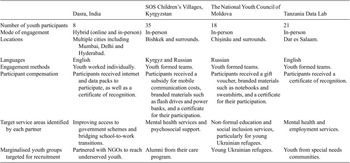
Each partner was asked to adapt the engagement methodology in accordance with the needs of youth participants in their community and their experience working within their local context. The resulting variation in partner approaches is outlined in Table A1 (see Appendix).
3.2. Research methodology and data sources
The analysis presented in this article draws on two principal data sources. First, youth participants completed baseline (n = 123) and endline (n = 82) multiple-choice surveys to assess changes in knowledge and attitudes with regard to data reuse. Second, qualitative data was collected for each location through reflective observation and note-taking by implementation partner researchers and facilitators, which was compiled into written reports. Partners submitted a report for each project phase, as well as an end of project summary, containing detailed observations on participant characteristics, the activities conducted and any materials used, a description of participant discussions, and a summary of key reflections, challenges and opportunities.
In line with a PAR approach of collaborative knowledge production (Campanella et al., Reference Campanella, Kirshner, Mendy, Landa-Posas, Terrazas Hoover, Lopez, Porras-Holguin and Estrada Martín2022; Cornish et al., Reference Cornish, Breton, Moreno-Tabarez, Delgado, Rua, de-Graft Aikins and Hodgetts2023), qualitative data analysis involved iterative team-based readings of the reports, during which meanings were co-constructed through critical discussion among the partners. Representatives from all organisations met virtually on a monthly basis to review the outcomes of each phase and reflect on emerging challenges and findings. In addition, an in-person meeting at the project conclusion enabled partners to discuss cross-country insights and challenges, and deliberate on shared project outcomes. A systematic analysis of all project findings, informed by submitted reports and cross-organisation reflections, was conducted after the project conclusion to compare the effectiveness and impact of youth engagement strategies across contexts.
Drawing principally on detailed observational findings from the NextGenData pilots across four locations as individual case studies, this article employs a cross-contextual analysis that is complemented by the results of the participant survey data. The comparative framework, presented in Section 5, identifies and examines common themes and patterns in the implementation and outcomes of the youth engagement methodology across contexts.
3.3. Limitations
Several limitations of the engagement methodology and the study design should be acknowledged. PAR has several well-documented methodological limitations, including persistent power dynamics among researchers, partners, and participants despite efforts to equalise roles; challenges in determining appropriate compensation for participation; the substantial time and resources required for iterative and collaborative research activities; and limited generalisability of findings that are embedded in specific contexts and communities (Smith-Carrier and Tuyl, Reference Smith-Carrier and Tuyl2024). While the project engaged a diverse sample of youth participants across four countries, the small sample size and self-selecting recruitment process further limit the representativeness and generalisability of the results.
Developing a methodology that is both standardised and replicable, whilst remaining flexible and responsive to diverse contexts, also presents inherent trade-offs. Variation across variables such as partners’ prior experience with data-related projects and youth engagement, modes of delivery, and the backgrounds of facilitators may have influenced the level and nature of youth participation across contexts. Similarly, reliance on local networks for recruitment resulted in variation in the demographics, profiles, and domain-specific knowledge of youth participants, facilitators, and stakeholders. As such, the degree of adaptation permitted across partner contexts, while necessary for cultural relevance, makes direct comparison of outcomes more challenging. While these limitations are inherent to cross-contextual participatory research of this nature, they were mitigated where possible through regular coordination across partners, shared methodological guidance, and reflexive practice of differences across locations throughout the project.
4. Findings
4.1. Baseline and endline surveys
The baseline survey results revealed varying levels of trust and comfort with data reuse among youth participants prior to taking part in the engagement activities, both within and across country contexts. As shown in Figure 4, a majority of participants in each location either agreed or strongly agreed that they questioned why and how service providers use their information before consenting to share it (71% in Kyrgyzstan, 92% in Tanzania, 79% in India, and 70% in Moldova). However, this was not uniform across all participants: 14% of young people in Kyrgyzstan, 4% in Tanzania, and 5% in Moldova disagreed or strongly disagreed with this statement, suggesting that, prior to engaging with participatory activities on data reuse, a proportion of young people may not consider how their data is used or reused to be a significant concern at the point of accessing services.
Youth participants’ survey responses from the baseline study to the question: “When I access a service, I question why my information is collected and for what purposes before providing my consent.”

Figure 4. Long description
The chart displays responses from youth participants in each of the four study locations. The x-axis represents percentage from 0 to 100 percent. The legend at the top indicates a color scale from dark orange for Strongly Disagree to dark blue for Strongly Agree.
* S O S Kyrgyzstan, n equals 28. 7 percent Strongly Disagree, 7 percent Disagree, 7 percent Somewhat Disagree, 4 percent Neither Agree or Disagree, 11 percent Somewhat Agree, 50 percent Agree, and 21 percent Strongly Agree.
* dLab Tanzania, n equals 61. 2 percent Disagree, 2 percent Somewhat Disagree, 5 percent Neither Agree or Disagree, 31 percent Agree, and 61 percent Strongly Agree.
* Dasra India, n equals 14. 21 percent Neither Agree or Disagree, 36 percent Agree, and 43 percent Strongly Agree.
* C N T M Moldova, n equals 20. 5 percent Strongly Disagree, 5 percent Neither Agree or Disagree, 20 percent Somewhat Agree, 40 percent Agree, and 30 percent Strongly Agree.
Conversely, the results of the endline survey reflect the confidence participants developed in discussing data sharing for services following their participation in the project. Figure 5 illustrates that a majority of young people across contexts agreed or strongly agreed that they felt equipped to participate in such discussions (66% in Kyrgyzstan, 95% in Tanzania, 88% in India, and 83% in Moldova). Yet not all participants shared this view: 12% of participants in Kyrgyzstan, 5% in Tanzania, and 6% in Moldova either disagreed or strongly disagreed that they felt equipped to do so, indicating that the intervention may not have produced meaningful engagement for a subset of participants in these locations.
Youth participants’ survey responses from the endline study to the question: “I feel equipped to participate in discussions about data sharing and data-driven services.”

Figure 5. Long description
The chart displays responses across five categories: Strongly Disagree (dark orange), Disagree (light orange), Neutral (light gray), Agree (medium blue), and Strongly Agree (dark blue). The x-axis represents percentage from 0 to 100 percent.
* S O S (Kyrgyzstan), n equals 35: 6 percent Strongly Disagree, 6 percent Disagree, 23 percent Neutral, 40 percent Agree, and 26 percent Strongly Agree.
* dLab (Tanzania), n equals 21: 5 percent Strongly Disagree, 0 percent Disagree, 0 percent Neutral, 38 percent Agree, and 57 percent Strongly Agree.
* Dasra (India), n equals 8: 0 percent Strongly Disagree, 0 percent Disagree, 13 percent Neutral, 25 percent Agree, and 63 percent Strongly Agree.
* C N T M (Moldova), n equals 18: 0 percent Strongly Disagree, 6 percent Disagree, 11 percent Neutral, 39 percent Agree, and 44 percent Strongly Agree.
4.2. Case study observations
Table 1 presents a comparative overview of the findings drawn from qualitative observations across the four country contexts, structured around common themes to facilitate cross-contextual analysis of the youth engagement methodology and its outcomes.
Comparative analysis of youth engagement findings across locations

Table 1. Long description
The table consists of eight columns and four primary rows representing different countries.
Column headers from left to right are: Country, Themes developed by youth participants, Digital literacy and infrastructure, Trust and concern in data reuse, Youth agency and engagement, Challenges and barriers to engagement, Effective engagement strategies, and Stakeholder and ecosystem insights.
Key data points by country:
* India: Themes include career guidance and mental health. Digital literacy varied by urban/semi-urban geography. Privacy was a major concern. Engagement increased when linked to real-life case studies. Barriers included sustained youth engagement. Strategies involved a safeguarding-first approach and weekly roadmaps.
* Moldova: Themes focused on data protection and analysis. Disparities noted between urban and rural digital maturity. High concern among Ukrainian refugees regarding data collection and legal status. Strategies included educating youth on G D P R standards and using youth assemblies.
* Kyrgyzstan: Themes centered on mental health services. Urban youth in Bishkek showed higher digital literacy than rural youth. Cultural norms regarding respecting elders influenced the willingness to challenge data policies. A youth-led output was the development of the Mental X mobile app.
* Tanzania: Themes included employment and mental health. Barriers included the cost of internet bundles and a culture of lateness. Strategies involved using WhatsApp for communication and physical youth assemblies. Service providers showed a significant disparity in digital tool adoption, with some still using paper-based systems.
These findings demonstrate that the sociocultural and institutional conditions shaping youth engagement varied considerably across the four country contexts, giving rise to location-specific dynamics, challenges, and outcomes. Nonetheless, a number of common patterns and transferable learnings also emerge. These context-specific factors and shared insights, and the extent to which they can inform the design of future youth engagement initiatives in data governance, are examined in the discussion that follows.
5. Cross-contextual analysis
5.1. Digital literacy and infrastructure
Across all four locations, youth participants varied significantly in their baseline levels of data literacy and familiarity with digital platforms. All partners noted disparities between urban and rural or semi-urban participants, with the latter often struggling to grasp concepts of data reuse and demonstrating lower levels of digital maturity. In two locations, demographic disparities among young people were further compounded by infrastructural barriers: some participants in India faced challenges with unreliable connectivity, while others in Tanzania lacked access to communication platforms or the means to purchase internet bundles.
This points to a compounding dynamic in LMICs with differing levels of digital infrastructure, where young people may face not only baseline differences in digital literacy but also practical barriers to accessing the tools required for participation, particularly in multi-phase initiatives that rely on ongoing digital communication and co-design processes. The choice of hybrid or online formats may enhance participation in contexts where young people are not easily able to attend in person, but may equally hinder it where participants face digital accessibility barriers that are not addressed. The use of subsidies for mobile communication costs, as implemented in Kyrgyzstan, or the provision of internet and data packs to participants, as in India, represent examples of strategies that can address certain such barriers.
Given disparities in digital literacy that may exist across urban–rural divides, or other socioeconomic divisions, particular care should be taken to ensure that participants with limited familiarity with digital services and data concepts are able to engage fully in project activities. The relevance and feasibility of data reuse initiatives should also be carefully considered—where basic data infrastructure remains underdeveloped, foundational investment in data systems may need to precede efforts to promote data reuse. In Tanzania, for instance, many service providers were found to rely on manual, paper-based data systems, rendering modern data reuse practices challenging to implement. Furthermore, given that some participants in Tanzania had limited exposure to digital platforms and services, the assumption that young people are universally digitally engaged should be critically examined in the context of data reuse engagement initiatives.
5.2. Youth agency and engagement
Differences in participant demographics intersected with sociocultural and political factors in ways that affected dimensions of youth participation such as agency and confidence in decision-making. In Moldova, young Ukrainian refugees, who face additional challenges related to integration, overall displayed lower levels of agency in the initial project phases compared to Moldovan youth. Similarly, in Kyrgyzstan, urban participants generally demonstrated higher levels of confidence and initiative than rural youth. These findings highlight the need for engagement methodologies that are flexible enough to accommodate not only differences across global contexts but also variations within local participant groups, as well as including structured onboarding for diverse youth participants.
Sociocultural realities also shaped the youth engagement process in significant ways. In Kyrgyzstan, cultural norms placing significant value on respect for elders sometimes led to reluctance among youth to openly challenge established practices, including data use policies. Youth engagement initiatives that involve young people working alongside decision-makers should account for such cultural dynamics, and address their influence on youth agency and participation. In India, grounding abstract data reuse concepts in tangible, locally relevant examples proved critical to deepening engagement—participants demonstrated better outcomes when content was adapted to reflect their lived experiences and real-world concerns. This suggests that data reuse should not be presented as a universal or abstract concept, but contextualised through locally meaningful examples that resonate with the cultural backgrounds and day-to-day experiences of young people.
5.3. Trust and concern in data reuse
Data privacy emerged as a common concern among participants across all four locations when engaging with data reuse concepts, and the nature of these concerns was shaped by the distinct cultural and sociopolitical context of each setting. In Moldova, low public trust in data protection mechanisms and limited familiarity with national legal frameworks heightened data privacy concerns, particularly among young refugees who feared that data collection could affect their legal status or access to services. Stigma surrounding mental health topics in Kyrgyzstan meant that participants expressed concerns about the potential reuse of sensitive mental health data. In Tanzania, participants’ reservations about data privacy were exacerbated by concerns that many service providers lacked familiarity with national data protection legislation. Partners in India and Moldova additionally highlighted the importance of building trust with participants as foundational for meaningful engagement. These observations further attest to the importance of evaluating context-specific considerations in the establishment of a social license for responsible data reuse frameworks, and to the value of engaging young people in articulating their concerns so that data reuse practices foster trust, rather than risk undermining it.
5.4. Challenges and barriers to engagement
In each of the four country contexts, partners identified sustaining youth motivation and engagement as a shared challenge, with participation affected by external factors including seasonal work commitments, academic schedules, and the presence or absence of incentives. The three-month timeframe of the engagement activities, combined with the technical nature of the subject matter, made it difficult to maintain consistent involvement in some contexts, requiring deliberate facilitation strategies to sustain balanced participation across stakeholder groups. These findings suggest that timeframe, participant availability, and compensation should be carefully considered at the outset of youth engagement initiatives.
A further challenge identified in all locations concerned the difficulty of demonstrating the short-term impacts of youth contributions to participants. This reflects a broader challenge in youth engagement initiatives—namely, how to translate youth contributions into tangible outcomes and concrete actions by policymakers and service providers, and then how to communicate such outcomes back to young people. While short-term feedback mechanisms implemented in India proved helpful in sustaining participant engagement, addressing this challenge in full falls beyond the scope of this study.
5.5. Effective engagement strategies
A notable theme highlighted across locations was the effectiveness of multi-phase youth assemblies as an engagement modality. In Moldova, the deliberative and youth-focused structure of the assemblies helped address dynamics between different participant groups of Moldovan youth and young Ukrainian refugees, while in Kyrgyzstan the assemblies served to overcome cultural barriers and create a safe and supportive environment for young people to express their views. In Tanzania, local decision-makers affirmed the value of youth assemblies as a mechanism for involving young people in community decision-making, and advocating for increased youth agency. In India, the smaller participant cohort size and hybrid format facilitated more individualised support from mentors and project staff than was possible in other locations, which may have additionally helped to overcome engagement challenges.
A further enabling strategy identified from the case studies was the adaptability of the engagement methodology, which allowed each partner to tailor facilitation and engagement strategies to their local context and identified needs. The experience of the implementing partners and facilitators working with young people in their communities proved critical in this regard, enabling them to recognise barriers and draw on existing networks and prior practice to address them. Collectively, these observations reinforce the importance of selecting partners with strong local knowledge and established community relationships when designing and implementing youth data engagement initiatives.
5.6. Stakeholder and ecosystem insights
Insights and opportunities arose not only for youth engagement outcomes in each pilot, but also with regard to the broader data and youth services ecosystems. Youth engagement in data reuse itself demonstrated potential as a mechanism for cross-sector collaboration: in India, data reuse was identified as a means of strengthening coordination among non-profits addressing socio-economic challenges for young people, while in Tanzania the use of youth assemblies enhanced institutional visibility and fostered opportunities for future collaboration, serving an agenda-setting function for both youth engagement and data reuse more broadly. In Kyrgyzstan, close collaboration between youth participants and a local university resulted in the development of Mental X, a youth-led mobile application designed in the Kyrgyz language to help young people access local mental health services. Participants were subsequently able to present this output directly to representatives from the Ministry of Health through the project’s event with local decision-makers.
For stakeholders in Moldova, the engagement events revealed challenges faced by local organisations and service providers when collecting and using youth data. In particular, fragmented data practices, concerns about handling sensitive data, limited technical capacity, and low institutional recognition of the value of data reuse discouraged reuse practices, most notably for smaller NGOs. These findings draw attention to the fact that limitations in stakeholder capacity, institutional buy-in and the readiness of the surrounding technical infrastructure may also influence the effectiveness of data reuse initiatives. Where stakeholders do not recognise the value of data reuse, or lack adequate resources and technical capacities, data reuse initiatives are unlikely to progress beyond the initial stages of social license development into concrete, operationalised outcomes.
6. Towards a social license for data reuse
A comparative analysis of the project findings points to the potential of the youth engagement methodology employed in this study as a means to establish the preferences and expectations of young people regarding data reuse for improved service provision. Through their involvement in NextGenData, participants not only collectively defined the terms under which their data should be reused, but also co-designed solutions to guide the development of responsible data reuse frameworks across a range of services. In particular, the use of a multi-phase deliberative structure that accounts for contextually embedded factors and facilitates interaction between young people and decision-makers shows promise as an adaptable and scalable methodology for engaging youth in co-designing responsible data reuse frameworks. Overall, the findings highlight the importance of involving young people in decisions about how their data is governed and actively engaging their perspectives in shaping policy decisions.
The analysis also identified a range of structural and contextual barriers to meaningfully engaging young people across diverse settings, including shared challenges relating to trust, literacy, and sustaining participation over time. Effective implementation requires a clearly articulated ethical framework, strategies for ongoing engagement, and careful adaptation to local sociopolitical and institutional contexts. Intersectional differences among participants, particularly in the context of systemic and infrastructural barriers faced by young people in LMICs, must also be carefully considered.
Where the youth engagement methodology presented in this article is implemented with attention to addressing local realities, digital literacy gaps, ecosystem readiness, and context-specific dynamics shaping youth participation, we contend that it can provide a meaningful foundation for defining the preferences and expectations of young people regarding how data is used, shared, and governed—constituting the first step to operationalising a social license for data reuse as proposed by Verhulst et al. (Reference Verhulst, Zahuranec, Zable and Addo2025). We further suggest that the methodology holds broader potential as a replicable model for developing a social license for data reuse across a range of contexts involving young people, beyond data-driven service improvement.
Drawing on the project findings, we therefore propose the following recommendations for policymakers, service providers, and practitioners seeking to engage young people in responsible data reuse practices:
-
1. Tailor Engagement Methods to Contextual Realities: Engagement activities must be designed to address diverse intersectional needs, such as urban–rural divides and barriers in access to digital infrastructure, as well as sociocultural and political dynamics that can influence youth participation. Identifying implementation partners with strong local networks and contextual expertise is key to identifying these barriers and developing effective strategies to address them.
-
2. Build Data Literacy through Accessible Materials: Gaps in data literacy are a common barrier to meaningful youth engagement with data reuse concepts. Educational materials should be youth-focused, adapted to differing participant needs, and contextually grounded in local languages and terminologies. Engagement should draw on locally relevant examples and real-life use cases, rather than abstract, universal concepts of data reuse.
-
3. Adopt Deliberative Methods for Youth Engagement: Youth assemblies, supported by educational components, local experts, and skilled facilitators, represent an effective modality for meaningful youth engagement on responsible data reuse and can mitigate barriers such as power dynamics by creating a supportive environment that centres young people’s voices. Multi-phase deliberative designs allow participants to build knowledge and co-create solutions.
-
4. Allocate Sufficient Time and Resources for Sustained Engagement: To ensure active and continued participation, the time frame, availability, incentives and compensation for participation should be carefully considered at the outset of youth engagement projects.
-
5. Assess Ecosystem Readiness and Institutional Buy-in: Without sufficient digital maturity and institutional capacity among key stakeholders, data reuse initiatives may face significant limitations. The readiness of the broader ecosystem, including in digital infrastructure, resourcing, and local data regulations, should be assessed prior to engaging young people in participatory governance for data reuse frameworks.
7. Conclusion
In this article, we began by asking how youth participation in deliberative data governance can contribute to the establishment of a social license for data reuse to improve vital services for the health and well-being of young people. Drawing on findings from the NextGenData project, we present a replicable and scalable methodology for youth engagement that addresses a persistent and often contradictory challenge: while data reuse has the potential to enhance access to and quality of youth services, distrust in how personal data is reused may prompt privacy-protective behaviours that risk reinforcing existing inequalities.
The project findings highlight the potential of meaningful engagement and participatory co-design to establish the preferences and expectations of young people as a preliminary step in operationalising a social license for responsible data reuse. Drawing on a cross-contextual analysis of four diverse geographical and cultural contexts, we identify common barriers and strategies for effective youth engagement, and derive recommendations for policymakers and practitioners to guide future initiatives. The outcomes highlight the value of sustained engagement strategies that centre youth in participatory data governance, and reinforce the importance of considering contextual dynamics to ensure that data reuse efforts are both targeted and attuned to the lived experiences of young people, particularly in LMICs.
Translating youth preferences for data reuse into tangible outcomes and concrete actions taken by policymakers and service providers remains a challenge. Further research is required to develop and test mechanisms for implementing the subsequent phases of social license operationalisation, including how to formally document the preferences of communities of young people and apply mechanisms through which these agreements can be enforced and reviewed.
Data reuse strategies aimed at improving essential services for young people inherently involve the management of data pertaining to youth communities. This reality highlights the need to move beyond reliance on individual informed consent alone and toward more collective, participatory approaches to data governance. Engaging young people to co-design responsible data reuse frameworks offers practitioners and policymakers a mechanism to establish the foundations of a social license in order to foster trust in ethical data reuse practices. Ultimately, youth engagement in data governance is integral to ensuring that data-driven improvements in service delivery are not only effective, but also trusted, accessible, and relevant to those who stand to benefit the most.
Data availability statement
The data generated and analysed for this study cannot be made publicly available due to confidentiality and ethical restrictions associated with the research. Requests for access to the data will be considered on a case-by-case basis; researchers wishing to access the data should contact the corresponding author to discuss feasibility and terms of access.
Acknowledgements
We would like to thank Siddhartha Jha at Fondation Botnar for his support and engagement in completing this research. This project would not have been possible without the contribution of all who were involved in the implementation: Tanusha Barik, Priyadarshika Das, Hinali Doshi, Shrutika Jadhav, and Divya Puri from Dasra; Cholpon Akhunova, Lira Dzhuraeva, and Perizat Mamutalieva from SOS Children’s Villages Kyrgyzstan; Fatma Issa, Somoe Mkwachu, Suna Salum, and Mahadia Tunga from Tanzania Data Lab; Roman Banari, Anna Kovalchuk and Romeo Leapciuc from the National Youth Council of Moldova (Consiliul Național al Tineretului din Moldova); Elena Murray, Moiz Shaikh, and Stefaan Verhulst from The Data Tank. We are grateful to the mentors, sector experts, and the decision-makers and policy makers who collaborated with our partners throughout the project, as well as the young people who participated in co-creating this work, contributing their time, perspectives, and ideas in ways that were fundamental to the study’s success. We would also like to thank our colleagues at The Data Tank and Prof. Marta Poblet and Dr. Anna Colom, for their inputs and review during the research and writing of this article.
Author contribution
Conceptualisation: E.M., M.R.S., S.V.; Writing—original draft: E.M., M.R.S., H.D., R.L., P.M., M.T., S.V.; Writing—review & editing: E.M., M.R.S., S.V.
Funding statement
This work was funded by Fondation Botnar, under the project BAG-23-001 “Engaging Youth to Reimagine Data Use for Access to Services.” The funder approved the study design as part of the grant application process but had no role in its implementation, data collection or analysis, or manuscript preparation.
Competing interests
All authors declare that they have no competing interests.
A. Appendix
A.1 Country-Specific Variations
Country-specific variables of the project implementation

Table A1. Long description
The table consists of five columns. The first column lists the variables, while the subsequent columns represent the partners: Dasra (India), S O S Children’s Villages (Kyrgyzstan), The National Youth Council of Moldova, and Tanzania Data Lab.
* Number of youth participants: 8 in India, 35 in Kyrgyzstan, 18 in Moldova, and 21 in Tanzania.
* Mode of engagement: Hybrid (online and in-person) in India; In-person for Kyrgyzstan, Moldova, and Tanzania.
* Locations: Multiple cities including Mumbai, Delhi, and Hyderabad (India); Bishkek and surrounds (Kyrgyzstan); Chișinău and surrounds (Moldova); Dar es Salaam (Tanzania).
* Languages: English (India and Tanzania); Kyrgyz and Russian (Kyrgyzstan); Russian (Moldova).
* Engagement methods: Youth worked individually in India; youth formed teams in Kyrgyzstan, Moldova, and Tanzania.
* Participant compensation: India provided internet/data packs and certificates. Kyrgyzstan provided mobile subsidies, branded flash drives/power banks, and certificates. Moldova provided gift vouchers, branded notebooks/sweatshirts, and certificates. Tanzania provided certificates of recognition.
* Target service areas: India focused on government schemes and school-to-work transitions. Kyrgyzstan focused on mental health and psychosocial support. Moldova focused on non-formal education and social inclusion for Ukrainian refugees. Tanzania focused on mental health and employment services.
* Marginalised youth groups: India partnered with N G O s for underserved youth. Kyrgyzstan recruited alumni from their care program. Moldova targeted young Ukrainian refugees. Tanzania targeted youth from special needs communities.



 Open access


Comments
No Comments have been published for this article.