Background
Aging populations in Canada and most industrialized countries pose a range of challenges to organized health care delivery systems. Specifically, current evidence suggests that primary care services for seniors are often inadequate. Cognitive impairment is poorly recognized, with 64 per cent of community-dwelling seniors living with dementia going undiagnosed and not receiving adequate care (Lee, Kasperski, & Weston, Reference Lee, Kasperski and Weston2011; Sternberg, Wolfson, & Baumgarten, Reference Sternberg, Wolfson and Baumgarten2000). Geriatric syndromes such as falls and urinary incontinence are also typically inadequately recognized, managed, and monitored in community-dwelling seniors (Reuben, Roth, Kamberg, & Wenger, Reference Reuben, Roth, Kamberg and Wenger2003; Salter et al., Reference Salter, Khan, Donaldson, Davis, Buchanan, Abu-Laban and McKay2006). Additionally, adverse drug events account for 11 per cent of emergency department visits by seniors (Hohl, Dankoff, Colacone, & Afilalo, Reference Hohl, Dankoff, Colacone and Afilalo2001), and drug-related emergency department visits are associated with higher numbers of co-morbidities (Sikdar et al., Reference Sikdar, Alaghehbandan, MacDonald, Barrett, Collins, Donnan and Gadag2010). In this era of overdiagnosis and overtreatment, seniors are at even greater risk of adverse events from polypharmacy (Lipska et al., Reference Lipska, Ross, Miao, Shah, Lee and Steinman2015).
There has been a decrease in the number of family physicians providing home care for seniors (Lebel et al., Reference Lebel, Champoux, Dechêne, de la Chevrotière, Goyette, Lebel and Sanche2013; McGregor & Sloan, Reference McGregor and Sloan2014). Recent studies report that family medicine residents and newly graduated family physicians have little interest in caring for seniors afflicted with severe and complex diseases or chronic diseases, especially in home care settings and long-term care centres (Higashi, Tillack, Steinman, Harper, & Johnston, Reference Higashi, Tillack, Steinman, Harper and Johnston2012).
The College of Family Physicians of Canada’s Health Care of the Elderly Program Committee recommends that family medicine residency programs expose residents to all aspects of senior care in the community (Clarke et al., Reference Clarke, Bayly, Frank, Kirk, Mather, Maxted and Stickney-Lee2007). Residents are required to engage in the management of complex frail seniors in all settings, including home and long-term care settings (Clarke et al., Reference Clarke, Bayly, Frank, Kirk, Mather, Maxted and Stickney-Lee2007). Exposure to senior care in various settings allows residents to experience continuity of care and the evaluation and treatment of a variety of functional impairments (Counsell, Kennedy, & Szwabo, Reference Counsell, Kennedy and Szwabo1999). Quality experiences caring for, and interacting with, older adults may also bolster positive attitudes towards older patients (Voogt, Mickus, Santiago, & Herman, Reference Voogt, Mickus, Santiago and Herman2008) and compassion for seniors suffering from dementia (Jefferson, Cantwell, Byerly, & Morhardt, Reference Jefferson, Cantwell, Byerly and Morhardt2012).
Residents learn essential professional competencies by observing their clinical supervisors, who act as role models, demonstrating a standard of excellence to be imitated (Bandura, Reference Bandura1986; Jochemsen-van der Leeuw, van Dijk, van Etten-Jamaludin, & Wieringa-de Waard, 2013; Kravet et al., Reference Kravet, Christmas, Durso, Parson, Burkhart and Wright2011; Wright & Carrese, Reference Wright and Carrese2002). Clinical supervisors require training to (a) recognize changes in mental status, (b) manage medications, (c) recognize and provide care for common geriatric syndromes, (d) improve their knowledge and skills to deliver care outside of traditional teaching sites, (e) manage transitional and interdisciplinary care, and (f) incorporate new critical bodies of knowledge such as long-term and palliative care (Steinweg, Reference Steinweg2008). However, given that little is known about the perceived continuing professional development needs of clinical supervisors, we sought to identify those needs with regard to senior care in ambulatory, home care, and long-term care settings.
Methodology
Study Design
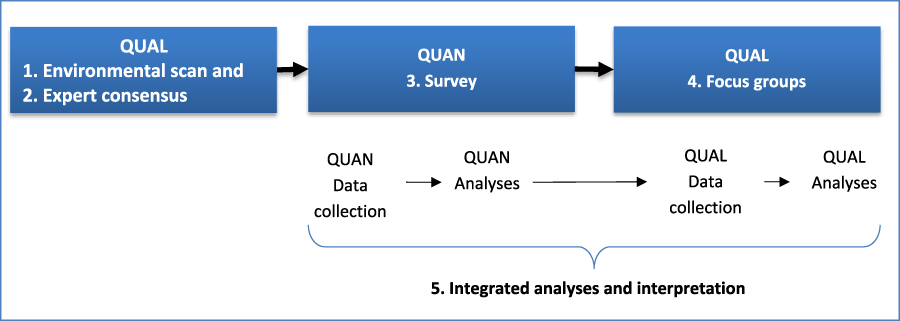
We adopted a sequential explanatory mixed-methodology study design (Creswell, Reference Creswell2014) structured in four consecutive phases (Figure 1): (1) an environmental scan of the existing educational programs for senior care in the four departments of family medicine in the province of Quebec; (2) a panel of clinical and teaching experts who prioritized clinical situations for senior care based on the results of the scan; (3) a cross-sectional survey to assess supervisors’ perceived continuing professional development needs for each of the clinical situations selected by the experts; and (4) a qualitative descriptive study comprising semi-structured interviews or focus groups with supervisors, to gain a better understanding of their CPD needs expressed in the survey. Each phase of the approach was informed by the preceding phase, allowing for integration of the data sources to answer our study objective. We conducted the survey in both French and English, in order to reach all clinical supervisors in Quebec.
Explanatory sequential mixed-methodology study design

Phase 1: Environmental Scan of Existing Educational Programs
We conducted an environmental scan (Hatch & Pearson, Reference Hatch and Pearson1998; Pashiardis, Reference Pashiardis1996) of the programs specifically designed to teach elder patient care at the four university departments of family medicine in the province of Quebec. From each family medicine residency curriculum, we extracted the educational objectives, target competencies, and observable behaviours that residents are expected to demonstrate over the course of their medical education.
Phase 2: Prioritization of Clinical Situations for Senior Care (Normative Needs)
Based on recommendations by the family medicine department heads, we recruited interprofessional inter-university experts in senior care and/or health sciences education from the four departments of family medicine in the province of Quebec. They represented the main professions involved in teaching residents at family practice teaching clinics (where residents all do a rotation): three family physicians, a geriatrician physician, a nurse practitioner, a clinical nurse, a social worker, an occupational therapist, a pharmacist, and a second-year resident in family medicine. Based on the results of the environmental scan, and using consensus-building meetings, the panel selected 13 priority clinical situations for senior care and several observable behaviours for each clinical situation, for each of the three care settings: ambulatory care (AC), home care (HC), and long-term care (LTC). The panel also ensured that the selected behaviours reflected the seven CanMed roles (Frank, Snell, & Sherbino, Reference Frank, Snell and Sherbino2015). The present project did not cover care in other key teaching settings, such as hospitals, as the exposure of residents to senior care is more consistent in this setting. Interviews with local experts served to validate the selected clinical situations and observable behaviours.
Phase 3: Survey of Clinical Supervisors (Perceived Needs)
Recruitment of Participants
All of the clinic directors of the family practice teaching clinics in the province of Quebec (n = 44) agreed to participate in the project. With their help, we drew up a list of the professionals (in medicine, nursing, pharmacy, psychology, social work, kinesiology, and other fields) who supervised residents at each of their clinics.
Survey
Using a web-based self-administered survey (see supplemental Appendix 1 available online), we evaluated the supervisors’ perceived CPD needs for each of the 13 clinical situations selected by the expert panel in each care setting (AC, HC, and LTC). To illustrate the specific skills required, between 1 and 3 observable behaviours were listed as examples for each clinical situation in each care setting. Respondents evaluated their CPD needs on a Likert scale ranging from 1 (no needs) to 3 (extensive needs), inspired by a methodology described elsewhere (Labesse, Reference Labesse2008). The survey also included a number of questions to identify the socio-demographic and professional characteristics of participants (sex, age, profession, and practice experience) and proportion of practice time devoted to senior care and to supervision in each setting. Links to the web survey were emailed to all the supervisors listed using the modified Dillman method (Dillman, Reference Dillman2011). An initial email was sent by the first author (AMCG). Three reminder emails were then sent weekly or once every two weeks. We also offered participants the chance to enter a random draw for a prize worth $400.
Quantitative Analysis
All analyses were conducted using the SAS statistical software, version 9.4 (SAS Institute). Unless otherwise specified, all tests were bilateral, and the significance level was 0.05.
The survey participation rate was calculated as the ratio of the number of respondents to the number of supervisors contacted. Using χ2 tests, we compared the characteristics of respondents to those of non-respondents, specifically their profession (physician, nurse, other professional); gender; university (Laval, Montreal, McGill, Sherbrooke); clinic; size of the clinic (estimated as the total number of practicing physicians and residents); and size of the city where the clinic was located. City sizes were categorized based on the number of inhabitants: rural (<1,000), small population centres (1,000–29,999), medium population centres (30,000–99,999), and large urban population centres (>100,000) (Statistics Canada, 2011).
Descriptive analyses were performed on the survey responses. For each clinical situation, we calculated the proportion of participants who felt a great need for CPD (in other words, we dichotomized participants’ answers). We also calculated mean CPD need scores to study a single independent variable at a time: clinical situation, activity (defined as clinical training needs or faculty development needs), setting, profession, and participant characteristics. The mean proportion of practice time per participant devoted to senior care was then calculated. We also compared distribution of this variable across profession, gender, and clinic size using χ2 tests.
Subsequently, we conducted logistic regressions to determine the impact of independent variables (age, gender, years in practice, proportion of practice time in each setting, proportion of practice devoted to senior care, clinical situation, setting, activity, university, size of the clinic, city size) on the odds that participants perceive their CPD needs as extensive (as opposed to having some or no needs). Using a multi-step approach (Hosmer, Lemeshow, & Sturdivant, Reference Hosmer, Lemeshow and Sturdivant2013), we started with a univariate, generalized repeated measures linear model, and set the threshold for significance at 0.15. We kept all the factors shown to be significant at this level and constructed a multivariate logistic model using repeated measures (GLIMMIX procedure add-on, SAS mixed model tool). This procedure was performed with responses from all participants, as the samples were too small when stratified by profession.
Phase 4: Focus Groups and Interviews (Perceived Needs)
Clinic Selection and Recruitment
We used a maximum variation purposive sample of supervisors with extensive CPD needs for various clinical situations, as identified in the survey, to conduct the interviews. We initially identified the clinical situations for which supervisors perceived the greatest CPD needs at each clinic (highest mean score per clinic). We then selected four clinics, one per university, where supervisors perceived extensive CPD needs for different clinical situations. When two clinics had similar mean scores, we chose the one with the largest number of observations and/or the largest standard deviation, to maximize the diversity of perceptions.
We first contacted the medical directors at each of the selected clinics by email to ask their permission to invite the clinicians at their clinic to take part in the focus groups. Each director was then tasked with contacting the members of their team and organizing the focus group.
Process
We conducted one focus group of about one hour with physicians at each clinic, for a total of four groups, and one to three focus groups of about 30 minutes each with groups of two to three supervisors other than physicians (nurse, psychologist, social worker, nutritionist, and sexologist). The discussions were loosely structured around questions designed to expand our understanding of the reason for the identified needs and to explore possible needs that were not assessed in the survey. We also asked participants their preferred educational strategies to meet their needs, and these results will be reported elsewhere (Giguere et al., submitted). The same interview guide was used for all groups, ensuring that all relevant issues were covered in each interview, although not necessarily in the same order. The same experienced research professional (M. Meudec) conducted all the interviews. Each discussion was recorded in audio format and professionally transcribed verbatim.
Participants were compensated with a lump sum payment of either $50 or $100, depending on the length of the interview.
Qualitative Analyses
The first author (AMCG) and a research assistant (M. Meudec) performed a thematic qualitative data analysis of the focus group discussions using a hybrid deductive/inductive approach (Fereday & Muir-Cochrane, Reference Fereday and Muir-Cochrane2006). In the deductive analysis, the two researchers identified a number of preliminary nodes based on the survey results, to help understand the perceived CPD needs. The transcripts were entered as project documents into specialized software (NVivo 10, QSR International), and the codes developed for the manual were entered as nodes. One person (M. Meudec) then applied these preliminary codes to the content of all the interviews, used an inductive analysis to integrate new themes mentioned by participants, and proposed a preliminary interpretation of the results. The first author (AMCG) corroborated the interpretation by reviewing the analysis to ensure that the themes, code tree, and analyses coincided with the objective of the study.
This project was approved by the research ethics committee of the research centre at the Centre Hospitalier Universitaire de Quebec (#C13-06-1246), the Comité d’éthique de la recherche sur l’humain du Centre hospitalier universitaire de Sherbrooke (#13-136-M1), the Institutional Review Board of McGill University (A08-E70-13B), and the Comité d’Éthique de la Recherche en Santé of the University of Montreal (#13-079-CERES-D).
Results
Survey
Survey Response Rates
Of the 977 clinicians to whom we sent a link to complete the online survey, 352 took part (36% participation rate). Respondents and non-respondents were not significantly different with respect to profession, university, clinic, clinic size, or city size. However, they differed significantly according to gender, with women less likely to respond to the survey (34%) than men (42%) (p = 0.04).
Survey Participant Characteristics
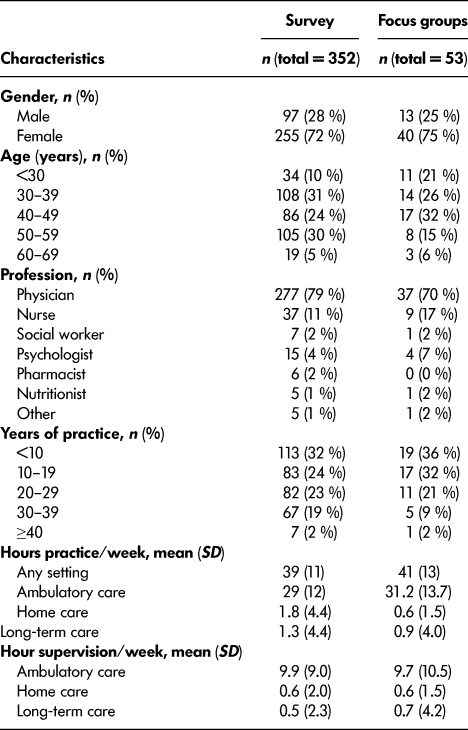
Most survey participants were women (72%) and physicians (79%) (Table 1). They had a median age between 40 and 49 years and an average 18 years (±SD 11) of experience in practice. They reported practicing on average 39 hours (± SD 11) per week, with on average 42 per cent (±SD 22%) of their practice time devoted to senior care; however, this differed significantly across professions, with 88 per cent of nurses, 82 per cent of physicians, and 44 per cent of the other professionals reporting spending over 25 per cent of their practice time to care for senior patients (p < .001). Participants also reported various amounts of time spent supervising in the different settings, depending on their profession (Table 2). Proportion of practice time devoted to senior care was not influenced by gender, university, or size of the clinic. Participants mostly practiced in ambulatory settings, and this was not influenced by their profession.
Characteristics of study participants

Mean number of hours/week spent supervising by different health professionals in various care settings

Relevance of Continuing Professional Development
Most participants who completed the survey considered CPD relevant to improve their competencies in caring for seniors or supervising residents in the care of seniors (Table 3). However, in contrast to physicians and other professionals, the majority of nurses felt CPD was irrelevant to improve their care of older patients in LTC and HC settings. Among all respondents, the perceived relevance of CPD varied across the different care settings (83%, 63%, and 51% for AC, HC, and LTC settings respectively). Answers to the survey’s open-ended questions revealed that CPD was often perceived to be irrelevant in HC and LTC when the supervisor did not practice in these settings (results not shown). In AC, perceptions that CPD was less relevant CPD were most often explained by lower perceived CPD needs.
Supervisors’ perceptions of the relevance of receiving training to provide senior care or to teach senior care to residents

a ≥ 1 answer per participant
Factors Influencing CPD Needs
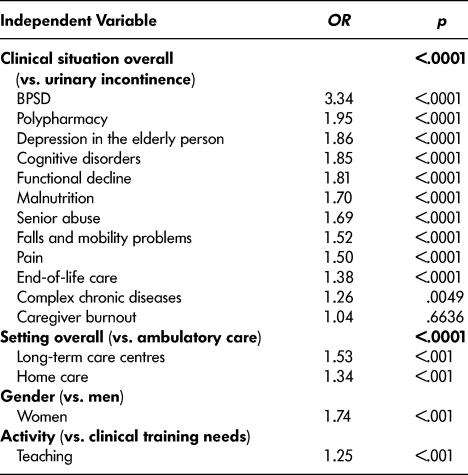
Several factors influenced supervisors’ perceived CPD needs. In the univariate model, we found the following co-variates to influence CPD needs (statistical significance set at p < .15): clinical situation (p < .001), setting (p < .001), gender (p = .004), age (p = .07), activity (p < .001), university (p = .07), and number of hours of practice in an office setting (p = .05). These variables were then included in a multivariate model, and only four co-variates remained statistically significant to explain CPD needs (statistical significance set at p < .05): clinical situation, setting, gender, and activity (Table 4).
Results of the multivariate logistic regression model to determine the impact of independent variables on the odds that participants perceive extensive training needs. (OR = odds ratio; P = significance level)

BPSD = behavioral and psychological symptoms of dementia
Clinical Situation
In the regression model, “behavioural and psychological symptoms of dementia” (BPSD), “polypharmacy,” and “depression” were respectively 3.34, 1.95, and 1.86 times more likely to be perceived as extensive CPD needs than “urinary incontinence” (clinical situation with the least number of participants reporting extensive CPD needs).
Care Settings
For supervisors, the odds of perceiving extensive CPD needs were 1.5 times higher in LTC than AC settings. Perceptions of extensive CPD needs were also 1.3 times higher in HC than in AC settings. Perceptions of extensive CPD needs for end-of-life care varied more among settings (lower in AC and higher in HC) (max-min score difference = 0.21) than other clinical situations. Perception of extensive CPD needs varied more between clinical situations in LTC (max-min score difference = 0.52) than in HC (0.39) or AC settings (0.32).
Gender
Regression results show that women were 1.7 times more likely to perceive extensive CPD needs than were men.
Activity (Defined as Providing or Teaching Senior Care)
For supervisors, the odds of perceiving extensive CPD needs were 1.3 times higher for teaching than for providing senior care.
Focus Groups on the Factors Influencing CPD Needs
We selected four clinics (one per university) where supervisors identified various clinical situations associated with greater self-perceived CPD needs in the survey (Table 5). The selected clinics were located in rural (n = 1), semi-urban (n = 1), and urban (n = 2) areas. We interviewed 53 supervisors from diverse professions, most of them women (Table 1). We conducted 13 focus groups: four with eight to 11 physicians and nine with one to two professionals other than physicians. Interviewees had similar characteristics to those surveyed in Phase 1, with the exception that they had fewer years of practice and that the professionals other than physicians were proportionally better represented.
Clinical situations for which each of the selected clinic for the focus group reported the highest mean level of training needs

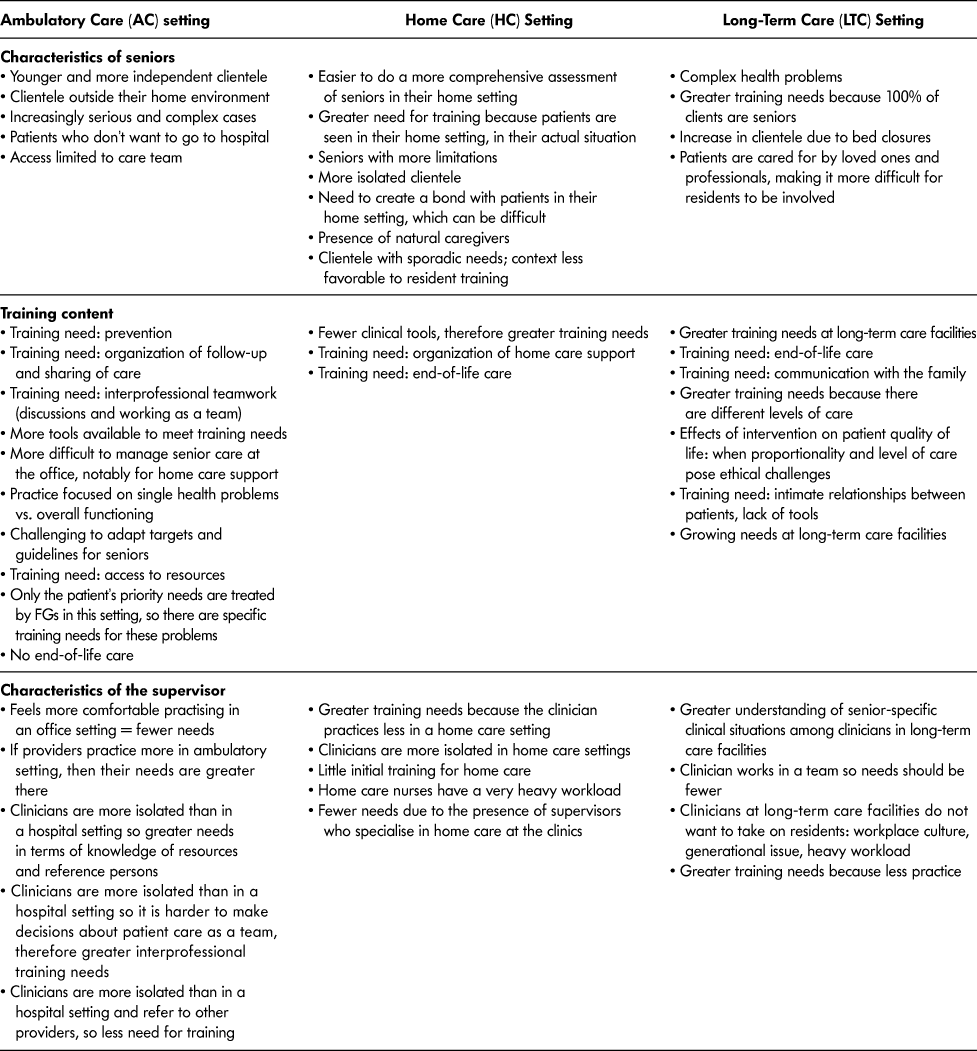
Three setting-specific elements were raised during the focus groups to explain why supervisors expressed more CPD needs in LTC and HC settings compared to AC settings: characteristics of the seniors in each setting, the specific training content required for each setting, and the characteristics of the supervisors in each setting (Table 6). In AC settings, patients are generally younger and more autonomous, but limited access to the complete health care team restricts practice. In HC settings, patients can be observed in their living environment, allowing for better evaluation; however, more CPD is required to compensate for a lack of equipment, as mentioned by one participant:
[…] When you’re really in the field (…) you can observe more, but at the same time, you aren’t in your office and you don’t have your examining table or your equipment. It can make you feel a bit more insecure … Nurse, Clinic 1
Characteristics of practice settings that influence perceived training needs of the clinical supervisors in the delivery and teaching of senior care
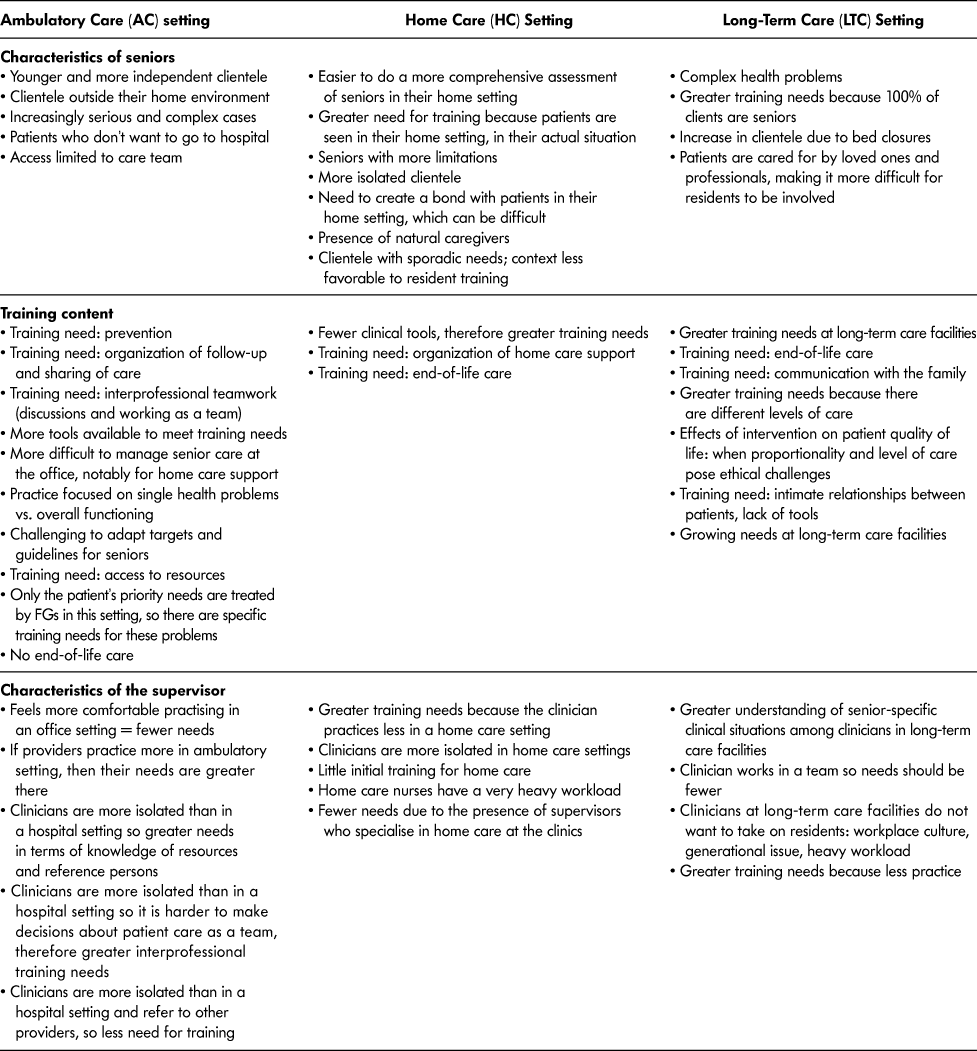
In LTC settings, patients generally have more complex clinical situations, thus generating more CPD needs. Patients are also monitored by family, caregivers, and other health professionals, requiring communication and interpersonal skills, and making the involvement of trainees more challenging. Specific CPD content needs to be developed for practice in each setting are also described in Table 6. In HC settings, all physician groups discussed how a lack of practical tools explained their more extensive perceived CPD needs, while they reported the presence of tools as a factor facilitating care in AC settings. Participants also explained that the more extensive CPD needs they perceived in LTC settings were due to the different levels of care required. Finally, participants mentioned being more comfortable practicing in AC settings, but being more isolated there compared to in the hospital, where they have access to other professionals:
At the office you’re on your own. It’s just you and the family and all that. But in a hospital, you’ve got your team there. (…) Physician, Clinic 2
Participants identified a lack of initial training specific to HC settings. Moreover, they reported being overloaded with work and isolated in HC settings. In many focus groups, supervisors explained that their lack of practice experience in LTC and HC settings accounted for their greater CPD needs in these settings.
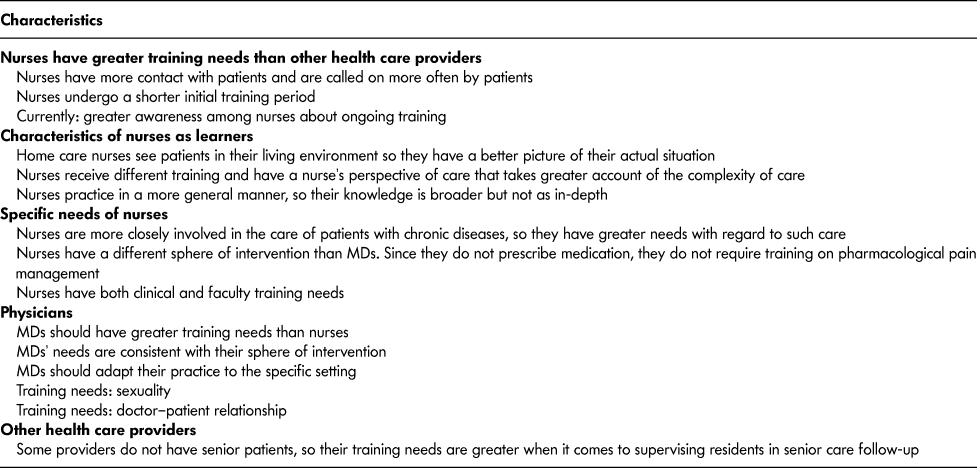
Another factor stated by the participants as influencing their CPD needs was the supervisors’ profession. Participants discussed why nurses had more perceived CPD needs compared to other professionals (Table 7). In the interviews, participants mentioned how being closer to patients and communicating more with them might explain such needs. Their shorter and more general initial training and their interest in continuing professional development could also explain some of these perceived needs. According to participants, the training of nurse supervisors should focus on faculty development and on chronic diseases that represent an important part of their practice.
Characteristics specific to the profession of supervisor that influence perceived training needs for the delivery and teaching of senior care

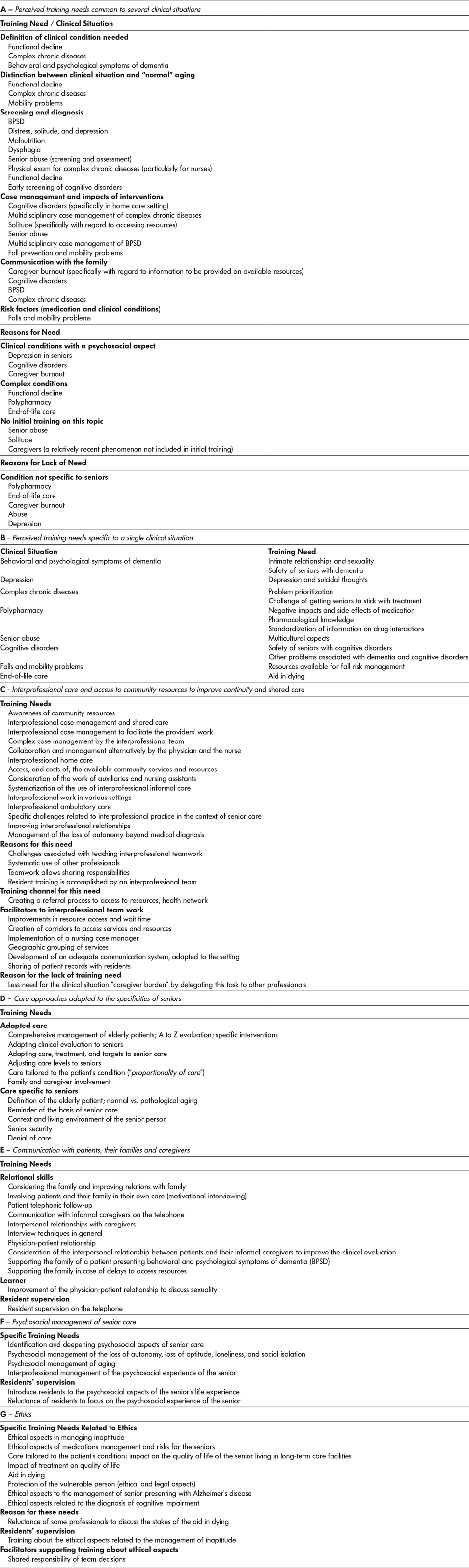
The participants confirmed their important CPD needs for all the clinical situations selected by the expert panel: BPSD (n = 12 interviews of focus groups), polypharmacy (n = 9), depression (n = 6), cognitive disorders (n = 13), functional decline (n = 7), malnutrition (n = 4), senior abuse (n = 6), falls and mobility problems (n = 8), pain (n = 4), end-of-life care (n = 4), complex chronic diseases (n = 13), caregiver burnout (n = 12), and urinary incontinence (n = 1).
Supervisors were then invited to discuss why they perceived themselves as having greater CPD needs for these situations (Table 8A-G). They explained how some of these situations needed to be better defined (functional decline, complex chronic diseases, BPSD), and they reported challenges in distinguishing some of them from “normal aging” (functional decline, falls and mobility problems, complex chronic diseases) (Table 8A). For several situations, they reported CPD needs for screening and diagnosis, in particular with regard to BPSD, and even more so when patients are in the earlier stages and in the grey zone between being capable and incapable of making decisions:
It can be tough when it comes to diagnosing (…). Is it depression, the onset of dementia, or is it just normal cognitive decline? And sticking a label on patients like that when they’re still functioning … that is, when they’re still part of the workforce (…), it’s a bit tricky to manage because it’s still in the early stages. Physician, Clinic 3
Specific training needs of participants with reasons for the need or lack thereof

Participants also discussed CPD needs to manage many of the studied clinical situations, in particular those that require interprofessional management such as complex chronic diseases and BPSD. Continuing professional development to communicate better with families was mentioned as important with regard to caregiver burnout, cognitive disorders, complex chronic diseases, and BPSD. Continuing professional development on the risk factors of falls and mobility problems was also considered important by supervisors. Psychosocial aspects accounted for the need for CPD on depression, cognitive disorders, and end-of-life care. Several situations were also perceived as more complex. A lack of initial training regarding certain clinical situations – for instance, senior abuse, solitude, and caregiver burnout, explained the perceptions of CPD needs. For depression, many supervisors attributed their need for CPD to a lack of practice experience with depressed seniors:
(…) For me, personally, it’s perhaps the part of the population I’m least familiar with. Psychiatrist, Clinic 3
A number of other clinical situations were cited by participants in describing their perceived CPD needs (Table 8B).
Some supervisors mentioned they would appreciate CPD for situations of fatigue (n = 1), screening for dysphagia (n = 2), diabetes (n = 2), and the evaluation and monitoring of hypertension (n = 2).
Several groups also discussed their need for CPD in order to teach longitudinal, multifactorial, and interprofessional management of senior patients to their residents (Table 8C). More specifically, they mentioned interprofessional management and communication within interprofessional teams (particularly in HC and AC settings); team management of complex diseases and functional decline; shared care; systematization of the use of interprofessional informal care; and consideration of informal caregivers and health assistants.
It’s not easy to form an opinion, but when you’re there with the whole group and discussing the case, you end up with a pretty good picture. For these patients, you see them on your own in your office and you’ve got half an hour, so you get them to come back again. But doing all those assessments … and when the signs are subtle and not overly serious, I find it hard to get a clear sense of what the patient is experiencing. Physician, Clinic 5
They also expressed CPD needs regarding the community resources and services available for senior patients, including access to and awareness and cost of available resources.
Participants also highlighted the importance of CPD to develop care approaches adapted to the specific needs of seniors (Table 8D). For instance, they mentioned that CPD should distinguish between “normal aging” and “pathological aging”. It should also provide information on the contexts and living environments of seniors, on family and caregiver involvement, safety, assessment of functional status, and care refusal. The participants pointed to additional CPD needs regarding ways to adapt their practice (appropriate level of care, clinical assessment, proportionality of care, and family and caregiver involvement). They also underscored the importance of CPD that emphasizes the need for comprehensive management of elderly patients.
Some supervisors, mostly professionals other than physicians, expressed CPD needs regarding various facets of their communication with patients, their families, and caregivers, and the need to involve them more effectively in patient care (Table 8E).
[…] I think that recently, I don’t know quite how to get them involved. I have people who don’t show up for their appointments or their blood tests, yet they have children who are there for them and who come … maybe it’s me or maybe it’s the system, but I think we could probably do a better job of explaining to families what’s happening, what their role is, and what they need to do. Physician, Clinic 4
More specifically, they mentioned a need for continuing professional development to help families deal with BPSD and wait times to access resources. They also pointed to a need for CPD to consider the interpersonal relationships between patients and their caregivers when conducting clinical assessments. CPD on the more technical aspects of communication was also discussed – for instance, over-the-phone and patient interview skills, as well as monitoring of telephone follow-ups by their residents.
Only non-physicians discussed the importance of more CPD on the psychosocial management of seniors (Table 8F), namely on issues of aging, loss of autonomy, incapacity to make medical decisions, solitude, and social isolation. They also stressed the importance of including these aspects in resident training, given residents’ initial lack of interest in these aspects:
[…] The psychosocial aspect of medical care is already a pretty hard sell with residents and we have to convince them, and others, of the importance of performing psychosocial assessments of patients’ experiences to help them deal with their grieving emotions. Psychiatrist, Clinic 4
Participants expressed CPD needs regarding the ethics of senior patient care (Table 8G). Management of the incapacity to make medical decisions, management of medication, treatment impacts on quality of life, proportionality of care, the protection of vulnerable seniors, cognitive disorders, and aid in dying were all raised as CPD needs regarding the ethics of senior care. Supervisors mentioned a need for training to teach the ethical aspects of the incapacity to make medical decisions to their residents. For instance, some supervisors mentioned being reluctant to discuss the ethics of assisted death:
Many people feel it’s the job of palliative care specialists to convey that information to residents […] Some mentioned to us that they don’t think it should even be taught to residents, which makes me a bit uncomfortable because at some point people need objective information to make a decision. Physician, Clinic 3
Supervisors perceived ethical issues as less challenging when approached as a team, where decisions and responsibility are shared.
Discussion
We assessed supervisors’ perceived CPD needs to teach senior care to their residents in ambulatory care, home care, and long-term care settings. An interprofessional panel of experts initially selected 13 clinical situations to study the supervisors’ needs, based on the available programs in senior care at the four university departments of family medicine in Quebec. In a subsequent survey, supervisors reported that behavioural and psychological symptoms of dementia, polypharmacy, and depression were the three clinical situations most associated with their CPD needs. The survey results also highlighted that they had more extensive CPD needs in LTC and HC settings than AC settings. In focus groups, the supervisors explained that they had less practical experience in these settings, that the presence of caregivers and other professionals made the involvement of trainees more challenging, and that they lacked certain practical tools for HC settings. They also explained their CPD needs by the fact that seniors seen in these settings presented more complex clinical situations, especially in LTC, where seniors require a wide variety of care. Several supervisors perceived CPD for providing senior care or teaching it to residents in LTC and HC settings as irrelevant because they did not plan to practice in these settings. The focus groups also pointed to additional important CPD needs of supervisors: interprofessional care management, availability of resources and services for patient referrals, care adaptation to the specificities of seniors, and communication with patients and their caregivers.
Competencies Associated with Senior Care
The key clinical situations and observable behaviours that the experts prioritized for senior care in the present study are consistent with those identified by others (Charles, Triscott, Dobbs, & McKay, Reference Charles, Triscott, Dobbs and McKay2014; Mezey, Mitty, Burger, & McCallion, Reference Mezey, Mitty, Burger and McCallion2008; Williams et al., Reference Williams, Warshaw, Fabiny, Lundebjerg Mpa, Medina-Walpole, Sauvigne and Leipzig2010). For example, a recent expert consensus also identified cognitive disorders, functional decline, incontinence, medication management, and communication skills as geriatric core competencies for family medicine, converging with our findings (Charles et al., Reference Charles, Triscott, Dobbs and McKay2014).
Specific Clinical Situations
Supervisors perceived BPSD as a priority as they found it challenging to define this clinical situation, screen and diagnose it, and communicate with families of seniors presenting BPSD. They also expressed some needs to improve their multidisciplinary management of BPSD, as demonstrated in this quote:
All these problems, what’s the point of finding them? Because anyway, I feel helpless on what I can do with them. I know what to do with them, but it takes so much energy to convince the person, to call the family, to convince the system. […] You send the person to the local health and social services centre and they assess that he has no needs. Then it is to you that the family complains that the patient loses his autonomy, and that the patient does not do well. […] The problem is not at the level of the diagnosis, except perhaps on how to manage the diagnosis of behavioural problems, the problem is … to take charge of the problem with an interdisciplinary systemic approach and to have access to these people. If we were working at the local health and social services centre, if they were in the premises next door and we could go and see the nurses to talk about the patient, to follow up as we do when we are in the hospital, it seems to me that it would be much easier and that we would do a better job. Then it would be more satisfactory. Physician, Clinic 4
Previous studies have reported that primary care providers felt unprepared to manage BPSD and to meet their patients’ biopsychosocial needs, due to time constraints, inadequate reimbursement, poor access to expert dementia care and community resources, and a lack of adequate communication among the various medical, social, and community dementia care providers (Harris, Chodosh, Vassar, Vickrey, & Shapiro, Reference Harris, Chodosh, Vassar, Vickrey and Shapiro2009; Hinton et al., Reference Hinton, Franz, Reddy, Flores, Kravitz and Barker2007).
Polypharmacy also emerged as an important CPD need, notably because of the complexity of this issue. Specifically, supervisors mentioned needing training on the side effects of medications. These findings are consistent with reports that one in five prescriptions given to seniors in primary care are inappropriate (Opondo et al., Reference Opondo, Eslami, Visscher, de Rooij, Verheij, Korevaar and Abu-Hanna2012), and often result in adverse drug events such as falls and confusion (Hanlon et al., Reference Hanlon, Schmader, Koronkowski, Weinberger, Landsman, Samsa and Lewis1997). Negative impacts of polypharmacy concern a large proportion of Canadian seniors (Canadian Institute for Health Information, 2014), considering that 70 per cent of them took five or more medications in 2012 (and 30% took 10 or more). Our findings highlight supervisors’ need for CPD on the most frequent drug combinations and on the ways to access the available resources to help evaluation of the risk of combining drugs. As mentioned by a participant, CPD on the standardization of information regarding drug interactions could be beneficial in order to avoid adverse events when prescribing more than one drug:
[In the survey] I had much prioritized polypharmacy [t/n as training needs]. You know, regarding interactions and maybe a little more regarding pharmacology. Because, often one will ask oneself for a patient: good, are there interactions? You know … they’re gonna take more medicine … that’s something that would interest me as a nurse. Nurse, Clinic 4
Future CPD programs should thus improve access to lists of medications that should be avoided or used with caution by older adults, such as the lists published by the American Geriatrics Society to decrease adverse events resulting from inappropriate medications (American Geriatrics Society 2015 Beers Criteria Update Expert Panel, 2015). In the focus groups, the supervisors also asked for improved access to experienced pharmacists to train their residents and to oversee the management of polypharmacy and appropriate prescriptions writing.
CPD in drug management could also help improve the providers’ competencies to manage depression, as the participants identified extensive CPD needs to improve their screening and diagnosis of depression and to manage suicidal thoughts in this population. Depression often goes undetected and is managed sub-optimally in primary care, with only 40 per cent of practice concordant with depression guidelines (Smolders et al., Reference Smolders, Laurant, Verhaak, Prins, van Marwijk, Penninx and Grol2009). Elderly patients are less likely to be offered psychosocial interventions, counselling, psychotherapy, or pharmacotherapy than younger patients (Harman, Edlund, & Fortney, Reference Harman, Edlund and Fortney2004), despite the fact that recent trials have convincingly shown that these interventions can improve depression outcomes (Forsman, Jane-Llopis, Schierenbeck, & Wahlbeck, Reference Forsman, Jane-Llopis, Schierenbeck and Wahlbeck2009; Mottram, Wilson, & Strobl, Reference Mottram, Wilson and Strobl2009; Wilson, Mottram, & Vassilas, Reference Wilson, Mottram and Vassilas2008). Supervisors mentioned being less familiar with the psychosocial aspects of depression management and needing training to help them distinguish symptoms of depression from those of other clinical situations. This concurs with a study of McCabe et al. (McCabe, Davison, Mellor, & George, Reference McCabe, Davison, Mellor and George2009) who concluded that health care professionals find it difficult to distinguish symptoms of depression from symptoms of other conditions such as dementia or physical illnesses.
Awareness of Community Resources
Supervisors perceived it critical to improve their awareness of community resources in order to improve continuity of care of senior patients. More specifically, they mentioned a need for CPD with regard to access to – and the cost of – available community services and resources. Other studies have also reported family physicians’ challenges to access community services for seniors in Ontario (Lam, Anderson, Austin, & Bronskill, Reference Lam, Anderson, Austin and Bronskill2012), and in the United States (Harris et al., Reference Harris, Chodosh, Vassar, Vickrey and Shapiro2009). Caring for patients with chronic illnesses typically requires management skills to coordinate in-home and community services, as well as interpersonal skills for interdisciplinary teamwork and family caregivers’ needs assessment (Darer, Hwang, Pham, Bass, & Anderson, Reference Darer, Hwang, Pham, Bass and Anderson2004). These unmet needs should be addressed in future CPD activities in senior care or through the implementation of novel strategies to improve access to community services.
Long-term Care and Home Care Settings
In the survey, we found that supervisors perceived needing more CPD related to caring for seniors in LTC and HC compared to AC. In the focus groups, the supervisors further explained that the characteristics of seniors in the different settings, and the specific characteristics of the settings themselves, influenced their CPD needs. For instance, they explained how the various levels of care required in LTC settings led to their perceptions of greater CPD needs in this setting compared to AC and HC settings. In addition, they also mentioned that their CPD needs related to improving communication and interpersonal skills were responsible for some of their CPD needs to care for seniors in LTC settings where, in addition to multidisciplinary teams, family members and caregivers are often involved in senior care. On the other hand, they considered it less relevant to receive CPD to care for seniors in these settings because they do not consistently practice or supervise trainees in these settings. Indeed, in family practice teaching clinics in Quebec, clinical supervision is not yet systematic in HC and LTC settings (Lebel et al., Reference Lebel, Champoux, Dechêne, de la Chevrotière, Goyette, Lebel and Sanche2013). In a survey conducted by the College of Family Physicians of Canada, the proportion of family physicians doing nursing home care “some of the time” declined from 22 per cent in 2012 to 17 per cent in 2013 (McGregor & Sloan, Reference McGregor and Sloan2014). This is also an issue in the United States, where 42 per cent of family practice graduates reported spending too little training time in nursing homes (Cantor, Baker, & Hughes, Reference Cantor, Baker and Hughes1993).
Communication Skills
Participants highlighted CPD needs to improve their communication skills – for example, to improve the involvement of patients and their family in their own care and to improve clinical situations through interpersonal relationships between patients and their informal caregivers. Earlier studies have shown how the personality, attitude, and communication skills of clinicians can determine whether geriatric patients and their families are satisfied with their care (Frank, Su, & Knott, Reference Frank, Su and Knott2003; Lam, Gallinaro, & Adleman, Reference Lam, Gallinaro and Adleman2013). Improving the clinicians’ awareness of the needs of family members has also been shown to facilitate communication with the elderly patient (O’Halloran, Worrall, & Hickson, 2012). However, communicating with the patients’ families can be challenging, for example, because it increases consultation lengths, but their involvement in care can improve the safety of medication use and the home environment (Adams et al., Reference Adams, McIlvain, Lacy, Magsi, Crabtree, Yenny and Sitorius2002). Hence, CPD and communication tools could be implemented to improve communication with seniors and their caregivers, especially when the older patient presents cognitive limitations that represent a barrier to communicate their needs or to understand information (Stans, Dalemans, de Witte, & Beurskens, Reference Stans, Dalemans, de Witte and Beurskens2013).
Interprofessional Collaboration
Participating supervisors expressed multiple CPD needs regarding interprofessional care, perhaps demonstrating the acknowledgement of its importance in improving continuity and shared care. The challenges associated with teaching interprofessional teamwork and the fact that resident training is carried out by an interprofessional team were among the reasons given for this need. Earlier studies have reported that a lack of skills to communicate with other team members and a lack of understanding of each person’s professional role and responsibilities represented barriers hindering interprofessional collaboration in primary care (Xyrichis & Ream, Reference Xyrichis and Ream2008). Training in interprofessional collaboration has been shown to improve collaborative work, management of care, and patient outcomes (Reeves, Perrier, Goldman, Freeth, & Zwarenstein, Reference Reeves, Perrier, Goldman, Freeth and Zwarenstein2013). A CPD program in senior care should therefore comprise interprofessional education, which is achieved when members of more than one health or social care profession learn interactively together, for the explicit purpose of improving interprofessional collaboration or the health/services of patients (Reeves et al., Reference Reeves, Perrier, Goldman, Freeth and Zwarenstein2013).
Faculty Development Program to Meet the Needs Identified
Some reports of geriatrics-focused resident and faculty development programs emphasize the teaching of geriatrics content for hospitalists, internists, or geriatricians (Mazotti et al., Reference Mazotti, Moylan, Murphy, Harper, Johnston and Hauer2010; Podrazik et al., Reference Podrazik, Levine, Smith, Scott, Dubeau, Baron and Sachs2008; Rubin, Stieglitz, Vicioso, & Kirk, Reference Rubin, Stieglitz, Vicioso and Kirk2003). The faculty development opportunities for geriatrics-oriented faculty in family medicine improved participants’ perceptions of having enhanced skills in the care of older people and teaching of geriatrics (Willett et al., Reference Willett, Boling, Meyers, Hoban, Lawson and Schlesinger2007) or increased their confidence in teaching (Coogle, Hackett, Owens, Ansello, & Mathews, Reference Coogle, Hackett, Owens, Ansello and Mathews2016; Levine et al., Reference Levine, Chao, Brett, Jackson, Burrows, Goldman and Caruso2008; Pinheiro et al., Reference Pinheiro, White, Buhr, Elbert-Avila, Cohen and Heflin2015). The faculty development programs described in the scientific literature used a diversity of educational modalities, including the development of an educational project by the participants, which led to the implementation of these projects during the year following training (Coogle et al., Reference Coogle, Hackett, Owens, Ansello and Mathews2016; Krichbaum, Kaas, Wyman, & Van Son, Reference Krichbaum, Kaas, Wyman and Van Son2015; Levine et al., Reference Levine, Chao, Brett, Jackson, Burrows, Goldman and Caruso2008; Pinheiro et al., Reference Pinheiro, White, Buhr, Elbert-Avila, Cohen and Heflin2015). The faculty development programs described in the studies cited above targeted clinical skills, and the findings suggest that confidence in one’s teaching skills can be achieved by improving knowledge and skills in the care of seniors.
Strengths and Limitations
This study has several strengths and a few limitations. The mixed-methods design allowed us to draw a more comprehensive picture of CPD needs across the province of Quebec and provide stronger evidence supporting our conclusions through the triangulation of findings. For instance, the diversity of professions among interview and focus group participants allowed for the triangulation of diverse perspectives. This was particularly valuable for our study as senior care is usually an interprofessional effort. Another strength of this study is that all the identified supervisors in charge of resident supervision in the 44 family practice teaching clinics in the province were invited to participate. In addition, the fact that we received responses to the survey from each clinic ensures the generalizability of results at a provincial level. However, the survey’s participation rate was low (36%), which may have introduced a sampling bias if the nonresponse was unequal among participants.
In general, our findings suggest that supervisors require further CPD regarding specific clinical situations as well as in more general aspects of their work, such as improving their access to community resources and honing their interprofessional collaboration skills. Unfortunately, although there is a close link between the two, excellent care provision does not necessarily guarantee excellent supervision. We may have missed some important needs related to faculty development, since the participants tended to discuss their CPD needs related to the provision of senior care more than their needs with regard to supervising residents in senior care. To assess faculty development needs better, the survey might have provided examples of supervision situations, instead of portraying only care situations.
Conclusions
The findings of this study suggest that many supervisors perceive shortcomings in their knowledge and skills to provide care to older patients, and that this affects their ability to teach residents about how to care for older patients. Key gaps in their knowledge include process-of-care factors, particularly psychosocial factors, communication and interpersonal skills, interprofessional collaboration, and awareness of community resources. Geriatric psychiatry is also a key gap in knowledge needed to address the needs of seniors with depression, behavioral and psychological symptoms of dementia, and dementia. Supervisors also reported needs for CPD on the management of complex cases, especially concerning medication management that is important to avoid polypharmacy. These findings will be useful to improve the CPD programs in senior care that are already available in Quebec for primary care clinicians (e.g., Centre d’Excellence sur le Vieillissement de Québec, Institut Universitaire de Gériatrie de Montréal, Centre de formation continue de la Faculté de Médecine de l’Université de Sherbrooke, CME Office of McGill University Division of Geriatric Medicine). Our findings may also serve to improve the current undergraduate and residency programs of the department of family medicine in the province of Quebec. Lastly, our findings will inform the creation of a faculty development program to meet the perceived needs of clinical supervisors with regard to senior care at family practice teaching clinics in the province of Quebec. Addressing these needs might in turn affect how they teach their residents in the care of older patients.
Supplementary Material
To view supplementary material for this article, please visit https://doi.org/10.1017/S0714980817000460