Acute kidney injury is an “abrupt decline in renal function” and has been classified in the paediatric population utilising three different criteria: paediatric Risk, Injury, Failure, Loss, and End-stage renal disease; Acute Kidney Injury Network; and Kidney Disease Improving Global Outcomes. Reference Sutherland, Byrnes and Kothari1 Acute kidney injury is common after paediatric congenital heart surgery, with a published incidence between 30 and 50%. Reference Aydin, Seiden and Blaufox2–Reference Zappitelli, Bernier and Saczkowski7 Younger patients, particularly newborns, have a higher incidence of post-operative acute kidney injury. Reference Aydin, Seiden and Blaufox2,Reference Li, Krawczeski and Zappitelli6,Reference Zappitelli, Bernier and Saczkowski7 Post-operative acute kidney injury has been associated with an increased length of hospitalisation, longer need for mechanical ventilator support, increased need for inotropic support, and a 5–7-fold increase in risk of mortality. Reference Sutherland, Byrnes and Kothari1–Reference Blinder, Goldstein and Lee3,Reference Toth, Breuer and Cserep5,Reference Zappitelli, Bernier and Saczkowski7,Reference Sethi, Goyal and Yadav8 Few studies have examined the incidence of acute kidney injury, and its effect on post-operative morbidity and mortality, in patients with hypoplastic left heart syndrome. Reference Wong, Selewski and Yu9–Reference Goldstein, Goldstein and Devarajan11
Patients with hypoplastic left heart syndrome require an initial neonatal procedure followed by a second procedure within the first year of life. The initial palliation for hypoplastic left heart syndrome requires establishment of a secure source of systemic blood flow, control of pulmonary blood flow, and assurance of complete intra-cardiac mixing. Most institutions utilise the Norwood procedure to obtain these goals. Reference Ohye, Sleeper and Mahony12,Reference Karamlou, Overman and Hill13 The Norwood procedure is a complex surgical operation typically performed in the first week of life and requires cardiopulmonary bypass and either a period of circulatory arrest or regional cerebral perfusion. Reference Ohye, Sleeper and Mahony12 The Hybrid Stage 1 palliation is an alternative strategy to the Stage 1 Norwood in patients with hypoplastic left heart syndrome and entails surgical placement of bilateral pulmonary artery bands, transcatheter atrial septostomy, and placement of a stent across the patent ductus arteriosus. Reference Galantowicz14 The Hybrid Stage 1 delays the need for cardiopulmonary bypass and complex arch repair to outside the neonatal period. This may be of benefit in avoiding end-organ injury, including acute kidney injury, in a vulnerable neonatal group. Reference Karamlou, Overman and Hill13
Recent studies have shown that patients with hypoplastic left heart syndrome undergoing the Norwood procedure have a higher likelihood of developing post-operative acute kidney injury than their Hybrid counterparts. Reference Garcia, Natarajan and Walters10,Reference Goldstein, Goldstein and Devarajan11 The incidence of acute kidney injury following Hybrid Stage 1 palliation has been reported to be between 16 and 29%. Reference Garcia, Natarajan and Walters10,Reference Goldstein, Goldstein and Devarajan11 However, at the majority of centres, the Hybrid is reserved for “high risk” patients, such as those with prematurity, low birth weight, additional congenital abnormalities, or those with end-organ dysfunction. Reference Garcia, Natarajan and Walters10,Reference Karamlou, Overman and Hill13 Therefore, the incidence of acute kidney injury contributable to the Hybrid Stage 1 procedure may be overestimated in the current literature.
In this study, we describe the incidence of post-operative acute kidney injury in hypoplastic left heart syndrome patients undergoing the Hybrid Stage 1 palliation as a preferred palliative operation. We utilised multiple criteria of acute kidney injury to allow for comparisons to the existing literature. We hypothesise that acute kidney injury will be associated with a higher risk of post-operative morbidity and 30-day mortality.
Materials and methods
A single-centre, retrospective review was performed in patients who were born with hypoplastic left heart syndrome and underwent the Hybrid Stage 1 procedure between July 2008 and July 2018 at Nationwide Children’s Hospital in Columbus, Ohio. At Nationwide Children’s, the institutional preference is to perform the Hybrid Stage 1 on all neonates who present with hypoplastic left heart syndrome unless there are significant concerns for retrograde flow into the aortic arch from the patent ductus arteriosus. Patients who required mechanical circulatory support prior to the Hybrid Stage 1 procedure, those with significant structural kidney disease, defined as an abnormality of the kidney anatomy altering the function of the organ, and those with incomplete data precluding the ability to estimate kidney function or to determine secondary outcomes were excluded from the study. The study was approved with waiver of informed consent by the Institutional Review Board at Nationwide Children’s Hospital.
Demographic variables obtained included date of birth, gender, ethnicity, birth weight, prenatal diagnosis, presence of a genetic syndrome and detail of the patient’s hypoplastic left heart variant. Patients were categorised as “high risk” based upon traditional risk factors for Norwood palliation; birth weight was <2.5 kg, premature (<37 weeks), mitral stenosis/aortic atresia variant, or had a documented genetic syndrome. Reference Tabbutt, Ghanayem and Ravishankar15 Pre-procedural characteristics recorded included age, height, and weight at time of the Hybrid procedure.
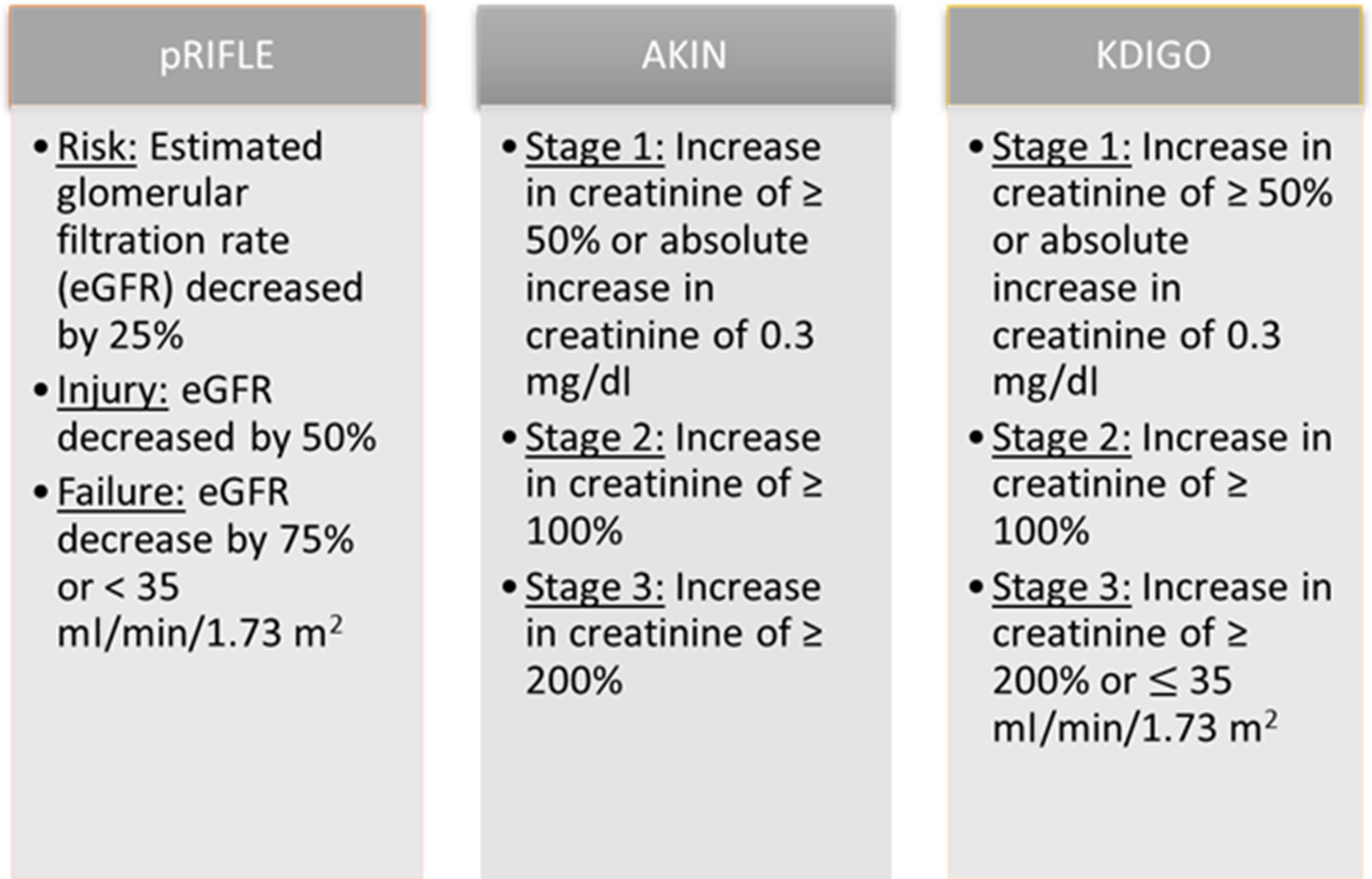
Acute kidney injury was evaluated based on serum creatinine values documented pre-operatively, and on post-op days 1–3. In the paediatric population, acute kidney injury may be defined by three different criteria, paediatric Risk, Injury, Failure, Loss, and End-stage renal disease; Acute Kidney Injury Network; and Kidney Disease Improving Global Outcomes. Fig 1 defines these classification schemes. Reference Lex, Toth and Cserep4,Reference Tabbutt, Ghanayem and Ravishankar15,Reference Group16 The Schwartz Formula was utilised to estimate glomerular filtration rate; assuming k = 0.45. Reference Sutherland, Byrnes and Kothari1,Reference Schwartz, Feld and Langford17,Reference Schwartz and Work18 Definitions were modified for paediatric Risk, Injury, Failure, Loss, and End-stage renal disease and Kidney Disease Improving Global Outcomes to exclude estimated glomerular filtration rate of ≤35 ml/minute per 1.73 m2 as a criteria for Failure and Stage 3 acute kidney injury, respectively, since absolute estimated glomerular filtration rate is not reliable in neonates. Reference Sutherland, Byrnes and Kothari1,Reference Jetton and Askenazi19 Due to the exclusion of absolute estimated glomerular filtration rate from acute kidney injury criteria, Acute Kidney Injury Network and Kidney Disease Improving Global Outcomes share the same definition. Therefore, we utilised paediatric Risk, Injury, Failure, Loss, and End-stage renal disease and the modified neonatal Kidney Disease Improving Global Outcomes for this study to allow our data to be comparable to the existing body of literature. We defined acute kidney injury as a dichotomous yes (Stage 1/Risk, Stage 2/Injury, or Stage 3/Failure) or no (no injury) and severe acute kidney injury as ≥ Stage 2/Injury for each criteria.
The classification schemes utilised in the paediatric population

The primary outcome of the study was the effect of acute kidney injury on 30-day mortality. Perioperative urine output, net fluid balance, weight change, the use of furosemide, the use of inotropes, and vasoactive inotrope score, as described previously in the literature, were recorded through post-op day 2 for analysis between the groups. Reference Gaies, Gurney and Yen20–Reference Wernovsky, Wypij and Jonas22 Net fluid balance was indexed to birth weight. Urine output was not utilised in the determination of post-operative acute kidney injury as most patients receive diuretics within 24 hours of returning to the ICU and therefore is more an indication of pharmacologic effect. Reference Aydin, Seiden and Blaufox2 Weight through post-op day 3 was recorded. Finally, we obtained data on post-operative length of intubation, need for renal replacement therapy, use of extracorporeal membrane oxygenation, post-operative cardiac arrest, and length of hospital stay.
Patient demographics and related clinical characteristics were summarised as mean with standard deviation or median with interquartile range for continuous variables, and frequency with percentage for categorical variables. Demographic, perioperative variables, including 30-day mortality, were compared between acute kidney injury and no acute kidney injury groups using two-sample t-test or Wilcoxon rank sum test for continuous variables, and Chi-square test or Fisher’s exact test, depending on the variable’s distribution. Logistic regression was used to estimate the odds ratio in post-operative 30-day mortality between acute kidney injury and no acute kidney injury groups. Due to the small number of mortality events, two variables for each model were possible for model implementation. All analyses were performed in R (Version 1.2.5033).
Results
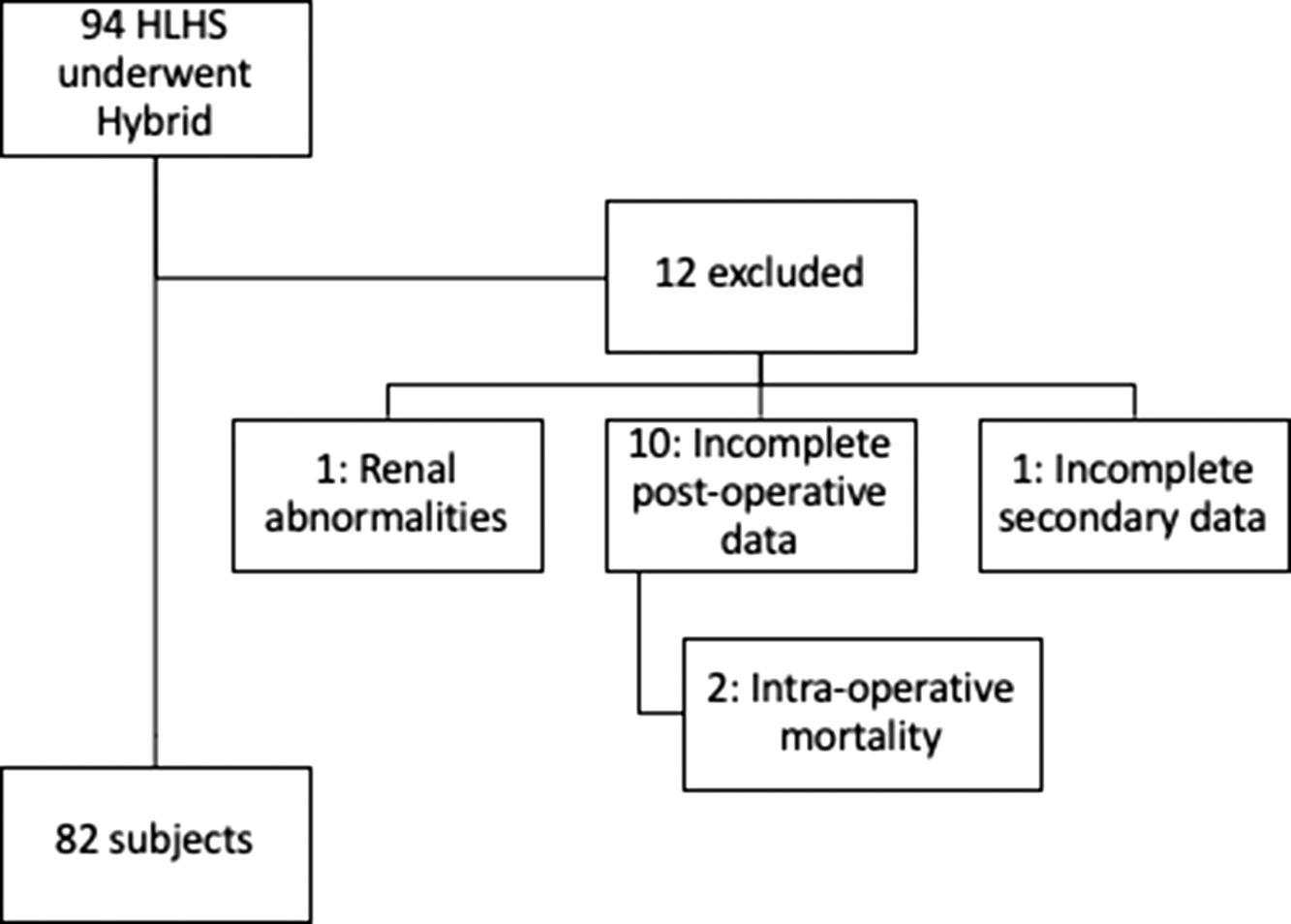
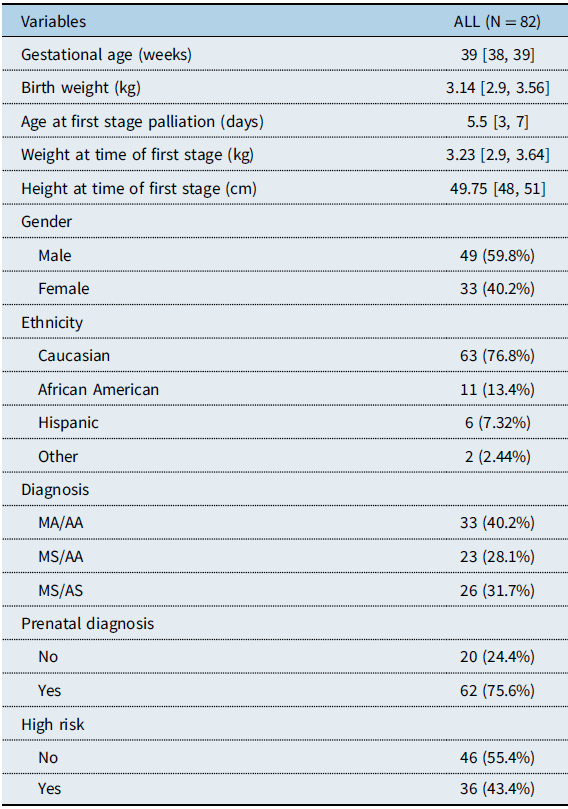
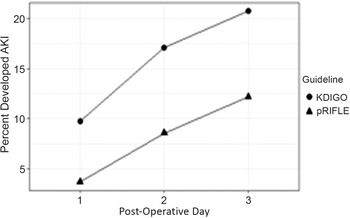
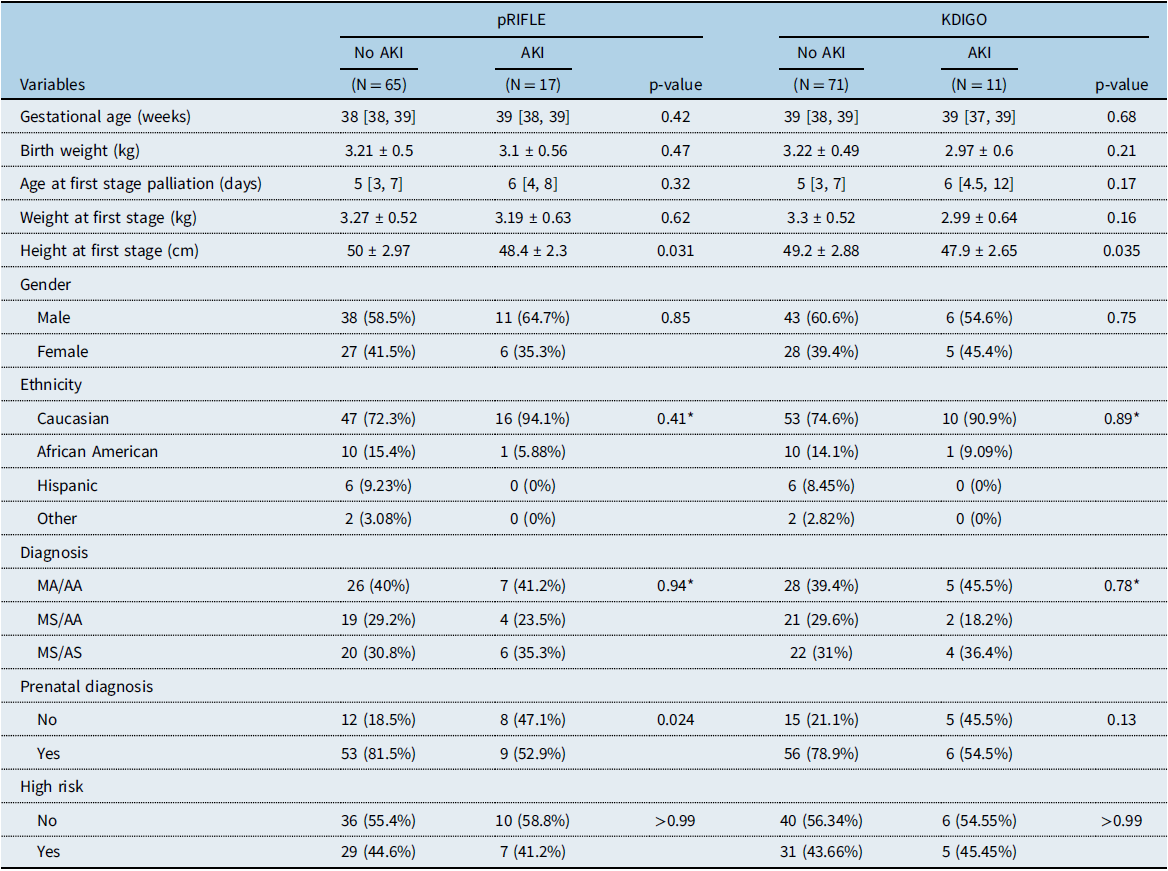
A total of 94 patients with hypoplastic left heart syndrome underwent the hybrid procedure during the study time period of 2008–2018. After exclusion criteria were applied, the cohort has 82 patients (Fig 2). Demographic data for the cohort are shown in Table 1. Acute kidney injury distribution data are shown in Table 2. By paediatric Risk, Injury, Failure, Loss, and End-stage renal disease, 20.73% (17/82) of patients developed acute kidney injury after the Hybrid Stage 1 procedure. In the Kidney Disease Improving Global Outcomes schematic, 11/82 patients (13.41%) developed acute kidney injury. The incidence of severe acute kidney was 2.44% by both criteria. Most patients were classified as developing kidney injury by post-op day 2 (Fig 3).
Consort flow diagram for the cohort of the study

Patient characteristics

MA = Mitral Atresia; AA = Aortic Atresia; MS = Mitral Stenosis; AS = Aortic Stenosis; High Risk = birth weight < 2.5 kg, estimated gestational age < 37, MS/AS variant, or a documented genetic syndrome.
Patient characteristics are described as median [1st quartile, 3rd quartile] and frequency (%).
Acute kidney injury distributions

AKI = Acute Kidney Injury; pRIFLE = paediatric, Risk, Injury, Failure, Loss, and End-stage renal disease; KDIGO = Kidney Disease Improving Global Outcomes.
AKI distributions are shown as frequency (%).
The percentage of the total cohort who developed AKI through POD 3

Comparative demographic and pre-operative data for patients with and without acute kidney injury are shown in Table 3. Patients without a prenatal diagnosis were more likely to meet the paediatric Risk, Injury, Failure, Loss, and End-stage renal disease criteria of acute kidney injury than those with a prenatal diagnosis (acute kidney injury without prenatal diagnosis: 9/20 (40%) versus acute kidney injury with prenatal diagnosis: 9/62 (14.5%) p = .024). However, this was not statistically significant in the Kidney Disease Improving Global Outcomes group.
Patient characteristics comparing the presence of acute kidney injury

AKI = Acute Kidney Injury; pRIFLE= paediatric, Risk, Injury, Failure, Loss, and End-stage renal disease; KDIGO = Kidney Disease Improving Global Outcomes; MA = Mitral Atresia; AA = Aortic Atresia; MS = Mitral Stenosis; AS = Aortic Stenosis. High Risk= birth weight < 2.5 kg, estimated gestational age < 37, MS/AS variant, or a documented genetic syndrome.
Patient characteristics are described as median [1st quartile, 3rd quartile], mean ± standard deviation, and frequency (%).
Student’s t-test used for continuous variables and Chi-square used for categorical variables by default.
* Fisher’s exact test utilised for comparison analysis.
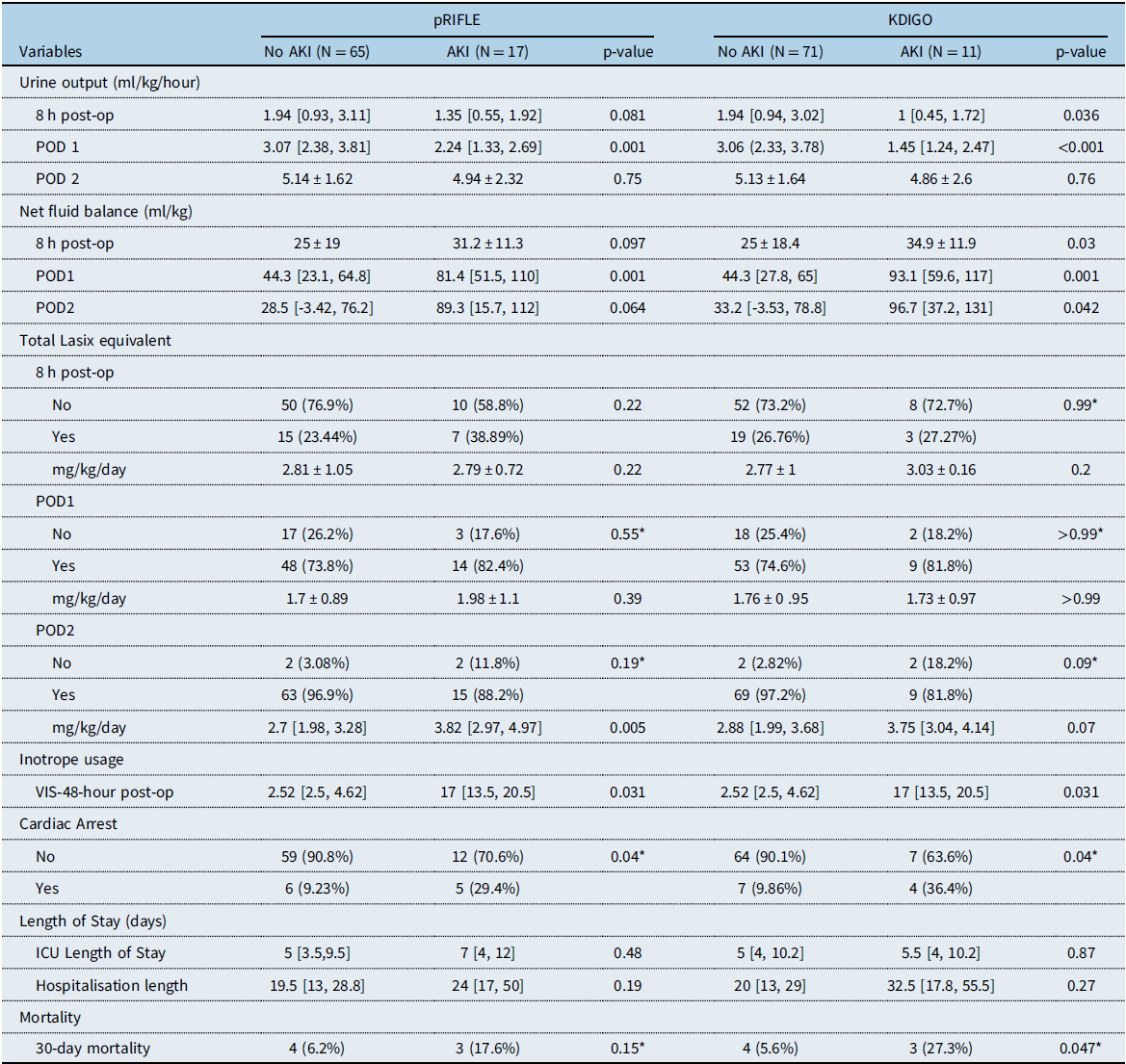
Perioperative variables and comparisons are shown in Table 4. Those with post-operative acute kidney injury, by all criteria, have a more positive fluid balance and a decrease in urine output on post-op day 1. Fluid balance was significantly higher in the acute kidney injury group on post-op day 2, by both criteria, and on post-op day 3, by Kidney Disease Improving Global Outcomes. There was no significant difference in length of hospital stay between the groups. Patients who developed acute kidney injury had a greater frequency of post-operative cardiac arrest and a higher vasoactive inotrope score 48 hours post-op. Only one patient required extracorporeal membrane oxygenation in our cohort. There was no significant difference in post-op weight, intubation status, or length of intubation (Supplemental Table 1).
Perioperative outcomes comparing the presence of AKI

AKI = Acute Kidney Injury; pRIFLE= paediatric, Risk, Injury, Failure, Loss, and End-stage renal disease; KDIGO = Kidney Disease Improving Global Outcomes; POD = Post-Op Day, VIS = Vasoactive Inotrope Score; ECMO = Extracorporeal Membrane Oxygenation.
Patient outcomes are described as median [1st quartile, 3rd quartile], mean ± standard deviation, and frequency (%). Two-sample t-test or Kruskal–Wallis test used for continuous variables and Chi-square tests used for categorical variables by default. Fisher’s exact test used for categorical variables.
* Nonparametric test used.
Those with post-operative acute kidney injury have a statistically significant increase in 30-day mortality by Kidney Disease Improving Global Outcomes: No acute kidney injury: 4/71 (5.6%) versus acute kidney injury: 3/11 (27.3%) (p = 0.047), Table 4). However, logistic regression demonstrated that acute kidney injury was not independently associated with 30-day mortality; acute kidney injury group (OR: 7.14; 95% confidence interval 0.91, 70.36; p = 0.07) and when adjusting for diagnosis (OR: 7.43; 95% confidence interval 0.83, 90.53; p = 0.08).
Discussion
In this largest published cohort investigating acute kidney injury after Hybrid Stage 1 palliation, we found a severe post-operative acute kidney injury incidence of 2.4%, lower than previously described. Reference Garcia, Natarajan and Walters10,Reference Goldstein, Goldstein and Devarajan11 Newborns without a prenatal diagnosis of hypoplastic left heart syndrome may have a higher incidence of acute kidney injury post-operatively. The presence of severe post-operative acute kidney injury may increase the risk of 30-day mortality.
Comparing our data to the known literature, Goldstein et al found an acute kidney injury incidence (defined by Kidney Disease Improving Global Outcomes ≥ Stage 1) for patients undergoing the Hybrid Stage 1 procedure of 29%, over twice the incidence in our population. Reference Goldstein, Goldstein and Devarajan11 Garcia et al reported a 6-fold higher rate of severe acute kidney injury (defined by paediatric Risk, Injury, Failure, Loss, and End-stage renal disease ≥ Injury) of 16%. Reference Garcia, Natarajan and Walters10 The difference in acute kidney injury incidence between the previous literature and this study may be secondary to cohort size, patient selection, and the institutional experience with the Hybrid palliation. Reference Galantowicz14,Reference Tabbutt, Ghanayem and Ravishankar15,Reference Galantowicz, Cheatham and Phillips23 However, we did not find that birth weight or high-risk status was associated with an increased incidence of acute kidney injury in our study. The previous studies, combined, had a Hybrid Stage 1 cohort size of 38 patients, who were described in their study as primarily high risk, compared to our 82 patients representing both high risk and patients who underwent the Hybrid Stage 1 as a primary palliative option. Therefore, our study is more likely to be an accurate representation of the true incidence of acute kidney injury after the Hybrid Stage 1 procedure.
Parikh et al showed, in a large multi-centre registry study, that patients with hypoplastic left heart syndrome are at the highest risk of developing chronic kidney disease in patients with congenital heart disease. Reference Parikh, Greenberg and McArthur24 This cohort of patients may be at increased risk for chronic kidney disease due to the multiple interventions that incur undergoing the staged palliation pathway. Wong et al showed that patients who develop acute kidney injury after the Norwood procedure were more likely to develop acute kidney injury at the Glenn procedure. Reference Wong, Selewski and Yu9 The Hybrid Stage 1 palliation may be an effective strategy to avoid severe acute kidney injury in the neonatal period and may help to mitigate acute kidney injury in future operations as well as future risk of chronic kidney disease. Future studies are needed to further investigate this hypothesis.
Those without a prenatal diagnosis of hypoplastic left heart syndrome were found to have an increased incidence of kidney injury after the Hybrid Stage 1. Neonates without a prenatal diagnosis may not present until significant left-sided obstruction occurs compromising blood supply to the body. This could lead to end-organ injury, including kidney injury. Reference Sivarajan, Penny and Filan25,Reference Mahle, Clancy and McGaurn26 Patients with evidence of end-organ injury prior to their operation may not have fully recovered from their initial insult which may increase their risk of developing kidney injury during subsequent perturbations, such as a surgical operation. Reference Wong, Selewski and Yu9
Fluid balance, urine output, and acute kidney injury are intricately related. Those with acute kidney injury were found to have decreased urine output on post-op day 1 and were more fluid positive at 8 hours, post-op day 1, and post-op day 2 via Kidney Disease Improving Global Outcomes criteria. Most patients were classified as developing kidney injury by post-op day 2 (Fig 3). Borasino et al showed that, in a population of neonates undergoing cardiac surgery, those who developed post-operative acute kidney injury were found to have a decrease in urine output and increased fluid balance on post-op day 1. Reference Ostermann, Straaten and Forni27 Lex et al suggested an association in patients who developed post-operative acute kidney injury, by all criteria of acute kidney injury, with a positive fluid balance on post-op day 2. Reference Lex, Toth and Cserep4 Therefore, clinicians caring for these patients should pay close attention to urine output and fluid balance in the immediate post-procedure period as they may be early signs of kidney injury.
Current definitions of kidney injury utilise serum creatinine, which is an imperfect biomarker as it is influenced by muscle mass, kidney injury, and fluid status. Whether kidney injury or fluid overload is the major cause of the abnormal physiology has been difficult to determine. Reference Borasino, Wall and Crawford28 Adding to this clinical conundrum, is that patients who are fluid overloaded could be underdiagnosed and those with volume depletion could be wrongly labelled with kidney injury.36 Future studies focusing on the subclinical kidney injury utilising urinary biomarkers may be of assistance in answering these questions. Reference Goldstein, Goldstein and Devarajan11
Patients who experienced cardiac arrest or required greater inotropic support were associated with kidney injury. These findings have been noted in similar studies. Reference Blinder, Goldstein and Lee3,Reference Garcia, Natarajan and Walters10,Reference Taylor, Carmona and Thiagarajan29,Reference Penk, Gist and Wald30 Unlike many other studies, the presence of acute kidney injury did not influence length of mechanical ventilation, post-operative ICU length of stay, or hospital length of stay. Reference Sethi, Goyal and Yadav8,Reference Penk, Gist and Wald30,Reference Jefferies and Goldstein31 Not all previous studies have demonstrated an impact from kidney injury on these outcomes. Borasino et al also failed to show a significant difference in hospital length of stay or length of mechanical ventilation between those who did and did not develop acute kidney injury in a similar neonatal group. Reference Borasino, Wall and Crawford28 Some studies have only found the above outcomes to be associated with severe acute kidney. Reference Blinder, Goldstein and Lee3,Reference Garcia, Natarajan and Walters10 Unfortunately, our cohort did not have the adequate incidence of severe acute kidney injury to make these comparisons.
Patients with acute kidney injury, by Kidney Disease Improving Global Outcomes, may have an increased incidence of 30-day mortality. Our data are similar to that published in hospital mortality for patients developing acute kidney injury after cardiac surgery (OR 5.1–7.34). Reference Blinder, Goldstein and Lee3,Reference Li, Krawczeski and Zappitelli6 Our logistical regression analysis had a trend towards significance which may become significant with greater numbers of events. The lack of statistical significance may also be due to our utilisation of neonatal Kidney Disease Improving Global Outcomes stage 1 and paediatric Risk, Injury, Failure, Loss, and End-stage renal disease category risk as our definition of kidney injury. With so few severe acute kidney injury patients, we expanded our analysis to include the lower risk categories which may have influenced our analysis. The mechanism for increased mortality after acute kidney injury may be due to cardiorenal syndrome. Reference Jefferies and Goldstein31 The pathophysiology is not fully understood but is hypothesised to be due to cross-interaction between the heart and kidneys involving a low cardiac output state, fluid overload, activation of the inflammatory cascade, and dysregulation of the neurohormonal axis. Reference Blinder, Goldstein and Lee3,Reference Zappitelli, Bernier and Saczkowski7,Reference Jefferies and Goldstein31 The link between post-operative acute kidney injury and an increase in mortality has been well established in the literature in severe acute kidney injury, and our findings may add additional evidence to this claim. Reference Aydin, Seiden and Blaufox2,Reference Blinder, Goldstein and Lee3,Reference Toth, Breuer and Cserep5,Reference Sethi, Goyal and Yadav8,Reference Wong, Selewski and Yu9,Reference Piggott, Soni and Decampli32
Our study must be viewed considering its limitations. First, this is a retrospective chart review study. Therefore, some patients had incomplete creatinine data and were excluded. However, in analysing their outcomes, no excluded patients with incomplete creatinine data developed post-operative acute kidney injury or experienced a 30-day mortality event. We did exclude those who died intraoperatively from our study as we could not quantify the degree of kidney injury in these patients. However, if we counted them as having developed acute kidney injury, the incidence would be between 15.5% (Kidney Disease Improving Global Outcome = 13/84) and 22.6% (paediatric Risk, Injury, Failure, Loss, and End-stage renal disease = 19/84). This incidence is still less than that published in the literature. This is a single-centre study, in an institution which utilises the Hybrid Stage 1 procedure as a primary palliation strategy, which may limit the applicability of these results to other institutions who utilise the Hybrid Stage 1 differently. Due to the retrospective nature of the study, we were unable to obtain accurate quantification of the amount of contrast administered during the Hybrid Stage 1 for most subjects. Finally, this analysis focuses only on the immediate post-operative acute kidney injury risk for the Hybrid stage 1 and not the overall life time risk of acute kidney injury for this multistage palliation for hypoplastic left heart syndrome. There are other factors relevant to the Hybrid stage 1 procedure, such as retrograde arch obstruction, ductal stent stenosis, restriction at the atrial level, and the approach to the second stage palliation that may impact the overall renal injury risk incurred from the hybrid strategy for patients with hypoplastic left heart syndrome. Inter-stage outcomes of patients palliated with the Hybrid stage 1 have been previously published. Reference Galantowicz, Cheatham and Phillips23,Reference Simsic, Phelps and Kirchner33
Future studies are needed focusing on acute kidney injury in this vulnerable population. It is possible that those who undergo the Hybrid Stage 1 have a similar overall incidence of lifetime kidney injury due to the complex Comprehensive Stage 2 procedure. The Comprehensive Stage 2 procedure is a more complex operation, requiring longer cardiopulmonary bypass time than the traditional stage 2 procedure. Reference Krawczeski, Goldstein and Woo34–Reference Cua, McConnell and Meza38 There is a paucity of literature investigating the cumulative effect of acute kidney injury after the first two operations in the hypoplastic left heart syndrome palliation and no studies investigating acute kidney injury incidence after the Comprehensive Stage 2 palliation. Reference Wong, Selewski and Yu9
In conclusion, the incidence of severe acute kidney injury following the Hybrid Stage 1 is low. Patients without a prenatal diagnosis may be more likely to develop post-operative acute kidney injury. Hybrid patients who develop severe acute kidney injury post-operatively may be at an increased risk of 30-day mortality.
Supplementary material
To view supplementary material for this article, please visit https://doi.org/10.1017/S1047951120004199
Acknowledgements
We would like to thank Emily Hone with her assistance with statistical analysis of this paper.
Financial support
This research received no specific grant from any funding agency, commercial, or not-for-profit sectors.
Conflicts of interest
None.
Ethical standards
The study was approved with waiver of informed consent by the Institutional Review Board at Nationwide Children’s Hospital.