Implications
This study investigated the global environmental impact of using a mathematical model that estimates real-time daily lysine requirements to deliver a sustainable precision feeding program for growing-finishing pigs. Feeding was the largest source of environmental impact in the pig production scenarios considered in this study. The results of this study clearly show that precision feeding is an effective approach for improving the environmental sustainability of Brazilian pig farming. In addition, adopting precision feeding techniques for growing-finishing pigs is a highly promising avenue for improving resource-use efficiency in comparison with conventional group phase-feeding programs.
Introduction
Due to recent improvements in farming technologies, pig production is accounting for a large proportion of livestock sector growth in Brazil and several other countries. Although the pig industry has reached very high-performance levels, its environmental sustainability still needs improvement. This aspect is particularly important because growing demand for food worldwide must be met at an affordable cost and without compromising environmental integrity. Several techniques may help in achieving this goal, but optimizing nutrient-use efficiency is probably one of the most effective.
Many studies have found that nutrient efficiency can be improved by adjusting the nutrient supply to more closely match the animals’ individual requirements (Ferket et al., Reference Ferket, van Heugten, van Kempen and Angel2002; Pomar et al., Reference Pomar, Pomar, Rivest, Cloutier, Letourneau-Montminy, Andretta and Hauschild2014). Nutritional requirements change dynamically over time and also vary among animals, even in age- or sex-homogeneous populations (Pomar et al., Reference Pomar, Hauschild, Zhang, Pomar and Lovatto2003; Brossard et al., Reference Brossard, Dourmad, Rivest and van Milgen2009). However, current group phase-feeding programs do not account for variations among individuals, and feeds are usually formulated to optimize the performance of the population, which means that most pigs receive more nutrients than they actually need (Hauschild et al., Reference Hauschild, Lovatto, Pomar and Pomar2010).
Although dealing with variability in nutritional requirements is a difficult task, precision farming techniques may provide a solution by allowing pigs to be managed and fed individually using diets adjusted in real-time to match their nutritional requirements (Pomar et al., Reference Pomar, Kyriazakis, Emmans and Knap2009; Hauschild et al., Reference Hauschild, Pomar and Lovatto2012). This approach represents a paradigm shift in pig feeding, as the optimal dietary nutrient level is no longer considered a static population attribute, but rather a dynamic process that evolves independently for each animal (Pomar et al., Reference Pomar, Pomar, Rivest, Cloutier, Letourneau-Montminy, Andretta and Hauschild2014).
Precision feeding techniques reduced lysine intake and nitrogen excretion without compromising pig performance in previous studies (Andretta et al., Reference Andretta, Pomar, Rivest, Pomar, Lovatto and Radünz Neto2014 and Reference Andretta, Pomar, Rivest, Pomar and Radünz2016). Despite the potential benefits of precision feeding (Wathes et al., Reference Wathes, Kristensen, Aerts and Berckmans2008), the global impact of these practices on sustainability merits further investigation.
Feeds contribute highly to the environmental impacts of livestock products. This had already been stated for Brazilian pig production in research developed using life-cycle assessment (LCA) (Spies, Reference Spies2009; Cherubini et al., Reference Cherubini, Zanghelini, Alvarenga, Franco and Soares2015a and Reference Cherubini, Zanghelini, Tavares, Belettini and Soares2015b). Previous studies also reported that improving feeding practices may mitigate the environmental footprint of producing pigs in Brazil (Kebreab et al., Reference Kebreab, Liedke, Caro, Deimling, Binder and Finkbeiner2016; Monteiro et al., Reference Monteiro, Garcia-Launay, Brossard, Wilfart and Dourmad2016). The present study was therefore undertaken to evaluate the effect that switching from a conventional feeding system to precision feeding programs during the growing-finishing phase would have on the potential environmental impact of pig production.
Material and methods
Environmental impacts were evaluated according to the LCA standards using the approach described by Guinée (Reference Guinée2002) based on four interrelated steps: goal and scope definition; life-cycle inventory; life-cycle impact assessment, and interpretation.
Brazil was chosen for this simulation because it is a large producer and exporter of pork. Moreover, despite the importance of the pig sector in developing countries, most studies on the environmental cost of pork have been developed based on European conditions, with limited applicability to other major pig production regions.
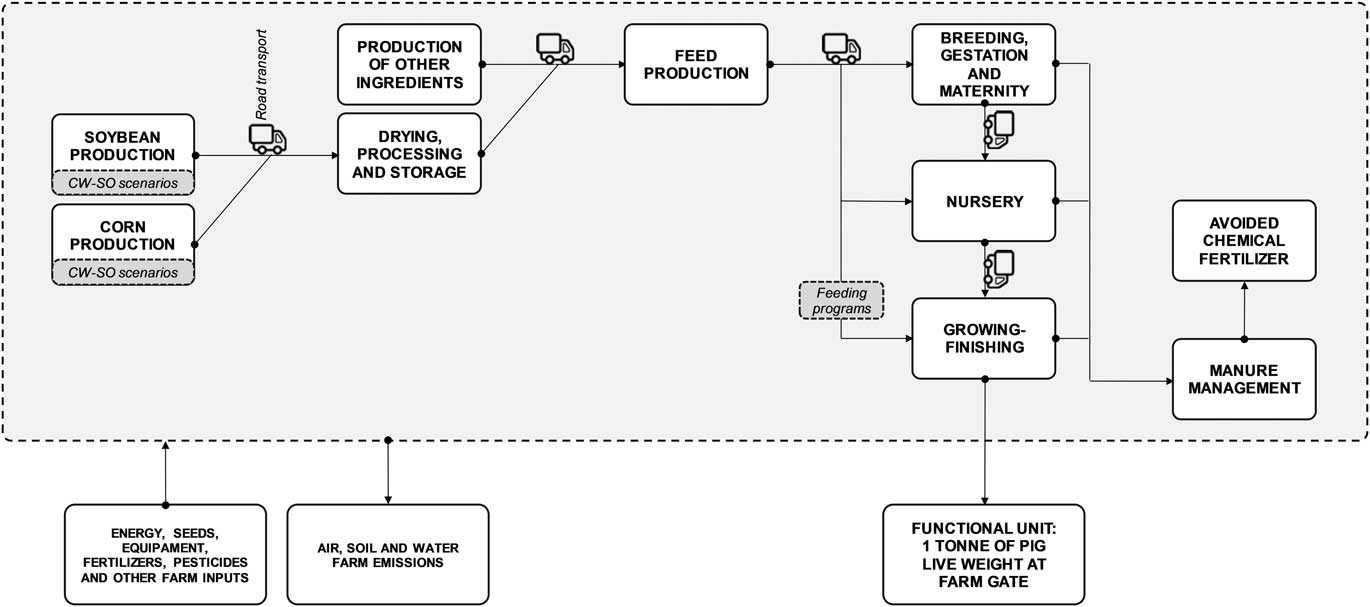
The major stages considered in the model were the production of feed ingredients from plant sources (corn and soybean meal), the production of other feed ingredients (amino acids, limestone, dicalcium phosphate, salt and vitamin–mineral premix), drying and processing in the feed industry, transportation and animal rearing (Figure 1). The functional unit used to study the environmental cost of grain production was 1 t of each grain at the feed factory. The functional unit used to study potential environmental impacts related to the feeds was 1 t of rations produced and delivered to the farm. Lastly, when assessing the cradle-to-farm gate model, environmental costs were simulated using 1 t BW of finished pig (120 kg of individual slaughter weight) at farm gate as the functional unit.
Basic flowchart of the production system. CW-SO scenarios=Central-West and South Brazil were the simulated geographic scenarios for soybean and corn production.

Description of the pig production system
This case study was developed for a complete farrow-to-finish unit with a confinement operation (buildings with concrete floors) located in the municipality of Concórdia, in the state of Santa Catarina, Brazil. This scenario was chosen because it is an important traditional pig production region in South Brazil. The transport route between the farm and the feed factory was defined as the average distance between these productive units in Brazil, namely 35 km (Talamini et al., Reference Talamini, Martins, Arboit and Wolozsim2006).
Description of the production system for grains and other feed ingredients
Grain production was independently characterized in the Central-West region (CW) and South region (SO) of Brazil. The crop farm locations were chosen based on the ranking of the major corn- and soybean-producing municipalities in each region (Instituto Brasileiro de Geografia e Estatística (IBGE), 2014). Agricultural practices for grain production and models used to calculate the emissions in the crop systems were adapted from Alvarenga (Reference Alvarenga2010 and Reference Alvarenga, Silva Júnior and Soares2012) and Prudêncio da Silva et al. (Reference Prudêncio da Silva, van der Werf, Spies and Soares2010). Land transformation was estimated based on the data provided by Alvarenga (Reference Alvarenga2010) and the methodology described by Prudêncio da Silva et al. (Reference Prudêncio da Silva, van der Werf, Spies and Soares2010). Grain yield data were obtained for each municipality from the Brazilian Institute of Geography and Statistics (IBGE, 2014).
The environmental cost of grain production varies greatly among the Brazilian regions. Consequently, three geographic scenarios were simulated based on different crop cultivation locations: CW-CW, in which only grain grown in CW were used to produce the feed; CW-SO, in which soybeans from CW and corn from SO were used to produce the feed; and SO-SO, in which only grain from SO were used to produce the feed. The scenarios differed mainly in terms of road transportation distances, agricultural practices, and deforestation impact on newly opened agricultural frontiers (deforestation was assumed for the CW scenario only because it occurred many decades ago in the SO region).
The scope of synthetic amino acid production was adapted from Mosnier et al. (Reference Mosnier, van der Werf, Boissy and Dourmad2011), distinguishing amino acids produced by chemical synthesis (dl-methionine) from those produced by fermentation (l-lysine and l-threonine). Other feed ingredients were based on the Ecoinvent database (v. 3.0; Swiss Centre for Life Cycle Inventories, Dübendorf, Switzerland). The environmental impact of vitamin–mineral trace elements was assumed to be equal to that of limestone.
Grain processing and storage conditions were adapted from previous reports (van Zeist et al., Reference van Zeist, Marinussen, Broekema, Groen, Kool, Dolman and Blonk2012a and Reference van Zeist, Marinussen, Broekema, Groen, Kool, Dolman and Blonk2012b). Grain (from the farm to the feed factory), other ingredients (from industry to the feed factory) and feeds (from the feed factory to the pig farm) were assumed to have been transported by truck. Google Earth software (Google Inc., Mountain View, CA, USA) was used to estimate road distances. Information from the Agri-footprint database (v. 1; Blonk Agri-footprint BV, Gouda, the Netherlands) was used to simulate the impact of transportation.
Feeding practices and animal performance
The characterization of animal performance and feeding practices was mainly focused on the growing-finishing pigs, as the adoption of conventional and precision feeding programs has previously been tested in this rearing phase. Other production stages (breeding-gestation, farrowing and nursery phases) were included in the scope of this study, but similar production conditions in terms of management and feeding practices were considered for all the scenarios being compared. Culled sows were considered a co-product of piglet production.
Ingredients commonly used in Brazilian industrial pig farming were used to formulate all the feeds. The formulas used soybean meal as the major protein source and corn as the major energy supply. Wheat was used only in the gestation feed. Simple formulas were simulated in this study because the use of alternative ingredients vary greatly among scenarios (e.g. among industries, geographical regions, seasons or years) according to their availability and cost. The least-cost formulation method was applied based on annual average prices (Centro de Estudos Avançados em Economia Aplicada – Escola Superior de Agricultura ‘Luiz de Queiroz’, 2014). The nutritional composition of the ingredients (net energy, standardized ileal digestible amino acids, digestible phosphorus and total calcium) was determined using EvaPig software (v. 1.3.1.4; INRA, Saint-Gilles, France).
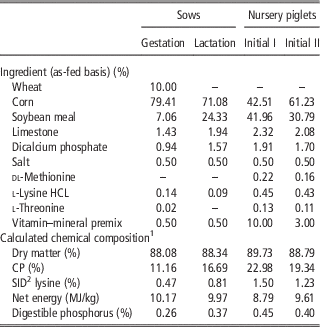
Feeds for breeding animals and for nursery piglets (Table 1) were formulated based on the nutritional requirements and the feeding program proposed in the Brazilian Tables for Poultry and Swine (Rostagno et al., Reference Rostagno, Albino, Donzele, Gomes, Oliveira, de, Lopes, Ferreira, Barreto, de and Euclides2011). Average performance indicators for describing the breeding-gestation, farrowing and nursery phases were obtained from industry reports (Agriness, 2013).
Composition of the feeds for sows and piglets during the initial phase

1 Values were estimated using EvaPig software (v. 1.3.1.4).
2 Standardized ileal digestible.
Data on a reference population of growing-finishing pigs (130 animals of a high-performance genotype previously described by Andretta et al., Reference Andretta, Pomar, Rivest, Pomar, Lovatto and Radünz Neto2014 and Reference Andretta, Pomar, Rivest, Pomar and Radünz2016) were used to compare the feeding programs in terms of performance and nutrient excretion. Average performance data were applied to the conventional and precision feeding programs, as these treatments did not influence feed intake or BW gain in the previous studies. However, individual nitrogen and phosphorus retention data were considered when estimating nutrient excretion in each feeding program.
Individual data collected on the reference population was also used to estimate the nutritional requirements used to define all the feeding programs. This procedure was based on the required dietary concentration of lysine, which was estimated for each pig using a previously described mathematical model (Hauschild et al., Reference Hauschild, Pomar and Lovatto2012) based on individual daily feed intake and weekly BW information. In the model, the empirical component estimated the expected BW, feed intake and daily gain for the next day, and the mechanistic component then used these three estimates to calculate, according to a factorial method, the optimal concentration of amino acids that should be offered that day to each pig in the herd so as to meet their requirements. Based on the estimated individual nutrient requirements, three feeding programs for growing-finishing pigs were proposed and simulated in the current study: conventional phase feeding (CON), precision daily feeding by group (PFG) and precision daily feeding by individual (PFI).
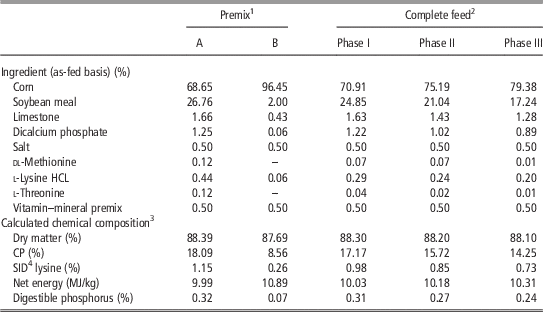
The CON treatment consisted of a three-phase-feeding program in which the whole herd received the same feed during each 28-day phase. The complete feeds used in this program (Table 2) were formulated to satisfy the requirements of the 80th-percentile pig in the population on the 1st day of each phase, as suggested by Hauschild et al. (Reference Hauschild, Lovatto, Pomar and Pomar2010) to maximize population responses for weight gain.
Composition of the premixes (precision feeding programs) and complete feeds (conventional feeding program) fed to pigs during the growing-finishing phase

1 Premix: used in the precision feeding programs and formulated to contain a high (Premix A) or low (Premix B) density of CP, amino acids and phosphorus.
2 Complete feed: used in the conventional feeding program.
3 Values were estimated using EvaPig software (v. 1.3.1.4).
4 Standardized ileal digestible.
Two blends of premixes (named A and B) were adjusted to match the lysine requirements of the pigs assigned to the daily phase-feeding programs. These premixes differed in their nutrient concentrations: premix A was formulated with a high nutrient density (to satisfy the estimated requirements of the most demanding pig at the beginning of the growing period), and premix B formulated with a low nutrient density (to satisfy the estimated requirements of the least demanding pig at the end of the finishing period).
The optimal dietary nutrient concentration in the PFG program was calculated for each day based on an animal whose requirement placed it in the 80th percentile of the population (Hauschild et al., Reference Hauschild, Lovatto, Pomar and Pomar2010). Lastly, the optimal dietary lysine concentration in the PFI program was calculated for each day based on individual nutrient requirements (Hauschild et al., Reference Hauschild, Pomar and Lovatto2012). In this program, each pig would be fed with a blend of premixes A and B that was adjusted on a daily basis to match its individual requirements.
Manure management was considered and includes liquid manure storage in slurry tanks, transport and field application for fertilization in replacement of other fertilizers (Alvarenga, Reference Alvarenga2010). When possible, calculations were developed considering that feeding practices affected manure composition, which was calculated based on the nutrient input balance in the feed and the nutrient retention rate measured in the reference population (Andretta et al., Reference Andretta, Pomar, Rivest, Pomar, Lovatto and Radünz Neto2014 and Reference Andretta, Pomar, Rivest, Pomar and Radünz2016). Emissions of NH3 related to manure management were estimated according to Eriksson et al. (Reference Eriksson, Elmquist, Stern and Nybrant2005), whereas the Intergovernmental Panel on Climate Change methodology (IPCC, 2006) was used to estimate the emissions of N2O (direct and indirect; Tier 2) and CH4 (from enteric fermentation and waste management; Tier 1).
Modeling environmental impacts
Inputs and outputs were defined for each step of the life cycle and organized in a model using SimaPro software (v. 8.0.3.14; PRE Consultants, Amersfoort, the Netherlands). Environmental impacts related to medication and capital assets (machinery, equipment and buildings) were not considered in the model. Slaughtering procedures were also excluded, because a previous study found that feeding programs had no effect on carcass or meat traits (Andretta et al., Reference Andretta, Pomar, Rivest, Pomar, Lovatto and Radünz Neto2014). The allocation of environmental burdens to by-products (e.g. soybean meal and oil) was based on economic criteria.
Climate change, eutrophication and acidification were the chosen environmental impact categories. Results were obtained for each environmental impact category, stating the resources used in each production system and the aggregate emissions of each substance with the characterization factor in the impact categories. The CML-IA baseline method was used for the calculations.
Assessment of the environmental impact of feeds adjusted to individual nutrient requirements
The impact of heterogeneous nutritional requirements on the environmental cost of feeds was analyzed using the reference population of growing-finishing pigs. In this sensitivity analysis, the entire reference population was used to generate a database with estimated nutritional requirements for each pig per day. Feeds were adjusted to meet the daily and individual nutrient requirements, generating one dietary formula per pig for each day. Lastly, the environmental cost of each adjusted feed was estimated and analyzed in terms of population heterogeneity. Regression equations were also used to analyze the effect of dietary nutrient composition on the potential environmental impact associated with the feeds.
Results and discussion
Assessment of the environmental impact of grain production
Life-cycle assessment of grain production is an essential part of evaluating the environmental impact of pig production. Crop management practices and expansion rates vary greatly among Brazilian regions. The production of soybean meal (functional unit: 1 t at the feed factory) in SO was associated with the emission of 533 kg of CO2-eq, 5.82 kg of PO4-eq and 2.62 kg of SO2-eq. In comparison with the SO scenario, soybean meal from CW showed higher climate change (+108%) and acidification (+107%) impacts, whereas producing a lower eutrophication impact (−3%). Production of corn (1 t at feed factory) in the SO scenario led to the emission of 491 kg of CO2-eq, 3.78 kg of PO4-eq and 9.98 kg of SO2-eq. In the CW scenario, corn showed a higher impact with regard to climate change (+22%) and eutrophication (+3%) but a lower impact with regard to acidification (−11%) compared with the SO scenario.
Variations between the Brazilian CW and SO scenarios have already been reported in relation to the environmental impact associated with grain (Prudêncio da Silva et al., Reference Prudêncio da Silva, van der Werf, Spies and Soares2010; Mosnier et al., Reference Mosnier, van der Werf, Boissy and Dourmad2011) and feed production (Alvarenga et al., Reference Alvarenga, Silva Júnior and Soares2012). These differences are related to specific crop cultivation practices applied in each region under study. Longer transportation distances also contributed to the higher environmental impact of grain from CW. In addition, grain cultivated in CW was associated with the recent conversion (within the past 30 years) of natural forests into cropland, which was not observed in the SO scenario.
Assessment of the environmental impact of Brazilian pig diets
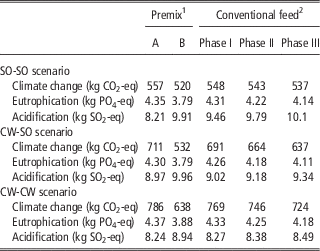
The potential environmental impacts of conventional diets for growing-finishing pigs are presented in Table 3. Similar environmental impacts were reported by Alvarenga et al. (Reference Alvarenga, Silva Júnior and Soares2012) for the diets of broiler chickens produced in Brazil. Cherubini et al. (Reference Cherubini, Zanghelini, Tavares, Belettini and Soares2015b) also reported comparable impacts in terms of the carbon footprint when assessing diets for finishing pigs in Brazil. The climate change and eutrophication impacts estimated in the current study were also comparable with those obtained by van der Werf et al. (Reference van der Werf, Petit and Sanders2005) and Mosnier et al. (Reference Mosnier, van der Werf, Boissy and Dourmad2011), who assessed diets for finishing pigs produced in France using Brazilian soybeans.
Potential environmental impacts of growing-finishing feeds (1 t, at farm gate) in different grain production scenarios

SO-SO scenario=soybeans and corn produced in South Brazil; CW-SO scenario=soybeans produced in Central-West Brazil and corn produced in South Brazil; CW-CW scenario: soybeans and corn produced in Central-West Brazil.
1 Premix: used in the precision feeding programs and formulated to contain a high (Premix A) or low (Premix B) density of CP, amino acids and phosphorus.
2 Complete feed: used in the conventional feeding program.
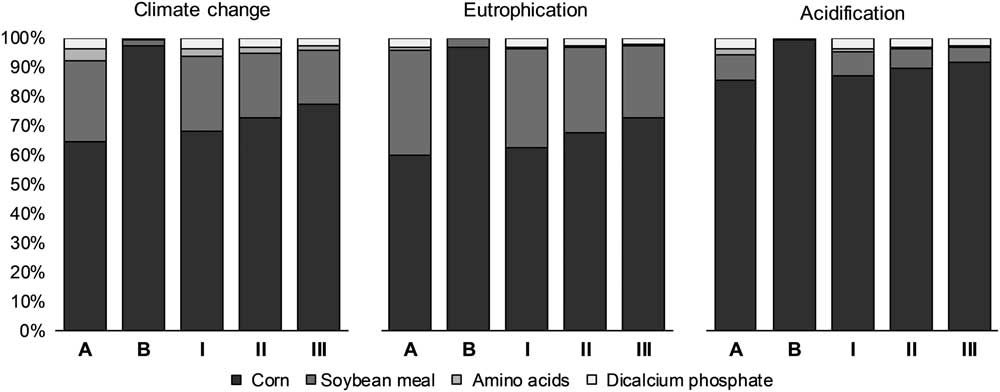
Due to their inclusion in the feed formula, corn and soybean meal were the ingredients with the highest contribution to the environmental impact (Figure 2). On average, corn production accounted for 72% of the total potential climate change impact attributed to commercial feeds in the SO-SO scenario, whereas 22% of the impact was due to the soybean chain, 3% to dicalcium phosphate and 2% to synthetic amino acid production. Very similar patterns were observed for other environmental impact categories and geographical scenarios.
Contribution of ingredients to the potential environmental impacts of growing-finishing feeds produced with corn and soybeans cultivated in South Brazil. Other ingredients are not presented because their contribution was very small. A and B=premixes used in the precision feeding programs and formulated to contain a high (premix A) or low (premix B) density of CP, amino acids and phosphorus; I, II, and III=complete feeds used in the conventional feeding program.

Feeds formulated for growing pigs (Phase 1) showed a higher impact in terms of climate change (SO-SO: +2%, CW-SO: +8%, CW-CW: +6%) and eutrophication (SO-SO: +4%; CW-SO: +4%, CW-CW: +3%) compared with feeds for finishing animals (Phase 3). Similar patterns were observed among the premixes. A higher impact in terms of climate change (SO-SO: +7%, CW-SO: +25%, CW-CW: +19%) and eutrophication (SO-SO: +13%, CW-SO: +12%, CW-CW: +11%) was estimated for premix A (with a high density of CP and other nutrients) than for premix B (with a low density of protein and other nutrients).
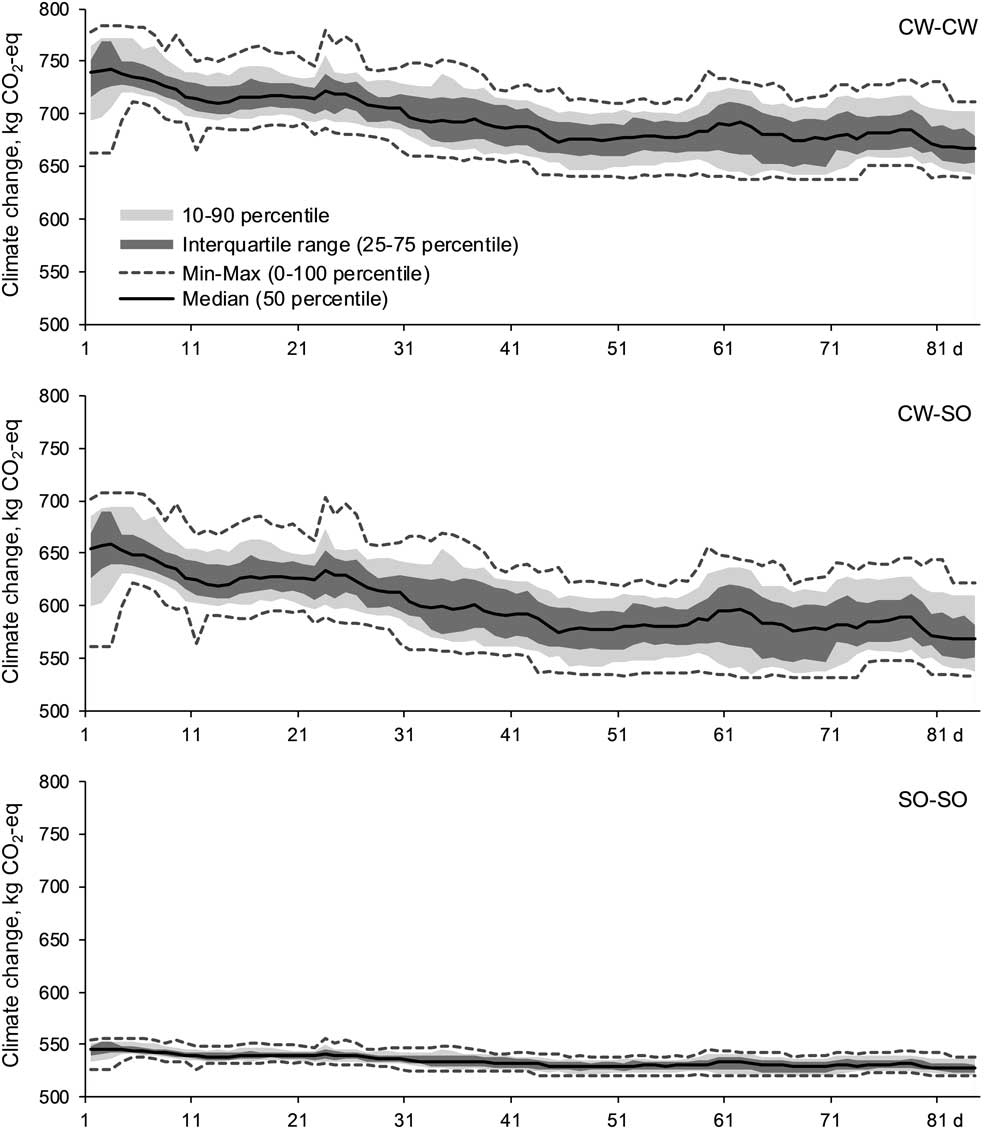
The nutritional requirements used to formulate a feed may influence its environmental impact. To test this hypothesis, a simulation was performed involving feeds adjusted to individual nutrient requirements that had been estimated using the reference population of growing-finishing pigs. Figure 3 presents the climate change impact attributed to feeds adjusted on a daily basis to meet the nutritional requirements of each pig in the reference population (one diet for each pig on each day). The variability in terms of climate change impact among simulated feeds is due to the changes in the incorporation of high-impact ingredients, which is a response to the nutrient requirement variability among pigs. However, this impact varied depending on the geographical scenario. The intraday average range in the potential climate change impact associated with the production of 1t of feeds was 36.3 kg of CO2-eq in the SO-SO scenario, whereas it was estimated at 145.2 kg of CO2-eq in CW-CW and 175.6 kg of CO2-eq in CW-SO. In the same comparison, the estimated intraday interquartile range (25th to 75th percentile) was 8.1 kg of CO2-eq in the SO-SO scenario, whereas it was 32.3 kg of CO2-eq in CW-CW and 39.0 kg of CO2-eq in CW-SO. The intraday CV for the potential climate change impact of population-adjusted feeds was also lower in the SO-SO scenario (1.4% on average) than in the CW-CW (4.2%) and CW-SO (5.9%) scenarios.
Potential climate change impact of producing feeds (1 t, at farm gate) adjusted to the individual daily nutrient requirements of growing-finishing pigs in different grain production scenarios. Daily nutrient requirements, estimated using the reference population of 130 growing-finishing pigs. CW-CW=soybean and corn produced in Central-West Brazil; CW-SO=soybeans produced in Central-West Brazil and corn produced in South Brazil; SO-SO=soybeans and corn produced in South Brazil.

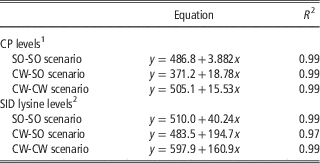
The simulation also highlighted a reduction over time in the potential climate change impact associated with pig feed production that was closely related to the reduction in the expected dietary nutrient levels. In the simulated population, reducing the dietary standardized ileal digestible lysine level by one percentage point led to a reduction of up to 194.7 kg of CO2-eq/t of feed in the CW-SO scenario (Table 4). Several studies have reported that it may be possible to mitigate the environmental impact associated with pig feeds by reducing the dietary CP level and, consequently, the use of soybean products in the feed formulas (Eriksson et al., Reference Eriksson, Elmquist, Stern and Nybrant2005; Mosnier et al., Reference Mosnier, van der Werf, Boissy and Dourmad2011; Meul et al., Reference Meul, Ginneberge, Van Middelaar, de Boer, Fremaut and Haesaert2012; Cherubini et al., Reference Cherubini, Zanghelini, Tavares, Belettini and Soares2015b). In most scenarios, as in CW, soybean production has a higher environmental cost than other feed ingredients, especially when compared with domestic alternatives (Eriksson et al., Reference Eriksson, Elmquist, Stern and Nybrant2005; Monteiro et al., Reference Monteiro, Garcia-Launay, Brossard, Wilfart and Dourmad2016). Applying precision feeding techniques is a way to reduce the protein content in the diets and consequently the use of soybean products in pig feeding. This condition support the hypothesis that precision feeding techniques may be an effective alternative for reducing the environmental impact of pig production, as previously indicated by Monteiro et al. (Reference Monteiro, Garcia-Launay, Brossard, Wilfart and Dourmad2016). In addition, variations among the intercepts found for the studied regions may also indicate that the environmental impact of changing feeding programs depends on the production scenario used for the simulation.
Equations used to estimate the potential climate change impact (kg CO2-eq) of growing-finishing feeds (1 t, at farm gate) based on dietary CP and lysine levels in different grain production scenarios

SO-SO scenario=soybeans and corn produced in South Brazil; CW-SO scenario=soybeans produced in Central-West Brazil and corn produced in South Brazil; CW-CW scenario=soybeans and corn produced in Central-West Brazil; SID=standardized ileal digestible.
1 Equations were developed based on dietary CP levels ranging from 8.56% to 17.9%.
2 Equations were developed based on dietary SID lysine levels ranging from 0.21% to 1.36%.
Assessment of the environmental impact of conventional Brazilian pig production
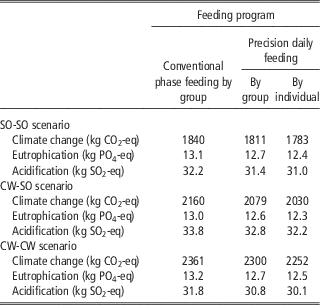
The potential environmental impact of finished pigs is presented in Table 5. Raising pigs (1 t BW pig at farm gate) in South Brazil according to the CON feeding program and using grain cultivated in the same region (SO-SO scenario) led to the emission of 1840 kg of CO2-eq, 13.1 kg of PO4-eq and 32.2 kg of SO2-eq.
Potential environmental impacts of finished pigs (1 t, at farm gate) in the different grain production scenarios and feeding programs used during the growing-finishing phase

SO-SO scenario=soybeans and corn produced in South Brazil; CW-SO scenario=soybeans produced in Central-West Brazil and corn produced in South Brazil; CW-CW scenario: Soybeans and corn produced in Central-West Brazil.
The environmental costs of pig production in the state of Santa Catarina were previously simulated by Spies (Reference Spies2009) as 1720 kg of CO2-eq, 9.55 kg of PO4-eq and 19.8 kg of SO2-eq/t of finished pig (BW at slaughter). Cherubini et al. (Reference Cherubini, Zanghelini, Alvarenga, Franco and Soares2015a) also studied the environmental profile of swine production in South Brazil and estimated emissions at 3500 kg of CO2-eq/t of swine carcasses produced. The variation among results is partially explained by the difference in functional units and boundaries used in the latter study (slaughtering procedures were accounted for and a carcass yield of 73.9% was applied).
The geographical scenarios simulated for grain production had a minor effect on emissions of PO4-eq and SO2-eq. The highest variations between the scenarios for eutrophication (−2%) and acidification (+6%) were found between the CW-SO and CW-CW scenarios. However, simulations considering grain from CW showed a higher climate change impact related to pig production. Compared with the SO-SO scenario, an increase of 17% in climate change impact was found when simulating with soybeans produced in CW, whereas a 28% increase was observed when simulating with corn and soybeans from CW. As previously stated, the carbon footprint varied among scenarios, mainly due to the impact of transportation and deforestation.
Feeding was the largest source of environmental impact in the pig production scenarios considered in this study, a finding that agrees with several previous studies conducted in Brazil (Spies, Reference Spies2009; Cherubini et al., Reference Cherubini, Zanghelini, Alvarenga, Franco and Soares2015a and Reference Cherubini, Zanghelini, Tavares, Belettini and Soares2015b; Kebreab et al., Reference Kebreab, Liedke, Caro, Deimling, Binder and Finkbeiner2016) or other countries (Basset-Mens and van der Werf, Reference Basset-Mens and van der Werf2005; Eriksson et al., Reference Eriksson, Elmquist, Stern and Nybrant2005). The feed used during the growing-finishing phase was particularly important, accounting for up to 56% of the potential climate change impact, up to 56% of the eutrophication impact, and up to 51% of the acidification impact of finished pigs raised according to the CON feeding program in Brazil. Due to their high contribution to the total environmental impact, feeding practices may be considered a prime target for improvement when developing mitigation strategies for the pig production chain.
Environmental impact of adopting precision feeding programs
Phase-feeding strategies are the most widely used feeding technique in pig production (Niemi et al., Reference Niemi, Sevón-Aimonen, Pietola and Stalder2010). These feeding programs are designed to maximize animal performance by providing a single feed to all pigs in the herd during a certain period. However, the pigs’ nutritional requirements change dynamically over time and also vary greatly among individuals (Pomar et al., Reference Pomar, Hauschild, Zhang, Pomar and Lovatto2003; Brossard et al., Reference Brossard, Dourmad, Rivest and van Milgen2009). By disregarding these variability issues, conventional group phase-feeding programs leads to an inaccurate supply of nutrients, usually with some underfed animals and most pigs receiving more nutrients than they actually need (Hauschild et al., Reference Hauschild, Lovatto, Pomar and Pomar2010).
The impact of using a mathematical model to estimate real-time daily lysine requirements in a sustainable precision feeding program for growing pigs has been studied in the past. Feeding growing pigs individually with diets adjusted on a daily basis to meet their estimated requirements reduced nutrient intake and excretion without compromising pig performance (Andretta et al., Reference Andretta, Pomar, Rivest, Pomar, Lovatto and Radünz Neto2014 and Reference Andretta, Pomar, Rivest, Pomar and Radünz2016). Although the previous results had already indicated some local environmental benefits, the current study pointed out the global impact of adopting precision feeding practices for growing-finishing pigs.
Applying the PFG program reduced the potential climate change, eutrophication and acidification impacts compared with the CON program. The greatest mitigation when switching from CON to PFG (equivalent to a 4% savings in potential climate change impact) was observed when pigs were raised in SO on a diet composed of corn cultivated in the same region and soybeans from CW (CW-SO scenario).
Adopting the PFI program further mitigated the environmental impact. Feeding each pig according to its individual nutrient requirements reduced the potential climate change impact by up to 6% and the potential eutrophication and acidification impacts by up to 5% compared with the CON program. Again, the greatest mitigation when switching from CON to PFI was observed in the CW-SO scenario.
It is important to point out that the mitigating impact of precision feeding simulated in this study depends on the nutritional composition of the diet given in the CON treatment. This reference treatment provided all pigs in this group and within each feeding phase with a fixed blend of premixes A and B that had been set based on the requirements of the 80th-percentile pig in the population. This nutritional level had been suggested by previous authors (Hauschild et al., Reference Hauschild, Lovatto, Pomar and Pomar2010) to maximize the response of the population in terms of BW gain, and it is in agreement with other results in vivo (Brossard et al., Reference Brossard, Vautier, van Milgen, Salaun and Quiniou2014) and in silico (Brossard et al., Reference Brossard, Dourmad, Rivest and van Milgen2009).
The proposed precision feeding system represents a paradigm shift in pig production, as it takes into account differences in nutrient requirements among individuals within a population and their dynamics over time. Applying precision feeding techniques significantly improves nutrient-use efficiency (Pomar et al., Reference Pomar, Pomar, Rivest, Cloutier, Letourneau-Montminy, Andretta and Hauschild2014). Although pig performance (i.e. weight gain) was not changed by the feeding practices under study, some important nutrients are saved by adjusting the provision of nutrients to the dynamic requirements of individual animals. In summary, the environmental benefits of switching from a conventional feeding system to precision feeding programs during the growing-finishing phase came from avoiding nutrient oversupply, changing the ingredient use (feed formulas) and reducing nutrient excretion to the environment.
This study investigated the global environmental impact of using a mathematical model that estimates real-time daily lysine requirements to deliver a sustainable precision feeding program for growing pigs. Although several studies on the environmental impact of pig production have already been published (McAuliffe et al., Reference McAuliffe, Chapman and Sage2016), only a few of these addressed the effects of changing the feeding program, particularly by using real data (other studies used observations on a population rather than simulated data). In addition, most of these studies were developed for European conditions, and their results cannot be extrapolated to other major pig production regions in developing countries. The results of this study clearly show that precision feeding is an effective approach for improving the environmental sustainability of Brazilian pig farming. In addition, adopting precision feeding techniques for growing-finishing pigs is a highly promising avenue for improving resource-use efficiency (e.g. nutrients) in comparison with conventional group phase-feeding programs.
Acknowledgments
The authors acknowledge the financial support received from the São Paulo Research Foundation (FAPESP, grant 12/03781-0, Brazil), from the Coordination for the Improvement of Higher Education Personnel (CAPES, Brazil), and from the National Council for Scientific and Technological Development (CNPq, Brazil).