Significant outcomes
Highlights
Our study adds to the small extant literature indicating that clozapine augmentation with ECT (C+ECT) is associated with a high response rate, with 76% showing an acute response
Our study findings indicate that the response to C+ECT is maintained in a majority of patients (75% remained out of hospital) with continued clozapine use over 1-year follow-up (although 70% of non-responders were not admitted to hospital)
This is the largest retrospective study of C+ECT use in treatment-resistant schizophrenia and provides further evidence of the effectiveness of C+ECT in those with clozapine-resistant schizophrenia
Limitations
Retrospective study, with no blinding, lack of a control arm and concurrent medication use was not controlled.
Longer-term follow-up studies with larger sample sizes receiving M+ECT are required to evaluate the effectiveness of M+ECT in clozapine-resistant schizophrenia.
It was not possible to evaluate patient perspectives and experiences of ECT.
Introduction
Treatment-resistant schizophrenia (TRS) is the most disabling of all psychiatric illnesses and affects approximately 30% of those diagnosed with schizophrenia (Meltzer Reference Meltzer1997; Lally et al., Reference Lally, Ajnakina, Di Forti, Trotta, Demjaha, Kolliakou, Mondelli, Reis Marques, Pariante, Dazzan, Shergil, Howes, David, Maccabe, Gaughran and Murray2016a). Clozapine remains the treatment of choice for people with TRS, with approximately 50–60% of patients improving with clozapine (Meltzer Reference Meltzer1992; Agid et al., Reference Agid, Arenovich, Sajeev, Zipursky, Kapur, Foussias and Remington2011). There remain no evidence-based pharmacological treatments for the remaining 40–50% of treatment-resistant patients who fail to respond to clozapine (Lally & MacCabe Reference Lally and Maccabe2015; Taylor Reference Taylor2017; Lally & Gaughran Reference Lally and Gaughran2019).
Meta-analyses have failed to demonstrate efficacy for clozapine augmentation with psychotropic medication, including antipsychotics and mood stabilisers (Sommer et al., Reference Sommer, Begemann, Temmerman and Leucht2012). However, a recent randomised controlled trial (RCT) of clozapine augmentation with Electroconvulsive therapy (ECT) (C+ECT) in clozapine-resistant schizophrenia showed encouraging results (Petrides et al., Reference Petrides, Malur, Braga, Bailine, Schooler, Malhotra, Kane, Sanghani, Goldberg, John and Mendelowitz2015). Combining the results of that RCT with those of all other cases reported in the literature, we calculated the response rate for C+ECT in TRS to be 66% (Lally et al., Reference Lally, Tully, Robertson, Stubbs, Gaughran and Maccabe2016b). Another meta-analysis demonstrated that ECT combined with non-clozapine antipsychotics was superior to antipsychotic monotherapy in TRS (Zheng et al., Reference Zheng, Cao, Ungvari, Xiang, Guo, Liu, Wang, Forester, Seiner and Xiang2016), supporting the findings of an earlier Cochrane review on ECT in schizophrenia which concluded that ECT is effective in schizophrenia and may have a place in patients who have failed to respond to other treatments (Tharyan & Adams, Reference Tharyan and Adams2005). The most recent Cochrane review of ECT for clozapine-resistant schizophrenia found moderate evidence for improved clinical with C-ECT use compared to standard care (Sinclair et al., Reference Sinclair, Zhao, Qi, Nyakyoma, Kwong and Adams2019). These studies suggest a benefit of ECT in TRS, in the short term, but data on longer-term outcomes are almost completely lacking (Grover et al., Reference Grover, Sahoo, Rabha and Koirala2019). A systematic review of the use of maintenance ECT (M-ECT) in non-TRS identified that while quality evidence is lacking, M-ECT has some evidence for relapse prevention in combination with antipsychotics, with minimal evidence for persistent cognitive deficits (Ward et al., Reference Ward, Szabo and Rakesh2018). It is also unclear whether M-ECT is needed to maintain improvement following response to C+ECT in TRS.
Study aims
The primary aim of this retrospective study was to describe the short-term outcomes in a cohort of patients treated with C+ECT. The secondary aims were (1) to explore the medium-term outcome of patients who received C+ECT based on the rate of psychiatric rehospitalisation in the year following a successful response to C+ECT, (2) to examine and identify post-ECT treatments which maintain clinical response, (3) to describe the use of M-ECT in those initial responders to C+ECT and (4) to evaluate adverse effects associated with C+ECT.
Methods
This was a retrospective observational study performed using data from the Clinical Record Interactive Search (CRIS) database from the South London and Maudsley (SLaM) NHS Foundation Trust.
In this study, we described the response to treatment in patients receiving ECT to augment clozapine (i.e. clozapine is continued during ECT). The primary outcome was the overall improvement in symptoms based on the Clinical Global Impression-Improvement (CGI-I) scale (Guy, Reference Guy1976).
Data source
Serving over 1.2 million residents located in four London boroughs (Croydon, Lambeth, Lewisham and Southwark), the SLaM NHS Foundation Trust is the largest provider of mental healthcare in Europe. Clinical records dating back to 1 January 2007 are stored in a combination of structured free text fields. In August 2016, there were over 200 000 individuals records.
The CRIS system was developed by the National Institute for Health Research Biomedical Research Centre located within the SLaM NHS trust to enable the automated search and retrieval of anonymised patient records. Data from structured text fields or from free text within the clinical records (e.g. clinical progress notes, discharge summaries, outpatient correspondence) were extracted. Comprehensive details regarding this data resource can be found in an open access publication (Stewart et al., Reference Stewart, Soremekun, Perera, Broadbent, Callard, Denis, Hotopf, Thornicroft and Lovestone2009).
Ethics and CRIS approval
Oxfordshire Research Ethics Committee C granted ethical approval to CRIS as an anonymised data resource for secondary analysis in 2008. A patient-led oversight committee is responsible for the governance for all CRIS project, who report to the SLaM Caldicott Guardian. This study carried CRIS application number 16-018 and was approved on 17 March 2016.
Inclusion and exclusion criteria
Primary inclusion and exclusion
The primary inclusion criterion was any person who received ECT to augment clozapine response, as part of a treatment plan for schizophrenia, or schizoaffective disorder (International Classification of Diseases (ICD)-10 codes: F20.0. F25.0, respectively), and whose records contained sufficient information to retrospectively rate their response to treatment and had at least 1-year follow-up data. The treating clinicians defined an inadequate clozapine response and identified the need for ECT augmentation. The decision to begin and end ECT was made by the Consultant Psychiatrist responsible for the care of the patient, in consultation with the treating team and the patient. There was no age range criterion.
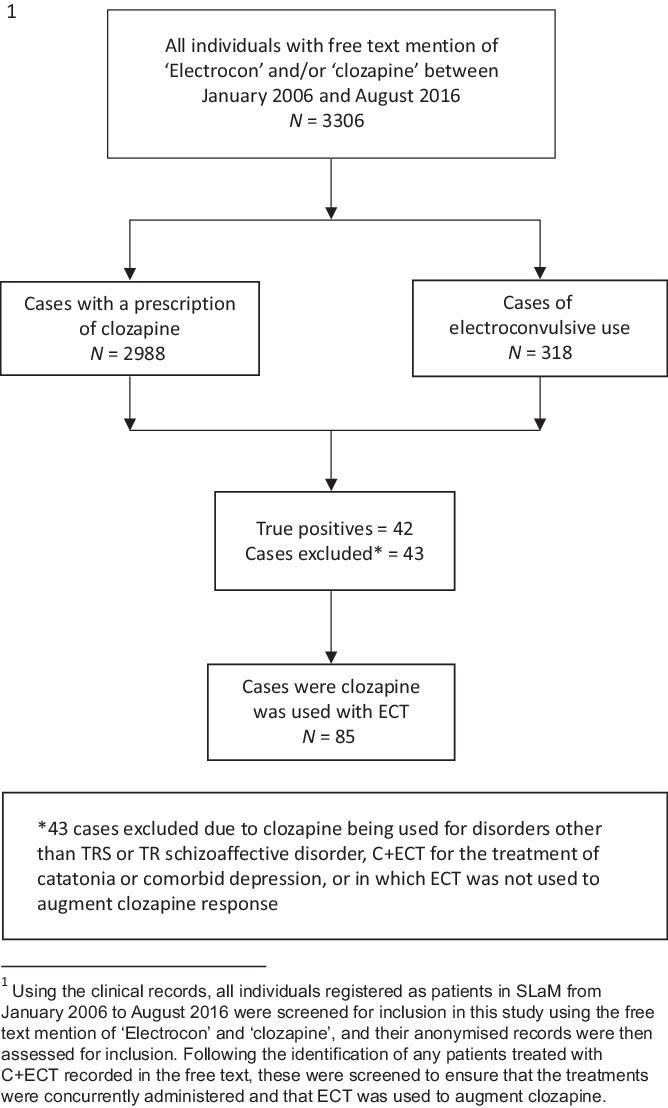
Figure 1 shows the flowchart for inclusion in the study.
Flow diagram of study inclusion.

Data extraction and outcome variables
The first ECT treatment registered for each patient admitted during this 10-year period was defined as the index treatment. The following data were obtained for each patient: gender, age, ethnicity, diagnosis, duration of illness, duration of clozapine treatment, duration of current episode (the episode that warranted ECT treatment), indication for ECT treatment, duration, number and frequency of ECT treatments, clozapine dose concurrent to ECT, other concurrent medications at time of ECT, outcome of ECT treatment, adverse events, subsequent use of M-ECT, subsequent prescription of maintenance medications (including subsequent prescription of clozapine, including dose changes and clozapine augmentation), subsequent rehospitalisation post-response to C+ECT, and ECT treatment details.
The patient clinical records did not contain any standardised assessments of severity of illness or degree of improvement. CGI scores were retrospectively assigned based on documented clinical symptoms, psychopathology, behaviour and functioning identified from the clinical records for 1 week prior to the administration of ECT and for 1 week after the end of the acute ECT course. As symptoms and behaviour can vary over the course of a week, the score was assigned based on the average severity level documented across the 7 days. The CGI scores were rated by one of the researchers (EB) and were then checked for reliability by a clinician (JL). Consensus was sought where any differences existed and a final CGI score was recorded. We compared the mean and median CGI-severity (CGI-S) scores at the start and end of C+ECT.
A dichotomous response criterion based on CGI-I scale was recorded for each ECT treatment case, using records from baseline (i.e. prior to C+ECT) and at the end of the ECT course. The CGI-I scale score was recorded following the end of C+ECT to assess the overall improvement and response (or not) to C+ECT. Any improvement (a rating of 1, 2 or 3) was seen as a successful response and a decline or no change (anything rated 4, 5, 6 or 7) was deemed unsuccessful (4= no change seen).
Statistical analysis
Descriptive statistics were performed using summary statistics (mean, standard deviation, median and range) for quantitative variables and frequencies for binary and nominal variables. The associations between demographic and clinical variables and response to C+ECT were assessed using t-tests, or chi-square tests as appropriate, with a two-tailed alpha of 0.05.
Results
Demographic and clinical characteristics
A total of 42 patients (21 males) were treated with C+ECT. The mean age of the patients at initiation of ECT was 46.3 (SD = 8.2) years (range 27–62 years). Out of the total 42 participants, 29 (69%) were of White ethnicity, 12(29%) of Black ethnicity and one (2%) was of mixed ethnicity.
Thirty-five (83%) patients had a diagnosis of schizophrenia and 7 (17%) had a diagnosis of schizoaffective disorder.
The mean clozapine dose during C+ECT was 383.7 (SD = 211.6) mg. The mean duration of illness and clozapine administration were 5.5 (SD = 5.0) years (median =4.3 years; range=0.26–20.6 years) and 2.8 (SD = 3.2) years (median 2.8 years; range = 0.08–14.9 years), respectively. The mean duration of the current psychotic episode was 9.2 (SD = 13.3) months (range =11 days–4.6 years). The median duration was 3.3 months.
ECT and clinical outcomes
The clinical indication for ECT augmentation in all cases was an insufficient response to clozapine (n = 42/42). All patients received bilateral ECT (the stimulus dose was not consistently recorded). The mean number of ECT treatments was 10.6 (SD = 5.3) (median = 10) (range 3–25 ECT treatments [the majority of patients received twice weekly ECT (n = 17)]. The mean duration of ECT treatment was 8.4 (SD = 7.0) weeks. Females received a higher mean number of ECT treatments [mean=12.4 (SD = 5.6)] compared to males [mean = 8.7 (SD=4.4)] [t(35) = 2.221, p = 0.033].
Thirty-two patients (76%) responded to C+ECT (CGI-I ≤3). Eleven (26%) were ‘very much’ or ‘much’ improved following C+ECT. The CGI-I stratified by gender and for the total group is shown in Table 1.
Outcome of clozapine augmentation with ECT measured by CGI scores

There was a significant improvement in mean CGI-S scores following C+ECT (pre-C+ECT =4.8 (SD = 0.8) and post-C+ECT 3.8 (SD = 0.93) (t = 7.117, df = 41, p < 0.001). There was no significant difference in mean clozapine dose during C+ECT in those who responded to C+ECT [mean dose= 379.4 (SD = 223.6) mg] compared to those who did not respond [mean dose =397.5 (177.3) mg] (t = 0.234, p = 0.816). Associations between clinical characteristics and age and response to C+ECT are shown in Table 2.
Clinical characteristics and response to C+ECT (defined as improvement (a rating of 1, 2 or 3) on Clinical Global Impression–Improvement (CGI-I) scale score)

Adverse events
Most individuals did not have any adverse effects secondary to ECT [64% (27/42) with no recorded adverse effects]. Nine patients reported short-term memory loss concurrent to ECT treatment which was transient for all and occurred at the time of the C+ECT.
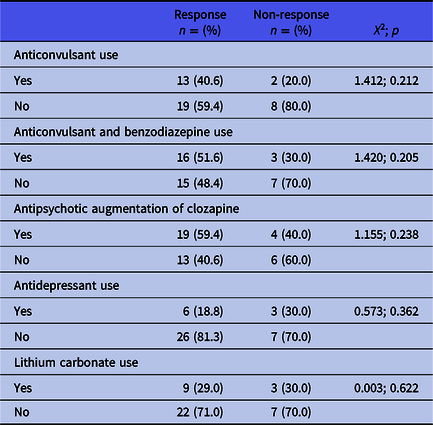
Medication use concurrent to C+ECT
The response to C+ECT in relation to concurrent medications used at the time of C+ECT is shown in Table 3. The use of anticonvulsant medication or benzodiazepines concurrent to C+ECT was not associated with a decreased response to C+ECT.
Medication use and association with response to C+ECT

Rehospitalisation post-ECT response
Of the 32 patients who responded favourably to C+ECT, there were (n = 5, 16%) who required rehospitalisation during the following year. Seventy-five per cent (n = 24) of responders were not hospitalised over the course of the 1-year follow-up (and three remained hospitalised during the follow-up year). Thirty per cent (n = 3) of those with a non-response to C+ECT were rehospitalised over the follow-up period.
Time to rehospitalisation (n = 29 who were discharged post-response to C+ECT)
Five of those who responded to C+ECT were rehospitalised due to illness relapse over the next year. The mean time to rehospitalisation was 106.8 days (range =24–280 days) and the median was 83 days.
In the year following response to C+ECT, 21% (n = 6) of responders were treated with clozapine combined with antidepressant medication, 31% (n = 9) were treated with clozapine augmented with mood stabilisers and 69% (n = 18) had a dose increase in clozapine over the course of the year following ECT.
There was no significant association between the use of clozapine combined with mood stabilisers (x2 = 2.719, p = 0.131), antidepressant (x2 = 1.576, p = 0.283) or M-ECT use (x2 = 0.607, p = 0.446) and rehospitalisation.
In total, 21 of the responders to C+ECT had either a dose increase in clozapine (n = 17), were treated with M-ECT (n = 1), were treated with both a clozapine dose increase and M-ECT (n = 1), or were rehospitalised (with no clozapine dose increase or M-ECT use) (n = 2).
Discussion
Response to C+ECT
Seventy-six per cent of patients had a positive response to C+ECT, a similar response rate to that identified in other retrospective case series [66% (Grover et al., Reference Grover, Chakrabarti, Hazari and Avasthi2017)–69%(Kim et al., Reference Kim, Kim, Lee, Youn, Lee, Chung, Kim and Chung2017)]. Though slightly lower than the 90% of patients who had an excellent or very good response in the study of Kristensen et al. (Reference Kristensen, Bauer, Hageman and Jorgensen2011), our response rate is slightly higher than the previously identified pooled response rate of 66% to C+ECT in all extant published data (Lally et al., Reference Lally, Tully, Robertson, Stubbs, Gaughran and Maccabe2016b). Thirty-four per cent of responders were very much or much improved following C+ECT.
Rehospitalisation post-C+ECT
The 1-year rehospitalisation rate was 17% in those who were discharged post-response to C+ECT, compared to 30% in those who did not respond to C+ECT, indicating that the acute response to C+ECT was associated with a low rehospitalisation rate over the following year. A recent Taiwanese mirror image study using a national healthcare database investigated the rates of psychiatric hospitalisation, following antipsychotic augmentation with ECT in patients with schizophrenia receiving ECT for the first time. They identified that antipsychotic augmentation with ECT was associated with a reduced rate of psychiatric hospitalisation in the year following treatment, a finding that was particularly significant for those treated with C+ECT (n = 906) (Lin et al., Reference Lin, Liu, Hsieh, Chien, Chen, Liao, Tsai and Wu2017).
M+ECT and rehospitalisation during follow-up
During follow-up, 72% of responders had a dose increase in clozapine, were commenced on M-ECT or were rehospitalised over the year following C+ECT. Dose increases in clozapine may have been indicative of re-emerging psychotic symptoms, though only one of these patients was rehospitalised (and this coincided with the commencement of M-ECT). We were unable to identify any significant relationship between concurrent medication use during the follow-up period and reduced rates of hospitalisation, though it is of interest that all those patients treated with clozapine and mood stabilisers, or with antidepressants were not rehospitalised in the year following C+ECT. The proportion of responders who were later treated with M-ECT is similar to that identified in the follow-up study of Grover et al., (Reference Grover, Chakrabarti, Hazari and Avasthi2017), though fewer than the 35% identified in a Danish retrospective chart review (Kristensen et al., Reference Kristensen, Bauer, Hageman and Jorgensen2011).
The low rate of rehospitalisation following a response to C+ECT is equivalent to the maintained response rates of 66% shown in the retrospective review of Grover et al., (though they do not comment on dose changes in clozapine rather documenting that 66% maintained their improvement while concurrently treated with clozapine) (Grover et al., Reference Grover, Chakrabarti, Hazari and Avasthi2017), or the 65% of those who did not require M-ECT for relapse of symptoms in the Kristensen et al., retrospective chart review (Kristensen et al., Reference Kristensen, Bauer, Hageman and Jorgensen2011). An earlier open label study of 11 patients treated with C+ECT identified a relapse rate of 63% over an average follow-up of 14 weeks following response to C+ECT (Kho et al., Reference Kho, Blansjaar, De Vries, Babuskova, Zwinderman and Linszen2004).
Only three of those who responded to C+ECT received M-ECT, with only one of those requiring hospitalisation for the administration of the maintenance treatment. Those treated with M-ECT were treated with 10–20 ECT treatments, two of whom were treated with weekly ECT, and the third patient was treated with weekly M-ECT for 7 weeks followed by twice monthly ECT for seven treatments. Due to the small number of patients who received M-ECT, we are unable to comment on the effectiveness of the adjunctive treatment in our population. Open label studies have provided support for sustained treatment effects with M-ECT. A previous open label study (n = 23) identified that 48% of those with clozapine-resistant schizophrenia had a clinical response to acute C+ECT and subsequently found an improved sustained clinical response with M-ECT compared to those treated with acute ECT and no M-ECT alongside continued clozapine (Youn et al., Reference Youn, Jeong, Kim and Chung2019). An open pilot study (n = 14) providing M-ECT for those who responded to ECT for clozapine-resistant schizophrenia as part of a cross-over RCT showed no deterioration, and the clinical response was sustained for all who received M-ECT for a 6-month period (n = 6, completed course of 10 C+ECT treatments in 6 months following acute C+ECT) (Braga et al., Reference Braga, John, Schooler, Bailine, Malur, Mendelowitz and Petrides2019).
ECT treatment and associations with response
The mean number of ECT treatments was 10.6, consistent with that identified in the retrospective chart review of C+ECT of Kristensen et al., (=10) (Kristensen et al., Reference Kristensen, Bauer, Hageman and Jorgensen2011), and the mean number of 11.3 identified in a recent meta-analysis of C+ECT (Lally et al., Reference Lally, Tully, Robertson, Stubbs, Gaughran and Maccabe2016b). The number of ECT treatments was not significantly associated with treatment response or non-response. The duration of illness or the current psychotic episode was not associated with the likelihood of a patient responding, similar to findings of a retrospective chart review of the use of ECT in schizophrenia (Kristensen et al., Reference Kristensen, Bauer, Hageman and Jorgensen2011).
Adverse events
The use of C+ECT was generally well tolerated with most patients reporting no adverse events, although this may be an underestimate due to underreporting of adverse events and under-recording in the clinical records. There was no evidence of prolonged seizures in any of the patients, though transient memory problems were reported in 21%, these were not sustained. A limitation of this study is the lack of formal cognitive testing performed, preventing a quantitative assessment of any cognitive changes over the course of C+ECT. One patient was found to have evidence of an underlying pre-existing neurocognitive disorder, which was identified during C+ECT.
Limitations
The findings from this naturalistic cohort, while demonstrating that C+ECT is effective for over three-fourths of patients, need to be viewed considering certain limitations. The retrospective nature of the study design and the absence of a comparison group limit the conclusions that can be drawn. Furthermore, it was not possible to blind the ratings, so there is a possibility of observer bias. The retrospective nature of assigning clinical assessment scores and the lack of prospective measures of clinical state such as Positive and Negative Syndrome Scale (PANSS) or Brief Psychiatric Rating Scale (BPRS) is a further limitation and potential source of observer bias. The CGI-S and CGI-I scales are brief assessment tools that allow for retrospective assessment of clinical states and improvement, though which may not adequately assess the severity of psychotic symptoms. However, the CGI assess both symptom severity and functioning, which may make it more relevant to clinical practice than the PANSS or BPRS that assess symptom severity only. The small sample size may have limited the power of our study to make statistical inferences and raising the possibility of type II errors, though it remains one of the largest clinical cohorts assessing the use of C+ECT in clinical practice. The lack of a control group limited the ability to conduct statistical analysis of clinical effects. The lack of neurocognitive assessments is a limitation, particularly since 21% of patients reported some transient memory loss concurrent to C+ECT.
There are limited studies investigating the response to C+ECT in clozapine refractory TRS, and even fewer studies with longer-term follow-up data. (Meltzer Reference Meltzer1997; Kristensen et al., Reference Kristensen, Bauer, Hageman and Jorgensen2011; Petrides et al., Reference Petrides, Malur, Braga, Bailine, Schooler, Malhotra, Kane, Sanghani, Goldberg, John and Mendelowitz2015; Grover et al., Reference Grover, Chakrabarti, Hazari and Avasthi2017; Braga et al., Reference Braga, John, Schooler, Bailine, Malur, Mendelowitz and Petrides2019) Our findings indicate that C+ECT is associated with a high response rate and is well tolerated. The use of clozapine dose increases was a commonly used treatment intervention in the year post-C+ECT, though no specific medication intervention was associated with a significantly reduced risk of rehospitalisation. Our study adds to the small, but growing literature indicating that C+ECT may be an effective treatment for clozapine refractory schizophrenia, although our results need to be viewed with caution in the light of the methodological limitations.
Acknowledgement
None
Author contributions
Lally, Breese and MacCabe conceptualised the study and authors Lally, Breese and MacCabe contributed to the design. Breese, Hua Sim, Shetty and Lally conducted the data collection. Lally and Osman undertook the statistical analysis. Lally and Breese wrote the first draft of the manuscript. All authors (Lally, Breese, Osman, Hua Sim, Shetty, Krivoy and MacCabe) contributed to content revision and have approved the final manuscript.
Financial support
Dr. MacCabe is supported by CRESTAR (CRESTAR project, http://www.crestar-project.eu/) EU-FP7 grant number 279227; Dr. MacCabe is supported by STRATA (MRC grant no. MR/L011794/) and by the National Institute for Health Research (NIHR) Biomedical Research Centre for Mental Health at the South London and Maudsley NHS Foundation Trust and Institute of Psychiatry, Psychology and Neuroscience, Kings College London.
The views expressed are those of the authors and not necessarily those of the NHS, the NIHR or the Department of Health.
The funding sources did not partake in the design, data collection or analysis.
Conflict of Interest
None