1. Introduction
Artificial intelligence (AI) is increasingly influencing how popular music is produced, distributed, and experienced, raising questions about creativity, authorship, and cultural interpretation in digital music production (Thomas Reference Thomas2024, p. 527). One outcome of this development is the emergence of virtual idols, computer-generated performers who release music, cultivate fan communities, and engage in commercial collaborations (Zaborowski Reference Zaborowski2024, p. 161). Although global interest in virtual idols is growing, empirical research on how audiences interpret and respond to these performers within European mainstream music-cultural contexts remains limited.
This study focuses on Noonoouri, a European virtual idol (Noonoouri 2022, 2025; Zuber Reference Zuber2025), to examine how audiences engage with European-produced AI-generated virtual idol musical performances. Noonoouri integrates CGI visuals, AI-assisted vocal synthesis, and original pop music releases, and has collaborated with European luxury fashion brands such as Dior, Balenciaga, and Valentino. Unlike avatars or virtual influencers primarily used for branding or lifestyle promotion, Noonoouri functions as a musical performer with a dedicated fanbase and parasocial interactions. Her 2023 signing with Warner Music Group (2023; Daily Mail 2023) positions her within the European mainstream pop, understood not as a genre but as a discursive framework shaped by commercial visibility, cultural negotiations, and audience interpretation. This reflects how the mainstream is socially and culturally contingent, interpreted differently across audiences, contexts, and subcultural affiliations, highlighting the importance of examining audience practices and perspectives in understanding popular music (Taylor et al. Reference Taylor, Baker, Bennett, Baker, Bennett and Taylor2013, p. 1). These developments raise questions about how audiences understand AI-generated music and artistry when it enters the commercial and aesthetic logics of the pop mainstream. It is worth considering whether Noonoouri initially occupied a subcultural space in her early development around 2018, and whether her later emergence into European mainstream music with Warner Music in 2023 reflects shifts in consumer patterns, cultural engagement, and digital circulation.
Despite mainstream pop’s cultural prominence and commercial impact, scholarship still lacks audience-centred accounts of how listeners perceive, interpret, and emotionally engage with chart-oriented music, particularly in response to globally circulating sounds and practices. Following insights from the sociology of popular music (Marshall Reference Marshall2011, pp. 169–172), this study emphasises audience interpretation over technical or aesthetic features, recognising that musical meaning emerges through audiences’ engagement within social and cultural contexts. Steinbrecher (Reference Steinbrecher2021, pp. 418–421) observes that analytical work on hit records often relies on scholars’ own listening impressions rather than the experiences of actual audiences, resulting in limited insight into how audiences interpret and evaluate music. Building on this observation, the present study examines YouTube audience discourse surrounding Noonoouri’s music and digital persona, providing empirical insight into how AI-generated and virtual idols’ performances are understood, evaluated, and contextualised within contemporary European mainstream pop culture.
Audience interpretation is also shaped by broader cultural frameworks of legitimacy and taste. European scholarship has conceptualised musical taste as a marker of social distinction. However, digital technologies increasingly blur the boundaries between producers and consumers, fostering participatory audience practices that complicate traditional hierarchies of taste (Coulangeon Reference Coulangeon, Dupont and Leclerc2015, pp. 198–199). While Noonoouri does not appear on traditional mainstream charts, she circulates widely within a platform-specific mainstream shaped by algorithmic promotion and audience engagement, highlighting how digital visibility can create alternative forms of mainstream recognition independent of industry rankings. Virtual idols intensify these shifts within European mainstream frameworks: their emergence as commercially viable performers raises new questions about how audiences assess AI-generated creativity, evaluate artistic legitimacy, and negotiate technologically mediated performance as responses to globally circulating digital music practices.
Building on frameworks of musical authenticity and legitimacy (Hesmondhalgh Reference Hesmondhalgh2013; Moore Reference Moore2002), this study examines how YouTube audiences interpret Noonoouri’s music and digital persona. Methodologically, it combines computational sentiment analysis with qualitative thematic analysis of YouTube comments. Sentiment analysis identifies broad affective patterns, while thematic analysis explores how audiences articulate cultural meanings, ethical concerns, and interpretive practices. YouTube is chosen due to its central role in contemporary music discovery, fan participation, and public cultural debate. The study addresses two research questions:
RQ1. How is Noonoouri’s music and digital persona received by YouTube audiences, and what predominant sentiments and themes emerge from audience discourse?
RQ2. How do audience responses reflect perceptions of creativity and legitimacy of virtual idols in European mainstream pop music?
By examining audience responses to virtual idols, this research situates Noonoouri at the intersection of mainstream popular music and digital music culture. The findings highlight how audiences construct meaning, evaluate creativity, and negotiate authenticity in the era of AI-generated music, contributing an empirically grounded understanding of contemporary mainstream pop reception in Europe.
2. Background
AI in Music Production
The rapid advancement of AI in music production has influenced creative practices, raising questions about authorship, authenticity, and the role of human agency. Contemporary AI systems employ deep learning architectures, such as generative adversarial networks (GANs) and diffusion models, to analyse large-scale musical datasets and generate compositions across diverse genres (Briot et al. Reference Briot, Hadjeres and Pachet2019, pp. 83, 132). These systems can produce both simple melodic fragments and complete multi-instrumental arrangements, prompting discussions about the boundaries between human and machine creativity.
For virtual idols, AI capabilities extend beyond composition into comprehensive performance simulation. Voice synthesis employs long short-term memory (LSTM)–based sequence models (Hochreiter and Schmidhuber Reference Hochreiter and Schmidhuber1997), WaveNet vocoders (van den Oord et al. Reference van den Oord, Dieleman, Zen, Simonyan, Vinyals, Graves, Kalchbrenner, Senior and Kavukcuoglu2016, p. 5), and transformer-based architectures to generate expressive vocal performances from textual and melodic inputs (Gupta et al. Reference Gupta, Perakovic and Abd EI-Latif2021). Virtual idols such as Hatsune Miku (Reference Miku2025) and Noonoouri integrate these technologies with human-like singing voices, motion capture, 3D modelling, and augmented reality to create synchronised audiovisual experiences (Jackson and Dines Reference Jackson, Dines, Whiteley and Rambarran2016, p. 102; Kärki Reference Kärki, Strong and Lebrun2021, p. 128; Zaborowski Reference Zaborowski, Whiteley and Rambarran2016, p. 112). This technological sophistication may raise fundamental questions about creative agency. AI increasingly supports or replaces human decision-making in music creation, but less is known about how audiences perceive AI-generated music and negotiate authenticity in virtual idols.
Virtual Idol’s Reception in the Platform Age
Virtual idols represent a convergence of digital performance, constructed persona, and participatory fan culture (Williams and Wilson Reference Williams, Wilson, Whiteley and Rambarran2016, p. 593; Zaborowski Reference Zaborowski2024, p. 191). Their origins trace back to Japan’s postwar idol culture, which emphasised emotional intimacy and participatory fandom (Galbraith and Karlin Reference Galbraith, Karlin, Karlin and Galbraith2012, p. 24). Virtual idols have evolved from early experiments like Kyoko Date into sophisticated ‘hyper idols’ operating as networked cultural phenomena (Jackson et al. 2016, p. 101; Lam Reference Lam2016, p. 1108; Zaborowski Reference Zaborowski2024, p. 185). Unlike generic avatars or virtual influencers, virtual idols cultivate parasocial relationships, allowing fans to co-create meaning through music, visuals, and online discourse (Lam Reference Lam2016, p. 2). European examples, such as Studio Killers (2025), illustrate similar dynamics, where performance and identity are negotiated through online platforms and fan communities (Richardson Reference Richardson2019, p. 2).
Authenticity frameworks provide a lens for understanding audience evaluation. Moore (Reference Moore2002) conceptualises authenticity as a relational performance granted by audiences when they perceive emotional sincerity and artistic truth. Hesmondhalgh (Reference Hesmondhalgh2013, p. 171) positions authenticity as a discursive and moral resource within the music industry, mediating tensions between artistic creativity and commercial production. In virtual idols such as Noonoouri, detachment of musical expression from human labour and embodiment prompts evaluative negotiation, revealing anxieties about the role of human creativity in sustaining music’s emotional and social legitimacy.
Reception Analysis of YouTube and Platforms
Platform affordances play a crucial role in developing virtual idol reception, yet research remains fragmented across different digital environments. YouTube’s comment systems and algorithmic recommendations generate different patterns of engagement compared to Spotify’s playlist integration or Instagram’s short-form content (Bishop Reference Bishop2023). Each platform mediates authenticity perceptions through unique technical and social features: YouTube enables extended discussions and community formation, fostering deeper engagement over months or years; TikTok emphasises viral, short-lived interactions prioritising immediate visual impact; and Spotify prioritises listening behaviour over visual or performative elements, potentially limiting relational depth.
Studies of platformed music culture highlight the influence of algorithmic and economic structures on reception. Hesmondhalgh (Reference Hesmondhalgh2013, pp. 60–63) and Morreale (Reference Morreale2021, p. 109) note that contemporary music consumption operates within platform logics where datafication, curation, and engagement metrics shape visibility and cultural value. This platform-mediated landscape creates distinct challenges for virtual idol acceptance, as different affordances may either support or undermine the authenticity negotiations identified in existing theoretical frameworks. YouTube, as the most significant platform for music discovery, was substantially represented in the study.
The Localization of European-created Virtual Idols within Mainstream Popular Music
European virtual idol reception operates within distinct cultural and regulatory frameworks that differ from the Asian markets where virtual idols originated. European audiences emphasise cultural diversity, artistic freedom, and human creativity (European Commission 2022), creating inherent tensions with AI-generated content. The European Parliament and Council of the European Union Artificial Intelligence Act (2024, Art. 52) mandates transparency in synthetic media, fundamentally shaping both audience expectations and industry practices around virtual idols.
This cultural context makes Noonoouri’s 2023 signing with Warner Music Group (Berryman et al. Reference Berryman, Abidin, Kim, Hwang and Miyake2024; Thomas Reference Thomas2024) a particularly significant test case for virtual idol acceptance in Europe. The research gap surrounding audience reception becomes especially pronounced given Europe’s emphasis on embodied performance and regional linguistic distinctiveness (Cohen Reference Cohen2013, p. 577; Frith Reference Frith1998, pp. 71, 89; Frith Reference Frith, Straw, Street and Firth2001, pp. 27, 44; Regev Reference Regev2013, pp. 3, 15; van der Hoeven Reference Van Der Hoeven2018, p. 201). While technological capabilities continue advancing rapidly, cultural acceptance involves complex negotiations that vary significantly by platform, region, and demographic context.
Applying the authenticity frameworks discussed earlier to European popular music contexts reveals additional complexity. Moore’s (Reference Moore2002) emphasis on audience interpretation and Hesmondhalgh’s (Reference Hesmondhalgh2013) concept of authenticity as a discursive resource become particularly crucial when examining how audiences evaluate emotional depth and artistic ‘realness’ in European-created virtual idols operating under transparency requirements and cultural preferences for human creativity.
The concept of mainstream popular music provides a useful lens for understanding Noonoouri’s cultural positioning, as mainstream is not a fixed genre but a contested field where aesthetic norms and social values are constantly negotiated (Taylor et al. Reference Taylor, Baker, Bennett, Baker, Bennett and Taylor2013). Noonoouri’s visibility on global platforms and her association with a major label place her within this mainstream framework, while her AI-generated nature challenges traditional expectations of authenticity and emotional resonance in European pop.
Following Strong (Reference Strong, Baker, Bennett and Taylor2013, pp. 75–76), contemporary audiences interpret mainstream music in nuanced and active ways, challenging simplistic assumptions that mainstream production equates to lower artistic or cultural value. Even when music is commercially produced and widely circulated, audiences negotiate personal, cultural, and affective meanings, demonstrating that mainstream visibility does not preclude critical audience interpretation.
3. Methodology
YouTube was selected as the primary research platform because it is a leading site for music content, where audiences actively engage with full-length videos through comments, expressing emotions and critiques (Burgess and Green Reference Burgess and Green2018; Gupta et al. Reference Gupta, Perakovic and Abd EI-Latif2021). Compared to platforms such as Instagram or TikTok, YouTube allows for complete music videos and richer comment threads, providing a more accurate representation of audience engagement with virtual idols. This setting is ideal for exploring how audiences respond to technological, visual, and musical elements, enabling an analysis of sentiment, participatory engagement, and cultural evaluation (Braun and Clarke Reference Braun and Clarke2006; Harrison Reference Harrison2016; Molin Reference Molin2021; Gupta et al. Reference Gupta, Perakovic and Abd EI-Latif2021).
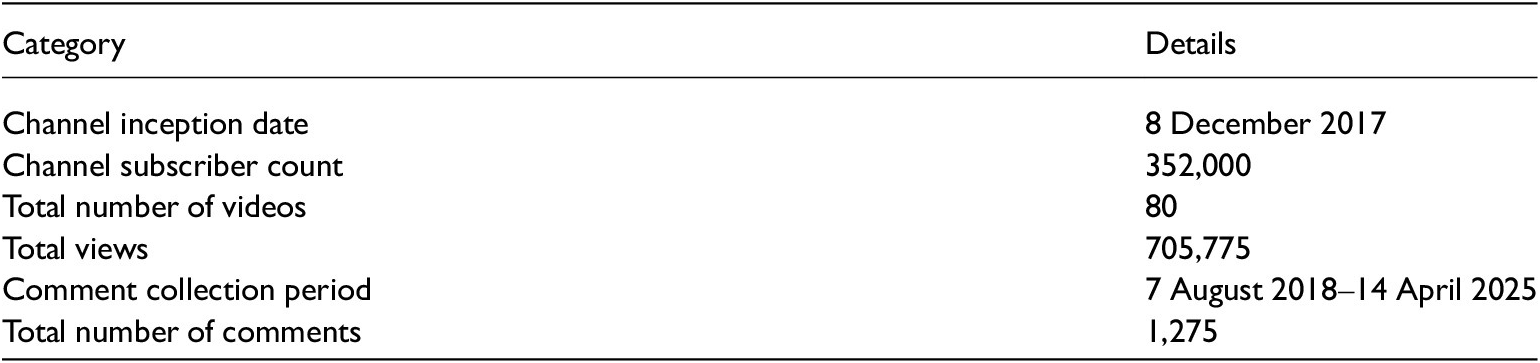
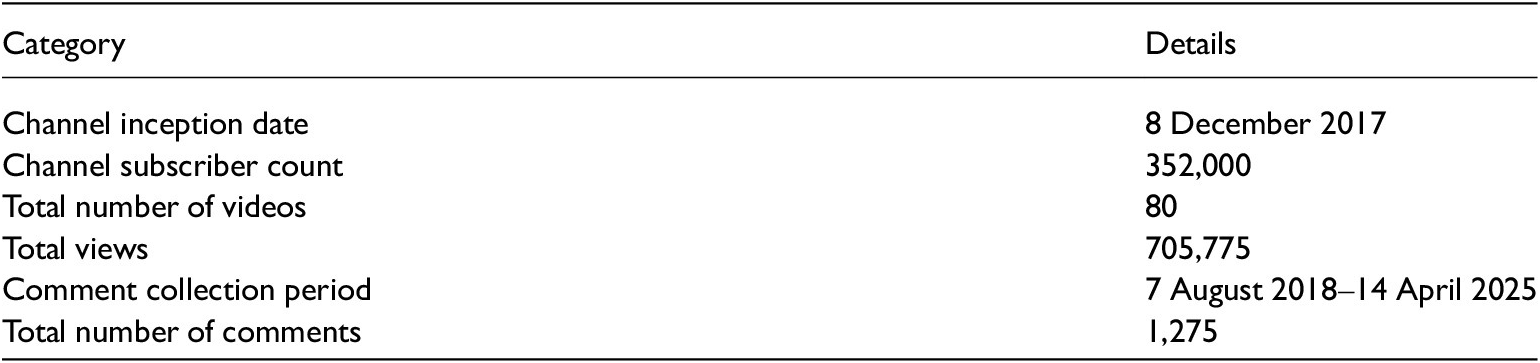
Comments were collected from the official Noonoouri YouTube channel, launched on 8 December 2017. Videos published between 7 August 2018 and 28 August 2024 were included, yielding 1,275 comments across 80 videos (see Table 1). Metadata such as timestamps and likes were retrieved. Non-English comments were automatically translated into English using Python-based tools, followed by manual verification to ensure accuracy, following best practices in multilingual social media research (Harrison Reference Harrison2016; Molin Reference Molin2021).
Overview of videos and comments collected (As of 15 April 2025). Data collected from YouTube and organized by the authors, 2025
A six-step Python-based automated pipeline (v3.11) was implemented to retrieve, clean, and validate the dataset (Harrison Reference Harrison2016; Molin Reference Molin2021):
-
1. API and credential setup: Configured the YouTube Data API and generated a secure key.
-
2. Python environment setup: Installed required libraries (pandas, google-api-python-client).
-
3. Video comment extraction: Retrieved top-level comments and metadata.
-
4. Channel-wide collection: Removed duplicates and spam; translated non-English comments.
-
5. Data cleaning and validation: Manual verification for consistency and reliability.
-
6. Documentation and ethical safeguards: Ensured reproducibility and anonymisation.
Two researchers independently cross-checked the dataset to enhance reliability.
Data collection adhered to British Psychological Society Internet–Mediated Research Guidelines (2025) and European Commission (2025), the General Data Protection Regulation (GDPR). Only publicly available, anonymised data were used. Ethical approval was obtained from the University of Southampton Research Ethics Committee (ERGO Number: 104315), and YouTube’s terms of service were followed.
Raw text data were pre-processed using Python libraries (pandas, regex, NLTK, spaCy) to ensure consistency and quality. Steps included:
-
• Noise removal: Eliminating non-English characters, URLs, repeated characters, and excessive punctuation.
-
• Text normalisation: Converted text to lowercase, removed stop words, and applied lemmatisation.
-
• Duplication removal: Repeated comments and spam were removed.
-
• Emoji retention: Preserved emojis to capture sentiment cues and informal expressions.
These steps ensured clean, standardised data for sentiment and thematic analysis interpretation.
Sentiment analysis was conducted using VADER (Valence Aware Dictionary and Sentiment Reasoner) from the NLTK library (Rout et al. Reference Rout, Choo, Dash, Bakshi, Jena and Williams2018). VADER is optimised for social media text, capturing positivity, negativity, and neutrality while accounting for punctuation, capitalisation, intensifiers, and emoticons (Molin Reference Molin2021). Comments were classified according to VADER thresholds: scores ≥ 0.05 as positive, scores ≤ -0.05 as negative. This method has been widely applied in YouTube music reception studies, enabling efficient analysis of large datasets and identification of general audience sentiment (Burgess and Green Reference Burgess and Green2018).
An inductive thematic analysis was conducted to identify patterns emerging from audience comments, following Braun and Clarke’s six-step framework (2006). Pre-processing included tokenisation, lemmatisation, and stop-word removal (Bird et al. Reference Bird, Klein and Loper2009). Keyword extraction through frequency analysis provided a data-driven starting point for coding. Codes were iteratively refined and grouped into themes, capturing nuanced insights into audience perceptions of authenticity, engagement, and cultural significance (Harrison Reference Harrison2016).
Visualisations were created using Matplotlib and Seaborn to illustrate sentiment distributions and thematic patterns:
-
• Stacked bar charts: Compare positive and negative sentiment across videos.
-
• Violin plots: Show distribution of sentiment scores.
-
• Heatmaps: Examine correlations between sentiment, comment length, likes, and themes.
-
• Word clouds: Highlight frequently occurring keywords.
These visualisations complemented quantitative and qualitative analyses, enabling clear interpretation of audience engagement and discourse patterns.
Combining sentiment analysis and thematic coding allows for a comprehensive reception and discourse analysis of YouTube comments. Sentiment analysis identifies quantitative emotional trends, while thematic coding interprets the social and cultural meanings attached by audiences (Burgess and Green Reference Burgess and Green2018). This approach is particularly suited for exploring how European audiences engage with a virtual idol, negotiate authenticity, and evaluate musical and visual content in full-length music videos and short clips.
The following section presents a detailed analysis of audience feedback, examining sentiment patterns and thematic insights across the videos.
4. Analysis
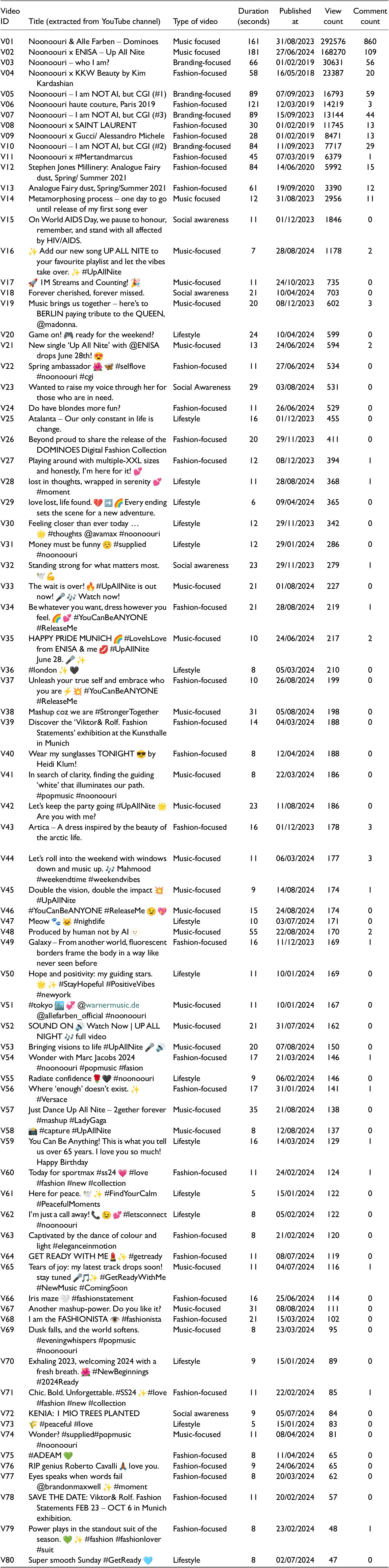
The dataset analysed comprises 80 videos published on the official Noonoouri channel between May 2018 and May 2025. Videos were categorised into five major content types: music-focused videos (n = 25), fashion-focused videos (n = 30), and other videos related to lifestyle (n = 16), social awareness (n = 5), and branding content (n = 4). Collectively, these videos accumulated 1,275 comments and 623,048 views (see Table 1 and Appendix A).
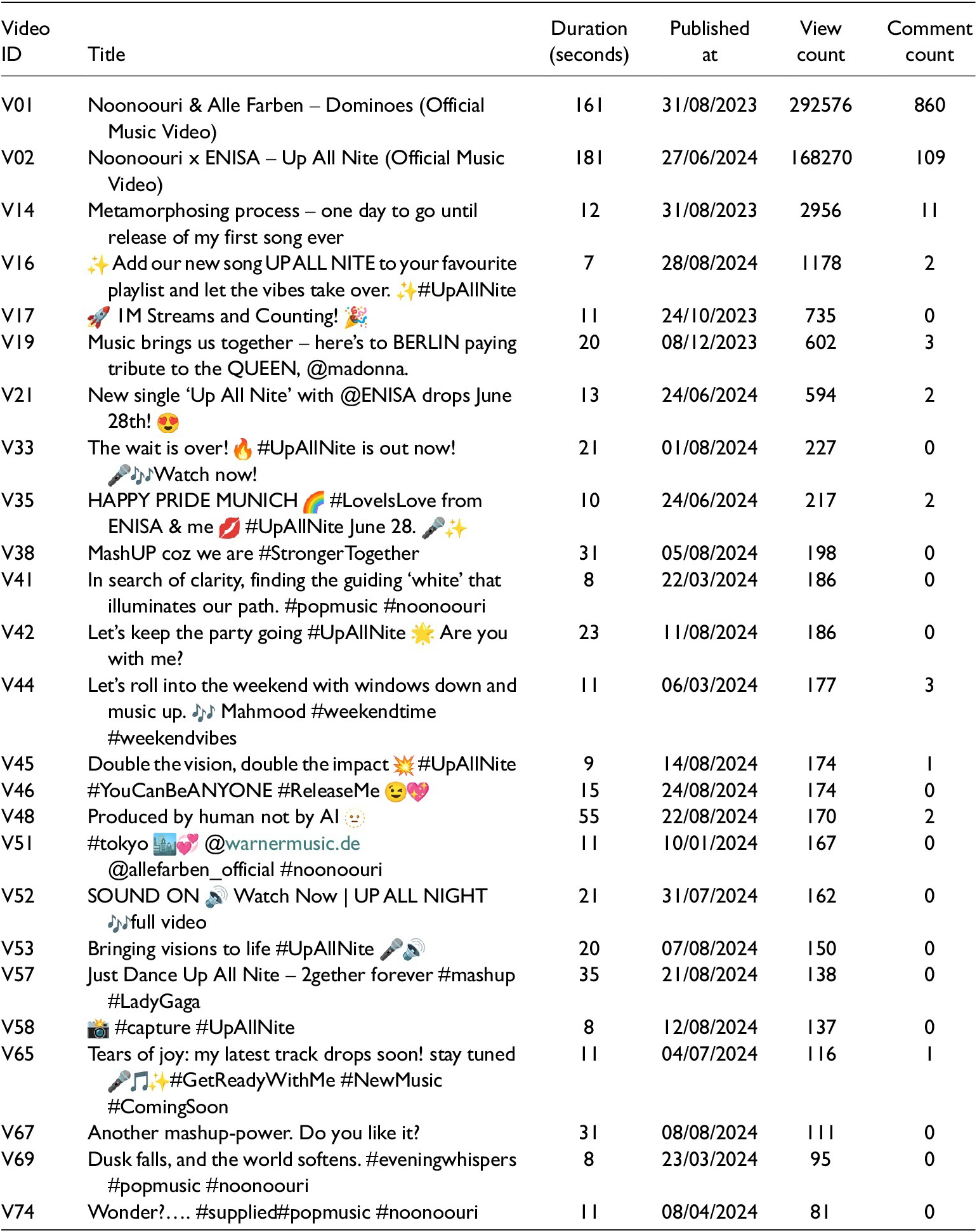
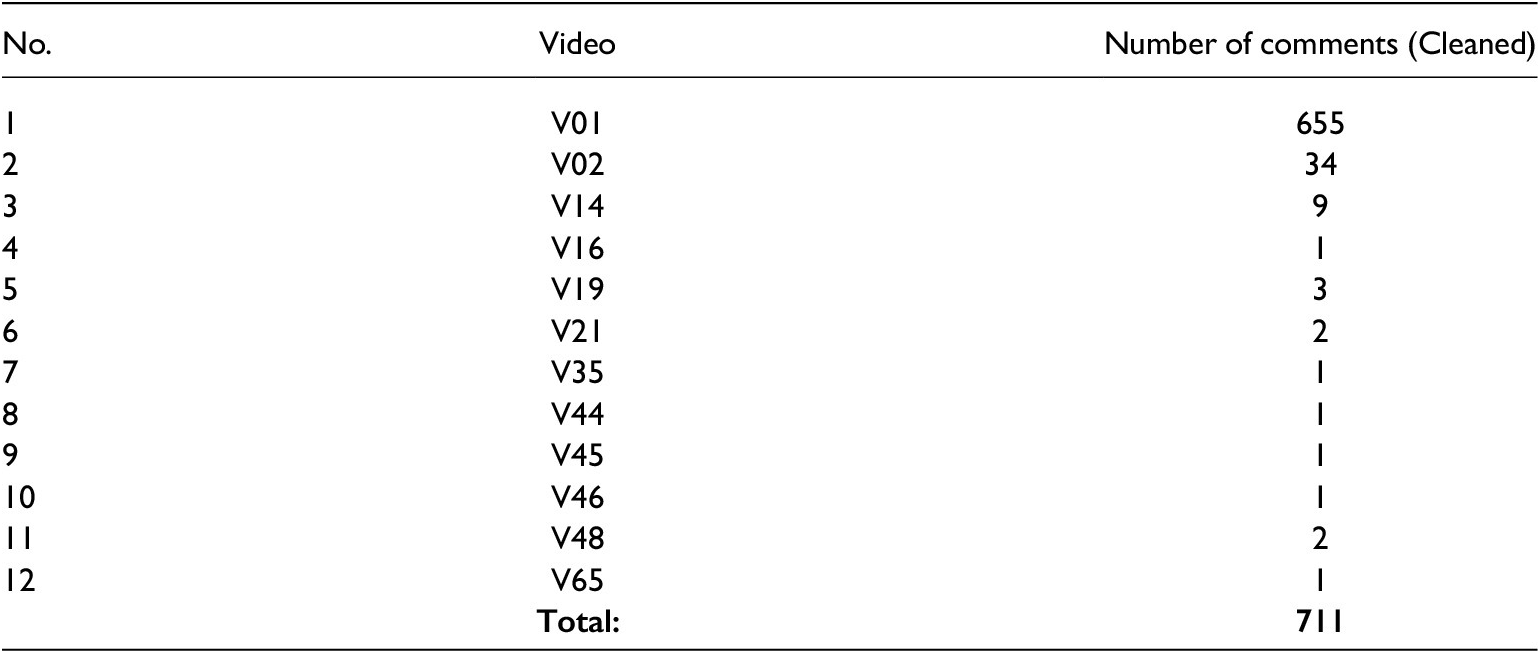
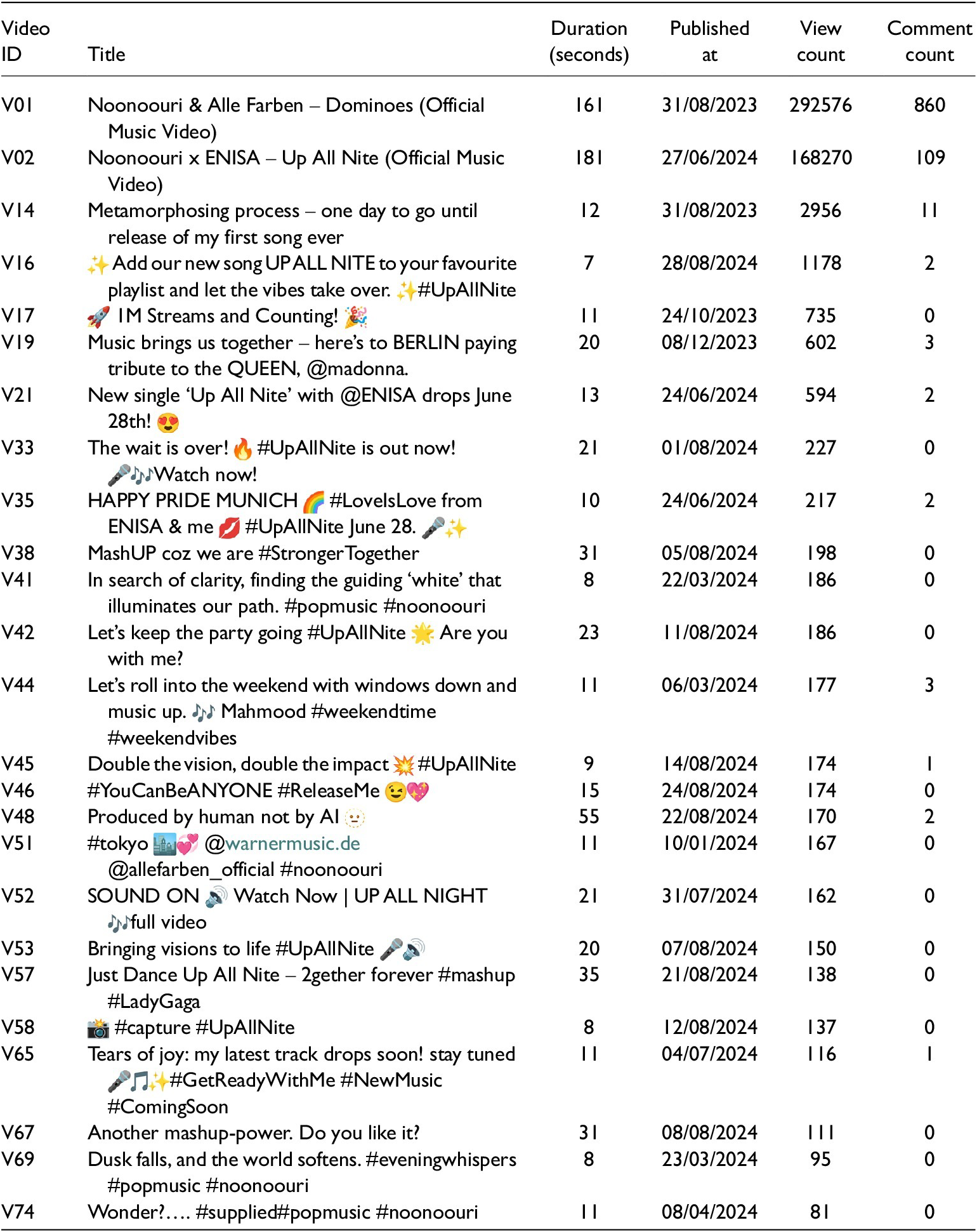
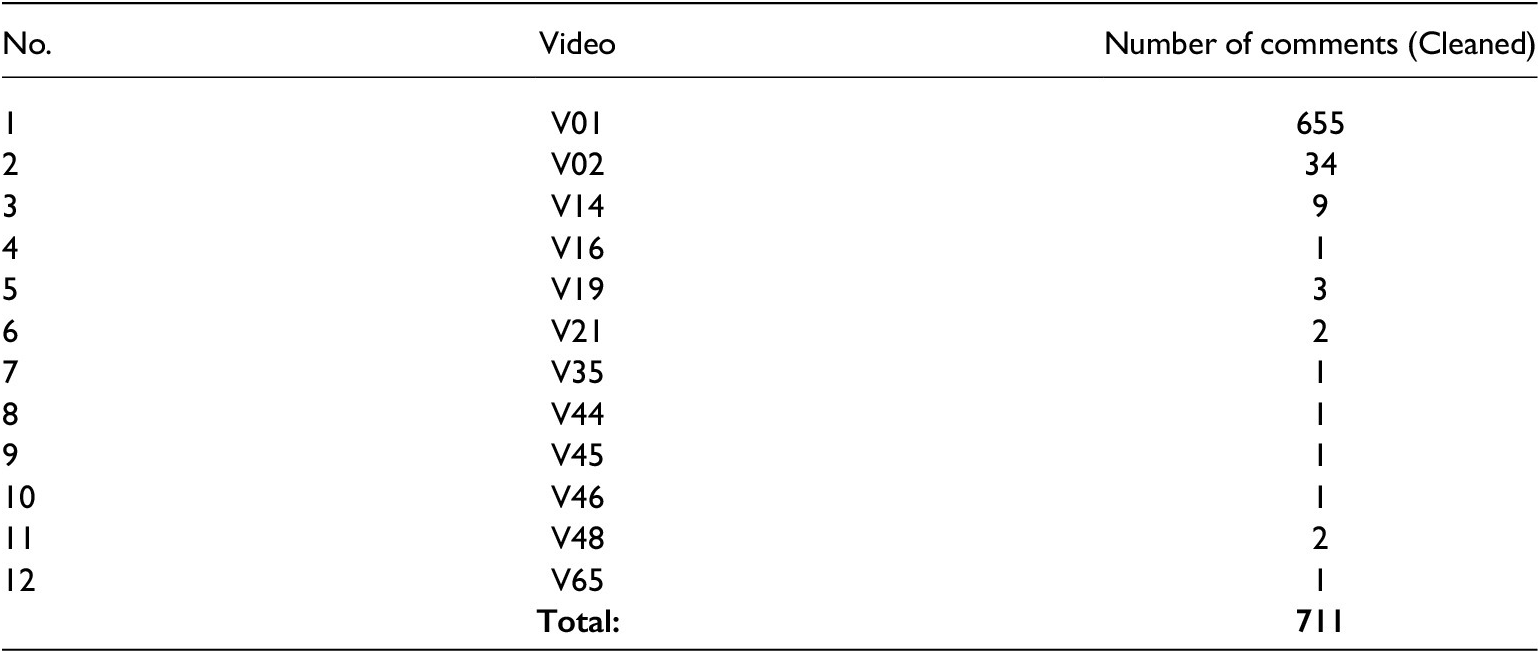
This study focuses on music-related videos, as these provide the primary medium through which Noonoouri engages as a virtual idol, aligning with the research questions on audience perception of AI-generated music and virtual idols. From 25 music-focused videos, 996 comments were initially collected. After removing duplicates, non-substantive, and empty responses, 711 unique comments remained across 12 videos. Two were full-length music videos (181s and 161s), and received the highest engagement, while the remaining 10 were short clips (7s–55s). The temporal span of these videos is August 2023–October 2024 (see Tables 2 and 3).
Selected videos for thematic analysis (listed by total comments count). Data collected from YouTube and organized by the authors, 2025
Number of comments from 12 selected music-focused videos after cleaned data. Data collected from YouTube and organized by the authors, 2025
Comments were posted in six languages, dominated by English (n = 667), followed by Spanish (n = 48), Russian (n = 2), French (n = 1), and Polish (n = 1). A small subset of emoji-only comments (n = 14) was classified as non-verbal sentiment.
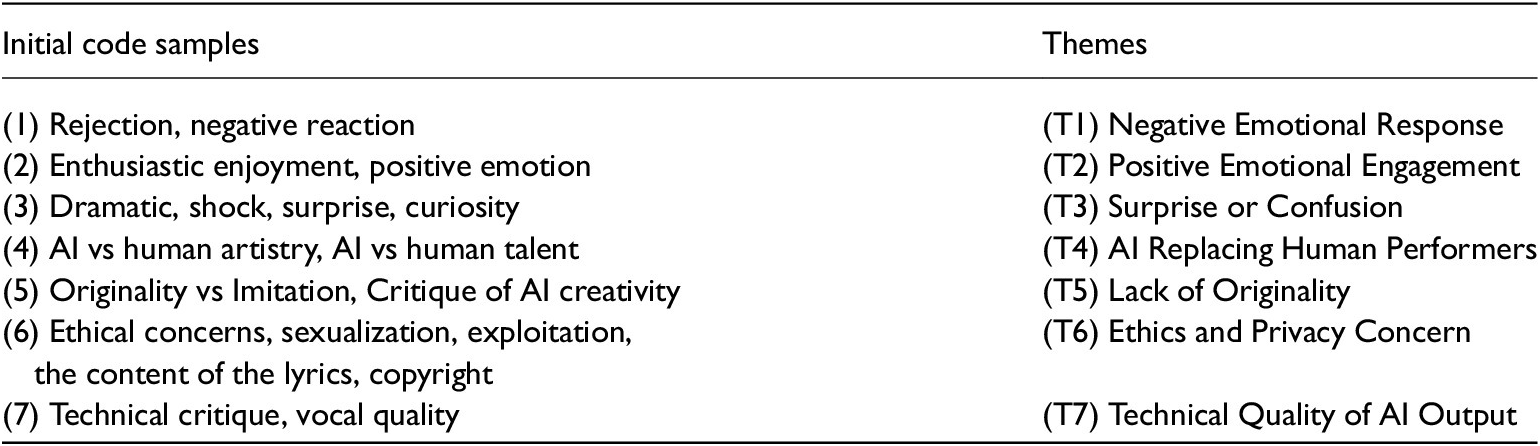
A thematic analysis of the 12 selected music videos identified seven main themes: (T1) Negative Emotional Response, (T2) Positive Emotional Engagement, (T3) Surprise or Confusion, (T4) AI Replacing Human Performers, (T5) Lack of Originality, (T6) Ethics and Privacy Concern, and (T7) Technical Quality of AI Output, encompassing seven themes across 537 initial codes. Table 4 summarises the representative initial codes and themes.
Initial codes and themes from YouTube comments. Data collected from YouTube and organized by the authors, 2025
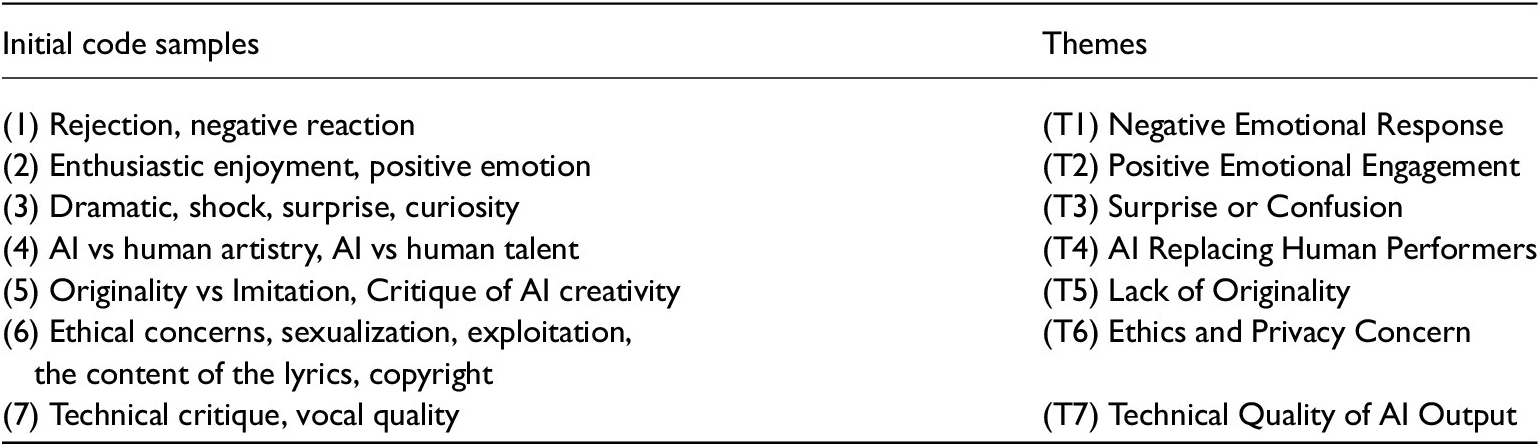
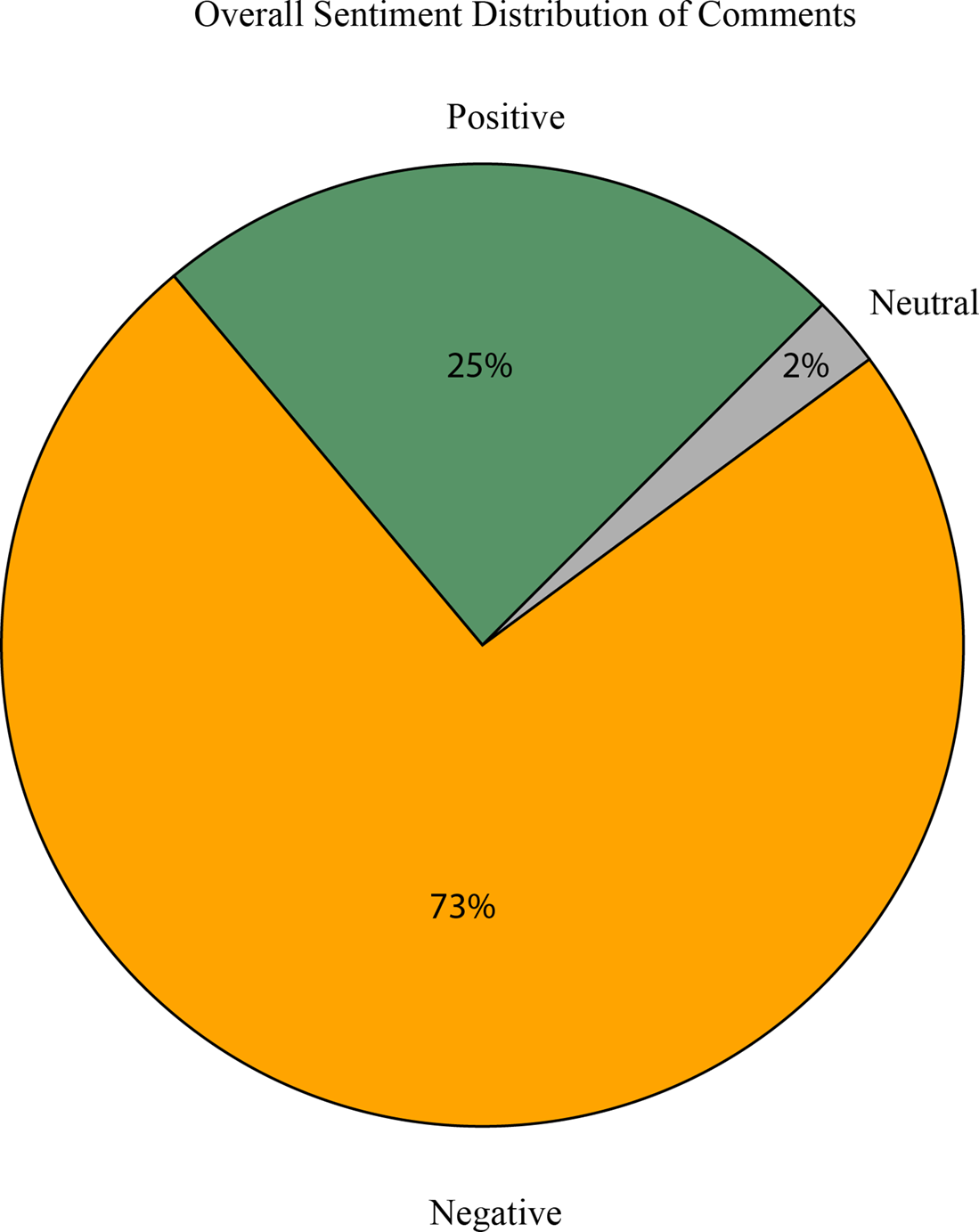
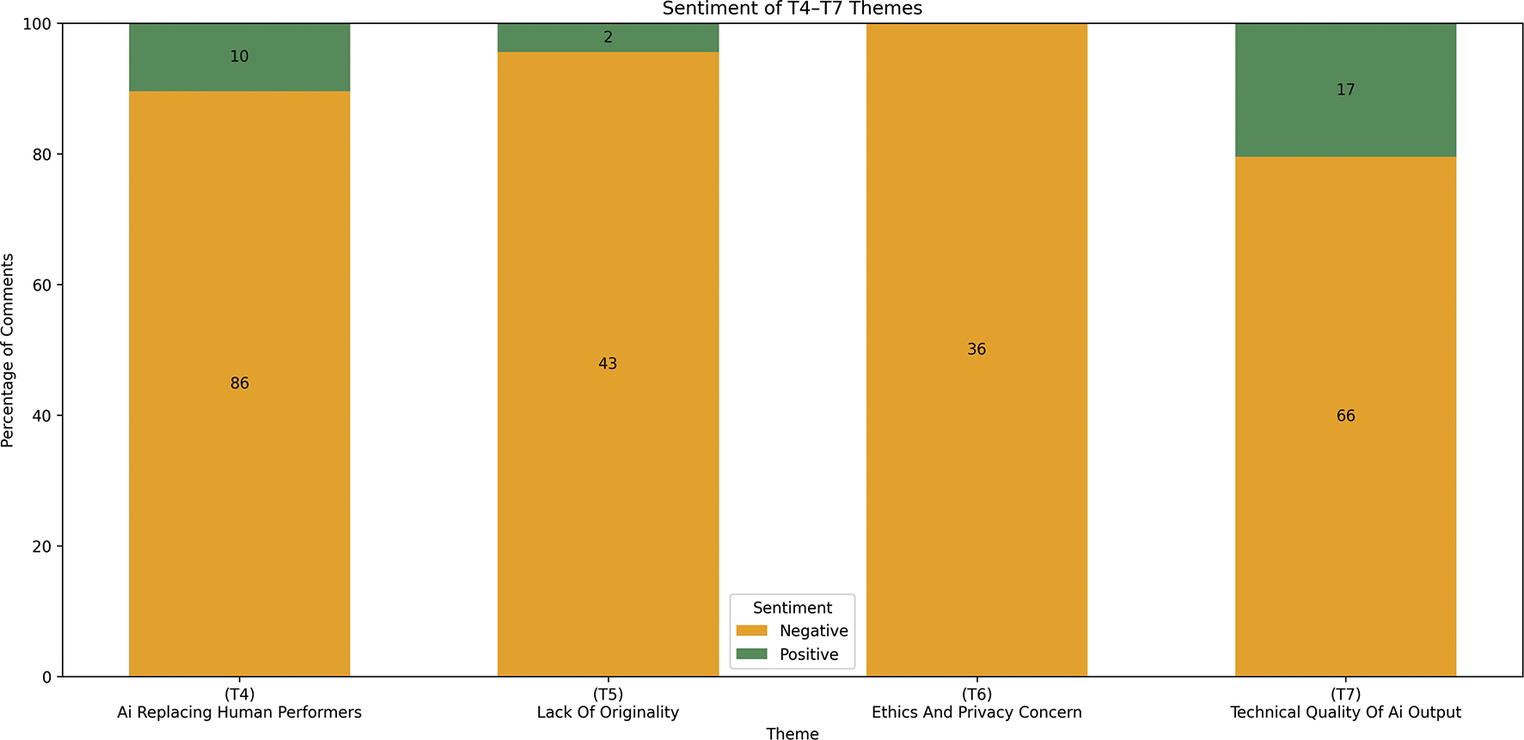
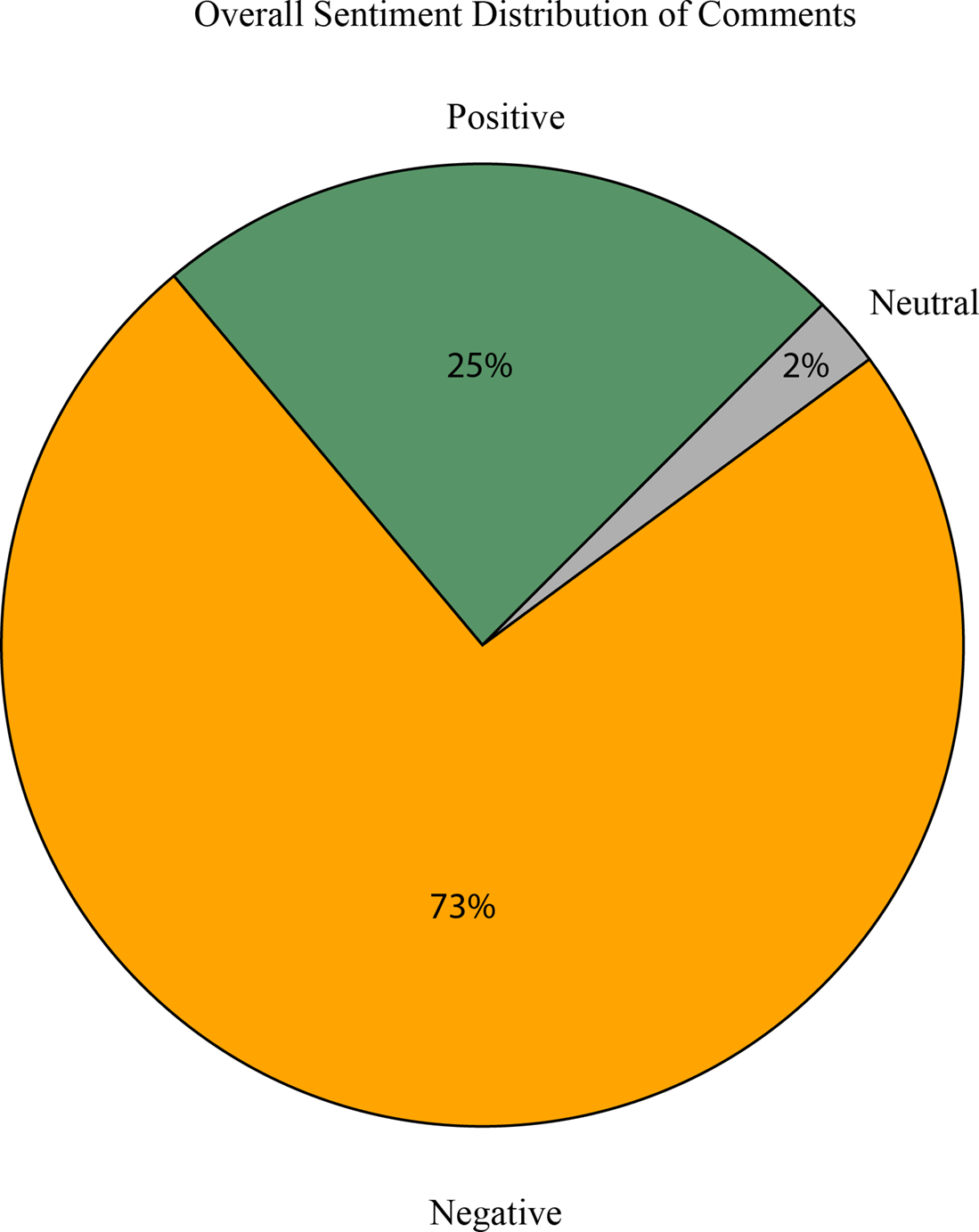
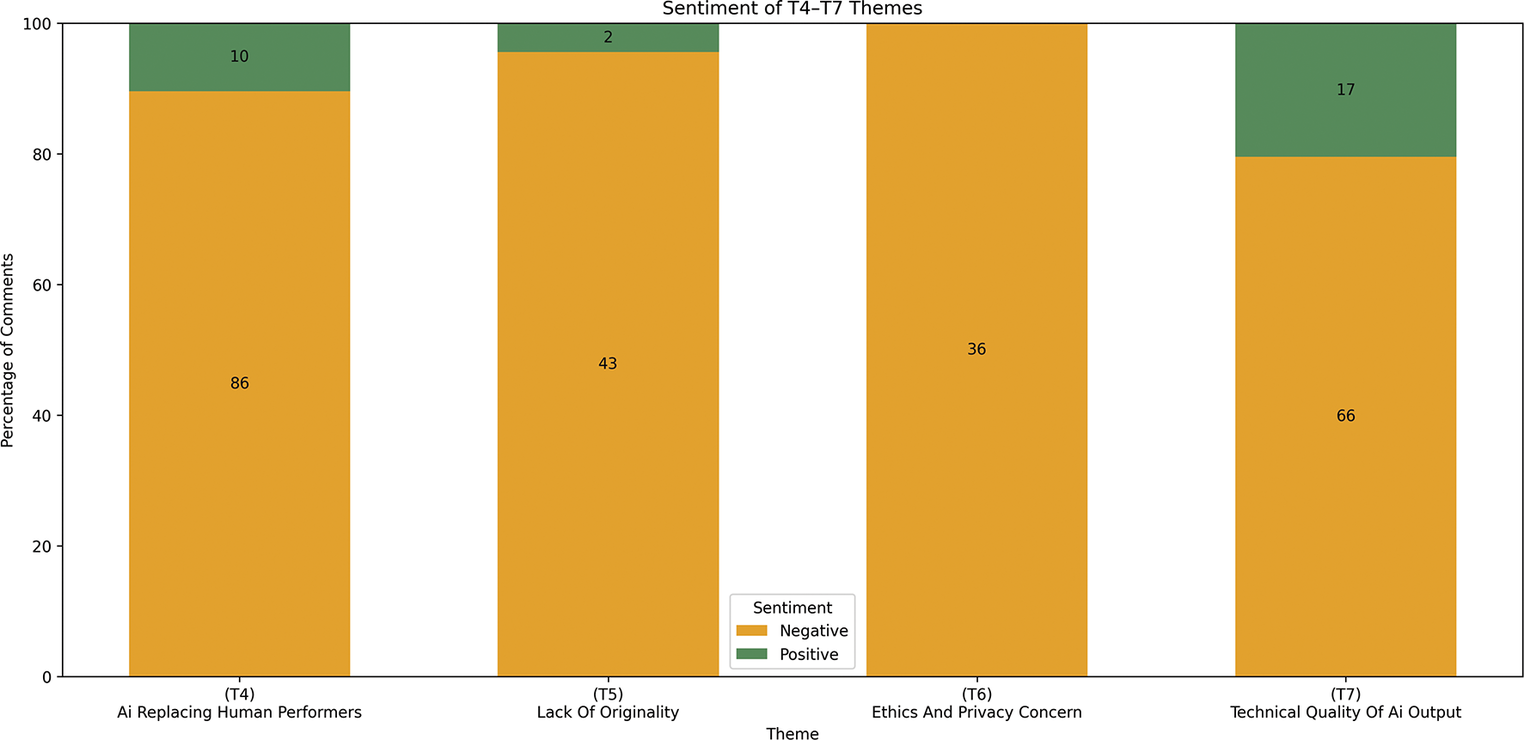
Figure 1 presents the overall distribution of positive and negative sentiments across all selected videos. Figure 2 illustrates sentiment patterns across themes: (T4) AI Replacing Human Performers shows mixed reactions, while (T6) Ethics and Privacy Concern, (T3) Surprise or Confusion, and (T7) Technical Quality of AI Output reveal predominantly negative sentiments. Notably, (T6) Ethics and Privacy Concern is entirely negative, underscoring strong ethical apprehension among viewers.
Overall sentiment distribution across selected videos (based on all comments).
Overall sentiment distribution across selected videos by themes (T4–T7).
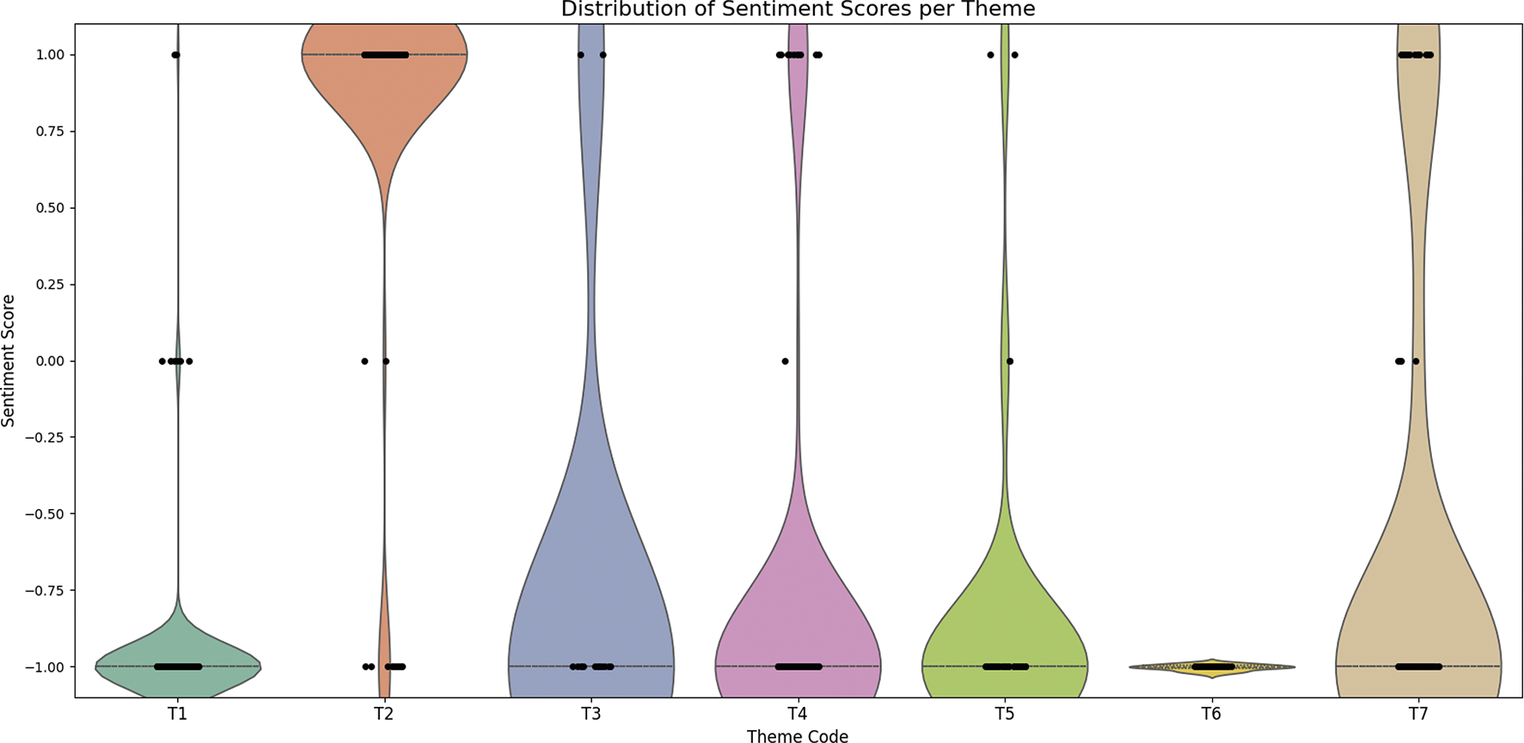
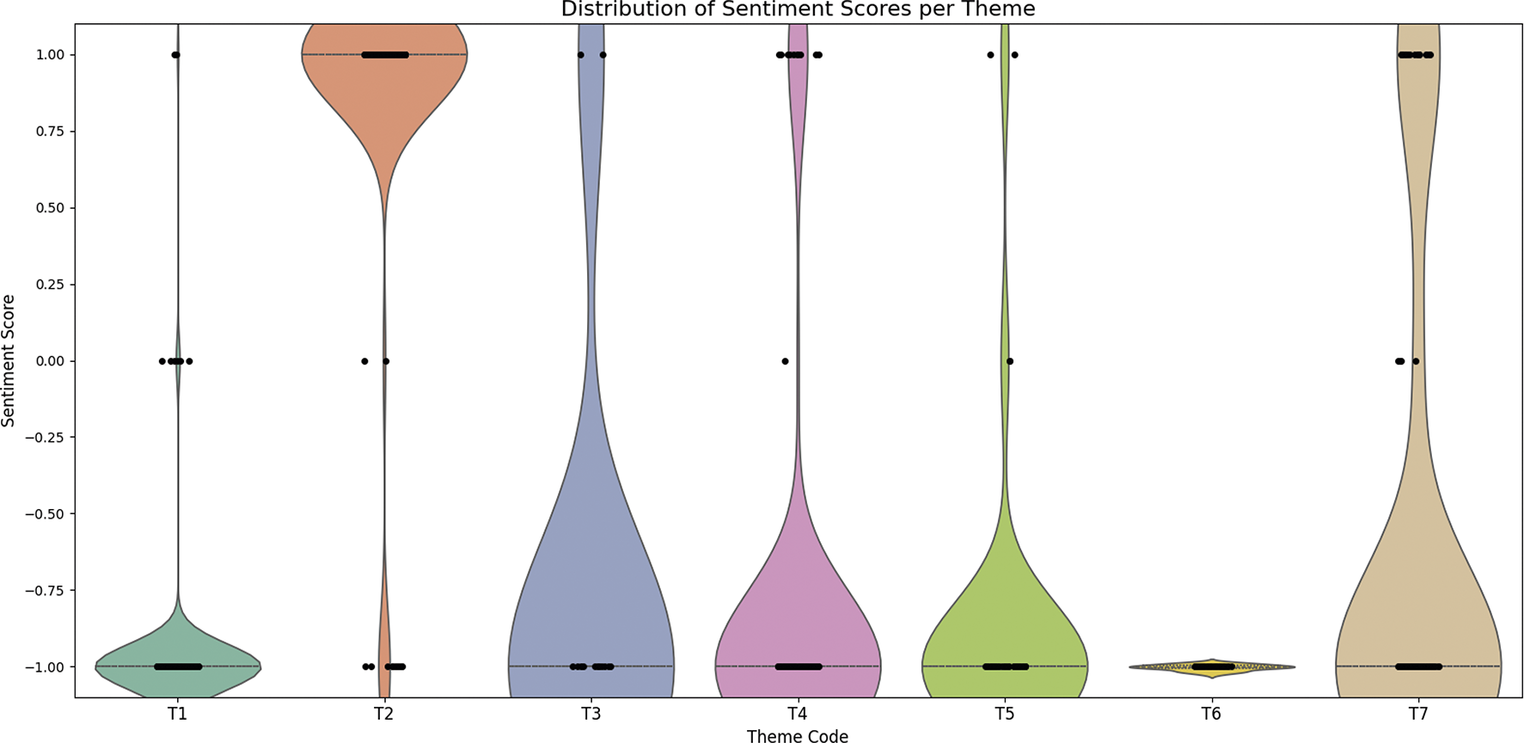
The violin plot (Figure 3) visualises sentiment distribution and variability per theme. Themes with larger comment volumes, such as (T1) Negative Emotional Response, show wider sentiment spread, while smaller themes appear more compact. Single-value themes, such as (T6) Ethics and Privacy Concern, collapse to a line, indicating unanimity in sentiment. Collectively, these visualisations highlight both the intensity and polarity of audience feedback.
Violin plot of sentiment score by themes across 12 selected videos.
The following subsections examine each major theme in detail, drawing on illustrative audience comments.
Theme 1–3 (T1–T3): Audience Emotion and Reaction
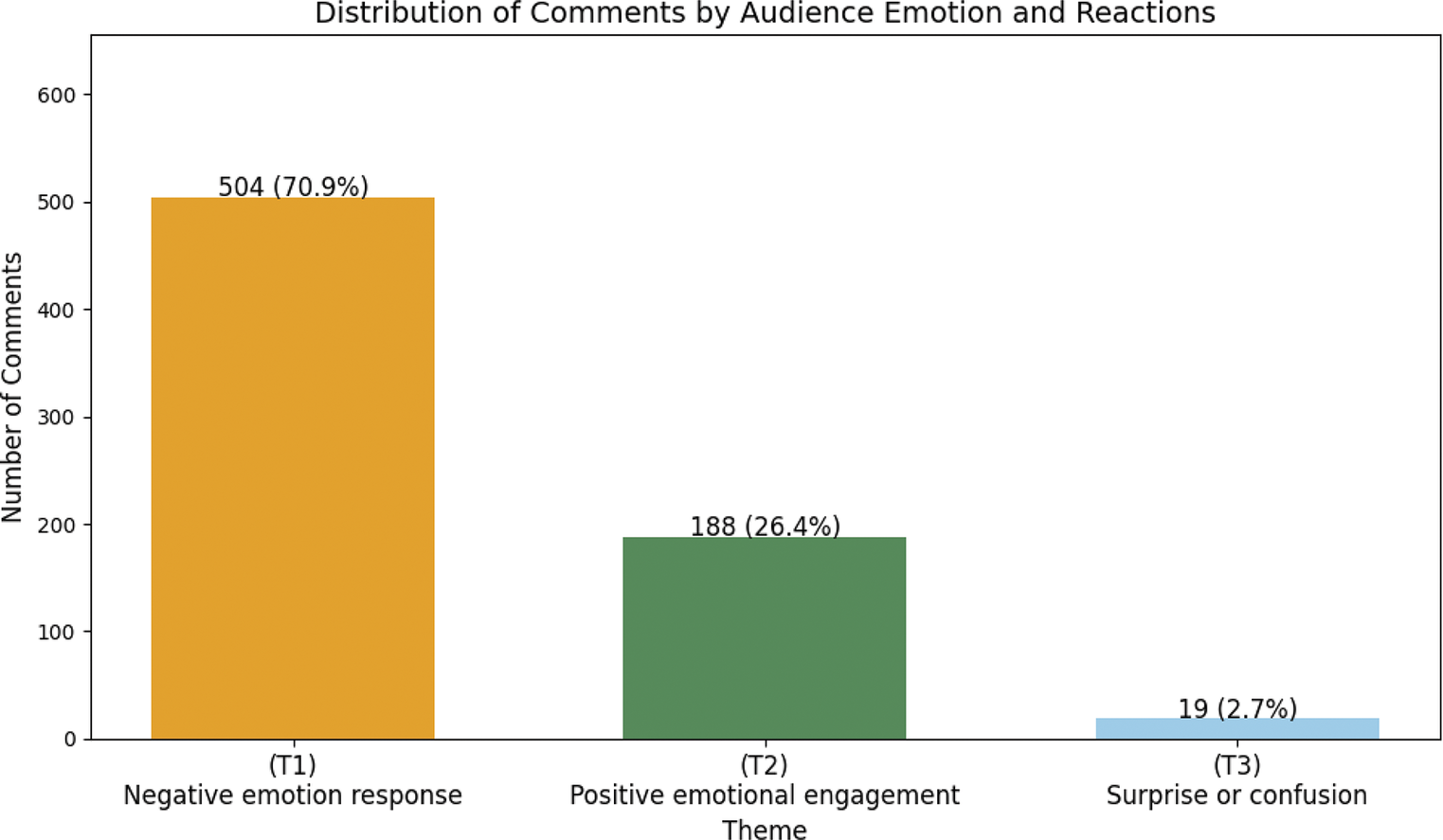
These themes capture audience emotion and reaction, including both emoji-only and short comments, and are divided into three themes: (T1) Negative Emotional Response, (T2) Positive Emotional Engagement, and (T3) Surprise or Confusion. Most comments reflected negative emotions (see Figure 4), with (T1) accounting for 504 comments (70.9%), (T2) for 188 comments (26.4%), and (T3) for 19 comments (2.7%).
Distribution of comments by audience emotion and reactions (T1–T3).
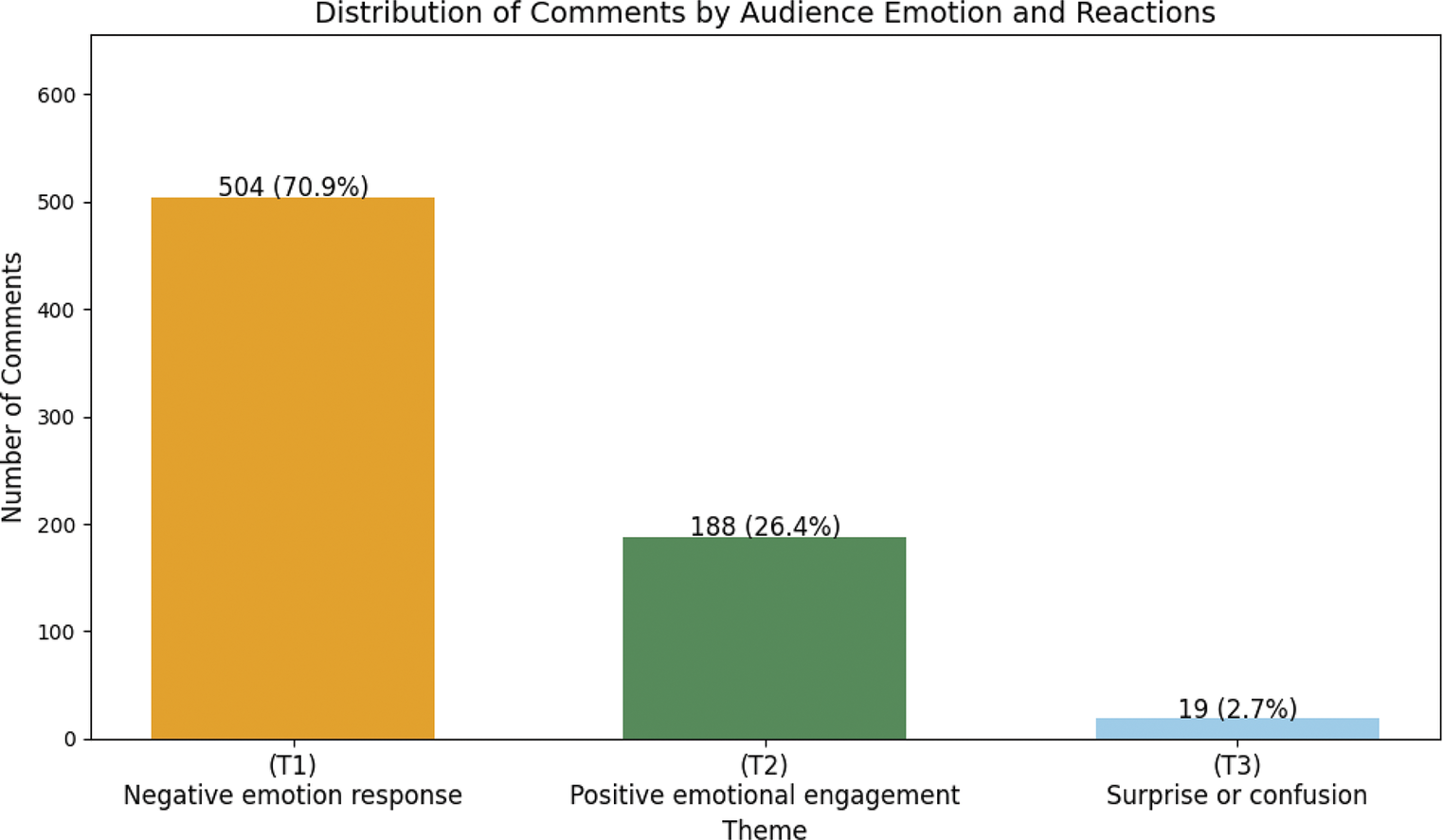
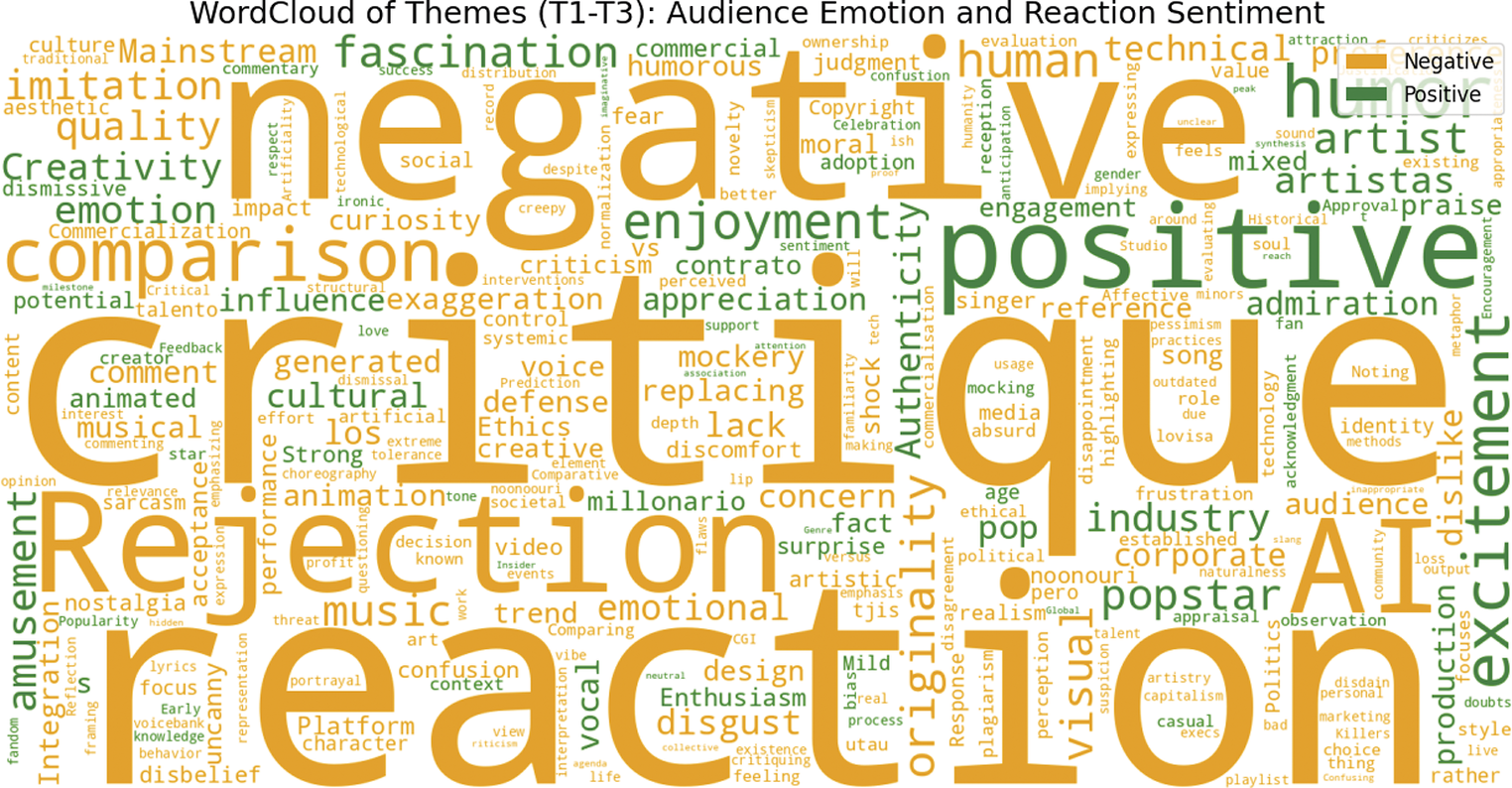
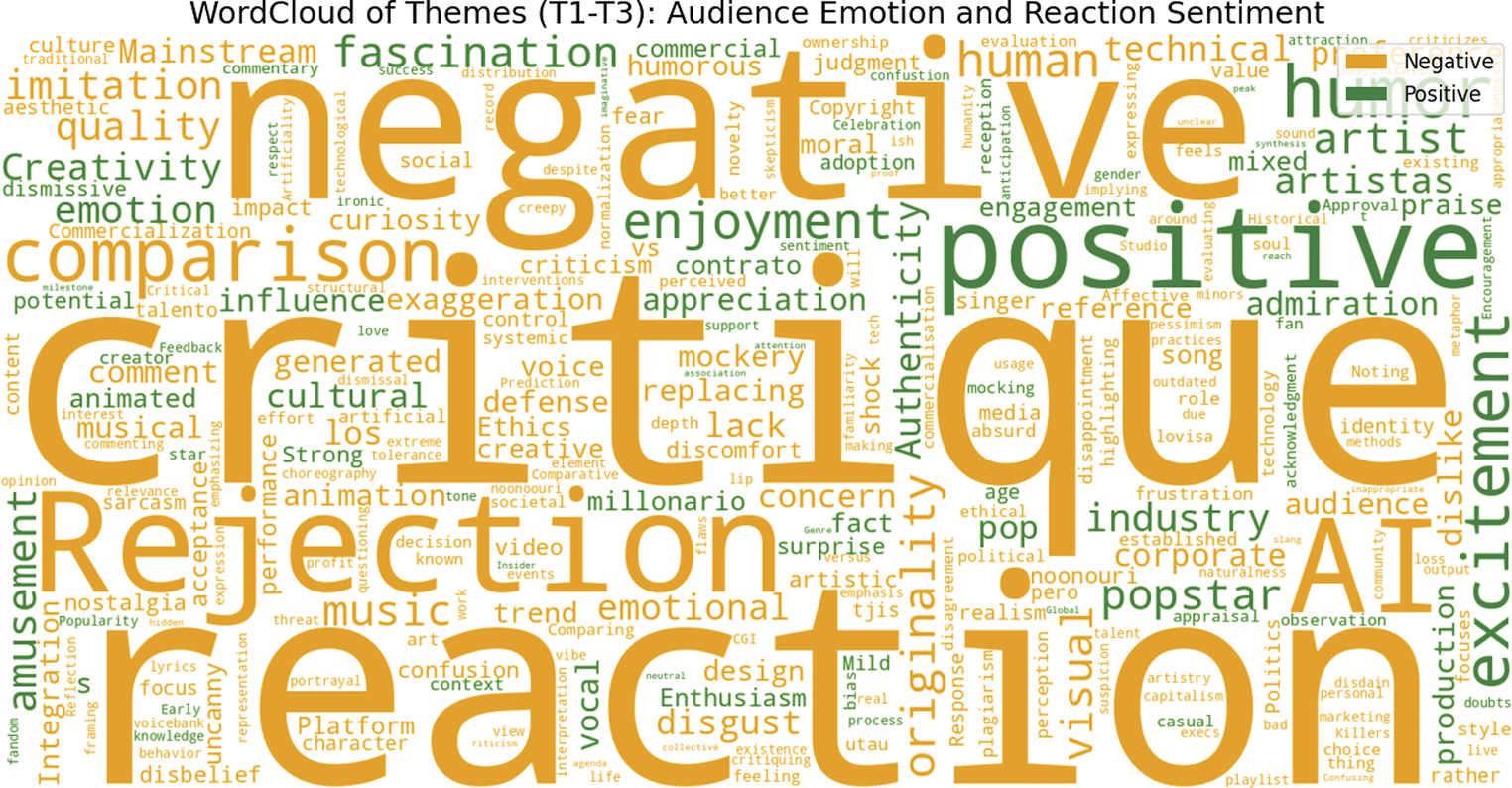
Figure 5 presents word clouds for these themes, where word size reflects frequency and colour indicates sentiment (green = positive, orange = negative). Prominent phrases include ‘scratchy voice’, ‘grainy’, and ‘hard to understand’ for negative reactions, ‘love the lyrics’, ‘addictive’, and ‘so catchy’ for positive engagement, and ‘surprised’, ‘unexpected’, and ‘confusing’ for surprise or confusion, highlighting the most frequent audience reactions and their emotional valence.
Word cloud of (T1–T3) audience emotion and reaction (with sentiment).
Theme 1 (T1): Negative Emotional Response
Most comments express strong dislike or mockery towards the AI-generated performance. The voice was described as ‘soulless’  , ‘flat’
 , or ‘worse than Google Translator’
 ’, often questioning its authenticity: ‘If this is AI, why does it have such an ugly voice/accent?’. Visual design drew criticism as ‘creepy
 ’, ‘Bratz doll–like
 ’, or ‘the forehead is bigger than the whole head
 ’. Comparisons to other virtual idols included: ‘Crazy Frog did the first and did it better
 ’ or ‘You will never be Studio Killers
 ’. The song itself was seen as generic or derivative

 , with comments like ‘sounds like every pop song from 2016 onwards’ and ‘this is just stealing chords from Empire of the Sun’
 ’. These short, emoji-heavy comments convey scepticism, humour, and rejection of AI-generated artistry.
Theme 2 (T2): Positive Emotional Engagement
A smaller group of viewers expressed enthusiasm and admiration, emphasising catchiness, novelty, and technical achievement: ‘


 2:40 ITS THE BEST PART!!!!!!!!!’; ‘Despite it being AI/CGI generated I love the avatar/character design and the song is kind of catchy’; ‘This is a hit-crazy that this is first-gen AI. Imagine 5th-gen AI’. Several praised the creators’ artistry: ‘All in all, an A+ rating for the work that went into a great piece of art. Keep up the awesome work, can’t wait to see what comes out next’ and ‘Wow, what talent from the creators using artificial intelligence… there are wonderful voices that should not be overshadowed’. Humorous remarks also appeared: ‘Everyone: I hate this song… Me: My replay button almost crushed, because I can’t stop enjoying this!
 ’ and ‘This goes hard


 ON MUTE


 ’, reflecting fascination and active engagement.
Theme 3 (T3): Surprise or Confusion
Comments combined curiosity, disbelief, and ethical questions. Some expressed amazement: ‘Guys this is the first AI song  ’ and ‘What artificial intelligence can do
 ’, while others were uneasy: ‘She signed a record deal???? Can we be done?’, ‘What is this?’, ‘So I guess this is how non-weeps feel when they see a sexualized idol character
 ’. Others reflected confusion over audience reactions: ‘Everyone in the comments are freaking jerks… Can someone explain why…’ and ‘What I didn’t like was their way of dressing in some parts of the video, but I think the rhythm is good’. Overall, these comments show a mix of admiration for the technology and apprehension about its implications.
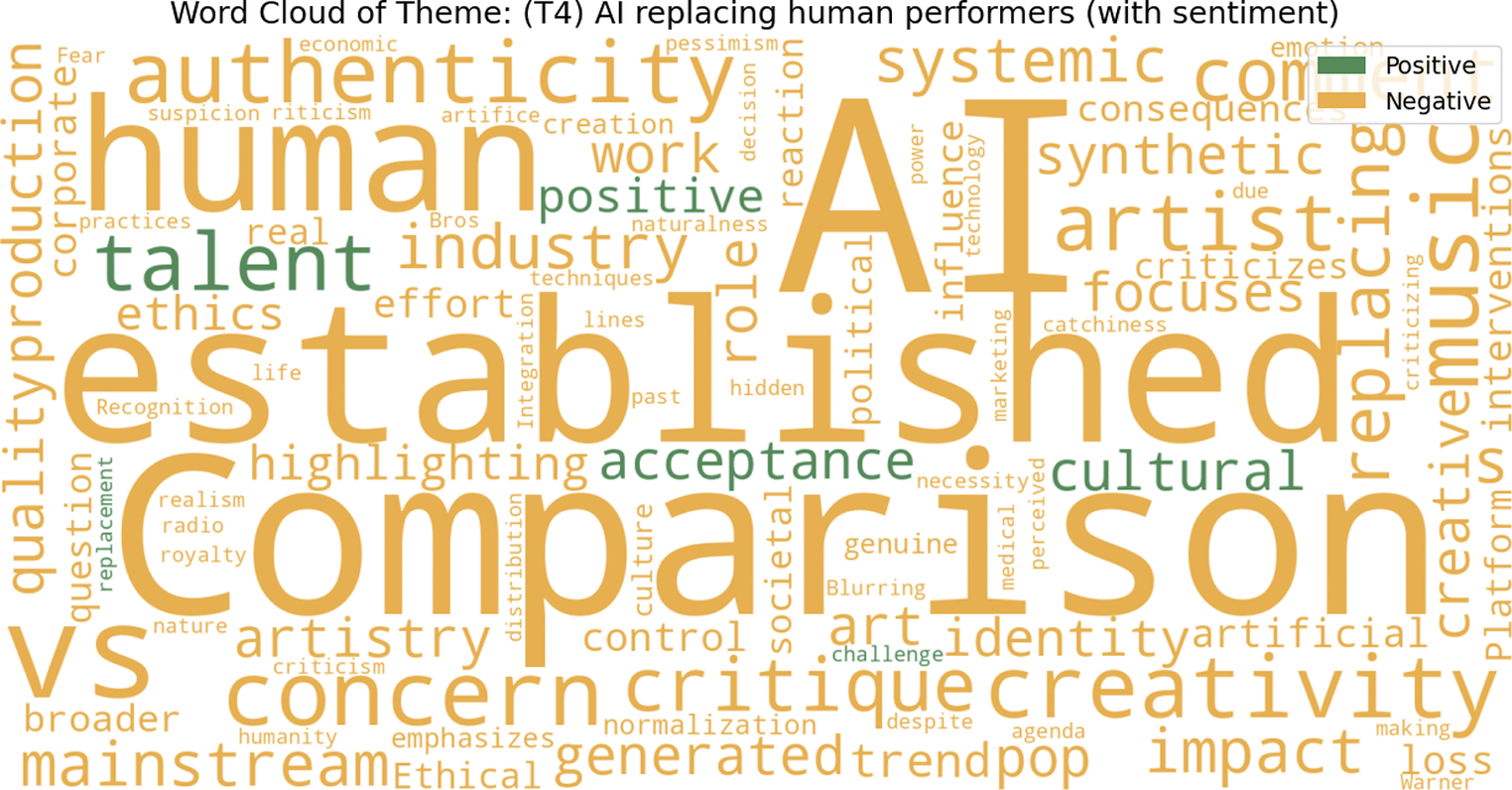
Theme 4 (T4): AI Replacing Human Performers
This theme reflects comparisons between Noonoouri and established virtual idols such as Hatsune Miku. Over 90% of comments were negative, expressing concern that digital performers might replace human musicians and diminish artistic authenticity. This theme reflects widespread concern that AI-generated music could displace human artists or diminish the value of human creativity. Many comments emphasised the uniqueness and authenticity of human performers, contrasting them with AI-generated voices perceived as lifeless, synthetic, or commercially motivated.
Viewers frequently compared the new virtual idols to established ones such as Hatsune Miku, arguing that while earlier virtual idols demonstrated technical sophistication and cultural resonance, Noonoouri lacks emotional depth and artistic nuance. Representative comments described her as a: ‘discount Miku  ’, and ‘Hatsune Miku rip-off
 ’, or ‘another Miku clone
 ’, often emphasising that ‘Hatsune Miku did it better’ or ‘Better vocals were made decades ago by teens using Vocaloid’.
Others criticised visual and vocal authenticity, noting that ‘Noonoouri looks like a makeup doll with mumps  ’ or that ‘the vocals were actually human, just digitally altered’. Some criticised the attempt to emulate popular acts: ‘Bro really tried to mix Gorillaz and Hatsune Miku but didn’t realize that both require people with actual talent to work
 ’ or sarcastically: ‘Mom, I want Hatsune Miku… We already have Miku at home
 ’.
Many expressed deeper concerns about corporate use of AI, warning it could normalise synthetic music, reduce creative opportunities, and prioritise profit over artistry. As one user put it, ‘AI is not a replacement for actual talent  , another added, ‘Even if kids can’t tell the difference, humans bring something AI can’t replicate: essence and natural talent
 ’. A few acknowledged technical appeals, calling it ‘a catchy tune
 ’ or ‘not bad
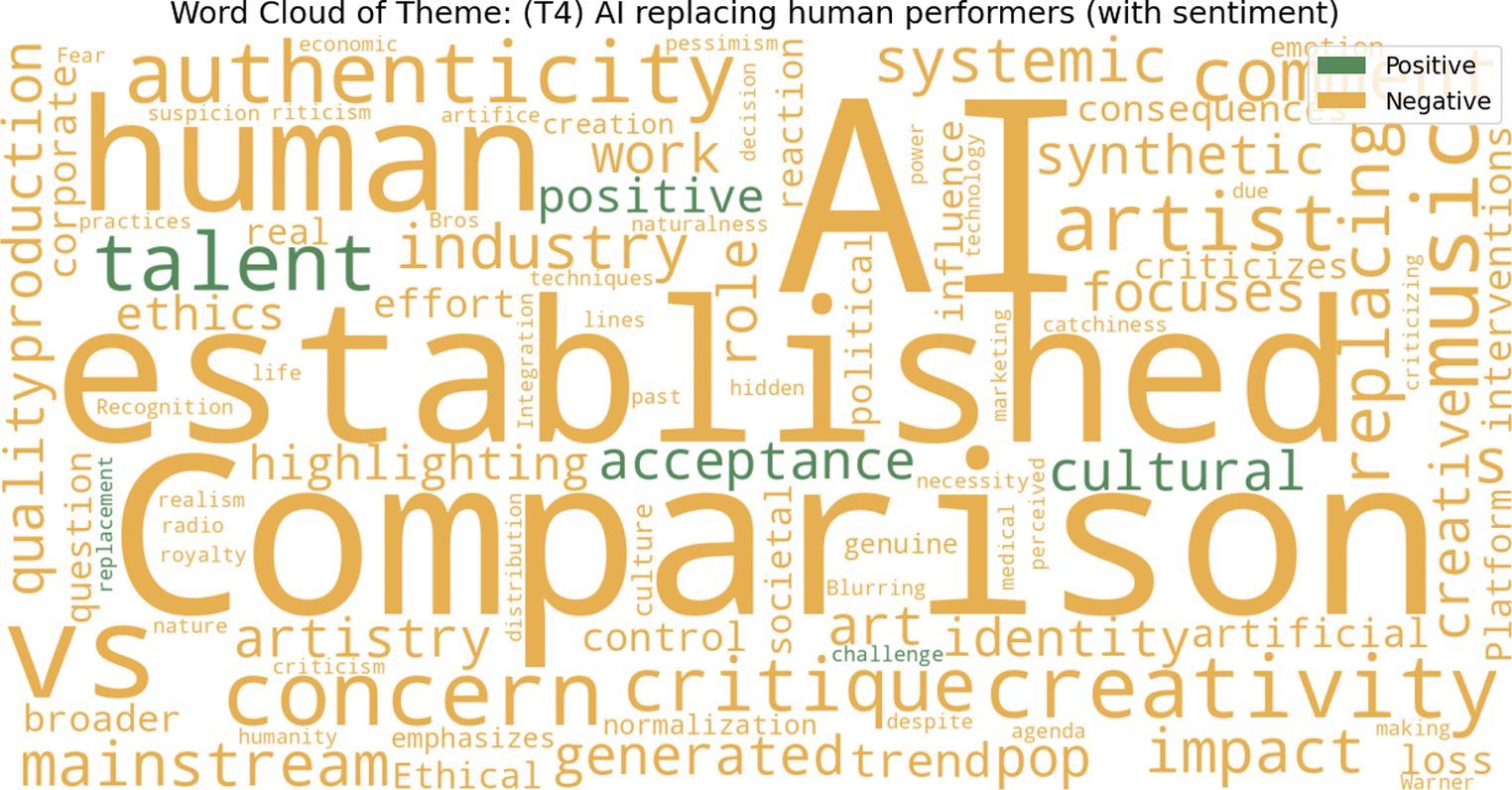
 ’, but overall, the tone was dominated by scepticism and anxiety about AI’s potential to displace human artistry. Figure 6 shows a word cloud for this theme
Word cloud of (T4) AI replacing human performers (with sentiment).
Theme 5 (T5): Lack of Originality
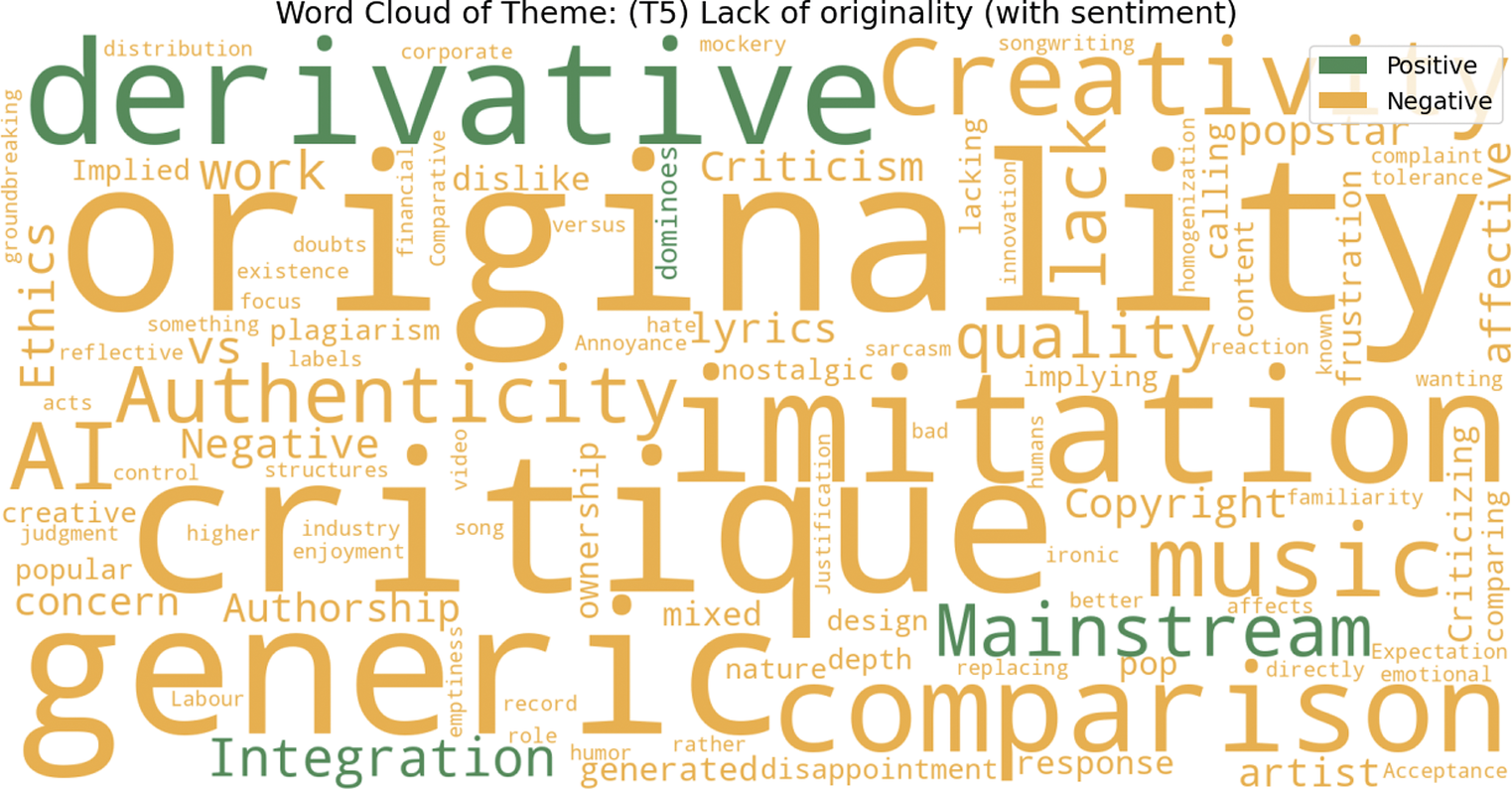
This theme is about perceptions of originality, creativity, and artistic integrity. 95% of related comments were negative, arguing that the music lacked innovation and emotional depth. A dominant criticism under this theme is the song’s perceived lack of creativity and uniqueness. Many users described it as generic, derivative, and unoriginal, often saying it sounds like ‘every other pop song out there  ’, ‘You are not the first AI song maker, you’re not even a good one. Please, if you’re going to do this make more than generic pop garbage’. Several comments emphasised that the track could easily pass for ‘royalty-free background music’, with one user mocking: ‘Sounds like generic royalty-free music
 ’. Others expressed frustration that the AI-generated song recycles existing trends rather than pushing creative boundaries: ‘Doesn’t surprise me this was AI-generated. Sounds like a generic copy of recent music. I’ll be impressed when it can come up with something groundbreaking!

 ’. Criticism also extended to comparisons with existing virtual artists, particularly Studio Killers, with comments such as, ‘Sounds like you all tried to steal Studio Killers’ thing and did it horribly
 ’, or ‘What a scamp rip-off of Studio Killers. The voice is near identical, like it was trained on them, except Studio Killers’ music is actually good’. Even Hatsune Miku was seen as setting a higher bar for originality, highlighting Noonoouri as bland and uninspired.
Lyrics were another point of critique, described as ‘annoyingly generic’ or ‘pretending to be deep’, with one sarcastic comment: ‘The lyrics are just a literal description of how dominoes work  ’. Some acknowledged the songs’ catchiness but still saw it as shallow: ‘Definitely an earworm, would make a half-decent Eurovision song. Strongly derivative though, but that’s nothing new in pop’. Nostalgia-tinged mockery appeared as well: ‘Would’ve been a #1 hit in 2012
 ’, or ‘This sounds like those songs that play in clothing stores–just inoffensive, bland background music’.
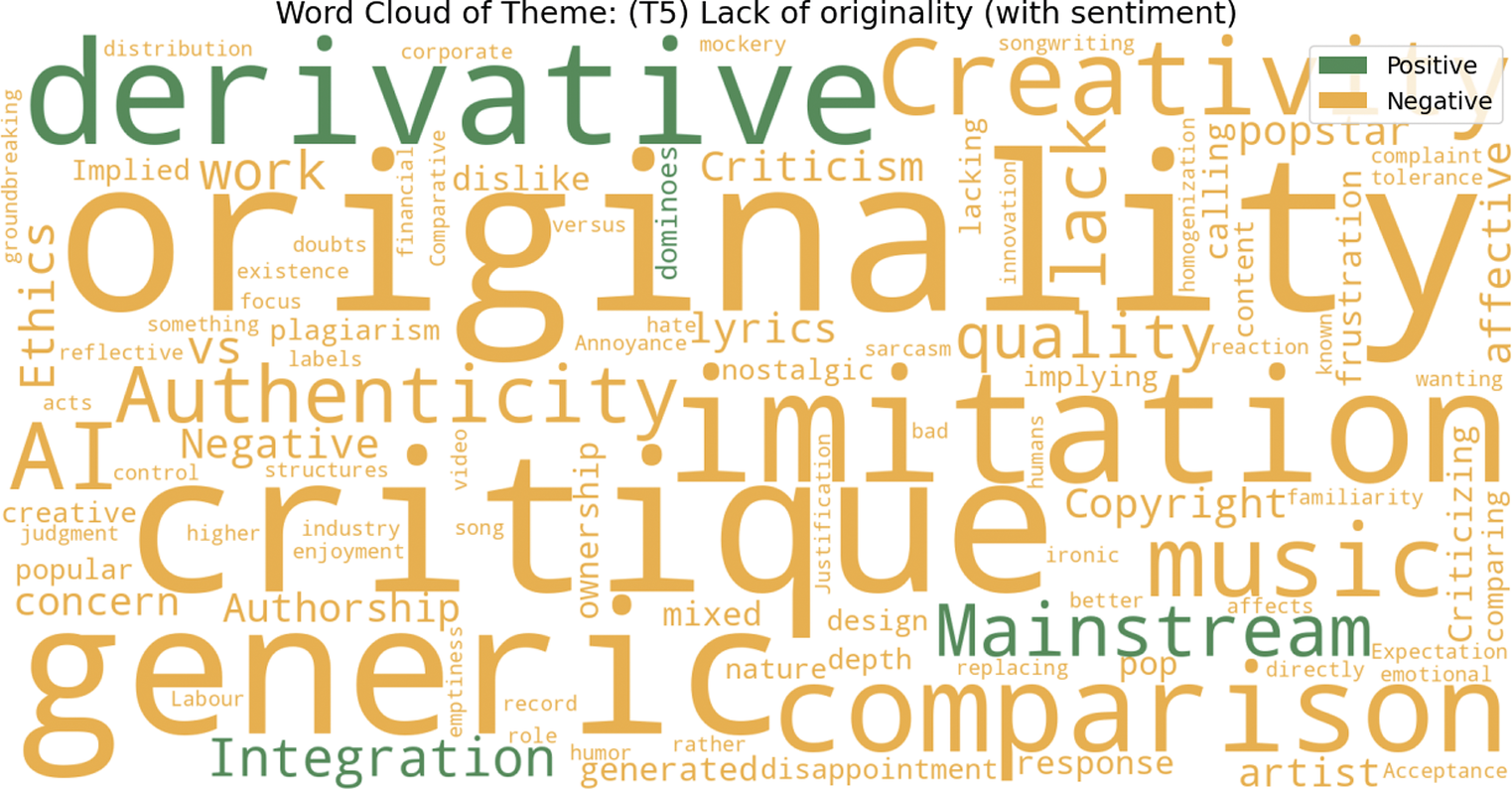
Overall, this theme reflects disappointment and scepticism towards the AI’s ability to produce unique and original music. Figure 7 shows the word cloud illustrating the prominence of terms such as ‘generic’, ‘derivative’, and ‘copy’.
Word cloud of (T5) lack of originality (with sentiment).
Theme 6 (T6): Ethics and Privacy Concern
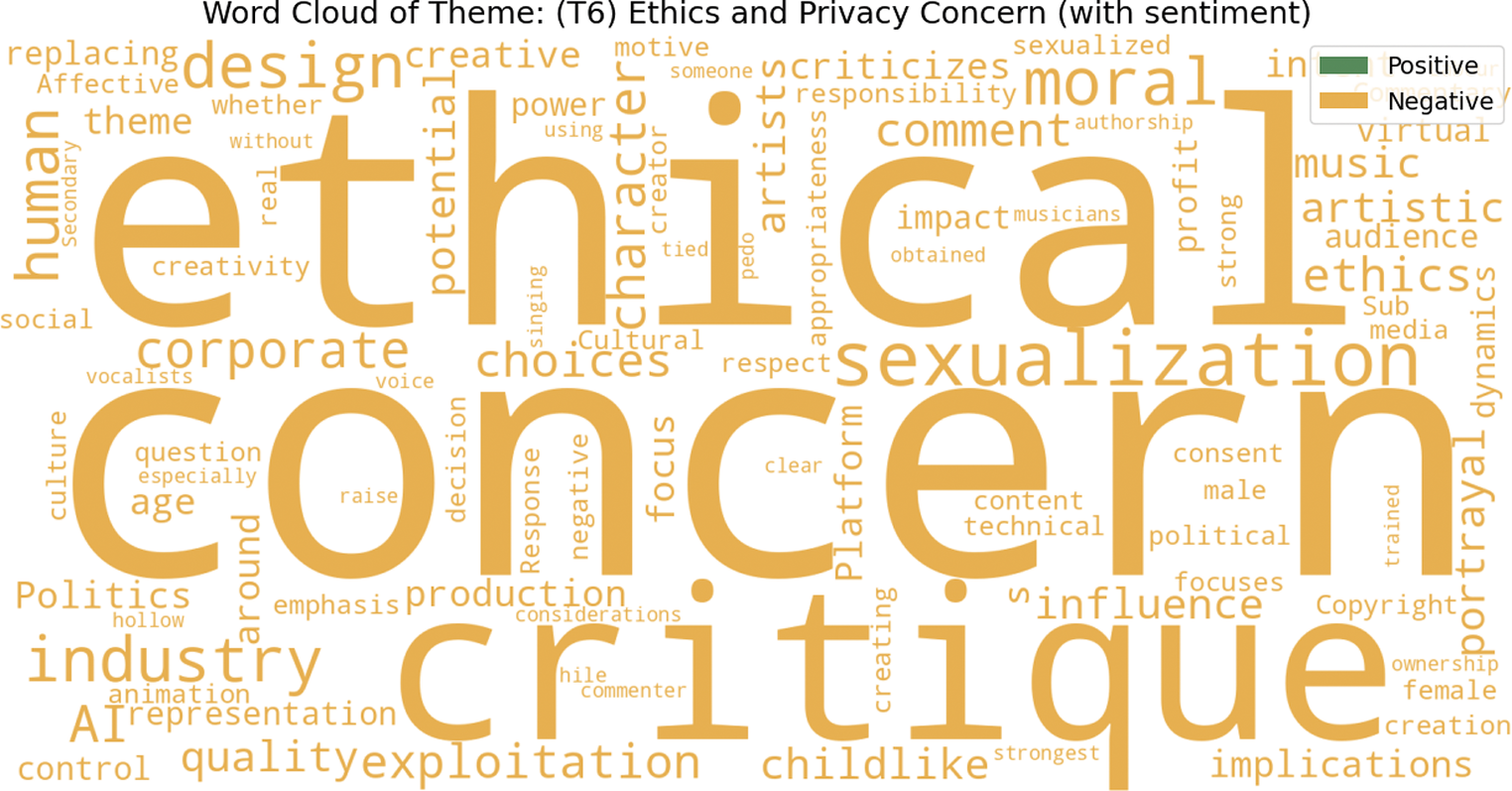
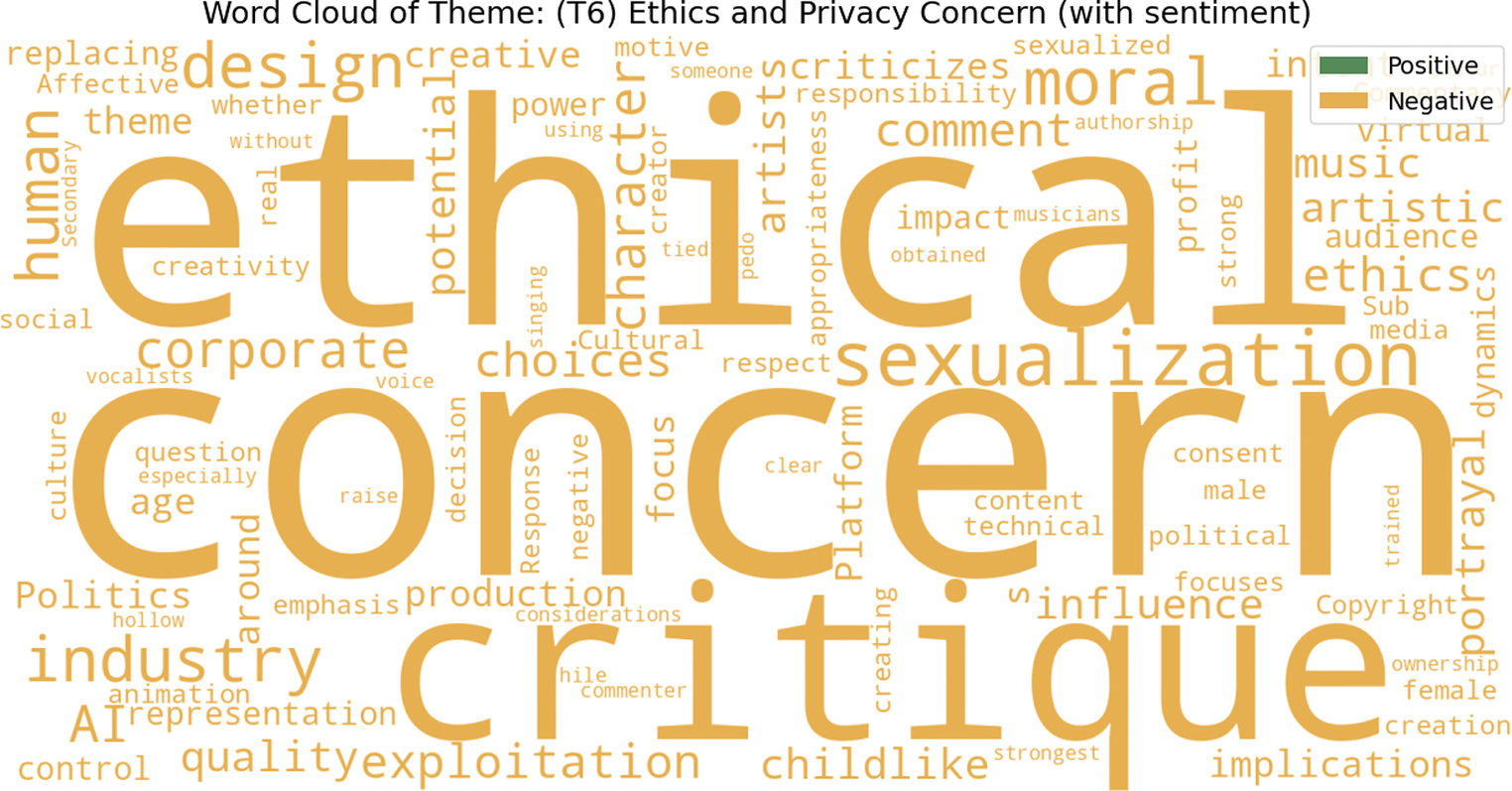
This theme reflects strong opposition to the virtual idols, with 36 comments raising moral or ethical objections. Viewers criticised the sexualised portrayal of the AI character, describing it as ‘creepy’ or ‘borderline paedophilic’, and expressed concerns about corporate exploitation, accusing the industry of prioritising profit over creativity and human labour. Collectively, these comments position Noonoouri as ethically problematic and socially controversial.
Users repeatedly expressed outrage over the design of the virtual character, noting that although it was claimed to be 18 years old, it appeared childlike. Comments included: ‘Could you have tried harder to make it look like it’s 10–12 years old?’ and ‘It really looks like a sexualized model of a toddler’. Some warned the character would attract predatory attention: ‘Basically a psychopath’s pedo’s dream of a digitally created 12–13-year-old girl’.
Concerns also extended to AI voice modelling and creative consent: ‘Who did you train the vocal model off of? Do they know you used their voices? If so, why not just get them to sing it?’ Users emphasised respect for human musicians: ‘If I wanted to hear weird digital artifacts, I would just put the most obnoxious autotune filter on any regular vocalist, but at least I’d appreciate listening to a real human’. Several comments highlighted broader societal issues: ‘So a dude is pretending to be an anime female… stole another singer’s voice and altered it… and is getting paid for it?! Wtf is wrong with this society!?!?!’.
Others stressed that sexualising a child-like character is exploitative and morally wrong: ‘This is supposed to be a teenager influencer? They made her purposely look childlike but also sexualized her. It’s so uncomfortable…’, ‘This character design doesn’t even look like a grown adult woman but more like a sexualized child…’, and ‘Let me spell it out: the record deal you are about to sign is exploitation of real women. Half naked young girl designed by men for men’.
Collectively, these responses reveal widespread ethical and moral rejection of the virtual idols, highlighting concerns about sexualisation, exploitation, consent, and the potential normalisation of harmful practices. Figure 8 shows the word cloud for this theme, with terms such as ‘sexualized’, ‘childlike’, ‘exploitative’, ‘soulless’, and ‘corporate’.
Word cloud of (T6) ethics and privacy concern (with sentiment).
Theme 7 (T7): Technical Quality of AI Output
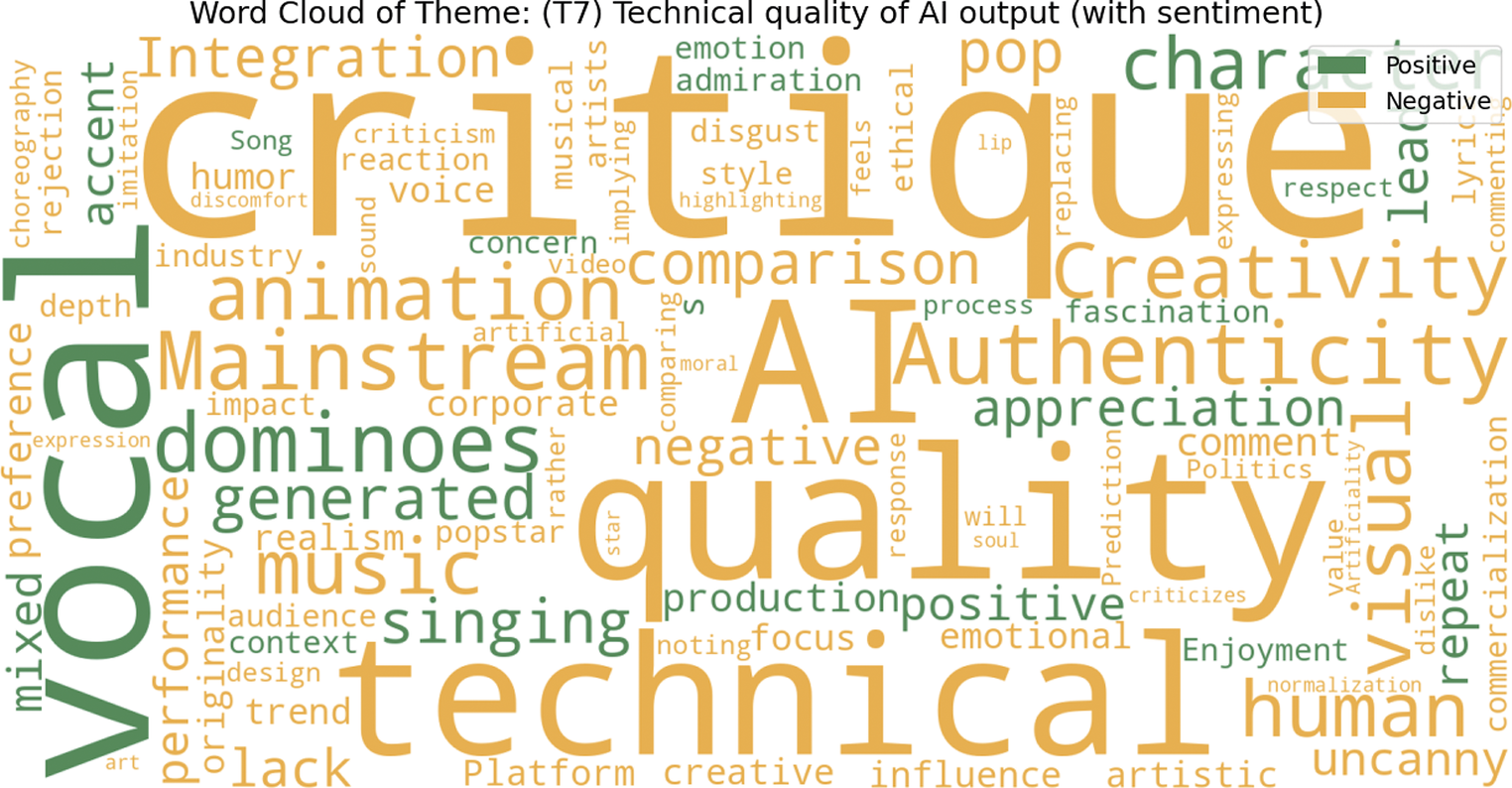
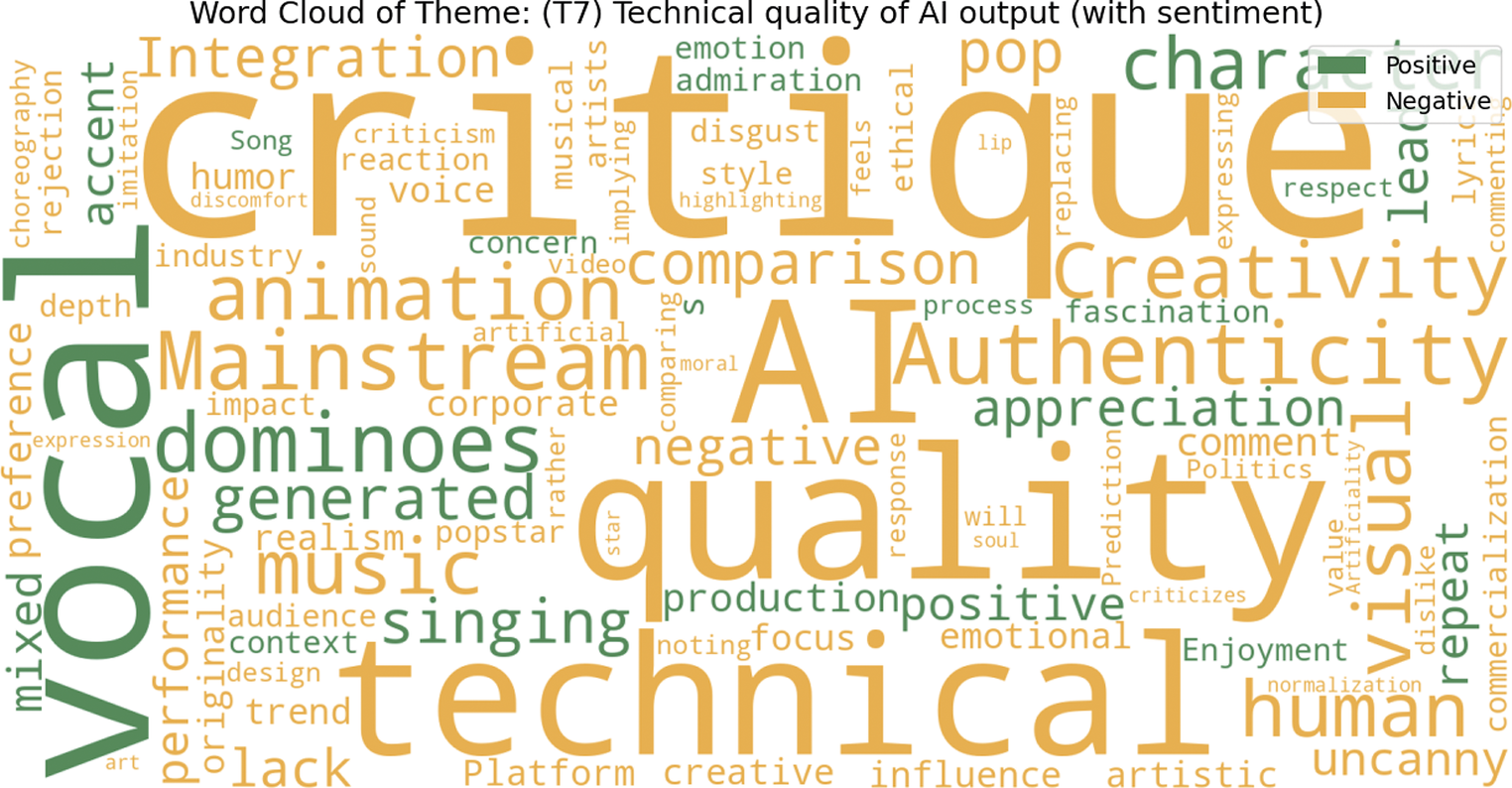
This theme captures users’ concerns about the technical quality of the AI-generated output. Over 80% of comments were negative, criticising inaccuracies, inconsistencies, and occasional misinterpretations. Many users noted that the AI struggles to maintain coherence and sometimes provides unreliable or incomplete responses. The remaining 17% of comments highlighted instances where the AI delivered clear, precise, and technically accurate output.
Users frequently criticised the AI-generated singing for being scratchy, grainy, and difficult to understand, with issues in tuning and lead vocals: ‘Bro the tuning is non-existent, her voice sounds very grainy’, and ‘I actually love the lyrics, but her voice is really scratchy and hard to understand’. Some questioned whether AI could realistically replace human singers, while others appreciated aspects like accents or character-specific singing styles: ‘Assuming the voice is computer generated, what accent was Noonoouri programmed with?’.
Animation and visual presentation were also criticised, with comments noting choppy movements, unsynchronised lip motions, and unengaging 3D avatars: ‘It has a choppy animation and a 3D avatar that doesn’t catch attention; besides, the lips don’t move in sync with the voice. A lot needs to be improved in my opinion’ and ‘The animation is do bad; it looks like one of those video ringtones you send a message to get it’. Ethical concerns were occasionally raised regarding potential misuse of AI-generated voices: ‘Damn, if AI can simulate a voice, from now on they could use our voices to authorize anything. We’re screwed’.
Despite these critiques, some comments highlighted engaging elements, such as the addictive nature of the songs, character singing, and generated accents: ‘“Dominoes” is on repeat and setting off a chain reaction – we love to see it!’. Overall, the feedback indicates that while the AI shows technical potential, the current output suffers from vocal and animation limitations. Figure 9 shows the word cloud for this theme, highlighting terms such as ‘scratchy’, ‘grainy’, ‘artificial’, ‘choppy’, ‘accent’, ‘Dominoes’, and ‘lead vocal’.
Word cloud of (T7) technical quality of AI output (with sentiment).
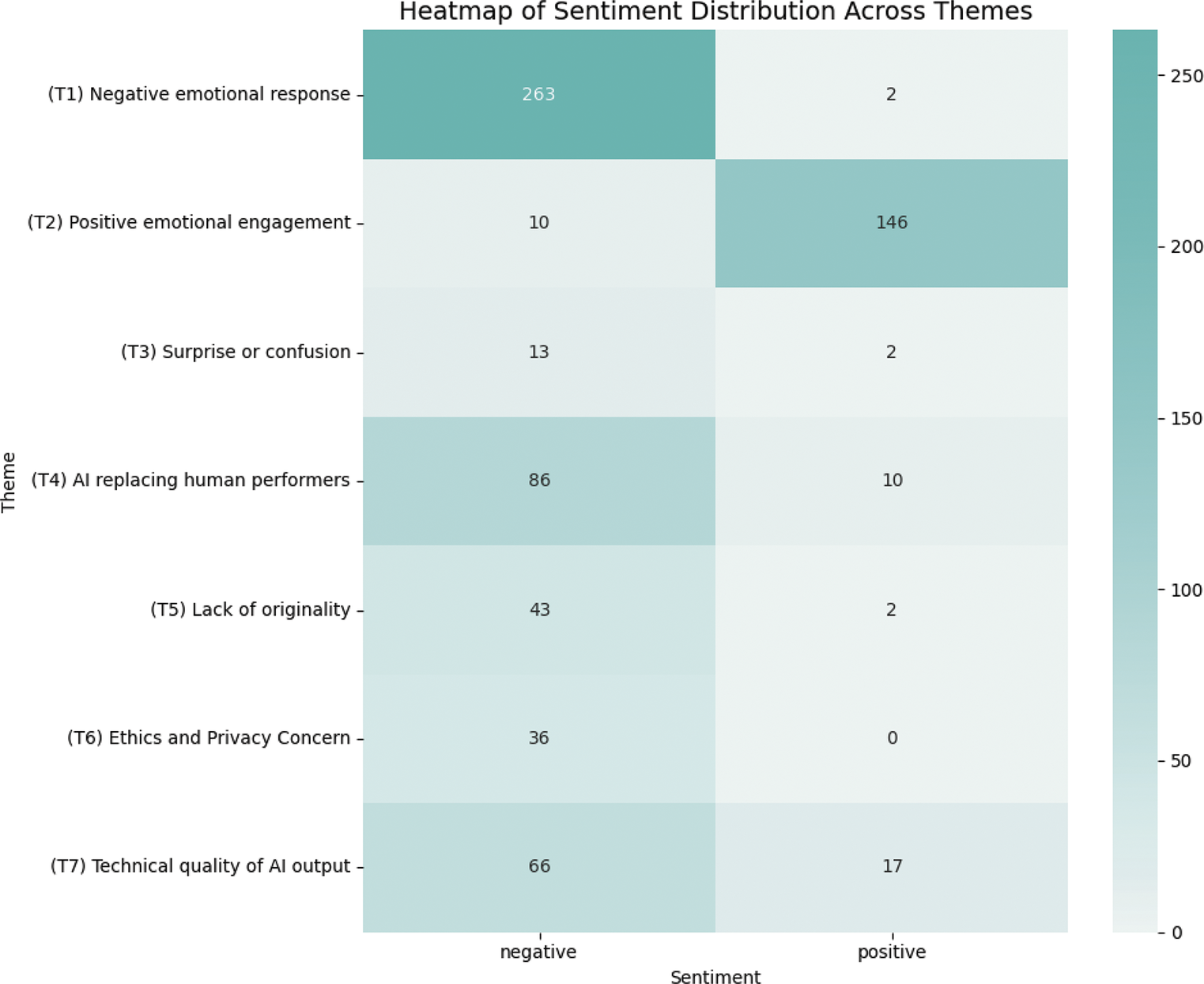
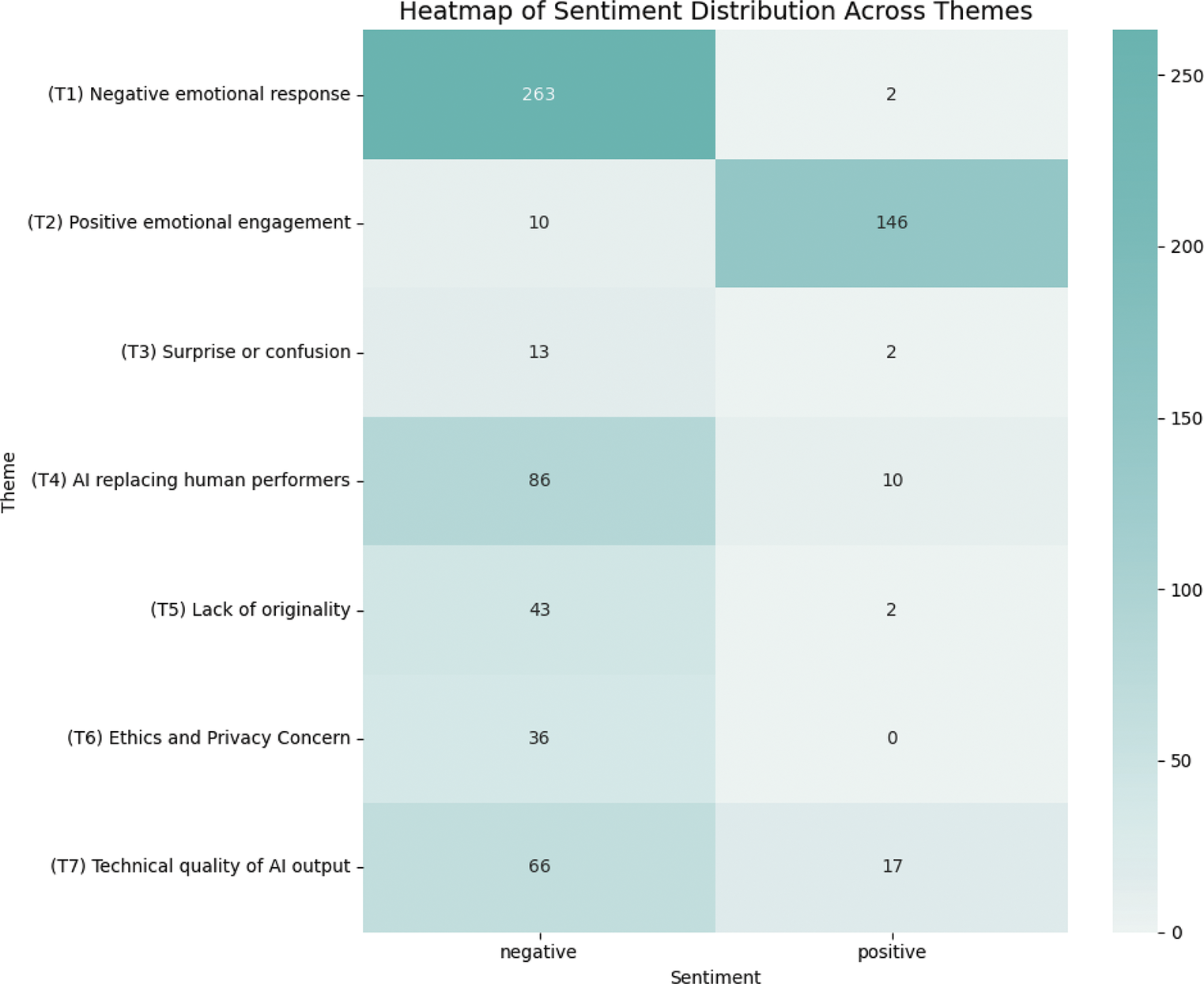
The final heatmap (Figure 10) shows sentiment distribution across themes, with (T1) Negative Emotional Response dominating, followed by (T4) AI Replacing Human Performers, indicating the areas of greatest concern.
Heatmap of sentiment distribution across themes.
5. Discussion and Conclusion
This section discusses findings from audience comments on Noonoouri’s music-focused YouTube videos, in relation to AI in music, virtual idols, and European popular music contexts. This study examines audience discourse to explore how audiences interpret and evaluate AI-generated music. Authenticity emerges as a relational and discursively negotiated construct, combining Moore’s (Reference Moore2002) idea of audience-granted legitimacy with Hesmondhalgh’s (Reference Hesmondhalgh2013) framing of authenticity as a moral and cultural resource mediating creativity and commercial production. This framework also guides analysis of how European audiences negotiate AI legitimacy through culturally specific evaluative criteria. The discussion addresses two research questions: RQ1 and RQ2.
Audience comments revealed a spectrum of emotional responses, with viewers primarily evaluating Noonoouri through affective and cultural criteria rather than technical novelty. This highlights that emotional resonance plays a central role in determining AI legitimacy, contrasting with contexts where technological innovation may be the focus (Huber Reference Huber, Baker, Taylor and Bennett2013).
Building on Herbert and Dibben’s (Reference Herbert and Dibben2018) emphasis that young audiences attach both intra-musical and extra-musical meanings to pop songs, YouTube commenters focused on specific musical extracts, choruses, and vocal expressions, highlighting resonance with personal experiences, daily routines, or emotional expectations. This suggests audiences engage in nuanced meaning-making processes that evaluate AI-generated music not just holistically but at the level of individual, affectively salient components. While some appreciated Noonoouri’s technical innovation and visual appeal, substantial portions expressed concerns about perceived artificiality and lack of emotional depth, describing her performances as ‘soulless’. These responses demonstrate that emotional resonance functions as a cultural test for artistic legitimacy. Noonoouri disrupts the traditional authenticity balance by decoupling musical expression from human labour and emotional embodiment. Audience discomfort reflects anxiety over the potential loss of human input that gives popular music its social legitimacy and emotional resonance.
A significant portion of comments addressed ethical questions related to authorship, creativity, and labour. Viewers expressed concern that virtual idols could displace human musicians, with some framing Noonoouri as ‘disrespectful’ to human performers, while others viewed AI-human collaboration as potentially innovative. These reactions show how industry structures shape perceptions of creativity (Negus,Reference Negus1999). Commenters frequently viewed Noonoouri not as an autonomous artist but as an output of a corporate-algorithmic apparatus. This aligns with Morreale’s (Reference Morreale2021) argument that commercial AI-music systems function as socio-technical infrastructures, in which the contributions of human labour are often hidden, highlighting ongoing concerns about cultural production while AI enables novel forms of creativity.
However, a minority positioned AI as an assistive or collaborative tool rather than a threat to human musicianship, aligning with Burgess and Green’s (Reference Burgess and Green2018) concept of participatory co-production. These comments indicate emerging ethical criteria for evaluating AI creativity, distinguishing systems that amplify human artistry from those that appear to replace or erase it.
Audience evaluations foregrounded originality, cultural authenticity, and emotional expressiveness as central criteria in assessing Noonoouri’s music. Many viewers regarded her songs as generic or derivative, frequently comparing her unfavourably to established virtual idols such as Hatsune Miku and Studio Killers. As Baker (Reference Baker, Baker, Bennett and Taylor2021, p. 23) states, audiences are active meaning-makers rather than passive consumers, and their emotional and cultural evaluations are central to conferring legitimacy and shaping engagement.
Unlike The Archies, whose fictional narrative facilitated mainstream acceptance in the 1960s (Stahl Reference Stahl, Baker, Bennett and Taylor2013, p. 27), Noonoouri’s AI-generated character challenges current authenticity norms without compensatory storylines. Her circulation through digital platforms rather than traditional charts illustrates the rise of platform-specific mainstreams, aligning with Huber’s (Reference Huber, Baker, Taylor and Bennett2013, pp. 11–12) conceptualisation of mainstream as a socially constructed space shaped by commercial and normative pressures, which may intensify audience scepticism towards AI performers.
Overall, audiences actively negotiate creativity, legitimacy, and affective resonance, functioning as cultural arbiters who co-construct meaning alongside platforms and industry practices. As Strong (Reference Strong, Baker, Bennett and Taylor2013, p. 76) notes, interpretation occurs through everyday experience and culturally informed frameworks, while Steinbrecher (Reference Steinbrecher2021, pp. 410–411) emphasises the role of artist persona and aesthetics in shaping mainstream pop meaning. This study highlights that understanding AI-generated music and virtual idols in European contexts requires attention to audience-centred cultural, ethical, and emotional evaluations. Noonoouri’s reception also suggests that audiences are less readily accepting due to a lack of narrative frameworks, platform visibility constraints, and European cultural expectations, with engagement occurring primarily through participatory interactions on digital platforms (YouTube, Spotify, social media) rather than traditional music charts.
6. Limitation and future research
This study acknowledges several limitations. First, the geographic origins of YouTube commenters cannot be verified due to the lack of available metadata, limiting demographic certainty and constraining claims about specifically European audience responses. Nevertheless, given Noonoouri’s German-based production and targeted European promotion, the findings remain contextually situated within European music culture. Second, the dataset is relatively small, as many videos attracted limited commentary, and public commenters may represent a subset of viewers rather than the broader audience. However, the use of a mixed-methods approach, combining quantitative sentiment analysis with qualitative thematic coding, helps to balance these limitations by providing both breadth and interpretive depth in understanding audience perceptions.
Future research should address these limitations through expanded methodological and comparative approaches. Cross-platform analyses incorporating Instagram, Spotify, and TikTok would clarify how differing platform affordances and audience behaviours shape virtual idol reception, helping to fill current gaps in scholarship. Cross-cultural comparisons, examining European-created virtual idols alongside established Japanese virtual idols such as Hatsune Miku, could reveal how differences in media platforms, production practices, and cultural expectations shape audience acceptance within mainstream music. Comparative studies including human artists could also provide valuable baseline data for identifying what makes virtual idol reception unique, particularly within the context of European mainstream music.
Methodological extensions, including in-depth fan interviews, focus groups exploring perceptions of authenticity, and longitudinal netnographic studies tracking engagement over 12–24 months, could deepen understanding of affective discourse and evolving interpretations of AI-mediated creativity.
Appendix A: Videos’ title with number of view and comment count (as of 12 April 2025), Data collected from YouTube and organised by the author, 2025