In 1897, H.G. Wells visited the Parkes Museum of Hygiene in Fitzrovia, London. In his review, published under the sardonic title ‘The place to spend a happy day’, Wells observed,
By way of jest, my morning daily paper constantly includes in its menu of ‘To-day’ the Parkes Museum … adding, seductively, ‘free’. [It] is a kind of armoury of hygiene, a place full of apparatus for being healthy – in brief, a museum of sanitary science. To that large and growing class of people who take no thought of anything but what they eat and what they drink, it should prove intensely interesting.Footnote 1
Despite Wells's suggestion that sanitary science's rhetoric of public welfare was a cover for self-absorption, the general public was not put off. Since its opening in 1878, the museum had welcomed a relatively steady flow of visitors and students, so constant that the expansion of new exhibits forced it to relocate from the University of London to a larger location on Margaret Street, Fitzrovia, in 1883, where Wells would encounter it. There, the museum's council proclaimed, it would ‘illustrate visually whatever is of service to prevent disease and maintain health’, from trapless water closets and slop sinks to doorknobs, decorated ventilating fire grates, non-arsenical wallpaper, India rubber artificial teeth, and eye douches.Footnote 2 The Parkes aimed to bring sanitary science to all levels of British society, through a radical programme of exhibits, lectures, courses and commercial and public engagement.
The museum's advocates saw the threat of dirt and disease as a great equalizer. Indeed, its namesake, the military surgeon and pioneering hygienist Edmund Parkes (1819–1876), had promoted sanitary science by illustrating how ‘the poisons of typhoid fever, diphtheria, and other horrible maladies’ in the sewers of London ‘found their way into the houses of rich and poor alike’.Footnote 3 Improved health and hygiene were thus a cause which served all citizens, and all could rally behind. The Parkes's curators brought these spheres into direct contact with one another in an institutional melange that united city infrastructure and domestic sanitation under a single roof. Yet while the museum construed its public broadly in order to improve the health of all, its vision was firmly embedded in hierarchies of class and hygiene.Footnote 4 For the middle and upper classes, the Parkes served as a consumerist site; for scientists and physicians, a bastion of professionalism; for the working and lower middle classes, a teacher to improve their hygienic practices for the good of the imperial metropole. Sanitation was everyone's responsibility, but different classes had a duty to perform it in different ways.
The Parkes's distinctly public orientation emerged from what might be seen as a utopian project for a museum of its day: not to edify by codifying the past or categorizing the present, but to advance a new future, an aspirational vision of a hygienic British world. It thus departed from the epistemologies of contemporaneous natural-history and art museums, whose displays established particular narratives about a present or past body of knowledge or world order.Footnote 5 This futurist focus anticipated the rise of technical museums across Europe in the early twentieth century.Footnote 6
Yet unlike the great technical museums in Dresden, Vienna, Paris and Berlin, the Parkes was not destined for longevity. Indeed, by Wells's 1897 visit, the museum had begun its decline, at a time when other museums of applied science were still in their infancy. He describes a struggle to locate it, finally winning ‘the secret of the Missing Museum’, only to encounter ‘immemorial dust … upon its pavements, and a profound silence … the glamour of the Sleeping Beauty … upon it all’.Footnote 7 While Wells mused on a multitude of ‘remarkable’ and ‘attractive’ exhibits, he found that its heyday as a public exhibition had been eclipsed by its role as a place of intellectual and professional study: ‘excepting ourselves and the sleeping porter – if he was sleeping – and the indistinct and motionless outline, visible through a glass door, of a human body sitting over a book, there was not a suggestion or memory of living humanity about the place’.Footnote 8 In Wells's telling, the reform-driven mission of the Parkes felt outmoded only two decades after its inception. To the individual reading in the library, however, the dynamic museum continued to spread sanitary science, albeit in ways other than popular visual exhibits.
Wells's dismissal of the Parkes as a museum past its time resonates strongly with existing scholarship: the Parkes is (virtually) absent from today's histories of late nineteenth-century sanitary reform, as it is from our histories of museum culture. Yet, while Wells's review speaks to the act of human forgetting, recent history has also misremembered: the little scholarship on public-health history that refers to the Parkes describes it, in passing, as the educational annex of the Royal Sanitary Institute – rather than, as the institute's founding history makes clear, an essential inspiration and counterpart.
Nor does the Parkes feature as a distinctive contribution in the history of public exhibitions and institutions, detailed in the wealth of recent histories of the museum. As these studies have illustrated, nineteenth-century scientific exhibitions and museums were integral to spreading the global gospel of science and medicine. In the mid- to late nineteenth century, evangelists of science and medicine began to embrace the visual, rather than the textual, as a useful pedagogical approach.Footnote 9 Accordingly, historians of public health have detailed how sanitary reformers spread hygienic knowledge within temporary exposition spaces in the late nineteenth and early twentieth centuries, particularly in the United States and Germany.Footnote 10 Literature on anatomical and natural-science museums in Britain abounds. Yet if, as Jonathan Reinarz has suggested, the mid- to late nineteenth century constituted ‘an age of museum medicine’, the Parkes suggests how it also became an age of dynamic museum science.Footnote 11 Unlike other medical and scientific attractions found in contemporary tour guides, the Parkes engaged a wide spectrum of individuals from across classes and genders, tailoring its mode of knowledge production to each group. The era's medical-school museums catered first and foremost to male medical students. Public anatomy museums cultivated a popular audience, but were ultimately decried and suppressed by medical professionals who sought to monopolize anatomical knowledge as unsuitable for public consumption.Footnote 12 Sanitary science, however, aimed to penetrate both the city streets and the home in service of a healthier Britain and empire. The enormous scale of this mission propelled its leaders to democratize the necessary knowledge, and target as broad a section of the general populace as possible.
This article traces the emergence of the late nineteenth-century hygiene museum, its radical departures from contemporary museological institutions, and its not-so-radical reinforcement of Victorian hierarchies of class and cleanliness. It argues that the Parkes Museum of Hygiene played a critical role in the shape and professionalization of sanitation in Great Britain and its colonies, at the same time as it provided a nascent blueprint for the broad educational initiatives of twentieth-century science and technical museums in Europe and the world.
The Parkes stands out from its medical museum and exhibition-focused contemporaries by virtue of its multi-pronged approach towards knowledge production and its embrace of public, professional and commercial engagement. Like the popular yet controversial anatomy museums, the Parkes offered a variety of educations while also prescribing solutions for the unhealthy home and body. At the same time, the Parkes's status as a reputable and qualified repository was validated by its ever-deepening ties with the professional arm of sanitary science, the Royal Sanitary Institute. Thus, unlike both its popular and its medical counterparts, the Parkes struck a unique middle ground. Moreover, unlike temporary health expositions and fairs, the museum provided permanent avenues towards education. Sanitary science was simultaneously antithetical and apposite to the concrete nature of museum spaces: attempting to house a constantly evolving collection within a permanent space presented innumerable challenges; at the same time, sanitary reformers felt that sustained popular engagement and public involvement were crucial to their field's success. The space of the museum allowed it to pursue its crusading mission in a number of different ways, prescribing sanitary science in different forms for different visitors: simultaneously, a visual spectacle, a commercial endeavour and an educational enterprise. This dynamic approach to museum education served as an important antecedent of the educational science and technical museums that multiplied exponentially in the early twentieth century. At the same time, its transformation and fall into obscurity illustrate the limits of this divided knowledge. Its driving questions – how could cleanliness remake the body, the home and the nation, and who should be charged with implementing this hygienic future? – were deeply inflected by late Victorian ideologies about class, gender and professionalism.
Foundations: Victorian sanitary science and the establishment of a bastion of modern hygiene
Late nineteenth-century London was a city of burgeoning fascination, obsession and anxiety over what British bodies came into contact with, what they ate and drank, and where such items came from. Rhetoric about the ills of miasma continued throughout the 1870s and 1880s, and new studies on germ aetiology and bacterial models exacerbated preoccupations with cleanliness and hygiene.Footnote 13 Numerous professional and public-interest groups grew increasingly concerned with urbanization and the environment, spurred on by the reports of social investigators, scientists and upper-class spectators, who in various cases toured the underworld of London in search of its physical and moral ills. These anxieties were especially pronounced given the cultural conflation of bodily practices with the moral self; healthy homes were believed to cultivate morally advanced and educated individuals.Footnote 14 Social investigations both blamed and exonerated the poor: though they were feckless, dirty and irreligious, their faults were also attributed to the industrialized and urbanized settings in which they lived and died. The urban environment and city infrastructure, as a result, became increasingly tied to the domestic home and personal health.
In the second half of the nineteenth century, sanitary reform received new impetus from widely publicized crises.Footnote 15 Medical research boomed after the outrages of the Crimean War, bolstered in no small part by the work of military surgeon Edmund Alexander Parkes, whose influential Manual of Practical Hygiene (1864) became the standard textbook for army practice. Civilian physicians, engineers, reformers and activists adopted it as well, particularly those concerned with the conditions of run-down, crowded slums and poor sanitation.Footnote 16 Taking up Parkes's mission, philanthropists interested in the welfare of the impoverished created new buildings and appliances intended to remedy urban issues, such as Angela Burdett-Coutt's public drinking fountains and Montagu William Lowry-Corry's hygienic lodging houses for men.Footnote 17 Fairs and exhibitions, such as the 1881 London International Medical and Sanitary Exhibition, were widely attended attractions for the middle and upper classes, and offered various showcases of urban and domestic hygiene.Footnote 18
While the majority of hygiene initiatives came from scientists, doctors, philanthropists and civic reformers, sanitary reform increasingly caught the interest of politicians. As early as the 1840s, Edwin Chadwick's campaigns and the 1848 Public Health Act moved sanitation increasingly into the domain of local and national government.Footnote 19 It would take another thirty years for the Conservative Disraeli government to legitimize the field by establishing a specialized research centre through the 1875 Public Health Act. The legislation provided for the establishment of the Sanitary Institute of Great Britain (today known as the Royal Society for the Promotion of Health) in 1876. In the same year, a group of physicians and scientists raised the idea of a national museum of sanitation and hygiene to commemorate Parkes's work. In December 1878, members of University College London published a missive in support of such an institution in numerous papers, including the London-based Times.Footnote 20 A year later, the collection was opened as the Parkes Museum of Hygiene at University College in Bloomsbury, eponymously dedicated to the late Parkes.Footnote 21
Why a museum, rather than a school, library or archive? Though there remains no record of dialogue between the initial backers, their statements about the Parkes's intended purpose and audience suggest that the museum held a specific appeal distinct from other repositories of knowledge. As their well-developed historiography makes clear, museums occupied a special place in the cultural fabric of Victorian life. As socially prestigious institutions, they could receive money and support while couching themselves as institutions for the general public – spaces that offered distinct forms of education to different classes.Footnote 22 As visual experiences, they were accessible to a wide range of visitors.Footnote 23 The Parkes's ardent and reform-driven founders embraced the idea of broad public engagement as essential to their mission:
It cannot be too widely known that it is intended to extend the benefits of the museum to all classes, so that not only professional men but owners of property, employers of labour, artizans and others, both men and women, may be able to study at their leisure the subjects in which they are most interested.Footnote 24
These thoughts were echoed in remarks issued by the executive committee, which cited its desire to educate ‘all classes and both sexes’.Footnote 25 Naturally, the museum was intended to promote education, but as the famed chemist Archibald Liversidge made clear, this was informal as well as formal. Its ‘special aim’ was ‘not only to perfect the hygienic training of those specially concerned, but to show how interesting and easy it [was] to acquire an amount of elementary hygienic knowledge[,] sufficient to have a marked influence on the comfort and duration of life’.Footnote 26 Individuals from ‘all classes’ may not have been drawn to formal lectures and study, but the object-based epistemology of the museum – where visitors could decipher the problems and possibilities of sanitary health by reading objects on display – had the potential to be far more accessible.Footnote 27 A school simply could not have served as a dynamic site for cultivating wide awareness, financial support, and diverse initiatives to promote sanitary science. The Parkes's role as a museum gave it the gravitas and power to engineer social change at many levels.
Funding was, of course, crucial to success. The well-known and socially prominent donors who responded reflected the high status of hygiene in the public consciousness since the Crimean War. Professionals, aristocracy and sanitation enthusiasts alike rushed to support it. Donors and ‘subscribers’ included Her Majesty Queen Victoria, HRH Prince Leopold, the Dukes of Cambridge and Westminster, over one hundred medical professionals, the Clothworkers’ Company, assorted engineers and a number of Parkes's army friends and admirers. Florence Nightingale begged to ‘enclose my poor £5, wishing that I could do more’.Footnote 28
Appeals for funding, and accompanying publicity, reflected the contemporary obsession with military hygiene and masculine physical fitness. Martial sanitation and health were directly tied to the success of Britain's imperial endeavours. The Daily News reported that the Duke of Cambridge had ‘a practical reason’ to attend an early meeting to support the museum – his role as commander-in-chief demanded that he be concerned with the ‘happiness and comfort of the men over whom he exercised control’.Footnote 29 Noted military engineer Captain Douglas Galton, cousin of eugenicist Francis and chairman of the Parkes's council, connected the Parkes's mission to the empire. If individuals wished to ‘support those who endeavoured to advance the interests of this great and extended Empire’, Galton proclaimed, they could do so by underwriting the museum.Footnote 30
To entice donations from businessmen, the museum's funding appeals emphasized the profitability of good public hygiene. Speaking in support of the museum in February 1885, London's lord mayor Robert Fowler suggested that supporting hygienic public education was in the interests of ‘wealthy men of the City’. He urged them to consider the dire impact of disease on business revenues: ‘Our loss annually from one preventable disease – typhoid fever – amounted to 4,000 lives. This represent[s] a loss of wealth of 230,000 annually from sickness, and 400,000 from deaths’. Quantifying the productivity of healthy workers, he continued, ‘The annual gain in health during the last decade from improved sanitary knowledge was equivalent to the addition of two years to the Londoner's life, and to an annual money gain equal to the interest at 5 per cent, on 12,500,000’.Footnote 31 Sanitation was thus an issue of efficiency and profit, and the hygiene of all classes deserved the attention of the wealthiest. Well funded and well supported, the Parkes appeared to be an immediate success. The Times reported that in its first seven months, the museum welcomed over 2,100 visitors.Footnote 32 The opening of the museum was well documented by architecture and trade journals, and was featured in hotel guides and local information booklets about museums and attractions in the metropolitan area – a testament to its diverse audience.Footnote 33
The object-centred nature of the museum brought underlying debates in sanitary reform to the fore. Its executive committee reflected its diverse interests, made up of professors of clinical surgery, medicine, architecture, engineering, chemistry and hygiene; architects, engineers and sanitary reformers. All agreed that the museum's value lay in its broad target audience, yet they held vastly different ideas about whom sanitary science should reform, and in what way.Footnote 34 Mark Judge, the first head curator of the museum, was both a sanitary engineer and a radical campaigner for political reform. As the museum worked to advocate sanitary public policy, Judge grew increasingly dedicated to reforming corrupt administration – in his view, the chief culprit in producing unhygienic urban environments. Only by purging unethical civic officials and re-educating politicians could sanitary science succeed. Judge's zeal extended to scrutinizing the very institutions he served. This enthusiasm may have spurred the museum's establishment patrons to effect his removal from the curatorship in August 1883.Footnote 35
By and large, the Parkes's board members pointedly avoided demonizing the poor, targeting instead the tradespeople who perpetuated urban filth through greed and ignorance. Steering the working classes towards further education was absolutely essential in order to improve urban hygiene at its most basic level, for as the Saturday Review mused, ‘the local or indeed any plumber is not a man to whom we ought unreservedly to trust ourselves. His intelligence is often small, his greed is almost invariably large’.Footnote 36 Sir William Jenner echoed the sentiments at the opening meeting of the Parkes, noting that the houses of the rich often had the same unsanitary characteristics as those of the poor – the fault of plumbers and other tradesmen who ‘really know nothing about their business’.Footnote 37 Rather than reprimand the occupants of elegant city villas or run-down tenements for the sanitary inadequacies of their homes, sanitary reformers shifted blame towards lackadaisical landlords and inadequately trained tradesmen. The latter, including plumbers, plasterers, bricklayers and carpenters, underwent increasingly informal training throughout the second half of the nineteenth century.Footnote 38 If these workers were given an education in sanitation, Jenner alleged, they could build a hygienic home and a healthier city.
In keeping with the spirit of self-examination and reform, few professions and persons were immune from critique. Where Judge and Jenner, among others, warned of lax local government and unscrupulous builders, other reformers extended their critical gaze to physicians. In a talk given at the 1889 congress organized by the Sanitary Institute, Dr George Wilson, the medical officer for mid-Warwickshire, lamented the failure of medical schools to teach and practise preventive medicine. This was a matter of self-interest. The family medical practitioner, claimed Wilson, ‘earns his living by disease, and so far as he prevents it he is placed in the unfortunate position of being out of pocket’.Footnote 39 Wilson allowed that few doctors gave into the ‘temptation’ to omit preventive advice when ministering to the sick, but cautioned that curative medicine must work with preventive medicine in the interest of public health.
If Parkes's vision of a sanitary world was to be realized, all of these groups would have to be targeted, and hygienic knowledge disseminated widely. The museum offered a unique site in which this could be accomplished, by offering a multitude of diverse directives that could provide formal and informal learning to the public at large.
Formations: defining and outfitting the sanitary museum
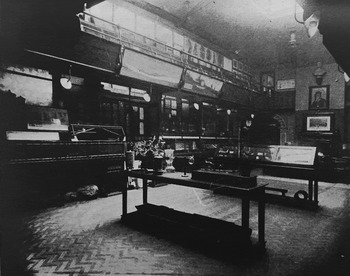
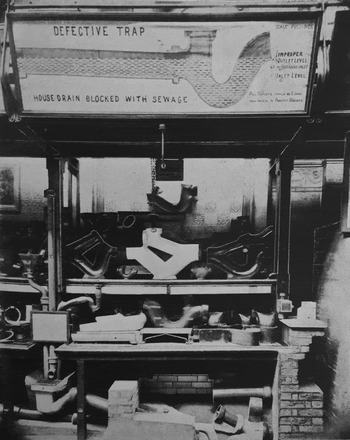
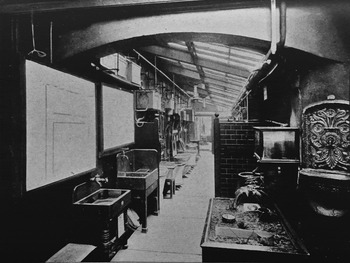
The Parkes's organizers agreed on a functional structure and layout that celebrated not only Britain's wealth of sanitary inventions, but also the need to apply them to every aspect of public infrastructure and private living. Visitors to the Parkes would have walked through six classes of exhibitions. All were packed with the accoutrements of a sanitary life, and, as a caution, the trappings of a dirty one. Guests worked their way from outside in: they began with metropolitan infrastructure and exteriors and worked their way in to the more detailed and domestic. Curators placed glass-cased exhibits, specimens and tools alongside mounted diagrams and illustrations, in order to teach the merits or shortcomings of each object of hygiene (see Figures 1 and 2).
Main Hall of Museum, Margaret Street, undated. The Sanitary Institute, Parkes Museum Catalogue, London: The Sanitary Institute, 1901, WL SA/RSP/A/4/4/3.

Exhibits on house drainage and disconnecting traps, showing the construction of a manhole with the arrangement of drainage for the soil pipe, baths, lavatory and rainwater pipes, Margaret Street, undated. The Sanitary Institute, op. cit.

Class I, Engineering and Local Hygiene, included but was not limited to topics of anthropology, bacteriology, chemistry, demography and medicine, and featured displays of drawings of the Thames Embankment and metropolitan and house drainage, and plans for a well-driving apparatus. Passing into Class II, Architecture, visitors would walk by a wide array of building plans, from schools and hospitals to workhouses, asylums and barracks, including an in-depth description, plan and section of an ideal hospital. Class III, Furnishing, featured bookshelf fittings, water closets, baths, school desks, children's cots, a variety of lamps, stoves and burners. Viewers might have been surprised to find sanitary inadequacies in their own persons upon visiting the fourth class, Clothing. Here, garments ranged from sanctioned army clothing (donated by the War Secretary) to insulating ‘cellular’ clothing. The display simultaneously warned against fashionable vanities in an exhibition of poisonous artificial flowers ‘coloured with arsenical pigments’.Footnote 40
Finally, at Class V and VI, intrepid tourists, professionals and students had the opportunity to study items that promoted health on and inside their bodies. Class V, Food, exhibited samples of food for invalids, from bran biscuits to acorn coffee; eleven samples of Thames water; cases of cooking powders; fruits preserved in spirits; seeds; and even a ‘table of Injurious Substances’ noted to have ‘actually been detected in Adulterated Articles of Food’.Footnote 41 Enlarged depictions of cholera in fluid, and maps of where cholera was detected in the London's 1848–1849 outbreak, were also included, cementing the link between home hygiene, diet and citywide health.Footnote 42 The importance of home products in healthcare was further emphasized in Class VI, Preservation and Relief. This selection included artificial teeth, eye washes, pocket bath thermometers, kettles, invalid couches, disinfecting salts and soap samples, as well as items intended for institutions, such as drain disinfectors, hospital bedsteads and mattresses, and appliances used in Guy's Hospital in London. Last but not least, the Class VI exhibit featured an ‘earth to earth coffin’ presented by the London Necropolis Company, advertised as a healthy method for body disposal.Footnote 43 The Parkes bridged the divide between municipal and domestic hygiene by bringing exhibits together in one museum, emphasizing their cohesion in the cause of health. This amalgamation also brought new professions under the purview of scientific expertise. Plumbing, among other trades, was no longer solely the domain of builders or manufacturers, but was heavily scrutinized by scientists. In evaluating appliances and attempting to educate tradesmen, products and professionals now required the validation of scientists’ ‘technical education’.
The objects filling the Parkes were the bedrock of its mission, and set it apart from the other museums populating Victorian London. In contrast with the National Gallery's oil paintings or the British Museum (Natural History)’s rare fossils, the objects at the Parkes had no intrinsic value; they were not unique, and were easily purchased by visitors. Yet their practical importance, sanitary scientists believed, was incalculable. In terms of function, the Parkes occupied a strange space in the public engagement with infrastructure: somewhere in between slum tourism and sewer tours, workshop and showroom.Footnote 44 Its permanency allowed it to promote and pursue long-term education, as opposed to the temporary interventions of hygiene-focused fairs and exhibitions. Yet the organizers had conflicting ideas about the larger purpose of this repository. The museum's own catalogue emphasized the functionality rather than the beauty of the items displayed – indeed, the 1891 catalogue identified the ‘whole purpose’ of the museum as a ‘practical demonstration … not … an attractive Exhibition’.Footnote 45 Yet sanitary engineers’ and manufacturers’ motives were clearly not so simple. They were driven on the one hand by the opportunity to reach potential customers, and on the other by the desire to impress visitors with the higher meaning of a sanitary life.
The evolving relationship between consumerism, professionalism, aesthetics and education was evident in debates over the items sitting in the Parkes's vitrines. While some reports emphasized their practical nature and intent, others insisted on a connection between health, art and beauty. Continuing the tradition of the Great Exhibition at the South Kensington Museum, Victorian manufacturers and designers were eager that the materials of their work be designated and recognized as art and ‘good design’.Footnote 46 For some scientists and surgeons invested in the Parkes, the ‘good design’ of an item meant that it displayed hygienic, practical and artistic qualities. Several cited their desire ‘that henceforth “healthiness” [would] be considered as an essential condition of true architectural beauty’.Footnote 47 The objects at the Parkes, beautiful by nature of their hygienic qualities, would thus improve their users both physically and mentally: as Parkes had observed, ‘Hygiene is the art of preserving health’, for hygiene meant perfecting the mind and the body. Only progress towards this exact knowledge would allow society ‘to see the human being in his perfect beauty’.Footnote 48 Every level of the sanitary environment, from the most public to the most private, could carry forth this mission – from city infrastructure, to home construction, interior design and even clothing. Describing the museum's exhibits of sanitary ‘cellular’ clothing, Douglas Galton observed that ‘to construct and decorate a covering for the human body, that shall be beautiful and healthy, is as important as to build a shelter for it when so covered that shall also be both beautiful and healthy’.Footnote 49 ‘Cellular’ clothing earned accolades from the Sanitary Institute and the British Medical Journal in the 1880s for its ability to wick perspiration from the body.Footnote 50 For Galton, it was evidence that even fashion could further hygienic aims, rendering the body healthier, and thus more beautiful.
A collection based on the latest and most modern technologies presented unique challenges. The ever-growing collection prompted the museum to change locations twice. Moving from its premises at the University College only a few years after its opening, the Parkes's new space in Margaret Street by Cavendish Square provided the museum with a second lecture hall and a library. By 1909, it had outgrown this space, moving to 90 Buckingham Palace Road just across from the new Victoria Station. More than doubling its size, the new museum included a formal entrance hall, a general office, a waiting room, private offices, a library and reading room, extra accommodation for classes for students in a separate lecture hall, a club room, and a gallery with a glazed roof (thus freeing up space on the walls for exhibitions).Footnote 51 With each move, the museum not only increased its size, but also moved closer and closer to the centre of city government and administration, at once solidifying its reputation as a national authority and ensuring an increasingly middle- and upper-class audience.Footnote 52
Yet despite its pre-eminence as the first and most prominent museum of sanitary science, some critics complained that the institution failed to embody its own values. A scathing 1902 review in the American journal The Sanitarian claimed that the Margaret Street site jeopardized the sanitation of its neighbours, ‘occupying, as it does, the very air-space necessary for the healthy conditions of several dwelling-houses in a neighbourhood not too well ventilated’.Footnote 53 What was more, the design of the museum did not always facilitate the hygienic education that it tried to promote. The same critic recalled ‘the way important exhibits are housed in narrow corridors, where it is impossible to take a class of students of more than half-a-dozen’. Finally, the reviewer condemned the use of the largest room in the museum as a lecture room, noting that he had frequently seen it ‘over-full and under conditions so far as the ventilation is concerned, anything but sanitary’. Not all visitors believed that the museum was at fault; another 1902 review in the Museums Journal argued that the Parkes's curator had made the most of ‘difficult conditions of limited space and funds’.Footnote 54 They called instead for a new effort to expand the museum. Nonetheless, The Sanitarian's review illustrates the fault lines in expert knowledge of hygiene, potentially accentuated by transatlantic rivalries.Footnote 55
Meanwhile, to enact hygienic policy across the city and within the home, the museum's programming attempted to create sanitary specialists across classes. But these curated exhibits and educations expose the deeply divided nature of the sanitary reform movement in the late nineteenth century. Professionals and upper-middle-class reformers, and their target audiences, did not coexist peacefully in the collections. Amongst the upper classes, sanitary health could be bought; for the working classes, it could only be taught. And if the underclasses did not visit, the sanitary inspectors and hygiene teachers trained on the museum's courses would have to bring sanitary education and enforcement to them.
Education: teaching sanitary science
Not unexpectedly for an institution staffed and supported by pre-eminent sanitary scientists, the Parkes supplemented its visual offerings with education both formal and informal. While Stephen Conn has asserted that museums’ objects recede as educational programming increases, this was not always the case for the Museum of Hygiene.Footnote 56 There, objects and their accompanying diagrams, with their commercial and scientific value, were inextricably bound up in the education at hand. Yet over time the museum's successes – the education offered, and its wider mission of propagating hygienic knowledge to diverse audiences – began to displace the role of the concrete exhibitionary space that had popularized sanitary science.
In its first years, the Parkes offered a space for certificate courses and their associated lectures, tours for other educational organizations, and sponsored talks by visiting lecturers. These often incorporated exhibitions and works from the museum. At one of the first sponsored lectures at the National Health Society in Mayfair, noted sanitarian William Henry Corfield spoke on ‘ventilation, drainage, and water supply’. In his address, ‘Put your house in order’, the University College London professor and medical officer of health for St George's ‘rendered his lecture the more lucid and interesting by means of a collection of specimens and models from the Parkes Museum of Hygiene’.Footnote 57 Other open talks given at the museum itself addressed the public and professionals about a range of issues, from ‘Degeneracy amongst Londoners’, and ‘The metropolitan sewage question’, to questions of local hygiene policy present in local governmental sanitary administration bills.Footnote 58
Widening its purview, the Parkes brought in a variety of students to learn from its exhibitions: middle- and upper-class medical students at Charing Cross Hospital wandered the cramped rooms together with public-health students from University College and the Women's School of Medicine.Footnote 59 Another day, apprentices from the Carpenters Company's Institute in Stratford studied sanitary devices, followed by students from the Battersea and Croydon Polytechnics and Hackney Parochial School. Paving the way towards a sanitary London, the museum invited numerous institutions, guilds and groups to learn about hygienic innovations interactively. Students of the London County Council School of Building in Brixton constructed a full-size model of a section of a house in the Parkes's quarters to illustrate proper plumbing.Footnote 60 The museum's educational focus on women as wardens of domestic hygiene was also reflected in visits from the Bedford College for Women, the National Training School of Cookery, Shinners Company's School for Girls, and various nursing institutions.
The Parkes's effort to involve women in sanitary undertakings further illuminates its diverse modes of knowledge production, as well as its limits. Most women found themselves cut off from access to the displays and expertise fostered in medical museums and anatomy collections.Footnote 61 In contrast, women entered the Parkes as consumers and tourists, but also as students, to learn about their role in providing sanitary households, and to join the ranks of the new middle- and lower-middle-class professionals in courses on domestic hygiene.Footnote 62 When graduates of the ladies’ course received their certificates from the Duchess of Albany in 1888, Florence Nightingale contributed a letter that proclaimed the importance of educating women in sanitary science: ‘Without women there can be no domestic hygiene’, she declared. ‘Without the “house-wife” … the finest principles and works of sewerage, water supply and ventilation, must … almost remain a dead-letter’. Nightingale entreated those at the ceremony, ‘Let her be practically interested in how to keep air, earth, and water pure, and to admit light in her house’.Footnote 63 Formal education might create a class of professionals to regulate city streets and buildings, Nightingale suggested, but only women could apply that learned knowledge in the home. Women's advancing role in hygienic reform stood in contrast with the markedly masculine, military development and rhetoric of sanitary science. Yet it also made plain their long-standing role in practising and promoting hygiene – nowhere more clearly than in Nightingale's long career and continued relationship with the Parkes Museum.
Echoing such sentiments, numerous talks from the Parkes's lecture series targeted women as the guardians and enforcers of household hygiene. A review of Lady Eliza Priestley's talk on ‘Unseen dangers in the home’ (January 1885) observed how accessible the lecture was, noting that her warnings were ‘wrapped up in no pedantic language, but written so that she who runs may read’.Footnote 64 Adequate sanitation demanded that the head of the domestic household – ‘she who runs’ – had to overcome certain stereotypes of the dainty and weak woman. Priestley, the Daily News reported,
addressed herself to the individuals who are bound to set right these under-ground dangers and who have the power also to do it. These are the mistresses of households. It isn't perhaps a dainty task to grub and ferret in the damp mouldy cellars, and inspect the dust-bins, and visit the coal-cellars, and interview the dust-man. But it has become in these days of germ-poisons and diphtheritic epidemics and typhoid fevers a duty.Footnote 65
As the gatekeepers of their homes, women had a duty to further domestic hygiene. This responsibility belonged to the female head of house, regardless of class: both she who cleaned, and she who directed cleaning. The wife of obstetric physician and future politician Sir William Overend Priestley, Eliza Priestley was a prodigious supporter and writer on sanitary issues.Footnote 66 Her work encouraged all women to involve themselves in the creation of sanitary spaces. Though the work of scrubbing and scrounging in the dirt was hardly imaginable for a respectable housewife with servants to work for her, Priestley affirmed that adopting ‘a system of rigorous cleanliness’ would grant women and their families a rigorously healthy body amid the hygienic squalor of the city.Footnote 67
While Priestley's lectures targeted housewives, she hoped that the trend towards professionalization in sanitary science would expand further into domestic spaces – even suggesting that house-cleaning be certificated. As the president of the Ladies’ Committee for the International Medical Congress, Priestley believed that such a shift would not only promote hygiene, but also raise the social status of those who toiled as domestic labourers:
If we had certificated domestic servants as well as certificated nurses, governesses and plumbers, we should soon excite the desire for domestic service by elevating it into a ‘finishing’ or ‘higher education’ for women of the humbler class. What Girton and Newnham are to the intellectual minority, let the School of Housekeeping be to the practical majority.Footnote 68
Just as professionalization appeared to raise the status of those enrolled in the Parkes's courses for sanitary officers, food inspectors, and secondary-school teachers of applied hygiene, so Priestley envisioned domestic workers as the next frontier for professional hygiene and women's education. Women, she suggested, would uniquely bridge the public and the private domain of sanitary intervention.
Women's professionalization also rendered them subjects of sanitary enquiry. Sanitary reformers increasingly turned from the martial body to the female body: lecture-goers in June of 1888 attended a talk by Miss Mary Chreiman on ‘The physical culture of women’.Footnote 69 Chreiman promoted exercise for young women, treating those suffering from spinal weakness or who were ‘otherwise delicate’, with ‘strength and symmetry’ as her goal.Footnote 70 Through Chreiman's ‘strength and symmetry’ and Priestley's advice to women to be proactive and rigorous in running sanitary homes, the Parkes's women-directed lectures espoused a certain muscular hygiene. As the museum shifted towards professional instruction, male sanitary reformers developed their own message in response to social anxieties about educating women. Speeches at the 1908 International Congress on School Hygiene, sponsored by the Parkes and the Royal Sanitary Institute, widely promoted physical education for women as a necessary counterpart to women's education. Physical activity, several speakers reasoned, would counteract the ‘neuroses’ that intellectualism might bring on.Footnote 71 A precursor to Ina Zweiniger-Bargielowska's ‘muscular womanhood’ of the 1920s and 1930s, reformers’ prescription of exercise for women mirrored the particular brand of muscular Christianity that increasingly infused discussions around national fitness and military health near the turn of the twentieth century.Footnote 72
As the Parkes worked towards popularizing sanitary science, and the Sanitary Institute of Great Britain pursued its professionalization, their missions grew ever closer together. As the Parkes's educational offerings increased, the Sanitary Institute looked to consolidate the two institutions. Arguing that the museum's cultural capital and ability to reach a popular audience were essential to the spread of sanitary science, Dr Alfred Carpenter, chairman of the Sanitary Institute, warned institute members against a narrow focus on professionalization. As Carpenter observed at the institute's 1884 meeting, ‘This is the age of exhibitions. It has been one of the great objects of the Council to recognise the usefulness of such collections of manufactures and useful works of art; to utilise the custom for the advancement of knowledge among the people in sound sanitary directions’.Footnote 73 This logic was at the root of the institute's decision to move from Conduit Street to new quarters on Margaret Street adjacent to the Parkes. Carpenter made it explicit that the shift was not for increased space for growth, but to cement their connections to the Parkes: in moving, ‘we recognize the work which the Council of the Parkes’ Museum is doing, and by associating and indigitating [sic] our work with theirs we are paving the way for a more intimate bond of union in the future’.Footnote 74
This future came quickly. In 1887, the Duchess of Albany, widow of the first president of the Parkes Museum, joined other prominent figures to petition Queen Victoria to grant the two bodies a charter of incorporation. They were amalgamated in 1888. Pooling resources and funding, the organizations could both educate the public and set national standards for hygiene professionals and products. The potential influence of the combined organizations on professional certification and regulation prompted opposition from various trade associations, including the Institute of Civil Engineers, the Worshipful Company of Plumbers, and the Surveyor's Institute. Nonetheless, the incorporated museum and the Sanitary Institute were granted their joint royal charter by King Edward VII in 1904. Now conjoined as the Royal Sanitary Institute (RSI), the new body became the official arbiter of sanitary science, with a powerful hand in regulating what the public consumed, and where and how they lived.
Yet the trade resistance points to the driving forces behind the museum's eventual eclipse. The Parkes retained its public identity: neither the 1888 amalgamation with the Sanitary Institute nor the 1904 royal charter reduced its resources or slowed its expansion. It moved twice from smaller sites to larger premises, and continued to expand its collections. But increasingly, its exhibits were used for the ever-growing number of certificate courses.
Sir Douglas Galton, chairman of the Parkes's council and an inventor of sanitary devices himself, affirmed the museum's shift towards formal education and policy as the most direct means by which a sanitary future could be achieved. At his 1888 address to commemorate the amalgamation of the museum with the Sanitary Institute – conveniently delivered as the Parkes marked a decade of disseminating sanitary knowledge to the public – he emphasized how sanitation was a continuous mission for the metropole and the empire, most easily achieved by government policy. Galton drew attention to the ‘hecatombs of infants yearly sacrificed to our mismanagement’ as evidence of hygienic failure. While he laid the blame on underclasses for failing to ‘regulate’ their lives, he acknowledged that responsibility for the unhealthy state of their dwellings rested with officials. As experience proved, ‘it rests entirely with the governing body of the town to regulate the health conditions of the population’.Footnote 75
To address this dismal state of affairs, the Sanitary Institute at the Parkes Museum offered courses in plumbing, as well as a Certificate in Practical Hygiene. The class was open to women over the age of nineteen who held a teacher's diploma, or who could produce evidence that they would benefit from the instruction. In the year 1900, the fee for the course was a steep five pounds and five shillings.Footnote 76 In addition to these classes, the Parkes Museum in coordination with the RSI offered a special set of courses and lectures to those wishing to take the Sanitary Institute's examination for sanitary inspectors, public disinfectors and ‘inspectors of nuisances’. By 1912, the Parkes had added lectures and exams for meat inspectors, women health visitors and school nurses, as well as a set of ‘colonial examinations’ for Australia, Canada, Hong Kong, South Africa, Tasmania, India and New Zealand. Reflecting the sociopolitical preoccupations of the day, new examinations were added over the next three years for child welfare workers and maternity workers, and in tropical hygiene in the British West Indies and Straits Settlements.Footnote 77 The most expensive option, these lecture series and exams cost students ten shillings and sixpence. Continued high levels of enrolment affirm that despite the outlay, participants felt that the costs were warranted for in-demand employment.Footnote 78
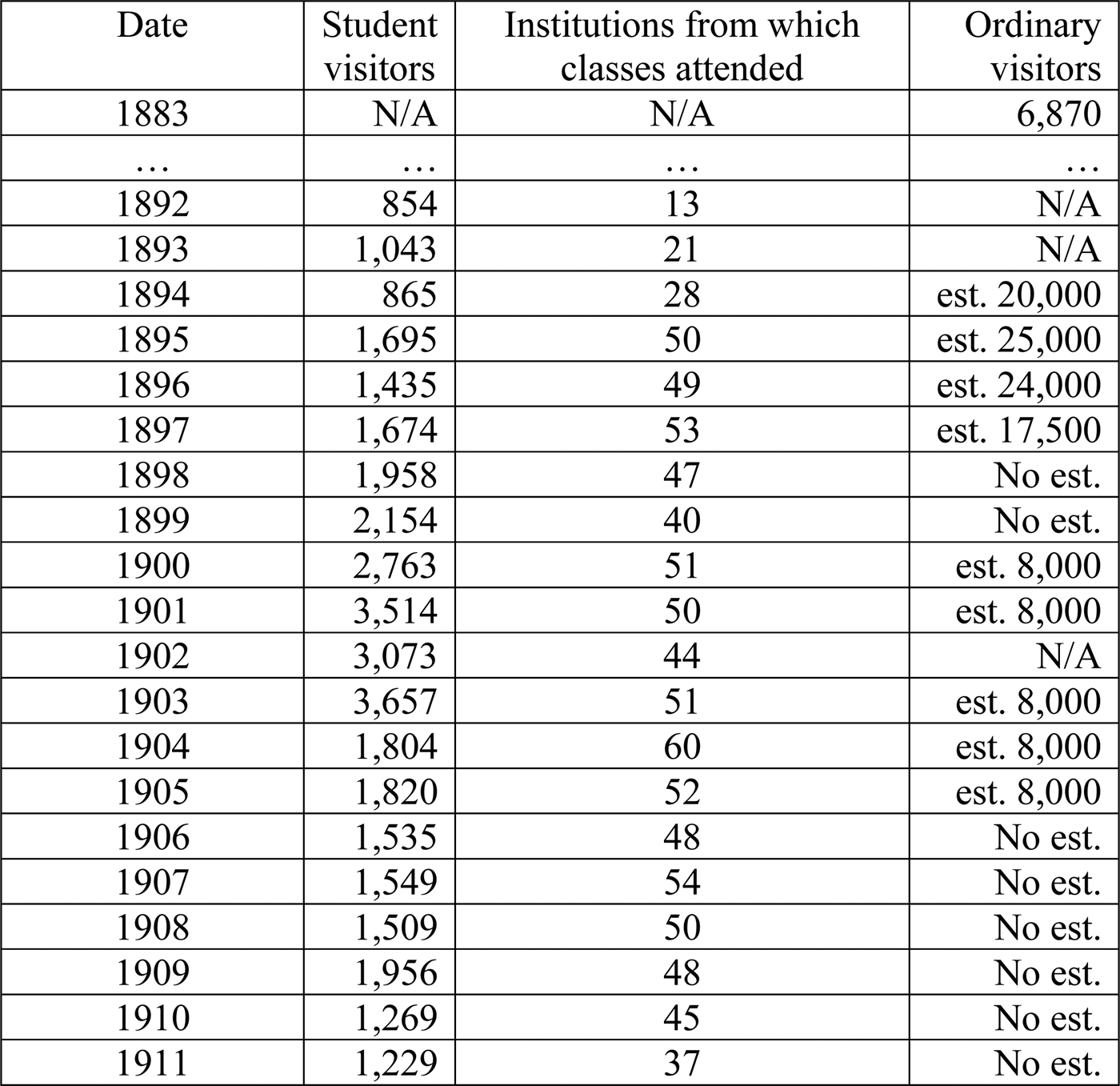
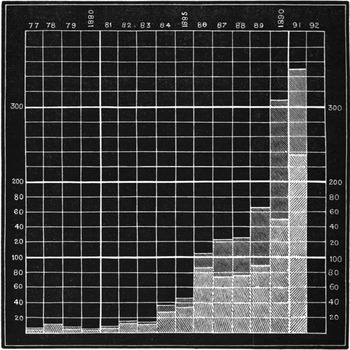
The museum was an integral part of this process of middle-class scientific professionalization. The growth of public and private provision for the urban poor stimulated the creation of these new occupations – many designed for women – which demanded new forms of knowledge in addition to credentials. Even as public interest in the museum as a tourist site dropped, the RSI's annual publication, the Journal of the Royal Sanitary Institute, included regular reports on its activities, including counts of new exhibitions and visitors. Furthermore, the museum remained crucial to the Sanitary Institute's status as an organization for the public. When the amalgamated institute raised money for its 1909 move to 90 Buckingham Palace Road, it did so using a dedicated Parkes Museum New Premises Fund.Footnote 79 Collected from individual donors, guilds, appliance manufacturers and its own coffers, a fund dedicated to a public museum was more appealing than one for an elite professional association. Yet after their incorporation, the amalgamated museum and institute clearly attracted more formal students participating in sanitary-science courses in and outside the museum – drawing fewer and fewer members of the general public. After 1906, the reports stopped tallying these ‘ordinary visitors’ altogether. This inverse relationship is illustrated in the museum's yearly visitor count (see Figure 3) and stands in sharp contrast to the Sanitary Institute's tally of the explosive number of certificates awarded from 1877 to 1891 to nuisance inspectors alone (Figure 4).Footnote 80
Table of student, institutional and public visitors to the Parkes Museum. Derived from the Annual Reports of the Parkes Museum, WL SA/RSP/A/4/1; annual supplements to the Transactions of the Sanitary Institute (1892–1904), 13–24; and annual supplements to the Journal of the Royal Sanitary Institute (1904–1911), 25–32.

Table of certificates awarded to inspectors of nuisances from 1877 to 1892: total number of candidates versus those successfully obtaining certificates. Transactions of the Sanitary Institute (1891) 12, p. 84.

Statistics suggest that most of these courses were consistently filled and well attended. In 1907, for instance, the courses of training for sanitary officers and for applied hygiene for schoolteachers, taught on a semesterly basis, educated around thirty-five students each.Footnote 81 Classes in the Parkes Museum were held under the exhibition gallery and lecture hall in smaller classrooms in the basement. The courses enforced the class hierarchy visible outside the museum, by identifying impoverished slums as the origin of the metropole's sanitary problems. Like those of the Museum of Practical Geology, the Parkes's courses targeted skilled labourers, artisans and lower-middle-class tradesmen, all people who shaped the environment of the impoverished.Footnote 82 Records of those who obtained a certificate as inspectors of nuisances, for instance, list students from a wide range of backgrounds. Some were sponsored by private institutions and local governments, such as William Kirkham Baker (working at the Infectious Hospital in Cambridge), Benjamin Roper Horner (from the Town Hall in Bradford) and William Irving (at the Local Board Offices in Wigton, Cumberland). Others may have hoped to obtain work through completing the programme: many resided in working- and middle-class districts of London, in Peckham, Battersea, Kilburn, Brixton, Finsbury Park and Hounslow. Others came from the major metropolises of Birmingham, Hull, Newcastle, Liverpool and Manchester, and still more from smaller towns further afield, in Cheltenham, Uckfield, Berwick-upon-Tweed and Chorley.Footnote 83 The growing number of students taking certification examinations points to rising interest in these programmes –and the progressive professionalization of hygiene, reaching from the metropolis to the market town. These newly educated tradesmen were part of the solution for urban sanitation problems, yet their role in a system of trickle-down hygiene was a far cry from the glass-cased exhibits and consumerist pleasures offered to lure the upper classes.
The museum itself grew to reflect the shift towards sanitation by policy and professionalization. By Wells's 1897 visit, curators had rearranged the collections into four, more formal, divisions: Science in Relation to Hygiene; Hygiene of Special Classes, Trades and Professions; Construction and Sanitary Apparatus; and Personal and Domestic Hygiene. The innovative journey from exterior to interior, public to private hygiene, was replaced by the formalized divisions of an increasingly disciplined science.
Showroom: hygienic commerce at the sanitation museum
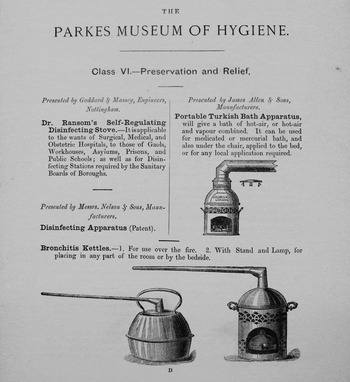
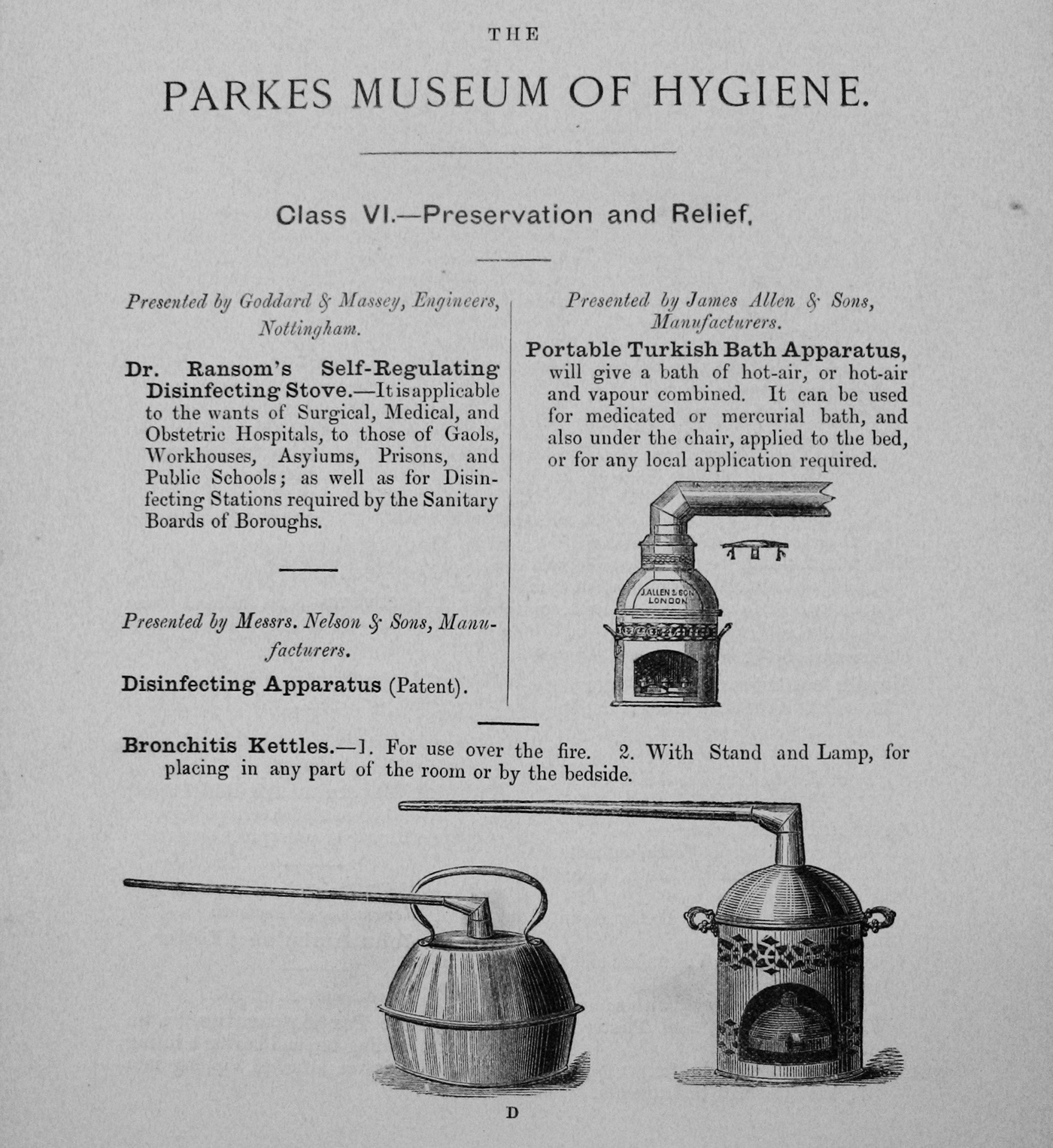
Despite their central mission as educational enterprises, London's sanitation museums also functioned as commercial ventures, offering an education in domestic consumerism. Items and appliances were donated directly by their manufacturers, and visitors were able to look up the price of assorted appliances and hygienic accessories for the home. Donors included the Kew Museum of Economic Botany, the London Warming and Ventilating Company and the London Necropolis Company, all of whom provided products for display. Brand names were conspicuous: the Parkes's first catalogue of exhibits illustrates Capper (sic), Son, & Co.’s trapless twin-basin water closet; Boyle & Co.’s fixed air-pump ventilators; and many other home appliances and health products, even the artificial teeth of Claudius Ash and Sons.Footnote 84 Certain rooms of the museum, particularly those devoted to Personal and Domestic Hygiene, functioned much like today's furniture showrooms, displaying the latest and scientifically approved models of toilets, sinks, baths, appliances and beds. As seen in Figures 5 and 6, visitors could walk down aisles filled with water closets, cisterns and stoves of various models – and consult the Parkes's practical catalogue to ascertain the manufacturer. By all accounts, commercially sold devices were displayed with a keen eye to sales: as Wells acerbically noted on his visit, the crematory appliances were ‘so attractive … that one longs to lose a relative or so forthwith, for the mere pleasure of seeing them in operation’.Footnote 85
The Sanitary Appliance Wing, featuring water closets, waste preventers and flushing cisterns, as well as ‘old and faulty’ types of closet. Margaret Street, undated. The Sanitary Institute, op. cit.

Examples of disinfecting and medicating stoves in Class VI, accompanied by manufacturer information, in the 1879 descriptive catalogue of the Parkes Museum. Mark H. Judge (comp.), Descriptive Catalogue of the Parkes Museum (ed. W.H. Corfield and Dr G.V. Poore), London: University College, 1879, p. 49, WL SA/RSP/A/4/4/1.
The Parkes Museum was forthright about the way in which its work benefited both public and private interests. The executive committee organized a yearly International and Medical Sanitary Exhibition, choosing new items from exhibitors desirous of displaying their wares. Favouritism did not appear to be a concern. At the 1881 exhibition, one member of the committee, Sir James Paget, Bart, observed that this practice encouraged better design: he noted the ‘wholesome rivalry’ amongst exhibitors, describing how they engaged in mutual criticism, looking, ‘perhaps … at each other's goods with keener eyes for defects or improvements than were possessed by the eminent judges of the awards’.Footnote 86 Capitalist commerce thus spurred scientific improvement, just as the Parkes's consumerist practices gave a dose of tacit education to would-be buyers.
At a time when many believed that urban and domestic environments shaped moral character, outfitting one's own home with the most sanitary of goods could benefit the self as well. The active demonstrations of appliances at the museum and the numerous diagrams illustrating the healthy and correct way to keep a house (along with the horrors of the unhygienic home) fed domestic consumerism. The growing trade in sanitary products evolved as part of the same tradition that Deborah Cohen calls ‘consumerism in an age of atonement’; just as outfitting the parlour could positively improve the soul, so the manifest health benefits of good hygiene could also be bought after demonstrations at the museum.Footnote 87 Just as the late nineteenth century witnessed the ‘moralization of possessions’ for those in the post-evangelical upper classes, so the scientific authentication of the museum and the Royal Institute promoted sanitation as a worthy cause for expenditure. Like its educational initiatives, the commercial culture of the museum was intimately tied to its target audience: not only male professionals, builders and tradesmen, but also the privileged middle- and upper-class women who were in charge of furnishing and running their homes, as well as engaging in such charitable, reform-minded activities as urban sanitation movements.
When the museum's amalgamation with the Sanitary Institute altered its approach towards exhibition and education, it also shifted its commercial purpose. As the era's modern ‘department’ stores offered more spaces for the upper classes to view and consume domestic furnishings, the Parkes shifted to bring its expertise into public view through newspapers and product labels. Manufacturers of hygiene products eagerly applied for the Royal Institute of Sanitation's medals of approval. These were regularly stamped on advertisements by the Cellular Clothing Company, the Sunlight Soap Company, Ronuk Sanitary Polish Ltd and Candy & Co.’s ‘Devon’ Domestic Fireplace. The endorsement of the combined Royal Sanitary Institute was not a one-way act. After receiving and advertising their stamp of approval, for example, the Vinolia Soap Company returned the favour; the Illustrated London News reported in 1902 that the company had donated one hundred guineas to fund the endowment of a new building for the Parkes Museum.Footnote 88 The relationship between the museum and producers of sanitary goods was symbiotic: companies provided their products free of charge (at times with added donations), while Parkes granted them a professionally recognized endorsement by way of the affiliated Royal Institute of Sanitary Health. While this synergetic dependency augmented both the institute's and various companies’ claims to sanitary expertise – and benefited the museum by adding to its collection and, occasionally, to its coffers – it gradually displaced the purpose of the Parkes. The consuming public was now able to ascertain hygienic value in the daily papers or in popular advertisements, and could purchase hygienic goods in the increasing number of furniture showrooms and department stores – bypassing the museum altogether.
Globalizing hygiene: circulating sanitary education and forgetting the sanitation museum
London's sanitary museum reflected a strong desire to celebrate and circulate British technological advances. As Lynda Nead has observed, by the late nineteenth century, London had been overtaken by the cities of Paris and Vienna as the pinnacle of urban modernity.Footnote 89 Yet it still had the scientific and technical prowess to establish itself as a centre of urban sanitation, drawing professionals from all over the globe, and continuing the tradition of British industry and ingenuity established in 1851 with the opening of the Great Exhibition at the Crystal Palace. With the establishment of the Parkes Museum in conjunction with the Royal Sanitary Institute, London's role as a pre-eminent city for health and technological innovation was cemented. The Parkes soon inspired offshoots in suburbs across the British Isles.Footnote 90 Eager to maintain their status, the curators behind the institute and museum ensured that their professionals and visitors had access to the latest sanitary knowledge. The Sanitary Institute's library at the Parkes offered hygiene reports and medical journals from colonial India and Australia, as well as the wider world, including France, Japan, Denmark, Spain, Germany and the United States.Footnote 91
The museum's board of directors aimed to export not only sanitary knowledge, but the very mission and meaning of the sanitary museum. Though Helmut Trischler argues that the technical museum grew into a global export in the interwar era, the Parkes inspired imitators and fostered cousins long before the outbreak of the First World War.Footnote 92 Only two years after the establishment of the Parkes, the board of directors donated items to be sent to the new Technological, Industrial, and Sanitary Museum of New South Wales.Footnote 93 Today known as the Powerhouse Museum, its curators assembled many of the over 30,000 objects from the collection back in the metropole.Footnote 94 Though it too changed buildings, it is the only museum of its nature throughout the former British Empire to remain open today (the Parkes formally shut its doors in 1956).
The Parkes's influence extended beyond the formal boundaries of the British Empire. Hygienists and state officials designed Argentina's Scientific Anatomical-Pathological Museum (Museo Científico Anatomo-pathológico), opened in 1885 in Buenos Aires, and used the Parkes Museum as a model. The ‘emulation of Europe’ was explicit in its proposal, which noted that ‘more advanced countries … concern themselves first and foremost with health and life’.Footnote 95 The reproduction of the sanitary museum abroad illustrates the potency of the museological model. Notably, these replicas only developed in regions with a middle class large and stable enough to sustain them.
Concern to advance a ‘healthy’ empire furthered the professionalization of sanitation – and streamlined the museum's target audience. Colonial administrators sought to maintain racial hygiene by way of enshrining public health in imperial governments.Footnote 96 As noted, courses to train specialized experts in tropical hygiene and colonial health grew exponentially throughout the 1900s and 1910s. The Parkes Museum's 1909 move to Buckingham Palace Road solidified the institute's ties to the empire: the new building included an extra common room to provide ‘a special advantage to members of the [Sanitary] institute from the provinces or the Colonies while they are in London’, while providing them with a ‘convenient center for official work’.Footnote 97 By explicitly connecting the Parkes with an imperial network, the board of directors also highlighted its imperial mission of bringing proper sanitation and hygiene – British-developed and -manufactured – to both the metropole and the wider globe. Yet the museum's fin de siècle shift towards sanitation in the colonies further established hygiene as the domain of government officials, planners and scientists, particularly in colonies where there were few middle-class reformers to promote it. There would be little use for a museum experience targeted at the public when colonial populations could be more quickly and directly regulated by government policy.
By 1897, the Parkes's moment as a dynamic propagator of diverse expertise and popular engagement had come to a close. While its collection remained open, its exhibits were more often viewed by the institute's paying students than by the museum-going public. After yet another move to larger premises, its board still struggled to keep pace with the demand for professional sanitary education while maintaining and growing a modern and high-quality body of exhibits. As the annual report of 1907 noted, ‘while the Committee are anxious that the Museum should be kept as up-to-date as possible … the problem of how to provide space for the ever-increasing demands is becoming more and more acute’.Footnote 98 As new exhibits piled up, and formal education increased, public interest in hygienic reform waned, and the government's bureaucratic role in regulating sanitation grew. By 1920, the Parkes was included in a feature in the Yorkshire Telegraph & Star on ‘Our forgotten museums’.Footnote 99 The moment of sanitation reform as a public-welfare movement for all – and of the sanitation museum as a multi-class, novel initiative – had ended.
It is telling that while the Parkes Museum was dissolved in the 1950s, its professional arm, the Sanitary Institute, continues to flourish in the twenty-first century.Footnote 100 With the expansion of public health in the twentieth century, urban sanitation (both outside and inside the home) increasingly fell under the domain of government policy, removed from the sphere of charitable reform movements or fervent practitioners.Footnote 101 In contrast to the Parkes's focus on teaching and public engagement, the Sanitary Institute's policies created a series of strict standards that had to be met, forcefully regulating the groups that the Victorian museum had brought into uneasy contact.
Conclusion
Concluding his 1897 visit, Wells observed, ‘We feel assured that no intelligent person will regret a visit to this most interesting and instructive exhibition. It offers you valuable hints on how to live, and suggests the best and tidiest way in which you can, when dead, dispose of your body’.Footnote 102 Wells's wry recommendation highlights his scepticism about the attraction of a museum full of practicalities and pragmatism. Yet the sanitary reformers who structured its dynamic approach to education, and the visitors who filled its halls, underscore the unique power of the museum as a civic space for public interaction with sanitary science. The sanitation museum was thus radically different from the medical museums, health expositions and technical displays of its time. The Parkes used its institutional space to educate multiple publics, propelling hygienic expertise to become enmeshed in public policy, commercial standards and professional practice. While the knowledge it offered reproduced Victorian hierarchies of class and cleanliness, it also expanded the number and range of sanitary experts to women and new classes of professionals.
The realization of mass sanitation initiatives ironically ensured the redundancy of the museum: once taken up by the government and ingrained in policy and practice, there was little need for mass private engagement. Sped on its way by the amalgamation of the museum with the Sanitary Institute, the Parkes's imagined future of a technocratic utopia for sanitation was slowly realized.Footnote 103 In this sense, the dissolution of the museum was a function of its success, not its failure. The museum enabled the professionalization of sanitation by creating a prestigious, physical space that embodied knowledge and established hygiene as a public concern. It could only do so because of the particularly public nature of the expertise in question; sanitary science's roots as a reform movement; and the novel, diverse approach towards scientific education adopted by its curators.
Despite its eclipse, the late nineteenth-century sanitation museum laid essential groundwork for the establishment and expansion of the educational science and technical museums of the twentieth century. Decades before the well-studied 1906 Deutsches Hygiene-Museum and London's Science Museum (planned from 1908, formally opened in 1928) attempted to instruct the public in the relationship between ‘science and practice’, the Parkes legitimated sanitary science within a permanent museum, serving as a model for imitators within the empire and beyond. Thomas Huxley, the pre-eminent biologist and public advocate of science, served on the Parkes Museum's officers board as a vice president in the 1880s and 1890s. An influential affiliate and long-time supporter of scientific education, Huxley's oversight of the Parkes and its late Victorian successes must have informed his agitation for the consolidation and establishment of the Science Museum at South Kensington, finally made an independent institution in 1909.Footnote 104 The museum, like others that followed, drew on the Parkes's mission by fostering a scientific education for all, making everyone into an expert. The Parkes's role as a progenitor of these twentieth-century innovations suggests how museum spaces transformed – and were themselves transformed by – scientific education and a desire to make professional knowledge accessible to a new public.