Introduction
Long-term physical conditions (LTCs) such as chronic obstructive respiratory disease and diabetes cannot be cured but may be controlled by treatment. Approximately 15.4 million people in the UK (around 25% of the population) have one or more non-psychiatric LTCs (including 60% of those over 60 years) (Department of Health, 2008). People with LTCs account for 52% of primary care and 65% of hospital out-patient consultations, 70% of in-patient bed days, 70% of total health and social care expenditure and 85% of deaths in the UK (Department of Health, 2008).
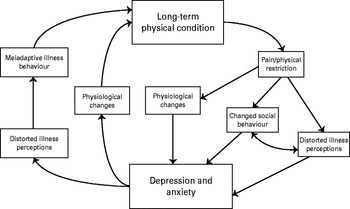
Mental and physical illnesses commonly co-occur and interact in complex and multi-faceted ways (Cassano & Fava, Reference Cassano and Fava2002; National Collaborating Centre for Mental Health, 2009). Most LTCs are associated with increased rates of the common mental disorders (CMDs) such as anxiety and depressive disorders, both cross-sectionally (Egede, Reference Egede2007) and longitudinally (Patten, Reference Patten2001; Karakus & Patton, Reference Karakus and Patton2011). For almost all LTCs the presence of CMDs reduces quality of life (Moussavi et al. Reference Moussavi, Chatterji, Verdes, Tandon, Patel and Ustun2007), increases disability (Scott et al. Reference Scott, Von Korff, Alonso, Angermeyer, Bromet, Fayyad, de Girolamo, Demyttenaere, Gasquet, Gureje, Haro, He, Kessler, Levinson, Medina Mora, Oakley Browne, Ormel, Posada-Villa, Watanabe and Williams2009), impairs outcome and increases utilization of health care (Frasure-Smith et al. Reference Frasure-Smith, Lesperance, Gravel, Masson, Juneau, Talajic and Bourassa2000; Katon & Ciechanowski, Reference Katon and Ciechanowski2002). Such links have been demonstrated in coronary artery disease (Penninx et al. Reference Penninx, Beekman, Honig, Deeg, Schoevers, van Eijk and van Tilburg2001; Stafford et al. Reference Stafford, Berk, Reddy and Jackson2007), chronic obstructive pulmonary disease (COPD) (Ng et al. Reference Ng, Niti, Tan, Cao, Ong and Eng2007; Eisner et al. Reference Eisner, Blanc, Yelin, Katz, Sanchez, Iribarren and Omachi2010) and diabetes (Schram et al. Reference Schram, Baan and Pouwer2009; Ali et al. Reference Ali, Stone, Skinner, Robertson, Davies and Khunti2010). LTCs and mental disorders almost certainly influence each other through a reciprocating, perpetuating causal ring, in which causes become consequences and consequences become causes (see Fig. 1) (Scott et al. Reference Scott, Von Korff, Alonso, Angermeyer, Bromet, Fayyad, de Girolamo, Demyttenaere, Gasquet, Gureje, Haro, He, Kessler, Levinson, Medina Mora, Oakley Browne, Ormel, Posada-Villa, Watanabe and Williams2009; Eisner et al. Reference Eisner, Blanc, Yelin, Katz, Sanchez, Iribarren and Omachi2010). These influences include physical and psychological processes, and may be mediated by health behaviours (Leventhal et al. Reference Leventhal, Weinman, Leventhal and Phillips2008). Despite this, the emotional and mental health needs of people with LTCs are often overlooked in routine practice (Ipsos MORI, Reference Ipsos2011). People with serious mental illness often receive inferior medical care that is not explained by less frequent help-seeking (Mitchell et al. Reference Mitchell, Malone and Doebbeling2009), and which probably reflects ‘diagnostic overshadowing’ (Jones et al. Reference Jones, Howard and Thornicroft2008).
Putative links between long-term physical conditions and mental state.

Mental health interventions targeted at people with LTCs and CMDs may improve mental and physical health and quality of life (Harpole et al. Reference Harpole, Williams, Olsen, Stechuchak, Oddone, Callahan, Katon, Lin, Grypma and Unützer2005; Simon et al. Reference Simon, Katon, Lin, Rutter, Manning, Von Korff, Ciechanowski, Ludman and Young2007; Rollman et al. Reference Rollman, Belnap, LeMenager, Mazumdar, Houck, Counihan, Kapoor, Schulberg and Reynolds2009; Katon et al. Reference Katon, Lin, Von Korff, Ciechanowski, Ludman, Young, Peterson, Rutter, McGregor and McCulloch2010; Whooley & Unützer, Reference Whooley and Unützer2010; Von Korff et al. Reference Von Korff, Katon, Lin, Ciechanowski, Peterson, Ludman, Young and Rutter2011). Previous trials have been based on models of stepped and collaborative care (Whooley & Unützer, Reference Whooley and Unützer2010; Von Korff et al. Reference Von Korff, Katon, Lin, Ciechanowski, Peterson, Ludman, Young and Rutter2011) combining pharmacological and brief psychological interventions (Simon et al. Reference Simon, Katon, Lin, Rutter, Manning, Von Korff, Ciechanowski, Ludman and Young2007; Katon et al. Reference Katon, Lin, Von Korff, Ciechanowski, Ludman, Young, Peterson, Rutter, McGregor and McCulloch2010). These show consistent reduction in symptoms of anxiety and depression and improvements in quality of life and physical functioning (Whooley & Unützer, Reference Whooley and Unützer2010; Von Korff et al. Reference Von Korff, Katon, Lin, Ciechanowski, Peterson, Ludman, Young and Rutter2011), but relatively less impact on ‘hard’ outcomes like cardiac events and survival (Rollman et al. Reference Rollman, Belnap, LeMenager, Mazumdar, Houck, Counihan, Kapoor, Schulberg and Reynolds2009).
Evidence of impacts on disability, health care utilization and costs is limited (Simon et al. Reference Simon, Katon, Lin, Rutter, Manning, Von Korff, Ciechanowski, Ludman and Young2007). It therefore remains unclear how much resource should be directed at treating psychiatric morbidity as opposed to more intensive treatment of physical pathologies or efforts to effect life-style change (Whooley & Unützer, Reference Whooley and Unützer2010). This is partly because we do not know how much of the total functional disability and health care utilization in the population is attributable to LTCs and CMDs, respectively (Merikangas et al. Reference Merikangas, Ames, Cui, Stang, Ustun, Von Korff and Kessler2007), or what proportion of these outcomes might be avoided by treatments for CMDs in people with and without LTCs.
Our aims were to: (i) describe rates of CMDs and unmet need for mental health treatment in people with LTCs; (ii) estimate proportions of respondents admitted to acute hospital in-patient beds and with severe disability that might be attributable to LTCs and CMD, respectively; and (iii) estimate the potential impact of reducing unmet need for mental health treatment on these outcomes.
Method
Setting and participants
The Adult Psychiatric Morbidity Survey (APMS) 2007 recruited adults aged 16 years and over living in private households in England using multi-stage sampling (McManus et al. Reference McManus, Meltzer, Brugha and Bebbington2009). The phase one sample, on which this study is based, was representative of the population of England living in private households. Households were sampled and one person was selected at random to take part within eligible households, of whom 31% declined to take part. Successful face-to-face interviews were obtained with 57% of the targeted sample (7461 respondents) (McManus et al. Reference McManus, Meltzer, Brugha and Bebbington2009).
Measures
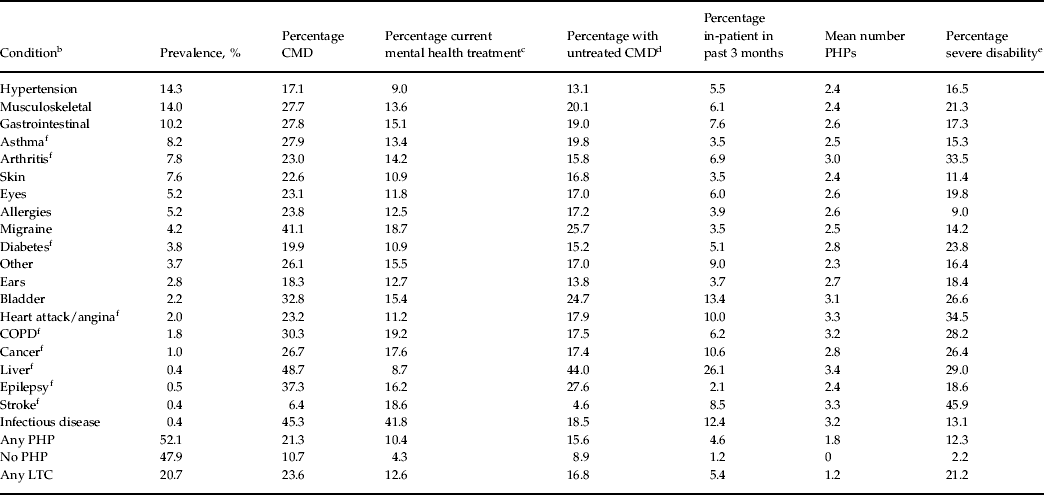
Physical health problems (PHPs) were ascertained by showing respondents a card listing 23 conditions and asking which they had experienced since the age of 16 years (Table 1). Two mental disorder categories, ‘dementia or Alzheimer's disease’ and ‘anxiety, depression or other mental health issue’, were excluded. ‘Stomach, ulcer or other digestive problems’ and ‘bowel/colon problems’ were combined as ‘gastrointestinal conditions’. PHPs were only counted if the respondents answered ‘yes’ to three further questions: (i) ‘Did a doctor or other health professional diagnose this condition?’; (ii) ‘Have you had this condition in the last 12 months (even if you have not experienced any symptoms because you use medication or an aid)?’; and (iii) ‘In the last 12 months, have you had any treatment or taken any prescribed medication for this condition (including physio- and other therapies but excluding over-the-counter medications)?’. A subgroup of PHPs were considered to be long-term conditions (LTCs) (Table 1). Nine conditions were chosen a priori on the basis of their probable long-term nature: asthma, arthritis, COPD, diabetes, cancer, heart attack/angina, stroke, epilepsy and liver disease. As for (other) PHPs, no duration criteria were applied. All were present and treated in the past 12 months and confirmed by physician diagnosis. Excluding conditions that had been present for less than 12 months would have risked misclassifying long-term conditions of recent onset.
Weighted prevalences of PHPs and LTCs, CMDs, receipt of current mental health treatments, prevalence of untreated CMDs and in-patient admissions in the past 3 months for a physical illness by PHP and by LTCa
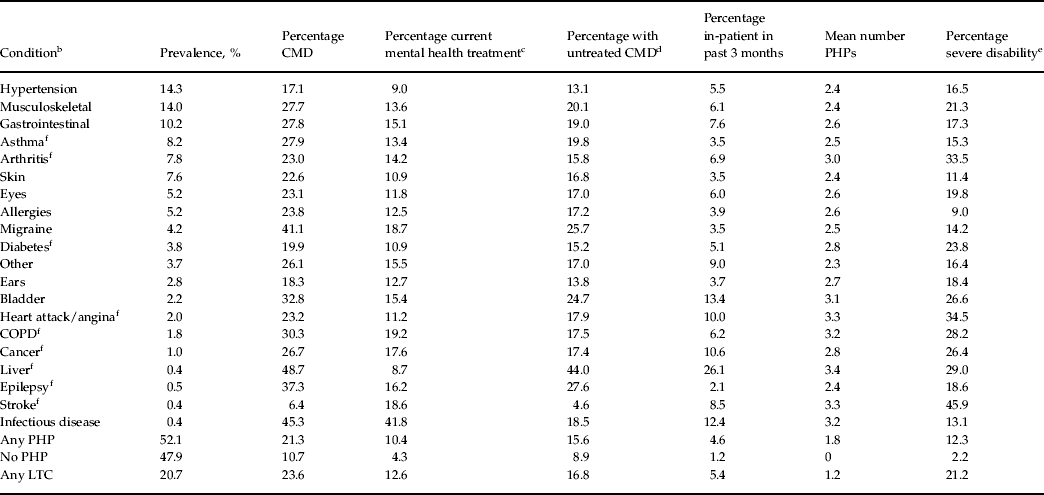
PHP, Physical health problem; LTC, long-term condition; CMD, common mental disorder; COPD, chronic obstructive pulmonary disease; ADL, activities of daily living.
a Percentages only are shown since results are weighted proportions (using survey weights) rather than actual counts.
b Musculoskeletal=bone, back, joint or muscle problem; Gastrointestinal=stomach, ulcer or other digestive, bowel or colon problems; Eyes=cataracts or eyesight problems; Migraine=migraine or frequent headaches; Other=any other complaints of heart, blood vessel or circulatory system; or other respiratory complaints; or reproductive or hormonal complaints; or other bone, joint or muscle problems; or renal problems; or other nervous system disorders; or teeth/mouth/tongue complaints or rheumatic disease; or other benign tumours; Ears=ear or hearing problems; Bladder=bladder problem or incontinence; COPD=bronchitis or emphysema.
c Any psychotropic medication and/or psychological or social therapy.
d Calculated as % CMD × % cases not receiving current mental health treatment.
e Defined as ADL problems score of ⩾5.
f LTCs.
CMDs were ascertained using the Revised Clinical Interview Schedule (CIS-R) (Lewis et al. Reference Lewis, Pelosi, Araya and Dunn1992), a validated structured clinical interview. The CIS-R assesses non-psychotic psychiatric morbidity across 14 symptom groups, and data can be used to ascertain eight International Classification of Diseases, Tenth Revision (ICD-10) disorders, namely depressive episodes (mild, moderate and severe), generalized anxiety disorder, phobias, panic disorder, obsessive compulsive disorder and mixed anxiety depressive disorder. CMDs are highly co-morbid, and are equally well represented by a single dimension or by two highly correlated dimensions (Vollebergh et al. Reference Vollebergh, Iedema, Bijl, de Graaf and Ormel2001). We used the conventional CMD case threshold score of >11, which corresponds to the threshold for ICD-10 clinical disorders (Lewis et al. Reference Lewis, Pelosi, Araya and Dunn1992).
Current receipt of mental health treatment was ascertained using questions about psychoactive medications and psychological therapies. Using show cards, respondents were asked if they were taking any of 36 different psychotropic medications or receiving any of eight of psychological and social therapies. ‘Receipt of current mental health treatments’ was defined as taking any prescribed psychotropic medication or receiving psychological or social therapy at the time of the survey. Together with CMD status, these data were used to classify respondents into the following categories: CMD and no current treatment; CMD and currently receiving treatment; no CMD and currently treated; and no CMD and no current treatment.
In-patient admissions were ascertained by asking respondents if they had been in hospital as an in-patient ‘overnight or longer for treatment or tests, during the past 3 months (excluding childbirth)’. We included only admissions for PHPs. We were able to identify the number of respondents admitted to hospital, but not the number of admissions.
Disability was assessed using questions about problems with activities of daily living (ADLs) taken from the Health Assessment Questionnaire (Ramey et al. Reference Ramey, Fries, Singh and Spilker1996). Questions covered both basic ADLs, relating to personal care (e.g. dressing, bathing, washing, or dressing), and instrumental ADLs, namely: getting out and about or using transport; complying with medical care; household activities; other practical activities; paperwork; and managing money. Responses to each question were coded as ‘no difficulty at all’ (0), ‘some difficulty’ (1) or ‘a lot of difficulty’ (2). Item scores were summed to create a single measure of disability (range 0 to 14). Severe disability was defined as having a score for ADL problems in the top decile for the whole sample (corresponding to an ADL problems score of ⩾5). This cut-off was chosen pragmatically, being sufficiently stringent as a marker of severity yet ensuring that statistical analyses would have reasonable power. A similar approach has been adopted elsewhere (Scott et al. Reference Scott, Von Korff, Alonso, Angermeyer, Bromet, Fayyad, de Girolamo, Demyttenaere, Gasquet, Gureje, Haro, He, Kessler, Levinson, Medina Mora, Oakley Browne, Ormel, Posada-Villa, Watanabe and Williams2009).
Alcohol consumption was assessed using the Alcohol Use Disorders Identification Test (Saunders et al. Reference Saunders, Aasland, Babor, de la Fuente and Grant1993), on which a score of 8 or above indicates hazardous drinking. Scores were classified as 0 to 7, 8 to 15 and 16 and over. Current cigarette smokers were identified by asking respondents who had ever smoked a cigarette ‘Do you smoke cigarettes at all nowadays?’. Body mass index (BMI) was assessed by asking non-pregnant respondents how tall they were without shoes, and how much they weighed without clothes on. BMI was classified as <18.5 kg/m2 (underweight), 18.5 to under 25 kg/m2 (normal), 25 to less than 30 kg/m2 (overweight) and 30 or more kg/m2 (obese). Educational qualifications were used as the measure of socio-economic status in this study, as they were relatively unlikely to be directly affected by the (recent) occurrence of PHPs, LTCs, CMDs or admission to hospital. Self-assigned ethnicity was ascertained using the sixteen 2001 Census categories. These were later collapsed to four groups: White, Black, South Asian (Indian, Pakistani or Bangladeshi) and Mixed or other.
Analysis
Descriptive statistics were reported after applying survey weights to adjust for the probability of selection and for non-response. These weights were derived by the APMS survey team (McManus et al. Reference McManus, Meltzer, Brugha and Bebbington2009). The weighted APMS 2007 data match exactly the estimated population of England (using the Office of National Statistics 2006 mid-year household population estimates; ONS, 2006) on age, sex and region. Analyses were undertaken using the survey (svy) commands in Stata (StataCorp LP, USA), to account for non-response and the clustered survey design.
Population-attributable fraction (PAF) measures the proportion of outcome events due to a particular factor (Spiegelman et al. Reference Spiegelman, Hertzmark and Wand2007) and which would be prevented if exposure to the risk factor in question were removed from the population completely, assuming an unconfounded causal association (Rockhill et al. Reference Rockhill, Newman and Weinberg1998). Crude and adjusted PAFs (and 95% confidence intervals) were obtained using the aflogit command in Stata (this function was not available in conjunction with svy commands) (Brady, Reference Brady1998).
In most analyses we used PAFs to calculate proportions of outcomes that were attributable to either treated or untreated CMDs in relation to the reference category of CMD non-cases. However, in a final set of analyses, we chose ‘currently receiving treatment, no CMD’ as the reference category. Since (in the short term at least) successful treatment of CMDs would lead to more individuals in this category (rather than ‘no CMDs, no treatment’), this allowed us to estimate the potential impact of better treatment for people with CMDs conservatively. Finally, we re-ran our analyses among people with different numbers of LTCs, in order to estimate the potential impact of differential targeting of interventions.
Results
Complete data were available for 7403 respondents. The sample comprised 3597 men (48.6%) and 3806 women (51.4%), with a mean age of 46.3 years. Just over one-half of respondents (52.1%) reported at least one PHP and one-fifth (20.7%) had one or more LTCs. Among those aged ⩾65 years, 76.1% had at least one PHP and 41.9% had at least one LTC; among this age group 47.2% had two or more PHPs and 12.1% had two or more LTCs. In-patient admission for a physical illness in the preceding 3 months was reported by 3.0% of respondents, while 7.5% met criteria for severe disability. These rates rose to 5.9% and 18.3%, respectively, among those 65 years and older. This group accounted for 37.3% of those admitted to hospital and 46.4% of cases of severe disability.
PHPs, CMDs and the prevalence of admission and disability
As Table 1 shows, PHPs were common and typically co-morbid with one another. Hypertension (14.3%), musculoskeletal problems (14.0%) and gastrointestinal conditions (10.2%) were the most common PHPs. CMDs were most prevalent among those with liver disorders (48.7%), infectious diseases (45.3%) and migraine (41.1%). CMDs in people with liver problems were particularly likely to go untreated. The prevalence of untreated CMD in people with PHPs varied 10-fold, from 4.6% (stroke) to 44.0% (liver diseases), with a median of 17.5%. Receipt of treatment for CMDs was greater in those with at least one PHP than those with none (26.8% v. 16.9%) [χ2=14.7, degrees of freedom (df)=1, p<0.001]. The proportion of CMD cases that were untreated ranged from 40.8% among people with infectious disease to 90.3% (liver disease). Rates of admission to hospital in the preceding 3 months among people with PHPs varied from 2.1% (epilepsy) to 26.1% (liver problems), with a median of 6.1%. The median prevalence of severe disability was 19.2%, varying from 9.0% (allergies) to 45.9% (stroke). Compared with people with any PHP, those with at least one LTC differed to any significant extent only in the prevalence of severe disability (12.3% v. 21.2%) (Table 1).
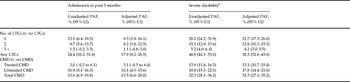
There were dose–response relationships between the number of LTCs and the frequency of recent in-patient admission, prevalence of CMDs (and untreated CMDs), number of ADL problems, prevalence of severe disability and age. The frequency of severe disability was much higher in those with the largest number of LTCs, affecting 56.0% of respondents with three or more LTCs, and this association departed from linearity (likelihood ratio χ2=19.9, df=2, p=0.01) (Table 2).
Rates of CMD, recent hospital admission for a physical illness, untreated CMD, mean age and disability (numbers of problems with ADLs), by number of LTCs

CMD, Common mental disorder; ADLs, activities of daily living; LTC, long-term condition; CI, confidence interval.
a Calculated as % CMD×% cases not receiving current mental health treatment.
b Defined as ADL problems score of ⩾5.
Estimates of the population impact (PAF) of CMDs and LTCs
Despite the strong association between number of LTCs, admission and disability, PAFs for these outcomes were greatest among people with one LTC. After adjusting for age, sex, education, smoking, alcohol consumption, BMI and CMDs, LTCs accounted for 17.9% of admissions to hospital in the past 3 months for a physical condition and 38.3% of cases of severe disability (Table 3) in the sample as a whole. PAFs associated with CMDs were only slightly smaller (13.5% of admissions and 31.3% of cases of severe disability) after adjusting for LTCs and other potential confounders. Based on these adjusted figures, we estimate that approximately 43% and 45% of the combined PAFs (LTCs plus CMDs) for admission and severe disability, respectively, were attributable to CMDs.
Unadjusted PAFs for recent admissions for physical illness and for severe disability, respectively, by number of LTCsa and CMDs, and adjusted for age, sex, education, smoking, alcohol consumption, BMI and the other variables in the table; PAFs for CMDs are also reported according to whether respondents with CMDs were or were not in receipt of mental health treatment at the time of the survey

PAF, Population-attributable risk fraction; LTC, long-term condition; CMD, common mental disorder; BMI, body mass index; CI, confidence interval.
a See Methods for the description of the method for selecting individual LTCs for inclusion in models.
b Defined as ADL problems score of ⩾5.
Whereas adjusting for CMDs reduced the PAFs associated with LTCs, the same was not true when the PAFs for CMDs were adjusted for LTCs. Table 3 also shows that the largest proportion of the PAFs for admission (74.8%) and severe disability (56.9%) associated with CMDs were attributable to untreated disorders.
Conservative estimates of the potential impact of treatment for CMDs
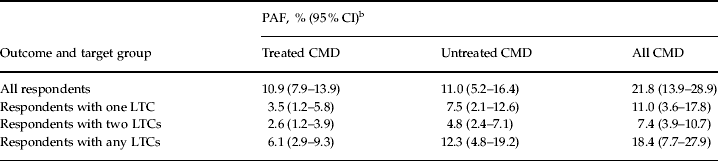
Table 4 shows the potential reductions in the prevalence of severe disability associated with (hypothetical) mental health interventions targeted at groups with varying numbers of LTCs. These conservative estimates used the group identified as ‘currently receiving treatment, no CMD’ as the reference category and statistical power was therefore limited by the size (n=304) of this group. Given that the number of respondents admitted to hospital in the 3 months prior to interview was also small (a total of 258, of whom just 13 were in the ‘current treatment, no CMD’ group), PAFs for admission in these analyses did not reach statistical significance and are not shown. Using this reference group (rather than all non-cases of CMD) resulted in a reduction in the PAF for severe disability associated with CMD from 31.3 (Table 3) to 21.8 (Table 4). The total PAF (estimating the potential reduction in the prevalence of severe disability that might be achieved by effective treatments for CMDs) fell slightly when considering the effects of targeting only people with LTCs rather than the entire study population (Table 4). The proportion of total PAF for severe disability associated with untreated CMDs in Table 4 increased from 50.5% among the sample as a whole to 67.6% for those with any LTCs, and 64.9% among those with two or more LTCs.
Estimated percentage reduction in the prevalence of severe disability (PAFs) where risks for people with CMDs to be reduced to that of people currently in receipt of mental health treatment but who were not CMD cases at interview (‘treated non-cases’)a
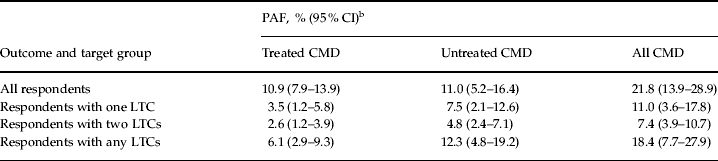
PAF, Population-attributable risk fraction; CMD, common mental disorder; CI, confidence interval; LTC, long-term condition; BMI, body mass index.
a Estimates are shown according to treatment status at interview, and for target populations characterized by the number of LTCs reported.
b Estimated percentage reduction in outcomes for the study population as a whole if risk for those in the target group were reduced to that of respondents in the ‘treated, no CMD’ group. Adjusted for age, sex, education, ethnicity, smoking, alcohol consumption and BMI.
Discussion
Main findings
As expected, the prevalence of CMDs varied between different types of PHP and increased with their number (Cooke et al. Reference Cooke, Newman, Sacker, DeVellis, Bebbington and Meltzer2007; Vogeli et al. Reference Vogeli, Shields, Lee, Gibson, Marder, Weiss and Blumenthal2007), ranging from around 6% in stroke to almost 50% in liver disease. Our findings were similar to the prevalence of CMDs reported previously for diabetes (20%) (Barnard et al. Reference Barnard, Skinner and Peveler2006) but lower (30%) than reported in some studies of COPD (Xu et al. Reference Xu, Collet, Shapiro, Lin, Yang, Platt, Wang and Bourbeau2008; Laurin et al. Reference Laurin, Labrecque, Dupuis, Bacon, Cartier and Lavoie2009). Although many cases of CMD went untreated in people with PHPs (73% overall), the rate of treatment for CMDs was higher in those with PHPs than in those without (27% v. 17%), and slightly higher still in people with LTCs (28.8%).
Both LTCs and CMDs were associated with recent hospital admission for a physical health problem and with severe disability. Point estimates for PAFs were greater for LTCs than CMDs (for both outcomes), and for both CMDs and LTCs in respect of disability compared with admissions. These associations remained even after adjusting for education, age, sex, smoking, BMI and alcohol consumption. Our results, and especially those based on the most conservative analyses, suggest that improving treatment for CMDs could play a significant role in reducing severe disability. Furthermore, the potential impact of such interventions would be little diminished if they were targeted only at people with LTCs rather than at everyone with CMD. This reflects the large gradient in rates of disability among those with multiple LTCs, interactions between CMDs and LTCs in their association with disability (Scott et al. Reference Scott, Von Korff, Alonso, Angermeyer, Bromet, Fayyad, de Girolamo, Demyttenaere, Gasquet, Gureje, Haro, He, Kessler, Levinson, Medina Mora, Oakley Browne, Ormel, Posada-Villa, Watanabe and Williams2009) and the conservative nature of our comparison with people who were not cases of CMD but who were receiving mental health treatments. The latter were likely to have higher rates of disability than other CMD non-cases.
It was also notable that for both admission and severe disability, most (75% and 57%, respectively) of the PAF for CMDs was accounted for by untreated CMDs. In our more conservative analyses of the PAFs for severe disability, this figure remained roughly the same (50.5%) when considering the study population as a whole and was predicted to increase to around 65% if treatments for CMD were targeted at people with LTCs. Our findings therefore suggest that interventions to reduce the frequency of these outcomes should target this group first. Delivering effective treatments to people with untreated CMDs might reduce the prevalence of severe disability by around 11%.
Others have attempted similar analyses using different methods. In the 18-month follow-up to the 2000 UK Psychiatric Morbidity survey (Rai et al. Reference Rai, Skapinakis, Wiles, Lewis and Araya2010), the PAF for CMDs (defined as in the present study) in relation to the onset of ‘functional disability’ (defined as any new ADL difficulty) was 12.7%, rising to 23.8% if subclinical symptoms of anxiety and depression were included. Two other longitudinal studies, of disability pension claims in Scandinavia, produced differing results. A Swedish study estimated that between 19% and 38% of all new disability pension awards were attributable to CMD (Rai et al. Reference Rai, Kosidou, Lundberg, Araya, Lewis and Magnusson2012) (comparable with the PAF for CMD reported in the present study), whereas a Norwegian study reported a value of just 8% (Mykletun et al. Reference Mykletun, Overland, Dahl, Krokstad, Bjerkeset, Glozier, Aarø and Prince2006). Although some studies included subclinical CMDs (Rai et al. Reference Rai, Skapinakis, Wiles, Lewis and Araya2010, Reference Rai, Kosidou, Lundberg, Araya, Lewis and Magnusson2012), we restricted our cases to clinical disorders since the evidence for the efficacy of treatment in these conditions is more secure.
In the USA, respondents to the National Comorbidity Survey Replication (NCS-R) (Merikangas et al. Reference Merikangas, Ames, Cui, Stang, Ustun, Von Korff and Kessler2007) were asked about PHPs (without reference to diagnosis or treatment). The authors estimated that about one-third of health-related ‘disability days’ associated with mental and/or physical disorders were due to mental health problems (affecting 22% of the sample), and two-thirds were due to PHPs (reported by 43% of the sample). This compares with our estimate (using the more restrictive definition of LTCs) that around 45% of the total disability associated with mental and physical disorders in the general population was attributable to CMDs. More recently, an analysis of the World Mental Health Survey indicated that while around 60% of ‘partial disability days’ were attributable to physical and/or mental disorders, only around 25% of this total was attributable to the former (Bruffaerts et al. Reference Bruffaerts, Vilagut, Demyttenaere, Alonso, AlHamzawi, Andrade, Benjet, Bromet, Bunting, de Girolamo, Florescu, Gureje, Haro, He, Hinkov, Hu, Karam, Lepine, Levinson, Matschinger, Nakane, Ormel, Posada-Villa, Scott, Varghese, Williams, Xavier and Kessler2012). Like the NCS-R report, the latter used a more inclusive definition of PHPs than in the present study.
Strengths and limitations
The APMS 2007 sample was large with over 7000 people. Participation was moderate, but weighting was used to render the sample representative of the population of England. Nevertheless, our findings may not be directly applicable to other settings with different cultures and health care systems.
PHPs were elicited using a series of detailed questions about the nature of the condition, physician diagnosis and receipt of treatment. Self-reported physical conditions have been shown to have good validity in large-scale health surveys (Heliövaara et al. Reference Heliövaara, Aromaa, Klaukka, Knekt, Joukamaa and Impivaara1993). Over one-half of survey respondents reported at least one PHP and one-fifth reported at least one LTC. Our results concur with prevalence rates estimated using 2007/8 data from the Quality and Outcomes Framework (QOF), based on general practitioner practices in England and over 54 million patients (http://www.ic.nhs.uk/qof). Our prevalence rates varied from the QOF equivalents by less than 20% for five of the eight PHPs for which rates could be compared. The proportion of respondents in the present sample who spent time in hospital as in-patients (median 6.1% over 3 months) was commensurate with the rates in a recent national survey of people with LTCs (15% over 6 months) (Ipsos MORI, Reference Ipsos2011). These findings argue against any substantial misclassification of PHPs.
We used PAFs to estimate the impact of LTCs and CMDs on rates of admission and severe disability, and to quantify the potential impact of targeting treatments for CMDs at people with LTCs (Rockhill et al. Reference Rockhill, Newman and Weinberg1998; Rückinger et al. Reference Rückinger, von Kries and Toschke2009). Ours was the first study of which we are aware to incorporate a sensitivity analysis based on the use of ‘treated non-cases’ as the (conservative) reference group for estimating potential gains associated with interventions. These analyses had insufficient statistical power in respect of recent admission (a relatively rare outcome), but confirmed the association between CMDs and severe disability.
PAFs are subject to two important assumptions that will never be fully met. The first is the assumption of unilateral causation in circumstances where reciprocal causation is virtually guaranteed. The second assumption is that targeting treatment in this way will be fully effective. Moreover, the associations may be confounded by uncontrolled variables. These limitations may inflate estimates of the reduction in hospital admission and severe disability achievable through mental health treatments alone. However, if we are right in suggesting that the relationship between CMDs and LTCs forms a causal ring (Fig. 1), the negative implications of reverse causality would be somewhat reduced, since interfering with links in one direction indirectly interferes with the links in the other. We were also careful to include life-style factors such as smoking, alcohol consumption, and poor diet and lack of physical activity (for which BMI was a proxy). Despite these constraints, PAFs provide a valuable if tentative means of quantifying the potential impacts of better CMD treatments and as a justification for targeting such treatments at people with LTCs and untreated CMDs.
Conclusions
LTCs are common, frequently co-morbid and associated with CMDs, most of which remain untreated. Both CMDs and LTCs were independently associated with hospital admission and severe disability. As well as reducing the suffering associated with CMDs, our most conservative analyses indicated that interventions to reduce their prevalence may reduce rates of severe disability in people with LTCs, and in the population as a whole, very substantially. The argument for improving delivery of mental health treatments to people with LTCs seems overwhelming, and this has been identified elsewhere as central to extending healthy life expectancy and occupational functioning at the population level (Jagger et al. Reference Jagger, Gillies, Moscone, Cambois, Van Oyen, Nusselder and Robine2008; Von Korff et al. Reference Von Korff, Katon, Lin, Ciechanowski, Peterson, Ludman, Young and Rutter2011).
The emotional and mental health support needs of people with LTCs are not currently addressed routinely (Ipsos MORI, Reference Ipsos2011). This may reflect the older age of those with LTCs as well as the difficulty of delivering (and evaluating) interventions for those with complex co-morbidities and multiple frailties (Tinetti & Studenski, Reference Tinetti and Studenski2011). However, it is also likely to reflect the fragmentation inherent in the ‘single disease’ models of most health care systems that tend to prioritize treatments for physical conditions. The phenomenon known as ‘diagnostic overshadowing’ (Jones et al. Reference Jones, Howard and Thornicroft2008) also impedes access to effective physical health care in people with comorbid mental disorders, perhaps by virtue of assumptions made about their likely adherence to treatment, quality of life or prognosis.
Our findings highlight the fact that LTCs are often co-morbid with one another (Vogeli et al. Reference Vogeli, Shields, Lee, Gibson, Marder, Weiss and Blumenthal2007), and this might explain the emerging evidence that integrated care based on case management (Ham et al. Reference Ham, Dixon and Chantler2011) and including psychosocial interventions appears to be more effective than brief training in the self-management of individual disorders (Chodosh et al. Reference Chodosh, Morton, Mojica, Maglione, Suttorp, Hilton, Rhodes and Shekelle2005; Foster et al. Reference Foster, Taylor, Eldridge, Ramsay and Griffiths2007; Von Korff et al. Reference Von Korff, Katon, Lin, Ciechanowski, Peterson, Ludman, Young and Rutter2011; Snoek, Reference Snoek2012). The Improving Access to Psychological Treatments (IAPT) programme in Britain (http://www.iapt.nhs.uk) has recruited and trained a workforce capable of delivering the psychosocial elements of integrated care across a wide range of chronic conditions. The challenge now lies in developing integrated care pathways for the growing number of people with long-term illnesses (Institute of Medicine, 2012).
Acknowledgements
S.W. planned the study and undertook all of the analyses. S.W. is the guarantor and accepts full responsibility for the finished article. All of the other contributors participated fully in the drafting of the manuscript, including revising the study aims, guiding decisions about the final analyses, and redrafting sections of the manuscript. All contributors have agreed the final form of the manuscript. The original survey data were collected by the National Centre for Social Research; direction and oversight were provided by T.B. and H.M. (among others).
Declaration of Interest
None.