Introduction
The concept of compressions only cardiopulmonary resuscitation (CO-CPR) evolved from a perception that lay rescuers may be less likely to perform mouth-to-mouth ventilations during an emergency. To address this, CO-CPR was advocated in an effort to lower any barriers that may have existed to bystander action (ie, chest compressions alone offered superior outcomes to no resuscitative efforts at all).
Early investigations supported this approach. In one trial of out-of-hospital cardiac arrest (OHCA), 1,276 patients were randomized to either conventional cardiopulmonary resuscitation (CPR; ie, compressions and ventilations) or CO-CPR. Reference Svensson, Bohm and Castren1 Survival at 30 days was found to be similar in both groups (8.7% versus 7.0%; P = .29; 95% CI, −1.2 to 4.6). Meta-analyses of the limited number of randomized trials comparing CPR sub-types have also supported CO-CPR. One meta-analysis of three randomized controlled trials examining CO-CPR versus standard CPR found that eleven percent of CO-CPR patients survived to hospital discharge, compared to nine percent of conventional CPR patients. Reference Cabrini, Biondi-Zoccai and Landoni2 Another analysis found that dispatcher-assisted CO-CPR resulted in a twenty-two percent improvement in chances for survival (Risk Ratio = 1.2; 95% CI, 1.01–1.47). Reference Hupfl, Selig and Nagele3 The effectiveness of this approach in certain sub-types of cardiac arrest (ie, asphyxial cardiac arrest), however, remains poorly understood. It is also worth noting that no comment was made on quality of life in survivors.
This study describes the use of compressions and ventilations CPR (CV-CPR) in cardiac arrest following drowning, as well as characteristics associated with CV-CPR, via analysis of a large national cohort of drowning patients available in the Cardiac Arrest Registry for Enhanced Survival (CARES). The aim of this investigation is to test the hypothesis that bystander CPR utilizing compressions and ventilations results in improved survival for cases of cardiac arrest following drowning compared to CPR involving compressions only.
Secondary aims include further definition of any association between CV-CPR in cardiac arrest following drowning and outcome, such as neurologically favorable survival as measured by cerebral performance category (CPC) or improved survival to hospital discharge.
Methods
The CARES database was developed in 2004 as part of a collaboration between Emory University (Atlanta, Georgia USA) and the Centers for Disease Control and Prevention (CDC; Atlanta, Georgia USA) to improve outcome in out-of-hospital-cardiac arrest (OHCA). The CARES database includes 23 state-wide registries, as well as 63 communities in 18 additional states. Its catchment area includes more than 120 million people, with over 1,400 Emergency Medical Service (EMS) agencies and more than 1,900 hospitals. Participating programs enter their data via a secure website, then compare their performance to aggregate de-identified data from the CARES database. In this retrospective observational investigation, CARES was queried for all patients of any age from January 2013 through December 2017 identified as having suffered cardiac arrest following drowning in the CARES registry, and in whom data were available on type of bystander CPR delivered (ie, either CPR including compressions and ventilations or CPR with compressions only). Subjects were further stratified according to CPC as a measure of neurological outcome.
Favorable neurologic outcome was defined as: (a) CPC 1 – good cerebral performance; or (b) CPC 2 – moderate cerebral disability at hospital discharge. Unfavorable neurologic outcome was defined as: (a) CPC 3 – severe cerebral disability; (b) CPC 4 – coma or vegetative state; (c) CPC 5 – brain death; or (d) death. Patients were further analyzed according to survival to hospital admission and survival to hospital discharge.
Differences in neurological outcome, survival to hospital admission, and survival to hospital discharge were first compared between types of CPR (CV-CPR or CO-CPR) using Pearson’s chi-squared tests. Multiple logistic regression was then performed for CPR type adjusting for age as a covariate. Odds ratios and 95% confidence intervals were calculated. Significance was set a priori at P < .05.
Due to the use of de-identified data in the study, an expedited review was granted through the Indiana University Institutional Review Board (Bloomington, Indiana USA).
Results
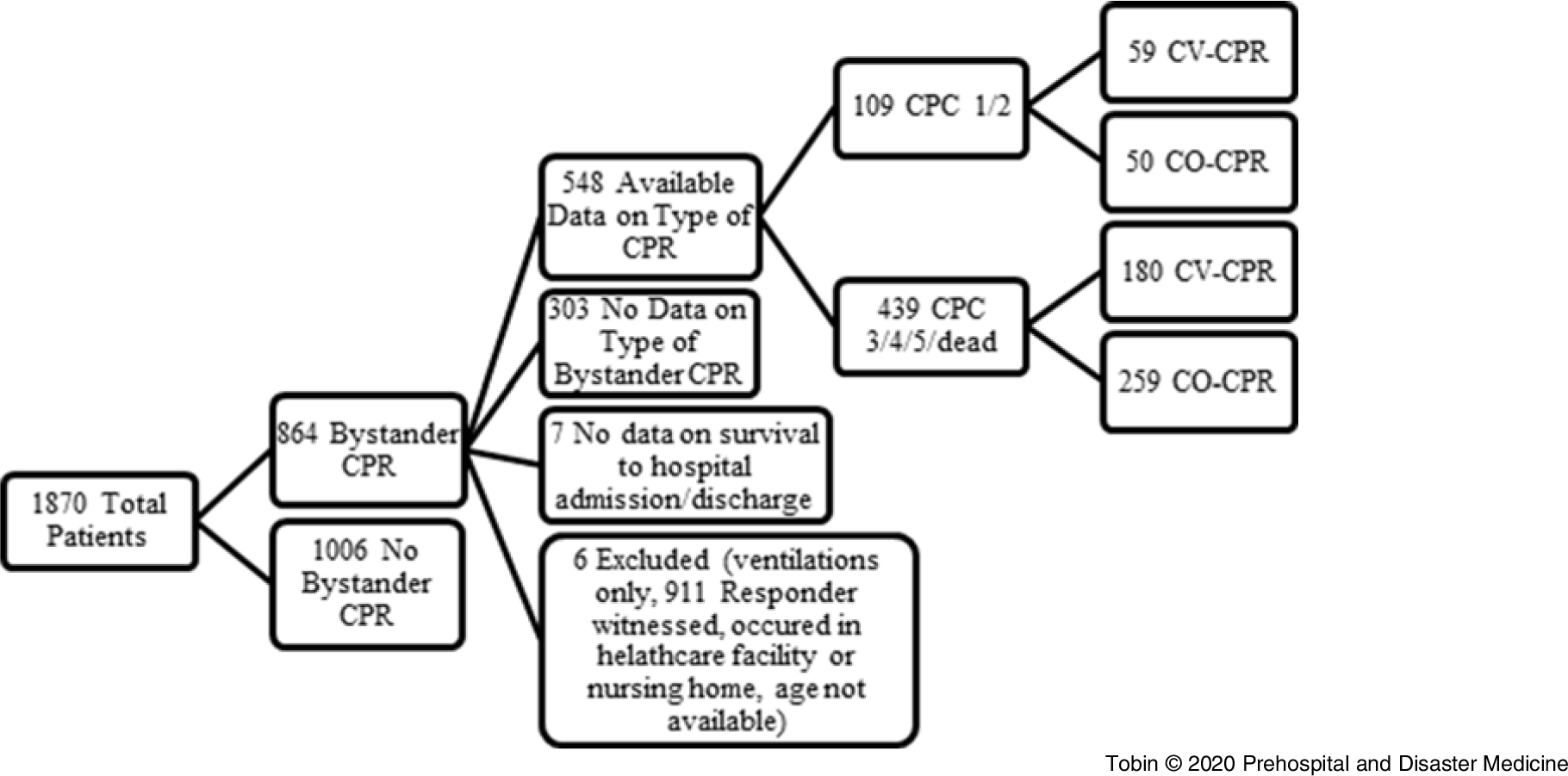
In total, 1,870 cardiac arrest cases following drowning were identified in the CARES database from January 1, 2013 through December 31, 2017. Of those, 864 received bystander CPR (46.2%). From the 864 subjects who received bystander CPR, 303 had no data available on the type of CPR performed, seven had no data available on survival to hospital admission or discharge, five were excluded due to receiving ventilations only resuscitation or having professional CPR (eg, 911 responder witnessed arrest, arrest occurred at health care facility, or arrest occurred at nursing home), and one was excluded due to age not being available. Data were available on type of CPR provided in 548 cases (63.4%; Figure 1).
Study Population.

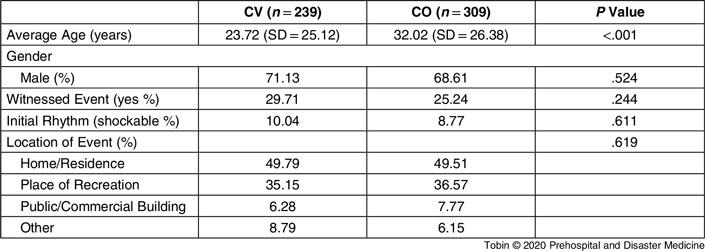
Comparison of those who received CO-CPR and those who received CV-CPR demonstrated a statistically significant difference in age (Table 1). Average age in the CO-CPR group was 32.02 years (SD = 26.38 years) compared to 23.72 years (SD = 25.12 years) in the CV-CPR group (P < .001). Other variables were evaluated and found not to be significantly different, including: percentage male gender (68.6% versus 71.1%; P = .524); percentage of witnessed arrest (25.2% versus 29.7%; P = .244); percentage of shockable rhythm (8.8% versus 10.0%; P = .611); and location of event (P = 0.619) as home/residence (49.5% versus 49.8%), place of recreation (36.6% versus 35.2%), public/commercial (7.8% versus 6.3%), or other (6.2% versus 8.8%).
Characteristics of Compressions Only and Compressions/Ventilations Groups

Abbreviations: CO, compressions only CPR; CPR, cardiopulmonary resuscitation; CV, compressions and ventilations CPR.
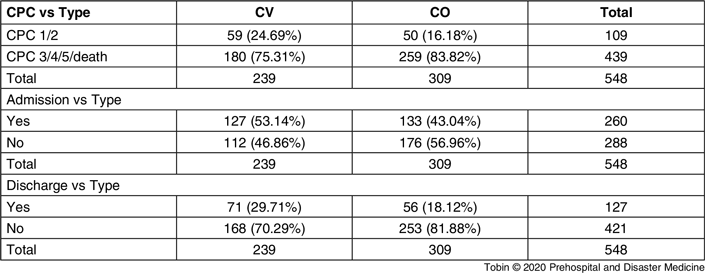
Of the 548 patients on whom information was available on type of CPR performed, 19.9% (n = 109) of patients experienced neurologically favorable survival (CPC 1 or CPC 2) and 80.1% (n = 439) patients had neurologically unfavorable outcomes (CPC 3, CPC 4, CPC 5, or death; Table 2). Of those with CV-CPR, 24.7% (n = 59) experinced favorable survival and 75.3% (n = 180) had unfavorable outcomes. Of those with CO-CPR, 16.2% (n = 50) had favorable survival outcomes and 83.8% (n = 259) had unfavorable outcomes.
CPC Score, Survival to Hospital Admission, and Survival to Hospital Discharge Associated with Type of Bystander CPR

Abbreviations: CO, compressions only CPR; CPC, Cerebral Performance Category; CPR, cardiopulmonary resuscitation; CV, compressions and ventilations CPR.
Survival to hospital admission was noted in 47.5% of patients (n = 260), of whom 48.9% (n = 127) received CV-CPR and 51.2% (n = 133) received CO-CPR (Table 2). Of those who did not survive to hospital admission (n = 288; 52.55%), 38.9% (n = 112) were identified as having received CV-CPR and 61.1% (n = 176) received CO-CPR.
Survival to hospital discharge was noted in 23.2% of cases (n = 127), of whom 55.9% (n = 71) received CV-CPR and 44.1% (n = 56) received CO-CPR (Table 2). Of those who did not survive to hospital discharge (n = 421; 76.8%), 39.9% (n = 168) were identified as having received CV-CPR and 60.1% (n = 253) received CO-CPR.
Overall, CV-CPR was found to be statistically significantly associated with neurologically favorable survival (unadjusted odds ratio = 1.70; 95% CI, 1.11–2.60; P = .013), survival to hospital admission (uOR = 1.50; 95% CI, 1.07–2.11; P = .019), and survival to hospital discharge (uOR = 1.91; 95% CI, 1.28–2.86; P = .001). However, given that age was statistically significantly different between the CV-CPR and CO-CPR groups, where people receiving CV-CPR were significantly younger than those with CO-CPR, multiple logistic regression analysis was undertaken with age identified as a potential confounder.
After adjusting for age, CV-CPR was noted to be statistically significantly associated with overall survival to hospital discharge (adjusted OR = 1.54; 95% CI, 1.01–2.36; P = .046; Table 3). A trend toward neurologically favorable survival was associated with CV-CPR across all ages (aOR = 1.35; 95% CI, 0.86–2.10; P = .19) and CV-CPR was associated with a trend toward overall survival to hospital admission (aOR = 1.29; 95% CI, 0.91–1.84; P = .157).
Association of CV-CPR with Favorable Neurological Outcome, Survival to Hospital Admission, and Survival to Hospital Discharge

Note: Odds Ratio adjusted for age.
Abbreviations: CO, compressions only CPR; CPC, Cerebral Performance Category; CPR, cardiopulmonary resuscitation; CV, compressions and ventilations CPR; D/C, Discharge.
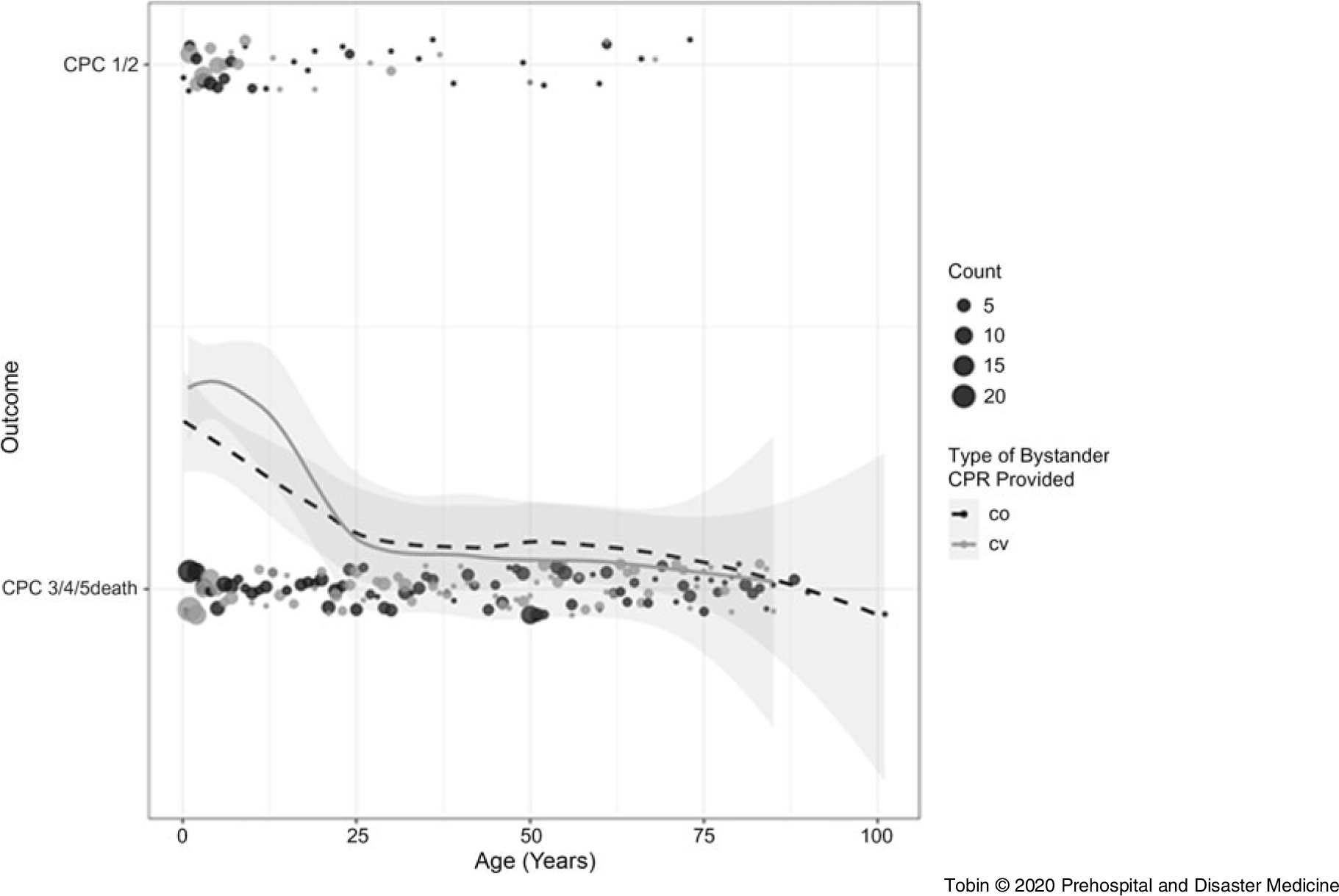
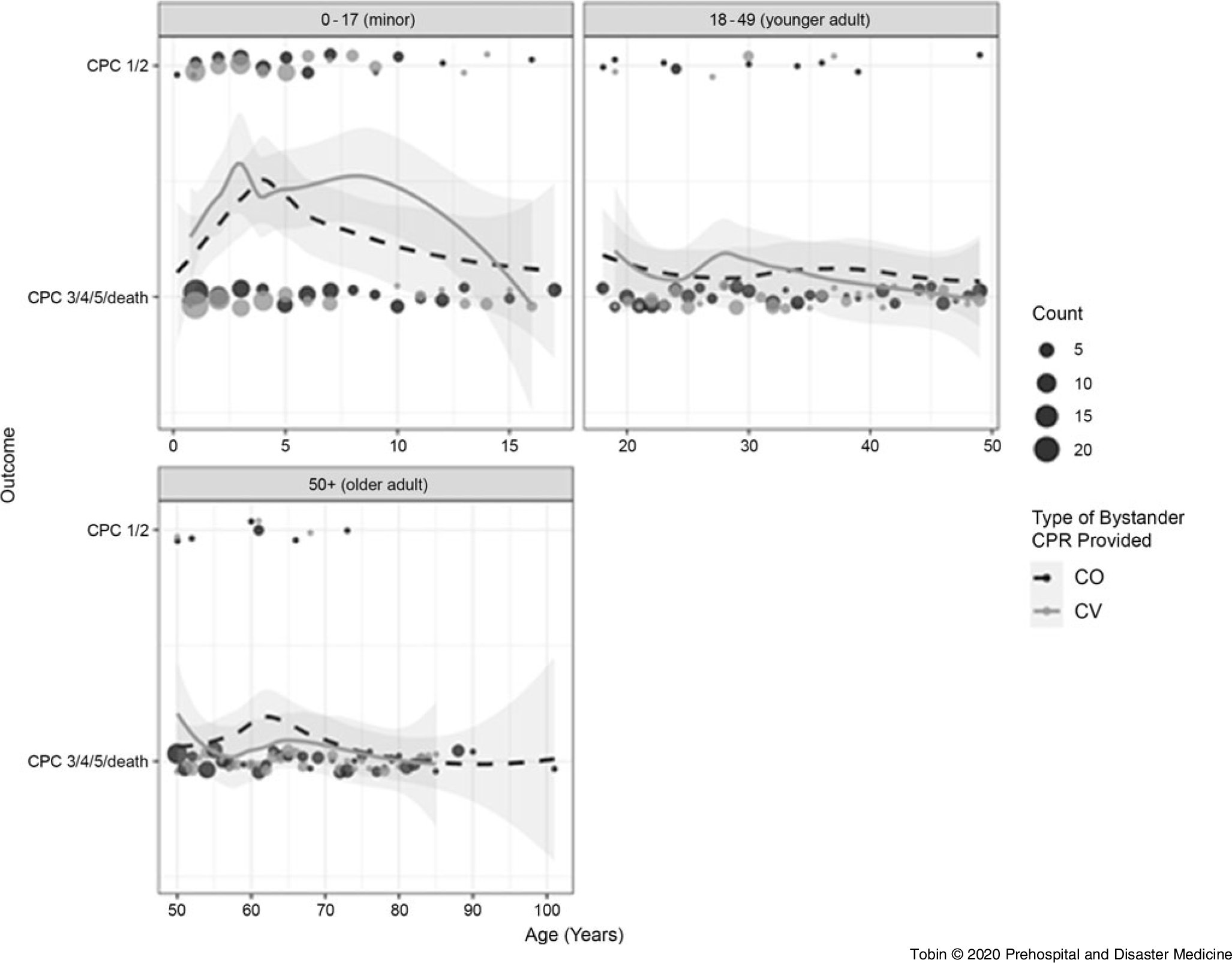
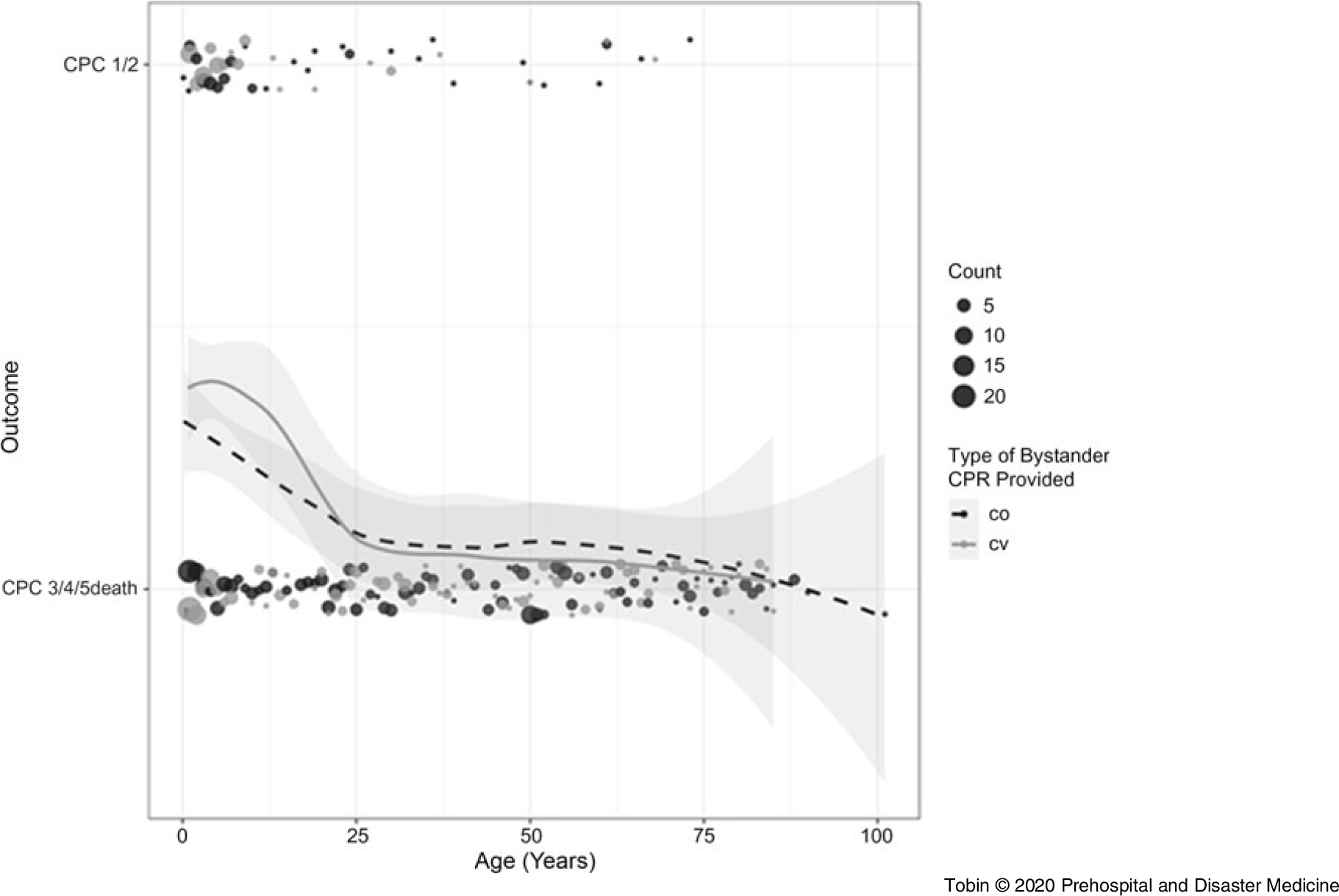
When investigating outcomes by age, neurologically favorable survival (ie, CPC 1 or CPC 2) was observed to be greatest in younger patients (Figure 2). It was noted that the greatest effect was observed in younger patients between the ages of five and 15 years, while older age groups (eg, 18–49 years, 50+ years) did not appear to experience as notable a difference in outcome (Figure 3). Further analysis was therefore undertaken for the younger group, and CPR type was found to be statistically significantly associated with neurologically favorable survival in pediatric patients aged five to 15 years (aOR = 2.68; 95% CI, 1.10–6.77; P = .030).
Probability of Neurologically Favorable Survival by Overall Age.
Probability of Neurologically Favorable Survival by Age Group.

In cases of cardiac arrest following drowning, bystander CV-CPR was statistically significantly associated with neurologically favorable survival in patients aged five to 15 years and survival to hospital discharge; and was also associated with a trend toward neurologically favorable survival in all ages and survival to hospital admission.
Discussion
This investigation found that patients who had suffered cardiac arrest following drowning and who received bystander CV-CPR were 2.7-times more likely to experience a neurologically favorable survival if they were aged five to 15 years, and were 1.5-times more likely to survive to hospital discharge. There was also a trend toward neurologically favorable survival in all age groups and overall survival to hospital admission with CV-CPR. Age, however, was identified as a potential confounder to neurologically favorable survival, raising the question: did the patients who received CV-CPR do better because they were younger? A more detailed analysis was conducted after evaluating the data to identify which age group may potentially benefit from CV-CPR and which would experience no difference in outcome regardless of the type of bystander CPR performed.
It is hoped that this information can offer insight on the optimal therapy for cardiac arrest following drowning by providing evidence-informed data on approaches to improve survival in drowning on specific populations (eg, children). This investigation represents the largest analysis to date of outcome related to type of bystander CPR performed following drowning. The survival to hospital discharge rate here was 23.2%, which is somewhat higher than survival of OHCA of other etiologies. This may be due to younger patients being more likely to suffer drowning and therefore reflect an underlying baseline of better overall health prior to the emergency. An alternative explanation may be that some drowning patients are in respiratory arrest prior to cardiac arrest (similar to higher survival rates seen in young overdose patients). Additionally, these patients received bystander CPR, which can also affect rates of survival.
Cardiac Arrest - Not a Single Entity
Cardiac arrest has been largely treated as a single entity with a standardized approach to treatment over the past several decades. While standardization of emergency procedures has advantages, it is also important to recognize the underlying pathophysiology that leads to any medical emergency. Asphyxial cardiac arrest differs from cardiac arrest due to trauma, atherosclerosis, life-threatening infection, and other types of cardiac arrest.
As noted above, CO-CPR arose out of a desire to improve bystander participation from the first moments of cardiac arrest, as well as to minimize interruptions in chest compressions and to maximize “hands-on-chest” time. And CO-CPR has been supported by investigations which found similar outcomes for OHCA treated with CO-CPR and conventional CPR. Reference Sayre, Berg and Cave4 The authors acknowledged, however, that there “may be situations in which ventilation alone could be life-saving but is not provided,” cautioning that conventional CPR may be of benefit in cases of “…pediatric victims and victims of drowning, trauma, [and] airway obstruction.” They note that implementation of CO-CPR “could adversely affect…victims of asphyxial arrest.” Drowning is one type of asphyxial cardiac arrest, which is to say cardiac arrest primarily due to respiratory rather than cardiac factors.
Drowning and Asphyxial Arrest
Resuscitation of cardiac arrest following drowning has been well-described in the context of hypothermic arrest. Reference Edwards, Timmins, Randalls, Morgan and Simcock5 Rudolph described a case of resuscitation following prolonged submersion; however, also cautioned that treatment followed a “pragmatic” approach and was without well-supported guidelines. Reference Rudolph and Barnung6 Keiboom and colleagues evaluated neurological outcome in 160 children who had drowned. Reference Kieboom, Verkade and Burgerhof7 They found that good neurological outcome was more common when return of spontaneous circulation (ROSC) occurred within 30 minutes of resuscitative effort, especially during winter. Their work represents one of the few contributions to evaluate neurological outcome following cardiac arrest in drowning.
The observation that drowning is a sub-type of asphyxial arrest may offer insight into optimal resuscitative strategies in the drowning patient. Animal models have found that compressions and ventilations offer improved outcome in cardiac arrest due to asphyxia. Reference Berg, Hilwig, Kern and Ewy8 Piglets randomized to receive various resuscitation strategies in a pediatric cardiac arrest model were more likely to experience ROSC when receiving conventional CPR.
Children tend to suffer cardiac arrest most often from respiratory events, which may offer further insight into asphyxial arrest overall. One prospective population-based study looked at resuscitation of children in cardiac arrest with CO-CPR versus conventional CPR. Reference Kitamura, Iwami and Kawamura9 Over 5,000 children who had suffered either arrest of cardiac origin or arrest of non-cardiac origin were evaluated. In arrest of non-cardiac origin, conventional CPR resulted in favorable neurological outcome more than CO-CPR (OR = 5.54; 95% CI, 2.52–16.99). In arrest of cardiac etiology, however, favorable neurological survival did not differ between conventional and CO-CPR (OR = 1.20; 95% CI, 0.55–2.66).
An analysis of bystander CPR in pediatric OHCA evaluated patients on whom data were available on type of bystander CPR performed, much like the present investigation. Reference Naim, Burke and McNally10 The investigators found that only patients who received conventional CPR had improved neurologically favorable survival compared to no bystander CPR (aOR = 2.06; 95% CI, 1.51–2.79). Other data have supported the concept that conventional CPR may offer a greater chance for neurologically favorable survival than CO-CPR. Reference Ogawa, Akahane, Koike, Tanabe, Mizoguchi and Imamura11 Ogawa and colleagues found that patients who had received conventional CPR had improved one-month survival (aOR = 1.17; 95% CI, 1.06–1.29) and improved neurologically favorable one-month survival (aOR = 1.17; 95% CI, 1.01–1.35) compared to CO-CPR. They noted that the advantage of conventional CPR was greatest in younger patients with cardiac arrest of non-cardiac etiology.
Limitations
Simpson’s Paradox represents a phenomenon in statistics wherein a trend is apparent in a group, however, when the group is divided into sub-groups, the trend is no longer apparent. In this investigation, CV-CPR is associated with a trend toward neurologically favorable survival in the group overall; however, statistically significant neurologically favorable is associated with CV-CPR only in the five to 15-year-old age group. While Simpson’s Paradox may have played a role in this outcome, it is also possible that the effect is only seen in children (as opposed to infants or adults). This apparent benefit of CV-CPR in pediatric patients is consistent with other investigations which have compared CPR sub-type and found improved outcome for children with CV-CPR. Reference Kitamura, Iwami and Kawamura9,Reference Naim, Burke and McNally10
Larger data sets would help to mitigate the effect Simpson’s Paradox and add power to any analysis of benefit, or lack of benefit, from CV-CPR. Fortunately, cardiac arrest in children is rare; cardiac arrest in children from drowning in whom data are available on the type of bystander CPR was performed is still more rare. This investigation represents the largest analysis to date of the type of bystander CPR performed following drowning, and offers a physiologically plausible explanation for the improvement in outcome. More specifically, treatment with CV-CPR offers improved neurologically favorable survival in cases of cardiac arrest from a primarily respiratory etiology (eg, drowning) in a patient population that tends to suffer cardiac arrest also from a primarily respiratory etiology (eg, children). From 864 subjects identified in this investigation who received bystander CPR following drowning, 303 had no data available on the type of CPR performed. Additionally, seven had no data available on survival to hospital admission or discharge, and one had no data available on age. Missing data are an important limitation of this type of study, introducing the risk of potential non-participant (or missing case) error. Further investigations will benefit from continuously improving data capture in this important population, and will call attention to the need for continued support of databases like CARES.
Improvements in the Data
Drowning continues to be a major public health challenge, even as understanding of the drowning process continues to evolve. Work by Claesson and colleagues evaluated OHCA following drowning in Sweden over a 20-year period. They noted that survival has improved overall and was associated with the presence of a shockable rhythm and early arrival of EMS. Reference Claesson, Lindqvist and Herlitz12 Conversely, others have found that neurologically favorable survival following cardiac arrest in drowning was improved with bystander CPR, but that shockable rhythms were uncommon and not associated with improved neurologically favorable survival. Reference Tobin, Ramos, Pu, Wernicki, Quan and Rossano13
While there is little evidence to guide specific resuscitative techniques of cardiac arrest secondary to drowning, an evidence-informed approach to research on this topic may offer improvement in outcomes. Hopefully, this investigation can offer guidance for the optimal resuscitative approach to the drowning patient.
Conclusions
This investigation represents the largest analysis to date of outcome related to type of bystander CPR performed following drowning. In cases of cardiac arrest following drowning, bystander CV-CPR was statistically significantly associated with neurologically favorable survival in patients between five and 15 years (aOR = 2.68; 95% CI, 1.10–6.77; P = .03) and overall survival to hospital discharge (aOR = 1.54; 95% CI, 1.01–2.36; P = .046). There was a trend toward neurologically favorable survival with CV-CPR in all age groups (aOR = 1.35; 95% CI, 0.86–2.10; P = .19), as well as in overall survival to hospital admission (aOR = 1.29; 95% CI, 0.91–1.84; P = .157). This data can help to guide future resuscitative strategies for the drowning patient, and perhaps patients who suffer asphyxial arrest of any etiology.
Conflicts of interest
none