Introduction
Most people living with dementia experience changes in self-perception and behavior, which are often reinforced by how others respond to them (Kitwood, Reference Kitwood1993; Reference Kitwood1997). Behavioral changes present different challenges for people living with dementia (Larsson et al., Reference Larsson, Holmbom-Larsen, Torisson, Strandberg and Londos2019; van Wijngaarden, et al., Reference van Wijngaarden, Alma and The2019), families and/or care partners (Braun et al., Reference Braun2019), and care workers (Burns et al., Reference Burns, Jayasinha, Tsang and Brodaty2012). Social and emotional challenges may manifest in the form of diminished social integration, stigma, and strained interpersonal relationships (Birt et al., Reference Birt2020; Górska et al., Reference Górska, Forsyth and Maciver2018). Practical challenges may include need for informal and formal support services and treatment resulting in significant financial outlay for care provision (Beeri et al., Reference Beeri, Werner, Davidson and Noy2002; Burley et al., Reference Burley, Livingston, Knapp, Wimo, Norman and Brodaty2020).
Other peoples’ responses to behavioral changes also impact enablement and autonomy in the daily life of the person living with dementia, such as in contexts that cause confusion or distress for the person (Low et al., Reference Low, Swaffer, McGrath and Brodaty2018). Accessibility in public spaces represents one example of this in the community context where problematic situations may relate to crowding, high tempo and noise, change of landmarks, and use of everyday technologies (Brorsson et al., Reference Brorsson, Öhman, Lundberg and Nygård2011). Infrastructure and policy decisions made by local councils affect whether community members who are living with dementia are able to access public spaces and services that meet their needs (Brorsson et al., Reference Brorsson, Öhman, Lundberg and Nygård2011).
The responses of healthcare staff and national policy-makers can also have profound effects for people living with dementia and their family/care partners. Diagnostic care and interventions for people experiencing dementia symptoms provide salient examples from diverse contexts. Research evidence (Ballard et al., Reference Ballard2017; Brodaty et al., Reference Brodaty2018), clinical guidelines (Laver et al., Reference Laver2016; NHMRC Guideline Adaptation Committee, 2016), and the recent Australian Royal Commission into Aged Care Quality and Safety (Commonwealth of Australia, 2021) support the use of thorough clinical assessment and psychosocial interventions including person-centred care for people living with dementia. Although there is considerable evidence for the use of nonpharmacological approaches in residential, hospital, and community settings for people living with dementia (Reference Chenoweth, Williams, Fry, Endean and Liu2021b; Ballard et al., Reference Ballard2017, Burns et al., Reference Burns, Jayasinha, Tsang and Brodaty2012; Chenoweth et al., Reference Chenoweth2014; Livingston et al., Reference Livingston2017; Reference Livingston2020; Burley et al., Reference Burley, Livingston, Knapp, Wimo, Norman and Brodaty2020; Dyer et al., Reference Dyer, Harrison, Laver, Whitehead and Crotty2018), acceptance and implementation of these approaches and changing practice is more challenging (Chenoweth et al., Reference Chenoweth, Cook and Williams2021a; Livingston et al., Reference Livingston2014). Despite their detrimental impact, psychotropic medicines, e.g. benzodiazepines and anti-psychotics, are still frequently prescribed in response to behavioral changes, especially in residential care settings (Brimelow et al., Reference Brimelow, Wollin, Byrne and Dissanayaka2019; Robins et al., Reference Robins2021).
Effects of terminology on people living with dementia
Decisions regarding care for people living with dementia are generally made by families/carers and/or healthcare professionals and based on clinical frames of reference, such as “Behavioral and Psychological Symptoms of Dementia” (BPSD). The term BPSD is commonly used in clinical settings as a generic term to denote specific behaviors including “aggression,” “agitation,” “disinhibited behaviors,” “nocturnal disruption,” “vocally disruptive behaviors,” and “wandering”; and psychological/psychiatric symptoms such as anxiety, apathy, depression, delusions, and hallucinations. These terms represent diverse presentations of non-cognitive changes experienced by people living with dementia (Finkel et al., Reference Finkel, Silva, Cohen, Miller and Sartorius1998). Three main models of BPSD cited in the Australian clinical context (RACGP, 2019) are the “Unmet need,” “Lowered stress-threshold,” and “Biological” models. These causal models describe behavioral symptoms either as manifestations of unmet needs (Algase et al., Reference Algase, Beck and Kolanowski1996), reactions to stressors (Hall, Reference Hall1987), or resulting from pathophysiological processes (IPA, 2010).
The nomenclature of BPSD and the framework they provide permeate current dementia-related clinical practice and research. Their purpose is to categorize and simplify the description of a complex range of changes in behaviors and psychological symptoms that are diverse and varied in their presentations. The inherent constraints of using BPSD terminology are widely acknowledged (Cohen-Mansfield et al., Reference Cohen-Mansfield, Dakheel-Ali, Marx, Thein and Regier2015; Cunningham et al., Reference Cunningham, Macfarlane and Brodaty2019), since language pertaining to dementia influences thoughts, beliefs, emotions, and actions toward people living with dementia (Wolverson et al., Reference Wolverson, Birtles, Moniz-Cook, James, Brooker and Duffy2019; Gilmore-Bykovski et al., Reference Gilmore-Bykovskyi, Mullen, Block, Jacobs and Werner2020).
Terminology used to describe these behaviors has evolved (Finkel et al., Reference Finkel, Silva, Cohen, Miller and Sartorius1998; Kitwood, Reference Kitwood1993), from improved understanding of disease processes, acknowledgement of appropriate language to describe symptomology and from recommendations of dementia advocates and consumers (Cunningham et al., Reference Cunningham, Macfarlane and Brodaty2019). Adopting alternative terms has been attempted, although with limited success, as common usage leads to them also becoming stigmatizing (Cunningham et al., Reference Cunningham, Macfarlane and Brodaty2019). Alternative terms to BPSD proposed in the Australian context include “changed behaviors” (p.11, Dementia Australia, 2021), “behaviors and psychological symptoms associated with dementia” which retains the same acronym, BPSD, but does not label behaviors as symptoms) (Cunningham et al., Reference Cunningham, Macfarlane and Brodaty2019) and “responsive behaviors” (Dementia Training Australia, 2022) as well as “expressions of unmet needs” (p. 11, Dementia Australia, 2021). Additional terms have been proposed in other national contexts, including “behavioral expressions” and “symptoms of distress” (DEEP UK 2014; Alzheimer’s Society Canada, 2017; Alzheimer’s Society UK 2018). Currently, there is no universally agreed alternative term to BPSD.
What do people with lived experience of dementia and behavioral changes report about the responses of others and terminology they have encountered?
Few studies have investigated the views of people living with dementia and families/care partners on their lived experiences of behavioral changes, asked what they find helpful or unhelpful regarding behavioral changes, and what they consider to be appropriate terminology. The authors’ previous qualitative research suggests that reconceptualizing BPSD terminology, to reflect the lived experiences and perceptions of the person living with dementia and behavioral changes, would likely encourage more person-centred approaches from families/informal carers and healthcare staff (Burley et al., Reference Burley, Casey, Chenoweth and Brodaty2021).
In the current study, we used an inductive approach to investigate the views of people living with dementia and family/care partners regarding what they found to be helpful/unhelpful responses from others to their behavior changes and strategies they used to help themselves. We also sought the views of people living with dementia on specific terminology used by healthcare professionals and others, e.g. “BPSD.” Learning from people with lived experience will help healthcare professionals and others better respond to people who experience behavioral changes associated with dementia and inform government initiatives aimed at educating societies and reducing stigma.
Study aims
This study aimed to investigate the views of people living with dementia and families/care partners on (i) what they find helpful or unhelpful regarding behavioral changes, i.e. which coping strategies they used for themselves and/or which responses from others, and (ii) what they consider to be appropriate terminology to describe behavioral changes.
Materials and Methods
Study design
This qualitative study comprised semi-structured interviews with people living with dementia and their family members and/or care partners. Ethical approval was obtained from the South Eastern Sydney Local Health District (SESLHD) Research Strategy Office (RSO) and the University of New South Wales (UNSW) Sydney Human Research Ethics Committee (HREC): 2019/ETH09814. Qualitative research study methods adhered to the Standard for Reporting Qualitative Research (O’Brien et al., Reference O’Brien, Harris, Beckman, Reed and Cook2014). The study methods, including participant recruitment and consent procedures, are summarized here and described in more detail previously (Burley et al., Reference Burley, Casey, Chenoweth and Brodaty2021). The study team included two postdoctoral psychologists (CB and AC), Professor of Nursing and registered nurse (LC), and Scientia Professor of Ageing and Mental Health and psychogeriatrician (HB).
Participant recruitment and setting
Participants were recruited using the online platform StepUp for Dementia Research (https://www.stepupfordementiaresearch.org.au/). People who register with the StepUp for Dementia Research platform as study volunteers submit a participant profile and are provided with descriptions of available studies that may be a good match for them. Volunteers express their interest in participating studies (Jeon et al., Reference Jeon2021). A Participant Information Sheet and Consent Form was emailed to potential participants who expressed an interest. In most cases, we recruited dyads consisting of the person living with dementia and a close family member/care partner. Inclusion criteria for people living with dementia were having a formal diagnosis of dementia, capable of giving informed consent and understanding of the study. Exclusion criteria were inability to demonstrate understanding of what study participation involved, and/or Mini-Mental State Examination (MMSE; Folstein, et al., Reference Folstein, Folstein and McHugh1975) score of less than 18 out of 30 (assessed by lead researcher and author CB). Family/care partners were required to be either cohabiting with a person living with dementia or seeing them ≥4 hours per week. Where participants were not eligible, this was communicated to them sensitively. People were signposted to additional support services where appropriate. Eligible participants were invited to complete an interview that lasted 45–90 minutes according to their needs and wishes. Author CB met participants via their preferred method, either at UNSW Sydney prior to the COVID-19 pandemic, online via Zoom/Skype, or by telephone. All participants were invited to receive a summary of results at the end of the study.
Data collection
Author CB conducted all interviews. People living with dementia and families/care partners were asked to describe any behavioral changes they experienced and were given examples following an open-ended question (results reported in Burley et al., Reference Burley, Casey, Chenoweth and Brodaty2021). They were then asked, “What have you found helpful/unhelpful when you experienced (behavior/symptom using participant’s wording)? What would you like to happen? What do you think should happen?’ They were asked how examples of terminology used to describe behavioral changes associated with dementia made them feel and were invited to share other concerns. The interviewer used reflective language to clarify, confirm, or explore participant responses during interviews.
Data entry and storage
Audio-recordings and electronic documents were stored on a password-protected secure university server, only accessible to the research team. Author CB transcribed all recordings, removed identifying information, and allocated unique participant identification numbers.
Data analysis
A data-driven inductive approach (Burley et al., Reference Burley, Casey, Chenoweth and Brodaty2021; Miles and Huberman, Reference Miles and Huberman1994; Morgan, Reference Morgan1993; Whittemore et al., Reference Whittemore, Chase and Mandle2001) was used for the open-ended question responses (Boyatzis, Reference Boyatzis1998). Authors CB and AC read the interview transcripts independently, developed data codes, and tabulated them in Microsoft Word. Author LC reviewed the codes alongside the supporting quotes. An iterative process took place, with meetings to discuss, compare, and document the researchers’ independent and shared findings. Discrepancies in findings were discussed until consensus was achieved. Common themes arising from the agreed codes were identified and named by CB, AC, and LC (Gibbs, Reference Gibbs2018).
Safety and risk considerations
Participants were able to end participation in the study at any time, allowed as much time as they required to answer questions, and were monitored for signs of distress, fatigue, and/or confusion. If the participant showed any signs of distress, CB paused interview questions and offered a break or to end the interview. Participants were offered contact details and resources for relevant support services and invited to contact CB if they had any concerns regarding the study.
Results
The results reported in this article focus on participants’ views toward helpful and unhelpful responses of others to behavioral changes in the person living with dementia and terminology used regarding behavioral changes.
Participant characteristics
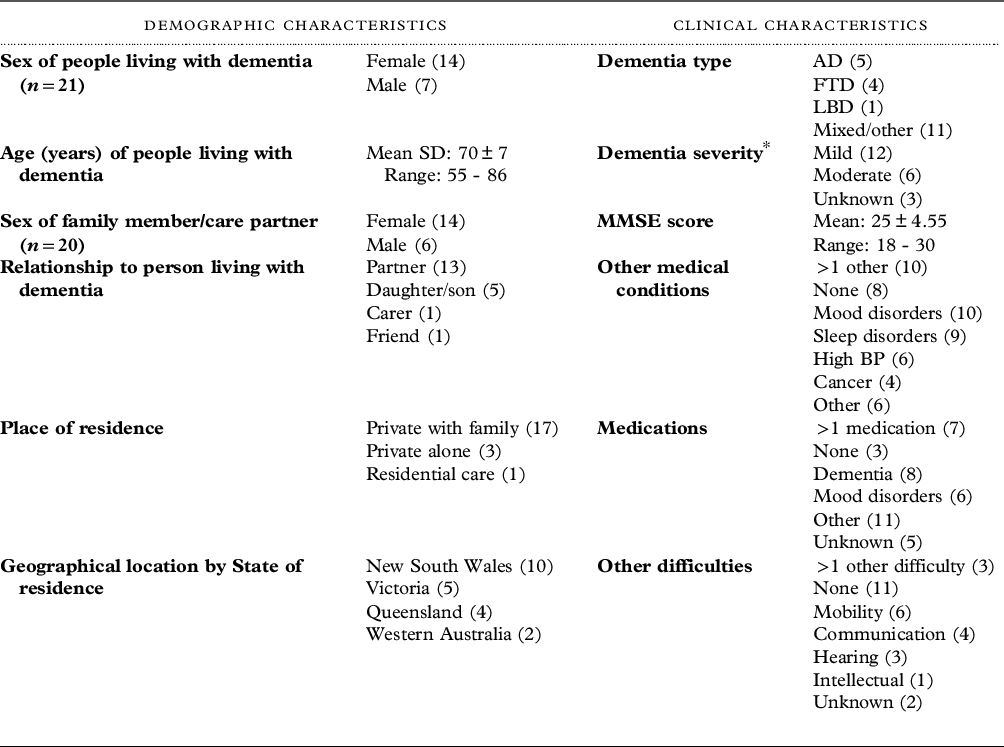
Forty-one participants were recruited and interviewed between December 2019 and February 2021. Another eight people expressed an interest in taking part though did not complete the study (four were unable to give informed consent, two declined, and two did not respond). Recruitment was temporarily paused due to physical distancing requirements during the COVID-19 pandemic from March to July 2020. Interviews recommenced online only. Twenty-one people living with dementia, mean aged 71 years, mean Mini-Mental State Examination score 25, and 20 family members/care partners were interviewed separately. Participant demographic and clinical characteristics, e.g. age, sex, geographical location, dementia subtype/severity, comorbid conditions, difficulties with mobility or communication, and medication are summarized in Table 1.
Participant demographic and clinical characteristics

Abbreviations: AD, Alzheimer’s disease; BP, blood pressure; FTD, frontotemporal dementia; LBD, Lewy body dementia; MMSE, Mini-Mental State Examination. “Other” medical conditions included cardiac problems, diabetes, or stroke. Other medications included treatment for cancer, stroke, gastrointestinal conditions, pain, high cholesterol, and high blood pressure.
* Dementia severity was taken from the StepUp for Dementia Research platform. MMSEs were administered by author CB.
Main findings
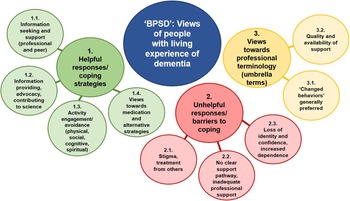
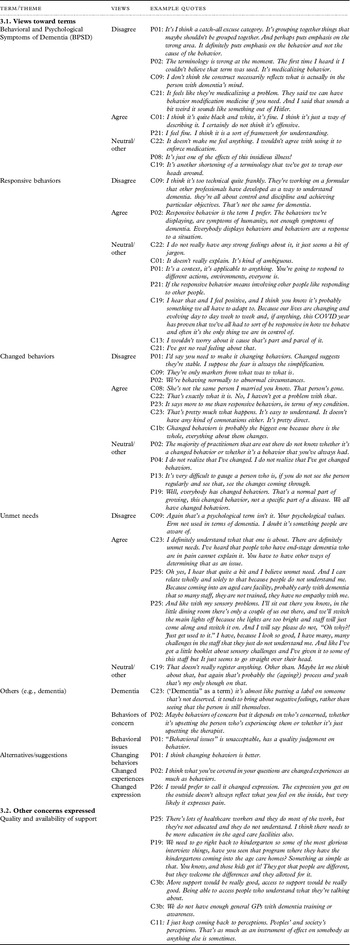
The findings below are structured around three thematic categories that align with the study aims. Quotations from people living with dementia are marked with a “P,” family/care partners with a “C,” and matching numbers show where quotations came from a dyad, e.g. P07 and C07 are the person and their spouse. An overview of three main thematic categories (Tables 2, 3 & 4) and their themes are shown in Figure 1.
Summary of thematic categories and associated themes that emerged relating to the aims of this article. For category 3, “terminology” included “behavioral and psychological symptoms of dementia (BPSD),” “responsive behaviors,” “changed behaviors,” and “unmet needs.’

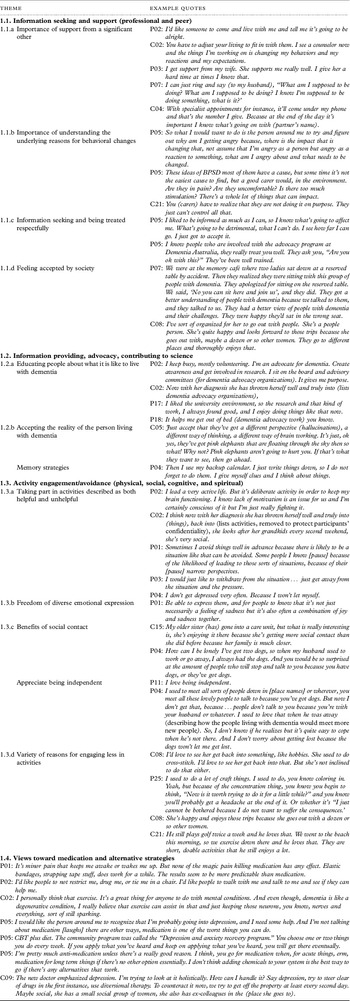
Thematic category 1. Helpful responses/coping strategies when experiencing behavioral changes

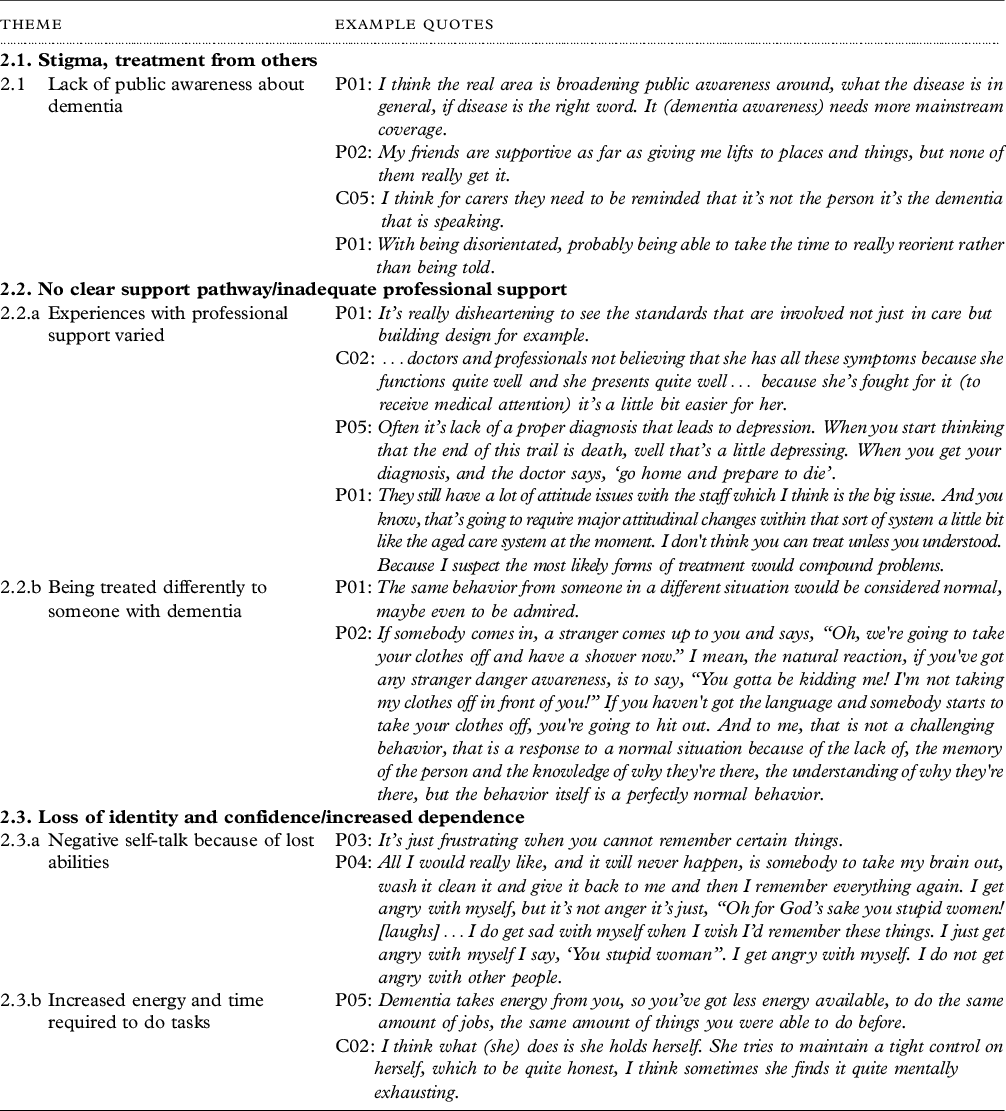
Thematic category 2. Unhelpful responses/barriers to coping with behavioral changes

Thematic category 3. Views toward terminology used to describe behavioral changes (umbrella terms including “BPSD,” “responsive behaviors,” “changed behaviors,” and “unmet needs’)

Thematic Category 1. Helpful responses/coping strategies when experiencing behavioral changes
People living with dementia and families/care partners gave examples of helpful responses initiated by themselves, i.e. coping strategies, and by those around them including other family members, friends, the public and healthcare professionals. Themes of category 1 were (1.1) information seeking and support, both professional and peer, (1.2) information providing, advocacy, contributing to science, e.g. by volunteering to take part in research studies or sharing their experiences with the scientific community, (1.3) activity engagement/avoidance, e.g. physical, social, cognitive and spiritual, and (1.4) views toward medication and alternative strategies (Table 2).
1.1. Information seeking and support, professional and peer
People living with dementia described the importance of support from a significant other, e.g. spouse, or the desire for the support if they felt that person was missing from their life. Examples of support included receiving reassurance, practical support in day-to-day activities and having someone to remind them about things. Many participants described the importance of family help in coping with cognitive changes occurring with dementia (see Table 2, Theme 1.1.a).
People living with dementia also described family/care partners’ reaction in coping with behavioral changes, such as becoming angry. People living with dementia explained they would like others to try and understand the underlying reasons behind the behavior and to recognize that the behavior may be caused by difficulty in expressing an unmet need, e.g. being in pain. Carers said it was important to understand that people living with dementia were not always behaving in particular ways on purpose (see Table 2, Theme 1.1.b).
In terms of professional support, some people living with dementia explained they wanted to seek information so they could prepare for what might happen. Some also expressed they wanted to be treated respectfully and felt that adequate training of healthcare professionals was required to achieve this (see Table 2, Theme 1.1.c).
People living with dementia expressed how important it was to feel accepted by society generally in addition to having a close family member and professional support to assist throughout the process of being diagnosed with dementia and managing the changes in their cognition and behavior they were to experience. They described positive experiences of integration where people without dementia could learn from people with dementia and become more compassionate (see Table 2, Theme 1.1.d).
1.2. Information providing, advocacy, contributing to science
Participants described educating people about what it is like to live with dementia, or to care for someone living with dementia, as an activity that provided them a great level of “purpose” and satisfaction. This was described as a coping mechanism and some described doing this in active ways such as through advocacy, where they could provide consultation to researchers, healthcare staff, and policy-makers. Others explained that participating in scientific studies to progress research and knowledge of dementia gave them relief, while acknowledging that research outcomes may benefit future generations and not themselves (see Table 2, Theme 1.2.a).
Other coping mechanisms that people living with dementia described were to challenge the perceptions of others, so that people accepted their reality and lived experience, rather than challenge them. Many family members explained that a barrier to coping was having others question the reality that the person was experiencing, as this would often cause them distress. Memory retention strategies were also described by some people living with dementia to help them with day-to-day activities (see Table 2, Theme 1.2.b).
1.3. Activity engagement/avoidance, e.g. physical, social, cognitive, and spiritual
People living with dementia described taking part in activities as being helpful. Some described many unhelpful experiences or examples of avoiding activities they previously enjoyed in order to avoid potential stress, “pressure,” or the “narrow perspectives” of others. They also described challenging unhelpful feelings and thoughts, for example loss of motivation and low mood (see Table 2, Theme 1.3.a).
Although people living with dementia sometimes described challenging feelings (e.g. feeling frustrated by something or someone when they would not have done previously), they also described wanting to be able to express themselves freely. They hoped that people around them would try to understand their expressions, and that these may be more complicated than simple binary emotions, e.g. intertwined feelings of sadness and joy (see Table 2, Theme 1.3.b).
Some participants described spirituality and engaging with animals as reducing loneliness (see Table 2, Theme 1.3.c). Others expressed their wish to remain independent. Family members often expressed that people living with dementia were less engaged in activities and described a variety of reasons including a loss of interest, increased anxiety, and finding previously enjoyed activities too difficult. Some carers described helpful approaches such as group activities with other people living with dementia and engaging in shorter, more manageable activities (see Table 2, Theme 1.3.d).
1.4. Views toward medication and alternative strategies
Most of the people living with dementia described negative viewpoints toward medication for managing behavioral changes, including sleep disturbances, “wandering” and depression. Alternative suggestions to these medications included addressing underlying causes and unmet needs, by using non-pharmacological methods, e.g. compression bandaging to reduce pain, cognitive-behavioral therapy (CBT) for psychological factors, and dietary refinements for general health and wellbeing. Many expressed strong views against any form of restraint – chemical or physical (see Table 2, Theme 1.4).
Thematic category 2. Unhelpful responses/barriers to coping with behavioral changes
This category outlines unhelpful responses from other people and barriers to coping that were expressed by participants. Themes were (2.1) stigma, treatment from others, (2.2) no clear support pathway/inadequate professional support, and (2.3) loss of identity and confidence, increased independence (Table 3).
2.1. Stigma, treatment from others
Most participants felt there was a lack of public awareness and understanding from other people about what it is like to live with dementia as well as what dementia is. Although the good intention of peers, e.g. extended family or friends, was recognized, people living with dementia felt that “none of them really get it.” Some felt they just needed more time to process sensory information and wanted to be allowed to do this and remain independent, rather than having others try and do everything for them. Many people living with dementia suggested that increasing public awareness of dementia would be beneficial by promoting compassion, patience, and understanding (see Table 3, Theme 2.1).
2.2. No clear support pathway/inadequate professional support
It was common for participants to describe feeling “disappointed” with healthcare services, although some reported “excellent” professional support. Some felt that health professionals did not believe their experiences or take their concerns seriously. Others said that when they were given an official diagnosis, they were told that there was nothing more they could do, and no follow-up support was offered. The variety of experiences reported by people living with dementia and families/care partners indicated that a nationally consistent and clear pathway of support for people through diagnosis and beyond was lacking (see Table 3, Theme 2.2.a).
People living with dementia also described feeling they were discriminated against for reacting in ways that a person without a diagnosis might not. An example was an unknown health professional entering their personal space to provide personal care without explanation and permission and doing so in a way that made the person feel threatened (see Table 3, Theme 2.2.b).
2.3. Loss of identity and confidence/increased dependence
People living with dementia expressed frustration and/or sadness over loss in their abilities and loss of independence, e.g. not remembering things and no longer being able to drive. They also expressed losing confidence and their sense of identity/purpose. Often the negative self-talk they directed toward themselves further exacerbated feelings of low self-esteem. Some participants felt that other people such as family and peers shared similar views toward them (see Table 3, Theme 2.3.a).
Commonly, people living with dementia described having less physical energy than before, and they perceived this as a barrier to coping. This example mirrored previous quotes that explained how being allowed more time to process information would be helpful (see Table 3, Theme 2.3.b).
Thematic category 3. Views toward terminology used to describe behavioral changes (umbrella terms) and other concerns
People living with dementia and families/care partners responded to questions on knowledge of terminology used by healthcare professionals and others to describe behavioral changes (see Table 4), and how the terms made them feel. Participants were given examples of terms, e.g. “behavioral and psychological symptoms of dementia,” “responsive behaviors,” “changed behaviors,” “unmet needs” and asked, “Have you heard of this term before?,” followed by “How does this term make you feel?’
Approximately half of people living with dementia struggled to answer more abstract questions about alternative terminology for behavioral changes and instead described experiences they thought corresponded to the terms. Themes of thematic category 3 were (3.1) “changed behaviors” generally preferred over “BPSD,” “responsive behaviors,” and “unmet needs,” and (3.2) quality and availability of support.
3.1. “Changed behaviors” generally preferred
Most participants preferred the term “changed behaviors,” since this term did not carry negative connotations in contrast with “BPSD,” which was described to be “too medical,” “stigmatizing,” and “encouraged medication use.” Many participants considered that the terms were “ambiguous,” “could be applied to anyone,” “were not very useful,” or were “jargon” (Table 4). Approximately half of participants who did answer these questions felt neutral toward the terms, though some participants felt very strongly about specific terms. Those with strong views were linked with professional dementia services and/or were involved with Dementia Advocacy work, e.g. Dementia Alliance International. Those who worked with dementia organizations and Dementia Advocacy services also expressed finding this work incredibly rewarding (see Category 1).
3.2. Quality and availability of support
Some participants who felt neutral toward the terms considered that quality and availability of support was more important to them than the terminology used. Those who opposed use of certain terms felt these terms had a direct impact on the quality of care and support available, e.g. encouraging medication use, as quoted above. Regarding quality and availability of support, some individuals expressed the view that more research was required specifically in this area, whereas others felt more effort should go into researching preventative strategies.
Discussion
Summary of main findings
The thematic categories were (1) helpful responses and coping strategies, (2) unhelpful responses and barriers to coping, and (3) views toward terminology used by healthcare professionals. Most participants engaged in seeking information and professional support. Some found information provision and advocacy work rewarding. Most participants expressed they volunteered for this study because they wanted to contribute to scientific knowledge. However, participants who were concerned by how their friends now viewed them avoided peer support and were likely to avoid previously enjoyable physical, social, and cognitive activities. Experiences of professional support were mixed, from very positive to “disappointment,” reflecting known problems with existing dementia care pathways (Cations et al., Reference Cations2020).
Approximately half of the participants had not heard of the terms used to describe behavioral changes, required or requested explanation, and did not find their application particularly helpful. Others expressed very strong feelings against specific terms, predominantly “Behavioral and Psychological Symptoms of Dementia (BPSD)” and felt that the use of these terms encouraged chemical restraint and poor care practice. These participants considered that the term “BPSD” was “stigmatising” and that umbrella terms were inherently inadequate. This aligned with our previous published findings, suggesting a reconceptualization of “BPSD” is required (Burley et al., Reference Burley, Casey, Chenoweth and Brodaty2021). Some participants living with dementia found it difficult to understand some of the questions posed, which was likely a reflection of their cognitive decline. Thus, they found it difficult to consider how use of particular terminology made them feel.
Progressing awareness and understanding of the study themes
Support is growing for a new paradigm for understanding behavioral changes that people living with dementia experience (Burley et al., Reference Burley, Casey, Chenoweth and Brodaty2021; Górska et al., Reference Górska, Forsyth and Maciver2018; Hammar et al., Reference Hammar, Alam, Olsen, Swall and Boström2021; James et al., Reference James, Gray, Moniz-Cook, Lee, Reichelt and Richardson2022). Momentum is increasing for a focus on improving how others treat people living with dementia, for using person-centered approaches in care and support, and for reducing stigma and discrimination (Chenoweth et al., Reference Chenoweth, Cook and Williams2021a; Reference Chenoweth, Williams, Fry, Endean and Liu2021b; Bacsu et al., Reference Bacsu2022; Hung et al., Reference Hung2021). The sections below refer to how themes identified here relate to previous reports.
Activity engagement and support pathways
Our findings highlighted variations in the availability, consistency, and quality of support experienced by people living with dementia in their communities and in healthcare settings. Although exploration of causal factors was beyond the scope of this study, the divergent experiences of participants suggested possible variation was based on contextual factors such as living in rural/regional versus metropolitan settings, as well as the unique needs of each person living with dementia. Similarly, a systematic review of qualitative studies found reports of dissatisfaction with the way a dementia diagnosis was communicated, and insufficient information and support being offered (Low et al., Reference Low, Swaffer, McGrath and Brodaty2018). Low and colleagues’ (2018) systematic review underlined the importance of addressing communication, particularly during the diagnosis process and through ongoing post-diagnostic support to ensure that people continue to engage in their usual activities. Poor quality of services has been reported by caregivers as a major barrier to finding help and accessing services (Macleod et al., Reference Macleod, Tatangelo, McCabe and You2017). Barriers included mistrust and inflexibility of services. Clear communication and an “expert” point of contact were key facilitators of positive dementia support services (Macleod et al., Reference Macleod, Tatangelo, McCabe and You2017). Participants in our study who described positive experiences had at least one professional they felt supported by.
Stigma and discrimination
Participants in this study described experiences and views suggesting a lack of community awareness about the lived experiences of dementia, and/or a disconnection between awareness, and compassionate and empathetic responses toward people living with dementia. These findings complement those of a qualitative study of people with mild neurocognitive disorder in Israel and Germany (Werner et al., Reference Werner, Ulitsa, Shephet, Abojabel, Alpinar-Sencan and Schicktanz2021) whose overarching themes included fear of developing Alzheimer’s disease and fear of stigmatization. Themes in that study specific to people living with dementia and their families indicated that different types of fear match different reasons such as fear of the impact of a diagnosis on family members, fear of becoming a caregiver, and fear of losing self-determination because of dementia (Werner et al., Reference Werner, Ulitsa, Shephet, Abojabel, Alpinar-Sencan and Schicktanz2021). Fear of stigmatization arising from a dementia diagnosis led our study participants to use different coping strategies depending on the emotion/behavior they experienced. Some engaged in physical, social, cognitive, and spiritual activities (Theme 1.3) to prevent further changes in behavior and/or cognition. Others “engaged in preventative measures” as a coping strategy to deal with fear of developing dementia.
Terminology
Like other reports, our findings show that people living with dementia and families/care partners do not necessarily agree with the language commonly used by healthcare staff, researchers, and other professionals to describe behavioral changes (Adekoya and Guse, Reference Adekoya and Guse2019; Gilmore-Bykovski et al., Reference Gilmore-Bykovskyi, Mullen, Block, Jacobs and Werner2020; Burley et al., Reference Burley, Casey, Chenoweth and Brodaty2021). As terminology used by families/care partners and healthcare staff varied considerably, evaluating language use needs to be performed in partnership with people living with dementia (Gilmore-Bykovskyi et al., Reference Gilmore-Bykovskyi, Mullen, Block, Jacobs and Werner2020). A recent survey investigating the perspectives of people living with dementia toward the language of behavioral changes found that over a quarter of respondents preferred the term “unmet needs,” but that there was no universal agreement on terminology (Wolverson et al., Reference Wolverson, Dunn, Moniz-Cook, Gove and Diaz-Ponce2021). This study also emphasized concerns raised by people living with dementia around language use. It noted that concerns were shared with professionals regarding how language influences the perception and portrayal of dementia (Markwell, Reference Markwell2016), and that a process of discussion and reflection is needed for changes to occur in improving care and reducing stigma and discrimination.
Strengths
We included the perspectives of people who were living with a diagnosis of dementia, where previous studies have tended to focus on formal and informal carer perspectives. No research study has previously included the views of people living with dementia about their personal experiences, how they would like others to respond, what strategies they find helpful/unhelpful, and how they feel toward various terms used by healthcare professionals to describe the changes they experience. We avoided leading questions and instead used a data-driven inductive approach. Data were independently coded by authors CB and AC and reviewed by LC, and data codes and themes were discussed until consensus was reached.
Limitations
Variability among study participant dementia diagnoses and severity, comorbidities, medication use (see Table 1), and socioeconomic status may have affected what participants perceived to be helpful or unhelpful coping strategies for behavioral changes and/or responses from others. Selection bias may be present as participants volunteered to take part in the study, and findings may not be generalizable to all people living with dementia or to larger populations. Several participants were members of advocacy groups which may have skewed our results. The researchers had both professional and personal experiences with dementia which may have introduced bias, though their knowledge and engagement when talking to people living with dementia and families/care partners may also be considered a strength. Participants were not invited to comment on interview data post-transcription, because interviews were transcribed verbatim, and participant review was not considered necessary in addressing the aims of this research.
Implications and conclusion
The reports of subjective experience of behaviors and psychological/psychiatric symptoms of people living with dementia are similar to those described by others (Adekoya and Guse, Reference Adekoya and Guse2019; Gilmore-Bykovskyi et al., Reference Gilmore-Bykovskyi, Mullen, Block, Jacobs and Werner2020; Larsson et al., Reference Larsson, Holmbom-Larsen, Torisson, Strandberg and Londos2019; van Wijngaarden et al., Reference van Wijngaarden, Alma and The2019). Many people living with dementia wanted to be actively engaged in decision-making around future planning and their care, held strong views toward the use of psychotropic medicines in “behavior management,” and often provided suggestions for alternative nonpharmacological approaches. Healthcare professionals and researchers need to consider the views of people with lived experience of dementia to better understand their experiences, coping mechanisms and what they believe to be appropriate responses to their needs. This will help to ensure the most appropriate and effective support is implemented, both at the individual level in terms of improved treatment and care, and at the societal level by improving awareness and engagement. An integrated understanding of all the views involved will assist in better understanding of how to improve the quality of life for people living with dementia, through more supportive environments and systems.
Conflict of interest
HB has been a consultant to or advisory board member for Biogen, Nutricia Australia, Roche, Synapse2Neuron, Montefiore Homes, and Cranbrook Care.
Source of funding
This research was funded by the Dementia Centre for Research Collaboration (DCRC) and supported by the Australian Government, National Health and Medical Research Council. The study recruitment was assisted through StepUp for Dementia Research, which is funded by the Australian Government Department of Health and implemented by a dedicated team at the University of Sydney.
Description of author(s)’ roles
C. Burley designed the study, collected data, carried out and transcribed interviews, analyzed the data, and wrote the article. A. Casey assisted with data analysis and writing the article. L. Chenoweth gave expert guidance on analysis, assisted with data analysis and writing the article. H. Brodaty conceptualized and designed the study, supervised data collection and analysis, and assisted with writing the article. All authors reviewed drafts and final version of the manuscript.
Acknowledgements
We thank the people living with dementia and their care partners and families for their generous contribution of time. This research was funded by the Dementia Centre for Research Collaboration and supported by the Australian Government, National Health and Medical Research Council. The study recruitment was assisted through StepUp for Dementia Research, which is funded by the Australian Government Department of Health and implemented by a dedicated team at the University of Sydney.
Ethics approval statement
This study received ethical approval from the South Eastern Sydney Local Health District (SESLHD) Research Strategy Office (RSO) and UNSW Sydney Human Research Ethics Committee (HREC), HREC: 2019/ETH09814.
Patient consent statement
Participants provided informed consent to participate in this study.
Permission to reproduce material from other sources
Not applicable (except previous cited work Burley et al., Reference Burley, Casey, Chenoweth and Brodaty2021, Frontiers in Psychiatry).
Clinical trial registration
Not applicable.
Data availability statement
The raw de-identified data supporting conclusions of this article will be made available by authors, without undue reservation.
Contribution to the field statement
Up to 90 percent of people living with dementia experience behavioral changes and psychological/psychiatric symptoms associated with dementia (BPSD). Decisions regarding care and strategies for people living with dementia are typically guided by professional frames of reference. This study investigated the perspectives of people living with dementia who experienced behavioral changes and families/care partners regarding strategies and responses they found helpful and unhelpful, and their feelings about terminology used by healthcare professionals, e.g. “BPSD.” People living with dementia and families/care partners participated in one-on-one semi-structured interviews. Unique themes were derived for helpful responses/coping strategies and unhelpful responses/barriers to coping and views toward terminology were explored. Findings suggest that an informed, nuanced understanding of behavioral changes and symptoms and a reconceptualization of terminology are needed to engender helpful responses, improve the quality of care, and reduce stigma experienced by people living with dementia.