

Introduction
Money laundering, including drug trafficking, is a frequent practice worldwide. Apart from the ethical dimension, transferring funds from crime into the formal economy implies increased crime, especially in countries that lack effective countermeasures. Understanding money-laundering mechanisms helps to counteract or mitigate the direct and indirect damage caused by criminal activity.
Countries around the world have engaged in transnational cooperation to counter money laundering. Legal mechanisms have been developed to facilitate such cooperation, including the United Nations Convention against Illicit Traffic in Narcotic Drugs and Psychotropic Substances (1988) and the United Nations Convention against Transnational Organized Crime (2000). Detection of drug trafficking is facilitated by the digitalization of the economy, which helps to identify the source of income and confiscate the proceeds of crime. Digitalization is a promising tool at both the national and cross-border levels. However, statistics from the United Nations (2024b) on drug trafficking and related economic crime suggest that the proposed tool needs further development.
Legalizing funds derived from criminal activity, also known as money laundering, has a long history. Experts at the Financial Crime Academy (2024) claimed that the first attempts to launder criminal proceeds were made by Chinese merchants more than 2,000 years ago. According to Ebikake (Reference Ebikake2024), the term “money laundering” appeared in the 1970s during the Watergate scandal, epitomizing the procedure of concealing the source of illicit funds to make them appear as legal proceeds. Vemuri et al. (Reference Vemuri, Jahnavi, Manasa and Pallavi2023) defined money laundering as concealing the origin of funds derived from criminal activity. In their report “Laundering the Proceeds of Trafficked Synthetic Drugs”, United Nations (2024a) experts argued that the legalization of illicit funds occurs in three stages: the introduction of illegally obtained funds into the financial system; the placement of funds in different accounts to confuse the traces; and their subsequent integration.
Researchers at the United Nations (2020) highlighted the scale of global money laundering, accounting for 2.7% of the world’s gross domestic product (GDP). According to the United Nations’ “World Drug Day Report Highlights Spike in Drug Use, Increased Trafficking” (United Nations 2024b), the number of people using illicit drugs worldwide has increased to 292 million over the past decade. While drug trafficking is an entrenched practice in many countries around the world, the first attempts to curb the legalization of the proceeds are relatively recent. Citing the example of the United States (US), researchers from the Financial Crime Academy (2024) argue that in that country, the fight against money laundering began in the 1980s as part of the fight against drug empires. At the international level, attempts to combat the legalization of funds derived from illicit trafficking in narcotic substances have been made since 1988 and are linked to the United Nations Convention against Illicit Traffic in Narcotic Drugs and Psychotropic Substances (1988). Article 3.1 of this document defined trafficking in narcotic drugs and proposed tools to combat it. Despite those attempts, the legalization of funds derived from trafficking in narcotic drugs continues to be a substantial problem in countries around the world. According to Gustavo et al. (Reference Gustavo, Diaz, Patricio, Alvarez, German, Salgado and Valeria2023), the problem is particularly acute in Latin America and the Caribbean, whose regulatory systems are susceptible to the influence of criminal organizations attempting to introduce illicit capital into various commercial institutions and non-governmental organizations. The annual anti-money-laundering ranking identifies countries that have made progress and countries where money laundering continues to be a factor of increased criminality and low international prestige.
Otakuzieva (Reference Otakuzieva2023) defined the digital economy as a set of economic activities resulting from the bringing together of people, businesses, devices, data and transactions through digital technologies. These activities facilitate cross-border interactions to detect and counter trafficking in narcotic drugs and the subsequent legalization of the proceeds.
Since 2010, researchers have devoted considerable attention to studying methods of combatting the legalization of proceeds of drug trafficking. Comparative analysis of the effectiveness of combatting such legalization in different countries has also been conducted. For example, Ariesiyani and Alham (Reference Ariesiyani and Alham2023) studied the specifics of the legal regulation of money laundering in countries of the Organization of Petroleum Exporting Countries (OPEC). Gustavo et al. (Reference Gustavo, Diaz, Patricio, Alvarez, German, Salgado and Valeria2023) analysed the specific features of such struggles in Latin America and the Caribbean. These and other studies, however, do not pay sufficient attention to the impact of the digital economy on the fight against money laundering, including in the context of the Republic of Kazakhstan. Considering the existing gaps in the academic literature, the present study aimed to analyse the specific features of combatting the legalization of proceeds from the illicit trafficking of narcotic drugs in the conditions of digital development of the Republic of Kazakhstan. To fulfil this purpose, the study conducted a comparative analysis of mechanisms for combatting money laundering in different countries and studied factors affecting this fight.
Materials and Methods
Industry reports were used to contextualize illicit drug trafficking, including “Annual Report 2023” by the European Union Agency for Criminal Justice Cooperation (2024), “Drug Abuse Statistics” by the National Center for Drug Abuse Statistics (2024) and “DEA Releases 2024 National Drug Threat Assessment” by the United States Drug Enforcement Administration (2024). Also included in the study were “Annual Report 2023” by the United Nations Office on Drugs and Crime (2024) and “Annual Illegal Drug Trafficking in Kazakhstan” from the “Kazinform” International News Agency (2023). These materials were used to compare illegal drug trafficking in the Republic of Kazakhstan and other countries, including the US and the European Union (EU). The study also analysed the report “2023 Review of the Fund’s Anti-Money Laundering and Combating the Financing of Terrorism Strategy” from the International Monetary Fund (2023) and the article “A Quick Summary of Our Anti-Money Laundering Event Data from 2013–2023” (see Smart Search 2024). The selected reports highlight and evaluate the effectiveness of international strategies aimed at combatting the legalization of funds derived from drug trafficking.
The Walker gravity formula and the conceptual model based on it were used to analyse the attractiveness of the legalization of proceeds of drug trafficking. The Walker gravity formula was used to estimate the global volume of the flow of laundered funds (1):
 $$Fij/Mi = Attractiveness \;j/Distance \;ij2$$
Fij/Mi denotes the proportion of crime proceeds sent from country i to country j in the formula presented.
In the formula used, the “attractiveness” parameter was a composite of indicators, including the following: gross national income per capita of the observed country; corruption perception index; bank secrecy index; membership status in the Society for Worldwide Interbank Financial Telecommunication (SWIFT); instances of internal/civil conflict and an index score of the status of the country’s government’s implementation of anti-money-laundering regulations and restrictions on the financial industry; and an index score of the country’s distance from the financial industry. The formula also used the external conflict coefficient, which was calculated using the Uppsala conflict development model.
Drug trafficking cases and subsequent attempts at money laundering were examined through the lens of a conceptual model of criminal activity. Thus, the analysis was based on the following assumptions: income-generating criminal activity is spread and concealed through money-laundering schemes; the prevalence of criminal activity is determined by the average level of income generated from it; complex and organized crime generates higher income than small and individual crimes; income inequality and corruption generate higher levels of criminal activity; only part of the proceeds of crime is laundered, while criminals use the other part for personal use. In other words, the proposed conceptual model provides an understanding of the reasons for the increase in criminal activity, including drug trafficking and the factors that reduce the effectiveness of government responses to this activity.
Results
Illicit Trafficking in Narcotic Drugs in the Kazakh Republic Compared to Other Countries in the World
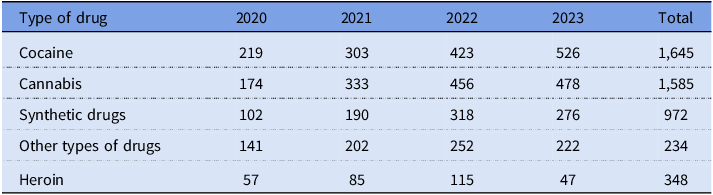
Drug trafficking has become one of the most common types of crime in countries around the world. According to a report by the European Union Agency for Criminal Justice Cooperation (2024), in 2023, 2,462 cases of trafficking in narcotic drugs were reported in EU countries, of which 1,137 were new cases and 1,325 had been detected in the previous period and were under investigation. The steady increase in trafficking in narcotic drugs in countries in Europe can be observed in Table 1.
Illicit trafficking in selected types of narcotic drugs in the European Union Member States in the period from 2020 to 2023 (number of cases recorded)

Source: compiled by the authors of this study based on the European Union Agency for Criminal Justice Cooperation (2024).
As Table 1 shows, there has been a sharp increase in cocaine and cannabis trafficking in EU countries. However, a noticeable decrease has been observed in the trafficking of synthetic drugs and heroin, which may indicate a governmental response to this crime.
According to a report by the “Kazinform” International News Agency (2023), drug trafficking is also a severe problem in Kazakhstan. Experts claim that such trafficking amounts to about 20–25 tonnes of substances per year, 94% of which are cannabis-group drugs, while 5% are synthetic drugs, and 1% are opium, heroin or other types of substances. Of the more than 1,000 known types of narcotic substances, about 700 are controlled in the Republic of Kazakhstan.
Considering the consequences of illicit trafficking in narcotic substances, its control is a priority in many countries around the world. As of 2022, 4.2 thousand criminal offences were registered in the Republic of Kazakhstan under Articles 296-303 of the Penal Code of the Republic of Kazakhstan (2014) on illegally handling narcotics (Forbes Kazakhstan 2022). Despite a more than 10% decrease in drug trafficking offences compared to 2021, about 14% of prison sentences served in the country are related to drug trafficking. Thus, efforts to reduce drug trafficking should be continued by identifying its underlying causes.
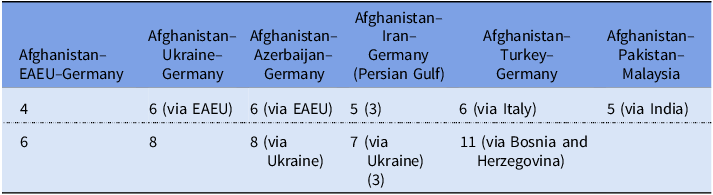
Using a conceptual model based on Walker’s gravity formula, it can be argued that one reason for drug trafficking in the Kazakh Republic is the country’s geographical location at the crossroads of drug trafficking routes. The fairness of this assumption was confirmed by a comparative analysis of the most probable drug trafficking routes presented in Table 2.
Most probable drug trafficking routes (number of borders to cross – minimum and maximum, including other hubs)

EAEU, Eurasian Economic Union.
Source: compiled by the authors of this study based on Sokolova et al. (Reference Sokolova, Mekhdiev, Nurov and Ibragimov2024).
According to the “Global Organized Crime. Kazakhstan” report by the Global Initiative against Transnational Organized Crime (2023), the location of the Republic of Kazakhstan on the Northern Route makes the country one of the leaders in drug trafficking. As of 2023, the country’s overall crime score was 4.47, while the sustainability threshold set by Global Initiative against Transnational Organized Crime (2023) researchers was 4.54. In the analysed ranking, Kazakhstan was a leader in the areas of human trafficking, human smuggling, arms smuggling and drug smuggling. According to Sokolova et al. (Reference Sokolova, Mekhdiev, Nurov and Ibragimov2024), the latter two offences are interrelated and require special attention from researchers and legislators.
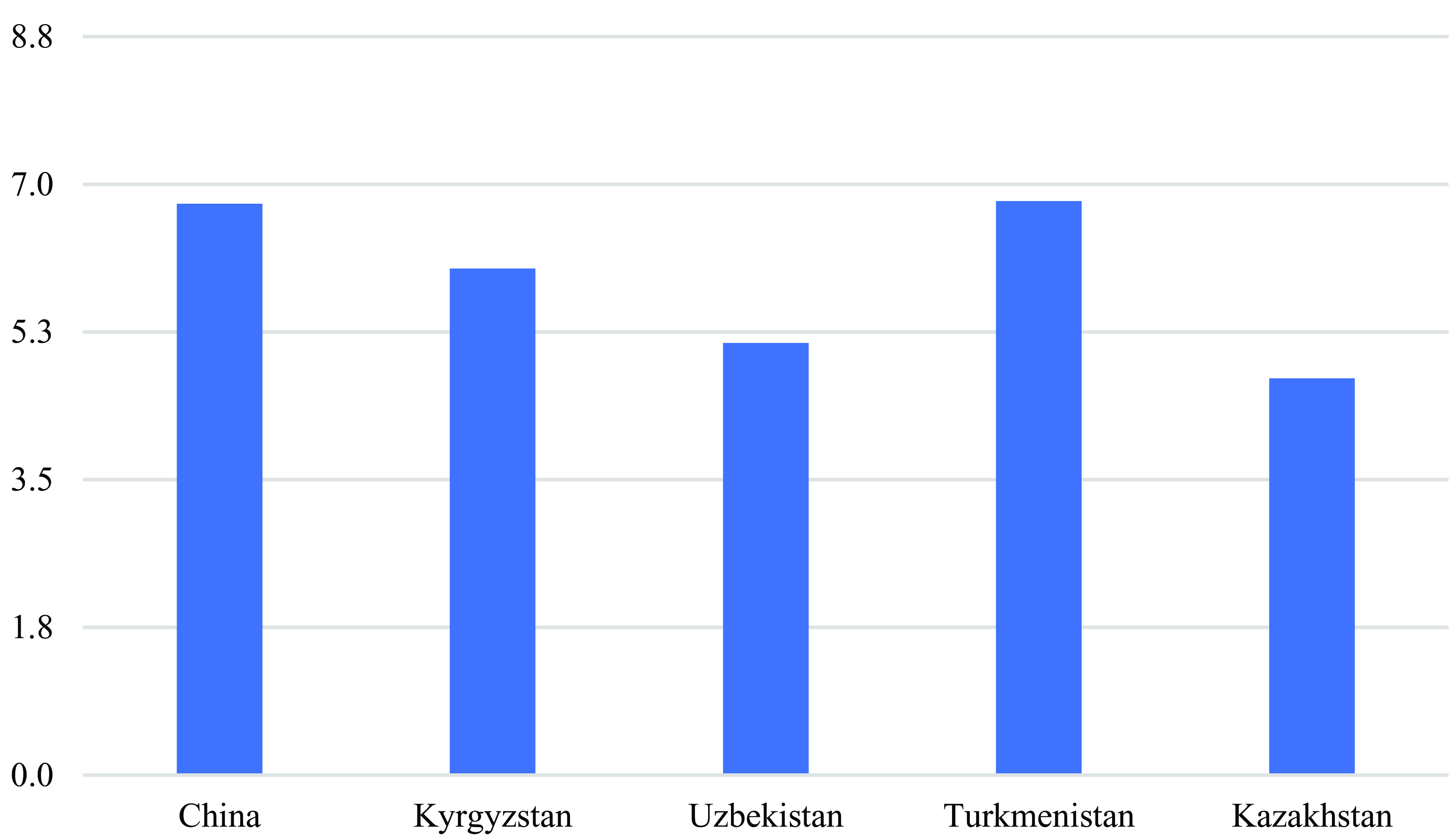
Stable high turnover of narcotic drugs in the country supports the shadow economy and leads to the emergence of new ways to legalize illegally obtained profits. Using a four-stage model proposed by experts of the Basel Institute on Governance (2023), a ranking of countries in terms of the risk of obtaining and subsequent legalization of illegally obtained proceeds was developed. The application of a 10-point scale allows for assessing the risk of shadow economy development as non-existent or low (0–1), medium (5) or high (10). According to this rating, the index of the Kazakh Republic is 4.7, which is slightly lower than in a series of countries with which it borders but greater than in many European countries. A comparative analysis of the risks of the shadow economy and attempts to legalize illicit profits in Kazakhstan and its neighbouring countries is presented in Figure 1.
Risk of existence of a shadow economy with subsequent legalization of illegal proceeds in the Republic of Kazakhstan and countries bordering it as of 2023.
Source: compiled by the authors of the present study based on data from the Basel Institute on Governance (2023).

Figure 1 suggests that the risk of a shadow economy and the legalization of illegally obtained income is lower in the Republic of Kazakhstan than in neighbouring countries. A significant factor is also that, according to the Basel Institute on Governance (2023), over the past two years, the level of risk has stayed stable, i.e. no tendency to increase or decrease was observed. This fact suggests that current efforts to combat money laundering may be insufficient and require further review.
Combatting the Legalization of Proceeds from Illicit Trafficking in Narcotic Drugs
Strategies aimed at combatting the legalization of proceeds derived from illicit trafficking in narcotic drugs are driven by an understanding of the scale of the problem. An article by Snijder-Kuipers (Reference Snijder-Kuipers2023) states that the annual volume of laundered funds is between 2 and 5% of GDP, i.e. between US$715 billion and US$1.87 trillion. To reduce money laundering, countries worldwide are developing legislative initiatives that exist at both national and cross-border levels. For example, the Anti-Money Laundering Directive was adopted in the EU, a set of regulatory requirements containing rules to combat money laundering and terrorist financing by EU Member States.
Within the fight against money laundering, each EU Member State also develops its laws based on the recommendations provided. The development of such directives implies that anti-money laundering refers to the process and procedures used to prevent criminals from hiding illegally obtained money under the guise of legitimate funds. At the pan-European level, the EU Parliament issues anti-money-laundering directives and then implements them by each State in its legal system.
At the level of individual enterprises, the Bank Secrecy Act (1970) and its implementing regulations are in place to aid in detecting and reporting suspicious activities, including predicate offences of money laundering and terrorist financing, such as securities fraud and market manipulation. The Financial Industry Regulatory Authority is responsible for establishing and enforcing the ordinances and setting minimum rules for compliance standards for the transparent conduct of economic activity. These standards are set out in Regulation 3310 of the Financial Industry Regulatory Authority and include, among other things, requirements to document and report suspicious financial activity, to provide prompt contact information to the Money Laundering Compliance Officer, and to conduct ongoing risk assessments to develop effective countermeasure strategies.
In the US, the fight against money laundering began in 1986 with the passage of the Money Laundering Control Act (1986). This Act was a key part of the national strategy against money laundering and terrorism implemented in the country since the late 1970s. This strategy led to the establishment of a comprehensive legal framework to detect and prevent criminal activities mediated through the financial system. As one of the leading economies, US security is vulnerable to money laundering and related terrorism. Recognizing these risks, the country is constantly updating and tightening its system of compliance controls for financial institutions.
Despite some differences in legislation, all States are subject to the regulatory requirements presented in the Bank Secrecy Act (1970) and the USA Patriot Act (2001). The former statute requires financial institutions to collect, document and report customer information. The Bank Secrecy Act (1970) required the creation of the Financial Crimes Enforcement Network, whose key objective was to detect and prevent illicit enrichment. Businesses were presented with reporting obligations, including Currency Transaction Reports (Financial Crimes Enforcement Network) and Suspicious Activity Reports (Currency Transaction Reports). According to the analysed law, financial institutions must file a report on transactions exceeding US$10,000 in one business day. Transactions for US$5,000 with no apparent legitimate purpose are also considered suspicious and subject to reporting. The Bank Secrecy Act (1970) also imposes requirements on businesses aimed at internal controls, independent testing and the appointment of an anti-money-laundering officer. According to the law, the level of implementation of the requirements must be commensurate with the money laundering and terrorist financing risk of the particular institution.
The USA Patriot Act, passed in 2001, imposes strict legal standards and checks to prevent terrorist activity. This law prescribes the documentation and reporting of all transactions, including international money transfers.
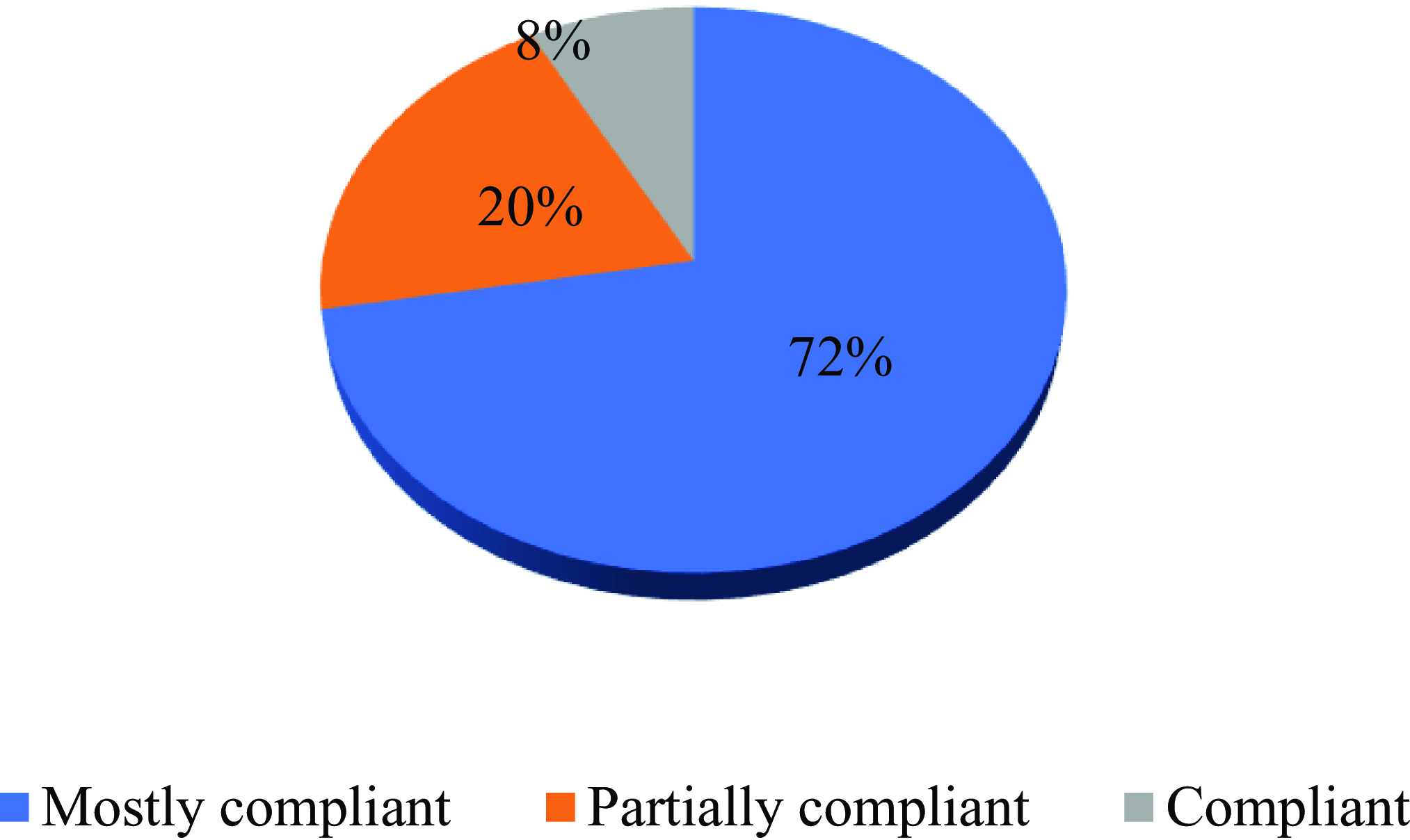
Analysing Kazakhstan’s compliance with the European Financial Industry Regulatory Authority’s recommendations reveals a mixed readiness for implementing anti-money-laundering measures. While the country is mostly compliant in several key areas, including national cooperation, customer due diligence and reporting of suspicious transactions, there are notable gaps in areas such as the financing of terrorism, the use of innovative technologies and the regulation of financial institutions. Particularly concerning is the partial compliance in critical areas like the application of sanctions against the proliferation of money-laundering practices and the powers of law enforcement bodies. These discrepancies suggest that while Kazakhstan is making strides toward aligning with European standards, significant work remains to strengthen legal frameworks and enforcement mechanisms.
The above demonstrates that financial institutions in the Republic of Kazakhstan are on the path towards integrating and aligning their money-laundering control practices with European legislation. Figure 2 presents the country’s progress towards this goal.
Compliance of financial institutions in the Republic of Kazakhstan with the recommendations of the European Financial Industry Regulatory Authority, as of 2023.
Source: compiled by the authors of the present study based on data from the Financial Action Task Force (2024).

Thus, one of the key tasks facing the Kazakh Republic’s financial sector is to fully comply with European standards in regulating citizens’ income.
Countering Money Laundering in the Digital Economy
The digital economy is creating new opportunities for the growth and development of industries worldwide. According to the Institute for Financial Integrity (2024), the total transaction value of the global digital payments market in 2024 is estimated to be US$11.53 trillion. This source also suggests that this sector will grow by 9.52% in the next four years; by 2028, the value of transactions will be US$16.59 trillion, according to Bisultanova (Reference Bisultanova2023), this growth being driven by changes in the digital payment landscape, including real-time data processing, advanced fraud detection systems implementation and personalized customer interactions.
Despite these advantages, digital payment systems have disadvantages that make them attractive for money laundering. Specifically, the high speed of transactions is an advantage not only for law-abiding users but also for participants in fraudulent schemes interested in fast layering, i.e. placing funds on different accounts. From a financial control standpoint, the difficulty is that the movement of funds across accounts often outpaces traditional monitoring processes initiated after suspicious transactions are identified. Thus, when the checks are completed, the funds obtained illegally are often in different accounts, making it challenging to trace and recover them.
The cross-border nature of the digital economy is also perceived as an advantage in schemes aimed at laundering illicit proceeds. When crossing borders, funds pass through different regulatory landscapes that make them hard to track and regulate. Different countries impose different rules and levels of enforcement, thus creating gaps that can be exploited to introduce illicit schemes. According to Gustavo et al. (Reference Gustavo, Diaz, Patricio, Alvarez, German, Salgado and Valeria2023), the lack of clear sector-specific legislation in a series of countries, including Latin America and the Caribbean, makes them a hub for laundering illicit proceeds generated in other parts of the world.
Apart from these risks, the anonymity of digital payments, which often do not require strict identity verification, is also a concern. While some digital platforms have moved to robust verification systems known as Know Your Client (KYC), there are still some opportunities to keep anonymity in the digital space. When planning financial schemes, owners of illicit proceeds factor in the differences in compliance levels between platforms and regions. There are many examples of such inconsistencies being exploited to fulfil illicit schemes.
One such example is decentralized cryptocurrency exchanges, platforms where trading is conducted without complex customer verification procedures, guaranteeing anonymity. Another frequently used method is the use of debit cards, the purchase of which is possible without identity verification. Such cards are subsequently used for anonymous online transactions, including layering illegally obtained funds. Apart from these methods, participants in money-laundering schemes may use privacy coins such as Monero or Zcash. The appeal of these coins is that they hide the transaction details, making it difficult to trace the funds deposited into the account. In some countries, the laundering of illicit funds occurs through peer-to-peer platforms. Analogous to the previously mentioned options, peer-to-peer platforms require minimal identity verification, which is an advantage when laundering illicit proceeds.
Given the specific features of digital technologies, how they can be used to launder illicit proceeds has been analysed. One such method is using digital wallets at the layering stage to disguise transactions. Money laundering often uses digital wallets opened under false names to cut off the trail, leading to the original illicit source. One example is the creation and transfer of funds between multiple wallets opened under a false name before withdrawing “clean” funds.
Peer-to-peer platforms are also common, enabling users to transfer funds directly to each other without the intermediation of a financial institution. Funds move faster on peer-to-peer platforms than in a conventional banking system, and there is minimal control over such movements. One example is the transfer of small amounts of money through peer-to-peer accounts to accumulate extensive amounts for later withdrawal.
Apart from the above-mentioned methods, money laundering can be conducted through third parties or money mules. The latter are individuals or groups of individuals who transfer money on behalf of another user. The use of “mules” to transfer illicitly obtained funds through multiple accounts is possible because of gaps in financial compliance programmes. An example of the method described is the existence of a network of “money mules” that receive and send payments through complex multinational transactions.
Another way to legalize funds derived from trafficking in narcotic drugs is to compromise payment card systems. The scheme involves criminals loading payment cards linked to digital payment systems with illicit funds, which are then withdrawn as “clean” funds. To minimize the risk of detection, criminals may also clone cards to conduct smaller and less visible financial transactions. One example of an implementation of the method presented is the creation of virtual payment cards used for transactions below reporting thresholds.
Understanding how illicit proceeds are laundered is used to develop strategies to counter such practices. One such strategy is individualized risk assessment and risk preparedness. Digital financial service providers are encouraged to comprehensively assess probable risks, considering the following areas: geography/jurisdiction; customers; products; and channels. Geography refers to the regulatory environment and risks associated with the locations in which financial agents operate. There is also a need to understand the customers of digital financial services, analyse their behaviour and develop a detailed profile that includes probable risks. The product domain refers to the concrete financial products offered by digital financial service providers, each involving specific risks. Channels include how customers interact with services, such as online platforms, mobile applications or conventional branches of a financial institution. A comprehensive risk assessment helps select strategies demonstrating effectiveness in individual money-laundering cases for drug trafficking.
The recommended strategy, specifically, is “smart” monitoring, which implies the rejection of a single approach to risk assessment. The proposed monitoring assumes that individual financial transactions or groups of transactions imply unique risks and, therefore, require individualized solutions. Machine learning and analytics capabilities are used to identify and counter such risks, enabling digital financial service providers to focus on the most significant aspects, thereby reducing the risk of irrelevant alerts. The advantage of such monitoring is its high efficiency and the ability to free up resources to address real problems.
Continuous management of existing risks through technology is also a promising approach. Implementing continuous monitoring technologies, including continuous analysis and anomaly detection, helps identify complex financial crime patterns that bypass conventional detection systems. Furthermore, continuous historical and real-time data analysis helps peer-to-peer platforms gain a more detailed picture of the risks they face.
Scaling automation, which is much more productive than manual checks, is also an effective method of combatting money laundering. Automation in compliance and customer verification facilitates the management of large amounts of data, expediting the entire process and improving its accuracy.
In addition to the approaches already mentioned, integrating anti-money laundering without disruption is recommended to improve customer experience. Digital financial service providers are encouraged to design controls to fit naturally into customer interaction, ensuring a strong security level. Thoughtful integration maintains customer trust by pointing to the compatibility of speed and security in financial transactions.
Based on the research conducted, the legalization of proceeds from drug trafficking is a threat to the security and sustainable development of the Kazakh Republic. The country endeavours to supervise financial transactions according to international norms and standards. As of 2023, the operations of the national sector were mostly or partially compliant with the requirements of the European Financial Industry Regulatory Authority. Bringing operations into full compliance with these norms may be hampered by the rapid development of digital technologies, which contain loopholes for money laundering. Knowledge of these loopholes enables the development of effective counterstrategies and planning for sustainable development of the national financial sector.
Discussion
The findings presented in the current study align with earlier studies emphasizing the link between money laundering and other crimes. Such a link, specifically, was explored by Kalokoh (Reference Kalokoh2024), who analysed a sample of 117 countries that took part in the Basel Study on Combatting Money Laundering and Terrorist Financing. According to the researcher, there is a statistically significant relationship between drug trafficking, money laundering and terrorist risks. Data from the present study can be offered in support of this idea: there is an elevated level of such risks as drug trafficking, arms trafficking and kidnapping in the Kazakh Republic. Thus, it can be assumed that drug trafficking and subsequent attempts to legalize the proceeds are responsible for the growth of other types of crime.
The researchers sought to understand the reasons why some countries exhibit relatively high drug trafficking, making their financial systems vulnerable to fraudulent schemes. According to Bartulovic, Aljinovic, and Piplica (Reference Bartulovic, Aljinovic and Piplica2023), corruption and the prevalence of money-laundering practices have a statistically significant relationship. Sari et al. (Reference Sari, Nuraeny, Ynato and Widodo2023) also provided evidence supporting this assumption, concluding that money laundering can serve both as a cause and a consequence of corruption observed across various levels of government. According to Maitily et al. (Reference Maitily, Suresh, Kahyahthri and Dhamayanthi2023), who interviewed 102 employees of Malaysian financial institutions, money laundering has become an entrenched practice because corruption is a multi-component phenomenon. The researcher argued that corruption is conditioned by technology, legislative framework, income level and degree of ethical adherence.
The present study confirmed the findings of Maitily et al. (Reference Maitily, Suresh, Kahyahthri and Dhamayanthi2023), particularly pointing to the link between the legislative framework and money laundering. Ambiguous interpretations, unwillingness of the financial system to function according to accepted standards, and other problems at the legislative level make the country more vulnerable to drug trafficking and money laundering. Arman and Nendi (Reference Arman and Nendi2023) reached analogous conclusions when analysing the definition of money laundering in different countries, including the US, the United Kingdom and Pakistan. According to the researchers, differences in the interpretation of basic concepts create loopholes that drug traffickers can exploit to legalize their profits. Chhillar (Reference Chhillar2023) agreed with these findings due to analysis of the risks of tax havens. According to Chitadze (Reference Chitadze, Danielsson and Hershey2024), such havens are possible under conditions such as the forgery of identity documents or the use of third-party documents. Although experts cannot propose a unified strategy to combat tax havens, they agree that their existence threatens national and global economic development. This conclusion is in line with the assertion presented in the recent study that money laundering is a substantial threat that must be addressed at both national and cross-border levels. Strategies to address the problem analysed have been proposed in other studies, including Yusoff et al. (Reference Yusoff, Jumbli, Norazman, Binti and Hashim2024). According to the researchers, the effectiveness of anti-money-laundering strategies depends on factors such as anti-money-laundering laws and regulations, the responsibilities of banks and other financial institutions in combatting money laundering, cooperation between public institutions, the private sector and law enforcement agencies, and technological advances.
The latter factor has received considerable attention in this study because, apart from its many benefits, the development of the digital economy also poses risks to the fight against money laundering. The relationship between the development of the digital economy and money laundering has been explored in a series of studies, including Khelil et al. (Reference Khelil, El Ammari, Bouraoui and Khlif2023). This study analysed the relationship between the development of the digital environment, corruption and laundering of illicit proceeds. Based on the data obtained, it was concluded that digital technologies can be both a factor in the renewal and development of the financial sphere and its degradation due to corruption. Therefore, the experts sought ways to strengthen the digital financial scheme by making it more transparent and less vulnerable to fraudulent schemes. According to Rusli and Fermay (Reference Rusli and Fermay2024), one such way is to develop open banking that enhances transaction monitoring and supports the regulator’s anti-money-laundering programme. Boyko et al. (Reference Boyko, Mynenko, Chen and Zimbroff2024) suggested the creation of institutional, financial and educational channels to optimize the fight against money laundering. This proposal aligns with the recommendation proposed in this study to bring the national legislative framework in line with European and international standards and continuous monitoring of this compliance. Reznik et al. (Reference Reznik, Danylevska, Steblianko and Chekmarova2020) considered the reform of the digital economic sector from a holistic standpoint, which envisages changes at various levels, including improving the information technology (IT) infrastructure of banks, establishing relations between banks and law enforcement agencies, preventing cybercrime, improving the financial monitoring system, and ensuring interaction between financial monitoring subjects and law enforcement agencies. According to Zhamiyeva and Albekova (Reference Zhamiyeva and Albekova2023), the digital financial system of the Kazakh Republic has achieved major success in fulfilling the set objectives. However, there are still a series of goals to be achieved. These include exploring new money-laundering methods and strengthening the country’s initiatives aimed at cross-border cooperation and integration into the international economic space. It is also vital to revise existing legislation to make it more consistent with internationally accepted standards for transaction management. The proposed recommendation can be illustrated by the findings of the present study, according to which the activities of the digital financial sector of the Republic of Kazakhstan are mostly compliant with the recommendations of the European Financial Industry Regulatory Authority, while full compliance is observed only in 7.5% of cases.
Thus, the data presented align with the conclusions proposed in earlier studies. Consistencies are particularly evident in the assessment of the risks associated with drug trafficking and the subsequent legalization of the proceeds. Consistencies with earlier studies were also found in the assessment of factors affecting the risks of laundering the proceeds of trafficking in narcotic drugs. The identified correspondences confirm the feasibility of recommendations to mitigate the risks associated with the digitalization of the economic sector of the Kazakh Republic. Recommendations related to continuous monitoring of financial institutions, development of new channels and tools for collecting and storing information, increasing the transparency of financial transactions and tightening liability for fraudulent transactions were also presented in earlier studies. Xia, Baghaie, and Sajadi (Reference Xia, Baghaie and Sajadi2024) noted that the development of digital technologies increases the flexibility of the financial sector and makes it more resilient to various risks. Shenkoya (Reference Shenkoya2023) argued that cross-border cooperation reduces the risk of corruption, which makes the digital environment vulnerable to fraudulent schemes, including money laundering. Thus, it is fair to argue that the proposed recommendations were conditioned by analysing the experience of countries worldwide involved in digital financial activities.
Conclusions
Based on the data analysed, the geographical location of the Kazakh Republic makes it one of the leaders in the region in terms of illicit trafficking of narcotic substances. Although a downward trend in such trafficking has been observed in recent years, there is still a problem of money laundering. Members of criminal groups use various methods to conceal the source of their income, which allows them to avoid criminal liability for the sale of narcotic substances and related offences, including the financing of terrorism, kidnapping, trafficking in persons, etc. While the development of digital tools has contributed to the expansion and efficiency of the financial sector, it has also attracted participants in criminal schemes who benefit from the speed of financial transactions, their anonymity, and the inefficiency of traditional systems in tracking and blocking suspicious movements of funds in bank accounts. Persons involved in the illicit distribution of narcotic drugs use debit cards opened in the name of fake persons, peer-to-peer payment platforms, decentralized cryptocurrency exchanges and privacy coins to enter into the financial system the funds received, leverage them, and then withdraw them without attracting the attention of financial monitoring services.
In Europe and the US, the fight against money laundering began in the late 1970s and continues today. In EU countries, the start of this fight was later, which, however, did not affect its effectiveness in terms of the variety of tools used and the reduction in the number of money-laundering cases. The strategies developed in the US and the EU can also be adapted to the situation of the Kazakh Republic, one of the priorities of which is to increase the transparency of financial transactions, contributing to the sustainability of the financial sector. Digital tools help to achieve this goal, including facilitating cross-border cooperation in analysing risks and finding effective responses to them.
The analysis of the weaknesses of the digital financial sector has led to the development of recommendations to improve the fight against money laundering. The recommendations include: the use of big-data analytics to identify risks specific to a particular country, economic sector or enterprise; the use of various communication channels to collect data and raise awareness of stakeholders of the risks; cross-border monitoring to develop recommendations to improve the transparency of transactions and accountability of financial institutions; and continuous monitoring to analyse the compliance of the financial sector with accepted standards.
In future studies, it is recommended that the sample be expanded to include countries with high, medium and low levels of economic development to gain a more detailed understanding of the effects of economic processes, including corruption, on drug trafficking and money-laundering rates. It is also recommended that the dynamics of the Republic of Kazakhstan in combatting money laundering in the digital economy be analysed using case studies.
Competing interests
The authors declare none.
Bolat Yerkenov is a Master and Doctoral Student at the Almaty Academy of the Ministry of Internal Affairs of the Republic of Kazakhstan named after Makan Esbulatov. His research interests focus on criminal law and the development of legal mechanisms to combat financial crimes, particularly in the context of digitalization.
Yerzhan Bimoldanov is a PhD, Deputy Head at the Almaty Academy of the Ministry of Internal Affairs of the Republic of Kazakhstan named after Makan Esbulatov. He specializes in the study of illicit financial flows and anti-money laundering policies, with a focus on the Central Asian region.
Aidar Saitbekov is a Full Doctor, Deputy Minister of the Ministry of Internal Affairs of the Republic of Kazakhstan. His academic work is centred on the intersection of digital technologies and legal regulation, especially in relation to financial security and international cooperation.