Gregor Johan Mendel (1822–1884) is famous for having discovered how genes work when they are completely penetrant or have single observable effects in all environments typically observed. For such genes we can do little better today to explain their action than his laws of segregation and independent assortment, although we can provide many more details about how these actions take place. The law of segregation states that individuals carry two sets of genetic material, one from each parent, and that each gamete (sex cell) receives only one set of this material. The law of independent assortment states that this process takes place independently for each gene. These laws have proven to be firm enough for completely penetrant genes that such genes are now termed Mendelian.
The major developments in genetics since Mendel's day surround the observation that most genes are far from completely penetrant. This lack of complete penetrance takes many forms, including, but not limited to, small effects, multiple effects, effects that vary with genetic background, effects that vary with environmental exposure, and effects that vary over time and developmental phase. Over the same period, quantitative genetic studies have conclusively demonstrated that genes have substantial macrolevel influences on population variance in personality and psychopathology; yet modern molecular genetic studies, which rely on substantial genetic penetrance, have uncovered few if any specific genes contributing to these traits. Thus, it is becoming evident that most genes involved in personality and psychopathology must be of this incompletely penetrant character.
Our challenge at this point is to understand exactly how these incompletely penetrant genes are involved in personality and psychopathology. Many recent and exciting new developments in molecular genetics and epigenetics suggest possibilities. For example, large regions of the genome do not contain genes that code for the production of proteins. The DNA in these regions was long termed junk DNA and thought to be essentially inert. It is now clear that the DNA in these regions includes genes with important functions in regulating the production of proteins and the ability of protein receptors to make use of proteins. It is also now clear that as much as 80% of the genetic variants that have been associated with complex diseases (whether replicable) are located in such regions (Hindorff et al., Reference Hindorff, Sethupathy, Junkins, Ramos, Mehta and Collins2009). This indicates that the regulation of protein production is at least as important in understanding genetic influences as protein production itself. Moreover, the human genome is not the fixed structure with a specific number of genetic slots that we once thought. There is considerable structural variation among human genomes, and this variation can take many forms. For example, it has become clear that some individuals and families carry insertions or deletions (or both) of long stretches of DNA that are not generally carried by most humans. Sections of DNA can also be inverted in position on the genome so that they are read in reverse order during transcription and even translocated or positioned completely differently from the usual positioning on the same or different chromosomes. Evidence is growing that these structural variations might contribute to psychopathology, at least when they occur de novo (spontaneously; e.g., Sebat et al., Reference Sebat, Lakshmi, Malhotra, Troge, Lese-Martin and Walsh2007; Xu et al., Reference Xu, Roos, Levy, Van Resnburg, Gogos and Karayiorgou2008), although most cases that are observed have not arisen de novo in this way but are carried within families. Model organisms have shown that variations in the extent to which genes are expressed are the rule rather than the exception, with the variations dependent on both genetic background and environmental circumstances (Le Rouzic & Carlborg, Reference Le Rouzic and Carlborg2007; Petronis, Reference Petronis2001). Although these developments provide new insight into gene action in principle, up to now they have been of limited value in understanding the emergence of psychopathology in general or with respect to specific disorders.
The Currently Prevailing Genetic Perspective
The purpose of this article is to show that we need a shift in perspective on the meaning and interpretation of the existence of genetic influences on psychopathology. At its most fundamental level, the shift needed is from thinking of genes as the drivers of development within an environment to thinking of genes and developmental processes as respondents to the environment. The basis for this shift in perspective is embodied in concepts from evolutionary and developmental biology that have been with us for a long time. These ideas have sat on the sidelines of advances in molecular genetics, like a fine but forgotten old hat. However, new molecular genetic discoveries and technologies are providing new feathers that will look good on it, and the spruced-up version with these new feathers will look good on us. It is time to bring this old hat out again: as the old expression about thinking caps suggests, wearing a hat can set our minds for action. Thus, it is helpful to provide some brief background on the perspective that has underlain our recent efforts to identify the genes involved in psychopathology.
Mendel's work was originally published in 1866 (Mendel, Reference Mendel1901) but was ignored until the turn of the last century, when it was rediscovered and quickly replicated. By that time, the idea of evolution, as outlined in On the Origin of Species (Darwin, Reference Darwin1859), had captured the minds of biologists. They saw Mendel's discrete world of white or purple flowers and wrinkled or smooth peas as incompatible with the theoretical implication of evolution that most morphological traits should vary continuously and the empirical observation that this is the case. The clear replication of Mendel's observations, however, made reconciliation of the two perspectives essential. The reconciliation that still underlies our perspective was compiled in large measure by Fisher (Reference Fisher1918, Reference Fisher1930), who showed mathematically that continuous variation could arise from the independent actions of many discrete genetic loci and that Mendelian genetics was consistent with evolution by natural selection. His demonstration of consistency was so welcome and so conclusive from a mathematical perspective that two assumptions that underlay it went largely unchallenged and came to be taken basically for granted as the field of quantitative genetics emerged. These two assumptions were that gene actions were independent (a) of each other and (b) of environmental circumstances. With them, incomplete genetic penetrance could be explained as genes of small effect, making further integration of Mendelian genetics and natural selection seem unnecessary.
Fisher's reconciliation led directly to the development in the late 1940s of what became known as the modern evolutionary synthesis. Augmented to recognize the role of DNA, which was discovered afterwards, it forms the basis of the perspective that still dominates the search for genes involved in psychopathology today. It can be summarized as follows:
1. Heredity occurs through the transmission across generations of discrete units of DNA known as genes.
2. Variation transmitted across generations in this way reflects variation in DNA base sequence.
3. Variation in DNA base sequence results from random combinations of existing alleles generated by sexual reproduction and from new DNA variants that occur accidentally and spontaneously through mutation.
4. Natural selection occurs at the level of the individual and the manifested trait, which may be affected by transactions with symbionts and parasites.
5. Heritable variations have small effects, and evolution is gradual but sufficient to create the large changes in the paleontological record that have taken place over time.
The general interpretation of this synthesis made by most geneticists is that there is a direct match between gene and trait. This has been inferred to mean that genetic variation is the basis of natural selection; genes that are present are expressed in ways that can be specified with respect to timing, type, and amount of gene product; mutation is the primary source of novelty on which natural selection acts; and heritability, or the proportion of population variance in a trait that can be attributed to genetic variation, gives a good indication of the extent to which these genetic processes have their ways with us. Without acknowledgment, this interpretation again relies on Fisher's assumptions that gene actions are independent of each other and of the environment. When the synthesis was developed, the causes of psychopathology and psychological traits (more generally) were considered to be completely environmental in origin, so the involvement of genetic influences was considered to be minimal in this interpretation. However, 50 years of twin, adoption, and family studies have convinced the field of the involvement of genetic influences in psychological function and dysfunction. This has neither disrupted the predominant interpretation of their meaning nor created widespread acknowledgment of its reliance on the assumptions about the independence of individual gene actions. The assumption that this interpretation is correct underlies the current methods most commonly used to search for the specific genes involved.
A Coexisting Alternative Perspective
Embryologists and evolutionary biologists have taken a somewhat different view for a long time. They have focused on the premise of the modern evolutionary synthesis that evolution acts on the traits actually expressed, the phenotypes, rather than the genotypes as Dawkins (Reference Dawkins1976) argued in the extreme. Selection on the phenotype implies that selectable variation is phenotypic variation, regardless of its source (Mayr, Reference Mayr1963; West-Eberhard, Reference West-Eberhard2005). Selection is merely differential reproductive success; only if the organisms under selection are somehow genetically adapting the features under selection to respond to it is genetic variation among them is involved. This might sound like a mere semantic distinction, but it is not. Organisms develop over time: none of their phenotypes springs forth in mature form from conception, and all phenotypes emerge through some kind of genetically (and environmentally) influenced developmental program. If phenotypes, rather than genotypes, are the objects of selection, then novel phenotypes might result from the impact on their development of new environmental conditions and through new genetic material (mutation), which is the mechanism assumed by most geneticists. Among other things, this alternative perspective can help to explain high conservation of genetic material across species with major morphological differences.
This perspective can also help to explain the maintenance of individual differences within species and ultimately psychopathology. If populations vary genetically and environmentally and their members are developmentally plastic, then these members will be differentially responsive to the varying environmental inputs. The environmental inputs to any one gene can include the actions of other genes, including genes that vary within the species and those that do not. That is, environmental or genetic (or both) novelties might modify the internal environments of other genes, creating new phenotypic elements within cells. In turn, these new phenotypic elements might provide input to higher organizational levels of the organism, altering the developmental program so that quite different surface-level traits emerge.
A famous two-legged goat reported by the Dutch morphologist Slijper (Reference Slijper1942) can help to illustrate the processes involved. The goat was born with a congenital defect of the forelegs, of unknown source, which made it impossible for these legs to support its weight. It adapted by learning to walk and run on its hind legs alone. After its accidental death, Slijper dissected it. He documented extensive differences from normal goats in the bones of the hind legs, extensive modifications of the pelvis and thoracic skeleton, major differences in the arrangement of small tendons in the leg muscles, and a greatly thickened and elongated gluteal tongue. Whatever caused the abnormality of the front legs apparently acted as a kind of switch mechanism, launching a cascade of correlative adaptive changes in behavior, muscle, and bone. Similar changes have been reported in other normally quadruped animals trained or forced to walk upright (West-Eberhard, Reference West-Eberhard2005), and Slijper (Reference Slijper1942) and others have suggested that the emergence of bipedalism in humans might not have been as difficult an evolutionary step as has been commonly assumed. The anatomical features allowing adaptation to bipedal running in humans are similar to those that were altered in the bipedal goat (Bramble & Lieberman, Reference Bramble and Lieberman2004), making it likely that developmental plasticity contributed to the anatomical changes that made human bipedal walking and running normal.
This kind of developmental recombination (West-Eberhard, Reference West-Eberhard2003, Reference West-Eberhard2005), or reuse of the same genes to produce different phenotypes in different environments or the presence of different genes (or both), has been observed within and across many species. To understand how it takes place, think of development as a network of events, some internal to the organism and some external, some occurring simultaneously and independently, and some (if not most or all) dependent to some degree on the occurrence of one or many prior events. Each internal event is governed by a regulatory process; if the regulatory process is altered, so can be the event. Developmental recombination implies alteration of some regulatory process that simultaneously dictates an alteration in the event dependent on it. That is, it is impossible to have an altered phenotype without some alteration in its developmental pathway. With respect to gene expression, this means that some set of preexisting genes is now expressed in a different combination or context (or both), and this might include the expression of genes that have heretofore been silent. With complex polygenic traits such as psychopathology, it is extremely likely that there will be genetic variation in the response to the triggering event so that any particular event might trigger developmental modifications in one individual but not another. Moreover, many different genes are probably involved in the differences in response.
Developmental recombination can fuel evolutionary change through genetic accommodation, which, in the general sense, is change in the population frequency of any combination of the genes that affect the regulation of a novel trait (Waddington, Reference Waddington1953). If the novel trait resulting from developmental recombination is under selection or even can persist as an alternative adaptive phenotype, the selection will drive the frequencies of the genes involved in the recombination to new levels that accommodate the altered developmental process and its novel phenotype. Even if the trait is not adaptive but its development is triggered by a commonly occurring environmental circumstance, it will persist in the population at a level that reflects the frequency of occurrence of the triggering circumstance. Although at some level genetic variation is impossible without mutation, genetic accommodation is not dependent on the presence of mutation. Genetic variation is ubiquitous: virtually every trait subjected to selection shows a response (West-Eberhard, Reference West-Eberhard2003), and many show the ability to reverse the direction of response even after long periods of selection (e.g., Hill, Reference Hill2005). This suggests the presence of considerable reservoirs of genetic variation that remain untapped until called upon by environmental circumstances broadly defined to include the surrounding genotype. There is considerable and growing evidence for these reservoirs (Gibson & Dworkin, Reference Gibson and Dworkin2004). The dominant perspective has been that genes are leaders in adaptive evolution and phenotypic development in the individual, but this alternative perspective casts them distinctly in the role of followers (West-Eberhard, Reference West-Eberhard2005).
Developmental and Evolutionary Principles Underlying Developmental Recombination According to Schmalhausen
Many years ago, evolutionary biologists discerned basic principles on which developmental recombination must rest. One of the most articulate scientists in this regard was Ivan Ivanovich Schmalhausen (1884–1963). His works are not as well known as they should be because he was Russian and ran afoul of the Stalinist political climate in the aftermath of World War II, which cost him his academic posts. He continued his work in relative isolation and was able to send his book Factors of Evolution (Schmalhausen, Reference Schmalhausen1946) to Theodosius Dobzhansky in the United States, who had it translated into English. Using data from extensive empirical studies, Schmalhausen proposed that evolution operates on the organism as a whole; thus, the organism's development is oriented toward integration and mutual adaptation of all parts and functions, which provides general stability to the system. This was in contrast to the prevailing neo-Darwinian view of the organism as the sum of its independent genetically determined characteristics and evolution as a process of differentiating among these characteristics (Levit, Hossfeld, & Olsson, Reference Levit, Hossfeld and Olsson2006).
Schmalhausen acknowledged and discussed the situation in which the environment (ecosystem or biogeocenosis; Levit et al., Reference Levit, Hossfeld and Olsson2006) is changing rapidly and permanently and an organism's developmental mechanisms are confronted with new circumstances to which it must adapt or perish. This situation results, he said, in a shift in the population distribution of characteristics and a new mean norm(s), but he focused his attention on the more common situation in which environmental circumstances and populations that manifest variance in characters exist in dynamic equilibrium, with environmental circumstances varying over time in some recurring (e.g., cyclic) form. In such conditions, he said, developmental processes tend to acquire greater stability, or independence from external factors and from genetic variation that influences developmental differences. This independence from the environment takes place through selection against genetic variants that cannot sustain normal development. It is more important that they occur through optimizing development by increasing the regulatory complexity so that there is more redundancy of genetic functions, making the emergence of normal characteristics more durable and minimizing the extent to which such characteristics can be modified in nonheritable and potentially nonadaptive ways by particular environmental circumstances via reducing expression of genetic variance. The reduction of the expression of genetic variance can take place through selection against particular genetic variants, but it can take place more directly through the silencing of their expression through regulatory processes. In biological circumstances, it is generally impossible to distinguish between rapid and permanent changes in the environment and recurring environmental variations. Thus, the emergence of new mean norms is generally taking place simultaneously with the stabilization of developmental processes and its accompanying reductions in variance.
It is important that, according to Schmalhausen, genetic variation allowing modification of characteristics remains, whether through mutation or failure of such variation to perturb development under prevailing environmental circumstances. When such modification does occur, it is not always adaptive. Schmalhausen did not consider it abnormal, however, unless its form precluded attainment of maturity (Reference Schmalhausen1946). Modifications affect interrelations among many physiological processes with their own morphological expressions, and the transactions among them may intensify growth or accelerate differentiation (or both). Where the transactions are hierarchical, in the sense that one is dependent on the preoccurrence of another, they might have deterministic effects. Any morphogenetic manifestation of these modifications arises from these developmental interactions.
To summarize Schmalhausen's (Reference Schmalhausen1946) principles, developmental stability is maintained in populations and individuals within populations through the following:
Principle 1: Diploidy, or the presence of two copies of each genetic locus, one from each parent
Principle 2: Genetic redundancy and the presence of wide, interconnected genetic networks
Principle 3: Genetic reserve or unexpressed genetic variation
Principle 4: Specificity of the phenotype as emergent from the genotype as a whole, in the context of the environment; individual genes have at most modifying effects.
Principle 5: Flexible expression of genetic products
Principle 6: Specificity of reaction, which is determined by the condition of the tissue rather than by any deterministic process of generating the tissue
Principle 7: Flexibility in timing of maturation of activating and reacting tissue
Physiological reactions to environmental perturbations are generally quickly reversible when environmental conditions permit, enabling active adaptation. However, physiological reactions become involved in more permanent development through conditioned responses, learning, memory, experience, and culture. Cells and their characteristics are not inherited directly. Development proceeds through an individual superstructure that is established anew in each individual as a chain of reactions induced by external factors. These external factors are less significant the more complex the organism because the associated physiological regulatory systems in more complex organisms have greater environmental buffering systems with respect to the ability to reach reproductive maturity, which give internal conditions increased importance in permitting development to occur.
Schmalhausen's Law
These basic evolutionary principles led Schmalhausen to infer an important means of tying together evolutionary and developmental biology through individual and population response to stress. He proposed that, when a population finds itself in extreme or unusual conditions with respect to any one aspect of its existence, it is more vulnerable to small differences in any other aspect (Lewontin & Levins, Reference Lewontin and Levins2000). This would occur because the perturbing forces on development set in motion by the extreme circumstances ripple across the interrelated processes, undermining the stability to which they have evolved by forcing the expression of alternative genetic mechanisms to achieve particular developmental milestones and allowing the expression of typically silenced genes that have their own consequences. In turn, this destabilization of developmental processes makes the population more sensitive to other, less extreme variations in environmental circumstances, launching a cascade of effects that vary considerably from individual to individual within the population. Thus, variance in characteristics within a population is not simply noise but, at least when examined over time or in different environmental circumstances, an indication of the extent to which the population is under stress.
This expresses Schmalhausen's law at the level of the population, but what about at the level of the individual? The population-level statement suggests that, when any given individual within the population is under stress with respect to one aspect of life (regardless of the overall population circumstances), that individual is more vulnerable to small stressors on other aspects of life, and the specific manifestations of vulnerability may differ considerably from the overt external source of the stress. This is consistent, for example, with the common observation that people are more likely to get a minor cold or flu when under work or personal stress. Applied to individuals, the population-level statement also suggests that individual vulnerability to any particular form of stress will tend to vary, as will the particular manifestations of that vulnerability. In many ways, this restates the well-known stress–diathesis model of disease, but it explicitly recognizes the dependence of any character manifestation on developmental processes: each step in any developmental process is an activation or inhibition of the next gene action in the process, the presence of genetic redundancy as a stabilizing mechanism, and the presence of underlying genetic variation that is in most circumstances unexpressed.
An Experimental Result Related to Schmalhausen's Principles
All of these features are topics of current discussion and investigations of specific mechanisms in evolutionary and developmental genetics. A century-long corn-breeding experiment best encapsulates Schmalhausen's perspicacity and how the paradigm that has dominated genetics over that period has overlooked his principles. In this experiment, geneticists at the University of Illinois examined corn's response to selection for oil content (Hill, Reference Hill2005; Laurie et al., Reference Laurie, Chasalow, Le Deaux, McCarroll, Bush and Haug2004). Quantification of the response to selection that could be expected from agricultural breeding experiments was the original motivation for development of the concept of heritability. For example, if only those plants or livestock that are at least 1 standard deviation above the mean on some trait are allowed to reproduce, the standardized difference between the mean in the original generation and the mean in the offspring generation is heritability. Of course, such manipulations are not possible with humans, but heritability can also be quantified by comparing the extent of trait similarity in pairs of relatives to extent of their genetic relationship. Psychologists have made extensive use of this, especially in samples of mono- and dizygotic twins, to establish that effectively all psychological traits are heritable to some degree (Turkheimer, Reference Turkheimer2000).
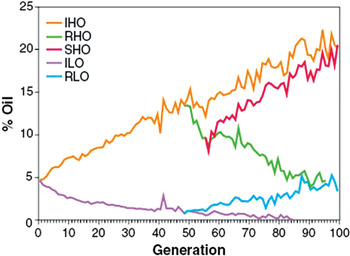
In any agricultural breeding experiment, geneticists have theorized that the offspring generation is more genetically homogeneous than the original and thus unable to produce as much genetic variance. They also theorized that, if they continued with any such experiment, over time all of the genetic variance would be eliminated, leaving only genes fixed for the selected level of the trait. The corn-breeding experiment was designed to demonstrate these propositions in action. The researchers could not control the seasonal variation experienced by the corn, but it was all planted in the same area and cared for in the same way. Figure 1 (see supplementary material in Hill, Reference Hill2005) shows the corn's response to selection over time. Upward and downward selection were both practiced. That is, only those producing oil in the highest 20% were selected (IHO) in one line of plants, whereas only those plants producing oil in the lowest 20% were selected (ILO) in another line. Fifty years into the experiment, selection on some of those plants that had been selected for the past 50 years for high oil content was reversed, so that they were selected for low oil content (RHO) and vice versa for some of those plants that had been selected for low oil content (RLO). Five years after that, selection was reversed again for some of those that had been selected initially for high and then for low oil content (SHO).
Corn's response to selection over time from a corn-breeding experiment. Adapted from “A century of corn selection,” by W. G. Hill, Reference Hill2005, Science, 307, supplemental material. Copyright 2005 by the American Association for the Advancement of Science. Adapted with permission. [A color version of this figure can be viewed online at http://journals.cambridge.org/dpp]

The results in Figure 1 surprised geneticists. The slopes of the lines in the figure indicate the response to selection or heritability, which the researchers estimated at 96% after appropriate transformations of scale (Laurie et al., Reference Laurie, Chasalow, Le Deaux, McCarroll, Bush and Haug2004). Geneticists had expected a strong initial response to selection that would slow with time as genetic variance was eliminated, resulting in curves in the figure that were steep at first and leveled off toward some almost fixed aymptotic oil content over time. Some genetic variation was presumed to always remain because of mutation. Instead, the response to selection appeared to be steady (except for sporadic fluctuations, probably due mostly to variation in yearly changes in seasonal characteristics) and showed no sign of leveling off to date (except where it generated no oil content at all in the downward selected line about 85 years into the experiment, and the corn was no longer viable). When selection was reversed 50 years into the experiment, it was even more surprising that, at a time when prevailing theory predicted that considerable reduction in genetic variance should have occurred, response to selection was effectively the same as before, but just in the opposite direction. As we currently understand them, mutation rates cannot account for the depth and consistency of these responses to selection; they are simply far too low (Le Rouzic, Siegel, & Carlborg, Reference Le Rouzic, Siegel and Carlborg2007).
This means that there must be considerable redundancy in the genes that can contribute to oil production in corn, consistent with Schmalhausen's summary Principle 2. Moreover, these genes must be expressed with respect to oil production against some genetic backgrounds but not others, suggesting some reserve of potential genetic expression consistent with Schmalhausen's summary Principle 3. Clearly, expression of the genes that produce corn oil is flexible, consistent with Schmalhausen's summary Principle 5. Given the long-term pervasiveness and flexibility of the response to selection, the effects of any one gene must be at most modifying, consistent with Schmalhausen's summary Principle 5. Oil production in corn is a continuous, polygenic trait, and corn survives well with a broad range of oil production levels. This is exactly what we would expect if oil production emerges in a flexible manner from the genotype as a whole in the context of the environment and the actual level of the phenotype emerges as a product of the cells already produced rather than as a genetically predetermined product, consistent with the rest of Schmalhausen's summary principles. That geneticists have been surprised by Figure 1 suggests that the predominant explanatory paradigm has been inadequate and could have benefited from greater focus on Schmalhausen's ideas.
Facilitated Variation and Cryptic Genetic Variation
Some current geneticists are discussing concepts analogous to those of Schmalhausen and using them to explain phenomena such as those in Figure 1. Two of these concepts seem particularly worthy of exposition. The first is “facilitated variation” as discussed by Gerhart and Kirschner (Reference Gerhart and Kirschner2007). Clearly influenced by Schmalhausen, Gerhart and Kirschner accept that genetic variation arises from the sources of mutation and genomic rearrangements, arranged in new combinations by sexual reproduction, consistent with the standard paradigm. However, they propose that acceptance of these new combinations in a population is facilitated because the new genetic variants lead to changes in the actions of preexisting regulatory genes, which in turn impact what they regulate, or the set of conserved core networks of development and physiology, resulting in the emergence of new traits. Thus, new traits require little in the way of actual genetic change and instead rely primarily on regulatory and developmental alterations. The net result of the combination of flexibility of regulatory response and regulatory buffering mechanisms is preservation of and even increase in genetic variation within the population, some of which is maintained unexpressed unless demanded by environmental circumstances.
The modern label for this present but unexpressed genetic variation is “cryptic genetic variation” (Gibson & Dworkin, Reference Gibson and Dworkin2004). Its existence has been well documented in model organisms such as Drosophila melanogaster, yeast, Arabidopsis thaliana, and mice. Again, the original experimental documentation of cryptic genetic variation dates back over 50 years and is considered classic. Despite this, its implications have not been incorporated into mainstream scientific thinking about genetic influences on human behaviors and conditions. The original experiments demonstrating its existence were carried out by Waddington (Reference Waddington1953). Fruit flies (Drosophila melanogaster) have veins in their wings. Most of the veins run lengthwise through the wings, but most fruit flies have some that run cross-wise, linking the otherwise generally parallel veins. However, a specific genetic variant produces flies that have wings with no cross-veins. Some flies will also develop without cross-veins if they receive 4 hr of treatment with 40°C heat at 21–23 hr in pupal development. Waddington selectively bred flies for and against production of cross-veins in response to heat treatment. After 14 generations, some of the flies in the line that were selected for the absence of cross-veins had no cross-veins even without the heat treatment. Waddington continued to selectively breed for the absence of cross-veins until a high proportion of the flies in this line were cross-vein-less even without heat treatment. What had been an environmentally triggered condition had become a routinely expressed trait attributable to expression of genes whose expression, at least in this form, had been suppressed in prior generations. Waddington was able to establish that the cross-vein-less trait being expressed was polygenic rather than due to any single mutation, even though the original observation of the cross-vein-less trait could be attributed to a single genetic variant.
Cryptic genetic variation is increasingly considered a potentially important element in organismic response to mutational and environmental perturbation. This is because cryptic genetic variation can act to buffer the effects of these perturbations, thus protecting the organism from the kind of disruption of physiological homeostasis that, as Schmalhausen suggests, leads to disease when it persists over time. However, cryptic genetic variation can also contribute to the very disruption that leads to disease when expression of destabilizing genetic variance is triggered. Many psychopathological and physical diseases appear to emerge over a threshold of some form of dysregulation from which the organism cannot recover, and current theories suggest that this is attributable to failure to maintain homeostasis in response to stress (McEwen, Reference McEwen2007). Many chronic psychopathological and physical diseases also have far-reaching effects on many organ systems, suggesting exactly the sort of emergence of the phenotype from the genotype as a whole that Schmalhausen described, rather than from a major malfunction of any one particular genetic mechanism. It is perhaps even more telling that many of these conditions appear to be quite heterogeneous. That is, the criteria used to diagnose them are rather varied, so that two individuals meeting them could lack even a single overlapping specific symptom. For example, a diagnosis of major depressive disorder in DSM-IV-TR requires a depressed mood and/or substantial loss of interest or pleasure in activities over a period of at least 2 weeks, as well as the presence of at least four of seven other somatic or psychological symptoms. However, some of the somatic symptoms are expressed as either a positive or a negative disturbance of normal patterns, so that, for example, either an increase or decrease in appetite can be a symptom. Even where symptoms overlap, developmental trajectories often appear to differ considerably among individuals receiving a common diagnosis (Butcher, Mineka, & Hooley, Reference Butcher, Mineka and Hooley2009), suggesting rather different genetic and environmental etiologies even within conditions receiving single diagnostic labels.
Beyond Schmalhausen's Principles: Mechanisms of Manifestation in the Environment
Given that the environment has its effects on the phenotype as a whole, genetic response is flexible, individuals vary genetically in their responses to environmental circumstances, environmental perturbations inevitably interrupt developmental processes of some kind, and there is considerable genetic variation present but unexpressed, what should we expect about how genetically varying individuals function within populations experiencing variation in many but not necessarily all environmental conditions? Schmalhausen's (Reference Schmalhausen1946) principles addressed this in general terms, but I make the basic concepts he articulated more explicitly relevant to human circumstances in modern society through the enumeration of several additional principles.
Principle 8: When presented with adverse environmental circumstances, or even the prospect of them, mobile organisms such as humans move to avoid them. Those most sensitive to the circumstances and those most able to do so move first and farthest. This creates population genetic stratification and gene–environment correlation and links gene–environment correlation and interaction (Johnson, Reference Johnson2007). Specific genetic variants associated with the ability to avoid adverse circumstances become more frequent in more benign environments because movement is easier, as do specific genetic variants associated with sensitivity to adverse conditions because there are relatively few adverse conditions to challenge them. The two sorts of genetic variants may or may not overlap. Mobile organisms move toward positive environmental circumstances, with analogous consequences.
Principle 9: Those most sensitive to adverse circumstances may not be those most able to avoid them, and those most able to avoid them may not be those most sensitive to them. Thus, the correlations between genes and environment will always be incomplete. Given considerable genetic redundancy, developmental plasticity and stability, and small effects of most individual genetic loci, we should not expect to be able to detect population genetic stratification by examining specific genetic loci.
Principle 10: For complex organisms like humans who live in complex environments, adverse circumstances to one individual may not be adverse to another, and the ability to avoid adverse circumstances may be specific to certain kinds of circumstances. Moreover, humans in particular have multiple goals and motivations (both conscious and unconscious), and they may consciously or unconsciously elect to remain in circumstances that cause stress with respect to one or more goals because the overall environment advances progress toward meeting other goals. Thus, movements of individuals within populations will vary with specific circumstances, sensitivities to those circumstances, abilities to move toward or away from them, and competing individual goals and motivations.
Principle 11: When the main effects of adverse environmental circumstances are strong enough and consistent enough across individuals, they increase or decrease mean trait levels (as relevant) and can suppress genetic and/or environmental sources of variance in the population. When such main effects are weaker and less consistent, they have smaller effects on mean levels and release otherwise unexpressed genetic and/or environmental variance only in the most sensitive, generating greater genetic and/or environmental variance in the population. Population means and variances are therefore intimately connected and variance is not noise, exactly as Schmalhausen suggested. Environmental effects with respect to any one gene include expression of the other genes in the genome.
Principle 12: Sensitivity to environmental circumstances is not necessarily an indication of more or less evolutionary fitness or even positive or negative adaptation to environmental conditions. Depending on the nature of the sensitivity and the kinds of environmental circumstances, the effects may be positive or negative. The importance of the possibility of positive and negative effects of sensitivity has recently been discussed in terms of differential susceptibility to the environment (Ellis & Boyce, Reference Ellis and Boyce2008, Reference Ellis and Boyce2011; Ellis, Boyce, Belsky, Bakermans-Kranenburg, & van IJzendoorn, Reference Ellis, Boyce, Belsky, Bakermans-Kranenburg and van IJzendoorn2011).
Principle 11 needs some elaboration. It is common to consider whether trait heritability varies systematically with differences in environmental circumstances (e.g., Charmentier & Garant, Reference Charmentier and Garant2005). In such studies, investigators often try to infer rules about whether heritability is likely to be higher or lower in favorable or unfavorable environmental conditions. However, heritability refers to the ratio of genetic to total variance, consisting classically of the sum of genetic and shared familial and nonshared environmental variance components. Thus, heritability could increase because genetic variance alone increased, because environmental variance alone decreased, or as a result of some combination of changes in genetic and environmental variance components; and heritability could increase while genetic variance decreased, and vice versa. In Principle 11, I refer not to changes in heritability, but to changes in the raw genetic and/or environmental variance components. Moreover, the principle refers to the strength of the effects on the mean rather than to whether the environmental circumstances are adverse or not. Our judgment of the quality of the environmental circumstances is irrelevant.
Using Schmalhausen's Law and Attendant Principles to Understand Human Psychopathology
How can we use Schmalhausen's law and the attendant principles to understand how genes are involved in human psychopathology? It makes sense to think about this from two perspectives: psychopathology as manifested in the individual and psychopathology as manifested in the population. I begin with a discussion of individual manifestation.
Individual manifestation of psychopathology
Following Schmalhausen's conceptualization, first, we need to think of the environment as acting on individuals as phenotypic, observable wholes that are continually undergoing internal developmental processes whose regulation can respond flexibly to environmental circumstances. Second, we need to think of individuals as learning sponges, constantly consciously and unconsciously orienting toward and absorbing information from the environment. Third, we need to keep in mind that individuals are continually responding to adapt to the environment and initiating actions intended to progress toward attainment of multiple goals that may conflict (Principles 8 and 10). Responsive and initiative actions may be unconscious as well as conscious, and the same is true of the goals. Fourth, we also need to think of adaptation in the immediate sense of getting the individual through the moment and the longer-term sense of making accommodations to circumstances that have some permanence (Principles 8 and 9). Fifth, we need to divorce our idea of adaptation from our ideas of success and well-being in the social senses those terms usually carry (Principle 12).
The theory of personality and personality disorder underlying cognitive therapy (Weishaar & Beck, Reference Weishaar, Beck and Strack2006) provides a helpful framework for this. According to this theory, personality has its roots in evolution and its genetic influences involve strategies that facilitate survival and reproductive success through absorption and synthesis of information: those learning sponges in action. Escape, self-defense, conservation of resources, display behavior, sexual attraction, and bonding are all genetically influenced motivations activated by relevant environmental stimuli (Principle 8); and their activation involves response and initiation of goal-seeking behaviors (Principle 10). Motivations can be activated to differing degrees (Principle 10), allowing a flexible range of responses to varying and changing environmental circumstances. Motivations form the basis for the ways in which we use incoming information consciously and unconsciously to make immediate responses and to formulate longer-term plans of action (Principle 8). Our responses and plans of action integrate cognitive, affective, behavioral, and emotional systems (within the contexts of individual sensitivity to external stimuli and ability to respond; Principle 9), and these systems in turn rely upon schemas (Beck, Reference Beck1967) that develop through experience over time (Mineka & Zinburg, Reference Mineka and Zinburg2006). The schemas orient attention and process incoming data by placing it in context with core beliefs and emotional response patterns derived from past experiences (Principle 10). They thus act as filters through which new stimuli are interpreted and processed.
Schemas may be constructively functional or destructively dysfunctional with respect to common definitions of social functioning in modern society (Principle 12). In many situations, they simplify the process of determining appropriate responses to stimuli because they help the bearer to place the stimuli in context. However, they can also inappropriately restrict our responses, so behavior is always the result of some combination of schema-driven and flexible responses. During psychological distress, flexibility is lost and responses become increasingly schema driven, exactly as Schmalhausen suggested. The individual is then at risk for inappropriately applying schemas, resulting in errors in perception and dysfunctional behavior. If the distress continues, a “cognitive shift” away from normal processing takes place and cognitive/emotional/motivational processing becomes “energized” (Beck, Reference Beck1967) or dominated by one or a few schema, so that everything is perceived through their lenses, again consistent with the kinds of responses to stress that Schmalhausen posited. It is perhaps even more important that actions relying on schemas may help the individual get through a particular situation (Principles 9 and 10); but they could undermine successful adaptation over the longer term, for example, when a child learns that she can deflect the pain of a drunken parent's abuse by biting her fingernails to the quick afterward. Making the issue of successful adaptation even more complex, adaptation may be successful given the environmental circumstances in which a person lives or has lived but unsuccessful according to commonly applied social definitions of success (Principle 9), for example, when a child abused by his parents develops a personality that avoids close social contact with everyone, thus escaping further abuse but also forgoing affection. In evolutionary science, this is termed making use of alternative adaptive strategies. For example, Troisi (Reference Troisi2005) has proposed it with respect to antisocial personality and insecure attachment.
This loss of flexibility and increasing reliance on schema-driven responses is consistent with both Schmalhausen's law and current understanding of the neurobiology of response to stress in general (Ford, Reference Ford, Lanius, Vermetten and Pain2010; van der Kolk & d'Andrea, Reference van der Kolk, d'Andrea, Lanius, Vermetten and Pain2010). That is, prolonged existence in a state of low-grade fear results in disruptions and biases in attentional focus, affect regulation, processing of stimuli, and impulse control, the very characteristics that enable flexible patterns of response. One specific neurobiological aspect of this, sensory gating (Freedman, Reference Freedman2010), can be used to clarify the kinds of mechanisms involved. Information about external stimuli is conveyed to a few neurons in the hippocampus. These neurons have axons linking with varying degrees of strength to many other neurons within the hippocampus and they activate these other neurons, which can in turn reactivate them, creating a map or network of associations characterizing the stimulus situation. This map is based not only on the specific stimulus situation but also on information from the memory stores of the neocortex, in other words the relevant schemas. Sensory gating refers to the spread of information among the neurons. Because sensory gating depends on the strength of synaptic transmission and sensitivity of synaptic reception and many neuronal pathways are involved, a complete map of the stimulus situation is generally not necessary to generate a response. This has adaptive consequences such as when we are able to recognize another person from behind, when we can extrapolate the minimal available sensory data to construct some form of image of the whole person, but it can also have dysfunctional consequences when we jump to premature conclusions (Freedman, Reference Freedman2010).
Such dysfunctional consequences, or deficits in sensory gating, can happen either because the spread of neuronal information does not go far enough because it gets trapped too early in an inappropriate web of prior associations (a schema) or because the spread of neuronal information is too diffuse and reaches so far that it engages some only tenuously relevant web(s) of prior associations. Deficits in sensory gating have long been noted among people with schizophrenia. This has motivated development of the understanding of the sensory gating mechanisms as well as the search for genes involved in sensory gating (Freedman, Reference Freedman2010). However, problems with sensory gating are also associated with many other forms of psychopathology, including bipolar disorder (Olsson et al., Reference Olsson, Samuelsson, Saetre, Lindstrom, Jonsson and Nordin2010), insomnia (Hairson, Talbot, Eidelman, Gruber, & Harvey, Reference Hairson, Talbot, Eidelman, Gruber and Harvey2010), attention-deficit/hyperactivity disorder (Lane, Reynolds, & Thacker, Reference Lane, Reynolds and Thacker2010), obsessive–compulsive disorder (de Leeuw, Oranje, van Megan, Kemner, & Westenberg, Reference de Leeuw, Oranje, van Megan, Kemner and Westenberg2010), and even interstitial cystitis/painful bladder syndrome (Kilpatrick et al., Reference Kilpatrick, Ornitz, Ibrahimovic, Hubbard, Rodriguez and Mayer2010). It is possible that these diverse manifestations of disorder arise as people with different genetic backgrounds and environmental experiences consciously and unconsciously adapt to less than optimal sensory gating function. For example, people with schizophrenia may develop paranoic delusions in a (likely somewhat desperate) search for explanations for inappropriately gated sensory perceptions, and they may go on to develop flat affect and other symptoms of the disorder through efforts to avoid the kinds of situations that trigger the misgatings. In contrast, people with obsessive–compulsive disorder may overlearn from one experience in which a commonly experienced and unpleasant sensory gating problem was avoided that they should repeat whatever they were doing at that time in order to ward off the experience in the future. These forms of adaptation may be accomplished through individualized moment-by-moment accommodation to circumstances (Principles 9 and 10), and thus they bear little resemblance to forms that would be more socially constructive over the long run.
Of course, all of this takes place through gene action, because gene action is the basic mechanism of every biological process in every organism. In sensory gating, some genetic variants that predispose to problems have been identified, at least in some families (Freedman, Reference Freedman2010). This is the way in which genetic influences have been most commonly construed: as involving the actions of genes that differ among humans, as with the sensory gating-related genes that have been identified in some families. Some of these genes may be rare and thus considered mutations. Others may be relatively common but functionally differentiated, so that their actions are problematic against some but not all genetic backgrounds or in some but not all environments. However, problematic or disruptive gene action can also involve genes that all humans share. Schmalhausen's principles and my extensions apply to all genes, regardless of whether they differ among humans or not.
Thus, within Schmalhausen's framework, we can conceive of much psychopathology as developing in the individual through the occurrence of some form of environmental stress, some aspect of which captures the individual's attention and from which the individual learns something (Mineka & Zinburg, Reference Mineka and Zinburg2006) about his/her own responses to that stress and the consequences of those responses. The stress is experienced in the context of preexisting schemas formed through previous experiences, whether those unique to the individual or those common to many. It is important that it is not the objective level of environmental stress that matters so much, but the subjective experience of it and the schematic web of associations into which the aspect that captures the individual's attention falls (Principle 10 and Ellis et al., Reference Ellis, Boyce, Belsky, Bakermans-Kranenburg and van IJzendoorn2011). For example, a child who repeatedly experiences physical abuse at the hands of a parent in a particular room of the house with a single bare light bulb in the ceiling might develop anxiety attacks in any room with a similar single bare light bulb. Or a child who has come to look upon starting school as frightening may misinterpret another child's friendly overture as hostile on the first day of school. If the child responds to the overture with aggression that is in turn rejected by the other child and punished by the teacher, the child is likely to feel that this is unfair. If such scenarios are repeated or the one experience was particularly salient to the child, the stage may be set for the development of conduct disorder over time.
This is because each experience of stress also provides information that contributes to the elaboration of existing schemas and the development of new ones, as the individual attempts to avoid the stress yet also attempts to maintain progress toward attainment of preexisting goals (Principles 8 and 9). These responses and actions amplify or restrict expression of the genes “nearest to hand,” which are those that can be most readily pressed into service or suppressed to accomplish a response or initiate a behavior, regardless of whether these are the genes that are optimally involved. This is possible because of the genetic redundancy that contributes to the stability of the developmental programs discussed above. In turn, the changes in genetic expression involved in initial responses or actions can launch a cascade of gene action in which expression of many genes responds to the changes in expression of a few. These changes in gene expression will inevitably involve genes that differ among humans and those that do not, making the genetic responses, like the schemas, unique to any one individual in their specific manifestations yet also including elements that are common to many (Principle 11). The changes will also inevitably involve humans' conscious awareness of much (although by far not all) of our inner experiences and the propensity to seek and latch onto (often biased) causal explanations for them that drives the formation of many of our schemas. This awareness can contribute to the manifestation of what we tend to think of as the symptomatology of psychopathology, as the individual works to rationalize these inner experiences, often in ways that add to the overall dysfunction. For example, a child with attention-deficit/hyperactivity disorder who is repeatedly punished for not paying attention in the school classroom may become angry and feel picked on, which in the process adds overtly disruptive behavior to the failures to pay attention in an attempt to exact retribution. Despite the increase in overall dysfunction, this move may be at some level adaptive if the child acquires a more stable sense of self through it, even if as a “bad kid.”
It is important that conscious or unconscious conflicts between sources of stress and goals may contribute to the development of disorder and the particular form it takes (Principles 9 and 10). That is, when the pursuit of a goal requires an individual's presence in environmental circumstances that cause stress to him/her (regardless of whether the circumstances cause stress to all), the individual who would otherwise move to avoid them may stay and tolerate the adverse conditions in order to attain the goal. This will require either some kind of constructive adaptation to the adverse conditions that reduces the individual's ability to generate stress or the ongoing state of arousal generated by the stress will lead to deleterious expression of other potentially not directly related genetic vulnerabilities that may be reflected in either mental or physical disorder. Thinking along these lines with respect to the generation of physical illness has become common (e.g., Lovallo, Reference Lovallo2005; McEwen, Reference McEwen2007; Sapolsky, Reference Sapolsky1998): many think of emotional stress as making one more likely to catch colds and flu viruses or to suffer a heart attack or gastrointestinal disorder, but similar mechanisms may also contribute to the particular form that psychopathology takes in the individual (e.g., Little, 1998). This kind of process would be a prototypical example of Schmalhausen's law.
Indirect evidence supporting this kind of explanation of genetic influences on psychopathology in the individual comes from the observance that disruption of particular neurological systems or neurochemicals is associated with many different forms of disorder (e.g., the range of disorders showing disruption of sensory gating; Freeman, 2010). Another form of evidence comes from a recent study of the extent to which gene transcript (expression) levels were coordinated in various brain regions in groups with major depressive disorder and controls (Gaiteri, Guillox, Lewis, & Sibille, Reference Gaiteri, Guillox, Lewis and Sibille2010). Although expression of many genes showed no particular associations in either cases or controls, genes targeted because they had been associated with depression or neuroticisim in prior studies and because they are expressed in particular brain regions involved in depression showed highly coordinated transcription patterns in cases but not in controls, reflecting both consistent increases and consistent decreases in transcription levels from those in the controls. Some of these genes were ones that differ among humans, others not.
Manifestation of psychopathology in the population
Given Principle 11, we should expect to and do find that certain kinds of stress (environmental risk factors) are generally associated with certain kinds of psychopathologies. At the same time, we should expect to and do find that not everyone who experiences any particular kind of stress succumbs to psychopathology: resilience is widely observed as well. Thus, we should expect somewhat weak main effects of many risk factors on psychopathology and that these rather weak main effects are associated with greater genetic variance associated with psychology. Although research in this area is still relatively new, there is evidence that this is exactly what we do observe. For example, family relationship problems, academic failure, stressful life events, and antisocial peer affiliations are associated with antisocial behavior and substance abuse; Hicks, South, DiRago, Iacono, and McGue (Reference Hicks, South, DiRago, Iacono and McGue2009) found that genetic variance associated with those problem behaviors was greater in the presence of those risk factors. Although I know of no study that has tested this, genetic variance associated with psychopathology should be smaller in the presence of really strong risk factors such as overt child abuse or neglect, because resilience should be much rarer.
As the sensory gating example makes clear, genetic sensitivity to environmental risk of one kind may be associated with many disorders in different individuals who are coming from different experiential and genetic backgrounds. That is, in the context of one kind of experience, in most individuals such genetic sensitivity may generally contribute to one kind of behavior that we label as disordered as the individuals cope with both the triggering experience and the resulting physiological disruption. In the context of another kind of experience, however, in most individuals the same disruptive gene action may generally contribute to a different kind of disordered behavior. At the same time, a genetic sensitivity against one genetic background may result in one kind of behavior we label as disordered, whereas against another genetic background no disordered behavior or a rather different kind of disordered behavior may result (Principle 12). Such a spread of effects of specific kinds of disruptive gene action helps to explain the symptomatology shared among many diagnostic categories and the high level of comorbidity of diagnoses in clinical cases (Borsboom, Cramer, Schmittmann, Epskamp, & Woldorp, Reference Borsboom, Cramer, Schmittmann, Epskamp and Woldorp2011). Adding to this complexity, specific kinds of experiences may trigger the expression of different genetic vulnerabilities in individuals with different genetic and experiential backgrounds (Principles 10 and 11). If this is correct, we should expect that many diagnostic categories include individuals who arrived at their disordered conditions through rather different etiological and developmental pathways (equifinality; von Bertalanffy, Reference von Bertalanffy1968) and that even rather specific neurobiological disorders may be manifested in different ways in different individuals, within the contexts of their other characteristics (equipotential; Conklin, Reference Conklin1933). Some of these pathways may be primarily genetic in origin, whereas others may be completely environmental, with others in between. This can help to explain the heterogeneity of symptomatology within diagnostic categories, as well as the looseness of the boundaries between diagnostic categories.
If this complex developmental view is correct, we should also expect that much of the work that will be needed to substantiate either genetic or environmental effects and articulate the processes involved may have to come from work with model organisms. The ways that rats and flies have been bred in the lab may contribute its own inferential difficulties (Flint & Mackay, Reference Flint and Mackay2009), but the kinds of experimental controls needed to demonstrate these kinds of complex response patterns are generally not possible in humans. To date, such processes have been well documented in model organisms. For example, juvenile rats exposed to stress that was reflected in heightened hypothalamic–pituitary–adrenal axis activity manifested greater risk-taking behavior compared to controls not previously stressed when reexposed to stress while still juveniles. In contrast, rats reexposed to stress only in adulthood manifested less risk-taking and greater anxiety-related behaviors (Richter-Levin & Jacobson-Pick, Reference Richter-Levin, Jacobson-Pick, Lanius, Vermetten and Pane2010) compared to controls not previously stressed. It would be premature for us to infer that humans exposed to stress in childhood will manifest an analogous contrast in response if reexposed to stress in childhood versus adulthood, but it would be inappropriate for us to ignore the possibility that timing of stress within a developmental context in humans may have profound impact on which genes undergo changes in expression patterns and therefore the specific kinds of psychopathology that are more or less likely to ensue.
Where Do We Go From Here?
As noted in the introductory section, the purpose of this article has been to introduce the idea that we need a shift in perspective on the meaning and interpretation of the existence of genetic influences on psychopathology. Within genetic research, large research efforts are currently devoted to identifying the specific genes involved in psychopathology, whether through main effects or interactions. These efforts have tended to generate more heat than light, in the form of associations that fail to replicate and that at best tend to account for only small proportions of variance in psychopathology within the population. Concepts from evolutionary and developmental biology that have been with us for a long time, such as those articulated by Schmalhausen, suggest that addressing this is not a matter of obtaining greater sample sizes or increased SNP coverage of the genome or finding rare but highly penetrant variants, but of rethinking what it means for genes to influence behavior and adaptation. Schmalhausen's principles pinpoint the developmental response to prolonged stress that involves modification of gene expression patterns as of fundamental importance in the manifestation of observable characteristics, particularly those that involve volitional actions. Breaking this statement into manageable research components means tracing individual differences in physiological and emotional response to given kinds of stress, identifying the genes that undergo changes in expression patterns, and charting the terms and consequences of those changes in expression. Genetic research is beginning to move in this direction.
The fields of epidemiology and developmental psychology have long pursued research traditions emphasizing environmental responses. These traditions have been almost completely separate from, and even hostile to, those of geneticists, even when all three fields were interested in the same disorders. Epidemiologists and developmental psychologists have recently been addressing the impact of stress, particularly in the form of traumatic experiences in early life, on later mental and physical health, which has become common in epidemiology and developmental psychology (see, e.g., Lanius, Vermetten, & Pain, Reference Lanius, Vermetten and Pain2010). This is a very positive trend. It has provided considerable evidence that such trauma causes interruption of normal neurological development with long-term or permanent consequences for cognitive and emotional functioning in later life, along the lines of developmental stability within the context of adaptation and plasticity articulated by Schmalhausen. However, the inference of causation in these studies generally rests on the observation of differences in brain structure or function between those who have experienced stress and controls. That is, these studies have not generally even considered the possibility that there are genetic differences in responses to stress, genetic differences that could potentially be correlated with the presence in the sorts of environments in which certain kinds of early life trauma or stress are more common. It is not my intent to argue that genetic influences actually do predispose some people more than others to experience poverty or maltreatment. I do argue that until we objectively and rigorously test this possibility, we cannot rule it out.
For example, Bremner et al. (Reference Bremner, Vythilingam, Vermetten, Southwick, McGlashan and Nazeer2003) examined hippocampal structure and function in three groups of women, those who had experienced childhood sexual abuse and current posttraumatic stress disorder (PTSD), those who had experienced childhood sexual abuse but did not have PTSD, and those with neither abuse experience nor current PTSD. The results indicated smaller hippocampal volume in the women with PTSD and abuse experience relative to the other two groups. An important control group was missing in this study: women with PTSD but no sexual abuse history. It is difficult to obtain such a group with respect to PTSD, because the diagnosis relies on the presence of some traumatic experience. This problem does not exist with most psychopathologies. Similar results were obtained in a similarly constructed study of depression, for example (Vythilingam et al., Reference Vythilingam, Heim, Newport, Miller, Anderson and Broner2002), for which such a control group could and should have been included in order to strengthen the causal inference. The omission matters: Gilbertson et al. (Reference Gilbertson, Williston, Paulus, Lasko, Gurvits and Shenton2007) observed that hippocampal volume and configural processing were reduced in combat veterans with PTSD relative to combat veterans without PTSD. Within this sample, however, co-twins not exposed to combat and not suffering from PTSD showed hippocampal deficits similar to those of their combat-exposed brothers with PTSD, suggesting that the deficits may have predated both the combat exposure and the development of PTSD. This would indicate a genetically influenced vulnerability to PTSD.
The stress that actually brings on expression of the genetic vulnerability, if it exists, could occur completely randomly, but it may also involve individual movement toward or failure to attempt to avoid environments that in turn are associated with traumatic experience. There may be many reasons for the presence in a noxious environment, including but not limited to conflicting goals that suggest tolerance of the circumstances may be beneficial for other reasons and inability to avoid the situation. Regardless, how the traumatic experience is processed psychologically definitely involves individual choice, whether conscious or unconconscious. This may be at least as important as the actual traumatic experience itself in the development of psychopathology and the specific form it takes as the individual copes with the traumatic event, its physiological sequelae, and the derailment the event has created in progress toward the individual's preexisting goals. Schmalhausen's principles and my extensions to them articulate both the kinds of transactions between genetic influences and environmental experiences we should expect in the individual and the kinds of social patterns of both function and dysfunction we should expect. It would be ironic if the means of productively uniting the largely independent genetically and environmentally oriented research traditions had been lying at our feet for more than 50 years now. Let us pick up that old hat and put it back on.