

We can regard a theory or concept as accepted when it has found its way into the literature, particularly into elementary texts, without being labeled with any one person’s name. We no longer speak of Hartley’s or Bain’s associationism, Watson’s behaviorism, or Wertheimer’s concept of Gestalt. We speak of association, stimulus-response (S-R) theory, and Gestalt theory. So it is happening with AL theory…. Since we are primarily interested in the advancement of knowledge, and only secondarily in creating eponyms, reference to concepts rather than names is a natural development in the growth of a science.
– Harry Helson, “Adaption-level Theory”
I. INTRODUCTION
Harry Helson (b.1898, Chelsea, MA; d.1977, Berkeley, CA) was an American psychologist known for his work on Gestalt psychology, color vision, and Adaptation-Level (AL) theory—a Gestalt-type theory that quantitatively takes into account stimulation and context to explain behavior. He initiated graduate studies with Edwin G. Boring at Harvard in 1924, and worked in a series of institutions, including Edward Titchener’s department in Cornell (1925), Bryn Mawr College (1928 to 1951), Kansas State University (1961 to 1968), and the University of Massachusetts, from which he retired in 1971 (Bevan Reference Bevan1979). His main contributions to experimental psychology are his doctoral dissertation on Gestalt theory (Helson Reference Helson1925a, Reference Helson1925b, Reference Helson1926a, Reference Helson1926b), his studies of color conversion (Helson Reference Helson1938, Reference Helson1942), and a series of influential writings on AL theory (Helson Reference Helson1947, Reference Helson1948, Reference Helson1964).
Adaption-Level theory developed after Helson’s psychophysical experiments in the field of vision (1930s). Influential among psychologists, he was recognized with the Distinguished Scientific Contribution Award of the American Psychological Association in 1962 for developing research “which is relevant to a broad range of problems from color vision to social process” (Harlow et al. 1962, p. 895). His theory eventually traveled to economics, where it was mobilized by Tibor Scitovsky (Reference Scitovsky1976), Daniel Kahneman and Amos Tversky (Reference Kahneman and Tversky1979), and Robert Frank (Reference Frank1989), and later on by several other writers in both happiness and behavioral research. Footnote 1
Despite this impact, Helson’s theory is overlooked in most of the literature relating psychology to economics. That fast-growing literature includes retrospectives by/of behavioral economists (e.g., Rabin Reference Rabin1998; Kahneman Reference Kahneman2011; Angner and Loewenstein Reference Angner, Loewenstein and Maki2012; Heukelom Reference Heukelom2012), narratives about whether psychology has remained “in” or “out” of economics (e.g., Lewin Reference Lewin1996; Bruni and Sugden Reference Bruni and Sugden2007), and critical reviews about the historiography of the two disciplines (e.g., Maas Reference Maas2005; Hands Reference Hands2011; HOPE special issue 2016). This essay contributes to this third critical strand of literature.
While the origins of this history have been tracked back to (at least) the influence of nineteenth-century authors such as Gustav Fechner, Wilhelm Wundt, and James Sully (founders of experimental psychology) on William Stanley Jevons, Francis Ysidro Edgeworth, and their neoclassical followers, there are different projects exploring subsequent developments in that story. On one side, those focused on riskless utility theory, such as Wade Hands (Reference Hands2010, 2011), have found interesting connections between behavioral economics and the work of ordinalists such as Vilfredo Pareto, Eugen Slutsky, and Paul Samuelson, especially in relation to the “integrability problem” (Hands Reference Hands2011). On the other side, those studying expected utility theory, such as Nicola Giocoli (Reference Giocoli2003), Philippe Mongin (Reference Mongin, Brenner and Gayon2009), or Ivan Moscati (Reference Moscati2016), explain the relationship between the two disciplines through the work of John von Neumann and Oskar Morgenstern, Milton Friedman, Leonard Savage, and Harry Markowitz, among others, and, later on, Kahneman and Tversky’s prospect theory. The recent rise of behavioral economics has motivated much of this research, which includes the impact of experimentation on economics (e.g., Svorenčík Reference Svorenčík2016).
This essay explores yet another story. Although Helson’s theory influenced welfare analysis and behavioral economics, it remains absent from the historiography of economics and psychology. The AL theory originated in psychophysics (like Edgeworth’s), and developed into a broad approach to behavior. Its history is intertwined with concepts like “hedonic treadmills,” “relative happiness,” and “reference dependence,” all of which had an impact on economics, especially during the 1960s to 1970s. This history involves economists who were critical about using utility theory to approach well-being, which led to new forms of happiness and behavioral research. Footnote 2 It gives a perspective that is different from that in most of the literature available. By analyzing how Helson’s theory developed from psychophysics into a tool for welfare analysis and behavioral research, this essay reveals new paths of influence of psychology on economics. In line with writings by Helson and his associates, it argues that Helson perhaps “never fully received the recognition he deserved” (Bevan Reference Bevan1979, p. 158).
In the following text, section II presents the origins (1930s to 1940s) of Helson’s theory and explores elements of psychology that add new perspectives to the history of the two disciplines. Influenced by Gestalt theory, Helson developed the concept of “adaptation reflectance” into a general principle governing different phenomena related to color vision. From there, his Gestalt-type project extended to study of the relativity of perception, joining more general (and interdisciplinary) discussions about “frames of reference” and human judgment.
Section III explores the process by which AL theory reached its full development in psychology (1950s to 1970s), as Helson extended the scope of his research from perception and judgment to the study of affectivity and motivation. Intertwined with theories by psychologists David McClelland et al. (Reference McClelland, Atkinson, Clark and Lowell1953) and Ralph Haber (Reference Haber1958), Helson’s theory was redefined as an experimental approach to behavior (Helson Reference Helson1964), and used to discuss socio-economic problems of the American society (Helson Reference Helson and Appley1971).
Section IV explains the process of transmission of AL theory from experimental psychology to happiness research (1970s). It shows how Philip Brickman and Donald Campbell (1971) developed the concept of “hedonic treadmill” from a symposium honoring Helson, and how that concept related to those of economists James Duesenberry (Reference Duesenberry1949), John Kenneth Galbraith (Reference Galbraith1958), and Ezra Mishan (Reference Mishan1960). While these psychologists proposed using AL theory outside the lab for “planning the good society,” other economists, such as Richard Easterlin ([1974] Reference Easterlin and Easterlin2002) and Scitovsky (Reference Scitovsky1976), explored the relative character of incomes/consumption, leading to new forms of welfare analysis.
Finally, section V studies AL theory in its relation to behavioral economics. It shows how Helson’s theory was, at first, explicitly referred to by Kahneman and Tversky, but then dropped in favor of accounts framed as expected utility theories, which explore purposive (instead of adaptive) behavior. A short final discussion concludes that the history of Helson’s theory—from psychophysics to welfare analysis and behavioral research—perhaps deserves additional recognition from economists (and psychologists).
II. ORIGINS (1930s–1940s)
While adaptation and learning theories were failing to emerge within mainstream economics (Mirowski Reference Mirowski2002; Giocoli Reference Giocoli2003), different approaches to those subjects were being developed by psychologists working on psychophysical experimentation. Unlike economists who explained behavior as resulting from marginal utilities, substitution rates, or preferences, Helson extended his Gestalt-type research from psychophysics to studying the role of frames of reference on perception, and the relativity of human judgment. Helson’s Gestalt approach led to AL theory, according to which behavior is adaptive (i.e., explained by past outcomes) rather than purposive (i.e., explained by future prospects). By studying Helson’s theory, this section explores paths of influence of psychophysics on behavioral research, which are different from those known by economists (i.e., like Edgeworth’s mathematical psychics).
Gestalt Theory and Color Perception (1930s)
The AL theory originated from Helson’s study of visual perception, to which he applied the Gestalt approach elaborated in his graduate research (Helson Reference Helson1925a, Reference Helson1925b, Reference Helson1926a, Reference Helson1926b, Reference Helson1933). His PhD thesis, “The Configurational Theory of Perception,” claimed that “all the parts of the environment combine to influence the responses that are observed, and that the form in which the parts are combined may be crucial” (Judd Reference Judd and Appley1971, p. 305). This Gestalt-type theory challenged traditional psychophysics as initiated by Fechner. Footnote 3
Unlike in the traditional approach, which considered perception as a simple mediating process between a single stimulus and its corresponding sensation (Bevan Reference Bevan1958), Helson refused to “analyze the environment into parts, each to be studied separately” (Judd Reference Judd and Appley1971, p. 305). This sort of “configurational psychophysics” showed that perception was not only a function of present, but also of past and background, stimuli (more about this below), and that responses depended on the state of adaptation of an organism to all such stimuli. Footnote 4
Initially, during the late 1920s and early 1930s, Helson’s program related to visual perception and focused specifically on aspects of vision such as eye-movement theory (Guilford and Helson Reference Guilford and Helson1929), color illusion (Helson Reference Helson1930), clearness-context theory (Helson Reference Helson1932), light perception (Helson and Fehrer Reference Helson and Fehrer1932), photopic adaptation (Helson and Judd Reference Helson and Judd1932), and after-image (Helson 1936). These specific studies, treating different topics, developed into a unified approach during the late 1930s and 1940s as Helson developed a single general framework able to explain all fundamental problems of color vision (Helson Reference Helson1938; Helson and Jeffers Reference Helson and Jeffers1940).
Unlike in most research done at that time, which focused on the constancy of color, Helson explored “color conversion”: i.e., “changes in any attributes of color which occur with changes in illumination, background or any of the conditions of viewing” (Helson Reference Helson1938, p. 440). During the late 1930s, while working at Bryn Mawr College, he elaborated a set of experiments to be performed in a “color booth,” the design of which created an environment that allowed for studying all of the main properties of color vision under chromatic illumination changes (i.e., color conversion).
The experiments took place in a “light-tight” booth (Figure 1), inside of which participants observed the hue (color), saturation (purity), and lightness of a series of nineteen gray samples (“S” in Figure 1), under four different illuminations (red, green, blue, yellow) and against three different backgrounds (white, gray, black). The experiment’s design allowed for controlling the composition and intensity of the four colors (through the light source in Figure 1), the reflectance of the nineteen samples and three backgrounds (i.e., the percentages of light reflected or brightness), and the state of the eye and mode of viewing the samples during the experiments (Helson Reference Helson1938, p. 449). Helson could thus manipulate all relevant aspects of the environment in which the color conversion experience took place: a Gestalt-type study considering all possible stimuli.
The “Color Booth” (Helson Reference Helson1938, p. 444 [Fig. 1]).

The observations obtained from each one of the twelve settings (i.e., twelve combinations between four color illuminations and three backgrounds) revealed that in the process of conversion there was always at least one of the nineteen samples that remained achromatic (i.e., perceived gray). Samples with reflectances above that level took the color of the illuminant, and samples below took the complementary color (Helson Reference Helson1938, p. 449). Reflectances of the achromatic samples could be mathematically obtained by calculating the average reflectance of all surfaces in the field of vision. They were labelled as “adaptation reflectances,” which were capable of explaining all phenomena related to color vision:
Our use of strongly chromatic illumination, at first apparently ‘unnatural’ and restrictive, proves the best means for demonstrating the existence of an adaptation reflectance and its dependence on ‘average’ reflectance with its resulting effect on constancy and conversion. Chromatic illumination thus furnishes the key to the essential unity of all the phenomena of vision. (ibid., p. 471) Footnote 5
Helson’s main contribution to the “psychology of color” consisted of manipulating chromatic illumination to unveil the principle of adaptation reflectance, which was of great importance as it brought unity to the study of vision. All color perceptions could be explained from Helson’s concept of adaptation level.
From Perception to the Relativity of Judgment and Frames of Reference (1940s)
During the decade following his research on color vision, Helson extended his project to include the study of levels underlying “all judgments, regardless of the type of object being considered” (Helson Reference Helson1947, p. 1). He moved beyond psychophysics to study the relativity of judgment and the general role of the frames of reference “constantly at work in molding behavior” (ibid., p. 2).
As he got involved with broader behavior, Helson redefined the AL concept as stimuli configurations eliciting neutral responses. That shift shows how important Gestalt theory still was for Helson:
For every excitation-response configuration there is assumed a stimulus which represents the pooled effect of all the stimuli and to which the organism may be said to be attuned or adapted. Stimuli near this value fail to elicit any response from the organism or bring forth such neutral responses as indifferent, neutral, doubtful, equal, or the like, depending upon the context of stimulation. Such stimuli are said to be at adaptation-level…. There is an AL for every moment of stimulation, changing in time and with varying conditions of stimulation. (Helson Reference Helson1947, pp. 2–3)
Helson’s mathematical formula (more about this below) was operationally defined from behavior (as the concept of “neutral response” was key) and tested through experiments on weightlifting and sound (Helson Reference Helson1947).
In 1948 Helson advanced a “quantitative theory of frames of reference” (Helson Reference Helson1948, p. 297), giving “concrete definition” to a concept that was of current use in many different areas: from psychophysics to motivational and social psychology. In doing so, he articulated different studies about frames of reference (i.e., reference dependence), by Kurt Koffka (Reference Koffka1922), Joy Guilford (Reference Guilford1936), Herbert Woodrow (Reference Woodrow1937), William Hunt (Reference Hunt1941), Spaulding Rogers (Reference Rogers1941), and Muzafer Sherif and Hadley Cantril (Reference Sherif and Cantril1945). This synthetic approach was similar to the one previously applied by Helson to color vision (i.e., the booth experiments).
In 1949 Walter Michels’s and Helson’s “reformulation of Fechner’s Law” refined the AL formula even further by classifying all stimuli acting upon an organism into three different categories:
The first class includes only the stimulus which is being judged; the second, all stimuli previously experienced, i.e. temporally separated from the stimulus under judgment; the third, all stimuli, other than that being judged, which are presented…. These will be called the stimulus, the residual stimulus, and the background stimulus, respectively. (Michels and Helson Reference Michels and Helson1949, p. 360)
This quantitative treatment of frames of reference was at the immediate origin of AL theory in its full version. It was throughout this historical process that Helson’s theory developed from the study of color vision into a “quantitative extension of the classical notion of perceptual relativity” (Corso Reference Corso and Appley1971, p. 27). That notion, which had been present in psychophysics since at least Fechner’s research, was reformulated according to Gestalt theory and extended to a much broader inquiry about human judgment (Stevens Reference Stevens1958). Footnote 6
III. BROADENING, ESTABLISHMENT, AND EXTENSIONS (1950s–1970s)
Affectivity, Motivation, and Behavior (1950s)
After developing into a quantitative theory of frames of reference, AL theory was applied by different authors to a myriad of subjects including learning, cognitive processes, motivation and affectivity, personality, intelligence testing, and social psychology (Appley Reference Appley1971b). During the 1950s and early 1960s, the impact of AL theory in these and other fields of psychology gave wide recognition to Helson, who received the Distinguished Scientific Contribution Award from the American Psychological Association in 1962 “for his sustained commitment to the problems of sensation and perception, his empirical contributions to our knowledge of visual and other sensory activities, and his generalized theory of adaptation level which is relevant to a broad range of problems from color vision to social process” (Harlow et al. Reference Harlow, Hilgard, Leeper, Skinner and Brewster Smith1962, p. 895). Footnote 7
Among the variety of influences, critiques, and applications involved in the rise of AL theory, theories of motivation are important for understanding how Helson’s approach developed into a tool for behavioral research and welfare analysis. It is also important to realize that at this point (during the 1950s and early 1960s), Helson’s theory did not only influence, but was also influenced by, the work of psychologists who mobilized AL theory, such as McClelland et al. in The Achievement Motive (1953).
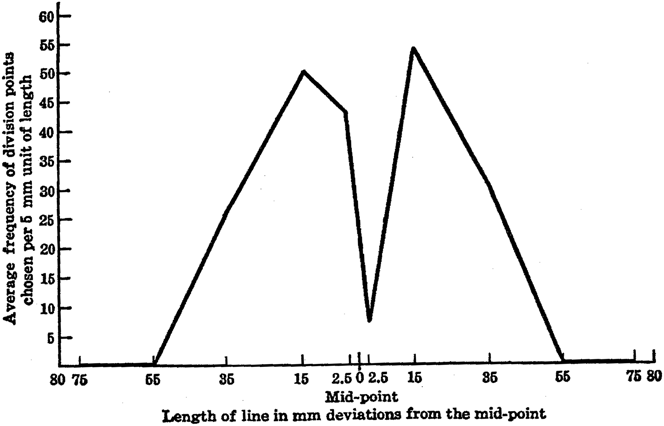
The Achievement Motive “leaned heavily on Helson’s formulation of the concept of adaptation level” (McClelland et al. Reference McClelland, Atkinson, Clark and Lowell1953, p. 44), and challenged most of the available theories of motivation by introducing an “affective arousal model.” Instead of considering behavior as motivated by biological survival needs (survival models), or aroused by different kinds of stimuli (stimulus models), the affective model explained “goal oriented ‘free’ choice behavior” as resulting from the pleasure or pain (i.e., affect) aroused by discrepancies from adaptation levels (ibid., p. 14). Based on a series of experiments (similar to Haber’s; see Figure 2), McClelland et al. argued that small discrepancies from adaptation levels yielded positive affect (pleasure), while larger ones yielded negative affect (pain), and both motivated purposive behavior.
Haber’s Discrepancy Theory Experiment (Haber Reference Haber1958, p. 373 [Fig. 2.2]).
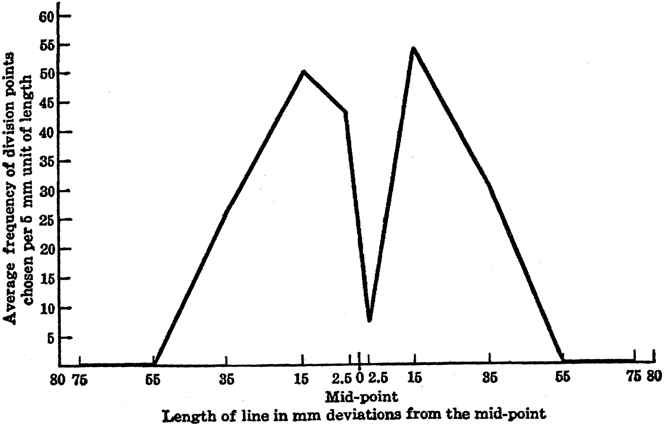
In subsequent discussions about the affective arousal model, Haber (Reference Haber1958) validated McClelland et al.’s (1953) theory through a now renowned experiment (more about this in the last section) that evaluated discrepancies from ALs by observing people’s “hedonic choices” between water buckets at different temperatures. Footnote 8 The hedonic choices observed were represented as in Figure 2 and used to explain how pleasure arose from “small discrepancies from sensory adaptation levels,” while displeasure arose from “larger discrepancies” (Haber Reference Haber1958, p. 382).
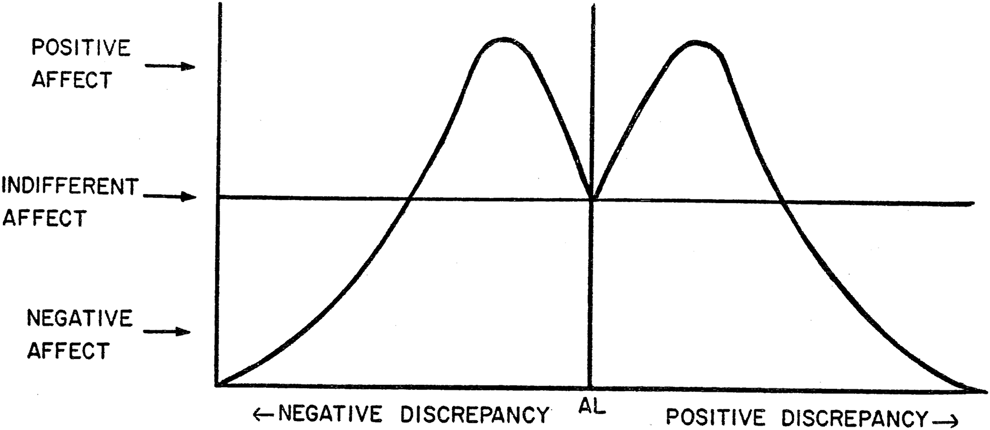
Thus, AL theory became foundational to a “two-factor theory of motivation,” according to which individuals approach pleasurable objects (small discrepancies), while avoiding displeasure (larger discrepancies) (Haber Reference Haber1958, p. 375). Haber’s findings were later borrowed by Helson himself as their “butterfly curves” (Figure 3)—stylized representations of the discrepancy theory of affect—spread throughout experimental psychology. Footnote 9
A “Butterfly Curve” (Haber Reference Haber1958, p. 371 [Fig. 6.3]).

AL Theory: An Approach to Behavior (1960s)
In 1964 Helson published the full version of his theory, a book articulating decades of research by many authors in different subfields. That research was synthesized into a general theory built around the AL concept, and presented as an “experimental and systematic approach to behavior.” Footnote 10
Helson highlighted the relativistic character of AL theory as one of its main features. While considering Fechner’s analysis as a “first step in the direction of a relativistic psychophysics” (Helson Reference Helson1964, p. 30), he presented his own theory as the first “truly relativistic approach to behavioral phenomena” (ibid.). Footnote 11 For Helson, AL theory was fully relativistic as it considered the study of both the “quantities defining the stimulus” and those “specifying the state of the organism” or adaptation level (ibid., p. 31). Based on that description, he then redefined his theory once again, this time as a general theory capable of handling an even wider variety of topics:
The basic premise of this book is that an individual’s attitudes, values, ways of structuring his experiences, judgments of physical, aesthetic, and symbolic objects, intellectual and emotional behavior, learning, and interpersonal relations all represent modes of adaptation to environmental and organismic forces. These forces do not act willy-nilly upon the organism from without, nor do they erupt spontaneously from within. Stimuli impinge upon organisms already adapted to what has gone before, and internal states depend upon previously existing internal conditions as well as external inciters to action. (ibid., p. 37)
In continuity with his previous research, Helson gave a mathematical formulation of the concept of “behavioral adaptation level” (A), which was the pooled effect of three classes of stimuli: focal (X), background or contextual (B), and residual or past (R). That level was then formally described as the weighted product (p+q+r=1) of all these stimuli: A = X
p
B
q
R
r
; and in log form:
 $\log A = p\log \overline X + q\log B + r\log R$
. This version of the theory was then shaped into behavioral sciences in an attempt to explain virtually all living phenomena. However, that attempt implied conceiving of organisms as “space-time averaging mechanisms” (ibid., p. 63), a prospect that became less successful than the narrower (and less ambitious) project of applying the AL principle to just perception and human judgment.
AL Theory and the Social Problem (1970s)
In 1970 there was a symposium held to honor Helson, who would soon retire from his professorship at the University of Massachusetts (Appley Reference Appley1971b). The symposium participants were Helson’s closest co-workers, associates, and other invited psychologists who had used the theory in different areas. Discussions at these meetings are interesting to explore, as they involved “political-economic-social” implications and applications of AL theory connecting with the history of economics. Footnote 12
Helson’s own talk at the symposium addressed the main critiques raised against AL theory. He claimed that his program was compatible with (rather than an alternative to) other approaches like Gestalt psychology. He also proposed additional extensions and applications of the theory, this time to the formation of “classes” (i.e., norms or standards) around adaptation levels, a topic related to developmental psychology (the study of human development from childhood through aging). Footnote 13 By analyzing the establishment of such internal norms, AL theory would also become capable of explaining learning mechanisms (Helson Reference Helson and Appley1971, p. 15).
The AL theory was useful for understanding phenomena such as the “liking for foods,” the “appreciation of art,” and “striving for goals” (Helson Reference Helson and Appley1971, p. 16), but Helson also considered AL theory as a means for elucidating the “ethical and moral bases” of behavior, including the laws by which they emerge and develop. These late extensions of AL theory were Helson’s own expression of a zeitgeist, which involved many other critiques of Western affluent societies during the late 1960s and 1970s (see Yarrow Reference Yarrow2010; Edwards Reference Edwards2014). Those critical views were influenced by Cold War issues, and written by behaviorists such as Burrhus Frederick Skinner and economists such as Galbraith, Mishan, and Scitovsky (see below).
For Helson, society was in a time of crisis, the causes of which were “rooted in psychological mechanisms” that had been studied “for years in both human and subhuman subjects” (Helson Reference Helson and Appley1971, p. 17). Like other academic critics of affluence, he proposed his theory as helpful for solving such socio-economic problems. He interpreted American society as affected by “extreme contrasts” (i.e., like in color vision), which, amplified through mass media, could easily develop into great “dissatisfactions and disequilibria”:
Contrast the superabundance of wealth with extreme poverty almost side by side…. The perception of these contrasts in modern media of communication, most of them visual, affects every individual who watches television, goes to the movies, or looks into the popular magazines. The facts learned about the role of anchors and much else concerned with internal norms carry directly over to our perception of social, political, and economic conditions. Using this knowledge rightly may show that psychology is more than a purely academic subject and that our experiments and theories can enable us to understand what is going on in the world about us as well as in the contrived world of the psychology laboratory. (ibid.)
These thoughts by Helson eventually led the whole AL theory symposium to discuss “outside the laboratory” about the usefulness of the theory for planning the “good society” (ibid.); in other words, to make Helson’s theory relevant (Appley Reference Appley1971b; Helson Reference Helson1972).
IV. AL THEORY AND HAPPINESS (1970s)
The Hedonic Treadmill
Brickman and Campbell’s “Hedonic Relativism and Planning the Good Society” (1971) was the immediate product of discussions within the Helson symposium on transforming “laboratory-derived principles into possible real-world practices” (Appley Reference Appley1971b, p. 285). Footnote 14 The essay was prepared after the meeting and was, in a sense, the joint product of all the symposium participants during a “highly spirited 2-hr discussion” led by Campbell (ibid.). The transcript of that session became the base for the now renowned paper that introduced the “hedonic treadmill.”
Happiness—defined as a state of “subjective pleasure”—was naturally considered as subject to the “fundamental postulate of AL theory,” and a happy society attainable only through understanding AL phenomena, something past planners had lacked (Brickman and Campbell Reference Brickman, Campbell and Appley1971, pp. 287–288). Unlike welfare economists—who had traditionally been “gloomy about measuring and comparing the subjective satisfactions that people derive from goods” (ibid., p. 288)—they followed those who had “long been committed to trying to assess such satisfactions in laboratory settings” (ibid.). Their discussion was organized around two general themes:
The pessimistic theme is that the nature of AL phenomena condemns men to live on a hedonic treadmill, to seek new levels of stimulation merely to maintain old levels of subjective pleasure, to never achieve any kind of permanent happiness or satisfaction. The optimistic theme is that regardless of this ultimate impossibility, there are still wise and foolish ways to pursue happiness, both for societies and for individuals, and, from a planner’s point of view, there are certain distributions of goods over time, persons, and modalities that will result in greater happiness than others. (ibid., p. 289)
Planning for the good society, “a task for optimists,” they claimed, would not succeed unless designed by those thoroughly understanding of the “relativistic and elusive character of subjective pleasure” (Brickman and Campbell Reference Brickman, Campbell and Appley1971, p. 289). The two possibilities for keeping stimulus levels above ALs (i.e., to get pleasure) were to systematically increase stimuli, or to prevent ALs from continually rising. But because systematically increasing stimuli was impractical—due to the hedonic treadmill—they focused instead on specifying “situations in which AL phenomena either do not hold or can be modified” (ibid.).
On Comparisons and (Finally) Economics
Comparisons (i.e., temporal, spatial, and social discrepancies from ALs) were identified as processes that could be manipulated to influence happiness (Brickman and Campbell Reference Brickman, Campbell and Appley1971, p. 290). They were analyzed through economic approaches, especially Duesenberry’s (1949) theory of relative incomes and The Affluent Society by Galbraith (Reference Galbraith1958). Galbraith’s “squirrel wheel” model was one among the variety of topics considered within the AL theory framework. Footnote 15
Social comparisons, in particular, were indicated as “perhaps the most potent mechanism for establishing hedonic AL” (Brickman and Campbell Reference Brickman, Campbell and Appley1971, p. 294). Like many other critics of affluence, participants at the Helson symposium pointed out how the individuals’ expected reward levels were established against the reward levels of other people (ibid.). They claimed that the unrestricted range of comparisons, made available through mass media (especially movies and television), had enlarged the universe of unfavorable comparisons, with its “detrimental effects on hedonic AL” (ibid., p. 296). Social planners, they claimed, should be aware of the importance of allowing people to “maintain favorable comparisons,” while at the same time being careful about restricting their freedom (ibid.).
By eroding traditional controls on comparisons, the modern industrial society was pointed out as responsible for the “revolution of rising expectations” (Brickman and Campbell Reference Brickman, Campbell and Appley1971, p. 296). Like Galbraith (Reference Galbraith1967) or Mishan (Reference Mishan1967), these psychologists saw a “highly explosive” phenomenon, which was “shaking the world” (ibid.), and they urged economists to better look at the welfare effects of their proposed social programs. As shown below, these issues discussed at the Helson symposium were also explored by Scitovsky in The Joyless Economy (1976), and by Brickman et al. (Reference Brickman, Coates and Janoff-Bulman1978) in an empirical study of relative happiness.
The Joyless Economy
Tibor Scitovsky’s The Joyless Economy (1976) was an attempt to translate The Affluent Society into the academic language of economists (Edwards Reference Edwards2014), and it did so by proposing a “psychology and economics of motivation” that reformulated consumer demand theory. Scitovsky drew heavily from motivational psychology—especially that in Daniel Berlyne’s Conflict, Arousal and Curiosity (1960)—and advanced two motives explaining consumer behavior in affluent contexts: the “pursuit of novelty” and the “seduction of comfort.” Once enjoying the comfort of having wants satisfied (like people in affluent households), organisms supposedly behaved by seeking additional stimulation in new experiences. Interestingly, Scitovsky explained the attractiveness of such new experiences through a discrepancy theory of affect (remember McClelland et al. Reference McClelland, Atkinson, Clark and Lowell1953):
New and surprising sensations are sometimes frightening and shunned, at other times attractive and sought after. The apparent conflict is resolved when we distinguish differences in degree. The new and surprising is always stimulating, but it is attractive only up to a limited degree, beyond which it becomes disturbing and frightening. Attractiveness first increases, then diminishes with the degree of newness and surprisingness. That kind of relation is common in psychology, and will recur so often in later pages that it is worth illustrating here. (Scitovsky Reference Scitovsky1976, p. 34)
Scitovsky’s illustration was a butterfly curve borrowed from Berlyne’s (1960) theory of exploratory behavior. Unlike Berlyne, however, Scitovsky developed his own theory around the AL principle, creating a sort of variation of the theories of motivation of McClelland et al. (Reference McClelland, Atkinson, Clark and Lowell1953), Haber (Reference Haber1958), and Helson (Reference Helson1964):
Experiments measuring the arousing effect of such simple sensory inputs such as light and sound have shown that the point of origin, that is, the level where there is no arousing effect, is not the absence of light or sound, but whatever level of it the organism is already experiencing and has adapted to. This point of origin has been called the adaptation level. It is divergences from the adaptation level that are arousing, and equal divergences in either direction are, within a quite wide range, equally arousing…. Sometimes this is graphically expressed by a so-called butterfly diagram, which is obtained by drawing two inverted U-shaped curves, one to the right and one to the left of the adaptation level as the point of origin. (Scitovsky Reference Scitovsky1976, p. 40) Footnote 16
By analyzing the pursuit of novelty as one of his two motives, Scitovsky warned his readers that they required learning to actually enjoy that pursuit (i.e., to systematically create new discrepancies from the attained ALs). To that “skilled” form of consumption, he opposed “want satisfaction,” the comfort of which was responsible of creating “more occasions and larger areas of satiation” in the lives of affluent consumers (Scitovsky Reference Scitovsky1976, p. 71). Unfortunately, he claimed, that kind of comfort was always achieved “at the sacrifice of pleasure” (ibid.).
After shaping his two motives into a trade-off between “the pleasure of enjoying novelty” and the “comfort of having wants satisfied,” Scitovsky turned to challenging both consumer demand theory and the American lifestyle of the 1970s:
The economist, in his model of the consumer, does not include that part of the consumer’s need. And, more important, the consumer himself, at least in America, also seems reluctant to recognize his need for stimulus. That is reflected in the bias of our consumption pattern. Our American life-style provides much comfort, but little stimulation. That statement is so simple and so sweeping that one might hold it suspect, but it can be documented and explained. (Scitovsky Reference Scitovsky1976, p. 150)
Like other economists critical of affluence—like Galbraith (Reference Galbraith1958), Mishan (Reference Mishan1967), Staffan Linder (Reference Linder1970), Ernst Schumacher (Reference Schumacher1973), Easterlin ([1974] 2002), or Fred Hirsch (Reference Hirsch1976)—Scitovsky thought the solution came from improving (rather than increasing) consumption. For his specific problem (the joylessness of consumers), the remedy was “culture,” allowing American households to develop consumption skills necessary to release “society’s accumulated stock of past novelty” (ibid., p. 235). That released flow of novelty would then become available for consumers to choose whatever they considered “the most enjoyable and stimulating” (ibid.).
Is Happiness Relative?
In 1978 (the year after Helson died), psychologists Brickman et al. (Reference Brickman, Coates and Janoff-Bulman1978) produced and analyzed new data in order to explore the hedonic treadmill effects of winning a lottery or suffering a crippling accident. According to these psychologists, “the limits of the proposition that happiness is relative” had not yet been tested (Brickman et al. Reference Brickman, Coates and Janoff-Bulman1978, p. 918). They proceeded through the hypothesis that if happiness was “completely relative,” then groups receiving extremes of good and bad fortune should differ from one another in happiness “less than expected” (ibid.). Footnote 17 Helson’s theory was proposed as the best framework for considering that possibility, especially through Brickman and Campbell’s (1971) discussion of the hedonic treadmill (ibid.).
The relative happiness test found significant effects of adaptation on happiness (i.e., the hedonic treadmill), suggesting a series of implications. First, by ignoring the effects of adaptation, people overestimated “the magnitude, generality, and duration of other people’s feelings” (Brickman et al. Reference Brickman, Coates and Janoff-Bulman1978, p. 926). Second, that bias had serious consequences as people were likely to “cut off interaction” with the affected individuals, to either avoid “potentially embarrassing” comparisons, or even respond to what they anticipate to be “extremes of happiness or despair” (ibid.). Third, reduced interaction made it even more difficult for the affected individuals to reach new adaptations to their social environments (ibid.).
Brickman et al. (Reference Brickman, Coates and Janoff-Bulman1978) claimed that knowledge about AL theory could lead to a better society, with people less threatened to interact with others. Their conclusions thus joined McClelland’s (1971) about the importance of people being “taught the laws of hedonic relativism” to learn how to get greater satisfactions from life (McClelland Reference McClelland and Appley1971, p. 304). All contributions reviewed in this section, from Helson’s symposium to Scitovsky’s The Joyless Economy and Brickman et al.’s study, are part of a growing body of literature that developed during the 1970s. From there, and especially since the late 1990s, it has been joined by many others, creating rich happiness research in both psychology and economics. Footnote 18
V. AL THEORY AND BEHAVIORAL ECONOMICS (1970s–1980s)
As mentioned at the beginning of this essay, the rise of behavioral economics has motivated much research about the history of economics and psychology. In addition to retrospectives by behavioral economists and narratives on whether psychology has remained in or out of economics, there is a recent trend towards rediscovering the history of the two disciplines (e.g., Hands Reference Hands2011; Heukelom Reference Heukelom2012; HOPE special issue 2016). In that process, the history of behavioral economics has been enriched with distinctions between current and past approaches, which are discussed here in relation to Helson’s theory.
AL Theory and the “Old” vs “New” Behavioral Economics
According to recent historical surveys, there are many different “psychologically inspired” economists (Hands Reference Hands2011) in the “tradition” leading to the establishment of behavioral economics (Angner and Loewenstein Reference Angner, Loewenstein and Maki2012). In addition to the work on utility of classical economists and early marginalists (such as Adam Smith, Jevons, and Edgeworth), the list of precursors includes American institutionalists (Thorstein Veblen, Wesley Clair Mitchell, John Maurice Clark), macroeconomists (Irving Fisher, John Maynard Keynes), those involved in the ordinalist revolution (William R. Allen, John Hicks, Samuelson, Slutsky, Pareto), and several others such as Scitovsky, Duesenberry, Harvey Leibenstein, and Kenneth Boulding. Historical connections between economics and psychology are indeed remarkably frequent. This last section points out just the few episodes in which AL theory relates to that story. As stated earlier, the specific connection between AL theory and economics happens mostly within behavioral economics, the other main thread being happiness research (above).
The term “behavioral economics” has been used since the 1950s, but became frequent only after the late 1970s, with the emergence of a new form of behavioral economics (Sent Reference Sent2004; Heukelom Reference Heukelom2012). Unlike old behavioral economists—who expressed a “dissatisfaction with mainstream economics”—the new ones respect the rationality assumption and tend to follow the mainstream (Sent Reference Sent2004, pp. 742–743). Footnote 19 Helson’s theory has traveled into the new (rather than the old) behavioral economics, specifically though the work of Kahneman and Tversky (Reference Kahneman and Tversky1979) and some of their closest followers.
“Prospect Theory” (Kahneman and Tversky Reference Kahneman and Tversky1979) is indeed the most influential article ever referring to Helson in an economics journal. Its value function (i.e., the core of that theory) evaluates gains and losses relative to dynamic reference points. Unlike previous research, like Markowitz’s (1952) “level of customary wealth,” the new reference points are explicitly defined as adaptation levels and explained through Helson’s theory: Footnote 20
An essential feature of the present theory is that the carriers of value are changes in wealth or welfare, rather than final states. This assumption is compatible with basic principles of perception and judgment. Our perceptual apparatus is attuned to the evaluation of changes or differences rather than to the evaluation of absolute magnitudes. When we respond to attributes such as brightness, loudness, or temperature, the past and present context of experience defines an adaptation level, or reference point, and stimuli are perceived in relation to this reference point (Helson Reference Helson1964).… value should be treated as a function in two arguments: the asset position that serves as reference point, and the magnitude of the change (positive or negative) from that reference point. (Kahneman and Tversky Reference Kahneman and Tversky1979, p. 277)
Like Helson, Kahneman and Tversky applied the AL principle beyond mere perception (i.e., to non-sensory attributes like health, prestige, and wealth). Unlike Helson, however, they made their theory a model of choice, explaining individual decision making under risk. Prospect theory was created in dialogue with the field of behavioral sciences, including psychology, economics, operations research, and decision theory (Heukelom Reference Heukelom2012). Footnote 21 It was proposed from within (rather than opposed to) expected utility theory, and shaped to “fit an economic audience” (Kahneman and Tversky Reference Kahneman and Tversky1979, p. 809). That process took around four years, and was achieved by explicitly relating the new theory to work by von Neumann and Morgenstern, Friedman and Savage, Maurice Allais, Daniel Ellsberg, Markowitz, etc. Footnote 22
Did Behavioral Economists Adapt to AL Theory?
One of the main features of the new behavioral economics is its descriptive vs. normative distinction that twists the traditional positive/normative dichotomy of economics (see Thaler Reference Thaler1980; Hands Reference Hands and Maki2012). Since Kahneman and Tversky (Reference Kahneman and Tversky1979), behavioral economics is directed against only part of expected utility theory (its descriptive aspect), while preserving the core of the standard approach (its normative aspect, which means assuming rational behavior as a standard or norm). This position remains one of the factors explaining why behavioral economists have been going mainstream during the last decades (Rabin Reference Rabin2002).
In the strategy of behavioral economists of supplementing (instead of replacing) the methods and assumptions of mainstream economics, the different principles borrowed by them from psychology tend to be “simply” translated as (just) new assumptions about preferences (Rabin Reference Rabin2002, pp. 659–663). These variations are presented as “among the least radical changes one can make to economics” (ibid., p. 663). Like all other elements borrowed from psychology, Helson’s theory has traveled somewhere in the periphery (i.e., not the core) of the new program. In other words, AL theory has been imported as a “departure from” (ibid.) or anomaly of economic behavior, and is not as essential for behavioral economists today as it was in Kahneman and Tversky’s original theory. Footnote 23
As noted by Matthew Rabin (Reference Rabin1998), Helson’s theory inspires the reference-dependence category including diminishing sensitivities, loss aversions, and endowment effects (Rabin Reference Rabin1998, pp. 13–16). In addition to Kahneman and Tversky (Reference Kahneman and Tversky1979), AL theory has been explicitly referred to by Kahneman and Tversky (Reference Kahneman and Tversky1984), Kahneman and Richard Thaler (1991), Colin Camerer et al. (Reference Camerer, Babcock, Loewenstein and Thaler1997), Rabin (Reference Rabin1998), and George Loewenstein et al. (Reference Loewenstein, O’Donoghue and Rabin2003) to discuss these kinds of topics. However, this list remains remarkably short, compared with how often the concept of adaptation is used by behavioral economists. Footnote 24
Behavioral economics today rarely acknowledges Helson or AL theory, let alone their history. In Thinking, Fast and Slow, Kahneman’s (2011) historical survey makes no mention of what has been discussed throughout this essay. Instead, he sets up an easy do-it-yourself experience with water buckets (remember Haber Reference Haber1958) to explain the concept of adaptation level:
Evaluation is relative to a neutral reference point, which is sometimes referred to as an ‘adaptation level’. You can easily set up a compelling demonstration of this principle. Place three bowls of water in front of you. Put ice water into the left-hand bowl and warm water into the right-hand bowl. The water in the middle bowl should be at room temperature. Immerse your hands in the cold and warm water for about a minute, then dip both in the middle bowl. You will experience the same temperature as heat in one hand and cold in the other. For financial outcomes, the usual reference point is status quo, but it can also be the outcome that you expect. (Kahneman Reference Kahneman2011, p. 282)
References to AL theory seem to be disappearing from behavioral economics, perhaps because “reference to concepts rather than names” is indeed the “natural development in the growth of a science” (Helson Reference Helson and Appley1971, p. 5). Robert K. Merton (Reference Merton1949) described stories like this one as “obliterations by incorporation,” which lead to ignoring the sources of supposedly new ideas. Or perhaps Kahneman (Reference Kahneman2011) was just thinking too fast? While the history of AL theory may be unnecessary to make behavioral economics, it is, however, important in order to help us appreciate its history, as well as to understand the broader relationship between psychology and economics.
VI. CONCLUSIONS
Harry Helson’s Adaptation-Level (AL) theory began with a series of Gestalt-type studies of color perception, but turned into a broad research program applying the AL principle to a wide range of topics. Although he was recognized by the Distinguished Scientific Contribution Award of the American Psychological Association in 1962, it has been claimed that Helson “never fully received the recognition he deserved” (Bevan Reference Bevan1979, p. 158). Helson himself understood that lack of personal recognition was due to the acceptance of AL theory as elementary/common knowledge (i.e., reference to concepts rather than names). Something similar seems to be happening with his theory within behavioral economics.
The AL theory arose from experiments in a “color booth,” which were extended to the analysis of new forms of stimulation, and then even further on to the study of human judgment. It made its main impact during the 1950s and 1960s, as it involved the study of affectivity, motivation, and behavior, through the “discrepancy approach” developed by McClelland et al. (Reference McClelland, Atkinson, Clark and Lowell1953), Haber (Reference Haber1958), and Helson (Reference Helson1964) himself.
Once shaped into motivational psychology, AL theory spread throughout literature, as did the “butterfly curves,” which traveled to welfare analysis (e.g., Brickman and Campbell Reference Brickman, Campbell and Appley1971; Scitovsky Reference Scitovsky1976). This happened along a broader discussion about the problems created by mass production and affluence in America and other western countries (e.g., J. K. Galbraith, E. Mishan, R. Easterlin, F. Hirsch), which initiated the now fruitful happiness research (Edwards Reference Edwards2010).
A different case is that of Helson’s theory and behavioral economics. While originally referring to AL theory, current work by behavioral economists tends to overlook Helson’s contributions. It might be right to present AL theory as sort of elementary/common knowledge (e.g., Kahneman Reference Kahneman2011), but that should not hide its history or the way it has traveled between disciplines. This essay intends to contribute to the history of economics and psychology. By presenting the history of AL theory, it also hopes to make Helson’s work accessible to those who may benefit from old solutions to their new problems.