Introduction
With human progress and technological development, preservation of natural resources and the environment have become two major goals, and saving energy and protecting the environment are urgent objectives. For mechanical equipment, small size, light weight, high power, high efficiency, high reliability, and environmentally friendly features are highly desired, and the demands and requirements for lubricants and additives are increasing yearly (Zzeyani et al. Reference Zzeyani, Mikou, Naja and Elachhab2017; Aramkitphotha et al. Reference Aramkitphotha, Tanatavikorn, Yenyuak and Vitidsant2019). In addition to the conventional requirements of viscosity and purity, friction property, extreme pressure tolerance, chemical stability, thermal stability, and material adaptability, lubricants should also avoid adding to environmental pollution. Traditional lubricants still dominate today, despite many restrictions under the conditions of high load, high speed, and operation under extreme conditions. Lubricants with excellent anti-friction and anti-wear properties can significantly reduce friction in machinery thus leading to improvements in terms of reliability, service life, and energy consumption. With increasing awareness of sustainable development, environmental pollution caused by lubricants has drawn wide attention. Traditional lubricants and additives have poor biodegradability and lead to the accumulation of significant toxicity which, in turn, causes serious pollution of the land, rivers, and lakes (Botas et al. Reference Botas, Moreno, Espada, Serrano and Dufour2017; Al Zubaidi and Al Tamimi Reference Al Zubaidi and Al Tamimi2018; Apóstolo et al. Reference Apóstolo, Tsagkaropoulou and Camp2019).
The increasingly stringent requirements set by the Chinese government for emission standards for motor vehicle emission of pollutants include limits on HC (hydrocarbons), NO x (nitrogen oxides), CO (carbon monoxide), PM (particulate matter), etc. Consequently, traditional lubricant additives containing sulfur, nitrogen, phosphorus, and other elements that cause environmental pollution are being replaced gradually (Gulzar et al. Reference Gulzar, Masjuki, Varman, Kalam, Zulkifli, Mufti, Liaquat, Zahid and Arslan2016; Kalam et al. Reference Kalam, Masjuki, Cho, Mosarof, Mahmud, Chowdhury and Zulkifli2017; Shara et al. Reference Shara, Eissa and Basta2017). Natural, non-metallic minerals with specific structures and performances will become important for lubrication because of their rich reserves, wide distribution, low energy consumption for processing and production, low environmental pollution, and low production cost (Hu et al. Reference Hu, Sun, Song, Zhang, Li and Zheng2019; Tang et al. Reference Tang, Wang, Guo, Yang, Du, Liang and Zhang2016; Wang et al. Reference Wang, Xie, Liang, Fang, Piao, Hao and Wang2019). Studying the interaction between non-metallic minerals and lubricants and the effect of the mineral additives on the performance of lubricants is, therefore, of economic and strategic importance.
Sepiolite is a water-containing aluminum magnesium silicate mineral with a chain- or ribbon-like structure. The chains or ribbons consist of a layered structure of the 2:1 layer type. The ribbons are pulled together by Si–O–Si bonds to form a three-dimensional structure, and the resulting fibrous particles have open channels parallel to the long axis of the crystal, leading to significant adsorption capacity (Suárez & García-Romero Reference Suárez and García-Romero2012; Zhou et al. Reference Zhou, Li, Zhuang, Wang, Tong, Yang and Yu2017; Al-Ani et al. Reference Al-Ani, Gertisser and Zholobenko2018; Mateos et al. Reference Mateos, Vera-López, Díez-Pascual and San Andrés2018; Ouyang et al. Reference Ouyang, Gu, Zheng, Yang, Zhang, Jin and Jiang2018). In general, the pores in the layers of sepiolite can be widened to 0.38–0.98 nm, giving excellent physical and chemical properties and are easy to process (Lescano et al. Reference Lescano, Castillo, Marfil, Barbosa and Maiza2014; Mulders et al. Reference Mulders, Harrison, Christ and Oelkers2018; Wang et al. Reference Wang, Liang, Tang, Chen and Chen2014; Zhou et al. Reference Zhou, Zhao, Wang, Chen and He2016; Wang et al. Reference Wang, Zhang, Liang, Tang, Li and Shang2017). In recent years, sepiolite group minerals have been used widely in the fields of water treatment, polymer filler, soil remediation, etc. (Alan & İşçi Reference Alan and İşçi2014; Beauger et al. Reference Beauger, Lainé, Burr, Taguet and Otazaghine2015; Tang et al. Reference Tang, Wang, Liu, Tang, Zeng, Liang, Guan, Wang and Mu2016; Akkari et al. Reference Akkari, Aranda, Belver, Bedia, Amara and Ruiz-Hitzky2018; Burçak & Yalçın Reference Burçak and Yalçın2018; Herrero et al. Reference Herrero, Núñez, Gallego, Merino and Pastor2018; Zhang et al. Reference Zhang, Yan, Fu, Zhang, Yang, Ouyang and Chen2018). Harmful chemicals in wastewater can be removed effectively by means of the adsorption and ion-exchange performance of sepiolite. Few reports about the interaction between sepiolite and lubricants have been published. In a previous study, sepiolite nanofibers were prepared using a high-speed airflow technique (Liang et al. Reference Liang, Wang, Tang and Ren2009). The purpose of the present study was to use the sepiolite prepared in that way as a novel lubricant additive, and to investigate systematically the effects of its surface properties and in terms of the amount of sepiolite added on the performance of the lubricants.
EXPERIMENTAL
Materials
Sepiolite powders were purchased from the Henan LB Sep Co. (Henan Province, China) and they consist mainly of SiO2 (54.36 wt.%), MgO (35.56 wt.%), CaO (5.67 wt.%), and Fe2O3 (1.36 wt.%). KH560 (γ-(2,3-epoxypropoxy) propyl trimethoxysilane), KH570 (3-(methacryloxypropyl trimethoxysilane)), and KH590 (3-(mercaptopropyl trimethoxysilane)) are silane coupling agents which were supplied by Nanjing Shuguang Chemical Group Co., Ltd. All other chemical reagents were purchased from Tianjin Damao chemical reagent company (Tianjin, China).
Preparation
The high-performance sepiolite mineral nanofibers were prepared mainly by acid treatment and air-flow defibering procedures in sequence. For defibering, the bundled sepiolite powder was placed in a jet mill and subjected to deep desorption treatment under a certain airflow pressure and a specific rotation speed by a supersonic gas flow, in order to obtain nm-sized mineral fibers (Wang et al. Reference Wang, Liang, Tang, Chen and Chen2014), and the as-prepared sepiolite powders were modified by an organosilane coupling agent, in order to control the surface groups and improve the uniform dispersion of the sepiolite. A typical preparation was as follows: firstly, 30 g of sepiolite mineral fibers was dispersed in 400 mL of distilled water, and a sepiolite mineral suspension was obtained through continuous stirring. Secondly, various amounts of the coupling agent (i.e. 0.3, 0.9, and 1.5 g) were dissolved in anhydrous ethanol and the pH was adjusted to ~4 using acetic acid, and the anhydrous ethanol solution of the coupling agent was added dropwise to the sepiolite suspension and stirred for 2 h in a water bath. After that, the modified sepiolite solid was separated from the mixture by vacuum filtering and washed several times with anhydrous ethanol and distilled water in sequence. Finally, the modified sepiolite solid was dried at 60°C for 12 h, and the dry cake was crushed and ground into a powder using a 200 mesh sieve. Based on the type and the amount of the coupling agent, the samples were denoted as 0.3 KH560, 0.9 KH560, 1.5 KH560, 0.3 KH570, 0.9 KH570, 1.5 KH570, 0.3 KH590, 0.9 KH590, and 1.5 KH590, respectively.
The oil samples were prepared according to the following procedures: the lubricant was prepared and the various sepiolite samples were added to the lubricant samples prepared at various mass ratios. At the same time, a sample, without added minerals, was set as the control. All the oil samples were placed in containers in a water bath, cooled to room temperature, and then heated at 90°C for 12 h; the process was repeated 16 times.
Measurement
The acid value, degree of copper corrosion, oxidation stability, pour point, and kinematic viscosity of the lubricants were measured according to the GB/T264-83, GB/T5096, SH-T0193, GB/T3535, and GB/T265 standard methods, respectively (Martini et al. Reference Martini, Ramasamy and Len2018; Wu et al. Reference Wu, Fei, Zhang and Zong2017). The zeta potential of the sepiolite particles was measured at 20 ± 2°C using a JS94H2 zeta instrument equipped with a microprocessor unit (Shanghai Zhongchen digital technology company, Shanghai, China), which calculated automatically the electrophoretic mobility of the particles and converted those values to zeta potential values in accordance with the Smoluchowski equation. A 0.1 g sepiolite sample was conditioned in 50 mL of distilled water and stirred with a magnetic stirrer for 10 min. The samples were then centrifuged at 350×g for 10 min, which created three zones within the centrifuge tube: a clear supernatant in the upper part, a cloudy supernatant in the middle, and solids accumulated into a bed at the bottom. The cloudy supernatant was used to measure the zeta potential. The zeta potential values were measured at least five times and the average value was recorded and reported.
Contact angles of powders were measured using capillary penetration measurements (DataPhysics DCAT21, Dynamic Contact Angle Meter and Tensiometer, DataPhysics Instruments GmbH, Filderstadt, Baden-Wurrtemberg, Germany). The surface free energy, dispersive interaction, and polar interaction were calculated from the contact angles based on two or more different types of liquid using Wu's equation (Wu 1971; Tang et al. 2015; Kolodin & Bulavchenko, 2019)

where
 and
 are the dispersive interaction and polar interaction of the solid, respectively;
 and
 are the dispersive interaction and polar interaction of liquid, respectively; and θ is the contact angle.
RESULTS AND DISCUSSION
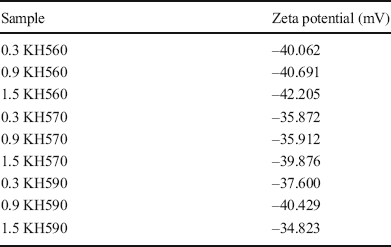
The zeta potential is an important property of powder particles and reflects the type and density of the charges. The zeta potentials measured at pH 7 for the various modified sepiolite mineral samples (Table 1) revealed that the modified sepiolite sample 1.5 KH560 has the largest zeta potential, with a value of ~42.2 mV. Generally, the dispersion stability of the particles in a liquid medium is closely related to their zeta potential, and the electrostatic repulsion between the particles and dispersion stability are improved with increasing absolute values of zeta potential. Therefore, the modified sepiolite sample 1.5 KH560 has the largest repulsive force between the particles and the best dispersion stability.
Zeta potentials of the sepiolite nanofiber samples modified by various amounts (i.e. 0.3, 0.9, and 1.5 g) of KH560, KH570, and KH590

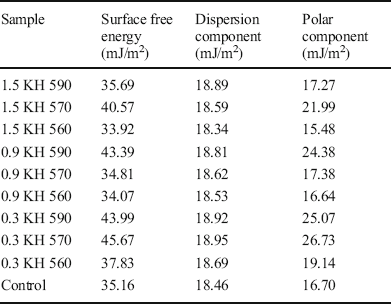
The surface free energy is a measure of the intermolecular force, and the agglomeration of particles increases with increasing surface free energy. Thus, the surface free energy has a significant influence on the dispersion performance of powders. The data in Table 2, before and after modification, indicate that the surface free energies of the sepiolite mineral fibers modified with various coupling agents are significantly different. The surface free energy of sample 1.5 KH560 is the smallest, implying that the attraction between the particles and the aggregation tendency are smallest. This phenomenon may be explained as follows: the untreated sepiolite mineral fiber surface (i.e. the control) had a strong polarity due to a large number of exposed hydroxyl groups, which decreased as Si–O–Si coupling increased due to the larger amount of coupling agent on the surface of the sepiolite mineral fibers, leading to the decrease in surface free energy (Benli et al. Reference Benli, Du and Celik2012; Burdzik et al. Reference Burdzik, Stähler, Carmo and Stolten2018; Schuster et al. Reference Schuster, Schvezov and Rosenberger2018). Based on this analysis, the 1.5 KH560 modified sepiolite with the largest absolute value of zeta potential and the smallest surface free energy was adopted as the additive to improve the performance of the lubricants.
Surface free energy of the sepiolite samples before and after modification

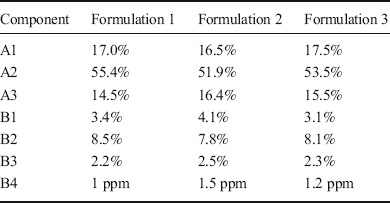
In general, lubricants are composed of base oils and additives. The base oil is the main component of the lubricant, and determines its basic properties. The additive is an important part of the lubricant, which is used mainly to make up and improve the base oil performance, thereby improving lubricant properties and extending its use to other, new fields. Many lubricating products are obtained by mixing two or more base oils, which have different viscosities, with the functional additive. In order to study the interaction between the inorganic mineral materials and lubricant, a commonly used lubricant with a wide range of uses was selected, namely, SM10W/40, a high-quality automotive lubricant designed for gasoline engines. With the problems outlined above in mind, three formulations were obtained by replacing base oil and additives with A1–A n and B1–B m , which is shown in Table 3.
Three typical base oils and four typical additives and their proportions in formulations 1–3

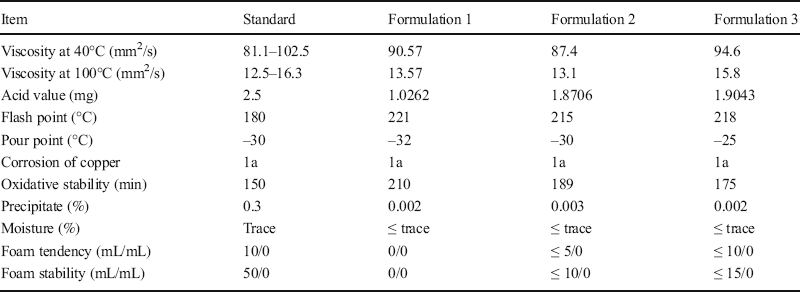
In accord with the preparation process, the lubricant samples were prepared after the oil formulation was determined. The base oil consists mostly of two kinds of base oils with different viscosities, which are determined by considering the actual working environment, production cost, production experience, and finished-product performance. Typically, the lubricant base oil formulation was placed in a container, heated to 50–60°C, and then various additives were added under constant stirring until they were mixed evenly. This is how the pilot process was carried out in the laboratory. For large-scale production of lubricant in a workshop, the base oil and additives should be combined in advance, and mechanical stirring (or compressed-air mixing), pumping cycle, static mixing, and other methods may be adopted. In the lab-scale process, the reaction kettle was heated continuously, and the formal product was obtained after the sample analysis had been verified. After that, the performance properties of the three samples were measured (Table 4) and the resulting values compared with the national standards. All formulations met the standard values, except in the cases of the pour point for Formulation 3. Formulation 1 performed better than Formulations 2 and 3 and, thus, was adopted as the lubricant formulation to be used in the subsequent tests.
Performance of the formulated samples

The copper standard colorimetric plate is composed of 13 printed aluminum strips with grades of 1a, 1b, 2a, 2b, 2c, 2d, 2e, 3a, 3b, 4a, 4b, 4c. Level 1a represents mild discoloration.
In order to study the effect of the sepiolite treatment on the lubricant performance, the lubricant was prepared by adding varying amounts (0.5 wt.%, 1.0 wt.%, 1.5 wt.%, or 2.0 wt.%) of sepiolite prepared in one of three ways (acid-treated, air-flow defibered, or KH560-modified). For comparison, a sample of un-adjusted lubricant was set as a control sample, and the kinematic viscosity, the acid value, and the pour point of each of the lubricants were then measured.
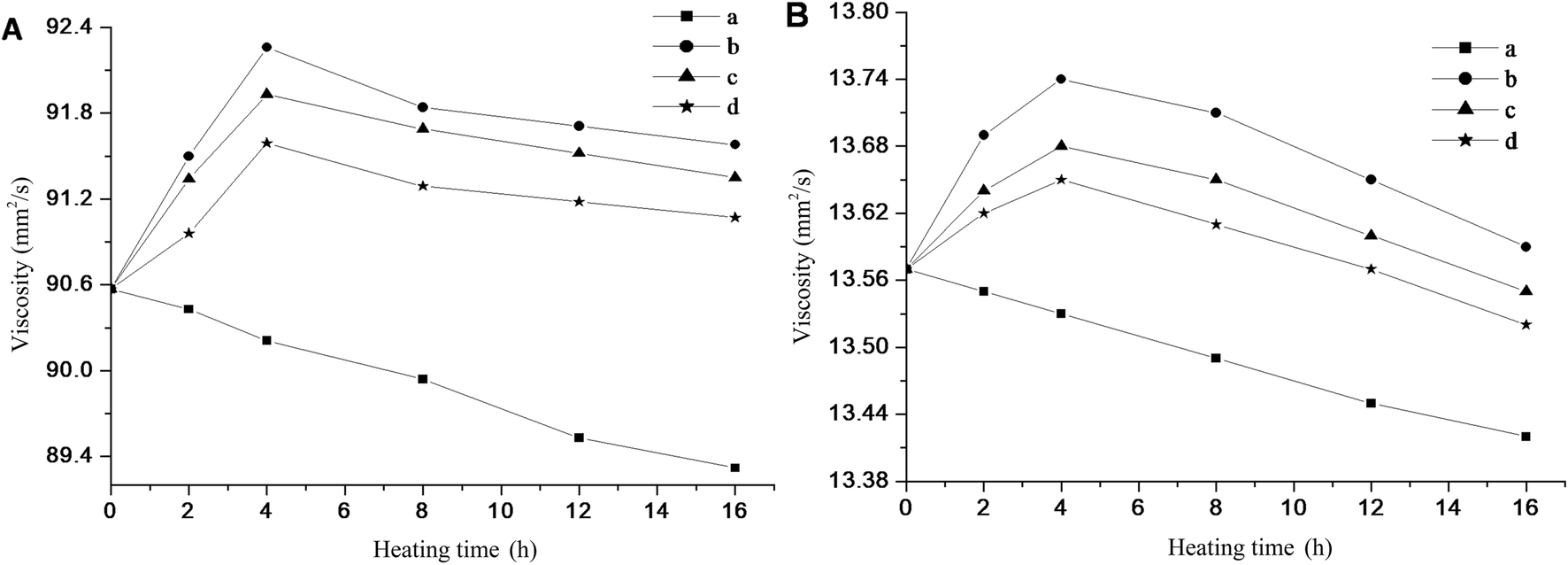
The viscosity is a measure of the frictional resistance between two parallel liquid layers when the liquid flows. The treated-sepiolite additives produced a greater viscosity of the lubricant than the control sample at 40°C and 100°C (Fig. 1) at all heating times. The viscosity of the control sample decreased steadily with time (overall by ~2%) at both temperatures, which is consistent with observations under normal operating conditions. The viscosity of the sepiolite-added lubricants increased at first and then decreased steadily. In all cases, the final viscosity was greater than that of the control sample. The viscosity of lubricant was increased by adding the acid-activated sepiolite; this is mainly due to the improvement in the pore structure following the acid activation of the sepiolite. The lubricant containing defibered sepiolite yielded the greatest viscosity, mainly because the defibered sepiolite particles with a small size and large surface energy are unstable when dispersed in the oil and reunite easily. The greater viscosity with the modified sepiolite is probably attributable to an increase in the electrostatic repulsion between the sepiolite particles caused by the coupling agent molecules on its surfaces, and the reduced van der Waals force could play a key role in the stability of the dispersion in the lubricant.
Viscosity vs. heating time at: (A) 40°C; and (B) 100°C of the various additives: (a) control; (b) defibered sepiolite nanofibers; (c) modified sepiolite nanofibers; and (d) acid-treated sepiolite

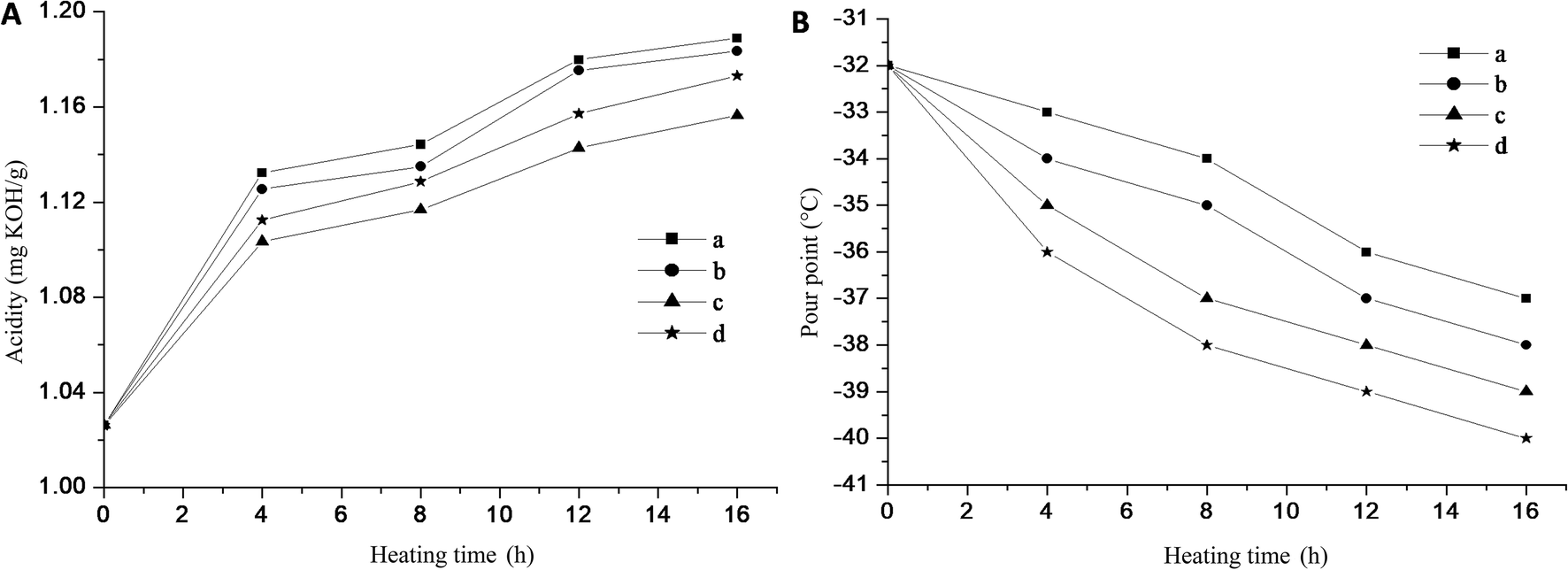
The acidity of the lubricant reflects the organic acid content in the oil and this causes a problem where the lubricating oil corrodes metals. The effects of the various treatment methods on sample acidity (Fig. 2A) indicated that the acid values of the four oil samples increased with increased heating time, and the acid-treated and modified sepiolite nanofiber additives reduced the acid value to much less than the control sample, by 13.1% and 11.9%, respectively. The trends were relatively flat, which indicated that the sepiolite had a slowing effect on the increased acid value in the working state of the lubricant, and the modified sepiolite nanofibers were the most effective. In practical terms, metal materials are easily corroded by lubricants with high acid values, and this is mainly related to the degree of oxidation of lubricant. When the acid value of a lubricant reaches a certain level, the engine lubricant should be replaced quickly; control of the acid value is important in extending the lubricant-replacement drain cycle.
Sample acidity (A) and pour point (B) vs. heating time for the sepiolite nanofibers with various treatment methods: (a) control; (b) defibered sepiolite nanofibers; (c) modified sepiolite nanofibers; and (d) acid-treated sepiolite

The pour point of the lubricant, the minimum temperature at which the cooled sample can flow under the specified test conditions, was adopted to measure the low-temperature fluidity of the lubricant. Generally, the low-temperature fluidity of the oil is better with a ‘lower’ pour point. The effect of the various sepiolite treatment methods on the sample pour point (Fig. 2B) showed that the pour point of the four oil samples decreased with heating time at 50–60°C, and the pour point of the oils can be decreased by adding different sepiolite samples, which is mainly due to the dispersion and stability improvement in the lubricant caused by the defibering of sepiolite nanofibers.
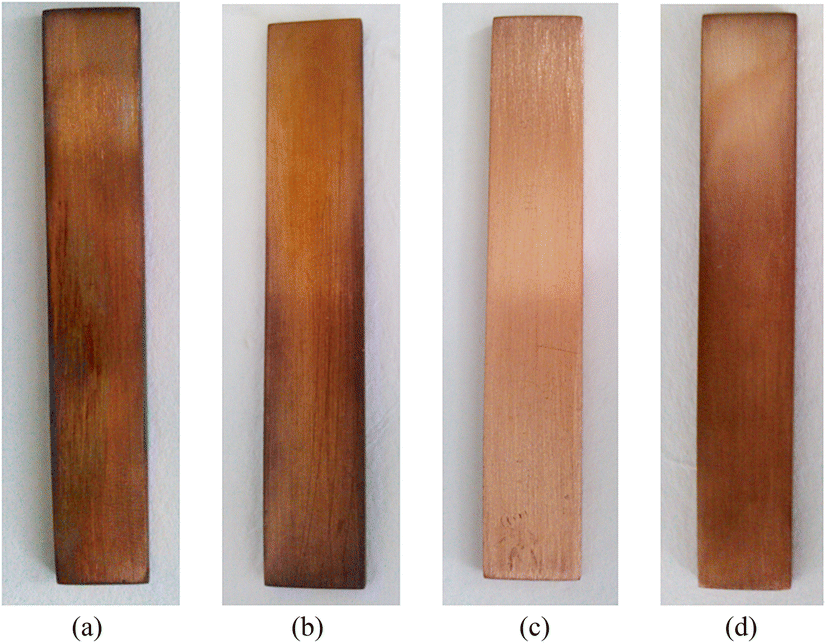
Copper corrosion tests (Fig. 3) revealed that corrosion levels were greatest with the control sample and least when using the lubricant with modified-sepiolite additive. In fact, the latter left the copper looking newly polished. Other sepiolite additives caused only mild or moderate corrosive discoloration (Fig. 3). These effects were clearly due to the dispersion and stability improvements in the lubricant brought about by the presence of sepiolite nanofibers.
Copper sheets in the lubricants containing various amounts of sepiolite nanofibers: (a) control; (b) defibered sepiolite nanofibers; (c) modified sepiolite nanofibers; and (d) acid-treated sepiolite

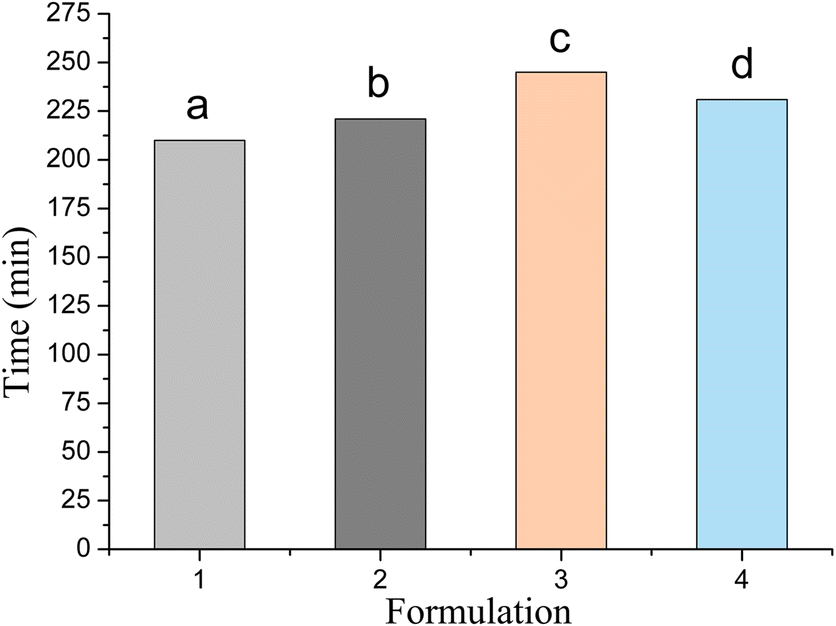
In order to determine the ability of petroleum products to resist the action of the atmosphere (or oxygen) and, thus, maintain their lubrication properties without permanent change, the oxidation stability of the lubricants with the various additives (i.e. sepiolite nanofibers) was tested by measuring the time required before oxidation occurred at 50–60°C. The tests revealed that the oxidation stability of lubricant containing the modified sepiolite nanofibers was the best (Fig. 4). The time taken to reach the definite pressure drop (indicating oxidation) was 245 min, 35 min longer than the control sample, implying that the oxidation stability of lubricants could be improved by adding modified sepiolite nanofibers.
Effect of sepiolite-treatment methods on sample oxidative stability: (a) control; (b) defibered sepiolite nanofibers; (c) modified sepiolite nanofibers; (d) acid-treated sepiolite. (As the lubricating oil is used over time, it comes into contact with external oxygen, water, dust, etc., resulting in a reduced life for the oil. The oxidative stability test of the general test oil involves a rotating oxygen bomb. The longer the test time while using the rotating oxygen bomb, the better the oxidative stability of the oil.)

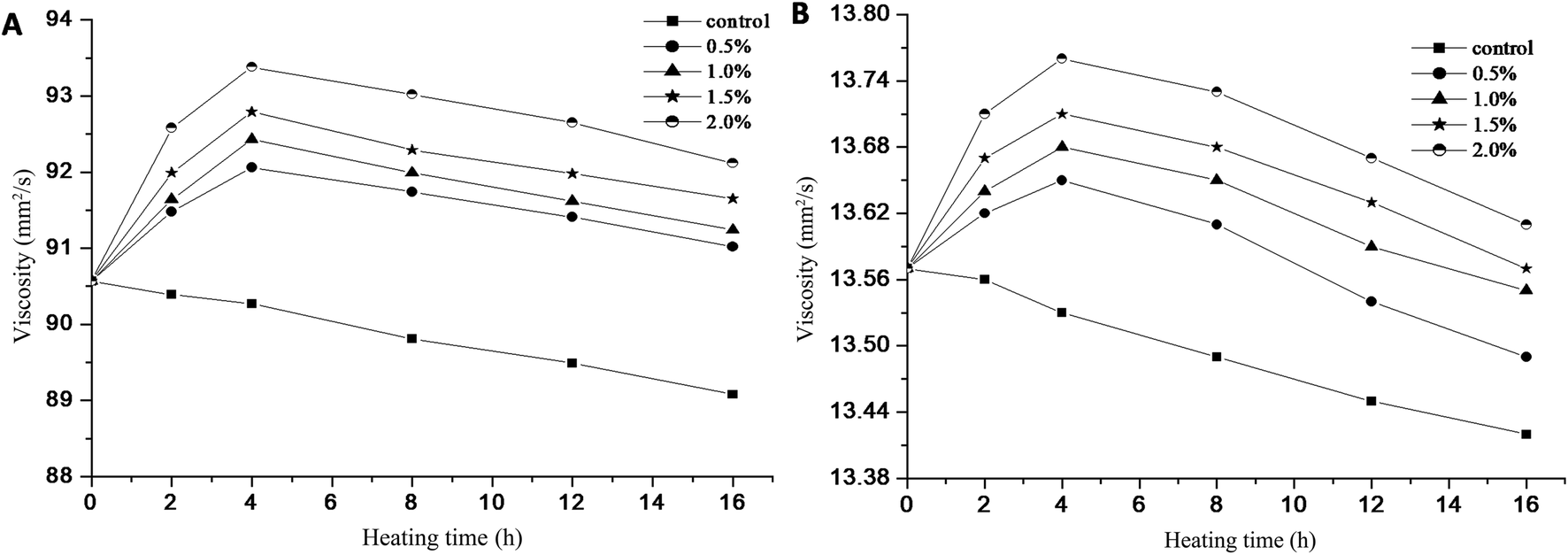
To further optimize the lubricant performance, the effect of the amount of sepiolite added was explored. The lubricant viscosity over time at 40°C and 100°C was, therefore, measured using varying amounts of modified sepiolite nanonfibers as the additive to the lubricant formulation. The viscosity of the lubricant containing the sepiolite additive increased then decreased with time at both temperatures (Fig. 5), whereas the viscosity of the control decreased. The extent to which the viscosity increased varied directly with the amount of additive. The trends were similar to those reported in Fig. 1. Specifically, the viscosity of the lubricant with 2% modified sepiolite addition was much greater than that of the control; this is favorable for lubricants used under normal operating conditions.
Effects of the amount of modified sepiolite nanofibers on lubricant viscosity over time at: (a) 40°C; and (b) 100°C

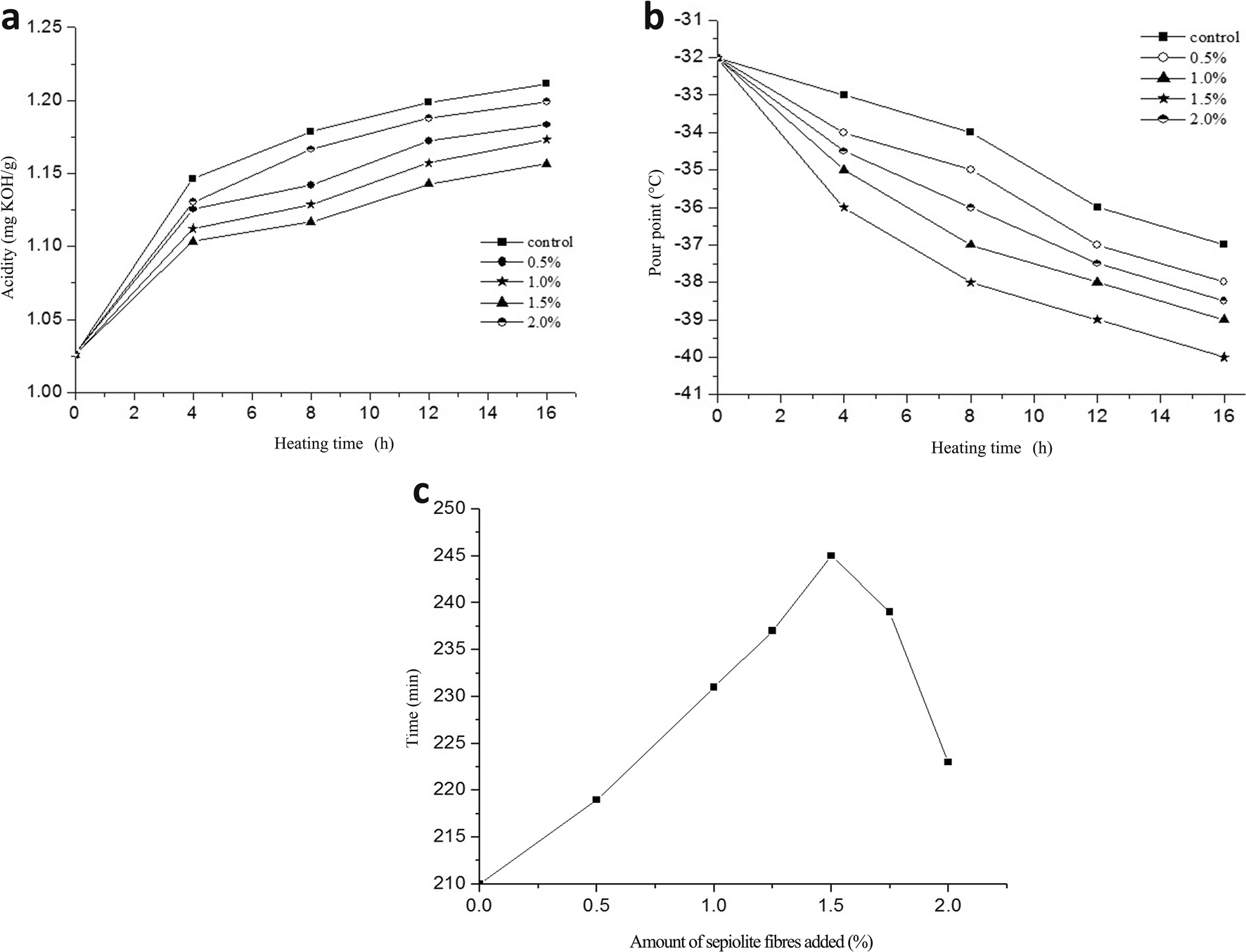
The effects of the amount of sepiolite added on the acid value, pour point, and oxidation stability of the lubricant sample are shown in Figs 6a, b, and c, respectively. Oil samples containing various amounts of sepiolite nanofibers showed similar increases in acid values (Fig. 6a) during heating. The acid value first decreased as the amount of sepiolite nanofibers rose from 0.5% to 1.5%, and then decreased with further increase in nanofibers from 1.5% to 2%. The decrease is probably attributable to the particle agglomeration caused by the overloaded sepiolite nanofibers.
Effects of the amount of sepiolite added on (a) acid value, (b) pour point, and (c) oxidation stability of the lubricant samples

The effect of sepiolite addition on the pour point (Fig. 6b) was that the pour point of the lubricants decreased with time, and the pour point of the lubricant containing 1.5% of sepiolite nanofibers reached its lowest value, much lower than that of the lubricant containing no sepiolite nanofibers, after 16 cycles. The effect of the amount of sepiolite added on the oxidation stability (Fig. 6c) was that oxidation stability of the lubricant increased first and then decreased with further addition of the sepiolite nanofibers; it was optimal when 1.5% of sepiolite was added.
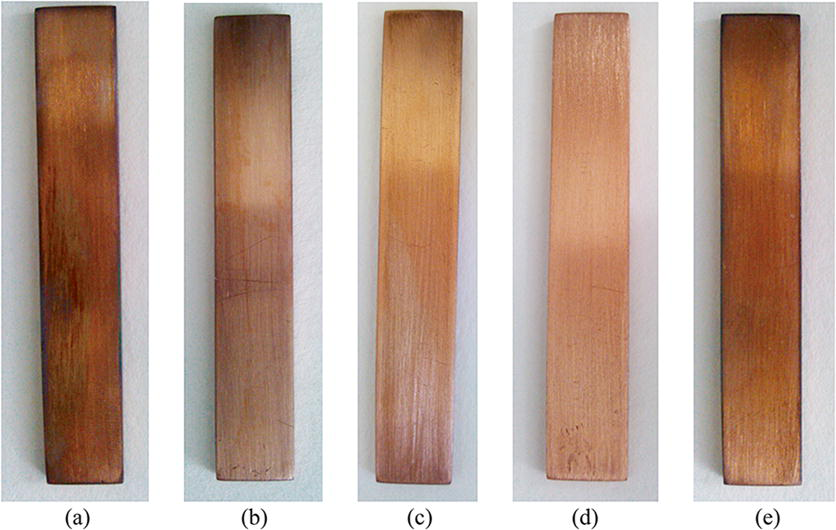
To study the effect of the addition of sepiolite nanofibers in the corrosion of copper, the variously modified lubricants were tested according to the GB/T5096-1985 copper corrosion test method (Fig. 7) (Xue et al. Reference Xue, Zhai, Chen, Li and Cai2011). The effect was that the copper corrosion levels (Fig. 7) of sample a (control sample), b (0.5%), and e (2%) were 2c (moderate discoloration), while the corrosion levels of the lubricant containing 1% and 1.5% modified sepiolite nanofibers (samples c and d) were 1b and 1a (mild discoloration), respectively. Sample d looked like newly polished copper, which is mainly attributed to the improvement in the dispersion and stability in the lubricant caused by the addition of the optimal amount of modified sepiolite nanofibers. The lubricant containing 1.5% modified sepiolite nanofibers had the best effect on the copper corrosion levels. Combined with the above index results for the lubricant containing various amounts of the modified sepiolite nanofibers, 1.5% is considered to be the optimal amount of modified sepiolite nanofibers to be added.
Effect of the amount of sepiolite added on copper corrosion: (a) control; (b) 0.5%; (c) 1%; (d) 1.5%; and (e) 2%

Lubricants age and deteriorate with use at elevated temperatures and pressures and in contact with harmful gases, liquids, and solids. Specifically, oxidation of the lubricant and the thermal degradation of additives will accelerate the oxidation of the oil products significantly. In these conditions, the lubricant is influenced by the aging reaction along with oxidation and catalysis, leading to a lower viscosity, higher acid value, and higher degree of copper corrosion. All these parameters can be improved by adding additives such as sepiolite minerals. First, sepiolite has the characteristics of strong polarity, large porosity, and large surface area, and the particles are rod-like, fine, and fibrous with the crystal structure leading to the extremely good adsorption capacity (Ruiz-Hitzky Reference Ruiz-Hitzky2001; Li & Henkelman Reference Li and Henkelman2017; Carmona et al. Reference Carmona, Ramírez, Trujillo-Cayado, Caro and Muñoz2018; Li et al. Reference Li, Luo, Kunal, Bonifacio, Duan, Yang and Henkelman2018; Wasim et al. Reference Wasim, Sabir, Shafiq, Islam, Azam and Jamil2017). In addition, the surface area of minerals is increased with increasing degree of fragmentation, and the mineral surface could spontaneously adsorb external ions or molecules due to the presence of the surface-breaking bond, and the availability of hydroxyl groups on the surfaces of the sepiolite nanofibers. All these factors retard the deterioration and aging of the lubricant during use.
Conclusions
The structure and performance optimization of sepiolite minerals, and the interaction between them and the lubricant were studied systematically. The surface free energy of sepiolite nanofibers was reduced through modification with an organosilane coupling agent, leading to improvement in the stability of dispersion of the sepiolite nanofibers in the lubricant. The lubricant tested was SM10W/40 gasoline engine oil, modified as follows: the amounts of the base oil added were 17%, 55.4%, and 14.5%, and the amounts of additives were 3.4%, 8.5%, 2.2%, and 1 ppm, respectively. The performance of the lubricant above can be summarized thus: the viscosity was 90.57 mm2/s at 40°C and 13.57 mm2/s at 100°C, the acid value was 1.0262 mg KOH/g, the pour point was –32°C, the copper sheet corrosion level was 1a, and the oxidation stability was 210 min. Based on the optimization of the mineral properties and the deployment of the lubricant, the effects of various treatment methods and various amounts of additive were examined and compared. The performance of the lubricant was improved significantly by adding 1.5% of the modified sepiolite nanofibers. The viscosity values at 40°C and 100°C were increased, and the copper sheet corrosion level was up to 1a as the lowest value. In addition, the acid value and pour point were decreased, and the oxidation stability was increased.
Acknowledgements
This work was supported financially by the National Natural Science Foundation of China (No: 51874115), Introduced Overseas Scholars Program of Hebei province, China (No: C201808), Excellent Young Scientist Foundation of Hebei province, China (No: E2018202241), and the Foundation of Key Laboratory of Clay Mineral Applied Research of Gansu Province, Lanzhou Institute of Chemical Physics, Chinese Academy of Sciences (NO: CMAR-2017-04).