


1. INTRODUCTION
The physics of inertial confinement fusion (ICF) is a field of very active research and requires fundamental studies of matter at high energy density. Theoretical and experimental investigations (Batani et al., Reference Batani, Dezulian, Redaelli, Benocci, Stabile, Canova, Desai, Lucchini, Krousky, Masek, Pfeifer, Skala, Dudzak, Rus, Ullschmied, Malka, Faure, Koenig, Limpouch, Nazarov, Pepler, Nagai, Norimatsu and Nishimura2007; Bret & Deutsch, Reference Bret and Deutsch2006; Gus'kov, Reference Gus'kov2005; Hora, Reference Hora2007; Ng et al., Reference Ng, Ao, Perrot, Dharma-Wardana and Foord2005; Sakagami et al., Reference Sakagami, Johzaki, Nagatomo and Mima2006; Sasaki et al., Reference Sasaki, Yano, Nakajima, Kawamura and Horioka2006; Someya et al., Reference Someya, Miyazawa, Kikuchi and Kawata2006) provide progress in deep understanding of physical processes in matter, which is transformed into a high energy density state under heating and compression. The theoretical study of physical processes has to include (1) gas dynamics, (2) photon transport processes, (3) equation of state, (4) radiative opacities (Zeldovich & Raizer, Reference Zeldovich and Raizer1966), which represent an important part of this study (Adamek et al., Reference Adamek, Renner, Drska, Rosmej and Wyart2006).
In the “indirect-driven” ICF scheme, hohlraums are used for efficient conversion of the laser energy into soft X-ray (Lindl, Reference Lindl1998). The interaction of the radiation with the hohlraum wall is characterized by multiple absorption and reemission of X-rays. Part of the absorbed energy is lost due to the radiation heat transport into the wall. Increase of the wall opacity via optimization of the material composition leads to reduced radiation energy transfer and increases the hohlraum albedo, which is the ratio of reemitted to incident X-rays. Some peculiarities of indirectly driven ICF target designs were discussed in a previous publications (Denisov et al., Reference Denisov, Orlov, Gus'kov, Rozanov, Zmitrenkop and Michailov2005; Borisenko et al., Reference Borisenko, Akunets, Bushuev, Dorogotovtsev and Merkuliev2003; Kilkenny et al., Reference Kilkenny, Alexander, Nikroo, Steinman, Nobile, Bernat, Cook, Letts, Takagi and Harding2005; Koresheva et al., Reference Koresheva, Osipov and Aleksandrova2005; Kyrala et al., Reference Kyrala, Delamater, Wilson, Guzik, Haynes, Gunderson, Klare, Watt, Wood and Varnum2005; Orlov et al., Reference Orlov, Guśkov, Pikuz, Rozanov, Shelkovenko, Zmitrenko and Hammer2007).
X-pinch plasma is a high brilliance SXR source produced by heating of two crossing X-shaped wires by a pulsed current of a high power driver (Zakharov et al., Reference Zakharov, Ivanenkov, Kolomenskii, Pikuz, Samokhin and Ulshmid1982; Shelkovenko et al., Reference Shelkovenko, Sinars, Pikuz and Hammer2001; Zou et al., Reference Zou, Liu, Zeng, Han, Yuan, Wang and Zhang2006). X-pinch based X-ray source is characterized by high brightness and spatial stability for a wide range of wire materials, wire diameters, and current pulse parameters (Shelkovenko et al., Reference Shelkovenko, Sinars, Pikuz and Hammer2001). A modern scheme of so-called symmetric multilayer X-pinch was recently developed (Shelkovenko et al., Reference Shelkovenko, Pikuz, McBride, Knapp, Wilhelm, Sinars, Hammer and Orlov2010).
The radiative characteristics of hohlraum wall plasmas and X-pinch plasmas depend on plasma temperature T, plasma densityρ, and plasma composition. The dependence of the radiative characteristics of the plasma on the X-ray source materials is one of the subjects of this paper. Another subject is connected with specific spectra of X-ray absorption and radiation for different materials.
The theoretical part of this paper gives a brief overview of different models used to calculate the radiative opacity of hot dense plasmas. Important features of the model used here are described. Two different physical approximations are proposed to estimate radiation efficiency for optically thick and optically thin plasmas. An optimizing procedure that can determine an effective complex material for producing optically thick plasma by laser interaction with a thick solid target is used. The radiation efficiency of the resulting material is compared with the efficiencies of different materials that have already been estimated theoretically (Suter et al., Reference Suter, Rothenberg, Munro, Van Wonterghem, Haan and Lindl1999; Callahan-Miller & Tabak, Reference Callahan-Miller and Tabak2000).
For optically thin plasmas, the Rosseland and Planck mean-free-paths are calculated for two exploding wire materials, NiCr and Alloy 188, at fixed temperature and different densities. Theoretical estimations of the X-ray source radiative efficiency are compared with experimental data on measurements of the X-pinch radiation energy yield. Theoretical discussion of the results is also presented. The next item is connected with a symmetric multilayer X-pinch, where tungsten W and molybdenum Mo wires are used (Shelkovenko et al., Reference Shelkovenko, Pikuz, McBride, Knapp, Wilhelm, Sinars, Hammer and Orlov2010). Theoretical explanation of experimentally obtained phenomena is discussed based upon W and Mo radiative spectra.
In the next part of this paper, the theoretical approach, which was developed and used in previous studies, is applied to temperature diagnostics of low Z foams in combined laser — heavy ion beam experiments. The experimental goal is the investigation of the heavy ion stopping mechanism in ionized matter (Hoffmann et al., Reference Hoffmann, Blazevic, Ni, Rosmej, Roth, Tahir, Tauschwitz, Udrea, Varentsov, Weyrich and Maron2005). Experiments require creating a plasma target, where dense homogeneous plasma can keep the temperature and density during further interaction with heavy-ion beam. This can be achieved by means of indirect-heating of polymer low density foams with hohlraum radiation.
For the characterization of temperature and ionization degree of indirect heated CHO-foams, measurements of photo-absorption K-edge energies in Carbon were used (Rosmej et al., Reference Rosmej, Orlov, Schäfer, Nisius, Wilhein, Suslov, Zhidkov and Zhao2009). If the plasma temperature increases, the state of the whole ensemble of plasma atoms and ions is changed. It leads to the appearance of ions with higher ionization degrees and shifted to higher energies K-edge positions. The theoretical approach, which was used in previous items of this paper, gives, in particular, K-edge energies of different Carbon ions in ground and excited states and provides calculations of the spectral coefficients for X-ray absorption as well as the spectral characteristics of radiation transmitted through the CHO-plasma target. Comparison of the theoretical and experimental results (Rosmej et al., Reference Rosmej, Zhidkov, Vatulin, Sulov, Kunin, Nisius, Zhao, Wilhein and Stöhlker2009) is proposed to be used to estimate plasma temperature.
2. THEORETICAL APPROACH
Different theoretical models and corresponding computer codes have been developed to calculate spectral coefficients for X-ray absorption, the heat conductivity coefficients, Rosseland, and Planck mean free paths and other plasma characteristics. The density functional theory (March et al., Reference March, Kohn, Vashishta, Lundquist, Williams, Lang and Von Barth1983; Rajagopal, Reference Rajagopal1980) was used (Orlov & Fortov, Reference Orlov and Fortov2001) to carry out comparative analysis of the Thomas-Fermi model (TF) (Feynman et al., Reference Feynman, Metropolis and Teller1949), the Hartree-Fock-Slater model (HFS) (Rozsnyai, Reference Rozsnyai1972; Nikiforov & Uvarov, Reference Nikiforov and Uvarov1973), the Detail Configuration Accounting (DCA) (Rozsnyai, Reference Rozsnyai1982), the Ion Model (IM) (Orlov, Reference Orlov1997), and a brief review of the models is available (Orlov, Reference Orlov2002). The general set of self-consistent field equations that describe the state of the whole ensemble of plasma atoms and ions has been obtained (Orlov & Fortov, Reference Orlov and Fortov2001). The set contains (1) the Hartree-Fock equations for all atoms and ions with different electron configurations; (2) the unbound electron densities in phase space for all atoms and ions; (3) the Gibbs distribution; and (4) the electroneutrality condition. The main feature of this set is the general coupling of all equations for all plasma atoms and ions, including exited states. At first sight, the huge number of equations makes a solution of this set impossible. Therefore, further physical approximations were used, to simplify these equations until recently.
It should be noted that any simplification of the equations leads to a restricted range over which the model can be applied (Orlov & Fortov, Reference Orlov and Fortov2001). For instance, the TF model can be used only for very high plasma temperatures, when practically all electrons are unbound. The well-known HFS model uses the average atom approximation, a fictitious atomic system with noninteger numbers of bound electrons in the atomic shells. These numbers are calculated using the Fermi-Dirac formula. Besides, the perturbation theory is used to calculate the properties of real atomic or ionic systems. If the temperature of the plasma decreases, this model cannot provide accurate enough results, and the limitation is connected with the application of perturbation theory. The DCA model uses the Hartree-Fock equations for real atomic and ionic systems and the Saha method for calculating their concentrations. This approach leads to an arduous problem for high-Z chemical elements (Rozsnyai, Reference Rozsnyai1982). Moreover, it cannot be used for strongly coupled plasmas because of a peculiarity of the Saha method.
Thus, one can indicate the range of plasma temperatures and densities over which the TF, HFS, and DCA models cannot provide accurate enough results because the corresponding additional physical approximations are invalid. Of course, the mentioned ranges are different for different chemical elements (Orlov & Fortov, Reference Orlov and Fortov2001). This fact makes it difficult to apply the TF, HFS, and DCA models to compound chemical compositions.
The solution of the general set of self-consistent field equations that describe the state of the whole ensemble of plasma atoms and ions is the way to solve the problem in general. The IM of hot dense plasma (Orlov, Reference Orlov1997) has been developed to achieve this aim. In a first step, the general set of equations was solved for “pure” substances, and then it was solved for compound chemical compositions (Orlov, Reference Orlov1987). As a result, reliable quantum mechanical calculations of radiative opacity became possible over a wide range of plasma densities and temperatures. The next step was connected with the optimization problem. A theoretical method and corresponding computer code were created to find out the optimal chemical composition of material that can be used as X-ray source material in practice, and the found material provides an optimal radiation yield (Orlov, Reference Orlov1999; Denisov et al., Reference Denisov, Orlov, Gus'kov, Rozanov, Zmitrenkop and Michailov2005). The efficiencies of X-ray source materials can be estimated theoretically for both optically thick and optically thin plasma.
2.1. Optically Thick Plasma
Optically thick plasma can be produced by laser interaction with a hohlraum wall. It was shown (Orzechowski et al., Reference Orzechowski, Rosen, Korblum, Porter, Suter, Thissen and Wallace1996) that hohlraum wall loss energy increases proportionally to the square root of the Rosseland mean free path l R:
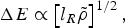
where  is the plasma density. The radiation efficiency of hohlraum wall material increases with the reduction of the energy transported into the wall ΔE. It can be achieved by decreasing the Rosseland mean free path l R. In this case, estimating the relative energy lost to the wall of two different materials α and β can be expressed as
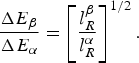
The value of ΔE (Eq. (1)) should be minimized to achieve the maximum hohlraum wall efficiency. Eq. (2) will be used below to estimate relative efficiency of different wall materials.
2.2. Optically Thin Plasma
Another approximation can be used for estimating the emissivity of optically thin plasma that can be produced by exploding wires. In this case, the outward energy flux increases inversely proportional to the Planck mean free path l P :

(Zeldovich & Raizer, Reference Zeldovich and Raizer1966). The applicability range of the approximation was discussed by Orlov et al. (Reference Orlov, Guśkov, Pikuz, Rozanov, Shelkovenko, Zmitrenko and Hammer2007).
Eq. (3) can be used to estimate relative radiation efficiency of different exploding wires made of two different materials α and β:

This approximate formula will be used below to compare theoretical and experimental results.
Thus, radiation efficiency increases with decreasing Rosseland or Planck mean free path for optically thick or optically thin plasma, respectively. Therefore, an optimal chemical composition for optically thick plasmas can be achieved by minimizing the Rosseland mean free path. In the case of optically thin plasmas, the Planck mean free path should be minimized.
The optimization problem was set up and settled by Orlov (Reference Orlov1999), and more complete theoretical results were obtained by Denisov et al. (Reference Denisov, Orlov, Gus'kov, Rozanov, Zmitrenkop and Michailov2005).
3. RESULTS OF CALCULATIONS AND EXPERIMENTAL DATA
3.1. Results of Calculations for Hohlraum Walls
As chemical admixtures can considerably influence the frequency-dependent opacity, and this fact can be used to improve the radiation efficiency of X-ray source materials, a simple 50/50 mixture of Au and gadolinium was proposed to reduce the radiation energy lost to the hohlraum walls in comparison with pure Au (Orzechowski et al., Reference Orzechowski, Rosen, Korblum, Porter, Suter, Thissen and Wallace1996).
Table 1 presents Rosseland mean free paths l R, which were calculated for different materials at the density  and different temperatures, using the IM of a plasma. Results are given for Au and for the composition (Au25.7%/W23.1%/Gd18.1%/Pr10.0%/Ba10.4%/Sb12.7%), which is denoted as Composition 1. Mass percentages of elements are given in the brackets. This composition was found using an optimization method (Denisov et al., Reference Denisov, Orlov, Gus'kov, Rozanov, Zmitrenkop and Michailov2005) that is more complete than that of Orlov (Reference Orlov1999). Results are also presented for Composition 2 (Au50%/Gd50%) where, again, we have used mass fraction.
Rosseland mean free path (cm) calculated for different materials at density 

The spectral coefficients for X-ray absorption, K(x) (cm 2/ g), were calculated for different compositions at T = 250 eV and  as functions of
 . Figure 1 presents the coefficient calculated for Au (thick line). The coefficient is relatively small in the interval (3.5 < x < 8.5) whereas the interval is overlapping with spectral lines for Composition 1 (thin line). It leads to decreasing Rosseland mean free path.
The spectral coefficient of X-ray absorption K(x)(cm2/g) calculated for Au (thick line) and for the Composition (Au25.7%/W23.1%/Gd18.1%/Pr10.0%/Ba10.4%/Sb12.7%) (thin line) at temperature T = 250 eV and density  .

Table 2 presents the relative wall loss energy for different materials compared to a pure Au hohlraum wall as calculated by Suter et al. (Reference Suter, Rothenberg, Munro, Van Wonterghem, Haan and Lindl1999), as well as some results of the present work, including Composition 1. Table 2 also presents the relative hohlraum wall loss energy for different materials as compared to AuGd hohlraum wall as calculated by Callahan-Miller and Tabak (Reference Callahan-Miller and Tabak2000). The result of the present work is also given (Composition 1). As shown, Composition 1 ensures higher radiation efficiency in comparison with other calculated compositions. Thus, the optimizing procedure (Denisov et al., Reference Denisov, Orlov, Gus'kov, Rozanov, Zmitrenkop and Michailov2005), which can find out an effective complex material for a thick target, really can lead to better radiation efficiency materials.
The hohlraum wall loss energy for different materials, compared to a Au hohlraum wall ΔE wall/ΔE Au and to a AuGd hohlraum wall ΔE wall/ΔE AuGd

3.2. Experimental and Theoretical Study of Exploding Wires in X-Pinch
The Rosseland and Planck mean free paths were also calculated for the NiCr alloy (Ni80%/Cr20%) and for Alloy 188 (Cr21.72%/Ni22.92%/Fe2.24%/Co39%/W13.93%) at temperature of T = 1 keV. Calculations were made at normal density  , at density
 , and at density
 (Tables 3 and 4). It was shown experimentally, that on the final stage of the X-pinch compression, the plasma density reaches values on the order of magnitude higher than the initial wire density. The most part of measured SXR is generated during this final stage, where plasma temperature and density reach maximum values (Orlov et al., Reference Orlov, Guśkov, Pikuz, Rozanov, Shelkovenko, Zmitrenko and Hammer2007).
Rosseland mean free path (cm) calculated for NiCr and Alloy 188 at temperature T=1 keV

Planck mean free path (cm) calculated for NiCr and Alloy 188 at temperature T=1 keV

Figure 2 presents the spectral coefficient for X-ray absorption K(x) (cm 2/g) calculated for the NiCr alloy and Alloy 188 at temperature of T = 1 keV and density  . The spectral coefficient for X-ray absorption of NiCr (thick line) is relatively small over the interval (2.0 < x < 5.5) in comparison with the coefficient, which was calculated for Alloy 188 (thin line). This circumstance provides decreasing Rosseland and Planck mean free paths for Alloy 188 in comparison with NiCr and, therefore, improves the radiation efficiency of the corresponding wire.
The spectral coefficient of X-ray absorption K(x)(cm2/g) calculated for NiCr (thick line) and for the composition Alloy 188 (Cr21.72%/Ni22.92%/Fe2.24%/Co39%/W13.93%) (thin line) at temperature T = 1 keV and density  .

Experimental measurements were carried out to study the radiative efficiency of substances and to test the theoretical results (Orlov et al., Reference Orlov, Guśkov, Pikuz, Rozanov, Shelkovenko, Zmitrenko and Hammer2007). The total energy yield B was measured using two devices with different spectral bands. The experimental coefficient of relative efficiency can be expressed in the form

The theoretical coefficient of relative efficiency has the form

in accordance with Eq. (4). Table 5 compares theoretical and experimental results concerning relative efficiency of exploding wires made of Alloy 188 and NiCr (Orlov et al., Reference Orlov, Guśkov, Pikuz, Rozanov, Shelkovenko, Zmitrenko and Hammer2007). Here Δexper is the experimental error band, Δtheory is deviation of theoretical results from experimental data. As shown, theoretical results agree well with the experimental data. Thus, experimental study confirmed the theoretical results.
Theoretical and experimental results on the relative radiation energy yield from exploding wires made of NiCr and Alloy188

3.3. Symmetric Multilayer X-Pinch Study
Previously studied cases were connected with big differences between the Rosseland or Planck mean free paths for different substances. A more complicated case is connected with the so-called symmetric multilayer X-pinch, where tungsten W and molybdenum Mo wires have been used (Shelkovenko et al., Reference Shelkovenko, Pikuz, McBride, Knapp, Wilhelm, Sinars, Hammer and Orlov2010). The structure of multilayer X-pinch plasma is given in Figure 3. The structure provides higher radiation efficiency than pure tungsten (Table 6). Table 6 presents radiation powers generated in experiments with a symmetric multilayer X-pinch within different energy bands (Shelkovenko et al., Reference Shelkovenko, Pikuz, McBride, Knapp, Wilhelm, Sinars, Hammer and Orlov2010). The experimental coefficient of relative efficiency can be expressed here in the form

The structure of a multilayer X-pinch plasma, where tungsten and molybdenum wires are used.

Radiation powers generated in experiments with a symmetric multilayer X-pinch within different energy bands

The theoretical explanation is connected with specific spectral coefficients for X-ray absorption and radiation. Figure 4 presents the spectral coefficient for X-ray absorption K(E) (cm2/g) calculated for W and the spectral coefficient for X-ray radiation J(E) (a.u.) calculated for Mo at plasma temperature of T = 1 keV and the densities, which are 10-times higher than the initial solid wire densities. One can see that the energy interval of maximal radiation for Mo coincides with the interval of maximal absorption for W. Therefore, practically all radiation of Mo is absorbed in W. The effect leads to additional heating or preheating of the W plasma. One can note that 20% of additional temperature provides double increasing of radiation power.
The spectral coefficient for X-ray absorption K(E) (cm2/g) calculated for W and the spectral coefficient for X-ray radiation J(E) (a.u.) calculated for Mo at plasma temperature T = 1 keV and density  .

A very important question is connected with possible intermixing of components of structure under high compression (Fig. 3). To answer this question, the Rosseland and Planck mean free paths were calculated at T = 1 keV and density  for W and for the mixture (W80%/Mo20%). The results are given in Table 7. In accordance with these results, the Planck mean free path for the mixture (W80%/Mo20%) exceeds the Planck mean for W, and the theoretical coefficient of relative efficiency (4) has the value k theor = j WMo/j W = 0.92. On the other hand, the experimental coefficient of relative efficiency equals k exper = М WMo/М W = 2.08 for photon energies up E > 1.5 keV and k exper = М WMo/М W = 3.0 for a photon range 2.5 keV < E < 5 keV (Table 6). Thus, intermixing of components leads to the decreasing radiative efficiency in the considered case, and it contradicts the experimental results. One can conclude that component intermixing is absent. Additional experimental facts confirm this conclusion. Indeed, spectral lines of MO have not been measured experimentally, what would not be the case would components undergo intermixing (Shelkovenko et al., Reference Shelkovenko, Pikuz, McBride, Knapp, Wilhelm, Sinars, Hammer and Orlov2010). Thus, based on experimental and theoretical results, one can assert that component intermixing is absent in symmetric multilayer X-pinch.
Rosseland and Planck mean free paths (cm) calculated for W and mixture (W80%, Mo20%) at T=1 keV and density 

3.3.1. Application of the Ion Model of Plasma for Theoretical and Experimental Study of Plasma Targets Obtained Via Indirect Heating of Low-Z Foams
In this section, the IM of plasma was used in order to describe the radiative properties of indirectly heated low-Z foams used in the experimental study of heavy ion energy loss in laser produced plasma. When the heavy ion beam propagates in ionized matter one expects increased ion energy loss compared to the interaction with “cold” target caused by two important effects: more effective energy transfer from projectile ions to free plasma electrons compared to the transfer to the bound electrons; and due to increased projectile charge state in ionized matter caused by the suppression of the target bound electron capture process. For the first time these effects were demonstrated in low density low temperature Hydrogen gas-discharge (Hoffmann et al., Reference Hoffmann, Weyrich, Wahl, Gardes, Bimbot and Fleurier1990; Jacoby et al., Reference Jacoby, Hoffmann, Laux, Mueller, Wahl, Weyrich, Boggasch, Heimrich, Stoeckl and Wetzler1995). Using the laser produced plasma targets one can expand the region of plasma parameters and investigate the ion stopping process at higher plasma temperatures and densities. For the correct interpretation of experimental results on the ion energy loss in ionized matter, the knowledge of plasma target parameters existing over the time of heavy ion beam-plasma interaction is of great importance.
3.3.2. Experimental Study of Plasma Targets Obtained By Indirect Heating of Low Density Polymer Foams
In experiments on the interaction of heavy ions with ionized matter, a high density plasma target with homogeneous in time (~5 ns) and space (~1 mm) plasma parameters is required. The time is defined by the duration of the heavy ion micro-bunch of 3 ns, the spatial size of the plasma target by the diameter of the heavy ion beam of ~0.5 mm. The experimental accuracy of synchronization the heavy ion beam and laser pulses is of 1 ns. Highly homogeneous and slow expended plasma targets can be obtained when polymer low density foams are volumetrically heated by means of soft X-rays. Low-Z plasma target is required in order to increase the ratio of free-to-bound electrons in plasma target and to make a plasma effect on the heavy ion energy loss more pronounced.
The indirect laser target design was proposed for combined heavy ion-laser experiments by Vasina and Vatulin (Reference Vasina and Vatulin2000). In this scheme, the laser interacts with the wall of the Au cylindrical converter (primer hohlraum) where effective conversion of the laser energy into the soft X-rays having a close to the Planck spectral distribution takes place. Generated hohlraum X-ray radiation heats volumetrically the low-density foam which serves as a plasma target for probing with heavy ion beams. Figure 5 shows the geometry of the laser-target interaction.
Geometry of the laser pulse interaction with the combined target, which consists of the primary hohlraum (converter), thin Au foil and foam or foil target placed on the rear side.

Foam materials (Khalenkov et al., Reference Khalenkov, Borisenko, Kondrashov, Merkuliev, Limpouch and Pimenov2006) are very promising for these purposes due to the effective conversion of the deposited radiation energy into the internal plasma energy and slow hydrodynamic response on heating. Direct irradiation of the Au converter walls with a ns laser pulse leads to soft X-ray hohlraum spectra caused by O-shell transitions in Au. Expected temperatures of the foam targets heated by this radiation amount to 20–30 eV at electron densities of 1021 cm−3.
In experiments (Rosmej et al., Reference Rosmej, Orlov, Schäfer, Nisius, Wilhein, Suslov, Zhidkov and Zhao2009), the combined targets which consisted on the cylindrical primer hohlraum (converter) of 1.5–1.7 mm in diameter and a foam/foil target placed from the rear convertor side were used. Thin Au foil of 100 nm thickness placed between converter and foam target prevented direct irradiation of foams with the laser light.
A variety of foam/foil materials such as Agar-Agar (C6H10O5), Plexiglas (PMMA, C8H8O3), and triacetate cellulose (TAC, C12H16O8) of different volumetric and area densities were used. The pore size varies from 10–50 µm for agar-agar down to 1 µm for TAC. The small pore size of foam targets is of big importance both for laser and heavy ion beam interaction preventing the broadening heavy ion energy spectra when an ion beam penetrates a cold porous target and keeping the plasma homogenization time after irradiation by laser/soft X-rays in sub-ns range.
The Petawatt High-Energy Laser System for Ion beam Experiments (PHELIX) (Nd:glass, λ = 1053 nm) was used at the basic frequency (Bagnoud et al., Reference Bagnoud, Aurand, Blazevic, Borneis, Bruske, Ecker, Eisenbarth, Fils, Frank, Gaul, Goette, Haefner, Hahn, Harres, Heuck, Hochhaus, Hoffmann, Javorková, Kluge, Kuehl, Kunzer, Kreutz, Merz-Mantwill, Neumayer, Onkels, Reemts, Rosmej, Roth, Stoehlker, Tauschwitz, Zielbauer, Zimmer and Witte2010). The laser pulse of 1.4 ns duration and energies up to 150 J was focused onto the target by a lens with 4 m focal length. The diameter of the focal spot on the wall of the primer hohlraum was of 300–400 µm, resulting in laser intensities of up to 2 × 10¹⁴ W/cm2. The laser with an incidence angle of 45° irradiates the wall of the Au cylinder through the open entrance hole (see Fig. 5). The time depended behavior of the hohlraum radiation was measured, using soft X-ray diodes with Carbon cathode. The diode system allows absolute measurements in the photon energy region of 300–1000 eV. The typical duration of the X-ray signal was about 5–7 ns. The spectrally resolved hohlraum radiation in the photon energy range of 1–20 nm was analyzed by means of an absolute calibrated slit grating spectrograph based on an e-beam written 10,000 line-pairs/mm freestanding transmission diffraction grating (Wilhein et al., Reference Wilhein, Rehbein, Hambach, Berglund, Rymell and Hertz1999). In combination with a thinned, back-illuminated charge coupled device (CCD), the spectrograph can be used for real-time spectroscopy of laser-produced plasma X-ray sources. Calibration of the grating and CCD allows absolute photon flux measurements. The transmitted grating spectrometer (TGS) was used in experiments without entrance slit in order to increase the photon flux and to improve the signal-to-noise ratio. The spectral resolution Δλ was between 0.1 and 0.2 nm depending on the source size (1–2 mm) and the observation range (1–6 nm or 1–20 nm). The spectrometer system including CCD was calibrated at DESY. In experiments, spectral distribution of the hohlraum radiation field from the target rear side was measured. For these purposes, convertor targets (primer hohlraums) without foam/foil were used. As the next step hohlraum spectra transmitted through the foam/foil placed at the rear side of the combined target were measured (Rosmej et al., 2010). Due to effective absorption of soft X-rays in foam/foils, targets were heated to plasma. Figure 6 (color online) shows the spectra irradiated by the Au hohlraum plasma and recorded after transmission through the ”cold” 0.5 µm thick Carbon filter (green) placed at the TGS-entrance for calibration purposes and 0.5 µm thick CHO-foil (red) indirect heated with 130 J PHELIX-laser pulse of 1.4 ns duration. In the case of the “cold” C-filter, one can see the sharp absorption K-edge at 4.2–4.4 nm wave length. The step-like form of the deformed Carbon K-edge (red) occurs in plasma and can be attributed to the presence of the ionized carbon atoms with charges up to Z = 4. The He-like Carbon ion (+4) fraction calculated by means of a radiative-collisional code FLYCHK (Chang et al., Reference Chang, Chen, Morgan, Ralchenko and Lee2005) for plasma with electron density of 1021 cm−3, 800 µm thickness and temperatures from 5 up to 20 eV, does not exceed 5% at plasma temperature of 10 eV and is significantly present in the plasma at T e = 15–20 eV. Therefore, the experimental results allow supposing an electron temperature of the CHO-foil heated by soft X-rays higher than 10 eV.
(Color online) Comparison of the absolute calibrated hohlraum spectra transmitted through the indirectly heated CHO-foil at 130 J laser energy (red curve) and the 0.5 µm thick “cold” Carbon filter (red curve) placed at the TGS-entrance for calibration purposes. CHO-foil was of a 0.5 µm thickness and 1.1 g/cm3 initial density, a corresponding area density is of 55 µg/cm2.

Figure 7 demonstrates experimental results on the indirect heating of a 500 µm thick CHO-foam of 10 mg/cm3 mean density. It can be obviously seen that the target with 10 times higher area density than the CHO-foil couldn't be homogeneous heated with 70 J laser pulse. The K-edge deformation due to the plasma effect like in the previous figure is absent; the foam target (red curve) transmits radiation as a “cold” filter (black curve) with a sharp K-edge position at 4.2–4.4 nm (285–290 eV).
(Color online) Comparison of the absolutely calibrated hohlraum spectra transmitted through the indirectly heated CHO-foam (red curve) and the 0.5 µm thick “cold” Carbon filter (red curve) at laser energy of 70 J; CHO-foam is of 10 mg/cc density and 500 µm thickness corresponding to 500 µg/cm2 area density.

A method which applies the deformation of the Carbon absorption K-edge when cold matter is heated to plasma is now under development. There are at least two reasons why traditional diagnostic methods using plasma self radiation is not applicable in this case. First, the most intensive radiation of Carbon plasma at expected temperatures of 10–30 eV occurs due to L-shell transition, containing a lot of lines broad due to the high optical thickness of the plasma target and form a quasi-continuum; second: the energy range of hohlraum radiation (O-shell transition of Au) overlaps with the L- shell transitions in Carbon and has in our case an order of magnitude higher photon flux.
The dependence of the absorption K-edge position on the energy scale on the plasma ionization degree seems to be a promising diagnostic instrument. In cold Carbon, increased photo-absorption occurs when the photon energies approach the binding energy of the K-shell electrons in the C-atom. For cold Carbon, the K-edge position corresponds to 285 eV photon energy. In plasma, the Carbon outer-shell electrons will be ionized in collisions with free plasma electrons and the target ionization degree depends mostly on the plasma electron temperature. Due to lower screening potentials of outer-shell electrons in ionized atoms, the K-shell electron binding energy and as a consequence the positions of the K-edges for the subsequent charge states will be shifted to the higher photon energies. According to Dirac-Fock-Slater calculations (Zschornack et al., Reference Zschornack, Musiol and Wagner1986) for isolated Carbon ions, one obtains the following K-edge energies for different Carbon charge states: C+1 = 297.7 eV; C+2 = 313, 39 eV; C+3= 346.17 eV; C+4= 380.51 eV. In plasmas compared to cold matter, calculations of the K-edge positions and plasma opacities are complicated since one has to take into account many new factors: a charge state distribution of the ions, the population of ion states excited in collisions with free plasma electrons, effects of plasma microfields etc. in dependence on plasma parameters.
The theoretical approach, which was used in previous items of this paper, gives, in particular, K-edge energies of different plasma ions in ground and excited states, and provides calculations of the spectral coefficients for X-ray absorption as well as the spectral characteristics of radiation transmitted through the CHO plasma target depending on plasma parameters. Comparison of the theoretical and experimental results can be used to estimate the plasma temperature and ionization degree. The quantitative interpretation of the time-integrated spectrum shown in Figure 6 is hardly possible due to fast hydrodynamic expansion of the heated foil where the target density drops many times in sub-nanosecond time scale. One-dimensional calculations of the hydrodynamic expansion of a 2–3 mg/cc 1000 µm thick CHO-foam heated up to 10–30 eV demonstrate promising stability of the plasma temperature and density profiles during first 8–10 ns (Vergunova et al., Reference Vergunova, Guśkov, Rozanov and Rosmej2010). In future experiments, we are going to measure the hohlraum radiation field without and with foam target placed on the converter rear-side and then compare results with calculated theoretical spectra in dependence on plasma temperature.
3.3.3. Theoretical Justification for the Temperature Diagnostic of Indirectly Heated Low Density Foams
The theoretical approach that was developed and used in previous studies can be applied in order to give a theoretical justification for a temperature diagnostic of low density polymer foams heated by means of SXR. The IM allows, in particular, calculating K-edge energies of different plasma ions in ground, and excited states and the spectral coefficients for X-ray absorption as well as the spectral characteristics of radiation transmitted through the CHO-plasma target. For the interpretation of experimental results on opacities of the indirectly heated TAC-foams, calculations of absorption coefficient of H12C8O6 plasma at initial foam mean density of 2 mg/cm3 and for different plasma temperatures were carried out. According to hydrodynamic simulations on the foam heating by soft X-rays, the constant plasma density is guaranteed over 10 ns after the beginning of the heating pulse for foam thickness of 800 µm (Vergunova et al., Reference Vergunova, Guśkov, Rozanov and Rosmej2010). This foam feature is of big importance for interpretation of obtained experimental results.
Besides the absorption coefficients, the Planck spectra with radiative temperature of 40 eV transmitted through the plasma target is calculated. These theoretical results can be compared with the spectra measured from the rear target side by means of TGS spectrometer. Figure 8a shows the spectral coefficients for X-ray absorption K (E) (cm2/g) calculated for (H12C8O6) plasma at density 0.002 (g/cc) and temperature T = 5 eV. The K-edge positions of carbon ions are denoted here with corresponding notations, which present the electron configurations 1s(2)2s(2)2p(1) and 1s(2)2s(1)2p(1). Figure 8b also presents the spectral characteristics of Planck radiation J(E) (J/keV/sr/cm2) transmitted through the CHO plasma target with 5 eV temperature and the initial mean density. Function J(E) represents the spectral intensity of transmitted radiation multiplied by the duration of the X-ray radiation of 5 ns. The super bold line gives the spectrum of external radiation, which was approximated with Planck function at radiation temperature T rad = 40 eV. One can see that the K-edge position of carbon ion 1s(2)2s(2)2p(1) (Fig. 8a) coincides with the specific step of spectral characteristics of transmitted radiation J(E) (Fig. 8b) on the energy scale. Similar calculations were made for the temperature T = 10 eV. (Fig. 9) and T = 20 eV (Fig. 10). The specific step of the function J(E) (Fig. 9b) coincides with the K-edge position of carbon ion 1s(2)2s(1) (Fig. 9a), and the step of J(E) (Fig. 10b) coincides with the K-edge position of carbon ion 1s(2) (Fig. 10a).
The spectral coefficients for X-ray absorption K(E) (cm2/g) (a) calculated for (H12C8O6) plasma at the density 0.002 (g/cc) and temperature T = 5 eV and the spectral characteristic of radiation J(E) (J/keV/sr/cm2) (b) transmitted through the (H12C8O6) plasma target. The super bold line on the picture (b) gives the spectrum of the external radiation.

The spectral coefficients for X-ray absorption K(E) (cm2/g) (a) calculated for (H12C8O6) plasma at the density 0.002 (g/cc) and temperature T = 10 eV and the spectral characteristics of radiation J(E) (J/keV/sr/cm2) (b) transmitted through the (H12C8O6) plasma target. The super bold line on the picture (b) gives the spectrum of the external radiation.

The spectral coefficients for X-ray absorption K(E) (cm2/g) (a) calculated for (H12C8O6) plasma at density 0.002 (g/cc) and temperature T = 20 eV and the spectral characteristics of radiation J(E) (J/keV/sr/cm2) (b) transmitted through the (H12C8O6) plasma target. The super bold line on the picture (b) gives the spectrum of the external radiation.

Comparison of the theoretical functions K(E) and J(E) with measured experimentally can be used to estimate temperature and ionization degree of indirectly heated foam targets.
4. CONCLUSIONS
We have shown that the theoretical method presented in this paper provides reasonable results on estimating the radiation efficiency of the materials heated by pulsed current devises or lasers and used as X-ray sources. This method can be used in order to determine effective complex materials for exploding wires, thick laser targets, hohlraums etc. in dependence on plasma density and temperature. The theoretical approach can also be applied to the analysis of physical effects that were obtained in experiments with a symmetric multilayer X-pinch. Finally, the theoretical method was used for calculations of absorption coefficients of low density CHO-foams heated volumetrically by soft X-rays. The method for the diagnostics of plasma temperature reached in foam-layers is proposed, based on the experimentally observed deformation of the absorption K-edge when foam is heated to plasma.



