Introduction
The knowledge of some groups of European Leprarias is still problematic in spite of the numerous, recent revisions (Leuckert & Kümmerling Reference Leuckert and Kümmerling1991; Leuckert et al. Reference Leuckert, Kümmerling and Wirth1995; Orange Reference Orange and Seaward1999; Saag & Saag Reference Saag and Saag1999; Baruffo et al. Reference Baruffo, Zedda, Elix and Tretiach2006a), and following additions (Orange Reference Orange2001; Kukwa Reference Kukwa2002; Tønsberg Reference Chaves, Lücking, Sipman, Umaña and Navarro2004; Bayerová et al. Reference Bayerová, Kukwa and Fehrer2005; Slavíková-Bayerová & Orange Reference Slavíková-Bayerová and Orange2006; Slavíková-Bayerová & Fehrer Reference Slavíková-Bayerová and Fehrer2007). This is particularly true for the Mediterranean-Macaronesian region, a well-known focus of biological diversity (Médail & Quézel Reference Médail and Quézel1997; Reid Reference Reid1998). Lepraria nivalis J. R. Laundon s. lat. represents one of the most interesting taxa from this point of view, as it has been described as highly heterogeneous within its wide distributional range (Laundon Reference Laundon1992; Leuckert et al. Reference Leuckert, Wirth, Kümmerling and Heklau2004). This species comprises six accepted chemotypes, and at least two distinct morphotypes, all of them occurring in the Mediterranean-Macaronesian region (Leuckert et al. 2004). The most typical morphotype is leprose, delimited, with sublobes, forming an extensive, powdery, folded crust, or an uneven, non-corticate powdery membrane (Laundon Reference Laundon1992). It corresponds mainly to chemotypes 1 and 2, and occurs on more or less vertical faces of carbonate rocks (limestone, dolomite), or calcium-rich, basic siliceous rocks, on relatively shady, humid surfaces not directly wetted by rain (Leuckert et al. Reference Leuckert, Wirth, Kümmerling and Heklau2004), throughout Europe, North America, and Asia (Laundon Reference Laundon1992). The second morphotype has well-developed lobes with a raised, thick, upturned rim, and granular, corticate propagules (Leuckert et al. Reference Leuckert, Wirth, Kümmerling and Heklau2004). It is typical of exposed, xeric habitats wetted directly by rain, and is particularly frequent in the Mediterranean region. This morphotype was originally described as a variety of L. crassissima auct. by Llimona (see Vězda Reference Vězda1973), and was for a long time considered as endemic to the gypsum outcrops of the Mediterranean basin (Iberian Peninsula, Greece, Italy and Morocco) (Casares-Porcel et al. Reference Casares-Porcel, Gonzalez-Tejero and Bouchaalah1994; Nimis et al. Reference Nimis, Poelt and Tretiach1996). Wirth et al. (Reference Leuckert, Wirth, Kümmerling and Heklau2004) segregated this taxon at the species level as L. isidiata (Llimona) Llimona & Crespo. Leuckert et al. (Reference Leuckert, Wirth, Kümmerling and Heklau2004), on the contrary, considered it as the ombrophilous counterpart of the ombrophobic L. nivalis chemotypes 1 and 2. To reinforce their interpretation, the latter authors stressed the fact that the morphotype ‘isidiata’ occurs not only on chalk, but also over siliceous substrata, such as siliceous rocks and derived acidic or decalcified soils. It is chemically heterogeneous, being distributed among three (3, 4 and 5) of the six chemotypes of L. nivalis known so far. However, this chemical variation suggests that either the morphotype is not monophyletic, or at least the chemotypes 3 and 5 are not (Leuckert et al. Reference Leuckert, Wirth, Kümmerling and Heklau2004: 398).
In a monographic treatment of Italian Leprarias, Baruffo et al. (Reference Baruffo, Zedda, Elix and Tretiach2006a) limited the application of the name L. isidiata to lobate thalli containing atranorin, protocetraric acid and/or fumarprotocetraric acid, and roccellic acid (=L. nivalis chemotype 3 of Leuckert et al. Reference Leuckert, Wirth, Kümmerling and Heklau2004). Apparently, this taxon occurs not only on chalk, but also on sedimentary carbonate rocks and derived basic soils in exposed habitats, such as road escarpments, rock outcrops, and open terophytic vegetation, in both the Mediterranean and sub-Mediterranean belts (Baruffo et al. Reference Baruffo, Zedda, Elix and Tretiach2006a). The same authors noted that L. nivalis chemotype 5 [atranorin +, stictic and constictic acids (satellite compounds in traces ±), +, roccellic acid +], shows an evident preference for siliceous or decalcified substrata, and might represent a distinct taxon distributed throughout the Mediterranean basin, whereas L. nivalis chemotype 4 [atranorin +, stictic and constictic acids (satellite compounds in traces ±), +] might correspond to a further taxon restricted to the Macaronesian region. In the same year, Crespo et al. (Reference Crespo, Argüello, Lumbsch, Llimona and Tønsberg2006) described L. santosii Argüello & Crespo from a single collection of lobate thalli occurring over siliceous soil from Tenerife. The chemistry of the new species, however, is only partially congruent with L. nivalis chemotype 4 of Leuckert et al. (Reference Leuckert, Wirth, Kümmerling and Heklau2004), as it contains not only the representatives of the stictic/norstictic chemosyndrome, but also zeorin and roccellic acid. Crespo et al. (Reference Crespo, Argüello, Lumbsch, Llimona and Tønsberg2006) also demonstrated that the typical L. isidiata from Spanish chalk substrata actually forms a well- supported clade, sister to L. santosii, which is not strictly related to L. nivalis s. str.
As suggested by Baruffo et al. (Reference Baruffo, Muggia and Tretiach2006b), the taxonomic position of lobate Lepraria in the Mediterranean region occurring over limestone and siliceous substrata remains dubious. They might represent chemical variants of an otherwise morphologically homogeneous taxon (L. isidiata), or they might be two substratum-vicariant species (L. isidiata on one hand, and Lepraria sp. or L. santosii s. lat. on the other).
This study represents the first contribution toward a more satisfactory delimitation of these taxa. Their mutual relationships have been critically re-examined on the basis of chemical, genetic and morphological data, which describe the heterogeneity within and between populations from the Mediterranean-Macaronesian region.
Materials and Methods
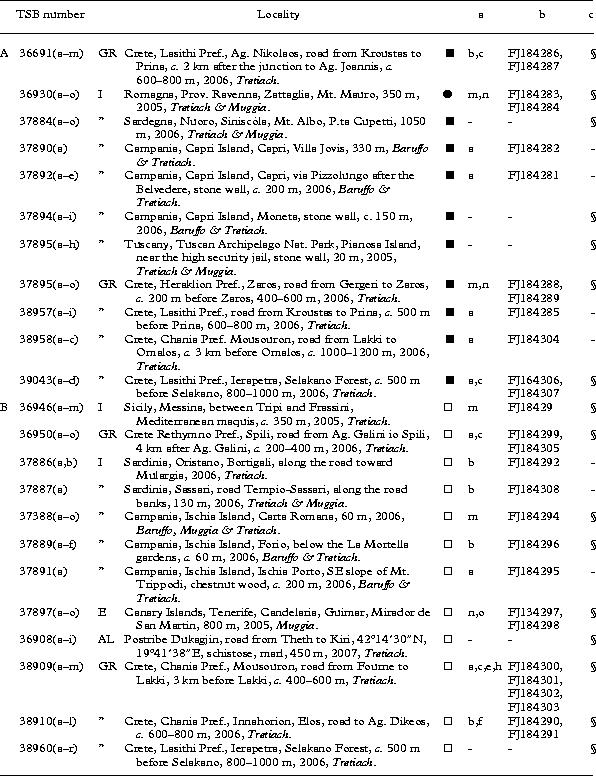
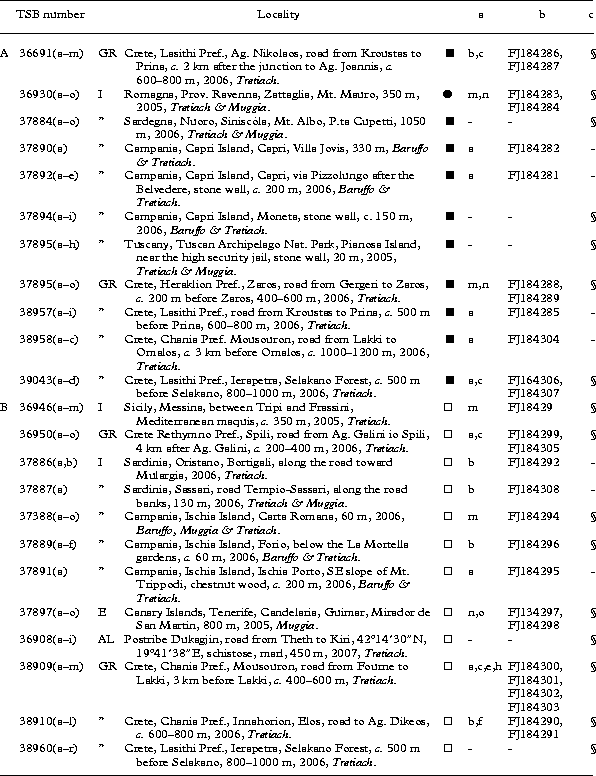
Two sets of specimens were analysed: the first consisting of herbarium specimens obtained on loan from B, BM, SLZ, STU, TSB (acronyms of herbaria according to Holmgren et al. 1990), and from the private herbaria of A. Aptroot (Soest, The Netherlands), M. Grillo (Catania, Italy), and V. John (Bad Dürkheim, Germany). These specimens were collected in seven countries, and are listed at the end of this section. Each specimen originated from a single site, and consisted of a single thallus, several thalli, or a mixture of fragments from different thalli. The second set of specimens consisted of ten to 40 thalli randomly sampled from a single population. This material was collected in Albania (1 site), Canary Islands (1 site), Italy (15 sites), and Greece (8 sites) (Table 1), is preserved in TSB and listed in Table 1.
Populations of the Lepraria isidiata-santosii group from the Mediterranean-Macaronesian region deposited in TSB and collected on either chalk (●) and carbonate (■) substrata (A-thalli), or siliceous substrata (□) (B-thalli). Column a: thalli used in the successful ITS sequencing; column b: corresponding GenBank accession number(s); column c, §: populations analysed morphologically.
In the first set of specimens, at least one thallus or thallus fragment from each specimen was sampled for chemical analysis. In the second set of specimens, between 8 and 11 thalli or thallus fragments were sampled from each specimen. Thin layer chromatography (TLC) was run with Merck silica gel 60 F254 pre-coated plates in solvent systems A, C, and G according to Orange et al. (Reference Orange, James and White2001a). Fatty acids were identified by wetting the plate with water, and therefore the so-called “fatty acid pair” roccellic vs. angardianic acid could not be separated. The two fatty acids are usually mutually exclusive (Leuckert et al. Reference Leuckert, Kümmerling and Wirth1995) and therefore the presence of roccellic vs. angardianic acid was simply inferred on the basis of a few controls by HPLC (by courtesy of J. A. Elix, Canberra). Terpenoids were identified after acid treatment and heating at 120°C for 20 minutes (White & James Reference White and James1985).
DNA extraction was performed on 45 freshly collected thalli of the second set following Cubero et al. (Reference Cubero, Crespo, Fatehi and Bridge1999). However, more than half of the samples, particularly those occurring on carbonate-rich rocks or soils, were not successfully amplified. In these cases the DNAeasy Plant Mini Kit (QUIAGEN, Austria) and the GenElute™ Plant Genomic DNA Kit (SIGMA, Missouri, USA) were helpful to obtain DNA amplifiable in PCR.
The mycobiont genetic diversity was analysed in the nuclear ITS region, amplified with the primers ITS1F (Gardes & Bruns Reference Gardes and Bruns1993) and ITS4 (White et al. Reference White, Burns, Lee, Taylor, Innis, Gelfand, Snisky and T. J.1990). PCR reactions were prepared to a 30 μl final volume containing 4·05 μl double-distilled water, 3 μl 10x Taq polymerase reaction buffer (10 mM Tris pH 8·3), 1·8 μl MgCl2 (25 mM), 3 μl of dNTPs (2·5 mM), 0·15 μl Taq DNA polymerase, 1·5 μl for each of the 10 μM primers, and 15 μl of diluted genomic DNA. PCR amplifications were performed under the following conditions: one initial heating step of 2 min at 94 °C linked to 30 cycles of 1 min at 94 °C, 1 min at 53 °C, 2 min at 72 °C, and one final extension step of 7 min at 72 °C after which the samples were kept at 4°C. PCR products were purified using QUIAGEN quick spin columns (Quiagen, Austria) following the manufacturer's instructions. Both complementary strands were sequenced and sequences were run by MWG Biotech-AG Company (Germany), and assembled in BioEdit (Hall Reference Hall1999, http://jwbrown.mbio.ncsu.edu/BioEdit/bioedit.html). The specimens analysed are presented with their isolation, GenBank accession, and TSB herbarium numbers in Table 1.
The phylogenetic analysis includes 48 sequences of Lepraria species selected from GenBank. The sequence of Lepraria lobificans AF517913 was selected as outgroup, in accordance with previous phylogenetic studies (Ekman & Tønsberg Reference Ekman and Tønsberg2002). The alignment was produced automatically with the ClustalW (Hall Reference Hall1999, http://jwbrown.mbio.ncsu.edu/BioEdit/bioedit.html) implemented in BioEdit 5.0.6 (Hall Reference Hall1999) and then manually adjusted. The phylogenetic hypothesis was established using a Bayesian approach as implemented in the program MrBayes 3.1.2 (Huelsenbeck & Ronquist Reference Huelsenbeck and Ronquist2003; Ronquist et al. Reference Ronquist, Huelsenbeck and Van der Mark2005, see at http://mrbayes.csit.fsu.edu/mb3.1). The General Time Reversible substitution model (Rodriguez et al. Reference Rodriguez, Oliver, Marin and Medina1990) with estimation of invariant sites and assuming a gamma distribution with four categories (GTR+I+G) was used for likelihood calculations. The optimal nucleotide substitution model was found before with the program MrModeltest 3.7 (written by J. A. A. Nylander and available at http://morphobank.ebc.uu.se/mrbayes/; Posada & Crandall Reference Posada and Crandall1998). The Markov Chain Monte Carlo (MCMC) algorithm was run for two million generations, with 6 chains starting from a random tree and using the default temperature of 0·2. Every 100th tree was sampled while the first 200 000 generations were discarded as burn-in. The burn-in period was determined after testing for stationarity of likelihood values. i.e. by plotting numbers of generation vs. the log probability and checking for the convergence diagnostic PSRF, which approached 1 (Ronquist et al. Reference Ronquist, Huelsenbeck and Van der Mark2005, http://mrbayes.csit.fsu.edu/mb3.1_manual.pdf). The ambiguously aligned positions were excluded from the analysis. The consensus phylogram was calculated with the command sumt in MrBayes, and was drawn using the program Tree View (Page Reference Page1996).
Morphology was characterized under a Leica MZ16 stereomicroscope in c. 10 thalli from the populations in Table 1 that are marked with the symbol §. The analysis addressed the shape, colour, thickness, and organisation of thallus and vegetative propagules. Measurements are given as: (mean−SD) - mean - (mean+SD) (max.).
Soil effervescence was tested in at least two samples from each locality in Table 1, by adding some drops of 1N HCl.
Selected specimens examined. Lepraria crassissima. France: Vosges, Docelles, near Fluxelier and l'Encerf, Harmand (Claudel & Harmand, Lichenes Gallici Exsiccati no. 400) (BM—lectotype).
Lepraria isidiata s. lat. Italy: Emilia-Romagna: Ravenna, Brisighella. c. 180 m, 2008, Baruffo (TSB 39045).—Spain: Andalusia: Almeria, Retamar, 80 m, 1998, Tremp (STU). Catalonia: near Igualada, Coll del Guix, 400 m, 1972, Llimona [Vězda, Lich. Sel. Exsicc. no. 1175] (GZU—isotype). Zaragoza: El Ciervo, Retuerta de Pina, chalky soil, 200 m, 1983, Poelt & Vězda (B 48686. TSB 5235, 5662).
Lepraria nivalis. Italy: Abruzzo: Pescara, Maiella Massif, above Lettomanopello, Fontana del Papa, limestone, 500 m, 2005. Tretiach & Muggia (TSB 36948) (ch 1).—Slovenia: Karst: Matavun, Skocjan, Brucher Cave, limestone, 260 m, 2005, Tretiach [TSB 36947(a)] (ch. 6).
Lepraria santosii s. lat. France: Corse: Piana, harbour 5·5 km SW of Piana, c. 10 m, 1994, Heklau (STU); c. 1 km SE of Punta di l'Ancisa, c. 10–20 m, 1992, Heklau (STU); trail between Tour de Turghio and the road Piana-Plage d'Arone, c. 150 m, 1994, Heklau (STU); Porto, c. 100 m, 1998, Heklau (STU). Provence: Hyères Islands, Porquerolle, 1980, Türk (SZU 18810).—Greece: Cyclads: Santorini, Kamári, above the Zoodóchos Pigi chapel, c. 250 m, 2001, Heklau (STU); Mikro Profitis Ilias, 250 m, 1987, Bildheim (B 61323).—Italy: Campania: Naples, Ischia Island, Barano, Testaccio, effusive rock, 20 m, 2006, Baruffo, Muggia & Tretiach (TSB 36949); Ischia, effusive rock, 350 m, 2006, Baruffo, Muggia & Tretiach (TSB 38959); l'Arsa, siliceous soil, 150 m, 2006, Baruffo & Tretiach (TSB 37893). Sardinia: Cagliari: Gúspini, c. 1·5 km E of Montevecchio, c. 300 m, 1993, Heklau (STU). Sassari: road Olbia-Sassari, immediately before Tempio Pausania, siliceous soil, c. 500 m, 2006, Tretiach & Muggia (TSB 37885); La Maddalena, Caprera island, siliceous soil along the road, c. 10 m, Tretiach (TSB 37896a-i). Sicily: Siracusa, Lentini, Lentinoi archaeological Park, 2000, Grillo (hb. Grillo, s.n.); Pantalica, 2002, Grillo (Hb. Grillo, s.n).—Montenegro: Pastrovići: coastal road from Petrovac to Bar, schist, c. 150 m, 2007, Tretiach & Muggia (TSB 38906-38907),—Spain: Canary Islands: Tenerife, Las Mercedes, at road cutting, 850 m, 2005, Crespo (BG—isotjpe); W of Erjois. Cumbre de Bolicos, 1200 m, 1978, Sipman 9192 (B 108115); E of Buenavista, small crater N of San Bernardo, Montaña de Tacos, 280 m, Sipman 9532 (B 108116). La Gomera, c. 1 km SE of Benchijigua, c. 800 m, 1997. Klotz (STU).—Turkey: Izmir Prov.: S slope of Yamanlar Daǧlari, Bornova Çay NE of Bornova, conglomerate, 200 m. 1992, John (hb. V. John 11500).
Results
Chemistry
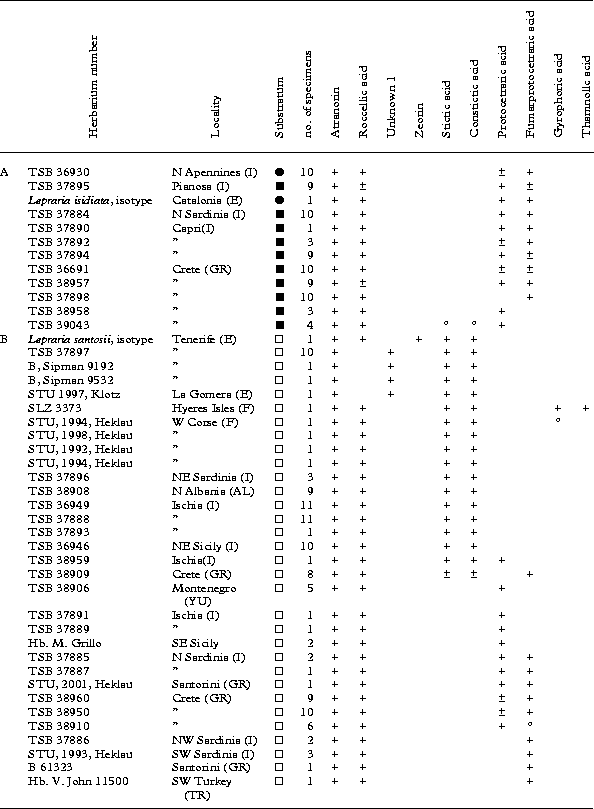
The thalli occurring on gypsum, sedimentary carbonate rocks and derived basic soils (herein indicated as A-thalli) have a relatively uniform chemistry (Table 2), which is congruent with the type material examined of L. isidiata from SE Spain (GZU!) and corresponds to L. nivalis chemotype 3 of Leuckert et al. (Reference Leuckert, Wirth, Kümmerling and Heklau2004). These thalli have atranorin (+), the fatty acid roccellic acid (± or +), fumarprotocetraric acid and protocetraric acid in variable proportions (± or +). Three populations from Crete have exclusively fumarprotocetraric acid (TSB 37898) or protocetraric acid (TSB 38958 and TSB 39043). Two thalli of TSB 39043 also contain the stictic/constictic chemosyndrome derivatives.
Chemistry and geographic origin of specimens of the Lepraria isidiata-santosii group collected on either chalk (●), and carbonate substrata (■) (A-thalli), or siliceous substrata (□) (B-thalli).
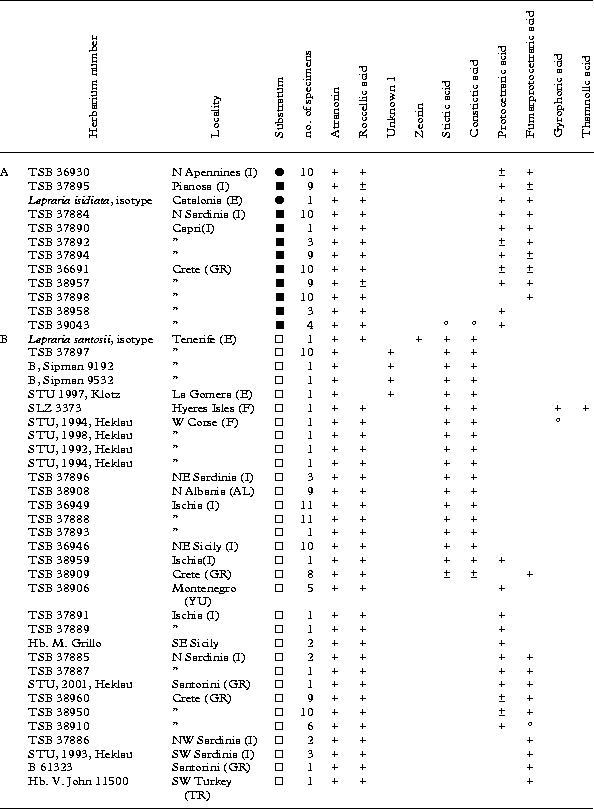
+ = always present; ± = usually present; ° = rarely present.
The thalli occurring on siliceous rocks and derived acidic or decalcified soils (herein indicated as B-thalli) show a more complex chemical profile (Table 2). All the populations have atranorin (+), and most of them have roccellic acid. The exceptions are the four populations from the Canary islands, which lack the fatty acid, but have an unidentified, vivid pink substance which is visible only under UV (366 nm), and has an Rf class of 5/6 (A, C), and 6 (G) by TLC. Not observed in the isotype examined of L. santosii (BG!); this substance was not reported by Leuckert et al. (Reference Leuckert, Wirth, Kümmerling and Heklau2004), who had analysed some of our specimens independently. The Canarian populations and c. 50% of those sampled in the central Mediterranean (from Provence to Sicily and Albania, via Corsica and Sardinia) regularly have large amounts of the stictic/constictic chemo-syndrome derivatives. The remaining populations from the central Mediterranean, plus those of the eastern Mediterranean (from Crete to SE Turkey), have protocetraric acid and/or fumarprotocetraric acid. Finally, two populations sampled from Ischia (TSB 38959, 1 specimen) and Crete (TSB 38909, 8 specimens) contain both stictic/constictic acid and protocetraric or fumarprotocetraric acid, although in different proportions (Table 2). Thamnolic acid and gyrophoric acid were detected in three populations from the central Mediterranean (Albania: TSB 38908, 9 specimens; NE Sicily: TSB 36946, 6 specimens; Ischia: TSB 36949, 4 specimens). The material for these TLC analyses was repeatedly sampled with great care. Contamination by co-occurring species (e.g. Cladonia sp. pl., Leprocaulon microscopicum (Vill.) Gams, Physconia sp.) is excluded as a possibility, as material isolated from these species did not contain these acids. Sampling of chimerical associations with other Leprarias, such as L. nylanderiana Kümmerl. & Leuckert and L. jackii Tønsberg cannot be ruled out, but it seems unlikely.
Phylogeny
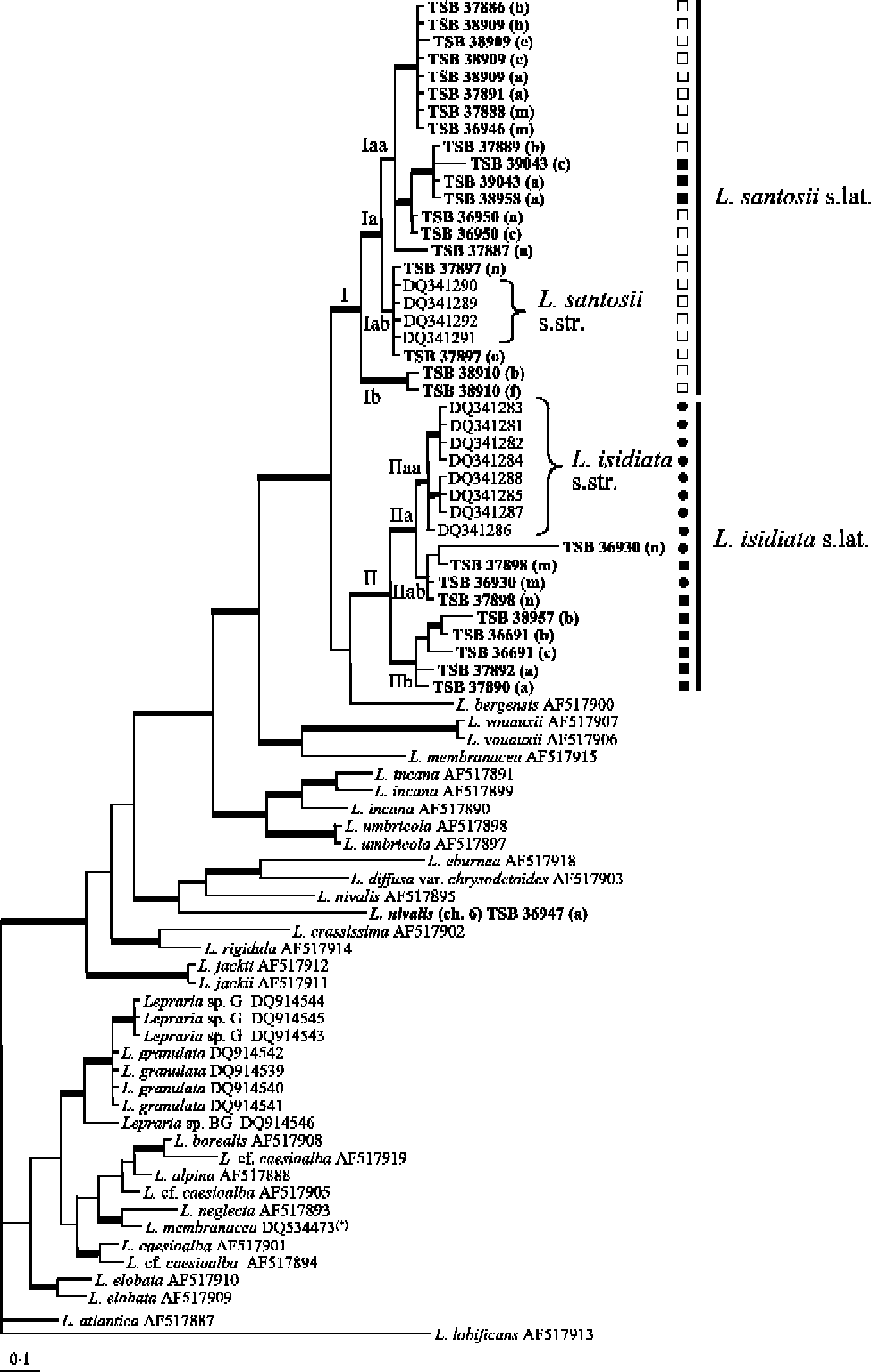
The phylogenetic analysis was carried out with 77 nrDNA ITS sequences, 29 generated within the framework of this study. The majority-rule consensus tree based on 18001 sampled trees from a B/MCMC tree sampling procedure is shown in Fig. 1. The likelihood parameter in the sample had the following average values (± one standard deviation): rate matrix r(AC)=0·1513 (±0·0003), r(AG)=0·2265 (±0·0006), r(AT)=0·0898 (±0·0002), r(CG)=0·0763 (±0·0001), r(CT)= 0·3552 (±0·0008), r(GT)=0·1005 (±0·0002), base frequencies π(A)=0·2402 (±0·0002), π(C)=0·2862 (±0·0002), π(G)=0·2403 (±0·0002), π(T)=0·2331 (±0·0002), gamma shape parameter α=0-1569 (±0·0002).
The sequences of our specimens group with L. bergensis Tønsberg, L. isidiata s. str., and L. santosii s. str., which form a well supported clade together with L. vouauxii (Hue) R. C. Harris and L. membranacea (Dicks.) Vain. The B-thalli are grouped separately, and generally with extremely good support, from A- thalli. They form, respectively, clade I and clade II (Fig. 1).
Phylogeny of selected species of Lepraria, 50% majority-rule consensus tree of ITS sequence data from a B/MCMC sampling procedure. Sequences selected from the GenBank are reported with their accession number. Posterior probabilities are indicated by the thickness of the branches (<90%, 90–94%. >95%). Substratum typology is indicated by symbols (●: chalk; ■: carbonate; □: siliceous). (*): doubtful identification.
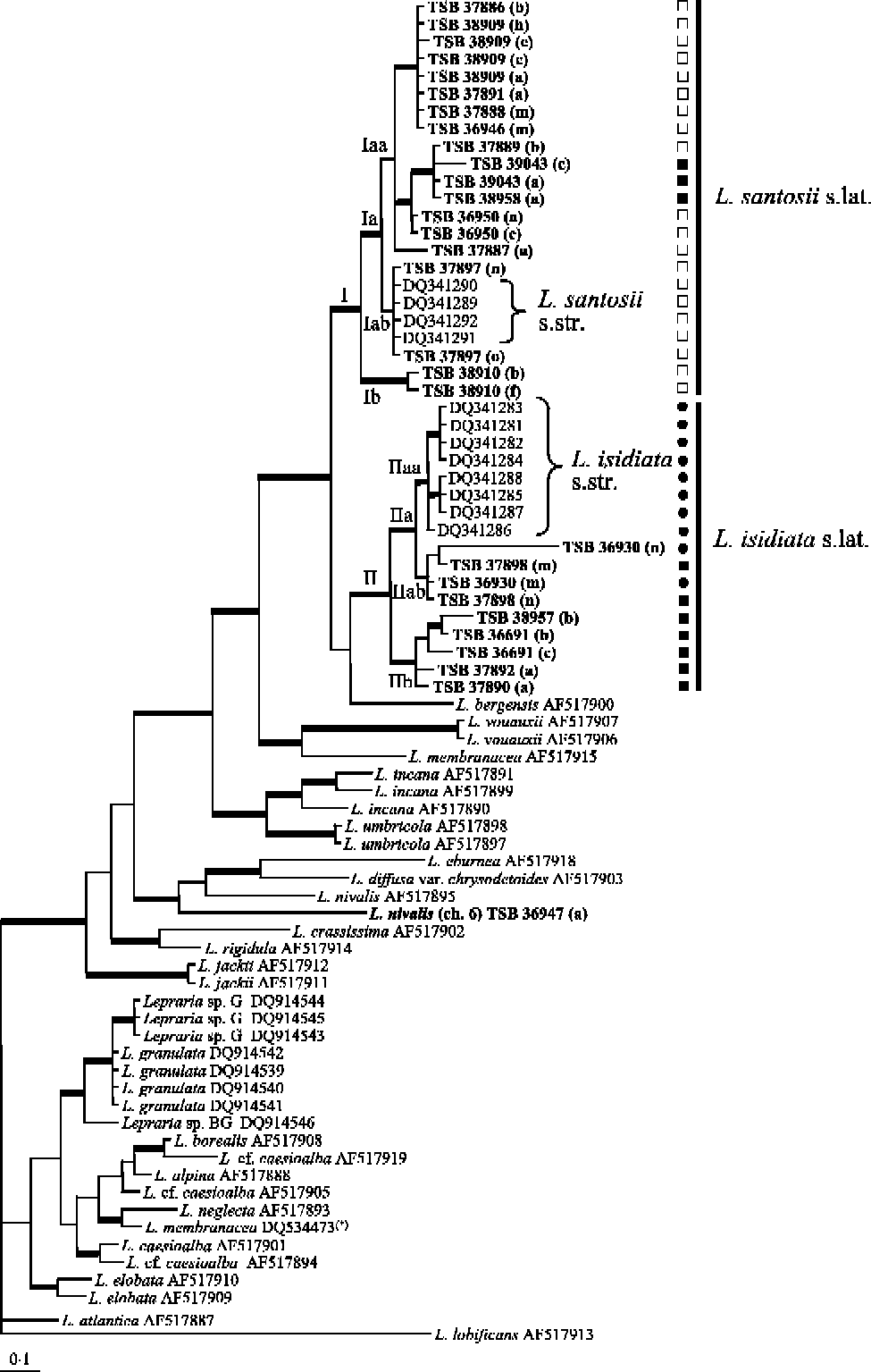
Among the silicicolous specimens (clade I), two thalli collected on shaded ophiolite form the highly supported subclade Ib. This is basal to subclade Ia, which contains the specimens collected in Tenerife (clustered with the holotype and paratypes of L. santosii) (subclade Iab), and all the remaining silicicolous specimens from the Mediterranean islands of Crete, Ischia, Sardinia and Sicily (subclade Iaa). The latter subclade is partially unresolved and two further subclades can be distinguished, not explicitly indicated by lettering in Fig. 1. The subclade Iaa is the only one, which also contains three thalli collected from carbonate-rich substrata (TSB 38958a and 39043a,c). All the remaining thalli from carbonate substrata or chalky soils group are in clade II. The specimens from the chalk outcrops of SE and central Spain (L. isidiata s. str., see Crespo et al. Reference Crespo, Argüello, Lumbsch, Llimona and Tønsberg2006) are grouped in subclade IIaa. Two specimens from central Italy, collected on gypsum, and two from Crete collected on limestone, group together in subclade IIab, sister to L. isidiata s. str. Further specimens collected on limestone in Crete and Capri segregate in the highly supported subclade IIb, sister to the two previous ones.
As some authors considered L. isidiata as a simple morphotype of L. nivalis, a new sequence of that taxon was included in the phylogenetic analysis. The material was collected in the montane Trieste Karst (TSB 36947). It is nested in a highly supported clade with L. eburnea, L. diffusa var. chrysodetoides and the other sequence of L. nivalis available so far (Fig. 1).
Morphology
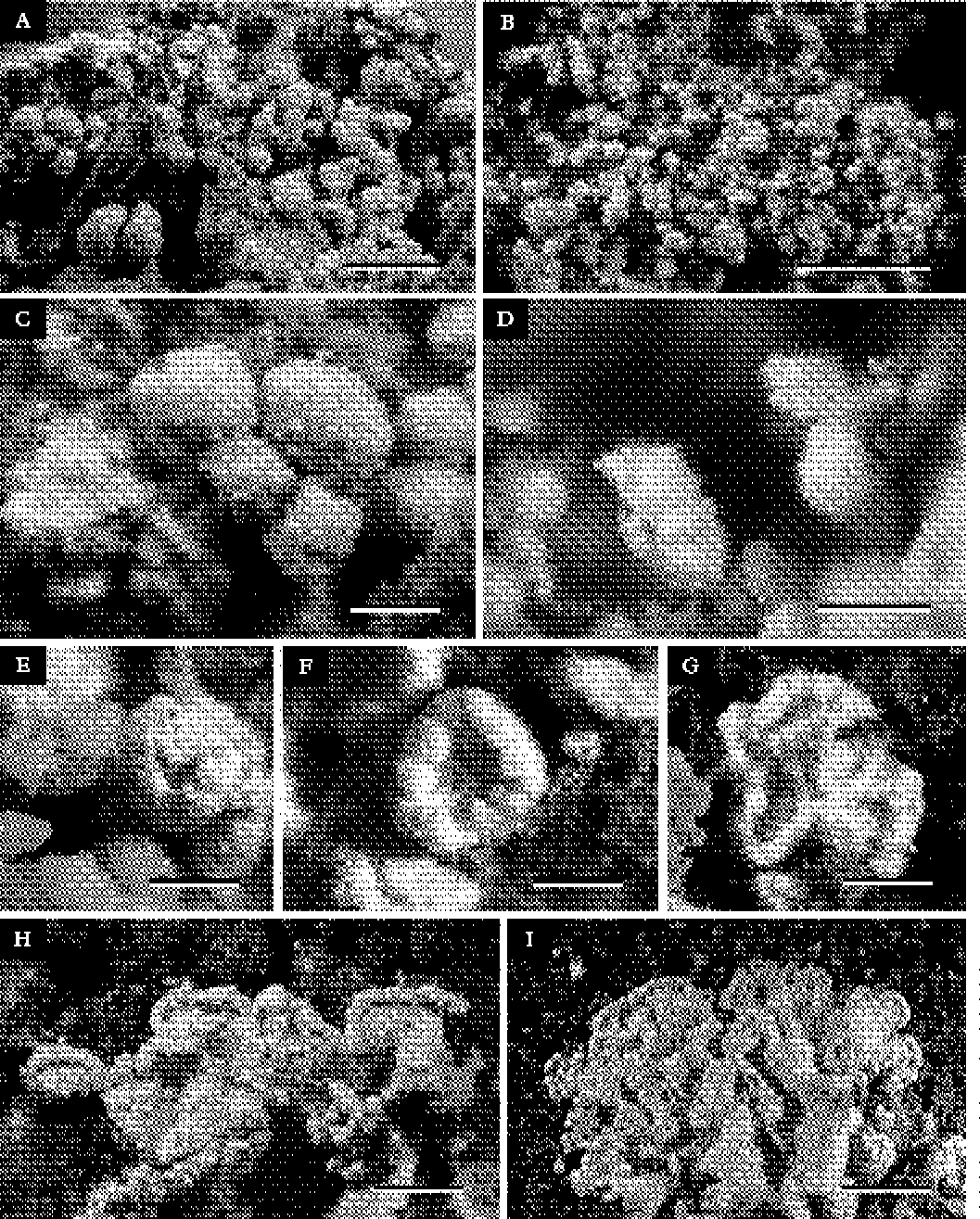
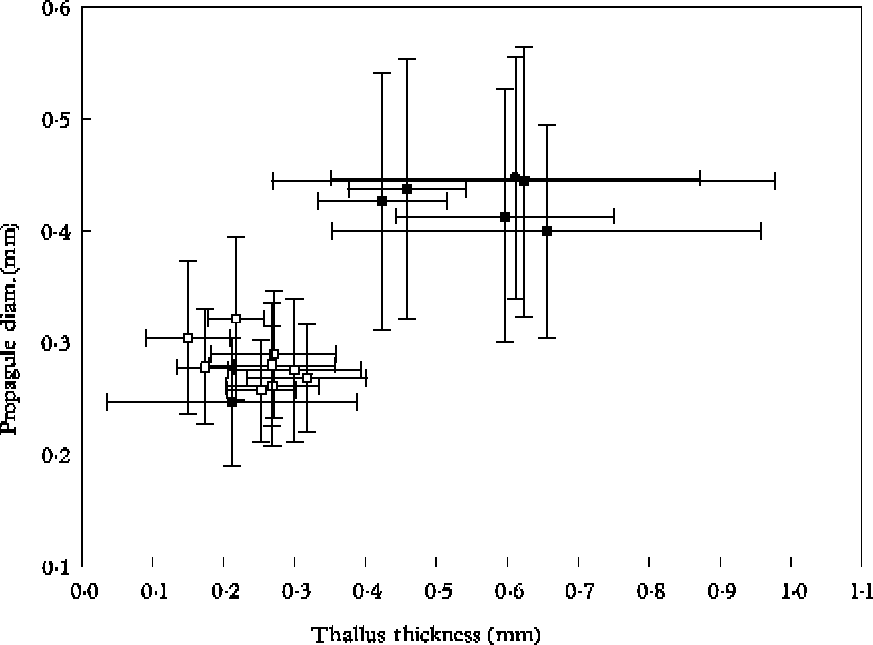
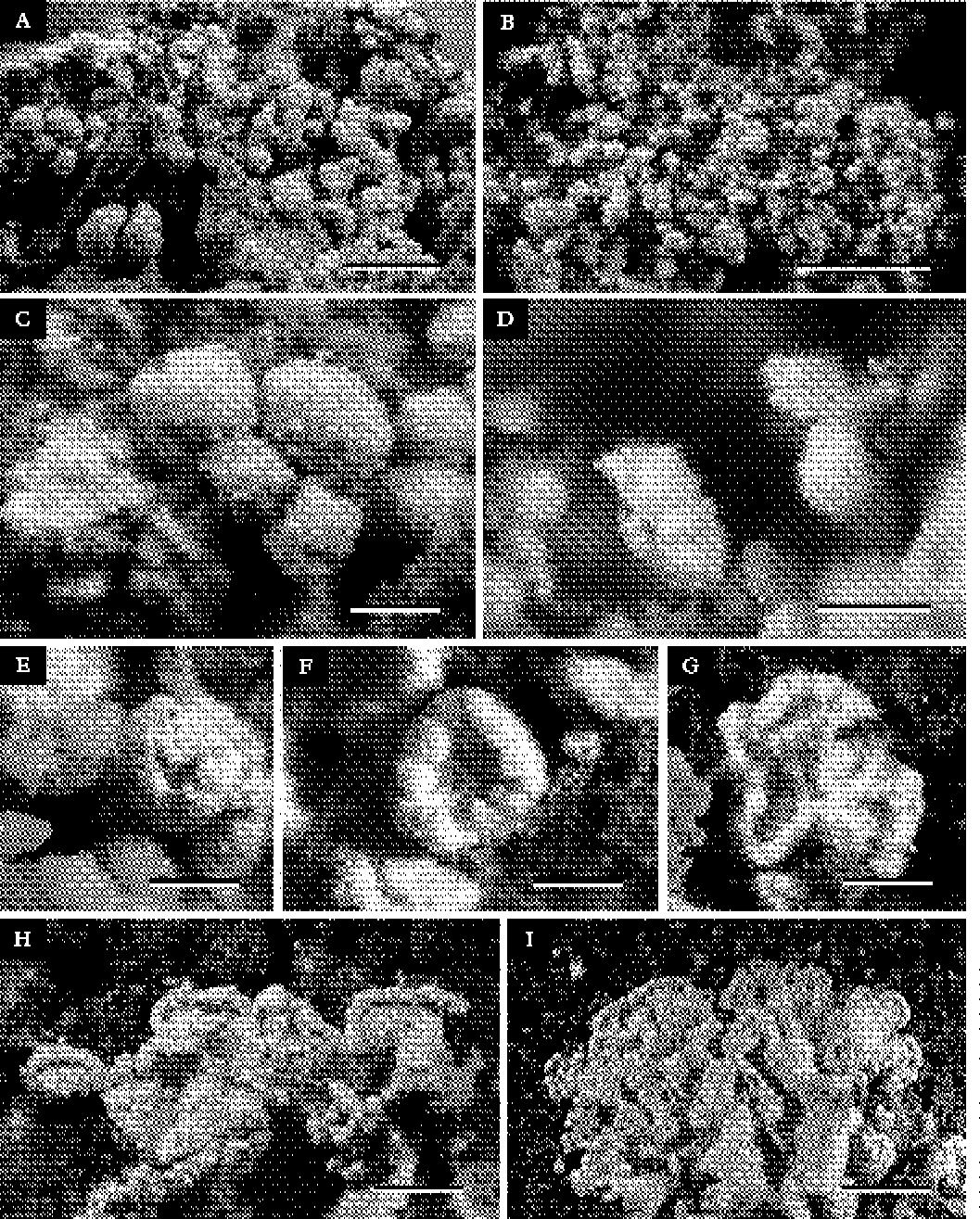
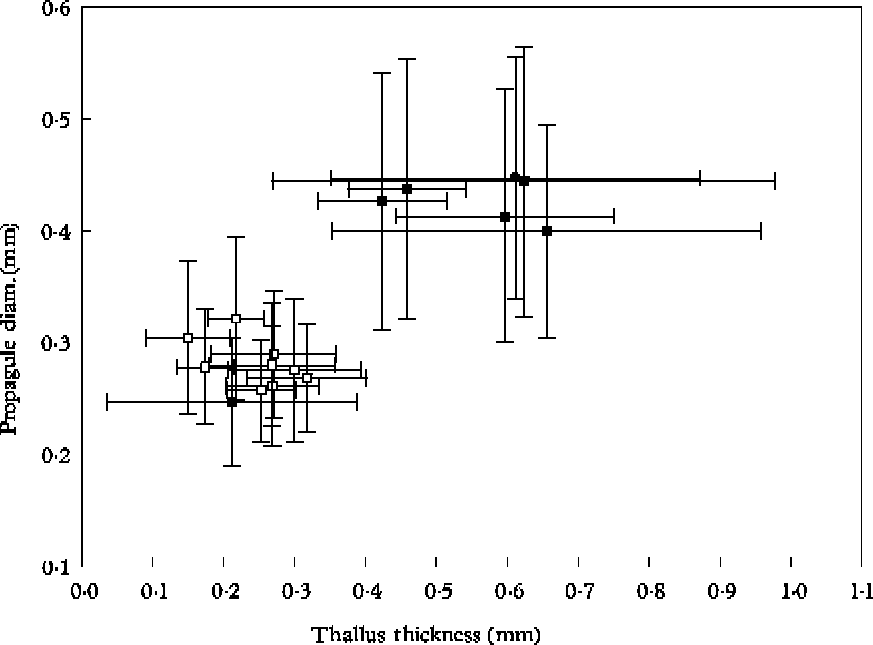
A- and B-thalli superficially look the same. They have a Leproloma-like, dirty white to greenish grey thallus, more or less semi-circular, 1–3 mm wide lobes with raised marginal rims (Fig. 2H,2I), central parts covered by granules, and, occasionally, a hypothallus of light brownish hyphae, which reacts negatively to K. On closer examination, the two groups of thalli show some constant differences, overlooked by Baruffo et al. (Reference Baruffo, Zedda, Elix and Tretiach2006) (Fig. 3). A-thalli are typically more robust and thicker [0·29–0·53–0·78(–1.41) mm; n=59, 7 populations examined)] than B-thalli [0·1–0·25–0·34(–0·47) mm; n=86, 9 populations examined]. They also differ in the shape and dimensions of vegetative propagules. The granules of A-thalli are sub-spherical to ellipsoid, 0·31–0·43–0·55(–0·88) mm diam. (n=792, 7 populations examined), have a compact medulla, and the hyphae are heavily encrusted with calcium oxalate crystals, as revealed by XRD analysis (O. Salvadori, in litt.); some protruding hyphae are only exceptionally present. As the algal cells are completely covered by a thick layer of interwoven hyphae, these granules are to be interpreted as true isidia. The granules of B-thalli are more irregular in shape, being sub-spherical to ellipsoid, to coralloid. They measure up to 0·22–0·28–0·34(–0·65) mm diam. (n=1338, 8 populations examined), and are surrounded by a weft of hyaline, up to 100 μm long, projecting hyphae. A single calcicolous population (TSB 39043) shares the dimension classes of granules and thallus thickness of the silicicolous ones (Fig. 3). This is in good agreement with the chemical (Table 2), and genetic (Fig. 1) information concerning this population, which is more similar to B- than to A- thalli. Unfortunately, the calcicolous population TSB 38958, which is very similar to TSB 39043 in chemistry and ITS data, could not be studied from the morphological point of view, due to the scarcity of the material after repeated samplings for DNA analysis.
Morphology of Lepraria isidiata s. lat. (A,C,E,H: TSB 36930), and L. santosii s. lat. (B,D: TSB 38908: F,G,I: TSB 38960). A, B, central portion of thallus (A,B); C, D, vegetative propagules; E–G, developmental stages of a thallus from an opening granule (E) to a dorsiventral thallus (G); H & I, sublobate thallus margin with raised rim. Scales: A, B & H = 1·.5 mm; C & D = 0·5 mm; E-G = 0·7 mm; I = 3·3 mm.
Mean ± standard deviation of thallus thickness and propagule diameter in populations of the Lepraria isidiata-santosii group collected on chalk (●), carbonate (■), and siliceous (□) substrata (see Table 1).
The large number of specimens studied in great detail allowed us to observe the peculiar ontogenetic steps involved in the establishment of a new thallus from a detached granule (Fig. 2E–2G). After adhesion to the substratum, the granule acquires a distinct polarity, and inflates to form an empty structure that opens at the upper pole (Fig. 2E). The broken margins thicken by the proliferation of hyphae, and assume the typical rolled appearance (Fig. 2F), that will be maintained by the lobes of mature thalli (Fig. 2H). The subsequent radial growth of the rim margins produces a small, concave dorsiventral structure (Fig. 2G), already mimicking an adult thallus (Fig. 2I).
Discussion
This study is based on a relatively comprehensive sampling carried out in the regions of the central Mediterranean basin, and reveals a complex pattern of chemical and genetic variation among populations, which is partly counterbalanced by the relative constancy of some morphological traits, and ecology.
With the exception of two populations (TSB 38958, 39043), which will be discussed later, those occurring on chalk and carbonate rocks are chemically uniform throughout their distribution range [atranorin, roccellic acid, protocetraric and/or fumarprotocetraric acid]. They are also morphologically clearly characterized, by a very thick thallus, and relatively large, smooth (without projecting hyphae) isidia, often covered by small crystals. As all the populations analysed are congruent with the type material (GZU!), these thalli might be referred to L. isidiata s. str. However, the thalli sequenced so far (n=17) revealed a relatively high genetic heterogeneity, which is partially consistent with the geographic origin of the material (Fig. 1). This might indicate that the populations are at an early stage of evolutionary divergence. If this were true, the three highly supported subclades in Fig. 2, IIb, IIaa, and IIab, might be recognized at infraspecific level, e.g. as subspecies or varieties. However, we have refrained from doing this, as the phylogenetic analysis should necessarily be extended to more loci. Pending further research, we prefer to indicate the entire complex as L. isidiata s. lat.
The populations occurring over siliceous substrata offer a more complex pattern. They are morphologically relatively uniform, with hairy granules (smaller than in L. isidiata s. lat.), and thin thalli. The chemical profile (Table 2) is highly diversified and only partially congruent with L. santosii s. str. The type material of this species contains atranorin, roccellic acid, stictic acid, and zeorin (all major), and constictic acid and norstictic acid (minor) (Crespo et al. Reference Crespo, Argüello, Lumbsch, Llimona and Tønsberg2006). The terpenoid zeorin was not detected in our specimens (n=128, 34 localities, see Table 2), even in those collected in Tenerife, although it was annotated in a single specimen from western Corsica (STU, Heklau), probably as a contaminant from Leprocaulon microscopicum. Our Canarian material is therefore chemically different in some important traits from L. santosii s. str., corresponding to chemotype 4 of Leuckert et al. (Reference Leuckert, Wirth, Kümmerling and Heklau2004), and might deserve to be treated as a separate taxon. However, this conclusion clashes with the results of the phylogenetic analysis, as the ITS sequences of all Canarian samples L. santosii included, cluster together (Fig. 1). Finally, if we accept that all the Canarian samples actually deserve to be treated as a separate taxon, at least two further taxa should be recognized at species level, corresponding to subclades Ib and Iaa of Fig. 1. The former contains thalli collected in the rock fissures of ophiolite outcrops in the sole chestnut grove surviving in Crete in a relatively humid valley (TSB 38910). The ecology of this population contrasts with that of all the other populations, which always occurred in sun-exposed, dry escarpments, generally within stands of garigue-like vegetation. Both ITS data and ecology thus seem to support the segregation of this population at species level, but this conflicts with the lack of diagnostic morphological or chemical characters. We also hesitate to formally recognize it because of the small number of thalli analysed.
The subclade Iaa is represented by several populations scattered throughout the Mediterranean, which form two further fully supported groups. Also in this case, one might ask whether it is worthwhile to recognize them at infraspecific level. The critical point is that the chemical characters do not match the information derived from the phylogenetic analysis, and no clear differences in either geographic distribution or morphological traits can be detected. Finally, it is worth noting that one of the two subclades includes three sequences from the sole thalli occurring over carbonate-rich rocks which are not strictly related to L. isidiata s. lat., as pointed out also by their chemistry (Table 2). Evidently, this taxon occurs sporadically on carbonate rocks, a phenomenon that has been observed in several silicicolous lichens of the Mediterranean region (Salvadori & Tretiach Reference Salvadori and Tretiach2002).
From the nomenclatural point of view, we have adopted the name of L. santosii s. lat. for the whole group I of Fig. 1. This choice highlights either the heterogeneity of chemistry and ITS data among and within populations, or the uniformity of morphology (all populations) and habitat preference (all populations with the exception of the chestnut grove population). In this way new names are avoided, which might become superfluous when further information becomes available. The taxon is recognized as potentially divisible into smaller taxa, and certainly worthy of further study. Thus re-circumscribed, L. santosii s. lat. differs from the superficially similar L nivalis s. str. and L. caesioalba (de Lesd.) J. R. Laundon by the marginal lobes with raised rims, and a more warted thallus. The two former species also differ in ecology: L. santosii s. lat. is predominantly silicicolous and ombrophilous, whereas L. nivalis s. str. is mainly calcicolous and ombrophobic. From this point of view, L. santosii s. lat. resembles L. caesioalba, as both species occur on bare siliceous rocks, epilithic mosses, and soil. However, the latter species, a member of the L. neglecta group, has a wider latitudinal and altitudinal distribution, reaching the alpine belt of central Europe (Baruffo et al. Reference Baruffo, Zedda, Elix and Tretiach2006). Interestingly, two of the three chemotypes of L. caesioalba are almost identical to the corresponding chemotypes of L. santosii s. lat., but contain angardianic acid instead of roccellic acid (see Leuckert et al. Reference Leuckert, Kümmerling and Wirth1995; Tønsberg Reference Chaves, Lücking, Sipman, Umaña and Navarro2004).
The taxonomic treatment proposed here is evidently strongly conservative and does not follow the most recent taxonomic trends in Lepraria. Bayerová et al. (Reference Bayerová, Kukwa and Fehrer2005), for example, described L. toensbergiana Bayerová & Kukwa on the basis of the presence of the fatty acid toensbergianic acid, and differences in only four nucleotides in the ITS sequence with respect to the otherwise morphologically identical L. jackii Tønsberg. Not surprisingly, opinions on the validity of L. toensbergiana are divergent [compare e.g. Baruffo et al. (Reference Baruffo, Zedda, Elix and Tretiach2006a) with Slavíková-Bayerová & Orange (Reference Slavíková-Bayerová and Orange2006) and Slavíková-Bayerová & Fehrer (Reference Slavíková-Bayerová and Fehrer2007)]. More recently, Slavíková & Fehrer (Reference Slavíková-Bayerová and Fehrer2007) introduced, without formally describing it, Lepraria sp. G on the basis of a single specimen which differs from the newly described L. granulata Slavíková in tenuous qualitative morphological differences and in four nucleotides in the ITS sequence. Recent studies showed that genetic variability of single populations of crustose lichens has been greatly underestimated (Muggia et al. Reference Muggia, Grube and Tretiach2008a,Reference Muggia, Grube and Tretiachb), and this view is fully supported by our data. Therefore, it is rather obvious that conclusions drawn from few, especially from single, sequences should be considered with extreme caution.
Lepraria is a notoriously difficult genus due to the paucity of diacritical morphological characters. One could provocatively ask whether we really need to recognize formally at species level taxa whose identification is based on DNA analysis, and where the purported differences in ecology and distribution depend only on the few collections available. Of course, DNA information cannot be excluded because it is difficult to obtain. However, we maintain that this approach is appropriate if (i) the DNA information relies on a sufficiently large data set, and (ii) it derives from the analysis of several individuals belonging to distinct populations. Furthermore, if early stages of evolutionary divergence are really involved, as hypothesized by Slavíková & Fehrer (Reference Slavíková-Bayerová and Fehrer2007), infraspecific ranks might be conveniently applied to formally recognize poorly characterized taxa, in expectation of more consistent data sets. This suggestion may sound old-fashioned. The use of infraspecific ranks is certainly not very popular among modern lichenologists, with some noteworthy exceptions (see e.g., Timdal Reference Timdal1992; Poelt et al. Reference Poelt, Leuckert and Roux1995; Roux Reference Roux2003; Chaves et al. Reference Chaves, Lücking, Sipman, Umaña and Navarro2004; Laundon Reference Laundon2006). However, taxonomists dealing with several other groups, from algae to bryophytes, to vascular plants, still widely and frequently use infraspecific ranks.
A final remark concerns the taxonomic position of lobed taxa, some of which were formerly referred to the genus Leproloma Nyl. ex Cromb. Under this name Laundon (Reference Laundon1989: 2) segregated “…the species [of Lepraria] being whitish with a yellow tinge, the thallus composed of powdery lobes which have been lost in some species by reduction, the presence of hypothallus, and a distinct chemistry of dibenzofurans”. Ekman & Tønsberg (Reference Ekman and Tønsberg2002) demonstrated that most of the species of Lepraria and Leproloma form a single, monophyletic group, whereas Kukwa (Reference Kukwa2002) suggested uniting both genera on chemical grounds, and provided the necessary recombinations. The genetic analysis presented in this study reinforces the opinion that European (sub-)lobate taxa may form a natural evolutionary group, which is not defined by chemistry, but by ontogeny. Leprarias are generally described as lichens with a poor morphology, as the thallus is persistently sterile, and is often completely dissolved in loosely connected soredia. We showed that in the lobate L. isidiata and L. santosii the formation of a new thallus is the result of a relatively complex, co-ordinated series of events, which starts with the cavitation and opening of the detached vegetative propagule. Ontogenetic events are the result of the expression of several co-ordinated genes, and therefore they may be particularly informative from the phylogenetic point of view. Further investigation is therefore needed to clarify whether the same series of events described in our two species is shared by other representatives of the genus, which show the same gross morphology (Orange et al. Reference Orange, Wolseley, Karunaratne and Bombuwala2001b; Sipman Reference Chaves, Lücking, Sipman, Umaña and Navarro2004), namely L. bergensis, L. membranacea, and L. vouauxii (Fig. 1), and possibly, the tropical L. coriensis (Hue) Sipman, L. cupressicola (Hue) J. R. Laundon, L. impossibilis Sipman, and L. sipmaniana (Kümmerl.) Kukwa. If this were the case, the purported monophyly of this group of species would be greatly reinforced, and its formal taxonomic recognition, at least at section level, should be critically re-evaluated.
The Species
Lepraria isidiata (Llimona) Llimona & A. Crespo
In Wirth, Düll, Llimona, Ros & Werner, Guía de Campo de los Líquenes, Musgos y Hepática: 309 (2004); basionym: Lepraria crassissima var. isidiata Llimona in A. Vězda, Lich, Sel. Exsicc. Fasc. 47: 7 (1973); type: Spain, Catalonia, Igualada, near Coll del Guix, 1972, Llimona [Vězda, Lich. Sel. Exsicc. no. 1175] (BBC—holotype, not seen; GZU—isotype!).
(Figs 2A, 2C, 2E, 2H; Wirth et al. Reference Leuckert, Wirth, Kümmerling and Heklau2004: 309)
Thallus crustose to subsquamulose, generally well delimited and forming regular, robust rosettes, up to 8 cm diam., white, pale grey to dark grey in centre, 0·31–0·55–0·79(-1·41) mm thick; margin delimited, lobes well-developed, pruinose, with raised, thick rim, with subcorticate, paraplectenchymatous patches eventually present; hypothallus generally poorly developed, formed by light brownish, K − hyphae; prothallus absent. Central part of thallus coarsely granular, often slightly convex, loosely attached to the substratum, with a chalky consistency, due to rich deposits of calcium oxalate crystals. Granules isidia, thick, sub-spherical to ellipsoid, 0·32–0·43–0·54(–0·88) mm diam., with compact outer layer of heavily encrusted hyphae, compact medulla, and no or poorly developed, 40–50 μm long protruding hyphae, eventually dissolving in soredia. Photobiont green, coccoid.
Chemistry. Chemotype (1) atranorin (+), protocetraric acid (+), fumarprotocetraric acid (+), roccellic acid (+); (2) atranorin (+), protocetraric acid (+), roccellic acid (+); (3) atranorin (+), fumarprotocetraric acid (+), roccellic acid (+).
Ecology. Mainly terricolous on mineral soil and over epigaeic and epilithic mosses, more rarely directly over sedimentary rocks rich in calcium carbonate and sulphate in exposed, sunny, arid habitats.
Distribution. Widespread and locally common from sea level to c. 1000 m altitude throughout the Mediterranean region (Cyprus, France, Greece, Italy, Morocco, and Spain, see Baruffo et al. 2006, Casares-Porcel et al. 1994; Leuckert et al. 2004; also this study).
Lepraria santosii Argüello & A. Crespo
In Crespo, Argüello, Lumbsch, Llimona & Tønsberg, Lichenologist 38: 218 (2006); type: Canary Islands, Tenerife, Las Mercedes, 2005, Crespo (MAF 14003—holotype, not seen; BG!, GZU—isotypes).
(Figs 2B, D, F, G, I; Crespo et al. 2006: fig. 2)
Thallus crustose to subsquamulose, generally well-delimited and forming regular, confluent rosettes, dirty white to pale grey, with a bluish tinge, 0·16–0·25–0·34(–0·47) mm thick; margins distinct, usually well-developed, with raised, thick rim; cortex absent; hypothallus generally poorly developed, formed by light brownish, K − hyphae; prothallus absent. Central part of thallus granular, tightly attached to the substratum. Granular soredia, ellipsoid to irregularly shaped, up to 0·22–0·28–0·34(–0·65) mm diam., devoid of crystals, surrounded by a weft of hyaline, projecting hyphae up to 100 μm long. Photobiont green, coccoid.
Chemistry. Chemotype (1) atranorin (+), roccellic acid (+), zeorin (+), stictic and constictic acids (+); (2) atranorin (+), UV-vivid pink unknown (+), stictic and constictic acids (+); (3) atranorin (+), roccellic acid (+), stictic and constictic acids (+); (4) atranorin (+), roccellic acid (+), stictic and constictic acids (± or +), fumarprotocetraric or protocetraric acids (+); (5) atranorin (+). roccellic acid (+), protocetraric acids (+); (6) atranorin (+), roccellic acid (+), protocetraric acid (+), fumarprotocetraric acid (+); (7) atranorin (+), roccellic acid (+), fumarprotocetraric acids (+).
Ecology. Mainly terricolous on mineral soil and over epigaeic and epilithic mosses, more rarely directly on siliceous rocks, only exceptionally on carbonate rocks; generally in sunny, arid habitats, more rarely also in fissures of shaded rocks.
Distribution. Widespread and locally common from sea level to c. 1000 m altitude throughout the Mediterranean-Macaronesian region (Albania, Canary Islands, France, Greece, Italy, Montenegro, and Turkey, see Baruffo et al. 2006; Crespo et al. 2006; this study).
Remarks. The distinction between the rare calcicolous form and L. isidiata relies on ITS data (Fig. 2), differences in vegetative propagules (size and morphology), and thallus thickness (Fig. 3).
We thank Maria Grille (Catania). Volker John (Bad Dürkheim), Tor Tønsberg (Bergen), and the curators of B, BM, SLZ, STU for sending specimens in their care, Jack A. Elix (Canberra) for running HPLC analyses, Paola Crisaftilli and Alberto Pallavicini (Trieste) for carrying out some DNA isolations, Ornella Salvadori (Venice) for checking the presence of calcium oxalates in Lepraria isidiata. The suggestion from Alan Orange (Cardiff) and two referees were much appreciated. Partial financial support was given by the University of Trieste to the junior author.