


Introduction
School-based humanistic counselling (SBHC) has been identified as the most common form of school-based interventions delivered in the UK (Cooper, Reference Cooper2013; Welsh Government, 2011). A qualitative meta-analysis exploring young people’s views and perspectives of school-based counselling identified a number of helpful and unhelpful factors (Griffiths, Reference Griffiths2013). Helpful aspects as recognised by young people included: confidentiality, the opportunity to talk freely and feel listened to, the opportunity to get things off their chest and to feel understood and respected. Aspects directly concerning the counsellor included: qualities, experience, guidance and proposed strategies. Importantly, a number of young people reported valuing the self-directed process and finding solutions for themselves without counsellors telling them what to do or trying to sort things out for them.
Particular attention should also be given to young peoples’ feedback concerning less helpful aspects of SBHC and finding ways to address these. Griffiths’ scoping report (Reference Griffiths2013) found a total of 75 categories across nine studies. Most commonly cited categories included: difficulties when accessing support in the school environment, wanting more counselling, difficulty in talking/expressing difficulties, wanting more counsellor input, support perceived as not helpful, support not sufficiently confidential or private, pupils unaware of service.
Consequently, recent recommendations advocate for ‘client-centred approaches that pro-actively solicit feedback from individuals to help direct the work and keep it targeted towards the needs and wants of the client’ (Hanley et al., Reference Hanley, Frzina, Nizami and Murphy2017, p. 178).
One approach with potential to address some of the problems young people have identified with SBHC is Method of Levels therapy (MOL) (Carey, Reference Carey2006) which is based on the principles of perceptual control theory (PCT) (Powers, Reference Powers1973; Powers et al., Reference Powers, Clark, Mcfarland and McFardland1960).
Due to its theoretical roots, MOL places importance on offering individuals control and choice over important aspects of the therapeutic process. When accessing MOL, individuals choose if/when/how often to attend sessions, the topic of discussion as well as when to end treatment. The feasibility and acceptability of MOL with young people in a school setting has been demonstrated with positive results (Churchman et al., Reference Churchman, Mansell and Tai2019b). A total of 16 participants were given access to MOL sessions over a period of 6 months. On completion of the study, 14 participants provided positive qualitative feedback and 12 completed follow-up measures, 4 months after the treatment window closed.
Although young people identified a variety of problems when they started MOL therapy, as their sessions progressed, all young people discussed family difficulties as contributing to their distress (Churchman et al., Reference Churchman, Mansell and Tai2019c). Previous research into school-based counselling reported similar findings (Cooper, Reference Cooper2013; DfE, 2016). Despite the high prevalence of family difficulties among young people accessing support, Cooper (Reference Cooper2013) stated that ‘there are often no evidence-based guidelines – or data – on how to work effectively with the kinds of presenting problems that young people often bring to school-based counselling’ (Cooper, Reference Cooper2013).
Adolescence is a unique developmental life phase where individuals transition from childhood to adulthood (Brooks et al., Reference Brooks, Zaborskis, Tabak, Granado Alcón, Zemaitiene, De Roos and Klemera2015). Throughout this stage, rules, roles and responsibilities are re-negotiated as young people strive to achieve independence while still being dependent on parental support (Shearman and Dumlao, Reference Shearman and Dumlao2008). This has the potential to create conflict between young people and their parents (Vyas et al., Reference Vyas, Birchwood and Singh2014). The way conflict is explored and resolved has implications for all parties involved. Avoiding talking about difficult topics or using verbal aggression when conflict arises has been negatively associated with family communication satisfaction (Shearman and Dumlao, Reference Shearman and Dumlao2008). Being able to successfully communicate has been identified as a key element in effective family functioning and resilience (Walsh, Reference Walsh2016). Young people emphasised that arguing less and feeling closer to their parents increased their happiness. Furthermore, young people reported that the relationship with their parents is the biggest factor affecting their well-being (Children’s Society, 2018).
Thus, involving parents as part of the support offered to young people should be considered. Current propositions advocate for parental involvement in children’s care within the school environment, regarding this as a more approachable and non-stigmatising setting. It is anticipated that offering support in schools will reduce some barriers currently encountered by mental health services (Department of Health and Department for Education, 2017), but there are no clear ways outlined in which this might be achieved.
Involving parents in interventions is an approach commonly used in interventions offered to younger children. Research shows that including parents in psychotherapeutic interventions for young people (average age 12 years) has more benefits than treating young people alone. The effect size reported was within the medium range (d = 0.27) (Dowell and Ogles, Reference Dowell and Ogles2010). These interventions accept that the parent is a fundamental influence on the child and provides the source of safety in early development. Ideally, the provision of this relationship provides the learning opportunities to manage conflict in early life. For adolescents, involving parents is more commonly used in specialist Children and Adolescent Mental Health Services (CAMHS) or in other parts of the world (USA) as part of school-based counselling (Cooper, Reference Cooper2013) but not in SBHC. Yet even when parents are invited to take part in the treatment programme, parents often chose not to attend (Baker-Ericzén et al., Reference Baker-Ericzén, Jenkins and Haine-Schlagel2013). Literature suggests that parents can be faced with multiple challenges, such as feeling judged, blamed and not listened to, which might prevent them from actively taking part in their child’s mental health treatment (Baker-Ericzén et al., Reference Baker-Ericzén, Jenkins and Haine-Schlagel2013).
The current study explored how the principles of perceptual control theory (Powers et al., Reference Powers, Clark, Mcfarland and McFardland1960) might be used to support young people and parents within the school environment. Involving parents in support offered to young people provides an opportunity at home for young people to express their problems freely and adopt new perspectives on their problems. In many cases, the parent and young person will have conflicting goals that they can resolve jointly. PCT would propose that open discussion and monitoring helps by shifting awareness ‘up levels’. When awareness is sustained long enough on the systems driving the goals in conflict, then the conflict could be resolved through trial and error reorganisation. This will be elaborated upon below as the principles of PCT are explained.
PCT proposes that behaviour is the attempt to make our experiences (perception) match the way we want it to be (a goal or ‘preferred state’). Successful functioning is achieved when individuals feel in control and their experiences are the way they want them. Control is a process that involves perceiving how things are (experienced state) and then comparing it with how they would like it to be (preferred/desired state). Behaviours/actions are used to reduce the discrepancy between the two (Carey, Reference Carey2008).
According to PCT, our preferred states/goals (as well as the control systems that ensure that each goal is reached) are organised hierarchically, where lower-level goals relate to ‘how’ we want things and higher-level goals relate to ‘why’ we want things in a certain way.
Mostly, individuals are able to simultaneously control various goals successfully. Nevertheless, on occasions people may attempt to control two or more incompatible goals. For example, a child might want to talk to their parent about self-harming in order to get help. At the same time, the child might want to avoid talking to their parent in order to protect them, or not upset them. In this scenario, the young person would experience conflict due to their inability to successfully control two incompatible goals at the same time. Yet, all individuals have the capacity to resolve goal conflict through a process called reorganisation. Reorganisation is likely to occur when individuals can sustain their awareness on what is causing the reduced loss of control. This process enables individuals to balance goals and change reference values, so that discrepancy (error) between what they currently perceive and the way they would like that experience to be, is reduced (Tai, Reference Tai2016).
The study of goals alongside other psychological phenomena, such as intentions or commitments, has long been the focus of research aimed at understanding human behaviour (Carver and Scheier, Reference Carver and Scheier1982; Miller et al., Reference Miller, Galanter and Pribram1960). It has been proposed that individuals can improve their well-being by setting and striving to achieve goals (Emmons, Reference Emmons2004; Ingrid et al., Reference Ingrid, Majda and Dubravka2009). Furthermore, those goals that are clearly expressed and seemingly followed can increase one’s life satisfaction (Headey, Reference Headey2008). In contrast, when individuals are unable to achieve important goals they experience distress (Kelly et al., Reference Kelly, Mansell and Wood2015; Martin et al., Reference Martin, Tesser and McIntosh1993; McIntosh et al., Reference McIntosh, Harlow and Martin1995).
The principle of goal-setting and monitoring already forms part of various interventions (cognitive behavioural therapy, cognitive analytic therapy and solution-focused therapies), and its over-arching aim is to support individuals to understand the goals of the intervention before therapy commences (Law, Reference Law2013). When working with children and young people within psychological interventions, goal setting has generally been used as a tool (goal-based outcome, GBO) (Law, Reference Law2013) to assess progress and achievement of therapeutic goals (Jacob et al., Reference Jacob, Edbrooke-Childs, Holley, Law and Wolpert2016).
The current study used the principles of PCT to develop an activity that supported young people and their parents to engage in conversations about their own, pre-existing and personally important goals. PCT proposes that when individuals are able to identify, prioritise and achieve important goals, they will experience increased well-being (Mansell et al., Reference Mansell, Carey and Tai2012). The activity encouraged participants to identify and monitor important pragmatic goals on a weekly basis. The aim of the activity was to help individuals focus on lower-level goals and explore ‘how’ they wanted thing to be as well as consider steps they needed to take to make things the way they required.
Whilst useful in identifying and prioritising important goals, the activity did not offer the opportunity to address potential inter-personal conflict between parents and young people. As a result, a modified version of the activity was developed which allowed young people and their parents to identify important goals as well as facilitate conversations if/when inter-personal goal conflict arose. Inter-personal conflict occurs when individuals hold opposing views of the same desired goal. This arises as a result of each individual experiencing intra-personal conflict related to the goal. This is consistent with PCT’s understanding of goals and conflict (Marken and Carey, Reference Marken and Carey2015). While individuals might be aware of their explicit conflicting goals, they might have limited awareness of what is driving the conflict. PCT proposes that conflicting goals can be resolved and control restored by directing an individual’s awareness to the areas causing or sustaining the loss of control. The resolution of conflict in these circumstances would consist of individuals generating ‘new perspectives/insight’ (which have not been considered before) emerging from a level above the conflict and not from the level where the conflict is experienced.
To help readers understand how the modified activity might work, a practical example of inter-personal goal conflict will be provided. A young person might refuse to take part in a school trip. The parent, on the other hand, would pressurise and expect the child to take part in the trip. Through the activity, the parent might become aware that the child does not feel comfortable in social situations, is anxious about eating in public places, and finds big groups intimidating. At the same time, the young person is able to understand how the parent does not have the practical means to offer the child the same learning experience that the school is offering through the trip and the impact the trip could have on their long-term academic and personal development. The activity would provide the platform for the young person and the parent to listen to each other’s needs/wants and discuss ways to resolve the experienced conflict. The young person is able to explain how they value other people’s opinion of them, how they feel like others are watching and judging them, and how they wished they fitted in and others accepted them. Being liked, accepted and fitting in could potentially represent high-level goals that impact on the lower-level goal of refusing to go on the school trip. Open discussions would help the young person not only to consider why they do not want to go on the trip but also shift their awareness ‘up levels’ and consider where those reasons stem from. PCT proposes that if awareness is sustained long enough on the system driving the conflict, individuals are able to resolve the conflict through new and novel solutions that have not been considered before.
There are no previous studies based on the principles of PCT that involve parents and young people; the current exploratory study aimed to provide initial data on this topic. Literature suggests that it is difficult to retain parents as part of interventions for young people with disengagement rates ranging from 20 to 80% (Ingoldsby, Reference Ingoldsby2010). Consequently, the feasibility and acceptability of the proposed activity was considered in accordance with both quantitative and qualitative data collected during the study. The activity took two forms. In order to understand how talking about important goals/wants impacts young people and their parents, one version of the activity focused on encouraging participants to identify and monitor important goals (stage 1). Following this, a modified version of the activity allowed young people and parents to explore incompatible/conflicting goals (stage 2).
The study sought to answer the following research questions:
(1) Is a PCT-informed parent–child activity feasible and acceptable to young people and their parents?
(2) How do young people and parents experience a PCT-informed activity?
Method
Stage 1
The study received ethical approval from the sponsor University (reference no. 2017-2604-4315 22/11/2017). Informed consent/assent was sought from both young people and their parents prior to the study commencing.
The development of the parent–child activity involved extensive consultation with experts in the field of PCT. Additionally, 12 students who were familiar with the concept of goals due to accessing MOL therapy (Churchman et al., Reference Churchman, Mansell and Tai2019b) were asked to provide feedback on the proposed outline of the activity. Their opinions were sought and considered as part of the developing process on completion of MOL’s feasibility study. Feedback and suggestions on goal types and frequency of engaging in the proposed activity were taken on board.
The team sought to structure the activity according to the principles of PCT as well as incorporate young people’s feedback. The main aim of the activity was to support parents and young people to identify, set and monitor important goals. Once participants chose an important goal to monitor; they were then encouraged to consider its importance in relation to other goals, discuss the steps required to achieve the chosen goal, assess the positives and negatives arising from achieving the goal as well as think if they needed help from others to achieve their goal.
A booklet to help guide young people and their parents during the activity was then developed. The booklet contained three separate sections:
A conversation guide with sample questions to help young people and their parents explore important goals;
Setting and monitoring goal sheets where participants could record and monitor progress on chosen goals; and
A score sheet to record to what extent participants felt able to talk as much as they wanted, felt listened to as much as they wanted and found the activity useful.
Stage 2
The modified activity followed the same principle of identifying important goals for young people and their parents. In addition to this, where conflicting or incompatible goals between young people and their parents were recognised, the modified activity allowed them to explore these in a guided way. Thus, both young people and their parents were not only aware of what was important to each other but were also given the opportunity to explore ways of resolving conflict between inter-personal goals. The activity was divided in to three stages:
Identifying the goal and considering its importance;
Exploring higher-level goals related to initial goal identified; and
Negotiating incompatible goals.
Study design
The study took the form of a case series followed by semi-structured interviews. According to Abu-Zidan et al. (Reference Abu-zidan, Abbas and Hefny2012), a case series study should include at least four cases (Abu-Zidan et al., Reference Abu-zidan, Abbas and Hefny2012). As the current study was explanatory and no previous data were available on how participants might perceive a parent–child activity, the study aimed to recruit four to six dyads. A dyad would consist of one young person and one parent.
Participants
The study was advertised to young people age 11–16 years who, at the time of the study, were attending a mainstream school in Manchester, northwest England. In order to take part in the study and carry out the parent–child activity, young people were required to:
be willing to talk to one of their parents about things that were important to them;
be willing to listen to their parent/carer about things that were important to them; and
be able to speak, understand and read English.
Additionally, for parents/carers to take part in the study they were required to:
have regular contact and interaction with the adolescent;
be willing to talk to the child about things that are important to them;
be willing to listen to the child about things that are important to them; and
be able to speak, understanding and read English.
Measures
The Young Person’s Clinical Outcomes in Routine Evaluation (YP-CORE) (Twigg et al., Reference Twigg, Cooper, Evans, Freire, Mellor-Clark, Mcinnes and Barkham2016) was used to assess whether young people experienced clinical levels of distress prior to engaging in the activity and measure potential changes post-activity. The brief outcome (10 items) is youth friendly, suitable in brief interventions and often used with young people in schools. YP-CORE is psychometrically valid and sensitive to change with an overall alpha of .80. (Twigg et al., Reference Twigg, Cooper, Evans, Freire, Mellor-Clark, Mcinnes and Barkham2016).
The Family Satisfaction Scale (FSS) (Olson, Reference Olson2004) is a 10-item scale designed to assess various family aspects such as communication, flexibility and closeness. The scale can be used with family members aged 12 years and older (Akhlaq and Malik, Reference Akhlaq and Malik2013). Participants are required to score the 10 items on a 5-point Likert scale: 1, very dissatisfied; 2, somewhat dissatisfied; 3, generally satisfied; 4, very satisfied; 5, extremely satisfied. Olson (Reference Olson2004) reported the scale’s alpha reliability as .92 (Olson, Reference Olson2004). The measure was chosen because it is short, accessible for both parents and young people, and can provide an overview of various aspects of the family dynamics.
The Perceived Criticism Scale (PCS) (Hooley and Teasdale, Reference Hooley and Teasdale1989) uses a 10-point Likert scale (1: not at all to 10: very) and allows participants to rate the severity of their criticism towards a family member (parent, sibling, spouse) as well as the criticism they receive from that same relative. This measure has been used in various studies to assess perceived criticism (Renshaw, Reference Renshaw2008) and is considered a valid measure (Hooley and Parker, Reference Hooley and Parker2006). Even though this measure was short and practical in the school environment with young people and parents, it posed a problem due to the wording used. Two families found the word ‘critical’ confusing. They assumed that the meaning of critical was essential, needed or fundamental. Consequently, when the activity was modified this measure was replaced by the 12-item General Functioning Family Assessment Device (GF-FAD).
The GF-FAD (Byles et al., Reference Byles, Byrne, Boyle and Offord1988) is derived from the Family Assessment Device (Epstein et al., Reference Epstein, Baldwin and Bishop1983). The measure contains 12 items, six describing healthy family functioning and six describing unhealthy family functioning. The items can be scored on a 4-point scale (1, strongly agree; 2, agree; 3, disagree; 4, strongly disagree). Cronbach’s alpha was reported as 0.86 for this measure (Byles et al., Reference Byles, Byrne, Boyle and Offord1988).
Materials
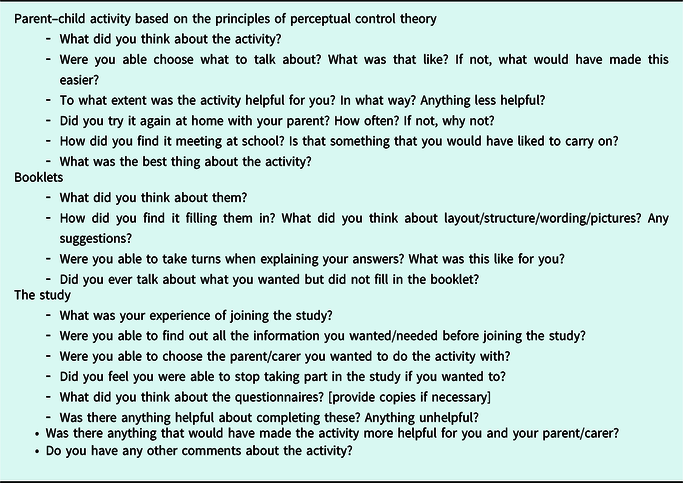
An interview topic guide was developed in order to obtain qualitative information about participants’ experience of engaging in the activity. Targeted questions explored participants’ views on the format, style and usefulness of the activity, as well as the design and layout of the supporting diaries/booklets. An overview of the topic guide can be found in Table 4.
Procedure
Stage 1
The activity was advertised by placing posters around the school as well as liaising with teachers who informed students about the study during lessons. Any interested students were asked to first sign an expression of interest and agree for their parents to be informed about the study. The forms could be returned to their teacher or dropped at reception in a box specifically designed to collect the forms during the study. The researcher then collected the forms and contacted interested students.
Interested young people were offered participant information sheets and assent forms in order to consider the full extent of the study. As the activity was a parent–adolescent activity, any adolescent wishing to take part in the study needed to do this alongside a consenting adult. Parents were informed in participant information sheets that if they did not wish to take part in the study, their child could still engage in the activity with another consenting adult (e.g. aunties, uncles, grandparents) who had regular interaction with the adolescent. Any adolescents whose parents/carers did not wish to take part in the study were not able to take part in the study and try the activity. Parents were offered information sheets and consent forms before meeting with the researcher.
Students and parents interested in the activity were then invited to meet with the researcher at school to work through queries and to provide written consent. During this initial meeting, the researcher introduced participants to the importance of identifying and prioritising goals by using the PCT framework to explain control, conflict and reorganisation. The reason for this was to help participants understand how and why the activity might be beneficial for them. The concepts were explained in plain/lay language and with the aid of pictures (perspective riddles) that young people as young as 11 years old could understand. Young people and parents were then offered a copy of the booklets designed to support them during the activity. With the help of the researcher, they took turns in identifying important goals. The researcher guided the conversation between young people and their parents by showing them how to use the guide in the booklet as well as consider additional questions. Following this, both the young person and the parent were asked to spend time completing their own booklets. The booklets prompted participants to rate how important their chosen goal was, how close they were to achieving it and whether they had the opportunity to talk about it. Furthermore, on a 10 cm visual analogue scale, participants were asked to rate to what extent (ranging from ‘not at all’ to ‘definitely’) they felt able to talk about their goal, felt listened to by the other person and how useful they found the activity. The reason for inviting participants to reflect on the extent to which they were able to talk and feel listened to, was due to previous research where this was reported as one of the most helpful therapeutic factors (Cooper, Reference Cooper2013). This was also recognised in the study exploring MOL’s feasibility with young people (Churchman et al., Reference Churchman, Mansell and Tai2019b).
Participants involved in the study were invited to try the activity for 10 weeks. Families were informed that they could choose for how long they wanted to engage in the activity, but in order for their data to be used in the study they needed to complete the offered booklets at least twice. For the first 4 weeks of the study, participants were invited to meet with the researcher once a week at school. During the meetings, participants were encouraged to review their goals and set new goals as well as discuss any concerns. Young people and parents were also invited to fill in the study’s questionnaires. Participants were then encouraged to engage in the activity at home if/when desired and come back to meet with the researcher after 4 weeks.
On completion of 8 weeks, participants were invited to attend another meeting with the researcher to discuss progress on goals and complete outcome measures. Participants were then informed that they could continue to engage in the activity for an additional 2 weeks before the completion of the study.
After 10 weeks, families were invited to fill in the end-of-study measures. All participants were invited to provide qualitative feedback on their experiences of engaging in the activity. Follow-up appointments with the researcher were set 2 and 4 months following completion of the 10 weeks. All meetings took place on school premises at a time suitable for participants.
Stage 2
The procedure for the modified activity followed the same steps described above. Because participants that engaged in the original activity reported that regular meetings at school with the researcher were not always practical, the frequency of the meetings at school with the researcher were reduced. New booklets were designed to support participants discussing incompatible goals. Questionnaires were collected after the first and second month as well as at end of the study using an online system (Select Survey) for parents and during face-to-face meetings at school with young people. In parallel with the questionnaires and upon completion of the 10-week activity, all participants were invited to provide qualitative feedback on their experiences of the activity.
Due to the study being advertised before the schools’ summer holidays, one family met the researcher outside of school. An ethical amendment was submitted and approved to support these changes.
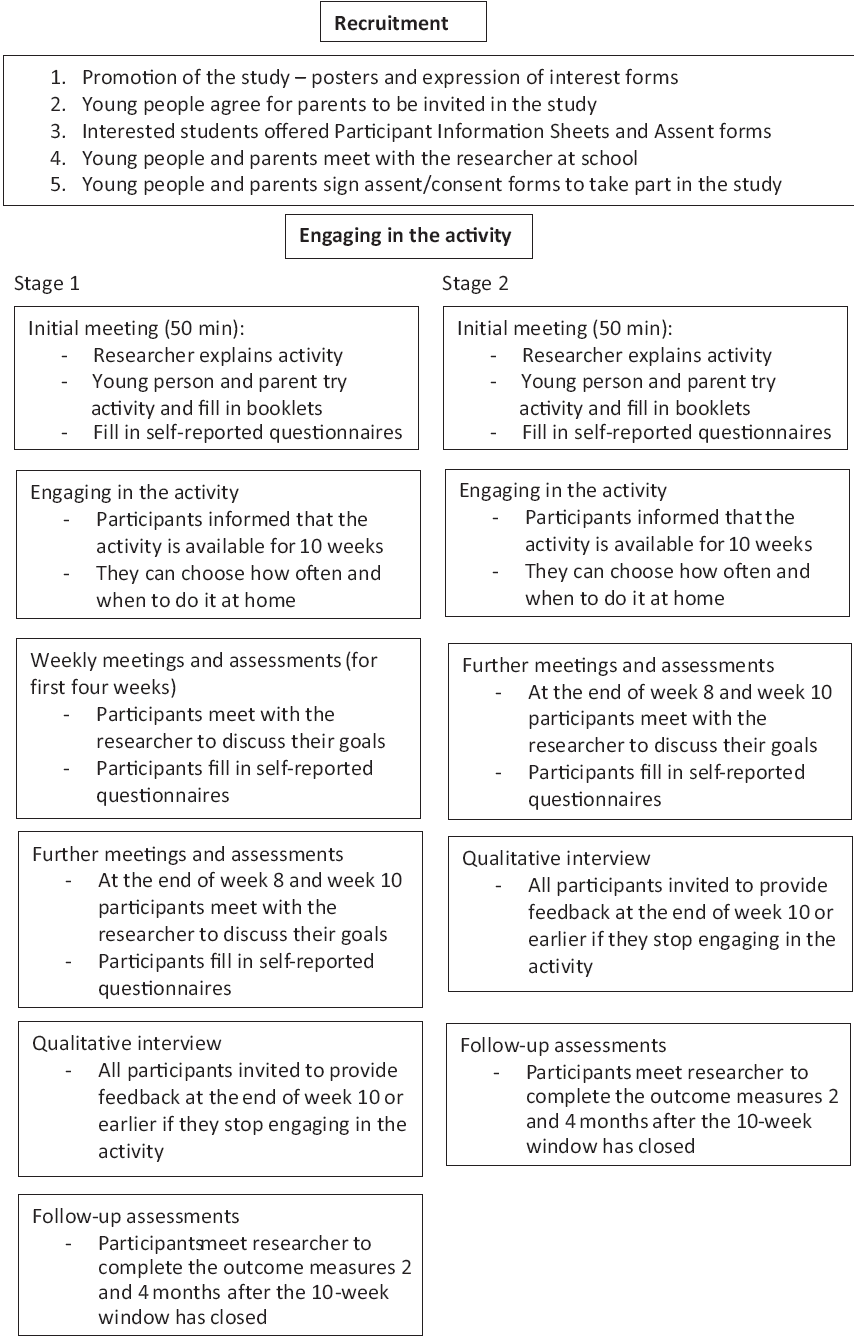
Please refer to Figure 1 for a summary of the timeline of the study.
Timeline of the study.

Analysis
All quantitative data were analysed using the endorsed guidelines for each scale. The YP-CORE data was checked against the recommended cut-off values for each participant according to their age and gender. Any scores above 10.3 (male, 11–13 years), 14.1 (male, 14–16 years), 14.4 (female, 11–13 years) and 15.9 (female, 14–16 years) are indicators that individuals are experiencing clinical levels of psychological distress (Twigg et al., Reference Twigg, Cooper, Evans, Freire, Mellor-Clark, Mcinnes and Barkham2016). For the FSS (Olson, Reference Olson2004) the total score indicates the level of family satisfaction participants experience. A score between 10 and 29 would indicate very low satisfaction, 30–35 low satisfaction, 36–39 moderate satisfaction, 40–44 high satisfaction and 45–50 very high satisfaction. On the Perceived Criticism Scale (Hooley and Teasdale, Reference Hooley and Teasdale1989), higher rates of perceived criticism are indicative of worse psychological outcomes (Renshaw, Reference Renshaw2008). One of the questions asked ‘how critical do you consider your parent/child to be of you?’. A couple of families assumed that the word ‘critical’ was synonym to ‘pivotal’ not ‘expressing disapproving comments’. As a result, due to the questionnaires being filled in inaccurately, the results have not been included in this report. Lastly, the 12-item GF-FAD is calculated by adding the score obtained on each item (ensuring that scores have been reversed for negatively framed items) and dividing it by 12. A score of 2 or above indicates problematic family functioning. The higher the score, the more problematic the family functioning.
Qualitative data collected in the form of semi-structured interviews was transcribed verbatim and analysed using thematic analysis. Interviews with both young people and parents lasted between 15 and 30 minutes. The transcribing was split between the researcher and a research assistant volunteer. Transcripts were then analysed using the Nvivo 11 software. A coding scheme was developed by following Braun and Clarke’s (Reference Braun and Clarke2006) proposed method of conducting thematic analysis. The researcher familiarised themselves with the data by reading the transcripts repeatedly. Following this, transcripts were coded and emerging themes were considered. The themes were then named and defined and checked against the data to ensure that they were illustrative of all the data set. Initial themes were discussed with the rest of the research team and additional changes were made. A final thematic map containing themes and subthemes reflecting the whole data set was created. All interviews were then coded using the agreed themes and subthemes. In order to evaluate inter-rater reliability, one interview was selected to be coded by an additional research volunteer. Results showed a kappa score of 0.91 (where a score over 0.75 represents excellent agreement) and the percentage agreement on all individual codes exceeded 95%.
Results
Recruitment, retention and acceptability
Stage 1
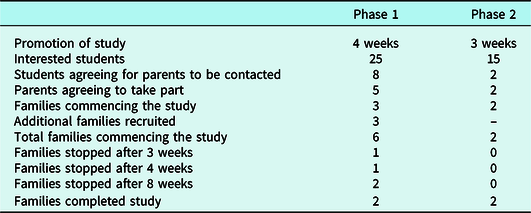
The initial activity was advertised for 4 weeks with 25 students expressing an interest in the activity. Of the 25, eight students agreed for their parents to be contacted and informed about the study. After numerous conversations with parents/carers, a total of five families were successfully recruited. The other parents and carers expressed various obstacles that prevented them from taking part in the study. The five families consisted of three girls and two boys. Most young people chose to try the activity with their mother with the exception of one boy who chose to try the activity with his father. Young people’s age ranged from 12 to 14 years old. Four families were White British and one family Asian.
Of the five families that engaged in the original activity, three were unable to commit to the 10-week time frame for various reasons including physical illness, family commitments or time constraints (starting full-time work) which prevented them from attending meetings at school. For an overview of recruitment and retention rates, please see Table 1.
Recruitment and retention overview

Stage 2
The modified version of the activity was advertised to young people with a limited window of 3 weeks to sign up for the study, due to the school’s term length. Ten families were offered the full information pack including consent/assent forms. Of these, two chose to engage in the modified activity. Both families completed the full course of the study including the follow-up appointments and provided qualitative feedback (interviews) at the end of the study. Both families were White British and included two girls aged 12 and 13 years and their mothers. One family (Parent 1 and Child 1) had previously engaged in the original activity. For an overview of recruitment and retention rates, please see Table 1.
Outcomes
Stage 1
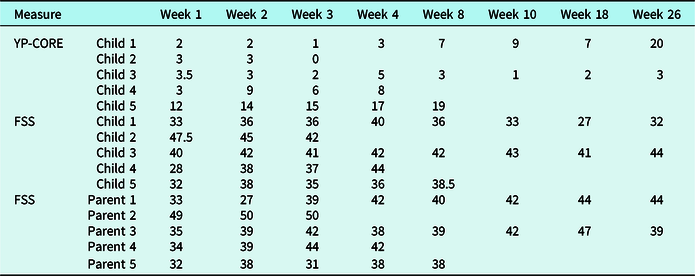
At the beginning of the study, just one young person displayed psychological distress above the cut-off value recommended for their age and gender (see Table 2).
Outcomes overview (phase 1)
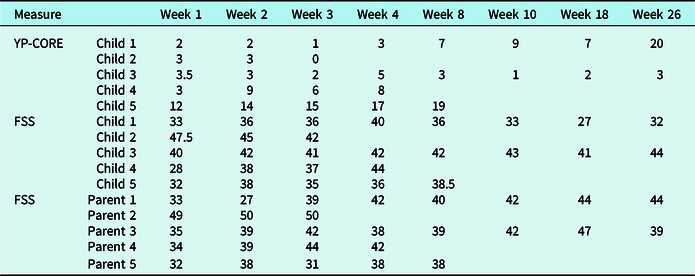
YP-CORE, Young Person’s Clinical Outcomes in Routine Evaluation; FSS, Family Satisfaction Scale.
After engagement in the goals activity, most participants reported some improvement on the FSS. Two parents reported moderate satisfaction with family functioning, whilst two parents reported high levels of satisfaction. Young people’s scores on the FSS varied. Full details available in Table 2.
Stage 2
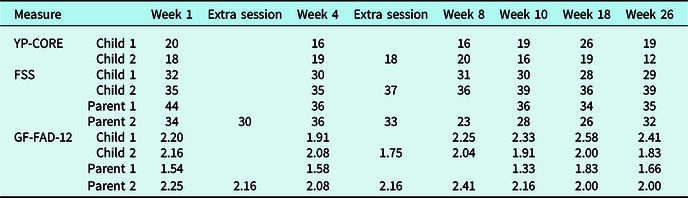
Both young people taking part in the modified activity reported clinical levels of distress on the YP-CORE at the beginning of the study (see Table 3).
Outcomes overview (phase 2)

YP-CORE, Young Person’s Clinical Outcomes in Routine Evaluation; FSS, Family Satisfaction Scale; GF-FAD-12, the 12-item General Functioning Family Assessment Device.
Topic guide

On completion of the study, one student’s levels of distress reduced and they no longer met the criteria for clinical distress. On the FFS, both young people reported low satisfaction with family functioning when they entered the study. After 10 weeks, both parents and one child reported progress on their score.
According to the results on the 12-item GF FAD, both young people and one parent met the criteria for problematic family functioning. After 10 weeks, one child and one parent continued to meet the criteria for problematic family functioning. Full details of scores and the category they fall into are available in Table 3.
Despite not fully completing the booklets, both families reported using the principles of the activity in their everyday interactions. The qualitative feedback offers detailed information of their experiences.
Qualitative data
A total of six dyads provided qualitative feedback on their experiences of the parent–child activity. Four families provided feedback on the goal setting and monitoring activity and two families on the modified activity that facilitated conversations on conflicting goals. On completion of the thematic analysis, similar themes and subthemes emerged for both versions of the activity and as a consequence the thematic map reflects feedback related to both versions of the activity. A few minor differences have been identified and these will be clearly explained. Moreover, despite analysing young people’s interviews separately from those of their parents, similar themes materialised. As a result, we combined the themes to reflect all participants’ experiences.
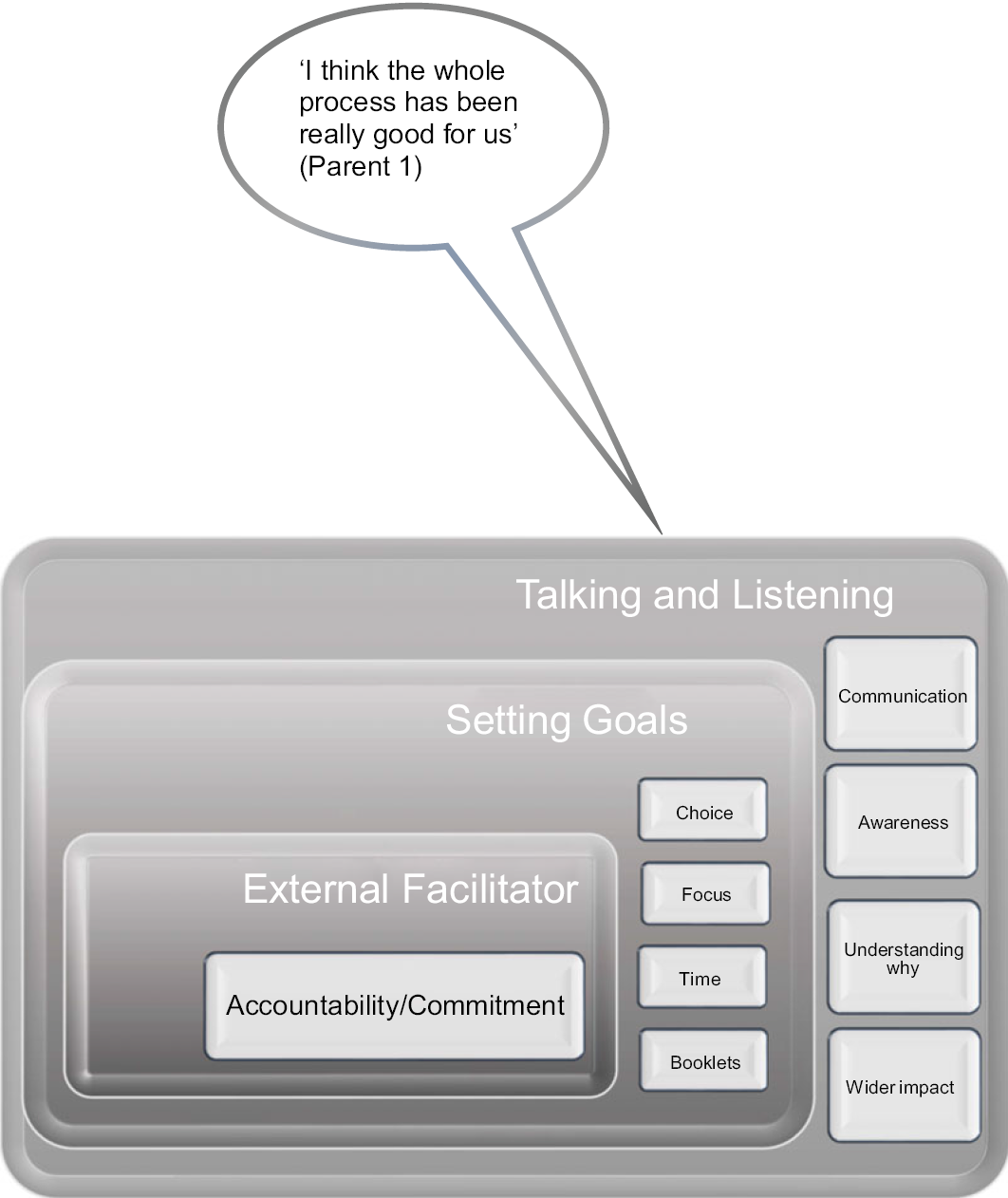
All twelve participants reported positive feedback about their experiences of engaging in the activity. Recurring assertions presented included: it was fun, interesting, good and it helped. On exploring what specifically made the activity fun, interesting or good, three themes were identified. These were grouped using a zooming-out principle with pragmatic features initially discussed, in order to help understand the more abstract functions of the activity. A detailed thematic map describing this can be found in Fig. 2. The three main themes were: (a) External Facilitator, (b) Discussing Goals and (c) Talking and Listening.
Thematic map.

External Facilitator
One element that contributed to participants’ experience of the goals activity was the role of the external facilitator. This theme included one subtheme: accountability/commitment. According to participants, the external facilitator played a significant role in supporting them to engage in the goals activity. This was recognised during both versions of the activity. The facilitator’s input, whilst frequent during the goal setting and monitoring activity, was reduced during the activity exploring conflicting goals following feedback from families who reported that the regular meetings at school were not always practical.
Accountability/commitment
Young people and their parents reported that school meetings with the external facilitator discussing the progress of their chosen goals made them feel accountable and encouraged them to engage in the activity regularly. The weekly meetings arranged for the first 4 weeks of the study during the goal setting and monitoring activity increased participants’ commitment to monitoring and achieving their chosen goals. Participant 5 (parent) stated: ‘if you have like weekly catch up, you’re more accountable for the things that you set as your goals and meeting them’. When the meetings with the external facilitator were reduced during the second phase of the activity, this impacted participants’ engagement in the activity: ‘it’s easier to drift away when you feel … when there’s no real, like you’re not going to meet someone or you’re not going to fill the form in or what have you, it’s easier to think “oh, well, ok”’ (Parent 1).
Setting Goals
The second element that contributed to participants’ experience was the opportunity to set and discuss important goals. During the goal setting and monitoring activity, participants were offered the opportunity to set practical and ‘smaller’ goals, whilst the activity exploring conflicting goals provided participants with a platform to explore more abstract or complex goals. This theme included four subthemes: choice, focus, time and booklets.
Choice
The ability to choose a goal was of particular importance for young people. They reported that this contributed to them enjoying the activities. Child 1 recalls: ‘I felt like I had a bit of choice because like I’m the kid so, my mum and dad decide everything for me. So, knowing that there’s something I can decide and knowing that there’s something that’s mine and that I can work on has been good’.
For parents, allowing their own children to choose and set goals was a new concept which did not come naturally ‘I almost want to set her goals for her because I want her to do certain things and she doesn’t want to do them. So, that was interesting having to take a step back and just allow her to do her own thing’ (Parent 1).
Focus
The process of identifying, discussing and achieving important goals proved to be a helpful activity that benefited both young people and their parents. Child 5 reported ‘I really liked it because it helped me to focus on things that I had to work on more’. Parent 2 emphasised that the activity ‘gets you more focused on what you’re supposed to be doing’.
Time
Time played a crucial role in how often participants engaged in the activities. Despite wishing to engage in the activity more often, participants often struggled to find time to do so. Lack of time was reported as the only less helpful aspect regarding the activity. One participant recalls: ‘The only thing I found was that sometimes we were struggling for time because sometimes we don’t have time to talk about it or to write it down sometimes’ (Child 5). The lack of time to engage in the activity affected both the home environment and the meetings at school.
Booklets
As part of engaging in the activity and setting goals, participants used simple booklets that helped and facilitated the process. In the case of the goal setting and monitoring activity, participants provided mixed feedback. Whilst participants enjoyed filling in the booklets and reported that it helped them keep track of their progress as well as reflect on their answers, this was not always practical and participants felt it was more important to talk about their goals rather than fill in the booklets: ‘We did more talking than filling out which is the best mixture, you don’t want to be filling out and then not having the communication’ (Parent 3). In terms of the format of the diary, participants reported that it was easy to fill in. One participant suggested the following: ‘just maybe something that’s simpler than what is on that diary. So, not so much about have you felt you’ve been listened to etc., just more around have you been able to achieve your goal’ (Parent 5).
Regarding the activity exploring conflicting goals, participants reported that the booklets were easy to complete: ‘I thought that was a really good process and it wasn’t too taxing or it didn’t make you feel uncomfortable or anything, it was just easy to … read through it and think’ (Parent 1). The booklets were a useful tool in allowing participants to explore conflicting goals and find solutions to reach them. One young person felt that the booklet was too long with the questionnaires added at the end and they would have also preferred if the booklets were more colourful. One parent suggested creating an online version for easier access. Despite not filling in the booklets regularly, participants were able to use the concepts endorsed by the activity: ‘we’ve used like, the tactics from the book like, quite a lot but we’ve not actually used the… booklets’ (Child 1).
The theme (setting goals) linked with the first theme discussed (external facilitator) through various aspects concerning both young people and parents. The meetings at school with the facilitator promoted and encouraged goal choosing for both young people and their parents: ‘when we were here we were coming up with a goal as well so … was good when we were talking having an independent person who would ask certain questions’ (Parent 1).
Talking and Listening
Talking and listening was the most frequent theme to emerge throughout all interviews. This theme was central to both versions of the activity and included four subthemes: communication, awareness, understanding why, and family impact. Due to its over-arching impact, it encompasses the above two themes together with their subthemes.
Communication
Improved or increased communication was reported as one of the main benefits encountered by both young people and their parents as a result of talking about important goals and feeling listened to. Parent 1 concludes ‘we seem to be communicating better … It has been nice opening up communication between us, I found that really helpful’.
Awareness
Improved communication facilitated increased awareness where young people and parents were able to better explore and understand each other’s perspectives. Participants recognised that this was not something they paid attention to or considered before: ‘sometimes you think you understand your child but you don’t really [laughing], until they say it then you think “oh right, okay, that’s the way that they are thinking” so yeah’ (Parent 1).
The awareness then allowed for different attitudes and actions which participants found helpful. Child 3 reported: ‘now I know more about what’s happening with my parents, like how they are feeling… since I’ve known what they feel, I know when to not say certain things. Because when they are in a mood, I know not to ask “can I have something” because they might be a bit snappy or something’. Child 2 explained how the activity exploring conflicting goals ‘can make people, like my mum realise what I want and what she wants altogether and then we can make an agreement’. Participants recognised the benefits of increased awareness and took the initiative to expand its use beyond the confinements of the goals activity: ‘I think that we’d be doing more like, thinking what the other person wants and stuff’ (Child 1).
Understanding why
The impact of engaging in the goals activities stretched further than getting to know what the other person wanted. It provided a platform for participants to understand why their goals might be important and the reasons why they might want to achieve them.
Child 1 recalls: ‘I liked knowing that she knew why I wanted to do things, instead of just being like “I want this, I want this, I want this”’. The practice was adopted in further interactions outside the goals activity as Parent 1 explains: ‘I think I, I [emphasised] tried to explain things a bit more than when I used to just bark instructions at them, trying to say why [emphasised] we’re doing certain things’.
Wider impact
The last subtheme was described as an unexpected positive consequence with direct implications for family members involved in the activity and the wider family. One family concluded: ‘I feel that we definitely feel closer now … I think our relationship seems easier now. We can both be quite hot headed’ (Parent 1). One young person was able to change the way they interacted with their other parent who was not involved in the study: ‘He just doesn’t really understand though because he’s not done it … He’s like, why isn’t she screaming at me? – you know so he’s just like –, he doesn’t understand what’s going on but, it seems to be working” (Child 1). Lastly, Parent 3 felt that their engagement in the activity had implications for the whole family: ‘I’m glad we did it, definitely, because … the family itself has probably ended up better … And as I said from a family point of view, now I think it’s a better family’.
When participants were asked what the most positive element of the activities was, they concluded that it was the opportunity to ‘talk’ to each other. This was valid for both young people (Child 5: ‘I got to talk to my mum’) and parents (Parent 3: ‘it gave us a conversation point’). Participants found that their ability to ‘talk’ to each other extended beyond the activity, ‘because when we just talked … we went into more topics as well’ (Child 3). Parents recognised this was key in their parent–child relationship. Parent 1 reported, ‘she’s chatted about a few things with me that she might not have done before we started this’ while Parent 3 explains, ‘it’s made him realise that it’s still important to do it without documenting it and so he can talk outside about anything’.
Cluster of themes
Figure 2 shows how the over-arching theme ‘Talking and Listening’ incorporates the ‘Setting Goals’ theme which in turn includes the ‘External Facilitator’ theme. Displaying them in this manner best describes the relationship between the main themes and their subthemes. In the feedback offered, participants reported that they experienced an increased ability to talk and feel listened to when they were offered the opportunity to engage in the goal setting activity, which was introduced/facilitated by the researcher.
How ‘Talking and Listening’ assimilated ‘Setting Goals’
The act of talking and listening was facilitated by participants setting and discussing important goals. Parent 1 recalls: ‘It has been nice opening up communication between us, I found that really helpful. And just talking about goals with her, because it’s something you do in a work environment but I’ve not necessarily transferred any of that over into the home environment’. As put forward in the ‘discussing goals’ theme, this was often limited by time, ‘I think the most important thing was actually communicating which was, it’s not always possible because of timings and stuff. I suppose that’s where we have to make the effort to just take 5 minutes and just say “right how did today go”?’ (Parent 5).
How ‘Talking and Listening’ assimilated ‘Setting Goals’ which then assimilated ‘External Facilitator’
Participants felt that the conversations at school with the facilitator present differed from the ones at home: ‘It helped when we came here and talked to you. That was better than like, talking at home and writing it down … I think talking to you was better, was helping’ (Child 2). The reason for this varied, with one participant recalling: ‘I feel like we talked more in these ones because it wasn’t as hectic. Because at home we normally have like my little brother wanting to do stuff or like I’m not even in the same house as her because I’m quite often at my dad’s house. So, it is easier being here and it’s just like we can kind of like talk for as long as we want rather than my little brother being like “we need to do this and we need to do that” or like it being dinner time and needing to go downstairs and I can’t be on the phone to my mum and stuff’ (Child 1). Another participant valued the facilitator’s role in asking specific questions that triggered certain thought patterns: ‘I suppose having an independent person that can ask the right questions because again sometimes when you’re talking just between the two of you, you don’t necessarily think about “oh why is that and why is that” and ___ [child’s name] might be like “why you’re asking me all these questions”, um, so it is quite nice to have an independent person to make you think about different things’ (Parent 1).
Discussion
The current paper describes the development of a parent–child activity based on the principles of PCT, and considered its feasibility and acceptability among young people and their parents. An initial version of the activity focused on the importance of identifying and monitoring important goals. The activity was aimed at encouraging participants to set practical, short-term goals that could be monitored weekly and find ways to achieve them. A modified version of the initial activity was later introduced in order to allow for consideration of more abstract goals that involve conflict between young people and their parents.
Mirroring previous literature, the recruitment and retention of families in the study to test the suitability of the activity, proved to be a challenge due to various circumstances (Gopalan et al., Reference Gopalan, Goldstein, Klingenstein, Sicher, Blake and McKay2010). Where parents have been involved in interventions with young people, literature indicates that less than half the dyads complete a full course of treatment (Ingoldsby, Reference Ingoldsby2010). Careful consideration should be given to the circumstances surrounding the time and length of the advertisement for the proposed activities. As a result, the qualitative data was used to further understand the activity’s feasibility and acceptability among participants. Young people’s enthusiasm and interest in the study should be noted and considered. The efficacy of advertising the activity could have been improved through targeted advertising. A number of practical examples include: asking the pastoral staff and teachers to personally advertise the activity, promoting the activity on the school website or advertising it during assemblies.
A total of 25 young people showed an interest in the goal setting and monitoring activity, and 10 in the activity exploring conflicting goals. This is despite literature suggesting that young people might be difficult to engage in family interventions (Prout, Reference Prout2007). The current study found that parents were more likely to pose a barrier for young people accessing an intervention. Parents reported various circumstantial reasons for not being able to engage in the study. Similar reasons were reported for those who engaged in the activity but dropped out before the end of the study. These coincide with previous findings where situational obstacles (additional commitments, inability to attend sessions) were the most common reasons parents mentioned when ending interventions prematurely (Baker-Ericzén et al., Reference Baker-Ericzén, Jenkins and Haine-Schlagel2013).
Moreover, the way that disengagement is perceived and categorised should also be explored. Categorising disengagement by the amount of sessions attended could be misleading (Johnson et al., Reference Johnson, Mellor and Brann2008). During the goal setting and monitoring activity, parents reported that it was difficult to attend regular meetings. Consequently, the activity exploring conflicting goals offered parents the opportunity to decide how often to meet with the researcher. Due to the sample size it is difficult to conclude how this system worked for participants.
Both young people and parents provided positive qualitative feedback regarding both versions of the parent–child activity. The over-arching theme that dominated participants’ feedback was the way that the activity helped young people and parents to ‘talk and listen to each other’. Talking has often been classed as a way of alleviating distress but also a way to connect and strengthen relationships (Jaffe, Reference Jaffe2014). Literature suggests that resilience and positive mental health in young people are strongly connected to young people’s ability to freely talk about things bothering them with their parents (Brooks et al., Reference Brooks, Zaborskis, Tabak, Granado Alcón, Zemaitiene, De Roos and Klemera2015).
In parallel, as PCT proposes, when individuals are able to identify, prioritise and achieve important goals (that they value) while also being able to shift goals that are not within their reach they experience increased control and thus improved well-being (Mansell et al., Reference Mansell, Carey and Tai2012). This process of talking and listening was facilitated by participants choosing and focusing on important goals after being introduced to the activity by the external facilitator.
In the current study, both sets of participants advised that talking about important goals as part of the activity helped them improve their overall communication. Furthermore, participants reported gaining greater awareness of each other’s goals, needs and desires, as well as the reasons why these were important. These findings are similar to young people’s opinions, reported within individual therapy (Churchman et al., Reference Churchman, Mansell and Tai2019a), where talking/communication was perceived as helpful as it facilitated increased awareness and changes in perspective. Participants in the current study reported that improved communication, awareness and understanding of each other’s needs and wants positively impacted the dynamics of the wider family. These findings are very important in the context of current literature, which proposes that open and positive communication is the key to successful family functioning and resilience (Walsh, Reference Walsh2016). Happiness with family relationships has been reported as having the strongest impact on young people’s overall subjective well-being (Children’s Society, 2018).
The current study found that participants experienced new insights and improvements in relationships as a result of engaging in the activity, as well as communicating more at home.
Participants reported that conversations initially relating to goals (as encouraged by the activity) often led to other conversations that participants would not have otherwise engaged in. The conversations about important goals were facilitated by offering participants choice over the topics discussed during the activity. Having choice and control have previously been reported as important aspects in exploring problems and gaining new insights (Churchman et al., Reference Churchman, Mansell and Tai2019a, Reference Churchman, Mansell and Tai2019c).
In addition, the booklets supported participants to engage in conversations about important goals. Most participants reported that the regular meetings at school with the facilitator/researcher kept them accountable and committed during the activity. Moreover, a small number of participants reported that the facilitator’s input helped provide a different perspective on the topics discussed. This is consistent with findings from a study exploring adult’s perceptions of helpfulness aspects in therapy. The study concluded that the therapist approach, control and talking freely were recognised as the most vigorous predictors of perceived helpfulness (Cocklin et al., Reference Cocklin, Mansell, Emsley, Mcevoy, Preston, Comiskey and Tai2017).
Overall, both versions of the parent–child activity received positive feedback from all participants. Suggested improvements included making the booklets exploring conflicting goals more colourful, not including the questionnaires at the end, and having a digital version available. Given the exploratory nature of the study and its current findings regarding the role of the facilitator, it is important to consider how best to establish the required number and frequency of the meetings. PCT argues that individuals should be in control and therefore, decide how often and how many sessions to attend. The facilitator should, therefore, proactively discuss and agree with participants the best approach that would meet their needs.
In the current study, one family had the opportunity to access both versions of the activity. In their feedback both the young person and the parent recognised the extended benefits of the activity exploring conflicting goals and stated that it allowed them to explore bigger subjects, whereas the goal setting and monitoring activity catered for smaller, more general goals. The young person who took part in both versions of the activity recalls: ‘It was good because it wasn’t just like what we wanted, it was the reasons why and how it could, how we could do it, bigger subjects … whereas the little booklets they were more like small, and more general’ (Child 1).
Limitations
Whilst providing positive data, the current study does present a number of limitations. Both activities included a small sample of participants. More research is needed to explore how a larger sample group might experience the proposed activities. The activity exploring conflicting goals only offered one meeting with participants at school. Although participants were encouraged to seek further support by contacting the researcher, one family chose not to do so. As a result, it is not known whether one meeting with the researcher was enough to support participants in successfully engaging in the activity. In addition, one family took part in the goal setting and monitoring activity prior to engaging in the activity exploring conflicting goals; questions might be raised regarding participants’ ability to discuss incompatible goals without trying the goal setting and monitoring activity first. Future studies might also wish to consider how the activity impacts parents’ well-being. The Clinical Outcome in Routine Evaluation-10 measure (CORE-10; Barkham et al., Reference Barkham, Bewick, Mullin, Gilbody, Connell, Cahill, Mellor-Clark, Richards, Unsworth and Evans2013), which is designed to assess psychological well-being in adults, could be used. Given the feedback regarding the activities’ impact on communication, future studies might also wish to explore this area in more detail.
Conclusions
The current study aimed to develop and assess the feasibility and acceptability of a parent–child activity based on the principles of PCT. The activity showed good potential in targeting the key elements that support individuals to achieve increased well-being as identified by PCT. Consequently, the mixed data gathered from the current sample warrant further investigation. A larger study, with more participants, could help establish whether both versions of the activity have the potential to impact individuals’ well-being as well as family communication and dynamics.
Acknowledgments
The authors would like to thank Susan McCormack, founder and director of MODE Rehabilitation, who formed the initial relationship with the school where the study took place. The authors are also grateful to all the young people and parents that took part in this study and also to the school staff (particularly Mr Pete Whitehead and the pastoral team) that supported and facilitated the project. Lastly, the authors would like to thank Nicole Wynford-Thomas and Yasmin Al-Nufoury for their input.
Conflicts of interest
The authors declare that they have no competing interests.
Financial support
This research received no specific grant from any funding agency, commercial or not-for-profit sectors.
Ethical statement
Please note the authors have abided by the Ethical Principles of Psychologists and Code of Conduct as set out by the APA. Ethical approval to run the study was obtained from the University of Manchester (reference no. 2018-4844-7158 01/10/2018).
Key practice points
(1) Talking about important goals while being listened to, contributed to improved communication and relationships for young people and their parents.
(2) Exploring important goals (needs/wants) helped participants to prioritise and focus on things they wanted to achieve.
(3) Open and honest discussions about conflicting goals between parents and young people allowed participants to understand each other better and become more aware of each other’s needs.



Comments
No Comments have been published for this article.