Introduction
An incretin effect is defined as a biologic process where orally taken carbohydrates induce the release of intestinal hormones augmenting insulin secretion more than what could be achieved with intravenous glucose delivery (Ref. Reference Vilsboll and Holst1). These hormones are released from the intestinal mucosa to orchestrate glucose-induced insulin secretion (insulinotropic effect) from pancreatic beta cells. Therefore, incretin hormones are crucial in the maintenance of postprandial glucose levels by facilitating glucose transport into peripheral tissues (Ref. Reference Russell2). Gastric inhibitory polypeptide/glucose-dependent insulinotropic polypeptide (GIP) and glucagon-like peptide-1 (GLP-1) are the two incretin hormones with insulinotropic effect in humans, which is responsible for 70% of postprandial glucose-dependent insulin secretion (Ref. Reference Kieffer and Habener3). Some of the remaining insulinotropic activity can be attributed in part to neurotransmitters, such as vasoactive intestinal peptide (VIP) and pituitary adenylate cyclase-activating peptide (PACAP) (Refs Reference Roberge and Brubaker4, Reference Sanlioglu5).
GLP-1 is one of the two essential gut-derived incretin hormones involved in the modulation of glucose homoeostasis (Fig. 1). Its insulinotropic activity has been demonstrated both in preclinical and clinical studies (Refs Reference Drucker6, Reference Kreymann7). After ingestion of a meal, GLP-1 is released into the bloodstream where it stimulates glucose-dependent insulin release and insulin biosynthesis in pancreatic beta cells (Ref. Reference Fehmann and Habener8) through a G-protein-coupled receptor (GLP-1R) (Ref. Reference Thorens9). While carbohydrates are the most effective agent causing GLP-1 secretion, proteins and fat also contribute to the secretion of GLP-1 (Refs Reference Gribble10, Reference Tolhurst, Reimann and Gribble11). Apart from its insulinotropic action, GLP-1 interferes with glucagon release (Ref. Reference Ritzel12) and improves age-related glucose intolerance (Ref. Reference Wang13). In addition, GLP-1 possesses mitogenic effects resulting in cellular differentiation (Ref. Reference Abraham14) and increased beta-cell mass (Ref. Reference Tourrel15). Weight loss due to reduced appetite and food intake (Ref. Reference Turton16) is also observed as a result of suppression of gastrointestinal motility and secretion (Ref. Reference Wettergren17). Lastly, GLP-1 displayed beneficial effects in patients with myocardial ischaemia and heart failure (Ref. Reference Zhao18).
Major antidiabetic properties of GLP-1. GLP-1 is released from intestinal L cells located in the lower intestine (ileum). Target organs include, but not limited to, pancreas, liver, stomach, muscle, adipose tissue and brain. GLP-1 also suppresses glucagon secretion from alpha cells, and stimulates somatostatin secretion from pancreatic delta cells. In addition, GLP-1 reduces gastric acid secretion. The effects of GLP-1 on adipose and muscle tissue (enhancement of glucose update and glycogen synthesis) are omitted for clarity.

Isoglycaemic glucose tolerance tests demonstrated that type 2 diabetes (T2DM) patients manifested a 50% reduction in the incretin effect, despite a 300% increase in glucose-induced insulin secretion of healthy controls (Ref. Reference Knop19). Thus, the loss of incretin response certainly results in glucose intolerance in patients with T2DM, since incretins are the main modulators of postprandial glucose excursions. Interestingly, meal-stimulated GLP-1 response, but not postprandial GIP secretion, was severely reduced in patients with T2DM (Ref. Reference Toft-Nielsen20). Moreover, GLP-1 retained its insulinotropic effect in T2DM patients, while no incretin response was obtained with GIP administration (Ref. Reference Nauck21). Because GLP-1 infusions restored down-regulated beta-cell response to glucose in T2DM patients (Ref. Reference Kjems22), GLP-1 has been considered a therapeutic agent for the treatment of T2DM.
GLP-1 is initially synthesised as part of proglucagon, a prohormone consisting of 180 amino acids (Ref. Reference Bell, Santerre and Mullenbach23). Besides GLP-1, several other small peptides glucagon, GLP-2, glicentin and oxyntomodulin are also encoded within proglucagon fragment (Fig. 2). GLP-1 and glucagon are generated as a result of the differential post-translational processing of preproglucagon in the intestine and pancreas, respectively (Ref. Reference Novak24). Therefore, the post-translational process is carried out by two distinct prohormone convertases specifically expressed in two different tissues, PC2 in pancreas (Ref. Reference Holst25) and PC3 in intestinal L cells (Ref. Reference Ugleholdt26). In addition, GLP-1 is produced in the hindbrain, primarily in the nucleus of the solitary tract (NTS) to regulate food motivation/reward (Refs Reference Alhadeff, Rupprecht and Hayes27, Reference Skibicka28). It is the central GLP-1 production from brainstem neurons, which is responsible for the appearance of meal-related benefits of GLP-1 involving reduction in meal size, meal frequency, food motivation and reward (Refs Reference Skibicka28, Reference Zhao29, Reference Hayes, Bradley and Grill30, Reference Huo31). GLP-1 production from preproglucagon in non-endocrine tissues is impractical, although, without the expression of the specific prohormone convertase (Ref. Reference Kim and Egan32). Nonetheless, proglucagon is intracellularly transported to the regulated secretory pathway where it is processed into the smaller peptides.
Differential proglucagon processing in the intestine versus pancreas. Proglucagon is processed to generate glicentin, GLP-11–37 and/or GLP-11–36 amide, Intervening Peptide 2 (IP2) and GLP-2 by the action of PC1/3 in the intestine. PC1/3 can further process glicentin and GLP-1 to produce oxyntomodulin and GLP-17–37 and/or GLP-17–36 amide. PC2 processing of proglucagon fragment in pancreatic alpha cells yields Glicentin-related pancreatic polypeptide (GRPP), glucagon, IP-1 and the major proglucagon fragment rather than GLP-1.
GLP-1 is a potent stimulator of glucose-induced insulin release without causing reactive hypoglycaemia (Ref. Reference Vilsboll33). However, GLP-1 has a short biological half-life (2–3 min) due to rapid truncation by the ubiquitous serine protease dipeptidyl peptidase-4 (DPP-4), which limits its therapeutic use (Ref. Reference Kieffer and Habener3). While frequent injections or larger quantities are needed to compensate for the short biological half-life of GLP-1, viral or non-viral vector gene delivery technologies were developed to provide a constant bioactive GLP-1 production and secretion (Ref. Reference Rowzee34). Because utilisation of the preproglucagon transgene might lead to unpredictable production of glucagon, or other processed peptides with unknown function, gene transfer experiments involving GLP-1 encoding sequence normally is restricted to GLP-17–37 transfer rather than the entire preproglucagon cDNA (Fig. 3). In addition, since the first two amino acids of GLP-1 are essential for its receptor binding, constructs encoding GLP-17–37 from a methionine start codon need to be synthesised using a DNA synthesiser. A furin recognition site (RGRR) is introduced into the GLP-1 cDNA following the start codon to facilitate removal of the preceding amino acids by furin endopeptidases to generate the active form of the peptide before secretion. Lastly, a secretory signal peptide is needed to target GLP-1 to the constitutive secretory pathway (CSP) to allow post-translational processing by a signal peptidase facilitating its production and secretion in non-endocrine tissues. Consequently, current progress in gene therapy approaches involving GLP-1 cDNA transfer for diabetes treatment will be highlighted in this manuscript.
Gene therapy vector design encoding GLP-1. A cell-type-specific promoter (e.g., insulin promoter) restricts transgene expression in target tissues. Epitope targeting by way of pseudotyping or use of alternative serotypes of viral vectors is also employed to achieve tissue specificity. A variety of signal peptides are employed to direct GLP-1 into secretory pathways. Furin cleavage is necessary to remove GLP-1 from the signal peptides. The Ala-to-Gly substitution in GLP-1 provides resistance to DPP-4 cleavage. Alternative routes of gene delivery through celiac artery by transient blockage of splenic and hepatic arteries also provide efficient islet transduction by viral vectors.
Non-viral gene delivery approaches
Plasmids
A plasmid-based gene delivery method involving a modified GLP-17–37 cDNA with a furin cleavage site between the start codon and GLP-1 coding region was developed to evaluate the consequence of in vivo GLP-1 gene delivery in diabetic animals (Ref. Reference Oh35). A single intravenous injection of polyethylenimine (PEI)/pGLP1 complex into Zucker diabetic fatty (ZDF) rats resulted in an increase in glucose-induced insulin secretion with a reduction in blood glucose level for 2 weeks. To increase GLP-1 expression, an SV40 promoter with NF-κB-binding sites was incorporated into the plasmid carrying GLP17–37 cDNA with furin cleavage site (Ref. Reference Choi36). A single systemic administration of PEI/pGLP1 complex into the diet-induced obese (DIO) mice resulted in increased insulin secretion and decreased blood glucose longer than 2 weeks.
Because GLP-1 must be delivered through a parenteral route and has a short lifespan, a fusion protein consisting of an active human GLP-1 and mouse IgG1 heavy chain constant regions (GLP-1/Fc) was generated to prolong and enhance the therapeutic potency of GLP-1 (Ref. Reference Kumar37). IgG–Fc homodimerisation would result in the formation of bivalent GLP-1 peptide ligands with longer half-life compared to native GLP-1, since the formation of large molecular weight homodimers slows renal clearance and reduces degradation of the conjugated peptide. The anti-diabetic effects of the GLP-1/Fc plasmid injection took time to develop, as delivery of GLP-1/Fc fusion protein normalised fasting blood glucose levels three months after the first injection in db/db mice resulting in augmented glucose-induced insulin secretion and reduced glucagon release. However, the GLP-1/Fc fusion protein could not penetrate through the blood–brain barrier, so body weight and peripheral insulin sensitivities were not affected by this treatment.
A chitosan-based gene delivery system was constructed by taking advantage of the natural ability of cationic polymers to condense plasmid DNA through electrostatic interaction to protect it from a nuclease attack (Ref. Reference Dash38). In addition, nanoparticles made of chitosan are small enough to pass through intercellular tight junctions to gain entry into cells to deliver GLP-1-encoding plasmid DNA (Ref. Reference Thibault39) The therapeutic efficacy of chitosan-based nanocomplexes containing GLP-1-encoding plasmid DNA with a furin recognition site and cytomegalovirus (CMV) promoter was assessed in 12-week-old ZDF rats with overt diabetes mellitus (Ref. Reference Jean40). A significant increase in the amount of plasma GLP-1 was detected at day 49 after five injections of chitosan–GLP-1 nanoparticles. In spite of the improvement in glucose tolerance and reduced weight gain in the treated rats, the increase in circulating insulin was transient and only lasted 14 days following the last injection. Intriguingly, subcutaneous (s.c.) injection of the nanocomplexes was more efficient than intramuscular (i.m.) gene delivery presumably due to an inflammatory reaction at the injection site that interfered with vector distribution. The ability of specific chitosan formulations to deliver native GLP-1, DPP-4-resistant GLP-1 analogues and siRNA-targeting DPP-4 mRNA were investigated in a recent in vitro study (Ref. Reference Jean41). Chitosan formulations effectively delivered nucleic acid into cell lines resulting in a fivefold increase in DPP-4-resistant GLP-1 analogues compared to native GLP-1. In addition, a DPP-4 gene-silencing approach using chitosan formulation was successful and exhibited reduced toxicity compared to commercially available lipoplex, DharmaFECT.
Because Exendin-4 (Exenatide) is an effective GLP-1R agonist (50% sequence homology) with longer half-life, an Exendin-4 expression system was designed using the two-step transcription amplification method consisting of a dual plasmid, where one plasmid encoded a potent transcription factor and the second plasmid contained a promoter driving the Exendin-4 encoding sequence (Ref. Reference Kim, Lee and Kim42). An arginine-grafted cyctaminebisacrylamide–diaminohexane polymer (ABP) was chosen as a gene carrier, since it exhibited minimal toxicity and higher transfection efficiency compared to PEI. A single intravenous administration of Exendin-4 polyplex with ABP polymer resulted in increased Exendin-4 expression and enhanced glucose-induced insulin secretion associated with decreased blood glucose in C57BL/6J mice fed with high-fat diet (HFD).
Viral gene delivery approaches
Adenovirus
To increase the efficacy of gene delivery, adenoviral expression vectors encoding GLP-17–37 were constructed and systemically injected into db/db mice and ZDF diabetic rats (Ref. Reference Parsons43). Sustained high levels of circulating active GLP-17–37 expression that led to a reduced hyperglycaemia were obtained by linking the modified GLP-1-coding region (A8 G substitution to render the peptide resistant to DPP-4 cleavage) to a leader sequence and a furin recognition site. Systemic injection of the adenovirus-GLP-1 vector improved glucose tolerance and reduced food intake generating weight loss in ZDF diabetic rats.
In another approach, DPP-4 resistant GLP-17–37 linked to the mouse growth hormone (mGH) secretory sequence with the furin cleavage site was cloned into the adenovirus vector for GLP-1 expression in submandibular glands in mice (Ref. Reference Voutetakis44). Delivery of Ad-GLP-1 resulted in 3 times higher serum GLP-1 levels associated with faster blood glucose clearance and reduction in alloxan-induced hyperglycaemia compared to mice injected with a control vector. Although, GLP-1 released from exocrine cells of the salivary glands could be modified for secretion into the circulatory system to alter blood glucose levels, retroductal infusion of adenovirus-mediated GLP-1 gene delivery into salivary glands resulted in an inflammatory reaction due to viral backbone-limiting therapeutic efficacy of GLP-1 peptide.
An adenoviral vector carrying GLP-1 cDNA (rAd-GLP-1) driven by a CMV promoter-enhancer and albumin leader sequence was constructed to determine the extent to which continuous GLP-1 expression in vivo could stimulate beta-cell regeneration in mice (Ref. Reference Liu45). A single i.v. administration of rAd-GLP-1 into streptozotocin (STZ)-induced diabetic non-obese diabetic–severe combined immunodeficient (NOD/SCID) mice demonstrated that remission of diabetes could be achieved within 10 days and normoglycaemia could be maintained at least 20 days. In addition, rAd-GLP-1-treated mice manifested a higher number of insulin-positive cells in the pancreas leading to high levels of insulin secretion compared to STZ-induced diabetic mice infected with control adenovirus. Thus, regeneration of insulin-producing pancreatic beta cells by GLP-1-mediated gene therapy might be a potential therapeutic strategy for the treatment of diabetes. A new GLP-17–37 encoding recombinant adenovirus (Ad-ILGLP-1) with a CMV promoter and insulin leader sequence was constructed and injected i.v. into 12-week-old ZDF rats with overt T2DM (Ref. Reference Lee46), resulting in high levels of circulating GLP-1 and normoglycaemia for 3 weeks and improved glucose tolerance. Although, both pre-diabetic and diabetic ZDF rats responded similarly to adenovirus-mediated GLP-1 gene delivery, the protection only lasted 21 days due to transient nature of gene expression induced by adenovirus vectors.
Obesity and insulin resistance are linked to low-grade chronic inflammation (Ref. Reference Bastard47). Since, adipose tissue is a source of inflammation contributing to insulin resistance, a recombinant adenovirus producing GLP-1 (rAd-GLP-1) was generated and administered into ob/ob mice to test the extent to which GLP-1 had anti-inflammatory effects on adipose tissue (Ref. Reference Lee48). rAd-GLP-1-treated ob/ob mice demonstrated significant reductions in fat mass, adipocyte size and lipogenic mRNA expression compared to untreated mice. A reduction in abdominal fat, but not s.c. fat, is consistent with previous observations indicating that abdominal fat deposition is associated with insulin resistance (Ref. Reference Usui49). Direct inhibition of inflammatory pathways in adipocytes (as well as macrophages) suggests that insulin sensitivity was improved by GLP-1.
A helper-dependent adenoviral (HDAd) vector was produced to evaluate the long-term effects of elevated Exendin-4 expression in vivo in a HFD-induced obesity mouse model (Ref. Reference Samson50). This model was used instead of the genetic rodent models of extreme obesity to better mimic the metabolic changes that occur in obese patients. A single HDAd-Ex4 injection of HFD mice improved glucose homoeostasis with decreased gluconeogenic enzyme activity. However, this treatment did not lead to increased circulating insulin levels, but it reduced hepatic fat and improved adipokine profile of treated animals. The decreased weight gain observed in HFD mice was attributed to increased energy expenditure, and not a result of a change in food intake.
Adeno associated virus (AAV)
A double-stranded AAV serotype 8 vector (dsAAV8) containing enhanced green-fluorescent protein (eGFP) driven by the mouse insulin-II promoter (MIP) resulted in a tissue specific transduction of pancreatic beta-cells (Ref. Reference Wang51). Considering these data, a DsAAV8–MIP construct with GLP-1 instead of eGFP was used to assess therapeutic efficacy of GLP-1 via intraperitoneal injection into diabetic mice with beta-cell damage induced by multiple low-dose STZ administration (Ref. Reference Riedel52). Despite protection from hyperglycaemia, GLP-1 expression in the beta cells was not high enough to increase circulating GLP-1 levels due to insufficient transduction with dsAAV (27%). The localised intraislet GLP-1 production did, though, significantly improve islet function and survival.
Hepatocyte growth factor (HGF) has also been considered as a therapeutic agent for diabetes (Ref. Reference Gaddy53) because adenovirus delivery of HGF prevented pancreatic beta-cell death and minimised islet cell mass necessary for transplantation (Ref. Reference Lopez-Talavera54). Intriguingly, combined treatment of GLP-1 and HGF enhanced insulin sensitivity, and reduced body weight in obese patients (Ref. Reference Kieffer and Habener3). Thus, dsAAV vectors were constructed to test the therapeutic efficacy of beta-cell growth factors, GLP-1 and HGF, for diabetes treatment using a gene therapy approach. Due to the limited capacity of AAV vectors for transgene insertion (~2.5 kb), only the N and K1 domains of HGF (HGF/NK1) with partial activation potential of HGF receptor were cloned into dsAAV vector (Ref. Reference Gaddy55). dsAAV vector-mediated delivery of GLP-1 and HGF/NK1 fragment delayed diabetes onset in db/db mice inducing pancreatic islet cell proliferation. Failure to improve insulin resistance and weight gain in db/db mice was presumably due to the use of partial HGF fragment (NK1) because of the limited transgene capacity of AAV vectors.
A GLP-17–37-encoding dsAAV vector with the murine Ig ∣ chain leader sequence and a furin cleavage site was constructed to evaluate long-term antidiabetogenic effects of GLP-1 gene transfer in db/db obese mice (Ref. Reference Choi and Lee56). A CMV enhancer/chicken®-actin promoter was used for stable liver transduction. A single injection of dsAAV GLP-1 vector resulted in 4–10-fold increase in circulating GLP-1, leading to reduced blood glucose levels up to four months. Despite 18 weeks of sustained GLP-1 expression, no effect on body weight was observed.
Salivary glands are considered a suitable depot organ in gene therapy with high levels of protein production and secretion into the bloodstream (Ref. Reference Voutetakis57). Since AAV serotype 5 (AAV5) has exhibited enhanced gene transfer into rodent salivary glands (Ref. Reference Katano58), metabolic effects of AAV5-mediated Exendin-4 gene delivery in two different animal models of T2DM (Zucker fa/fa rats and HFD) were examined (Ref. Reference Di Pasquale59). The Exendin-4 coding sequence was linked to the secretory signal peptide from nerve growth factor (NGF) that also contained a furin cleavage site. Following per cutaneous injection of AAV5 into the salivary glands, sustained Exendin-4 expression at pharmacological levels was detected in blood and salivary glands of diabetic animals leading to improved glycaemic control and insulin sensitivity associated with weight loss.
Critical evaluation of GLP-1-mediated gene therapy approaches
Vector choice
Initial plasmid-based gene delivery techniques involving PEI–plasmid DNA complexes only mediated transient effects on insulin secretion and blood glucose levels. This was mainly attributed to the inherent nature of plasmid-based gene delivery method providing short-term gene expression along with an absence of a secretory signal within GLP-1 encoding sequence (Refs Reference Oh35, Reference Choi36). Similarly, chitosan-mediated gene delivery systems yielded transient GLP-1 gene expression requiring repeated administration of the chitosan–DNA complex to retain insulinotropic activity. Nevertheless, the specific chitosan formulations might be more effective when used in combination with siRNA-targeting DPP-4 (Ref. Reference Jean41). Lastly, experiments conducted with a GLP-1/Fc fusion protein encoding plasmid demonstrated that this bivalent GLP-1 peptide ligand should be evaluated as a structurally stable GLP-1 analogue in future studies (Ref. Reference Kumar37).
Although numerous non-viral gene delivery systems have been tested for GLP-1 gene delivery, viral vectors are currently the best for gene transfer. Among the viral vectors tested, adenoviral vectors are very efficient in transducing a wide range of tissues with an ability to infect both dividing and non-dividing cells, to produce high titre yield and accommodate large transgenes (Ref. Reference Sanlioglu60). However, adenovirus-transduced cells are quickly cleared by the immune system due to antigenicity to adenovirus encoded viral peptides severely limiting the longevity of transgene expression (Ref. Reference Doerschug61). Furthermore, systemic delivery of adenovirus vectors at high doses might result in severe adverse effects (Ref. Reference Raper62), and repeated administration of the vector is not feasible due to the presence of neutralising antibodies. Contrary to first-generation adenovirus vectors, helper-dependent (gutless) adenoviral (HDAd) vectors encode no viral proteins due to deletion of almost all viral genes except ITRs (Refs Reference Lowenstein63, Reference Vetrini and Ng64), resulting in negligible toxicity (Ref. Reference Muhammad65) and sustained (even lifelong) transgene expression (Ref. Reference Vetrini and Ng66). Consequently, HDAd-mediated Exendin-4 gene delivery into DIO mice allowed investigators to follow long-term metabolic changes including decreased weight gain – something that was not possible using first generation of adenovirus vectors (Ref. Reference Samson50). Despite this, the therapeutic efficacy of HDAd-mediated GLP-1 gene delivery remains to be tested in animal models of diabetes.
Similar to adenovirus vectors, AAV-based vectors can infect both dividing and non-dividing cells. Since the AAV genome is single-stranded DNA (ssDNA), the conversion to double-stranded DNA (dsDNA) in transduced cells appeared to be the rate-limiting step in rAAV-mediated gene delivery (Refs Reference Sanlioglu67, Reference Sanlioglu, Duan and Engelhardt68). To increase transduction efficiency, dsAAV vectors were developed by generating mutations at the ITR resulting in the preferential packaging of double-stranded, hairpin-like DNA dimers into AAV capsids (Ref. Reference Wang69). Because intrapancreas injection of AAV vectors with conventional ssDNA vector genomes resulted in transduction of limited number of islet cells (Ref. Reference Wang70), different serotypes of AAV vectors coupled with various routes of gene delivery were explored for pancreatic gene transfer in vivo to achieve widespread, robust, and stable transgene expression (Ref. Reference Wang51). Consequently, a self-complimentary dsAAV vector serotype 8 (dsAAV8) provided long-term, stable gene transfer and expression in pancreatic beta cells of C57BL/6 and BALB/c mice. Despite these data, AAV vectors have very limited transgene capacity, low transduction efficiency and produce low titre yields (Ref. Reference Sanlioglu and Engelhardt71). Moreover, while wild-type AAV integrates into the human genome at a specific site on chromosome-19 (AAVS1), recombinant AAV (rAAV) lacks the rep protein required for integration into the host chromosome (Ref. Reference Sanlioglu72). AAV vectors remain episomal in slowly dividing cells and are less immunogenic compared to adenovirus vectors (Refs Reference Sanlioglu73, Reference Sanlioglu, Benson and Engelhardt74), suggesting they can provide long-term stable gene expression in pancreatic beta cells.
Neither adenovirus nor adeno-associated virus selectively infect pancreas. Both of these gene delivery vectors manifest broad tissue tropism, with the liver being their prime target organ following systemic delivery (Ref. Reference Wang70). Thus, direct injection into the pancreas (Ref. Reference Wang70) or the celiac artery (Ref. Reference Mukai75) is needed to target the desired cell type in pancreas. Insulin promoters can also be used to provide beta-cell-specific gene expression during systemic injection (Ref. Reference Riedel52). Infection of cells outside the pancreas has the potential to yield adverse effects (Refs Reference Rosas76, Reference Russell77). Consequently, natural pancreatropic viruses could be used to resolve these problems. For example, group B coxsackieviruses (CVBs) manifest extraordinary strong tissue tropism for exocrine cells and islets in pancreatic tissue (Ref. Reference Yap78). Since CVBs also target heart and liver tissues, a unique pancreatropic strain was developed by introducing two novel mutations from an attenuated CVB vaccine candidate (vCVB(dm)) to direct CVB to pancreas (Ref. Reference Dan and Chantler79). Injection of GLP-1-expressing vCVB(dm) (vCVB(dm)GLP-1) reduced STZ-induced hyperglycaemia in diabetic Balb/c mice through enhancement of pancreatic insulin content and stimulation of beta-cell neogenesis (Ref. Reference Dan and Chantler80). However, vCVB(dm)GLP-1 could provide only transient gene expression lasting 4–7 days due to low transduction rate, inflammatory response and inability to integrate into the host genome. Because of its past association with T1DM, the clinical use of such vectors has not been advised.
Integration of viral vectors into the genome is required to achieve long-term gene expression in vivo. Among the integrating vectors, lentiviral vectors appear to be vector of choice because they infect both dividing and non-dividing cells, possess little-to-no immunogenicity and do not cause deleterious mutations (Refs Reference Di Nunzio81, Reference Durand and Cimarelli82). Lentiviral vectors do not mobilise even after infection with wild-type HIV-1, such that they are regarded as safe for clinical applications. Pseudotyping of lentiviral vectors with vesicular stomatitis virus-G protein (VSV-G) is also important to obtain high titre yield with broad tissue tropism (Refs Reference Naldini and Verma83, Reference Copreni84). Since no dose-limiting toxicities have been reported with lentiviral vectors, there is minimal toxicity concern even after multiple injections. Consequently, lentivirus-mediated GLP-1 gene delivery targeting pancreatic islets either through pseudotyping and/or using tissue-specific promoters might be necessary to improve the therapeutic efficacy and safety of GLP-1-mediated gene therapy approach.
Promoter selection
A number of reports involving GLP-1 gene delivery using viral vectors initially used constitutive promoters such as CMV, chicken β-actin or ubiquitin to provide strong but unregulated GLP-17–37 expression. Although these studies clearly demonstrated increased plasma GLP-1 levels that resulted in lowering of blood glucose with improved insulin sensitivity, the site of transgene expression remained elusive. The liver, spleen, heart, pancreas and other tissues were suspected to express the transgene, but the possibility of transgene expression in any given tissue would raise a concern about the long-term safety of this therapeutic approach. In addition, it remains unknown to what extent constant GLP-1 expression would desensitise the GLP-1 receptor creating a GLP-1-resistant status in vivo or cause other side effects. In this sense, the use of tissue-specific promoters might resolve issues with safety and toxicity of gene delivery. Clearly, the choice of promoter is determined by the target tissues in which the transgene expression is desired for. For example, liver-specific expression of GLP-1 gene has successfully been achieved using the L-pyruvate kinase (LPK) promoter (Ref. Reference Riedel, Lee and Kieffer85). This promoter has the additional benefit of supplying regulated promoter function to the transgene of interest in such a way that promoter activity is only elevated when blood glucose increases, such as after meals. This would not only be important for mimicking physiological secretion of GLP-1, but also essential for avoiding possible side effects.
The insulin promoter with glucoregulatory activities is very effective in providing transgene expression specifically in pancreatic beta cells (Ref. Reference Wang51). Intraperitoneal delivery of DsAAV8–MIP–GLP-1 provided both localised GLP-1 expression in pancreatic beta cells and protection against the development of STZ-induced diabetes in mice. However, localised GLP-1 expression in pancreatic beta cells was not sufficient to increase plasma GLP-1 levels, which limited the broad therapeutic efficacy of GLP-1 relevant for modulating insulin sensitivity, food intake and weight loss. Consequently, the inability to increase the amount of circulating GLP-1 with localised gene expression in the pancreas may limit the interaction of GLP-1 with glucoregulatory tissues involved in the generation of insulin sensitivity and weight loss such as adipocytes, muscle and liver. Since GLP-1 is secreted by intestinal endocrine L cells and acts locally in the gut by inhibiting gastric emptying and gastric acid secretion that leads to decreased food intake and weight loss, restricting GLP-1 expression to pancreatic beta cells may interfere with its beneficial gastrointestinal effects (Ref. Reference Riedel52).
Site-specific integration
Considering the oncogenic potential of retrovirus vectors (Ref. Reference McCormack and Rabbitts86), site-specific integration of gene therapy vectors is necessary to avoid the risk of insertional mutagenesis. The human parvovirus AAV preferentially integrates into human chromosome 19 (Ref. Reference Kotin, Linden and Berns87). The AAV genome has two major open reading frames encoding rep and cap that are flanked by two inverted terminal repeats (ITRs). Rep is required for the site-specific integration into the AAV target sequence (AAVS1) present on chromosome 19. Since a 16 bp Rep-binding element (RBE) is sufficient for mediating Rep-dependent integration into AAVS1, plasmids carrying RBE sequences have been explored to deliver therapeutic genes into the AAVS1 site in vivo using transgenic mice (Ref. Reference Xu88). Hydrodynamic injection of plasmids encoding human blood coagulation factor IX (hFIX) with the 16 bp RBE and a Rep protein resulted in successful delivery of hFIX to AAVS1 loci. Similarly, a non-viral GLP-1/Fc gene therapy strategy was tested by i.m. injection of two plasmids, one harbouring the GLP-1/Fc cassette flanked by the 16 bp RBE-ITR (RBE/GLP-1/Fc) and the second carrying a copy of AAV Rep (Rep78) to facilitate the integration of the GLP-1-encoding sequence into the AAVS1 locus (Ref. Reference Liu89). Persistent expression of GLP-1/Fc proteins was achieved following the site-specific integration of RBE/GLP-1/Fc into AAVS1 resulting in reduced weight gain and improved insulin sensitivity without any detrimental effects in mice fed with HFD. Together, these results demonstrated that the site-specific integration of AAV vectors is a feasible approach for experimental delivery of gene therapy vectors without the risk of insertional mutagenesis.
Route of gene delivery
Numerous recent gene therapy approaches conducted for diabetes mainly addressed ex vivo modification of pancreatic islets for transplantation (Refs Reference Sanlioglu90, Reference Dirice91). Non-pancreatic tissues, such as liver and muscle, were chosen as target organs to express therapeutic genes of interest to induce beta-cell differentiation or insulin gene expression (Ref. Reference Sanlioglu60). Several strategies are available for gene transfer into pancreatic beta cells. While non-viral vector delivery systems, such as lipofection and electroporation, produced low transduction levels in pancreatic islets (Ref. Reference Mahato92), viral vectors transduced islets very effectively (Ref. Reference Sanlioglu90). Adenoviral vectors are relatively easy to construct, can be produced at high titres, and have high transduction rates, but adenovirus-mediated gene delivery to pancreatic islets remains difficult due to the clustered architecture of endocrine cells in islets (Ref. Reference Leibowitz93). In vivo gene transfer to pancreatic islets using adenovirus vectors administered via the common bile duct (Refs Reference Raper and DeMatteo94, Reference Taniguchi95) or a distal blood vessel from the pancreas (Ref. Reference Ayuso96) resulted in inefficient gene delivery to pancreatic islets. Moreover, host immune response to adenovirus vectors resulted in pancreatitis leading to transient gene expression. Only injection through the celiac artery combined with the ligation of the hepatic artery, portal vein and the splenic artery resulted in uniform and high transduction of pancreatic islets (Ref. Reference Mukai75).
Direct injection of ssAAV into the pancreas transduced an insufficient number of pancreatic islets to yield a therapeutic effect (Ref. Reference Wang70). Conversely, dsAAV vectors have high transduction efficiency compared to ssAAV vectors. To achieve long lasting and strong gene expression in pancreatic islets of C57BL10 mice, three different delivery routes (intraperitoneal, intraductal and intravenous) were compared using dsAAV vectors (Ref. Reference Wang51). Intravenous delivery of dsAAV vectors resulted in 5–10-fold less efficient pancreatic transduction compared to intraperitoneal injection since most of the dsAAV were filtered by the liver. Despite this, intraperitoneal delivery primarily transduced cells on the islet peripheral zone compared to cells in central zone due to limited diffusion of viral particles into the islets. Intriguingly, use of a retrograde pancreatic intraductal delivery approach, which is similar to the commonly used clinical technique known as endoscopic retrograde cholangiopancreatography, provided better transduction rates in pancreatic islets compared to intraperitoneal and intravenous delivery. It is difficult to perform this technique in small animals like mice, such that rats might be a better option to experimentally test retrograde pancreatic intraductal gene delivery due to feasibility and clinical relevance compared to intraperitoneal injection. While topical delivery reduced gene transfer to non-pancreatic tissues (liver, heart, testis, and muscles), transduced cells were still mostly located on the peripheral zone of the islets. Regardless of the route chosen for gene delivery, the insulin promoter was still required for highly specific transgene expression in insulin-producing pancreatic beta cells in vivo, particularly to exclude transgene expression in acinar cells of pancreas. Lastly, the efficacy of dsAAV vector gene delivery to pancreatic islets was tested in C57BL10 mice by way of intravenous delivery in combination with a transient blockade of the liver circulation (Ref. Reference Wang51). Although intravenous gene transfer by itself to the pancreatic islets was undetectable using dsAAV vectors, gene transfer to the pancreatic islets was increased 15-fold using the liver blockage approach leading to uniform transgene expression in most of the islets. In this study, different serotypes of AAV vectors were also tested exhibiting various levels of tissue transduction in pancreas depending on the dsAAV serotype.
Depository tissues
Due to destruction of pancreatic beta cells during disease progression, ectopic expression of GLP-1 outside the pancreas is another option for therapy. Among the potential sites of expression, the liver initially appeared to be the best target organ for GLP-1 gene delivery due to ease of access, high transduction rates and release of large amount of therapeutic proteins into circulation. Moreover, the enzymes responsible for glucose sensitivity and response, Glucose transporter 2 (GLUT2) and glucokinase, are mainly synthesised in liver, which gives the liver the ability to detect circulating glucose levels in our body (Ref. Reference Gould and Holman97). This characteristic also made the liver a preferred target organ in islet cell transplantation (Ref. Reference Shapiro98). However, the liver lacks the regulated secretory system necessary for GLP-1 secretion that is present in endocrine tissues such as intestinal L cells, making it necessary for further modifications to GLP-1 for successful synthesis and secretion from liver. Inclusion of a signal peptide to direct GLP-1 into secretory pathways following post-translational modifications solved one of the problems associated with GLP-1 synthesis in liver. The liver is also one of the two organs in which furin endopeptidases are synthesised, so inclusion of a furin recognition sequence after the secretory signal peptide to liberate GLP-1 from its secretory signal increased GLP-1 production by the liver (Ref. Reference Auricchio99). While most of the recent experimental gene therapy studies included vectors with some or all the features mentioned above (Fig. 3), utilisation of the hidden Marcov model might be useful in designing of the most efficient human secretory signal peptides for GLP-1 secretion (Ref. Reference Barash, Wang and Shi100).
Salivary glands are also becoming a frequently targeted depository organ to synthesise GLP1, since they have the capacity to synthesise large amount of protein that can be secreted into the bloodstream. One potential benefit of targeting the salivary gland is that it is surrounded with a capsule, which would restrict vector distribution minimising side effects of the treatment. If adverse events were to occur following gene delivery, removal of the salivary glands would be easy and safe since they are not essential for life. Because of these characteristics, salivary glands have been evaluated as a surrogate endocrine gland using gene therapy for the correction of many inherited monogenetic endocrine disorders (Ref. Reference Voutetakis57). Endocrine, neuroendocrine, and exocrine cells contain a regulated secretory pathway (RSP) in which peptide hormones are released upon stimulation while a CSP present in all cell types (Ref. Reference Burgess and Kelly101). In this regard, salivary glands are exocrine glands with both secretory pathways. While secreted proteins are released through the CSP mainly into the bloodstream (endocrine), the RSP releases proteins into the saliva (exocrine). However, synthesis of a prohormone (proglucagon) in cells with CSP without proper processing enzymes, such as prohormone convertases, would lead to constant secretion of unprocessed prohormone devoid of biologic activity (Ref. Reference Sanlioglu102). Consequently, a secretory signal with a protease cleavage site is required for the secretion of the bioactive peptide (GLP-17–37) through the CSP for therapeutic efficacy. Adenoviral delivery of GLP-1 with the signal sequence of the mGH followed by a furin cleavage site resulted in reduction of alloxan-induced hyperglycaemia in diabetic animals (Ref. Reference Voutetakis44). A threefold increase in the amount of circulating GLP-1 was achieved using this approach compared to mice transduced with the control vector, despite the localised delivery of the vector into salivary glands. While adenoviral vectors have been tested in the delivery of genes into salivary glands, AAV2 vectors are also amenable for gene delivery into salivary glands (Ref. Reference Voutetakis57), as an AAV2 vector encoding a drug inducible form of GLP-1 under the control of glucose-regulated promoters has been investigated to improve the safety and therapeutic efficacy of GLP-1 gene delivery (Ref. Reference Pollock and Clackson103).
Molecular alterations concerning GLP-1 gene therapy targeting pancreas
The mechanism of GLP-1-mediated islet cell protection was investigated by global gene expression profiling of pancreatic islets isolated from STZ-induced diabetic mice (Ref. Reference Tonne104). There was strong induction of p53-responsive genes and suppression of a wide range of diabetes-related genes with short-term low-dose STZ treatment. REG3 family proteins, like GLP-1, act as a beta-cell trophic factor with the potential to reverse STZ-induced hyperglycaemia through islet neogenesis (Ref. Reference Rosenberg105). An AAV9-based beta-cell-targeted gene transfer system involving REG3B-GLP-1 fusion protein expression was designed to achieve maximum beta-cell trophic effect in diabetic mice. Overexpression of REG3B-GLP-1 preserved beta-cell mass and protected mice from STZ-induced diabetes (Ref. Reference Tonne104). REG3B-GLP-1 gene therapy did not drastically alter STZ-induced changes in the islets as defined by the global gene expression profile, but the REG3B-GLP-1 gene therapy was able to suppress islet cell apoptosis by enhancing expression of genes involved in beta-cell survival. Intriguingly, most of the STZ down-regulated genes were related to genes involved in beta-cell function and development – not the housekeeping genes.
Animal models
Most of the experimental gene therapy studies involving GLP-1 gene delivery have been performed in genetically controlled rodent obesity models, such as ob/ob, db/db and Zucker diabetic rats (Refs Reference Oh35, Reference Kumar37, Reference Parsons43, Reference Lee106). Since these models carry mutations in genes that affect appetite (leptin (ob/ob) or leptin receptors (db/db, zucker diabetic fa/fa rats)), the use of genetically modified animal models of diabetes may not be ideal for long-term studies of metabolic changes (Ref. Reference Williams, Baskin and Schwartz107). The most appropriate experimental animal model of a human disease is the model that can best mimic the pathophysiology of a human disease of interest. In addition, model standardisation, continuity, cost, clinical benefits and widespread utilisation by scientists are among the factors influencing the decision-making process. Since T2DM in humans arises from the interaction between genes and the environment, DIO combined with low-dose STZ injection (to induce beta-cell loss and hyperglycaemia) appears to be the best model to mimic the actual disease process (Fig. 4). Thus, the real antidiabetic potential of GLP-1-mediated gene therapy approach may require testing the efficacy of treatment with a third generation HIV-based lentiviral vector to deliver GLP-1 in a HFD, low-dose STZ-induced diabetes model. However, additional doses of virus might be needed to transduce target tissues to compensate for increased body weight in obese mice (Ref. Reference Gaddy55).
Induction of obesity in C57BL/6 mice. Eight-week-old C57BL/6 male mice were fed a standard diet (SD-left panel) or high-fat diet (HFD-right panel) where 60% of the total calories come from fat. After glucose tolerance and insulin sensitivity tests, low-dose STZ injection is needed to induce diabetes. Arrows indicate abdominal fat deposition.
Concluding remarks
Although there are several successful clinical gene therapy applications against genetic diseases such as Leber's congenital amaurosis, X-linked SCID, ADA-SCID, adrenoleukodystrophy, chronic lymphocytic leukaemia, acute lymphocytic leukaemia, multiple myeloma, haemophilia, Parkinson's disease and thalassaemia (Ref. Reference Wirth, Parker and Yla-Herttuala108); Alipogene tiparvovec (Glybera) became the first gene therapy treatment approved for the treatment of familial lipoprotein lipase deficiency in Europe after its endorsement by the European Commission (Refs Reference Salmon, Grosios and Petry109, Reference Yla-Herttuala110). Interestingly, there have been few gene therapy clinical trials for diabetes, mainly due to concern for the need to treat diabetes related complications to improve wound healing (NCT00065663) and diabetic neuropathy (NCT01002235-NCT00056290).
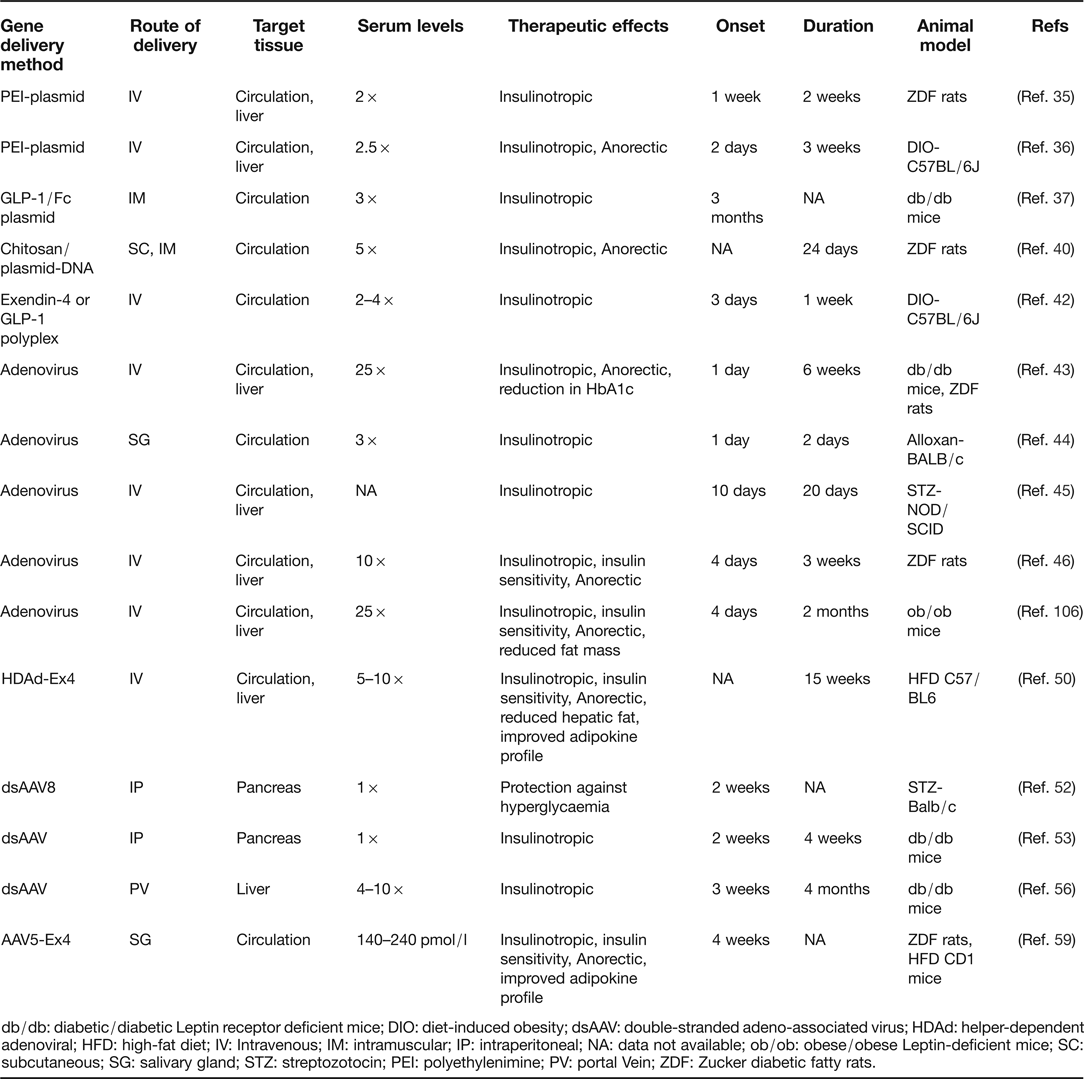
Incretins were first proposed for the treatment of T2DM in 1992, but the first incretin mimetic (Exenatide) for commercial use was approved by the U.S. Food and Drug Administration (FDA) in 2005 (Refs Reference Garber111, Reference Derosa and Maffioli112). In addition Liraglutide was the first long-acting GLP-1 analogue approved by the US FDA in 2010 (Ref. Reference Edwards113). Several other incretin mimetics have reached to market since 2010, and there are even more incretin-based drugs under development. As with any drug, there are some risks associated with the benefits of using incretin-based treatments. For example, Exenatide and Liraglutide have been reported to cause significant gastrointestinal discomfort in T2DM patients (Refs Reference Ryan, Moniri and Smiley114, Reference Macconell115), but it remains to be determined the extent to which they are associated with increased risk for pancreatitis or pancreatic cancer (Ref. Reference Tasyurek116). Nevertheless, these drugs require daily s.c. injections (once/day for Liraglutide and twice/day for Exenatide) to be effective. Thus, experimental viral or non-viral gene delivery methods have been under development to supply a constant GLP-1 production and secretion for the treatment of diabetes (Table 1). Even though gene therapy appears to be a promising technique for achieving a long-term increase in GLP-1 synthesis and secretion, the most effective gene delivery method has yet to be identified. Protocols using dsAAV vectors have produced some successful results, similar or enhanced results are expected using lentivirus vectors targeting pancreas with glucoregulatory function. This is especially true when the long-term beneficial neuroprotective and/or cardioprotective effects of GLP-1 are expected. GLP-1 gene delivery has produced favourable results in both pre-diabetic and fully diabetic animals, suggesting that a GLP-1 gene therapy approach may be a reasonable alternative to constant infusions or daily injections of GLP-1 peptide. It is important to keep in mind, though, that many of these published results showing the benefits of GLP-1 gene therapy were conducted in small rodent models of T2DM, making it crucial to continue testing of this therapy in larger animal models (such as cats, dogs, pigs and even primates) to increase the clinical relevance of experimental findings and design future clinical trials.
Non-viral and viral GLP-1-mediated gene delivery methods
db/db: diabetic/diabetic Leptin receptor deficient mice; DIO: diet-induced obesity; dsAAV: double-stranded adeno-associated virus; HDAd: helper-dependent adenoviral; HFD: high-fat diet; IV: Intravenous; IM: intramuscular; IP: intraperitoneal; NA: data not available; ob/ob: obese/obese Leptin-deficient mice; SC: subcutaneous; SG: salivary gland; STZ: streptozotocin; PEI: polyethylenimine; PV: portal Vein; ZDF: Zucker diabetic fatty rats.
Acknowledgments
This work is supported by grants from Akdeniz University Scientific Research Administration Division and the Scientific and Technological Research Council of Turkey (TUBITAK-112S114). The authors declare that there is no duality of interest associated with this manuscript.