What is early life programming?
Early life or developmental programming is the concept that perturbations or environmental exposures during critical pre- or early post-natal life can have lasting impacts on the development of chronic diseases later in life (Barker, Reference BARKER1995; Waterland and Garza, Reference WATERLAND and GARZA1999). Since the effects persist until adulthood, this phenomenon is called ‘early life programming’. Epidemiological and experimental studies in humans and animal models have broadened the understanding of early life programming (Lucas, Reference LUCAS1991). Through such studies, it has been demonstrated that the timing, duration and nature of perturbations during critical periods of development are important determinants of specific physiological outcomes in the progeny (Bertram and Hanson, Reference BERTRAM and HANSON2001). Although not clearly established, mechanisms associated with early life programming have been attributed to functional and structural changes in genes, cells, tissues, and even whole organs. Nutrition has been identified as one source of early exposure that might affect early development and later phenotype. Several recent investigations have reported the influence of gestational availability of different nutrients in mammalian models (Patel and Srinivasan, Reference PATEL and SRINIVASAN2002; Korotkova et al., Reference KOROTKOVA, BRITT, GABRIELSSON, HOLMÄNG, LARSSON, HANSON and STRANDVIK2005). In this context, lipids, especially polyunsaturated fatty acids (PUFA), due to their diverse roles in membrane biogenesis, eicosanoid metabolism and gene expression have received considerable interest. This review will focus on the role of dietary n-3 essential fatty acids in early life programming in meat-type birds.
Why study early life programming in meat-type birds?
Consumer demand for animal protein and breast meat has made broiler chicken production one of the fastest growing livestock industries in North America and around the world. The major goal of the broiler industry is rapid bird growth with high breast meat yield. Genetic selection in broiler chickens has led to early post-hatch growth, with modern-day broiler birds reaching market weight at 39 to 56 days. However, selection for fast growth and high meat yield has affected other characteristics of broiler offspring such as embryonic visceral development and chick immunologic status (Qureshi and Havenstein, Reference QURESHI and HAVENSTEIN1994; Cheema et al., Reference CHEEMA, QURESHI and HAVENSTEIN2003). Because broiler chickens reach slaughter weight at a physiologically younger age, investigating the consequences of early life programming has important practical implications for improving bird health, welfare and productivity.
Is there a role for fats in early life programming?
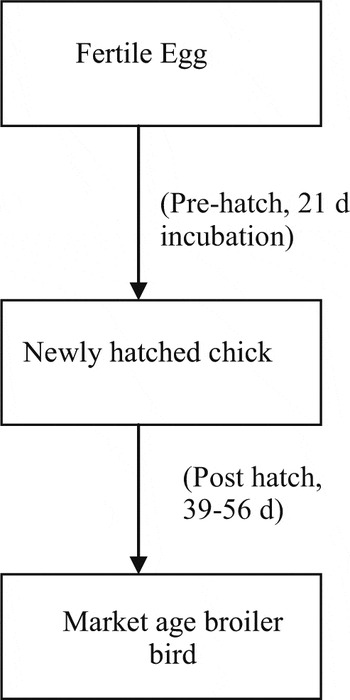
Fats or lipids, due to their physical, chemical and nutritional properties make them an important component of broiler diets. From a physical aspect, dietary lipids are associated with improvement of feed quality, reduction of dustiness in feed, decrease in feed particle separation, ease of feed mixing, and increase in palatability. Nutritionally, fats increase the caloric density of feeds, providing essential fatty acids and fat-soluble vitamins and pigments. Lipids are one of the major components and constitute over 30 to 31% of the yolk in an average egg. From a nutritional standpoint, egg lipids are of considerable importance in the nutrition of the developing chick as a source of energy and essential fatty acids. During the 21-day incubation period, over 80% of yolk lipids are absorbed by the developing chick embryo (Noble and Cocchi, Reference NOBLE and COCCHI1990; Cherian et al., Reference CHERIAN, GOPALAKRISHNAN, AKIBA and SIM1997). Of the yolk lipids, about 50% are incorporated into structural membrane lipid bilayers of the developing chick. Towards the last days of incubation, the yolk sac along with the remaining lipids is internalized into the abdominal cavity of the chick, enabling the chick to utilize those remnant lipids during the first week post-hatch (Romanoff, Reference ROMANOFF1960). Egg yolk essential fatty acids are the major factor known to influence the lipid and fatty acid composition of the chick during embryogenesis and early post-hatch (Cherian and Sim, Reference CHERIAN and SIM1991; Cherian et al., Reference CHERIAN, BAUTISTA-ORTEGA and GOEGER2009). Thus variations in n-6 and n-3 essential fatty acid supply through the yolk and yolk sac during the pre- and first week post-hatch period would condition the development of metabolic and immune tissue functions, hence causing persistent changes in immune and inflammatory responses during growth. In modern-day meat-type birds, pre- and first week post-hatch contributes to over 36 to 47% of the broiler bird's life span (Figure 1). Therefore, investigating the role of essential fatty acids in early life programming is of high importance in birds that are selected for rapid growth and high muscle yield.
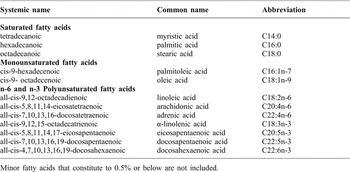
In a typical broiler diet, dietary fat contributes a large amount of the calories. The current trend in formulating high-energy rations for broiler birds has resulted in dietary supplementation of fats or oils over 5%. Dietary lipids in poultry are predominantly triglycerides and are provided as tallow or other animal-vegetable blends with fats obtained from rendering sources, restaurant grease or hydrogenated oils from the food industry (Cherian, Reference CHERIAN2007). Fatty acids are the most prevalent components of triglycerides and consist of carbon, hydrogen and oxygen arranged as a carbon chain skeleton with a carboxyl (COOH) group at one end and a methyl (CH3) group at the other end. Fatty acids may be of different chain lengths and degrees of saturation as well as different configurations. The degree of unsaturation among fatty acids is of interest to researchers because of its effect on health. Consequently, the most significant characteristic of dietary lipids is the content of different types of fatty acids. Fatty acids are classified into three families: saturated fatty acids (no double bonds), monounsaturated fatty acids (one double bond) and polyunsaturated fatty acids (PUFA, two or more double bonds). A list of some of the common fatty acids in broiler chicken tissues is shown in Table 1.
The systematic name, trivial name and abbreviation of some of the major fatty acids in broiler tissues.

Minor fatty acids that constitute to 0.5% or below are not included.
Broiler chicken life span in days (d)
Total bird life span = 21 + 39 - 56 = 60-77 d
Pre-hatch to first week life = 21 + 7 = 28 d = 36-74% of post hatch life

Essential n-6 and n-3 fatty acids: sources and metabolism
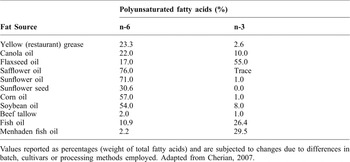
All mammals synthesise saturated fatty acids and monounsaturated fatty acids de novo from simple precursors such as glucose or ketogenic amino acids. In avian species, α-linolenic acid (ALA 18:3 n-3) and linoleic acid (18:2 n-6) cannot be synthesised and have to be supplied in the diet. Therefore they are called essential fatty acids. ALA and linoleic acid are also known as omega-3 or n-3 and omega-6 or n-6 fatty acids, respectively (based on the position of the first double bond from CH3 end). For instance, in ALA, 18:3 n-3 stands for 18 carbon atoms and three double bonds, of which the first double bond is at the 3rd carbon atom from the methyl end. A list of some of the common fat sources used in broiler diets and their n-6 and n-3 fatty acid content is shown in Table 2.
Essential n-6 and n-3 fatty acid composition of the common oils or oil seeds used in broiler diets*.

Values reported as percentages (weight of total fatty acids) and are subjected to changes due to differences in batch, cultivars or processing methods employed. Adapted from Cherian, Reference CHERIAN2007.
Linoleic acids constitute over 50% compared to 3% of ALA in standard broiler rations. This is due to the predominance of corn, soy and the source of fat which is high in n-6 fatty acids. Oils from corn, sunflower, soy and safflower are rich sources of linoleic (18:2 n-6) fatty acids. In nature, oil seed or oils from flax (Linum usitatissimum), canola (Brassica napus), chia (Salvia hispanica) are rich in ALA. Among the different plant-based sources, flaxseed, owing to its metabolisable energy value (>2000 kcal/kg), protein (>22%), fat (>38%) ALA (>50%), and availability, is the most common ingredient used as n-3 fatty acid source (Cherian, Reference CHERIAN2008a). The use of long chain ( >20-C) n-3 fatty acids from marine sources (e.g. fish oil) is limited in broiler diets due to lipid stability issues and related meat sensory and organoleptic aspects (Cherian, Reference CHERIAN2008a). Although ALA and linoleic cannot be synthesised by the bird, upon consumption, they are bioactive and can be elongated into a variety of 20 and 22-carbon fatty acids.
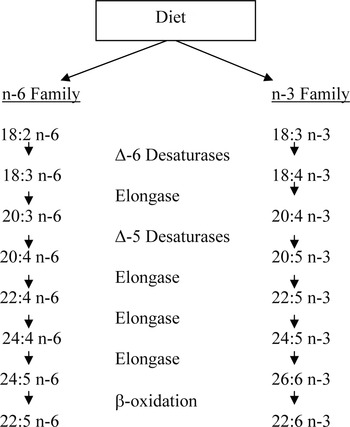
To understand the fate of dietary ALA and linoleic fatty acids, it is essential to understand the metabolism of n-3 and n-6 fatty acids. A schematic representation of endogenous formation of 20- or 22-carbon long chain PUFA from ALA and linoleic acid is shown in Figure 2. To synthesise long chain PUFA from dietary ALA and linoleic, two key reactions must occur: elongation and desaturation. In elongation and desaturation, the carbon chain is successively extended by two carbons per reaction while desaturation of existing C-C bonds occurs to the parent linoleic or ALA. The process of elongation and desaturation of ALA and linoleic acid occurs mainly in the liver in avian species and includes Δ-6 desaturation, chain elongation and Δ-5 desaturation. Thus the parent ALA is converted to eicosapentaenoic acid (EPA, 20:5 n-3), which is subsequently converted to docosapentaenoic acid (DPA, 22:5 n-3) by chain elongation (Brenner, Reference BRENNER1971). The final metabolite, docosahexaenoic acid (DHA, 22:6 n-3), is synthesised by chain elongation, Δ-6 desaturation, and peroxisomal β-oxidation of DPA (22:5 n-3) (Jump, Reference JUMP2002). Linoleic acid goes through pathway and conversion steps such as the n-3 pathway, with arachidonic acid (20:4 n-6) being the major metabolite produced. Thus the most common long chain n-3 and n-6 PUFA in broiler tissue or egg is DHA (22:6 n-3) and arachidonic acid (20:4 n-6). The efficacy of ALA and linoleic acid in synthesizing long chain n-3 and n-6 PUFA depends on factors such as concentration of n-6 fatty acids and ratio of n-6 to n-3 fatty acids, because similar desaturase and elongase enzymes are involved in the synthesis of n-6 and n-3 long chain PUFA. Thus, competitive inhibition of the enzymes will occur, depending on which substrate is present in the highest concentration. The ratio or balance between n-6 to n-3 fatty acids is important for the optimum synthesis of long chain PUFA. In addition, other factors such as age and strain of birds, dietary fat source, and content of trace minerals and vitamins (e.g. tocopherols) have been associated with the activities of desaturases affecting long chain PUFA synthesis and, hence, efficacy in deposition into cell membrane phospholipids (Cherian et al., Reference CHERIAN, LI and SIM1995; Reference CHERIAN, WOLFE and SIM1996; Scheideler et al., Reference SCHEIDELER, FRONING and JARONI1996; Cherian and Sim Reference CHERIAN and SIM2001).
Schemaic representation of n-6 and n-3 fatty acid synthesis.

Essential fatty acids, phospholipids and eicosanoids
Phospholipids are major components of cell membranes. For example, in the chicken egg, phospholipids constitute over 28% of the yolk lipids and in brain and liver of newly hatched chicks; they represent over 54 and 19% of total lipids, respectively (Noble and Cocchi, Reference NOBLE and COCCHI1990). Phospholipids are also major structural components of immune tissues (e.g. bursa, spleen) and cells (e.g. lymphocytes). Phospholipid content and fatty acid composition are major determinants of membrane integrity and biophysical properties such as fluidity and permeability. Tissue or cell membrane phospholipids are composed predominantly of phosphatidylcholine, phosphatidyl-ethanolamine and other minor phospholipids such as phosphatidylserine, phosphatidylinositol and lysophosphatidylcholine. These different phospholipids exist with a diverse array of alkyl chains containing different combinations of fatty acids in the sn-1 and sn-2 positions of the glycerol backbone; these variations are referred to as phospholipid molecular species. Phospholipid fatty acid composition and molecular species orientation respond in a dose-response manner to dietary n-6 and n-3 fatty acid composition. For example, when sunflower oil (high n-6) was included in the diet of broiler birds at 5%, arachidonic acid (n-6) constituted 31% of cardiac phosphatidylethanolamine compared with 23% in birds fed fish oil (high n-3) diet at 5% (Cherian, Reference CHERIAN2007).
Tissue phospholipids as eicosanoid precursor pool
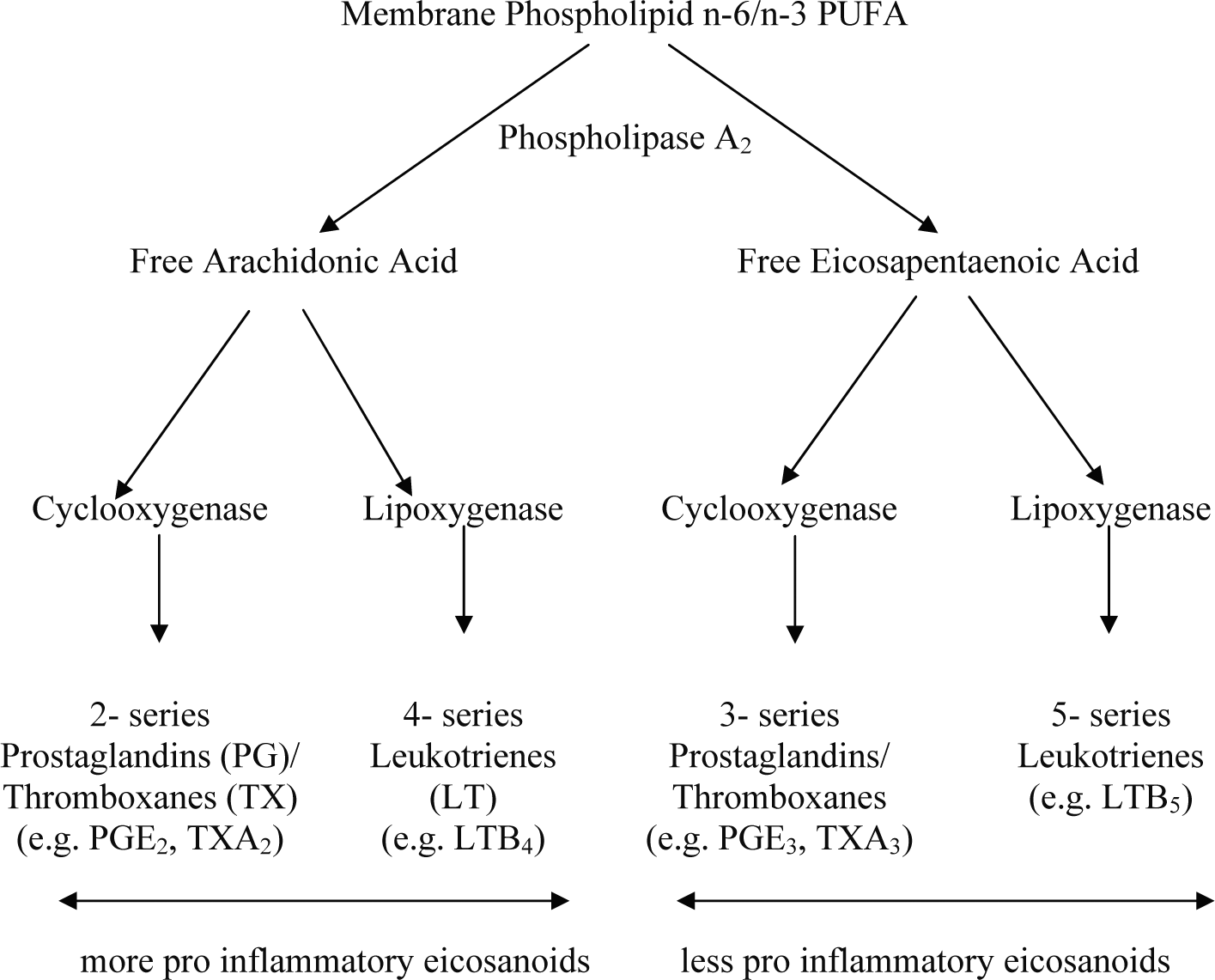
Metabolites derived from oxygenated C18, C20 fatty acids are collectively known as eicosanoids. These include prostaglandins and thromboxane or leukotrienes. Eicosanoids are lipid mediators of inflammation. Ester-linked arachidonic acid or EPA in cell membrane phospholipids can be mobilised by phospholipase A2 to generate free arachidonic acid and EPA, which can act as substrates for cyclooxygenase and lipooxygenase to produce eicosanoids (Smyth et al., Reference SMYTH, GROSSER, WANG, YU and FITZGERALD2009; Funk, Reference FUNK2001) (Figure 3). These enzymes are expressed in inflammatory and epithelial cells. Eicosanoids derived from arachidonic acids are more pro-inflammatory than those derived from n-3 fatty acids and have been shown to increase vascular permeability, vasodilation, oedema, release of lysosomal enzymes, the generation of reactive oxygen species and production of inflammatory cytokines (Calder, Reference CALDER2006). Eicosanoids derived from EPA, prostaglandin E3, thromboxane B3 and leukotriene B5 (LTB5) are less inflammatory and are less potent than n-6 derived eicosanoids. It should be mentioned that some of the recent research reported that some arachidonic acid-derived eicosanoids have both pro- and anti-inflammatory roles (e.g. prostaglandin E2). In addition to these, other novel groups of mediators, E-series of resolvins and docosatrienes formed from long chain n-3 fatty acids appear to exert anti-inflammatory effects (Calder, Reference CALDER2010).
Outline of the pathway of eicosanoid formation from cell membrane phospholipid n-6 and n-3 polyunsaturated fatty acids.

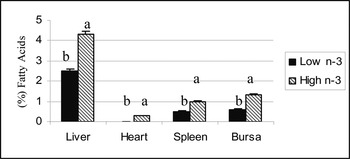
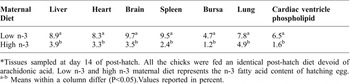
In our laboratory two models of early life programming through pre-hatch (egg yolk PUFA enrichment or in ovo method) and early post-hatch (within first 5hr of hatch) feeding in broiler birds were conducted. In the in ovo method, several studies were conducted using n-3 or n-6 fatty acid-enriched or deficient maternal or breeder diets and their effect on progeny tissue fatty acid composition and lipid metabolism. This method employed breeder hen diets and fertilized eggs varying in n-6 and n-3 PUFA and progeny chicks fed n-3 or n-6 PUFA deficient diets during growth. Using this model, several aspects of immune, inflammatory response as well as tissue retention of PUFA were investigated to assess the influence of in ovo or pre-hatch exposure to a high n-3 or n-6 fatty acids. To achieve this, fertilized eggs enriched with n-3 or n-6 fatty acids were obtained by feeding breeder hens diets containing n-3 fatty acid-rich menhaden fish oil (high n-3) or n-6 fatty acid-rich sunflower oil (low n-3). The oils were included at 3.5% level in a corn-soy-based broiler breeder diet. Feeding diets that are high in n-3 and n-6 fatty acids led to significant increase in the concentrations of long chain n-3 and n-6 fatty acids in eggs. The n-3 fatty acids constituted 12.9 vs.1.5% and long chain n-6 fatty acids constituted 1.3 vs. 7.4% in high n-3 and low n-3 eggs (Cherian et al., Reference CHERIAN, BAUTISTA-ORTEGA and GOEGER2009). To investigate the role of egg PUFA composition in modulating broiler progeny PUFA status, fertilized eggs (high n-3 and low n-3) were incubated and the chicks hatched from both treatments were fed an identical commercial diet that was lacking in long chain n-3 and n-6 PUFA (e.g. arachidonic, EPA and DHA). It was found that chicks hatched from high n-3 eggs retained higher DHA in tissues such as liver, heart, spleen, bursa when compared to low n-3 chicks during growth when fed a diet lacking in DHA (Figure 4). Similarly, the retention of arachidonic acid was higher in liver, heart, brain, spleen and inflammatory cells (thrombocytes, peripheral blood mononuclear [PBMN]) of low n-3 chicks when compared with high n-3 chicks during growth when faced with a diet lacking in arachidonic acid (Table 3). The efficacy of the tissues in retaining DHA and arachidonic acid varied among tissues and the type of cell membrane. For example, DHA content was higher up to day 28 to 35 of post-hatch growth in the spleen, bursa and cardiac ventricle of high n-3 chicks when compared with those of low n-3 chicks (Hall et al., Reference HALL, JHA, SKINNER and CHERIAN2007; Cherian et al., Reference CHERIAN, BAUTISTA-ORTEGA and GOEGER2009).
Tissue docosahexaenoic acid status of chicks as affected by hatching egg n-3 fatty acid composition*. *Tissue samples collected at day 14 of post-hatch. The chicks hatched from eggs containing no or high n-3 fatty acids. All the chicks were fed an identical post-hatch diet devoid of long chain n-3 fatty acids. Low n-3 and High n-3 represent the n-3 fatty acid content of hatching egg. a-b significantly different (P<0.05).Values reported in percent.

Arachidonic acid status of chicks hatched from eggs containing no or high n-3 fatty acids*.

*Tissues sampled at day 14 of post-hatch. All the chicks were fed an identical post-hatch diet devoid of arachidonic acid. Low n-3 and high n-3 maternal diet represents the n-3 fatty acid content of hatching egg. a-b Means within a column differ (P<0.05).Values reported in percent.
Early exposure of n-3 and n-6 fatty acids: effects on eicosanoid generation and inflammatory processes in broiler birds
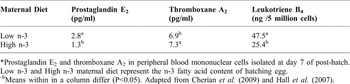
Inflammation is a normal host defence mechanism that protects the host from infection and other insults. Eicosanoid mediators such as prostaglandins and leukotrienes are involved in modulating the intensity and duration of inflammatory responses. The amount and type of eicosanoids produced depend on: 1) the availability of precursor pools of n-3 and n-6 PUFA, 2) type of cells, 3) the duration as well as intensity of stimulus applied (Calder, Reference CALDER2006). The effect of an early supply of n-3 or n-6 fatty acids through egg on eicosanoid production in the peripheral blood mononuclear cells in post-hatch chicks at various periods during growth was investigated. Fertilized eggs with high (15.0) or low (<0.8) n-6:n-3 fatty acid ratio were obtained through hen diet manipulation and incubated. Menahden (n-3) or sunflower (n-6) oils were used to achieve different n-6:n-3 proportions in the hen diet and eggs. The chicks hatched from both treatments (high n-6:n-3 and low n-6:n-3) were fed an identical diet with a high n-6:n-3 PUFA ratio (15.0) and the diet was lacking in long chain n-6 and n-3 fatty acids (arachidonic and DHA). It was observed that the production of prostaglandin E2 (pro-inflammatory eicosanoid) by PBMN cells were significantly lower for 7-d chicks hatched from eggs with a low n-6:n-3 ratio (Cherian et al., Reference CHERIAN, BAUTISTA-ORTEGA and GOEGER2009) (Table 4). Similarly, it was observed that leukotriene B4 (a pro-inflammatory eicosanoid) production by thrombocytes from chicks hatched from eggs with high n-6:n-3 ratio was greater than production by thrombocytes from chicks hatched from eggs with a low n-6:n-3 ratio (P<0.05) (Hall et al., Reference HALL, JHA, SKINNER and CHERIAN2007). The significant difference in leukotriene B4 production in progeny birds persisted up to 21 days of bird growth (Table 4). The ratio of LTB5 to LTB4 concentrations was also higher (P<0.05) in chicks hatched from low n-6:n-3 eggs compared to chicks from high n-6:n-3 eggs at 7 and 14 days of age (Hall et al., Reference HALL, JHA, SKINNER and CHERIAN2007). Similarly, the ratio of LTB5 to LTB4 significantly correlated to the ratio of EPA to arachidonic acid in spleen and bursa on day 14 indicating the influence of cell membrane PUFA in modulating eicosanoid status (Hall et al., Reference HALL, JHA, SKINNER and CHERIAN2007). Inflammation is the body's response to internal or external injury. During inflammation, lipid substrates for the activated immune system are provided by fatty acids. Thus minimising inflammation may augment nutrient accretion towards other tissues. As broilers are raised for 39 to 56 days, these results may, therefore, suggest a potentially effective strategy using ‘early life programming’ to minimise inflammatory-related pathologies in poultry and enhance bird health and productivity.
Eicosanoid status of chicks hatched from eggs containing no or high n-3 fatty acids upon feeding an identical post-hatch diet*.

*Prostaglandin E2 and thromboxane A2 in peripheral blood mononuclear cells isolated at day 7 of post-hatch. Low n-3 and High n-3 maternal diet represent the n-3 fatty acid content of hatching egg.
-bMeans within in a column differ (P<0.05). Adapted from Cherian et al. (Reference CHERIAN, BAUTISTA-ORTEGA and GOEGER2009) and Hall et al. (Reference HALL, JHA, SKINNER and CHERIAN2007).
Early exposure to n-3 and n-6 fatty acids: does it affect post-hatch chick immune responses?
In the chickens, the developmental events important for immuno-competence are initiated during the embryonic period and continue in the early weeks following hatching (Ratcliff et al., Reference RATCLIFF, PARAMITHIOTIS, COUMIDIS, SAYEGH and DEMARIES1996; Rudrappa and Humphrey, Reference RUDRAPPA and HUMPHREY2007). Therefore, focussing on a robust immune system post-hatch may enhance chick quality and health. The immune system has two functional divisions: innate and adaptive immunity. Tests used to assess the adaptive immune response include the delayed hypersensitivity test (DTH). This test provides a general measure of cell-mediated immunity. To perform this test, a foreign antigen is injected under the epidermis of the skin. The cell-mediated immunity branch of the immune system responds to this antigen by producing a small raised swelling that can be measured 24 to 96 hours after injection. The larger the swelling, the greater is the cell-mediated immunity.
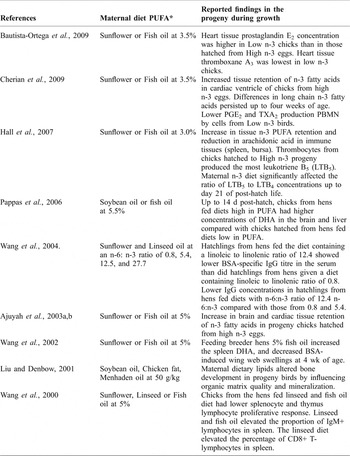
Alteration in chick tissue PUFA composition due to egg n-6:n-3 ratio as observed may modulate the chick's immune response. The effect of an early supply of high or low n-3 fatty acids (through in ovo) in modulating DTH response in progeny birds during growth was tested. Eggs with high (28.0) and low (0.9) n-6:n-3 PUFA ratios were produced through hen diet manipulation as documented earlier. The progeny chicks from both high and low n-6:n-3 ratio were fed an identical post-hatch diet lacking in both long chain n-3 and n-6 PUFA. Bovine serum albumen was injected into the right wing for measuring DTH response in chicks at 14 and 28 days of growth. Saline was used as a control on the left wing. The swelling of each injection site was measured with an electronic caliper 24 to 49 h post-injection. It was observed that wing web swelling response was suppressed (~50-fold) (P<0.05) in 14 and 28-day-old chicks hatched from eggs with low n-6:n-3 PUFA ratio as compared to chicks hatched from eggs with high n-6:n-3 fatty acid ratio (Wang et al., Reference WANG, AJUYAH, SUNWOO, CHERIAN and SIM2002). These results provide direct evidence that an early supply of n-3 fatty acids through in ovo has an effect on adaptive immunity up to over 50% of post-hatch life in broiler birds. Thus altering the supply of n-6 and n-3 PUFA through early exposure could lead to permanent changes in progeny immune health. The effects of an early exposure to n-3 fatty acid were expressed even when chicks were fed an identical post-hatch diet, emphasizing an early nutritional programming effect of PUFA in broiler chicks. Although much work in early life programming is progressing in human nutrition (Lucas, Reference LUCAS1991; Fowden et al., Reference FOWDEN, GIUSSANI and FORHEAD2006), related research in poultry is limited. A summary of recent research on this topic is shown in Table 5. Therefore, understanding the biological mechanisms underlying early programming effects offers an exciting opportunity to apply this knowledge in developing feeding strategies to improve post-hatch chick health and productivity.
Summary of studies investigating the effect of maternal dietary n-3 or n-6 polyunsaturated fatty acids in progeny birds.

Egg pufa composition and gene expression in post-hatch chicks
Using microarray analysis, the effect of the egg n-6 and n-3 PUFA manipulation on gene expression in the cardiac tissue of chicks during the early post-hatch period was assessed. Cardiac tissue was taken due to its high concentration of arachidonic acid and due to the fact that prostaglandin E2, production by cardiac ventricle of was higher in chicks hatched from eggs with high n-6 PUFA than those from low n-3 PUFA (Bautista-Ortega et al., Reference BAUTISTA-ORTEGA, GOEGER and CHERIAN2009). Eggs with a high (15.0) or low (0.8) n-6:n-3 fatty acid ratio were produced through breeder hen diet manipulation as documented earlier. Hatched chicks from both maternal treatments (high and low n-6:n-3 ratio) were fed an identical commercial diet devoid of arachidonic acid, and long chain n-3 fatty acids (EPA and DHA). RNA was extracted from the cardiac tissue of 7-day-old chicks. Affymetrix Gene Chip Chicken Genome Array was used and the data was analysed with Genesifter and Arraystar software. We used comparison analysis to detect and quantify changes in gene expression. Genes whose expression changed 1.5-fold with a significant change in p-value were selected for further analysis. When compared with low n-3, high n-3 chicks demonstrated an altered expression for over 5,590 genes (2-fold), 842 genes (4-fold) and 94 genes (8-fold) (P< 0.05). Functional analysis using gene ontology categorized the genes exhibiting different expression patterns between low n-3 and high n-3 chicks into several gene ontology terms including metabolic (23 up, 25 down), developmental (19 genes >2-fold), immunity and defence (3 up, 2 down, 10 genes >2-fold) and signalling processes (29 genes >2-fold). Significant down- or up-regulation of several genes in the biochemical pathways related to lipid metabolism was observed. For example, these include: phospholipase A2, B2, C, prostaglandin endoperoxide synthase-2, and desaturases. Over- or under-expression of genes could be related to the effect of ‘early’ nutrition through maternal reserves (egg) as the progeny were fed an identical commercial diet.
Early post-hatch exposure to fatty acids: consequences on inflammatory processes
Early access to nutrients (pre- and post-hatch) is important in bird health and growth because the pre and post hatch period is marked by a rapid increase in leukocyte populations, seeding of lymphoid organs, and formation of unique clones of lymphocytes that will mediate immunity later in life (Klasing, Reference KLASING1998). Thus early access to nutrients is especially important in broiler chickens that are selected for rapid early growth and high muscle yield. However, in modern poultry industry practices, hatchlings may spend over 48-56 hours without exposure to feed or water due to differences in hatching times, transportation availability and distance to production facilities and other hatchery practices (Vieira and Moran, Reference VIEIRA and MORAN1999; Gonzalez, Reference GONZALEZ2008). Timing and form of nutrients supplied during early hatching is critical for the development of chicks (Noy and Sklan, Reference NOY and SKLAN1998). In addition, feed deprivation during the first 48 hours has resulted in an increase in plasma nonesterified fatty acids, indicating fatty acid breakdown (Noy et al., Reference NOY, GEYRA and SKLAN2001).
During the first hours post-hatch, chicks are exposed to different stressors. In addition to delayed access to feed, post-hatch stressors include: (1) transition from yolk lipid-based metabolism to solid carbohydrate-based metabolism through the exogenous diet; (2) intense long chain PUFA accretion in tissues followed by a sudden depletion of antioxidants such as tocopherols in tissues (Speake et al., Reference SPEAKE, MURRAY and NOBLE1998; Cherian and Sim, Reference CHERIAN and SIM2003); (3) environmental (pen conditions) and other management (vaccination, debeaking) practices. Yolk-sac remnant lipids are an important source of n-3 and n-6 PUFA during first week post-hatch. However, the efficacy of the yolk sac in providing n-3 or n-6 PUFA depends on initial PUFA reserves. Considering current feeding practices, the ability of egg yolk to provide enough n-3 PUFA is questioned (Cherian, Reference CHERIAN2008b). In a recent study investigating the PUFA composition of commercial hatching eggs, it was reported that the total n-6:n-3 ratio was over 30:1. Long chain n-3 fatty acids were negligible in hatching eggs, reflecting the dietary source of lipids fed to breeder hens (Cherian, Reference CHERIAN2008b). The high content of long chain n-6 fatty acids along with negligible levels of n-3 fatty acids in commercial hatching eggs suggests that current feeding practices may promote for an n-6 fatty acid-based pro-inflammatory early programming in broiler chicks.
The effects of early (within 5hr of hatching) vs. late (>48 hr of hatching) access to feed and dietary fatty acids (n-6 vs. n-3) on lipopolysaccharide (LPS)-induced alterations in tissue PUFA composition, inflammatory responses and cyclooxygenase-2 (COX-2) protein expression was investigated in broiler chicks. Broiler chicks were fed a high or low n-3 diet within 5 h or after 48 h of hatching. The diets were corn-soybean meal-based with fish oil (n-3) or sunflower oil (n-6) at 3.5%. Birds were challenged with LPS or saline (control) injection at day 21 of growth. LPS challenge compared to saline injection increased n-6 fatty acids in late high n-6 diet-fed birds (P<0.05). It was observed that early access to feed led to reduction in arachidonic acids in the liver as compared to late-fed birds (Gonzalez, Reference GONZALEZ2008). Similarly, COX-2:actin ratio in the early high n-3 LPS-injected birds was higher than saline-injected birds of the same treatment (P<0.05). COX-2 is induced by cell activation, proinflammatory stimuli, or LPS which leads to the formation of different eicosanoids, many of which are potent proinflammatory mediators. Therefore, increased COX-2 expression can elevate the production of less proinflammatory eicosanoids in early High n-3 diet-fed birds (Gonzalez, Reference GONZALEZ2008). The birds fed an early high n-3 diet showed the lowest concentrations of plasma nonesterified fatty acids (NEFA) upon LPS challenge (Gonzalez, Reference GONZALEZ2008). NEFA have influence over immune function via modification of the membrane lipid composition, eicosanoid formation, and lipid raft modulation (Brassard et al., Reference BRASSARD, LARBI, GRENIER, FRISCH, FORTIN, CARPENTIER and FULP2007). The results obtained suggest that dietary and management strategies directed at modulating tissue PUFA and plasma NEFA status may offer the promise of modulating lipid metabolism in commercial poultry.
Impact mechanisms of early life programming
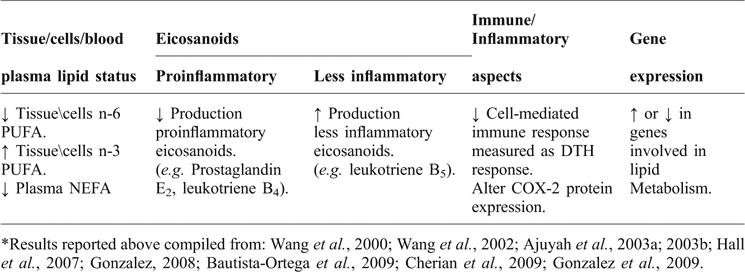
Although the concept of early life programming is widely accepted in human medicine, the precise mechanisms are not clearly known. In avian species very little is known about early programming. The research from our own laboratory (summarised in Table 5) showed: 1) increased retention of n-3 PUFA in cell membranes, (2) reduction in plasma nonesterified fatty acids, (3) altered activity of proinflammatory cyclooxygenase-2 enzymes and eicosanoid production, (4) suppressed cell-mediated immunity, and (5) altered expression of genes associated with lipid metabolism. These results as well as others reported in avian species (Table 6) suggest that the metabolism during growth in broiler birds can be programmed by the balance of n-6 and n-3 PUFA in the pre- and early post-hatch period. However, the developmental order of events, as well as the mechanisms involved, remains to be defined.
Overall effects of a high n-3 fatty acid enriched hatching eggs on progeny birds*.
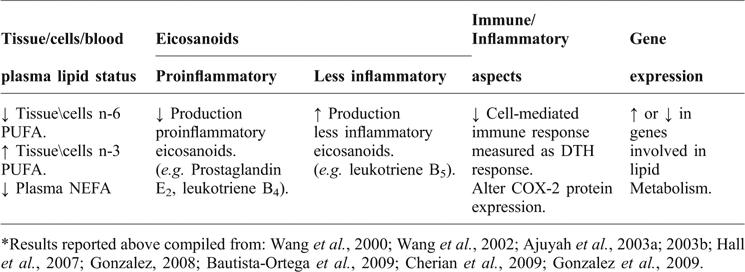
*Results reported above compiled from: Wang et al., Reference WANG, FIELD and SIM2000; Wang et al., Reference WANG, AJUYAH, SUNWOO, CHERIAN and SIM2002; Ajuyah et al., Reference AJUYAH, CHERIAN, WANG, SUNWOO and SIM2003a; Reference AJUYAH, WANG, SUNWOO, CHERIAN and SIM2003b; Hall et al., Reference HALL, JHA, SKINNER and CHERIAN2007; Gonzalez, Reference GONZALEZ2008; Bautista-Ortega et al., Reference BAUTISTA-ORTEGA, GOEGER and CHERIAN2009; Cherian et al., Reference CHERIAN, BAUTISTA-ORTEGA and GOEGER2009; Gonzalez et al., Reference GONZALEZ, MUSTACICH, TRABER and CHERIAN2009.
Conclusions
Linoleic (18:2 n-6) and ALA (18:3 n-3) acids are essential fatty acids that are the precursors of long chain n-6 and n-3 fatty acids such as arachidonic, EPA and docosahexaenoic acids. Ester-linked arachidonic acid and EPA can be mobilised by phospholipase A2 to generate free arachidonic acid and EPA which can act as substrates for COX and lipooxygenase to produce eicosanoids. Eicosanoids derived from arachidonic acid, prostaglandin E2, thromboxane B2, and leukotriene B4 are more pro-inflammatory and are more potent than eicosanoids derived from EPA such as prostaglandin E3, thromboxane B3 and leukotriene B5. From a nutritional standpoint, dietary fat and egg yolk fat are of considerable importance in modifying egg PUFA and in the nutrition of the developing chick as a source of energy and essential fatty acids. During the 21-day incubation period, yolk lipids are the only source of long chain PUFA that are utilized by the developing chick embryo for (1) synthesis of cell membrane phospholipids, and (2) eicosanoid generation. Two models of early life programming as affected by n-3 or n-6 PUFA have been investigated. This included egg yolk PUFA enrichment or in ovo method and early post-hatch (within first 5hr) feeding. Early access to nutrients (pre- and post-hatch) is important because, in broiler hatchlings that are selected for rapid early growth, much of the immune system development occurs early in life. However, the current industry feeding practice of breeding hens diets high in n-6 fatty acids, limits the supply of essential n-3 PUFA in the hatchling. Overall, our results showed that early access to n-3 PUFA led to: 1) increase in the retention of n-3 PUFA in cell membranes, (2) reduction in plasma nonesterified fatty acids, (3) alteration in the expression of pro-inflammatory cyclooxygenase-2 protein, (4) reduced production of pro-inflammatory eicosanoids, (5) suppression of cell-mediated immunity. In addition, alteration in the expression of several genes associated with lipid metabolism was observed. The effects of an early exposure persisted up to 14 to 35 days of post-hatch growth in various tissues and cells. Given the fact that broiler birds are raised for 39 to 56 days, and that the effect of pre-hatch and early post-hatch nutrition persists for up to over 36 - 47% of post-hatch life, using an early life programming approach will generate fundamental knowledge about the role of diet in enhancing bird immune health. As the poultry industry is looking for more holistic and sustainable food production practices, the role of early programming and its effect on bird health and welfare warrants further investigation.