INTRODUCTION
The World Health Organization estimates that cancer accounts for more than 8 million deaths each year, and this number is projected to increase to 12 million by 2020 (WHO, 2015; Mignogna et al., Reference Mignogna, Fedele and Lo Russo2004). In developed countries like the United States, cancer is the most common cause of death after heart disease (Cho et al., Reference Cho, Mariotto and Mann2013). Cancer deaths in developing countries make up more than 70% of all cancer deaths worldwide (WHO, 2015). In Iran, cancer ranks as the third most common cause of death, with nearly 100 new cases per 100,000 persons annually (Mousavi et al., Reference Mousavi, Gouya and Ramazani2009; Vakili et al., Reference Vakili, Pirdehghan and Adimi2014).
According to Kaye and Raghavan (Reference Kaye and Raghavan2002), religiosity can be defined as a multidimensional concept that encompasses divine beliefs, related practices, and involvement in activities or events concerned with an organized religion. The role of religiosity in human health has been assessed in numerous studies. Many have shown that religiosity can be associated with such positive health outcomes as quality of life and well-being (Basinski et al., Reference Basinski, Stefaniak and Stadnyk2013; Lim & Yi, Reference Lim and Yi2009). Religiosity may also help to reduce high-risk behaviors and promote a healthy lifestyle (Boswell, Reference Boswell2003; Mojahed, Reference Mojahed2014). Furthermore, the negative effects of some religious beliefs on such health-seeking behaviors as screening or periodic medical examinations have also been examined (Leyva et al., Reference Leyva, Nguyen and Allen2015).
Cancer, a life-threatening disease, can cause patients to turn to religious beliefs and practices as a kind of coping mechanism to help them deal with the psychological and social stress and physical symptoms caused by their disease (Hasson-Ohayon et al., Reference Hasson-Ohayon, Braun and Galinsky2009; Saffari et al., Reference Saffari, Pakpour and Naderi2013a ). However, this depends on the particular religion and cultural background of the person (Ka'opua et al., Reference Ka'opua, Mitschke and Kloezeman2008). Therefore, a study of cancer patients from different religions living in different countries around the world is necessary to understand how religion affects health in a more global sense.
Islam is the second largest religion in the world (Pew Forum on Religion and Public Life., 2009). Muslims are individuals with unique religious beliefs and traditions that differentiate them from Christianity and other religions (Pakpour et al., Reference Pakpour, Plante and Saffari2014). Little is known, however, about the association between religiosity and health in Muslim patients, especially those with cancer (Saffari et al., Reference Saffari, Pakpour and Naderi2013a ). The population of Iran is 95% Muslim, and most are affiliated with the branch of Islam called Shia. It is one of the few countries in the world made up of primarily Shia Muslims (Pew Forum on Religion and Public Life., 2009). It thus has a unique religious and cultural background that may influence relationships between religion and health in different ways than countries that have other religious majorities.
Most of the measures of religiosity that exist were developed in English for Christian populations (Berry et al., Reference Berry, Bass and Forawi2011). The Duke University Religion Index (DUREL) was developed to assess religiosity for those with different religious backgrounds and has been used in Shia Muslims with some success, but it was developed originally for Christian populations (Saffari et al., Reference Saffari, Zeidi and Pakpour2013b ). Given the unique characteristics of Muslim belief and practice, a measure designed specifically for Muslims is necessary. Thus, the author of the DUREL (HGK) developed a religiosity index specifically for Muslims: the Muslim Religiosity Scale (MRS) (Koenig et al., Reference Koenig, Al Zaben, Khalifa and Boyle2014). The aim of the current study was to produce a Persian-language version of this scale for use in Iranian cancer patients and to examine its psychometric properties in that population.
METHODS
Ours was a multicenter study conducted in 13 oncology centers across Iran from November of 2014 to April of 2015. A total of 2000 patients agreed to participate in the study. To be eligible, patients had to (1) be 18 years of age or older; (2) have cancer confirmed by pathological examination; (3) be able to communicate in Persian; and (4) have the ability to provide written informed consent. Patients with severe cognitive defects (MMSE < 21), non-Muslims, those with a major psychiatric illness (assessed by a trained psychiatrist), and those with any significant visual impairments were excluded. The project was approved by the ethics in research committee of the Qazvin University of Medical Sciences and by all the centers involved.
Measures
Sociodemographic and clinical data were obtained from patients' medical records, while the Mini-Mental State Examination (MMSE) and Karnofsky Performance Status (KPS) Scale were administered to all patients, along with the other measures described below:
Perceived Social Support
The Multidimensional Scale of Perceived Social Support Assessment (MSPSS) was employed to assess social support. It is a 12-item scale that assesses perceived social support from family member (four items), friends (four items), and significant others (four items). The Persian version of the MSPSS is a valid and reliable tool (Bagherian-Sararoudi et al., Reference Bagherian-Sararoudi, Hajian and Ehsan2013).
Health-Related Quality of Life
Heath-related quality of life was assessed using the 12-item Short Form Health Survey (SF–12). It is a 12-item scale that measures the physical, mental, and social health aspects of quality of life and has been used widely in general and medically ill populations. An Iranian version of the SF–12 has been developed that has good psychometric properties (Pakpour et al., Reference Pakpour, Nourozi and Molsted2011).
Hospital Anxiety and Depression Scale
Anxiety and depressive symptoms were assessed using the Hospital Anxiety and Depression Scale (HADS). It is composed of two subscales that measure anxiety (seven items) and depression (seven items). The Iranian version of the HADS has been shown to have good validity and reliability in cancer patients (Montazeri et al., Reference Montazeri, Vahdaninia and Ebrahimi2003).
The Patient Health Questionnaire–9
The Patient Health Questionnaire–9 (PHQ–9) is a nine-item scale used to screen for symptoms of major depression in patients during the previous two weeks. Suicidal ideation is one of its items. In our study, suicidal ideation was coded as “yes” if responses indicated such thoughts were present on “several days,” “more than half the days,” or “nearly every day”; suicidal ideation was coded as “no” if the response was “not at all.” The Iranian version of the PHQ–9 has good validity and reliability in patients (Khamseh et al., Reference Khamseh, Baradaran and Javanbakht2011).
Muslim Religiosity Scale (MRS)
The MRS is a 13-item self-reported measure that assesses two dimensions of religiosity with two subscales: religious practices (10 items) and intrinsic religious beliefs (3 items). Each item is rated on a 5-point Likert-type scale. Total score can also be computed by summing individual subscale scores (Koenig & Al Shohaib, Reference Koenig and Al Shohaib2014; Shaheen Al Ahwal et al., Reference Shaheen Al Ahwal, Al Zaben and Sehlo2015).
General Self -Efficacy Scale
The General Self-Efficacy Scale (GSES) is a commonly used measure of optimistic self-beliefs related to coping with a variety of life's difficulties. All items are rated on a 4-point Likert-type scale, with higher scores indicating greater self-efficacy. The Persian version of the GSES has well-established validity and reliability (Rajabi, Reference Rajabi2006).
Scale Translation Process
The cultural adaptation and translation procedure was performed in five stages according to the recommendations of Beaton and colleagues (Reference Beaton, Bombardier and Guillemin2000). Permission was obtained to translate the MRS into Persian and validate it in our population from the researcher who originally developed it (Koenig et al., Reference Koenig, Al Zaben, Khalifa and Boyle2014).
Stage I. Two bilingual translators whose original language was Persian independently translated the English version of the MRS into Persian.
Stage II. The two translators and a project manager (principal investigator) compared the translations and integrated them into one unified version. Any discrepancies were resolved by consensus.
Stage III. The agreed-upon Persian version was then translated back into English to ensure that the Persian version had the same item content as the original English version. This was done independently by two team members whose native language was English and who were blinded to the original English version.
Stage IV. The Persian version of the MRS was then reviewed by an expert team (methodologists, nurses, health psychologist, oncologist, language professional, and translators) to determine face validity and cross-cultural equivalency. All discrepancies were resolved by consensus, and a semifinal Persian version of the MRS was produced.
Stage V. The semifinal version of the MRS was then pretested in 42 patients with cancer (mean age = 42.2 years, 28 males). All recommended changes were reviewed and modified again by team consensus. The final Persian version of the MRS was arrived at in this way and then administrated to 2000 patients with cancer.
Statistical Analyses
The reliability of the MRS was assessed by the internal consistency of scale items (Cronbach's α) and by a two-week test–retest reliability evaluation. Test–retest reliability was judged by calculating the intraclass correlation coefficient (ICC) as well as the Pearson correlation coefficient (r) between administrations of the MRS separated by a two-week interval. An value of alpha or the ICC of 0.70 or higher is considered to represent adequate reliability (Fayers & Machin, Reference Fayers and Machin2000).
Convergent and discriminant validity were examined by multi-trait scaling analysis. Convergent validity is established if an item correlates with the overall scale at a level of r ≥ 0.40. Items should correlate more highly with their own subscale than with others (two times the standard error). To provide evidence of construct validity, both exploratory factor analysis (EFA) and confirmatory factor analysis (CFA) were performed. Before conducting factor analyses, the sample was randomly split into two subsamples of 939 patients each by using the SPSS random case selection procedure. EFA was performed in the first sample using principal component analysis and an oblimin rotation (Fayers & Machin, Reference Fayers and Machin2000). The factorability of the data was evaluated beforehand by the Kaiser–Meyer–Olkin (KMO) test and Bartlett's sphericity test (Fayers & Machin, Reference Fayers and Machin2000).
For CFA, considering the ordinal nature of the data, maximum weighted least squares was employed to estimate parameters and test relationships. Model fit was evaluated using several goodness-of-fit indices: chi-square, root-mean-square error of approximation (RMSEA), standardized root-mean-square residual (SRMR), the non-normed fit index (NNFI, also known as the Tucker–Lewis index), the comparative fit index (CFI), and the adjusted goodness-of-fit index. Results indicating acceptable model fit are a nonsignificant chi-square, SRMR ≤ 0.08, RMSEA ≤ 0.08, and CFI, NNFI, and AGFI ≥ 0.90 (Browne & Cudeck, Reference Browne and Cudeck1992).
A multivariate linear regression was performed to assess the characteristics associated with MRS score. Bivariate analyses were first conducted to identify the sociodemographic and clinical correlates of the MRS. Variables with correlations significant at p < 0.15 in bivariate analyses were entered into a multivariate regression model. Statistical analyses were performed using SPSS (v. 18.0) and LISREL (v. 8.80).
RESULTS
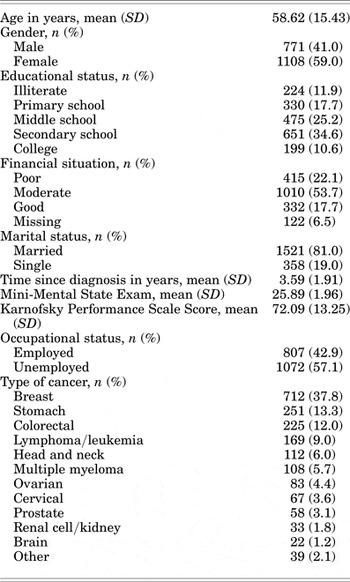
The average age of participants was 58.6 ± 15.4 years (range = 19–72 years), and 59.0 % were female. The most common cancer was breast cancer (37.8%). Of the 2000 eligible patients approached, 101 (5.05%) declined to participate. An additional 20 patients did not complete the questionnaire and were dropped from the analyses, leaving us with a sample of 1,879 participants (Table 1).
Descriptive statistics (N = 1879)

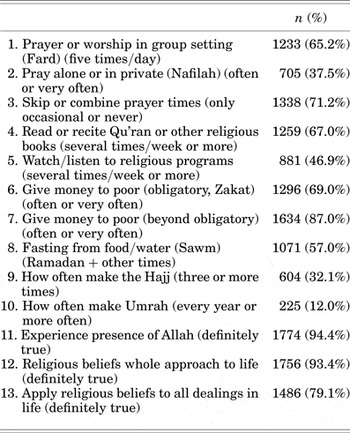
Table 2 describes patients' religious beliefs and behaviors, which were varied. More than half of patients reported that they prayed five times a day. Despite reporting on average a moderate level of financial security, almost two-thirds of patients often gave the obligatory amount (Zakat), and many gave beyond the obligatory amount. About a third of patients reported that they had made the Hajj three or more times, and nearly all patients indicated they had experienced the presence of Allah in their lives.
Item description and descriptive statistics for individual items on the Muslim Religiosity Scale (N = 1879)

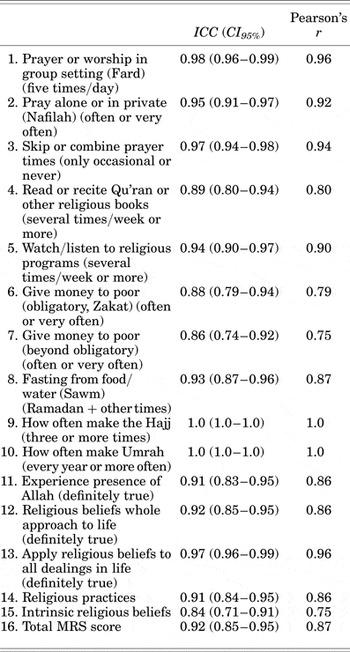
The value of alpha for the religious practices subscale was 0.88, and for the intrinsic religious beliefs subscale 0.92. Likewise, the two-week test–retest reliability of the MRS (n = 1,732) as measured by the ICC was 0.92 for the overall scale and 0.84–0.91 for individuals items (Table 3). Similarly, the value of Pearson's r between individual items on the MRS administered at two timepoints separated by two weeks (15.0 days, SD = 2.83) ranged from 0.75 to 1.0 (Table 3).
Test–retest reliability for individual items of the Muslim Religiosity Scale, subscale, and total scale scores (N = 1,732)

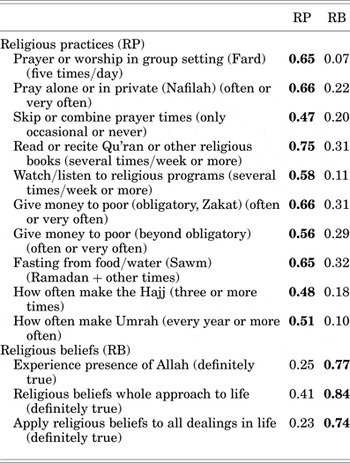
Table 4 shows the correlation coefficients between each item and its own subscale. The values of all item–subscale correlations were higher than 0.40, corrected for overlap. Moreover, all items correlated more highly with their own subscales.
Results of the multi-trait scaling analysis

RB = intrinsic religious beliefs; RP = religious practices.
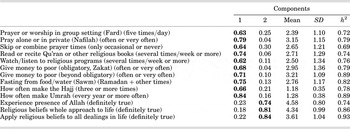
All requirements were met for the EFA. The Kaiser–Meyer–Olkin criterion was higher than 0.80 (0.87). The results of Bartlett's test were significant (χ2(df = 72) = 396.78, p < 0.001). Two factors with eigenvalues higher than 1.0 (component 1 = 4.03, component 2 = 1.63) were extracted that explained 67.0 % of the observed variance (Table 5).
Factorial weights, descriptive statistics, and communalities

SD = standard deviation, h 2 = communalities.
Similarly, the CFA goodness-of-fit measures showed that the two-factor solution was adequate (χ2 = 76.23, df = 64, p = 0.141; RMSEA = 0.065 (0.01–0.12); CFI = 0.97; NNFI = 0.96; SRMR = 0.072; AGFI = 0.91), with standardized regression coefficients ranging from 0.71 to 0.85 for factor 1 and from 0.35 to 0.97 for factor 2. The between-factors correlation was 0.47.
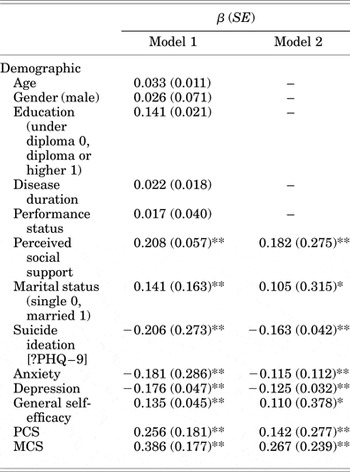
The bivariate relationships between sociodemographic and clinical variables and MRS scores are summarized in Table 6 (model 1). The correlations between the MRS and sociodemographic and clinical variables did not reach the statistically significant level of p < 0.015, with the exception of marital status. Greater social support and being married were positively and significantly related to total MRS score, and all indicators of poor mental health were inversely related to MRS score. In particular, higher MRS score was associated with lower levels of suicidal ideation (B = –0.206, SE = 0.027, p = 0.0005). Greater self-efficacy was also associated with higher MRS scores (B = 0.135, SE = 0.045, p = 0.0006), as was better quality of life (PCS and MCS scores).
Bivariate and multivariate linear regression between total Muslim Religiosity Scale score and demographic, social, mental, and physical health variables

* p < 0.05; ** p < 0.001.
β = standardized beta; SE = standard error; PCS = physical summary scores; MCS = mental summary scores.
Depression was evaluated with the HADS scale.
DISCUSSION
We have developed a Persian version of the MRS and examined its psychometric properties in a large sample of patients with cancer in Iran. As in the original development of the scale in a Sunni Muslim population in Saudi Arabia, a two-factor solution was established using EFA and CFA (consistent with the theory underlying the scale), establishing construct validity. Also, the reliability and criterion validity of the scale was found to be high.
Analysis of the distribution of cancer types revealed that breast cancer was the most common malignancy, while stomach and colorectal cancers were the next most prevalent. Although our study was not epidemiological in nature, we collected data from several medical centers and so expect that the prevalent types of cancer here would be similar to those in the general population. Studies have shown that the most common cancers in Iranian men are gastric, esophageal, and colorectal, whereas in women cancers of the breast, esophagus, and stomach are most common (Azadeh et al., Reference Azadeh, Moghimi-Dehkordi and Fatem2008; Moradpour & Fatemi, Reference Moradpour and Fatemi2013).
In our cultural adaptation of the MRS, several considerations were important. While many items had the same meaning for our participants, there were issues regarding the wording of some questions, so that it was necessary to make them more understandable for our Iranian participants. For example, in item 2, it was necessary to replace “group religious service” with “group religious programs.” The response options for this item also required amending. Because Sunni Muslims may regularly attend mosque five times a day for prayer, the “five times/day” option is appropriate for a Saudi Arabian sample. However, Shia Muslims often combine prayers, so that in most cases they attend mosque only three times a day when their five prayers are performed. Therefore, we changed this response option accordingly. Also, in the question about making the Hajj, this may be rather routine for those who live in Saudi Arabia, where Mecca is located, but it is not so easy in Iran. Because there are many requests annually to do so in Iran (which must be approved), only a limited number of people have the ability to make the Hajj. Therefore, response options were revised based on this consideration.
When examining the psychometric characteristics of the DUREL in another study among a general population, nearly 35% of participants reported attending mosque or group religious programs more than once a week, while in our current sample 65% of participants indicated that they prayed five times a day in group settings (Saffari et al., Reference Saffari, Zeidi and Pakpour2013b ). In a study by Al Zaben and colleagues (Reference Al Zaben, Khalifa and Sehlo2015a ) of dialysis patients in Saudi Arabia, 75% of participants reported group prayer, which is comparable to our findings. The difference between patients with life-threatening diseases and those in the general population may be attributed to a greater intensity of religious activity in medical settings. The frequencies of response to other items were similar to those of the Al Zaben et al. study. Greater religious activity among patients compared to healthy subjects has been reported in other studies (Bussing et al., Reference Bussing, Fischer and Ostermann2009; Unterrainer, Reference Unterrainer2008).
In the original validation study that examined test–retest reliability, Al Zaben and colleagues (Reference Al Zaben, Khalifa and Sehlo2015a ) reported an ICC of 0.96 for the overall MRS in a sample of 28 healthy people, compared to our 0.92 overall at the two-week interval. The Pearson correlations between administrations in both studies were also high, ranging from 0.60 to 1.00 for the Al Zaben study and 0.75 to 1.00 for the current study, and indicating acceptable stability of responses over time (Al Zaben et al., Reference Al Zaben, Sehlo and Khalifa2015b ). With regard to internal reliability, the study conducted in dialysis patients reported a Cronbach's α of 0.68 for the full scale, and 0.64 and 0.93 for the religious practices and intrinsic beliefs subscales, respectively (Al Zaben et al., Reference Al Zaben, Khalifa and Sehlo2015a ). These values are comparable to the values obtained in the present study.
The moderate to strong correlations between the MRS and health outcomes and the relatively weak correlations with measures not expected to be correlated indicate strong convergent and discriminant validity, respectively (see further discussion below) (Fayers & Machin, Reference Fayers and Machin2000). Associations between such relevant scales as social support, self-efficacy, and quality of life measures also help to establish its criterion validity. These relationships were similar in the original validation study (Al Zaben et al., Reference Al Zaben, Khalifa and Sehlo2015a ). We also assessed the construct validity of the scale using exploratory and confirmatory factor analysis. Similar to the original study in dialysis patients, a two-factor solution was identified that, as predicted, corresponds to the two subscales of religious practices and religious beliefs.
The correlates of the MRS were examined using bivariate and multivariate statistics. Such sociodemographic variables as age, gender, and education were only weakly correlated with the MRS. Other studies have found demographic characteristics quite strongly related to religiosity. For example, some studies have shown that older persons are more religious than younger ones and that females are more religious than males (Levin & Taylor, Reference Levin and Taylor1993; Pokorski & Warzecha, Reference Pokorski and Warzecha2011). Marital status alone among demographic characteristics was associated with MRS scores in our study. This association may be the result of the strong endorsement of and support for marriage in the Shia Muslim tradition, as well as the reinforcement of religion in family settings. Single people may feel the presence of God in their lives in different ways than when married (Lopez et al., Reference Lopez, Riggs and Pollard2011). Greater religiosity in those who are married has also been reported in general populations without serious disease (Saffari et al., Reference Saffari, Zeidi and Pakpour2013b ; Taunay et al., Reference Taunay, Gondim and Macedo2012), so it may have nothing to do with having a cancer diagnosis in particular. Furthermore, a lack of a positive association between MRS score and age may simply be due to the limited age range in our sample of cancer patients.
Such variables as social support, self-efficacy, and physical and mental components of health are related to higher MRS scores, while suicide ideation, anxiety, and depression are related to lower religiosity. The relationship between social support and religiosity has been shown in several studies (Koenig et al., Reference Koenig, King and Carson2012). According to Thomas and Washington (Reference Thomas and Washington2012), people who have strong religious beliefs are more likely to help others since they are encouraged to do so by those beliefs, which likely results in more social support being available. On the other hand, people who are dependent on others because of the poor condition of their health need higher levels of social support, and social networks may be more available to them if they are more religious. Greater religious involvement may also promote a feeling of self-efficacy, since these beliefs may promote self-confidence based on a closer relationship with God. Furthermore, people who are devout often have an external locus of control (Koenig et al., Reference Koenig, King and Carson2012). Therefore, failures or stressful circumstances during life may be coped with better, which can promote a feeling that they are able to overcome obstacles with God's help, which would result in greater self-efficacy.
The physical and especially mental health of religious people also tend to be better, as reported in many studies of Christians and Muslims (Koenig et al., Reference Koenig, Al Zaben, Khalifa and Boyle2014). This may be due to the direct impact of religious beliefs and attitudes on mental health, the prevention of depression and anxiety, and the effect of following religious guidelines that reduce risky and unhealthy behaviors that cause physical illness.
STRENGTHS AND LIMITATIONS
Our study has a number of strengths, including the careful development of a Persian version of the MRS, the testing of psychometric properties in a large sample acquired from multiple sites throughout Iran, a high response rate, and a low percentage of missing data. Aside from these strengths, though, the study has a number of limitations that may affect the generalizability of our results. First, our sample was one of convenience, not a random sampling of cancer patients. Second, if we had collected data on healthy persons to compare with our sample of cancer patients, this would have provided information on the psychometric characteristics of the MRS in a more general sample with a wider age range. Finally, we used a cross-sectional design that decreased our ability to make causal inferences about the relationships between MRS scores and the health outcomes identified here. Therefore, future longitudinal studies are needed to help identify the trends of these associations.
CONCLUSIONS
The Persian version of the MRS is a reliable and valid measure for assessing religiosity in Iranian Muslims with cancer. It may also be useful in assessing religious involvement in those with other serious illnesses. Further studies are needed to determine whether our findings in those with a serious medical condition like cancer can be generalized to healthy community-dwelling populations. Using the MRS to identify religious beliefs and behaviors in Iranian Muslim cancer patients will assist health professionals in identifying the religious resources that might enhance the help and support given to these patients. It may also improve the design of interventions that may enable cancer patients to better cope with their disease, experience a better quality of life, and even improve their physical function.
CONFLICTS OF INTEREST
The authors state that they have no conflicts of interest to declare.
ACKNOWLEDGMENTS
This study was supported by Qazvin University of Medical Sciences. The authors would like to thank all the people who helped us with the data collection, especially the staff of the Cancer Prevention Deputy in the Iranian Ministry of Health.