Introduction
A disaster is a disruption in the ability of a community affected by an event to meet the needs of the population that exceed the ability of the affected community to cope using only its own resources.Reference Birnbaum, Daily and O’Rourke 1 (p149) Consequently, for research/evaluation purposes, generic descriptors of any community are required.
A useful approach to studying a complex amalgam, such as a human body or a community, is to deconstruct it into its functional systems. Clinically, for assessment purposes, the body is composed of organ systems, and the functional status of each system is assessed by the clinician. Similarly, a community can be considered to be composed of functional systems. The Societal Framework provides the structure required to assess and discuss the essential functional systems that comprise any community.
Structure vs Function
The physical (structural) damage caused by an event may result in compromises in the function(s) of the damaged structure and other related structures. The compromise in function(s) 2 that results from the Structural Damage may be determined by assessing and identifying which components of the Systems that comprise the affected community have been functionally compromised. The process is similar to assessing a patient who presents with functional problems (symptoms); the functional impairment produces symptoms and signs that can be detected by obtaining a history, performing a physical examination, and synthesizing the findings with laboratory and imaging studies. The clinician often cannot directly observe the Structural Damage, but uses these assessments of function to identify the underlying Structural Damage and its causes. The subsequent diagnosis describes the Structural Damage that caused the abnormal function(s) (Functional Damage). With physical injuries from trauma, some Structural Damage may be obvious before changes in function are detected; the observed findings prompt the anticipation of possible dysfunction, even in organs that were not directly injured (structurally damaged).
Similarly, in disaster management, impaired functions may be assumed or forecasted by observations of the Structural Damage sustained. For example, if an interrupted train track is observed, one may assume that transportation of goods and individuals using a train will be disrupted. On the other hand, reports of compromised functions often lead to the identification of Structural Damage. For instance, an epidemic may be first recognized through the dysfunction it provokes in the population, which subsequently may lead to the identification of the bacterial/viral agent responsible. Likewise, disasters caused by environmental hazards often are first recognized from the functional changes to living beings. For example, an outbreak of fever, chills, vomiting, and diarrhea, as occurred in Haiti following the earthquake in December 2010 (not related to the earthquake), was diagnosed as being related to cholera. Thus, the type and amount of damage is determined from assessments of both the Structural Damages and the functional status of the affected community. Ultimately, in disaster settings, the synthesis of assessments is essential so that the Structural Damage can be repaired, or the Functional Damage compensated, in order to prevent further deterioration in function, or to restore functions to their respective pre-event levels.
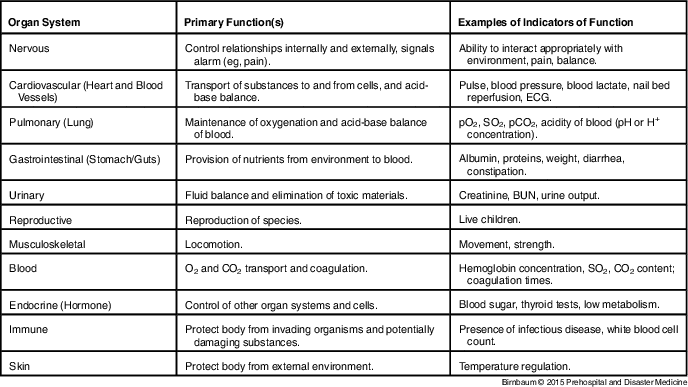
The human body provides a useful analogy for clarification of the concept of the structure of a community. When describing or analyzing a patient’s illness, it is not sufficient to know the clinical (temporal) course of the patient’s disease; the clinician also must repeatedly assess the functional status of the individual along the temporal course of the illness. The complexity of the human body necessitates a method for ordering and simplifying the assessment of a patient in a manner that is the same for successive assessments and for comparison with the anticipated clinical course based on clinical and reported experiences. For these reasons, clinical assessments are performed based on the body’s organ systems. Each organ system provides a function or set of functions essential to the person (Table IV-1). Furthermore, the structure and function of each organ system can be deconstructed into smaller structural and functional components. For example, the functions of the cardiovascular system include the integrity of the heart, arteries, veins, and capillaries. The cardiovascular system can be subdivided further into the circulation to each of the organs, and even further to the part of each organ perfused. Circulatory failure may involve only a portion of one organ. Each organ system has a function or set of functions; each bodily function is attributable to a system that has requirements for proper functioning.
Organ Systems and Their Function(s) with Indicators of Function

Abbreviations: BUN, blood urea nitrogen; ECG, electrocardiogram; pCO2, partial pressure of CO2; pO2, partial pressure of O2; SO2, saturation of O2.
Assessing a patient in order to evaluate the functional status of each organ system provides a picture/snapshot of the physiology or pathophysiology of the person as a whole, at the time the assessment was performed. The functional status of each of these systems can be described using specific indicator(s) of function (Table IV-1). This structured approach to patient assessment allows the clinician to compare the functional status of one person at numerous points in time in order to monitor deterioration or recovery. Although these divisions of the body into its component organ systems may seem not to take into account the complex dependence and interdependence of the organ systems, the analytical framework used for the clinical evaluation is necessary for organization of the results of the assessment processes, and it can reveal the relationships between the organ systems. For example, damage to the central nervous system as a result of a stroke may impair gag reflex and compromise swallowing (gastrointestinal system); thus, the airway is unable to be cleared when the patient vomits, and thus, when the patient regurgitates, stomach contents containing gastric acid may be inhaled into the lungs (pulmonary system), that ultimately leads to the development of fatal aspiration pneumonia.
Indicators of Function
In order to intervene to change the clinical course of a patient, a diagnosis is necessary. This, in turn, requires information obtained through assessments (diagnostic testing and procedures). Within the context of disasters, “diagnostic testing” is similar to “needs assessments” of the functional status of the Societal Systems that contribute to its ability to provide functions essential to the operations of the community. For the purpose of systematic and reproducible disaster research, assessments must identify the Societal System(s) being addressed. Depending on how many functions of a community are being addressed, assessments will provide a description of the community-in-distress at the time the assessments are conducted. Information from these assessments contributes to identifying which interventions are needed to prevent further deterioration (Relief), fill gaps in levels of functions related to Functional Damage sustained (Relief), and/or to repair/restore the impaired functions (Recovery). 3
For the human body, the organ system functions are defined by “normal values” of the indicators used to assess the functional status. These “normal” values have been collected over decades of clinical experience and serve as a baseline, even if that specific patient never has been examined previously. This is not the case for Societal Systems. Each region/country/community is different, and has its own baselines depending on its state of development, culture, natural environment, economy, and so on. For instance, while baseline values for the <5-year-old mortality rates are 5/1,000 live births in developed countries, some developing countries have <5-year-old mortality rates as high as 250/1,000 live births.Reference Birnbaum, O’Rourke and Daily 4 Similarly, maternal mortality rates may be as high as 1,500/100,000 live births in “developing” countries, while maternal mortality is negligible in “highly developed” countries.Reference Birnbaum, O’Rourke and Daily 4 , 5 Therefore, for the purposes of disaster research, each country/province/state/city must serve as its own baseline (the pre-event status). Although some health parameters may be assumed to be similar in developed countries, as a general rule, each community must produce a description of what is “normal” for that community. Theoretically, based on agreed indicators, the levels of functions of at least some of the Societal Systems may be evaluated using standard indicators, such as the upper arm circumference of children as an indicator of the overall nutritional status in the community. If analyzed over a long period of time, the <5-year-old mortality rate or life expectancy at birth can provide a picture of the overall health situation within a specific community. One general indicator of the overall health status of a community is the crude mortality rate (CMR; number of deaths/day/10,000 inhabitants).
The Societal Framework
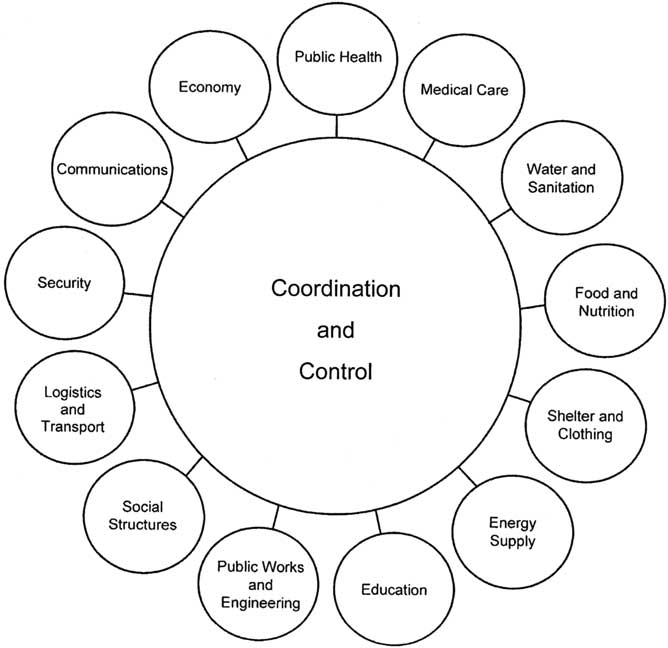
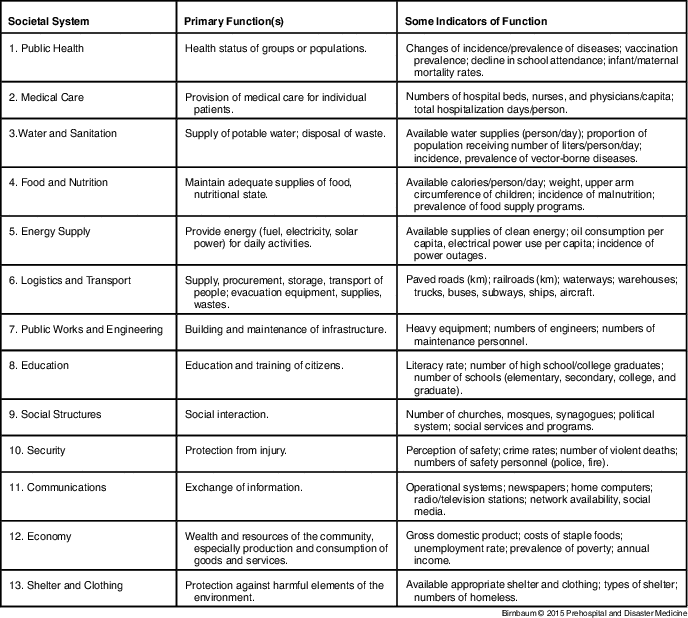
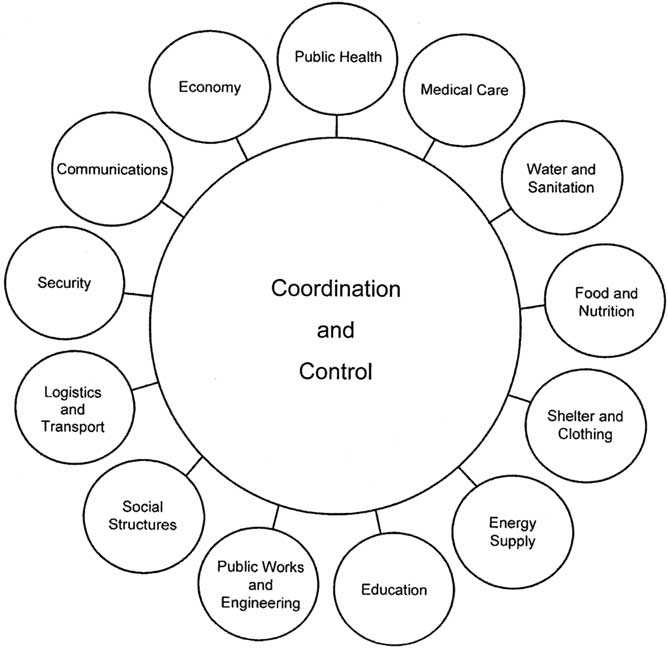
Like the human body, a community is a complex entity, and therefore, its functional status is analyzed best by determining the functional status of its component parts. In the same way that the clinical profile of a human being can be organized by functional organ systems, a community can be organized into functional Societal Systems. Some entities refer to the Societal Systems as “sectors.” Although the underlying concept is the same, for the purposes of research/evaluation, the term “Societal Systems” seems more useful for describing the operational systems in a community than does the use of “sectors.” Sectors has been used not only to describe the functional components of the community, but also to denote other organizational entities, (eg, the health sector, private sector, public sector, military sector, and east sector). Thus, as a description of the systems that comprise a community, the term “Societal Systems” is preferred as it relates only to the functional systems that operate in a community. The term Societal Systems is preferred over Societal Functions as used in the Guidelines (Volume 1)Reference Birnbaum, Daily and O’Rourke 1 (p149) as a “System” may include many functions. As in the clinical example, this division into its components provides a framework for reproducible assessments; its use facilitates understanding of the dependence and interdependence between the functional components of a community, and focuses findings that can be categorized, accessed, and analyzed (Figure IV-1 and Table IV-2).
The Societal Framework Consisting of 13 Societal Systems Linked Together by Coordination and Control.
Societal Systems and Their Primary Function(s) and Indicators of Function

Using the Societal Systems allows evaluation of a community’s functional status at the time it is conducted. Organizing a community using this structure, and incorporating the structure into the design of research/evaluation projects, enables the study of specific, identifiable functions and their respective components. Although some functions are essential to more than one Societal System, for the purpose of structuring research and evaluations, allocating the components of functions into only one Societal System is necessary. Without using a functional organization, a community is an amalgam of diverse entities that evade analysis and comparisons and impair the ability to add the results to the science of disaster health. The Societal Systems organize the functions required to meet the needs of the community.
Ultimately, the Societal Systems reflect individual and collective “vital needs.” 6 They are essential, basic, functional components that are common to all communities/societies, regardless of their respective stage of development. A disaster always involves deterioration/cessation of the function of at least one Societal System, and typically, involves multiple Societal Systems (or components of a System(s)).
Societal Systems
A function is an activity that is natural to, or the purpose of, a person or thing. 2 Like the systems that contribute to the functionality of the body as a whole, there are some basic functions that are essential for a community to exist. Many Systems combine to make up a community, and each System consists of a set of subsystems that, together, can be viewed as a unit. In the clinical model, the cardiovascular system is composed of the hearts, arteries, veins, and capillaries, each with a specific set of functions.
Thirteen key Societal Systems have been identified; all are linked together through a 14th system, Coordination and Control. The organization is similar to the departmental, administrative structures that comprise most governments and large organizations. The Societal Systems include the: (1) Public Health; (2) Medical Care; (3) Water and Sanitation; (4) Shelter and Clothing; (5) Food and Nutrition; (6) Energy Supply; (7) Public Works and Engineering; (8) Social Structures; (9) Logistics and Transportation; (10) Security; (11) Communications; (12) Economy; and (13) Education Systems.
The relationships between these Societal Systems are diagrammed in Figure IV-1. As implied from this figure, none of these functional Systems is subservient to another, but they are interdependent, at least in part, on one or more of the others. Thus, the inadequate functioning of, or inadequate resources for, one Societal System may impact upon the functional status of several of the other Systems—some still may be able to manage their respective functional role (ie, continue to provide the community with their “essential functions”), while others cannot.Reference Birnbaum, Daily and O’Rourke 1 (p152) For example, the damage caused by Hurricane Sandy in the northeastern United States in 2012 resulted in functional losses among several Societal Systems (Logistics and Transportation, Energy Supply, Food and Nutrition, Water and Sanitation, and so on) that required outside assistance to restore function. Although not all of the Societal Systems were affected by the Structural Damage (ie, became dysfunctional), all of them were impacted in some way by the Functional Damage to the Logistics and Transportation and Energy Supply Systems.
The Societal Systems, together with an abbreviated set of suggested primary indicators of their respective functions, are listed in Table IV-2. Notably, primary functional indicators for several Societal Systems are poorly developed or lacking (ie, indicators have yet to be defined and validated). Each of the Societal Systems is described briefly below. Its corresponding United Nations (UN) Cluster is noted in parentheses.
Societal Systems
Public Health (Health)
The Public Health System manages the health of groups of people or a population. The responsibility of the Public Health System is the protection and improvement of the health status of a community (risk reduction).
Medical Care (Health)
The Medical Care System is responsible for the medical care provided to individual patients: the detection of symptoms and signs, and the diagnosis and treatment of patients. It includes primary, secondary, and tertiary care, as well as psychosocial support and treatment.
Water and Sanitation (Water-Sanitation-Hygiene)
The Water and Sanitation System is responsible for the:
-
a. Provision of adequate supplies of water suitable for drinking and preparation of food, and includes any means or processes used to provide clean (uncontaminated) water; and
-
b. Application of measures and techniques aimed at ensuring and improving environmental health in a community through the collection, evacuation, and disposal of liquid and solid wastes with or without prior treatment.Reference Sleight 7 Hygiene is part of the Water and Sanitation System.Reference von Schreeb, Karlsson and Rosling 8 There is a close relationship between the Water and Sanitation System and the Public Health System. The Public Health System establishes the standards for the Water and Sanitation System.
Food and Nutrition (Nutrition)
The Food and Nutrition System is responsible for the provision of any edible substance containing nutrients that, on ingestion, help to maintain the vital functions of a person or other living organism. 9 (p 34 ) Nutrition is the assimilation and metabolism by which living organisms utilize food for maintenance of life, including growth and maintenance of body tissues. 9 (p69) It includes the interaction of foods with health and disease, and improvement of health standards through prevention and treatment of diseases related to inadequate nutrition.
Energy Supply
The Energy Supply System includes fuels (eg, wood, coal, gas, diesel, kerosene, and nuclear) and electricity used for heat and cooking, light necessary for daily activities, and the fuel needed for the transport and operation of equipment required for the overall functions of a community.
Logistics and Transport (Logistics)
The Logistics and Transport System provides a range of activities concerned with the supply, procurement, storage, maintenance, distribution, and transport of persons, equipment, supplies, wastes, and more. It includes all means and modes of transportation, both public and private: aircraft, ships, ferries, boats, streetcars, subways, buses, trains, automobiles, bicycles, motorcycles (bikes), donkeys, horses, elephants, oxcarts, and so on.
Public Works and Engineering
The Public Works and Engineering System is responsible for the application of technical knowledge and assistance to develop and maintain the infrastructure of the community. It includes the infrastructure and all physical structures needed for a community to function (ie, airports, bridges, buildings, dams, power plants, railroads, roads, paths, and the natural environment).
Education (Education)
The Education System is responsible for educating and training the citizens of the community. It includes all resources used in educating and training the population: teachers, libraries, training facilities, computers, books, structures, tools, and other equipment used for education and training. It includes the education and training of responders or potential responders and Coordination and Control personnel.
Social Structures
The Social Structures System encompasses the relationships within a group of people and the key elements that influence and dictate such relationships (eg, religion, class structures, population density, political and governmental systems, cultural practices, living conditions, and working conditions within the social environment).
Security (Protection)
The Security System is responsible for the safety of a given population. In this context, Security includes the state of being protected from injury inflicted directly or indirectly by other living beings or events. Security includes public and private entities such as fire, police, military, and private security forces.
Communications (Emergency Telecommunications)
The Communications System is responsible for the interchange of data and information. Communications include all public and private communication entities (eg, fire, police, military, government, private radio (HAM) operators, newspapers, other news media, television, telephone and telex, facsimile, the Internet, satellite, runners, text messaging, and the social media).
Economy
The Economic System is responsible for providing the resources essential for establishing and maintaining all of the functions and infrastructure of a community. It includes how resources are used by the community and the sources of these resources (eg, agriculture and the crops produced, industry and the products produced, jobs, foraging, trade, gross national/local product, value of the currency, and per capita income). Economy consists of the wealth and resources of a community (country or region), especially in terms of the production and consumption of goods and services.Reference Gunn 10
Shelter and Clothing (Emergency Shelter)
The Shelter and Clothing System encompasses the provision of physical protection against harmful environmental elements.
The functions of any one of these Societal Systems, as well as combinations of some or all of them, may be rendered inadequate due to Structural Damage as a result of an event. When one (or more) of these Systems is rendered inadequate to meet the functional requirements of the affected community (due to Structural Damage or conditional needs, or both), the functions of the Societal System have fallen below their essential levels of functions. Goods and services are transformed into functions by the respective System and its subsystems. If outside assistance is required to maintain or restore the functional status of one or more Systems, a disaster has occurred for that System.
If the Societal System affected loses its ability to provide the functions required to sustain life, the CMR of the community increases. This indicates that one or more of the Systems has fallen below its individual critical level of function (supplies of goods, services, and other resources are below their respective critical threshold or the transformation process converting the goods and services has been damaged). While it is necessary to restore the functionality of all affected Societal Systems to their pre-event status, it is imperative and urgent to restore the level of function of the affected System above its critical level of function.
Although it is possible to evaluate the Structural Damage, Functional Damage (changes in function), and responses (both Relief and Recovery) of only one individual Societal System, the Structural Damages, changes in function, and the results of responses/interventions for any one System must be considered in relation to all of the other Systems of the affected community.
Components of Societal Systems
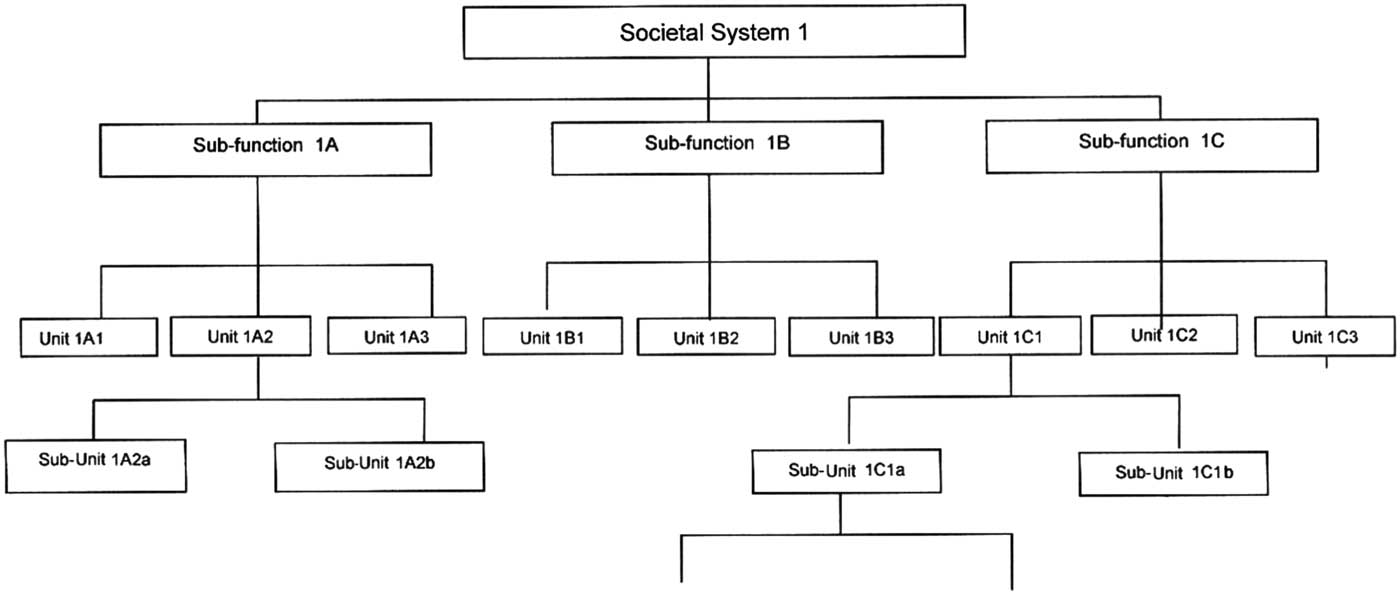
Each of the Societal Systems constitutes an entity comprised of many components organized as “subsystems” responsible for one or a set of functions (Figure IV-2). Subsystems may be further subdivided into “functional units” that are responsible for providing a specific function required by the subsystem, and hence, the Societal System. These sub-divisions of a Societal System carry various labels; some may prefer to use “departments” with component “divisions” that are comprised of “sections,” that are comprised of “units.” However, the overall functional state of any Societal System is dependent upon the operational state of all of its subsystems and their respective functional units. Each Societal System is responsible for coordinating and prioritizing its multitude of functions and for controlling and distributing resources within its structure. These Systems depend on the availability of resources (goods and services) and intact transformational processes (infrastructure and personnel) as well as some of the outputs from other components or Societal Systems.
Schematic Depiction of the Nesting of Components that Comprise one Societal System. Each system is comprised of multiple functions, subsystems, units, and sub-units.
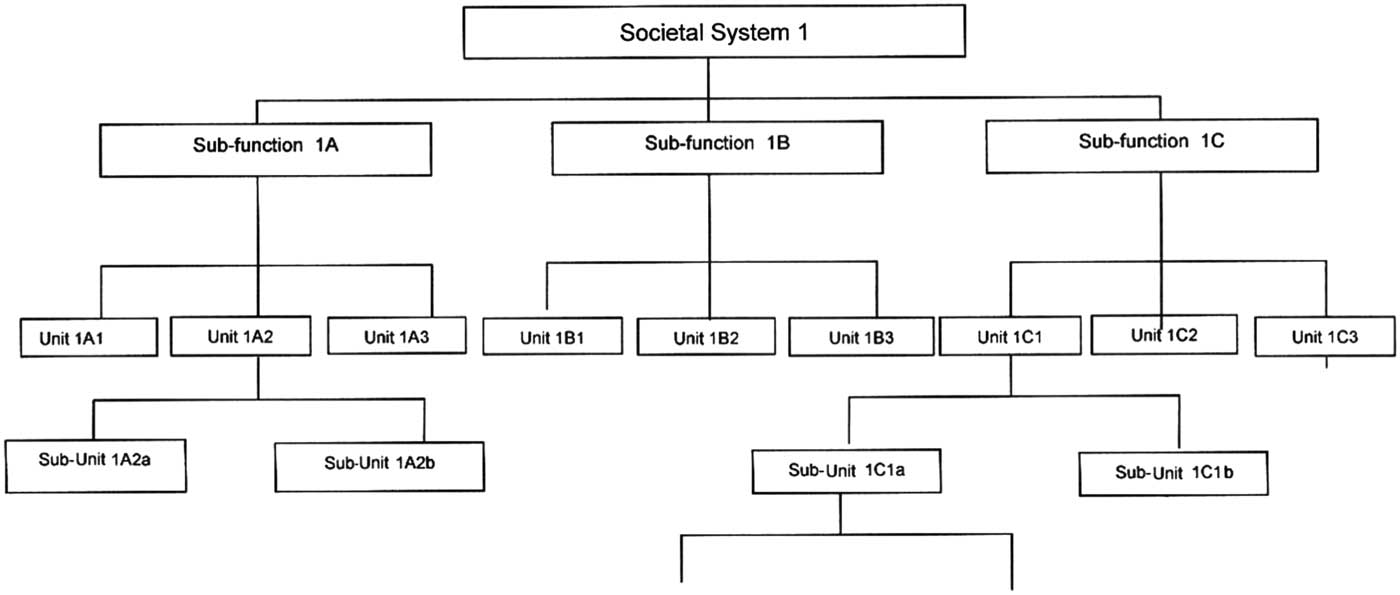
A failure in the production process of any sub-function may result in failure of the functional unit, subsystem(s), and even the entire functional state of the Societal System. For purposes of coordination and control, evaluation, and research, the complexity of any community must be deconstructed to the level of its functional components.
Inventory of Functions
It should be clear that there is a need for an existing inventory of functions provided by a community. Such an inventory should be developed by each Societal System and each of its components. While the inventory should be both static and dynamic, major functions should be relatively static (in a relative steady state). It is recognized that some functions only exist for relatively short periods, and hence, this portion of the inventory is dynamic. Ideally, this inventory will be linked to the structures that support the functions. This linkage will facilitate the prediction of Functional Damage associated with any given Structural Damage.
Relationships between Societal Systems
As with human organ systems, no Societal System functions in isolation—each depends on the functions of other Systems for optimal performance. For example, the Medical Care System cannot provide its services without the ability of the Logistics and Transport System to provide the required supplies and the Energy Supply System to provide light in treatment rooms and for refrigeration of blood products and drugs. The functional state (level of function) of the Medical Care Societal System also is dependent on the Public Works and Engineering Systems for the integrity of roads that are used by the Logistics and Transport System. Without adequate and available functioning components of other Systems, the functional state (level of functioning) of the Medical Care System will deteriorate, losing one element after another as specific functional requirements are not met. Eventually, the overall level of function of the Medical Care System, or one or more of its components, will fall below its critical level, resulting in an increase in the CMR. To prevent any Societal System from falling below its essential or critical levels of function (ie, to prevent a disaster), functions of some subsystems of other Societal Systems may be curtailed in order that those functional units and subsystems of the Medical Care System with a higher priority will be able to continue to function. Thus, Functional Damage in one System may occur without Structural Damage in that System (it may be related to Structural Damage in another System(s)). The buffering capacity of each System should be able to cope with the impact of Functional Damage in other Systems; can the hospital continue to function in the face of failure of the provision of electricity by the Energy Supply System?
Dependency
To depend is to be controlled or determined by; to be unable to do without. 11 - Reference Thompson 13 For example, in humans, all cells in the body require a continuous supply of oxygen. In order to supply the required oxygen to tissues, there must be oxygen in the air that is inhaled (an intact Pulmonary System) and transported by the Cardiovascular and Hematologic Systems. The Pulmonary System is composed of the subsystems of ventilation, perfusion, gas exchange, and control of ventilation. Therefore, the functions of the Pulmonary System are dependent upon the operations of the ventilatory pump and its regulation, and perfusion of the pulmonary capillaries, and the process of gas exchange between the air and the blood perfusing the lungs. If any of these sub-functions is impaired, oxygen delivery becomes compromised.
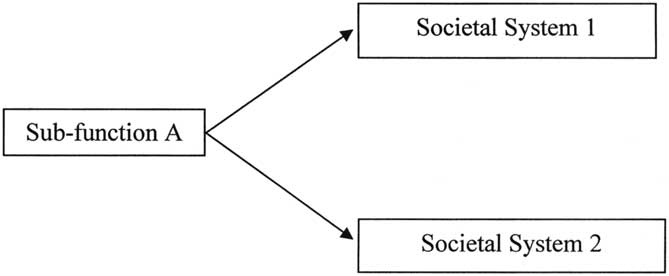
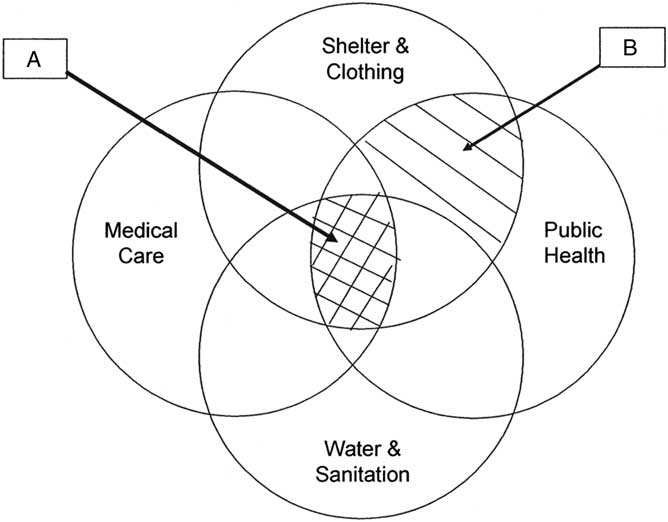
Similarly, in a community, dependency exists when a process or operation is dependent on one or more subsystems or functional units within the same System, or within subsystems of other Societal Systems (Figure IV-3). The overall functioning of the Medical Care System is dependent upon the operations (functional status) of the medical facilities, first responders, prehospital care, the laboratory, blood bank, and imaging services. In addition, the Education System requires teachers that, in turn, require salaries (Economic System), housing (Public Works and Engineering, Shelter and Clothing Systems), and the Logistics and Transportation System. Each Societal System, or components of one System, depends on the functions of one or more other Systems (Figure IV-4; eg, the maintenance of pharmacy supplies at a medical treatment facility requires the use of trucks and personnel from the Logistics and Transportation System, which in turn, requires fuel from the Energy Supply System, and intact roads and bridges from the Public Works and Engineering System). Dependencies are like links in a chain; the final product of a particular Societal System at the end of each chain cannot be produced without each link being intact. The function(s) of each link (element) must be recognized, understood, and considered for capacity building as well as Relief and Recovery responses; the chain is only as strong as its weakest link.
Dependency: the Function of the Societal System is Dependent on the Output of a Sub-function to Produce its Functions.
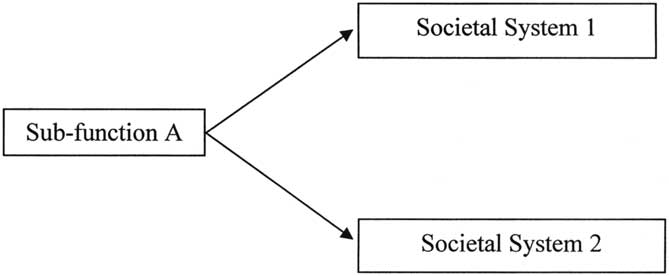
Illustration Depicting Dependence of the Medical Care, Public Health, Water and Sanitation, and the Shelter Societal Systems. Loss of any part of the functions that fall in the cross-hatched area (A) may result in impairment of functions of all four of these Systems. Loss of a component in the single-lined area (B) may result in impairment of the Shelter and Clothing and Public Health Societal Systems.
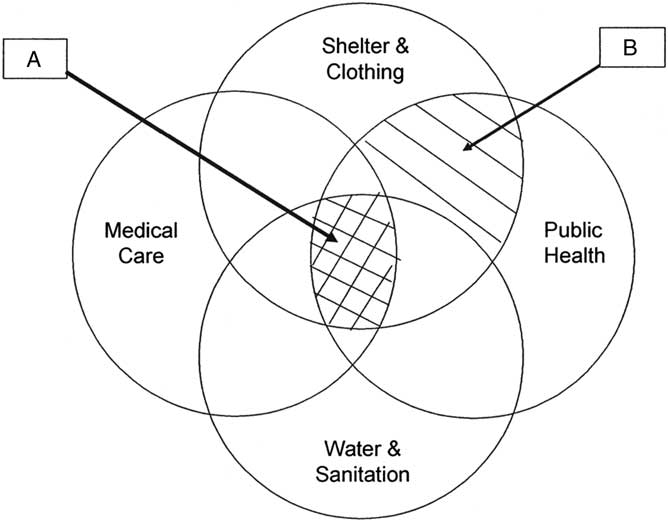
The level of function of a Societal System may be compromised not only from Structural Damage with its system, but by changes in compromised functions in other Systems upon which its functions are dependent. For example, components of the Medical Care Societal System may become functionally compromised due to compromised levels of function of the Logistics and Transportation System. Structural Damage with subsequent changes in the level of function of one Societal System may compromise functions of another System, even though it may not have sustained any Structural Damage.
Coordination and Control
Any complex operation requires a system for management. In the military, this function is called “Command and Control.” In the management of a disaster (disaster management), this function is labeled “Coordination and Control.” Furthermore, “disaster management” infers operations only during a disaster. Therefore, “Coordination and Control” is preferred as it implies operation before, during, and after the onset of an event, emergency, or disaster. Coordination is the organization of the different elements of a complex body or activity so as to enable them to work together effectively; 14 , Reference Oyegbite 15 while control is the authority to influence or direct people’s behavior or the course of events. 16 Coordination and Control is the process that directs and coordinates all activities encumbered in the responses to an event, in hazard mitigation, and in capacity building for potential disaster-causing events.Reference Birnbaum, Daily and O’Rourke 1 (p147) Coordination and Control provides the oversight for all disaster management functions. Its main role is to assure that the interventions implemented and resources utilized meet the identified needs of the affected community or the community-at-risk.
The integration of the activities of all of the Societal Systems is the responsibility of the Coordination and Control System (hereafter called Coordination and Control). Failure to provide adequate Coordination and Control results in confusion, unnecessary duplication, inefficiencies, unnecessary costs, and occasionally, in activities that may be counterproductive to the community for which it is responsible.
The government of a community is responsible for the provision of Coordination and Control for the community it governs. Its departmentalized structure provides the goods, services, infrastructure, and other resources required by the community governed. Overall, Coordination and Control is responsible for the activities of each of the Societal Systems and for the interactions between them. In preparing for and responding to events, Coordination and Control charges (via the Strategic Plan) each of the 13 Societal Systems with the goals for each intervention, and seeks/provides the resources needed to accomplish them. It tempers these tasks according to available resources. Coordination and Control also must guide the planning and capacity-building activities as well as be prepared to operate at the local, district, national, and international levels. To operate during times of crisis, the Coordination and Control System should be established by the government, and should be functional prior to the occurrence of an event. Therefore, the term “disaster management” seems too narrow, and “Coordination and Control” is preferred. The provision of Coordination and Control must be a political imperative.
Roles and Responsibilities of Coordination and Control Centers
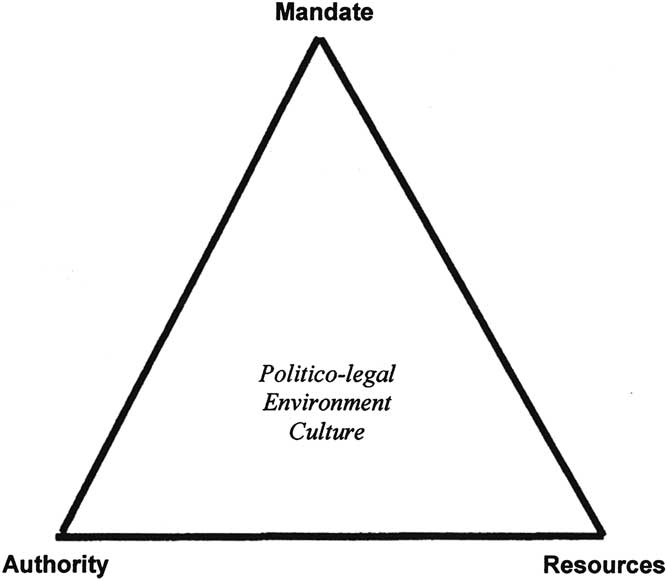
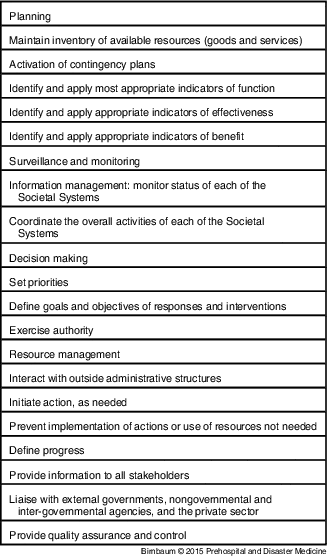
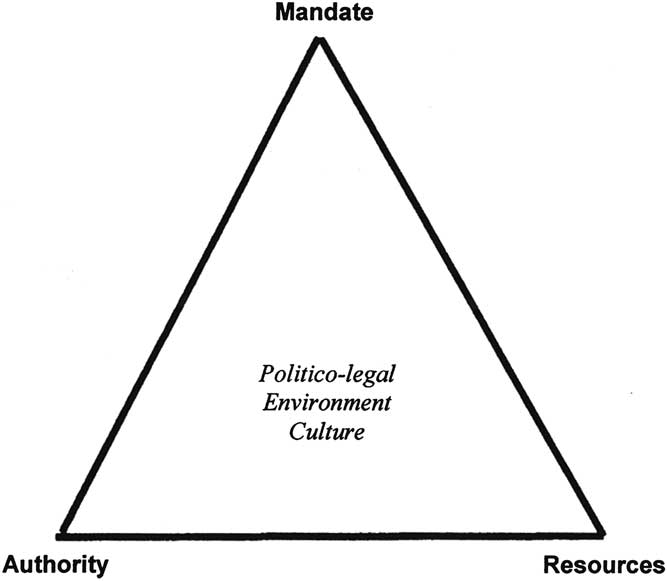
The functions of the Coordination and Control System should be vested into one or more Centers. Coordination and Control Centers (CCCs) are entities that operate at each level of a community (local, district, national, and international), and not only have the mandate for providing coordination and control during a crisis, but also must be vested with the authority and the resources that enable them to perform their functions (Figure IV-5). Coordination and Control must remain operational between events for purposes of planning, testing, and risk reduction, including exercising its respective Disaster Response Plan (DRP). Some of the activities and responsibilities of Coordination and Control are listed in Table IV-3. These responsibilities are not ranked by priority, importance, or order of implementation; each is ongoing and contemporaneous. Several of the responsibilities of Coordination and Control require comments.
The Triangle of Responsibility within Coordination and Control. Each of these responsibilities is tempered by the culture, language, geography, politics, and climate of the area.
Activities and Responsibilities of Coordination and Control

Resource Management
Resource management includes addressing logistical concerns, initiating or establishing processes for the procurement of additional goods, services, and other resources, as well as the receipt, recording, control, monitoring, storage, transport, distribution, and handling of such goods, services, and other resources. Each of these processes is described in detail in the Logistics Guidelines produced by the Pan-American Health Organization (World Health Organization (WHO)/American Regional Office; Washington, DC USA). 17 The responsibilities of Coordination and Control must include the identification of where and how to obtain the resources that may be required. This requires that an inventory detailing the location and availability of such resources be developed and maintained as part of planning and capacity-building activities.
Prevent Influx of Unneeded Resources
A principal responsibility of Coordination and Control is to prevent the influx of goods, services, and other resources that are unlikely to contribute to meeting the needs of the affected community or community-at-risk. Coordination and Control must limit the delivery of goods, services, and other resources that are not required and requested; only those goods, services, and other resources that most likely will limit damage and/or provide Relief and/or improve the functional status of the affected community (Recovery) should be requested by the Societal Systems involved and by Coordination and Control. This requires resolute decisions by Coordination and Control, along with the authority to exclude the influx of unrequested goods and services. This activity is summarized in the deliberations of the Foreign Medical Team (FMT) Group of the Global Health Cluster (GHC) and WHO. 18
Communications and Information Management
Coordination and Control is impossible without information. Although Communications is a separate Societal System, all of the Societal Systems are dependent upon the Communications System, as no responses can function well without adequate information. Communications include all modalities used for sharing of information, such as telephone, facsimile, electronic mail, radio, television, messengers, and the social media (eg, texting, Facebook, Twitter, LinkedIn, and Instagram). It includes use of the media to communicate with the general public. The most appropriate modes of communication to be used during specific aspects of a disaster are outlined and assigned in the DRP. Such plans should specify the best means for communication between the various Societal Systems and their respective components to be used in a given (predictable) set of circumstances. Major parts of the communications capability may be damaged by the primary and/or a secondary event. Hence, redundancy/back-up systems that include the use of alternative means of communication (buffering capacity) must be built into any plan and Communications System. For example, the 1995 Kobe earthquake resulted in movement of the satellite dishes rendering most of them useless; telephones also became non-functional due to damaged landlines and failure of computer-based phones that required electrical energy. Further, the battery capabilities of portable equipment were depleted rapidly, and there was inadequate electrical power to recharge the batteries. The most efficient means of communications during the acute period after that earthquake was the use of runners. 19 The use of the social media was important in determining the responses to the 2010 earthquake in Haiti, and the applications of the social media prior to and during disasters currently is commanding substantial attention.Reference Adamson 20
Information and Media Management
Coordination and Control must be the primary contact point between disaster management and the media. The media are an essential resource during any disaster and can be of substantial assistance in disaster management. Ideally, disaster planning processes should include media participation. Mechanisms for generating and disseminating information should be developed before a disaster-causing event occurs and as outlined in the DRP. Serving as the eyes and ears of the community, the media are able to provide relevant information to the affected community, as well as the international community. Collaborating with the media serves two objectives: (1) to inform the public of what is taking place; and (2) to ask for assistance/information from the community that may be relevant to the mission of Coordination and Control. Management of the information provided to the media is the task of Coordination and Control usually through the actions of a Public Information Officer. Confusion also can arise from rumors and incorrect information. The media constitute an important source of information for donors; inaccurate information often brings with it inappropriate responses.
The role of the social media in emergencies and disasters has been ever increasing, and consequently, its use in dispensing and gathering information, providing regular updates, and if necessary, providing essential warnings present a major opportunity, as well as some challenges for information management during an emergency or disaster. The fast-moving changes associated with many disasters match the speed of exchanges available within the social media sites. Most notably, important, local information, including mapping sites, can be made available to affected populations. 21 , 22
The role played by the media, including the social media, may have a profound impact on the nature and success of any intervention, and may constitute an important area for consideration in disaster research. The media comprise an important element of the external factors in the evaluation of interventions. 22
Administrative Structures and Barriers
The resources of a community reside within, and are managed by, a number of administrative entities: (1) governmental institutions and agencies; (2) inter-governmental organizations; (3) nongovernmental organizations (NGOs); (4) commercial private sector; and/or (5) academic institutions. Each of these organizations has its own internal structure. In evaluating Coordination and Control entities, it is essential to appreciate the administrative maze through which Coordination and Control must navigate. The leaders of each of the Societal Systems generally know and understand the administrative structures within the organizations with which they interact. Given the complexity of administrative structures with which Coordination and Control must interact, it should be clear that negotiations and agreements between organizations are best accomplished prior to the occurrence of catastrophic events. Attempting to reach agreements during a crisis is fraught with difficulty, often causing inordinate delays and supplies of goods, services, and other resources that do not meet the needs of the affected community.Reference Yeomans 23 , Reference Rubin, Heuvelmans, Tomic-Cica and Birnbaum 24
Administrative barriers that may impede the ability of Coordination and Control to perform its functions include: (1) the complexity of the administrative structures with which it must interact; (2) the location of resources; (3) identifying, finding, and co-opting responsible person(s); (4) the competence and compatibility of the staff; (5) access methods; (6) payment; (7) contracts and memoranda of understanding (MOUs); (8) inventories; and (9) competition for the mandate, authority, and resources.
Requirements for Coordination and Control
Effective Coordination and Control requires that three factors be present: (1) mandate; (2) authority; and (3) resources (Figure IV-5). If any one of these three factors is missing, adequate Coordination and Control is not possible.
Mandate
Coordination and Control requires a mandate to provide its services. This entails authorization by the government of the community-at-risk or the community affected to provide the management of and preparations for an event. The mandate to control resources is a major factor in achieving authority.
Authority
Authority is the power or right to give orders, make decisions, and enforce obedience.Reference McGarry, Emerson and Fink 25 It includes everything from military power to bureaucratic control, as well as the capability of withdrawing resources or support from a body/agency/system/faction. The authority to provide effective Coordination and Control consists of the administrative ability to provide security (eg, police and the military), and the ability to discipline wrongdoing, to dictate which responses are appropriate, and to exclude those that are not. The authority requires both the mandate and the resources to do so. It is difficult to provide coordination without the ability to control what is happening. Importantly, authority also carries responsibility.
Resources
Resources are the means available to achieve an end or fulfill a function; a stock or supply that can be drawn upon. 26 Thus, resources are the goods, services, and other resources (including finances) required to meet the identified needs. Resources may be human, material, economic, and/or a combination of these, and include the funds available, the knowledge and experience of the staff, and the availability of an information management system. During crises, local authorities always have a formal and moral mandate to exclude resources that are culturally inappropriate. During many disasters, local authorities have had the authority necessary for Coordination and Control, but have had limited or no access to needed resources. Without the necessary resources or the ability to obtain such resources, control is impossible.
When any one of the three elements of mandate, authority, or resources, has been inadequate, the provision of Coordination and Control has been compromised. This results in disorganization and haphazard responses without clear goals and objectives, and thus, an uncontrolled influx of “assistance,” including inappropriate assistance. 18 , Reference Thompson 27 - 29 Supplying and receiving unnecessary resources impinge upon the storage space, transport capabilities, distribution, and utility that otherwise would be available for those resources that truly are needed.
Other Considerations for Coordination and Control
Cultural differences and customs may be more important considerations in disaster planning and responses than is the type of event, and should guide the Coordination and Control aspects of all disaster management. This applies especially to assistance coming from outside of the area affected. The geography of the region, climatic conditions, administrative structures, politics, legal constraints, and other region-specific factors must be integrated into all responses through the Coordination and Control operations.
Hierarchy of Coordination and Control
Coordination and Control requires a hierarchical structure. In general, the structure of Coordination and Control begins at the scene of the event and moves progressively to higher levels of Coordination and Control (government) as the complexity of the responses increases; the higher the level of the CCC, the greater is the span of control. Both the span of control and resources available to the local CCC are substantially greater than are those of the On-Scene Coordination and Control entity, and so on along the hierarchy to larger jurisdictions. This progression allows Coordination and Control to gain access to more resources, as needed, and provides the “big picture” necessary for the prioritization of responses/resources in a large region.
Coordination and Control of International Responses
The provision and acceptance of Coordination and Control by international, humanitarian responders has been, and continues to be, a major problem associated with international disaster assistance.Reference Thompson 27 - Reference Pant, Kirsch and Subbarao 31 The lack of Coordination and Control of the international humanitarian community has been addressed in many forums, and has been targeted by multiple efforts including the: (1) Hyogo Framework for Action (2005-2015); 32 (2) Humanitarian Reform promulgated by the Inter-Agency Standing Committee (IASC; Geneva Switzerland) (2005, 2007); 33 , 34 (3) Transformative Agenda of the IASC; 35 (4) FMT Working Group of the GHC; 18 (5) in multiple regional consultations by the South East Asia and Western Pacific WHO Regional Offices; 36 - 39 (6) by the Global Platform for Disaster Risk Reduction; and 40 most recently (March 2015) by the (7) Sendai Framework for Disaster Risk Reduction 2015-2030. 41
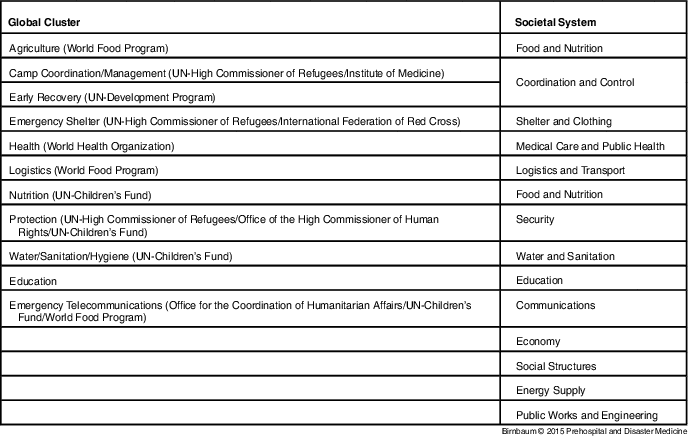
In response to the lack of Coordination and Control in the Relief and Recovery responses to the 2004 earthquake and tsunami, the UN-OCHA (Geneva, Switzerland) requested its IASC attempt to improve the effectiveness of humanitarian responses through ensuring greater predictability, accountability, and partnerships. The formation of “clusters” followed, and consisted of nine clusters in 2005 that were expanded to 11 clusters in 2007. The clusters were formed with the intent of developing coordination mechanisms between the various stakeholders, including governmental, inter-governmental, NGOs, donors, and the private sector. The Societal Systems practically align with the Global Clusters (Table IV-4). The WHO serves as the lead agency for the GHC. In findings from evaluations of the Global Clusters, the country health clusters have had some success in facilitating Coordination and Control, but many problems with Coordination and Control persist. 42 At the time of this report, substantial problems still exist, including the difficulties with inter-cluster coordination, lack of authority and span of control, and unclear relationships between the country clusters and the respective national Ministries of Health. Furthermore, the extent of the mandate and authority to the clusters has not been well defined.
Societal Systems Alignment with Global Clusters

The Transformative Agenda, initiated in 2011, is meant to strengthen the Cluster Approach, improve the coordination of responses, and address operational challenges. In any Level-3 emergency (ie, requiring international assistance), the Transformative Agenda requires the response of a team of experts/leaders (Global Emergency Management Team) to be on the scene within 72 hours of declaration of a Level-3 emergency. 35 The GHC and the IASC have developed a Performance Evaluation Tool for the assessments of the activities of the clusters.Reference Steets, Grünewald and Binder 43
Furthermore, in response to the inappropriateness of some of the surgeries performed following the earthquake in Haiti in 2010, the GHC formed a FMT Working Group. This Group is in the process of developing minimum best practices for the care of trauma victims in austere situations, and is recommending mechanisms for the registration of FMTs with the respective Ministries of Health. 44 , 45 In addition, the recommendations currently include limiting the ability of members of FMTs to practice only at (not beyond) their licensed practices and certified competencies (specialization) in their respective country of origin, and some “best practices” (critical pathways) in austere circumstances are suggested. 44 , 45
Additional emphasis was placed on the provision of Coordination and Control during the Global Platform for Disaster Risk Reduction convened in 2013, 40 and in the Sendai Framework for Disaster Risk Reduction 2015-2030. 41 The Global Platform of 2013 laid the foundations for the development of the Post-Hyogo Framework for 2015 and beyond (convened in Sendai, Japan during March 2015). The discussions focused on: (1) targeting the root causes of risk; (2) connecting mutually reinforcing agendas (risk with sustainable development, environmental protection, climate change, and human mobility); (3) assessing the risks (the gradual accumulation of risks); (4) leading at the local rather than national or international level; (5) community engagement to ensure sustainability; (6) recognizing the private sector as actor and partner; (7) strengthening integrated risk governance through empowerment of communities and local governments to manage their everyday risks and the development of disaster risk-reduction programs; and lastly and importantly for this document; and (8) strengthening scientific and technical support. The latter emphasizes the need for “accumulation of evidence for risk-informed decision-making drawing on scientific analysis and tested indigenous knowledge:” 40
There is an unmet demand for data, tools, methods, and guidance on implementing risk-reduction, and a shortage of specialists educated and trained for the task. As a relatively new field, there are large capacity gaps, and these must be addressed quickly in order not to impede progress. There is a critical need to include disaster risk across all disciplines. Integrating disaster risk management into education at all levels including higher education curricula should be a priority. The widespread development and implementation of databases, including national and local damage and loss statistics based on sex and age-disaggregation data, methods for risk assessment, sector-tailored risk management and community early warning systems are pressing needs.
Participants also called for action to narrow gaps between the scientific community and organizations responsible for implementing disaster risk reduction through the development of collaborative means and methodologies…. 40
The Sendai Framework provides seven Global Targets and four Priorities for Actions. The seven Global Targets include: (1) reducing global disaster mortality by 2030; (2) reducing the number of affected people globally; (3) reducing direct disaster economic loss in relation to global gross domestic product; (4) reducing disaster damage to critical infrastructure and disruption of basic services, among them health and educational facilities, including through developing their resilience; (5) increasing the number of countries with national and local disaster risk reduction strategies; (6) enhancing international cooperation to developing countries; and (7) increasing the availability of and access to multi-hazard early warning systems and disaster risk information and assessments to the people. The Priorities for Action include: (1) understanding disaster risk; (2) strengthening disaster risk governance to manage disaster risk (fostering collaboration and partnerships; (3) investing in disaster risk reduction for resilience; and (4) enhancing disaster preparedness for effective response and to “Build Back Better” in recovery, rehabilitation, and reconstruction. Importantly, health and health systems were stressed in the document. This material provides a mandate. It remains to be seen where and how the authority and resources will be provided for implementation.
It is clear that substantial concern over the Coordination and Control of international disaster responses continues, though some progress seems to be at hand. Many aspects demand continuing efforts to improve the Coordination and Control of international responses.
Coordination and Control during Planning and Capacity Building
At all levels, those responsible for staffing Coordination and Control must be involved in the planning and in the implementation and prioritization of capacity-building measures.Reference Norton, von Schreeb, Aitken, Herard and Lajolo 46 Persons staffing CCCs should be selected because they have experience in performing required tasks, have been educated and trained especially to perform in such roles, and/or have special expertise that supplements the expertise of the team. Without the input from such persons, plans are likely to fall short of what is required when an event strikes. All planning processes must be tested in realistic, full-scale, and tabletop exercises. Although no DRP will exactly meet the circumstances of an actual incident, experience and training in planning and staging of full-scale, limited-scale, and table-top exercises leaves much less to conjecture and chance. This means that Coordination and Control should not become operational only in times of crisis (disaster management), but should be permanent agencies that can be scaled to needs when a crisis emerges.
Priorities
Deficits refer to the lack of resources (goods, services, and financial and other resources) required for a Societal System to operate or continue its function(s). Needs represent the goods, services, and other resources that are not available to meet the requirements—the deficits; deficits generate needs. When deficits exist, choices must be made regarding the allocation of limited supplies in order to limit mortality, address pain and suffering, and achieve/maintain the functional level of any System. Functional priorities exist for each of the Societal Systems; these priorities must be an integral part of the planning process, and should inform the decision-making processes for the distribution of limited resources for Relief, Recovery, and risk reduction (hazard mitigation and capacity building). Similarly, failures in the transformation process required to transform the goods and services into functions may impair the provision of essential functions. These include the personnel and infrastructure (including equipment) required for the operation of transforming the available goods and services into essential/critical levels of functions. Therefore, priority lists are used not only in deciding which processes/functions to curtail, but also in deciding which order processes/functions are to be restored as more resources become available. Determining a priority list of functions requires forethought to predict the likely consequences of any possible event. However, utilizing a planned priority list requires flexibility. No plan is perfect; situations occur that are not anticipated. However, the establishment of a priority list is an important aid in making real-time decisions.
As noted, whenever available resources become compromised, some of the functions and sub-functions provided by a System (or subsystem) must be curtailed to prevent the entire Societal System from becoming dysfunctional. The functions or sub-functions sacrificed first are those that have been determined to have a low priority in relation to the other sub-functions (eg, elective or cosmetic surgery within the Medical Care System). As available resources become further constrained, those sub-functions with the next lowest priority are discontinued, until the sub-functions that are considered key to maintaining the CMR at the lowest possible level may be the only remaining services provided by the Societal System (ie, the critical level of function). Capacity-building plans must address priorities according to which functions are most important to the particular community, and which Systems are most likely to become dysfunctional. Those goods and services that have the greatest value to the affected community/society, and are the most vulnerable, will be given a high priority, while those with a low importance to the affected community will be given a low priority.
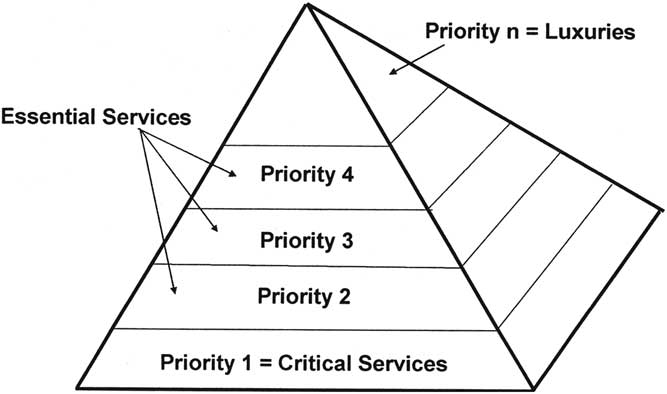
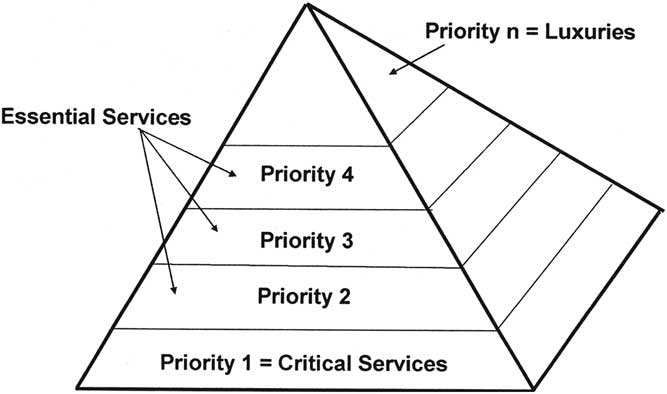
Prioritization can be illustrated using the concept of a priority pyramid (Figure IV-6). The functional components of a Societal System that are considered to be of highest priority are assigned to the base of the pyramid, as the other functions of the System depend on these functions. The functional components assigned to the top of the pyramid have low priority, since it is unlikely that they will influence the provision of essential or critical functions.
An Example of a Priority Pyramid. The position of the function/sub-function in the pyramid is the only indicator of its importance/priority for that Societal System. It is its placement and not the volume in the pyramid that indicates a function’s importance; it is possible that a component at the top of the pyramid could consume more resources than one at the base of the pyramid.
The processes used in determining priorities relating to essential functions and areas of vulnerability may be facilitated by using the following generic guidelines: (1) identify priorities among/between the Societal Systems; (2) identify and prioritize functions provided by the Systems; (3) identify priorities in accordance with their importance to the community; and (4) identify and prioritize supplies of those goods and services and functions that best serve essential functions. Other factors to be considered either during the planning process or when adjusting the plan during and after an event include: (1) consequences of non-availability of resources; (2) effects on morbidity; (3) inconveniences to the affected community; (4) political implications; (5) availability of alternative goods and services; (6) the relative risks; and (7) employment of the affected public.
Prioritization is required at all levels in each System (and its subsystems). The ultimate establishment of priorities is a function of Coordination and Control.
Indicators of Function
An indicator is a sign or marker that defines the status of a specific component or element.Reference Birnbaum, Daily and O’Rourke 1 (p119) Indicators of function are signs or markers of the status of a function or set of functions. Indicators are necessary for documenting: (1) the baseline functional status; (2) the current level(s) of functioning; and (3) the effectiveness of an intervention in achieving its objectives and in contributing to the overarching goal(s). Indicators must be validated with regard to their specificity (ie, how many different problems/components share the selected indicator) and sensitivity (ie, how early it will signal alarm for that function). For example, the upper arm circumference measurement in children is a semi-sensitive indicator of nutrition, but a low value is a relatively specific indicator of inadequate nutrition, even though there may be a host of possible causes.
In order to describe the impact of an event or the effects of an intervention on functional levels of a Societal System, one or more indicators of its functions are required. Such indicators of function may be quantitative, qualitative, or a combination of both.Reference Birnbaum, O’Rourke and Daily 47 One example of combining qualitative and quantitative data involves the scaling of qualitative data (eg, use of Likert-type scales).
A useful indicator of a critical level of function in disaster management is the CMR. Although the CMR is neither a very sensitive nor specific indicator of function, and there are many potential causes for an increased CMR, it represents an endpoint of deterioration of one or more of the Societal Systems.Reference Birnbaum, O’Rourke and Daily 47
To define functional thresholds that can aid in strategic and operational decision making during a disaster, an appropriate set of indicators is needed. This selection of indicators is difficult as they must provide early warnings of deterioration before the critical level of function is reached. Indicators, at minimum, must be validated for their construct validity (ie, they actually reflect what they are chosen to indicate). The construct validity of an indicator of function will be affirmed by its repeated use and validation. Ultimately, an inventory of indicators of the functional status of each Societal System and of its respective components should be constructed, maintained, and updated with annotated studies, just as has been done with the clinical indicators of organ system function.
While the definitions of some indicators of function for the Societal Systems fall within the scope of this document, it would be presumptuous, at this time, to select appropriate indicators of levels of function for all of the components of each of the Societal Systems. Based on the consensus of experts, the Sphere Project provides a set of minimum standards and key indicators and thresholds for some functions of several of the Societal Systems: (1) Public Health (Health Services) (2) Medical Care (Health Services); (3) Water and Sanitation (Water, Sanitation, and Hygiene Promotion); (4) Food and Nutrition (Food Security, Nutrition, and Food Aid); and (5) Shelter and Clothing (Shelter, Settlements, and Non-Food Items).Reference von Schreeb, Karlsson and Rosling 8 More studies using indicators similar to those used in the Sphere model must be conducted to further expand and validate these indicators of function.
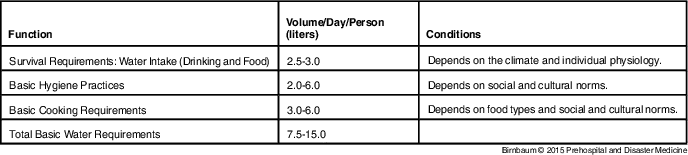
For example, the Sphere recommendations for basic daily water requirements are provided in Table IV-5. For most refugee camps and camps housing internally displaced persons, the critical threshold for water supply is 2.5-3.0 liters/person/day, depending upon the climate and individual physiology.Reference von Schreeb, Karlsson and Rosling 8 At an available water supply of <2.5 liters/person/day, the level of function required for survival eventually will progressively deteriorate, ultimately leading to death from dehydration (CMR will begin to increase). In conditions of extreme heat, 3.0 liters/person/day may not be sufficient to contain the CMR. It also is suggested that the available supply of potable water should be maintained at 7.5-15.0 liters/person/day. This supply of water should enable maintenance of essential levels of function. Thus, given these standards, the functional threshold for water supply (a function of the Water and Sanitation Societal System) varies between 7.5-15.0 liters/person/day, depending on environmental conditions. Amounts of available potable water above these levels can be considered to be a luxury. Additional minimum standards for the sources, quality, and number of people using a single source for water are provided in the Sphere Handbook.Reference von Schreeb, Karlsson and Rosling 8 Similar minimum standards are provided for water quality, availability, collection, storage, contamination, and use of water and soap for hygienic purposes. In addition, minimum standards and key indicators for institutional water quantities, excreta disposal, vector control, and solid waste management are provided by the Sphere Project.Reference von Schreeb, Karlsson and Rosling 8
Sphere Project Recommendations for Basic Daily Water RequirementsReference von Schreeb, Karlsson and Rosling 8

With the passage of time, indicators for other subsystems and functional units of the Water and Sanitation System may be added to these functional requirements. These may include indicators for amounts of water required for personal hygiene, bathing, and laundry.
Cross-Cutting Societal Assessments
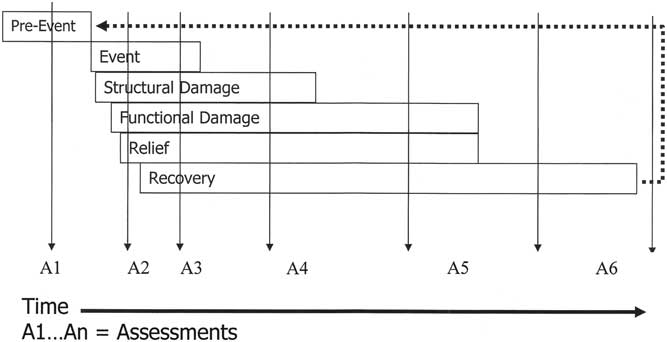
As changes in the functional status (levels of function) of a community affected by an event can be determined only by comparison with its pre-event functional status, knowledge of the pre-event functional status of the System(s) is required. Assessments of Structural and Functional Damages must be conducted over time throughout all temporal phases of a disaster (Figure IV-7). These may be performed by special evaluation teams conducting assessments at given intervals, or by documented observations of those providing interventions.
Assessments (A1–An) of a Societal System Cross-cut the Temporal Framework at Designated Times during the Temporal Phases of a Disaster.
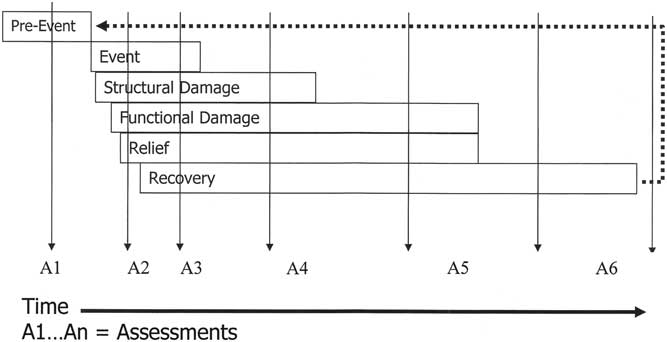
As noted in preceding sections, all responses must be directed toward addressing identified or anticipated needs. Functional deficits can be identified only if the pre-event functional status of the community is known. This requires that assessments occur during the pre-event period, at the recognition of the event, and at designated times during and following the onset of the event. If the pre-event status is unknown, it must be determined based on the most reliable data available. Needs are assumptions 48 determined from the synthesis of the information provided from assessments. Similarly, after the completion of each intervention or sets of interventions, assessments of changes in levels of function must be performed to identify further needs. The needs of an affected population are dynamic, and therefore, repeated assessments are essential. A set of generic assessment tools, as well as ones that address specific elements of the overall needs, are essential and, hopefully, will be an outcome from the use of these Frameworks.
Using the Societal Systems facilitates focusing studies, as each Societal System is responsible for providing its functions. Only Coordination and Control carries the overall responsibility for all of the functions provided by the combined Societal Systems.
Summary
Studying the effects of a disaster on a community requires deconstructing the complexities of a community into its functional components. The Societal Framework provides the structure for organizing a community into its functional components in order to facilitate assessments of changes in function over time (temporally). The Societal Systems that comprise any community can be subdivided further into functional subsystems and functional units, subunits, and so on. The functions of each Societal System are dependent on certain goods, services, other resources, and an intact transformation process. Dependencies exist within each Societal System, and between the Systems. Importantly, failures within one System may impede the functional status of one or more of the other Systems. Identifying the dependencies of and between each Societal System facilitates focused evaluations, planning, and capacity building.
Changes in the functionality of one or more Societal Systems as a consequence of an event result in needs that require action. Urgent action is necessary when the level of function of a System falls below its critical level, as indicated by a rise of the CMR.
A designated Coordination and Control system is essential for integrating the activities of the Societal Systems. During crises, prioritization of the use of resources is required to limit loss of life, maintain essential levels of functions, and restore the functions of each Societal System to as close to the pre-event status as possible.
A disaster always involves a compromise in the functional status of one or more Societal Systems. Using the organizational structure provided by the Societal Systems and Coordination and Control within the Societal Framework aids in understanding the complex inter-relationships, facilitates prioritization during the planning process as well as during a disaster, and facilitates repeatable and structured research. A pre-event description serves as the point of reference for all assessments and is essential for identification of the outcome(s) and impact of any project.