Introduction
Meloidogyne hispanica, one of the lesser-known species of root-knot nematodes (RKN), was detected for the first time in Spain, from peach rootstock, Prunus persica silvestris Batsch, and has also been found in 14 other countries (Hirschmann, Reference Hirschmann1986; Maleita et al., Reference Maleita, Curtis, Powers and Abrantes2012a). For survival, as an obligate biotrophic pathogen, M. hispanica relies on its ability to locate successfully and infect several plant species and cultivars. Previous studies showed that this species can spread to other regions of Europe and overcome Mi-mediated resistance, emphasizing its potential economic impact (Maleita et al., Reference Maleita, Santos, Curtis, Powers and Abrantes2011, Reference Maleita, Curtis, Powers and Abrantes2012a, Reference Maleita, Curtis and Abrantesb).
Current approaches for the management of RKN are the use of nematicides, cultural methods and resistant cultivars, which may be used in an integrated manner. However, new approaches are required urgently, due to the emergence of RKN virulent biotypes (Bleve-Zacheo et al., Reference Bleve-Zacheo, Melillo and Castagnone-Sereno2007) and health and environmental concerns associated with the use of toxic nematicides.
The successful parasitism of RKN depends on a complex interaction with the host plants. These nematodes manipulate the plant's gene regulation and metabolism to their own advantage by delivering a wide variety of secreted molecules to the apoplast and cytoplasm of the host cells (Hussey, Reference Hussey1989; Davis et al., Reference Davis, Hussey, Mitchum and Baum2008). After receiving signals from the host plant, nematode migration, penetration of the plant root and feeding site formation are accompanied by a number of secretory processes from the nematode surface, amphids, rectal glands, excretory pore and oesophageal glands (Gheysen & Fenoll, Reference Gheysen and Fenoll2002; Davis et al., Reference Davis, Hussey and Baum2004; Abad & Williamson, Reference Abad and Williamson2010). Some of these secreted molecules are thought to be localized to host nuclei or to interact with host nuclear proteins (Rivas, Reference Rivas2012, Haegeman et al., Reference Haegeman, Bauters, Kyndt, Rahman and Gheysen2013; Quentin et al., Reference Quentin, Abad and Favery2013) and others seem able to recruit proteins involved in nucleo-cytoplasmic movement and nuclear dynamics during the parasitism of their hosts (Hewezi & Baum, Reference Hewezi and Baum2013). Therefore, the identification and characterization of the nematode genes encoding secretions is important to provide a better understanding of the plant–nematode interaction, and may increase the possibility of the development of new approaches for nematode control. The first nematode molecule identified as being involved in parasitism was the enzyme cellulase, which was recognized from cyst nematodes using monoclonal antibodies (Smant et al., Reference Smant, Stokkermans, Yan, De Boer, Baum, Wang, Hussey, Gommers, Henrissat, Davis, Helder, Schots and Bakker1998). Ever since, the study of nematode parasitism genes has been a relevant subject of research and a number of proteins involved in parasitism were discovered by extensive genome, transcriptome and proteomics studies with the most common RKN species (Abad et al., Reference Abad, Gouzy, Aury, Castagnone-Sereno, Danchin, Deleury, Perfus-Barbeoch, Anthouard, Artiguenave, Blok, Caillaud, Coutinho, Dasilva, De Luca, Deau, Esquibet, Flutre, Goldstone, Hamamouch, Hwezi, Jaillon, Jubin, Leonetti, Magliano, Maier, Markov, Mcveigh, Pesole, Poulain, Robinson-Rechavi, Sallet, Ségurens, Steinbach, Tytgat, Ugarte, Ghelder, Veronico, Baum, Blaxter, Bleve-Zacheo, Davis, Ewbank, Favery, Grenier, Henrissat, Jones, Laudet, Maule, Quesneville, Rosso, Schiex, Smant, Weissenbach and Wincker2008; Bellafiore et al., Reference Bellafiore, Shen, Rosso, Abad, Shih and Briggs2008; Opperman et al., Reference Opperman, Bird, Williamson, Rokhsar, Burke, Cohn, Cromer, Diener, Gajan, Graham, Houfek, Liu, Mitros, Schaff, Schaffer, Scholl, Sosinski, Thomas and Windham2008; Hassan et al., Reference Hassan, Behm and Mathesius2010; Haegeman et al., Reference Haegeman, Mantelin, Jones and Gheysen2012, Reference Haegeman, Bauters, Kyndt, Rahman and Gheysen2013). The function of several parasitism genes have been predicted to be related with food digestion, plant cell wall degradation, protection and suppression of host defences, targeting plant signalling pathways and ubiquitination (Abad & Williamson, Reference Abad and Williamson2010; Haegeman et al., Reference Haegeman, Mantelin, Jones and Gheysen2012). Nevertheless, the nature, molecular functions and the mode of action of most nematode secreted proteins are still to be determined (Bellafiore et al., Reference Bellafiore, Shen, Rosso, Abad, Shih and Briggs2008; Bellafiore & Briggs, Reference Bellafiore and Briggs2010; Hassan et al., Reference Hassan, Behm and Mathesius2010; Haegeman et al., Reference Haegeman, Mantelin, Jones and Gheysen2012).
Cysteine proteases were first identified in homogenates of Globodera pallida females, in the intestine of Heterodera glycines and later in Meloidogyne hapla females (Lilley et al., 1996; Michaud et al., Reference Michaud, Cantin, Bonade-Bottino, Jouanin and Vrain1996). In plant-parasitic nematodes, these proteases have been associated with digestion, and transgenic plants expressing specific protease inhibitors showed a high level of defence against nematode infection (Atkinson et al., Reference Atkinson, Urwin and McPherson2003). The calreticulin (CRT) protein was described in Bursaphelenchus xylophilus, Ditylenchus destructor, H. glycines, M. hapla and Meloidogyne incognita (Jaubert et al., Reference Jaubert, Laffaire, Abad and Rosso2002, Reference Jaubert, Milac, Petrescu, Almeida-Engler, Abad and Rosso2005; Ithal et al., Reference Ithal, Recknor, Nettleton, Maier, Baum and Mitchum2007; Opperman et al., Reference Opperman, Bird, Williamson, Rokhsar, Burke, Cohn, Cromer, Diener, Gajan, Graham, Houfek, Liu, Mitros, Schaff, Schaffer, Scholl, Sosinski, Thomas and Windham2008; Li et al., Reference Li, Zhuo, Luo, Sun and Liao2011; Peng et al., Reference Peng, Gao, Kong, Yu, Huang, He, Long and Peng2013). Meloidogyne incognita studies showed that the knockdown of Mi-CRT in pre-parasitic infective second-stage juveniles (J2) reduced the ability of nematodes to induce galls on tomato, highlighting the importance of this protein in nematode infection (Dubreuil et al., 2009). The enzyme β-1,4-endoglucanase is involved in the invasion of root tissues by pre-parasitic J2 and in the migration of nematodes (Davis et al., Reference Davis, Haegeman, Kikuchi, Jones, Gheysen and Fenoll2011); however, this enzyme may also play other important roles, such as feeding-site formation, supporting the expansion of RKN-induced giant cells (Quentin et al., Reference Quentin, Abad and Favery2013). The anti-oxidant enzyme manganese superoxide dismutase (MNSOD), identified in M. incognita, was suggested to protect plant-parasitic nematodes from host-induced oxidative damage (Rosso, Reference Rosso2009) and to facilitate the development of nematodes on resistant tomato plants (Molinari et al., Reference Molinari, Rosso and Ornat Longaron2005).
Several studies have been conducted to characterize Portuguese M. hispanica isolates, using morpho-biometrical, biochemical and molecular methods to understand its biology and ecology (Maleita et al., Reference Maleita, Santos, Curtis, Powers and Abrantes2011, Reference Maleita, Curtis, Powers and Abrantes2012a, Reference Maleita, Curtis and Abrantesb, Reference Maleita, Simões, Egas, Curtis and Abrantesc, Reference Maleita, Curtis, Powers and Abrantesd). Recently, the genes for venom allergen-like protein (vap-1) and fatty acid and retinol binding protein (far-1) were isolated from M. hispanica and designated as Mhi-vap-1 and Mhi-far-1. A higher expression of the Mhi-vap-1 transcript was observed in the subventral oesophageal gland cells of J2 when compared with the expression obtained in eggs and females (Duarte et al., Reference Duarte, Curtis, Maleita and Abrantes2014). This gene is believed to be associated with resistance as it triggers a Cf-2/Rcr3pim-dependent programmed cell death in tomato plants (Lozano-Torres et al., Reference Lozano-Torres, Wilbers, Gawronski, Boshoven, Finkers-Tomczak, Cordewener, America, Overmars, Klooster, Baranowski, Sobczak, Ilyas, Van der Hoorn, Schots, de Wit, Bakker, Goverse and Smant2012).
This paper describes the identification of four M. hispanica putative parasitism genes (cathepsin L cysteine protease, cpl-1; calreticulin, crt-1; β-1,4-endoglucanase-1, eng-1; and manganese superoxide dismutase, mnsod) and the differential expression from mRNA isolated from eggs, J2 and females using semi-quantitative polymerase chain reaction (PCR). The phylogenetic relationship of M. hispanica putative parasitism genes and predicted amino acid sequences to those of other RKN species was also evaluated.
Materials and methods
Nematode isolates
The isolates of M. hispanica (PtHi3), Meloidogyne arenaria (PtA), Meloidogyne javanica (PtJ) and M. hapla (PtH) (Maleita et al., Reference Maleita, Simões, Egas, Curtis and Abrantes2012c) and one of M. incognita, provided by Rothamsted Research, UK, were selected and reared on tomato, Solanum lycopersicum L., cv. Tiny Tim, in a growth chamber. Two months after the inoculation with ten egg masses (EM), the eggs were extracted with 0.52% sodium hypochlorite (Hussey & Barker, Reference Hussey and Barker1973). The freshly hatched J2 were obtained from EM placed on a 25-μm mesh sieve and the females extracted from galled roots. The identity of isolates was confirmed by isoesterase phenotypes (Maleita et al., Reference Maleita, Simões, Egas, Curtis and Abrantes2012c).
Bioinformatics and sequence analyses
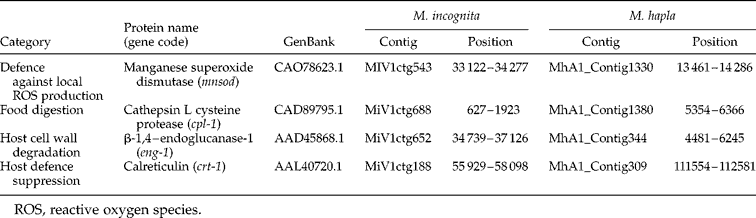
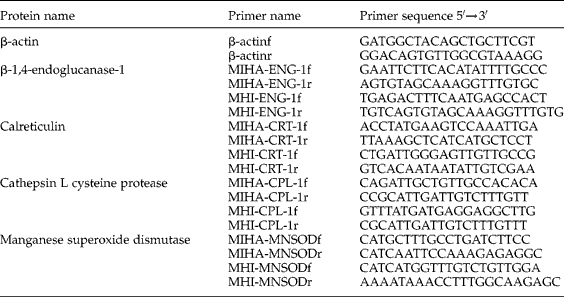
The National Center for Biotechnology database was searched for putative parasitism genes cpl-1, crt-1, eng-1 and mnsod (table 1) and gene models were attributed to expressed sequence tag (EST) contigs, using BLAST searches against the predicted proteins from the genome of M. incognita (http://www.inra.fr/meloidogyne_incognita). The same criteria were used to attribute gene models from the M. hapla genome (http:www.pngg.org/cbnp/index.php). Putative orthologues were searched by reciprocal best-hit comparison, using gene models from the genomes of M. incognita and M. hapla (table 1). Alignments were inspected in the program Multiple Sequence Alignment by Florence Corpet (MultAlin, hosted by the Plateforme Bioinformatique Genotoul, http://multalin.toulouse.inra.fr/multalin/). After the alignment, the sequences for each gene in M. incognita and M. hapla were used to design primers (MIHA) to the conserved regions using the program Vector NTI (Invitrogen, Carlsbad, California, USA) (table 2).
Category and name of proteins putatively involved in parasitism and homologous predicted proteins retrieved from the Meloidogyne incognita and M. hapla genome sequences.

Protein category designation based on Hassan et al. (2010), Haegeman et al. (Reference Haegeman, Mantelin, Jones and Gheysen2012) and Jaouannet et al. (2013).
ROS, reactive oxygen species.
Primers used in this study.
DNA extraction
Genomic DNA was extracted from J2 of each Meloidogyne isolate, using an adaptation of the protocol described by Orui (1999). Nematodes were homogenized in nitrogen liquid with 400 μl of extraction buffer (200 mm Tris–HCl pH 8; 250 mm NaCl and 25 mm EDTA) and centrifuged at 20,000 g for 5 min. The supernatant was transferred to a new tube and an equal volume of isopropanol was added. After swirling the tube, the mixture was incubated at room temperature for 30 min and centrifuged at 20,000 g for 15 min. The supernatant was removed and the pellet washed with 500 μl of 70% ethanol and centrifuged for 5 min at 20,000 g. Afterwards, the supernatant was removed and the pellet dried. The DNA was resuspended in 30 μl of Tris–EDTA (10 mm Tris–HCl pH 8 and 1 mm EDTA) and the concentration determined in a Nanodrop ND-1000 Spectrophotometer (Labtech International Ltd, Ringmer, UK).
Amplification of the genes
PCR amplifications were performed in a mixture containing 25 ng of RKN DNA as template, 5 units of Taq DNA polymerase, 1 × Go Taq Reaction Buffer (Promega, Madison, Wisconsin, USA) 1.5 mm MgCl2, 10 mm deoxynucleotide triphosphates (dNTPs) and 10 μm of each primer (table 2). Amplifications were carried out using the following conditions: 3 min at 95°C, 30 cycles at 95°C for 30 s, 40°C for 30 s and 72°C for 2 min and a final extension at 72°C for 5 min. The PCR reaction was analysed on a 1.0% agarose gel in 1 × Tris–acetate–EDTA (TAE) buffer stained with GreenSafe (NZYTech, Lisbon, Portugal). The amplified products were purified with the QIAquick Gel Extraction Kit (QIAGEN, Crawley, UK) and sequenced by standard procedures at Eurofins MWG Operon (Ebersberg, Germany) or Macrogen (Amsterdam, The Netherlands). The sequences were deposited in GenBank as KF679112, KF679109, KF679110, KF679108, KF679111 for CPL-1 protein in M. arenaria, M. hapla, M. hispanica, M. incognita and M. javanica, respectively; KF679115, KF679113, KF679116, KF679114 for CRT-1 in M. arenaria, M. hapla, M. hispanica and M. javanica, respectively; KF679117, KF679118, KF679121, KF679120, KF679119 for ENG-1 in M. arenaria, M. hapla, M. hispanica, M. incognita and M. javanica, respectively; and KF679122, KF679125, KF679124, KF679123, KF679126 for MNSOD protein in M. arenaria, M. hapla, M. hispanica, M. incognita and M. javanica, respectively. To analyse the gene expression in different M. hispanica developmental stages, the sequences of cpl-1, crt-1, eng-1 and mnsod genes were aligned with the program MultAlin with M. incognita sequences available in M. incognita (consortium) (table 1). Meloidogyne hispanica specific primers (MHI) were designed, using the program Vector NTI, from conserved sequences between this species and M. incognita (table 2).
RNA extraction and expression analysis
Total RNA was extracted from M. hispanica eggs, J2 and females. The specimens were placed separately in nitrogen liquid and homogenized using the Sample Preparation System MP Fast Prep-24, speed at 4.0 m/s (MP Biomedicals, California, USA) and the RNA isolated using the RNeasy Mini Kit including RNase-Free DNase Set (QIAGEN). The concentration and purity of the RNA were determined in a Nanodrop ND-1000 spectrophotometer. Total RNA (180 ng) of each developmental stage was reverse transcribed into cDNA using SuperScript II Reverse Transcriptase (Invitrogen), according to the manufacturer's instructions, and the concentration determined. After the reverse transcriptase reaction, a standard PCR was performed with the M. hispanica specific primers (MHI-CPL-1f/r, MHI-CRT-1f/r, MHI-ENG-1f/r and MHI-MNSOD-f/r; table 2). The actin gene was amplified from each sample as positive control (table 2). The PCR mixture, containing 25 ng of synthesized cDNA template and 5 units of Taq DNA polymerase (Promega), in 1 × Go Taq Reaction Buffer, 1.5 mm MgCl2, 10 mm dNTPs and 10 μm of each primer, was first heated for 3 min at 95°C, and then submitted to 30 temperature cycles (95°C for 30 s, 40°C for 30 s and 72°C for 1.5 min) with a final extension at 72°C for 5 min, or 10 min for Mhi-mnsod.
Phylogenetic analysis
The sequences of cpl-1, crt-1, eng-1 and mnsod genes of M. hispanica, M. arenaria, M. hapla, M. incognita and M. javanica isolates were successfully amplified and sequenced, with the primers designed in this work (table 2), except the crt-1 gene sequencing of the M. incognita isolate, which was obtained from the GenBank nucleotide database. Sequences were aligned and truncated to obtain a common start and end point. The alignment allowed the identification of the additional coding sequence and the removal of introns of each sequence. The amino acid sequences were deduced from the 380, 970, 220 and 580 bp partial DNA sequences of cpl-1, crt-1, eng-1 and mnsod, respectively. Protein phylogenetic trees were constructed using the neighbour-joining (Saitou & Nei, Reference Saitou and Nei1987) and maximum likelihood (Jones et al., Reference Jones, Taylor and Thornton1992) algorithms, and the topology of the trees was generated from evolutionary distances computed using the Poisson correction method, included in MEGA5 (Zuckerkandl & Pauling, Reference Zuckerkandl, Pauling, Bryson and Vogel1965; Tamura et al., Reference Tamura, Peterson, Peterson, Stecher, Nei and Kumar2011). The topology of the trees generated was evaluated by performing bootstrap analysis (Felsenstein, Reference Felsenstein1985) of 500 re-samplings of the dataset. All positions with less than 75% site coverage were eliminated. The protein alignment was used to determine the nucleotide position in the DNA sequence alignments that were further used to perform phylogenetic analyses as described above. Evolutionary distances were computed using the Jukes–Cantor model correction method included in MEGA5 (Jukes & Cantor, Reference Jukes, Cantor and Munro1969; Tamura et al., Reference Tamura, Peterson, Peterson, Stecher, Nei and Kumar2011).
Results
Bioinformatics and sequence analyses
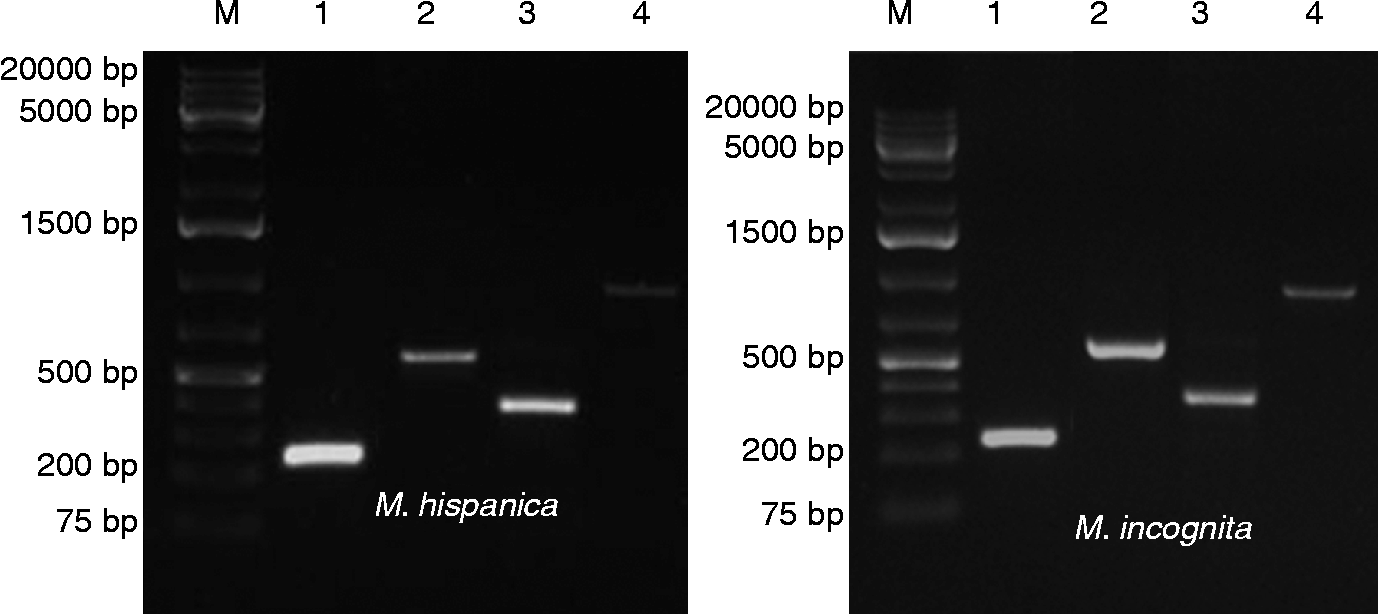
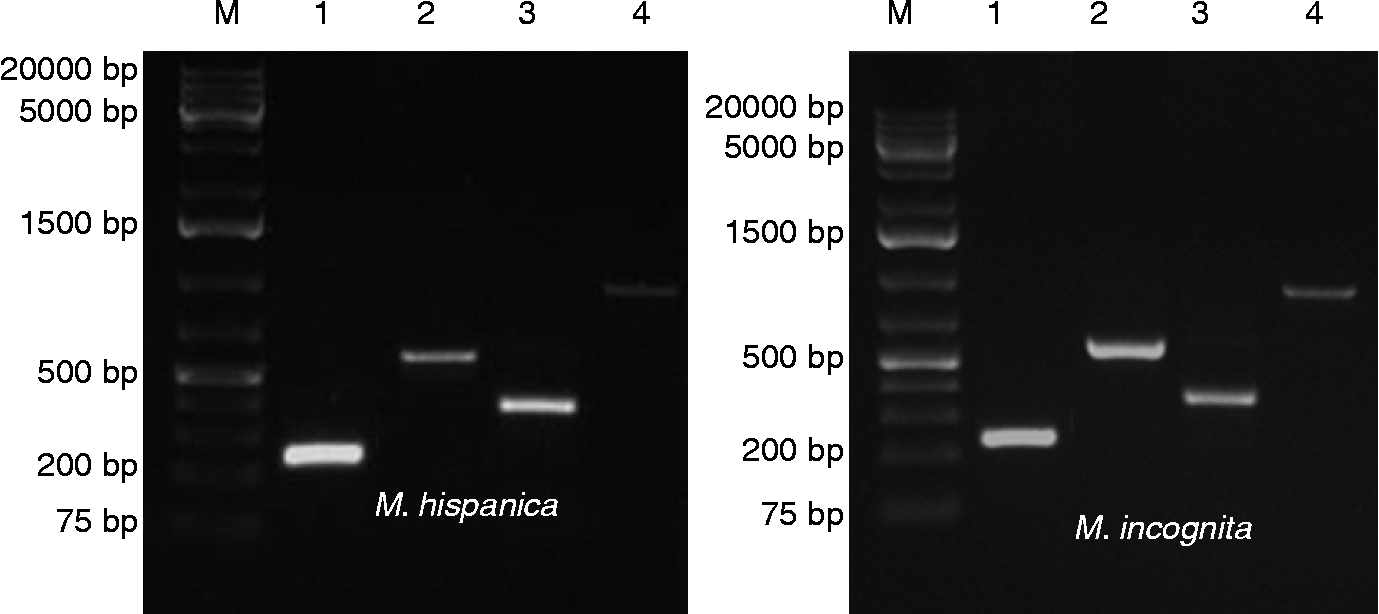
Based on the analysis of ESTs from M. incognita and M. hapla, a pair of primers was designed to the conserved regions of the selected putative parasitism genes, which permitted the successful amplification of genomic DNA of all Meloidogyne isolates. The amplification of the DNA from J2 of the selected RKN species resulted in fragments of approximately 380 bp for cpl-1; 970 bp for crt-1; 220 bp for eng-1 and 580 bp for mnsod (data for M. hispanica and M. incognita are shown in fig. 1).
DNA amplification products of Meloidogyne hispanica and M. incognita (positive control) obtained from the selected nematode genes. Lanes: 1, β-1,4-endoglucanase-1, eng-1; 2, manganese superoxide dismutase, mnsod; 3, cathepsin L cysteine protease, cpl-1; 4, calreticulin, crt-1; M, DNA marker (GeneRuler 1 kb Plus DNA ladder, Fermentas/Thermo Fisher Scientific, Loughborough, UK).
Transcription analysis
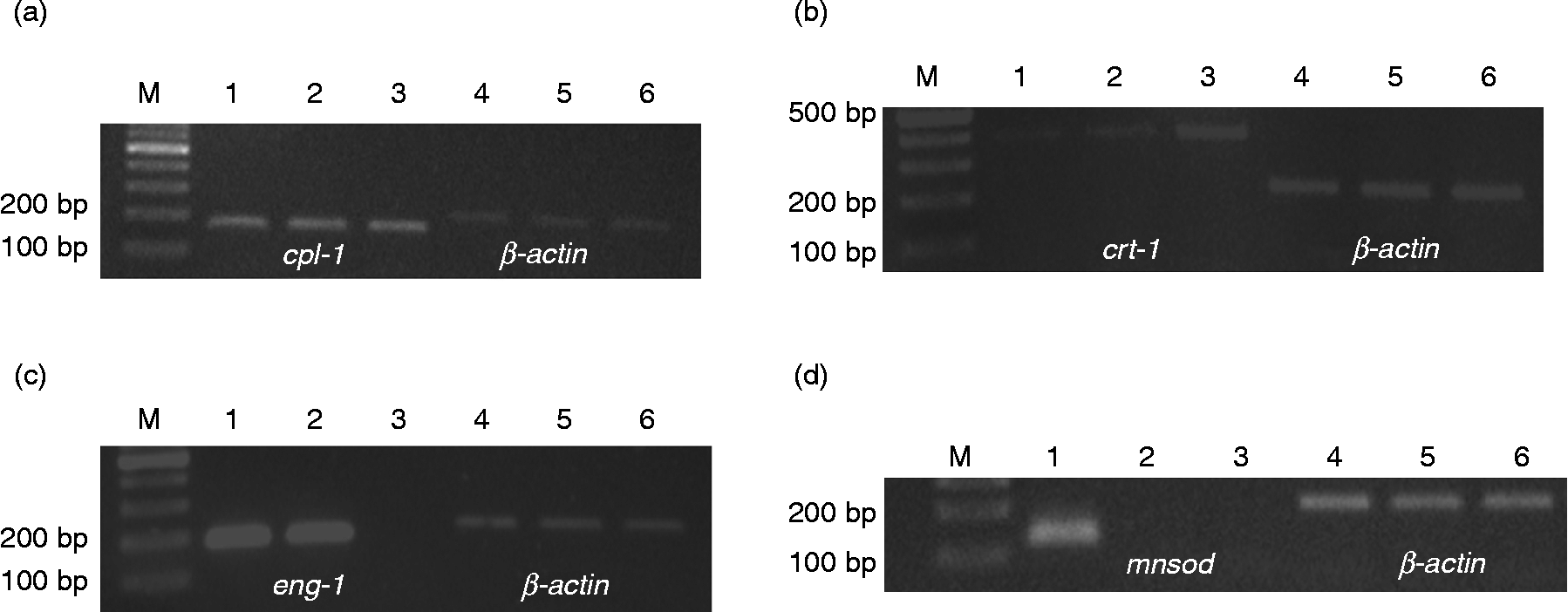
Reverse transcription polymerase chain reaction (RT-PCR), using the specific primers for the Mhi-cpl-1, Mhi-crt-1, Mhi-eng-1 and Mhi-mnsod genes, showed the gene expression of these genes in M. hispanica developmental stages (eggs, J2 and females). The specific bands have a molecular weight of approximately 180, 420, 170 and 160 bp for Mhi-cpl-1, Mhi-crt-1, Mhi-eng-1 and Mhi-mnsod, respectively. Amplification of the β-actin gene was used as a positive control (fig. 2). Although the cDNA fragments of Mhi-cpl-1 and Mhi-crt-1 were amplified in all of the developmental stages, there was a clear difference in band intensity: for Mhi-cpl-1, the bands were equally intense in all the developmental stages while for Mhi-crt-1, the band was more intense in females when compared with those obtained in eggs and J2 (fig. 2a, b). The cDNA fragments were equally amplified in eggs and J2 for the gene Mhi-eng-1 (fig. 2c) and the Mhi-mnsod gene was only expressed in eggs (fig. 2d).
Expression of the genes putative cathepsin L cysteine protease, cpl-1 (a), calreticulin, crt-1 (b), β-1,4-endoglucanase-1, eng-1 (c) and manganese superoxide dismutase, mnsod (d) by reverse transcriptase-mediated PCR amplification of cDNAs from Meloidogyne hispanica. Lanes: 1, eggs; 2, second-stage juveniles (J2); 3, females; M, DNA marker; 4–6, as a positive control, cDNA templates of eggs, J2 and females, respectively, were amplified with the primers of β-actin gene.
Phylogenetic analysis
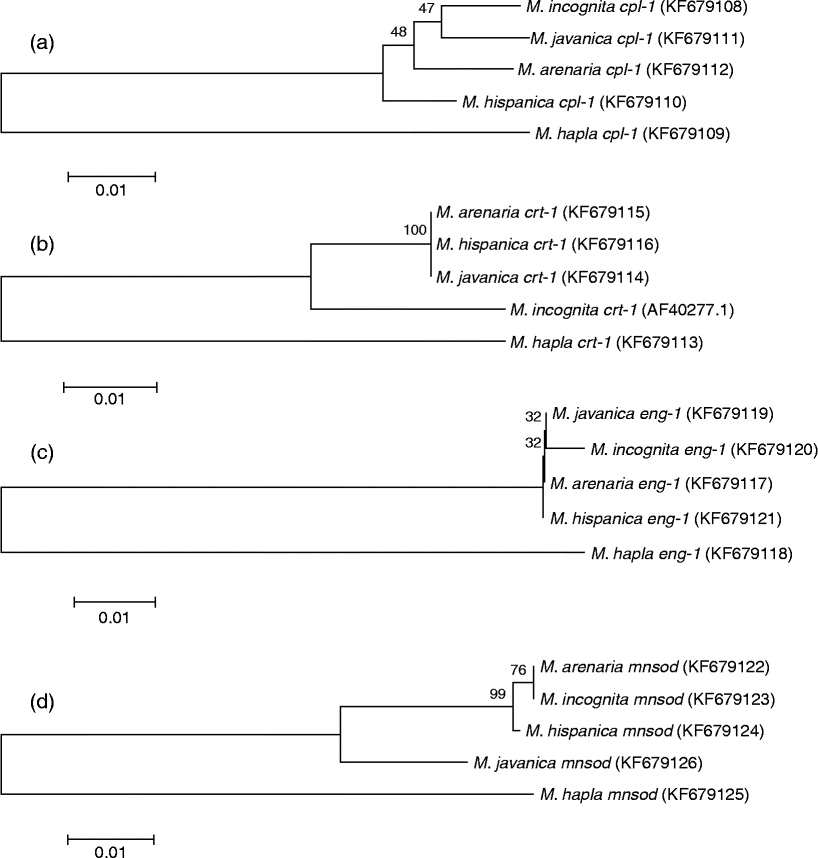
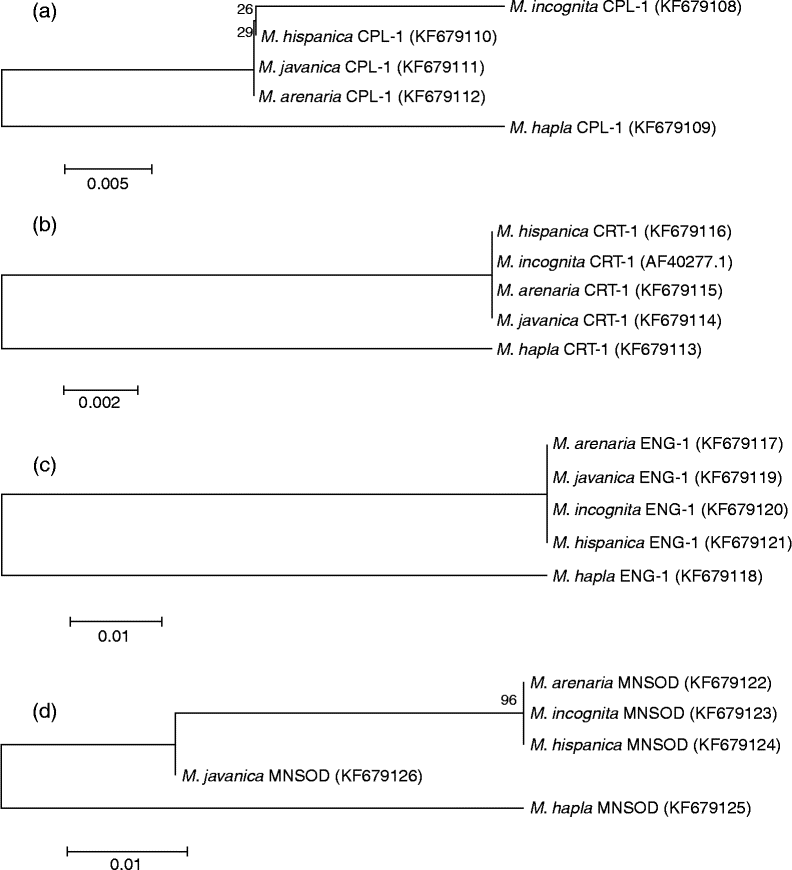
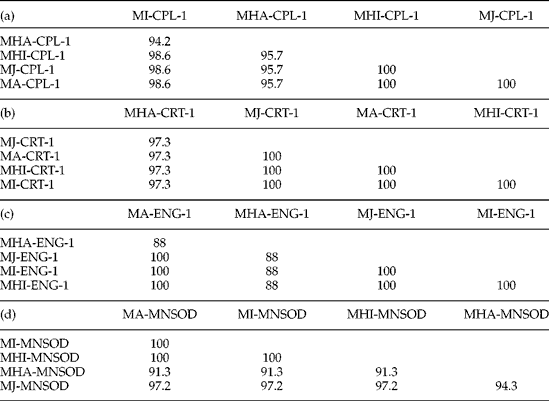
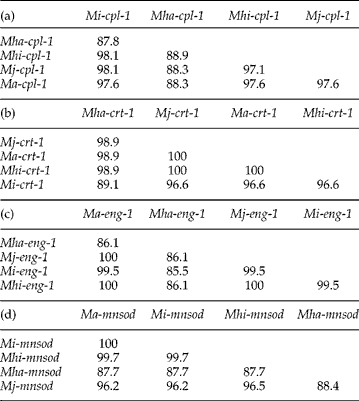
The M. hispanica cpl-1, crt-1, eng-1 and mnsod partial gene sequences and the corresponding fragments from M. arenaria, M. hapla, M. incognita and M. javanica were used for the phylogenetic analyses of the partial gene and predicted amino acid sequences (figs 3 and 4). Both neighbour-joining (NJ) and maximum likelihood algorithms yielded similar topologies for DNA and protein trees, so only NJ trees are shown. Analysing the multiple DNA and protein alignments, significant sequence conservation within the Meloidogyne species was detected, despite the fact that DNA sequences showed slightly more differences (tables 3 and 4). Meloidogyne hispanica displayed amino acid sequence similarity ranging from 88 to 100% when compared with the other species CPL-1, CRT-1, ENG-1 and MNSOD sequences, the lowest values always being obtained for M. hapla. Similar results were obtained for the gene sequence similarity values. The results of the topology of the MHI-CPL-1, MHI-CRT-1, MHI-MNSOD and MHI-ENG-1 trees revealed slight differences to those obtained from DNA sequences, but the overall phylogenetic relations were essentially the same (figs 3 and 4). Indeed, M. hapla appeared as an outgroup and all the other RKN species clustered together (fig. 3). The similarity values of DNA sequences decreased when compared with the values obtained from amino acid sequences.
Neighbour-joining phylogenetic trees constructed from gene sequences of cathepsin L cysteine protease, cpl-1 (a), calreticulin, crt-1 (b), β-1,4-endoglucanase-1, eng-1 (c) and (d) manganese superoxide dismutase, mnsod (d) from Meloidogyne hispanica, M. arenaria, M. hapla, M. incognita and M. javanica. Meloidogyne incognita crt-1 (AF40277.1) sequence was obtained from the GenBank nucleotide database. The percentage of replicate trees in which the associated taxa clustered together in the bootstrap test (500 replicates) is shown next to the branches.
Neighbour-joining phylogenetic trees constructed from amino acid sequences of the predicted cathepsin L cysteine protease, CPL-1 (a), calreticulin, CRT-1 (b), β-1,4-endoglucanase-1, ENG-1 (c) and manganese superoxide dismutase, MNSOD (d) from Meloidogyne hispanica, M. arenaria, M. hapla, M. incognita and M. javanica. The percentage of replicate trees in which the associated taxa clustered together in the bootstrap test (500 replicates) is shown next to the branches.
Pairwise sequence identity between Meloidogyne hispanica (MHI), M. arenaria (MA), M. hapla (MHA), M. incognita (MI) and M. javanica (MJ) predicted amino acid sequences of (a) CPL-1, (b) CRT-1, (c) ENG-1 and (d) MNSOD, using the Poisson correction method included in MEGA5.
Pairwise sequence similarity between Meloidogyne hispanica (Mhi), M. arenaria (Ma), M. hapla (Mha), M. incognita (Mi) and M. javanica (Mj) sequences of (a) cpl-1, (b) crt-1, (c) eng-1 and (d) mnsod, using MEGA5*.
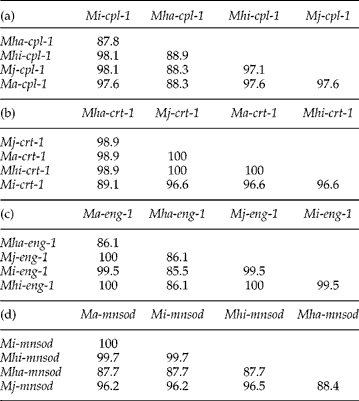
* Analyses were conducted using the maximum likelihood model.
Discussion
Meloidogyne incognita and M. hapla are considered optimal RKN species for genome comparison (Abad et al., Reference Abad, Gouzy, Aury, Castagnone-Sereno, Danchin, Deleury, Perfus-Barbeoch, Anthouard, Artiguenave, Blok, Caillaud, Coutinho, Dasilva, De Luca, Deau, Esquibet, Flutre, Goldstone, Hamamouch, Hwezi, Jaillon, Jubin, Leonetti, Magliano, Maier, Markov, Mcveigh, Pesole, Poulain, Robinson-Rechavi, Sallet, Ségurens, Steinbach, Tytgat, Ugarte, Ghelder, Veronico, Baum, Blaxter, Bleve-Zacheo, Davis, Ewbank, Favery, Grenier, Henrissat, Jones, Laudet, Maule, Quesneville, Rosso, Schiex, Smant, Weissenbach and Wincker2008; Opperman et al., Reference Opperman, Bird, Williamson, Rokhsar, Burke, Cohn, Cromer, Diener, Gajan, Graham, Houfek, Liu, Mitros, Schaff, Schaffer, Scholl, Sosinski, Thomas and Windham2008) and their genome information was instrumental for the successful isolation of four M. hispanica genes. These were amplified using primers designed to the most conserved regions of the sequences of proteins potentially involved in the parasitism of M. incognita and M. hapla. The partial sequences of the four genes, encoding secreted proteins potentially involved in the early events of nematode infection and during nematode development, were obtained and their differential expression in eggs, J2 and adult females analysed. The expression of the cpl-1 gene occurred equally in eggs, J2 and females of M. hispanica; however, Shingles et al. (Reference Shingles, Lilley, Atkinson and Urwin2007) reported that in M. incognita the expression of this gene was slightly lower in mature females. The CPL-1 enzyme, identified in secretions of M. incognita, belongs to a family of proteins that affect a broad range of biological processes, including nutrition, digestion and tissue penetration, and may influence the host–parasite relationship (Neveu et al., Reference Neveu, Abad and Castagnone-Sereno2003; Ultaigh et al., Reference Ultaigh, Carolan, Britton, Murray and Ryan2009). In plant-parasitic nematodes this enzyme is specifically expressed in the intestinal cells and is associated with food digestion and protein degradation (Hassan et al., Reference Hassan, Behm and Mathesius2010; Haegeman et al., Reference Haegeman, Mantelin, Jones and Gheysen2012). Urwin et al. (Reference Urwin, Atkinson, Waller and McPherson1995) showed that transgenic expression of a cysteine proteinase inhibitor in plant roots confers resistance to G. pallida by causing detrimental effects on the growth and development of the nematode, with reduction in female size to levels that compromise fecundity.
The expression of the calreticulin gene, in all the developmental stages of M. hispanica, is consistent with that of other RKN species; nevertheless, the stronger band intensity of Mhi-crt-1 in females suggests that this gene plays an important role in the later events of the infection. CRT-1, identified in M. hapla and H. glycines (Ithal et al., Reference Ithal, Recknor, Nettleton, Maier, Baum and Mitchum2007; Opperman et al., Reference Opperman, Bird, Williamson, Rokhsar, Burke, Cohn, Cromer, Diener, Gajan, Graham, Houfek, Liu, Mitros, Schaff, Schaffer, Scholl, Sosinski, Thomas and Windham2008), is synthesized in the subventral oesophageal glands of pre-parasitic J2 and in the dorsal oesophageal gland of the parasitic stages. During feeding cell induction and maintenance, this protein accumulates along the wall of the giant cells and might play an important role in the suppression of plant basal defences and in targeting plant signalling pathways (Jaubert et al., Reference Jaubert, Laffaire, Abad and Rosso2002, Reference Jaubert, Milac, Petrescu, Almeida-Engler, Abad and Rosso2005; Hassan et al., Reference Hassan, Behm and Mathesius2010; Haegeman et al., Reference Haegeman, Mantelin, Jones and Gheysen2012; Jaouannet et al., Reference Jaouannet, Perfus-Barbeoch, Deleury, Magliano, Engler, Vieira, Danchin, Da Rocha, Coquillard, Abad and Rosso2012, Reference Jaouannet, Magliano, Arguel, Gourgues, Evangelist, Abad and Rosso2013). Furthermore, the knockdown of the M. incognita crt gene by RNA interference (RNAi) affected the infection process (Jaouannet et al., Reference Jaouannet, Magliano, Arguel, Gourgues, Evangelist, Abad and Rosso2013).
β-1,4-Endoglucanases, secreted into the apoplast during nematode intra- or intercellular migration (Wang et al., Reference Wang, Meyers, Yan, Baum, Smant, Hussey and Davis1999), interact with specific cytoplasmic or nucleus-targeted proteins (Hewezi & Baum, Reference Hewezi and Baum2013). The hydrolysis of cellulose by RKN is catalysed through β-1,4-endoglucanase (Mitreva-Dautova et al., Reference Mitreva-Dautova, Roze, Overmars, de Graaff, Schots, Helder, Goverse, Bakker and Smant2006). The gene eng-1 was transcribed in the migratory J2, males and adult females of M. incognita inside the roots (Rosso et al., Reference Rosso, Favery, Piotte, Arthaud, Boer, Hussey, Bakker, Baum and Abad1999); however, our data demonstrate that in M. hispanica, this gene was transcribed only in eggs and J2 but not in adult females, suggesting that for M. hispanica this gene might only have a function in the early events of infection. This gene was also shown to be highly expressed in J2 and vermiform adults of Rotylenchulus reniformis, with a strong decline of expression in sedentary females (Wubben et al., Reference Wubben, Ganji and Callahan2010).
The MNSOD enzyme has previously been identified and characterized in M. incognita J2 and found to be localized in the intestine, which suggests a putative function as a detoxification enzyme. Plants produce reactive oxygen species (ROS) in response to nematode penetration; but J2 seem to react quickly to the oxidative stress and metabolize these compounds. This enzyme could play an important role in the establishment and maintenance of the nematode inside the host (Rosso, Reference Rosso2009). Nevertheless, in the present study the Mhi-mnsod gene was only expressed in eggs, which implies another function for this gene during the infection process and life cycle of this RKN.
The RT-PCR assays confirmed the expression of Mhi-cpl-1, Mhi-crt-1, Mhi-eng-1 and Mhi-mnsod genes in the different developmental stages, revealing differences in the expression of these genes when compared with other RKN species. Therefore, these genes can be involved in multiple important functions during parasitism of RKN.
The multiple alignments, obtained for cpl-1, crt-1, eng-1 and mnsod parasitism genes and the respective predicted amino acid sequences, confirmed the close phylogenetic relationship among the Meloidogyne species analysed, with M. hapla as an outgroup. A high level of identity and similarity values among DNA and protein sequences was also observed. The presence of silent mutations on DNA sequence alignments was scrutinized and these mutations were responsible for the discrete differences between DNA and protein tree topologies.
This paper reports for the first time the identification of cpl-1, crt-1, eng-1 and mnsod putative parasitism genes from M. hispanica. In comparison to the other RKN species, two of the genes, Mhi-eng-1 and Mhi-mnsod, showed transcription in different nematode developmental stages, indicating that these genes might play different roles in the life-cycle processes of M. hispanica. Further studies are needed to understand their biological functions in M. hispanica, which is considered a difficult-to-control species of emerging importance for economically valuable crops.
Financial support
This research was supported by Fundo Europeu de Desenvolvimento Regional (FEDER) funds through the ‘Programa Operacional Factores de Competitividade–COMPETE’ and by National funds through Fundação para a Ciência e Tecnologia (FCT) under the project: FCOMP-01-0124-FEDER-008722 (Ref. PTDC/AGR-AAM/103873/2008 – ‘Molecular analysis of secretions of the root-knot nematode Meloidogyne hispanica’). I.T. acknowledges a fellowship from FCT (reference SFRH/BPD/75 296/2010, funded by Programa Operacional Potencial Humano (POPH)-Quadro de Referência Estratégica Nacional (QREN)–Tipology 4.1 – Advance Formation; European Social Fund; and Ministério da Educação e Ciência (MEC) National Funds). Also PEst-C/SAU/LA0001/2013-2014 financed by FEDER–COMPETE and by FCT. C.M. was supported by a FCT–MEC Grant (SFRH/BPD/85 736/2012, funded by POPH–QREN–Tipology 4.1 – Advance Formation and European Social Fund).
Conflict of interest
None.