




No CrossRef data available.
Article contents
A Comparative Study on Virology, Epidemiology, and Clinical Features of SARS and COVID-19
Published online by Cambridge University Press: 31 August 2021
Abstract
In December 2019, an outbreak of an unknown cause of pneumonia (later named coronavirus disease 2019 [COVID-19]) occurred in Wuhan, China. This was found to be attributed to a novel coronavirus of zoonotic origin, severe acute respiratory syndrome coronavirus 2 (SARS-CoV-2; previously named 2019 novel coronavirus or 2019-nCoV). The SARS-CoV-2, a new type of highly pathogenic human coronavirus related to severe acute respiratory syndrome coronavirus (SARS-CoV), spread rapidly worldwide and caused 246,303,023 confirmed infections, including 4,994,160 deaths, by October 31, 2021. SARS-CoV-2 and SARS-CoV vary in their specific characteristics, regarding epidemics and pathogenesis. This article focuses on the comparison of the virology, epidemiology, and clinical features of SARS-CoV and SARS-CoV-2 to reveal their common and distinct properties, to provide an up-to-date resource for the development of advanced systems and strategies to monitor and control future epidemics of highly pathogenic human coronaviruses.
Information
- Type
- Commentary
- Information
- Copyright
- © The Author(s), 2021. Published by Cambridge University Press on behalf of Society for Disaster Medicine and Public Health, Inc
References
World Health Organization. Weekly operational update on COVID-19 - 3 November 2021. https://www.who.int/publications/m/item/weekly-operational-update-on-covid-19---3-november-2021. Published November 3, 2021. Accessed November 8, 2021.Google Scholar
Hui, DS, Menish, ZA, Zumla, A . Severe acute respiratory syndrome vs. the Middle East respiratory syndrome. Curr Opin Pulm Med. 2014;20:233-241.CrossRefGoogle ScholarPubMed
Xu, X, Chen, P, Wang, J, et al. Evolution of the novel coronavirus from the ongoing Wuhan outbreak and modeling of its spike protein for risk of human transmission. Sci China Life Sci. 2020;63:457-460.Google ScholarPubMed
Zhou, P, Yang, X, Wang, X, et al. A pneumonia outbreak associated with a new coronavirus of probable bat origin. Nature. 2020;579:270-273.CrossRefGoogle ScholarPubMed
Lu, R, Zhao, X, Li, J, et al. Genomic characterisation and epidemiology of 2019 novel coronavirus: implications for virus origins and receptor binding. Lancet. 2020;395:565-574.Google ScholarPubMed
Perlman, S. Another decade, another coronavirus. N Engl J Med. 2020;382:760-762.Google ScholarPubMed
Li, Z, Wu, M, Yao, J, et al. Caution on kidney dysfunctions of COVID-19 patients. medRxiv. 2020. doi: 10.1101/2020.02.08.20021212
Google Scholar
Xu, Z, Shi, L, Wang, Y, et al. Pathological findings of COVID-19 associated with acute respiratory distress syndrome. Lancet Respir Med. 2020;8:420-422.Google ScholarPubMed
Gong, J, Dong, H, Xia, SQ, et al. Correlation analysis between disease severity and inflammation-related parameters in patients with COVID-19 pneumonia. medRxiv. 2020. doi: 10.1101/2020.02.25.20025643
Google Scholar
US Food & Drug Administration. FDA approves tisagenlecleucel for B-cell ALL and tocilizumab for cytokine release syndrome. https://www.fda.gov/drugs/resources-information-approved-drugs/fda-approves-tisagenlecleucel-b-cell-all-and-tocilizumab-cytokine-release-syndrome. Published September 7, 2017. Accessed November 10, 2020.Google Scholar
National Health Commission of the People’s Republic of China. Notice on the issuance of the diagnosis and treatment of new coronavirus pneumonia (trial version 8). http://www.nhc.gov.cn/yzygj/s7653p/202008/0a7bdf12bd4b46e5bd28ca7f9a7f5e5a.shtml. Published August 19, 2020. Accessed November 10, 2020.Google Scholar
World Health Organization. Summary of probable SARS cases with onset of illness from 1 November 2002 to 31 July 2003. https://www.who.int/csr/sars/country/table2004_04_21/en/. Published April 21, 2004. Accessed November 10, 2020.Google Scholar
Hui, DSC, Zumla, A. Severe acute respiratory syndrome: historical, epidemiologic, and clinical features. Infect Dis Clin North Am. 2019;33:869-889.CrossRefGoogle ScholarPubMed
Huang, C, Wang, Y, Li, X, et al. Clinical features of patients infected with 2019 novel coronavirus in Wuhan, China. Lancet. 2020;395:497-506.CrossRefGoogle ScholarPubMed
Chan, JF, Yuan, S, Kok, KH, et al. A familial cluster of pneumonia associated with the 2019 novel coronavirus indicating person-to-person transmission: a study of a family cluster. Lancet. 2020;395:514-523.Google ScholarPubMed
Wölfel, R, Corman, VM, Guggemos, W, et al. Virological assessment of hospitalized patients with COVID-2019. Nature. 2020;581:465-469.CrossRefGoogle ScholarPubMed
Forster, P, Forster, F, Renfrew, C, et al. Phylogenetic network analysis of SARS-CoV-2 genomes. Proc Natl Acad Sci U S A. 2020;117:9241-9243.Google ScholarPubMed
Wu, JT, Leung, K, Leung, GM. Nowcasting and forecasting the potential domestic and international spread of the 2019-nCoV outbreak originating in Wuhan, China: a modelling study. Lancet. 2020;395:689-697.CrossRefGoogle Scholar
National Health Commission of the People’s Republic of China. The latest situation of the new coronavirus pneumonia epidemic situation as of 24:00 on November 7th. http://www.nhc.gov.cn/xcs/yqtb/202111/f6f5a350c7cd4c93a234efbc6ff31ecd.shtml. Published November 8, 2021. Accessed November 9, 2021.Google Scholar
World Health Organization. Coronavirus disease (COVID-2019) situation reports-56. https://www.who.int/docs/default-source/coronaviruse/situation-reports/20200316-sitrep-56-covid-19.pdf?sfvrsn=9fda7db2_6. Published March 16, 2020. Accessed November 10, 2020.Google Scholar
National Health Commission of the People’s Republic of China. The latest situation of the new coronavirus pneumonia epidemic situation as of 24:00 on March 4th. http://www.nhc.gov.cn/xcs/yqtb/202003/6e02433f7786402d8ea162fb5b80b5a0.shtml. Published March 4, 2020. Accessed November 10, 2020.Google Scholar
Health Commission of Heilongjiang Province. Six special data of Suifenhe Port in Heilongjiang province. http://yiqing.ljjk.org.cn/index/pcontrol/newsinfo/id/2863.html. Published May 14, 2020. Accessed November 10, 2020.Google Scholar
Hu, Z, Song, C, Xu, C, et al. Clinical characteristics of 24 asymptomatic infections with COVID-19 screened among close contacts in Nanjing, China. Sci China Life Sci. 2020;63:706-711.Google ScholarPubMed
Yeo, C, Kaushal, S, Yeo, D. Enteric involvement of coronaviruses: is faecal-oral transmission of SARS-CoV-2 possible? Lancet Gastroenterol Hepatol. 2020;5:335-337.Google Scholar
Petersen, E, Koopmans, M, Go, U, et al. Comparing SARS-CoV-2 with SARS-CoV and influenza pandemics. Lancet Infect Dis. 2020;20:e238-e244.CrossRefGoogle ScholarPubMed
Li, Q, Guan, X, Wu, P. Early transmission dynamics in Wuhan, China, of novel coronavirus-infected pneumonia. N Engl J Med. 2020;382:1199-1207.CrossRefGoogle ScholarPubMed
Chinese Center for Disease Control and Prevention. The epidemiological characteristics of an outbreak of 2019 novel coronavirus diseases (COVID-19) in China. Chin J Epidemiol. 2020;41(2):145-151.Google Scholar
World Health Organization. Keep health workers safe to keep patients safe: WHO. https://www.who.int/news-room/detail/17-09-2020-keep-health-workers-safe-to-keep-patients-safe-who. Published September 17, 2020. Accessed November 12, 2020.Google Scholar
Chen, J. Pathogenicity and transmissibility of 2019-nCoV-A quick overview and comparison with other emerging viruses. Microbes Infect. 2020;22(2):69-71.CrossRefGoogle ScholarPubMed
Lee, N, Hui, D, Wu, A, et al. A major outbreak of severe acute respiratory syndrome in Hong Kong. N Engl J Med. 2003;348:1986-1994.Google Scholar
Peiris, JS, Yuen, KY, Osterhaus, AD, et al. The Severe Acute Respiratory Syndrome. N Engl J Med. 2003;349:2431-2441.CrossRefGoogle ScholarPubMed
Leung, GM, Hedley, AJ, Ho, L-M, et al. The epidemiology of Severe Acute Respiratory Syndrome in the 2003 Hong Kong Epidemic: an analysis of all 1755 patients. Ann Intern Med. 2004;141:662-673.Google ScholarPubMed
Lipsitch, M, Cohen, T, Cooper, B, et al. Transmission dynamics and control of severe acute respiratory syndrome. Science. 2003;300:1966-1970.Google ScholarPubMed
Riou, J, Althaus, CL. Pattern of early human-to-human transmission of Wuhan 2019 novel coronavirus (2019-nCoV), December 2019 to January 2020. Euro Surveill. 2020;25:2000058.CrossRefGoogle ScholarPubMed
Zhao, S, Lin, Q, Ran, J, et al. Preliminary estimation of the basic reproduction number of novel coronavirus (2019-nCoV) in China, from 2019 to 2020: a data-driven analysis in the early phase of the outbreak. Int J Infect Dis. 2020;92:214-217.Google ScholarPubMed
van den Driessche, P. Reproduction numbers of infectious disease models. Infect Dis Model. 2017;2:288-303.Google ScholarPubMed
Wang, D, Hu, B, Hu, C, et al. Clinical characteristics of 138 hospitalized patients with 2019 novel coronavirus–infected pneumonia in Wuhan, China. JAMA. 2020;323:1061-1069.Google ScholarPubMed
Guan, W, Ni, Z, Hu, Y, et al. Clinical characteristics of coronavirus disease 2019 in China. N Engl J Med. 2020;382:1708-1720.Google ScholarPubMed
World Health Organization. Coronavirus disease (COVID-2019) situation reports-89. https://www.who.int/docs/default-source/coronaviruse/situation-reports/20200418-sitrep-89-covid-19.pdf?sfvrsn=3643dd38_2. Published April 18, 2020. Accessed April 21, 2020.Google Scholar
Pan, X, Chen, D, Xia, Y, et al. Asymptomatic cases in a family cluster with SARS-CoV-2 infection. Lancet Infect Dis. 2020;20:410-411.CrossRefGoogle Scholar
Qiu, C, Cui, C, Hautefort, C, et al. Olfactory and gustatory dysfunction as an early identifier of COVID-19 in adults and children: an international multicenter study. Otolaryngol Head Neck Surg. 2020;163(4):714-721.CrossRefGoogle ScholarPubMed
Qaseem, A, Yost, J, Etxeandia-Ikobaltzeta, I, et al. Should clinicians use chloroquine or hydroxychloroquine alone or in combination with azithromycin for the prophylaxis or treatment of COVID-19? Living practice points from the American College of Physicians (Version 1). Ann Intern Med. 2020;173:137-142.Google ScholarPubMed
Holshue, ML, DeBolt, C, Lindquist, S, et al. First case of 2019 novel coronavirus in the United States. N Engl J Med. 2020;382:929-936.Google ScholarPubMed
Grein, J, Ohmagari, N, Shin, D, et al. Compassionate use of remdesivir for patients with severe Covid-19. N Engl J Med. 2020;382:2327-2336.CrossRefGoogle ScholarPubMed
WHO Solidarity Trial Consortium, Pan, H, Peto, R, et al. Repurposed Antiviral Drugs for Covid-19-Interim WHO Solidarity Trial Results. N Engl J Med. 2021;384:497-511.Google Scholar
Zhao, R, Wang, H, Wang, X, et al. Steroid therapy and the risk of osteonecrosis in SARS patients: a dose-response meta-analysis. Osteoporos Int. 2017;28:1027-1034.Google ScholarPubMed
National Administration of Traditional Chinese Medicine. Notice on recommending the use of “Qing-Fei-Pai-Du Decoction” in the treatment of pneumonitis infected by new coronavirus with integrated Chinese and Western medicine. http://yzs.satcm.gov.cn/zhengcewenjian/2020-02-07/12876.html. Published February 7, 2020. Accessed November 12, 2020.Google Scholar
Li, R, Hou, Y, Huang, J, et al. Lianhuaqingwen exerts anti-viral and anti-inflammatory activity against novel coronavirus (SARS-CoV-2). Pharmacol Res. 2020;156:104761.Google Scholar
Wang, Z, Chen, X, Lu, Y, et al. Clinical characteristics and therapeutic procedure for four cases with 2019 novel coronavirus pneumonia receiving combined Chinese and Western medicine treatment. Biosci Trends. 2020;14:64-68.CrossRefGoogle ScholarPubMed
Leng, Z, Zhu, R, Hou, W, et al. Transplantation of ACE2- mesenchymal stem cells improves the outcome of patients with COVID-19 pneumonia. Aging Dis. 2020;11:216-228.CrossRefGoogle ScholarPubMed
Li, L, Liang, X, Jiang, Q, et al. An update on the epidemiology characteristics of novel coronavirus pneumonia (COVID-19). Chin J Epidemiol. 2020;41(2):139-144.Google Scholar
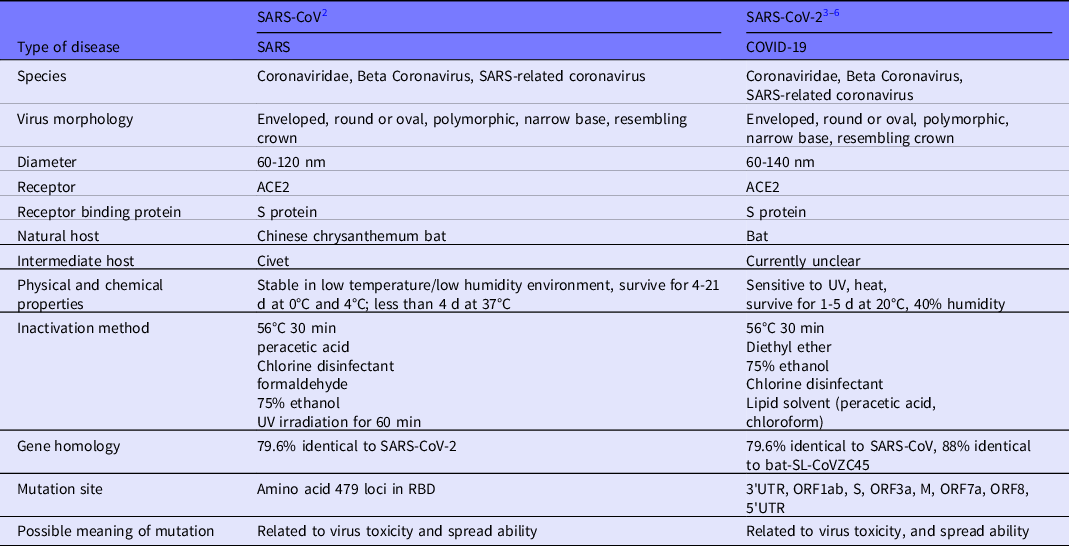
Table 1. Comparison of virological information between SARS-CoV and SARS-CoV-2
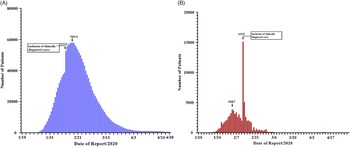
Figure 1. Trends in existing and daily new confirmed cases of COVID-19 in Chinese mainland. A, Existing confirmed cases of COVID-19 in Chinese mainland. B, Daily new confirmed COVID-19 cases in Chinese mainland. (Data source: National Health Commission of the People’s Republic of China).
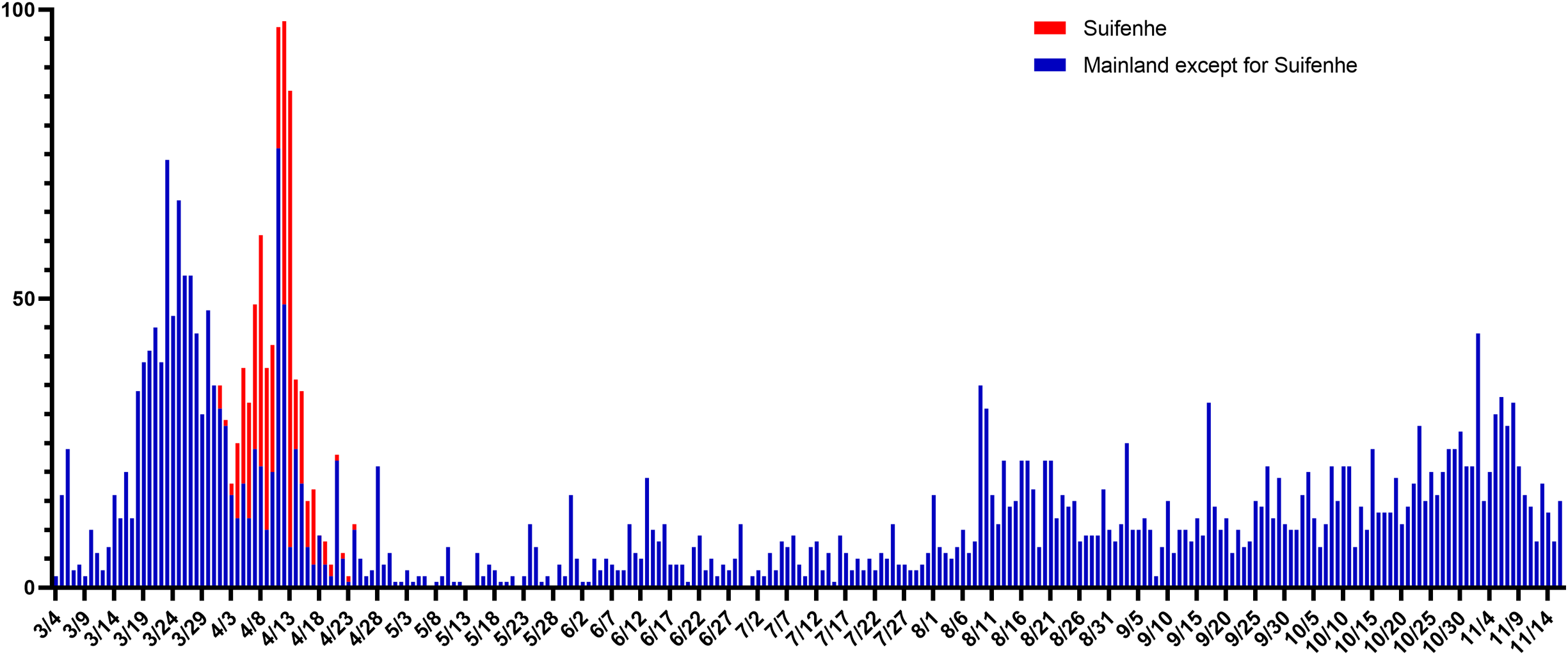
Figure 2. The daily new confirmed cases of imported. Blue: the imported cases in Chinese mainland except for Suifenhe, red: the imported cases of Suifenhe.
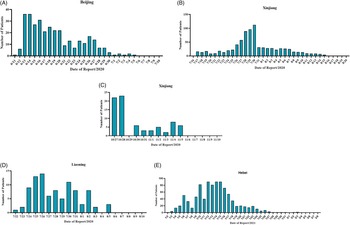
Figure 3. Small outbreaks in Chinese mainland. A, Beijing. B,C Xinjiang. D, Liaoning. E, Hebei.
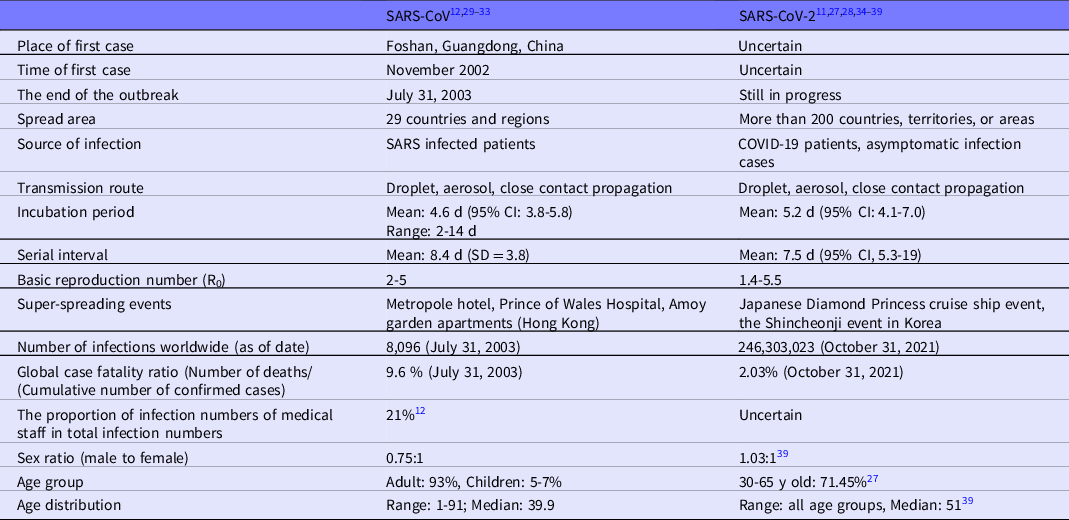
Table 2. Comparison of epidemiological characteristics between SARS-CoV and SARS-CoV-2
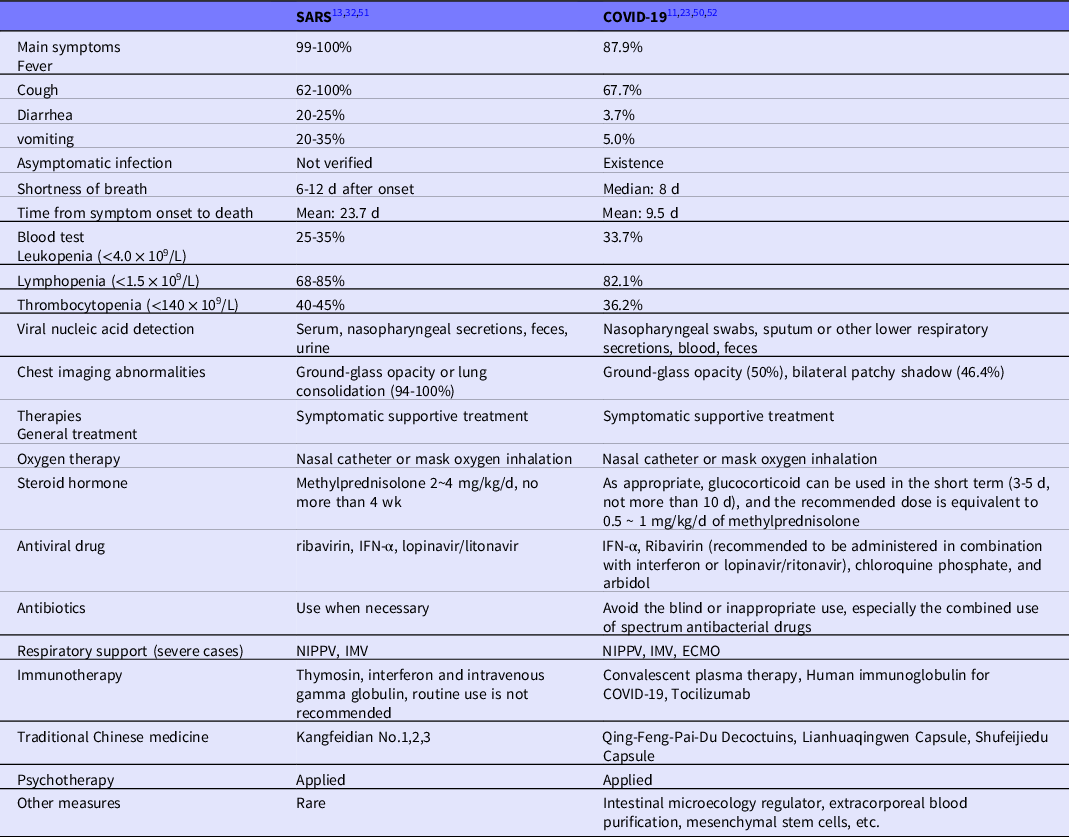
Table 3. Comparison of clinical features, diagnosis and treatment between SARS and COVID-19
 You have
Access
- 1
- Cited by
In 2002, a severe acute respiratory syndrome (SARS) caused by the highly pathogenic severe acute respiratory syndrome coronavirus (SARS-CoV) occurred in Guangdong, China. Soon SARS spread to other countries, posing a serious threat to human health and global economic development. At the end of December 2019, coronavirus disease 2019 (COVID-19) broke out in Wuhan, Hubei, China. COVID-19 cases are caused by infection with a novel coronavirus known as 2019-nCoV, or SARS-CoV-2. COVID-19 rapidly spread throughout Hubei Province and then to other parts of the world. At the time of writing this article, COVID-19 spread continues to be an on-going problem; once again, human health is facing a major threat. This article analyzes the shared and distinct characteristics of SARS-CoV and SARS-CoV-2 in terms of virology, epidemiology, and clinical treatment; with the aim to help researchers formulate new ideas for the prevention and control of the epidemic.
Virology
Coronaviruses are a family of enveloped, positive-strand RNA viruses named for the corona-like fibroids on the surface of their virus particles. Coronaviruses are divided into 4 major categories: α, β, γ, and δ, which are generally spherical or oval. SARS-CoV-2 is classified as a novel β-coronavirus belonging to the sarbecovirus subgenus of the Coronaviridae family. The spike protein (S protein) on the outer envelope of a virus is the main part of the virus used to bind to a host, and it determines the type of host that the virus infects. Among the 7 coronaviruses identified to be infectious in humans, SARS-CoV, SARS-CoV-2, and Middle East respiratory syndrome coronavirus (MERS-CoV) are highly pathogenic and pose considerable threats to public health safety. SARS-CoV-2, first appearing in Wuhan, has since widely spread across the globe, causing 4,994,160 deaths worldwide as of October 31, 2021. 1 Table 1 Reference Hui, Menish and Zumla2–Reference Perlman6 compares the virological information of SARS-CoV and SARS-CoV-2 from the aspects of physicochemical properties, host, and receptor proteins and analyzes their similarities and differences to provide a reference for disease prevention and control.
Comparison of virological information between SARS-CoV and SARS-CoV-2
SARS-CoV and SARS-CoV-2 are both severe acute respiratory syndrome-related coronaviruses. After infecting the human body, they can both cause respiratory diseases of various degrees. SARS-CoV and SARS-CoV-2 show extremely high similarity in genomic sequence, virus morphology, physicochemical characteristics, and possess similarity in methods of their inactivation. The whole genome sequence of the SARS-CoV-2 virus strain revealed that it is 79.6% identical to SARS-CoV BJ01 (GenBank accession No. AY278488.2), Reference Zhou, Yang and Wang4 88% identical to the bat SARS-like coronavirus (bat-SL-CoVZC45), Reference Lu, Zhao and Li5 and 96% consistent with a bat-borne coronavirus. Reference Zhou, Yang and Wang4 Thus, researchers speculate that bats may be the original host of this virus. Reference Perlman6
The mechanisms and pathways of coronavirus infection in humans are closely related to the S protein characteristics of the virus. Lu et al. Reference Lu, Zhao and Li5 confirmed that the structure of the SARS-CoV-2 S protein is very similar to that of human SARS-CoV. Xu et al. Reference Xu, Chen and Wang3 found that the S protein of SARS-CoV-2 has a structure that interacts with angiotensin-converting enzyme 2 (ACE-2) protein. Further research shows that both SARS-CoV and SARS-CoV-2 can bind to cells containing ACE-2 receptors through the S protein on the virus surface. Cells that highly express ACE-2 in the lungs, intestine, heart, and kidneys serve as the main targets of invasion of the SARS-CoV-2. This may explain the reported clinical manifestations of acute respiratory distress syndrome (ARDS), diarrhea, myocarditis, and renal failure Reference Li, Wu and Yao7 in COVID-19 patients.
Cytokine storm syndrome is currently believed to be the pathophysiological basis for COVID-19, which drives the change from mild to severe symptoms and from a single lung injury to dysfunctions in multiple organs. Xu et al. Reference Xu, Shi and Wang8 performed a pathological anatomy study on a patient with COVID-19 and found that there was an increased concentration of highly proinflammatory CCR4+CCR6+ Th17 subpopulations in CD4+ T-cell populations. This indicated that the T cells were over-activated and could partially explain the damage resulting from a severe patient immunological response. Significantly elevated interleukin (IL) -1, IL-6, and tumor necrosis factor-α (TNF-α) levels in severe patients may be related to poor prognosis. Reference Gong, Dong and Xia9 Anti-IL-6 monoclonal antibodies (mAb), tocilizumab, were approved by the United States Food and Drug Administration (FDA) to treat cytokine storm syndrome caused by CAR-T cell therapy. 10 Tocilizumab for the treatment of COVID-19 has since been recorded in the COVID-19 Diagnosis and Treatment Program (Trial Version 8). 11
Epidemiology and Transmission
In November 2002, SARS broke out in Guangdong province, China. According to the World Health Organization (WHO) report, 12 as of July 31, 2003, a total of 29 countries and regions Reference Hui and Zumla13 had reported 8096 diagnosed cases and 774 deaths. The global average case fatality rate was 9.6%. 12 In Chinese mainland, there were 5327 cases and 349 recorded deaths. The source of infection was patients infected with the SARS-CoV virus, which was predominantly spread through close contact, water droplets, and possible airborne transmission. The general public was susceptible to SARS-CoV, and all age groups were affected, although it was more commonly identified in young adults. The SARS-CoV outbreak was worsened through several super-transmission (or super-spreader) incidents, such as those that occurred in Hong Kong at the Metropole hotel, the Prince of Wales Hospital, and Amoy garden apartments, wherein an infected individual transmitted the virus to a disproportionate number of other individuals at each location.
On December 8, 2019, a case of an unknown cause of pneumonia was reported, originating from the south China seafood market in Wuhan, China. Five days later, the patient’s wife, who had never been to the market, was hospitalized with the same symptoms of pneumonia. Reference Huang, Wang and Li14 In the following days, the number of cases unrelated to the south China seafood market increased exponentially over time. This pattern of spread indicated that SARS-CoV-2 has a strong ability to transmit from person to person. Reference Chan, Yuan and Kok15 A study showed that it took between 7 and 10 d from the onset of the viral RNA peak concentration in SARS patients. However, the peak concentration was reached within 5 d in patients with COVID-19, and the peaks were reported to be over 1000-fold higher in RNA concentration. This indicates that SARS-CoV-2 is more infectious than SARS-CoV. Reference Wölfel, Corman and Guggemos16 Indeed, as of October 31, 2021, the WHO 1 reported 246,303,023 confirmed cases of COVID-19, far more than the 8096 cases of SARS. 12 However, based on the SARS treatment experience and the improvement of medical facilities, the fatality rate of COVID-19 (2.03%) 1 is significantly lower than that of SARS (9.6%). 12
Although the first case of COVID-19 was reported in Wuhan in December 2019, the source of the virus is still uncertain. A phylogenetic network analysis of 160 complete human SARS-CoV-2 genomes revealed that there are 3 central variants named A, B, and C. Reference Forster, Forster and Renfrew17 Among them, A was the ancestral type according to the bat outgroup coronavirus, and nearly half of the types were found outside East Asia, mainly in the United States and Australia. The viral genomes of most Chinese cases were type B. The first virus genome that was collected from China had already exhibited distance from the root type, according to the bat coronavirus outgroup rooting. Therefore, before the discovery of the SARS-CoV-2 in Wuhan, it is likely to have spread in a hidden state. Reference Forster, Forster and Renfrew17
A study by Wu et al. Reference Wu, Leung and Leung18 inferred that viral epidemics were already growing exponentially in multiple major cities in China with a lag time behind the Wuhan outbreak of approximately 1-2 wk. It was confirmed that the infections and diseases were caused by the novel coronavirus, SARS-CoV-2. As of November 7, 2021, the National Health Commission of the People’s Republic of China reported 126,710 confirmed cases, of which 97,823 were located in the mainland. 19 According to the data of the National Health Commission of the People’s Republic of China, the growth trends of the number of cases reveal that the peaks of existing and daily new confirmed cases occurred in February 2020 in Chinese mainland. The second peak, shown in Figure 1A, and the extremely high increase, shown in Figure 1B, result from updated diagnostic criteria and the inclusion of the backlog of clinically diagnosed cases. In addition, with the improvement of diagnostic methods and clinical treatment, the number of new cases decreased significantly after February 12, 2020, and the existing number of cases significantly decreased after February 16. Throughout April, numbers of daily new confirmed cases fell to below 100, and single digits on some days. Since April 22, the number of existing cases dropped to 1000. The above data demonstrated that the epidemic situation in Chinese mainland was well under control and continues to be.
Trends in existing and daily new confirmed cases of COVID-19 in Chinese mainland. A, Existing confirmed cases of COVID-19 in Chinese mainland. B, Daily new confirmed COVID-19 cases in Chinese mainland. (Data source: National Health Commission of the People’s Republic of China).
However, on the global scale, the situation is different. According to the WHO report, with the exception of China, numbers of new cases grew rapidly in other countries, and the cumulative number of cases had reached 86,438 by March 16, 20 which surpassed the numbers reported in China at the same time. The world is currently facing a pandemic situation and numbers of infections is still increasing, especially in the United States, India, Brazil, the United Kingdom, Russia, and Turkey.
Since March 4, 2020 21 there has been a continuous stream of reported imported cases added to Chinese mainland. The daily new confirmed imported cases reached peak numbers on April 12, 2020, with 98 cases reported. Among these, 49 were imported from Suifenhe Port. Suifenhe, a border town of 70,000 population in Heilongjiang Province, is an important trade port between China and Russia. A large number of Chinese in Russia entered the country during the epidemic. According to the Health Commission of Heilongjiang Province, the number of imported cases at Suifenhe port has reached 409, accounting for a quarter of all imported cases in China at the time of reporting. 22 The trend of imported COVID-19 from Suifenhe is shown in Figure 2.
The daily new confirmed cases of imported. Blue: the imported cases in Chinese mainland except for Suifenhe, red: the imported cases of Suifenhe.
Although the epidemic in Chinese mainland is largely under control, there have been small outbreaks in some areas, such as Beijing, Xinjiang, Liaoning and Hebei. As China has gained some experience in epidemic control, the outbreak in these areas was quickly brought under control. The outbreaks in these areas are shown in Figure 3.
Small outbreaks in Chinese mainland. A, Beijing. B,C Xinjiang. D, Liaoning. E, Hebei.
Compared with SARS-CoV, SARS-CoV-2 has milder symptoms in most patients, but it is more transmissible. Studies have confirmed that the major source of human transmission is from COVID-19 patients, and asymptomatic infection cases may also provide a source of infection. Reference Hu, Song and Xu23 SARS-CoV-2 is contagious during the incubation period and is highly contagious within 5 d after the onset of symptoms. 11 Currently, the virus is thought to spread mainly through exhaled water droplets and close contact, contact with items or surfaces contaminated by the virus can also cause infection. There is a possibility of aerosol transmission when exposed to high concentrations of aerosol for a long time in a relatively closed environment. 11 Although SARS-CoV-2 has been detected in patient stool and urine, the existence of fecal-oral transmission has not formed the focus of major studies. Reference Yeo, Kaushal and Yeo24 It remains unknown whether contact transmission or aerosol transmission can be caused by fecal and urine contamination.
An essential threshold quantity associated with viral transmissibility is the basic reproduction number, which is usually denoted by R0 (pronounced “R naught”). A research study compared SARS-CoV-2 with SARS-CoV and influenza pandemics; it showed that, in the early months of the SARS outbreak, the R0 was estimated to be 2.0-3.0, and with the control measures, the transmission rate soon dropped to 1.1, with a wide interquartile range (IQR) of 0.4-2.4. Reference Petersen, Koopmans and Go25 For SARS-CoV-2, most studies have estimated the R0 to be 1.4-5.5; Li et al. Reference Li, Guan and Wu26 estimated R0 at 2.2 (95% CI 1.4-3.9); and Wu et al. Reference Wu, Leung and Leung18 estimated 2.7 (2.5-2.9). Therefore, Petersen et al. Reference Petersen, Koopmans and Go25 determined that an average R0 of 2.5 seemed a reasonable estimate.
A super gathering transmission incident occurred aboard the Japanese Diamond Princess cruise ship. As of March 16, 2020, the number of confirmed cases on the cruise ship reached 712. 20 Similar cluster transmission events have also occurred in families, communities, hospitals, and relatively closed environments, such as prisons. Therefore, to prevent the virus from spreading, an important advice was given to cancel organized gatherings and to avoid mass gatherings of people.
According to WHO, there were 8096 cases of SARS infection by December 31, 2003, of which 1706 were health-care workers. 12 Based on an analysis of 72,314 cases of infection in Chinese mainland before February 11, 2020, a study by the Chinese Center for Disease Control and Prevention found that, among 422 medical institutions that provide diagnostic and treatment services for patients with COVID-19, a total of 3019 medical staff were suspected to be infected with SARS-CoV-2 (1716 confirmed cases) and 5 had died (0.3%). 27 According to a news statement released by WHO on September 17, 2020, around 14% of COVID-19 cases reported to WHO were among health workers in the large majority of countries, and in some countries the proportion was as high as 35%. 28 Medical-care workers are the individuals with most direct contact time with patients, so to protect the safety of medical staff is to protect the safety of patients, and the protection of medical staff should be strengthened. Comparative studies of epidemiological characteristics between SARS-CoV and SARS-CoV-2 are listed in Table 2 11,12,27–39 .
Comparison of epidemiological characteristics between SARS-CoV and SARS-CoV-2
Clinical Symptoms, Diagnosis, and Treatment
The majority of COVID-19 cases presented with fever, cough, and fatigue, but shortness of breath was common in severe cases, which is similar to SARS patients. However, COVID-19 cases were also reported to be asymptomatic, which is different from SARS. Reference Pan, Chen and Xia40 Although these cases did not show any symptoms, they could still provide a source for viral transmission, meaning contact tracing of sources could be easily missed. Some COVID-19 patients also showed decreased or loss of their sense of smell and taste. An international multicenter study that included 394 COVID-19 patients from 5 tertiary care hospitals (3 in China, 1 in France, 1 in Germany) Reference Qiu, Cui and Hautefort41 reported that 161 (41%) presented with olfactory and/or gustatory dysfunction. The researchers consider that olfactory and/or gustatory disorders may represent early or isolated symptoms of SARS-CoV-2 infection. It is possible that these phenomena could serve as a diagnostic criterion for patients in the early stages of infection.
There are no specific antiviral drugs for SARS-CoV and SARS-CoV-2. The combined application of ribavirin and corticosteroids has shown good efficacy in the treatment of SARS. Reference Lee, Hui and Wu30 The COVID-19 Diagnosis and Treatment Program (Trial Version 8) issued 4 antiviral drugs available for antiviral treatment: α-interferon, ribavirin, chloroquine phosphate, and Arbidol (umifenovir). And due to known harmful side effects and the current lack of available evidence of benefits in patients with COVID-19, Reference Qaseem, Yost and Etxeandia-Ikobaltzeta42 chloroquine or hydroxychloroquine alone or in combination with azithromycin is not currently recommended.
The New England Journal of Medicine (NEJM) reported that remdesivir has been shown to be effective against SARS-CoV-2 in a case in the United States, Reference Holshue, DeBolt and Lindquist43 and it was considered a potential effective drug for the treatment of COVID-19. A cohort of patients hospitalized for severe COVID-19 who were treated with compassionate-use remdesivir showed clinical improvement observed in 36 of 53 patients (68%). However, a small cohort size and lack of randomized control group meant that it was impossible to draw clear conclusions from these data on the effectiveness of remdesivir. Reference Grein, Ohmagari and Shin44 Additionally, a study coordinated by the WHO indicated that remdesivir appeared to have little or no effect on 28-day mortality or the in-hospital course of COVID-19 among hospitalized patients. Reference Pan and Peto45
Large doses of glucocorticoids are used in SARS treatment but cause many side effects, such as osteonecrosis of the femoral head, hyperglycemia, and others. Reference Zhao, Wang and Wang46 Although the use of glucocorticoids can alleviate ARDS in severe patients with COVID-19, it is recommended to use glucocorticoids for severe or critical cases as appropriate and over short periods of time to avoid side effects. 11
Antibiotics have been used for the experimental treatment of suspected SARS patients and the control of secondary bacterial and fungal infections. The COVID-19 Diagnosis and Treatment Program (Trial Version 8) recommends avoiding the blind or inappropriate use of antibiotics, especially the combined use of spectrum antibacterial drugs. 11
Respiratory support is an effective measure of controlling ARDS. Noninvasive positive pressure artificial ventilation (NIPPV) and invasive mechanical ventilation (IMV) have been used in severe cases of SARS and COVID-19. In addition, extracorporeal membrane oxygenation (ECMO) was recommended to be used in severe and critical cases of COVID-19. 11
Traditional Chinese medicine has also played a certain therapeutic effect during the treatment of COVID-19. “Qing-Fei-Pai-Du Decoctions” was used in COVID-19 patients and received certain effects. 47 Studies also have found that the application of “Lianhuaqingwen Capsule” Reference Li, Hou and Huang48 and “Shufengjiedu Capsule” Reference Wang, Chen and Lu49 in the early stages of viral infection significantly reduced clinical symptoms and hospitalization time. Their effects may be related to the suppression of viral activity, inflammation, and the regulation of immune function.
Recent research has found that high-priority neutralizing antibodies detected in the plasma of COVID-19 patients can effectively kill SARS-CoV-2. Thus, convalescent plasma therapy has emerged as a new treatment method. Clinical trials have shown the effectiveness of convalescent plasma therapy in the treatment of over 10 critical cases, and it has since been recommended for the treatment of rapid progression cases and severe and critical cases. 11
As cytokine storm syndrome is one of the most worrying features of COVID-19, blood purification therapy is recommended for the early-stage treatment of severe and critical cases, to clear inflammatory factors and block the cytokine storm. For this purpose, tocilizumab is recommended for severe cases, particularly those with elevated IL-6 levels. 11
In addition, due to the regulatory effect of gut microbes on the body’s immune function, intestinal microecological regulators have also been applied in the treatment of COVID-19 to maintain the intestinal microecological balance. Recent studies Reference Leng, Zhu and Hou50 also found that the intravenous transplantation of mesenchymal stem cells was safe and effective for treatment in patients with COVID-19 pneumonia, especially for patients in critically severe conditions, which may be related to regulating the inflammatory response and promoting tissue repair and regeneration. A comparative study of clinical features, diagnosis, and treatment between SARS and COVID-19 is listed in Table 3. 11,Reference Hui and Zumla13,Reference Hu, Song and Xu23,Reference Leung, Hedley and Ho32,Reference Leng, Zhu and Hou50–Reference Li, Liang and Jiang52
Comparison of clinical features, diagnosis and treatment between SARS and COVID-19
Conclusion
At present, COVID-19 is still rapidly spreading worldwide. It is encouraging that vaccines, animal models, therapeutic drugs, and prevention and control methods have been continuously progressing and have achieved promising results. However, the epidemic situation is still severe all over the world. Moreover, the emergence of virus variants has made the epidemic situation more complicated. As some experience has been gained in the prevention, control and treatment strategies of COVID-19, and widespread vaccination has helped prevent occurrence, we believe that in the near-future, with concerted global efforts, human beings will eventually defeat the COVID-19 pandemic.
Author contributions
Drs. Zhao and Lu contributed equally to this work.
Funding statement
Supported by National Key Research and Development Project of China (No. 2018YFC1504402), Key Projects of National Natural Science Foundation of China (No. 71533008).