




No CrossRef data available.
Article contents
Potential risk factors for bovine Neospora caninum infection in Germany are not under the control of the farmers
Published online by Cambridge University Press: 23 August 2004
Abstract
In the German state of Rhineland-Palatinate, herds were identified that were likely to have a Neospora caninum sero-prevalence [ges ]10% by using a bulk milk ELISA. Individual herd data were obtained by a questionnaire. Univariate logistic regression showed that bulk milk positive farms had a significantly higher chance to report an increased abortion rate than negative farms (PWald<0·1). The chance to have a bulk milk positive herd increased with the minimum number of years a farm had reported an increased abortion rate (PWald<0·1). Questionnaire data, population and dog density as well as climatic data specific for the farm localization were used to identify potential risk factors for a herd to have acquired N. caninum infections. Within an optimized multiple logistic regression model ‘Number of farm dogs’, ‘Herd size’, and factors related to the municipality the farm was localized, i.e. ‘Mean temperature in July’, and ‘Dog density’ were significant risk factors (PWald<0·1). The present study underlines the role farm dogs have in the epidemiology of neosporosis. In addition, it suggests that the risk a herd has to acquire N. caninum infections is also associated with factors related to the farm location, i.e. factors that are largely out of the control of farmers.
Information
- Type
- Research Article
- Information
- Copyright
- © 2004 Cambridge University Press
INTRODUCTION
Neospora caninum is regarded as a major cause of bovine abortion world-wide (Dubey & Lindsay, 1996). Two characteristic patterns of N. caninum-associated bovine abortion occur: (i) abortion storms (epidemic abortion) during which high proportions of the dams at risk abort within a few weeks, and (ii) longer lasting abortion problems where abortions occur dispersed over longer periods of time, i.e. several months or years (endemic abortions). N. caninum uses the dog as a definitive host (McAllister et al. 1998). Oocysts shed by dogs are regarded as a potential source for post-natal infection of cattle (McAllister et al. 2000; Jenkins et al. 2000; Dijkstra et al. 2002a,b; Schares et al. 2002a). However, vertical transmission from infected dams to their offspring appears to be the major natural route of infection in cattle (Anderson et al. 1997). The majority of congenitally infected fetuses survive and persistently infected calves are born that develop normally (Paré et al. 1998). Since the infection of most of these animals remains undetected, persistently infected cattle are used for breeding, although it has been shown that congenitally infected dams have an up to 7·4 times increased abortion risk compared to non-infected dams (Thurmond & Hietala, 1997; Wouda, Moen & Schukken, 1998). Endemic abortions occur in herds where the N. caninum infection is predominantly transmitted vertically through successive generations (Schares et al. 2002a). In herds with epidemic abortion, point source exposure to N. caninum, e.g. through oocyst-contaminated fodder or drinking water, is regarded as the most likely cause of infection (McAllister et al. 2000; Jenkins et al. 2000; Dijkstra et al. 2002b; Schares et al. 2002a).
A number of working groups identified the presence of dogs on a farm as a major risk factor for bovine N. caninum infection (Paré et al. 1998; Ould-Amrouche et al. 1999; Mainar-Jaime et al. 1999) and N. caninum-associated abortion (Bartels, Wouda & Schukken, 1999). Information on other farm-related risk factors associated with N. caninum infection and N. caninum-associated abortion is sparse and yet most of the factors identified are not confirmed by further studies. Among these putative risk factors, the presence or the number of animals in addition to cattle and dogs on the farm (i.e. poultry, rabbits and/or dogs) were reported (Bartels et al. 1999; Ould-Amrouche et al. 1999). A French study identified the presence of cats as preventive for N. caninum infection in cattle (Ould-Amrouche et al. 1999). Further risk factors for herds with N. caninum-associated abortion are related to farm management (i.e. to feeding practice, contact with cattle from other herds or prevalence of retained afterbirths) (Bartels et al. 1999).
We recently showed in a publication on the regional distribution of herds positive in the N. caninum bulk milk ELISA in Rhineland Palatinate, Germany, that on district and city level the variables ‘Dog density’ and the climate parameters, in particular ‘Mean temperature in July’ can be used to model the prevalence of bulk milk positive herds. They thus might be important risk factors (Schares et al. 2003). However, it is questionable whether the effects that these putative risk factors have on a district and city level are also important on the individual herd level.
To answer this question, we decided to study potential risk factors for bovine N. caninum infection on the individual herd level. To this end, we utilized results of a bulk milk ELISA examination performed in dairy herds located in Rhineland-Palatinate, Germany (Schares et al. 2003). In parallel, a questionnaire was distributed to obtain data on the individual herds. Together with data that characterized the dog density and selected climate parameters in the municipality where the individual farm is located, questionnaire-based data were used to determine putative risk factors for N. caninum infections of individual cattle herds. In addition it was examined whether farmers reporting on an increased proportion of abortion per year is associated with a positive bulk-milk result.
MATERIALS AND METHODS
Bulk milk sample examination for antibodies against N. caninum
For the present study the same bulk milk sample results were used that had been analysed in a previous study to assess the regional distribution of N. caninum infection in cattle herds (Schares et al. 2003). Briefly, bulk milk sample examinations were conducted for those herds that delivered milk to dairies located in Rhineland-Palatinate between January and June 2000. The number of herds examined (n=3260) represented 90% of all dairy herds located in the study area in 2000. Based on the evaluation of the bulk milk ELISA, a cut-off was used for the specific identification of those herds likely to have a seroprevalence of [ges ]10% (Schares et al. 2003).
Questionnaire
During the time of collection and examination of bulk milk samples, the farmers who participate in a milk quality scheme of a farmers organization (Landeskontrollverband Rheinland-Pfalz e.V.) were interviewed using a questionnaire (Table 1). Approximately 67% (2421/3604) of all dairy herds in Rhineland-Palatinate participated in this milk quality scheme. The interviews were conducted by the staff of the farmers' organization. During the interviews, farmers were informed that the study aimed at the identification of potential risk factors for bovine abortion. Neither the interviewers nor the farmers had information on the results of the bulk milk examination. In total, 182 interviewers were instructed to conduct the interview. Of these, 147 sent in completed questionnaire forms signed by the farmers. Fifty-five farmers submitted their questionnaire on their own. Approximately 90% (1212/1353) of the questionnaires came from farms for which bulk milk ELISA results were available.

Data on regional characteristics
Information on dog density was based on the numbers of dogs for which tax is paid in the municipalities of Rhineland-Palatinate. Data on the population density of individual municipalities were obtained from official sources (Statistisches Landesamt Rheinland-Pfalz, Bad Ems).
Mean temperature in July and total yearly precipitation were interpolated for each of the 2306 municipalities of Rhineland-Palatinate by using long-term data of 32 meteorological observatories collected over a period of 30 years (Müller-Westermeier, 1990) and geographical information on the altitude above sea level (which were available with a cell size of 200 m as grid). Employing the computer program ArcGIS 8.3 (ESRI; Redlands, CA, USA) and statistic software S-Plus (Mathsoft Inc.; Seattle, WA, USA) climatic data were modelled using a standard method of the Deutscher Wetterdienst, i.e. the German weather forecasting service (Müller-Westermeier, 1995). For each municipality, the mean of each climate parameter was calculated by using ArcGIS 8.3.
Statistical analysis
An explorative and retrospective data analysis was done to find relationships between the bulk milk results and factors related to the location of the individual farms (i.e. human population density, dog density, mean temperature in July, yearly precipitation in the municipality where the individual farm is located) as well as factors related to other farm-specific characteristics (i.e. questionnaire data, see Table 1).
Data were analysed by univariate and multiple logistic regression (LR) using the statistic software S-Plus (Mathsoft Inc.; Seattle, USA). No categorization was performed for continuous data assuming log-linear effects of these factors.
To find out whether the input variables were independent from each other in the data set, a principle component analysis (assuming a maximum number of 6 factors) was done prior to multiple LR using the statistic software S-Plus. Factor loadings of [ges ]0·5 were regarded as an indication of a dependence between input variables. If factor analysis indicated a dependence, interaction terms for the respective input variables were introduced to the multiple LR model.
Initially all input variables were introduced into the multiple LR model. To determine the final model, a backward model building was conducted based on stepwise model selection by utilizing the exact Aikaike information criterion (AIC) (Venables & Ripley, 1999).
RESULTS
Herd characteristics and farm location
Herds for which a questionnaire had been completed had sizes that ranged between 1 and 198 heifers and cows (mean herd size+/−standard deviation: 48+/−27; median herd size: 43). The predominant breeds were Holstein-Friesian and Red-Holstein (Table 2). One third of the herds were stud herds. All dairy herds were kept indoors during winter. Fifty-six % of the herds (674/1207) were pastured during summer, but 44% (533/1207) of the herds were kept in stables during summer, either with or without having occasional access to a pasture close to the stable. Tethered housing and pen barn housing of cows were equally distributed among the herds. In 1999, 53% (546/1036) of the herds had no replacement from outside, but 11% (115/1036) of the herds had bought more than 30% of the replacement heifers from outside. The majority of farmers (77%; 794/1036) had introduced less than 10% of the replacement heifers from outside.
Approximately, 71% (851/1190) of the farms had at least 1 dog, 17% (199/1190) had more than 1 dog. About 90% (1062/1190) of the farms had at least 1 cat, about 41% (485/1190) had more than 1 cat. Twenty-one % (246/1190) of the farms also had pigs.

Dog density in those municipalities where the herds were located ranged from 0·67–37·21 dogs/km2. One quarter of the herds (312/1213) were located in municipalities with a dog density >8 dogs/km2.
In the municipalities where the farms were localized population density ranged from 5·36–1043 inhabitants/km2. One quarter of the herds (304/1213) were located in municipalities with a population density >129 inhabitants/km2.
The yearly precipitation in those municipalities in which herds are located ranged from 470–1044 mm. More than one third of the farms (400/1213) were located in municipalities with more than 800 mm annual precipitation. Mean temperatures in July in those municipalities where the herds were located ranged from 14–23 °C. About one third (388/1213) of the farms were located in municipalities that had a mean temperature in July above 17 °C.
The occurrence of abortion is statistically associated with bulk milk positive herds
As demonstrated by univariate LR, farmers of herds positive in the bulk milk examination were more likely to report more than 3% abortion relative to their herd size in all years from 1995 until 2000, except in 1999 (PWald<0·1) (Table 3).
Table 3. Results of univariate logistic regression testing of the association of a positive bulk milk examination and >3% yearly abortions relative to herd size (Bulk milk result was available for 1201 of 1336 farmers that answered the question on abortions.)

The chance of a herd being positive in the bulk milk examination increased with the minimum number of years for which a farmer reported more than 3% abortion relative to the size of the herd (PWald<0·1) (Fig. 1).

Fig. 1. Results of univariate logistic regression suggest that the chance of a herd being positive in the bulk milk examination increases with the minimum number of years for which a farmer reported more than 3% abortion relative to the size of the herd. The odds ratio is shown by the bars. The upper and lower 90% confidence interval is indicated by the whiskers.
Identification of putative risk factors for herds being N. caninum positive in the bulk milk examination
LR was performed to model the occurrence of bulk milk positive results on an individual herd level. In the univariate analysis, 6 of 15 factors (other breeds than Holstein-Friesian and Red-Holstein, number of farm dogs, dog density, population density, total yearly precipitation as well as mean temperature in July in the municipality where the farms are located) were associated with a positive bulk milk result (PWald<0·1; Table 2). With one exception all statistically significant variables appeared to be risk factors. The variable ‘Mean precipitation in the municipality where a farm is located’ seems to have a protective effect.
Prior to multiple LR, a factor analysis had been done to determine whether within the data set variables are independent of each other (Table 4). Factor loadings of [ges ]0·5 indicated that the variables that characterized the population density and the dog density of the municipalities as well as the variables ‘Herd size’ and ‘Pen barn housing’ were not independent of each other. Consequently, for these two pairs of variables interaction terms were used in multiple LR.
Table 4. Results of a principle component analysis on input variables characterizing herds and farm location (Factor loadings having absolute values <0·1 are not shown.)

Fifteen input variables and 2 interaction terms were initially offered to a multiple LR model. Based on the AIC, a backward stepwise selection procedure was performed to obtain an optimized multiple LR model. Seven of initially 17 variables and interaction terms remained in the optimized LR model (Table 5). Four variables were statistically significant (P<0·1) in the final model: ‘Number of farm dogs’, ‘Mean temperature in July in the municipality where the farm is localized’, ‘Dog density in the municipality where the farm is localized’, and ‘Herd size’ (Table 5). All statistically significant variables appeared as risk factors.

DISCUSSION
In this study we identified potential risk factors for a herd to be positive in the bulk milk examination using an ELISA and, in addition, observed a clear association between the abortion problem and a positive bulk milk ELISA result of the herd. Since the bulk milk test is developed for the specific detection of herds likely to have [ges ]10% N. caninum sero-prevalence and is expected to have a limited sensitivity (Schares et al. 2003), it can be assumed that the observed associations represent the predominant ones in the field.
By univariate LR, the present study showed that the chance that a farmer reports that his herd had more than 3% yearly abortion increases, if this herd has had a positive bulk milk result. With one exception, this observation was independent of the 6 years that were analysed. In addition, the chance that a herd is bulk milk positive increased with the minimum number of years a farmer had reported on more than 3% yearly abortion. Since the questionnaire was filled in prior to reports on the bulk-milk examination, i.e. farmers could not know the bulk milk result of their herds, these findings clearly confirm the view that increased abortion rates in herds might be due to bovine N. caninum infections (Thurmond, Hietala & Blanchard, 1997) and clearly contradicts views that N. caninum is a non-pathogenic by-stander (Heydorn & Mehlhorn, 2002).
Our observation that not only the present but also increased abortion rates in the past were associated with the actual prevalence of N. caninum infection in the herds can be explained by the fact that postnatal as well as congenital exposure to N. caninum causes a long-lasting antibody response as demonstrated in naturally and experimentally infected dams (Anderson et al. 1997; Schares et al. 2000). There is evidence that post-natal N. caninum infections which led to abortions seem to result in persistent infections, which are still detectable after years (McAllister et al. 2000; Björkman et al. 2003). In addition, by vertical transmission these infections may also cause infections in the successive cattle generations of afflicted herds (Björkman et al. 1996; Schares et al. 1998; Björkman et al. 2003). Persistently infected animals have an up to 7·4 times elevated abortion risk (Thurmond & Hietala, 1997; Wouda, Moen & Schukken, 1998). Both postnatal as well as congenital infections in the past could explain why bulk milk positive herds may have experienced endemic or epidemic N. caninum associated abortions in the years prior to the examination.
In our study farms, only 11% of the farmers reported on more than 30% replacement from outside. Most farmers (77%) reported a proportion of outside replacement heifers of less than 10%. In German dairy herds about 25% of the entire herd are replaced per year. Therefore in 77% of the farms less than about 2·5% of the animals per year were replaced by dams that had not been self-reared. For most of the herds, it is thus unlikely that the prevalence of infected animals is significantly reduced by a replacement with negative animals from outside. Case reports on long-term studies in N. caninum infected herds support this view (Björkman et al. 2003; Stenlund et al. 2003).
Our questionnaire yielded no data on the abortion patterns in these herds. Therefore, it remains open whether the abortions the farmers reported were predominantly of epidemic or endemic nature i.e. caused by chronic persistent or by acute infections of the cattle. In the univariate examination, the strength of the association of the reports on bovine abortion and a positive bulk milk result was low. This may indicate that many herds with a N. caninum-sero-prevalence [ges ]10% reported no increased abortion rate. Since it is well known that the abortion risk of persistently infected cattle is low (Thurmond & Hietala, 1997; Wouda et al. 1998) this could indicate that most of the herds are chronically infected i.e. infection may have had persisted unnoticed for several cattle generations. However, the weak association can also be explained by the study design. For the individual herd, the sero-prevalence is only estimated by a bulk milk ELISA, a test that has limitations regarding sensitivity and specificity (Schares et al. 2003). Furthermore the information on abortion problems is based on the farmer's reports on the number of abortions in the years from 1995 to 2000. This information is probably biased. Farmers reported for instance more abortions for the most recent years before the interview as compared with the years shortly after the beginning of the observation period. Thus abortion problems that had occurred on farms only in the past might have been not reported and their herd thus been falsely classified. This information bias was also the reason why we decided not to look on potential risk factors for bovine abortion but only to consider potential risk factors for a herd to acquire N. caninum infections. In an analysis with a biased dependent variable those factors could appear as risk factors explained by the information bias.
As sources for the identification of potential risk factors for a herd to have acquired N. caninum infections in the past, we used questionnaire data, information on the population and dog density as well as on climatic data specific for the municipality where each farm was localized. A stepwise backward selection procedure led to an optimized multiple LR model. Within this model ‘Number of farm dogs’, ‘Mean temperature in July in the municipality where the farm is localized’, ‘Dog density in the municipality where the farm is localized’, and ‘Herd size’ were statistically significant input variables. PWald values were not very low, with the exception of the P value obtained for the input variable ‘Number of farm dogs’. This suggests that this factor is the most important while an unambiguous identification of the remaining input variables as risk factors was not possible.
Consequently, this study again confirms the importance that farm dogs have regarding the epidemiology of bovine neosporosis (Paré et al. 1998; Bartels et al. 1999; Mainar-Jaime et al. 1999; Ould-Amrouche et al. 1999). However, it has to be mentioned that it contradicts in this respect a few recent studies that could not find an association between farm dogs and bovine N. caninum infections (Barling et al. 2001; Rodriguez et al. 2002; Fischer et al. 2003). However, the latter studies suggest that, in addition to the presence of farm dogs, further factors must have an important effect on the occurrence of N. caninum infections in a herd.
Our results suggest that the dog density in the surrounding of a farm seems to be such a factor. In this respect, the present study confirms on the herd level our previous findings that were obtained on an district and city level (Schares et al. 2003). The result that the variable ‘Dog density in the municipality where the farm is localized’ is a risk factor may help to explain why herds become N. caninum-infected although there is no dog on the farm (Schares, unpublished observation). Our results also confirm a previous Swiss case-control study on herds with N. caninum-associated abortion. This study observed that farms located more closely to urban areas had an increased chance to be case herds (Hässig & Gottstein, 2002). Since dog-density in and around urban areas is elevated (Schares et al. 2003) the factor ‘Proximity to urban areas’ identified in the Swiss study as a risk factor could be explained as a putative confounder for the comparatively high dog density in the proximity of urban areas.
Mean temperature in July, another factor, also previously shown as a potential risk factor that was able to explain the prevalence of bulk milk positive herds on a district and city level (Schares et al. 2003) is confirmed on an individual herd level by the present study. Since local mean temperatures of different months are correlated with each other (data not shown) also the mean temperatures of other months could have appeared as significant factors in our analysis. Therefore it has to be stressed that the factor ‘Mean temperature in July in the municipality where the farm is localized’ has to be regarded as representative for the local mean temperatures also of other months of the year, especially for the local mean temperatures in summer. An increased risk at elevated temperatures (e.g. in summer) suggests that a faster sporulation (favoured by temperatures near to room temperature) increases the infection risk for N. caninum. At low temperatures the sporulation time will be long, which may have the effect that oocysts would not yet be infectious if contaminated feed or drinking water is ingested immediately after infection. Consequently, a rapid sporulation shortly after shedding (favoured by higher temperatures) might increase the chance to infect cattle, if the contaminated feed or drinking water is ingested immediately after contamination. An immediate ingestion after contamination seems plausible, since studies in The Netherlands found indications that fodder most likely becomes contaminated with dog faeces on the feeding alley (Dijkstra et al. 2002a,b) or at places where grass or corn silage is stored (Dijkstra et al. 2002a) i.e. probably from a few hours up to days before it is offered to the animals. A similar situation may also exist for faecal contaminations on pasture. If the grass contaminated with oocysts is not ingested soon, it can be expected that the risk of infection is reduced in the course of time via dilution effects (e.g. by precipitation) or via destructive factors (e.g. by desiccation, Bergler, Erber & Boch, 1980). Consequently, high infection rates may be favoured by rapid sporulation at higher temperatures.
The observation that the chance to have a bulk milk positive herd increased with the size of the herd might be explained by an increasing chance to acquire an N. caninum infection, for instance, a higher number of external replacement heifers larger farm may have purchased in the past, in contrast to smaller herds. Even the introduction of a single infected dam could pose a risk to spread the infection via a dog to further animals of the herd. For example, the ingestion of a placenta of this single infected dam by a farm dog may cause the transmission of the infection to other dams of the herd. Another explanation for ‘Herd size’ as a risk factor could be that hygienic measures to prevent that dogs eat afterbirths are more difficult to follow in large herds than in small herds. However, we assume that ‘Herd size’ has no direct effect but is a confounder linked to so far unknown other factors.
The identification of risk factors for N. caninum infection in cattle has important consequences on the development of strategies to control or prevent N. caninum infections in cattle herds. The observation that, in addition to the farm dogs, also dogs owned by others could pose a risk for herds to become infected, shows that the prevention of N. caninum infections in cattle requires measures that also prevent the access of dogs other than farm dogs on pastures and places around the storage for fodder. Although the European fox seems not to be a definitive host of N. caninum (Schares et al. 2002b), such measures would have the additional advantage that they also restrict the access of other unknown (wild) carnivors with a potential of acting as definitive host of N. caninum. The observation that in addition to the dog density in the municipality, also a climate factor, the mean temperature in July, could be an important risk factor shows that also factors that are largely out of the control of farmers could influence the risk of a herd to become infected with N. caninum. As a consequence, our results suggest that strategies to control bovine neosporosis only by culling positive animals, i.e. by creating N. caninum-free herds might be not successful. Prior to the propagation of such strategies among the dairy herds of a particular region, more precise information on the infection risk is required.
The authors thank all dairy farmers for their participation. We are indebted to the personnel of the Landeskontrollverband Rheinland-Pfalz e.V. and of the Landesuntersuchungsamt Rheinland-Pfalz which supported the distribution of the questionnaire and the bulk milk sampling. We have to thank Dr Ute Zollfrank from the Landesanstalt für Pflanzenbau und Pflanzenschutz and Birgit Pfingstl from the Statistisches Landesamt Rheinland-Pfalz for providing data. We gratefully acknowledge the municipalities und cities of Rhineland-Palatinate for providing data on the number of dogs for which tax is paid.
References
REFERENCES
ANDERSON, M. L.,
REYNOLDS, J. P.,
ROWE, J. D.,
SVERLOW, K. W.,
PACKHAM, A. E.,
BARR, B. C. &
CONRAD, P. A.
(
1997).
Evidence of vertical transmission of Neospora sp. infection in dairy cattle.
Journal of the American Veterinary Medical Association
210,
1169–1172.Google Scholar
BARLING, K. S.,
McNEILL, J. W.,
PASCHAL, J. C.,
McCOLLUM, F. T.,
CRAIG, T. M.,
ADAMS, L. G. &
THOMPSON, J. A.
(
2001).
Ranch-management factors associated with antibody seropositivity for Neospora caninum in consignments of beef calves in Texas, USA.
Preventive Veterinary Medicine
52,
53–61.CrossRefGoogle Scholar
BARTELS, C. J. M.,
WOUDA, W. &
SCHUKKEN, Y. H.
(
1999).
Risk factors for Neospora caninum-associated abortion storms in dairy herds in the Netherlands (1995 to 1997).
Theriogenology
52,
247–257.CrossRefGoogle Scholar
BERGLER, K. G.,
ERBER, M. &
BOCH, J.
(
1980).
Untersuchungen zur Überlebensfähigkeit von Sporozysten bzw. Oozysten von Sarcocystis, Toxoplasma, Hammondia und Eimeria unter Labor- und Freilandbedingungen.
Berliner und Münchner Tierärztliche Wochenschrift
93,
288–293.Google Scholar
BJÖRKMAN, C.,
JOHANSSON, O.,
STENLUND, S.,
HOLMDAHL, O. J. M. &
UGGLA, A.
(
1996).
Neospora species infection in a herd of dairy cattle.
Journal of the American Veterinary Medical Association
208,
1441–1444.Google Scholar
BJÖRKMAN, C.,
McALLISTER, M. M.,
FRÖSSLING, J.,
NÄSLUND, K.,
LEUNG, F. &
UGGLA, A.
(
2003).
Application of the Neospora caninum IgG avidity ELISA in assessment of chronic reproductive losses after an outbreak of neosporosis in a herd of beef cattle.
Journal Veterinary Diagnostic Investigations
15,
3–7.CrossRefGoogle Scholar
DIJKSTRA, T.,
BARKEMA, H. W.,
EYSKER, M.,
HESSELINK, J. W. &
WOUDA, W. (
2002 a).
Natural transmission routes of Neospora caninum between farm dogs and cattle.
Veterinary Parasitology
105,
99–104.Google Scholar
DIJKSTRA, T.,
BARKEMA, H. W.,
HESSELINK, J. W. &
WOUDA, W. (
2002 b).
Point source exposure of cattle to Neospora caninum consistent with periods of common housing and feeding and related to the introduction of a dog.
Veterinary Parasitology
105,
89–98.Google Scholar
DUBEY, J. P. &
LINDSAY, D. S.
(
1996).
A review of Neospora caninum and neosporosis.
Veterinary Parasitology
67,
1–59.CrossRefGoogle Scholar
FISCHER, I.,
FURRER, K.,
AUDIGE, L.,
FRITSCHE, A.,
GIGER, T.,
GOTTSTEIN, B. &
SAGER, H.
(
2003).
Von der Bedeutung der bovinen Neosporose beim Abortgeschehen in der Schweiz.
Schweizerisches Archiv für Tierheilkunde
145,
114–123.CrossRefGoogle Scholar
HÄSSIG, M. &
GOTTSTEIN, B.
(
2002).
Epidemiological investigations of abortions due to Neospora caninum on Swiss dairy farms.
Veterinary Record
150,
538–542.CrossRefGoogle Scholar
HEYDORN, A. O. &
MEHLHORN, H.
(
2002).
Neospora caninum is an invalid species name: an evaluation of facts and statements.
Parasitology Research
88,
175–184.CrossRefGoogle Scholar
JENKINS, M. C.,
CAVER, J. A.,
BJÖRKMAN, C.,
ANDERSON, T. C.,
ROMAND, S.,
VINYARD, B.,
UGGLA, A.,
THULLIEZ, P. &
DUBEY, J. P.
(
2000).
Serological investigation of an outbreak of Neospora caninum-associated abortion in a dairy herd in southeastern United States.
Veterinary Parasitology
94,
17–26.CrossRefGoogle Scholar
MAINAR-JAIME, R. C.,
THURMOND, M. C.,
BERZALHERRANZ, B. &
HIETALA, S. K.
(
1999).
Seroprevalence of Neospora caninum and abortion in dairy cows in northern Spain.
Veterinary Record
145,
72–75.CrossRefGoogle Scholar
McALLISTER, M. M.,
BJÖRKMAN, C.,
ANDERSON-SPRECHER, R. &
ROGERS, D. G.
(
2000).
Evidence of point-source exposure to Neospora caninum and protective immunity in a herd of beef cows.
Journal of the American Veterinary Medical Association
217,
881–887.CrossRefGoogle Scholar
McALLISTER, M. M.,
DUBEY, J. P.,
LINDSAY, D. S.,
JOLLEY, W. R.,
WILLS, R. A. &
McGUIRE, A. M.
(
1998).
Dogs are definitive hosts of Neospora caninum.
International Journal for Parasitology
28,
1473–1478.CrossRefGoogle Scholar
MÜLLER-WESTERMEIER, G.
(
1990).
Klimadaten der Bundesrepublik Deutschland. Zeitraum 1951–1980.
Deutscher Wetterdienst, Offenbach am Main,
Germany.
MÜLLER-WESTERMEIER, G.
(
1995).
Numerisches Verfahren zur Erstellung klimatologischer Karten. In
Berichte des Deutschen Wetterdienstes Nr. 193.
Offenbach am Main, Germany.
OULD-AMROUCHE, A.,
KLEIN, F.,
OSDOIT, C.,
MOHAMMED, H. O.,
TOURATIER, A.,
SANAA, M. &
MIALOT, J. P.
(
1999).
Estimation of Neospora caninum seroprevalence in dairy cattle from Normandy, France.
Veterinary Research
30,
531–538.Google Scholar
PARÉ, J.,
FECTEAU, G.,
FORTIN, M. &
MARSOLAIS, G.
(
1998).
Seroepidemiologic study of Neospora caninum in dairy herds.
Journal of the American Veterinary Medical Association
213,
1595.Google Scholar
RODRIGUEZ, I.,
CHOROMANSKI, L.,
RODGERS, S. J. &
WEINSTOCK, D.
(
2002).
Survey of Neospora caninum antibodies in dairy and beef cattle from five regions of the United States.
Veterinary Therapeutics
3, 396–401.Google Scholar
SCHARES, G.,
BÄRWALD, A.,
STAUBACH, C.,
SÖNDGEN, P.,
RAUSER, M.,
SCHRÖDER, R.,
PETERS, M.,
WURM, R.,
SELHORST, T. &
CONRATHS, F. J. (
2002 a).
p38-avidity-ELISA: examination of herds experiencing epidemic or endemic Neospora caninum-associated bovine abortion.
Veterinary Parasitology
106,
293–305.Google Scholar
SCHARES, G.,
BÄRWALD, A.,
STAUBACH, C.,
ZILLER, M.,
KLÖSS, D.,
WURM, R.,
RAUSER, M.,
LABOHM, R.,
DRÄGER, K.,
FASEN, W.,
HESS, R. G. &
CONRATHS, F. J.
(
2003).
Regional distribution of bovine Neospora caninum infection in the German state of Rhineland-Palatinate modelled by logistic regression.
International Journal for Parasitology
33,
1631–1640.CrossRefGoogle Scholar
SCHARES, G.,
HEYDORN, A. O.,
CÜPPERS, A.,
MEHLHORN, H.,
GEUE, L.,
PETERS, M. &
CONRATHS, F. J. (
2002 b).
In contrast to dogs, red foxes (Vulpes vulpes) did not shed Neospora caninum upon feeding of intermediate host tissues.
Parasitology Research
88,
44–52.Google Scholar
SCHARES, G.,
PETERS, M.,
WURM, R.,
BÄRWALD, A. &
CONRATHS, F. J.
(
1998).
The efficiency of vertical transmission of Neospora caninum in dairy cattle analysed by serological techniques.
Veterinary Parasitology
80,
87–98.CrossRefGoogle Scholar
SCHARES, G.,
RAUSER, M.,
SÖNDGEN, P.,
REHBERG, P.,
BÄRWALD, A.,
DUBEY, J. P.,
EDELHOFER, R. &
CONRATHS, F. J.
(
2000).
Use of purified tachyzoite surface antigen p38 in an ELISA to diagnose bovine neosporosis.
International Journal for Parasitology
30,
1123–1130.CrossRefGoogle Scholar
STENLUND, S.,
KINDAHL, H.,
UGGLA, A. &
BJOERKMAN, C.
(
2003).
A long-term study of Neospora caninum infection in a Swedish dairy herd.
Acta Veterinaria Scandinavica
44,
63–71.CrossRefGoogle Scholar
THURMOND, M. C. &
HIETALA, S. K.
(
1997).
Effect of congenitally acquired Neospora caninum infection on risk of abortion and subsequent abortions in dairy cattle.
American Journal of Veterinary Research
58,
1381–1385.Google Scholar
THURMOND, M. C.,
HIETALA, S. K. &
BLANCHARD, P. C.
(
1997).
Herd-based diagnosis of Neospora caninum-induced endemic and epidemic abortion in cows and evidence for congenital and postnatal transmission.
Journal of Veterinary Diagnostic Investigations
9,
44–49.CrossRefGoogle Scholar
VENABLES, W. N. &
RIPLEY, B. D.
(
1999).
Modern Applied Statistics with S-PLUS.
Springer-Verlag, Inc., New York.CrossRef
WOUDA, W.,
MOEN, A. R. &
SCHUKKEN, Y. H.
(
1998).
Abortion risk in progeny of cows after a Neospora caninum epidemic.
Theriogenology
49,
1311–1316.CrossRefGoogle Scholar

Table 1. Summary of a questionnaire used to identify potential herd-related risk factors for bovine Neospora caninum infections
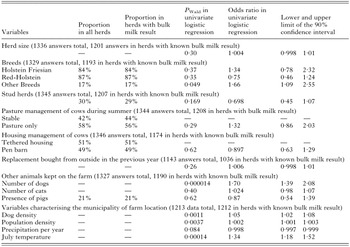
Table 2. Input variables offered to logistic regression in a comparison of Neospora caninum bulk milk positive and negative herds
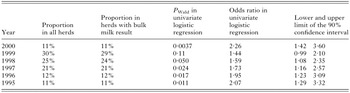
Table 3. Results of univariate logistic regression testing of the association of a positive bulk milk examination and >3% yearly abortions relative to herd size

Fig. 1. Results of univariate logistic regression suggest that the chance of a herd being positive in the bulk milk examination increases with the minimum number of years for which a farmer reported more than 3% abortion relative to the size of the herd. The odds ratio is shown by the bars. The upper and lower 90% confidence interval is indicated by the whiskers.
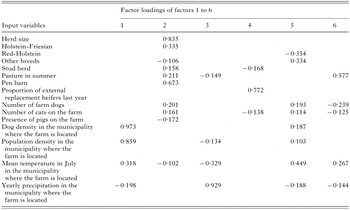
Table 4. Results of a principle component analysis on input variables characterizing herds and farm location
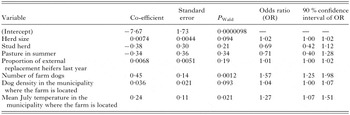
Table 5. Final multiple logistic regression model on the detection of Neospora caninum-specific antibodies in bulk milk
 You have
Access
- 51
- Cited by