Interparental conflict is a well-documented risk factor for children and adolescents. Early work established that in homes characterized by frequent, intense, and poorly resolved interparental conflict, youth are more likely to exhibit symptoms of internalizing and externalizing problems (Buehler et al., Reference Buehler, Anthony, Krishnakumar, Stone, Gerard and Pemberton1997; Dadds & Powell, Reference Dadds and Powell1991; Emery, Reference Emery1982; Grych & Fincham, Reference Grych and Fincham1990; Katz & Gottman, Reference Katz and Gottman1993). This work has progressed toward identifying and testing mechanisms that explain how interparental conflict impacts child adjustment (Fincham, Reference Fincham1994). One important direction for this research was initiated by Grych and Fincham (Reference Grych and Fincham1990), who theorized that children's subjective evaluations of interparental conflict, specifically its meaning for them, may explain the types of responses and coping strategies children engage in to manage the distress they experience or the risk posed to them.
Two major theoretical models have been articulated to describe the intrapersonal processes that capture child and adolescent evaluations of interparental conflict: the emotional security theory (Davies & Cummings, Reference Davies and Cummings1994; Davies & Sturge-Apple, Reference Davies and Sturge-Apple2007) and the cognitive contextual-framework (Grych & Cardoza-Fernandez, Reference Grych, Cardoza-Fernandez, Grych and Fincham2001; Grych & Fincham, Reference Grych and Fincham1990). The emotional security theory postulates that youth perceptions of interparental conflict as threatening activates a social defense system that facilitates the use of strategies to preserve their sense of security in the interparental relationship (Davies & Woitach, Reference Davies and Woitach2008). The cognitive-contextual framework conceptualizes threat as a key cognitive appraisal, along with self-blaming attributions of conflict, as underlying mechanisms that account for the influence of interparental conflict on youth maladjustment. Research investigating each of these perspectives has generated consistent evidence supporting both emotional security and cognitive appraisal mechanisms in relation to maladjustment in analyses of cross-sectional, meta-analytic, and longitudinal designs (Buehler, Lange, & Franck, Reference Buehler, Lange and Franck2007; Cummings, George, McCoy, & Davies, Reference Cummings, George, McCoy and Davies2012; Cummings, Schermerhorn, Davies, Goeke-Morey, & Cummings, Reference Cummings, Schermerhorn, Davies, Goeke-Morey and Cummings2006; Davies & Cummings, Reference Davies and Cummings1998; Davies, Harold, Goeke-Morey, & Cummings, Reference Davies, Harold, Goeke-Morey and Cummings2002; Fosco & Grych, Reference Fosco and Grych2007, Reference Fosco and Grych2008; Gerard, Buehler, Franck, & Anderson, Reference Gerard, Buehler, Franck and Anderson2005; Grych & Fincham, Reference Grych and Fincham1993; Grych, Fincham, Jouriles, & McDonald, Reference Grych, Fincham, Jouriles and McDonald2000; Grych, Harold, & Miles, Reference Grych, Harold and Miles2003; Lucas-Thompson & Hostinar, Reference Lucas-Thompson and Hostinar2013; Rhoades, Reference Rhoades2008; Siffert & Schwarz, Reference Siffert and Schwarz2011). A common factor in both the emotional security and cognitive-contextual models is the view that threat appraisals are a central process for understanding children's and adolescents' perceptions of conflict and their subsequent coping and adjustment.
Perceiving Interparental Conflict as Threatening
Youth who witness conflict first evaluate its relevance to them and the potential for threat (Fosco, DeBoard, & Grych, Reference Fosco, DeBoard and Grych2007). This appraisal process serves an important adaptive function because it motivates and guides coping behavior to attempt to reduce exposure to immediate danger (Grych & Cardoza-Fernandez, Reference Grych, Cardoza-Fernandez, Grych and Fincham2001). As such, threat appraisals include worries about the implications of interparental conflict; they can include general fears that the conflict will result in something bad, or more specific concerns that conflict may lead to divorce, escalate, lead to their involvement, or result in harm to or injury of a family member (Atkinson, Dadds, Chipuer, & Dawe, Reference Atkinson, Dadds, Chipuer and Dawe2009; Grych & Cardoza-Fernandez, Reference Grych, Cardoza-Fernandez, Grych and Fincham2001; Grych, Seid, & Fincham, Reference Grych, Seid and Fincham1992). In homes where conflict is typically resolved and does not escalate to problematic levels, youth tend to perceive conflict as less threatening (Grych & Fincham, Reference Grych and Fincham1993). In other families, youth may develop stable perceptions of parental conflicts as threatening that can persist beyond the objective reality they experience. For example, youth who have witnessed violence between their parents tend to view later episodes of conflict (even minor disagreements) as more threatening, likely due to fears that the conflict may escalate into violence again (Grych, Reference Grych1998). This process of stable, heightened threat appraisals are viewed as a key risk factor for maladjustment (Fosco et al., Reference Fosco, DeBoard and Grych2007). In particular, threat is consistently linked with emotional distress (i.e., internalizing problems) in cross-sectional and longitudinal research (Fosco & Grych, Reference Fosco and Grych2008; Gerard et al., Reference Gerard, Buehler, Franck and Anderson2005; Grych et al., Reference Grych, Fincham, Jouriles and McDonald2000, Reference Grych, Harold and Miles2003). Threat also is associated with problem behavior in several studies, particularly those with cross-sectional designs (e.g., Gerard et al., Reference Gerard, Buehler, Franck and Anderson2005; Grych et al., Reference Grych, Fincham, Jouriles and McDonald2000; Rhoades, Reference Rhoades2008). However, the link between threat and problem behavior is less consistent than the link with emotional distress (Fosco & Grych, Reference Fosco and Grych2008; Grych et al., Reference Grych, Harold and Miles2003).
Less well studied are the processes by which threat appraisals lead to later adjustment problems. One insight is found in the documented linkage between the perceptions of parental conflict as threatening and youth coping efficacy (Grych & Fincham, Reference Grych and Fincham1993). It is believed that when youth find parental conflicts distressing, they may enlist strategies to help regulate their distress, possibly through intervention in conflicts or conflict avoidance (e.g., going to another room) to regulate their exposure to the stressful experience (Davies & Cummings, Reference Davies and Cummings1994). However, youth typically have little control over their parents' conflicts. Attempting to reduce conflicts without success may lead youth to feel helpless to control the stressors in their environment. For example, persistent feelings of threat can undermine child and adolescent beliefs about their ability to cope with their parents' conflict (Fosco & Grych, Reference Fosco and Grych2010; Gerard et al., Reference Gerard, Buehler, Franck and Anderson2005). These conflict-specific threat appraisals may undermine adolescents' beliefs that they can effect change in their environment or their sense of competence to manage upsetting situations. If this were true, self-efficacy may represent a critical link in a developmental sequence in which persistent threat undermines youth's developing sense of competence and beliefs that they can cope with stressors effectively, which would generalize to broad indices of maladjustment. This question of how conflict-specific threat perceptions may lead to global adjustment problems can be better answered within a developmental cascade framework.
A Cascade Model Perspective for Interparental Conflict and Adolescent Adjustment
The application of developmental cascade models, which has seen a surge in the research literature in recent years (e.g., see 2010 Special Issue of Development and Psychopathology), offers a flexible approach to examining long-term developmental processes as they unfold over time. Some studies have examined how adverse family environments may set the stage for trajectories of psychopathology (e.g., Kouros, Cummings, & Davies, Reference Kouros, Cummings and Davies2010), while others have illuminated a temporal progression of stage-salient behavior across developmental periods (e.g., Dodge et al., Reference Dodge, Malone, Lansford, Miller, Pettit and Bates2008; Dishion, Véronneau, & Myers, Reference Dishion, Véronneau and Myers2010), or focused on the transactional process by which behavioral repertoires emerge over time (e.g., Blandon, Calkins, Grimm, Keane, & O'Brien, Reference Blandon, Calkins, Grimm, Keane and O'Brien2010; Masten et al., Reference Masten, Roisman, Long, Burt, Obradovic and Roley2005). This study seeks to explain why domain-specific appraisals of interparental conflict impacts adolescents' functioning more broadly. We propose a developmental cascade model in which exposure to interparental conflict is related to adolescents' perceptions that the conflict threatens their well-being, or that of the family. In turn, these threat appraisals undermine success in adolescent stage-salient domains. Disruptions to developmental success may place adolescents at increased risk for maladjustment.
Strivings for a sense of autonomy, control, competence, and mastery are key stage-salient developmental tasks during adolescence (Bandura, Reference Bandura1994; Erikson, Reference Erikson1963). In the acquisition of autonomy, adolescents are confronted with challenges and stressors to cope with in the context of decreasing support and guidance (Dishion, Nelson, & Bullock, Reference Dishion, Nelson and Bullock2004; Hawk, Hale, Raaijmakers, & Meeus, Reference Hawk, Hale, Raaijmakers and Meeus2008; Laursen & Collins, Reference Laursen, Collins, Lerner and Steinberg2009). These experiences navigating challenges with increasing independence informs adolescents' self-efficacy, characterized by beliefs that one is capable of achieving one's goals, despite challenges (Bandura, Reference Bandura1994; Zimmerman & Cleary, Reference Zimmerman, Cleary, Pajares and Urdan2006). The implications of self-efficacy are wide ranging: “self-efficacy beliefs provide the foundation for motivation, well-being and personal accomplishment in all areas of life” (Pajares, Reference Pajares, Pajares and Urdan2006, p. 339). Self-efficacy has been discussed in both domain-specific and global conceptualizations; however, the current study sought to provide a broad index of developmental success. Consistent with this view, adolescents with greater (global) self-efficacy exhibit better academic achievement (Bandura, Barbaranelli, Caprara, & Pastorelli, Reference Bandura, Barbaranelli, Caprara and Pastorelli1996), less emotional distress (Muris, Reference Muris2002; Rudy, Davis, & Matthews, Reference Rudy, Davies and Matthews2012), fewer problem behaviors (Caprara, Barbaranelli, Pastorelli, & Cervone, Reference Caprara, Barbaranelli, Pastorelli and Cervone2004; Kuperminc, Blatt, & Leadbeater, Reference Kuperminc, Blatt and Leadbeater1997), and greater life satisfaction (Vecchio, Gerbino, Pastorelli, Del Bove, & Caprara, Reference Vecchio, Gerbino, Pastorelli, Del Bove and Caprara2007; Vieno, Santinello, Pastore, & Perkins, Reference Vieno, Santinello, Pastore and Perkins2007).
We propose a developmental cascade in which interparental conflict sets into motion a sequence in which adolescents perceive parental discord as threatening, which over time undermines their self-efficacy, ultimately eroding their well-being. Considerable evidence links exposure to hostile interparental conflict to youths' threat appraisals (Rhoades, Reference Rhoades2008). However, the link between interparental conflict (threat appraisals specifically) and self-efficacy is not well understood. From a reciprocal determinism perspective of self-efficacy, adolescents' experiences coping with challenges and their social environment each will contribute to their self-efficacy; in turn, self-efficacy beliefs guide later decisions and behaviors (Bandura, Reference Bandura1986; Pajares, Reference Pajares, Pajares and Urdan2006). Interparental conflict may be stressful for youth because they have little control over whether it occurs or not. Moreover, adolescents who tend to perceive interparental conflicts as threatening their well-being or that of their family exhibit decreases in feelings of competence in utilizing resources to cope with that distress (Fosco & Grych, Reference Fosco and Grych2010). As a result, we hypothesize that adolescents who perceive their parents' conflicts as threatening may feel unable to effect change in their environment to manage their distress and will be more likely to experience decreased self-efficacy beliefs over time. Although this specific hypothesis has not been tested, there is a documented link between threat appraisals and increased negative self-evaluations. Specifically, Siffert, Schwarz, and Stutz (Reference Siffert, Schwarz and Stutz2012) found that adolescents who perceived interparental conflicts as threatening exhibited decreases in their self-esteem, which was measured as self-assertiveness and self-worth. Taken together, these studies suggest that stable patterns of threat appraisals are a risk factor for diminished self-evaluation and coping effectiveness; it is likely that this process would interfere with successful development in the area of global feelings of self-efficacy.
The role of interparental conflict in early adolescents' lives is relatively understudied when compared to studies of middle childhood and later adolescence (i.e., high school age). Yet early adolescents appear to exhibit a developmental shift from middle childhood in their interpretations of interparental conflict in which they may be more attuned to the emotional expressions in their evaluations of interparental conflict (Davies, Myers, & Cummings, Reference Davies, Myers and Cummings1996). Moreover, during typical transitions into middle school, and preparation for high school, stress from exposure to interparental conflict may have special additive effects, especially in this formative period for self-efficacy beliefs (Pajares, Reference Pajares, Pajares and Urdan2006). These developmental considerations suggest that an examination of the cascading effects of interparental conflict during early adolescence may be particularly warranted.
In this study, we tested the hypothesis that persistent threat identified in parental conflicts will have a detrimental effect on adolescents' self-efficacy, resulting in a diminished sense of competence and the belief that they are capable of achieving their goals. In turn, we expected that disruptions to adolescents' developing sense of self-efficacy will place them at greater risk for maladjustment. We systematically examined this cascade hypothesis over three steps.
Preliminary mediational models
The preliminary step was to provide a baseline test of threat as a mediator of interparental conflict and adolescent adjustment problems. To date, only one study provides a longitudinal test of this mediational model. Grych et al. (Reference Grych, Harold and Miles2003) found support for threat as a pathway to emotional distress but did not find support for threat as a pathway to problem behavior. However, a recent meta-analysis documents a reliable correlation between threat and problem behavior across other studies (Rhoades, Reference Rhoades2008), raising the question of whether threat may have longitudinal implications for behavior problems.
Another important dimension of adolescent adjustment is subjective well-being, characterized by happiness and satisfaction with life (Deiner, Reference Deiner1994). Beyond predicting indices of psychopathology, recognizing the processes that impact subjective well-being can provide a more complete picture of adolescent adjustment. Empirical evidence suggests that youth who exhibit low levels of psychopathology and also experience low levels of subjective well-being have a similar risk profile to youth who exhibit high levels of psychopathology (Antaramian, Huebner, Hills, & Valois, Reference Antaramian, Huebner, Hills and Valois2010). Moreover, low levels of subjective well-being is a risk factor for substance use (e.g., Donohue et al., Reference Donohue, Teichner, Azrin, Weintraub, Crum and Murphy2003), violence (Valois, Paxton, Zullig, & Huebner, Reference Valois, Paxton, Zullig and Huebner2006; Valois, Zullig, Huebner, & Drane, Reference Valois, Zullig, Huebner and Drane2001), poor health (Zullig, Valois, Huebner, & Drane, Reference Zullig, Valois, Huebner and Drane2005), and high-risk sexual behavior (Valois, Zullig, Huebner, Kammermann, & Drane, Reference Valois, Zullig, Huebner, Kammermann and Drane2002) To our knowledge, no studies examine subjective well-being as an outcome in mediation models of interparental conflict and threat appraisals, despite correlational findings linking exposure to interparental conflict with diminished life satisfaction (Chappel, Suldo, & Ogg, Reference Chappel, Suldo and Ogg2012). Our first set of analyses tested threat as a mediator of the association between interparental conflict and each outcome: emotional distress, problem behavior, and subjective well-being. This was tested using a three-wave longitudinal design, to provide a strong evaluation of these mediational hypotheses and has the potential to replicate and extend prior work in this area.
Testing linkages among interparental conflict, threat, and self-efficacy
Consistent with our cascade hypothesis, we expected that interparental conflict would be indirectly associated with self-efficacy as a function of adolescent's threat appraisals. Because no previous studies have been conducted of this association, we were careful to consider potential bidirectional effects in which self-efficacy may impact threat appraisals. A cross-lag model was estimated to assess all potential directions of effects to establish the longitudinal nature of associations among interparental conflict, threat appraisals, and self-efficacy (Selig & Little, Reference Selig, Little, Laursen, Little and Card2012).
The developmental cascade model
We tested a developmental cascade model that links each of these processes. As described previously, we hypothesized that interparental conflict would be related to threat appraisals, which would be associated with decreased self-efficacy over time. In turn, the negative impact on self-efficacy would be related to changes in adjustment over time. This cascade model was tested while accounting for autoregressive effects to provide a more conservative test of the associations of these variables over time, and to provide insight into change processes in these variables. Another strength of this test was the inclusion or incorporation of all three domains of adolescent adjustment into the model to provide a test of unique associations with each.
Method
Procedure
Participants were a randomly selected subset of sixth graders participating in the Promoting School–Community–University Partnerships to Enhance Resilience project (PROSPER), a large-scale effectiveness trial of preventive interventions aimed at reducing substance use initiation among rural adolescents (Spoth, Greenberg, Bierman, & Redmond, Reference Spoth, Greenberg, Bierman and Redmond2004). Participants resided in 28 rural communities and small towns in Iowa and Pennsylvania. Initial eligibility requirements for communities considered for the studies were school district enrollment from 1,300 to 5,200 and at least 15% of the student population eligible for free or reduced-cost lunches (for more information, see Spoth, Guyll, Lillehoj, Redmond, & Greenberg, Reference Spoth, Guyll, Lillehoj, Redmond and Greenberg2007).
Schools in intervention communities implemented two evidence-based programs designed to reduce adolescent substance use: a school-based curriculum (delivered in the seventh grade to all students) and a family-based program (offered to all families of sixth graders). Schools selected programs from a menu of evidence-based interventions. In addition, districts were supported by community-based prevention teams (see Spoth et al., Reference Spoth, Greenberg, Bierman and Redmond2004, for more information on the PROSPER project and the sample).
On average, 88% of all eligible students completed in-school assessments at each data collection point for the larger study. A random sample of 2,267 families from the in-school assessment sample were invited to participate in the in-home family assessments, and 979 (43%) completed the in-home assessments. The in-home assessments included a family composition interview and written questionnaires completed independently by the adolescent, mother, and, if present, father.
We conducted comparisons of the in-home group with the larger sample from which they were drawn. Variables used in the current study were not assessed in the larger sample, so comparisons were made for other risk factors, such as substance use and problem behavior. Comparisons of those who participated in the in-home family assessments revealed no differences between groups in substance use initiation. However, youth who received in-home assessments were less likely to engage in delinquent behavior than were youth in the general population of cases (M = 0.58, SE = 0.06 vs. M = 0.82, SE = 0.04): F (1, 27) = 18.32, p < .01. Youth in the in-home sample also perceived fewer benefits from using substances (M = 4.77, SE = 0.01 vs. M = 4.71, SE = 0.02): F (1, 27) = 18.32, p < .01. These differences suggest that the low response rate for the in-home sample may have influenced our ability to obtain a truly random sample. Although similar in most dimensions to the general population of cases, the in-home subsample may be at slightly lower risk for problem behavior.
Participants
Because the focus of this study was adolescents' exposure to interparental conflict, two-parent families were selected for analyses. We defined two-parent families by parents' responses to a marital status question as either married and living with their spouse or living with someone in a steady, marital-like relationship. No data were collected about the length of relationship. This two-parent sample included 768 families at Wave 1, with a retention rate of 80% (N = 611) through Wave 4. Ninety-one percent of couples remained together over the course of the four waves. The four waves of data were collected in the fall of sixth grade, spring of sixth grade, spring of seventh grade, and spring of eighth grade. The spacing of these assessments was consistent with previous studies that document longitudinal effects of interparental conflict on adolescent appraisals over a 6-month period (Fosco & Grych, Reference Fosco and Grych2010) and other studies that space the timing of linkages between appraisals and maladjustment at 1-year or 2-year follow-up (e.g., Cummings et al., Reference Cummings, Schermerhorn, Davies, Goeke-Morey and Cummings2006; Davies, Manning, & Cicchetti, Reference Davies, Manning and Cicchetti2013; Grych et al., Reference Grych, Harold and Miles2003). The mean participant ages at Time 1 (T1) were as follows: adolescents (M = 11.3 years, SD = 0.49); mothers (M = 38.7, SD = 6.05); and fathers (M = 41.2, SD = 7.14). At subsequent time points, average youth ages were 11.9 years at Time 2 (T2), 13.0 years at Time 3 (T3), and 13.9 years at Time 4 (T4). There was some variability among caregivers' relationships to those caregivers referred to as mothers for this study. Female caregivers identified their relationship to the target adolescent as mother (94.9%), stepmother (1.3%), or other parental figures (3.8%; e.g., parents' significant other or foster parent). Male caregivers identified their relationship to the target adolescent as father (75.3%), stepfather (16.9%), or other parental figures (7.8%). Sixty-one percent of families resided in Iowa, and 39% lived in Pennsylvania; 47% were male. The median household income was $52,000 (in 2003), and 64% of adolescents had parents with some postsecondary education. Adolescents identified their race as White (89%), Hispanic (6%), African American (1%), Asian (1%), or other (3%).
Measures
Interparental conflict
Mothers and fathers responded to seven items assessing the frequency of conflict behaviors over the past month on a 7-point scale, from always (1), almost always (2), fairly often (3), about half the time (4), not too often (5), almost never (6), to never (7). Items were reverse-coded so that higher values reflect more frequent conflict. Parents responded to each set of seven items in relation to their own behavior and their partners' behavior. Sample items included “criticize your ideas” and “hit, push, grab, or shove you.” This scale is correlated with marital dissatisfaction and marital distress (Cui & Conger, Reference Cui and Conger2009). Over time points Waves 1–3, father reports of their own conflict behaviors (0.84, 0.84, 0.83, respectively) and their partner's behaviors (0.89, 0.90, 0.86, respectively) were acceptable, as were mother's reports of their own conflict behaviors (0.85, 0.85, 0.86, respectively) and their partners' behaviors (0.89, 0.90, 0.90, respectively). Scales were computed as item averages. Across the different scales, correlations ranged from 0.41 to 0.82 (ps < .01) within time points. A single composite variable was created by averaging mothers and father reports of interparental conflict.
Perceived threat
Adolescents completed four items adapted from the Children's Perceptions of Interparental Conflict Scale (Grych et al., Reference Grych, Seid and Fincham1992) that assess their beliefs that interparental conflict may have negative consequences for them, their parents, or their family. Items included “When my parents argue, I'm afraid that something bad will happen,” “When my parents argue, I worry that one of them will get hurt,” “When my parents argu I'm afraid that they will yell at me too,” and “When my parents argue, I worry that they might get divorced.” Items were rated on a 5-point scale: strongly agree (1), agree (2), neutral or mixed (3), disagree (4), or strongly disagree (5). This scale was computed as an item average and scaled so that high values reflected greater perceived threat. This scale had good internal consistency, with Cronbach α ranging from 0.86 to 0.87 over Waves 1–3.
Self-efficacy
Adolescents reported on their subjective self-efficacy by responding to seven items of the self-efficacy scale (Pearlin & Schooler, Reference Pearlin and Schooler1978). Two of the seven items were dropped due to poor coherence with other items. The resulting five-item scale demonstrated acceptable internal consistency, with Cronbach α ranging from 0.75 to 0.80 over Waves 1–3. Items included “There is really no way I can solve some of the problems I have,” “I can do just about anything I set my mind to,” “Sometimes I feel that I'm being pushed around in life,” “I have little control over the things that happen to me,” and “I often feel helpless in dealing with the problems in life.” Items were rated on a 5-point scale: strongly agree (1), agree (2), neutral or mixed (3), disagree (4), or strongly disagree (5). Scores reflect item averages and were scaled so that higher values indicated greater self-efficacy.
Emotional distress
Adolescent perceptions of their emotional distress were assessed using the depressed/anxious subscale of the Child Behavior Checklist, Youth Self-Report (Achenbach, Reference Achenbach1991). Adolescents rated how true each item was for them “now or within the past 6 months” on a scale ranging from 0 (not true) to 2 (very true or often true), and were scored so that higher values indicated higher levels of internalizing problems. Sample items included “I am too fearful or anxious” and “I am unhappy, sad, or depressed.” Adolescent report, rather than parent report, was used because adolescents are more accurate reporters of internalizing symptoms than their parents (Grills & Ollendick, Reference Grills and Ollendick2003; Lagattuta, Sayfan, & Bamford, Reference Lagattuta, Sayfan and Bamford2012). Cronbach α indicated adequate reliability at T1 (0.85) and T4 (0.87). Item averages were computed, and scales were set so that higher values reflect more emotional distress. Five percent of the adolescents met criteria (T ≥ 65) for clinical levels on the depressed/anxious scale at Wave 1.
Behavior problems
Parent and adolescent reports of adolescent behavior problems were assessed using the externalizing scale of the Child Behavior Checklist and Youth Self-Report (Achenbach, Reference Achenbach1991). The externalizing scales capture children's maladjustment characterized by aggression (“Gets in many fights”) and defiance (“Disobedient at school”). Ratings were given for how true each item was for the target adolescents' behavior “now or in the past 6 months” on a scale ranging from 0 (not true) to 2 (very true or often true), and were scored so that higher values indicated higher levels of externalizing problems. Reliability estimates were adequate at Wave 1 and Wave 4 for mothers (0.88 and 0.88, respectively), fathers (0.88 and 0.89, respectively), and adolescents (0.86 and 0.90, respectively). Item averages were computed and scales were set so that higher values reflect more behavior problems. By parent report, 8% of youth met criteria (T ≥ 65) for externalizing problems at Wave 1.
Subjective well-being
Adolescents' perception of their subjective well-being was assessed using two measures: happiness and life satisfaction. Happiness was assessed using the subjective happiness scale (Lyubomirsky & Lepper, Reference Lyubomirsky and Lepper1999), which included four items assessing adolescents' happy mood and disposition in general (αs: T1 = 0.68 and T4 = 0.79). Adolescents circled a number from 1 to 7 that best described them. Responses were anchored to complete the sentence stem. For example, one item stem was “In general, I consider myself:” with anchors “not a very happy person” (1) and “a very happy person” (7). The life satisfaction scale included five items from the Mental Health Inventory—38 (Viet & Ware, Reference Viet and Ware1983), describing adolescents' enjoyment of life, and feeling happy and hopeful about the future. Adolescents rated how they felt about their lives by responding to items with a stem, “During the past month, how much of the time . . . ,” and sample items, including “have you generally enjoyed the things you do” and “has your daily life been full of things that were interesting to you.” Adolescents rated each item: 1 (all of the time), 2 (most of the time), 3 (a good bit of the time), 4 (some of the time), 5 (a little of the time), and 6 (none of the time). Scale reliability was acceptable (αs: T1 = 0.88 and T4 = 0.90). Item averages were computed, and scales were set so that higher values reflect more subjective well-being. Similar to internalizing problems, adolescent report was used rather than parent report because parents tend to overestimate youth well-being (Lagattuta et al., Reference Lagattuta, Sayfan and Bamford2012).
Analysis plan
Structural equation models were estimated using Mplus version 6.1 (Muthén & Muthén, Reference Muthén and Muthén2008), using full information maximum likelihood estimation to reduce potential bias incurred due to missing data at later waves (Widaman, Reference Widaman2006). Analyses were conducted by first examining overall model fit indices chi square (χ2), comparative fit index (CFI), nonnormed or Tucker–Lewis index (TLI), root mean square error of approximation (RMSEA), and standardized root mean square residual (SRMR). Models met criteria for adequate overall fit when CFI/TLI values were >0.095, RMSEA values were <0.08, and SRMR values were <0.08 (Hu & Bentler, Reference Hu and Bentler1999). Following adequate model fit, we examined standardized path coefficients. When statistical mediation was hypothesized, indirect effects for the specific paths were estimated. Here, we report standardized indirect effects and p values. Indirect effects were calculated using bootstrapping (e.g., MODEL INDIRECT), which is considered a superior test of indirect effects compared to other methods (e.g., Sobel, Reference Sobel and Tuma1986; see MacKinnon, Lockwood, Hoffman, West, & Sheets, Reference MacKinnon, Lockwood, Hoffman, West and Sheets2002; MacKinnon, Lockwood, & Williams, Reference MacKinnon, Lockwood and Williams2004).
Because this sample was drawn from a larger intervention trial, we conducted group comparisons to determine whether the overall models were consistent for families assigned to the intervention or control groups. Similarly, we compared overall models to determine if they were consistent for male and female adolescents. Group comparisons were conducted using invariance tests. Models were estimated for both groups under two conditions: first, with paths freely estimated in each group; and second, by constraining structural paths to be the same across groups. Model fit for the freely estimated and constrained models were compared using two indicators. First, χ2 difference tests were inspected. Failure to detect group differences in model fit is a conservative indicator that the models did not differ. However, a problem with this approach, when used with large samples (N ≥ 300), is that fit across models may indicate a statistically significant difference, even when the null hypothesis of invariance should not be rejected (Cheung & Rensvold, Reference Cheung and Rensvold2002). Second, drawing on guidelines provided by Cheung and Rensvold's (Reference Cheung and Rensvold2002) simulation study, we also examined the degree of change in CFI (ΔCFI) to determine if it exceeded 0.01 when paths were constrained. Thus, a statistically significant χ2 and ΔCFI of >0.01 would indicate that the models differed for the two groups; nonsignificant findings and ΔCFI < 0.01 indicated that a single estimated model adequately represented both groups.
Results
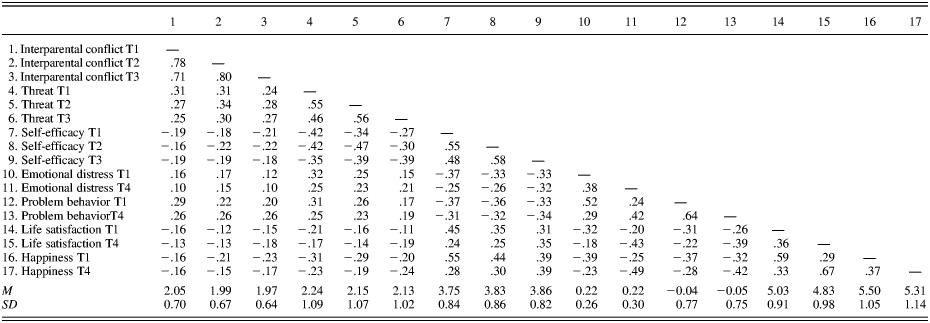
Bivariate correlations, variable means, and standard deviations are reported in Table 1. All variables were correlated in the expected direction. Conflict, threat, self-efficacy, and adjustment all evidenced moderate stability over time. Then, prior to estimating structural equation models, we examined the sample for patterns of missing data. Using the Little test, we determined that data were not missing completely at random, χ2 (636) = 783.543, p < .01. We then recoded the outcomes as missing (0) or present (1) and correlated them with baseline variables included in the models, parent average education, youth gender, and family income. Of these, only parent education was significantly correlated with rates of missingness (rs = .19–.20, ps < .01). Thus, parent education was included as a covariate, and models were computed using the full information maximum likelihood estimation procedure to minimize influence of missing data (Widaman, Reference Widaman2006).
Correlations, means, and standard deviations

Note: All correlations were statistically significant at p < .05.
Preliminary mediational models
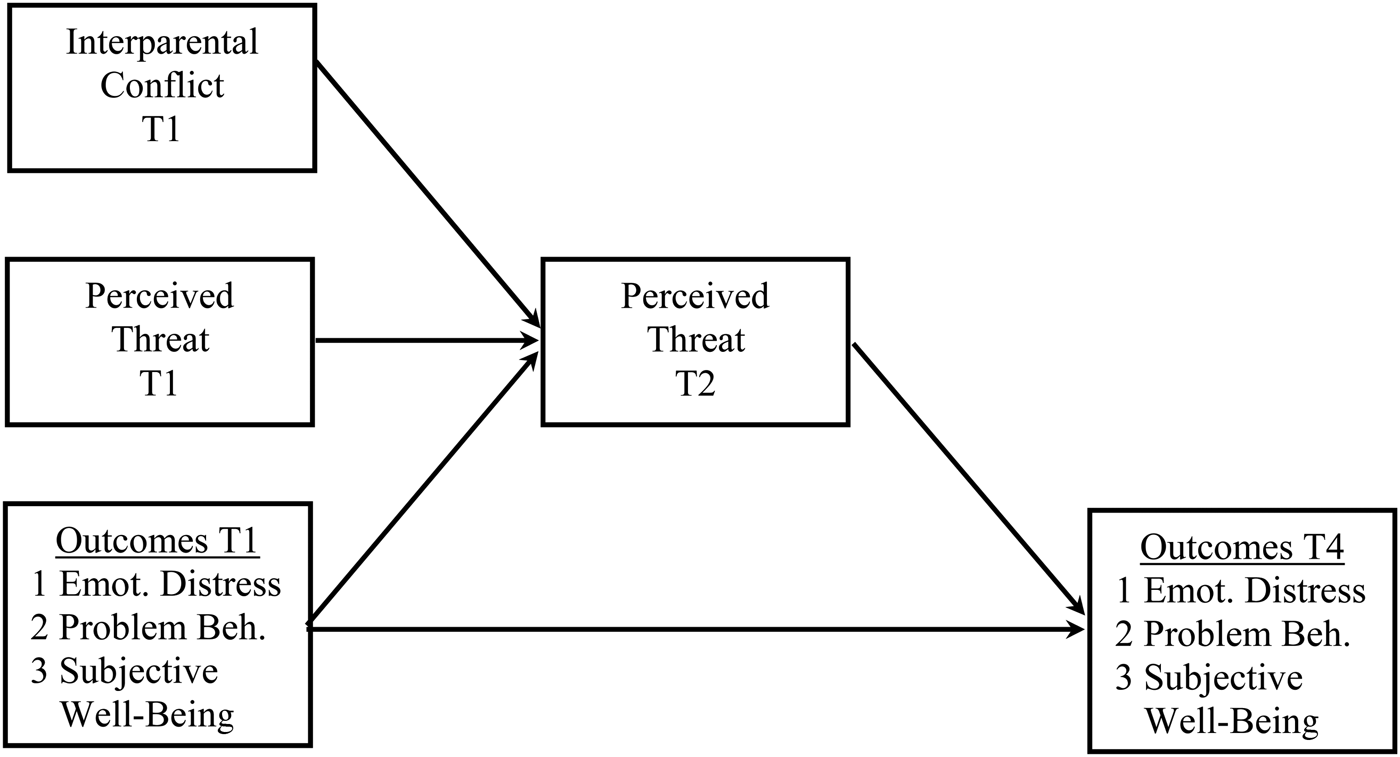
Three baseline mediational models were tested for emotional distress, behavior problems, and subjective well-being. As illustrated in Figure 1, we used an autoregressive approach, such that interparental conflict at T1 predicted threat at T2, accounting for threat at T1, which in turn predicted the outcome at T4, accounting for levels at T1. In addition, we accounted for the possibility that initial levels of the outcome may be related to threat (e.g., emotional distress at T1 might predict threat at T2), consistent with previous studies (Grych et al., Reference Grych, Harold and Miles2003).
Baseline tests of threat as a mediator of interparental conflict and adolescent outcomes.
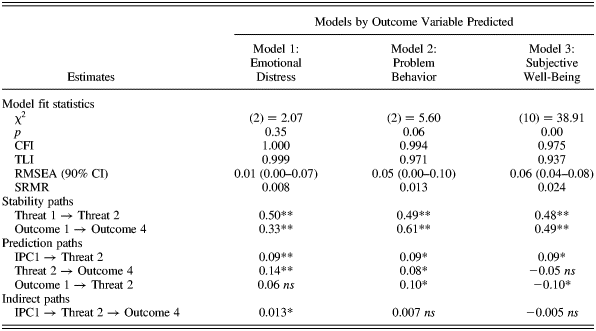
The results of the three models are summarized in Table 2. All three models provided a good fit with the data, as indicated fit indices: CFI ≥ 0.98, TLI ≥ 0.95, RMSEA ≤ 0.06, and SRMR < 0.03. The first model predicted adolescent emotional distress. As hypothesized, youth in families with more frequent and intense interparental conflict reported increases in their threat perceptions at T2 (β = 0.09). In turn, youth with more perceived threat indicated increased levels of emotional distress 2 years later (β = 0.14). Moreover, the indirect effect of interparental conflict on emotional distress via perceived threat was statistically significant (standardized indirect effect = 0.013, p < .05). Group comparisons revealed no significant differences for adolescent gender, χ2 (7) = 4.779, p = .69, ΔCFI < 0.01, or for intervention and control group families, χ2 (7) = 2.194, p = .95, ΔCFI < 0.01. The findings in this model supported the hypothesis that threat mediates the link between interparental conflict and emotional distress.
Baseline mediational model findings
Note: For Model 3, the factor loadings for SWB1 were happy = .84 and life satisfaction = .72; for SWB4 they wre happy = .91 and life satisfaction = .74. Parent education was included as a covariate in all three models. CFI, Comparative fit index; TLI, Tucker–Lewis index; RMSEA, root mean square error of approximation; CI, confidence interval; SRMR, standardized root mean square residual; IPC1, interparental conflict.
*p < .05. **p < .01.
The second model predicted behavior problems. Again, youth in families with more interparental conflict experienced higher levels of threat (β = 0.09). In turn, adolescents who found parental conflict threatening exhibited increases in behavior problems (β = 0.08). A test of the indirect effect of interparental conflict on behavior problems as a function of perceived threat was not statistically significant. Group comparisons revealed no significant differences for adolescent gender, χ2 (7) = 6.355, p = .50, ΔCFI < 0.01, or for intervention and control group families, χ2 (7) = 2.013, p = .96, ΔCFI < 0.01. The findings in this model supported the hypothesis that threat was associated with behavior problems over time, but provided only modest support for the mediational hypothesis.
The third model predicted adolescent subjective well-being. As found in the other two models, interparental conflict was associated with increases in perceived threat over time (β = 0.09). However, the link between adolescents' threat perceptions and later subjective well-being was not significant, nor was the indirect path. Group comparisons revealed no significant differences for adolescent gender, χ2 (7) = 2.664, p = .90, ΔCFI < 0.01, or for intervention and control group families, χ2 (7) = 4.977, p = .66, ΔCFI < 0.01. Therefore, although the model was consistent for the whole sample, no support was found for the hypothesis that threat appraisals are directly related to decreases in subjective well-being.
Testing linkages among interparental conflict, threat, and self-efficacy
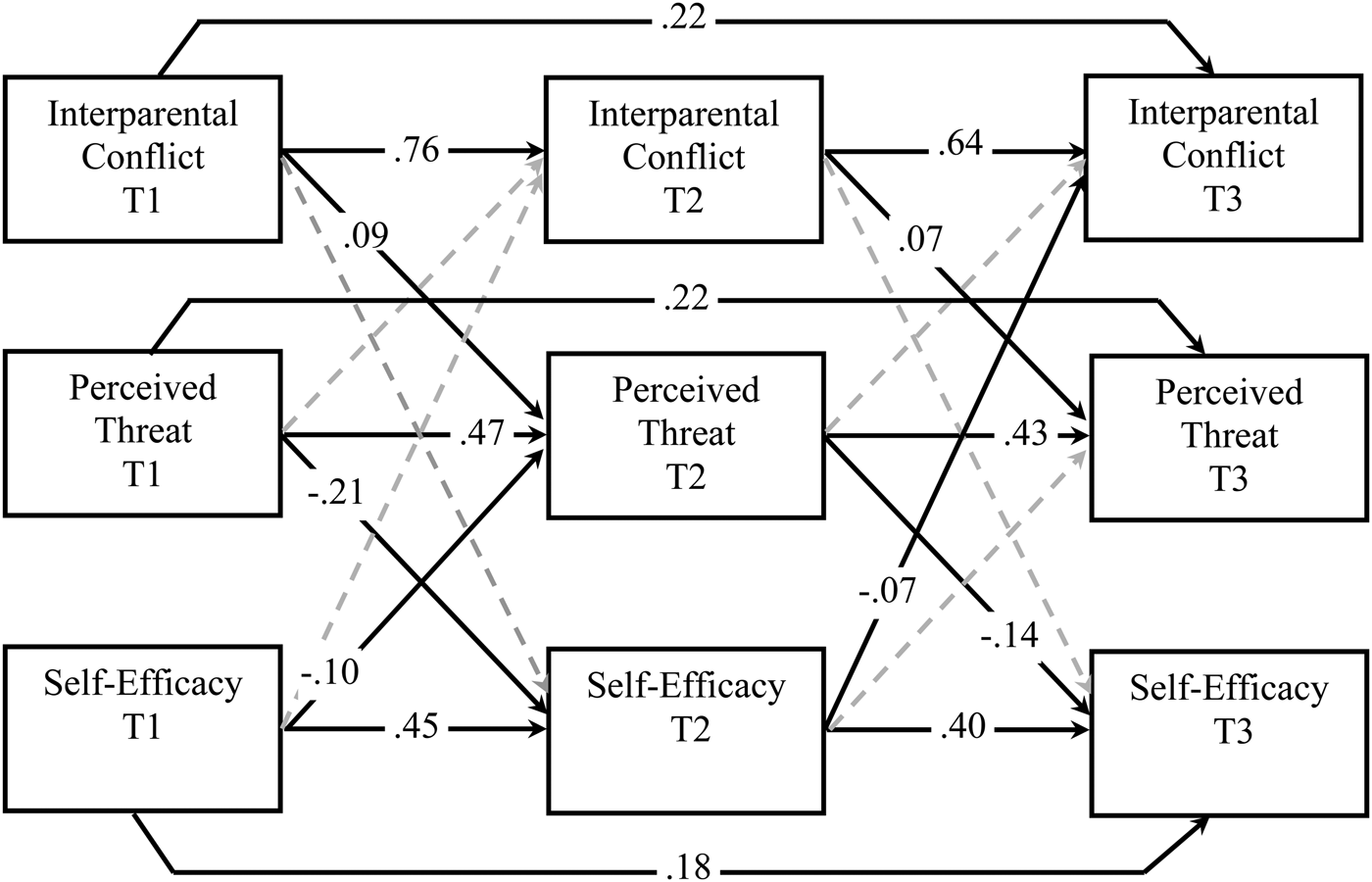
We estimated a three-wave, cross-lagged analysis of interparental conflict, perceived threat, and self-efficacy to test our hypothesis that threat would mediate the link between interparental conflict and adolescent self-efficacy. Cross-lagged designs are particularly suited for analyses with potential bidirectional effects. A full model in which all cross-lagged paths were estimated was tested as a baseline model. This model included correlations among variables at the same time point (not pictured in Figure 2 for ease of presentation) and stability paths for both time points so that T3 variables were regressed on both T2 and T1 previous levels. This model fit well with the data, where χ2 (6) = 6.96, p = .32, CFI = 1.00, TLI = 0.99, RMSEA = 0.014 (90% confidence interval [CI] = 0.000–0.051), SRMR = 0.01. As shown in Figure 3, adolescents in families with more frequent interparental conflict reported increases in how threatening they perceived the conflict, a finding that was consistent across both time points. In turn, adolescents who found parental conflicts threatening reported decreased self-efficacy at each time point. The indirect effect of interparental conflict on self-efficacy (T1 interparental conflict → T2 threat → T3 self-efficacy; standardized indirect effect: –0.015, p < .05) was statistically significant, which was consistent with the hypothesis that threat would mediate the association between interparental conflict and adolescent self-efficacy. However, interparental conflict was not directly associated with self-efficacy at either time point. Higher levels of self-efficacy at T1 were related to decreases in perceived threat at T2, but this finding did not occur from T2 to T3.
Relationships among interparental conflict, threat, and self-efficacy. All paths represented with solid lines were statistically significant. Dotted lines represent paths that were not statistically significant. Standardized coefficients are presented for ease of interpretation. Parent education was included as a covariate, but it is not displayed for ease of presentation. For clarity, correlations among variables at each time point were estimated in the model but are not presented in this figure. Model fit: χ2 (6) = 6.96, p = .32, comparative fit index = 1.00, Tucker–Lewis index = 0.99, root mean square error of approximation = 0.014 (90% confidence interval = 0.000–0.051), standardized root mean square residual = 0.01.
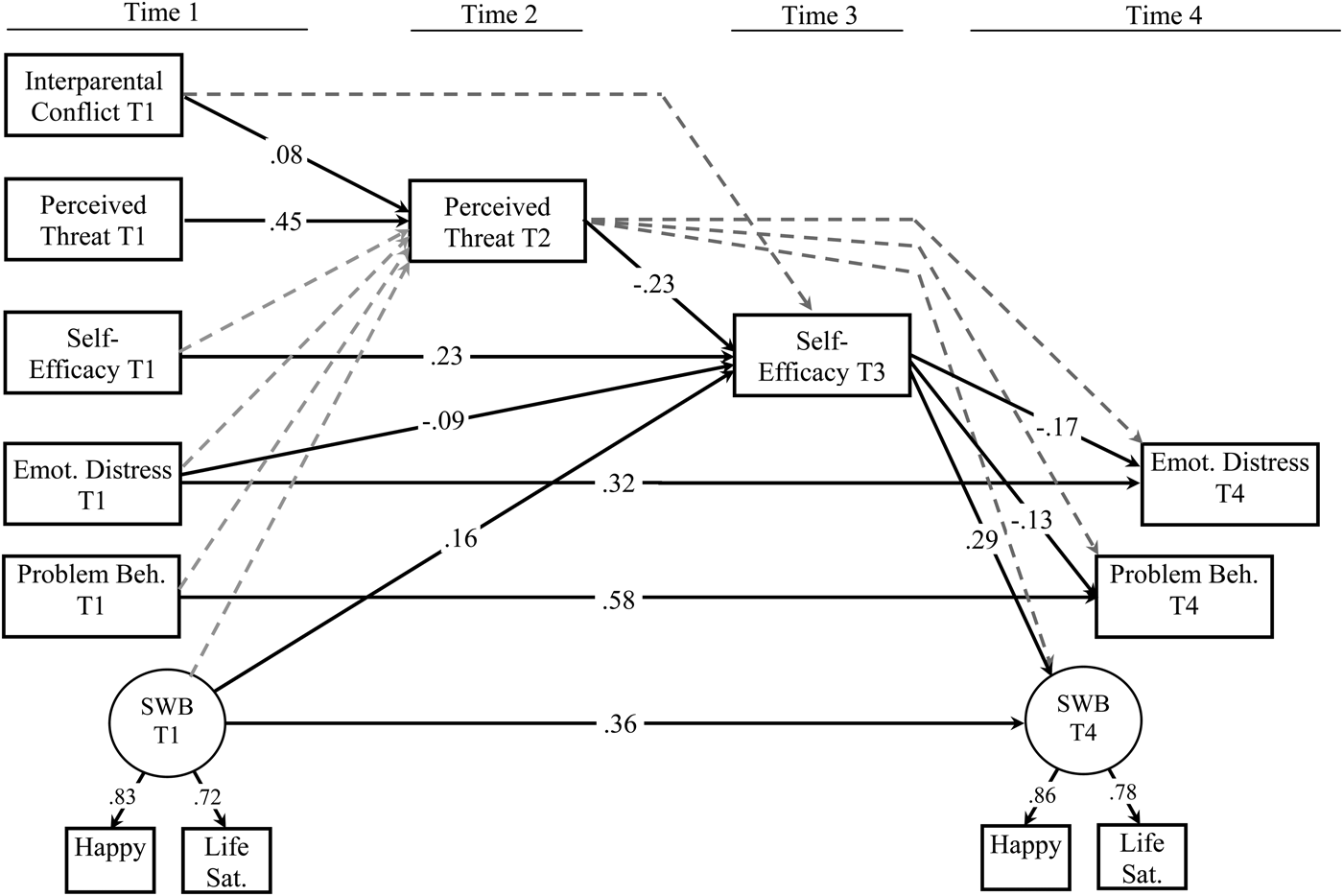
A test of the cascade model of interparental conflict for adolescent adjustment. Path coefficients reflect standardized betas; solid lines reflect statistically significant paths (p < .05). Dotted lines are not statistically significant. Parent education was included as a covariate, but it is not displayed for ease of presentation. Model fit: χ2 (37) = 85.50 p < .01, comparative fit index = 0.98, Tucker–Lewis index = 0.96, root mean square error of approximation = 0.041 (90% confidence interval = 0.030–0.053), standardized root mean square residual = 0.023.
Model invariance tests did not indicate any differences by group. The invariance test was significantly different for boys and girls, χ2 (27) = 43.586, p = .02,Footnote 1 but did not meet criteria for meaningful differences (ΔCFI < 0.01), suggesting that the significant χ2 is due to a large sample size (Cheung & Rensvold, Reference Cheung and Rensvold2002). Models were not different for intervention and control families, χ2 (27) = 23.62, p = .65, ΔCFI < 0.01. Therefore, the findings reported above were representative of the whole sample.
The developmental cascade model
The final goal of this study was to examine an autoregressive cascade model in which adolescents in families with chronic interparental discord viewed parental conflict as threatening to their well-being and the well-being of the family. In turn, adolescents' appraisals of parental conflict as threatening were expected to erode their sense of self-efficacy, which was hypothesized to be related to emotional distress, behavior problems, and subjective well-being. A structural equation model was computed in which the hypothesized cascade was evaluated while accounting for initial levels of each variable and factors one step prior (e.g., T2 threat predicting T3 self-efficacy, accounting for T1 interparental conflict and T1 self-efficacy), to generate a conservative test of the cascade effect. This model yielded a good fit with the data, where χ2 (37) = 85.50 p < .01, CFI = 0.98, TLI = 0.96, RMSEA = 0.041 (90% CI = 0.030–0.053), SRMR = 0.023. As shown in Figure 3, the results supported a cascade effect such that youth in families with frequent interparental conflict were more likely to perceive it as threatening at T2 (β = 0.08), which was related to diminished self-efficacy at T3 (β = –0.23); in turn, self-efficacy was significantly associated with all four outcomes at T4: emotional distress (β = –0.17), behavior problems (β = –0.13), and subjective well-being (β = 0.29).
We then tested the indirect effects within the cascade model. The indirect effect of interparental conflict on self-efficacy was statistically significant, consistent with previous analyses (interpersonal conflict → threat → self-efficacy; standardized indirect effect = –0.02, p < .05). We then tested indirect effects of T2 threat on T4 outcomes, via T3 self-efficacy. Indirect effects for emotional distress (0.04, p < .01), behavior problems (0.03, p < .01), and subjective well-being (–0.07, p < .01) all were statistically significant. To further extend these findings, we tested indirect effects over three paths from interparental conflict to adjustment, and found marginally significant effects for emotional distress (p = .07) and behavior problems (p = .07), and a statistically significant effect for subjective well-being (p = .05). As would be expected for indirect effects over three paths, the standardized effect size was very small for each (≤0.01). As a whole, these tests of indirect effects support the hypothesized cascade model.
Group invariance tests were conducted for adolescent gender and random assignment to intervention or control groups. The models did not differ for intervention or control groups, χ2 (26) = 19.79, p = .80. Models did not reveal a statistically significant difference for boys and girls, χ2 (26) = 37.60, p = .07. Taken together, these findings indicate that the cascade model was representative of the whole sample.
Post hoc analyses
Inspection of our cascade model revealed modest effect sizes for associations between interparental conflict and perceived threat. To help understand what might explain this finding, we considered the possibility that it might be due to our analytical approach of including previous levels of perceived threat and self-efficacy, possibly reducing the variance that can be explained by interparental conflict or threat, respectively. Therefore, we reestimated the longitudinal cascade model by removing initial levels of threat, self-efficacy, and adjustment outcomes to allow us to estimate standardized path coefficients that can then be compared to existing studies. This model yielded adequate fit with the data, χ2 (7) = 26.234 p < .01; CFI = 0.98; TLI = 0.94; RMSEA = 0.063 (90% CI = 0.038–0.089), SRMR = 0.034. The magnitude of the association between interparental conflict at T1 and perceived threat at T2 was approximately three times larger (β = 0.28, p < .01), and the path from perceived threat to self-efficacy was approximately 70% larger (β = –0.38). Although the autoregressive model reported earlier provides a more conservative test of the associations among these variables over time, these findings facilitate comparisons to other research that may have excluded initial levels of mediating processes in longitudinal analyses.
Discussion
Research explicating how adolescents' experiences of interparental conflict generalize to broader domains of adjustment is lacking. Although evidence suggests that stable patterns of perceiving parental conflicts as threatening is associated with higher risk for adjustment problems (e.g., Grych et al., Reference Grych, Harold and Miles2003), the reasons for this are less clear. In this study, we provided a systematic evaluation of the cascade model to provide more insight into the process by which conflict-specific appraisals are related to adjustment problems. Specifically, we hypothesized that youth with greater threat would be more likely to experience disruptions to the development of self-efficacy, and in turn, this would account for their overall psychological well-being.
The first set of analyses evaluated threat as a mediator of interparental conflict and emotional distress, behavior problems, and subjective well-being. This study provided the first test of these mediation hypotheses using three-wave longitudinal data and accounting for autoregressive effects of threat and adjustment. First, we replicated Grych et al.'s (Reference Grych, Harold and Miles2003) findings in which threat mediated interparental conflict and emotional distress. Second, a pattern of findings indicated that threat also was related to increased levels of problem behavior; however, tests of indirect effects did not support threat as a mechanism linking interparental conflict and problem behavior. Third, threat was not directly related to adolescents' subjective well-being, measured by indicators of happiness and satisfaction with life. As a whole, these findings, coupled with those from previous research, provide compelling evidence that threat appraisals have robust implications for adolescents' emotional distress but provide less evidence for direct links between threat and behavior problems or subjective well-being.
In the second set of analyses, we examined the hypothesized link between adolescents' threat appraisals and their self-efficacy. The results of our analyses support the view that adolescents' perceived threat accounts for the association between interparental conflict and adolescent self-efficacy. These findings suggest that adolescents' persistent worries that interparental conflicts pose a threat to their well-being or the well-being of their family, over time, may experience a diminished sense of competence and capability for accomplishing their goals and overcoming their life challenges. This sequence of associations was further supported by our tests of alternative paths, controlling for the alternative direction of effects in which self-efficacy predicted adolescents' threat perceptions. In one of two estimated paths, self-efficacy was associated with decreases in threat appraisals over time. However, these findings were less strong and consistent than findings supporting threat as a mediator of interparental conflict and self-efficacy.
In the third step, we tested our hypothesized developmental cascade model to integrate findings from threat and self-efficacy as processes that might explain the linkage between interparental conflict and adolescent adjustment. These findings supported the view that exposure to interparental conflict is related to elevated levels of threat appraisals that can lead to diminished self-efficacy beliefs, which in turn are related to adolescent adjustment problems. These findings are the first to shed light on a developmental sequence in which adolescents' appraisals of interparental conflict are linked with normative developmental tasks. In particular, the findings that threat is related to diminished self-efficacy provide insight into how adolescents' experiences specific to interparental conflict can undermine stage-salient developmental tasks such as burgeoning autonomy and feelings of mastery (Bandura, Reference Bandura1994; Zimmerman & Cleary, Reference Zimmerman, Cleary, Pajares and Urdan2006) and highlight the importance of examining linkages between family functioning and adolescent developmental processes. This study provides compelling support for the role of self-efficacy as a developmental precursor to each index of adolescent adjustment. Our findings indicate that the degree to which adolescents' threat perceptions undermine self-efficacy results in risk for increased emotional distress, increased problem behaviors, and decreased subjective well-being.
These findings are consistent with past work that recognizes self-efficacy as an indicator of successful development during adolescence (Pajares, Reference Pajares, Pajares and Urdan2006) and support the importance of self-efficacy for adolescent adjustment (Caprara et al., Reference Caprara, Barbaranelli, Pastorelli and Cervone2004; Kuperminc et al., Reference Kuperminc, Blatt and Leadbeater1997; Vecchio et al., Reference Vecchio, Gerbino, Pastorelli, Del Bove and Caprara2007; Vieno et al., Reference Vieno, Santinello, Pastore and Perkins2007). Moreover, the findings from the current study provide a conservative test of the developmental importance of self-efficacy by testing all three indices of adjustment in the same model, controlling for previous levels of each outcome and testing for statistically significant indirect effects for each outcome. As a whole, our findings yielded consistent and strong support for the hypothesized developmental cascade.
Study limitations
This study was not without limitations. First, our sample was a rural, semirural, and small-town community sample, primarily composed of White families, which limits generalizability. In addition, this sample exhibited appropriately low rates of psychopathology; therefore, changes in symptoms of maladjustment do not reflect clinical levels of psychopathology. Second, adolescent reports of interparental conflict were not available in this study, which may have resulted in underestimation of the association between exposure to interparental conflict and threat appraisals (Grych & Fincham, Reference Grych and Fincham1990), and possible links with self-efficacy. Third, self-blame appraisals, which have important implications for youth outcomes (Fosco & Grych, Reference Fosco and Grych2008; Grych, Raynor, & Fosco, Reference Grych, Raynor and Fosco2004), were omitted. Unfortunately, data on adolescents' self-blame was not available in this data set. It is worth noting that this study utilizes a sample from the PROSPER randomized trial (randomization occurred at the level of school districts) in which half of the sample received a universal school-based preventive intervention and were offered a family-centered preventive intervention. Therefore, agreement to participate in the intervention is unlikely to be an additional source of bias. Our findings indicate that our findings did not differ for intervention and control groups. Therefore, these results should be unaffected by the fact they were drawn from an intervention sample.
Implications for intervention research
Study findings offer important implications for preventive intervention research by highlighting an important developmental process that may be compromised by exposure to interparental conflict. The critical importance of adolescents' sense of self-efficacy may provide another target for intervention efforts to minimize the deleterious effects of interparental conflict on adolescents' long-term developmental success. Although research has begun to evaluate ways to intervene with the interparental relationship (Faircloth, Schermerhorn, Mitchell, Cummings, & Cummings, Reference Faircloth, Schermerhorn, Mitchell, Cummings and Cummings2011), our findings provide a potential additional target for intervention with broad implications for adolescent adjustment.
In contexts where it is not possible or feasible to intervene with the family as a whole to change interparental conflict, bolstering adolescents' self-efficacy may reduce risk for maladjustment. This raises an interesting question, and one that needs further empirical study, about how to diminish the deleterious effects of adolescents' appraisals of parental conflict on their global self-evaluations of personal efficacy. Perhaps through helping adolescents successfully cope with the stresses they experience, they may gain a sense of mastery and feel more equipped to face future challenges (Kerig, Reference Kerig, Grych and Fincham2001). Toward this end, strengthening adolescents' emotion-focused coping, such as self-calming strategies, may serve to mitigate the risk posed by exposure to family conflict (Kerig, Reference Kerig1998; Rossman & Rosenberg, Reference Rossman and Rosenberg1992). Kerig (Reference Kerig, Grych and Fincham2001) suggests that emotion-focused coping is advantageous for youth exposed to interparental conflict because they are better able to control their thoughts and feelings than the presence or course of their parents' conflicts. Therefore, strategies that focus on cognitive restructuring or self-soothing may help adolescents develop a sense of mastery over stressful experiences that are largely outside of their control.
Conclusion
This study supported a cascade model in which interparental conflict may be threatening to adolescents and may undermine their self-efficacy. These threat appraisals and self-efficacy issues account for increases in adolescents' emotional distress, while self-efficacy also was implicated in behavior problems and subjective well-being. As such, these findings underscore the robust implications that adolescents' threat perceptions have for their adjustment and bridge processes related to parental conflict with adolescent development. In total, these findings indicate that interparental conflict has broad implications for youth's developmental success.
Future research may build on this study by expanding the analysis of appraisals (i.e., self-blame) and may also consider additional links with family processes. Adolescents who evaluate parental conflicts with appraisals of threat or self-blame may alter their patterns of engagement with the family. Further work is needed to understand how family risk may translate to peer, dating, and academic outcomes as well. Moreover, further exploration is needed into the interplay between appraisals of interparental conflict and family process. Adolescents' threat perceptions may lead them to disengage from family relationships and may illuminate other mechanisms of risk if this undermines parents' ability to monitor and supervise their adolescents' behavior (Dishion et al., Reference Dishion, Nelson and Bullock2004).