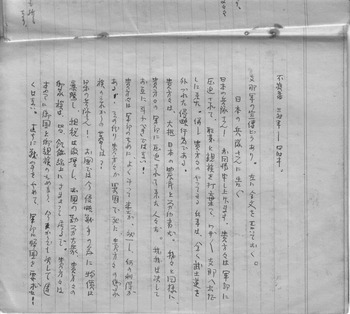
It is easy to investigate others and dole out punishment. It is more difficult when, examining others’ imperfections and calling attention to them, one critiques oneself as well. … I want think slowly and write with care. I want to discipline myself. I must discipline myself.
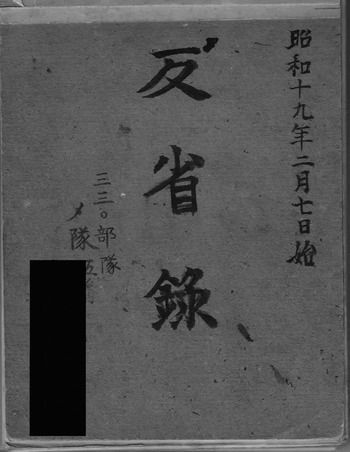
—Nakamura Tokurō, Japanese army officer, December 15, 1942Footnote 1In an interview I conducted in February 2003, Okamoto Masa, a former “special attack pilot” (tokkōtai, or kamikaze), read his wartime diary to me, repeating aloud the ultranationalistic rhetoric that he had once embraced. When I asked him how reading the diary made him feel today, he replied, “Without this diary, I would have probably believed like everyone else that I was dragged unwillingly into the war, that I never accepted this propaganda. This diary is essential to my self-reflection.”Footnote 2 Ironically, the term “self-reflection” (hansei) was made into common parlance among the Japanese armed forces as an effort to teach servicemen self-discipline and make them better soldiers. Guided or peer-reviewed diary writing practices had been in existence in East Asian militaries since before Okamoto was born, and the title often given to training diaries for officers and pilots was, in fact, “Record of Self-Reflection” (hanseiroku).Footnote 3 An “education officer” could review these diaries at any time, and thus the documents represent the increasing intrusion of the state into the “private lives” of individual servicemen. The diaries are textual incarnations of state discipline and were as effective as any institution analyzed by theorists of subjectivity and power.Footnote 4 Visitors to Chiran (arguably the spiritual hometown of the kamikaze pilots) may encounter obstreperous tour guides who criticize wartime diaries, as well as farewell letters and poems, as “inauthentic” products of coercion. To discover the “true” thoughts of a soldier, they proclaim, one must seek out “private” diaries.Footnote 5 In fact, the putative boundary of privacy is, at best, impossible to define and, at worst, a chimera that surreptitiously served (and continues to serve) the disciplinary goals of powerful organizations such as the state.
“Record of Self-Reflection” (author's name removed). Courtesy of Osaka International Peace Museum.

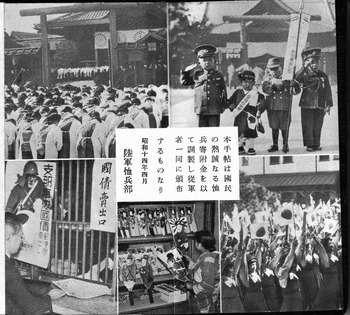
“War Diary,” inside cover. Courtesy of Ritsumeikan International Peace Museum.

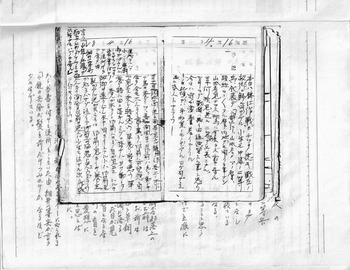
Diary of “Kogura Isamu.” Courtesy of Ritsumeikan International Peace Museum.

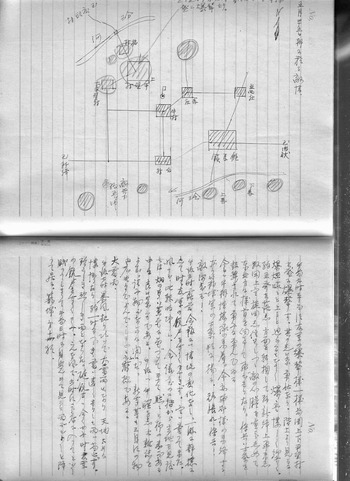
Field hospital diary of “Taniguchi Kazuo.” Courtesy of Osaka International Peace Museum.

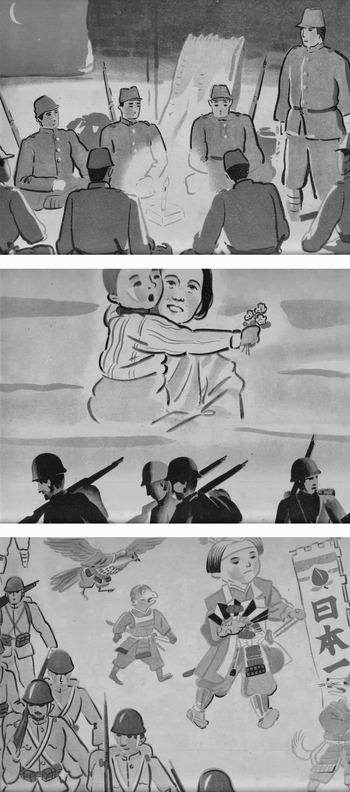
“Paper Play: Kibidanko.” Courtesy of Ritsumeikan International Peace Museum.

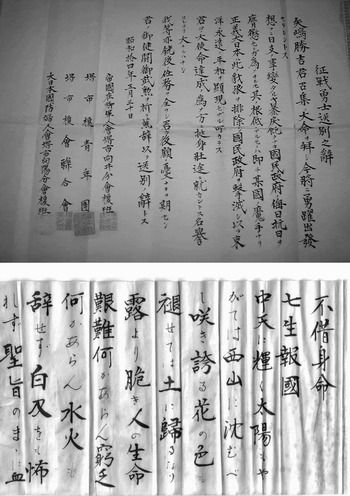
“Letter of Farewell” and “Final Testament.” Courtesy of Osaka International Peace Museum.

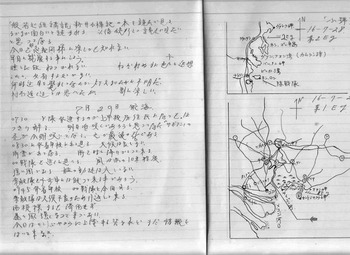
Diary of “Hara Kinosuke.” Courtesy of Kanoya Air Self-Defense Forces Museum.

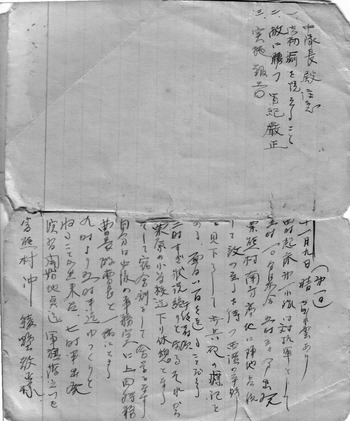
Diary of “Nagatani Masao.” Courtesy of Takamatsu City Peace Museum.

Diary of “Yamamoto Kenji.” Courtesy of Kusa no Ie Peace Museum.

For the moment, it is easier to address this issue within the context of Japanese history, but the phenomenon of self-discipline through diary writing was definitely transnational. Research on the experience of Stalinism, for example, has focused on how individuals contribute to the construction of their subjectivity and the connections between publicly and privately expressed selves.Footnote 6 In the Japanese case, however, issues of state discipline and individual agency, particularly with regard to the thorny issue of privacy and censorship, are particularly interesting because of the diversity and profundity of wartime diaries there, even if Japan is not “special” when it comes to wartime censorship policies.Footnote 7 Because of the widespread perception that Japan was an especially censored society, a prevalent theme in Japanese historiography claims that ordinary Japanese were coerced unwillingly down a “dark path” during the 1930s as a result of the seizure of state power by military interests.Footnote 8 Scholars of “transwar” history and Japanese democracy before the Second World War have criticized this viewpoint, pointing to the massive popular support that wars of aggression received from the Japanese public, particularly after the first Sino-Japanese War (1894–95).Footnote 9 Similarly, scholars of modern China (and Korea) have argued among one another, just as the Chinese Communists and the Nationalists (Guomindang, or GMD) did, over the private loyalties of the “people,” particularly during the Second World War; both sides accuse the other of coercion during wartime mobilization. If, however, we consider the individual's contribution to his own subjectification through the lens of diary writing, as opposed to one government's efforts versus another's, we may more accurately evaluate the success of mobilization campaigns not only during war, but at any time, and not only in Japan, but in any country.
In the Japanese case, for many reasons, the existence of published and unpublished, peer-reviewed and “private,” wartime and postwar “diaries” provides a particularly ideal platform from which to investigate how important “privacy” was to diary writing.Footnote 10 Furthermore, diaries show us which messages were most effective in garnering popular support for the war effort.Footnote 11 In my own work, I have used the term “self-discipline,” which draws on the Foucauldian notion of the social discipline of subjects, but I add the prefix “self” to emphasize that these acts are conducted by the individual on himself. Although these acts are not carried out directly by institutions such as schools, prisons, or barracks, external influences are quite powerful in determining forms self-disciplinary behavior. These self-disciplinary acts can be detected through diary writing, for example: “self-mobilization,” which describes admonitions to act (“I must go in first!”) and “self-criticism,” which involves castigating oneself for failing to embody normative behaviors, thoughts, and feelings (“I did not go into battle—I am a coward!”). Self-discipline need not operate so obviously, however, as any attempt to describe oneself—positively or negatively—can be construed as an act of defining both identity and worldview, and therefore will function as a basis for decision making. Also, examining self-discipline in diary writing helps us understand how mobilization “works” at its most basic level: the individual. Although scholars familiar with poststructuralist theory will undoubtedly recognize the power of disciplinary organizations, it is often unclear how effective they are—we see the process, but not the product. Analyzing self-disciplinary acts, such as those in diaries, show us how well the “message” was received. “Privacy,” in addition to being illusory, is thus also somewhat dangerous, because our belief in its existence obfuscates the process by which we come to know ourselves, and how much that process is influenced by institutions such as the state and mass media.
The next logical question to ask is, did Japanese servicemen even believe they enjoyed “privacy”? Scholars of wartime Japan are quick to point out that a system of inspections made the composition of diaries very difficult for servicemen, but there are a number of problems with this approach.Footnote 12 First, it would seem obvious that officers had more to contend with than diary writers when commanding a unit on the battlefield. Furthermore, pocket-sized diaries (techō) made furtive diary writing possible, if sometimes challenging. Many veterans can delineate the sundry tricks for avoiding possible confiscation of one's personal records: tying the diary to the inside of one's thigh, sending it through civilian mail during temporary furlough, or entrusting the diary to a friend who was being sent home through a military hospital (where no inspections occurred).Footnote 13 Additionally, whenever the term is found in official military records, it is not entirely clear what an “inspection” (ken'etsu) consisted of: Sometimes it meant examining the state of the unit's equipment, the cleanliness of the barracks, or a soldier's ability to recite the “Imperial Rescript to Soldiers and Sailors.” Anecdotal evidence—culled from interviews and diaries—indicates that inspections officers searched for diaries primarily whenever servicemen were being prepared for a massive repatriation. This agrees with observations made by Japanese historians that the state was first and foremost concerned about the chaos of the battlefield affecting mobilization efforts at home.Footnote 14 Even official “field diaries” were reviewed by superior officers only periodically, and it is still unclear what practices such a review might consist of. The fact that Japanese servicemen frequently entitled their personal records “field diaries” (jinchū nikki/nisshi), in direct imitation of a “public” form of self-expression, suggests that the line between public and private self was tenuous at best.
More importantly, social conventions and the Japanese print media were certainly working against any attempt by military authorities to quash diary writing; in fact, it seems hardly possible that the Japanese armed forces were really determined to do any such thing. Diary writing was a Japanese modern military tradition since its inception in the late 1860s. Following the Russo-Japanese War (1904–5), officers such as Tamon Jirō published their personal diaries in order to teach military men about proper soldiering.Footnote 15 Besides the massive market for civilian pocket diaries, the mobilization for total war against the GMD (following the Ōyama Incident in Shanghai in 1937) led to even greater opportunities for diary writing among servicemen; publishers mass produced “Army Diaries” (jūgun techō) specifically so that troops shipping off for duty would have a space to record their thoughts and experiences. As state-led social mobilization intensified during the Pacific War (and the market for such pocket diaries expanded dramatically with increased conscription), so, too, did publishers’ efforts. The appearance of other texts such as “Holy War Diaries” (seisen techō) signaled an increasing diversification of media interests profiting from servicemen's desire to pen self-narratives. By the end of the war, the Japanese Army was even cooperating with women's groups and publishers to help direct the production of jūgun techō under the auspices of one of its own organizations: the “Land Army Courageous Soldiers Section” (Rikugun juppei-bu). If the Japanese armed forces strictly proscribed diary writing, why were they helping publishers mass produce them for troops shipping off to war?Footnote 16 Similar practices in the U.S. military suggest that Japan was not unique in this regard.Footnote 17
As the example of Okamoto Masa suggests, diaries, even when composed under observation, are not usually rejected by their authors as pure fabrication (although the same is not always true for letters and postcards). Even if a diary of this sort does not tell the “whole truth,” it stands as an invaluable record of the author's life. Pilot Nishimoto Masaharu recalled receiving an order at the end of the war to burn his training diaries (subject to superior review); as he stood before the fire, he disobeyed this order and saved one notebook, writing in the forward to its publication that it was his personal record, “which I held close to my heart without thinking—it brought tears to my eyes.”Footnote 18 Although diaries could be “public” or “official,” Japanese military commanders in the modern era described them as a “mirror of truth” (makoto no kagami) and even as a “last will and testament” (igonsho).Footnote 19 The importance of keeping reliable, factual records pervaded the diary writing practices of most, if not all, modern armies.Footnote 20
Such obsessions with “fact” were as ubiquitous in “private” records are they were in “public” ones, and often both forms used the same language to express “truth.” At the end of his training for the war in China, Kimura Genzaemon wrote the following entry in anticipation of his departure from Hirosaki in 1937:
6am lecture from the squad commander. Dreams of the battlefield and running about the barracks. Every night my dreams are not about my home, not about my wife and children, but actually an image of myself on the battlefield. The most beautiful thing in the world is “truth,” an “image of one who seeks truth,” a “process toward truth.” If there is anything beautiful about war, it is that “truth” that only war can possess.
While methodically recording the date, weather, and troop movements, Kimura reflected on what the war meant to him and why he was participating in it as a soldier. Like officers and pilots who had been trained before him, Kimura not only saw his diary as a factual record, but also as a last will and testament: He wrote an extended farewell letter in his diary addressed to his wife and children. If he could only embody a life of “truth,” he wrote, even if he was “covered in blood and tortured by all the pains of this earth,” he could face his children after the war.Footnote 21 Even if a serviceman did not ponder the meaning of the word “truth” itself, the act of strictly recording every detail of his war experience—including location, weather, and the names of friends and commanding officers—reveals the extent to which diary writers during the war were quite different from the literary elites who might play with the rhetoric of truth that surrounded these texts. A phony diary, while amusing, was perhaps of less value to a serviceman than one that helped him remember important personal events accurately.
Here we encounter a critical problem: If most servicemen were trying to compose “truthful” accounts, does that make them more “reliable?” Is it unreasonable to assume that the authors of diaries, such as Patricia Highsmith's protagonist in Edith's Diary, might lie to themselves? There are a number of methodological pitfalls that must be addressed before these questions can be answered.
The first theoretical bugbear inherent in the study of personal documents is that of “intended audience”; perceptions of intended audience often inform our beliefs about the degree of “reliability” a text might enjoy, but diaries are very unstable documents and thus defy some of the tools used by textual analysts. First, authorial “intention,” if defined as a mental event, is mostly unknowable. Second, even when it is defined generically (such as when authors use epistolary address: “My son, I will see you soon”), the “intended audience” of a personal document is extremely difficult to pin down. For example, after reading his wartime pocket diary (techō) sometime in the early postwar era, “Kogura Isamu” found that the text contained many errors, bad handwriting, and Chinese characters that he had written incorrectly. Kogura photocopied pages of the diary and taped them into a notebook. Beneath the copied pages of the wartime document, he ironed the rough edges out of his personal account and composed a smoother, more coherent self-narrative in his new “diary.”Footnote 22 He probably went to veterans’ group meetings or the local library, or, like many ex-servicemen, sojourned at Tokyo's National Institute for Defense Studies in order to correct factual errors such as the names of his commanders, Chinese place names, and the dates and times for certain events. He may have read published diaries, reportage and memoirs, or relied on the self-published diaries of friends to find the proper information and appropriate language for his refurbished diary. His many changes were not only stylistic, but also sometimes affected the content of his diary. Was he changing the audience? What was his “intent”?
None of the tools mentioned earlier had been available to Kogura during the war, and certainly there were many eyes watching him at that time. As it turns out, however, even when rewriting the diary after the war, he was still as involved in what might be called “self-censorship.” During the war, many servicemen “updated” their diaries as well (this was a popular pastime for wounded soldiers stuck in field hospitals). This could involve, for example, adding detailed descriptions from memory or merely copying a ruined pocket notebook onto other paper.Footnote 23 Sometimes this involved a subtle change of the text in order to reshape its tone. In Kogura's postwar notebook for March 21, 1941, he wrote, “I am still alive after yesterday's battle. Today we will launch an assault. I am determined to die. Father! Brother! Yuki! I think myself fortunate to die by a machinegun's bullet.” The wartime pocket diary entry is somewhat different. Here is what Kogura removed from his original diary from the same date:
It's clearer tonight than before. Some aircraft came through the night. Our planes are firing their machineguns. It is an unspeakable [illegible] they're doing it over and over again. This morning at first light, when I was sleeping, the bullets came zipping right over my head, so they woke me up … I'm so tired, so, please, from here on out, will you planes give us a break when we're sleeping?Footnote 24
Perhaps he felt the original entry made him look too cowardly, did not fit the mold of other diaries he had read, or just did not make for good reading; we simply do not know. Furthermore, in one journal entry, Kogura addressed friends, family, the enemy, and even used popular jingoistic rhetoric common in wartime discourse. Determining who his “intended” audience was is like trying to catch the wind, precisely because this audience, even within the text itself, is continually changing. Popular misconceptions about East Asian societies’ “lack” of a concept of privacy do not hold here—similar phenomena are quite easy to find in the diaries of American servicemen.Footnote 25
A more serious erosion of the boundaries of the “private world” comes in the form of language itself. In the philosophy of language, it was Ludwig Wittgenstein who famously offered a strong refutation of the possibility of “private languages.”Footnote 26 Even if an individual managed to develop a “private language,” what would he say? To whom would he say it? More importantly, servicemen lived for long periods of time in tightly knit homosocial groups; it is unusual that they would search for a language in order to isolate themselves and more likely they would strive to strengthen bonds of camaraderie for the purposes of survival. Consequently, servicemen developed their own group language. Troops in the Japanese Army substituted personal pronouns for “I” (watakushi, etc.) with the indefinite “myself/oneself” (jibun), using these forms in their diaries to express individual membership within a larger group.Footnote 27 They further expressed their tight group cohesion in their diaries by calling the nonmilitary world the “provinces” (chihō) and civilians “provincials” (chihōjin).Footnote 28 Japanese servicemen's diaries and even spoken language were peppered with cognates from Chinese, revealing the deep impact the occupation of China had on the armed forces. In postwar Japan, with many men returning after enduring long years on the front, newspapers printed glossaries of “soldierese” (heitaigo) to help civilians understand them. “Soldierese” included pidgin phrases derived from spoken Chinese, but given with a distinct Japanese accent. For example, when demanding that something be done quickly, instead of simply saying “hurry up” in standard Japanese, servicemen said kai-kai dē (kuai kuai de in Chinese).Footnote 29 American servicemen could be seen forming strict group order in similar ways, despite the country's supposed commitment to individualism.Footnote 30 This internal linguistic order was enforced both horizontally by one's comrades and vertically by commanding officers. Even if one accepts that the concept of privacy has been a result of historical developments such as consumer capitalism and property rights, the restructuring of the national socioeconomy for the purposes of war mobilization eroded these fabricated boundaries—and the tightly knit social world of the soldier was perhaps the most group oriented of all.
On top of this, wartime discourse was primarily defined by powerful mass media, state, and military interests. Japanese servicemen also used the language of war reportage and war literature in their personal narratives; investigating the mutual influence between authors of published war narratives and authors of unpublished personal documents is necessary for treating these texts critically. Fortunately, translations of works by Ishikawa Tatsuzō and Hino Ashihei into English have generated some scholarly interest in Japanese wartime reporting and literature.Footnote 31 As Charles Laughlin has pointed out, separating news reporting from literature results in a misleading dichotomy; many wartime publications were first serialized in newspapers—as untested fiction continues to be today. Many servicemen even submitted portions of their diaries for publication during the war, consciously transgressing the public/private barrier. “Taniguchi Kazuo,” a field medic in China, began to write an article about the dramatic and narrow escape from certain death he had experienced in November 1937 that was based on his diary: “Maybe when it is finished,” he wrote, “I might be so bold as to submit it to the Empress.”Footnote 32
While it is important to note the intrusion of public discourse in personal documents, separating professional writers from the unpracticed masses is also a misleading division; writers of Japanese war reportage such as Hino Ashihei, arriving out of proletarian fiction circles, attempted to achieve unity with the fighting man in order to imbibe soldiers’ quotidian speech—even while maintaining narrative distance from them in order to appear “objective.” Hino was a well-known author, however; published accounts penned by individuals of lesser prestige could be quite different. While Hino attempted to maintain some degree of narrative distance from his soldier subjects (as a professional journalist), others simply reproduced servicemen's discourse in order to give their writings greater authenticity.Footnote 33
Popular accounts of soldiering in Japan have helped to shape the language with which servicemen described combat throughout the first half of the twentieth century. During the Second World War, Japanese “tales of heroism” (bidan) returned to the scene from previous eras of reportage and enjoyed wide circulation. Kingu, one of Japan's most popular pulp journals, published such “tales” written by (or cowritten by) Japanese servicemen that scripted every aspect of a soldier's life: saying farewell, induction into the unit, descriptions of the intense fighting in central China, heroic deaths, and the sad return of servicemen's remains. These accounts even provided dialogues from which servicemen could draw lessons regarding appropriate language and comportment for daily life on the battlefield. One commanding officer consoled another who began sobbing over his men's sacrifices: “You did a good job, son, and it was tough … No need to cry. It's war. Don't cry, now. Here, how about some whiskey?”Footnote 34 “Paper plays” (kamishibai) tried to capture the lived experience and dreams of Japanese men serving in mainland China. Designed primarily for selling candy to children, kamishibai, a series of illustrations narrated by the candy salesman, also served to make soldiering both accessible and palatable to a general audience. Such plays frequently equated soldiering with adventurism, such as the myth of Momotarō. A soldier's desire to see his mother was a popular theme in wartime media, aimed at binding men in the same unit more closely together. Nevertheless, bringing home and hearth to the battlefield made such texts highly unstable and open to interpretation: Japanese servicemen working for the GMD used the theme of “a soldier's mother” as a basis for antiwar propaganda.Footnote 35 In any event, reportage authors reproduced servicemen's language in order to make their stories more “truthful”; in fact, many of these popular press accounts bore names such as “A True Record of…” (jitsuroku) or “The Real Story of…” (jikki). In most cases, the history of modern Japanese mass media and its attempt to narrate a soldier's life was older than the servicemen themselves.
Another line of entry into the serviceman's discursive universe came in the form of epistolary writing. Prior to a serviceman's departure, local organizations such as the Women's Defense Organization (Kokubō fujinkai), Imperial Reservists Association (Teikoku zaikyō gunjinkai), or the Youth Group (Seinendan) might deliver a “Letter of Farewell” addressed to the “Hero of the Sacred War” (seisen yūshi). These documents rarely deviated from the popular understanding of the enemy, the purpose of the war, or the role of the individual serviceman.Footnote 36 For their part, servicemen usually drafted a final will and testament (igonsho, yuigonsho) that largely reiterated this ideology. In one example, the author encouraged his mother to embrace his dedication to the “greater obligation” (daikō no michi) and stated that he wished to give his “seven [reincarnated] lives to the country” (shichishō hōkoku)—both of which were popular phrases at the time. Characteristically binding wartime national goals with household and individual interest, the author also expressed his desire to “brighten the door of my household with honor” and exploit this “opportunity—no bigger than the eye of a needle.”Footnote 37 When examining the epistolary discourse of servicemen in other nations during the war, it is clear that this was by no means a uniquely Japanese phenomenon.Footnote 38 Given this profundity of text, it is not surprising that servicemen's diaries should initially so resemble official discourse; binding popular discourse to emotional personal events gave mobilizational rhetoric yet another path into the “private” sphere.
Although journalists often lifted much of their material from troops, for the most part servicemen turned to these language mavens in order to refine their own tales. One might not be surprised to see the upper crust of Japan's armed forces recapitulating popular discourse in their personal documents; wartime discourse is primarily adjuvant to mobilizing the masses to sacrifice, so the military elites would be the first to promote its suffusion in both “public” and “private.” “Hara Kinosuke,” a pilot who participated in the attack on Pearl Harbor, made his patriotism and commitment to being a soldier a part of his New Year's “resolutions”:
I greet 1942, a year of great significance, with a body and mind as clear and clean as an azure sky … In this year, more than any other, we must fulfill the Path of the Warrior (bushi no michi). This year, we must unleash the potential of the Japanese Spirit (Yamato damashii). This means we have to strengthen our bodies and minds, and wage war.Footnote 39
The similarity between official discourse and “private” narrative, however, was not limited to elites such as Hara. As in the case of Taniguchi Kazuo, mentioned earlier, the history of war reportage and tales of soldiering produced a culture of self-narratives about war experience by and for the common man—in fact, they might sell their literature and get paid for it! As Virginia Woolf shrewdly observed about women writers, “It might still be well to sneer at ‘blue stockings with an itch for scribbling,’ but it could not be denied that they could put money in their purses.” Still, the “common man” initially felt compelled to turn to voices of authority, such as mass media representations of soldiering, to find “proper” expressions. “Sakaguchi Jirō” was an enlisted man in the Japanese Army from rural Nagano Prefecture. When his unit fought the GMD at Baoding (Hebei) in 1937, his diary became quite similar to the kinds of “official” reporting one might expect only to see in periodicals and newspapers:
We took off before dawn, got out of the truck, went to battle, took direct, concentrated fire from the city walls, and lost nearly the whole 3rd Battalion. It was 9am. Our 4th Platoon lost three men, seven wounded. The squad lost one, three wounded. At 11am, we shouted Banzai, and the Hi-no-maru flag was raised high. We were one hundred meters from the enemy. When we shouted Banzai, I was moved beyond control.Footnote 40
Even intellectuals, who might be expected to be more critical of popular discourse, made Japan's public understanding of the war a part of their personal story. Nakamura Tokurō, a student drafted out of Tokyo Imperial University during the “Student Mobilization” program (gakuto shutsujin), struggled to use his intellectual prowess and mastery of language in order that he might become a better soldier. When his education officer confronted him, Nakamura went beyond the anti-intellectualism of his sergeant in order to fuse his intellectual identity with his new role as a serviceman:
Just ruminating on empty rationalizations is meaningless, he said. But that theory is too shallow. It is useless (toru ni taranai). … At the moment of death, I will be fortunate if I can be satisfied and say, “No problem!” We need an everyday lifestyle that makes this possible. I can't be one of those people who dies shouting, “Oh shit!” But most people are like this.Footnote 41
Considering how soldiers borrow from authors and authors from soldiers, it is not strictly accurate to define a neat binary between “public” and “private” discourse; discourse itself is produced and reproduced by individuals until those boundaries become nearly meaningless. Yamanaka Sadao discovered this while writing his diary. Yamanaka was a film director and deeply involved in theater, but he was participating in the war directly as an infantry sergeant. His incomplete “field diary” contained scenes he imagined for a future war film, intermingled seamlessly with descriptions of his daily life. He invented gags and silly dialogues starring personalities he knew from the war:
“What's wode?”—“Wode is me in Chinese.”—“Oh, really?”—“Hey, Wode private first class!”—“Wode private first class? What are you saying?”—“It's you, isn't it? Wode.”—“No, wode is ‘me.’”—“Yeah, so, you're Wode Private First Class.” “No, you idiot, wode is Chinese for ‘me.’ You don't know a damn thing.”—“What the hell did you say? You're the stupid ass.”
Yamanaka's ad hoc mixture of the theatrical and the quotidian became so ingrained through diary writing that even his military drills came to resemble “play-acting” (gokko) in his fertile imagination (and capacity for biting sarcasm). In a personal diary such as this one, then, “truth” and “fiction” were not meaningfully distinguishable for the author—that is, until he was killed at Xuzhou in 1938.Footnote 42 Yamanaka's refusal to sincerely “play soldier” is unusual in these documents, and definitely reminiscent of the “I-novels” (shishōsetsu) with which he was undoubtedly familiar. Having said that, the document is not “unreliable,” either: The performances he concocted, along with his reservations about soldiering, were as much a reflection of his views about himself and the war as any sincere “confession.”Footnote 43
Considering the cruel end to Yamanaka's story, perhaps now it is time to suggest an alternative to the public/private divide in the analysis of war diaries. After all, war diarists were trying to describe real experiences, and their decisions had very serious consequences. Although we should abandon the assumptions behind concepts such as “privacy” and “authenticity,” it might be inappropriate to discuss language and discourse in diary writing as if it replicates itself without regard to the sometimes extraordinary conditions under which it is composed. Understanding why and how individuals make decisions is critical to historiography; examining why and how they make decisions within their personal narratives is an excellent place for an historian to begin. A widely accepted approach to language and subjectivity is to examine institutions that discipline modern subjects, such as hospitals, schools, prisons, and military barracks. Such studies are limited, however, because they usually cannot evaluate how effective these institutions were. Instead, it is more useful to examine the results of self-disciplinary practices, whether they be designated “public” or “private.” Abandoning the public/private divide is, in fact, part of a more accurate methodology in analyzing subjectivity and discipline altogether.
In order to see how self-discipline operates in the context of diary writing, let us examine two diaries closely: those of “Nagatani Masao” and “Yamamoto Kenji,” the first a sergeant and the second a reservist infantryman in the Eleventh Division (Zentsūji, Kagawa Prefecture). This division saw action in Shanghai from the beginning of hostilities between Nationalist China and Japan in the summer of 1937, and suffered heavy casualties. They also participated in many violent acts against Chinese noncombatants in areas where support for the GMD was particularly strong and armed resistance was fierce. The diaries of Nagatani and Yamamoto reveal how individuals struggled to change language to fit their ever-changing experience of war, and what the consequences of such acts of self-discipline might be.
During the mobilization for total war, servicemen engaged in acts that I have called “self-mobilization.”Footnote 44 Servicemen proactively borrowed from the popular accounts of soldiering, allowing these foreign voices to define their own; in so doing, they were directing themselves toward state and military mobilization goals. Nagatani Masao was engaged in such practices when he was called up for duty in August 1937. He described his departure from the port of Tadozu in language that imitated patriotic discourse: “[We] have taken up [our] path as soldiers (seito ni noboru). This gives us joy. We are sent off by shouts of ‘Banzai!’ by our enthusiastic countrymen.” Despite the supposed “privacy” of Nagatani's document, he continued to use popular discourse when defining even the most personal experiences of preparing for war. When his father visited him prior to departure, Nagatani exhorted himself to sacrifice for the war effort:
This is the end. If I stick to it and fall in battle with dignity, I think he will rejoice with me … In reality, I couldn't conceive the fact that I was going to war. We're in the situation, however, when a few among us, perhaps a few dozen, perhaps the whole company, might come back as bleached bones. … I promised that I would become a splendid man. I swear that, without fail, I will do this.
It may seem that Nagatani was the victim of the uncaring, invasive Japanese regime, but he is not unique. Because modern military forces realized that success in battle was determined as much by the serviceman's dedication to his cause as it was by tactics and technology, acts of self-mobilization were equally prevalent in societies that presumably enjoyed “privacy” (the United States), suffered from invasions of “privacy” (the Soviet Union), and even those that supposedly lacked the concept of a “private sphere” altogether (China).Footnote 45
Nagatani's confident style of self-narration, however, met stiff resistance when he actually began to experience the war against the GMD directly. Chinese units used concrete bunkers, irrigation canals, and alleyways to waylay Japanese units with mortars, light artillery, and submachine guns. Landing in Wusong (near Shanghai) on September 2, 1937, Nagatani was instantly unnerved: “I feel like I'm still on the boat—rocking and swaying. Everywhere you look, the place is brutally torn apart from air raids. I'm finally able to truly understand the price of war. This is how you know how horrible, how savage a thing it is.” Despite these disorienting experiences, he managed to reinscribe his patriotism even while recording the horrors around him:
I was filled with a sense of fortune and gratitude for having landed safely on this land, taken by the blood and tears of the marines and forward land units. I offered a small prayer to the spirits of the war dead and, facing towards the Emperor in the far, far East, while feeling how grateful I am for my country Japan, I was able to sense how horrible this thing called war really is.
Nagatani continued to suffer blows to his confidence as the war grew progressively brutal in Shanghai. He began to acknowledge changes in his mental and physical state that seemed to defy explanation: “When I'm relaying my orders [to the troops], no matter what, I can't keep my voice steady, which is really shameful. I know I'm doing it, but my voice still shakes.” His unit participated in multiple massacres of Chinese civilians and POWs, and Nagatani's “voice” became more and more infirm:
We got four more of them [captives] in the night. When we left for our night attacks, we shot three and sent one to the rear. At midnight, we were on alert. In the afternoon we attack, at night on alert. I'm getting a taste of how hard this thing called war really is. [One day later] Today at 7am, we made breakfast. Caught three more—killed them all. They straggle behind here and there, which is dangerous, so we have no choice. … At one the 3rd, 4th and 7th took three hundred … At five we tied up two hundred, shot them with a machinegun, and burned them with dry leaves. Then, some of them, who had only feigned death, started to run, so we stabbed them one by one. It felt horrible, like the “living hell.” People shot one after another, all kinds of people.
Nagatani had, in fact, suddenly drawn from Buddhist discourse in order to more accurately capture his experiences in language: In the Buddhist “living hell,” the demonic strong prey upon the defenseless weak as they flee in terror. It marked an important departure from his previous heroic narrative, and perhaps even a change in the way that he perceived himself and the Japanese armed forces. Three days later, Nagatani briefly lamented the Japanese Army's inability to supply its men or care for the wounded. Over the following two days, his diary became an almost passionless record of his comrades who had died. Finally, losing so many war buddies (senyū) nearly caused him to collapse in despair; drawing from his training in self-discipline, however, Nagatani still used his diary as a space to mobilize himself:
I thought everyone would go home ok, but now there's just nothing I can do. Why this bad luck? I killed my boys (buka); there's nothing I can say about it. I have to avenge them. If I don't get back out there on the front and do my job, I just can't take it. … For better or for worse, I made it alive. I might live a little longer. I asked my parents to think of me as an honorable man if something bad happened to me. … I have to stay alive to avenge my comrades.
In his diary, Nagatani used language to find the resolve necessary to lead his platoon back into battle; he pulled himself out of despondency by invoking a sense of obligation to his comrades, reassurances that his parents would be proud of him, and, finally, a desire for revenge. In fact, he had decided to reinscribe familiar tropes from wartime literature and propaganda that were designed for social mobilization. Two days later, while Nagatani's unit drove north, he was shot in the head and died outside Luodian (near Shanghai). Knowing that the military police would burn the diary along with his body, Nagatani's comrade picked up the precious text from his friend's body and protected it for the remainder of his tour of duty. In this case, as in many others during the mobilization for total war, the consequence of self-discipline was death.Footnote 46
On the surface, it may appear that Nagatani's case is a strong one for the triumph of state, mass media, and military disciplinary forces, but Nagatani's words and deeds need not be evidence for a lack of agency; after all, he developed his own style of narrative on the battlefield in response to overwhelming personal experiences. It was a mixture of Buddhist, patriotic, military, and other discourses, but a composition that Nagatani cobbled together, a discursive bricolage, without disciplinary intervention. He wrote his self-narrative in a manner that he found personally compelling, not appealing to military, state, and media authorities, because they were not reading it. Nagatani was disciplining himself, and his voluntary participation in refining the methodology of discipline made its process more effective. Even in societies where the “private sphere” was continually violated by acts of discipline and punishment, such as the Soviet Union, servicemen tried to develop a “voice” that they found convincing.Footnote 47 Not all stories proceed the way Nagatani's did, however. In the case of infantry reservist Yamamoto Kenji, the potential for unpredictable individual responses to wartime conditions becomes even clearer.
On September 12, in Shikoku, Yamamoto reported to hear the names of those who had been assigned to active duty. When he heard his own name, he wrote, “There is no end to my happiness,” and notified his father by telegram. He traveled toward Tadozu, sent off by enthusiastic cheers of flag-waving civilians as Nagatani had. At this point in the conflict, the social and state mechanisms supporting mobilization for total war were delivering thousands of young men to the front in Shanghai, and countless small boxes containing cremated remains back to their hometowns; given the timing of Yamamoto's arrival in Shanghai from Tadozu, in fact, it is likely that he was setting foot in China the same day that Nagatani's remains were being unloaded back in Tadozu from Shanghai. With no veterans returning alive from the front and so many being sent off amid cheers and flags, there were precious few voices of concern or dissent in Japan. Nevertheless, as soon as he arrived in China, Yamamoto's voice of heroic resolve, which he adopted in his diary during his time as a reservist, crumbled even more quickly than had Nagatani's:
The remnants of fierce battles are everywhere. In wide, flat fields, you can see the white walls of destroyed homes, surrounded by trees. There are abandoned horses. On the bank of an irrigation canal, there was a dead child, and a bit further down, two adults’ bodies with no heads had been carried to the bank by the stream. It is so horrible, I can't look.
Transport troops are moving ammunition and provisions on emaciated horses.
Yamamoto pushed the boundaries of his capacity for self-expression when trying to capture the sights, sounds, and other physical experiences of war. He described his unit scrambling down sopping wet dirt roads near Shanghai, staying in dirty, abandoned hovels. He complained of “the horrible stench from Chinese soldiers’ corpses, collapsed on canal banks.” Engineering officers had him digging trenches nearby, and he was kept awake by “gunshots which continued incessantly through the night.”Footnote 48 Although the physical experience of war is ultimately indescribable, this did not stop servicemen around the world from pushing language to approximate it—regardless of whether the space for that language could be considered “public” or “private.”Footnote 49
In order to combat these terrifying experiences, Yamamoto also drew on the heroic language of war reportage for his battle scenes: “The bombardment is a success, we've suffered no casualties!” The compulsion Yamamoto felt to accurately record his experience, however, could not be fully reconciled with a triumphalist narrative. The next morning, he advanced with his unit, “stepping on the corpses of dead Chinese soldiers” into a “nameless hamlet,” and his style of writing changed again:
It started to rain. We're covered with mud. Tanks advance. The korian stalks snap and crack, echoing in the field. Someone says: “I'm hit!” Someone else says: “XX is hit, he's wounded!” Advance, advance. My comrades are taken away, covered with blood, but nothing can be done. We only advance, advance.
As his difficult experiences increased, Yamamoto's language became increasingly broken and disturbed. He and his comrades went to bury the Chinese war dead; Yamamoto described them lying in piles in the trenches, their stomachs bloated and bodies stained with blood. Odd entries crept in, such as, “I touched one of their heads, and the brains came out.” He listed his woeful experiences one by one: burying “indistinguishable” corpses of his comrades in the wind and rain while stricken with malaria; elderly Chinese civilians meandering behind Japanese lines, abandoned, hurt from shrapnel, or otherwise unable to flee; wounded men coming back from the front line “covered in blood, moaning on their stretchers—a terrible sight.” Yamamoto, perhaps feeling the inadequacy of the patriotic rhetoric that had so thoroughly suffused his early entries, drew instead on the fiction and poetry that he enjoyed:
In a flooded rice paddy, I sit down to put pen to paper. The sunset is reminiscent of the famed paintings of Tai Xi. Here and there amongst the expansive cotton fields, there are clumps of korian growing tough and strong. The sun in the western sky burns like fire. The lake is quiet as clouds illuminated by dusk blow gently across the darkening sky. I am delighted by the white flowers on the banks and the gentleness of the reeds under the water. Under the trees of the bank, the cries of the butcher-birds have sometime gone silent. From time to time I hear gunshots from our side and theirs. The dull thudding sound of artillery explosions reverberates, but the view at sundown is silent.
The silence at the end of the day, combined with natural imagery, paints a soothing portrait. Yamamoto's creation of a peaceful space seems to be an indulgence in escapism. Later, when he heard news that his friend Kunizaki had died in battle, he once again fled from the terrible reality of war into the solitude of the natural world: “Kunizaki, how the hell did you die? Death! Was it real? I thought we would go on living together. Death! Was it real? … Thinking about him, I couldn't get any sleep. That night the sky cleared, and the stars were shining.” Even though he continually mobilized himself to despise Nationalist soldiers, Yamamoto now wrote sympathetically of the “pitiful children and old folks” who were caught up in the Japanese advance. Nearby Suzhou, his unit passed by three or four dead Chinese women and he wondered in horror, “Did Japanese soldiers do this?” As he visited each dot on the map to Nanjing, Yamamoto wrote of the flowers, the people, the horror of war, often abandoning the paucity of prose for poetry: “I trod on the corpses of Chinese soldiers without care / for my heart had become wild and disturbed” (araki kokoro). He felt that he had been irrevocably changed by the battlefield, and his diary was a space in which he developed a lyrical and sometimes harsh voice with which to understand it.
Amazingly enough, Yamamoto, who had participated in several major battles in mainland China, survived. He was treated for malaria in the Second Field Hospital (Shanghai), where he bought a notebook in 1938 and began copying down his diary. During this period of convalescence, Yamamoto must have thought that his new narrative voice might appeal to the Japanese people, who were hungry for compelling firsthand accounts of the war. He submitted his poetry, simply entitled “Taking up the Gun” (Jū wo toritsutsu), and was notified that it would be published; Yamamoto proclaimed that this “gave me no end of joy”—the same phrase he had previously used when he was ordered to the front. He must have known, however, that there were limits on what was acceptable discourse in Japan at that time; it is unclear whether he fully understood what those limits were, or whether his prolonged exposure to the battlefield was to blame.
Tempted by literary fame like war reportage author Hino Ashihei, Yamamoto began censoring his own poetry in the back of his diary notebook by marking “X” next to questionable lines such as, “They say that the representatives of the Imperial Comfort Services buy women in Shanghai and then go home / Such a representative from my hometown departs without seeing the troops.” Indeed, Yamamoto was trying to refamiliarize himself with appropriate wartime discourse, but his months of exposure to a battlefield without newspapers or voices of authority had made its mark. Sometime in early 1938, he wrote a letter to schoolchildren in his home prefecture and copied those letters down in his diary. Examining the manner in which he delineated the salient categories of his experience in China, it is clear that he was having some difficulty developing an entirely acceptable voice:
I've leaped into canal beds, into the enemy camp, and stabbed Chinese soldiers to death. I've shot Chinese soldiers when they came to attack us at night, too. Also, while drinking soup made from chestnut husks when thirsty, chewing raw garlic and daikon when hungry, I shot the Chinese at close range while they fled. If I went on about the fighting and such, well, there's a lot of fun stuff to tell, but, in order to maintain military discipline, they won't let me write about it. Maybe when I come home I'll tell you.
Even while acknowledging the threat of censorship, Yamamoto used inappropriate language in his attempt to communicate with the children. In his next letter, he told them that while they were playing and sleeping soundly next to their mothers, many Chinese children (left behind or lost) lay crumpled dead next to burning buildings—others wandered aimlessly crying for their mothers.Footnote 50 Although Yamamoto was willing to engage in acts of self-censorship in order to appease editors and other authorities, the consequence of his self-discipline—adapting his language in order to capture his disgust for war—could not be erased. If nothing else, his diary remained as a reminder. In fact, his account of the horrors of warfare was so compelling that the diary was donated to a “peace museum” in Kōchi Prefecture in the postwar era.
It is unknown what Yamamoto would say if he were alive to read his diary to us today, but Okamoto Masa believed that, for all of the acts of censorship, self-censorship, and deliberate obfuscation involved in diary writing, these documents are not to be taken lightly. One should especially tread carefully when evaluating a supposedly “private” account: Political forces are at work perhaps even more effectively when the author believes that they are absent. Nonetheless, servicemen struggled to make language represent experience. One might ask, “What choice did they have but to mobilize themselves?” As the old saying goes, “We expect you to follow orders, whether you like it or not.” Complaining was rife within all the armed forces of the Second World War. While a drafted man was indeed required to report for duty, he was not usually required to keep a diary on the battlefield and, when he did decide to pen such a self-narrative, he engaged in voluntary acts of “self-discipline.”
In writing their diaries, they attempted to construct a self that helped them articulate experience, and this self both limited certain actions and opened up possibilities for others—both in support of and against the war effort. Their diaries became crucibles for cooking up highly individualized styles of narration, potentially employing bits and pieces from religious, patriotic, antiwar, and literary discourse. Servicemen came to embrace these new voices in part because of the tremendous “truth” that they believed diaries possessed. This belief is so powerful that we continue to ascribe authenticity to them today, and use them as bases for arguments both for and against the existence of war crimes, constructing psychological profiles of servicemen, and even lawsuits.Footnote 51
In any event, servicemen's efforts to construct a “language of their own” are integral to understanding the position of the individual during the mobilization for total war, but “self-discipline” also cuts to the heart of broader questions surrounding agency and subjectivity in the age of the modern disciplinary state. If servicemen were not usually required to keep diaries on the battlefield, and sometimes punished for doing so, why did they write them? Why was it necessary to articulate an opinion in support of or in opposition to the state? Even though levels of “privacy” need not make diaries any more or less “reliable” as historical evidence, these texts were both tools for and evidence of individuals telling themselves what to think and how to behave. If that is indeed the case, the individual's proactive support of state programs is as important as the state's tools of intimidation and censorship. The concept of “privacy” is merely the illusion claiming that forces such as the state, mass media, and military are somehow not active in our most intimate spaces. Unfortunately, this line of thinking not only grants external disciplinary forces more strength with which to train individuals—indirectly through “private” spaces such as diaries—but also encourages the individual to believe that he is swept up unwillingly into historical events and is not responsible for his actions during those extreme times. A close reading of diaries reveals that the author, whether writing a “public” or “private” text, plays an active role in selecting the materials that compose his subjectivity.
Acknowledgments
Portions of the research for this paper have been funded by the Itō Foundation, the Whiting Foundation, and the Reischauer Institute of Japanese Studies.
Pursuant to confidentiality agreements that I have made, some names of the diarists have been replaced with pseudonyms. These names are put in quotations when first introduced. All translations from Chinese, Japanese, and Russian are mine unless otherwise stated.