Introduction
Children's early development is a strong predictor of a variety of later outcomes including education, earnings, benefit receipt, early motherhood and even crime (Bernal and Keane, Reference Bernal and Keane2007). What determines cognitive ability and behavioural development early in life is of crucial policy importance. The role that non-maternal childcare plays in this process is a hotly debated issue, on which both theory and empirical evidence have failed to reach a consensus.
The issue of early non-maternal childcare is even more important now than in the past, not only because more women are working (the UK Labour Force Survey shows that female employment rates rose by 25 per cent between 1975 and 2005), but also because more mothers are working now than in the past (the employment rates of mothers rose from 51 per cent to 64 per cent during this same period).
In addition, evidence from recent cohorts of mothers in the UK and US indicate that women are increasingly returning to work within a child's first year (Cohen and Bianchi, Reference Cohen and Bianchi1999; US Census Bureau, 2001; ONS, 2006; Crosby and Hawkes, Reference Crosby and Hawkes2007). This is of particular interest as previous evidence suggests that returning to work within a year of the birth is particularly associated with negative outcomes for children (Brooks-Gunn et al., Reference Brooks-Gunn, Han and Waldfogel2002; Waldfogel et al., Reference Waldfogel, Han and Brooks-Gunn2002; Chase-Lansdale and Votruba-Drzal, Reference Chase-Lansdale, Votruba-Drzal, Chase-Lansdale, Kiernan and Friedman2004; Ruhm, Reference Ruhm2004).
This article aims to examine how different forms of childcare used at the age of nine months play a role in the production of cognitive skills and the behavioural development of young children at age three, using data on working mothers in the Millennium Cohort Study.
Literature
Theory and evidence are divided about the impact that childcare may have on a child. Early psychological theories such as ‘attachment theory’ (Bowlby, Reference Bowlby1951) not only stressed an infant's need for continuity and stability of contact, but also assumed that this could come only from one parent, namely the infant's mother. Theoretically, the use of non-maternal childcare is negatively associated with child development because it deprives the child of time spent with his or her mother, impeding bonding between mothers and infants, and perhaps slowing brain development. Moreover, time spent at work reduces the nurturing and teaching time a mother would spend with a child, and thus both emotional and cognitive development are potentially delayed (Hansen et al., Reference Hansen, Joshi and Verropoulou2005).
However, childcare need not necessarily produce negative outcomes. For instance, Bianchi (Reference Bianchi2000) argues that, despite the increased time mothers in the US spend outside their home, the time they spend with their children and the attention they give to them have remained relatively constant. Working mothers try to maximise their time with children, and fathers spend more time with their children than in the past. Moreover, increases in the educational attainment of parents and maternal experiences in the labour force are positively associated with improved ability to stimulate and educate young children.
As with the theory, there is also no consensus in the empirical literature, and results seem to vary depending on the data chosen, methodologies used and outcomes examined. This means that making like-for-like comparisons is difficult. But as data have improved and the range of empirical evidence has grown, findings suggest that how children suffer (or benefit) from non-maternal care depends on the alternative care being provided (see Desai et al., Reference Desai, Chase-Lansdale and Michael1989; Kisker and Maynard, Reference Kisker, Maynard and Blau1995; Vandell and Wolfe, Reference Vandell and Wolfe2000; Brooks-Gunn et al., Reference Brooks-Gunn, Han and Waldfogel2002; Han et al., Reference Han, Waldfogel and Brooks-Gunn2002; Love et al., Reference Love, Harrison, Sagi-Schwartz, van Ijsendoorn, Ross, Ungerer, Raikes, Brady-Smith, Boller, Brooks-Gunn, Constantine, Kisker, Paulsell and Chazan-Cohen2003; Melhuish, Reference Melhuish2004; Duncan and Gibson-Davis, Reference Duncan and Gibson Davis2006; Belsky et al., Reference Belsky, Burchinal, McCarthy, Vandell, Clarke-Stewart and Owen2007).
In this work, characteristics of childcare commonly found to be positively associated with child cognitive outcomes include the qualifications of care providers, stability of staff, structure and content of daily activities and the space and facilities used to provide the care. This means that, where quality of care is not directly observed, formal care settings (nurseries, creches, childminders, nannies and au pairs) with qualified staff and a structured curriculum provided in specially equipped facilities are, on average, more likely to be associated with the positive cognitive development of a child than less formal childcare settings (care provided by relatives, friends and neighbours). Characteristics of childcare commonly found to be associated with behavioural development relate to the relationship between the child and the carer. Children who experience non-relative care, and in particular formal group care, are more likely to show behavioural problems than children using other types of childcare (NICHD, 2004; Van IJzendoorn et al., Reference Van IJzendoorn, Tavecchio, Riksen-Walraven, Schipper, de Gevers Deynoot-Schaub and Shaub2004; Belsky et al., Reference Belsky, Burchinal, McCarthy, Vandell, Clarke-Stewart and Owen2007).
Much of the empirical evidence on the relationship between childcare and child cognitive outcomes comes from the US (for reviews, see Blau, Reference Blau1999; Ruhm, Reference Ruhm2000; Vandell and Wolfe, Reference Vandell and Wolfe2000). There is less evidence that directly examines the impact of early childcare on child development in the UK. In a paper which examines the effect of maternal employment on child cognitive outcomes using data from the Avon Longitudinal Study of Parents and Children, Gregg et al. (Reference Gregg, Washbrook, Propper and Burgess2005) found that children whose mothers worked full-time when they were under 18 months old and who attended formal care settings (group and non-group) appeared to be protected from any adverse effects of maternal employment. However, in families that relied on informal care (care provided by relatives, friends and neighbours) adverse outcomes were observed. A positive association between formal care and outcomes was also found in research by Sylva et al. (Reference Sylva, Melhuish, Sammons, Siraj-Blatchford and Taggart2004), who followed a sample of English children from three year olds up to the age of seven through a range of pre-school settings in the Effective Provision of Pre-School Education Project.
Using US data from the National Longitudinal Survey of Youth, Bernal and Keane (Reference Bernal and Keane2007) show that for children with informal care arrangements, childcare is negatively associated with child cognitive outcomes. But formal group care has no adverse associations with child achievement in their analysis. In fact, the authors show formal group care may actually have a positive effect on the children of poorly educated single mothers (Bernal and Keane, Reference Bernal and Keane2007).
Examining the relationship between childcare and behaviour in the US, Belsky (Reference Belsky1986) found that non-maternal childcare before the age of one was potentially associated with non-compliance and lack of co-operation with adults as well as increased aggressiveness. Complementing these findings, Belsky and Eggebeen (Reference Belsky and Eggebeen1991), using the National Longitudinal Survey of Youth, found children whose mothers were employed full-time in their first year of life scored poorly on a composite measure of adjustment. In addition, these children were found to be significantly more non-compliant than other children. In a later study, Belsky et al. (Reference Belsky, Burchinal, McCarthy, Vandell, Clarke-Stewart and Owen2007), using the National Institute of Child Health and Human Development (NICHD) Study of Early Child Care and Youth Development, found that children who experienced more formal group care from birth to four years and six months were more likely to exhibit teacher-reported externalising behavioural problems than other children. Moreover, the effects appear to continue through to age eight.
The Effective Provision of Pre-School Education Project (EPPE) in the UK considered four aspects of social behavioural development: independence and concentration, co-operation and conformity, peer sociability and anti-social/worried. The results showed that three to four-year-old children who attended nurseries exhibited higher scores on the anti-social/worried scale than children in other types of care (Sammons et al., Reference Sammons, Sylva, Melhuish, Siraj-Blatchford, Taggart and Elliot2002). Using the same data, Sylva et al. (Reference Sylva, Melhuish, Sammons, Siraj-Blatchford and Taggart2004) showed that some children who attended formal group care were more anti-social than other children. However, Sammons et al. (Reference Sammons, Sylva, Melhuish, Siraj-Blatchford, Taggart and Elliot2002) also found that children who attended pre-school had a better start at school in terms of behavioural development than those who did not experience any pre-school. The authors argue that pre-school helps to develop the social skills required for a good start at school. They also found the effects of pre-school were most advantageous for those from disadvantaged backgrounds.
In addition to evidence provided by what Melhuish (Reference Melhuish2004) refers to as ‘general population research’, there is a range of evidence which examines the impact of childcare as an intervention strategy to improve the development of specific groups (Melhuish, Reference Melhuish2004). Less relevant for this article due to issues concerning the generalisability of the results, this literature generally finds that formal childcare has positive effects on both child cognition and behaviour (see Vandell and Wolfe, Reference Vandell and Wolfe2000). This is particularly true where the interventions are evaluated using a strong experimental design (Sylva, Reference Sylva and Ball1994).
Two of the most notable interventions strategies in England are Sure Start and the Neighbourhood Nurseries Initiative (NNI). Sure Start is a government programme aimed at providing all children with the best start in life by bringing together early education, childcare, health and family support and targeting services at those living in disadvantaged areas. Preliminary evaluations of Sure Start have produced mixed results in terms of child outcomesFootnote 1 (Sure Start, 2005), but this is possibly due to the varied range of services offered under Sure Start which poses challenges to impact evaluations (Sure Start, 2005).
The NNI was introduced in 2001 to narrow the gap in childcare provision between the most disadvantaged and more advantaged areas of the country. Evidence from NNI evaluations (which will be discussed later) indicate that, through NNI, childcare has made an impact on a number of child outcomes (Smith et al., Reference Smith, Coxon and Sigala2007).
This article adds a new element to the existing literature by examining the relationship between the type of childcare and child cognitive and behavioural outcomes for three-year-olds in the UK. In particular, the focus is on the relationship between child outcomes and childcare type differentiated according to whom provides the care and whether it is received in a group setting.Footnote 2
In this article, formal care is distinguished by whether the care is provided in group settings (nurseries and crechesFootnote 3) or not (childminders, nannies and au pairs).Footnote 4 The former are usually considered more strongly associated with cognitive child outcomes than the latter. Indeed, in 2001 when the Office for Standards in Education (OFSTED) took responsibility for inspecting childcare facilities in the UK (children's centres, nurseries, creches and childminders), the highest marks were given to children's centres and nurseries. Childminders were not marked so highly, and nannies and au pairs did not come under the auspices of OFSTED.
Informal care is differentiated in this article by whom is caring for the child. Of particular importance for informal care is whether the care is being provided by a family member (and who that family member is) or a non-relative. Partner care refers to care provided by a father or partner of a mother who, on the whole, lives with the child full-time and who, along with the mother, is likely to have the closest relationship with the child. Grandparents are also likely to have close relationships with the child and are often co-resident in the child's household or live close by. Other informal carers are likely to be less closely linked to the family and may include friends and neighbours. Theoretically, we might expect that stronger family bonds reflect a greater attachment to a child as well as a stronger incentive to invest in the child's development and future. If this were the case, we would expect that of all informal care, partner and grandparent care would be most positively associated with child outcomes compared to other informal carers. The focus of this article then is the relationship between child outcomes and childcare type: specifically, formal group care compared to formal non-group care, informal partner care, grandparent care and other informal care (provided by relatives others than the grandparents or partners, plus friends and neighbours).
The relationship between childcare and child outcomes
There is no reason to expect that the different types of care are related in the same way to the different skill attributes of children. In this article we examine two different cognitive skill attributes: the first cognitive measure tests vocabulary, the second measures school readiness. These will be described in detail later in the paper. We argue that for school readiness there are potential reasons why informal care may be negatively related to cognitive child outcomes compared to formal care. For example, informal carers may give the child less attention; informal care may lack structure and content of daily activities; informal carers may be less skilled than mothers or formal carers; they may lack resources; the environment they live in may lack educational stimulation; and children cared for in this way may lack interaction with other children. We also argue that formal non-group care may be negatively associated with child cognitive outcomes compared to formal group care for some of the same reasons. Moreover, formal group carers are more likely to be qualified and trained in up-to-date early years teaching techniques and be aware of the skills a child will need in preparation for school. Informal carers are less likely to be familiar with modern teaching techniques and the content of the National Curriculum for children once they start school, so may be less able to help a child develop the skills needed for school.
However, a carer does not need the same skills or knowledge to improve a child's vocabulary. What is needed instead is one-to-one interaction between child and adult. For this reason, we might expect children using non-group care to have better vocabulary skills, particularly if the care is being provided by a relative of the child with whom the child has already established a relationship.
In addition to the two cognitive tests, this article also studies behavioural development. Considering the majority of the previous evidence, we argue that formal care, particularly formal group care, will be negatively associated with behavioural scores compared to other types of care. This is largely because children being cared for in formal group settings are less attached to their carers and will have to compete for the attention of the carers with a number of other children. The busier and noisier environments (of group care compared to non-group care) are also likely to be associated with increased stress and aggression. In addition, the increased social interaction of children in formal group care increases the likelihood of bad behaviour being passed on through social learning. For these reasons, we argue that non-group care will be less associated with problem behaviour, but relative care will be least associated with problem behaviour because the care is being provided by someone with whom the child already has a close relationship.
Data and descriptive statistics
The data used in this article come from the Millennium Cohort Study (for more information on this survey see Hansen, Reference Hansen2006 or Plewis, Reference Plewis2007). This is a longitudinal survey of around 19,000 children born in the UK over a 12-month period from 2000 to 2001 and living in selected UK wards.Footnote 5 The first survey (MCS1) took place when the children were around nine months old. This first sweep of data provides the information on early childcare use in this article. The second survey (MCS2) took place when the children were around three years of age. This second sweep of data provides information on child cognitive and behavioural development examined in this paper.
Sample selection
Of the original 18,552 families who took part in the first sweep of the survey, 256 are excluded because they are multiple-birth families, 50 are dropped because the mother was under the age of 16 when she gave birth and 54 are dropped because someone other than the mother provided information as the main respondent.
We focus on childcare use by working mothersFootnote 6 only to isolate better the association between childcare and child outcomes. It is highly likely that mothers working when their children are nine months old are likely to be different from non-working mothers in terms of their background characteristics. These different characteristics are likely to have an impact on child cognition and behaviour. Focusing on childcare use by working mothers only reduces the MCS1 sample to 10,102. Of those, 6,537 also took part in the second sweep of the survey at age three. However, a further 1,737 are dropped due to missing data. This leaves a sample of 4,800.
Early childcare
Early childcare use is measured at nine months. We want to emphasise early childcare use because: (1) much of the debate on working women has been about the effect of removing children from their mothers at an early age; (2) UK policy is increasingly emphasising the need to provide structured early education from birth (see Birth to three matters, guidance introduced in 2002, the Childcare Act 2006 and the Early Years Foundation Stage (2008)) and (3) because childcare is observed before the outcomes are measured this provides a more exogenous, or pre-determined, childcare variable.Footnote 7
In the analysis care is broken down into the following categories depending on provision: (1) formal group care includes children attending nurseries and creches; (2) formal non-group care is provided by childminders, nannies and au pairs; (3) partner care is provided by the child's father or mother's partner;Footnote 8 (4) grandparent care includes children cared for by any grandparent, although in most cases it is the maternal grandmother who is providing the care. The final group is (5) other informal care, which includes care provided by other relatives, friends and neighbours. All care refers to the main source of childcare while the mother is at work.
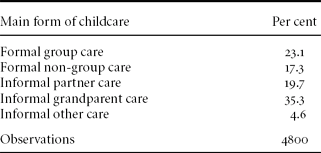
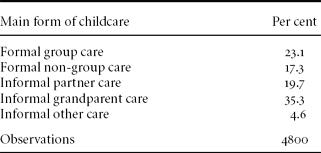
Table 1 shows the percentage of working mothers using these different types of childcare as their main source of provision when their children were aged nine months. Only 23 per cent were using formal group care as their main source of childcare, and a further 17 per cent were using formal non-group care. The largest group (35 per cent) were using grandparent care, while 20 per cent were using partner care and a further 5 per cent using other informal care.Footnote 9
Childcare use by working mothers when the children are aged 9 months
Notes: Sample: Of the 18,552 families who took part in MCS1, 256 are lost as they are multiple-birth families, 50 are lost, as the mother was under 16 when the child was born, 54 are lost because the mother was not the main respondent, 8,090 are lost as the mother was not working and using childcare at MCS1, 3,565 are lost as the family did not take part in MCS2, 1,737 are lost because they do not have complete information on the variables considered in this paper. This leaves a final sample of 4,800.
The results have been weighted to take account of the survey design.
Child development
Child development is measured in this article at age three by two cognitive tests and a behavioural measure. The two cognitive ability tests measure slightly different aspects of ability. The first test is a subscale of the British Ability Scale (BAS), which is a naming vocabulary test where children are asked to identify a range of items. This test assesses the expressive language ability of children. The test is individually administered and asks the child to name a series of pictures of everyday items. Although there are 36 items in total, the number of items shown to each child is dependent on their performance. For example, if five successive items are named incorrectly the test is terminated.
The second outcome measure is the School Readiness Composite, which is comprised of six subtests of the Revised Bracken Basic Concept Scale. It measures children's knowledge of those ‘readiness’ concepts that parents and teachers traditionally teach children in preparation for formal education (Bracken, Reference Bracken1998). The test has been designed for children aged between two years six months and seven years eleven months. The six subtests that make up the assessment are used to test children's basic concepts of colours, letters, numbers/counting, sizes, comparisons and shapes.
For both cognitive assessments, the analyses use scores which are age standardised. Higher scores indicate greater cognitive achievement. These scores have been transformed into Z scores across our sample. Both cognitive assessments were administered using Computer Assisted Personal Interviewing by interviewers who were specially trained but who were not professional psychologists.
The behavioural development of the children is measured with the Strength and Difficulties Questionnaire (SDQ). The SDQ is a behavioural screening questionnaire for three- to 16-year-olds (Goodman, Reference Goodman1997, Reference Goodman2001; Goodman et al., Reference Goodman, Meltzer and Bailey1998). It consists of 25 items which generate scores for five subscales measuring: conduct problems, hyperactivity, emotional symptoms, peer problems and pro-social behaviour. The items are assessed via parental report, normally by the mother, in the computer-assisted self-completion module of the questionnaire.Footnote 10 For the following analysis an overall difficulties score was computed by summing replies to the subscales indicating behaviour problems: that is, conduct problems, hyperactivity, emotional symptoms and peer problems, and multiplying the pro-social behaviour scale by –1 and adding that to the sum of the problem behaviours so that a higher score indicates more problem behaviours. The total problem score has then been transformed into a Z score across our sample.
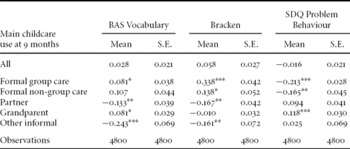
All three outcomes measure different aspects of child development and, as stated earlier, there is no reason to expect that different types of care all impact in the same way on these different attributes. This is examined in Table 2, which shows the mean Z scores in each of these tests for the sample of MCS children whose mothers were working and who were using some form of childcare when they were nine months old. From this table we can see that children experiencing formal group care achieve higher average scores on both cognitive tests than children experiencing other types of care. They also have less problem behaviour than other children. Children in the care of their grandparents also score well on the BAS vocabulary test but show higher problem behaviour scores, on average, than other children.Footnote 11
Mean child outcomes at age 3

Note: Each of the outcome measures has been converted into Z scores. The results have been weighted to take account of the survey design.
*p < 10%; **p < 5%, ***p < 1% group has a significantly different mean to the all category.
Statistical analysis
The model
The descriptive statistics show statistically significant associations between childcare and child outcomes. To test this further, statistical analyses were carried out using a series of regressions. The advantage of regressions is that they allow us to look at the relationship between childcare and child outcomes while controlling for other factors that may affect the relationship between childcare and child outcomes. These controls are very important because there is a potential issue of selection bias due to the fact that child and family characteristics are potentially related to both child outcomes and childcare decisions. To address this problem we examine the relationship between childcare and child outcomes while controlling for an extensive set of factors which could affect the relationship of primary interest.
In the regressions the dependent variables are the three outcome measures (vocabulary, school readiness and problem behaviour) which have been transformed into Z scores. The independent variables include childcare (formal group care, formal non-group care, partner care, grandparent care and other informal care) plus a range of other factors. The other factors include: a set of controls for children's characteristics (birth weight, birth order and gender of the child); maternal time variables (hours of work, non-standard hours of work and self-employment); and family characteristics (mother's age at first birth,Footnote 12 ethnicity of the mother, whether the mother was born in the UK, mother's highest educational qualification, whether there is a father present, father's highest educational qualification, whether the household claims benefits, language spoken at home and household income). Included in this final set of controls are also a number of variables that capture differences in parenting style. These dummy variables indicate whether a mother strongly agrees with any of the statements: (1) babies need to be stimulated if they are to develop well; (2) talking, even to a young baby, is important; (3) cuddling a baby is very important.Footnote 13, Footnote 14
As the outcome measures are essentially continuous, we run ordinary least squares regressionsFootnote 15 using survey commands in STATA. The survey commands are important because, as mentioned previously, the data are clustered by ward. This clustering needs to be taken into account in the statistical analysis to ensure that the standard errors of the reported estimates are not incorrect and the significance tests rendered invalid. There are a number of ways to do this: (1) use survey commands, (2) use clustered robust standard errors in standard analysis or (3) use a multi-level (hierarchical) model. Due to the fact that in the MCS the correlation is produced as a direct result of the survey design, the most appropriate method of dealing with the data is to use survey commands to run analyses (STATA library).Footnote 16
Results
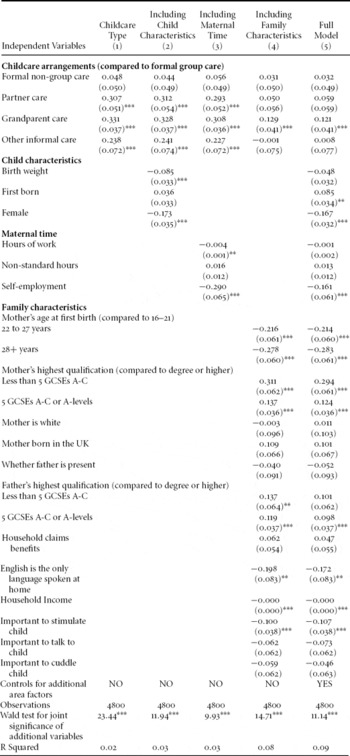
The hypotheses set out at the beginning of the paper are tested by regressing the cognitive and behavioural scores on the type of childcare attended, then additionally controlling for other factors that may influence this relationship. Each set of variables is entered into the model alone, then together in a full model. The results of this ordinary least squares regression are shown in Tables 3 to 5. Column (1) is a simple regression of the outcome scores on the type of childcare attended. Column (2) adds in variables that control for child characteristics; column (3) controls for mother's time; column (4) controls for other family characteristics; while column (5) controls for all the variables plus additional area factors which include UK country and ward type. The latter spatial measures are included as childcare policies vary across the countries of the UK as well as within countries, where additional childcare support is often provided in more disadvantaged areas (Sure Start and NNI, for example). Table 3 shows the results for the BAS vocabulary score, Table 4 for the Bracken School Readiness test and Table 5 the SDQ problem behaviour scores.
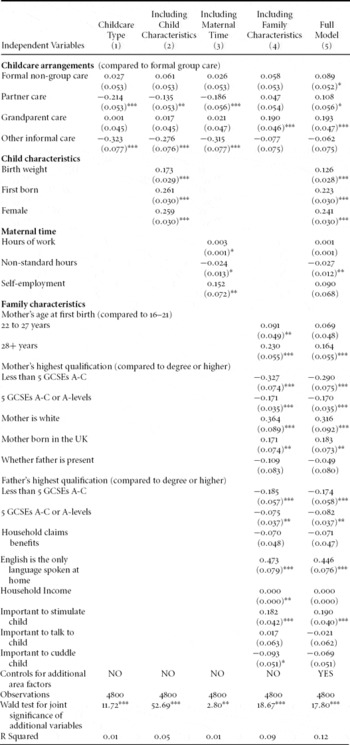
Regression of the relationship between childcare type and BAS vocabulary scores

Notes: Reported coefficients with standard errors in parentheses. Additional factors are: country and area type. All regressions have a constant included but unreported in this table. The results have been weighted to take account of the survey design.
*p < 10%; **p < 5%, ***p < 1%.
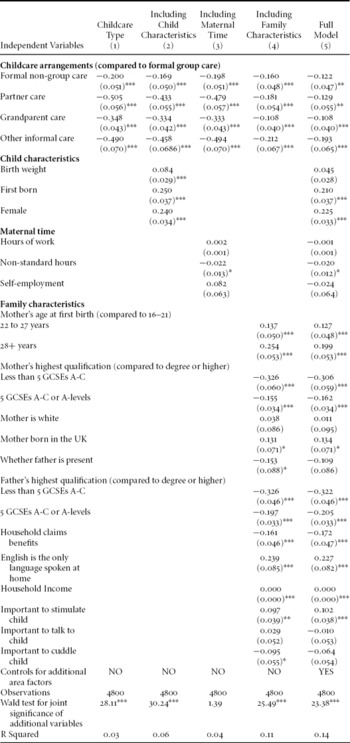
Regression of the relationship between childcare type and Bracken school readiness scores

Notes: Reported coefficients with standard errors in parentheses. Additional factors are: country and area type. All regressions have a constant included but unreported in this table. The results have been weighted to take account of the survey design.
*p < 10%; **p < 5%, ***p < 1%.
Regression of the relationship between childcare type and Strengths and Difficulties Problem Behaviour Score

Notes: Reported coefficients with standard errors in parentheses. Additional factors are: country and area type. All regressions have a constant included but unreported in this table. The results have been weighted to take account of the survey design.
*p < 10%; **p < 5%, ***p < 1%.
Formal group care has been found to be the type of care most positively associated with cognitive child outcomes and most negatively associated with behavioural child outcomes in previous research and in the descriptive statistics presented in this article. This category is therefore used as the base group against which the other types of care are compared. If the coefficients on any of the other care variables are statistically significant, then that type of care is more (or less) associated with child outcomes than the comparison care category (formal group care).
As already noted, we would expect to see negative coefficients on all other types of care compared to formal group care when regarding the school readiness scores. We would expect that informal care by family members (grandparent and partner care) would attract positive coefficients in the vocabulary score regression compared to formal group childcare. And for the behavioural scores we would expect all other forms of care to attract negative coefficients (have fewer behaviour problems reported) than formal group care.
If the coefficients on any of the care variables are statistically significant in the full model, this indicates that, even after controlling for other factors influencing the relationship between childcare and child outcomes, that type of care is still more (or less) associated with the outcome than the comparator care group. The accuracy of these predictions is tested empirically in Tables 3 to 5. As the outcomes are measured as standarised Z scores, the coefficients can be interpreted as standard deviation differences.
Vocabulary score
The basic model shows that, compared to formal group care, partner care and other informal care are negatively associated with vocabulary scores. However, there is no statistically significant difference between formal group care, formal non-group care and grandparent care.
When the sets of control variables are added in turn, the variables that measure family characteristics have the most impact on the childcare coefficients. In fact, it is this set of variables which causes the childcare coefficients to change sign so that in this model only grandparent care attracts a statistically significant coefficient. All other care types are statistically insignificant.
This relationship remains in the full model when all sets of variables are included. Children receiving grandparent care achieve, on average, higher vocabulary test scores (0.193 of a standard deviation) than children using formal group care. Interestingly, in the full model the smaller positive coefficients on both formal non-group care and partner care become statistically significant, but only at the 10 per cent level. Other than childcare, the factors most associated with vocabulary scores are: living in a household where English is the only language spoken (0.446); having a white mother (0.316); having a mother with fewer than five GCSEs grade A–C (–0.290); being a female child (0.241); and being a first-born child (0.223). If we compare the magnitude of the coefficients, these factors appear more strongly associated with vocabulary test scores than childcare type.
School readiness
Compared to formal group care, all other types of care attract negative, statistically significant coefficients in the Bracken School Readiness regressions. This is true in all model specifications, even in the full model.
As with the vocabulary score, the inclusion of family characteristics has the greatest impact on the childcare coefficients, reducing the magnitude and contributing most to the model R squared.
In the full model, the coefficients on the childcare variables are reduced in terms of magnitude, but remain statistically significant at a greater than 5 per cent level. All types of care are negatively associated with the Bracken School Readiness Test Scores compared to formal group care. Children in formal non-group care achieve, on average, 0.122 of a standard deviation lower school readiness scores than children in formal group care. Children experiencing informal care achieve between 0.108 and 0.193 of a standard deviation lower scores, depending on the type of informal care.
Of the other variables considered in the full model, the characteristics most associated with school readiness scores are: having a father with fewer than five GCSEs grade A–C (–0.322), having a mother with fewer than five GCSEs grade A–C (–0.306), living in a household where only English is spoken (0.227) and being a female child (0.225).
SDQ problem behaviour
The basic model shows that mothers of children using all forms of informal childcare report more problem behaviour than mothers of children using formal group childcare. Including the sets of controls reduces the childcare coefficients, but the informal care groups remain statistically significant until family characteristics are controlled for. Once differences in family characteristics are added to the model, only the grandparent coefficient remains significant. This is also true in the final model, indicating that when other factors are taken into account there is no significant difference in the problem behaviour reported for children in formal group care, formal non-group care, partner and other types of informal care. However, children who are cared for by their grandparents display more problem behaviour (by 0.121 of a standard deviation).
In the full model, the factors most associated with problem behaviour are mother's education and age. Children with mothers who do not have five or more GCSEs grade A–C have more problem behaviour than other children (0.294), while children with older mothers are reported as having less problem behaviour than children with younger mothers.
Differentiating aspects of behaviour
We can further investigate the relationship between grandparent care and problem behaviour by examining which of the five behavioural subscales (conduct problems, hyperactivity, emotional symptoms, peer problems and pro-social behaviour) are related to grandparent care.
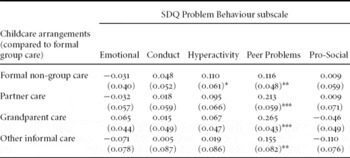
Table 6 presents the coefficients on the childcare variables for each of the five subscales, having estimated each regression using the full model specification. The table clearly shows that the significant relationship is with the peer problem scale.Footnote 17 Compared to formal group care, children in all other forms of care have more peer problems. This is consistent with other research, which finds that formal group care is associated with greater social competence with peers than other types of childcare (Melhuish, Reference Melhuish, Melhuish and Moss1991). However, the relationship is greatest for children looked after by grandparents (0.265).Footnote 18
Regression of the relationship between childcare type and Strengths and Difficulties Subscale Scores (Full model)

Notes: Reported coefficients with standard errors in parentheses. All subscales score highly for poorer behaviour except the pro-social scale. The results have been weighted to take account of the survey design.
*p < 10%, **p < 5%; ***p < 1%.
Interpretation
The results so far suggest that for the vocabulary score, grandparent care, and to a lesser extent formal non-group care and partner care, are positively associated with outcomes. This makes sense because grandparents may not be able to provide the academic facilities or stimuli that formal care providers can, but they are likely to talk and interact with children more frequently and on a one-to-one basis. The fact that the relationship exists, albeit less strongly, for other non-group care suggests that the adult–child interaction is an important element. However, it is not the nature of the one-to-one care solely that produces the positive relationship. The relationship is statistically stronger and larger in magnitude for grandparent care. Possible explanations include the fact that grandparents may talk to children more than other carers, not only because they have more time but also because they compensate for a reduction in physical activities with the child (Tamis-LeMonda et al., Reference Tamis-LeMonda, Shannon, Cabrera and Lamb2004). There is also evidence that suggests that older people, adjusting for qualifications, tend to use grammatically correct sentences and speak more slowly to children (Griffin and Spieler, Reference Griffin and Spieler2006). Moreover, older people do not easily tolerate grammatical errors and they resort more than younger people to corrective input when interacting with children, which helps develop language (Strapp, Reference Strapp1999). In a sense, grandparent care is producing both a quality (of language production) and quantity effect.
For the school readiness test, formal group care is associated with better cognitive scores than other types of care. Possible reasons for this include: formal group care is more likely to offer structure and content of daily activities, and formal carers are more likely to be trained, to have better facilities and resources and access to more educational stimulation.
In terms of behavioural scores, the evidence shows that children cared for by grandparents display more problem behaviour than children in other forms of childcare. Looking within the categories of the problem behaviour score indicates that this result is driven by these children scoring poorly on the peer-relation scale.
Subgroup analyses
The analysis so far has considered children attending each childcare setting as a homogenous group. However, in reality children within each care setting will vary considerably. For this reason we consider whether types of childcare are related to child outcomes differentially across groups of children. To test this, the full-specification model was applied separately to different groups of children: girls compared to boys; those with less educated mothers (with fewer than five GCSEs grade A–C) compared to more educated mothers (those with at least five GCSEs grade A–C); those in lone-parent families compared to two-parent families; those with young mothers (aged 21 and under) compared to older mothers (aged 22 plus); and children in households claiming benefits compared to households not claiming benefits.
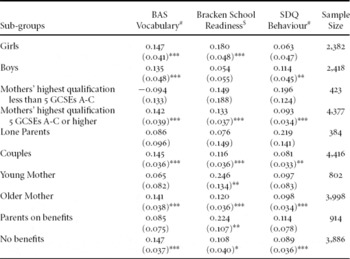
From the previous results we already know that the significantly distinct relationship for the BAS vocabulary score and SDQ problem behaviour score is with grandparent care, while for the Bracken School Readiness Score the significant relationship is with formal group care. So, for the sub-group analysis we run the same specifications as the full models in Tables 3 to 5, except that for BAS and the SDQ score the childcare variable is a dummy variable, taking the value of 1 if the child used grandparent care at nine months and 0 if they used any other form of care. For the Bracken School Readiness Score the childcare dummy takes a value of 1 if the child used formal group care and 0 for any other form of care. These regressions are run separately for the different sub-group populations, and the childcare coefficients for all regressions are shown together in Table 7 to better facilitate comparison.
Regression of childcare on BAS, Bracken and SDQ problem behaviour scores for different sub-groups (Full model)

Notes: Reported coefficients with standard errors in parentheses. The results have been weighted to take account of the survey design.
*p < 10%; **p < 5%, ***p < 1%.
#Grandparent care compared to all other types of care.
$Formal group care compared to all other types of care.
Of the sub-groups, we can consider the first category of each group as the more advantaged of the two categories. This is important because, depending on which group is most affected, childcare can either act to reduce early inequalities or exacerbate them. In other words, if childcare and child outcomes have a more positive association for the less advantaged groups, childcare will act to reduce existing inequalities. This was the rationale behind the Neighbourhood Nurseries Initiative which encouraged the expansion of formal group childcare in the 30 per cent most disadvantaged areas and take up of places by disadvantaged families. On the other hand, if the relationship is stronger for the more advantaged groups, then early inequalities may be further increased.
Examining Table 7, it is clear that grandparent care is positively associated with vocabulary scores for the more advantaged groups: for children with better-educated mothers, two-parent families, older mothers and those in households not claiming benefits. Interestingly, grandparent care is associated with higher vocabulary scores for both girls and boys, although the coefficient for girls is slightly larger.
For school readiness, formal care is associated with higher test scores for girls only. As girls are now outperforming boys at every stage of the education process, formal group care is more associated with school readiness for the more advantaged group. Other more advantaged groups that this is also true of are children with better-educated mothers and two-parent families. However, formal group care is also associated with school readiness for some of the less advantaged groups. Children with young mothers who experience formal group care achieve 0.246 standard deviations higher school readiness scores than similar children who attend other types of childcare settings. Moreover, children living in households claiming benefits achieve 0.224 higher scores than their contemporaries with other care arrangements.
Finally, examining the results for the SDQ problem behaviour, it is clear that grandparent care is associated with problem behaviour for a mixture of advantaged and disadvantaged groups. In particular, grandparent care is associated with problem behaviour for boys, who have 0.114 standard deviation higher problem behavior scores than boys in other care settings.
Conclusion
The relationship between child cognitive and behavioural outcomes and early non-maternal childcare is a hotly debated issue. This article tests how different forms of childcare at an early age play a role in the production of cognitive skills and behaviour of young children whose mothers are in work, using data from the UK Millennium Cohort Study.
The results suggest that formal group childcare in the first nine months of life is positively associated with the Bracken School Readiness Scores at three years old, while grandparent care in the first nine months of life is positively associated with the BAS vocabulary test scores at three years old. The results for the SDQ problem behaviour scores show that grandparent care is positively associated with behavioural problems as identified by mothers.
These different relationships remind us that childcare covers a variety of different types of care arrangements, which are likely to vary in the degree to which they educate and/or care for the child. Different types of care are likely to provide different experiences for the child and, as a result, the various care arrangements examined here are differentially related to the three child outcomes measured in this paper.
The results also show that different relationships between childcare and child outcomes exist for different groups of children. Grandparent care was shown only to be positively, and statistically significantly, associated with the vocabulary scores for the more advantaged groups: for children with better-educated mothers, those living in two-parent families, those with older mothers and those in households not claiming benefits. This may reflect the better vocabulary skills of grandmothers in these types of families. For the SDQ, grandparent care was shown to be associated with problem behaviour for both advantaged and disadvantaged groups, but most notably for boys.
The association between formal group care and school readiness produced a mixed picture. On the one hand, the association between school readiness and formal group care was larger for some of the more advantaged groups: girls, two-parent families and children with better-educated mothers. On the other hand, formal group care was also associated with higher test scores for some less advantaged groups, such as children with younger mothers and those living in households claiming benefits. This concurs with other research that shows formal group childcare is particularly good for disadvantaged groups (Sylva et al., Reference Sylva, Sammons, Melhuish, Siraj-Blatchford, Taggart and Elliot2001, Reference Sylva, Melhuish, Sammons, Siraj-Blatchford and Taggart2004; McQuail et al., Reference McQuail, Mooney, Cameron, Candappa, Moss and Petrie2003; Gregg et al., Reference Gregg, Washbrook, Propper and Burgess2005; Bernal and Keane, Reference Bernal and Keane2007) and suggests that this type of childcare can act to reduce early inequalities by reducing the gap between advantaged and less advantaged family backgrounds.
In terms of policy, by showing early childcare can make a difference to outcomes, this research delivers a reassuring message for the UK government, which has invested a great deal in policies supporting young children. The government has shown commitment in a number of well-known interventions (such as Sure Start and the NNI) aimed at improving child outcomes and reducing the achievement gap between advantaged and disadvantaged families. In 2008, it introduced the Early Years Foundation Stage aimed at improving outcomes for all children from birth to the age of five (Potter, Reference Potter2007).
One of the key findings in this article is that childcare, in particular formal childcare, has the potential to reduce inequalities. This complements other work, particularly on the NNI, where evaluations have found that the initiative has not only been successful in making formal care accessible to disadvantaged families, including lone parent families, those with low education and low income groups (La Valle et al., Reference La Valle, Smith, Purdon, Bell, Dearden, Shaw and Sibieta2007), but also that NNI has made a difference in a range of child and family outcomes (Mathers and Sylva, Reference Mathers and Sylva2007; Smith et al., Reference Smith, Coxon and Sigala2007).
The importance of supporting informal carers who, when the children are very young, are doing the majority of the caring also emerges from the analysis. This paper has shown that grandparent care contributes both positively and negatively to child outcomes, and perhaps with government support this situation could be improved. There are currently no allowances, tax breaks or grants for grandparents who care for their grandchildren. If they were to register as childminders, they could receive support and training, and could be paid by the parent who could claim some of the cost back through Working Tax Credit. However, at present, to do this a grandparent would need to care for a non-relative child alongside their own. Many grandparents are unable or unprepared to take on this additional burden. Perhaps a more flexible approach, which offers training and support for informal carers, should be considered rather than, or in addition to, encouraging informal carers down the formal care route in order for them to receive recognition and reward for the caring they are doing.
In addition to childcare, this article has also shown that there are a range of other factors that are associated with child outcomes. In particular, family characteristics, as a set of variables, were found to be important for all outcomes considered in this article. A number of individual variables were also associated with child outcomes. Living in a household where English was the only language spoken was very important for both the cognitive tests examined, while the gender of a child, mother's age and education were important for all outcomes. This suggests that policies that target inequalities in family background may also help to improve both cognitive and behavioural outcomes at age three.
However, we need to remain slightly cautious when interpreting these findings as, although we measure childcare and all other control variables at age nine months (t –1) and child outcomes at age three (t), we cannot be sure we are identifying a causal relationship. Moreover, we would ideally like to be able to elaborate on why the different forms of childcare are differentially associated with the child outcomes examined in this article. For this, we would need information on how the children are cared for in different settings. Unfortunately, such information does not exist in the data we use nor, as far as we are aware, in any available large-scale dataset in the UK (although see Mathers et al., Reference Mathers, Sylva and Joshi2007 for sub-sample study of childcare quality in the Millennium Cohort Study).
This article has tested how different forms of childcare at an early age play a role in the production of cognitive skills and behaviour for young children. It will be interesting to see whether the key findings persist as the children get older and gain experience of other forms and durations of childcare and begin school. Gaining a better understanding of the long-term effects of early childcare will clearly offer a future challenge for researchers interested in the academic and policy debates in this area.
Appendix 1. Descriptive statistics additional variables used in analysis

Notes: Descriptive Statistics for analysis sample of 4800. The results have been weighted to take account of the survey design.
Acknowledgements
The authors would like to thank the Economic and Social Research Council for funding this research (grant number RES-163–25-0002). They would also like to thank Jo Blanden, Shirley Dex, Paul Gregg, Heather Joshi, Stephen Machin, Samantha Parsons, Ingrid Schoon and Jane Waldfogel for comments that improved this paper. Thanks to David Budge, Lorna Hardy and Mina Thompson and also Eirini Flouri for useful discussions about the role of grandparents. Thanks in addition go to: the participants at the Bedford Group workshop series; the European Population Conference in Liverpool in June 2006; the International Conference on Child Cohort Studies in Oxford in September 2006; the American Economic Association meeting in Chicago in January 2007; and the Longview seminar on Cognitive Development in February 2007 for useful comments and suggestions on earlier drafts of this paper. We would also like to thank the Editors of the Journal of Social Policy and three anonymous referees.