Introduction
Psychotic disorders are ranked as the top 11th cause of disability worldwide (Global Burden of Disease Study 2013 Collaborators, 2015). These disorders are often associated with high rates of recurrence and mortality, unemployment, hospitalization, and long-term medication, incurring substantial societal costs. Longitudinal data collected from first-episode psychosis (FEP) patients illustrated that a prolonged duration of untreated psychosis (DUP) and suboptimal early outcome predicted poorer long-term outcomes (Bottlender et al., Reference Bottlender, Sato, Jäger, Wegener, Wittmann, Strauß and Möller2003). Such findings contribute to the critical period hypothesis of a time window for maximized treatment effects, followed by a plateau of subsequent outcomes (Birchwood, Todd, & Jackson, Reference Birchwood, Todd and Jackson1998). To address this and prevent secondary disability, early intervention (EI) aims to provide multidisciplinary and phase-specific intervention(s) during the first 2–3 years of illness. A recent meta-analysis involving over 2000 early-phase psychosis patients showed that EI alleviates positive, negative, and depressive symptoms and prevents re-hospitalization, while enhancing functioning and quality of life (Correll et al., Reference Correll, Galling, Pawar, Krivko, Bonetto, Ruggeri and Kane2018). However, the sustainability of such benefits of EI beyond the active intervention period remains unknown.
Recent studies investigated the optimal duration of EI for early-onset psychosis patients by comparing the effectiveness of EI provided for 3 (Chang et al., Reference Chang, Chan, Jim, Lau, Hui, Chan and Chen2015) or 5 years (Albert et al., Reference Albert, Melau, Jensen, Emborg, Jepsen, Fagerlund and Nordentoft2017a; Malla et al., Reference Malla, Joober, Iyer, Norman, Schmitz, Brown and Abadi2017). The Hong Kong Early Assessment Service for Young People with Psychosis (EASY) trial found that after receiving 2 years of EI, FEP patients who received an additional year of EI displayed better functioning and less severe negative and depressive symptoms than those who received an additional year of standard care (SC; Chang et al., Reference Chang, Chan, Jim, Lau, Hui, Chan and Chen2015). In another trial in Canada, patients who received 2 years of EI were randomized to receive an additional 3 years of EI or SC (Malla et al., Reference Malla, Joober, Iyer, Norman, Schmitz, Brown and Abadi2017). The added-EI group had sustained remission from positive and negative symptoms for a longer duration than the SC group (Malla et al., Reference Malla, Joober, Iyer, Norman, Schmitz, Brown and Abadi2017). However, in the OPUS II trial, a specialized EI study in Denmark, the 5-year EI and the 3-year EI plus 2-year SC groups showed no difference regarding negative symptoms at year 5 (Albert et al., Reference Albert, Melau, Jensen, Emborg, Jepsen, Fagerlund and Nordentoft2017a). Inconsistent conclusions regarding EI's effectiveness warrant further investigations. In addition to elucidating the optimal duration of EI services, program design could also be enhanced by identifying subgroups who may benefit most from EI.
Past literature suggests that benefits may be more pronounced in FEP patients aged 35 or above (Lasalvia et al., Reference Lasalvia, Bonetto, Lenzi, Rucci, Iozzino and Cellini2017), or those with a shorter DUP (Albert et al., Reference Albert, Melau, Jensen, Hastrup, Hjorthøj and Nordentoft2017b; Kane et al., Reference Kane, Robinson, Schooler, Mueser, Penn, Rosenheck and Heinssen2016; Malla et al., Reference Malla, Shah, Dama, Iyer, Joober, Abdel-Baki and Abadi2018). Paradoxically, there is insufficient evidence for the effectiveness of EI in psychosis patients above 35 years old, as demonstrated by Hong Kong's (EASY's) target of patients aged 15–25 (Chang et al., Reference Chang, Chan, Jim, Lau, Hui, Chan and Chen2015), and Denmark (OPUS II; Albert et al., Reference Albert, Melau, Jensen, Emborg, Jepsen, Fagerlund and Nordentoft2017a) and Canada's focus on patients aged 15–35 (Malla et al., Reference Malla, Joober, Iyer, Norman, Schmitz, Brown and Abadi2017). This may be explained by the collective surge in incidences of psychosis between the ages of 15 and 25 (Häfner, Maurer, Löffler, & Riecher-Rössler, Reference Häfner, Maurer, Löffler and Riecher-Rössler1993). Nonetheless, a significant proportion of all patients develop psychosis after the age of 25 (Pedersen et al., Reference Pedersen, Mors, Bertelsen, Waltoft, Agerbo, McGrath and Eaton2014). Given that patients with an early v. late-onset differ in illness profile, devising services that differentiate between the two onset groups could further optimize patient outcomes (Pearlson et al., Reference Pearlson, Kreger, Rabins, Chase, Cohen, Wirth and Tune1989).
The Jockey Club Early Psychosis (JCEP) project was launched in Hong Kong in 2009 to extend EASY's existing services to users aged beyond 15–25 by providing specialized EI for psychosis patients aged 26–55. A randomized controlled trial (RCT) involving its service users examined the following questions: (1) Do 2 and 4 years of EI case management result in better functional and symptomatic outcomes than standard care?; (2) Does a 4-year EI program improve patient outcomes more so than a 2-year program?; and (3) What subgroups of patients benefit more from EI?
Method
Study design and participants
This was a 4-year, rater-masked, superiority, parallel-group RCT investigating the effectiveness of EI for psychosis patients aged 26–55 (clinicaltrials.gov: NCT00919620; Hui et al., Reference Hui, Chang, Chan, Lee, Tam, Lai and Chen2014). Between 22 June 2009 and 8 August 2011, patients in public outpatient psychiatric clinics across 12 sites in Hong Kong were assessed for trial eligibility by their attending psychiatrists.
Patients were eligible if they were aged 26–55, Cantonese-speaking, ethnically Chinese, and diagnosed with schizophrenia, schizophreniform disorder, schizoaffective disorder, delusional disorder, brief psychotic disorder, psychotic disorder not otherwise specified, or manic episodes with psychotic features according to the Diagnostic and Statistical Manual of Mental Disorders, Fourth Edition (DSM-IV; American Psychiatric Association, 1994). They should also be an FEP case with less than 12 months of psychiatric treatment. Patients were excluded if they could not consent, had organic brain conditions, intellectual disability, or substance-induced psychosis.
All procedures contributing to this work comply with the ethical standards of the relevant national and institutional committees on human experimentation and with the Helsinki Declaration. Procedures involving human subjects/patients were approved by the Institutional Review Boards at each site. Written informed consent was obtained from all subjects.
Intervention
Patients were randomly allocated to receive either: 2-year EI followed by 2-year SC, 4-year EI, or 4-year SC. All patients received psychiatric care from general adult psychiatry (GAP) services, delivered by multidisciplinary teams including outpatient clinics, inpatient facilities, day hospitals, and community outreach services. Only patients in the 4-year and 2-year EI groups received an additional protocol-based psychosocial intervention from the case managers assigned. Unless their case managers resigned from the study, patients received intervention from the same case manager throughout the entire study period. Case managers, who were trained and worked in the same unit, engaged closely with patients at different psychiatric sites and tracked their progress via frequent community visits and phone contact, while working alongside partnering non-governmental organizations. Depending on the stage of illness and patients' needs, individualized care plans, and various psychosocial treatment techniques were adopted, such as cognitive behavioral therapy, social and vocational skills training (Online Supplementary Table S1). Patients in the 2-year and the 4-year EI groups were aware of the service timeframe, which may cause EI delivery to differ between the two groups. For instance, only goals of a higher priority may have been achieved by the 2-year EI group.
In addition to psychology and/or social worker qualifications, case managers also received training on knowledge and skills necessary for effective intervention, monthly on-the-job training, weekly supervision with experienced clinicians and clinical psychologists regarding clinical skills, and case-by-case discussion. The manager-to-case ratio was 1:80.
Randomization and blinding
A randomization list for treatment allocation was generated using StatsDirect (version 2.7.7), with a randomized block size of 6–12 without stratification. The procedure was carried out by researchers blinded to patients' background. Each patient was assigned a unique project code and treatment arm according to the randomization list. There is no significant difference in the proportion of patients recruited from each site in the three treatment arms (p = 0.65).
Baseline assessments were conducted after randomization, by research assistants blinded to the participants' group allocation.
Outcome measures
Patients were assessed face-to-face by research assistants at baseline, 6 months, and 1, 2, 3, and 4 years post-baseline.
Primary outcome
Functioning was assessed using the Role Functioning Scale (RFS; Goodman, Sewell, Cooley, & Leavitt, Reference Goodman, Sewell, Cooley and Leavitt1993) and the Social and Occupational Functioning Assessment Scale (SOFAS; Goldman, Skodol, & Lave, Reference Goldman, Skodol and Lave1992). The RFS rates an individual from 1 (impaired) to 7 (excellent functioning) in four domains: work productivity, independent living and self-care, immediate social network, and extended social network. SOFAS scores range from 1 (grossly impaired) to 100 (excellent functioning). These measures were adopted for easier comparison with local EI studies (Chang et al., Reference Chang, Chan, Jim, Lau, Hui, Chan and Chen2015). Three raters scored 32 cases, with satisfactory inter-rater reliability for the four RFS domains (0.81, 0.78, 0.85, and 0.84, respectively) and SOFAS (0.95).
Secondary outcomes
Psychotic symptoms were assessed using the Positive and Negative Syndrome Scale (PANSS; Kay, Fiszbein, & Opler, Reference Kay, Fiszbein and Opler1987), the Scale for the Assessment of Positive Symptoms (SAPS; Andreasen, Reference Andreasen1984), and the Scale for the Assessment of Negative Symptoms (SANS; Andreasen, Reference Andreasen1983). The mood was assessed with the Calgary Depression Scale for Schizophrenia (CDSS; Addington, Addington, Maticka-Tyndale, & Joyce, Reference Addington, Addington, Maticka-Tyndale and Joyce1992) and the Young Mania Rating Scale (YMRS; Young, Biggs, Ziegler, & Meyer, Reference Young, Biggs, Ziegler and Meyer1978). Health-related quality of life was indicated using the Short Form-12 Health Survey (SF-12; Ware, Kosinski, & Keller, Reference Ware, Kosinski and Keller1996). Side effects were assessed using the Simpson Angus Scale (SAS; Simpson & Angus, Reference Simpson and Angus1970), the Abnormal Involuntary Movement Scale (AIMS; Guy, Reference Guy1976), the Barnes Akathisia Rating Scale (BARS; Barnes, Reference Barnes1989), and the Udvalg for Kliniske Undersøgelser (UKU; Lingjaerde, Ahlfors, Bech, Dencker, & Elgen, Reference Lingjaerde, Ahlfors, Bech, Dencker and Elgen1987).
Other measures
Demographic information included age, sex, years of education, and marital and occupational statuses. Mode of illness onset and DUP were determined with the Interview for the Retrospective Assessment of the Onset of Schizophrenia (IRAOS; Häfner et al., Reference Häfner, Riecher-Rössler, Hambrecht, Maurer, Meissner, Schmidtke and van der Heiden1992). The Premorbid Adjustment Scale (PAS; Cannon-Spoor, Potkin, & Wyatt, Reference Cannon-Spoor, Potkin and Wyatt1982) and the Assessment of Premorbid Schizoid-Schizotypal Traits (PSST; Foerster, Lewis, Owen, & Murray, Reference Foerster, Lewis, Owen and Murray1991) captured participants' premorbid profile. Antipsychotic and adjunctive medication prescriptions, as well as hospitalization histories, were captured by centralized hospital records. Patients' diagnoses were reconfirmed according to DSM-IV criteria by two experienced psychiatrists after 6 months of psychiatric treatment, with the best-estimate consensus approach (Leckman, Sholomskas, Thompson, Belanger, & Weissman, Reference Leckman, Sholomskas, Thompson, Belanger and Weissman1982).
Statistical analysis
The sample size was calculated based on the estimation of a 5-point mean difference (s.d. = 12 points) of the SOFAS scores between the SC and EI groups. A sample size of 91 per arm would have 80% power to detect a net effect size of 0.80 using a p = 0.05 two-sided significance level. Estimating a 20% dropout rate, approximately 120 participants should be enrolled to each group, totaling 360 patients. The sample size initially reported at trial registration was 500, and was revised due to the lower-than-expected dropout rate (Hui et al., Reference Hui, Chang, Chan, Lee, Tam, Lai and Chen2014).
All statistical analyses were conducted with IBM® SPSS® version 25.0, according to an intention-to-treat principle.
Baseline characteristics were compared using the chi-squared test and ANOVA for categorical and continuous variables. Primary and secondary outcomes were analyzed using linear mixed-effects models (LMMs), and occupational status was analyzed with mixed-effects logistic regressions. Models included treatment group, linearized time, the interaction of treatment × time, baseline values of the analyzed outcome measures, age, sex, years of education, marital status, as well as a random intercept. Between-group comparisons at individual time points were derived and the interaction estimated whether the change in outcome measure over time differed between groups. The baseline value of the analyzed outcome measure was included as a covariate in the model to adjust for any baseline differences between treatment groups. Unstructured (UN) covariance structures were used throughout.
Further analyses assessed whether EI effects were more pronounced in particular subgroups within the 4-year EI and SC arms. Factors explored include DUP (below v. above median), age (below v. above 40), sex, and diagnosis (schizophrenia v. non- schizophrenia). The LMMs used were the same as in the main analyses, except that the models were only run within a particular subgroup (e.g. in the short DUP group). For the DUP subgroup analysis, PSST scores were added to the models since they were found to differ between those with a DUP below or above the median (p = 0.02).
Results
Participants
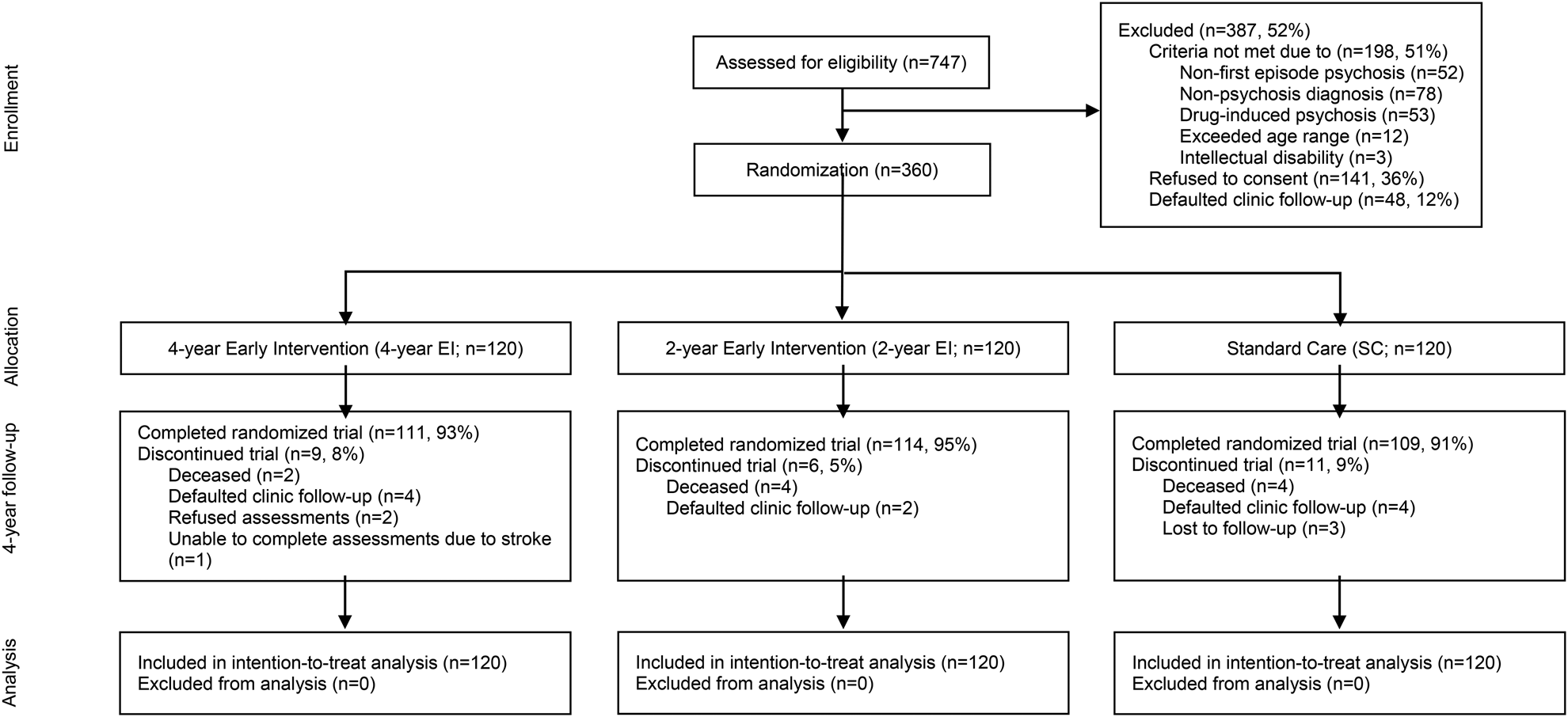
Out of the 747 patients screened, 360 met the inclusion criteria and agreed to be randomized, with 120 in each group (Fig. 1). By the end of the trial, 111 (93%) patients of the 4-year EI group, 114 (95%) of the 2-year EI group, and 109 (91%) of the SC group completed the study. The completers (334 out of 360; 93%) and non-completers (26 out of 360; 7%) did not differ significantly in sex (p = 0.50), onset age (p = 0.22), or education level (p = 0.19).
Flow of participants through the study.

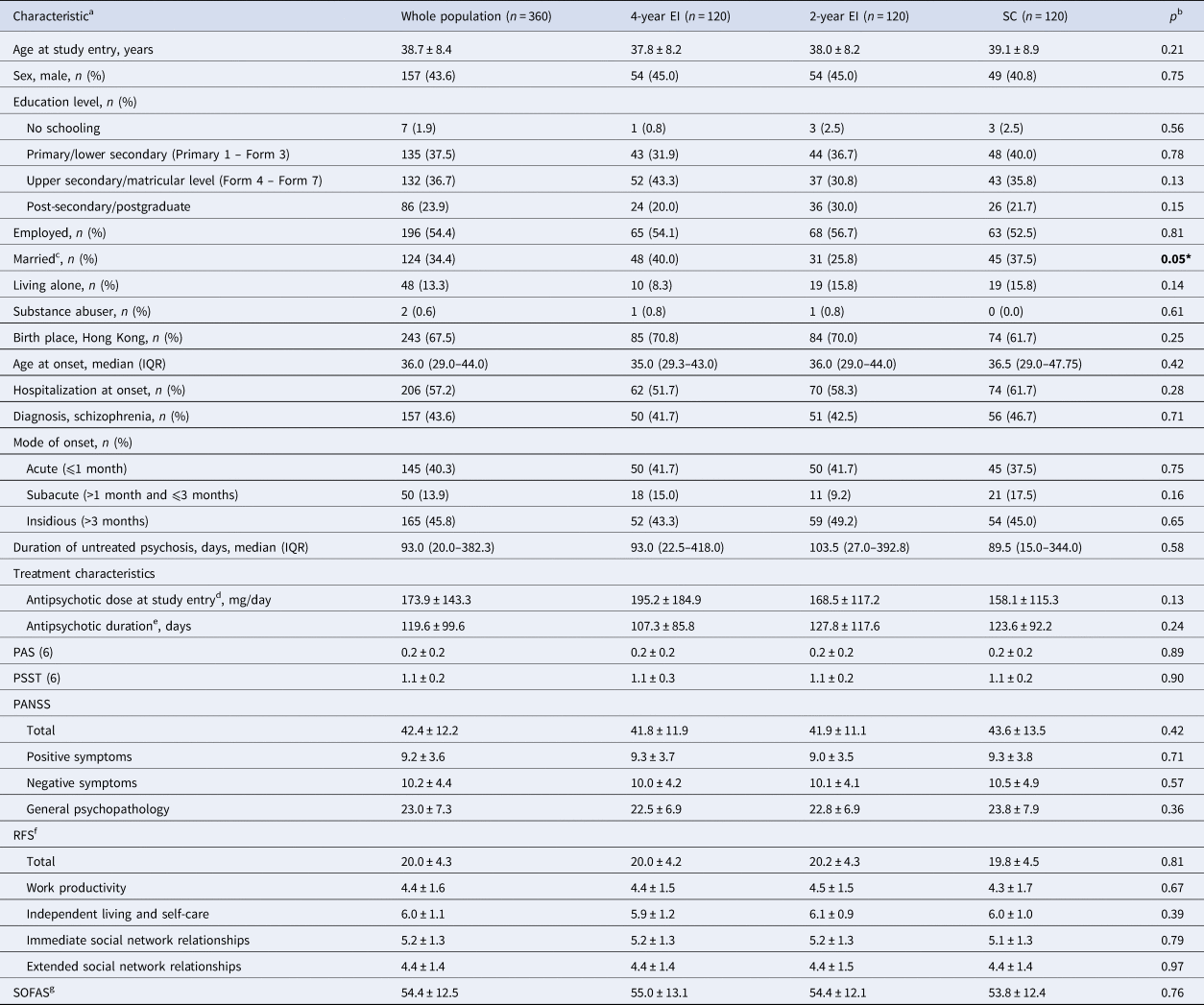
Table 1 shows the patients' basic demographic at baseline. Across the entire cohort, 43.6% were male, the mean age was 38.7 years, and the median DUP was 93 days. Forty-four percent of patients were diagnosed with schizophrenia and 54% were employed. The three groups had comparable baseline characteristics, except that fewer patients in the 2-year EI group were married relative to the other two groups.
Basic demographic, clinical, and functional characteristics at baseline for the whole population, the 4-year EI group, the 2-year EI group, and the SC group

EI, early intervention; SC, standard care; IQR, interquartile range; PAS, Premorbid Adjustment Scale; PSST, Assessment of Premorbid Schizoid-Schizotypal Traits; PANSS, Positive and Negative Syndrome Scale; RFS, Role Functioning Scale; SOFAS, Social and Occupational Functioning Assessment Scale.
a Number of missing observations in parentheses. Unless stated otherwise, values represent mean ± standard deviation.
b Differences between the three treatment groups were compared using the chi-square test for categorical variables, the ANOVA test for continuous variables, and the Kruskal-Wallis test for non-parametric continuous variables.
c Married v. single/divorced/windowed/separated.
d The mean daily dose of each antipsychotic was converted to chlorpromazine equivalent dose.
e Treatment duration was defined as the period in days between the first receipt of antipsychotic medication and study entry.
f RFS was used to assess the role functioning of an individual on a seven-point scale for four constituent components: work productivity, independent living and self-care, immediate social network relationships, and extended social network relationships. Scores represent the following: 1 = severe impairment, 2 = marked limitations, 3 = limited functioning, 4 = marginal functioning, 5 = moderate functioning, 6 = adequate functioning, and 7 = excellent and optimal functioning. RFS total represents the sum of its four sub-scores, resulting in a maximum possible score of 28.
g SOFAS was used to assess the overall social and occupational functioning of an individual on a scale ranging from 1 (grossly impaired) to 100 (excellent functioning).
*p < 0.05.
4-year EI v. 4-year SC
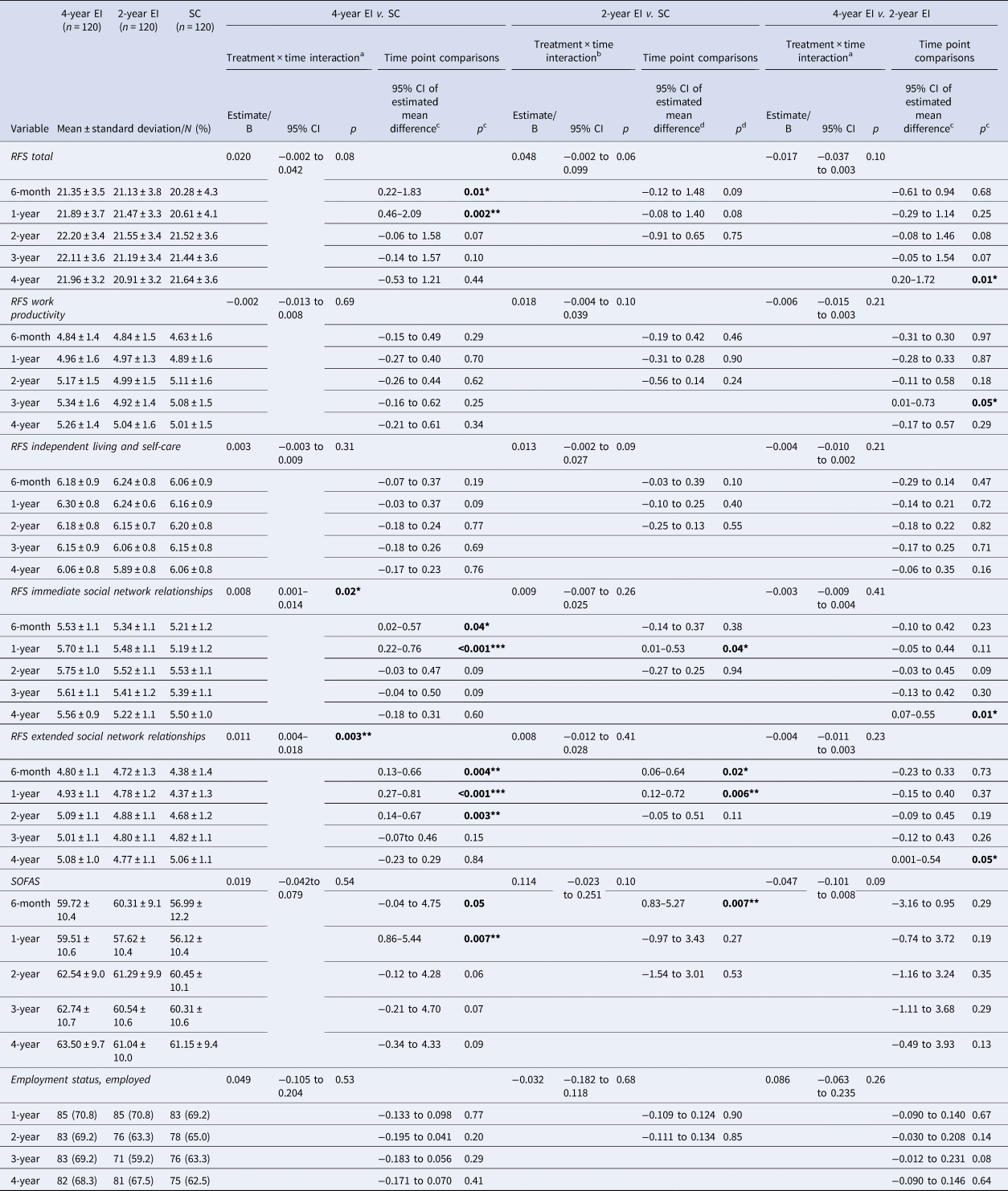
Table 2 shows that significant treatment × time interactions were found for RFS immediate social network (interaction estimate 0.008, 95% CI 0.001–0.014; p = 0.02) and extended social network relationships (interaction estimate 0.011, 95% CI 0.004–0.018; p = 0.003).
Functional outcomes of the 4-year EI, 2-year EI, and SC groups at the 6-month, 1-year, 2-year, 3-year, and 4-year follow-up time points

EI, early intervention; SC, standard care; CI, confidence interval; RFS, Role Functioning Scale; SOFAS, Social and Occupational Functioning Assessment Scale.
a Linear mixed-effects models was used for RFS and SOFAS outcomes, with repeated measures using the 6-month, 1-year, 2-year, 3-year, and 4-year follow-up time points, were used to generate treatment × time interaction terms for both the 4-year EI v. SC comparison and the 4-year EI v. 2-year EI comparison; mixed-effects logistic regression models were used for employment status outcome, with repeated measures using the 1-year, 2-year, 3-year, and 4-year follow-up time points (6-month data were not available), were used to generate treatment × time interaction terms for the 4-year EI v. SC comparison, the 4-year EI v. 2-year EI comparison, and the 2-year EI v. SC comparison. For both models, the following were included as covariates: the baseline values of the outcome variable, age, sex, years of education, and marital status.
b Linear mixed-effects models, with repeated measures using the 6-month, 1-year, and 2-year follow-up time points, were used to generate treatment × time interaction terms for the 2-year EI v. SC comparison.
c Estimated mean difference and p values were derived from linear mixed-effects models for repeated measures (at 6-month, 1-year, 2-year, 3-year and 4-year follow-up time points).
d Estimated mean difference and p values were derived from linear mixed-effects models for repeated measures (at 6-month, 1-year and 2-year follow-up time points).
*p < 0.05, ** p < 0.01, ***p < 0.001.
Data in bold indicate statistically significant associations with P-values equal or less than 0.05.
At 6-month and 1-year follow-up (Table 2 and Online Supplementary Fig. S1), the 4-year EI group had significantly higher RFS total (p = 0.01 and p = 0.002 respectively), immediate social network relationship (p = 0.04 and p < 0.001), and extended social network relationship scores (p = 0.004 and p < 0.001). This pattern was also observed at 1-year for SOFAS (p = 0.007) and at 2-year for RFS extended social network (p = 0.003).
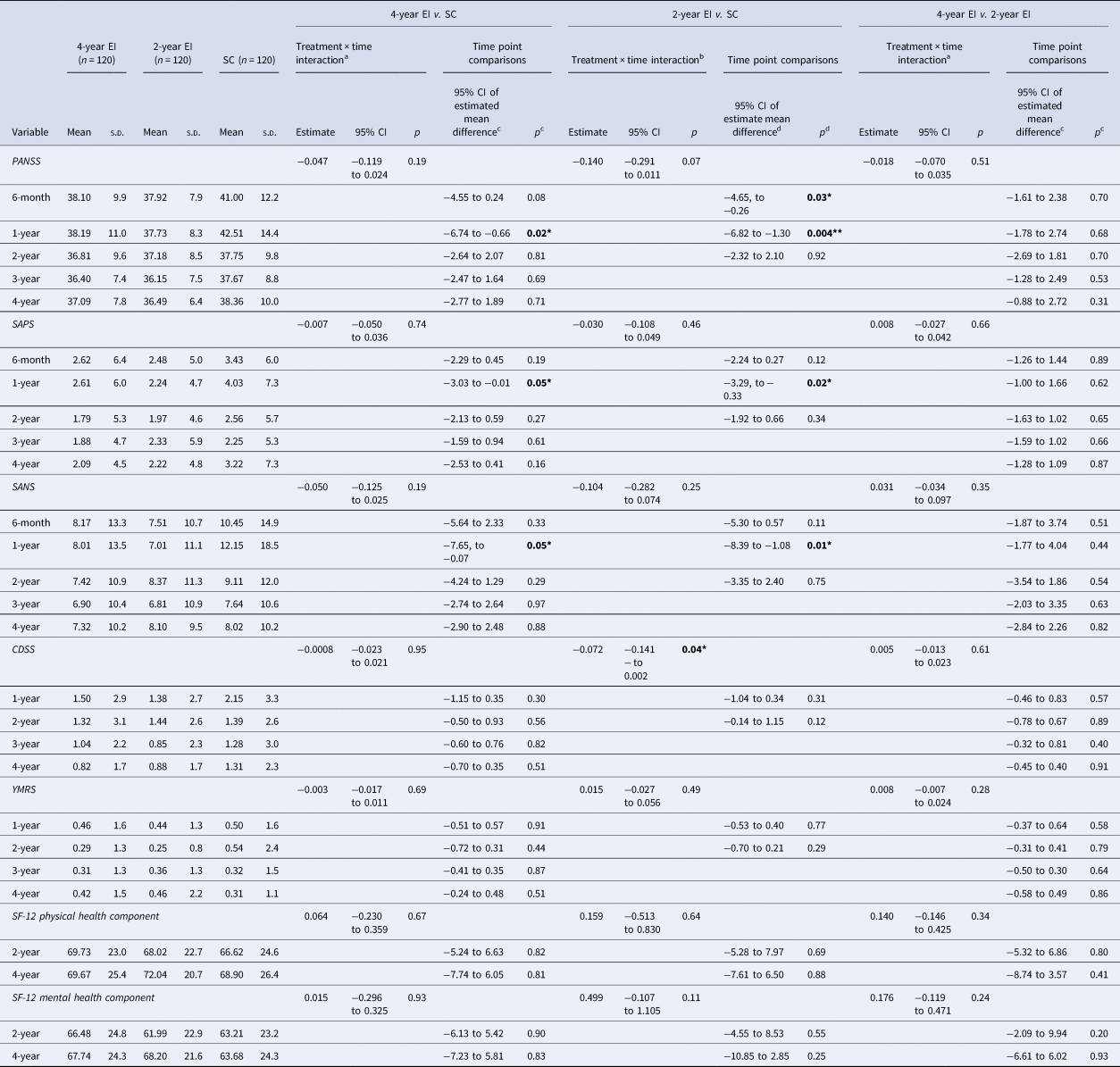
No significant treatment × time interactions were observed for symptomatic outcomes (Table 3). At the 1-year follow-up, however, the 4-year EI group had significantly lower PANSS (p = 0.02), SAPS (p = 0.05) and SANS (p = 0.05) scores.
Symptomatic and quality of life outcomes of the 4-year EI, 2-year EI, and SC groups at the 6-month, 1-year, 2-year, 3-year, and 4-year follow-up time points

EI, early intervention; SC, standard care; s.d., standard deviation; CI, confidence interval; PANSS, Positive and Negative Syndrome Scale; SAPS, Scale for the Assessment of Positive Symptoms; SANS, Scale for the Assessment of Negative Symptoms; CDSS, Calgary Depression Scale for Schizophrenia; YMRS, Young Mania Rating Scale; SF-12, Short Form-12 Health Survey.
a Linear mixed-effects models, with repeated measures using the 6-month, 1-year, 2-year, 3-year, and 4-year follow-up time points, were used to generate treatment × time interaction terms for both the 4-year EI v. SC comparison and the 4-year EI v. 2-year EI comparison. For CDSS and YMRS, only the 1-year, 2-year, 3-year, and 4-year follow-up time points were available and included in the models. For SF-12 measures, only the 2-year and 4-year follow-up time points were available and included in the models.
b Linear mixed-effects models, with repeated measures using the 6-month, 1-year, and 2-year follow-up time points, were used to generate treatment × time interaction terms for the 2-year EI v. SC comparison. For CDSS and YMRS, only the 1-year and 2-year follow-up time points were available and included in the models. For SF-12 measures, only the 2-year follow-up time point was available and included in the models.
c Estimated mean difference and p values were derived from linear mixed-effects models for repeated measures (at 6-month, 1-year, 2-year, 3-year and 4-year follow-up time points). For CDSS and YMRS, only the 1-year, 2-year, 3-year, and 4-year follow-up time points were available and included in the models. For SF-12 measures, only the 2-year and 4-year follow-up time points were available and included in the models.
d Estimated mean difference and p values were derived from linear mixed-effects models for repeated measures (at 6-month, 1-year and 2-year follow-up time points). For CDSS and YMRS, only the 1-year, 2-year, 3-year, and 4-year follow-up time points were available and included in the models. For SF-12 measures, only the 2-year follow-up time point was available and included in the models.
*p < 0.05, ** p < 0.01.
2-year EI v. 2-year SC
No significant treatment × time interactions were found for functioning (Table 2). The 2-year EI group had significantly better RFS extended social network relationship (p = 0.02) and SOFAS (p = 0.007) scores at 6 months, as well as better RFS extended social network (p = 0.006) and immediate social network (p = 0.04) at 1-year follow-up.
No significant interactions were found for symptomatic outcomes (Table 3) except for the CDSS score (interaction estimate −0.072, 95% CI −0.141–0.002; p = 0.04). At the 6-month and 1-year follow-up, the 2-year EI group had significantly lower PANSS scores (p = 0.03 and 0.004 respectively), as well as lower SAPS (p = 0.02) and SANS (p = 0.01) scores at 1-year follow-up.
4-year EI v. 2-year EI
No significant treatment × time interactions were found for functioning (Table 2). At 3-year follow-up, the 4-year EI group had a significantly higher RFS work productivity score (p = 0.05). At 4-year time follow-up, the 4-year EI group had significantly higher RFS total (p = 0.01), immediate social network (p = 0.01), and extended social network relationship (p = 0.05) scores.
No significant interactions or group differences were found for symptomatic outcomes at any time point (Table 3).
Subgroup analyses
Subgroup analyses evaluated the effects of age, sex, diagnosis, and DUP on patients' functioning. For those aged ⩽40 years, a significant treatment × time interaction was found for RFS immediate social network (interaction estimate 0.009, 95% CI 0.002–0.017; p = 0.02, Online Supplementary Table S2), but not in those aged >40 (p = 0.42). Among those aged ⩽40, the 4-year EI group had scores higher than the SC group at 6-month (p = 0.01), 1-year (p = 0.006), and 2-year (p = 0.008) follow-up. For those aged >40, significant differences between the two groups were only observed at 1-year follow-up (p = 0.02).
Among those with a long DUP, significant treatment × time interaction was found for RFS immediate social network relationship (interaction estimate 0.009, 95% CI 0.0003–0.019; p = 0.04, Online Supplementary Table S3) and extended social network relationship scores (interaction estimate 0.011, 95% CI 0.0004–0.021; p = 0.04). Among patients who had a long DUP, the 4-year EI group had higher immediate and extended social network relationship scores at 6-month to 4-year follow-up compared to the SC group.
No subgroup differences on their treatment × time interaction were found for the diagnosis and sex subgroups.
Serious adverse events and side effects
Ten patients (2.8%, out of 360) were deceased at 4-year follow-up (Online Supplementary Table S5). Mortality rates were not statistically different between groups. There were no significant differences in side effects experienced by the three groups at baseline and 4 years after.
Treatment received and relapse
Except for case manager contact, all other types of clinical care received including a clinical psychologist, medical social worker, and psychiatric nurse were not different between the three groups over the 4 years (Online Supplementary Table S6). The three groups did not differ significantly in their antidepressant, antipsychotic or adjunctive medication intake (Online Supplementary Table S7), or in the proportion of relapses at each time point (Online Supplementary Table S8). Nor was there any significant intervention group × time interaction on medication intake by age group.
Discussion
This trial provided evidence for the effectiveness of EI in improving social functioning amongst Chinese psychosis patients aged 26–55, especially in the first 2 years of service. Concerning the optimal duration of EI, we found that a longer treatment means more lasting efficacy. In particular, these effects are more noticeable during the initial 2 years of service when comparing both EI groups against the SC group. However, comparing 4-year v. 2-year EI, the additional 2 years confers little subsequent benefits. Taken together, we argue that EI should be provided for at least the initial 2 years of illness. Further, from our subgroup analyses, the services could target those aged ⩽40 years with a longer DUP for optimal functional improvement.
Is EI effective for patients aged 26–55?
Our data support the clinical efficacy of EI on functional outcomes for psychosis patients aged 26–55. On average, patients in the 4-year EI group showed an improvement from being ‘moderately functional’ to approaching ‘adequate functioning’ in their immediate social network relationships in the first 2 years. They also improved from having only ‘marginally effective interactions’ to having ‘moderately effective interactions’ in their extended social network relationships. This may be related to the meticulous design of the JCEP's program (Online Supplementary Table S1) in improving social functioning. With the aim to promote recovery in patients, an integral component of JCEP was to provide social skills training, social goals planning, and opportunities to participate in community-based groups. Of equal importance is that JCEP provided skills training and reintegration assistance through guided exploration of work interests, job-seeking skills training, job referrals, vocational goals planning, and advice on sustaining employment. Similar functional improvements in the first 2 years of EI were also documented in previous EI studies (Bird et al., Reference Bird, Premkumar, Kendall, Whittington, Mitchell and Kuipers2010).
Consistent with previous studies, our study found that EI treatment, regardless of length, alleviated positive (Bird et al., Reference Bird, Premkumar, Kendall, Whittington, Mitchell and Kuipers2010; Kane et al., Reference Kane, Robinson, Schooler, Mueser, Penn, Rosenheck and Heinssen2016) and negative (Chen et al., Reference Chen, Tang, Hui, Chiu, Lam, Law and Honer2011) symptoms during the first year of service. Our findings have added value to the existing findings by demonstrating that EI also yielded symptomatic improvement in patients with a less severe symptomatic profile at baseline. It is postulated that the symptomatic improvement may be attributed to the case management approach in improving medication attitude, adherence, and illness insight, as well as to psychosocial interventions such as Cognitive Behavioral Therapy (Bird et al., Reference Bird, Premkumar, Kendall, Whittington, Mitchell and Kuipers2010). Given the lack of difference in medication intake between the EI and SC groups (Online Supplementary Table S7), the symptomatic improvement in the former is unlikely to have been influenced by medication.
Furthermore, it has long been posited that illness severity is closely linked to social functioning in schizophrenia (Shamsi et al., Reference Shamsi, Lau, Lencz, Burdick, DeRosse, Brenner and Malhotra2011). In the current study, a correlational pattern was observed between functional and symptomatic improvements from since baseline, particularly for patients in the 4-year EI group and for patients aged ⩽40 years (Online Supplementary Table S9). Therefore, it is possible that patients who are clinically more stable would function better in social settings, and vice versa.
Compared with SC, should EI be provided for four or two years?
To evaluate the effectiveness of EI treatment, we compared EI for 2- and 4-years against SC. We found that patients receiving 4-year EI had better social functioning and less severe positive and negative symptoms during the initial 2 years of treatment, while improvements from 2-year EI were seen only during the first year. Notably, the 2- and 4-years groups were not necessarily identical for the first 2 years; treatment plans may have differed depending on a time constraint. Patients in the 4-year EI group likely had a better rapport with their case managers, resulting in more favorable outcomes. Therefore, it is unsurprising that the two groups showed different improvement trajectories, although both received EI in the first 2 years.
Our data clearly indicated a positive relationship between the duration of treatment and the length of sustained treatment effects. However, in spite of laudable efforts in providing EI for up to 4 years, functional and symptomatic improvements were only significant during the first 2 years of service. Furthermore, trajectories of the two intervention groups suggested that improvements in the EI groups (regardless of the intervention duration) may reach a plateau phase while the SC group catches up at later years (Birchwood et al., Reference Birchwood, Todd and Jackson1998). For example, while the 2-year EI group often presented superior functioning in several domains at baseline, 6-months, 1-year, and 2-year (albeit not always significantly), most of those improvements dissipated in the subsequent third and fourth years, with SC showing more favorable results at times.
Although EI improvements may have emerged later if the follow-up period was lengthened, the current findings do highlight the importance of SC for psychotic disorders. GAP patients are not only prescribed medications, but can also access both medical and community outreach services to receive clinician consultations, support, and interventions (e.g. psychoeducation) – resources that patients may not otherwise have. Indeed, the high quality of SC provided by the multidisciplinary healthcare professionals in Hong Kong may lead to a diminished superiority of sustaining EI over SC beyond 2 years (Chang et al., Reference Chang, Kwong, Lau, So, Wong, Chan and Chen2017). Similarly, Albert et al. (Reference Albert, Melau, Jensen, Emborg, Jepsen, Fagerlund and Nordentoft2017a) cited the high intensity of treatment provided in their SC to be a potential reason for the lack of clinical differences in patients whose 2 years of EI was followed by either SC or further EI for 3 years. The current data nonetheless indicates that the timeliness of EI could expedite improvements, which may, in the long term, reduce treatment costs.
Are there further benefits from 2-year extension (4-year EI v. 2-year EI)?
To investigate whether a 2-year extension of EI provides additional benefits, we compared the outcomes between two intervention arms. As there was a slim possibility that differences may be driven by a greater portion of married participants in the 4-year EI group, marital status was included as a covariate in our models. We found that the 4-year EI group had significantly better functioning at 3 and 4 years than the 2-year EI, but the beneficial effects were unsubstantial.
The current findings join the debate of whether a prolonged EI treatment program would confer greater improvements. Indirect support for this comes from patients with FEP who received either 5 years of SC or a 2-year intensive EI followed by 3 years of SC (Bertelsen et al., Reference Bertelsen, Jeppesen, Petersen, Thorup, Øhlenschlæger, Le Quach and Nordentoft2008). Although the clinical benefits of EI were absent at year five, the authors suggested that this may be because the critical period of 5 years was not fully covered. Indeed, extending EI to 4 years did lead to superior functioning in our study – but these effects appear to be either minimal or unsustainable beyond the second year, posing doubt to the debate of whether ‘more EI is better’. Contrarily, these findings support the analysis that maximum fidelity to EI implementation guidance yielded an under 8% probability of reaching the cost-effectiveness threshold of £20 000 per quality-adjusted life years, 1 year into service (Radhakrishnan et al., Reference Radhakrishnan, McCrone, Lafortune, Everard, Fowler, Amos and Birchwood2018). Therefore, more research is required to ascertain the optimal duration of EI treatment, such that the design and delivery of programs could be planned against the necessary concerns of cost-effectiveness.
Are there subgroups of patients who benefit more from EI?
Further analyses revealed that patients aged ⩽40 years or had a DUP⩾93 days benefited most from EI in terms of social functioning. Patients in the 26–40 years age group may have exhibited more improvements in social functioning due to a generally larger immediate social network (Wrzus, Hänel, Wagner, & Neyer, Reference Wrzus, Hänel, Wagner and Neyer2013). In addition, they have less established and more plastic social relationships that may fluctuate due to changes in external circumstances such as social roles, creating more possibilities to expand and improve on their social circles (Wrzus et al., Reference Wrzus, Hänel, Wagner and Neyer2013). Previous research has also indicated that establishing new social relationships in young adulthood is key to succeeding in most age-related tasks, which could account for their enhanced social motivation compared to adults over 40 years old (Nurmi, Reference Nurmi1992).
Our findings on DUP were different from past studies. While our trial demonstrated that patients with a DUP ⩾93 days (i.e. 13 weeks) made more notable improvements with EI, the RAISE, the OPUS II, and the Canadian trials found patients with a DUP <74 weeks, a treatment delay <13 weeks, and a DUP <12 weeks, respectively, to benefit more (Albert et al., Reference Albert, Melau, Jensen, Hastrup, Hjorthøj and Nordentoft2017b; Kane et al., Reference Kane, Robinson, Schooler, Mueser, Penn, Rosenheck and Heinssen2016; Malla et al., Reference Malla, Shah, Dama, Iyer, Joober, Abdel-Baki and Abadi2018). However, a cross-study comparison is difficult when the majority of our patients are within the short DUP group in RAISE. To further account for our findings, it should be noted that a longer DUP does not equate to poorer subsequent outcomes (Singh, Reference Singh2007). The course of schizophrenia may not show progressive deterioration but reach a plateau eventually (McGlashan, Reference McGlashan2006). Therefore, DUP may not be the primary or sole predictor for later functional improvement. Although speculative, family and societal responses to patients could contribute to functional recovery more than any inherent trajectory of the illness itself (McGlashan, Reference McGlashan2006). Besides, patients with a long DUP are also related to poorer prognostic outcome and so are more likely to benefit from EI, for they have greater room for improvement (Penttilä, Jääskeläinen, Hirvonen, Isohanni, & Miettunen, Reference Penttilä, Jääskeläinen, Hirvonen, Isohanni and Miettunen2014).
Strengths and limitations
Our study has several limitations. Firstly, it was impossible to control for all factors that may have impacted service delivery, such as changing case managers during EI. To minimize such effects, the content of JCEP was standardized and all officers were trained using the same materials. Secondly, caution is needed when comparing our high caseload per officer (1:80) program to other EI services [1:15 (Albert et al., Reference Albert, Melau, Jensen, Hastrup, Hjorthøj and Nordentoft2017b) or 1:22 (Malla et al., Reference Malla, Shah, Dama, Iyer, Joober, Abdel-Baki and Abadi2018)]. Thirdly, the fact that SC in Hong Kong also involves healthcare from multidisciplinary teams could render it difficult to compare with treatment-as-usual in other countries and thus to generalize our results. Fourthly, our findings also represent a relatively conservative estimate of the effectiveness of EI, compared to other EI studies. Lastly, given a low statistical power in our subgroup analyses, future research with increased sample size is needed to rule out the possibility of false positives due to insufficient power.
These limitations notwithstanding, this study is one of the few RCTs that followed through with participants for four whole years, allowing for the continuous tracking of illness/recovery trajectories. Additionally, the homogeneity of the cohort under study allows us to pinpoint a clear population to which we can generalize our findings, namely local FEP patients aged 26–55 with specific diagnoses. Much like in other Asian regions, substance use rates are low in Hong Kong, possibly explaining the higher homogeneity in our sample than an equivalent cohort elsewhere. Furthermore, our study also had a high retention rate, possibly due to generous traveling subsidies, good patient-clinician rapport, high care-giver involvement in appointments, and low emigration rates.
Clinical implications
To maximize the cost-effectiveness of EI in patients aged 26–55, the service should be provided for at least the initial 2 years of illness to maximize the benefits on patients' social functioning. Further treatment beyond these 2 years confers little benefits in patients of this age range. Meanwhile, EI programs could target patients aged ⩽40 years with a long DUP for optimal functional improvement.
Supplementary material
The supplementary material for this article can be found at https://doi.org/10.1017/S0033291721004189.
Acknowledgements
WGH was supported by the Jack Bell Chair in Schizophrenia and BC Mental Health and Substance Use Services. We thank our collaborating partners, the Hong Kong Hospital Authority, Caritas Hong Kong (Social Work Services), and the Mental Health Association of Hong Kong.
Financial support
The study was supported by the Hong Kong Jockey Club Charities Trust (grant number 21009144).
Conflict of interest
WGH reports having received consultation fees or sat on paid advisory boards for AlphaSights, Guidepoint, In Silico, Translational Life Sciences, Otsuka, Lundbeck, and Newron, and holds shares in Translational Life Sciences and Eli Lilly. EYHC reports having received speaker honoraria from Otsuka and DSK BioPharma; received research funding from Otsuka; participated in paid advisory boards for Jansen and DSK BioPharma; received funding to attend conferences from Otsuka and DSK BioPharma. All other authors have no conflicts of interest.