Introduction
Head and neck cancer represents the sixth most common malignancy globally, and treatment is resource-intensive.Reference Wissinger, Griebsch, Lungershausen, Foster and Pashos1 The prognosis for patients with head and neck cancer has improved since the 1980s; however, current healthcare systems demand increasing scrutiny of all aspects of resource allocation.2–Reference Lin and Bhattacharyya4 Future projections of intensive care unit utilisation indicate that current admission patterns are not sustainable and alternative resource allocation pathways need investigation.Reference Corke, Leeuw, Lo and George5 The provision of high-quality care with the most efficient use of resources remains the goal of head and neck cancer treatment everywhere.Reference Wissinger, Griebsch, Lungershausen, Foster and Pashos1,Reference Chen, Callender, Mansyur, Reyna, Limitone and Goepfert6 To date, there have been no large-scale studies reporting the characteristics of head and neck cancer patients admitted to intensive care units, or examining whether hospital admission outcomes for this group of patients have changed over time.
Every year, 5000 patients are diagnosed with head and neck cancer in Australia.2,7 The disease is complex and can affect several subsites, including the airway. This often requires extensive surgery, and patients commonly have significant medical co-morbidities, which confer high peri-operative risk.Reference Wissinger, Griebsch, Lungershausen, Foster and Pashos1,Reference Bhattacharyya and Abemayor8,Reference Garantziotis, Kyrmizakis and Liolios9 Multidisciplinary treatment is delivered by surgeons, oncologists, peri-operative physicians and allied health professionals.Reference Wissinger, Griebsch, Lungershausen, Foster and Pashos1,10
There is a small body of literature describing the utilisation of intensive care units in the treatment of head and neck cancer, with a large proportion of patients being electively admitted to the intensive care unit following major surgery, including free-flap reconstruction.Reference Wallace, Rathi, Waller, Ensor, Haque and Price11–Reference To, Tsang, Lai and Chu14 There is a groundswell of current work investigating alternative means to monitor these patients and exploring ways to decrease the use of precious intensive care unit resources.Reference Bhattacharyya and Abemayor8,Reference To, Tsang, Lai and Chu14,Reference Stow, Hart, Higlett, George, Herkes and McWilliam15 The intensive care unit admission of any patient is associated with significant resource utilisation, but improving our knowledge of outcomes for head and neck cancer patients admitted to the intensive care unit provides a benchmark for future resource planning.Reference Wissinger, Griebsch, Lungershausen, Foster and Pashos1
A retrospective population cohort analysis was performed, designed to describe the admission characteristics, epidemiology, illness severity and outcomes of head and neck cancer patients admitted to intensive care units in Australia and New Zealand over a 16.5-year period between January 2000 and June 2016. We hypothesised that head and neck cancer patients were being admitted with increasing frequency to intensive care units in Australia and New Zealand, and that their mortality rate had improved over time. The primary outcome was in-hospital mortality; secondary outcomes were mortality in the intensive care unit, length of stay in hospital and in the intensive care unit, and standardised mortality ratios for all intensive care units. By establishing current intensive care unit admission rates and characteristics of head and neck cancer patients across the region, we can inform development of alternative and less resource-intense post-operative care pathways for some head and neck cancer patients outside the intensive care unit, especially in the elective post-operative setting.
Methods
Ethical approval was granted by the Alfred Hospital Human Research Ethics Committee (project number 540/16) with waiver of informed consent.
We conducted a retrospective study of intensive care unit patient encounters between 1 January 2000 and 30 June 2016 for Acute Physiology and Chronic Health Evaluation III diagnostic codes 1303.01 (surgery for oral or sinus cancer) and 1303.02 (surgery for laryngeal or tracheal cancer) using records from the Australian and New Zealand Intensive Care Society Centre for Outcomes and Resource Evaluation Adult Patient Database. This is a cohort of patients with solid-tumour head and neck cancer that includes the following subsites: oral cavity, oropharynx, nasal cavity, nasopharynx, sinuses and larynx.
The Australian and New Zealand Intensive Care Society Adult Patient Database was developed in 1992 following the recognition that intensive care units in Australia and New Zealand were collecting severity of illness and outcomes data independently following the introduction of the Acute Physiology and Chronic Health Evaluation scoring system and the development of Acute Physiology and Chronic Health Evaluation II. The Adult Patient Database now provides continuous universal data collection and analysis of raw physiological variables (permitting mapping of old data to new scoring systems) and outcomes data for the first 24 hours of admission of more than 90 per cent of all intensive care unit admissions in Australia and New Zealand via standardised peripheral software (Centre for Outcomes and Resource Evaluation Outcome Measurement and Evaluation Tool).Reference Stow, Hart, Higlett, George, Herkes and McWilliam15
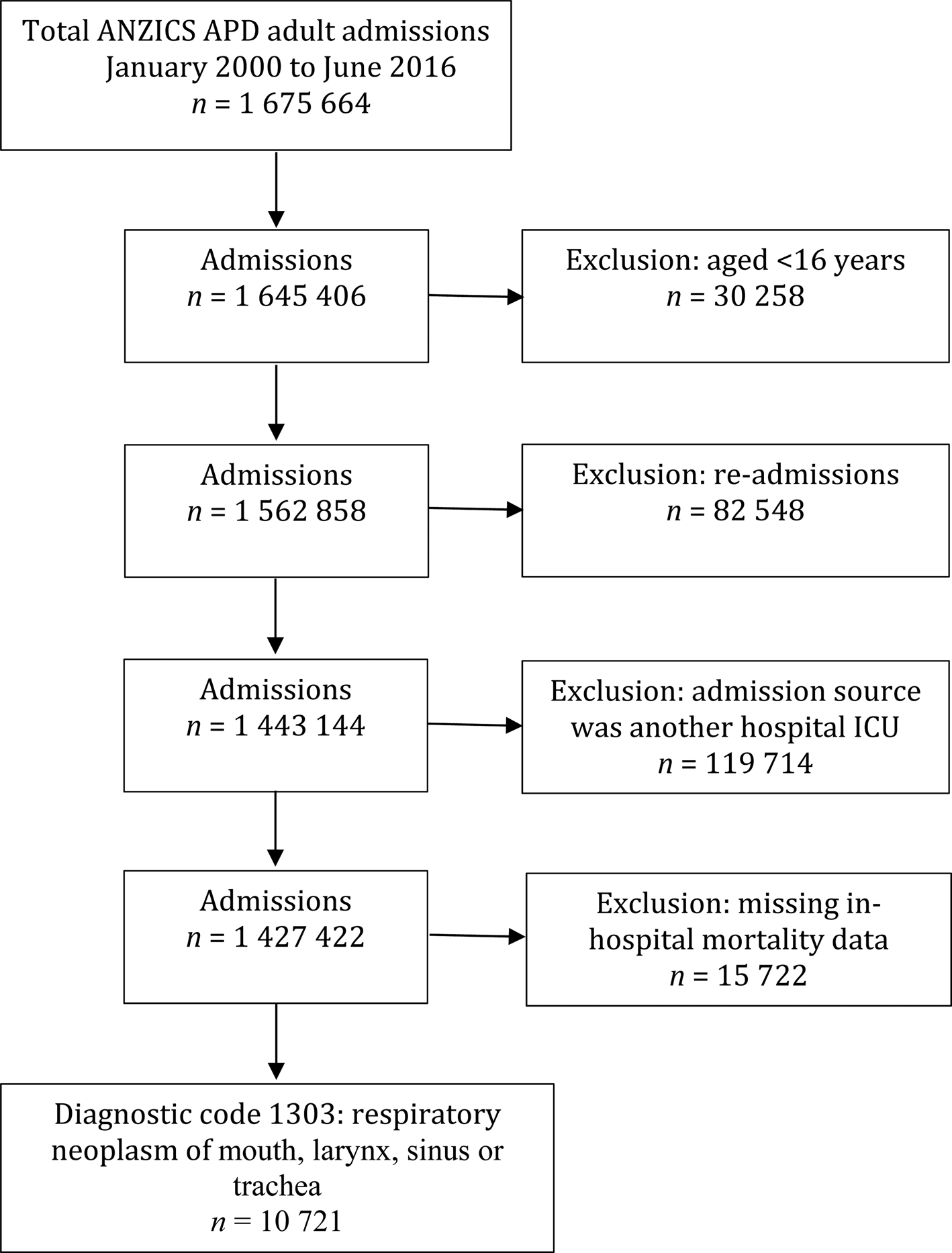
Demographic and admission data, illness severity characteristics (Acute Physiology and Chronic Health Evaluation III score and Australian and New Zealand Risk of Death model), and vital status at intensive care unit and hospital discharge were extracted for all patients admitted to the intensive care unit with a diagnosis of post-operative oral and/or sinus cancer (Acute Physiology and Chronic Health Evaluation diagnostic code 1303) between 1 January 2000 and 30 June 2016. Encounters were excluded from analysis if the patient was aged less than 16 years, the patient was admitted from another hospital intensive care unit, in-hospital mortality status was missing, or the encounter was a re-admission to the intensive care unit within the same hospital admission (although rates of intensive care unit re-admission are reported) (Figure 1).
Case selection process. All available records were extracted from the Australian and New Zealand Intensive Care Society (ANZICS) Adult Patient Database (APD) for the period January 2000 to June 2016. Following exclusions, 10 721 cases were included in the analysis. ICU = intensive care unit

The primary end point of our study was in-hospital mortality. Secondary end points were mortality in the intensive care unit, and length of stay in the intensive care unit and in hospital.
Statistical analyses were conducted in line with previous Australian and New Zealand Intensive Care Society Adult Patient Database studiesReference Udy, Vladic, Saxby, Cohen, Delaney and Flower16 and performed using SPSS software, version 22 (Chicago, Illinois, USA). Continuous data are presented as mean (standard deviation) or median (interquartile range) values, while categorical data are presented as counts (percentages) with 95 per cent confidence intervals (CIs). Univariate tests of significance were performed using an independent student's t-test for normally distributed continuous data and a Mann–Whitney U test for non-normally distributed data. Independent associations between categorical data were explored using the chi-square test or Fisher's exact test where analysis assumptions were met.
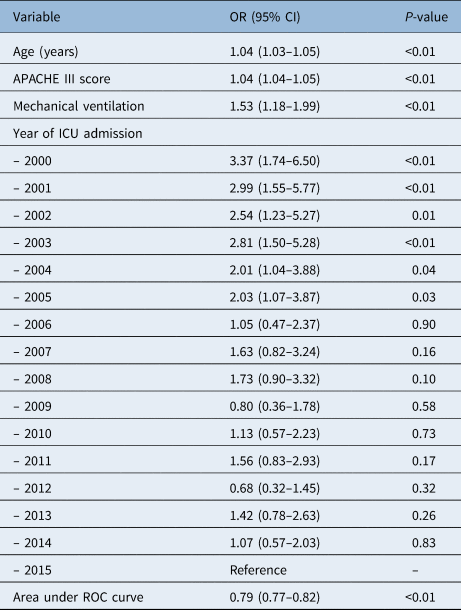
A multivariable logistic regression model incorporating age, Acute Physiology and Chronic Health Evaluation III illness severity score on intensive care unit admission (age points removed), mechanical ventilation at the time of admission to the intensive care unit, and year of intensive care unit admission (referenced to 2015) was used to explore changes in adjusted in-hospital mortality risk over time. The results of these analyses are reported as odds ratio with 95 per cent CI values, with goodness of fit assessed by R 2 values and the area under the receiver-operating characteristic curve.
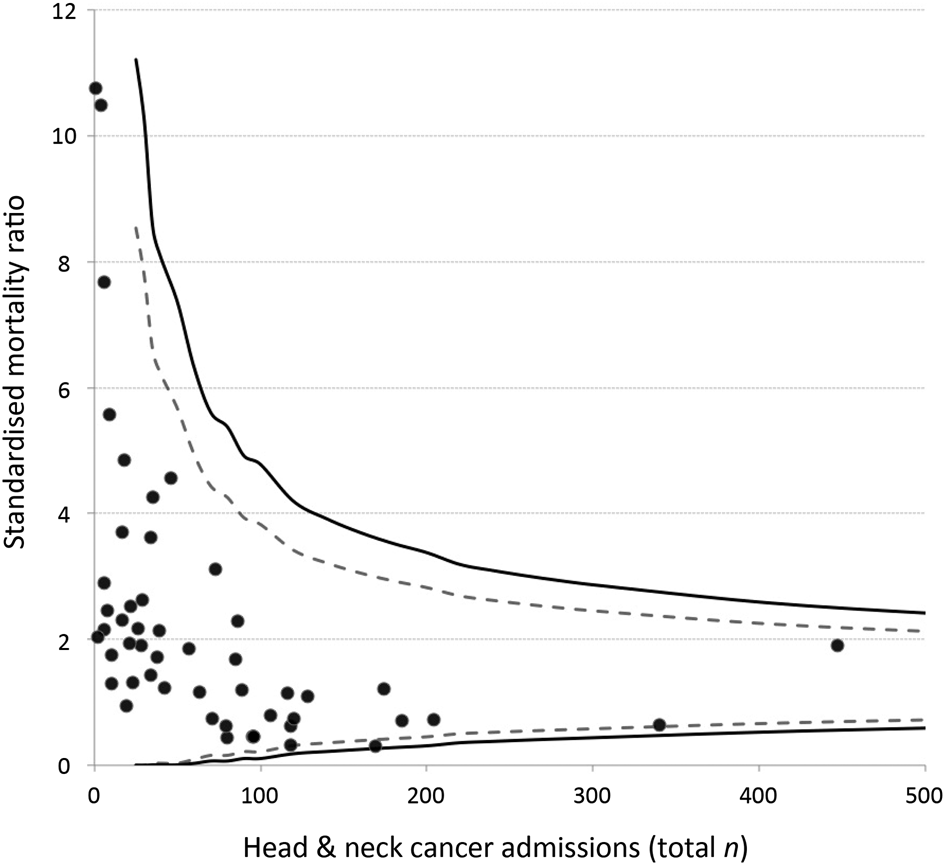
A standardised mortality ratio was calculated for each institution by dividing the sum of the observed mortality by the sum of the Australian and New Zealand Risk of Death expected mortality for all patients admitted with head and neck cancer. This analysis was limited to patients admitted between 2000 and 2015. Each institution's standardised mortality ratio was plotted against the total number of admissions for head and neck cancer to that intensive care unit using a funnel plot, and 95 per cent and 99 per cent CIs were calculated from the observed number of deaths derived from the mean standardised mortality ratio of the whole group using the inverse F distribution. Any site whose standardised mortality ratio was outside the 95 per cent CI was considered an outlier.
Results
Demographics
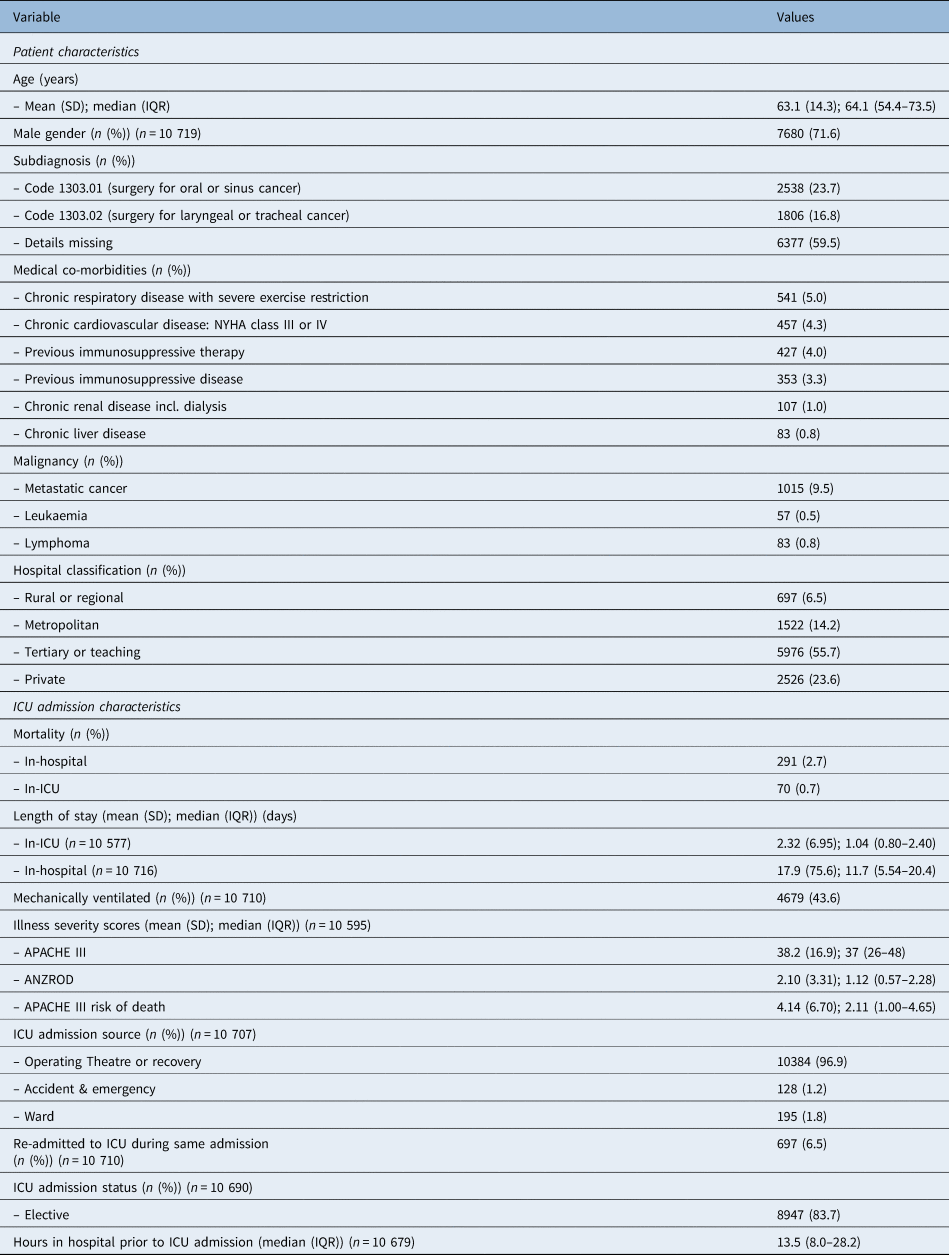
A total of 10 721 head and neck cancer patients were treated in 154 intensive care units. Demographic, admission and illness severity data are summarised in Table 1. Median patient age was 64.1 years, and 71.6 per cent were male. Patients were predominantly treated in public hospitals (76.4 per cent), and most were admitted from the operating theatre (96.9 per cent).
Demographic, admission, illness severity and outcome data for head and neck cancer patients (2000–2016)*

* There were a total of 10 721 head and neck cancer patients. SD = standard deviation; IQR = interquartile range; NYHA = New York Heart Association; incl. = including; ICU = intensive care unit; APACHE III = Acute Physiology and Chronic Health Evaluation III; ANZROD = Australian and New Zealand Risk of Death
Of the 10 721 patients admitted to the intensive care unit with head and neck cancer, 697 (6.5 per cent) had subsequent re-admissions to the intensive care unit during the same hospital stay (Table 1) (note that only the first intensive care unit admission during a single hospital stay was analysed). The most common co-morbidities were chronic respiratory disease (541 patients, 5.0 per cent) and cardiovascular disease (457 patients, 4.3 per cent). Metastatic cancer was relatively common (1015 patients, 9.5 per cent). Concurrent haematological malignancy was uncommon (leukaemia in 57 patients (0.5 per cent) and lymphoma in 83 patients (0.8 per cent)). The mean Acute Physiology and Chronic Health Evaluation III score was 38.2 (± 16.9). The mean Australian and New Zealand Risk of Death predicted risk of death for each patient was 2.1 per cent (median, 1.1 per cent; interquartile range, 0.6–2.3 per cent).
Admission rates
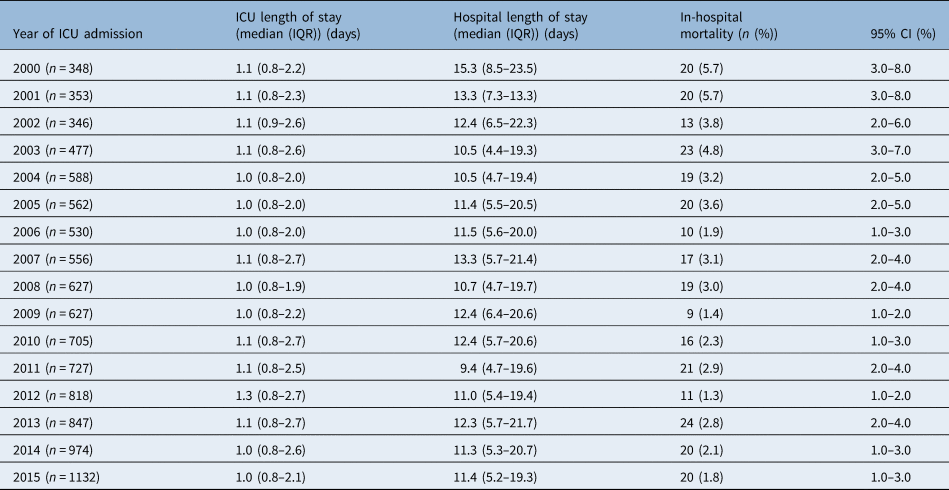
Head and neck cancer patient intensive care unit admissions increased every year over the study period, from 348 in 2000 to 1132 in 2015 (Table 2). The median length of intensive care unit admission was 1.04 days (interquartile range, 0.80–2.40). This was shorter than the overall median intensive care unit length of stay for all intensive care unit patients during the same period: 1.7 days (interquartile range, 0.9–3.1). The median hospital admission duration for head and neck cancer patients was 11.7 days (interquartile range, 5.54–20.4). The median time in hospital prior to intensive care unit admission was 13.5 hours (interquartile range, 8.0–28.2).
ICU admissions and crude in-hospital mortality data for head and neck cancer patients (2000–2015)

ICU = intensive care unit; IQR = interquartile range; CI = confidence interval
Mortality
In-hospital mortality for head and neck cancer patients was low (291 patients, 2.7 per cent) when compared with other intensive care unit patients admitted during the same time period (9.7 per cent). Head and neck cancer patient mortality in the intensive care unit was also lower at 0.7 per cent (70 patients), compared with 6.1 per cent for all other intensive care unit patients. Crude in-hospital mortality for head and neck cancer patients fell over the study period, from 5.7 per cent (95 per cent CI, 3.0–8.0) in 2000 to 1.8 per cent (95 per cent CI, 1.0–3.0) in 2015 (Table 2).
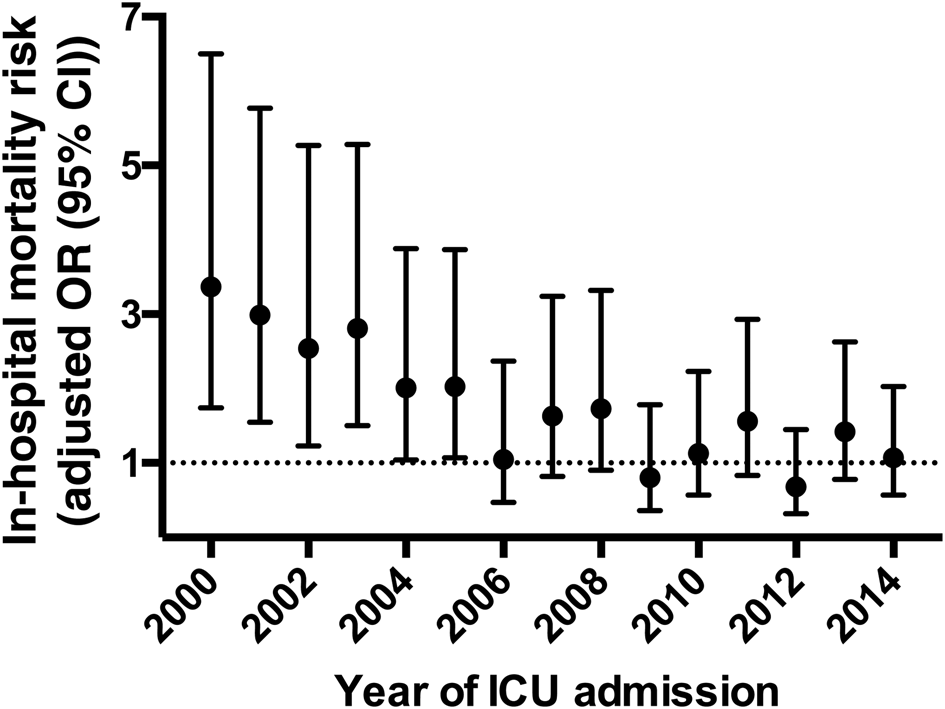
Multivariable modelling incorporating age, Acute Physiology and Chronic Health Evaluation III score, ventilation status and year of intensive care unit admission (referenced to 2015) demonstrated that the adjusted risk of dying in hospital also declined over the study period (Figure 2; odds ratio 3.37 (95 per cent CI, 1.74–6.50) for 2000 vs odds ratio 1.07 (95 per cent CI, 0.57–2.03) for 2014). Intensive care unit admission prior to 2004, need for mechanical ventilation, increasing age, and higher Acute Physiology and Chronic Health Evaluation III scores were associated with a statistically significant increase in in-hospital mortality risk (Table 3).
Variation in in-hospital head and neck cancer mortality risk over time. Deaths occurred in only 52 out of 154 institutions. OR = odds ratio; CI = confidence interval; ICU = intensive care unit

Multivariable logistic regression analysis of in-hospital mortality over time in head and neck cancer patients

Nagelkerke R 2 =0.15. OR = odds ratio; CI = confidence interval; APACHE III = Acute Physiology and Chronic Health Evaluation III; ICU = intensive care unit; ROC = receiver operator characteristic
Data from the 52 (out of 192) institutions where 1 or more patients died during an admission between 2010 and 2015 were used to calculate a standardised mortality ratio (Figure 3). No hospitals demonstrated underperformance. Three units had excellent outcomes, with fewer deaths than expected for the number of patients admitted. There was no significant relationship between the volume of cases and the standardised mortality ratio.
Funnel plot of standardised mortality ratio against number of admissions (2010–2015). Each point represents a unique institution. Deaths occurred in only 52 out of 154 institutions. The dark line is the 95 per cent confidence interval (CI), and the lighter line represents the 99 per cent CI. There were no significant outliers (outside the 95 per cent CI).

Emergency admissions
Of all head and neck cancer patients in the intensive care unit, 16.3 per cent were unplanned or emergency admissions to intensive care. Of patients admitted emergently, 6.4 per cent died during their hospital admission, compared with 2.0 per cent of patients admitted following elective surgery. This represents a relative risk of death of 3.09 (95 per cent CI, 2.45–3.89; p < 0.0001) for emergency admissions to the intensive care unit with head and neck cancer.
Mechanical ventilation utilisation
Of all head and neck cancer patients, 43.6 per cent were mechanically ventilated at the time of intensive care unit admission, and 84 per cent of ventilated patients were elective intensive care unit admissions. Patients requiring ventilation on admission to the intensive care unit had a longer stay in the unit than non-ventilated patients (42.8 hours (interquartile range, 21.2–83.4) vs 22.3 hours (interquartile range, 18.3–41.3)). Mechanical ventilation was also associated with higher in-hospital mortality (3.9 per cent vs 1.8 per cent, p < 0.0001), and higher mortality in the intensive care unit (1.1 per cent vs 0.3 per cent, p < 0.0001).
Discussion
This is the largest published cohort of head and neck cancer patients admitted to the intensive care unit; it benchmarks intensive care unit utilisation by Australian and New Zealander head and neck cancer patients across all types of hospital in our region over 16 years. Standardised mortality ratios demonstrated that all units perform well when looking after patients with head and neck cancer, with low mortality (0.7 per cent in the intensive care unit and 2.7 per cent in hospital) and a median length of stay of only 1.04 days. Our data are drawn from a large, bi-national database of intensive care unit admissions, and the study is a starting point to understand how head and neck cancer patients use intensive care unit resources in our region. It remains a challenge to assemble a large, prospective series of head and neck cancer patients to examine outcomes and resource utilisation because of the heterogeneous nature of head and neck cancer subsites and the relatively rare incidence of this group of cancers when compared with other malignancies.Reference Bhattacharyya and Fried3,Reference Lin and Bhattacharyya4,Reference Bhattacharyya and Abemayor8 This study retrospectively documents admission rates and some characteristics of head and neck cancer patients admitted to intensive care units in our region, and will help to inform future resource allocation decisions.
The total number of new head and neck cancer cases diagnosed in Australia increased annually over our 16-year study period, in keeping with Australian population growth rates.2 Our study reflected this, with an annual increase in the number of head and neck cancer patients admitted to intensive care units during the study period (Table 2).
In-hospital mortality of head and neck cancer patients across Australia and New Zealand was low (less than 3 per cent), and crude in-hospital mortality fell over the study period, from 5.7 per cent to 1.8 per cent, even when including adjustments for age, illness severity and mechanical ventilation status. This also reflects the improvement in overall mortality across the region for head and neck cancer patients since the 1980s.2 Head and neck cancer patient demographics also changed during the study period, with a rising incidence of human papilloma virus related cancer in younger, fitter patients.Reference Syrjänen, Rautava and Syrjänen17 A high proportion of the cohort were elective post-operative patients, which confers a baseline level of fitness and may go some way towards accounting for the improving mortality outcomes. Improvements in pre-operative planning, patient optimisation, complication management and post-operative care understanding (e.g. the role of early nutrition optimisation in a typically poorly nourished cohort) may also have contributed to these results.Reference Lin and Bhattacharyya4,Reference Garantziotis, Kyrmizakis and Liolios9,Reference Syrjänen, Rautava and Syrjänen17–Reference Bannister and Ah-See19
Several studies focusing on admission and mortality in patients with solid-tumour cancer admitted to the intensive care unit have included head and neck cancer subgroups. Our findings are comparable to those of a large Dutch study of cancer patients admitted to the intensive care unit (888 head and neck cancer patients, with intensive care unit mortality of 1.0 per cent and in-hospital mortality of 3.3 per cent)Reference Bos, Bakhshi-Raiez, Dekker, de Keizer and de Jonge12 and a study of head and neck cancer patients treated in a large teaching hospital in Hong Kong (268 patients, in-hospital mortality of 1.1 per cent).Reference To, Tsang, Lai and Chu14 Mortality was better for our patients when compared with head and neck cancer patients admitted to the intensive care unit in a single, large-volume American cancer centre over a 20-year period (944 head and neck cancer patients, 25.5 per cent intensive care unit mortality and 33.8 per cent in-hospital mortality), although that cohort likely reflects patients with more advanced cancer who were unwell enough to require subspecialist treatment, in contrast to our cohort, which included patients treated in all types of intensive care units.Reference Wallace, Rathi, Waller, Ensor, Haque and Price11 Patients treated in Brazil also had a higher mortality rate than our cohort (121 patients, 39 per cent intensive care unit mortality and 56 per cent in-hospital mortality),Reference Soares, Salluh, Toscano and Dias13 but the emergency admission of medically unwell head and neck cancer patients was significantly more frequent than for our patients, accounting for 70 per cent of their admissions compared with only 16.3 per cent of patients in our study. When we consider the patients in our cohort who were admitted to the intensive care unit following an emergency, they were three times more likely to die during their hospital admission than those admitted electively (6.4 per cent in-hospital mortality).
Treatment modalities for head and neck cancer have changed over time, with greater emphasis now placed on organ-preservation techniques such as primary chemoradiotherapy, moving to the role of surgery and free-flap reconstruction and to salvage options for residual and recurrent cancers.Reference Bhattacharyya and Abemayor8 If we consider the utilisation pattern of intensive care units by the head and neck cancer patients in our cohort, the majority are electively admitted following surgery. There are no standardised intensive care unit admission criteria around the world; however, a large proportion of head and neck cancer patients are admitted to the intensive care unit electively following prolonged reconstructive surgery for specialised flap monitoring, or for sedation and mechanical ventilation after tracheostomy or laryngectomy formation.Reference Bhattacharyya and Abemayor8,Reference Garantziotis, Kyrmizakis and Liolios9
Many centres around the world are investigating alternative treatment pathways and settings to monitor post-operative head and neck cancer patients outside the intensive care unit environment, including specialised head and neck cancer wards, surgical high-dependency units and enhanced recovery after surgery protocols.Reference Chen, Callender, Mansyur, Reyna, Limitone and Goepfert6,Reference To, Tsang, Lai and Chu14,Reference Bannister and Ah-See19–Reference Yu, Sethi, Rathi, Puram, Lin and Emerick30 The evidence suggests that even short periods of prolonged post-operative ventilation are associated with poorer outcomes, and head and neck cancer patients should be woken up at the end of the procedure rather than having an elective period of sedation and ventilation in the intensive care unit.Reference Bahloul, Chaari, Tounsi, Baccouche, Abid and Chtara31,Reference Secombe, Woodman, Chan, Pilcher and van Haren32 An increasing body of work has also shown that post-operative free-flap monitoring is safe in appropriately selected head and neck cancer patients outside the intensive care unit.Reference Arshad, Ozer, Thatcher, Old, Ozer and Agarwal20,Reference Barber, Harris, Shillington, Rychlik, Dort and Meier22,Reference Cervenka, Olinde, Gould, Farwell, Moore and Kaufman23,Reference Yu, Sethi, Rathi, Puram, Lin and Emerick30,Reference Moreno and Bonilla-Velez33 Just under half of the patients in our cohort were mechanically ventilated, and the overall short patient length of stay in the intensive care unit suggests that some of the patients in our study admitted to the intensive care unit might have been suitable for post-operative care using an alternative pathway, freeing intensive care unit resources for other patients and decreasing the overall cost of each patient's admission.
This hypothesis-generating study is limited by bias, as a result of the nature of the database it is drawn from. Data from a specific admission diagnosis cohort within the Australian and New Zealand Intensive Care Society Centre for Outcome and Resource Evaluation database successfully provided preliminary information of clinical problems in other studies, and this was used to guide further research and changes in clinical practice.Reference Udy, Vladic, Saxby, Cohen, Delaney and Flower16,Reference Bahloul, Chaari, Tounsi, Baccouche, Abid and Chtara31,Reference Secombe, Woodman, Chan, Pilcher and van Haren32,Reference Warrillow, Bailey, Pilcher, Kazemi, McArthur and Young34,Reference Al-Bassam, Kubicki, Bailey, Walker, Young and Pilcher35 As the database was designed principally for quality control of intensive care across the Australasian region, the head and neck cancer specific cohort information is heterogeneous, and it is not possible to stratify outcomes based on tumour subsite and grading.
• The number of head and neck cancer patients admitted to the intensive care unit since 2000 has significantly increased
• Mortality in the intensive care unit was only 0.7 per cent for head and neck cancer patients
• Median intensive care unit admission time was 1.04 days for head and neck cancer patients
• Mortality risk for head and neck cancer patients in hospital has decreased three-fold from 2000 to 2015
• Up to half of head and neck cancer patients admitted to the intensive care unit could have care delivered elsewhere in the hospital
Further information regarding treatment administered outside the first 24 hours of intensive care unit admission, including any surgical procedures, radiotherapy (past or present) and other events during admission that impact a patient's outcome, would better inform future studies. Future incorporation of head and neck cancer subsites during Australian and New Zealand Intensive Care Society Adult Patient Database data collection would also address this. No comparative information was available for head and neck cancer patients who received all their treatment outside the intensive care unit; however, that comparison was not the purpose of this study. Future studies to identify factors affecting outcomes for head and neck cancer patients outside intensive care is also important, as most deaths in our cohort occurred on the ward after discharge from the intensive care unit.
Conclusion
This large, multicentre study of head and neck cancer patients admitted to intensive care units in Australia and New Zealand concludes that: head and neck cancer patients have low mortality in hospital and in the intensive care unit, they have short intensive care unit stays, fewer than half of patients require mechanical ventilation, and the adjusted in-hospital risk of mortality has decreased significantly over the last 15 years. The study will contribute to future decision-making for head and neck cancer patients needing high-acuity monitoring, and will inform research into alternative care pathways for head and neck cancer patients in settings outside the intensive care unit.
Acknowledgements
We acknowledge the support of the Australian and New Zealand Intensive Care Society Centre for Outcome and Resource Evaluation in completing this research. The following hospitals contributed to the dataset for this study: Albury Base Hospital, Alfred Hospital, Alice Springs Hospital, Allamanda Private Hospital, Armadale Health Service, Ashford Community Hospital, Auckland City Hospital, Austin Hospital, Bankstown-Lidcombe Hospital, Bathurst Base Hospital, Bendigo Health Care Group, Blacktown Hospital, Box Hill Hospital, Brisbane Private Hospital, Bundaberg Base Hospital, Cabrini Hospital, Cairns Hospital, Calvary Hospital (Canberra), Calvary Hospital (Lenah Valley), Calvary John James Hospital, Calvary Mater Newcastle, Calvary North Adelaide Hospital, Calvary Wakefield Hospital (Adelaide), Campbelltown Hospital, Canberra Hospital, Central Gippsland Health Service, Christchurch Hospital, Coffs Harbour Health Campus, Concord Hospital (Sydney), Dandenong Hospital, Dunedin Hospital, Epworth Freemasons Hospital, Epworth Hospital (Richmond), Figtree Private Hospital, Flinders Medical Centre, Flinders Private Hospital, Frankston Hospital, Fremantle Hospital, Gold Coast University Hospital, Gosford Hospital, Gosford Private Hospital, Goulburn Valley Health, Grafton Base Hospital, Greenslopes Private Hospital, Hollywood Private Hospital, Hornsby Ku-ring-gai Hospital, John Fawkner Hospital, John Flynn Private Hospital, John Hunter Hospital, Joondalup Health Campus, Knox Private Hospital, Latrobe Regional Hospital, Launceston General Hospital, Lismore Base Hospital, Liverpool Hospital, Lyell McEwin Hospital, Mackay Base Hospital, Macquarie University Private Hospital, Manning Rural Referral Hospital, Mater Adults Hospital (Brisbane), Mater Health Services North Queensland, Mater Private Hospital (Brisbane), Mater Private Hospital (Sydney), Melbourne Private Hospital, Middlemore Hospital, Mildura Base Hospital, Modbury Public Hospital, Monash Medical Centre – Clayton Campus, Mount Hospital, Nambour General Hospital, Nelson Hospital, Nepean Hospital, North Shore Hospital, North Shore Private Hospital, Norwest Private Hospital, Orange Base Hospital, Peninsula Private Hospital, Peter MacCallum Cancer Institute, Pindara Private Hospital, Port Macquarie Base Hospital, Prince of Wales Hospital (Sydney), Prince of Wales Private Hospital (Sydney), Princess Alexandra Hospital, Queen Elizabeth II Jubilee Hospital, Redcliffe Hospital, Rockhampton Hospital, Rockingham General Hospital, Rotorua Hospital, Royal Adelaide Hospital, Royal Brisbane and Women's Hospital, Royal Darwin Hospital, Royal Melbourne Hospital, Royal North Shore Hospital, Royal Perth Hospital, Royal Prince Alfred Hospital, Sir Charles Gairdner Hospital, St Andrew's Hospital (Adelaide), St Andrew's War Memorial Hospital, St George Hospital (Sydney), St George Private Hospital (Sydney), St John of God Health Care (Subiaco), St John Of God Hospital (Ballarat), St John Of God Hospital (Geelong), St John of God Hospital (Murdoch), St Vincent's Hospital (Melbourne), St Vincent's Hospital (Sydney), St Vincent's Hospital (Toowoomba), St Vincent's Private Hospital (Sydney), St Vincent's Private Hospital Fitzroy, Sunshine Hospital, Sutherland Hospital and Community Health Services, Sydney Adventist Hospital, Sydney Southwest Private Hospital, Tamworth Base Hospital, Taranaki Health, Tauranga Hospital, The Memorial Hospital (Adelaide), The Prince Charles Hospital, The Queen Elizabeth (Adelaide), The Valley Private Hospital, The Wesley Hospital, Timaru Hospital, Toowoomba Hospital, Tweed Heads District Hospital, University Hospital Geelong, Wagga Wagga Base Hospital and District Health, Warringal Private Hospital, Westmead Hospital, Westmead Private Hospital, Whangarei Area Hospital, Northland Health Ltd, and Wollongong Hospital.
A/Prof Andrew Udy and Prof David Pilcher both receive salary support from Monash University as Alfred ICU Monash University Practitioner Fellows. A/Prof Andrew Udy also receives support from the National Health and Medical Research Council of Australia (Early Career Fellowship grant, number APP1124532). The Australian and New Zealand Intensive Care Society Centre for Outcome and Resource Evaluation Registry database is funded by local jurisdictions. The funding sources had no role in: the design and conduct of the study; collection, management, analysis and interpretation of the data; preparation, review or approval of the manuscript; and the decision to submit the manuscript for publication.
Competing interests
None declared