The mental health status of PhD students is alarming according to some recent journal press releases and editorials (e.g., Nature, 2019). These publications have set forth the results of several recently published studies on the subject, primarily those by Levecque et al. (Reference Levecque, Anseel, De Beuckelaer, Heyden and Gisle2017) and Evans et al. (Reference Evans, Bira, Gastelum, Weiss and Vanderford2018). Evans et al. clearly illustrates the seriousness of the matter: “graduate students are more than six times as likely to experience depression and anxiety as compared to the general population” (p. 282). This result is consistent with the one reported by Levecque et al. in a similar study that analyzed a sample of students in Belgium. Specifically, these authors found that “32% of PhD students are at risk of having or developing a common psychiatric disorder, especially depression” (p. 868). Although the results from Evans et al. were based on a large sample of 2,279 from 26 different countries, it is worth noting that most of the students of that sample were from USA (91.58%) and, in particular, only one of the participants was from Spain (0.04%). Thus, the generalization of the results to other countries and groups of population is compromised. In line with this idea, there seems to be a gap in research regarding the mental status of Spanish doctoral students. The study of this issue may be of special interest in Spain, considering the current economic and social conditions in the country, that emerged as a consequence of the economic crisis of 2008. Successive studies carried out by the Spanish government in its University Personnel Statistics (Ministerio de Ciencia, Innovación y Universidades, 2020) show that, since the end of the economic crisis around 2014, the average age of the figures in Spanish public universities has not stopped increasing. Specifically, the percentage of young staff (< 35 years old) has not ceased to decrease, going from 29.72% during the 2015/2016 academic year for the figure of Assistant Professor to 24.04% in the last available survey corresponding to the 2018/2019 academic year. These data may result in uncertainty about the future prospects of young academics in Spain and may increase the occurrence of stress-related disorders. This is congruent with the studies on the topic, in which stress was found to be more prevalent in younger academics (e.g., Kinman, Reference Kinman2001). Therefore, the present study aims to address the issue of mental health in Spanish doctoral students by relating it to a common response to prolonged stress such as burnout syndrome.
Etiology of the Burnout Syndrome
Burnout has just been categorized as a “syndrome” that results from “chronic workplace stress that has not been successfully managed” by the 11th edition of the International Classification of Diseases (ICD–11) published by the World Health OrganizationFootnote 1. Specifically, burnout is classified under “Problems associated with employment or unemployment” pertaining to the section “Factors influencing health status or contact with health services”. The definition establishes that burnout is a specific phenomenon of the occupational context. It has been characterized by emotional and physical exhaustion, negative attitudes toward work and workplace, and negative self-evaluations of one’s performance. These three dimensions correspond to the dimensions contained in Maslach and Jackson’s classic conceptualization of burnout (Maslach & Jackson, Reference Maslach and Jackson1981).
From 1980s onwards, several models emerged to explain the development of burnout syndrome. From the social cognitive theory (Bandura, Reference Bandura1997), self-efficacy could be the main factor that determines the consequences of exposure to stress. In work context, self-efficacy would be understood as the confidence the worker has about possessing the skills needed to cope with work challenges and stress. This relationship between self-efficacy and burnout is well documented in the literature (Shoji et al., Reference Shoji, Cieslak, Smoktunowicz, Rogala, Benight and Luszczynska2016). Authors like Pines (Reference Pines, Schaufeli, Maslach and Marek2017) proposed an existential perspective of burnout in which people need to believe that their lives are meaningful, and so the things they do are useful and important. This author argues that the main stressors of workers would be those aspects that prevent them to achieve their goals and generate a lack of existential significance. In social exchange models, the origin of burnout is linked to a perceived lack of equity or profit in interpersonal relationships and social support (e.g., Buunk & Shaufeli, Reference Buunk, Schaufeli, Schaufeli, Maslach and Marek1993). In work settings, workers establish exchange relationships (help, appreciation, gratitude, recognition, etc.) with the recipients of their work (e.g., colleagues, supervisors, the organization). Burnout can be defined as a consequence of prolonged exposure to stress situations arising from lack of adjustment between both sides. Also in line with the idea of adjustment, Siegrist (Reference Siegrist1996) conceives burnout as an unfair balance between the costs and the benefits of work activities. In broad terms, emphasis will also be placed on the presence or absence of appropriate coping strategies. Similarly, in the job demands-resources model of burnout, Bakker and Demerouti (Reference Bakker and Demerouti2007) also highlight the role of personal resources. Specifically, this model categorizes working conditions into job demands (e.g., time pressure) and job resources (e.g., supervisor support). Job resources directly affect exhaustion and engagement, but also have an indirect effect through certain personal resources. These personal resources are often associated with resilience and self-efficacy (Hobfoll & Shirom, Reference Hobfoll, Shirom and Golembiewski2000). A final group of models emerge from organizational theory. They include some new variables such as role dysfunctions or ambiguity, lack of organizational health, structure, culture and organizational climate (e.g., Green et al., Reference Green, Albanese, Shapiro and Aarons2014). Finally, some explanatory models have also considered socio-demographic variables such as sex, age, years of experience, or type of contract (e.g., Brewer & Shapard, Reference Brewer and Shapard2004).
Burnout Prevalence, Risk, and Protective Factors
Burnout has traditionally been linked to service professions. Examples of professions of this kind are voluntary work, health care, social services, and education. In these professions the employee usually works in direct contact with people in the provision of services as a consequence of his/her work. In general terms, the work of a PhD student can be understood as a service profession on three levels or roles: Teacher, student, and researcher. The beneficiaries of a doctoral student’s work include, in most cases, the students he or she teaches to, his or her thesis supervisor, and his or her research collaborators, who will usually be other colleagues.
A very active area of research has been the establishment of prevalence rates in different professional sectors. One of the most studied sectors in Spain has been nursing. Authors such as Cañadas-De la Fuente et al. (Reference Cañadas-De la Fuente, Vargas, San Luis, García, Cañadas and De la Fuente2015) have reported high levels of burnout in this sector. The percentage of examinees that presented a high burnout level was 25%, 30%, and 30% for the emotional exhaustion, depersonalization, and low personal accomplishment dimensions, respectively. Some of the variables that have been related to this problem have been emotional regulation and coworker and supervisor support (e.g., Blanco-Donoso et al., Reference Blanco-Donoso, Moreno-Jiménez, Pereira and Garrosa2019). The importance of these factors has also been highlighted in many other professional areas. There are no previous studies that address burnout with doctoral students, although there is some research within the educational context that will be described below.
The main results regarding burnout for secondary school teachers have been summarized in a recent meta-analysis (García-Carmona et al., Reference García-Carmona, Marín and Aguayo2019). Burnout prevalence rates were 28.1% (emotional exhaustion), 37.9% (depersonalization), and 40.3% (low personal accomplishment). Risk factors in the educational context included, among others, work overload, complementary administrative work, overcrowded classrooms, professional development, and supervisor behavior (e.g., Cunningham, Reference Cunningham1983). Samples of both university students and faculty members have also been investigated. This line of research has been referred to as academic burnout and is where the current study can be situated. In a sample of medical students, Santen et al. (Reference Santen, Holt, Kemp and Hemphill2010) reported burnout rates between 21% and 43% of cases across all years of the degree. Risk factors related to burnout in this context are the quality of university services such as reprography and the library, the overload of work and schedules, the companionship, the social support received from family and friends, and the acquisition of scholarships (Salanova et al., Reference Salanova, Martínez, Bresó, Llorens and Grau2005). In general, it is found that the positive evaluation of university resources can reduce the negative impact of stress (Lara et al., Reference Lara, Donoso, Jiménez, Chávez and Herrero2016). Most studies involve nursing students (e.g., García-Izquierdo et al., Reference García-Izquierdo, Ríos-Risquez, Carrillo-García and Sabuco-Tebar2018). In these studies, one of the variables that has been found to be most related to burnout is resilience. As for the data available for university professors, Padilla and Thompson (Reference Padilla and Thompson2016) measured the burnout rate through the 5-Likert item “I feel “burned out” from my work” to measure the burnout prevalence. They found that 27% of the sample reported high levels of burnout. Work load and social support were related to the burnout scores. The relationships of different factors with depressive symptoms and students’ satisfaction have been studied in samples of PhD students, even though burnout has not been specifically explored. For example, Peluso et al. (Reference Peluso, Carleton and Asmundson2011) and Dericks et al. (Reference Dericks, Thompson, Roberts and Phua2019) found that advisory relationship satisfaction was a significant predictor of depressive symptoms and PhD students’ satisfaction, respectively.
The Present Study
The literature review summarized in the previous sections reveals that there is a gap concerning the study of burnout syndrome in samples of PhD students. In view of this fact, the aim of this study is, firstly, to provide data on the prevalence of burnout in PhD students. We hypothesized that, considering the previous results in relation to the mental health of PhD students and the high rates of burnout in the academic context, high rates will be found (Exploratory Hypothesis 1). Secondly, the study aims to identify which factors are related to burnout in PhD students. Based on the literature review described above, a list of potentially relevant predictors was created. This list included emotional intelligence and resilience. These two variables relate directly to the coping strategies needed to deal with stress. Considering the previous literature on the influence of the supervisor, we also included a measure of satisfaction with the academic advising. Undergraduate grade point average (GPA) and some other sociodemographic variables were also included as a proxy of cognitive abilities, PhD commitment and dedication, and social support. Specifically, GPA can be conceived as a measure of academic performance that is affected by self-efficacy (e.g., Stajkovic et al., Reference Stajkovic, Bandura, Locke, Lee and Sergent2018). As discussed above, the perception of efficacy plays a role in the development of burnout syndrome within social cognitive theory. Sociodemographic variables also included job status and place of residence. These variables can be understood as indicators of burnout-related concepts such as task overload, role stressors, deadlines, job insecurity, and social support. All of these variables were expected to be related to the burnout scores (Exploratory Hypothesis 2). Achieving this goal will allow for a better understanding of this syndrome and provide empirical evidence that can help designing interventions. In undertaking these goals, two scales had to be adapted and validated to be applied to Spanish doctoral students: The Academic Advising Scale (AAS; Arnold et al., Reference Arnold, Fisher and Glover1998) and the Maslach Burnout Inventory (MBI; Maslach & Jackson, Reference Maslach and Jackson1981). The psychometric properties of these two scales were explored and described.
Method
Participants
243 Spanish PhD students (144 women; mean age of 30.15 years, with standard deviation of 6.38) participated in the study. Sample was recruited by accessibility and the only selection criterion was to be currently enrolled in the PhD or have defended their dissertation after January 2015. The method for data collection was online distribution through universities email lists and social media channels. This sample was obtained filtering an initial sample of 305 PhD students whose nationality was not Spanish (N = 54), or Spanish PhD students whose dissertation defense date was not contemplated in that specific period (N = 8). These filters were imposed to increase the homogeneity of the sample and to control strange variables related to cultural differences, current employment status, or memory biases. The open dataset and code files are available at the Open Science Framework repositoryFootnote 2.
Instruments
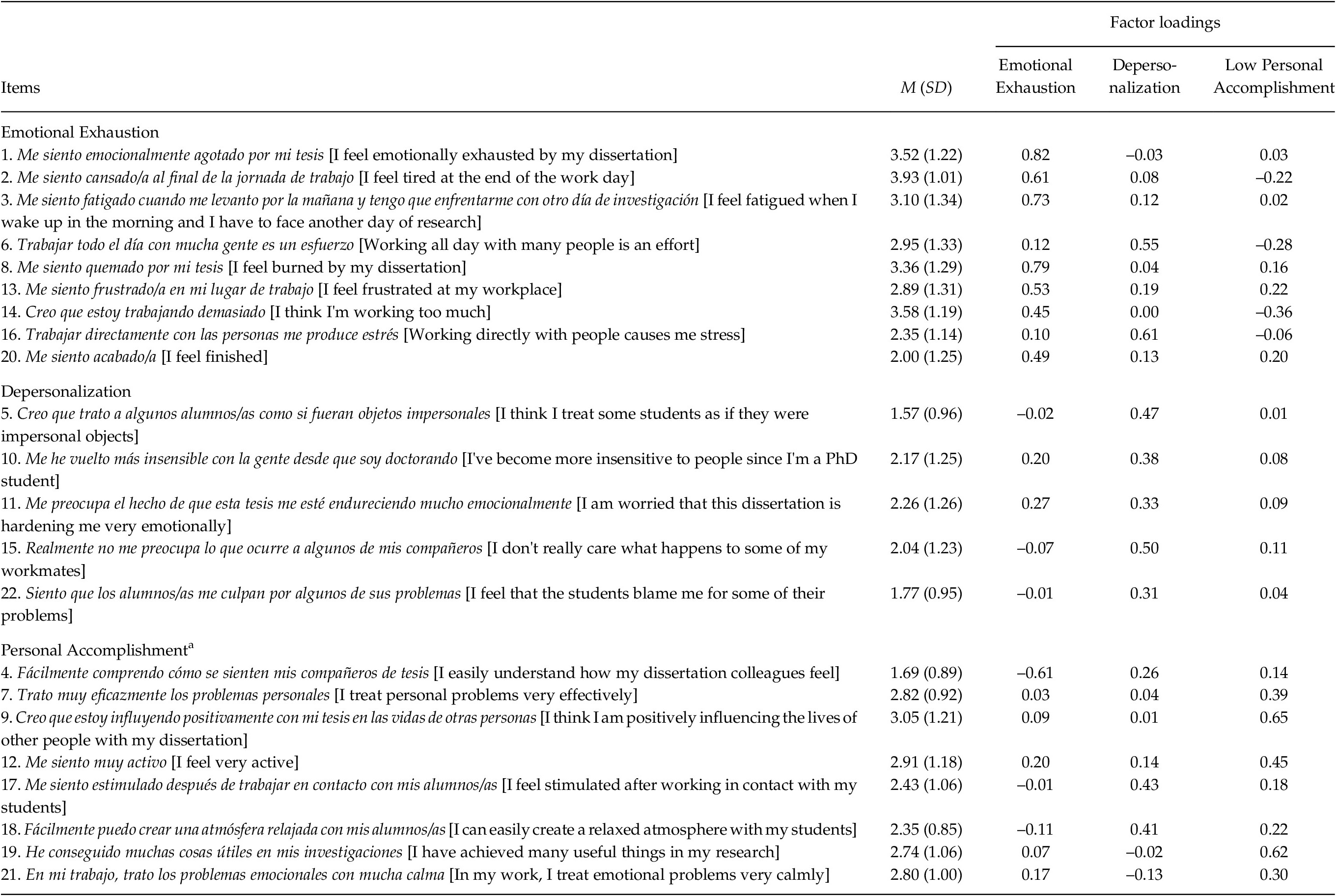
Maslach Burnout Inventory (MBI). The Spanish adaption of this 22-item measure of burnout is composed of three subscales that showed appropriate psychometric properties in different contexts: emotional exhaustion (mean α = .88), depersonalization (α = .77), and personal accomplishment (α = .78) (Aguayo et al., Reference Aguayo, Vargas, Fuente and Lozano2011). In the present study, psychometric properties of our adaptation for Spanish PhD students were analyzed (see Table 1). The response scale is a 5-point Likert scale. Labels are (1) = Strongly disagree; (2) = Disagree; (3) = Neither agree nor disagree; (4) = Agree; (5) = Strongly agree. One important thing to note is that the content of some items refers to teaching situations and contact with other PhD students (see for example Items 4 and 18 in Table 1). Although it is reasonable to think that at some point in their doctoral period students experience situations of this type, it is important to note that this group can be heterogeneous. Estimates of burnout for individuals without any such experiences could be somehow compromised.
Descriptive Statistics and Loading Structure of the Maslach Burnout Inventory

Note. a: Personal Accomplishment items are reverse scored. Scores ranged from 1 (Strongly disagree) to 5 (Strongly agree).
Brief Resilience Scale (BRS). This a brief measure composed of 6 Likert-type items to measure the ability to recover from stress as an indicator of resilience. Its Spanish adaptation showed appropriate psychometric properties in terms of internal structure, adequate internal consistency (α = .83) and validity discriminating between groups with and without recent stressful events (Rodríguez-Rey et al., Reference Rodríguez-Rey, Alonso-Tapia and Hernansaiz-Garrido2016). One example item is “It does not take me long to recover from a stressful event”.
Trait Meta-Mood Scale (TMMS–24). This scale consists of 24 Likert-type elements that assess self-perception about emotional abilities. Its Spanish adaptation is composed of three subscales that showed appropriate psychometric properties: emotional attention (α = .90), emotional clarity (α = .90), and emotional repair (α = .78) (Fernández-Berrocal et al., Reference Fernández-Berrocal, Extremera and Ramos2004). These subscales correlate with relevant variables like anxiety, depression, life satisfaction or rumination. However, a study on burnout syndrome and emotional intelligence showed that emotional attention subscale did not correlate with mental health (Extremera et al., Reference Extremera, Fernández-Berrocal and Durán2003). Thus, only emotional clarity and emotional repair subscales were included in the present study for the sake of brevity. One example item for emotional clarity is “I am usually very clear about my feelings”. The emotional repair subscale includes statements such as “I worry about being in a good mood”.
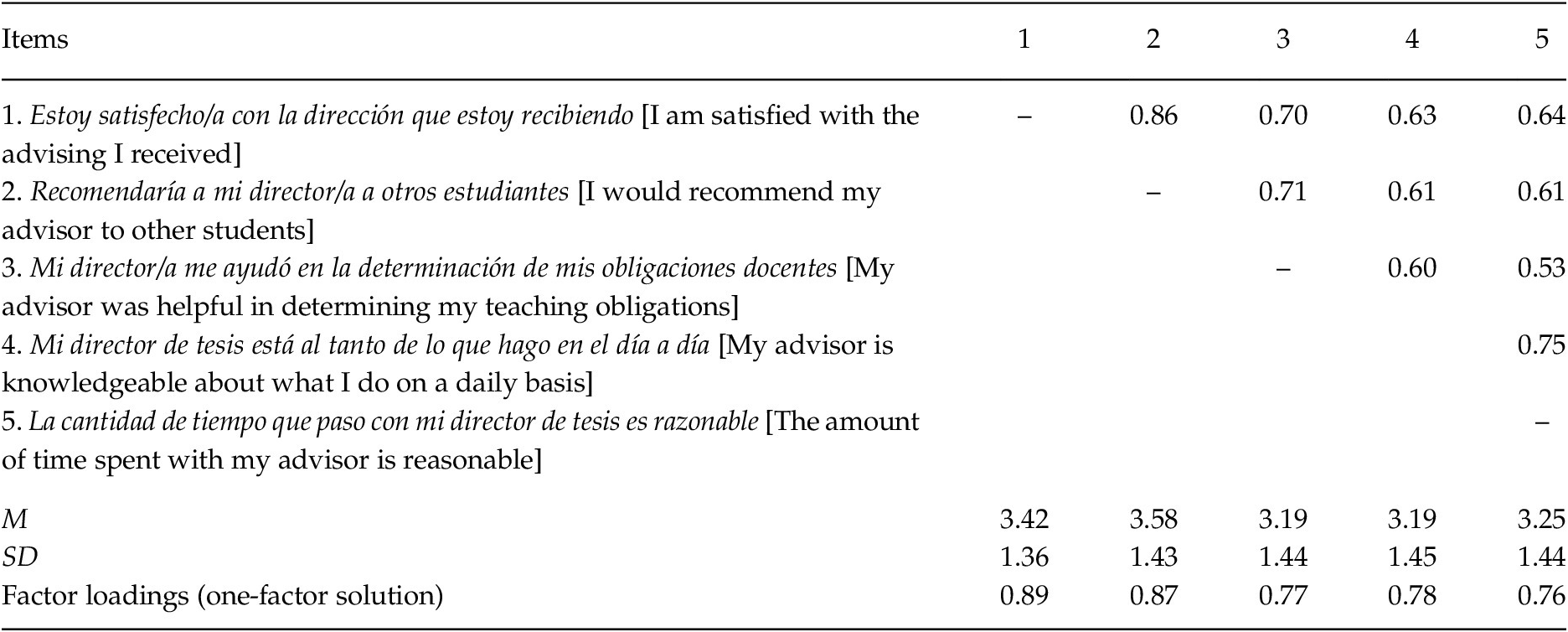
Academic Advising Scale (AAS). This is a 6-item test used to measure students’ perception about their academic advising by dissertation advisor, which was developed by Arnold et al. (Reference Arnold, Fisher and Glover1998). The authors reported good psychometric properties in the scale development study (α = .74), but a version of the scale adapted to Spanish was not available. Therefore, it had to be adapted and evaluated for its psychometrics properties in the present study (see Table 2). One of the original items (Advising is important to me in planning my overall academic program) was excluded from the Spanish-version as the teaching load in the Spanish systems is usually determined by the head of the Department and this process does not always include the advisor. The items were translated to Spanish by the authors. English and Spanish versions of the items are provided in Table 2. As it can be observed from the table, items are short and simple, which facilitated the translation process.
Descriptive Statistics and Loading Structure of Academic Advising Scale

Note. All Pearson correlation coefficients were statistically significant at p < .001. Average range for the interval estimates of the Pearson correlations was .14 (SD = .03). Scores ranged from 1 (Strongly disagree) to 5 (Strongly agree)
Sociodemographic characteristics. Different sociodemographic variables were measured: Age, sex, nationality, undergraduate grade point average (GPA) score, having a pre-doctoral contract whose purpose is the development of the doctoral dissertation (CONTRACT; 0 = No, 1 = Yes), having a job non-related to the doctoral dissertation (NON-RELATED JOB; 0 = No, 1 = Yes), doing the PhD studies in the hometown (HOMETOWN; 0 = No, 1 = Yes), having current or past psychological treatments for anxiety or depression (MENTAL1; 0 = No, 1 = Yes), and presence of past anxiety or depression problems (MENTAL2; 0 = No, 1 = Yes).
Procedure
Data was collected from different Spanish university social networks (like institutional email lists and PhD-related social media hashtags and groups) using Google Forms platform. Then, an exploratory, correlational and transversal study was conducted. PhD students’ participation was always anonymous and voluntary, and they were informed about the goal of the study before giving their consent. A snowball sampling strategy was used to collect data (questionnaires were sent to some PhD students who also shared them with their PhD peers). Data were collected from April to June of 2019. Examinees responded to all the tests employed in this study using a 5-point Likert scale. The data collection stopped when a sufficiently large sample size was obtained (N ≈ 300). This study was approved by the ethics subcommittee within the corresponding author’s institution.
Data Analysis
Data analysis was conducted using R software. First, descriptive analyses were performed with basic R functions and ggplot2 v3.3.0 package. Second, psychometric properties were tested with CTT v2.3.3 and psych v1.8.12 packages. Third, linear regression models were conducted with lm.beta v1.5–1 package. Predictive variables were selected using AIC criterion with MASS v7.3–51.4 package. In order to evaluate the burnout syndrome prevalence, we classified the examinees into three different levels of symptomatology (i.e., low, medium, high). To do so, we followed the cut-off points based on the percentiles in a sample of 11,000 participants from the American general population that were proposed by Maslach and Jackon (Reference Maslach and Jackson1986). After examining the internal structure of the scale to decide the number of items for each subscale, the cut-offs were rescaled using the following formula:
 $$ cutof{f}_{rescaled}=({J}_D.K).( cutof{f}_{M\&J}/({J_D}_{M\&J}\cdotp {K}_{M\&J}\ )) $$
where  $$ {J}_D $$,
 $$ {J_D}_{M\&J} $$, K, and
 $$ {K}_{M\&J} $$ denote the number of items measuring the dimension and the maximum score for an item in the present study and in Maslach and Jackson scale development study, respectively. Specifically, K = 5,
 $$ {K}_{M\&J} $$ = 7,
 $$ {J_D}_{M\&J} $$ = 9, 5, and 8 for the emotional exhaustion, depersonalization, and personal achievement dimensions, respectively, and
 $$ {J}_D $$ is to be determined based on the factor analysis results. After conducting the analyses, low and high levels in the dimensions were represented by sum scores < 12 and > 19, < 10 and > 18, and < 10 and > 13 for emotional exhaustion, depersonalization, and low personal accomplishment, respectively.
Results
Descriptive Analysis of Sociodemographic Variables
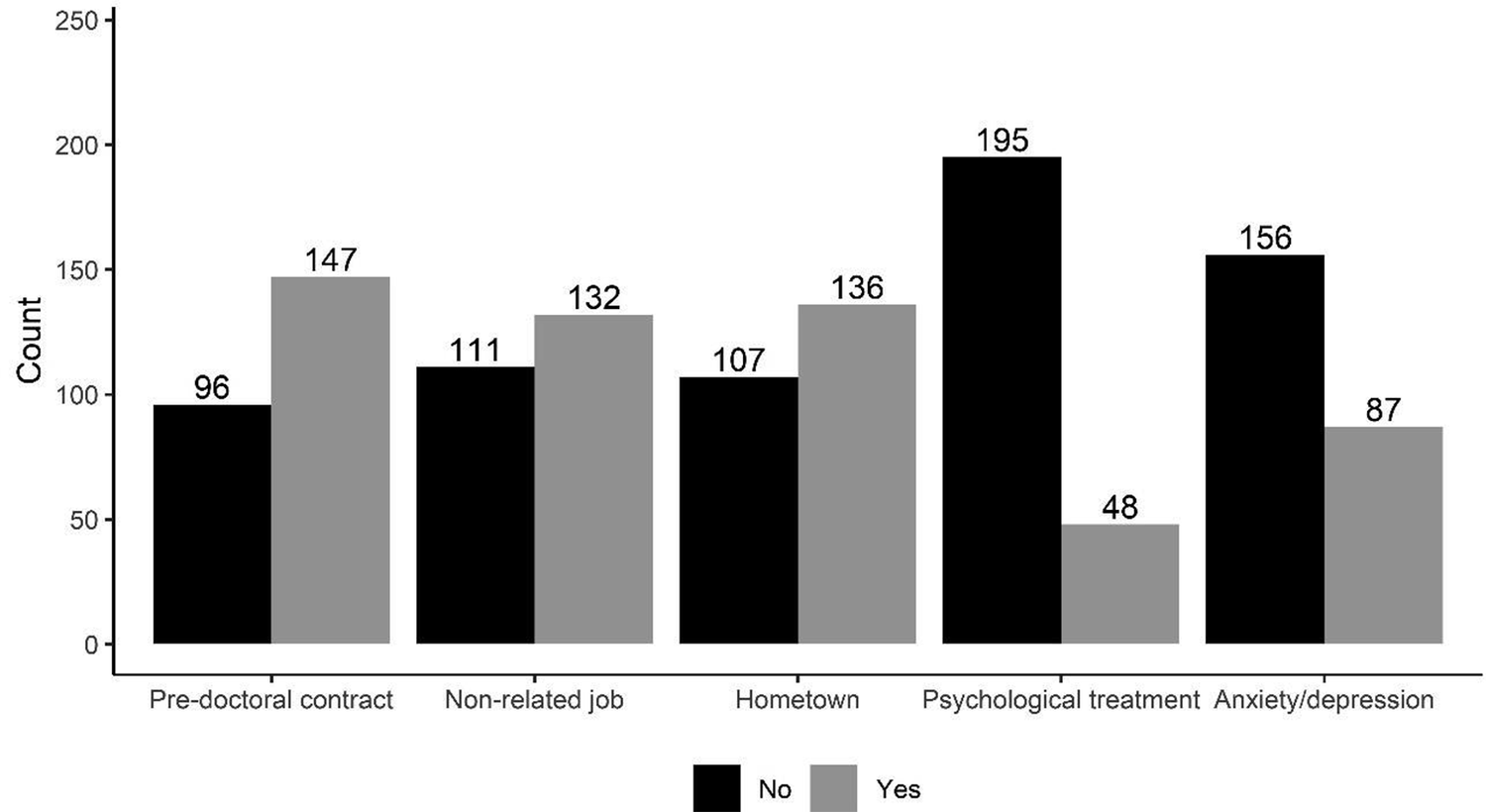
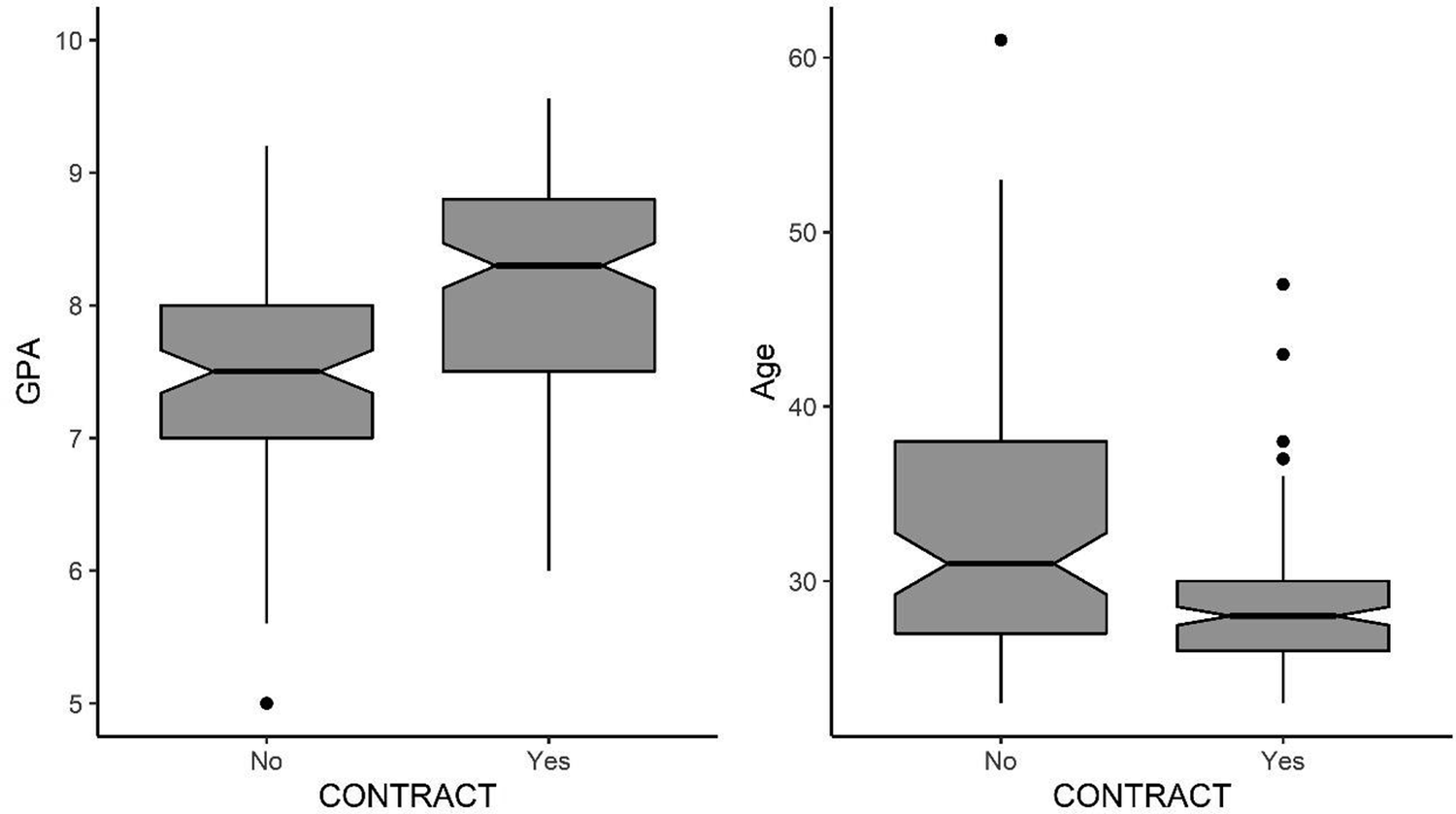
The sample was composed by more women than men (59.25% women) with a range of ages from 23 to 61 years (mean age was 30 years). It is noteworthy that GPA scores range was large (from 5.00 to 9.56), although the mean GPA score was as high as 7.88 (SD = .89). Additional insights on the sociodemographic are provided in Figure 1 and 2. 55.97% of them studied or were studying the PhD in their hometown-city. 60.49% of PhD students had a pre-doctoral contract whose purpose was the development of the doctoral dissertation and 54.32% had a non-related work with their PhD. 18.52% of PhD students with a pre-doctoral contract also had another job non-related to the doctoral dissertation. Having a pre-doctoral contract had a direct relation with the GPA score, and a negative relation with age. In this way, the relationship between having a pre-doctoral contract and GPA scores was significant. The correlation was of a moderate size, r(240) = .34, p < .001. In terms of psychological well-being, 19.75% of the Spanish PhD students that participated in the present study informed that they attended to health-related professionals in order to treat their anxiety or depressive problems. 35.80% of them reported that they have had problems related to anxiety or depression.
Graphical Representation for the Socio-demographic Variables

GPA and Age Distributions for PhD Students with and without a Pre-doctoral Contract

Psychometric Properties of the MBI and AAS Adaptations
MBI. Item means ranged from 1.57 (Item 5) to 3.93 (Item 2). It can be seen in Table 3 that the theoretical structure was generally maintained in this adaptation, but some differences were observed. Emotional exhaustion also comprised an item related to empathy with workmates (Item 4). Depersonalization increased its conceptual range to some socialization problems related to workmates and undergraduate students (Items 6, 16, 17 and 18). Personal accomplishment seemed to be more related with satisfaction with the perception of research quality and its achievements. These results were used to estimate the sum scores by adding the items with the highest row-mean loading. Item 4 was recoded due to the negative factor loading.
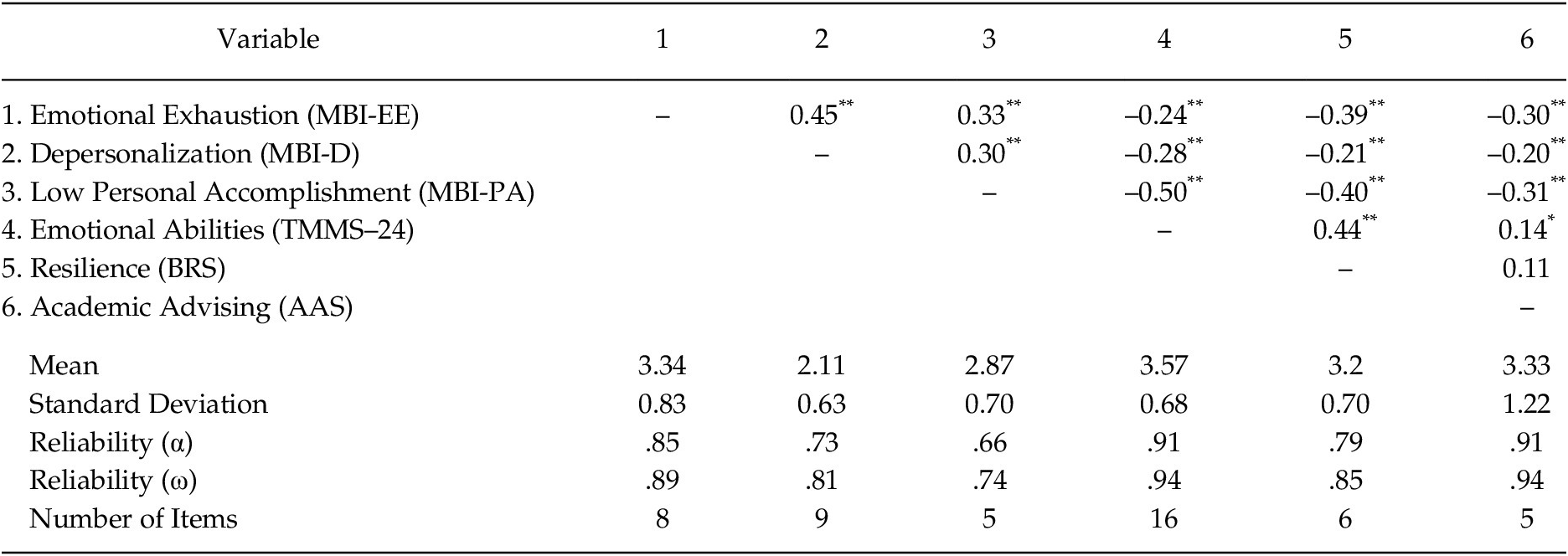
Descriptive Analysis Results of the Self-Report Questionnaires

Note. Variables were computed here as the mean of their items. Average range for the interval estimates of the Pearson correlations was .22 (SD = .02).
** p < .01. * p < .05.
AAS. Parallel analysis recommended to retain one factor. High Pearson correlation coefficients were observed between items, and the unidimensional structure presented a good reliability (α = .91, McDonald’s ω = .94) and appropriate factor loadings (see Table 2). It is noteworthy that satisfaction scales tend to obtain high means in their items, but the items of the AAS present medium means. This is indicative of certain degree of dissatisfaction with the advising received.
Descriptive Analysis of Psychological Questionnaires
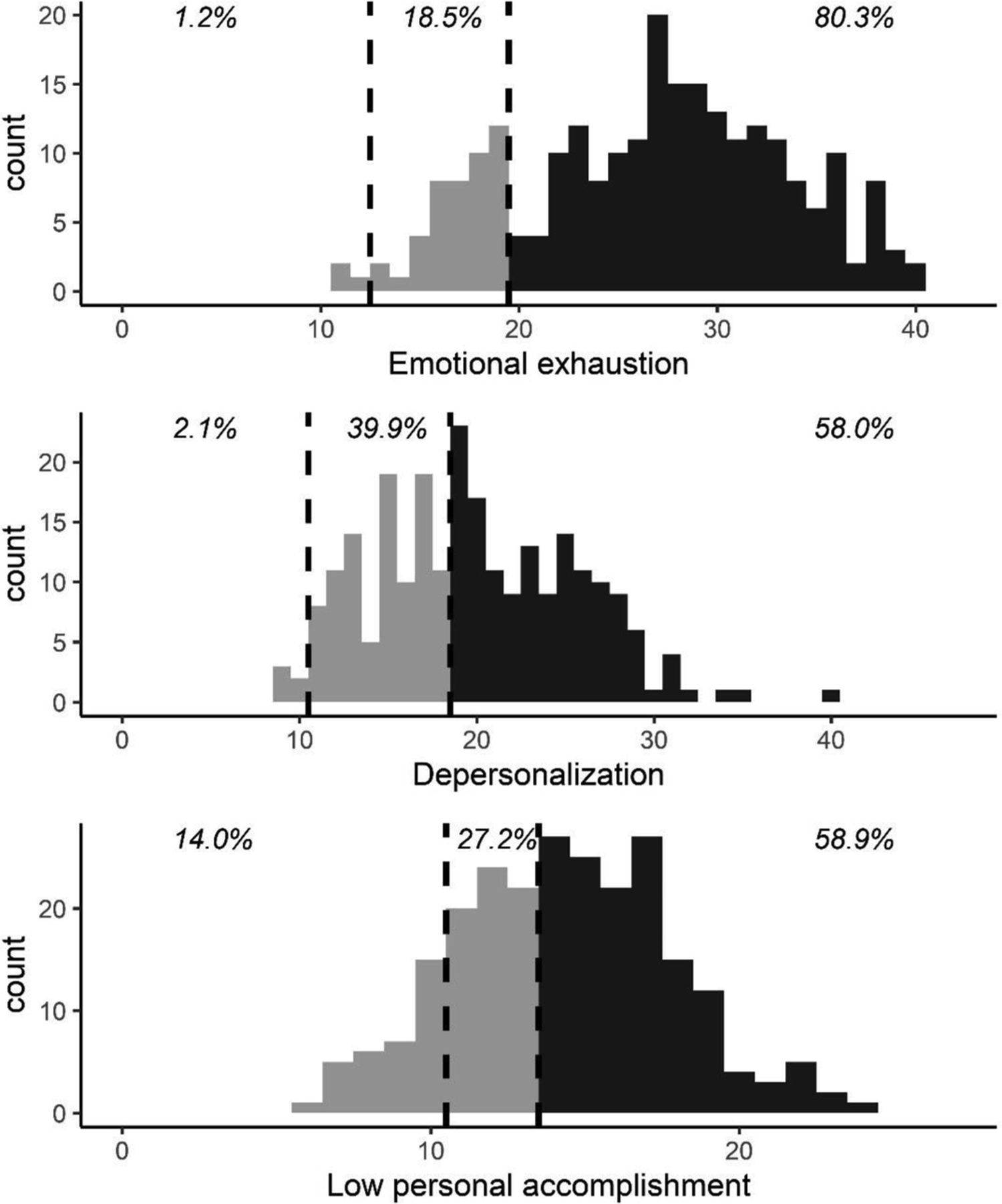
Table 3 includes the descriptive analysis results of the self-report questionnaires. Although academic advising did not highly-correlate with the personal factors (i.e., emotional abilities and resilience), it presented considerable correlation coefficients with the burnout subscale scores. Most of the mean scores were of medium size (i.e., close to 3). PhD students obtained higher mean scores in emotional exhaustion and low personal accomplishment subscales, compared to depersonalization. In Figure 3, MBI subscale scores were categorized into low, medium, or high levels based on the normative American general population results that were rescaled for the final number of items measuring each dimension (8, 9, and 5 for emotional exhaustion, depersonalization, and low personal accomplishment, respectively) (Maslach & Jackon, Reference Maslach and Jackson1986). The prevalence of burnout syndrome was high. It is noteworthy that more than half sample obtained high levels of emotional exhaustion (80.3%), depersonalization (58.0%), and low personal accomplishment (58.9%).
Burnout Sum Scores Distribution and Prevalence Estimates Horizontal bars represent the cut-offs to define the level of burnout (low, medium or high). High burnout is represented in black.

Predictive Models of Burnout Scores
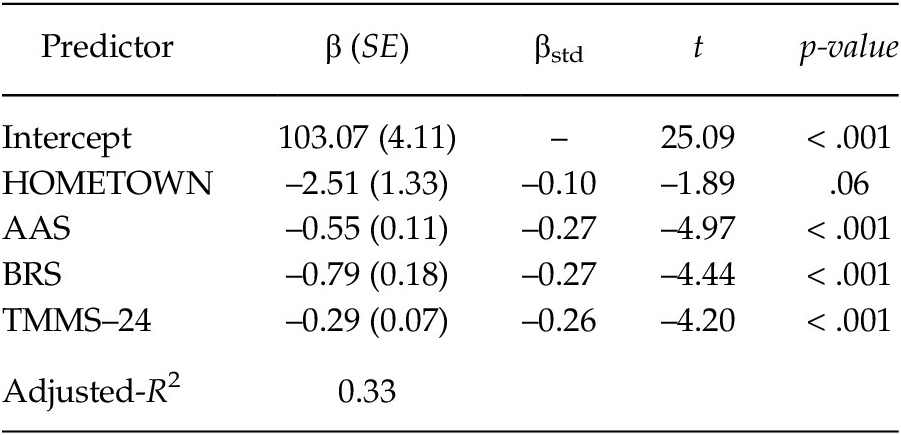
Different linear regression models were conducted in order to predict overall burnout scores, and each of the subscale scores. All these linear regression models included GPA score, CONTRACT, NON-RELATED WORK, HOMETOWN, MENTAL1, MENTAL2, AAS, BRS, and TMMS–24 as covariates. Then, a stepwise model selection was applied to select the most relevant predictors from linear regression models using the AIC index. The results for the overall burnout total scores are presented in Table 4. The most relevant predictors were AAS (βstd = –.27, p < .001), BRS (βstd = –.27, p < .001), and TMMS–24 (βstd = –.26, p < .001). HOMETOWN was a relevant predictor, although it did not reach statistical significance (p = .06). All these predictors reduced burnout scores (i.e., a higher score predicted a lower symptomatology) and, thus, they acted as protective factors in the present sample. This model was able to explain, approximately, 33% of the MBI total scores variance.
Multiple Linear Regression Model for the Maslach Burnout Inventory Total Score

Note. βstd = standardized regression coefficient; t = t-test statistic. 235 degrees of freedom. HOMETOWN = to do the PhD studies in the hometown; AAS = Academic Advising Scale. BRS = Brief Resilience Scale. TMMS–24: Trait Meta-Mood Scale.
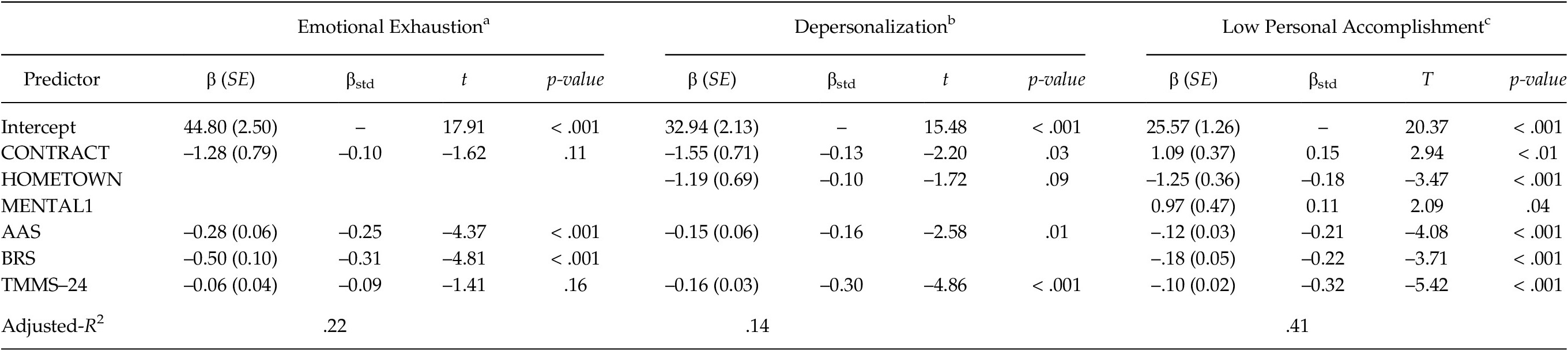
We then explored the results for each of the MBI subscales (see Table 5). Emotional exhaustion was negatively predicted by BRS (βstd = –.31, p < .001), AAS (βstd = –.25, p < .001), TMMS–24 (βstd = –.09, p = .16) and CONTRACT (βstd = –.10, p = .11). Depersonalization was negatively predicted by TMMS–24 (βstd = –.30, p < .001), AAS (βstd = –.16, p < .001), CONTRACT (βstd = –.13, p = .03) and HOMETOWN (βstd = –.10, p = .09) (i.e., BRS was not a relevant predictor for this factor). Low personal accomplishment was negatively predicted by TMMS–24 (βstd = –.32, p < .001), BRS (βstd = –.22, p < .001), AAS (βstd = –.21, p < .001) and HOMETOWN (βstd = –.18, p < .001), and positively predicted by CONTRACT (βstd = .15, p < .01) and MENTAL1 (βstd = .11, p = .04). These models explained 14–41% variability of the burnout subscale scores.
Multiple Linear Regression Models for the Maslach Burnout Inventory Subscale Scores

Note. βstd = standardized regression coefficient; t = t-test statistic; CONTRACT = having a pre-doctoral contract whose purpose is the development of the doctoral dissertation; HOMETOWN = doing the PhD studies in the hometown; MENTAL1 = having current or past psychological treatments for anxiety or depression. AAS = Academic Advising Scale. BRS = Brief Resilience Scale; TMMS–24 = Trait Meta-Mood Scale.
. a,b,c = 235, 235, and 233 degrees of freedom, respectively.
Discussion
Previous research showed that many PhD students are overstressed (Evans et al., Reference Evans, Bira, Gastelum, Weiss and Vanderford2018; Levecque et al., Reference Levecque, Anseel, De Beuckelaer, Heyden and Gisle2017). This led to the creation of a line of work focused on exploring the motives involved (e.g., Dericks et al., Reference Dericks, Thompson, Roberts and Phua2019; Liu et al., Reference Liu, Wang, Qi, Wang, Jia, Shang, Shao, Yu, Zhu, Yan, Chang and Zhao2019). Following this line of work, we hypothesized that burnout can be a reaction to this prolonged exposure to stress. The lack of empirical research in the Spanish population motivated the present study. As had been done previously with other professional contexts, we aimed to establish data on the prevalence of this problem and to identify the factors related to the syndrome. Two exploratory hypotheses were put forward in this regard: Prevalence rates will be high, and the list of related factors will include variables identified as relevant in different areas of the education sector reflecting the diversity of roles that PhD students play. As detailed in the following, evidence was found in favor of both hypotheses.
MBI subscale scores were used to describe the sample in terms of burnout prevalence. The analysis revealed high levels of emotional exhaustion and depersonalization, and low levels of personal accomplishment following criteria proposed by Maslach and Jackon (Reference Maslach and Jackson1986). The prevalence rates were in the range of 58% to 80%. These estimates are considerably higher than those found in the samples of secondary school teachers or university students (García-Carmona et al., Reference García-Carmona, Marín and Aguayo2019; Santen et al., Reference Santen, Holt, Kemp and Hemphill2010). Factors that may partially explain this result are career prospects - as indicated in the introduction the recruitment of young people in Spanish universities is decreasing - and problems of role dysfunction that might arise from the diversity of roles (i.e., teacher, student, researcher). Under this tentative explanation, the diversity of roles might cause conflict or ambiguity, thus generating an additional source of stress. On the other hand, more than one third of the sample reported that they had suffered problems related to anxiety or depression in the past. This estimation is fairly similar to the one obtained in an American sample (Evans et al., Reference Evans, Bira, Gastelum, Weiss and Vanderford2018). Therefore, one of the contributions of the present study is to provide an estimation of the self-reported anxiety and depression rates in the population of Spanish PhD students.
Regarding the relationship between burnout scores with other variables, the three factors that were generally most related were emotional intelligence, resilience and the student’s perception of his or her thesis advisor. In relation to the first two, they are generally considered as personal factors that intervene in how stress is managed (e.g., Blanco-Donoso et al., Reference Blanco-Donoso, Demerouti, Garrosa-Hernández, Moreno-Jiménez and Carmona-Cobo2015; García-Izquierdo et al., Reference García-Izquierdo, Ríos-Risquez, Carrillo-García and Sabuco-Tebar2018). The key role of PhD advisors is to assist and support their students through the PhD. As with the other two variables above, the impact of the relationship with supervisors is also a classic result in the literature on burnout in other professions (e.g., Blanco-Donoso et al., Reference Blanco-Donoso, Moreno-Jiménez, Pereira and Garrosa2019; Cunningham, Reference Cunningham1983). These three variables were always related to burnout scores, with the only exception of scores on the depersonalization dimension where no relationship to resilience was found. This lack of relationship is also in agreement with the literature. Specifically, García-Izquierdo et al. (Reference García-Izquierdo, Ríos-Risquez, Carrillo-García and Sabuco-Tebar2018) found in a sample of university students that resilience was significantly related to emotional exhaustion and personal accomplishment, but not to depersonalization. As for the rest of the variables explored, there were three variables that were related to the overall burnout scores or to one or more of its dimensions: doing the PhD in the hometown, having a pre-doctoral contract whose purpose is the development of the doctoral dissertation, and having current or past psychological treatments for anxiety or depression. Having a pre-doctoral contract was a significant predictor for the three dimensions. Out of the 245 PhD studies used in the analyses, 40% did not have a pre-contract. We found that this population was more prone to experience emotional exhaustion and depersonalization. Extrapolating the explanations offered for the comparison tenured vs. non-tenured faculty, this outcome is probably due to a higher job insecurity, no pay, and having feelings as if they have a lower status than their hired colleagues (Reevy & Deason, Reference Reevy and Deason2014). On the contrary, examinees with a pre-contract experienced higher levels of low personal accomplishment. This result is in line with the well-known over-justification effect: In situations where there is an extrinsic motivation for work (i.e., salary), the individual assumes that it is the source of his/her satisfaction, which can dismiss the sense of personal accomplishment. Doing the PhD in the hometown negatively predicted overall burnout and depersonalization and low personal accomplishment dimensions. In this regard, we understand that those subjects doing their PhD in their hometown may have easier access to their social support network. Finally, having current or past psychological treatments for anxiety or depression was negatively related to low personal accomplishment, probably because psychological disorders can suppress the motivation to achieve current and future personal goals (Dickson et al., Reference Dickson, Johnson, Huntley, Peckham and Taylor2017). On the other hand, we also explored the reported GPA as a proxy for cognitive abilities because these are related to self-efficacy, academic achievement, and attainment (Abad et al., Reference Abad, Sorrel, Román and Colom2016; Stajkovic, et al., Reference Stajkovic, Bandura, Locke, Lee and Sergent2018). However, this predictor was excluded in the AIC selection of the regression model. This result might be partly attributed to range restriction in the data for this variable. Summarizing, the burnout scores in Spanish PhD students were related to both individual variables like emotional abilities, resilience, or job status, and contextual variables like academic advising or social support. These results are in line with previous research exploring this syndrome in different contexts.
As a result of this research, two instruments –MBI and AAS– were adapted for use with Spanish PhD students. Some results related to the MBI internal structure must be discussed. First, Item 4 negatively loaded on the emotional exhaustion factor instead of loading on the low personal accomplishment factor. We believe this is in line with the factor meaning and has to do with the peculiarities of this profession. The formulation of this item typically refers to “my students” or “my patients”. Here, we changed it to “my workmates” in such a way that it now involves the ability to understand others emotions, which is closely related to meaning of the emotional exhaustion factor. As noted in the introduction, we understand that the profession of doctoral student is a service profession with three beneficiaries: the students, their thesis advisor, and their research collaborators, usually other colleagues. With this variation we wanted to emphasize the importance of this third group. Secondly, four items from the emotional exhaustion and personal achievement domains loaded on the depersonalization factor. Again, this made theoretical sense as the items refer to dealing with others. As it has been indicated in the existing literature, this might be indicating that the structure is not invariant across professional groups (Vanheule et al., Reference Vanheule, Rosseel and Vlerick2007).
The present paper was intended to be a first approximation to this new line of research on mental health of PhD students. Some limitations should be taken into consideration. First, differences related to PhD program, dissertation subject area, university, and/or region were not explored in this study. Future studies should verify that these variables do not greatly affect the results found in the present study. Future studies should verify that these variables do not greatly affect the results found in the present study. One of the reasons why it was interesting to conduct this study in Spain was the economic and social situation of the country. The results should be replicated in other countries, for example, considering differences in macro variables like the R&D investment index. Second, further consideration could be given to the aspects that make the relationship between the advisor and the doctoral student beneficial. One way to do this could be to explore the management styles or dimensions that form the relationship. A possible starting point is the study by Liu et al. (Reference Liu, Wang, Qi, Wang, Jia, Shang, Shao, Yu, Zhu, Yan, Chang and Zhao2019). These authors used a 30 item measure to assess the strength of the mentoring relationship in three dimensions: Rapport (encouragement, respect, and interpersonal warmth), apprenticeship (the degree to which the advisor teaches the advisee about professional work), and task focus (the degree to which the advisor facilitates the advisee’s progress through the graduate program). Third, the study only covered a manageable subset of variables. Specifically, future research might explore some of the factors that emerged from the organizational theory framework such as such as role dysfunctions and unrealistic job expectations, lack of organizational health, changes in accreditation requirements, structure, culture, and organizational climate (e.g., Green et al., Reference Green, Albanese, Shapiro and Aarons2014). Finally, longitudinal studies would allow a deeper understanding of the development of the burnout. This would also make it possible to locate the main stressors at the various stages of doctoral studies.
One of the most direct consequences of burnout and with important economic repercussions could be the dropout of these students. This is a common result of burnout across different work contexts. In the case of Spain, this outcome may be especially detrimental in view of the aging of the university teaching staff that will lead to retirements that must be covered. The results obtained in the present study allow us to design interventions to alleviate burnout in this collective. Specifically, the results point out some protective factors. Previous research indicates that relevant predictors like emotional intelligence and resilience are trainable traits (e.g., Masten, Reference Masten2001), thus, some researchers designed interventions with that specific purpose for university students (e.g., Pool & Qualter, Reference Pool and Qualter2012). Therefore, it seems possible to prevent burnout and improving mental health by training people in emotional abilities or resilience. We think that doctoral programs should offer the possibility to participate in these kinds of interventions to their PhD students in order to develop adequate self-care strategies. On the other hand, the other most relevant factor was the relationship with the academic advisor. Probably, the high dissatisfaction that was study in the present study could be related to the overloaded daily routine of academics. In fact, we found that the items of the AAS that had the lowest means were “My advisor was helpful in determining my teaching obligations” and “My advisor is knowledgeable about what I do on a daily basis”. This result might be likely due to the work overload. In order to avoid these problems, doctoral programs could implement closer monitoring by the academic advisor or figures created for this purpose.
Furthermore, socioeconomic and sociodemographic factors were also related to the burnout syndrome. Overall, prevalence was lower for those with a pre-doctoral contract and those who stayed in their hometown-city for their studies. The first point is related to the availability of pre-doctoral contracts. It is to be noted that, according to Eurostat estimates, the expenditure on Research and Development (R&D) in Spain in 2017 was equivalent to 1.2% of its GDP, just over half of the 2.07% that was spent on average in the European Union (EU), and far from the investment of Sweden (3.33%), Austria (3.16%), Denmark (3.06%), and Germany (3.02%). The second point is probably related to the availability of a network of social support, and the costs of living in a new city. This second aspect could be indirectly addressed by increasing the funding on science and pre-doctoral research, but also could be directly addressed by strengthening current relationships between PhD students by means of the possibility of participating in shared formative activities.
The present study makes an original and timely contribution to the understanding of PhD student mental health status by providing prevalence rates and adding some clarity as to which factors are the most related to burnout scores. The three factors that were generally most related to burnout were emotional intelligence, resilience and the student’s perception of his or her thesis advisor. As previously discussed, it is possible to intervene in these areas. In order for these interventions to be effective, we have outlined a future research agenda that seeks to elucidate which specific aspects can lead to greater satisfaction from the student’s perspective and to explore additional, more structural and organizational factors. We would like to end the article by emphasizing the importance of this line of work, taking into account, on the one hand, that the Spanish university system has a somewhat aging workforce and that some of the students considered today will be the academics of tomorrow. It is therefore necessary to disentangle the processes involved in the development of burnout in order to improve the professional health within our profession.