

1. Introduction
As the world grapples with the need to balance economic growth with environmental sustainability, assessing the effects of extreme weather events becomes increasingly critical. The increasing frequency and severity of extreme weather events (European Environment Agency (EEA), 2024; National Aeronautics and Space Administration (NASA), 2024) trigger both short-term and long-term disruptions that weaken economic activity, increase inflation volatility and destabilise financial markets. They do so by damaging infrastructure and capital stocks, lowering labour productivity (Donadelli et al., Reference Donadelli, Jüppner, Riedel and Schlag2017; Matsumoto, Reference Matsumoto2019; Acevedo et al., Reference Acevedo, Mrkaic, Novta, Pugacheva and Topalova2020) and straining supply chains. Weather conditions also disrupt key sectors such as agriculture and energy (Gonçalves et al., Reference Gonçalves, Costoya, Nieto and Liberato2024; Crofils et al., Reference Crofils, Gallic and Vermandel2025) and alter investment behaviour (Liu et al., Reference Liu, Zhang, Zhang and Li2023b; Ahmed et al., Reference Ahmed, Chen, Hoang and Do-Linh2024). All these reinforce inflationary pressures and worsen macro-financial vulnerabilities (Alessandri and Mumtaz, Reference Alessandri and Mumtaz2021; Kahn et al., Reference Kahn, Mohaddes, Ng, Pesaran, Raissi and Yang2021; Li, Reference Li2023; Qi et al., Reference Qi, Ma, Du, Ma, Xu and Zhou2025).
Extreme weather events also influence international trade. Severe weather events disrupt trade by reducing exports and increasing import demand, especially in vulnerable economies (Gassebner et al., Reference Gassebner, Keck and Teh2010; Brenton and Chemutai, Reference Brenton and Chemutai2021). However, they can also boost imports for recovery and create opportunities for developed economies (Liu et al., Reference Liu, Tawiah, Zakari and Alessa2023a). Climate risks may further expand trade in disaster response, renewable energy and sustainable infrastructure.
Beyond its macroeconomic consequences, weather events present risks to financial stability, too. They destabilise financial markets through credit risk propagation, asset repricing and rising sovereign debt burdens (Batten et al., Reference Batten, Sowerbutts, Tanaka, Walker, Gramlich, Bitar and Fardnia2020; Diluiso et al., Reference Diluiso, Annicchiarico, Kalkuhl and Minx2021; Shen et al., Reference Shen, Xu, Duan and He2023). Unlike standard economic shocks, weather risks can push economies past tipping points, leading to prolonged financial distress and stagnation (Lenton et al., Reference Lenton, Rockström, Gaffney, Rahmstorf, Richardson, Steffen and Schellnhuber2019). These risks are also highly endogenous, as their severity depends on market expectations and policy responses (Battiston et al., Reference Battiston, Dafermos and Monasterolo2021).
Despite the growing recognition of the economic and financial implications of extreme weather events, empirical research on their macro-financial effects remains limited, particularly for vulnerable regions. Also, traditional economic models typically assess average effects, neglecting the asymmetries and heterogeneities between countries. They typically fail to capture how climate shocks amplify existing risks (Burke et al., Reference Burke, Hsiang and Miguel2015; Kalkuhl and Wenz, Reference Kalkuhl and Wenz2020).
Our paper contributes to this understanding by addressing this gap in the existing literature. It empirically examines how extreme weather events exacerbate macro-financial imbalances, particularly in structurally weaker economies within Central, Eastern and South-Eastern Europe (CESEE) – a region largely overlooked in climate-related macro-financial studies. Specifically, this study seeks to answer the following research question: Do acute physical risks, stemming from extreme weather events, intensify existing vulnerabilities within the economies of the CESEE region, and what role do they play in amplifying macroeconomic and financial imbalances?
The macro-financial effects of weather events are particularly concerning for this region, due to its exposure to heightened macro-financial imbalances (International Monetary Fund (IMF), 2022). Southern and Eastern Europe face the most severe drought impacts in Europe (Maes et al., Reference Maes, Gonzales-Hishinuma, Haščič, Hoffmann, Banquet, Veneri, Bizeul, Risquez Martin and Quadrelli2022). Growth models of many CESEE countries have become increasingly susceptible to broader global shifts (Lagarde, Reference Lagarde2023), further heightening their exposure to climate-related risks.
Another key contribution of our study is the explicit focus on macro-financial vulnerabilities. Unlike existing research that primarily examines individual macroeconomic and financial indicators, we construct composite measures of macro-financial imbalances, encompassing both internal and external economic fragilities, as well as financial sector vulnerabilities, in line with the growing recognition among global institutions, such as the International Monetary Fund, Bank for International Settlements and European Central Bank.
By employing a panel quantile regression (PQREG) model, we move beyond conventional mean-based analyses and capture the heterogeneous and asymmetric effects of extreme weather shocks, utilising data from 17 economies in the CESEE region spanning the period from 2000 to 2022. Our findings reveal that the macro-financial consequences of extreme weather events are highly dependent on underlying economic conditions. Economies with pre-existing vulnerabilities, such as large output gaps and inflationary pressures, experience disproportionately severe and prolonged disruptions, reinforcing structural weaknesses. Weather shocks, particularly droughts, floods, heatwaves and wildfires, amplify external imbalances and depreciation pressures in countries with initially undervalued exchange rates, raising import costs and inflation, while in economies with overvalued currencies, they exacerbate real effective exchange rate misalignments, reducing competitiveness and worsening trade deficits. These effects are particularly severe in economies with weaker financial buffers. Weather shocks also heighten financial vulnerabilities, particularly in economies with weaker banking sectors and higher financial stress.
The rest of the paper is structured as follows. Section 2 provides an overview of the empirical literature on this topic. Section 3 outlines the methodology and explains the dataset. Section 4 presents the findings of the empirical analysis, and Section 5 provides concluding remarks, summarising the key findings and their implications.
2. Literature review
The literature review is structured into two main sections: the first explores the evolution of macroeconomic models that integrate extreme weather events, while the second reviews empirical studies on their macro-financial effects, identifying also the limitations of existing research in capturing heterogeneous and asymmetric effects.
2.1. Theoretical foundation: integrating extreme weather events into macroeconomic models
This section traces how macroeconomic models have evolved to integrate weather risk, shifting from traditional growth models to frameworks addressing financial risk and monetary policy in the context of climate-induced instabilities.
Early neoclassical growth models viewed extreme weather events as exogenous shocks to capital, assuming recovery through investment and reconstruction. However, they overlooked the lasting economic scarring these events cause, especially in vulnerable economies. Endogenous growth theory improved this by recognising impacts on innovation, human capital and productivity. Climate damages can lower long-term growth by discouraging investment (Fankhauser and Tol, Reference Fankhauser and Tol2005; Lecocq and Shalizi, Reference Lecocq and Shalizi2007).
Computable General Equilibrium (CGE) models allowed for more detailed, short- and medium-term analysis by incorporating sectoral linkages and price responses. Moore and Diaz (Reference Moore and Diaz2015) advanced this by integrating investment behaviour under climate uncertainty, showing how such events distort expectations. However, the reliance of CGE models on equilibrium limits their ability to capture financial disruptions.
Input–output models traced supply chain disruptions across industries, quantifying indirect costs. Yet, their static structure limits their usefulness for assessing long-term macro-financial risks. Integrated Assessment Models (IAMs), such as Nordhaus's DICE (Dynamic Integrated Climate-Economy model), linked climate science and economic projections, estimating damages based on temperature increases. Later IAMs added regional variation and uncertainty but still relied on smooth damage functions that often underestimate nonlinear effects.
Neoclassical frameworks underestimated persistent impacts, assuming economies naturally return to steady-state growth. Later work, like Dell et al. (Reference Dell, Jones and Olken2012) and Burke et al. (Reference Burke, Hsiang and Miguel2015), showed that temperature shocks harm productivity and growth, but did not incorporate financial risk. Felbermayr and Gröschl (Reference Felbermayr and Gröschl2014) distinguished between disaster types, highlighting long-lasting effects in developing economies due to weaker institutions.
Theoretical models have since recognised that extreme weather disrupts investment, lending and debt markets. Battiston et al. (Reference Battiston, Dafermos and Monasterolo2021) introduced a network model showing how financial institutions’ exposure to carbon assets can lead to systemic risk. Monasterolo (Reference Monasterolo2020) extended this to climate stress-testing, integrating credit and liquidity risk and central bank responses. Feyen et al. (Reference Feyen, Utz, Zuccardi Huertas, Bogdan and Moon2020) proposed the ‘double jeopardy hypothesis’: economies with pre-existing vulnerabilities suffer more from climate risks, particularly those with high debt and weak institutions. Climate risks have also been incorporated into monetary policy models. Batten et al. (Reference Batten, Sowerbutts, Tanaka, Walker, Gramlich, Bitar and Fardnia2020) used a New Keynesian framework to show how climate-induced inflation volatility hampers central bank effectiveness, impairing policy transmission.
Recent work focuses on nonlinear and asymmetric risks. Chauvet et al. (Reference Chauvet, Morana and Silva2025) and Adrian et al. (Reference Adrian, Boyarchenko and Giannone2019) used the Growth-at-Risk framework to model tail risks, showing that financially weaker economies face greater downside exposure. Diluiso et al. (Reference Diluiso, Annicchiarico, Kalkuhl and Minx2021) embedded climate risk in a dynamic stochastic general equilibrium model, demonstrating asset mispricing and credit distortions. Gagliardi et al. (Reference Gagliardi, Arévalo and Pamies2022) used a Debt Sustainability Analysis to show that climate shocks heighten sovereign risk, especially in fiscally constrained economies. Berthold (Reference Berthold2024) highlighted how uncertainty around climate policy impacts financial markets, creating feedback loops through investor expectations.
2.2. Related empirical evidence
There is a growing empirical literature on quantifying the macro-financial effects of weather-related shocks. Several studies confirm that extreme weather events are primarily negative supply shocks, adversely affecting growth and inflation (Cashin et al., Reference Cashin, Mohaddes and Raissi2017; Kabundi et al., Reference Kabundi, Mlachila and Yao2022; Li, Reference Li2023; Shen et al., Reference Shen, Xu, Duan and He2023; Cevik and Jalles, Reference Cevik and Jalles2024; Kim et al., Reference Kim, Matthes and Phan2025).
The impact varies by income level: high-income countries suffer greater property damage, but recover faster due to stronger institutions, while low-income countries face higher fatalities and prolonged economic losses (Felbermayr and Gröschl, Reference Felbermayr and Gröschl2014; OECD, 2015).
Meta-analyses and country-level studies (Klomp and Valckx, Reference Klomp and Valckx2014; Burke et al., Reference Burke, Hsiang and Miguel2015; Faccia et al., Reference Faccia, Parker and Stracca2021; Phan and Schwartzman, Reference Phan and Schwartzman2024) consistently find that developing countries bear the most severe and persistent effects. Cevik and Jalles (Reference Cevik and Jalles2024) show that while growth declines significantly in poorer economies after climate shocks, advanced economies show no lasting effects. Usman et al. (Reference Usman, Parker and Vallat2025) find similar patterns across EU regions, where heatwaves and droughts cause lasting damage in low-income areas, while richer regions recover faster, particularly after floods.
Inflationary effects are also widely documented. In developing economies, extreme weather events lead to substantial and persistent inflation (Heinen et al., Reference Heinen, Khadan and Strobl2019; Liang and Hao, Reference Liang and Hao2021; Qi et al., Reference Qi, Ma, Du, Ma, Xu and Zhou2025). Food price shocks are especially pronounced (Faccia et al., Reference Faccia, Parker and Stracca2021), and the transmission varies with monetary policy frameworks (Ciccarelli and Marotta, Reference Ciccarelli and Marotta2024; Kabundi et al., Reference Kabundi, Mlachila and Yao2022).
On external balances, climate shocks tend to widen trade deficits. Disasters increase import dependency and disrupt exports (Felbermayr and Gröschl, Reference Felbermayr and Gröschl2014). High-income countries often recover through reconstruction-led exports, while low-income countries face persistent trade imbalances due to financial constraints. Global supply chain disruptions also exacerbate external vulnerabilities (Lin et al., Reference Lin, Lai, Jeng, Nguyen and Lim2025).
Financial stability is increasingly highlighted in the literature. Climate shocks can amplify financial contagion through interconnected markets (Roncoroni et al., Reference Roncoroni, Battiston, Escobar-Farfán and Martinez-Jaramillo2021), increase credit risk (Calabrese et al., Reference Calabrese, Dombrowski, Mandel, Pace and Zanin2024) and expose institutional weaknesses in risk pricing (Garbarino and Guin, Reference Garbarino and Guin2021). Studies show that weak fiscal buffers worsen fragility (Cevik and Jalles, Reference Cevik and Jalles2024), and that insufficient adaptation in financial systems could lead to systemic risks (Lamperti et al., Reference Lamperti, Dosi, Napoletano, Roventini and Sapio2020; Dafermos, Reference Dafermos, Kappes, Rochon and Vallet2022).
Despite growing recognition of the economic and financial risks posed by extreme weather, empirical research on its macro-financial effects, especially in Europe's most vulnerable economies, remains limited. Existing studies often focus on average impacts, neglecting cross-country heterogeneities and how climate shocks exacerbate pre-existing vulnerabilities like trade deficits, inflation and financial fragility. This paper fills these gaps by: (1) providing one of the few assessments of the heterogeneous and asymmetric effects of extreme weather in the vulnerable yet understudied CESEE region, (2) constructing composite indices capturing multiple dimensions of vulnerability (internal, external and financial) and (3) offering an integrated view of climate-related stress to support resilience-oriented policymaking.
3. Empirical analysis
3.1. The model framework
A defining characteristic of climate risk is its uneven and asymmetric nature, which challenges conventional macroeconomic and financial frameworks (Adrian et al., Reference Adrian, Boyarchenko and Giannone2019; Bolton et al., Reference Bolton, Despres, da Silva La, Samama and Svartzman2020; Kalkuhl and Wenz, Reference Kalkuhl and Wenz2020; Monasterolo, Reference Monasterolo2020; Dafermos, Reference Dafermos, Kappes, Rochon and Vallet2022; Kiley, Reference Kiley2024). Using a PQREG model is particularly effective for examining the impacts of extreme weather events on macroeconomic and financial imbalances, primarily due to its ability to capture tail events and its relevance to the unique characteristics of such phenomena.
A key strength of PQREG is its ability to capture asymmetric effects. In economies with higher macro-financial vulnerabilities, such as high debt or weak investment resilience, extreme weather shocks amplify disruptions, for example by reducing agricultural output and raising food prices. More resilient economies, by contrast, tend to absorb and recover faster. The PQREG model follows Koenker (Reference Koenker2005):
 \begin{equation*}{Q_\pi }\left( {\tau {\text{|}}{X_{it}}} \right) = {\alpha _i} + \beta \left( \tau \right)*{\chi _{it}} + {\text{ }}{u_{it{\text{ }}}},\end{equation*}
where 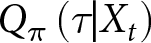 ${Q_\pi }\left( {\tau {\text{|}}{X_t}} \right)$ represents the
 $\tau $-quantile of each of the measures of macroeconomic and financial imbalances, used as dependent variable
 ${Y_{it}}$;
 ${\alpha _i}$ is the country-specific fixed effect, capturing unobserved heterogeneity across countries;
 $\beta \left( \tau \right)$ is the vector of coefficients associated with the independent variables
 ${\chi _{it}}$ which can vary depending on the quantile
 $\tau $; and
 ${u_{it{\text{ }}}}$ is the error term, which captures unobserved factors affecting
 ${Y_{it}}$. This framework allows us to examine both the asymmetric impacts of extreme weather shocks and the heterogeneous responses across CESEE economies.
In our analysis, we estimate coefficients across ten quantiles, ranging from the 10th to the 90th percentiles, to capture how the impact of extreme weather events differs at varying degrees of macroeconomic and financial imbalances. Confidence intervals are computed using bootstrapping with 500 replications. Each predicted quantile corresponds to a point in the cumulative distribution function of the dependent variables – macroeconomic and financial imbalances. By mapping these discrete quantile estimates over time, we generate a sequence of probability density functions for the dynamics of these imbalances.
Before proceeding with the empirical analysis, we formally outline the key hypotheses tested in this study. Based on the theoretical and empirical literature, we test the following hypotheses:
H1: Extreme weather events have a significant and asymmetric impact on macroeconomic imbalances (output gap, inflation, external and financial imbalances) across CESEE economies. This expectation follows from the notion that extreme weather shocks act as negative supply shocks, with potentially more severe effects in economies with higher vulnerabilities.
H1a: Extreme weather shocks deepen recessions when economies experience negative output gaps by further reducing output.
H1b: Extreme weather shocks amplify inflation for economies under high price volatility.
H1c: Extreme weather shocks widen current account deficits or surpluses when economies experience external imbalances.
H1d: Extreme weather shocks exacerbate exchange rate misalignments when economies face overvalued or undervalued currencies.
H1e: Extreme weather shocks increase financial instability when economies operate with weaker financial buffers.
H2: The impact of extreme weather events on macroeconomic imbalances varies across country groups within CESEE, reflecting differences in economic structure, institutional resilience and financial integration.
3.2. Data description
The analysis covers 17 emerging economies in the CESEE region. The countries considered are Albania, Bosnia and Herzegovina, Bulgaria, Croatia, Czech Republic, Estonia, Greece, Hungary, Latvia, Lithuania, Montenegro, North Macedonia, Poland, Romania, Serbia, Slovak Republic and Slovenia. Since a common monetary policy is being conducted by the European Central Bank for the Euro Area countries, these countries are grouped together. Countries and time periods are chosen based on data availability. The dataset consists of quarterly data spanning the period from 2000 to 2022.
In the pursuit of evaluating macroeconomic and financial imbalances and spillovers in the CESEE region attributed to extreme weather conditions, various explanatory variables are employed as proxies for these imbalances. These variables are selected based on their alignment with existing literature, identifying them as the most pertinent indicators for capturing macro-financial relationships. The output gap used to gauge internal imbalances is calculated as the difference between actual GDP and potential GDP. The latter is estimated using the Hodrick–Prescott (HP) filter. In assessing external current-account imbalances, we rely on the current-account gap (CA gap), which is defined as the difference between the observed current account and its estimated equilibrium value. Inflation is represented by the percentage variation in the natural logarithm of the Consumer Price Index, and it undergoes seasonal adjustment. The variables are extracted from the respective national statistical offices of the considered countries and the Eurostat (2022) database. The theoretical justification for these two variables lies in their association with macroeconomic stability, a premise supported by previous studies (Romer and Romer, Reference Romer and Romer2004; Olivei and Tenreyro, Reference Olivei and Tenreyro2007; Coibion, Reference Coibion2012; Cloyne and Hürtgen, Reference Cloyne and Hürtgen2016; Champagne and Sekkel, Reference Champagne and Sekkel2018).
Determining financial stability is inherently more intricate than assessing aspects such as price stability. The complexity arises due to the intertwined nature of various elements within the financial system and their multifaceted interactions, both internally and with the broader real economy (Gadanecz and Jayaram, Reference Gadanecz and Jayaram2009). It will be assessed using the CAELS and CAMELS methods (see online appendix A2 for details).
When evaluating external current-account imbalances, we utilise the CA gap, which represents the deviation of the observed current account from its estimated equilibrium level. In the same vein, exchange-rate discrepancies are defined by the gap between the actual REER and its estimated equilibrium level through the HP filter. The equilibrium value for the current account is derived from models incorporating traditional economic fundamentals. The detailed process of estimating the Financial Soundness Index and CA gap is discussed in the appendix, Sections A1 and A2, respectively.
Figure 1 reveals an upward trend in the frequency and intensity of extreme weather events across some of the countries in the region. Over time, these events have not only become more frequent but also exhibit heightened volatility, with sharp fluctuations in the index values. This increased variability underscores the growing unpredictability of extreme weather, making it challenging for communities and policymakers to anticipate and manage risks effectively. The index's rising trajectory indicates the intensifying impact of extreme weather events, as regions experience more erratic heatwaves, droughts, storms and other hazards (European Environment Agency (EEA), 2024). Such shifting of extreme weather patterns beyond historical norms reinforces the need for adaptive strategies and robust resilience measures.
Extreme weather events index in the CESEE region.

4. Results
4.1. Macro-financial effects of extreme weather events
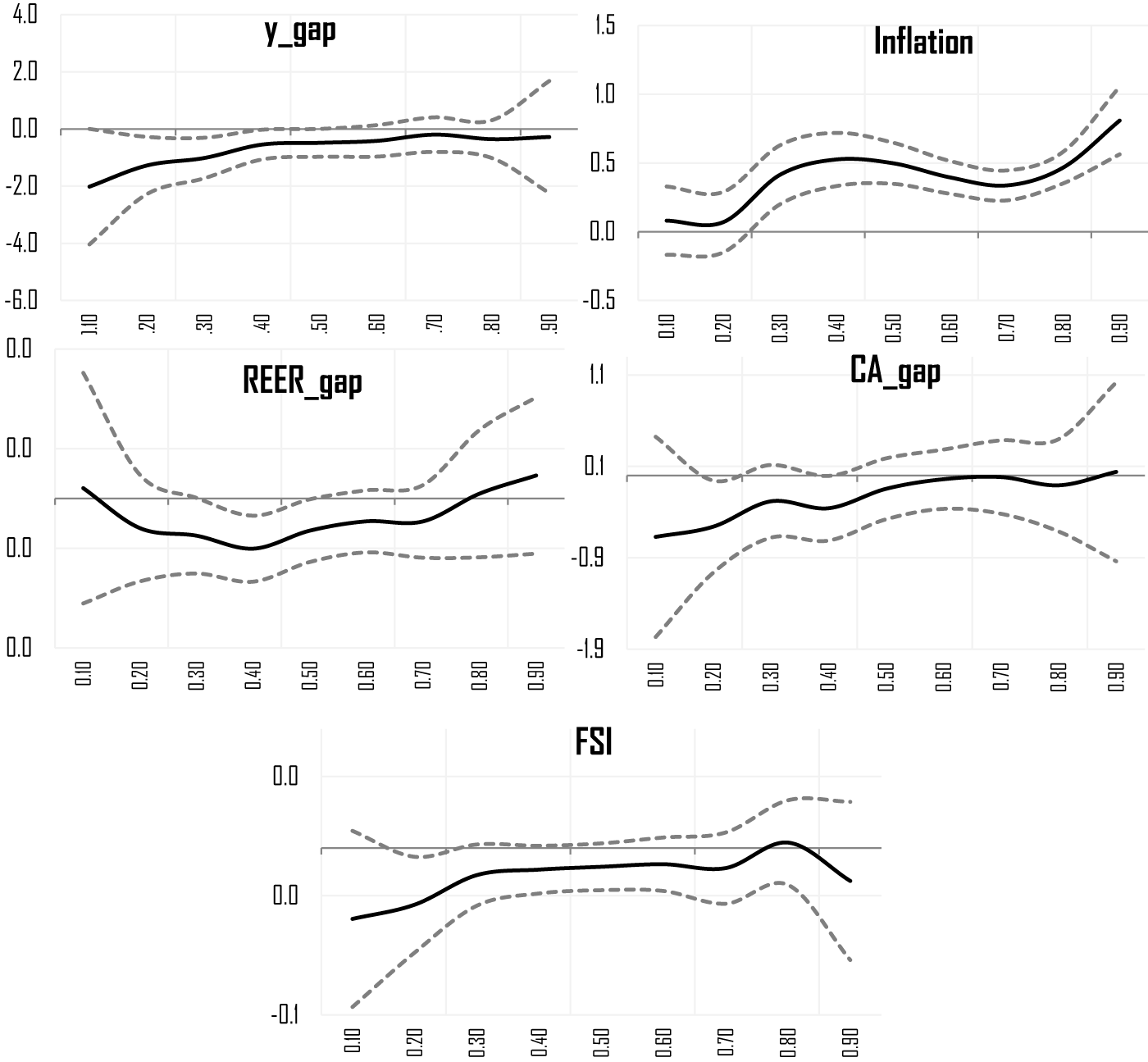
Figure 2 presents the empirical results. Estimating the effects across multiple quantiles allows us to understand the distributional impact of extreme weather events, identifying whether these shocks are more disruptive in certain economic conditions. The output gap (y_gap) becomes lower in magnitude at higher quantiles and larger at lower quantiles, meaning that countries or periods already experiencing a significant negative output gap (i.e., economic contractions) see this gap go even further into negative territory due to climate shocks. In other words, for economies with larger negative output gaps, extreme weather events exacerbate these contractions, pushing output further below potential. This suggests that more vulnerable countries, already struggling with economic downturns, are hit harder by climate events.
Estimates of macro-financial effects of extreme weather events across different quantiles.

Inflation exhibits asymmetric effects across the quantiles. Climate events tend to have a stronger impact on inflation variability at both the lower and upper quantiles. However, the effects are statistically significant only at the upper quantiles, suggesting that climate shocks are more likely to exacerbate inflation during periods of already high inflation. This indicates that economies experiencing elevated inflation are more vulnerable to additional price volatility triggered by extreme weather events.
When it comes to external imbalances, the effects of extreme weather shocks tend to be more moderate, with statistical significance observed at the 0.3, 0.4 and 0.5 quantiles, respectively, for the CA gap and REER gap measures. Extreme weather shocks have a statistically significant effect on the CA gap at lower quantiles, where countries already face negative current account balances (deficits). The widening of the current account deficit following extreme weather events reflects the disruption of trade flows, increased reliance on imports and reduced export revenues. This effect may be particularly concerning for economies with structural weaknesses, such as heavy reliance on weather-sensitive sectors like agriculture or tourism, limited diversification and constrained fiscal capacity. At higher quantiles, where countries have a positive CA gap, the effects of extreme weather shocks are smaller and statistically insignificant.
While the immediate effects of extreme weather conditions are more pronounced in countries with existing external imbalances, underlying vulnerabilities may still pose risks even for economies with relatively stable external positions. This invites further investigation that could explore why some countries are more affected and whether specific characteristics (e.g., economic structure, reliance on certain industries, or levels of fiscal health) contribute to their heightened sensitivity to extreme weather shocks.
The significant effects of extreme weather conditions on financial imbalances at low quantiles indicate that these impacts are particularly pronounced for countries with lower levels of financial resilience or stability. Specifically, it suggests that countries experiencing already high financial vulnerabilities might face greater challenges in maintaining financial soundness, as extreme weather events could disrupt their financial systems, affecting liquidity, credit availability, or asset values.
The findings so far suggest that extreme weather conditions may significantly exacerbate macro-financial vulnerabilities across the CESEE region, and that economies with existing financial weaknesses are particularly susceptible to the compounding effects of extreme weather events.
4.2. Country-group analysis
In the initial analysis, we examine the results across the full sample of CESEE countries, offering a comprehensive view of the region's macroeconomic and financial responses to extreme weather events. To delve deeper, this section breaks down the countries into three groups: Western Balkans non-EU countries,Footnote 1 early EU entrants,Footnote 2 and later EU entrants.Footnote 3 This division reflects key differences in macro-financial stability, economic development and institutional resilience of these countries.
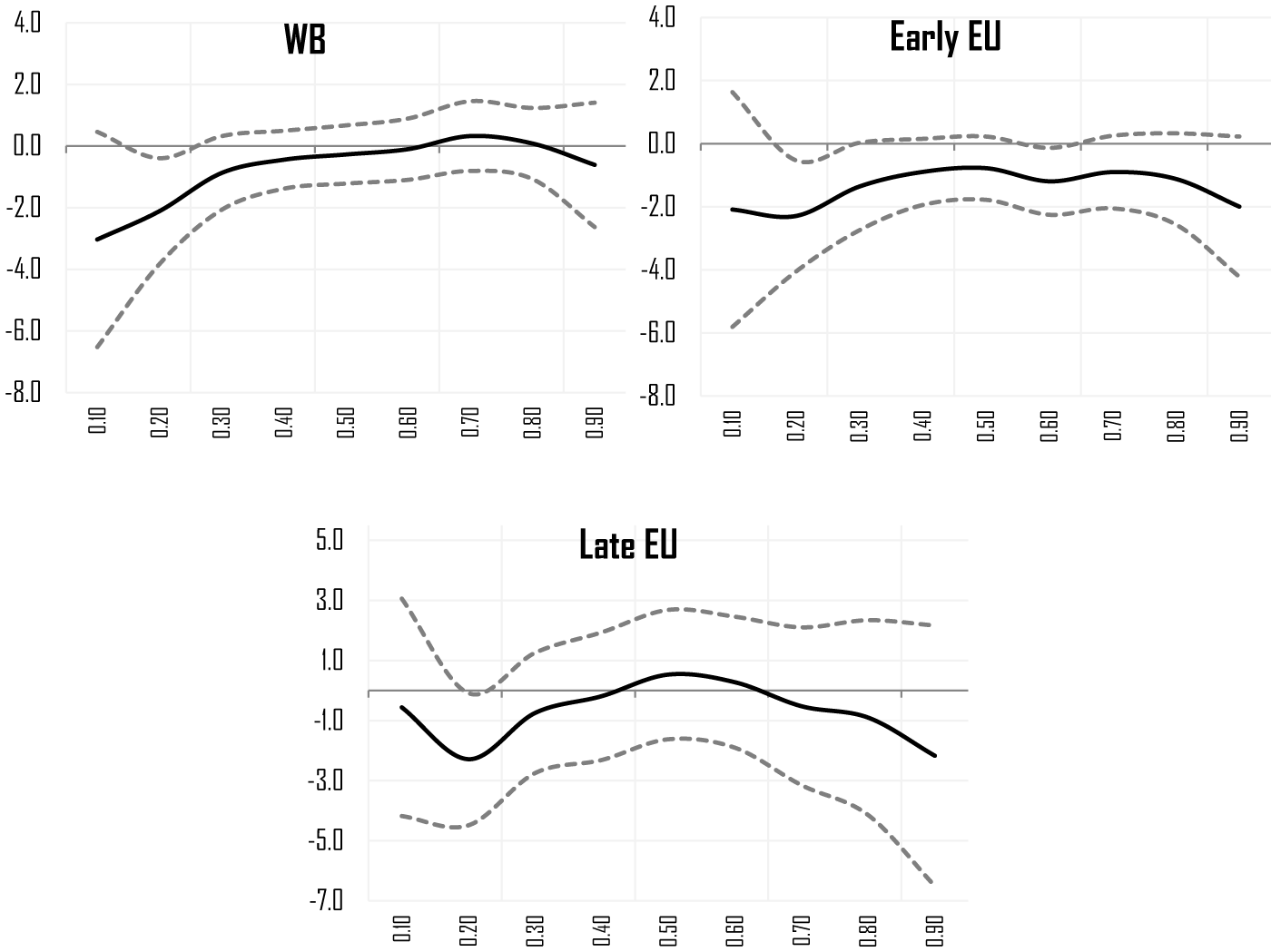
Our analysis begins by examining the output gap (y_gap) within each group, focusing on how extreme weather conditions intensify economic contractions. As shown in Figure 3, in the Western Balkans non-EU countries, where economic diversification is often limited and structural constraints persist, extreme weather shocks seem to deepen already negative output gaps, worsening economic downturns in vulnerable economies. In contrast, early EU entrants, with more established economic structures and policy frameworks, are likely to show greater resilience, though some vulnerabilities may surface in economies heavily reliant on weather-sensitive sectors like agriculture. Later EU entrants show a transitional pattern of resilience, with output gaps moderately affected by extreme weather conditions.
Country-group analysis of extreme weather events' effects on the output gap.

This aligns with Burke et al. (Reference Burke, Hsiang and Miguel2015), who suggest that lower-income economies suffer more persistent economic contractions following extreme weather shocks due to limited adaptation capacity. Our findings also support Cevik and Jalles (Reference Cevik and Jalles2024), who show that the adverse effects of extreme weather events on economic growth are significantly larger in developing economies, where structural weaknesses amplify economic downturns.
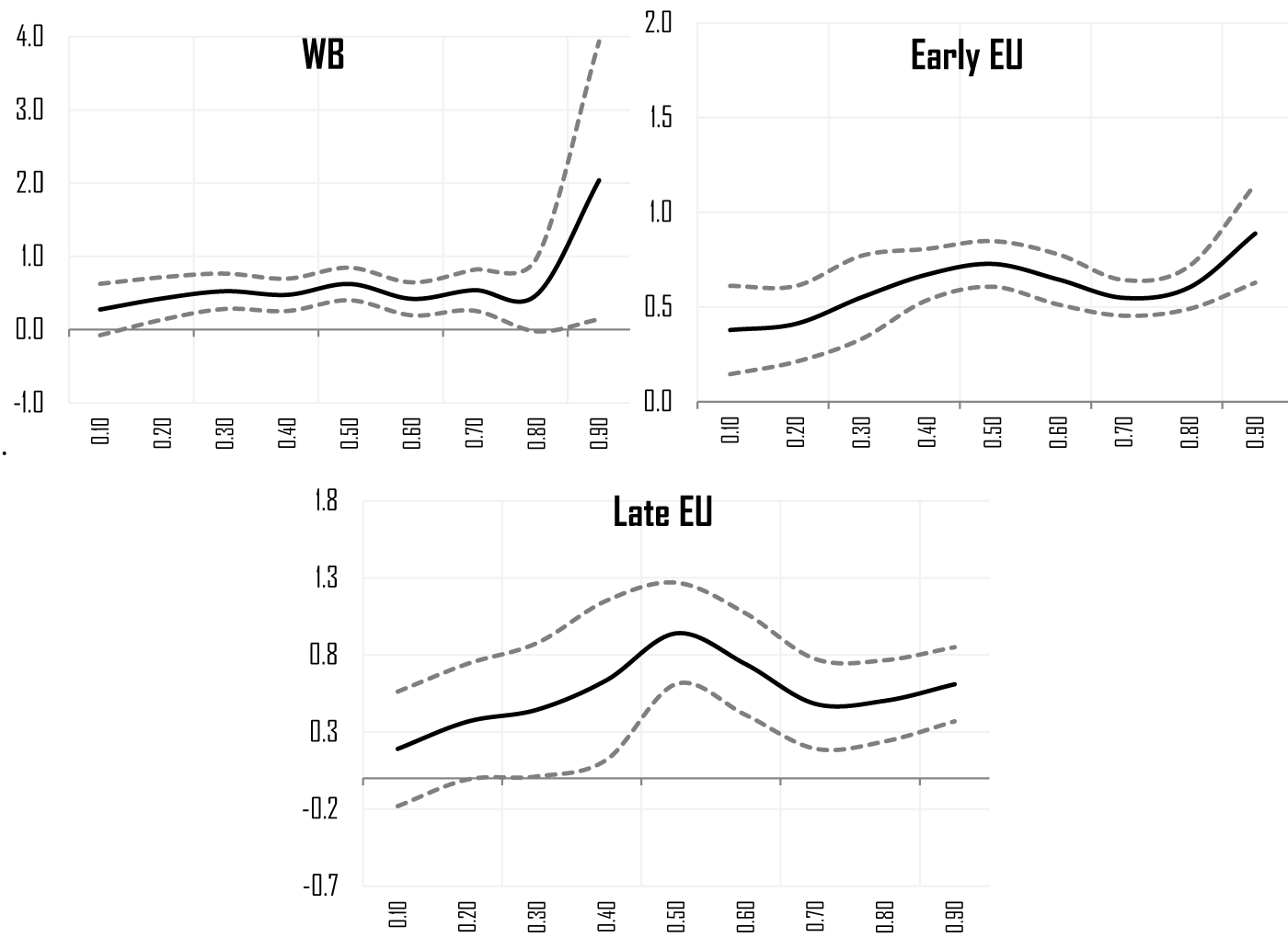
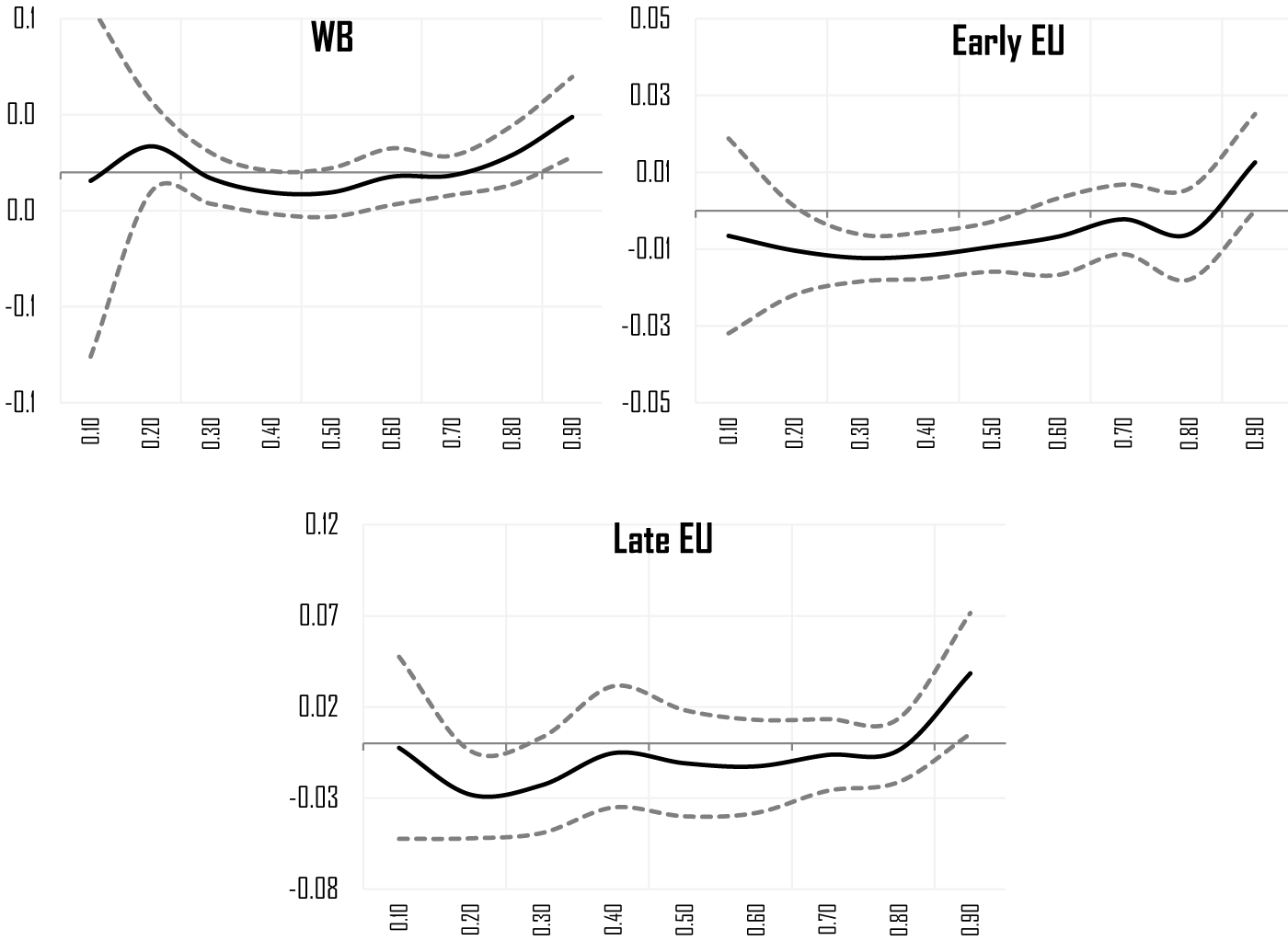
Next, we analyse inflation responses, focusing on how extreme weather events influence price variability across different quantiles within each group, shown in Figure 4. In the Western Balkans, extreme weather shocks have a stronger impact at higher quantiles, suggesting that inflationary effects intensify when price pressures are already elevated. This could be attributed to weaker monetary frameworks, higher exposure to weather-sensitive sectors such as agriculture and energy, and greater external dependencies. Early EU entrants exhibit a more gradual inflationary response across quantiles, which may reflect stronger institutional and monetary policy frameworks that help absorb shocks more effectively. In later EU entrants, inflationary effects of extreme weather shocks seem to be slightly more pronounced under moderate price pressures, but appear more contained at higher levels, potentially due to improving policy credibility and integration into broader EU economic mechanisms that help mitigate inflationary volatility.
Country-group analysis of extreme weather events' effects on inflation.

These results are consistent with Kabundi et al. (Reference Kabundi, Mlachila and Yao2022), who show that extreme weather events, particularly droughts, lead to persistent inflationary effects, especially in developing economies where food prices constitute a large share of household expenditures. Faccia et al. (Reference Faccia, Parker and Stracca2021) further demonstrate that extreme temperatures drive short-term food price inflation, with stronger effects in emerging markets.
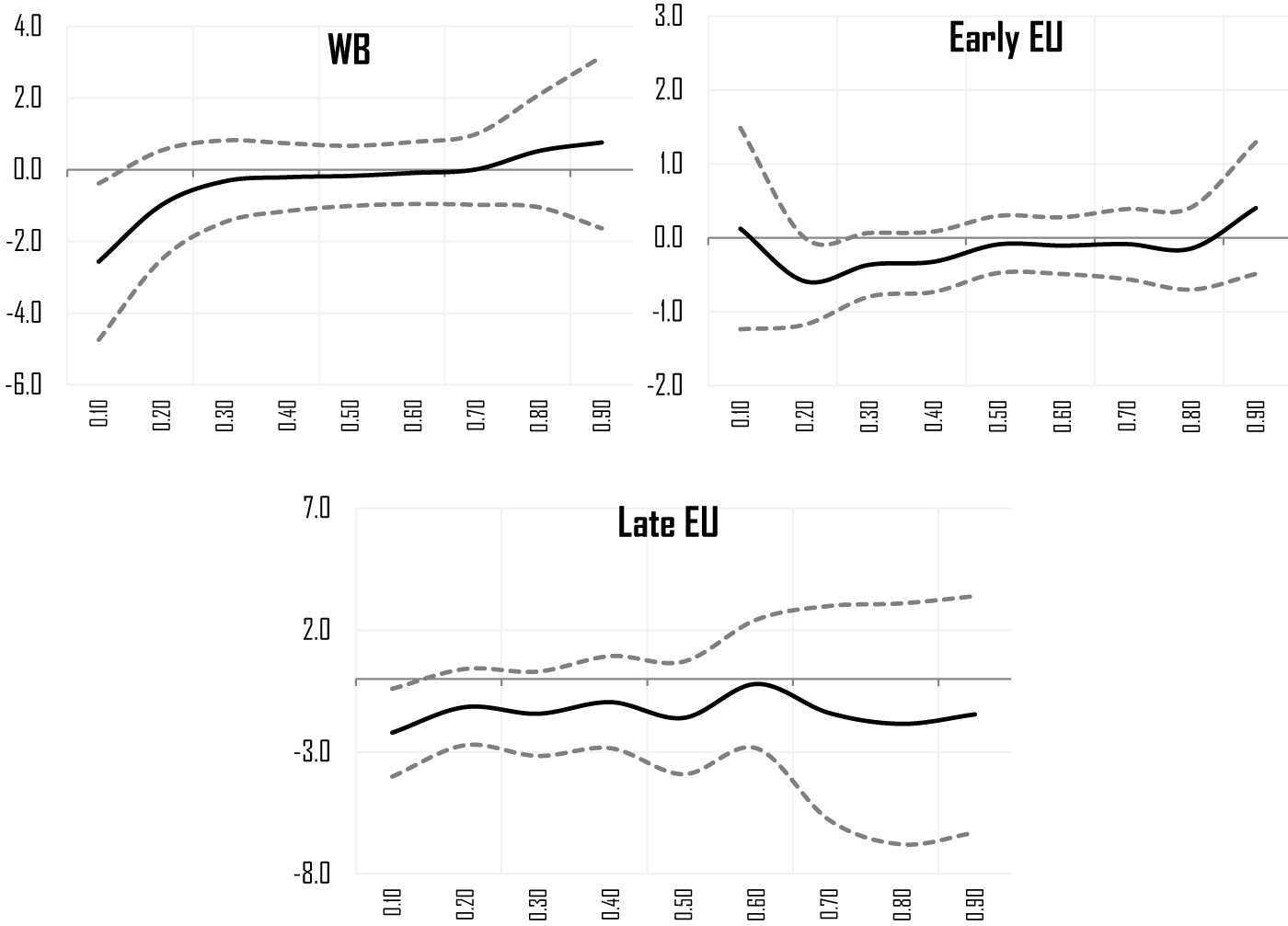
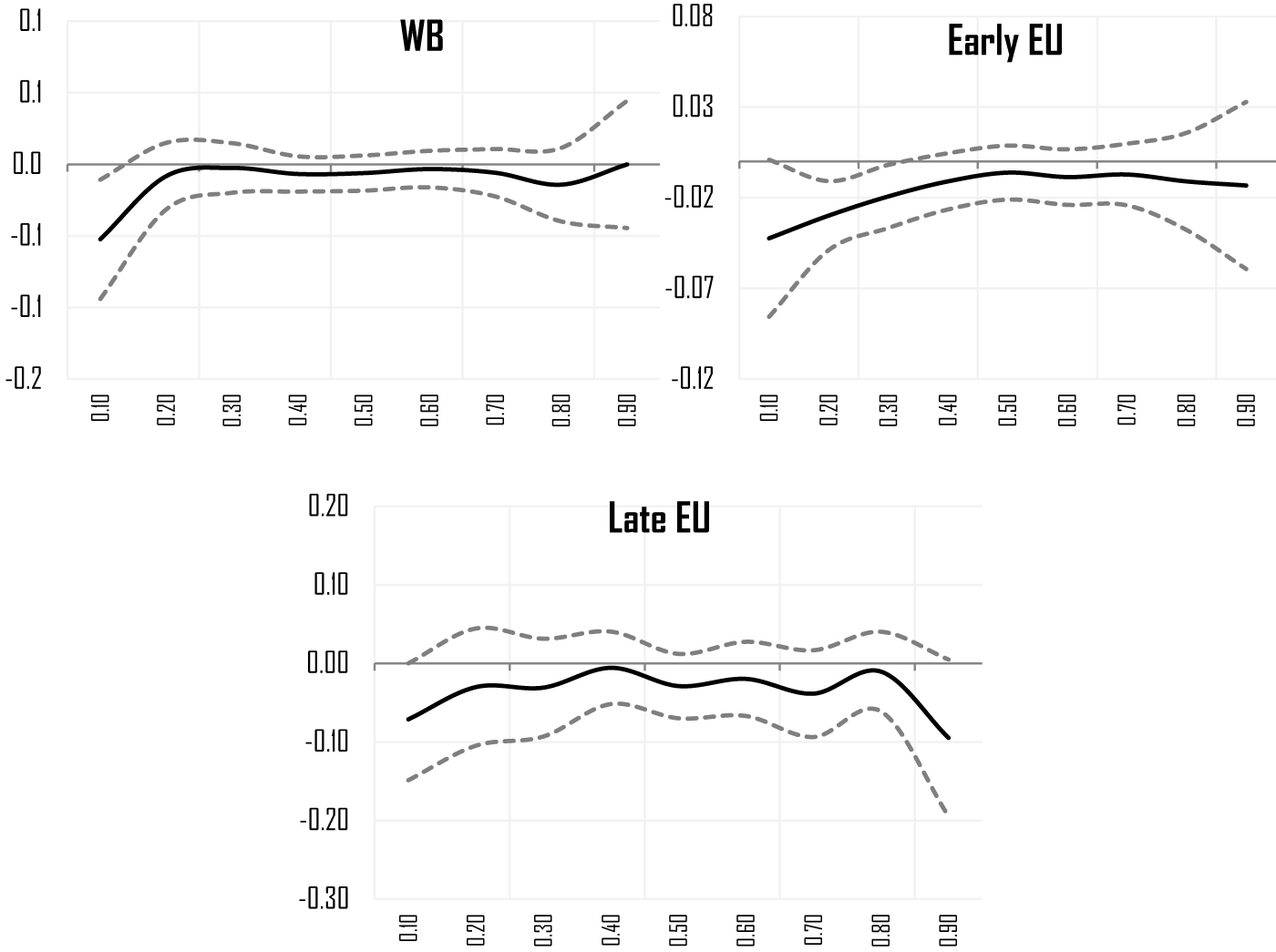
We then explore external imbalances by assessing the effects of extreme weather shocks on the CA gap and REER gap for each group. The CA gap in the Western Balkans displays a negative effect across quantiles, particularly pronounced and statistically significant in the lower quantiles, as shown in Figure 5. The CA gap in early EU entrants shows a more muted response to extreme weather shocks compared to the Western Balkans. The graph indicates a flatter trend across quantiles, with minor fluctuations. The CA gap in later EU entrants exhibits a lower decrease in lower quantiles, similar to the Western Balkans, but at a slightly smaller magnitude.
Country-group analysis of extreme weather events' effects on current account.

The results indicate that extreme weather shocks have asymmetric effects on REER misalignment, as presented in Figure 6. At lower quantiles, extreme weather events further lower the REER gap, deepening undervaluation when currencies are already misaligned downward. This suggests that for countries with initially undervalued exchange rates, extreme weather shocks reinforce depreciation pressures, potentially increasing import costs and inflation. Conversely, at higher quantiles, where the REER gap is positive (indicating overvaluation), extreme weather shocks push REER misalignment further upward, reducing price competitiveness and worsening trade deficits. These effects are most pronounced in economies with weaker financial buffers.
Country-group analysis of extreme weather events' effects on exchange rate.

The results are in line with Jones and Olken (Reference Jones and Olken2010), Missirian and Schlenker (Reference Missirian and Schlenker2017), Burke et al. (Reference Burke, Hsiang and Miguel2015) and Schlenker and Osberghaus (Reference Schlenker and Osberghaus2025), who find that extreme weather events significantly impact exports, with some studies highlighting stronger effects on poorer countries while richer economies remain largely unaffected.
Finally, we consider financial vulnerabilities, focusing on how extreme weather events impact financial resilience across groups. The estimation results are presented in Figure 7. The Western Balkans non-EU countries are likely to exhibit pronounced financial impacts, especially where existing vulnerabilities are high, due to limited financial buffers and structural weaknesses. Early EU entrants, though generally more resilient, could experience sector-specific financial disruptions in industries heavily exposed to extreme weather risks. Later EU entrants show intermediate resilience, with financial effects dependent on sectoral exposure and their progress in implementing climate-adaptive policies. Our results align with Roncoroni et al. (Reference Roncoroni, Battiston, Escobar-Farfán and Martinez-Jaramillo2021) and Garbarino and Guin (Reference Garbarino and Guin2021), who find that extreme weather conditions exacerbate financial vulnerabilities.
Country-group analysis of extreme weather events' effects on financial stability.

Based on the country group analysis, our findings indicate pronounced asymmetries in the effects of extreme weather shocks on key macro-financial indicators, with impacts varying across the Western Balkans, early EU entrants and later EU entrant countries.
4.3. Robustness checks
An important issue arises in the analysis due to the potential impact of the interpolated pre-2010 data on the results, given that this period constitutes a significant portion of the dataset. To address this concern, we performed robustness checks by estimating the model for the period 2010–2022, excluding the interpolated data. The detailed results of these robustness checks are presented in the appendix, Figures A9–A14. The overall results remain consistent across both periods in terms of the signs and statistical significance of the estimated effects across quantiles, variables and country groups, with only minor variations in coefficient magnitudes. This indicates that the impact of the interpolated data is minimal and does not significantly alter the robustness of the results.
To further explore which hazards drive the observed effects, we re-estimated the models by replacing the composite index with each individual component index (droughts, floods, fires, hail, extreme temperatures and wind). The results, presented in Figures A15 and A18 in the appendix, reveal that significant effects on macro-financial imbalances are present only for droughts, floods, heatwaves and wildfires, while other hazards do not exhibit statistically significant impacts for the CESEE region as a whole. This indicates that the composite index effects documented above are primarily driven by shocks related to drought, flood, heat and fire. Importantly, these effects hold in the same direction as those found for the extreme weather events composite index: they exacerbate existing imbalances, meaning that when the output gap is already negative, these shocks deepen the gap further, and when inflation is already elevated, these shocks increase it slightly further. Similarly, in the context of financial imbalances, the shocks tend to amplify financial stress in already vulnerable countries, suggesting limited resilience of the financial system under adverse weather conditions.
However, it is important to stress that assessing the effects of extreme weather events, particularly their impact on macroeconomic and financial stability, poses significant challenges due to the complexity and uncertainty that characterise weather-related phenomena. The nonlinear nature of weather events complicates our understanding, as these events can have varying impacts depending on their intensity, frequency and context. Additionally, the interconnectedness of global economic systems means that extreme weather shocks can propagate through different sectors and geographies, creating a web of effects that is difficult to untangle. The presence of numerous feedback loops further complicates the precise quantification of the economic consequences of extreme weather events, as changes in one area can lead to unforeseen repercussions in others.
This study represents an effort toward understanding the complex interactions between extreme weather risks and economic variables in this region. However, it is important to acknowledge that this empirical analysis may have limitations that could hinder the full capture of the economic impact of extreme weather risks stemming from extreme weather events. These limitations might lead to an underestimation of the overall assessed economic impact. One potential source of underestimation is the exclusion of catastrophic outcomes and significant phenomena, such as ecosystem degradation and collapse, which are challenging to incorporate into the assessment.
Moreover, the analysis may be subject to omitted variable bias if we fail to account for other factors that influence macroeconomic outcomes. These factors can include technological advancements that enhance resilience to extreme weather shocks, policy changes aimed at mitigating extreme weather risks, and broader global economic conditions that interact with climate variables. Such omissions may distort the overall assessment, suggesting that the impacts of extreme weather events are less severe than they may actually be. Acknowledging these limitations is essential for contextualising our findings and guiding future research in this important area.
5. Final remarks and policy implications
This paper provides new evidence on the macro-financial effects of extreme weather in the CESEE region. Using PQREG, we highlight distributional effects that show how vulnerable economies face disproportionately greater risks. We find that extreme weather undermines internal stability, particularly in economies with pre-existing imbalances. Countries with broader economic and financial vulnerabilities remain exposed to heightened weather-related risks.
Weather events create additional trade-offs for policymakers, complicating policy responses and increasing uncertainties. Mitigating and adapting require major economic shifts in policy, investment and innovation (Gillingham and Stock, Reference Gillingham and Stock2018). Evidence shows that environmental policies and green investments can foster growth (Metcalf and Stock, Reference Metcalf and Stock2020; Batini et al., Reference Batini, Di Serio, Fragetta, Melina and Waldron2022), especially when paired with technological innovation.
Our findings call for a flexible monetary policy (Cantelmo et al., Reference Cantelmo, Melina and Papageorgiou2023), as extreme weather shocks often reduce output and raise inflation. Rigid inflation-targeting frameworks may amplify volatility, particularly in developing economies. Allowing temporary deviations from inflation targets while preserving credibility can better accommodate such shocks.
Integrating weather risks into financial regulation is essential. Economies with weaker financial systems remain more vulnerable, supporting Monasterolo's (Reference Monasterolo2020) call to embed climate risks into capital requirements, stress tests and disclosures. Stronger macroprudential measures enhance financial resilience in a changing climate.
Fiscal policies should prioritise weather-resilient infrastructure, support for vulnerable sectors and structural reforms like renewable energy and disaster resilience to strengthen long-term stability (Ciccarelli and Marotta, Reference Ciccarelli and Marotta2024). Green incentives and climate stress testing can also reduce exposure.
Delayed climate policies can fuel inflation volatility and financial instability (Diluiso et al., Reference Diluiso, Annicchiarico, Kalkuhl and Minx2021). Gradual, well-communicated transitions aligned across fiscal and monetary policy are essential for long-term stability, especially in vulnerable economies. The implications for optimal climate policy are significant if climate shocks lead to persistently lower growth (Moyer et al., Reference Moyer, Woolley, Matteson, Glotter and Weisbach2014; Moore and Diaz, Reference Moore and Diaz2015; Ricke et al., Reference Ricke, Drouet, Caldeira and Tavoni2018).
Further research is needed to better understand the systemic risks posed by extreme weather. Disaggregating the effects of specific weather shocks across economic sectors would clarify sectoral vulnerabilities. Cross-regional comparisons with other vulnerable economies could improve the generalizability of findings and support coordinated risk management. Future studies should also explore transmission channels, including supply chain disruptions, investor sentiment and consumer behaviour, to assess indirect impacts on external balances and financial stability.
Supplementary material
The supplementary material for this article can be found at https://doi.org/10.1017/S1355770X25100302.
Competing interests
The author declares no competing interests.