Mental ill-health, behavioural problems and substance misuse are the leading causes of morbidity in young adulthood (Patel et al. Reference Patel and Flisher2007). While Ireland has a relatively young population with 34% of the population aged under 24 years (CSO, 2011) there has been a lack of systematic epidemiological research on young people’s mental health in Ireland. Although surveys of self-reported mental health symptoms in young Irish adults have been carried out (Barry et al. Reference Barry, Van Lente, Molcho and Morgan2009; Dooley & Fitzgerald, Reference Dooley and Fitzgerald2013) there have been no studies involving standardised diagnostic interviews to date. There is, therefore, a lack of data on the prevalence of psychiatric disorders to inform service provision in the Republic of Ireland. A recent face-to-face household survey of 4340 individuals aged over 18 years, the Northern Ireland Study of Health and Stress (NISHS), reported results by age category. Standardised interviews were administered by professional interviewers. This study reported a lifetime prevalence of 43.8% for any mental disorder in young adults aged 18–34 years in Northern Ireland in a nationally representative sample (Bunting et al. Reference Bunting, Murphy, O’Neill and Ferry2012). An earlier study reported on the prevalence of psychiatric disorder in the general population aged 18–64 years in Northern Ireland but did not report rates separately by age group (McConnell et al. Reference McConnell, Bebbington, McClelland, Gillespie and Houghton2002). To the best of our knowledge, there are no published figures regarding the prevalence of personality disorders in the Irish population.
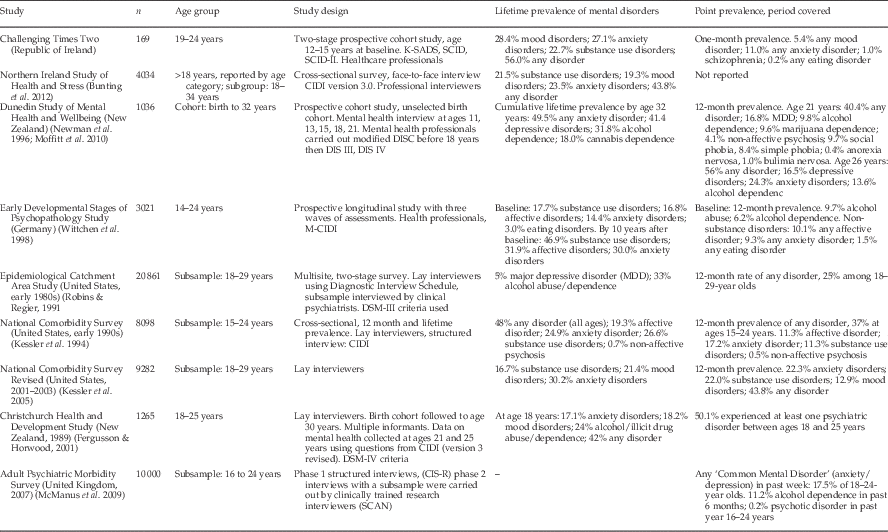
Most data available on prevalence rates of mental disorders in young adults come from international literature. The World Health Organization set up the World Mental Health Survey initiative in 1998 to conduct standardised epidemiological surveys across the world, and these surveys have reported on prevalence rates of mental disorders in adults in 28 countries. Published figures on the 17 country surveys completed to date indicate that, of those disorders assessed, anxiety disorders are the most prevalent lifetime disorders in 10 countries (4.8–31.0%) and mood disorders are most common in six countries (3.3–21.4%) with substance disorders least prevalent (1.3–15.0%) (Kessler et al. Reference Kessler and Angermeyer2007). A number of large, well-designed population-based surveys using face-to-face diagnostic interviews administered by lay interviewers have reported on prevalence of mental disorders by age group, providing prevalence rates specifically in young adults. These differ considerably in their methodology, however, making it difficult to compare rates across studies. Details of these studies are presented in Table 1 (Robins & Regier, Reference Robins and Regier1991; Kessler et al. Reference Kessler and McGonagle1994, Reference Kessler, Berglund, Anthony, Demyttenaere, Gasquet, Gluzman, Gureje, Haro, Kawakami, Karam, Levinson, Medina Mora, Oakley Browne, Posada-Villa, Stein, Adley Tsang, Aguilar-Gaxiola, Alonso, Lee, Heeringa, Pennell, Berglund, Gruber, Petukhova, Chatterji and Ustun2005; Newman et al. Reference Newman, Moffitt, Caspi, Silva and Stanton1996; Bijl et al. Reference Bijl, Ravelli and van Zessen1998; Wittchen et al. Reference Wittchen, Nelson and Lachner1998; Fergusson & Horwood, Reference Fergusson and Horwood2001; McManus et al. Reference McManus, Meltzer and Brugha2009; Moffitt et al. Reference Moffitt, Caspi, Taylor, Milne, Polanczyk and Poulton2010; Bunting et al. Reference Bunting, Murphy, O’Neill and Ferry2012).
International studies of prevalence of psychiatric disorders in community youth samples

K-SADS, schedule for affective disorders and schizophrenia for school-age children; SCID, structured clinical interview for DSM disorders, Axis I disorders; SCID-II, structured clinical interview for DSM disorders, Axis II personality disorders; CIDI, composite international diagnostic interview; DISC, diagnostic interview schedule for children; DIS, diagnostic interview schedule; CIS, clinical interview schedule; SCAN, schedules for clinical assessment in neuropsychiatry,
Studies carried out using diagnostic interviews administered by staff with mental health qualifications are rarer than those carried out by lay interviewers, the former include the Northern Ireland study (NISHS) of 4340 individuals aged 18 years and older (Bunting et al. Reference Bunting, Murphy, O’Neill and Ferry2012), the Early Developmental Stages of Psychopathology Study (EDSP), in which a cohort of 4263 German 14–24-year olds were interviewed at baseline and followed up 15 and 30 months later (Wittchen et al. Reference Wittchen, Nelson and Lachner1998), and the Dunedin Multidisciplinary Health and Development Study, a longitudinal birth cohort study of 1037 New Zealanders followed up from birth to 38 years with very high follow-up rates (Newman et al. Reference Newman, Moffitt, Caspi, Silva and Stanton1996; Moffitt et al. Reference Moffitt, Caspi, Taylor, Milne, Polanczyk and Poulton2010). Many studies report 1-year prevalence rather than lifetime prevalence of disorder. Studies reporting lifetime prevalence rates of mental disorders show that lifetime prevalence among young adults ranges from 32.3% among 16–24-year olds in the United Kingdom (McManus et al. Reference McManus, Meltzer and Brugha2009) to 52.4% among 18–29-year olds in the United States (Kessler et al. Reference Kessler, Berglund, Anthony, Demyttenaere, Gasquet, Gluzman, Gureje, Haro, Kawakami, Karam, Levinson, Medina Mora, Oakley Browne, Posada-Villa, Stein, Adley Tsang, Aguilar-Gaxiola, Alonso, Lee, Heeringa, Pennell, Berglund, Gruber, Petukhova, Chatterji and Ustun2005).
The study described in this paper, the ‘Challenging Times’ Study is a two-stage epidemiological general population study that was carried out to estimate the prevalence of psychiatric disorders in young people in North Dublin. Baseline results showed that 15.6% of the study population met criteria for a current psychiatric disorder at age 12–15 years (Lynch et al. Reference Lynch, Mills, Daly and Fitzpatrick2004, Reference Lynch, Mills, Daly and Fitzpatrick2006). The study described in this paper, Challenging Times Two, is the second phase of the Challenging Times Study and involved tracing and interviewing the original cohort of adolescents who participated in the first study. In the current study we aimed to assess the prevalence of psychiatric disorders (Axis I and Axis II) in young Irish adults aged 19–24 years in an urban general population sample. This study will add valuable epidemiological information to figures available from telephone and questionnaire-based surveys on the mental health of young Irish adults to inform planning of services for this age group.
Method
The Challenging Times Follow-Up Study was a two-stage longitudinal prospective epidemiological study of a cohort of 212 adolescents aged 12–15 years at baseline (Challenging Times One or CT1) and followed up when aged 19–24 years (Challenging Times Two or CT2). The first Challenging Times Study was carried out by a group of researchers at the Mater Misericordiae University Hospital to investigate prevalence of psychiatric disorders among Irish adolescents in North Dublin. The methods for the baseline study (CT1) are outlined below and have previously been described in detail (Lynch et al. Reference Lynch, Mills, Daly and Fitzpatrick2004, Reference Lynch, Mills, Daly and Fitzpatrick2006; Kelleher et al. Reference Kelleher, Harley, Lynch, Arseneault, Fitzpatrick and Cannon2008; Harley et al. Reference Harley, Kelleher, Clarke, Lynch, Arseneault, Connor, Fitzpatrick and Cannon2010). In the second phase of the study (CT2), rates of psychiatric disorder in young adulthood were investigated.
Sample and procedure
In all, 12 mainstream schools in the geographical catchment area of a community-based child and adolescent mental health team in North Dublin, an urban area with a population of 137 000, were randomly selected from among all schools in the area using a stratified random sampling technique, stratified by socio-economic class of the school in order to ensure that the sample was representative of the area population; eight schools participated and all pupils in these schools were invited to take part. Adolescents whose parents consented to their participation in the study (n=742) were screened using the Strengths and Difficulties Questionnaire (SDQ) (Goodman et al. Reference Goodman, Ford, Simmons and Meltzer2000) and the Children’s Depression Inventory (CDI) (Kovacs, Reference Kovacs1992) administered in the classroom. A self-report version of the SDQ for adolescents aged 11–16 years was used, this is a 25-item behavioural screening questionnaire. The CDI is a brief self-report instrument that assesses cognitive, affective and behavioural signs of depression in children and adolescents aged 7–17 years. Adolescents who scored above threshold on either of these instruments or who indicated the presence of possible suicidal intent (by endorsing the CDI item ‘I want to kill myself’), were classed as ‘at risk’ of a mental disorder (n=140) and invited to attend for interview along with a group of 174 controls matched for gender, school and school year. A total of 104 adolescents (74%) from the ‘at-risk’ category and 94 (54%) from the control group attended the interview. A group of adolescents who did not meet the at-risk threshold but who had borderline scores on the questionnaires were also invited for interview for ethical reasons and 14 of 19 (74%) attended. Interviews were carried out using the K-SADS (Kaufman et al. Reference Kaufman, Birmaher, Brent, Rao, Flynn, Moreci, Williamson and Ryan1997).
CT2 study
Between 8 and 9 years after the initial study, all 212 young people who had been interviewed at CT1 were contacted by letter, followed up by a phone call and invited to take part in a follow-up assessment interview. Where young people did not respond to initial contact, a number of strategies were used to ensure that the contact details were correct – contact with general practitioners (GPs), last school attended, Mater Misericordiae University Hospital records and if necessary, calling out to the last known address to see whether there was a forwarding address. In cases where it was not possible for a young person to attend the interview, or if they preferred not to be interviewed but wished to participate, they were given the option of completing the interview schedule in the form of questionnaires and returning these by post (see Fig. 1 for flow chart). Where relevant (SCID screener responses indicating psychopathology), those who returned postal questionnaires were contacted by phone to obtain further information using the SCID I. Responders were defined as those who took part in the study, whether by face-to-face interview or by postal questionnaire.
Flow diagram of Challenging Times Cohort Study. CT1, initial Challenging Times Study; CT2, Challenging Times Follow-Up Study; dna=did not attend.
Interview measures
All interviews were carried out by psychiatrists and/or psychologists trained in the use of the instruments. Axis I psychiatric diagnoses were determined using the Structured Clinical Interview for DSM-IV Psychiatric Diagnoses (SCID I) (First et al. Reference First, Spitzer, Gibbon and Williams2002) only. The SCID is a widely used, standardised semi-structured diagnostic interview for diagnosis of psychiatric disorders using DSM-IV criteria (APA, 2000). Information was also collected on suicidal ideation and behaviour, and subclinical symptoms including psychotic symptoms, substance use and binge-drinking. Binge-drinking was defined as drinking six or more standard drinks on one occasion at least once a week. The SCID psychotic screening module was included in the interview.
Axis II psychiatric diagnoses were determined using the Structured Clinical Interview for DSM-IV Axis II Personality Disorders (SCID-II) (First et al. Reference First, Gibbon, Spitzer, Williams and Benjamin1997). The SCID-II provides DSM-IV Axis II personality disorder diagnoses. Owing to time restrictions only the most clinically relevant disorders from the SCID-II were included in the interview for our study (antisocial, borderline, schizotypal, schizoid and paranoid personality disorders). Only those who attended the interview were assessed for personality disorders. There have been a number of studies demonstrating reliability and validity of SCID-I and II (Lobbestael et al. Reference Lobbestael, Leurgans and Arntz2011).
Achenbach Adult Self-Report (ASR) and Adult Behaviour Checklist (ABCL)
The ASR is a 126-item self-report questionnaire that measures behavioural and emotional functioning in the past 6 months. The ABCL is a measure containing the same items completed by an informant – in this study parents were asked to complete the form (Achenbach & Rescorla, Reference Achenbach and Rescorla2003).
PRIME screen
This is a 12-item self-report screening questionnaire for prodromal psychotic symptoms used as a screening tool for psychosis risk status (Miller et al. Reference Miller, Cicchetti, Markovich, Mc Glashan and Woods2004; Kline et al. Reference Kline, Wilson and Ereschefsky2012).
Suicidality and subclinical symptoms
Information on suicidal ideation and behaviour and on non-suicidal self-harm was extracted from SCID (I and II) and from the ABCL and ASR. Information on psychotic symptoms was extracted from the SCID-I psychotic screening module, the SCID-II, the PRIME screen questionnaire and the questions on psychosis from the ABCL and ASR questionnaires. Psychotic symptoms, suicide and self-harm variables were rated by a group of clinical and academic diagnosticians blind to other information about the participants and a consensus was reached in each case. Suicidal ideation excluded passive death wish or thoughts of non-suicidal self-harm.
Sociodemographic variables
The socio-economic status (SES) of each young person was allocated according to the seven-point Irish Social Class Scale (Census of Population, 1996) based on parental SES, given that most young people were likely to still be living at home in this age group.
Statistical analysis
Once an interview was completed, interview instruments were scored by a psychologist. Data were analysed using Stata version 11.1 for Mac. χ 2 tests were performed to examine the relationship between responders and non-responders at follow-up. Prevalence rates of psychiatric disorders at follow-up were weighted in order to adjust for the fact that a higher proportion of those found to be ‘at risk’ of mental health difficulties at screening had been interviewed in the original Challenging Times Study in comparison to the ‘not at risk’ group. This gave an estimate of prevalence in the population from which the sample was drawn. Weighting of prevalence figures to adjust for oversampling of ‘at-risk’ group was carried out as follows: of the 169 individuals followed up, 92 were from the original CT1 ‘at-risk’ group and 77 were from the original CT1 comparison group. Therefore, every individual from the original ‘at-risk’ group that was followed up represented 1.5 individuals in the entire ‘at-risk’ group (140/92) and every individual followed up from the control group represented 7.8 individuals in the original comparison group (602/77). The crude prevalence rates from the follow-up study were multiplied by these weights.
Psychiatric disorder outcomes were divided into five diagnostic groupings [mood disorder, anxiety disorder, substance use disorder (excluding alcohol), alcohol use disorder and any other SCID-I disorder outcome]. Both lifetime and past month prevalence rates for individual Axis I disorders were also examined within each category, as well as prevalence rates for suicidal ideation and behaviour, non-suicidal deliberate self-harm, psychotic symptoms, cannabis use and binge-drinking. Proportions were used to examine rates of lifetime comorbidity for each of three main diagnostic groupings: mood disorders, anxiety disorders and substance use disorders (alcohol use and drug use disorders were collapsed into one category for this analysis).
Ethics
The Ethics Committees of the Mater Misericordiae University Hospital, Dublin and the Royal College of Surgeons in Ireland approved the study. Written, informed consent was sought from all participants. Where a young person not already attending a relevant service was found to meet criteria for a current mental disorder, options for referral for further assessment and treatment were explored, with the GP considered as first line of care. If a young person did not wish to attend their GP, a referral letter to the relevant mental health service was provided by one of the consultant psychiatrists on the research team.
Results
Invitations to attend the interview were sent to 212 young people. In total, information was obtained on 169 participants (80% of the initial sample). Interviews were completed with 156, 12 returned postal questionnaires. One young person who had received a diagnosis of schizophrenia between the Challenging Times original study and the follow-up study who was too ill to attend for interview permitted his mother to provide limited information over the phone. Reasons for non-participation in the follow-up study are illustrated in Fig. 1. Both the ASR form and the ABCL, which participants took home for their parent/guardian(s) to complete, were returned by 49.1% of the follow-up sample (104 participants). The ASR only was returned by 17.0% of the sample (36 participants), 2.4% (five participants) returned the ABCL only and 11.3% (24 young people) failed to return either of their forms.
Comparison between participants and non-participants in the follow-up study
Comparison between characteristics of responders and non-responders at follow-up (in the CT2 study) showed no significant difference in age (χ 2=0.33, df=1, p=0.56), gender (χ 2=0.17, df=1, p=0.68), parental SES (χ 2 =0.22, df=1, p=0.64) ‘at-risk’ status at baseline (χ 2=0.47, p=0.49) or diagnosis of psychiatric disorder at baseline (χ 2=0.22, df=1, p=0.64).
Demographic details of sample at follow-up
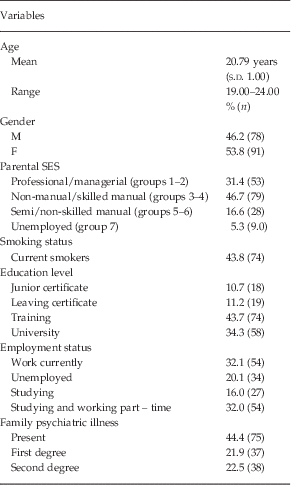
Table 2 shows the demographic details of the participants at follow-up. The mean age of participants was 20.79 years, range 19–24 years. There were more female than male participants (53.8% v. 46.2%) and 20.1% of the sample was unemployed.
Demographic details of Challenging Times Two sample (n=169)
M, male; F, female; SES, socio-economic status.
Prevalence of psychiatric disorders in sample at follow-up
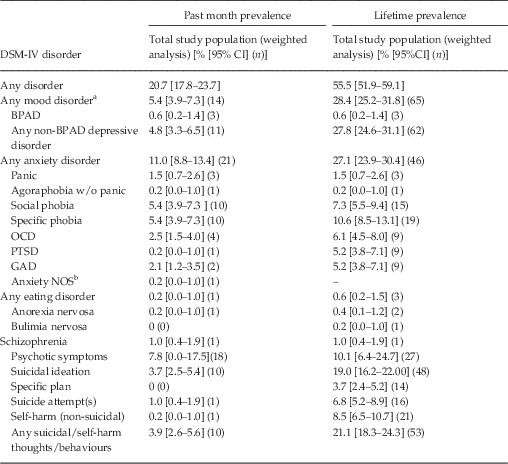
Results are listed in Tables 2–5. Overall, 55.5% of the sample met criteria for any lifetime SCID-I disorder (20.7% past month prevalence).
Weighted prevalence of DSM-IV Axis I current and lifetime psychiatric diagnoses and symptoms in Challenging Times Two sample
BPAD, bipolar affective disorder; NOS, not otherwise specified; OCD, obsessive-compulsive disorder; PTSD, post-traumatic stress disorder; GAD, generalised anxiety disorder.
Suicidal ideation and specific plan are not mutually exclusive categories.
a Includes major depressive disorder, dysthymic disorder, depressive disorder NOS, depression due to a general medical condition, depression due to substance abuse.
b No data available from the baseline Challenging Times Study.
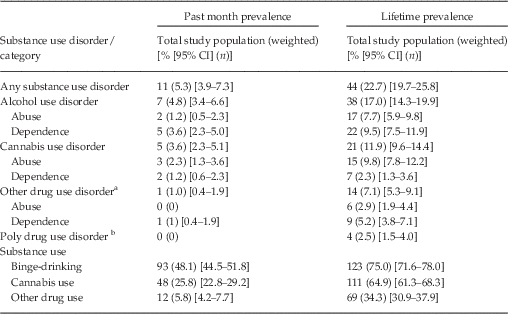
Weighted prevalence of DSM-IV Axis I substance use variables in Challenging Times Two sample
a Sedative/hypnotics, stimulants, opiates, cocaine, hallucinogens/PCP/other.
b Includes cannabis use disorders and other drug use disorders.
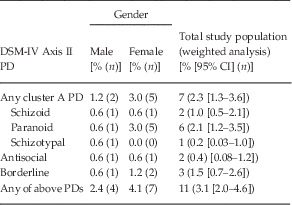
Weighted prevalence of DSM-IV Axis II PD diagnoses in Challenging Times Two sample
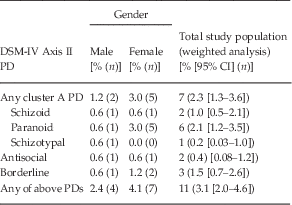
PD, personality disorder.
Mood, anxiety, psychotic and eating disorders
Table 3 shows the weighted prevalence of current and lifetime DSM-IV Axis I disorders at follow-up. Mood disorders were the most prevalent lifetime disorders at 28.4%, followed by anxiety disorders at 27.1%. Current (past month) rates of mood and anxiety disorders were 5.4% and 11.0%, respectively; 10.6% of participants met criteria for a specific phobia, and when those with specific phobia only were excluded, 51.8% of the sample met criteria for a lifetime SCID-I disorder as most participants with specific phobia had also experienced another disorder. Eating disorders were rare, with 0.2% current and 0.6% lifetime prevalence in this sample; 0.6% of young people met criteria for bipolar affective disorder in the past month. One young person had a diagnosis of schizophrenia at follow-up (1.0%). Psychotic symptoms were reported by 10.1% at some point in their lives (7.8% past month prevalence). Regarding suicidal ideation and behaviour, 19.0% of the sample reported significant suicidal ideation in their lifetime (3.7% in the past month), 8.5% reported engaging in self-harm and 6.8% had attempted suicide at some point in their lives. Overall, 21.1% reported some form of suicidal or self-harm ideation or behaviour in their lifetime and 3.9% in the past month (see Table 3).
Alcohol use
Substance use disorders (abuse and dependence) and prevalence of subclinical substance use are listed in Table 4. Alcohol disorders were the most prevalent of these: 17.0% met criteria for a lifetime disorder (4.8% in past month). Of the young Irish adults in this sample, 75.0% met criteria for binge-drinking at some point in their lives.
Substance use
Lifetime prevalence of cannabis use disorder (abuse or dependence) according to DSM-IV criteria was 11.9% (past month 3.6%) and of other drug use disorders was 7.1% (past month 1%). Other drug use disorders were most frequently abuse of or dependence on cocaine. Cannabis use on at least one occasion was reported by 64.9% of the sample (25.8% in the past month). Use of drugs other than cannabis was reported by 34.3% of young people, however, only 5.9% of these had never used cannabis. Cigarette smoking was frequent: 38.1% of the sample were current cigarette smokers.
Personality disorders
Table 5 shows prevalence of DSM-IV Cluster A Axis II disorders as well as borderline and antisocial personality disorder. Overall 3% of the cohort fulfilled criteria for one of the personality disorders assessed.
Rates of multimorbidity at follow-up
Of the 56.0% of the sample who met criteria for any psychiatric disorder ever, 38.7% had another lifetime disorder (this group made up 25.4% of the overall sample). Figure 2 illustrates lifetime comorbidity of disorders in the three main diagnostic groupings (mood, anxiety and substance use disorders). Overall, 15.8% of those with a current mental disorder (3.7% of the overall sample) met criteria for more than one DSM-IV Axis I disorder.
Lifetime multimorbidity of DSM-IV Axis I disorders at follow-up. Percentages represent weighted percentage of overall sample.
Discussion
Overall lifetime prevalence of disorder
In this sample of young adults aged 19–24 years at follow-up, 55.5% met criteria for a lifetime Axis I psychiatric disorder (with 20.7% meeting criteria in the past month). The lifetime rate of disorder found in our study is higher than the lifetime prevalence rate of 43.8% reported in the NISHS among young adults aged 18–34 years in Northern Ireland (Bunting et al. Reference Bunting, Murphy, O’Neill and Ferry2012), and the EDSP study (39% among German 16–24-year olds; Wittchen et al. Reference Wittchen, Nelson and Lachner1998) – both of which employed similar methodology to the CT2 Study. Figures are not available for overall lifetime prevalence of disorder in the Dunedin study, however, rates have been published for some individual disorders and these are discussed in the next section.
Overall lifetime prevalence of disorder in the CT2 sample is comparable to lifetime prevalence reported in international studies including the National Comorbidity Survey Revised (52.4% among 18–29-year olds) (Kessler et al. Reference Kessler, Berglund, Anthony, Demyttenaere, Gasquet, Gluzman, Gureje, Haro, Kawakami, Karam, Levinson, Medina Mora, Oakley Browne, Posada-Villa, Stein, Adley Tsang, Aguilar-Gaxiola, Alonso, Lee, Heeringa, Pennell, Berglund, Gruber, Petukhova, Chatterji and Ustun2005) and the Christchurch study (50.1% of participants had experienced at least one psychiatric disorder – anxiety, depression, substance dependence – between 18 and 25 years) (Gibb et al. Reference Gibb and Fegusson2010). These very large epidemiological studies employed lay interviewers using highly structured interviews. In our study, semi-structured clinical assessment was carried out by interviewers with mental health qualifications, similar to the NISHS, EDSP and Dunedin studies where assessments were carried out by professional staff on smaller numbers of participants. Use of semi-structured interviews tends to give lower rates of disorder than structured interviews as diagnostic thresholds are higher and focus is on specificity rather than sensitivity (Brugha et al. Reference Brugha and Bebbington1999). Our study found higher rates than other studies with similar methodology but similar or lower rates compared with large-scale epidemiological studies carried out using structured interviews, which may suggest relatively higher rates of disorder in our sample.
Lifetime prevalence of disorders by diagnostic category
Comparing the main groups of disorders in our sample, mood disorders were the most frequent lifetime disorders (28.4%), followed by anxiety disorders (27.1%) and then substance use disorders (22.7%). Comparison with other studies investigating prevalence of psychiatric disorders among youth in general population samples is challenging owing to considerable variation in methodology across studies (e.g. in sample selection, age range, instrument used, qualifications of interviewers, etc.; see Table 1). Compared with figures from the three studies with similar methodology to ours, prevalence for all categories of mental disorder in the Challenging Times sample are higher than those reported in either the Northern Ireland NISHS sample or the German EDSP sample, but prevalence of mood disorders in our sample was lower than the New Zealand-based Dunedin study in which, by the age of 26 years, 37% had met criteria for a major depressive episode, with the highest incidence of new cases between the 15th and 18th birthdays (Jaffee et al. Reference Jaffee, Moffitt, Caspi, Poulton and Martin2002). The finding of a relatively high rate of depressive disorders in our sample is consistent with an international study that compared prevalence of depressive disorder across five European countries and reported higher rates in urban United Kingdom and Ireland than in rural areas and than in the other countries studied (Ayuso-Mateos et al. Reference Ayuso-Mateos, Vazquez-Barquero, Dowrick, Lehtinen, Dalgard, Casey, Wilkinson, Lasa, Page, Dunn and Wilkinson2001).
Our figures are in a similar range to those reported for the 18–34-year age group in the Northern Irish NISHS study where lifetime anxiety disorders were most prevalent (23.5%), followed by substance use disorder (21.5%) followed by mood disorders (19.3%) (5). A high rate of post-traumatic stress disorder was found in the Northern Ireland study: 8.3% in 18–34 year olds compared with 5.2% in our study, consistent with the fact that Northern Ireland had emerged from a period of conflict, ‘The Troubles’. It should be noted that the Northern Ireland study sample included a wider age range – up to 34 years – suggesting that rates of disorder in our sample may be comparatively high. Evidence in support of this is available from the Dunedin study, where cumulative rates of disorder by the early thirties were considerably higher than rates earlier in adulthood (Moffitt et al. Reference Moffitt, Caspi, Taylor, Milne, Polanczyk and Poulton2010). Another consideration is that, given the design of our study, lifetime prevalence of disorder may have been underestimated owing to the 7–8-year gap between assessments as disorders with onset in the interim period that had resolved by follow-up, although recorded, would have been subject to recall bias. This could have resulted in underestimation of lifetime prevalence figures in the CT2 sample compared with other studies with similar methodology but with shorter intervals between follow-up assessments, for example, the Dunedin study that found a higher rate of depressive disorders. A recent paper compared the Dunedin sample to other studies with cross-sectional design, and found that prevalence of lifetime psychiatric disorder by age 32 years was approximately doubled in prospective as compared with retrospective studies (Moffitt et al. Reference Moffitt, Caspi, Taylor, Milne, Polanczyk and Poulton2010).
One-month prevalence
Overall prevalence rates for ‘current’ disorder in our sample (20.7%) were generally lower than those reported in international studies, for example, 40.4% among the Dunedin sample at age 21 years (Newman et al. Reference Newman, Moffitt, Caspi, Silva and Stanton1996), however, it should be noted that most studies report 12-month prevalence of disorder, whereas ours reports one-month prevalence so that lower figures would be expected. In the 2007 British Survey of Psychiatric Morbidity, a national survey of adults over 16 years living in private households in England, depressive and anxiety disorders were grouped into ‘common mental disorders’ that included mixed anxiety and depressive disorder. Past week prevalence was reported as depressive episode 1.5%, mixed anxiety and depressive disorder 8.2% in 16–24-year olds (McManus et al. Reference McManus, Meltzer and Brugha2009) – these figures are closer to those found in our study.
Eating disorders
There is limited information available on rates of eating disorders in the Irish population (McNicholas et al. Reference McNicolas, Dooley, Keogh, Lydon, Lennon, Ahern, Coyle, Whelan and Donoghue2012). While the rate of Anorexia Nervosa in the CT2 sample of 0.2% past month prevalence is consistent with a meta-analysis of international studies reporting 1-year prevalence of 3.7 per 1000 among community samples, our prevalence rate for bulimia is lower than the average figure of 1% point prevalence reported in international studies (Fairburn & Beglin, Reference Fairburn and Beglin1990; Hoek & van Hoeken, Reference Hoek and van Hoeken2003). This could reflect the fact that eating disorder not otherwise specified is a common eating disorder presentation in children and young people with eating disorders (Machado et al. Reference Machado, Machado, Goncalves and Hoek2007), however, this is not assessed in the SCID-I interview.
Suicidality
The CT2 study found a lifetime rate of 19.0% for suicidal ideation and 6.8% for attempted suicide. In a recent survey of young Irish adults, 7% reported a suicide attempt at some time in their lives, however, 51% reported lifetime suicidal ideation (Dooley & Fitzgerald, Reference Dooley and Fitzgerald2013); this higher rate could be owing to the fact that the survey was based on self-report questionnaires. Suicidal ideation in our sample at follow-up was much more prevalent than at the initial interview stage in mid-adolescence (1.9%). This lower rate at baseline was measured using the Beck Scale for Suicidal Ideation (Beck et al. Reference Beck, Kovacs and Weissman1979) that has a cut-off score for significant suicidal ideation so that the threshold may have been higher in the initial study.
Alcohol use
Prevalence of alcohol use disorders in our sample (lifetime 17.0%, current 4.8%) compares to other studies in Ireland: 15.7% of 18–34-year olds in the Northern Ireland NISHS had a lifetime alcohol use disorder (Bunting et al. 2012). These results are also similar to figures from the German EDSP study (Wittchen et al. Reference Wittchen, Nelson and Lachner1998). Rates of binge-drinking were higher in our study than in other Irish and UK studies (Barry et al. Reference Barry, Van Lente, Molcho and Morgan2009; Dooley & Fitzgerald, Reference Dooley and Fitzgerald2013). Lifetime prevalence of binge-drinking in our sample was 75.0%. A report published by the Irish Department of Health in 2003 based on a European comparative study showed that binge-drinking was more common in Ireland than in any of the other countries in the study: Finland, France, Germany, Italy, Sweden and the United Kingdom (Ramstedt & Hope, Reference Ramstedt and Hope2003). This finding is of concern as binge-drinking in adolescence has been linked to increased risk of alcohol dependence and harmful drinking in adulthood, illicit drug use, poorer educational outcomes, criminal convictions and lower SES, as well as increased risk of accidents, STDs and multiple physical health complications (Viner & Taylor, Reference Viner and Taylor2007).
Substance use
Figures for cannabis use (64.9% lifetime prevalence and 25.8% past month prevalence) in the CT sample are considerably higher than those reported in a survey carried out by the National Advisory Committee on Drugs (NACD) in a nationally representative sample of 5134 people (33.4% lifetime, 4.5% past month prevalence in the 15–34-year age group) (NACD, 2011). This difference may be owing to the age distribution of our sample, or could be related to availability of cannabis in the urban area from which the sample was drawn.
Personality disorders
International studies have reported rates of personality disorder in adult samples (Grant et al. Reference Grant, Hasin, Stinson, Dawson, Chou, Ruan and Pickering2004; Torgersen et al. Reference Torgersen and Kringlen2004), however, there are limited figures for the prevalence of personality disorders in young people. Rates of personality disorders measured in our sample are in a similar range to those reported in other studies internationally (Newman et al. Reference Newman, Moffitt, Caspi, Silva and Stanton1996; Coid et al. Reference Coid, Yang, Tyrer, Roberts and Ullrich2006). One Australian study reported higher prevalence of DSM-IV personality disorders with frequent comorbidity (Moran et al. Reference Moran, Coffey, Mann, Carlin and Patton2006). This study used face-to-face interviews with informants, whereas collateral information on Axis II disorders was not collected in the CT2 studies so that our figures may be an understimate.
Multimorbidity
In our sample, 25.4% had more than one disorder in their lifetime – this rate is very similar to that found in the NISHS in which 25.9% of young adults had two or more lifetime disorders (Bunting et al. Reference Bunting, Murphy, O’Neill and Ferry2012). Lifetime rates of comorbidity in our study were also similar to those reported in the EDSP study (38.7% of those with a disorder v. 35% in the EDSP) (Wittchen et al. Reference Wittchen, Nelson and Lachner1998) but somewhat lower than the Dunedin study, in which nearly half of all respondents that were diagnosed with one psychiatric disorder at the age of 21 were likely to be diagnosed with multiple disorders (Newman et al. Reference Newman, Moffitt, Caspi, Silva and Stanton1996).
Strengths and limitations of study
A significant strength of this study is that it collected detailed information using face-to-face interviews carried out by professionals with mental health qualifications (psychiatrists or psychologists) trained in the use of the instruments. It also included collateral information from parents. Both Axis I and Axis II disorders were assessed, though only a subgroup of personality disorders was included. High follow-up rates were achieved, which is of particular importance for validity of a cohort study. It should be noted, however, that a minority of participants who responded did not take part in a face-to-face interview so that information available was more limited and the SCID-II was not administered to some participants. The sample included mainstream schools only, so children attending special schools or children functioning in the moderate range of intellectual disability or below were excluded. This may have led to an underestimate of the prevalence of mental illness as people with intellectual disability have a high rate of psychiatric disorder, however, they represent only a small proportion of the overall population (Bhaumik et al. Reference Bhaumik, Tyrer, Mc Grother and Ganghadaran2008). It is possible that selection bias may have been introduced at the follow-up stage of the study, however, groups did not differ on the main characteristics considered. The sample was carefully selected at baseline using a stratified random sampling technique in order to ensure that it was representative of the area population, however, it was recruited from an urban area in North Dublin, so results may not be generalisable outside of the specific local area. The second phase sample was relatively small, limiting the accuracy of estimates of the prevalence of rarer disorders. Given that the first assessment was carried out in adolescence and the 8-year gap between assessments, results may have been affected by recall bias. This would have been mitigated by the prospective design, however, providing more accurate lifetime rates than a retrospective study.
Although prevalence figures from this study should be interpreted with caution as the sample was not nationally representative, they suggest a relatively high rate of mental illness and substance use disorders among youth in North Dublin compared with international figures in similar age ranges. The economic recession may have played an important role as unemployment and debt have been linked to poor mental health, and poor mental health in turn leads to further adversity (Mental Health Commission, 2011). This has signficant implications for the Irish economy. Regardless of cause, the high prevalence rates in our study are concerning particularly in the context of a lack of age-appropriate services. Recent welcome developments at primary care level are based on models adopted in other countries such as Australia, where youth-oriented services target 15–25-year olds and this could be further developed in Ireland to make psychiatric services more accessible for young people (McGorry et al. Reference McGorry, Bates and Birchwood2013). The majority of mental illness in adulthood begins in childhood and adolescence (Kim-Cohen et al. Reference Kim-Cohen, Caspi, Moffitt, Harrington, Milne and Poulton2003) so that it is essential to also optimise services for this younger age group.
Conclusion
Lifetime occurrence of psychiatric disorders was frequent among young Irish adults in this sample – over half had met criteria for any disorder by the time of follow-up at age 19–24 years. Lifetime prevalence of psychiatric disorders was high compared with reported prevalence in international studies with similar methodology, including a study carried out in Northern Ireland. Substance use disorders were more prevalent than in comparable age groups in studies from other countries, with the Northern Irish NISHS study figure most similar to ours, however, binge-drinking and cannabis use that did not meet criteria for a substance use disorder were particularly prevalent among our sample. Our study provides detailed information on the mental health of an urban sample of young Irish adults based on face-to-face diagnostic interviews carried out by mental health professionals. There is a lack of large nationally representative epidemiological studies of the prevalence of psychiatric disorders in Irish adolescents and young adults and such studies should be carried out to inform future service development, particularly at a time when funding for mental health services is scarce and needs to be carefully targeted.
Acknowledgement
This research was funded by a Health Research Award (HRA_ PHS/2010/4) and an Interdisciplinary Capacity Enhancement Award (ICE/2012/11) from the Health Research Board Ireland.