Introduction
The failure of tailings dams is a problem that affects many countries and regions worldwide. Environmental disasters of this kind have happened worldwide, with several cases reported in Europe (Rico et al., Reference Rico, Benito, Salgueiro, Díez-Herrero and Pereira2008), Asia and elsewhere. Mine tailings may contain potentially toxic elements (PTEs) and other pollutants (Pires et al., Reference Pires, Lena, Machado and Pereira2003; Pádua et al., Reference Pádua, Caetano, Polo, Pasqual and Pereira2021) that can be toxic to plants, preventing natural recovery. In 2015, the Fundão dam in Mariana, Minas Gerais, Brazil, burst, causing a disaster with wide socioenvironmental consequences. The tailings released by this event devastated large areas, destroying the native flora and fauna. This material is devoid of organic matter, causing unfavourable changes to the restoration of native flora (Brasil, 2015). In this context, reforestation is essential to promote the recovery of these areas, and this depends on the identification of tolerant species as well as knowledge about their ability to germinate and establish in these areas.
Reforestation is a way to accelerate the success for the revegetation of areas degraded by mining tailings (Pádua et al., Reference Pádua, Caetano, Polo, Pasqual and Pereira2021). Trees are important in the phytoremediation of these sites because of the capacity of some trees to PTEs from the soil and the addition of their biomass to the system (Capuana, Reference Capuana2011). Nonetheless, germination is one of the phases when the plant is most sensitive to PTEs (Baroni et al., Reference Baroni, Pereira, Corrêa, Castro and Pereira2020). As a result, seed germination and seedling establishment can be severely reduced in reforestation systems (Makhniova et al., Reference Makhniova, Mohnachev and Ayan2019). The efficiency of reforestation systems, however, is hampered by the lack of information on species with potential for use in these systems (Rodrigues and Leitão, Reference Rodrigues and Leitão2000), as well as the lack of studies on the specific effects of mine tailings on these species. Studies on germination and seedling establishment of tree species are essential for the effective reforestation of regions degraded by mine tailings.
The species Schinus molle L. and Schinus terebinthifolia Raddi belong to the family Anacardiaceae and are tree species native to South America. Schinus are trees with multiple applications, such as ornamental, medicinal, and for timber, and can also be used for afforestation and recovery of degraded areas since they can tolerate adverse environmental factors such as PTEs, such as Pb (Pereira et al., Reference Pereira, Pereira, Corrêa, Oliveira, Castro and Barbosa2013a) and Cd (Pereira et al., Reference Pereira, Rodrigues, Corrêa, Castro, Ribeiro and Pereira2016b, Reference Pereira, Corrêa, Castro, Oliveira and Pereira2017). They are evergreen, heliophile, pioneer trees, occurring in areas close to rivers and lakes and in dry and poor soils (Lorenzi, Reference Lorenzi2001). Handroanthus serratifolius Vahl and Handroanthus impetiginosus Mart. ex DC. are widely used in urban afforestation and reforestation due to their exuberant flowering and desirable tree characteristics. These species belong to the family Bignoniaceae and are considered highly important for landscaping, particularly for the afforestation of streets and avenues and even for reforestation in dry and rocky terrains, as well as for the recovery of degraded areas (Maia, Reference Maia2004). Handroanthus serratifolius are trees that can reach up to 8 m in height which are distributed in large geographical areas in South America (Lorenzi, Reference Lorenzi2001). Handroanthus serratifolius seedlings are capable of surviving mild salt stress conditions at osmotic potentials of −0.3 MPa (Pereira and Polo, Reference Pereira and Polo2011). Handroanthus impetiginosus is a tree species native to Brazil that can reach up to 35 m in height; these trees are characterized by their dense wood and resilience to decomposition (Lorenzi, Reference Lorenzi2001; Martins et al., Reference Martins, Lago and Cicero2012). Colmanetti and Barbosa (Reference Colmanetti and Barbosa2013) studied several tree species planted for the reforestation of forest fragments and highlighted the importance of Handroanthus species to the reforestation success of surrounding areas due to its anemochorious seed dispersal. Schinus and Handroanthus species studied in this manuscript are found in the original areas impacted by the Fundão dam failure, but their tolerance to mine tailings and their potential for use in reforestation of such affected areas has not been investigated.
Here, we studied two Schinus and two Handroanthus species that all maintain characteristics that may contribute to the natural regeneration of degraded areas. Specifically, we investigated their ability to tolerate cultivation in mine tailings by assessing both germination and seedling growth characteristics.
Materials and methods
Plant material and mine tailings
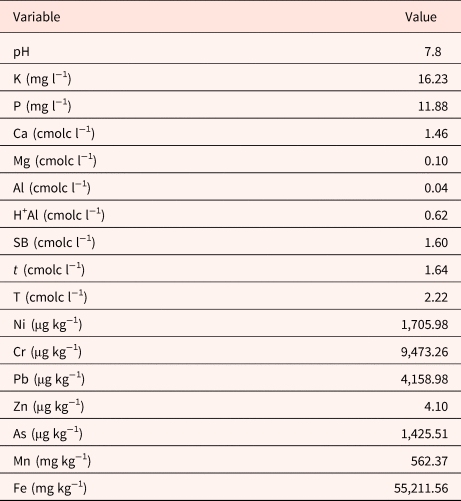
The seeds of S. molle, S. terebinthifolia, H. serratifolius and H. impetiginosus were collected from individuals present at the campus of the Federal University of Lavras (21°13′27.1″S, 44°58′01.1″W) in the state of Minas Gerais, Brazil. The samples of mine tailings resulting from the spill that covers the affected areas in the region of Mariana, state of Minas Gerais, Brazil, were collected in 23 November 2017 at approximately 4 km from the dam failure site (20°22′40″S, 43°106 24′57″W). Samples were collected in places where tailings reached 1 m in depth, and approximately 1 ton of material was transported to the Federal University of Lavras. The tailings sampled were stored in a protected environment sheltered from rain and other environmental factors until the start of the experiments. The samples were used to characterize the chemical composition of the sludge, including the presence of PTEs (Table 1), according to the methods proposed by Claessen et al. (Reference Claessen, Barreto, De Paula and Duarte1997).
Values of nutrients and pollutants and other characteristics of the sludge collected 4 km away from the Fundão dam failure site in Mariana, MG, Brazil

Values are shown as the mean of an aggregate sample. SB = sum of bases, t = effective cation exchange capacity, T = potential cation exchange capacity (at pH 7).
Experimental design
After characterization, the mining sludge was sieved to obtain a homogeneous substrate for seedling growth. The experiments were conducted with two substrates: mine tailings (MT) and sand (SA), which were irrigated and maintained at field capacity, and water lost by evapotranspiration was replenished daily. Separate experiments were conducted for the species Schinus and Handroanthus because the plants within each genus are similar but differ significantly from the other genus in germination, anatomy and growth. A completely randomized experimental design was used in a 2 × 3 factorial arrangement, with two substrates (washed sand and mine tailings) in the following combinations: Experiment 1 (Schinus): only S. molle, only S. terebinthifolia and S. molle + S. terebinthifolia. Experiment 2 (Handroanthus): only H. serratifolius, only H. impetiginosus and H. serratifolius + H. impetiginosus. In each experiment, six replicates were used (n = 36 for each experiment).
Seed germination
Each replicate consisted of a batch of 50 seeds. When two species were used together (S. molle + S. terebinthifolia or H. serratifolius + H. impetiginosus), the lot had 25 seeds of each. The seeds were sterilized with 1% sodium hypochlorite and washed in distilled water twice. They were placed in 5-l pots containing 3 l of the substrate (MT or SA) moistened to field capacity. The seeds were kept in a greenhouse for 60 d. Pre-treatments were applied to the hard-seeded Schinus seeds only, with 20 ml of sulphuric acid (H2SO4) used for 1 min to acid scarify the seed lots. After the acid treatment was complete, the solution was neutralized with 40 ml of sodium bicarbonate and seeds were then washed twice with distilled water, according to Pereira et al. (Reference Pereira, Corrêa, Castro, Cardoso and Pereira2016a).
The number of germinated seeds (emergence) was evaluated daily. The percentage emergence (E%) and the emergence rate index (ERI) were calculated at the end of 60 d, along with the total number of normal seedlings (NS). We considered as NS those without visible morphological deformations in leaves, stem or roots. We considered as abnormalities the presence of undeveloped leaflets, the occurrence of necrosis in any organ part, the absence of lateral roots, and the excessive bending of stem or leaves. The calculations were performed according to the following equations: E% = [(number of emerged seedlings)/50] × 100; ERI = ∑ (SE/t), where SE is the number of seedlings that emerged at time t, and t is the time in days.
Biometric analysis of seedlings
Three seedlings per replicate were collected for biometric analysis, and the mean measurements were used for each plot. The seedlings were evaluated at the end of the experiment (60 d of age). The length of the longest root was measured with a digital caliper. The number of leaves and roots of each plant was counted, and the fresh weight of the roots and shoots was measured on an analytical balance (AY 220, Shimadzu, Japan).
Anatomical analysis
One seedling per replicate was collected, washed in running water, and fixed in a 70% solution of formaldehyde:glacial acetic acid:70% ethanol in the ratio of 0.5:0.5:9 for 72 h. Then the samples were preserved in 70% ethanol until the date of analysis (Jensen, 1970 in Kraus and Arduin, Reference Kraus and Arduin1997).
Cross-sections were obtained from the middle region of a leaflet located in the middle region of the leaves. To prepare the permanent slides, the samples were dehydrated in an ethanol series, infiltrated and embedded in hydroxyethyl methacrylate according to the manufacturer's instructions (Leica Microsystems, Wetzlar, Germany). Sections were sliced by a semiautomatic rotary microtome 335 (Jinhua Yidi Medical Appliance CO., LTD, Zhejiang, China), stained with 0.5% toluidine blue (O'Brien et al., Reference O'Brien, Feder and McCully1964), and mounted with acrylic varnish. The slides were photographed under an Olympus CX31 microscope (Olympus, Tokyo, Japan) coupled to a digital camera. For each replicate, a slide was made, two sections and two fields were evaluated for each section, and the mean values were calculated. It should be noted that the anatomy data were not gathered for the species combinations because the anatomy is inherent to each species separately, and a treatment containing a combination of two different species could not generate only one data point.
ImageJ software was used to evaluate the images obtained for the following anatomical variables: the thickness of the epidermal cells of the adaxial and abaxial surface, the thickness of the subepidermal cells, thickness of the palisade parenchyma and the thickness of the spongy parenchyma.
Statistical analysis
Using the statistical software Sisvar (Ferreira, Reference Ferreira2011), the data were first tested for normality by the Shapiro–Wilk test and all data were normally distributed; the Lavene's homoscedasticity test was also performed and data showed equal variances. As aforementioned in the experimental design section, this was a factorial 2 × 3 experiment. Thus, two-way ANOVA was performed and three sources of variation were tested for each experiment (Schinus or Handroanthus). These three sources of variation were: (1) two substrates (sand or mine tailings), (2) the combination of species (one of the two species of each genus plus the combination of these two species) and (3) the interaction between substrates and species. The interaction was considered significant when its P-values were ≤0.05 (0.05 of significance level). Detailed results from the statistical analysis are shown in Table 2. When interaction was significant, the decomposition was studied using Scott-Knott at 0.05 of significance level and results shown in double-entries tables (using lowercase letters to compare rows and uppercase letters to columns). Moreover, when the interaction was not significant results were compared with the Scott-Knott test at a significance level of 0.05 within species or substrates separately. For the anatomical analyses, a factorial 2 × 2 experimental design was used (two species × two substrates) because it is not possible to evaluate the anatomy of the combination of species; interaction analyses were performed following the same steps described for other variables.
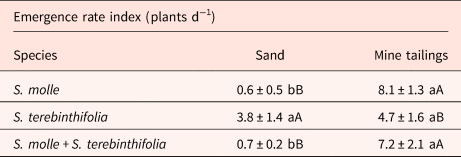
Emergence rate index of Schinus seedlings cultivated in mine tailings resulting from the failure of the Fundão dam in Mariana, MG, Brazil

Data are mean ± standard deviation
Means followed by the same lowercase letter in the same row or the same uppercase letter in the same column do not differ by the Scott-Knott test at 0.05 of significance level. Lowercase letters compare different substrates in rows and uppercase letters compare species in the columns.
Results
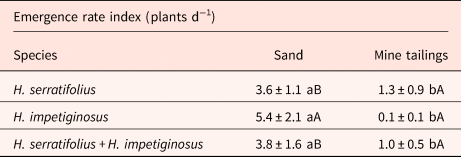
The interaction between the factors had a significant effect on the ERI of Schinus and Handroanthus seedlings (Supplementary Table S1). The ERI was higher in S. terebinthifolia than in S. molle or in the combination of the species when the seeds were germinated in sand. However, the ERI of S. molle was higher when grown in the mine tailings (Table 2). Thus, the mean ERI of S. terebinthifolia was lower in mine tailings. For Handroanthus, all the seeds germinated in the sand had a higher ERI than those germinated in mine tailings (Table 3). When exposed to mine tailings, the two Handroanthus species had similar ERIs (Table 3), but H. impetiginosus seeds showed a higher ERI in the sand.
Emergence rate index of Handroanthus seedlings cultivated in mine tailings resulting from the failure of the Fundão dam in Mariana, MG, Brazil

Data are mean ± standard deviation.
Means followed by the same lowercase letter in the same row or the same uppercase letter in the same column do not differ by the Scott-Knott test at 0.05 of significance level. Lowercase letters compare different substrates in rows and uppercase letters compare species in the columns.
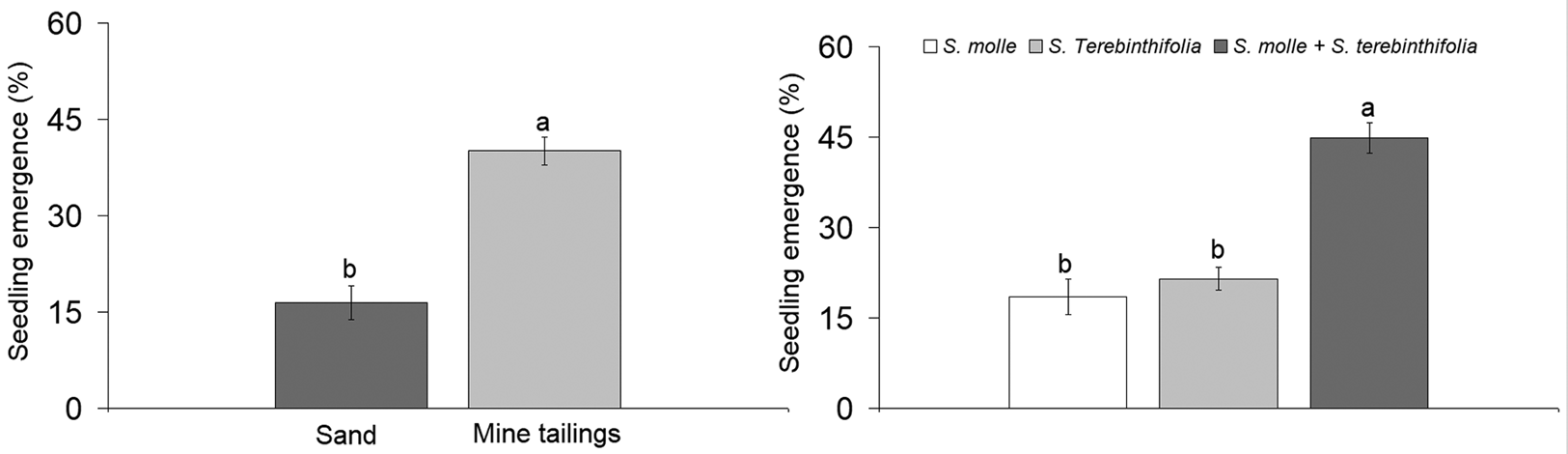
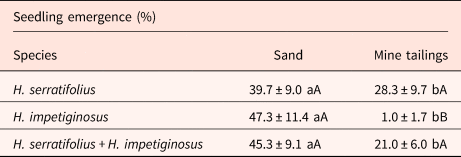
The percentage of emergence for Schinus seeds showed no interaction between factors for Schinus (Supplementary Table S1). This parameter was approximately 2.5 times higher in mine tailings than in sand (Fig. 1). The combination of S. molle and S. terebinthifolia seeds showed a higher germination percentage than either species germinated separately (Fig. 1). The interaction between factors had a significant effect on the percentage of germination in Handroanthus species (Supplementary Table S1). The percentage germination was higher in the sand in all Handroanthus groups than in the mine tailings sludge. In addition, H. impetiginosus presented lower germination in the sludge than H. serratifolius (Table 4).
Seedling emergence of Schinus species cultivated in mine tailings resulting from the failure of the Fundão dam in Mariana, MG, Brazil. Means followed by the same letter do not differ by the Scott-Knott test at 0.05 of significance level. Bars = standard error.

Seedling emergence of Handroanthus species cultivated in mine tailings resulting from the failure of the Fundão dam in Mariana, MG, Brazil

Data are mean ± standard deviation.
Means followed by the same lowercase letter in the same row or the same uppercase letter in the same column do not differ by the Scott-Knott test at 0.05 of significance level. Lowercase letters compare different substrates in rows and uppercase letters compare species in the columns.
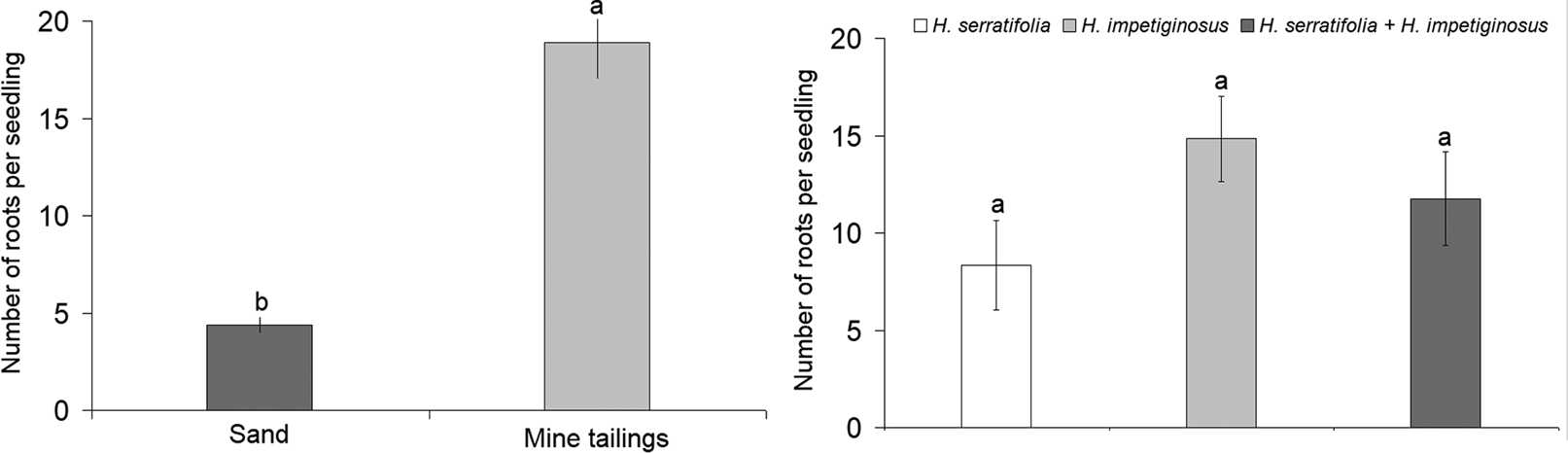
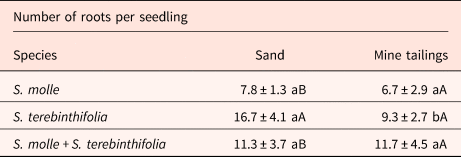
For Schinus, there was an interaction between the factors for the number of roots produced per seedling (Supplementary Table S1). More roots were observed in S. terebinthifolia seedlings when cultivated alone in sand, but this species showed fewer roots when the seedlings were cultivated in mine tailings (Table 4). The mine tailings did not promote significant changes in the number of roots of S. molle or of the combination of the two Schinus species (Table 4). There was no interaction between the factors for the number of roots in Handroanthus seedlings (Supplementary Table S1). Overall, this genus had more roots when cultivated in the mine tailings. The comparison between species showed no significant differences (Fig. 2 and Table 5).
Number of roots from Handroanthus species cultivated in mine tailings resulting from the failure of the Fundão dam in Mariana, MG, Brazil. Means followed by the same letter do not differ by the Scott-Knott test at 0.05 of significance level. Bars = standard error.

Number of roots per seedlings of Schinus species cultivated in mine tailings resulting from the failure of the Fundão dam in Mariana, MG, Brazil

Data are mean ± standard deviation.
Means followed by the same lowercase letter in the same row or the same uppercase letter in the same column do not differ by the Scott-Knott test at 0.05 of significance level. Lowercase letters compare different substrates in rows and uppercase letters compare species in the columns.
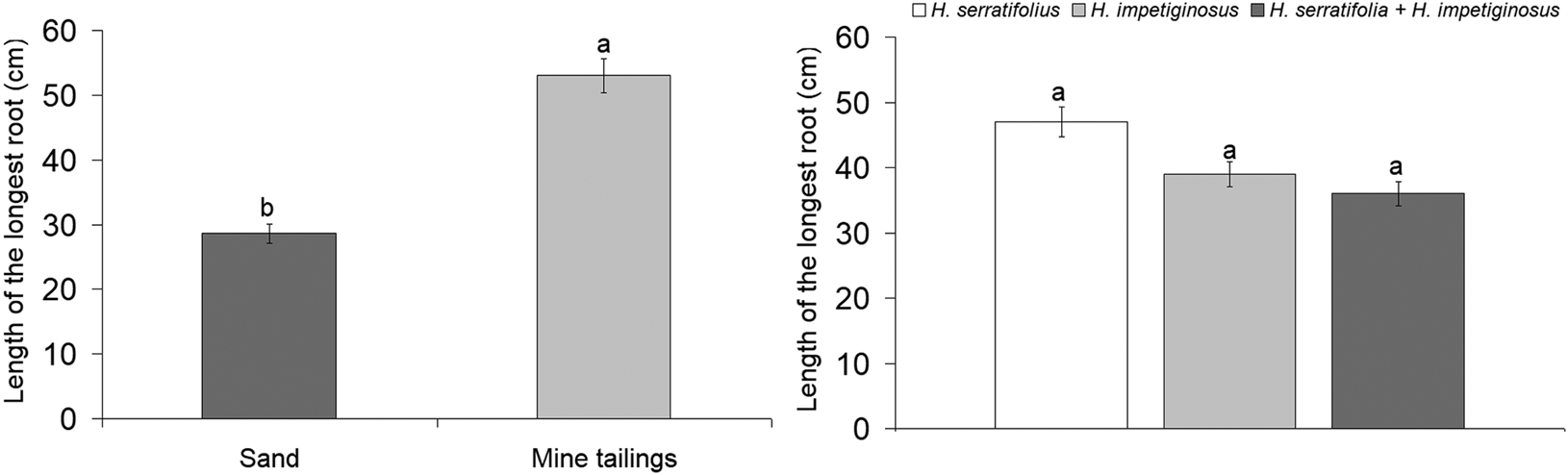
There was no significant interaction for the number of leaves in Schinus or Handroanthus experiment (Supplementary Table S1). The plants of the Schinus species had the same number of leaves regardless of the treatment (data not shown). Handroanthus had no significant differences in the number of leaves between sludge and sand, but H. impetiginosus showed fewer leaves than H. serratifolius in both substrates (data not shown). For the length of the longest root, no significant interaction was observed for Schinus nor Handroanthus experiments (Supplementary Table S1). In the Schinus, there was a higher mean length of the longest root (5.30 cm) in seedlings grown in mine tailings sludge and there was no significant difference between species (data not shown). Regarding the Handroanthus seedlings, neither substrate nor species affected the length of the longest root (Fig. 3).
Length of the longest root from Handroanthus species cultivated in mine tailings resulting from the failure of the Fundão dam in Mariana, MG, Brazil. Means followed by the same letter do not differ by the Scott-Knott test at 0.05 of significance level. Bars = standard error.

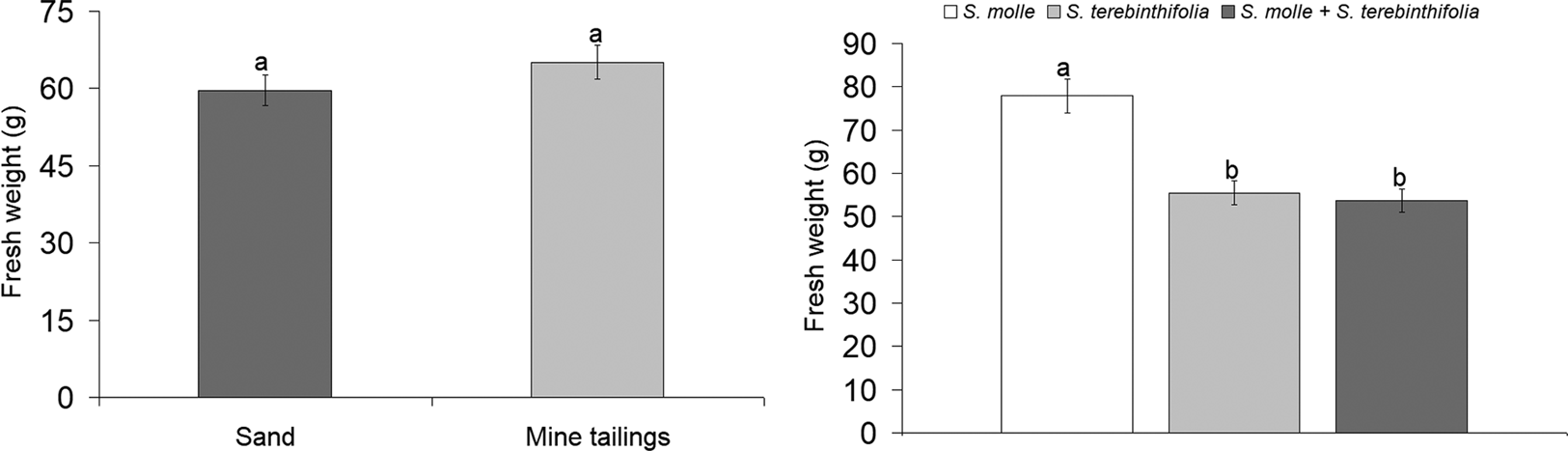
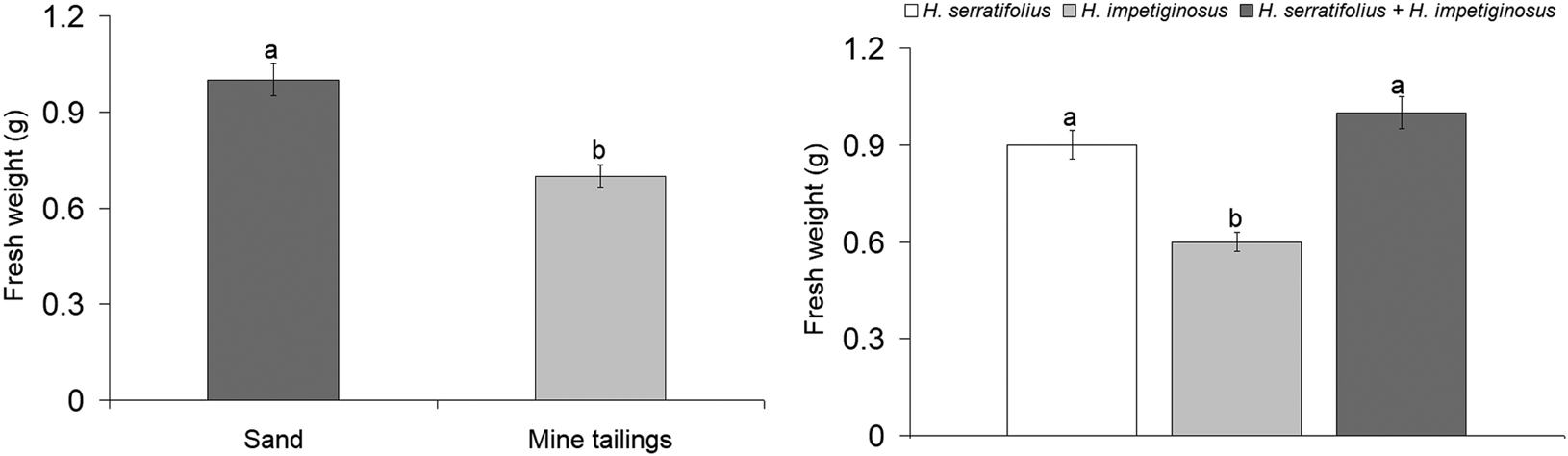
No significant interaction was observed for the fresh weight in Schinus or Handroanthus experiments (Supplementary Table S1). Regarding the total fresh weight, the S. molle seedlings had the highest values (77.87 g) regardless of the substrate (Fig. 4). In addition, the mine tailings sludge did not promote significant differences in this variable (Fig. 4). However, Handroanthus cultivated in sand had a higher mean (0.96 g) total fresh weight than the seedlings cultivated in the mine tailings sludge (Fig. 5). A lower mean (0.58 g) for the total weight was also observed for H. impetiginosus seedlings regardless of the substrate (Fig. 5).
Fresh weight of Schinus seedlings cultivated in mine tailings resulting from the failure of the Fundão dam in Mariana, MG, Brazil. Means followed by the same letter do not differ by the Scott-Knott test at 0.05 of significance level. Bars = standard error.

Fresh weight of Handroanthus seedlings cultivated in mine tailings resulting from the failure of the Fundão dam in Mariana, MG, Brazil. Means followed by the same letter do not differ by the Scott-Knott test at 0.05 of significance level. Bars = standard error.

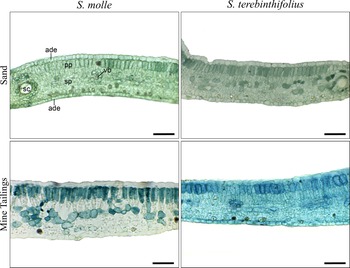
The Schinus experiment showed no significant interaction for any anatomical variable (Supplementary Table S1). Regarding the leaf anatomy of Schinus, plants grown in mine tailings had a thicker epidermis of the adaxial face (Fig. 6a) whereas no significant modification was observed for the abaxial epidermis thickness (Fig. 6b). Mine tailings had no significant effect in the palisade parenchyma (Fig. 6c) but reduced the spongy parenchyma thickness (Fig. 6d). The hypodermis also was thicker in seedlings from mine tailings (Figs. 6 and 7). No significant modifications were found for the anatomical parameters when comparing Schinus species (Supplementary Table S1 and Fig. 7). The average epidermis thickness was 12 and 8 μm for the adaxial and abaxial sides respectively; the hypodermis measured 15.1 μm, the palisade parenchyma averaged 16.8 μm and the spongy parenchyma 48.1 μm.
Anatomical characteristics of Schinus seedlings cultivated in mine tailings resulting from the failure of the Fundão dam in Mariana, MG, Brazil. Means followed by the same letter do not differ by the Scott-Knott test at 0.05 of significance level. Bars = standard error.

Cross-sections of Schinus leaves cultivated in sand and mine tailings. sc = secretory duct, ade = adaxial epidermis, abe = abaxial epidermis, pp = palisade parenchyma, sp = spongy parenchyma, vb = vascular bundle. Bars: 50 μm.

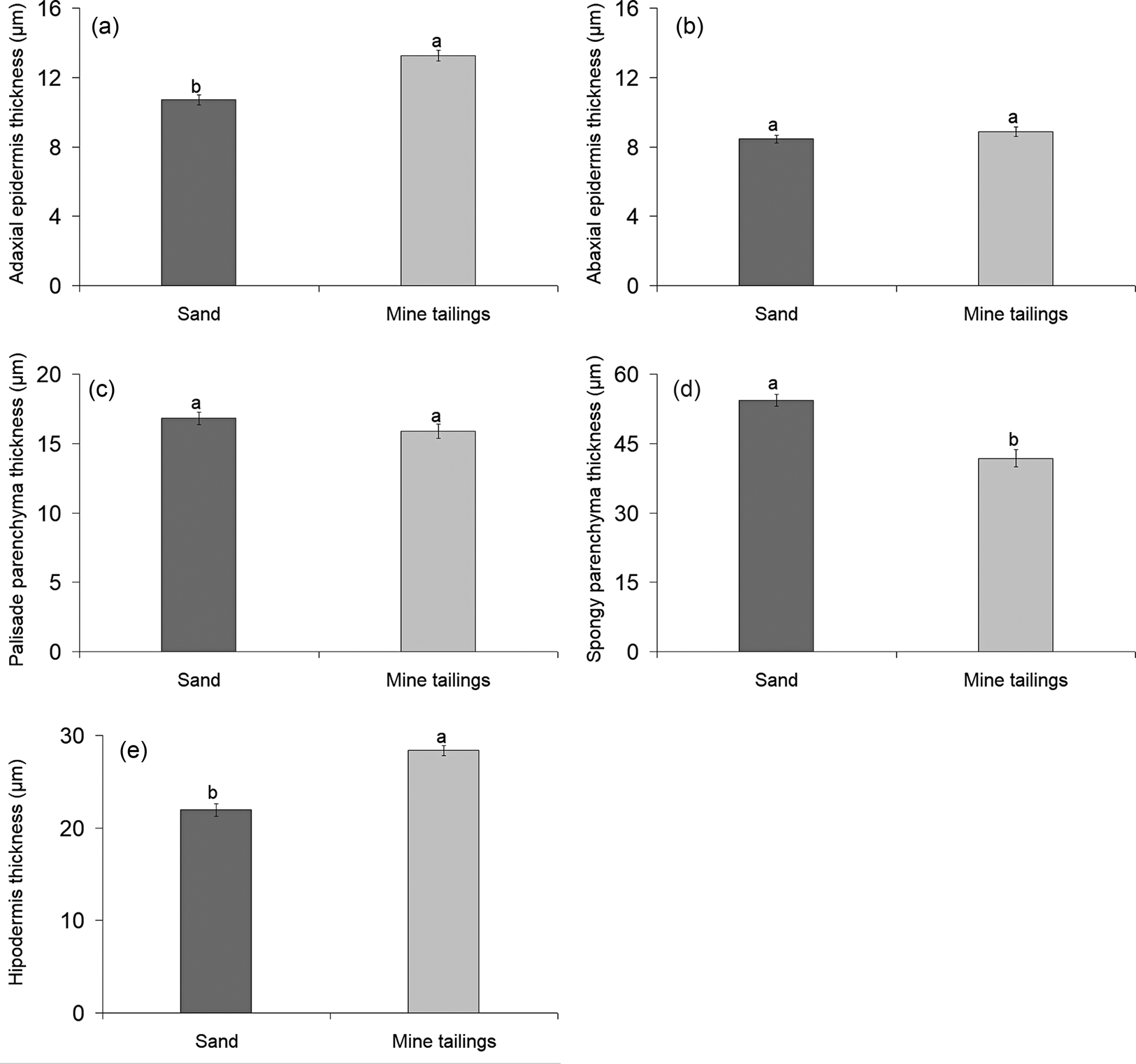
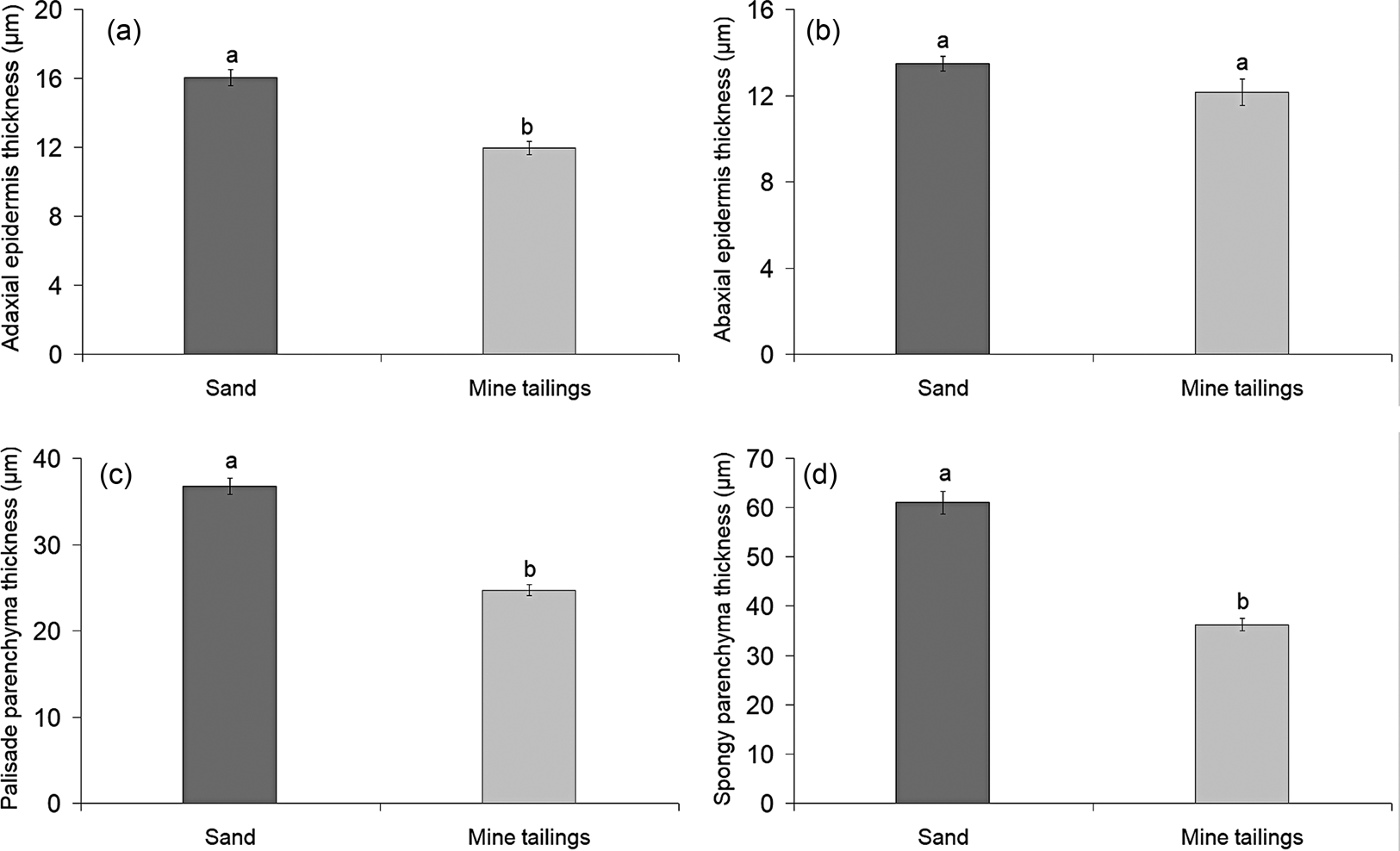
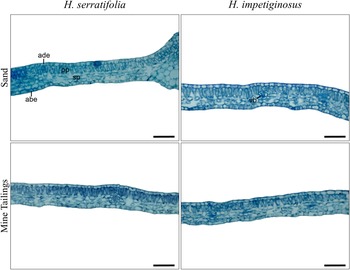
For the Handroanthus experiment, the anatomical variables showed no significant interaction (Supplementary Table S1). Regarding the anatomy of the Handroanthus, the plants cultivated in the mine tailings showed lower values than the plants grown in sand, for the adaxial epidermis thickness (Fig. 8a) and for palisade (Fig. 8c) and spongy (Fig. 8d) parenchymas but mine tailings promote no significant effect in the thickness of the abaxial epidermis (Fig. 8b). There were no significant differences between Handroanthus species (Supplementary Table S1 and Fig. 9) and the average thickness of leaf tissues was 14.0 μm for the adaxial epidermis, 12.8 μm for the abaxial epidermis, 31.1 μm for the palisade and 48.6 μm for the spongy parenchyma.
Anatomical characteristics of Handroanthus seedlings cultivated in mine tailings resulting from the failure of the Fundão dam in Mariana, MG, Brazil. Means followed by the same letter do not differ by the Scott-Knott test at 0.05 of significance level. Bars = standard error.

Cross-sections of Handroanthus leaves cultivated in sand and mine tailings. sc = secretory duct, ade = adaxial epidermis, abe = abaxial epidermis, pp = palisade parenchyma, sp = spongy parenchyma, vb = vascular bundle. Bars: 50 μm.

Discussion
The analysis performed on the sample of mine tailings showed the presence of macro- and micronutrients. PTEs were also detected, but there was not enough toxicity to promote plant death, as all species studied survived without evident seedling mortality from the mine tailings. In addition, all plants were normal, without severe deformities (undeveloped organs, bending or necrosis in leaves and roots and other), that could prevent their development, in mine tailings. The macro and micronutrients and other parameters are within the ranges of values observed for soils of the affected region and in other locations (Kabata-Pendias, Reference Kabata-Pendias2010). The presence of macro and micronutrients may have favoured some variables, such as the ERI and germination percentage, as well as the growth of species more tolerant to such as S. molle (Pereira et al., Reference Pereira, Rodrigues, Corrêa, Castro, Ribeiro and Pereira2016b; Ribeiro et al., Reference Ribeiro, Pereira, Castro, Corrêa, Cardoso and Pereira2019), in the mine tailings. However, it is important to note that mine tailings, even when they have the same origin, show variable chemical composition, as observed and Andrade et al. (Reference Andrade, Paniz, Martins, Rocha, Lobato, Rodrigues, Cardoso-Gustayson, Masuda and Batista2018). The concentration of PTEs in mining tailings from the Fundão dam failure showed variation along the Doce river and were also changed by the time of sampling; higher concentrations are found in sites closer to the dam location and reduces after longer times (Richard et al., Reference Richard, Duarte, Estrada, Bechtold, Maioli, Freitas, Warner and Figueiredo2019). Silva et al. (Reference Silva, Bellato, Neto and Fontes2018) also showed spatial variation in the chemical composition of tailings from Fundão dam along the Carmo River. It is important to note that Silva et al. (Reference Silva, Bellato, Neto and Fontes2018) collected samples at least 22 km away from the Fundão dam location and Richard et al. (Reference Richard, Duarte, Estrada, Bechtold, Maioli, Freitas, Warner and Figueiredo2019) collected several samples along the Doce River and the longest one was at the mouth of the river around 680 km away and still PTEs from mining tailings were present. The tailing samples used in our experiments were collected 4 km away from the Fundão location which was the closest site where we were granted access. Concentrations also vary compared with these works because they collected water and sediment samples while our substrate comprises of raw mining tailings where concentrations are much higher; however, any work with this material will show different concentrations because of its lack of homogeneity. Despite this variable chemical composition, the lack of lethality to seeds of the four species studied here demonstrates that sites with mine tailings from the Fundão dam can be effectively reforested through the introduction of species still in the seed stage that, after the revegetation process, establish themselves, producing new seeds that may germinate and consequently promote natural regeneration. The results of the present study, therefore, demonstrate that the revegetation of the areas affected by these tailings is viable.
The Pb, As and Fe concentrations were quite high in the mine tailings of the Fundão dam. High Pb and As concentrations can cause phytotoxicity in sensitive species (McBride, Reference McBride1994; Oliver, Reference Oliver1997). According to Guerinot and Yi (Reference Guerinot and Yi1994), high Fe concentrations do not often cause damage to plants because most Fe is not bioavailable, in addition to being an important and essential micronutrient. However, in soils from where Fe ore is extracted, such as the Fundão dam region, the concentration of this element can increase significantly, reaching toxic levels for most plants (Sahrawat, Reference Sahrawat2004; Audebert and Fofana, Reference Audebert and Fofana2009). Among the four species studied, S. molle showed the greatest tolerance to the conditions imposed by the mine tailings. In fact, it is tolerant to different toxic metals (Pereira et al., Reference Pereira, Pereira, Corrêa, Oliveira, Castro and Barbosa2013a, Reference Pereira, Rodrigues, Corrêa, Castro, Ribeiro and Pereira2016b, Reference Pereira, Corrêa, Castro, Oliveira and Pereira2017; Ribeiro et al., Reference Ribeiro, Pereira, Castro, Corrêa, Cardoso and Pereira2019). In the present study, its ability to grow in the contaminated tailings was evident. The species S. terebinthifolia also showed good results, while the Handroanthus species showed greater sensitivity. It is important to note that despite differences in germination and growth responses, all four species studied have potential for reforestation on tailings. The toxicity of the tailings may be related to the high but non-lethal concentrations of some elements, which was a favourable factor and only promoted growth reduction in more sensitive species.
Since all species germinated and seedling growth was viable, the revegetation of the area affected by mine tailings was favoured because the introduction of multiple species that were more or less tolerant to the tailings was possible. Jesus and Sánchez (Reference Jesus and Sánchez2016) reported that the combination of different plant species is necessary to ensure the success of reforestation and the environmental restoration of an area degraded by mineral exploration. The Schinus species were more tolerant than the Handroanthus species, but the possibility of introducing different species at the same time that will all have seed germination and seedling growth may be an important factor in these locations.
It is also important to note that the seeds of the tree species tested have potential for long-term storage and use, enabling long-term reforestation programmes. S. molle has great potential in this sense because seeds can be stored for 1 year or more, and storage increases the germination percentage in this species by reducing the levels of essential oils present in the mesocarp that adhere to the seeds (Pereira et al., Reference Pereira, Corrêa, Castro, Cardoso and Pereira2016a). The seeds of S. terebinthifolia can also be stored for 1 year or more, remaining viable even under different moisture conditions (Ribeiro et al., Reference Ribeiro, Leite Filho, Silva, Silva and Lima e Borges2018). For Schinus species according to Pereira et al. (Reference Pereira, Corrêa, Castro, Cardoso and Pereira2016a), the acid scarification can significantly increase the germination rate and, since we scarified Schinus seed in this work it showed that this process is viable to the pretreatment of these seeds before being used in reforestation programmes of areas affected by mining tailings. The seeds of the Handroanthus species are more sensitive to storage, which rapidly reduces seed vigour, germination, and seedling growth and reduces storage times. However, the studied species can be used in revegetation programmes, and the introduction of seeds on mine tailings will depend on the characteristics of each species; the species may remain viable for long periods, as with Schinus, or for shorter periods, as with Handroanthus.
The germination parameters found in this experiment (percentage of emergence, time required for germination, ERI, etc.) are similar to those found in other studies of these species, demonstrating that there was no significant reduction promoted by mine tailings for the most tolerant species. According to Baroni et al. (Reference Baroni, Pereira, Corrêa, Castro and Pereira2020), the germination percentage of S. molle was between 30 and 45% depending on Cd treatments and Pereira et al. (Reference Pereira, Corrêa, Castro, Cardoso and Pereira2016a) showed values of germination percentage from 10 to 60% increasing with the storage time. These values are close to the seedling emergence percentage (Fig. 1) that we found in this study which supports these results. These works also showed values for the germination speed index between 0.6 and 6 seeds per day which were similar to the ERI also supporting these results; and the same is true for S. terebinthifolia (Ribeiro et al., Reference Ribeiro, Leite Filho, Silva, Silva and Lima e Borges2018).
Germination percentage and ERI are known to vary greatly with environmental conditions. For instance, germination percentage and ERI can increase with the time of storage for Schinus (Pereira et al., Reference Pereira, Corrêa, Castro, Cardoso and Pereira2016a) and in non-tolerant species can these parameters decrease in the presence of PTEs lie Pb in lettuce (Pereira et al., Reference Pereira, Pereira, Rodrigues, Barbosa and Castro2013b), and can reduce by drought even in drought-tolerant species (Yousefi et al., Reference Yousefi, Rashidi, Moradi and Mastinu2020). This shows that these parameters are responsible for environmental changes and are good indicators to seed germination success. Another aspect of the variations in these parameters is that germination for Handroanthus had contrasting values between sand and mine tailings. As the viability and vigour of Handroanthus seeds is greatly reduced over time or by environmental factors (de Oliveira et al., Reference De Oliveira, Carvalho, Silva and Borges2005; da Silva et al., Reference Da Silva, Costa, Leite, Rezende and Teixeira2011; Santos et al., Reference Santos, Benedito, Alves, Paiva, Sousa and Freires2018), the low values found may be related to the natural vigour of the seeds used and not to the direct effect of mine tailings. The mine tailings were more limiting for the Handroanthus species than the Schinus species in terms of the germination parameters, and the literature shows that the Schinus species have greater vigour and stability in their germination parameters. This also justifies the use of separate experiments for these groups of trees and the comparison only between species of the same genus, as done here.
The seedling growth data show that the studied species have the potential to establish and grow in mine tailings, facilitating reforestation programmes. Seedlings are very sensitive to heavy metal toxicity and reduce their biomass, root length, number of leaves and other growth parameters when exposed to these pollutants (Anuradha and Rao, Reference Anuradha and Rao2007; Ali et al., Reference Ali, Khan and Sajad2013). The presence of PTEs such as Pb and other toxic elements such as As (Pereira et al., Reference Pereira, Castro, Oliveira, Pires and Pasqual2011) may have led to the reduced growth of Handroanthus seedlings in the mine tailings compared to when they were grown in the sand. However, the reduction in growth parameters in these species was not very pronounced, because the mine tailings reduced the total fresh weight by only approximately 20% and did not affect root length or number of leaves; in fact, the number of roots in Handroanthus was increased by the tailings. We can say, therefore, that despite noticeable toxicity, mine tailings do not promote a very intense reduction in seedling growth in Handroanthus species, enabling their use in reforestation. In addition, the Schinus species showed no reduction in seedling growth, and there was even an increase in some growth parameters in S. molle. Seedlings of the S. molle species show tolerance to high Cd concentrations and can produce higher biomass under contamination conditions because they can take advantage of the nutrients available in the substrate (Baroni et al., Reference Baroni, Pereira, Corrêa, Castro and Pereira2020). This, combined with the fact that no anatomical deformities were found in the leaves of the seedlings of any of the species studied, confirmed that these species provide good potential for use in reforestation in mine tailings at these sites.
The quantitative changes in the leaf tissues of the seedlings help explain the differences in growth between the tree species studied under the effect of mine tailings. The phytotoxicity of the mine tailings was enough to reduce the leaf tissues of the two Handroanthus species compared to the seedlings grown in sand. The lower thickness of photosynthetic tissues such as palisade and spongy parenchyma can reduce the photosynthetic rate and plant growth (Santos et al., Reference Santos, Pereira, Ferreira, Rodrigues, Castro, Corrêa and Pereira2015; Pereira et al., Reference Pereira, Rodrigues, Corrêa, Castro, Ribeiro and Pereira2016b; Cruz et al., Reference Cruz, Scarpa, Pereira, Castro and Pereira2019). Therefore, the reduced growth of seedlings of the Handroanthus species in the mine tailings was related to the reduced thickness of the leaf photosynthetic tissues promoted by the phytotoxicity of the substrate. For seedlings of the genus Schinus, however, an opposite effect occurred: the leaf tissues of plants grown in the mine tailings were thicker, which favoured a steady growth in S. terebinthifolia and even faster growth in S. molle. Thus, mine tailings can promote changes in the thickness of leaf tissues of seedlings of these tree species, and these changes can affect the growth and establishment of trees in the substrate as well as the success of restoration programmes in such areas.
Conclusion
The tree species S. molle, S. terebinthifolia, H. serratifolius and H. impetiginosus demonstrate germination capacity and adequate seedling growth, enabling their use in reforestation systems for areas impacted by mine tailings. The mine tailings from the Fundão dam failure in Mariana, state of Minas Gerais, Brazil, in 2015 exhibited a mild phytotoxic effect on seeds and seedlings of sensitive species but did not cause mortality. The toxicity of this material is related to the presence of PTEs and other toxic elements. The change in seedling growth capacity of the tree species studied is related to changes that the mine tailings caused in the thickness of leaf photosynthetic tissues, which modulate the growth of these plants. The changes found may be unfavourable, as observed in Handroanthus, or favourable, as observed in the more tolerant genus Schinus. It is important to note that this was a short-term study of the early growth and seedlings were 60-d old at the end of the experiment and longer times of exposition may be necessary to completely understand the tolerance of these species to mining tailings.
Supplementary material
To view supplementary material for this article, please visit: https://doi.org/10.1017/S0960258522000174.
Financial support
The authors received funding and research grants from CNPq [Conselho Nacional de Desenvolvimento Científico e Tecnológico (National Counsel of Technological and Scientific Development], Coordenação de Aperfeiçoamento de Pessoal de Nível Superior – Brazil (CAPES) – Finance Code 001 to complete the present study.