Introduction
The identification at species level of diplostomid parasites with complex life cycles is challenging, particularly when identification is based solely on the metacercarial stage. The morphology of these trematodes sometimes varies with the host species and the habitat in which they occur (Graczyk, Reference Graczyk1991; Niewiadomska & Szymanski, Reference Niewiadomska and Szymanski1991; Pérez-Ponce de León, Reference Pérez-Ponce de León1995; Locke et al., Reference Locke, McLaughlin, Dayanandan and Marcogliese2010a). The novel use of DNA sequences in taxonomic studies of diplostomids, in combination with morphological data, is very useful for establishing a link between cercariae, metacercariae and adults. Recent studies on diplostomids illustrate the usefulness of such approaches, where both internal transcribed spacers ITS1, ITS2 and the 5.8S and the large subunit (LSU) of the ribosomal DNA, as well as the mitochondrial gene cytochrome c oxidase subunit I (cox1) have been commonly used as the most popular molecular markers for the identification and delimitation of species (e.g. Georgieva et al., Reference Georgieva, Soldánová, Pérez-del-Olmo, Dangel, Sitko, Sures and Kostadinova2013; Chibwana et al., Reference Chibwana, Blasco-Costa, Georgieva, Hosea, Nkwengulila, Scholz and Kostadinova2013, Reference Chibwana, Nkwengulila, Locke, McLughlin and Marcogliese2015; Blasco-Costa et al., Reference Blasco-Costa, Faltynková, Goergieva, Skirnisson, Scholz and Kostadinova2014, Reference Blasco-Costa, Poulin and Presswell2017; Selbach et al., Reference Selbach, Soldánová, Georgieva, Kostadinova and Sures2015; García-Varela et al., Reference García-Varela, Sereno-Uribe, Pinacho-Pinacho, Domínguez-Domínguez and Pérez-Ponce de León2016a, Reference García-Varela, Sereno-Uribe, Pinacho-Pinacho, Hernández-Cruz and Pérez-Ponce de Leónb; Stoyanov et al., Reference Stoyanov, Georgieva, Pankov, Kudlai, Kostadinova and Georgiev2017).
As in other diplostomids, the adults of species of the genus Uvulifer Yamaguti, 1934 are parasites in the intestine of fish-eating birds, particularly alcedines, i.e. kingfishers, across the globe. Metacercariae are found on the skin and fins of freshwater fishes; black spot disease is caused by the metacercariae of Uvulifer, although the metacercarial stages of other diplostomids such as Crassiphiala Van Haitsma, 1925 and Posthodiplostomum Dubois, 1936, and heterophyds of the genera Cryptocotyle Lühe, 1899 and Apophallus Lühe, 1909 may also produce black spot disease (Kristoffersen, Reference Kristoffersen1991; Kurochkin & Biserova, Reference Kurochkin and Biserova1996; Krause et al., Reference Krause, Ruxton and Godin1999; Quist et al., Reference Quist, Bower and Hubert2007; Rodnick et al., Reference Rodnick, St-Hilaire, Battiprolu, Seiler, Kent, Powell and Ebersole2008). Cercariae are released from a snail belonging to the genus Helisoma Swainson that serves as the first intermediate host, and they penetrate the skin and fins of many fish species, where they encyst and develop into metacercariae; the fish surround the cysts with black pigment (Niewiadomska, Reference Niewiadomska, Gibson, Jones and Bray2002 and references therein). Currently, the genus Uvulifer contains 18 described species, eight of which are in Asia (U. gracilis Yamaguti, 1934, the type species; U. stunkardi (Pande, 1938) Bhalerao, 1942 [syn. Cardiocephalus halcyonis Gupta & Dhillon, 1954 and U. mehrai Chatterji, 1956]; U. ceryliformis (Vidyarthi, 1938) Bhalerao, 1942 [syn. Crassiphiala amulai Chatterji, 1955]; U. bisphincter Oshmarin, 1971; U. giriensis Mishra & Gupta, 1980; U. chandigarhensis Mishra & Gupta, 1980; U. nanningensis (Lung Tsu-pei, 1966) and U. iruvettiensis Subair & Janardanan, Reference Subair, Brinesh and Janardanan2013), one in Europe (U. denticulatus Rudolphi, 1819), four in Africa (U. cerylou Dollfus, 1950; U. murinum Baer, 1971; U. pseudoprosocotyle Dubois & Beverley-Burton, 1971 and U. cheni (Yang Fu-shi, 1965) Dubois, 1977 [syn. Prochoanochenia cheni Yang, 1965]) and five in the Americas (U. ambloplitis Hughes, 1927 [syn. U. erraticus Chandler & Rausch, 1948; U. claviformis Dubois & Rausch, 1948 and U. magnibursiger Dubois & Rausch, 1950]; U. prosocotyle Lutz, 1928; U. semicircumcisus Dubois & Rausch, 1950; U. weberi Dubois, 1985 and U. elongatus Dubois, 1988) (see Yamaguti, Reference Yamaguti1971; Dubois, Reference Dubois1970, Reference Dubois1977, Reference Dubois1985, Reference Dubois1988; Subair et al., Reference Subair, Brinesh and Janardanan2013). In North America, only two species of Uvulifer have been described, both from the belted kingfisher Megaceryle alcyon Linnaeus, U. ambloplitis and U. semicircumcisus (Hunter, Reference Hunter1933; Dubois & Rausch, Reference Dubois and Rausch1950). Metacercariae of both these species have been found in at least nine families of freshwater fishes (see Hoffman, Reference Hoffman1999).
Adults of species of the genus Uvulifer have not been recorded in Middle America thus far, and records in Mexico are based solely on metacercariae, where these parasites have been indistinctly determined as Uvulifer sp. or as Uvulifer ambloplitis (see Pérez-Ponce de León et al., Reference Pérez-Ponce de León, García-Prieto and Mendoza-Garfias2007, Reference Pérez-Ponce de León, Rosas-Valdez, Aguilar-Aguilar, Mendoza-Garfias, Mendoza-Palmero, García-Prieto, Rojas-Sánchez, Briosio-Aguilar, Pérez-Rodríguez and Domínguez-Domínguez2010). Instead, the metacercaria of Uvulifer sp. has been recorded in 18 states across Mexico, in the fins and skin of 45 fish species included in ten families of freshwater fishes (Atherinopsidae, Cichlidae, Characidae, Cyprinidae, Eleotridae, Gobiidae, Heptapteridae, Mugilidae, Godeidae and Poeciliidae); however, they seem to infect cichlid and poeciliid fishes preferentially (Pérez-Ponce de León et al., Reference Pérez-Ponce de León, García-Prieto and Mendoza-Garfias2007, Reference Pérez-Ponce de León, Rosas-Valdez, Aguilar-Aguilar, Mendoza-Garfias, Mendoza-Palmero, García-Prieto, Rojas-Sánchez, Briosio-Aguilar, Pérez-Rodríguez and Domínguez-Domínguez2010; García Magaña & López-Jiménez, Reference García-Magaña and López-Jiménez2008; Bautista-Hernández et al., Reference Bautista-Hernández, Monks and Pulido-Flores2014; Salgado-Maldonado et al., Reference Salgado-Maldonado, Novelo-Turcotte, Vázquez, Caspeta-Mandujano, Quiroz-Martínez and Favila2014). Additionally, the metacercaria has been recorded as U. ambloplitis in 17 fish species belonging to seven families (Cichlidae, Characidae, Cyprinidae, Eleotridae, Heptapteridae, Mugilidae and Poeciliidae) (Salgado-Maldonado et al., Reference Salgado-Maldonado, Cabañas-Carranza, Soto-Galera, Pineda-López, Caspeta-Mandujano, Aguilar-Castellanos and Mercado-Silva2004, Reference Salgado-Maldonado, Aguilar-Aguilar, Cabañas-Carranza, Soto-Galera and Mendoza-Palmero2005, Reference Salgado-Maldonado, Novelo-Turcotte, Vázquez, Caspeta-Mandujano, Quiroz-Martínez and Favila2014). However, those studies lacked a detailed morphological study of the metacercariae, and adults of Uvulifer were not recovered from their definitive hosts; therefore the identification at species level of those specimens is doubtful and requires further verification.
In the current research, we collected specimens of adults and metacercariae identified as Uvulifer sp. from 20 fish species and two bird species distributed across Middle America, including localities in Mexico, Guatemala, Honduras, Nicaragua and Costa Rica. The aims of this study were: (1) to characterize molecularly the adults and metacercariae of Uvulifer sp. across a wide geographical range in Middle America; (2) to link the adult and metacercariae when both developmental stages are sampled, using sequences of both internal transcribed spacers plus 5.8S and LSU of the nuclear ribosomal DNA, and cytochrome c oxidase subunit 1 from mitochondrial DNA; (3) to examine the ultrastructure of the body surface of adults using scanning electron microscopy, to search for new morphological traits that could be reliable for discriminating among species; and (4) to provide a morphological description of genetically identified metacercariae and adults, where possible.
Materials and methods
Specimen collection
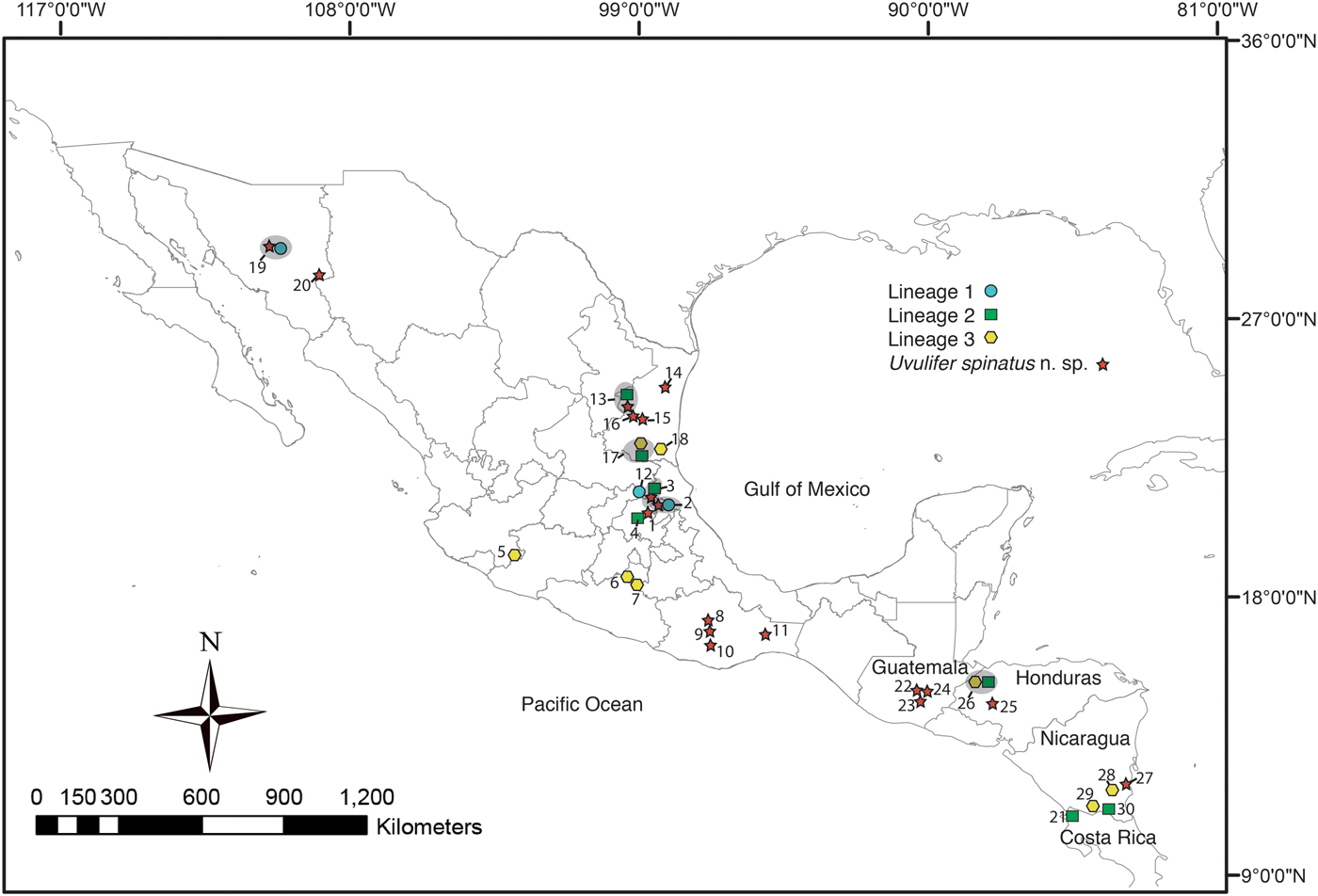
Adults of Uvulifer sp. were collected in four localities in Mexico (table 1) from 11 individuals of the green kingfisher Chloroceryle americana (Gmelin) and two of the belted kingfisher M. alcyon, killed with a shotgun and dissected within the following 2 h. Their viscera were placed in separate Petri dishes with 0.75% saline solution and examined under a dissecting microscope. Avian definitive hosts were identified using the field guides of Howell & Webb (Reference Howell and Webb1995) and the American Ornithologists’ Union (1998). Metacercariae were collected from the fins and skin of 20 species of fish belonging to the families Poeciliidae, Profundulidae, Characidae, Cyprinidae and Cichlidae in 30 localities across five countries – Mexico, Guatemala, Nicaragua, Honduras and Costa Rica – from December 2013 through February 2016 (fig.1, table 1). Fish were captured with seine nets and electrofishing, maintained alive and transported to the laboratory, pith sacrificed and immediately examined. Collected digeneans were fixed by sudden immersion in hot (steaming) 4% formalin for morphological comparisons; others were preserved in 100% ethanol for DNA extraction and sequencing. Fish were identified following Miller et al. (Reference Miller, Minckley and Norris2005).
Sampling sites of specimens of Uvulifer in Middle America. Localities with a circle represent lineage 1 (●), lineage 2 is represented with the symbol (■), lineage 3 (⬣) and the new species described Uvulifer spinatus n. sp. (★). Localities with shading represent two lineages occurring in sympatry. Collection sites are numbered according to table 1.

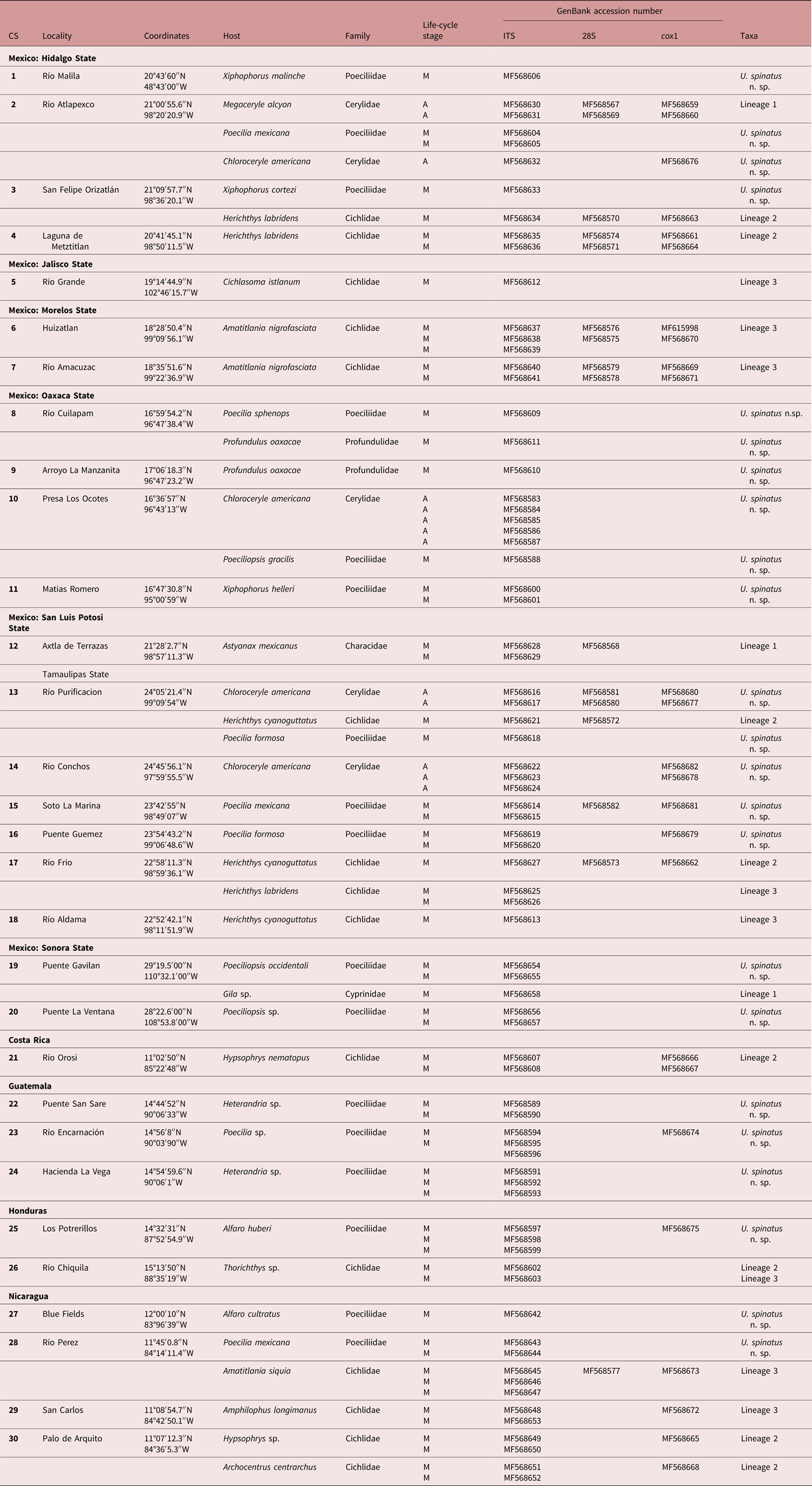
Specimen information including collection sites (CS), geographical coordinates, host species, life-cycle stage (A, adult; M, metacercaria), GenBank accession numbers of ITS, 28S and cox1. The locality numbers (CS) correspond with the numbers in fig. 1.

Morphological analyses
The specimens preserved in hot 4% formalin were stained with Mayer`s paracarmine, dehydrated in graded ethanol series, cleared in methyl salicylate and mounted as permanent slides using Canada balsam. All the specimens were examined using a bright-field Leica DM 1000 LED microscope (Leica, Wetzlar, Germany). Measurements were taken using the Leica Application Suite microscope software; the descriptions are presented in micrometres with the range followed by the mean in parentheses. Drawings were made with the aid of a drawing tube. Some of the adult individuals preserved in 4% formalin were dehydrated through a graded series of ethyl alcohol, and then critical-point dried with carbon dioxide. These specimens were mounted on metal stubs with silver paste, coated with gold and examined in a Hitachi Stereoscan model SU1510 (Hitachi High-Technologies Mexico S.A. de C.V., Mexico) at 15 kV. Specimens were deposited in the Colección Nacional de Helmintos (CNHE), Instituto de Biología, Universidad Nacional Autónoma de México, México City.
DNA extraction, PCR amplification, sequencing and phylogenetic analyses
Seventy-six individuals of Uvulifer sp. (64 metacercariae and 12 adults) were placed individually in tubes and digested overnight at 56°C in a solution containing 10 mm Tris-HCl (pH 7.6), 20 mm NaCl, 100 mm Na2-EDTA (pH 8.0), 1% Sarkosyl and 0.1 mg/ml proteinase K. Following digestion, DNA was extracted using DNAzol reagent (Molecular Research Center, Cincinnati, Ohio, USA) according to the manufacturer's instructions. Two regions of nuclear ribosomal DNA (rDNA) were amplified using the polymerase chain reaction (PCR). The ITS1, 5.8S and ITS2 region was amplified using the forward primer BD1, 5′-GTCGTAACAAGGTTTCCGTA-3′ and the reverse primer BD2, 5′-ATCTAGACCGGACTAGGCTGTG-3′ (Bowles & McManus, Reference Bowles and McManus1993). The D1–D3 domains of the large subunit (LSU) from ribosomal DNA were amplified using the forward primer BD3, 5′-GAACATCGACATCTTGAACG-3′ (Hernández-Mena et al., Reference Hernández-Mena, García-Prieto and García-Varela2014), and the reverse primer 536, 5′-CAGCTATCCTGAGGGAAAC-3′ (García-Varela & Nadler, Reference García-Varela and Nadler2005). The cytochrome c oxidase subunit 1 (cox1) of the mitochondrial DNA was amplified using the forward primer JB3, 5′-TTTTTTGGGCATCCTGAGGTTTAT-3′ and the reverse primer JB4, 5′-TAAAGAACATAATGAAATTG-3′ (Bowles et al., Reference Bowles, Hope, Tiu, Liu and McManus1993). PCR reactions (25 μl) consisted of 10 μm of each primer, 2.5 μl of 10× buffer, 1.5 μl of 2 mm MgCl2, 0.5 μl of deoxynucleoside triphosphates (dNTPs) (10 mm), 1 U of Taq DNA polymerase (Platinum Taq, Invitrogen Corporation, São Paulo, Brazil) plus 2 μl of the genomic DNA plus 16.7 μl of distilled water. PCR cycling parameters for rDNA amplifications included denaturation at 94°C for 5 min; followed by 35 cycles of 94°C for 1 min, annealing at 50°C for 1 min for the three molecular markers, and extension at 72°C for 1 min; followed by a post-amplification incubation at 72°C for 10 min. Sequencing reactions were performed using ABI Big Dye (Applied Biosystems, Boston, Massachusetts, USA) terminator sequencing chemistry, and reaction products were separated and detected using an ABI 3730 capillary DNA sequencer. Contigs were assembled and base-calling differences resolved using Codoncode Aligner version 5.1.2 (Codoncode Corporation, Dedham, Massachusetts, USA). Sequences obtained in the current research for ITS, LSU and cox1 were aligned with sequences of other genera of diplostomids downloaded from GenBank, i.e. Posthodiplostomum Dubois 1936, Ornithodiplostomum Dubois 1936, Diplostomum von Nordmann 1832, Tylodelphys Diesing, 1950, Austrodiplostomum Szidat & Nani 1951, Neodiplostomum Railliet 1919 and Alaria Goeze 1782, and two species of the genus Bolbophorus Dubois 1935. In addition, sequences of the strigeids Australapatemon Sudarikov 1959, Parastrigea Szidat 1928 and Apharyngostrigea Ciurea 1927 were used as outgroups, since this family is considered to be closely related to Diplostomidae (see Olson et al., Reference Olson, Cribb, Tkach, Bray and Littlewood2003). Sequences of each molecular marker were aligned separately using the software Clustal W (Thompson et al., Reference Thompson, Gibson, Plewniak and Jeanmougin1997). In particular, all sites were unambiguously aligned in the ITS and 28S datasets. The nucleotide substitution model was selected for each molecular marker using jModelTest v0.1.1 (Posada, Reference Posada2008) and applying the Akaike criterion; for the ITS dataset, the selected model was TVM + I + G for Bayesian analysis, and the GTRGAMMAI model was used for all maximum likelihood (ML) analyses. For the LSU dataset, the selected model was GTR + I + G and for the cox1 dataset the selected model was TPM1uf + I + G. Phylogenetic trees were constructed through ML with the program RAxML v7.0.4 (Stamatakis, Reference Stamatakis2006). A GTRGAMMAI substitution model was used, and 10,000 bootstrap replicates were run to assess nodal support. We also estimated gene trees using MrBayes 3.2.2 (Ronquist et al., Reference Ronquist, Teslenko, Van der Mark, Ayres, Darling, Höhna, Larget, Liu, Suchard and Huelsenbeck2012), with two runs of the Markov chain (MCMC) for 10 million generations, sampled every 1000 generations, a heating parameter value of 0.2 and burn-in (25%). Trees were drawn using FigTree version 1.4.0 (Rambaut, Reference Rambaut2012). The genetic divergence among taxa was estimated using uncorrected ‘p’ distances with the program MEGA version 6 (Tamura et al., Reference Tamura, Stecher, Peterson, Filipski and Kumar2013).
Results
Molecular characterization and phylogenetic analyses
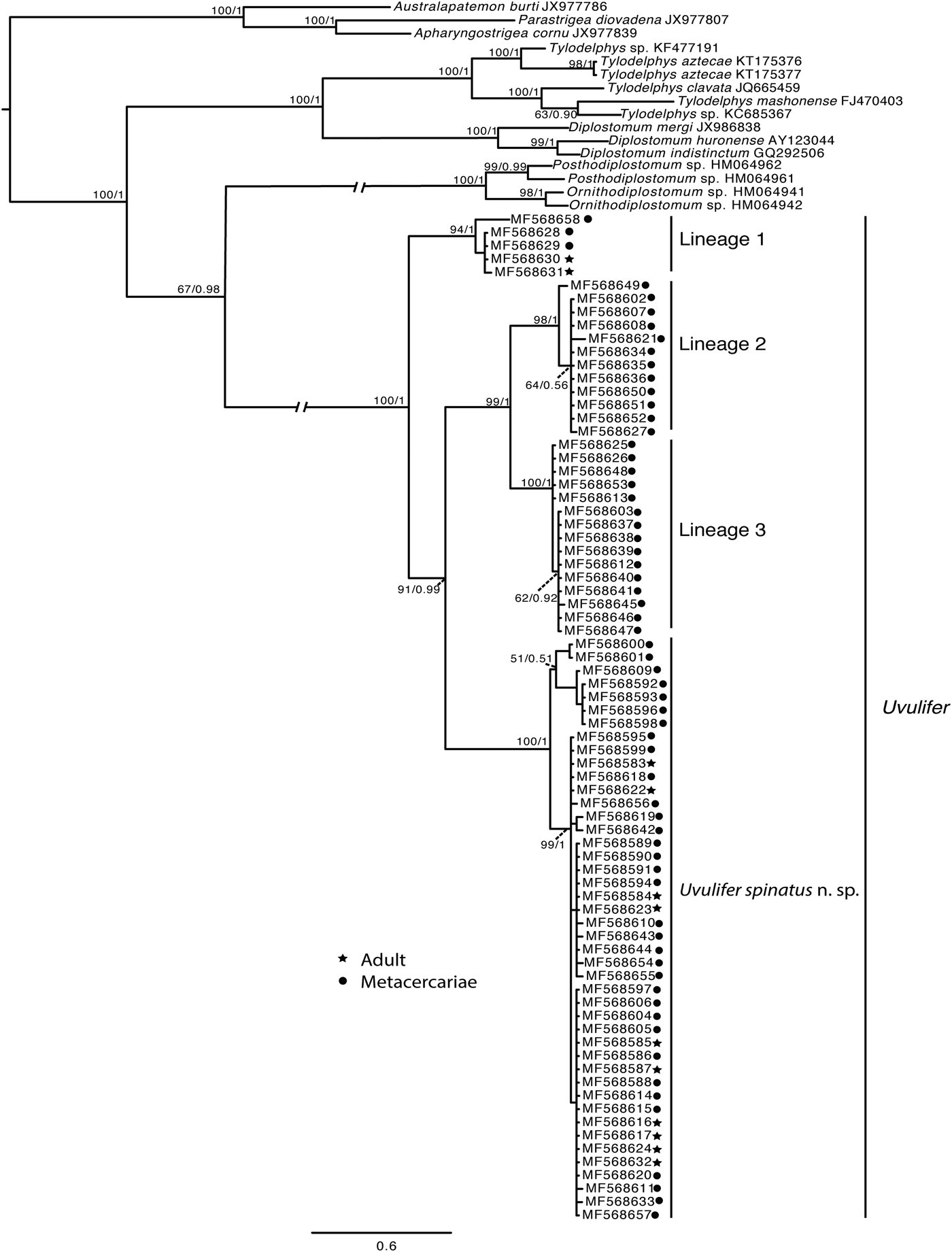
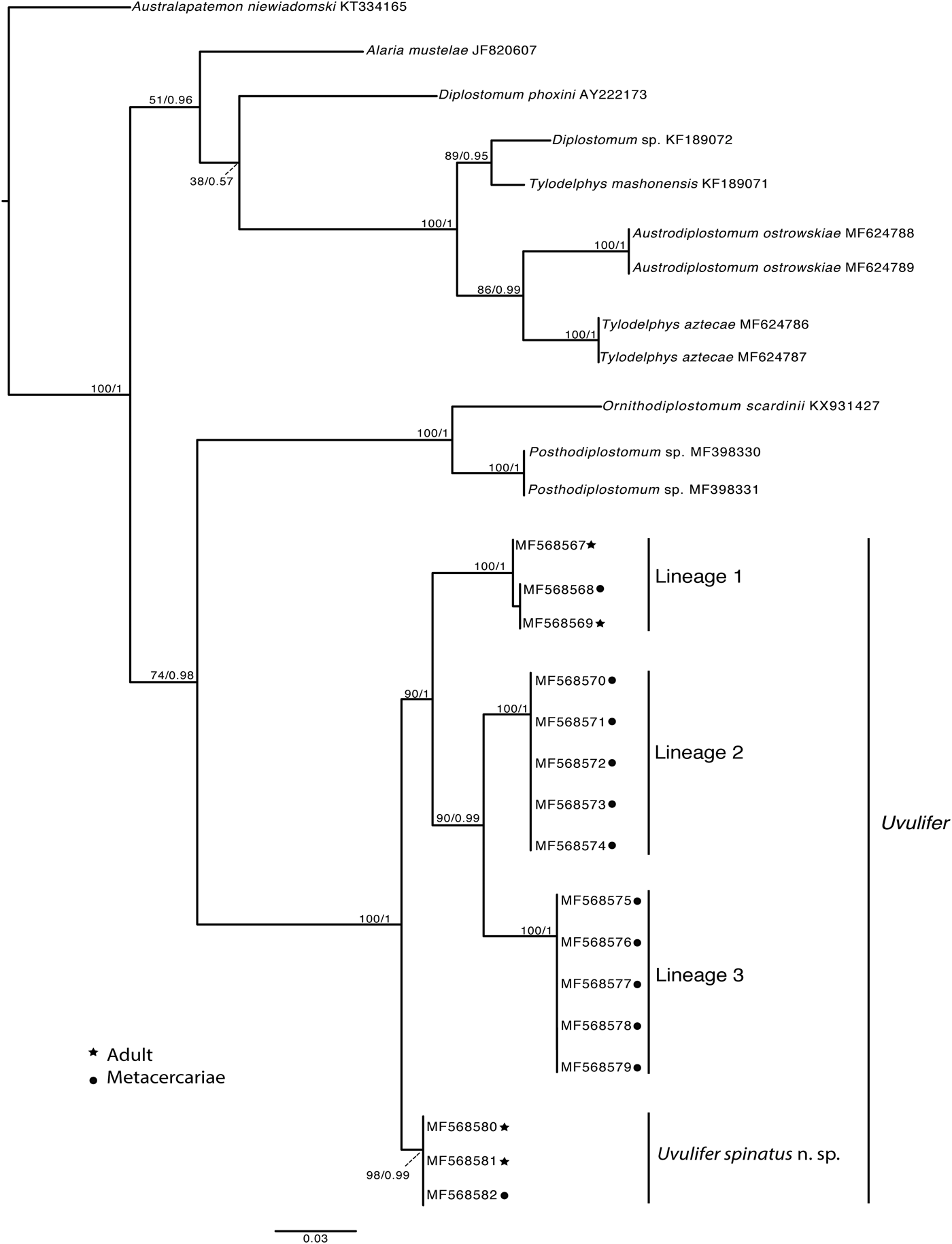
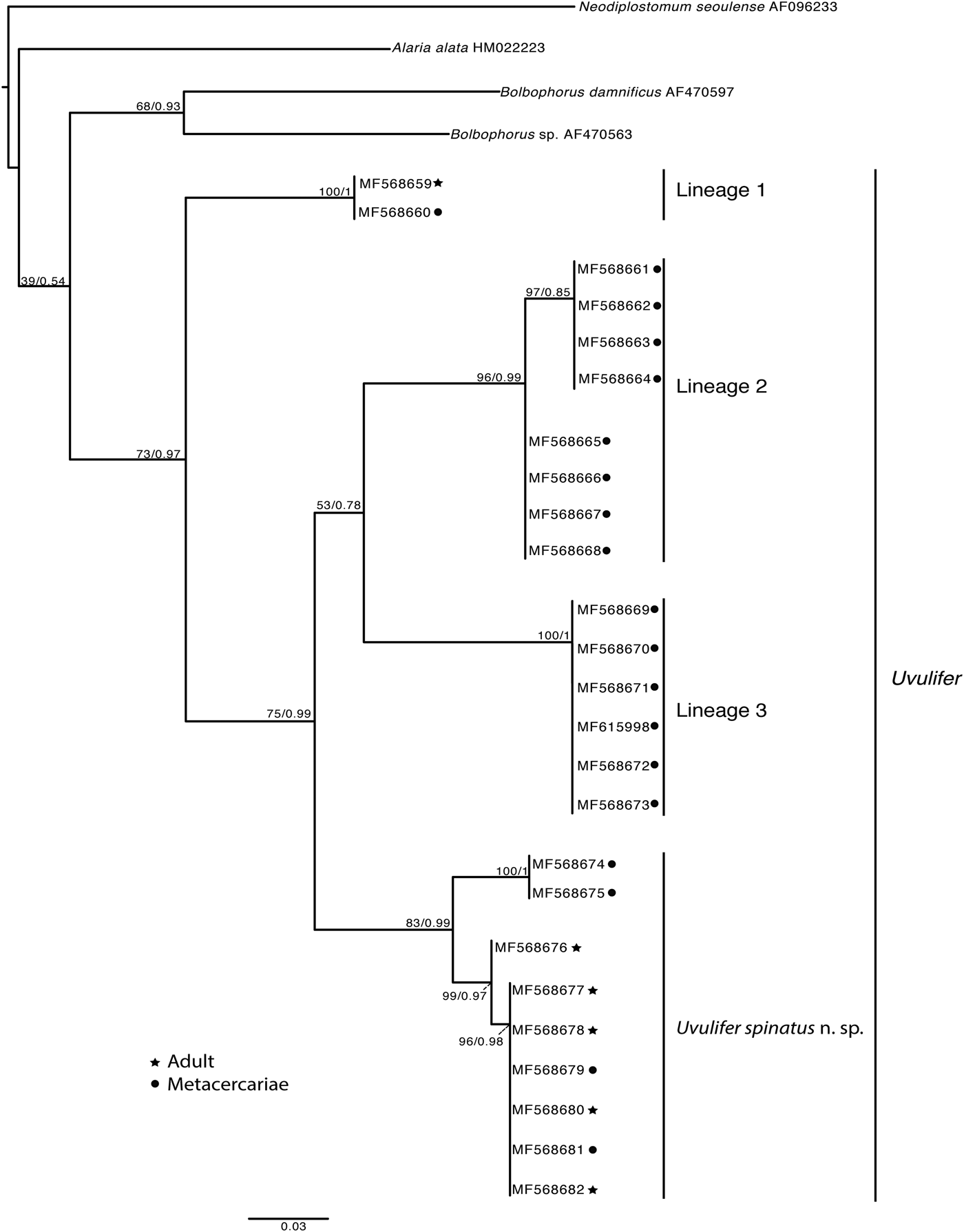
In this study, sequences of the ITS1, 5.8S, ITS2 and LSU from rDNA plus cox1 of mDNA of Uvulifer sp. (64 metacercariae and 12 adults) from five countries: Mexico, Guatemala, Honduras, Nicaragua and Costa Rica (table 1, fig. 1) were aligned with sequences of the other genera of diplostomids and strigeids. The ITS dataset included 1037 characters with 92 sequences and yielded a single tree with similar topology to the Bayesian inference (BI) consensus tree (fig. 2). Both trees showed that the genus Uvulifer is monophyletic and was conformed by four independent lineages, all very well supported by bootstrap and posterior probability values. Lineage 1 contains metacercariae from two species of fish, i.e. Astyanax mexicanus De Filppi (Characidae) and Gila sp. (Cyprinidae), whereas immature adults were recovered from the intestine of the belted kingfisher distributed in Mexico. Lineages 2 and 3 are represented only by metacercariae, and are associated with cichlid fishes in localities across Middle America. Finally, lineage 4 was conformed by sequences of 34 metacercariae obtained from poeciliids and a single species of a profundulid, whereas sequences of ten mature adults were collected from the intestine of the green kingfisher in four localities of Mexico (see table 1) and this lineage is described as a new species. The LSU dataset included 1232 characters with 28 sequences. The phylogenetic analyses inferred with both methods (ML and BI) recovered the same four lineages as the trees inferred with ITS (fig. 3). Finally, the cox1 dataset included 396 characters with 29 sequences. The ML and BI trees also supported the presence of four independent lineages within Uvulifer sp., with strong bootstrap and posterior probability values (fig. 4).
Maximum likelihood tree inferred with the ITS1, 5.8S and ITS2 dataset. Numbers near internal nodes show ML bootstrap clade frequencies and posterior probabilities (BI).

Maximum likelihood tree inferred with the LSU dataset. Numbers near internal nodes show ML bootstrap clade frequencies and posterior probabilities (BI).

Maximum likelihood tree inferred with the cox1 dataset. Numbers near internal nodes show ML bootstrap clade frequencies and posterior probabilities (BI).

Uvulifer spinatus n. sp.
Morphological description
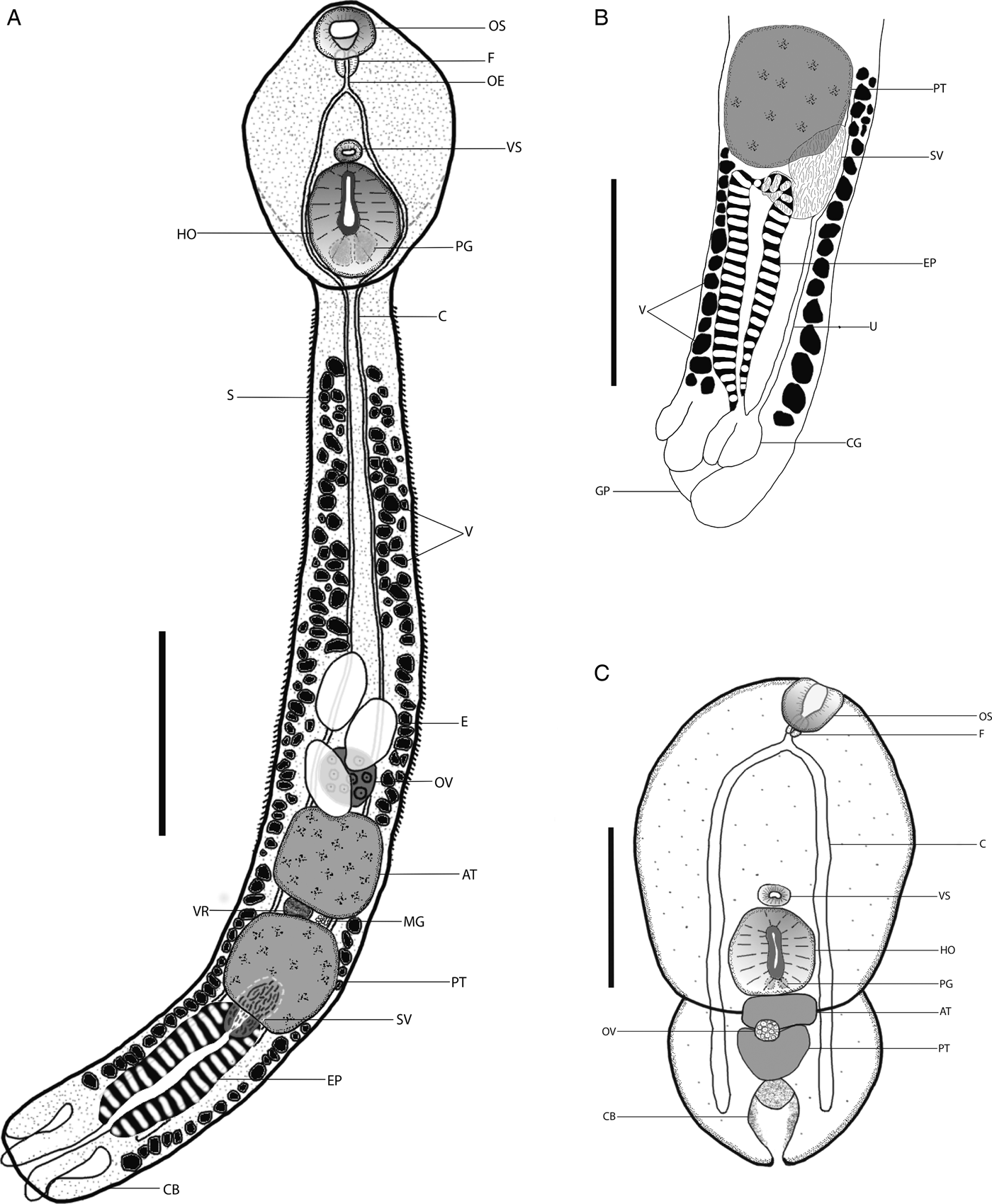
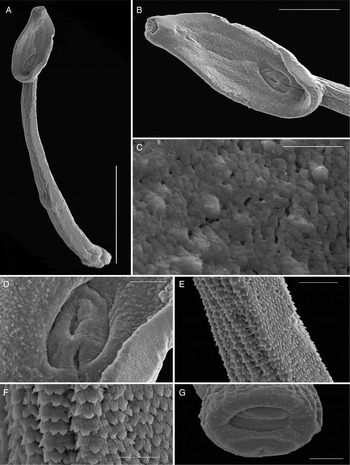
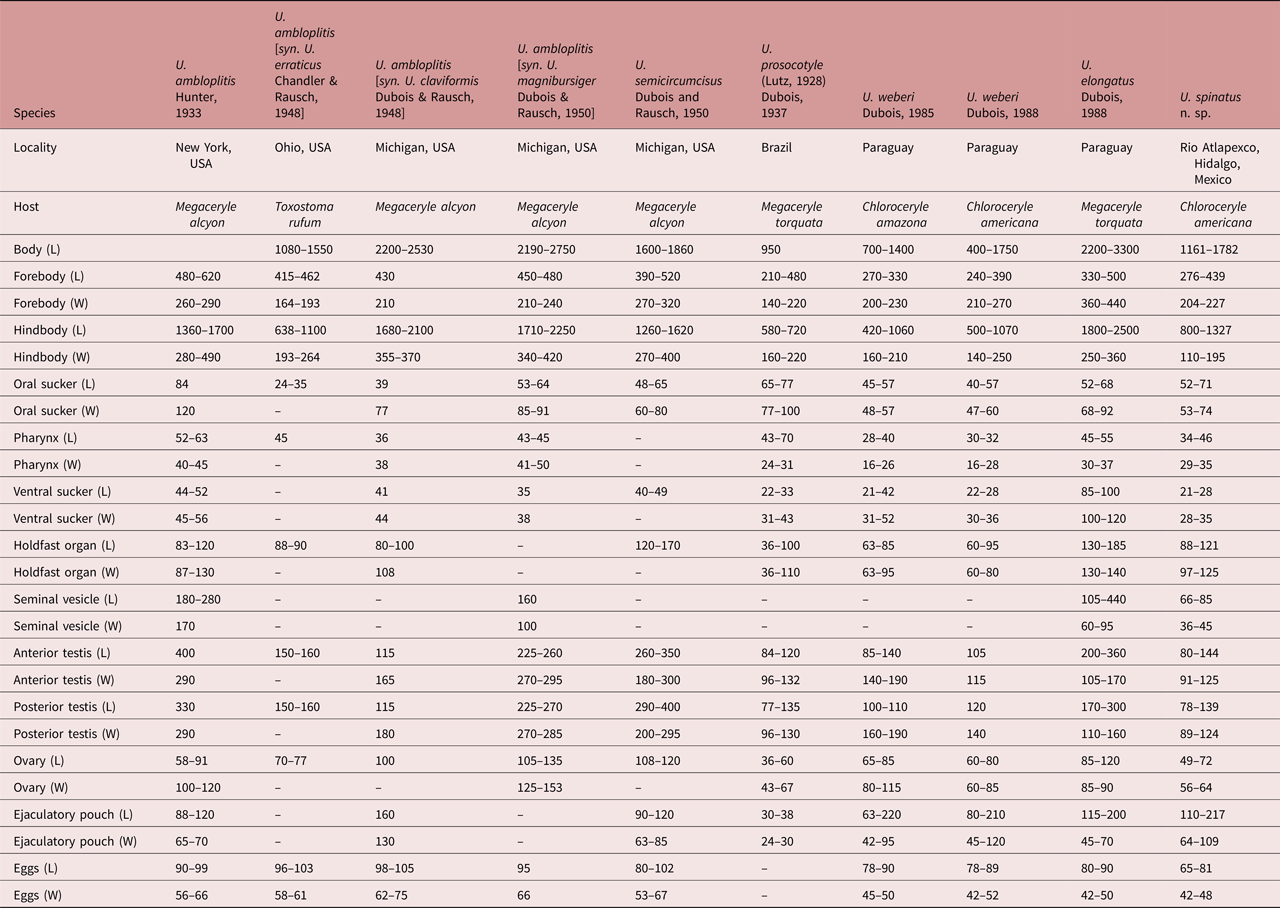
Description based on 13 adult specimens (figs 5A and 6, table 2). Body distinctly bipartite. Forebody oval 20.9–30 (25)% of total body length, ventrally concave, covered with papillae on the ventral surface of tegument. Hindbody claviform, longer than forebody HL/FL (hindbody length/forebody length) ratio = 1:2.44–3.63 (3.04), FW/HW (forebody width/hindbody width) ratio 1:0.98–1.28 (1.13). Total length 1161–1782 (1499). Oral sucker oval, muscular, subterminal, 57–71 (61) long by 53–74 (62) wide; longer than ventral sucker; sucker width ratio 1:1.67–2.33 (1:1.99). Pseudosuckers absent. Ventral sucker subspherical, muscular, 21–28 (24) long by 28–35 (31) wide, located close to holdfast organ. Prepharynx absent. Pharynx small, oval, muscular, 34–46 (37) long by 29–35 (32) wide. Oesophagus short 25–32 long (28). Caeca long, terminating at level of posterior margin of ejaculatory pouch. Holdfast organ oval 88–121 (97) long by 97–125 (108) wide, situated near to posterior margin of forebody. Proteolytic gland typically with bipartite appearance, located dorsally at posterior margin of holdfast organ. Testes in tandem, oval, in posterior region of hindbody; anterior testis 80–144 (113) long by 91–125 (108) wide; posterior testis 78–139 (104) long by 89–124 (107) wide. Ovary spherical, pretesticular, 49–72 (59) long by 56–64 (60) wide, slightly separated from anterior testis in some specimens (six specimens). Vitellarium in hindbody, extends laterally at some distance from the anterior end of hindbody up to posterior margin of ejaculatory pouch, occupying approximately three-quarters of total hindbody length; vitelline reservoir and Mehlis’ gland intertesticular. Hindbody covered with conspicuous spines extending from anterior margin to anterior testis level (figs 5A, 6E, F). Seminal vesicle small, 66–85 (75) long by 36–45 (40) wide, followed by muscular ejaculatory pouch situated dorsally, 110–217 (172) long by 64–109 (80) wide. Copulatory bursa with protrusible genital cone, 71–117 (89) long, half-enclosed by ventrolateral preputial fold; genital pore terminal, situated dorsally (fig. 5B). Hermaphroditic duct opens at apex of cone. Eggs 65–81 (73) long by 42–48 (44) wide.
Uvulifer spinatus n. sp. (A) Holotype adult, obtained from the intestine of Chloroceryle americana in Mexico, scale bar = 200 μm. (B) Enlarged lateral view of terminal genitalia of paratype CNHE 10323, scale bar = 200 μm. (C) Metacercaria from Poeciliopsis occidentalis in Mexico, scale bar = 100 μm. Abbreviations: OS, oral sucker; F, faringe; OE, oesophagus; VS, ventral sucker; HO, holdfast organ; PG, proteolytic gland; C, caeca; S, spines; V, vitellarium; E, eggs; OV, ovary; AT, anterior testis; PT, posterior testis; VR, vitelline reservoir; MG, Mehlis’ gland; SV, seminal vesicle; EP, ejaculatory pouch; U, uterus; CG, genital cone; GP, genital pore; CB, copulatory bursa.

Scanning electron micrographs of adult Uvulifer spinatus n. sp. (A) Entire specimen from Chloroceryle americana from Mexico, scale bar = 400 μm; (B) forebody, scale bar = 100 μm; (C) tegument of the ventral surface of forebody showing papillae, scale bar = 5 μm; (D) holdfast organ, scale bar = 20 μm; (E) hindbody, scale bar = 25 μm; (F) spines, scale bar = 10 μm; (G) copulatory bursa, scale bar = 25 μm.

Comparative morphometrics (in microns) of adult worms of Uvulifer spinatus n. sp. with congeneric species from the Americas. L (length); W (width).

Taxonomic summary: adults
Type host. Chloroceryle americana Gmelin (green kingfisher) Cerylidae.
Site of infection. Intestine.
Type locality. Rio Atlapexco, Hidalgo, Mexico (21°00′55.6″N, 98°20′20.9″W).
Type material. Holotype CNHE: 10322; paratypes CNHE: 10323; voucher CNHE: 10324.
Etymology. The specific epithet refers to the presence of spines on the tegument extending from the anterior end of the hindbody to the level of the anterior testis.
Morphological description: metacercariae
The description (fig. 5C) is based on six metacercariae found encysted in the fins and skin of their second intermediate host, the Gila topminnow Poeciliopsis occidentalis Baird & Girard from Puente Gavilán, Sonora. ‘Neascus’ type metacercariae. Body distinctly bipartite, 592–677 (636) long by 412–434 (424) wide, with calcareous corpuscles. Forebody more or less spatulate, larger than hindbody. Hindbody bulb- to oval-shaped. Oral sucker elongate–oval, muscular, terminal 65–75 (70) long by 51–59 (55) wide. Pseudosuckers absent. Ventral sucker smaller than oral sucker, subspherical, fairly muscular, located at margin anterior to holdfast organ, 39–49 (44) long by 45–50 (47) wide. Prepharynx absent. Pharynx small, elongate–oval 31–34 (34) long by 21–23 (22) wide. Oesophagus short. Caeca long, extending in hindbody to anterior level of primordial copulatory bursa. Holdfast organ oval 92–110 (102) long by 86–128 (97) wide. Proteolytic gland located dorsally at posterior margin of holdfast organ. Two primordial testes, tandem, anterior testis slightly smaller than posterior. Primordial ovary, oval, located between testes. Primordial copulatory bursa ovoid; genital pore terminal.
Taxonomic summary: metacercariae
Type host. Poeciliopsis occidentalis Baird and Girard.
Site of infection. Fins and skin.
Type locality. Puente Gavilán, Sonora (29°19.5′00″N, 110°32.1′00″W).
Voucher material. CNHE: 10325.
Remarks
The new species belongs to the genus Uvulifer because it possesses a bipartite body, forebody oval, hindbody claviform, longer than forebody, ventral sucker smaller than oral sucker, vitellarium in hindbody. Genital cone half-enclosed in prepuce-like folds (see Niewiadomska, Reference Niewiadomska, Gibson, Jones and Bray2002). Yamaguti (Reference Yamaguti1934) erected the genus Uvulifer, with U. gracilis as the type species, from specimens collected from the crested kingfisher (Ceryle lugubris Temminck) from Japan. Currently, 18 species of the genus Uvulifer have been described worldwide. In the Americas, only five species of Uvulifer have been reported, all of them as parasites of alcedines, i.e. U. ambloplitis and U. semicircumcisus from Megaceryle alcyon in the USA, U. prosocotyle in Megaceryle torquata Linnaeus and Chloroceryle amazona Latham in Venezuela and Brasil, U. weberi from C. amazona and C. americana in Paraguay, and U. elongatus in M. torquata also from Paraguay (Yamaguti, Reference Yamaguti1971; Dubois, Reference Dubois1985, Reference Dubois1988) (see table 2). The new species described herein, Uvulifer spinatus n. sp., can be differentiated from the five species of the Americas by having a tegument covered with spines extending from the anterior part of the hindbody to the level of anterior testis (see figs 5A, 6E, F). Additionally, the new species differs from the three species described from South America (U. prosocotyle, U. weberi, and U. elongatus) by having smaller testes and seminal vesicle (see table 2). Finally, the new species can be further distinguished from the other two congeneric species from North America, i.e. U. ambloplitis and U. semicircumcisus, by having smaller eggs and a longer ejaculatory pouch (see table 2).
Discussion
The phylogenetic tree inferred with ITS, LSU and cox1 datasets showed that Uvulifer is an independent clade with strong bootstrap and posterior probability support values (100/1.0). The genetic divergence between Uvulifer and other genera of Diplostomidae ranged from 12 to 19% for ITS, from 5 to 8% for LSU and from 13 to 18% for cox1. Our analysis showed a high genetic diversity within the genus Uvulifer across Middle America. We detected four major lineages, all well supported (see figs 2–4). The lowest genetic divergence was found between lineages 2 and 3, and ranged from 2 to 3.4% for ITS, from 1.3 to 1.4% for LSU and from 9.3 to 9.6% for cox1; the highest genetic divergence was found between lineage 1 and lineage 4 (described herein as a new species, U. spinatus n. sp.), ranging from 5.7 to 7.8% for ITS, from 1.4 to 1.6% for LSU and from 9.6 to 12.5% for cox1. The values of genetic divergence of ITS and cox1 among lineages are similar to those found previously among species of Diplostomum (D. mergi Dubois, 1932, D. huronense (La Rue, 1927) and D. indistinctum (Guberlet, 1923), with 2–4.5% for ITS, and among species of Tylodelphys (T. clavata von Nordmann, 1832), T. mashonense (Sudarikov, 1971), Tylodelphys sp. and T. aztecae García-Varela, Sereno-Uribe, Pinacho-Pinacho, Hernández-Cruz & Pérez-Ponce de León, 2016), with divergence values between 3 and 9% (see García-Varela et al., Reference García-Varela, Sereno-Uribe, Pinacho-Pinacho, Hernández-Cruz and Pérez-Ponce de León2016b and references therein) and, among species of Tylodelphys, the genetic divergence for cox1 ranged from 8 to 16.5% (see Blasco-Costa et al., Reference Blasco-Costa, Poulin and Presswell2017).
The intraspecific genetic divergence within lineages 1, 2 and 3, and within U. spinatus n. sp., ranged from 0 to 1.4% for ITS, from 0 to 1.8% for cox1, and for LSU the sequences of all isolates were identical. These ranges of intraspecific genetic divergence are also similar to those described previously for congeneric diplostomids; Tylodelphys sp., T. aztecae and T. mashonense showed a divergence from 0 to 1.4% for ITS (see Chibwana et al., Reference Chibwana, Blasco-Costa, Georgieva, Hosea, Nkwengulila, Scholz and Kostadinova2013, Reference Chibwana, Nkwengulila, Locke, McLughlin and Marcogliese2015; García-Varela et al., Reference García-Varela, Sereno-Uribe, Pinacho-Pinacho, Hernández-Cruz and Pérez-Ponce de León2016b), and among isolates of Diplostomum baeri Dubois, 1937 this varied from 0 to 0.4% (see Blasco-Costa et al., Reference Blasco-Costa, Faltynková, Goergieva, Skirnisson, Scholz and Kostadinova2014). Finally, among isolates of Tylodelphys spp., the genetic divergence ranged from 0.2 to 1.2% (see Blasco-Costa et al., Reference Blasco-Costa, Poulin and Presswell2017).
The identification of the metacercariae found encysted in the fins and skin in freshwater fishes of Mexico has been problematic. The metacercariae of Uvulifer causing black spot disease have been indistinctly determined taxonomically, either as Uvulifer sp. or as U. ambloplitis. This diplostomid has been recorded from at least 45 species of fish belonging to ten unrelated families (Atherinopsidae, Cichlidae, Characidae, Cyprinidae, Eleotridae, Gobiidae, Heptapteridae, Mugilidae, Godeidae and Poeciliidae) (see Pérez-Ponce de León et al., Reference Pérez-Ponce de León, García-Prieto and Mendoza-Garfias2007). However, most of the records of the metacercariae of Uvulifer in Mexico are from hosts of two fish families, including cichlids in 18 of the 45 host species (40%) and eight species of poeciliids (19%) (see Pérez-Ponce de León et al., Reference Pérez-Ponce de León, García-Prieto and Mendoza-Garfias2007 and references therein, Reference Pérez-Ponce de León and Choudhury2010; García Magaña & López-Jiménez, Reference García-Magaña and López-Jiménez2008; Bautista-Hernández et al., Reference Bautista-Hernández, Monks and Pulido-Flores2014; Salgado-Maldonado et al., Reference Salgado-Maldonado, Novelo-Turcotte, Vázquez, Caspeta-Mandujano, Quiroz-Martínez and Favila2014).
In this study, the adult and metacercarial stages of species of Uvulifer were characterized for the first time using an integrative taxonomic approach, combining morphology and DNA sequences, and we were able to link the metacercariae with the adults, at least in two of the four recognized lineages distributed widely across Middle America. In addition, the adults of Uvulifer seem to be very specific to alcedines across the world, and our study revealed an apparently well-defined host specificity pattern of the metacercariae in their second intermediate hosts, a pattern that has been found in other metacercariae in freshwater fishes (see Locke et al., Reference Locke, McLaughlin, Dayanandan and Marcogliese2010a; Pérez-Ponce de León et al., Reference Pérez-Ponce de León, García-Varela, Pinacho-Pinacho, Sereno-Uribe and Poulin2016). The metacercariae of U. spinatus n. sp. are only found parasitizing poeciliids; lineage 1 is associated with Characidae (A. mexicanus) and Cyprinidae (Gila sp.), two unrelated families of freshwater fish, with Neotropical and Nearctic affinity, respectively. Unfortunately, adults recovered from the intestine of the belted kingfisher were immature and prevented the formal taxonomic description of this species. Lineages 2 and 3 were found parasitizing exclusively cichlids across a wide geographical range, comprising Mexico, Honduras, Nicaragua and Costa Rica, and in two localities, one in Mexico and one in Honduras, both lineages even occurred in sympatry (see table 1, fig. 1). The association of a metacercaria and a cichlid fish across the same geographical region has also been found in a genetic lineage of Clinostomum (see Pérez-Ponce de León et al., Reference Pérez-Ponce de León, García-Varela, Pinacho-Pinacho, Sereno-Uribe and Poulin2016).
Interestingly, the metacercariae of the most widely distributed species of Uvulifer in North America, and the agent causative of black spot disease in many freshwater fish species in the USA and Canada (U. ambloplitis), has been found mainly in centrarchiids (Hoffman & Putz, Reference Hoffman and Putz1965; Berra & Ray-Jean, Reference Berra and Ray-Jean1978; Lemly & Esch, Reference Lemly and Esch1983, Reference Lemly and Esch1984a, Reference Lemly and Eschb, Reference Lemly and Esch1985; Camp, Reference Camp1988; Wilson & Camp, Reference Wilson and Camp2003). In Mexico, four species of the family Centrarchidae, i.e. Lepomis machochirus Rafinesque, L. megalotis Rafinesque, Micropterus salmoides Lacépède and Pomoxis annularis Rafinesque, have been examined to a certain extent for helminth parasites. During the course of this investigation we also analysed ten specimens of M. salmoides from Purificacion River in northern Mexico (see Locality 13, table 1, fig 1). However, the metacercariae of Uvulifer has not been reported from any species of that host family (see Pérez-Ponce de León et al., Reference Pérez-Ponce de León, García-Prieto and Mendoza-Garfias2007, Reference Pérez-Ponce de León, Rosas-Valdez, Aguilar-Aguilar, Mendoza-Garfias, Mendoza-Palmero, García-Prieto, Rojas-Sánchez, Briosio-Aguilar, Pérez-Rodríguez and Domínguez-Domínguez2010; Pérez-Ponce de León & Choudhury, Reference Pérez-Ponce de León and Choudhury2010), which represents a typically Nearctic fish group. Instead, we found the metacercariae infecting Neotropical freshwater fish species such as characids, cichlids and poeciliids, and even some endemic species such as atherinopsids. This study reinforces the view that metacercariae of some trematodes show a preference for infection of certain fish species, and it seems that such host specificity is more strongly related to the physiological compatibility of host and parasite species, than to ecological factors (Hoffman & Putz, Reference Hoffman and Putz1965; Locke et al., Reference Locke, McLaughlin and Marcogliese2010b; Perez-Ponce de León et al., Reference Pérez-Ponce de León, García-Varela, Pinacho-Pinacho, Sereno-Uribe and Poulin2016). In addition, to better understand the life cycle of species of Uvulifer, as well as to elucidate some aspects of their evolutionary history and basic biology, it is also necessary to characterize, morphologically and molecularly, the cercarial stage released by their snail intermediate host (see Blasco-Costa & Poulin, Reference Blasco-Costa and Poulin2017). An assessment of all the stages of the life cycle will increase our chances of describing the cryptic diversity patterns among Uvulifer spp.
Without molecular evidence, and without adult forms obtained from fish-eating birds, the genetic lineages of Uvulifer, and the new species uncovered in our study, probably would have been considered to represent a single species, and would have been designated as Uvulifer sp., or even U. ambloplitis, as previously recorded in other studies (see Pérez-Ponce de León et al., Reference Pérez-Ponce de León, García-Prieto and Mendoza-Garfias2007; Bautista-Hernández et al., Reference Bautista-Hernández, Monks and Pulido-Flores2014; Salgado-Maldonado et al., Reference Salgado-Maldonado, Novelo-Turcotte, Vázquez, Caspeta-Mandujano, Quiroz-Martínez and Favila2014). The data generated in this study, and the use of an integrative taxonomy approach, represent the first step of a more detailed study on the taxonomy, evolution and biogeography of the genus Uvulifer. Sequencing work of Uvulifer metacercariae from centrarchiids across the USA and Canada are required to test the host specificity hypothesis for the metacercariae. Finally, the formal description of the other three lineages detected in our study requires further sampling of the alcedine definitive hosts to obtain gravid specimens on which to conduct the morphological study.
Acknowledgements
We are grateful to Jesus Hernández-Orts, Leopoldo Andrade, Eduardo Hernández, Rogelio Aguilar and Carlos Pinacho for their help during field work. We also thank Luis García Prieto for providing specimens deposited at the CNHE. We thank Berenit Mendoza Garfias for her help in obtaining the scanning electron microphotographs.
Financial support
This research was supported by grants from the Programa de Apoyo a Proyectos de Investigación e Inovación Tecnológica (PAPIIT-UNAM) IN206716 and IN202617 to M.G.V. and G.P.P.L., respectively, and the Consejo Nacional de Ciencia y Tecnología (CONACYT) 179048. A.L.J. thanks the Programa de Posgrado en Ciencias Biológicas, UNAM and CONACYT (A.L.J. CVU No. 706119) for the scholarship to complete her Masters degree.
Conflict of interest
None.
Ethical standards
Specimens in Mexico were collected under the Cartilla Nacional de Colector Científico (FAUT 0202 and 0057) issued by the Secretaría del Medio Ambiente y Recursos Naturales (SEMARNAT), to M.G.V. and G.P.P.L., respectively.