1. Introduction
The two-dimensional (2-D) isentropic compressible Euler equations read that [Reference Courant and Friedrichs8]

where the variables $\rho$ , $(u,\,v)$
 and $p$
 are, respectively, the density, the velocity and the pressure. For a polytropic gas, the pressure $p$
 takes the form $p(\rho )=A\rho ^\gamma$
 , where $A>0$
 is a constant and $\gamma >1$
 is the adiabatic gas constant.
For some special types of initial values, for example, the four-constant Riemann initial data (that is, the initial data are constant in each of the four quadrants of the initial plane), the solutions of (1.1) are expected to depend on the self-similar variables $(\xi,\,\eta )=(x/t,\,y/t)$ and the flow is called pseudo-steady. For smooth flows, system (1.1) in the variables $(\xi,\,\eta )$
 is

where $(U,\,V)=(u-\xi,\,v-\eta )$ is the pseudo-flow velocity and $c=\sqrt {p'(\rho )}$
 is the sound speed. For irrotational flows, that is, $u_y=v_x$
 or equivalently $u_\eta =v_\xi$
 , system (1.2) reduces to

supplemented by the pseudo-Bernoulli's law

The variable $\phi$ is called the pseudo-velocity potential. The two eigenvalues of (1.3) are

which means that system (1.3) is of mixed-type: supersonic for $M>1$ , subsonic for $M<1$
 and sonic for $M=1$
 , where $M=\sqrt {U^2+V^2}/c$
 is the pseudo-Mach number. We call the curve $\{(\xi,\,\eta )|M(\xi,\,\eta )=1\}$
 a sonic curve. Moreover, a curve is defined as a pseudo-streamline if the direction of each point on it is parallel to the pseudo-velocity $(U,\,V)$
 .
Under the self-similar transformation, the 2-D Riemann problem in the physical $(x,\,y)$ plane is transformed into a boundary problem at infinity in the self-similar $(\xi,\,\eta )$
 plane. Clearly, for bounded solutions, system (1.3) is supersonic at infinity and may change type to subsonic near the origin. The study of the 2-D four-constant Riemann problem of (1.1) was started by Zhang and Zheng [Reference Zhang and Zheng43], in which a set of global configurations of solutions were conjectured. These solution configurations were verified and completed afterward numerically [Reference Li, Zhang and Yang29, Reference Zheng46]. It is interesting that the configurations of the 2-D Riemann problem include many important physical structures, such as shock reflection and dam collapse, see the survey [Reference Li, Sheng, Zhang and Zheng27]. It is well-known that, except for the case which the solution is vacuum near the origin [Reference Li and Zheng32], each global solution configuration typically contains transonic and small-scale structures [Reference Li, Zhang and Yang29, Reference Zheng46], which make the rigorous theoretical analysis are extremely difficult. In particular, the numerical simulations in [Reference Glimm, Ji, Li, Li, Zhang, Zhang and Zheng10] confirmed that shock waves may also formate near sonic curves even for the rarefactive initial data, which illustrates that the behaviour of supersonic solutions near sonic curves are indeed more complicated than previously expected. In recent years, the expansion problem of a semi-infinite wedge of gas into vacuum, often interpreted as the dam collapse problem in hydraulics [Reference Levine25, Reference Suchkov39], has been widely studied first in the hodograph plane [Reference Li26, Reference Li and Zheng31] and subsequently in the self-similar plane [Reference Chen and Zheng6, Reference Lai19, Reference Li, Yang and Zheng28] by using the characteristic decomposition technique developed in [Reference Li, Zhang and Zheng30]. For this kind of problem, the discussion of properties of solutions near sonic curves are avoided due to the existence of vacuum. A similar situation appears in the problem of a pseudo-steady supersonic flow around a sharp corner [Reference Lai and Sheng24, Reference Sheng and You36]. In addition, there are also a series of results on the shock reflection and shock diffraction problems, see among others [Reference Bae, Chen and Feldman1–Reference Chen5, Reference Elling and Liu9, Reference Zheng47].
In order to explore the properties of supersonic solutions near sonic curves theoretically, the authors [Reference Song and Zheng38] proposed the concept of semi-hyperbolic wave and constructed a semi-hyperbolic patch solution from the hyperbolic region up to but not including the sonic curve for the 2-D pressure gradient system. A semi-hyperbolic wave is a local solution for which one family of characteristics starts on the sonic curve and ends on either a sonic curve or a transonic shock wave. This kind of solution plays a buffer role in connecting hyperbolic regions and sonic curves, and appears in many transonic situations [Reference Cole and Cook7, Reference Courant and Friedrichs8, Reference Kuz'min18]. The existence of semi-hyperbolic patch solutions for the 2-D pseudo-steady Euler equations and related models were established in [Reference Hu and Wang17, Reference Lai and Sheng23, Reference Li and Zheng33]. The uniform regularity of semi-hyperbolic patch solutions up to sonic curves were discussed in [Reference Hu and Li15, Reference Song, Wang and Zheng37]. On the other hand, a class of regular supersonic solutions around the given sonic curves were constructed in [Reference Hu and Chen12, Reference Hu and Li13, Reference Zhang and Zheng44] for the steady isentropic and full Euler equations and in [Reference Hu and Li16, Reference Zhang and Zheng45] for the pseudo-steady case. Furthermore, the existence of regular solutions in supersonic-sonic regions extracting from the transonic aerofoil problem was studied in [Reference Hu11, Reference Hu and Li14] for the steady Euler equations. For more results about the steady transonic flow problems, we refer the reader to [Reference Lai20, Reference Lai21, Reference Sheng, Wang and Zhang35, Reference Wang and Xin40–Reference Wang and Xin42] and references therein.
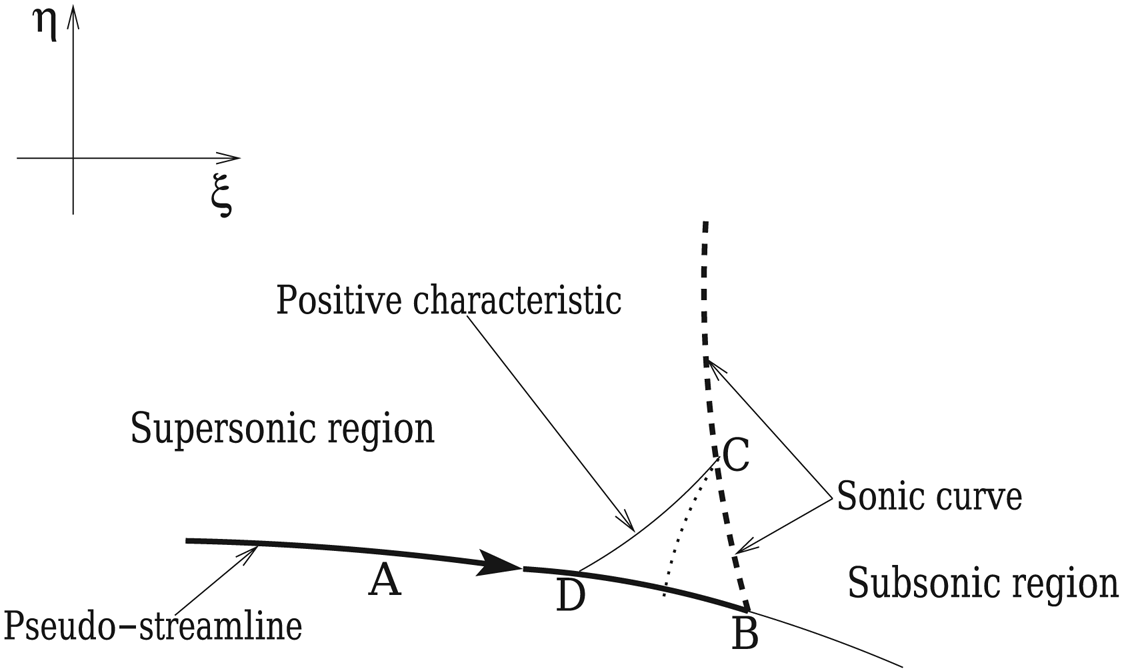
In the present paper, we are interested in constructing a supersonic-sonic patch along a pseudo-streamline from the supersonic part to a sonic curve for the 2-D pesudo-steady isentropic irrotational Euler equations (1.3). Specifically, we consider the degenerate problem as follows.
Problem 1.1 Let $\widehat {AB}$ be a piece of smooth bend curve in the self-similar plane. We assign the supersonic boundary data on $\widehat {AB}$
 such that it is a pseudo-streamline and $B$
 is a sonic point. we look for a smooth sonic curve starting from $B$
 and build a regular supersonic-sonic solution in the region bounded by this sonic curve and the pseudo-streamline $\widehat {AB}$
 near point $B$
 . See Figure 1 for the illustration.
A supersonic-sonic patch in the self-similar plane.

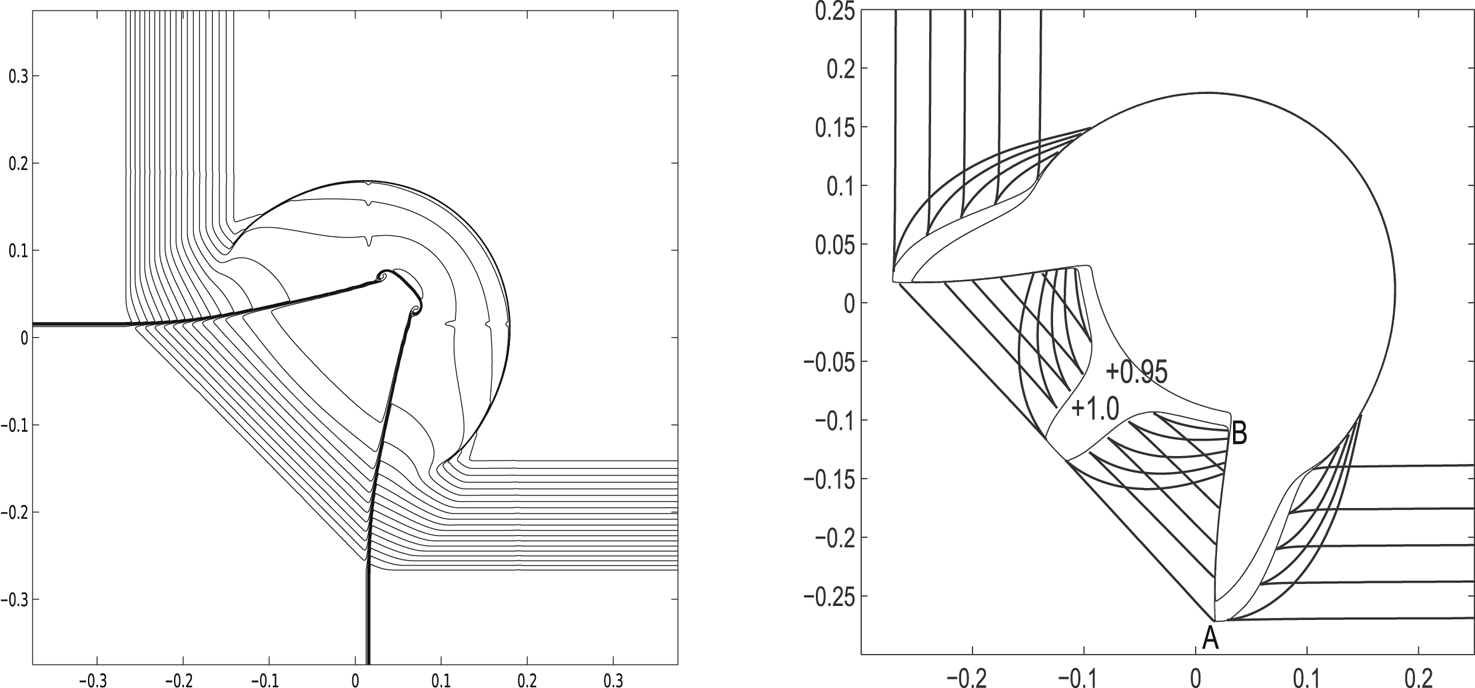
The motivation to study problem 1.1 originates from the framework of the 2-D four-constant Riemann problem by Zhang and Zheng [Reference Zhang and Zheng43], in which a global solution configuration is designed to extend the supersonic flows coming from infinity to the subsonic flows near the origin along the pseudo-streamlines. In fact, the type of supersonic-sonic patch considered here appears frequently in the 2-D Riemann problem. For example, we consider the following initial data

where $(\rho _i,\, u_i,\, v_i,\, p_i)(i=1,\,2,\,3,\,4)$ are the initial states in the $i$
 th quadrant of $(x,\, y)$
 plane, then the solution configuration corresponds to the case $R_{12}^-J_{23}^+J_{34}^-R_{41}^+$
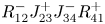 , see figure 2. The results of numerical simulation show that two rarefaction simple waves exiting from the contact discontinuities $J_{23}^+$
 and $J_{34}^-$
 do not interact, while reach sonic curves before they interact. There is no shock wave in the third quadrant. Here the curve $\widehat {AB}$
 in figure 2 (right) is the contact discontinuity $J_{34}^-$
 which can be seen as a pseudo-streamline, and the point $B$
 is a sonic point. The patch described in figure 1 can be regarded as the region near the sonic point $B$
 . On the other hand, if $\rho _3$
 becomes larger, such as $\rho _3=2$
 , while the other initial data remain unchanged, the two simple waves exiting from $J_{23}^+$
 and $J_{34}^-$
 will interact with each other and a transonic shock appears in the third quadrant in this case. It is worthwhile to refer that, if the supersonic-sonic patch described in figure 1 is a simple wave region, Lai and Sheng [Reference Lai and Sheng22] constructed a simple wave solution in this region via the geometric interpretation.
A configuration of $R_{12}^-J_{23}^+J_{34}^-R_{41}^+$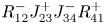 . Shown are density contours (left) and characteristics and pseudo-Mach contours with $M = 1.0,\, 0.95$
 (right) by the positive scheme. Here the parameters are taken as $\gamma =1.4,\, dx=dy=1/1600,\, \lambda ^x=\lambda ^y=0.25,\, T=0.25$
 and $\alpha =0.9,\, \beta =0.1$
 in the positive scheme.

We comment that the supersonic-sonic patch considered in the present paper is different from the semi-hyperbolic patches constructed in previous papers [Reference Hu and Wang17, Reference Li and Zheng33, Reference Song, Wang and Zheng37, Reference Song and Zheng38]. In previous works, the semi-hyperbolic patches were boiled down to a family of degenerate hyperbolic Goursat-type boundary value problems by specifying the boundary data on the characteristic curves, which made that one can take level curves of $M$ as the “Cauchy supports’ to establish a global solution up to the sonic curve. For the supersonic-sonic patch considered here, the corresponding ‘Cauchy supports’ can not be directly taken, because we only have the boundary data on a pseudo-streamline. In order to overcome this difficulty, we transform the problem into a new degenerate hyperbolic problem in a partial hodograph plane, which is different from the previous study of semi-hyperbolic patches handled in the self-similar plane. To solve the new degenerate problem, we first construct carefully a strong determinate domain and then derive a priori estimates of solutions by the idea of characteristic decompositions in the partial hodograph coordinates. A set of new dependent variables are introduced to establish the uniform regularity of solutions by using the bootstrap technique. Finally, we convert the solution from the partial hodograph variables to the self-similar variables to obtain the existence and uniform regularity of solutions to the original problem.
The main result of the paper is stated as follows.
Theorem 1.2 Let $\widehat {AB}: \eta =\varphi (\xi ) (\xi \in [\xi _1,\,\xi _2])$ be an strictly decreasing and concave smooth pseudo-streamline. Suppose that the pseudo-Mach number $M$
 is strictly decreasing along $\widehat {AB}$
 with $M=1$
 at point $B(\xi _2,\, \varphi (\xi _2))$
 . We further assume that $\varphi '$
 and $M$
 are $C^2$
 functions and satisfy the corresponding condition derived from the pseudo-Bernoulli's law. Then there exists a small smooth sonic curve $\widehat {BC}$
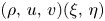
 such that the pseudo-steady Euler equations (1.2) admits a supersonic-sonic solution $(\rho,\, u,\, v)(\xi,\,\eta )$
 near point $B$
 . Moreover, the sonic curve $\widehat {BC}$
 is $C^{1,\mu }$
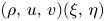
 -continuous and the solution $(\rho,\, u,\, v)(\xi,\,\eta )$
 is uniformly $C^{1,\mu }$
 up to the sonic curve $\widehat {BC}$
 for $\mu \in (0,\,1/3)$
 .
The rest of the paper is organized as follows. Section 2 is devoted to providing the basic characteristic decompositions of the angle variables to formulate the problem and state the main result of the paper. In § 3, we introduce a partial hodograph coordinate system to transform the problem into a new degenerate hyperbolic problem. Moreover, we establish the existence and uniform regularity of solutions up to the degenerate line for the new problem. Based on the solution in the partial hodograph plane, we construct a regular solution to the original problem by the global one-to-one property of the coordinate transformation and show its uniform regularity up to the sonic curve in the self-similar plane in § 4.
2. Reformulation of problem and main result
In order to describe clearly the nonlinear degenerate problem under consideration, it is convenient to introduce the pseudo-flow angle and the pseudo-Mach angle as the dependent variables. We derive the characteristic decompositions of angle variables, formulate the degenerate problem and then state the main result of the paper in this section.
2.1 Preliminary characteristic decompositions
The matrix form of system (1.3) is

The two eigenvalues of (2.1) are given in (1.5) and the corresponding left eigenvectors are $\ell _\pm =(1,\,\Lambda _\mp )$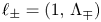 . Performing a standard procedure gives the characteristic forms of (2.1)

Following the work [Reference Li and Zheng31], we introduce the pseudo-flow angle $\theta$ and pseudo-Mach angle $\omega$
 as follows

Moreover, we denote

and use the expression of $\Lambda _\pm$ to get

In other words, the angles $\alpha$ and $\beta$
 are, respectively, the inclination angles of positive and negative characteristic curves. In view of (2.3) and the pseudo-Bernoulli law (1.4), the functions $(c,\,u,\,v)$
 can be expressed in terms of $\phi,\, \theta,\, \omega$


Here and below, the mixed variables $\omega$ and $\varpi :=\sin \omega$
 are used for convenience. Obviously, the sonic curve $\{(\xi,\,\eta ): M(\xi,\,\eta )=1\}$
 now is $\{(\xi,\,\eta ): \varpi (\xi,\,\eta )=1\}$
 .
Further introduce the normalized directional derivatives along the characteristics

Consequently

In terms of the variables $(\theta,\, \varpi )$ , we thus obtain a new system by (2.2) and (2.7)

Furthermore, applying (1.4), (2.4), (2.6), and (2.7) leads to the equations of the pseudo-velocity potential $\phi$

Denote

one employs the pseudo-Bernoulli's law (1.4) again to get the relations between $\varpi$ and $(R,\,S)$


The variables $c$ and $\varpi$
 also satisfy

With the aid of the commutator relation between $\bar \partial ^+$ and $\bar \partial ^-$
 [Reference Li and Zheng31]

we have the characteristic decompositions for the variable $c$

Set

which together with (2.15) yields

For later use, we list some relations by (2.8), (2.9), (2.12), and (2.16) here


and

where $\overline {W}=(\overline {R}-\overline {S})/2\cos \omega$ .
2.2 The problem and the main result in terms of angle variables
In this subsection, we formulate the problem in terms of the angle variables $(\theta,\, \varpi )$ . Given a smooth curve $\widehat {AB}: \eta =\varphi (\xi ) (\xi \in [\xi _1,\,\xi _2])$
 in the $(\xi,\,\eta )$
 plane, we assign the boundary data for $(\rho,\, u,\, v)$
 on $\widehat {AB}$
 , $(\rho,\, u,\, v)(\xi,\,\varphi (\xi ))=(\hat {\rho },\, \hat {u},\, \hat {v})(\xi )$
 such that

It follows by (2.21) that the curve $\widehat {AB}$ is a pseudo-streamline and the flow is supersonic on $\widehat {AB}\setminus \{B\}$
 and sonic at point $B$
 . From (2.3), one obtains the data of $(c,\,\theta,\,\varpi )$
 on $\widehat {AB}$


Combining with (2.21) and (2.22) gets

We suppose that the functions $(\hat {c},\, \hat {\theta },\, \hat {\varpi })$ satisfy the following compatibility condition by (2.13)

Obviously, Problem 1.1 in terms of angle variables can be restated as
Problem 2.1 Let $\widehat {AB}: \eta =\varphi (\xi ) (\xi \in [\xi _1,\,\xi _2])$ be a smooth curve and the conditions of the boundary data $(c,\, \theta,\, \varpi )|_{\widehat {AB}}=(\hat {c},\, \hat {\theta },\, \hat {\varpi })(\xi )$
 in (2.23) and (2.24) be satisfied. We find a smooth sonic curve $\widehat {BC}$
 and build a regular supersonic solution to system (2.9) in the angular region of $B$
 bounded by $\widehat {BA}$
 and $\widehat {BC}$
 , see figure 1.
By extracting the features of the problem described in figure 1, we further assume that the functions $\varphi (\xi )$ and $\hat {\varpi }(\xi )$
 satisfy

Since we are looking for a solution near point $B$ , without loss of generality, we can replace (2.25) with the following

for some positive constants $\varphi _0$ and $\varphi _1$
 . Otherwise, a suitable point $A_1$
 on $\widehat {AB}$
 can be selected to replace $A$
 such that (2.26) is valid on $\widehat {A_1B}$
 .
Our main conclusion theorem 1.2 can be restated in the following theorem.
Theorem 2.2 Let the boundary conditions (2.23), (2.24), and (2.26) hold. Then there exists a small smooth sonic curve $\widehat {BC}$ and Problem 2.1 admits a supersonic solution $(c,\, \theta,\, \varpi )(\xi,\,\eta )\in C^2$
 in the region $BCD$
 , where $D$
 is a point on $\widehat {AB}$
 and $\widehat {CD}$
 is a positive characteristic. In addition, the sonic curve $\widehat {BC}$
 is $C^{1,\mu }$
 -continuous and the solution $(c,\, \theta,\, \varpi )(\xi,\,\eta )$
 is uniformly $C^{1,\mu }$
 up to the sonic curve $\widehat {BC}$
 for $\mu \in (0,\,1/3)$
 .
Remark 2.3 The inequality conditions in (2.25) are just to match the features of the pseudo-streamline described in Figure 1, which can be replaced by the other corresponding conditions, such as $\varphi '(\xi _2)>0,\, \varphi ''(\xi _2)>0,\, \hat {\varpi }'(\xi _2)>0$ or $\varphi '(\xi _2)>0,\, \varphi ''(\xi _2)<0,\, \hat {\varpi }'(\xi _2)<0$
 , etc. These conditions are mainly to ensure that $\bar \partial ^\pm c(B)\neq 0$
 and $\bar \partial ^0 c(B)\neq 0$
 , which play a key role in the construction of solutions.
2.3 The boundary data for $(\overline {R},\, \overline {S})$

In this subsection, we derive the data of $(\overline {R},\, \overline {S})$ on the pseudo-streamline $\widehat {AB}$
 , which need to be used later.
Since $\widehat {AB}$ is a pseudo-streamline, we have by (2.7), (2.23), and (2.26)

Making use of (2.8) and (2.9) yields

which together with (2.12) and (2.16) arrives at

Combining with (2.27) and (2.29), one gets the boundary data of $(\overline {R},\, \overline {S})$

for $\xi \in [\xi _1,\,\xi _2]$ . It easily seen by (2.26) and the fact $\varpi (\xi _2)=1$
 that there exists a number $\xi _0\in [\xi _1,\,\xi _2)$
 such that $\hat {a}(\xi )>0$
 and $\hat {b}(\xi )>0$
 for all $\xi \in [\xi _0,\,\xi _2]$
 . Denote the point $(\xi _0,\,\varphi (\xi _0))$
 by $Q$
 .
In addition, for $\overline {W}=(\overline {R}-\overline {S})/2\cos \omega$ , we deduce by (2.11), (2.13), and (2.16)

Hence by (2.27) and (2.31) one acquires the boundary data of $\overline {W}$ on $\widehat {AB}$


Obviously, one has $\hat {d}(\xi )>0$ for all $\xi \in [\xi _1,\,\xi _2]$
 .
Summing up (2.26), (2.30), and (2.32), we obtain the boundary conditions $(\overline {R},\,\overline {S},\,\overline {W})$ on $\widehat {QB}$


for some constants $\hat {m}_0$ and $\hat {M}_0$
 . Moreover, there hold by (2.30) and (2.32)

for $\xi \in [\xi _0,\,\xi _2)$ .
3. Solutions in a partial hodograph plane
In this section, we introduce a partial hodograph transformation to transform the singular system (2.17) into a new degenerate hyperbolic system with explicitly singularity-regularity structures. Then we solve the new system with the corresponding boundary conditions of (2.33) near the corner point.
3.1 The problem in a partial hodograph plane
We first derive the boundary value of the pseudo-velocity potential $\phi$ defined in (1.4) on $\widehat {AB}$
 . From (2.6) one obtains

then

Moreover, it follows by (2.10) that

for all $\xi \in [\xi _1,\,\xi _2]$ , which means that $\hat {\phi }(\xi )$
 a strictly decreasing function.
Now introduce the following transformation

Recalling the facts $\hat {\varpi }'(\xi )>0$ by (2.26) and $\hat {\phi }'(\xi )<0$
 by (3.3), we find that the image of the arc $\widehat {BQ}$
 in the $(z,\,t)$
 -plane is a smooth increasing curve $\widehat {B'Q'}: z=\tilde {z}(t) (t\in [0,\,t_0])$
 defined through a parametric $\xi$


Here the number $t_0=\sqrt {1-\hat {\varpi }^2(\xi _0)}\in (0,\,1)$ . Moreover, we denote the inverse function of the function $z=\hat {\phi }(\xi )-\hat {\phi }(\xi _2)$
 by $\xi =\hat {\xi }(z)$
 ($z\in [0,\,z_0]$
 ), where $z_0=\hat {\phi }(\xi _0)-\hat {\phi }(\xi _2)>0$
 . Hence, combining with (2.30) and (2.32), one can achieve the boundary data of $(\overline {R},\, \overline {S},\, \overline {W})$
 on $\widehat {B'Q'}$


Furthermore we also have by (2.33)

By (2.6), the sound speed $c$ in terms of the coordinate variables $(z,\,t)$
 is

which is a known smooth bounded positive function. Subsequently, the operators $\bar {\partial }^\pm$ are

Thus we can deduce the system of variables $(\overline {R},\,\overline {S})(z,\,t)$ by (2.17)

where

and

Obviously, system (3.10) is a closed system for $(\overline {R},\,\overline {S})(z,\,t)$ .
For the degenerate boundary value problem (3.10), (3.6), we have the following theorem.
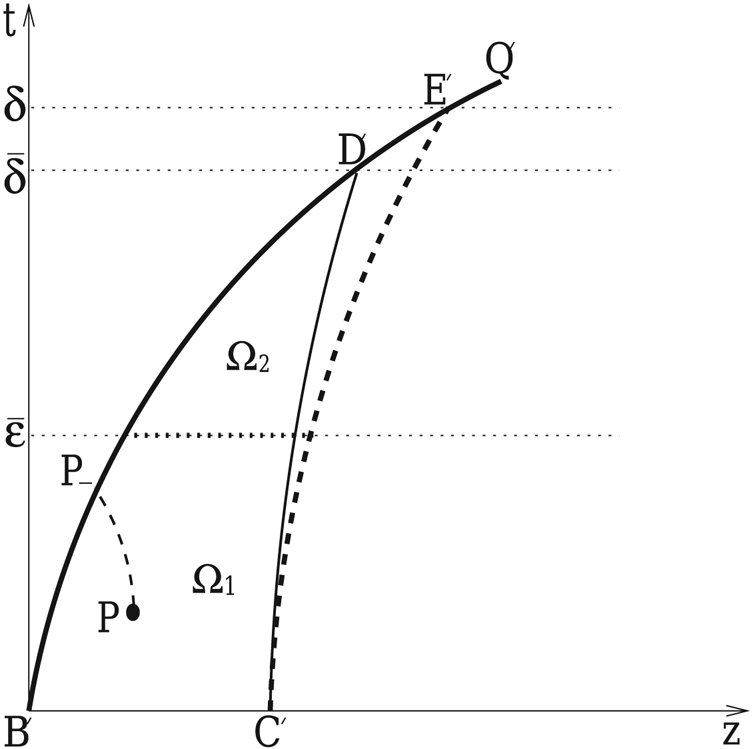
Theorem 3.1 Suppose that (3.7) holds. Then there exists a small number $\bar \delta \in (0,\,t_0]$ such that the degenerate boundary value problem (3.10), (3.6) admits a smooth solution $(\overline {R},\,\overline {S})(z,\,t)$
 in the whole region $B'C'D'$
 , where $D'$
 is the point $(\tilde {z}(\bar \delta ),\, \bar \delta )$
 on $\widehat {B'Q'}$
 and $C'$
 is the intersection point of the positive characteristic passing through $D'$
 and the line $t=0$
 . Moreover, the quantities $(\overline {R},\,\overline {S})(z,\,t)$
 are uniformly $C^{1-\nu }$
 and $\overline {W}(z,\,t)$
 are uniformly $C^{{2-\nu }/{3}}$
 up to the degenerate line $\widehat {B'C'}$
 for $\nu \in (0,\,1)$
 .
3.2 A strong determinate domain and the $C^0$-estimates

In order to prove theorem 3.1, we need to construct a strong determinate domain for the nonlinear system (3.10) and then establish a prior estimates of solutions in this domain.
Set $\delta _0=\min \{t_0,\,1/\sqrt {2}\}$ and denote

Then for any $(z,\,t)\in [0,\,z_0]\times [0,\,\delta _0]$ one has by (3.8)

Now denote

such that

The reasons for the selections of $\widehat {M}$ and $\delta _1$
 are as follows. If $(\overline {R},\,\overline {S})$
 satisfy the inequality

then we obtain by (3.12) and (3.15)

for $t\in [0,\,\delta _1]$ . Thus by (3.14) and (3.17), the coefficients of the last two terms in (3.10) satisfy

Moreover, thanks to the expressions of $\lambda _\pm$ in (3.11), one finds by (3.17) again that

We now derive the slope of curve $\widehat {B'Q'}\cap \{t\leq \delta _1\}$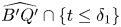 defined by (3.5). Performing a direct calculation and using (3.3) leads to

Recalling (2.26), we denote

then

Let $\delta =\min \{\delta _1,\,\tilde {m}/\tilde {M}\}$ , that is

Now consider the curve $z=\bar {z}(t)$ defined by


which indicates that the intersection point of the curve $z=\bar {z}(t)$ and the line $t=0$
 is to the right of point $B'$
 . Denote the point $(\bar {z}(0),\,0)$
 by $C'$
 , the point $(\tilde {z}(\delta ),\,\delta )$
 by $E'$
 and the domain $B'C'E'$
 by $\Omega$
 . According to the construction process, the domain $\Omega$
 is a strong determinate domain for system (3.10) if (3.16) holds. We shall construct a solution for the degenerate boundary value problem (3.10), (3.6) in the whole domain $\Omega$
 . It is worthwhile to comment by (3.22) that the solution domain $\Omega$
 is dependent only on the given initial constants but independent of the construction process of solutions.
Since system (3.10) is strictly hyperbolic and its coefficients are smooth near point $E'$ , then by the classical local existence theory [Reference Li and Yu34] we have the existence of $C^1$
 solutions near $E'$
 in $\Omega$
 . In addition, this local solution satisfies the inequality in (3.16) by the initial conditions in (3.7). We next establish the a prior estimate (3.16) on $\Omega$
 . Let $\varepsilon \in (0,\,\delta ]$
 be an arbitrary constant. Denote the domain $\Omega \cap \{(z,\,t)|\ t\geq \varepsilon \}$
 by $\Omega _\varepsilon$
 . We have the following lemma
Lemma 3.2 Let (3.7) hold and $(\overline {R},\,\overline {S})(z,\,t)$ be a $C^1$
 solution of problem (3.10), (3.6) in the domain $\Omega _\varepsilon$
 . Then the solution $(\overline {R},\,\overline {S})(z,\,t)$
 satisfies

Proof. Introduce


From (3.10), the equations for $(\hat {R},\,\hat {S})$ are

where

We now consider the level set of $t=\varepsilon ' (\varepsilon '\in [\varepsilon,\,\delta ])$ and move it down from $t=\delta$
 to $t=\varepsilon$
 . Suppose that a point $P$
 is the first time so that either $\hat {R}=\hat {m}_0/2$
 or $\hat {S}=\hat {m}_0/2$
 in the closed region bounded by $\widehat {E'B'}$
 , $\widehat {E'C'}$
 and $t=t_P$
 . From the point $P$
 , we draw the negative and positive characteristic curves up to the boundary $\widehat {E'B'}$
 at points $P_-$
 and $P_+$
 , respectively. Without the loss of generality, we assume that $\hat {S}(P)=\hat {m}_0/2$
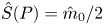 and then there has $\hat {R}>\hat {m}_0/2$
 and $\hat {S}>\hat {m}_0/2$
 on $\widehat {PP_+}\setminus \{P\}$
 . Due to the above assumptions, one has

On the other hand, we note by (3.18) that $I_2\geq 0$ on $\widehat {PP_+}$
 , which together with (3.27) yields

which leads to a contradiction with (3.28). Hence we have

which along with (3.25) arrives at

To derive the upper bounded of $(\overline {R},\, \overline {S})$ , we introduce

and then

On the boundary $\widehat {E'B'}$ , one sees that

Following the previous symbols, if $\widehat {S}(P)=2\hat {M}_0$ and $\widehat {R}<2\hat {M}_0$
 and $\widehat {S}<2\hat {M}_0$
 on $\widehat {PP_+}\setminus \{P\}$
 , then

On the other hand, we apply the equation for $\widehat {S}$ in (3.31) to achieve

which contradicts to the inequality in (3.33). Thus we obtain

and then

Combining with (3.29) and (3.34) completes the proof of the lemma.
3.3 Existence of global solutions in $\Omega$

In order to extend the local $C^1$ solution near point $E'$
 to the whole domain $\Omega$
 , we need derive the a priori $C^1$
 estimates for the degenerate problem (3.10), (3.6).
Owning to lemma 3.2, if the solution of problem (3.10), (3.6) exists, it is feasible and convenient to introduce

In terms of variables $(\widetilde {R},\,\widetilde {S})$ , system (3.10) can be transformed into

or arranged to

where

and

Now applying the commutator relation as follows

we obtain the equations of $\tilde \partial _+\widetilde {R}$ and $\tilde \partial _-\widetilde {S}$


and

Performing a tedious but straightforward calculation yields

where

Here

Furthermore, differentiating (3.37) give

where

and

where

We now put (3.43), (3.44) and (3.43), (3.45) into (3.41) and (3.42), respectively, to achieve

where

It is noted by lemma 3.2 and the exact expressions of $T_3,\, T_4,\, H_{ij}$ in (3.38) that the terms $h$
 and $H_{ijI}\ (I=\widetilde {R},\,\widetilde {S},\,z,\,t)$
 are uniformly bounded. Thus there exists a uniform positive constant $K$
 such that

Therefore, for any point $(z,\,t)\in \Omega _\varepsilon$ , we draw the positive and negative characteristic curves up to the boundary $\widehat {E'B'}$
 and integrate system (3.46) along the characteristic curves to obtain by (3.47)

for some positive constant $K$ , independent of $\varepsilon$
 . Combining with (3.37) and (3.48) and employing lemma 3.2 concludes

for some positive constant $K$ , independent of $\varepsilon$
 . Moreover, one recalls (3.39) to acquire

which together with (3.49) and (3.24) leads to

Hence we have the $C^1$ estimates of solutions by (3.35) and
Lemma 3.3 Let (3.7) hold and $(\overline {R},\,\overline {S})(z,\,t)$ be a $C^1$
 solution of problem (3.10), (3.6) in the domain $\Omega _\varepsilon$
 . Then the solution $(\overline {R},\,\overline {S})(z,\,t)$
 satisfies

where $K$ is a suitable positive constant, independent of $\varepsilon$
 .
In view of lemmas 3.2 and 3.3, we can use the classical technique to extend the local $C^1$ solution near point $E'$
 to the domain $\Omega$
 . In fact, for any $\varepsilon >0$
 , the level set of $t$
 can be taken as the ‘Cauchy supports’ in the domain $\Omega _\varepsilon$
 and the extension step size is dependent only on the boundary data and the $C^0$
 , $C^1$
 norms of $(\overline {R},\,\overline {S})$
 which are uniformly bounded in $\Omega _\varepsilon$
 . Due to the compactness of $\Omega _\varepsilon$
 , one can complete the extension process in a finite number of steps. By the arbitrariness of $\varepsilon$
 , we thus obtain the $C^1$
 solution in $\Omega \setminus \{t=0\}$
 .


3.4 The uniformity of solutions
In this subsection, we extend the solution constructed in theorem 3.4 to the degenerate line $t=0$ . The key is to establish the uniform regularity of the terms $(\overline {R}_z,\, \overline {S}_z)$
 or equivalently $(\widetilde {R}_z,\,\widetilde {S}_z)$
 . For this purpose, we introduce new variables $(X,\,Y)$


so that by (3.39)

Next we derive the equations for $(X,\,Y)$ . Using the commutator relation (3.40), one arrives at

A similar argument gives

By direct calculations, one applies (3.37) and (3.53) to achieve

and

Combining with (3.43) and (3.54)–(3.57), we obtain the equations for $(X,\,Y)$

where

It is noted by lemma 3.2 that the functions $f_i,\, g_i (i=1,\,2,\,3)$ are uniform bounded in $\Omega$
 , that is

for some uniform positive constant $\widehat {K}$ .
Next we discuss the properties of $\widetilde {R}_z$ and $\widetilde {S}_z$
 on the curve $\widehat {B'E'}$
 near point $B'$
 . We differentiate $\widetilde {R}$
 along $\widehat {B'E'}$
 and apply (3.20) to get

which together with the fact $\hat {\xi }'(t)=-\sqrt {1-\hat {\varpi }^2}/\hat {\varpi }\hat {\varpi }'(\xi )$ by (3.5), one has

Inserting the first relationship in (2.34) into (3.61) leads to

On the other hand, we use the equation of $\widetilde {R}$ in (3.37), the relations in (3.35) and the boundary data in (3.6) to acquire

where $\hat {T}_3,\, \hat {H}_{11}$ and $\hat {H}_{12}$
 are the boundary values of $T_3$
 , $H_{11}$
 and $H_{12}$
 on $\widehat {B'E'}$
 , respectively. Combing (3.62) and (3.63) yields

which implies that the boundary value $\widetilde {R}_z$ is uniformly bounded on the curve $\widehat {B'E'}$
 . Here we employed the facts that $\hat {T}_3$
 is uniformly positive, $\hat {H}_{11}$
 and $\hat {H}_{12}$
 are uniformly bounded, and the relationship $\hat {a}-\hat {b}=2t\hat {d}$
 . The uniform boundedness of the value $\widetilde {S}_z$
 on $\widehat {B'E'}$
 can be similarly verified.
Based on the uniform boundedness of $\widetilde {R}_z$ and $\widetilde {S}_z$
 on $\widehat {B'E'}$
 , we have
Lemma 3.5 Let $\nu \in (0,\,1)$ be an any fixed number. The two quantities $t^\nu |\widetilde {R}_z|$
 and $t^\nu |\widetilde {S}_z|$
 are uniform bounded in the whole domain $\Omega$
 up to the degenerate line $t=0$
 .
Proof. Set

According to lemma 3.2 and (3.53), we only need to show the uniform boundedness of $\widetilde {X}$ and $\widetilde {Y}$
 in the whole domain $\Omega$
 . Thanks to (3.58), the governing equations for $\widetilde {X}$
 and $\widetilde {Y}$
 are

or equivalently

Due to the uniform boundedness of $\widetilde {R}_z$ and $\widetilde {S}_z$
 on $\widehat {B'E'}$
 , it is easy to know by (3.53) that $\widetilde {X}$
 and $\widetilde {Y}$
 are uniformly bounded on $\widehat {B'E'}$
 . Set

Then the region $\Omega$ is divided into two parts $\Omega _1:=\Omega \cap \{t\leq \bar \varepsilon \}$
 and $\Omega _2:=\Omega \cap \{t\geq \bar \varepsilon \}$
 . It is obvious that $(\widetilde {X},\,\widetilde {Y})$
 are uniform bounded in the whole domain $\overline {\Omega _2}$
 , where $\overline {\Omega _2}$
 is the closure of $\Omega _2$
 . Denote

We shall show that

which leads to the uniform boundedness of $\widetilde {X}$ and $\widetilde {Y}$
 in the whole domain $\Omega$
 . Clearly, by the chosen of $M$
 in (3.68), one has

Now we use the contradiction argument to show (3.69). We move the level set of $t$ down from $t=\bar {\varepsilon }$
 to $t=0$
 and suppose a point $P(z,\,t)\in \Omega _1$
 is the first time so that, without the loss of generality, $|\widetilde {X}(P)|=M$
 . From the point $P$
 , we draw the negative characteristic curve up to the boundary curve $\widehat {B'E'}\cap \{t\leq \bar \varepsilon \}$
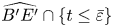 or the line $t=\bar {\varepsilon }$
 at point $P_-(z_-,\,t_-)$
 . See figure 3 for the illustration. Then there has $|\widetilde {X}|\leq M$
 and $|\widetilde {Y}|\leq M$
 on the negative characteristic from $P$
 to $P_-$
 . Integrating the equation for $\widetilde {X}$
 in (3.66) from $P$
 to $P_-$
 gives

from which and the chosen of $\bar \varepsilon$ in (3.67), we get

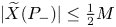
a contradiction. Here we have used the facts $t_-\leq \bar \varepsilon$ and $|\widetilde {X}(P_-)|\leq \frac {1}{2}M$
 by (3.70). If the point $P(z,\,t)\in \Omega _1$
 is the first point so that $|\widetilde {Y}(P)|=M$
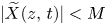
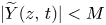
 , we can similarly derive a contradiction. Therefore, one has $|\widetilde {X}(z,\,t)|< M$
 and $|\widetilde {Y}(z,\,t)|< M$
 for any point $(z,\,t)\in \Omega _1$
 , that is (3.69) holds. The proof of the lemma is completed.
The region $B'C'D'$ .

Based on lemma 3.5, we have the uniform boundedness of $\overline {W}=(\overline {R}-\overline {S})/2t$ .
Lemma 3.6 The function $\overline {W}$ is uniformly bounded up to the degenerate line $\widehat {B'C'}$
 .
Proof. Set

from which and (3.24), we only need to establish the uniform boundedness of $\widetilde {W}$ . With the aid of (3.37) and (3.65), the equation for $\widetilde {W}$
 can be easily deduced

Note by (3.6) and (3.7) that the boundary data of $\widetilde {W}$ on $\widehat {B'E'}$
 is

which is uniformly bounded. Then the uniform boundedness of $\widetilde {W}$ can be obtained by integrating the equation for $\widetilde {W}$
 along the negative characteristic curve from a point $(z,\,t)$
 in $\Omega$
 to the boundary $\widehat {B'E'}$
 and employing the uniform boundedness of $H_{ij}$
 and $(\widetilde {X},\,\widetilde {Y})$
 . The proof of the lemma is finished.
Remark 3.7 lemma 3.6 means that $\overline {R}=\overline {S}$ on the degenerate curve $\widehat {B'C'}$
 . Moreover, the two functions $\overline {R}$
 and $\overline {S}$
 approach a common value on $\widehat {B'C'}$
 with at least a rate of $t$
 .
Based on the properties of solutions in remark 3.7, we can establish the uniform regularity of $(\overline {R},\, \overline {S},\, \overline {W})$ .
Lemma 3.8 The functions $(\overline {R},\, \overline {S},\, \overline {W})$ are uniformly $C^{\frac {1}{3}}$
 continuous in the whole domain $\Omega$
 , including the degenerate line $\widehat {B'C'}$
 .
Proof. Let $P_1(z_1,\,0)$ and $P_2(z_2,\,0)$
 $(z_1< z_2)$
 be any two points on the degenerate curve $\widehat {B'C'}$
 . We draw the positive characteristic from $(z_1,\,0)$
 and positive characteristic from $(z_2,\,0)$
 and denote the intersection point of these two characteristics by $P_m(z_m,\,t_m)$
 . Recalling the expressions of $\tilde \lambda _\pm$
 in (3.39), one obtains the relations for $t_m$
 and $z_m$


which together with (3.24) yields

for some uniform positive constants $\underline {K}$ and $\overline {K}$
 . Since $\widetilde {W}$
 is uniformly bounded, then we use (3.37) and lemma 3.5 to acquire

for some constant $\overline {M}_1>0$ . Therefore one has by Remark 2 and (3.73)–(3.74)

Now for any two points $P_1(z_1,\,t_1)$ and $P_2(z_2,\,t_2)$
 $(z_1\leq z_2,\, 0\leq t_1\leq t_2)$
 in the region $\Omega$
 , if $t_1\geq (z_2-z_1)$
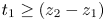 , then by (3.74)

and if $t_1<(z_2-z_1)$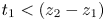 , then by (3.75) and (3.74) again

We combine (3.76) and (3.77) to achieve the uniform $C^{\frac {1}{3}}$ continuity of $\widetilde {R}$
 in the whole domain $\Omega$
 . A similar argument yields the uniform regularity for $\widetilde {S}$
 . The function $\widetilde {W}$
 can be handled in a similar way by (3.72). The proof of the lemma is ended by the relationship between $(\overline {R},\,\overline {S},\,\overline {W})$
 and $(\widetilde {R},\,\widetilde {S},\,\widetilde {W})$
 and Lemma 3.2.
Thanks to lemma 3.8, we can improve the uniform regularity of $(\overline {R},\, \overline {S},\, \overline {W})$ .
Lemma 3.9 The functions $(\overline {R},\, \overline {S})(z,\,t)$ are uniformly $C^{1-\nu }$
 continuous and $\overline {W}(z,\,t)$
 is uniformly $C^{\frac {2-\nu }{3}}$
 continuous for $\nu \in (0,\,1)$
 in the whole domain $\Omega$
 , including the degenerate line $\widehat {B'C'}$
 .
Proof. It suffices to show that $(\widetilde {R},\, \widetilde {S})$ are uniformly $C^{1-\nu }$
 continuous and $\widetilde {W}$
 is uniformly $C^{\frac {2-\nu }{3}}$
 continuous for any $\nu \in (0,\,1)$
 . Let $M^*$
 be a uniform positive constant such that for $i,\,j=1,\,2$


The above inequalities hold by lemma 3.2 and the exact expressions of $T_3,\, T_4$ and $H_{ij}$
 in (3.38). Moreover, in view of lemma 3.5, we see that there exists a uniform positive constant $\overline {M}_2$
 depending on the parameter $\nu$
 such that

We first improve the uniform regularity of $\widetilde {W}$ . Recalling the first equation of $\widetilde {W}$
 in (3.72) leads to

Integrating (3.80) from $(z_i,\, 0)$ to $(z_i,\, t_m)\ (i=1,\,2)$
 yield

from which one gets

For the first term of the right-hand side of (3.82), we find by (3.79) and (3.73) that

Moreover, since the functions $(\widetilde {R},\, \widetilde {S},\, \widetilde {W})(z,\,t)$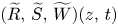 are uniformly $C^{\frac {1}{3}}$
 continuous by lemma 3.8, then one obtains

for some uniform positive constant $\overline {M}_3$ . It follows by (3.78) and (3.84) that for $i=1,\,2$


We now put (3.83)–(3.84) into (3.82) and make use of (3.78)–(3.79) and (3.73) to acquire

for some uniform positive constant $\overline {M}_4$ depending on $\nu$
 . Based on (3.86), one can repeat the same process as in lemma 3.8 to get that the function $\widetilde {W}$
 is uniformly $C^{\frac {2-\nu }{3}}$
 continuous in the whole domain $\Omega$
 .
For the functions $\widetilde {R}$ and $\widetilde {S}$
 , we recall (3.37) to achieve

One integrates the equation of $\widetilde {R}$ in (3.87) from $(z_i,\, 0)$
 to $(z_i,\, t_m)\ (i=1,\,2)$
 to find that

from which we have

Thanks to (3.78) and (3.79), we obtain

and

In addition, it suggests by (3.78) that for $i=1,\,2$

Due to the uniform $C^{\frac {2-\nu }{3}}$ -continuity of $\widetilde {W}$
 , one gets

for some uniform positive constant $\overline {M}_5$ depending on $\nu$
 . Inserting (3.90)–(3.93) into (3.89) and employing (3.73) and (3.78) concludes

for some uniform positive constant $\overline {M}_6$ . From (3.94), we can use similar arguments as in Lemma 3.8 to get that the function $\widetilde {R}$
 is uniformly $C^{1-\nu }$
 continuous in the whole domain $\Omega$
 . Analogously, the function $\widetilde {S}$
 is also uniformly $C^{1-\nu }$
 continuous. The proof of the lemma is complete.
Finally, we draw the positive characteristic from the point $C'(\bar {z}(0),\,0)$ up to the boundary $\widehat {B'E'}$
 and denote the intersection point by $D'(\tilde {z}(t_d),\,t_d)$
 . Taking $\bar \delta =t_d$
 finishes the proof of theorem 3.1.
4. Solutions in the self-similar plane
Based on the solution of the degenerate problem (3.10), (3.6) in the partial hodograph $(z,\,t)$ plane, we construct a regular supersonic solution for problem (2.9), (2.22) in the self-similar $(\xi,\,\eta )$
 plane to complete the proof of theorem 2.2 in this section.
4.1 Inversion
Thanks to theorem 3.1, we obtain the functions $(\overline {R},\,\overline {S})(z,\,t)$ defined on the whole region $B'C'D'$
 . To acquire a solution in the self-similar $(\xi,\,\eta )$
 plane, it is necessary to establish the coordinate functions $\xi =\xi (z,\,t)$
 and $\eta =\eta (z,\,t)$
 and discuss their inversion. We first construct the function $\theta (z,\,t)$
 . Applying (2.18) and (3.9) gives

For any point $(z^*,\,t^*)$ in the region $B'C'D'$
 , we draw the negative characteristic $z=z_-(t;t^*,\,z^*)\ (t\geq t^*)$
 up to the boundary $\widehat {B'D'}$
 at a unique point $(\tilde {z}(\hat {t}^*),\, \hat {t}^*)$
 satisfying

We integrate (4.1) along the negative characteristic $z=z_-(t;t^*,\,z^*)$ from the point $(z^*,\,t^*)$
 to the point $(\tilde {z}(\hat {t}^*),\, \hat {t}^*)$
 and use the boundary data of $\theta$
 on $\widehat {B'D'}$
 to get

Hence we have the function $\theta (z,\,t)$ defined on the whole region $B'C'D'$
 .
Recalling the coordinate transformation (3.4) and employing (2.19)–(2.20), we see that

where

Therefore it suggests that

For any point $(z^*,\,t^*)$ in the region $B'C'D'$
 , one thus finds by integrating (4.6) along the negative characteristic that

The arbitrariness of $(z^*,\,t^*)$ indicates that the expressions in (4.7) define two functions $\xi =\xi (z,\,t)$
 and $\eta =\eta (z,\,t)$
 on the whole region $B'C'D'$
 . Furthermore, the mapping $(z,\,t)\mapsto (\xi,\,\eta )$
 is a global one-to-one mapping, which comes from the following fact by (4.5)

The above inequality implies that $\phi$ is a strictly decreasing function along each level curve of $(1-\varpi )\geq 0$
 .
4.2 Proof of theorem 2.2
Owning to the global one-to-one property of the mapping $(z,\,t)\mapsto (\xi,\,\eta )$ , we then obtain the functions $t=\check {t}(\xi,\,\eta )$
 and $z=\check {z}(\xi,\,\eta )$
 . Moreover, one also has

where $j=\xi _t\eta _z-\eta _t\xi _z$ and $(\xi _t,\, \xi _z)$
 , $(\eta _t,\,\eta _z)$
 are given in (4.4). Now we define the functions $(c,\,\theta,\,\varpi )$
 in terms of variables $(\xi,\,\eta )$
 as follows

where the region $BCD$ is bounded by the curves $\widehat {BC}$
 , $\widehat {CD}$
 , and $\widehat {BD}$
 . Here the curve $\widehat {BC}$
 is defined by

where $\xi _*=\xi (\bar {z}(0),\,0)$ , and $\widehat {CD}$
 is defined by

where the function $z_+(t;\bar \delta,\, \tilde {z}(\bar \delta ))$ is the solution of the following ODE problem

and the number $\xi _{**}$ satisfies

The coordinates of points $C$ and $D$
 in $(\xi,\,\eta )$
 plane are $(\xi _*,\, \eta (\bar {z}(0),\,0))$
 and $(\xi _{**},\,\varphi (\xi _{**}))$
 , respectively. According to the construction of $(\xi (z,\,t),\, \eta (z,\,t))$
 , we can see that the functions $(c(\xi,\,\eta ),\, \theta (\xi,\,\eta ),\,\varpi (\xi,\,\eta ))$
 defined in (4.9) satisfy the boundary conditions in (2.22). From (4.9), we then define the functions $(\omega,\, \alpha,\, \beta )(\xi,\,\eta )$
 as follows

For the regularity of $(c(\xi,\,\eta ),\,\theta (\xi,\,\eta ),\,\varpi (\xi,\,\eta ))$ defined in (4.9), we have
Lemma 4.1 The functions $(c(\xi,\,\eta ),\, \theta (\xi,\,\eta ),\, \varpi (\xi,\,\eta ))$ defined in (4.9) are uniformly $C^{1,\mu }$
 -continuous for $\mu \in (0,\,1/3)$
 on the whole region $BCD$
 . Moreover, the sonic curve $\widehat {BC}$
 is $C^{1,\mu }$
 -continuous.
Proof. For the function $\theta (\xi,\,\eta )$ , we note by (2.8) and (2.18) that

Due to (4.14) and (4.5), it suffices to show that $(\overline {R},\,\overline {S},\, \overline {W})(\xi,\,\eta )$ are uniformly $C^{\mu }$
 -continuous for $\mu \in (0,\,1/3)$
 on the whole region $BCD$
 . These regularity results come from lemma 3.9 and the following assertion that, if $I(z,\,t)$
 is a $C^{2\tilde {\mu }}$
 function on the whole region $B'C'D'$
 , then the function $\tilde {I}(\xi,\,\eta ):=I(\check {z}(\xi,\,\eta ),\, \check {t}(\xi,\,\eta ))$
 is uniformly $C^{\tilde {\mu }}$
 -continuous on the whole region $BCD$
 .
To prove the above assertion, we assume that $(\xi ',\,\eta ')$ and $(\xi '',\,\eta '')$
 are two points in $BCD$
 and $(z',\,t')$
 and $(z'',\,t'')$
 are the corresponding two points in $B'C'D'$
 , and consider the differences

and

where

Here $M_1$ and $M_2$
 are two uniform positive constants by (4.5) and lemmas 3.2, 3.6. Combining with (4.15) and (4.16) and using the $C^{2\tilde {\mu }}$
 -continuity gives

for some uniformly constant $M_3>0$ , which means that the function $\tilde {I}(\xi,\,\eta )$
 is uniformly $C^{\tilde {\mu }}$
 -continuous on the whole region $BCD$
 . According to lemma 3.9, we find that $(\overline {R},\,\overline {S})(\xi,\,\eta )$
 are uniformly $C^{(1-\nu )/2}$
 -continuous and $\overline {W}(\xi,\,\eta )$
 is uniformly $C^{(2-\nu )/6}$
 -continuous on the whole region $BCD$
 for any $\nu \in (0,\,1)$
 . Thus $(\overline {R},\,\overline {S},\, \overline {W})(\xi,\,\eta )$
 are uniformly $C^{\mu }$
 -continuous for $\mu \in (0,\,1/3)$
 . Hence, by (4.5) and (4.14), the functions $\theta (\xi,\,\eta )$
 and $\varpi (\xi,\,\eta )$
 are uniformly $C^{1,\mu }$
 -continuous for $\mu \in (0,\,1/3)$
 on the whole region $BCD$
 . The uniform regularity of $c(\xi,\,\eta )$
 follows from the expression of $c$
 in (2.6).
Finally, for the sonic curve $\widehat {BC}$ , we find by employing (4.5) again that

which together with lemmas 3.2 and 3.6 yields

for some uniformly positive constants $C_1$ and $C_2$
 . Hence the curve $\widehat {BC}$
 is $C^{1,\mu }$
 -continuous for $\mu \in (0,\,1/3)$
 and the proof of the lemma is completed.
Remark 4.2 Since the right-hand terms of (4.14) do not contain the function $\overline {W}(\xi,\,\eta )$ , then actually we can obtain that the function $\theta (\xi,\,\eta )$
 is uniformly $C^{1,\bar {\mu }}$
 -continuous for $\bar {\mu }\in (0,\,1/2)$
 on the whole region $BCD$
 .
For the curve $\widehat {CD}$ , there has
Lemma 4.3 The curve $\widehat {CD}$ defined in (4.11) is a positive characteristic curve of system (2.9).
Proof. We differentiate the equality $\check {z}(\xi,\,\eta )=z_+(\check {t}(\xi,\,\eta ); \bar \delta,\, \tilde {z}(\bar \delta ))$ with respect to $\xi$
 and use (4.12) to see that

Putting (4.8) into above arrives at

which combined with (4.4) leads to

Furthermore, it suggests by (4.5), (4.13) and the expression of $T_2$ in (3.12) that

and

We insert the above into (4.17) to achieve

which implies that $\widehat {CD}$ is a positive characteristic curve of system (2.9). The proof of the lemma is finished.
Finally, we have
Lemma 4.4 The functions $(c(\xi,\,\eta ),\, \theta (\xi,\,\eta ),\,\varpi (\xi,\,\eta ))$ defined in (4.9) satisfy system (2.9).
Proof. We here just check the first equation of (2.9), the second one can be handled similarly. It follows directly by (2.7), (4.5), (4.13), and (4.14) that

and

We apply (4.18) and (4.19) to calculate

This is the desired first equation of (2.9), which ends the proof of the lemma.
We sum up lemmas 4.1–4.4 to complete the proof of theorem 2.2. Based on (4.9) and (2.6), we define the functions $(\rho,\, u,\, v)(\xi,\,\eta )$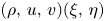 as follows

It is obvious by lemma 4.1 that $(\rho,\, u,\, v)(\xi,\,\eta )$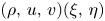 are uniformly $C^{1,\mu }$
 -continuous for $\mu \in (0,\,1/3)$
 on the whole region $BCD$
 . Furthermore, one can check that the functions $(\rho,\, u,\, v)(\xi,\,\eta )$
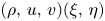 defined above satisfy the 2-D isentropic pseudo-steady Euler equations (1.2). The proof of theorem 1.2 is completed.
Acknowledgements
The authors would like to thank the two anonymous referees for very helpful comments and suggestions to improve the quality of the paper. This work was partially supported by the National Natural Science Foundation of China (12171130, 12071106).
Data availability statements
All data generated or analysed during this study are included in this published article.
Competing interest
None.