Introduction
Over the past three decades, extensive epidemiological data have accumulated concerning the mental health and psychosocial status (MHPSS) of refugee and post-conflict populations worldwide (Carlsson, Mortensen, & Kastrup, Reference Carlsson, Mortensen and Kastrup2005; Charlson et al., Reference Charlson, van Ommeren, Flaxman, Cornett, Whiteford and Saxena2019; Mollica, McInnes, Poole, & Tor, Reference Mollica, McInnes, Poole and Tor1998; Tay et al., Reference Tay, Rees, Miah, Khan, Badrudduza, Morgan and Silove2019a; Tol, Rees, & Silove, Reference Tol, Rees and Silove2013). A striking feature of this cumulative body of studies is the wide variation in prevalence rates of common mental disorders (CMDs) observed across populations (Steel et al., Reference Steel, Chey, Silove, Marnane, Bryant and Van Ommeren2009a). Lack of rigour in sampling and measurement contributes to this variability, as do substantive risk factors such as exposure to trauma (Steel et al., Reference Steel, Chey, Silove, Marnane, Bryant and Van Ommeren2009a). Nevertheless, the wide variation in CMD prevalence rates has raised questions regarding the accuracy and hence the value of implementing the epidemiological method in these settings (De Jong & Van Ommeren, Reference De Jong and Van Ommeren2002; Tol et al., Reference Tol, Patel, Tomlinson, Baingana, Galappatti, Panter-Brick and van Ommeren2011b; Van Ommeren, Reference Van Ommeren2003).
A contrary view is that variation in prevalence rates reflect group differences in the universal putative risk factors such as age, gender, trauma exposure, post-migration living difficulties and disruption of psychosocial support systems (Steel et al., Reference Steel, Chey, Silove, Marnane, Bryant and Van Ommeren2009a; Tay, Rees, Tam, Kareth, & Silove, Reference Tay, Rees, Tam, Kareth and Silove2019b). As a consequence, attempts to hold these factors constant in order to deduce an average prevalence rate of CMDs across refugee populations as a whole may not be appropriate and divert attention from the true value of epidemiological studies in this field (Charlson et al., Reference Charlson, van Ommeren, Flaxman, Cornett, Whiteford and Saxena2019) which is to provide a context and group-specific profile of each population and its needs. Clarifying these issues has remained difficult because most epidemiological studies have been restricted to single ethnic groups or where multiple groups have been included, they originated from diverse backgrounds and were resettled in settings that varied in a multiplicity of ways from each other (De Jong et al., Reference De Jong, Komproe, Van Ommeren, Masri, Araya, Khaled and Somasundaram2001). Studies investigating samples from the same ethnic population residing in different settings are able to assess within but not across group differences (Mollica, Brooks, Tor, Lopes-Cardozo, & Silove, Reference Mollica, Brooks, Tor, Lopes-Cardozo and Silove2014; Steel et al., Reference Steel, Silove, Giao, Phan, Chey, Whelan and Bryant2009b). A methodology comparing ethnic groups from one country re-settled in a common postmigration environment – conditions that pertain the Myanmar refugees in Malaysia – offers a unique opportunity pertain to examine the relative contributions of group-specific and universal risk factors to variation in CMD prevalence across the samples.
In examining these issues, it is important to align research with developments in theoretical frameworks in the field, especially ecological models of psychosocial and mental health adaptation in refugees (Silove, Ventevogel, & Rees, Reference Silove, Ventevogel and Rees2017). This broad framework encompasses specific traumas and immediate living difficulties in the postmigration environment (Charlson et al., Reference Charlson, Flaxman, Ferrari, Vos, Steel and Whiteford2016; Steel et al., Reference Steel, Chey, Silove, Marnane, Bryant and Van Ommeren2009a) but in addition, locates these experiences within a matrix of psychosocial support systems that are undermined by conflict and displacement (Silove et al., Reference Silove, Ventevogel and Rees2017; Tay & Silove, Reference Tay and Silove2016).
We, therefore, included a contextually adapted measure of postmigration living difficulties based on the Humanitarian Emergency Settings Perceived Needs Scale (HESPER) as well as the Adaptive Stress Index (ASI) (Tay et al., Reference Tay, Rees, Tam, Kareth and Silove2019b), the latter designed to assess five core support systems relevant to the society as a whole, including safety and security, bonds and networks, access to justice, roles and identities, and existential meaning, the pillars identified by the ADAPT (Adaptation and Development After Persecution and Torture) model (Silove, Reference Silove2013). We postulated that in all three refugee populations, past trauma, postmigration living difficulties (PMLDs) and adaptive stressors, as universal risk factors, would contribute to CMD prevalence. Nevertheless, the relative contributions of these factors would differ across groups. Moreover, unmeasured factors associated with membership of each ethnic group would make an independent impact on CMD prevalence.
Persecution of ethnic minorities in Myanmar has led to a mass exodus of Chin, Kachin and Rohingya refugees over several decades, the majority of the index three communities being relocated to countries of South East Asia. All three communities have experienced extreme duress, but the Rohingya are known to have been exposed to the most widespread violence, resulting in the mass exodus from their homeland in Rakhine state. More than a million refugees from Myanmar are resettled in Malaysia, the largest country of refuge for displaced populations in the region after Bangladesh. The respective ethnic groups live in tight-knit communities maintaining their distinctive dialects, cultures, customs, and religion. In general, refugees in Malaysia are at risk of violence, arbitrary arrest by local police authorities, detention, and deportation. Furthermore, most have no or little access to healthcare, education or secure shelter and many live in poverty and in conditions of food insecurity. The majority work illegally under difficult conditions in order to support themselves and their families.
Method
Study setting and participants
Sampling was undertaken amongst the Chin, Kachin and Rohingya communities living in Kuala Lumpur, Malaysia, between May 2017 and May 2018. Persons 18 years and older were recruited using a cluster, probability, proportional-to-size sampling framework, based on sample size estimates derived from health statistics provided by the United Nations High Commissioner for Refugees (UNHCR) who had identified the sites of concentration of these communities. Eligible households were identified using the conventional street walk method recording persons identifying as a member of the Chin, Kachin or Rohingya communities respectively or who were offspring of at least one parent from the relevant community. Based on our power analyses (90% power; alpha = 0.05, two-sided test), our minimum sample size for the Chin was 660, for Kachin 300, and for Rohingya 600 persons. A total of 751 Chin (response 80%), 338 Kachin (85%), and 959 Rohingya (83%) were interviewed. Virtually all of the eligible residents not interviewed were outside the catchment area for longer-term work commitments.
Survey instruments
We used the Refugee Mental Health Assessment Package (R-MHAP) (Tay et al., Reference Tay, Rees, Chen, Kareth, Mohsin and Silove2015) to assess sociodemographic characteristics (age, gender, marital status, the highest level of educational attainment and employment status), exposures to premigration traumatic events (TEs), postmigration living difficulties (PMLDs), and distress arising from psychosocial disruptions based on the Adaptive Stress Index (Tay et al., Reference Tay, Rees, Tam, Kareth and Silove2019b). We included three commonly studied mental disorders (CMDs) in the field — Major Depressive Disorder (MDD), Generalized Anxiety Disorder (GAD) and Posttraumatic Stress Disorder (PTSD) assessed according to the criteria of the Diagnostic and Statistical Manual, 5th edition (DSM-5).
Cultural and contextual adaptation of measures
The R-MHAP has undergone extensive development and testing (Tay et al., Reference Tay, Rees, Chen, Kareth, Mohsin and Silove2015, Reference Tay, Rees, Miah, Khan, Badrudduza, Morgan and Silove2019a). Consistent with its previous use, we followed a standard protocol to translate the relevant modules into the Burmese and Rohingya languages based on qualitative assessments in which we refined the items to ensure ease of comprehension, cultural appropriateness and feasibility of application in the relevant populations. Serial semantic and linguistic modifications were made in a process of iterative consultation with each ethnic community based on group feedback in which persons of different ages, gender and social status were included. We also consulted two Burmese psychiatrists and two Rohingya-speaking psychologists in the process.
Premigration traumatic events (TEs)
The list of TEs was compiled from consultations with all three communities regarding the most common and disturbing conflict-related occurrences experienced in the homeland. Items included exposure to war, torture, persecution, rape, murders, physical injuries, imprisonment, witnessing atrocities, and witnessing deaths of family members (each item rated as the event occurred = 1; or not occurred = 0). We assessed lifetime exposure (yes = 1, no = 0) based on previous experience which revealed inaccuracies in attempting to obtain fine-grained information regarding the frequency or timing of events in cultures with low levels of numeracy and affinity for historical timing of events. The range of potential trauma scores was 0–25. For bivariate and multiple logistic regression analyses, total trauma count was assigned to three hierarchical categories based on balancing of distributions (0 = 0–9 TEs, 1 = 10–15 TEs, 2 = 16 TEs or greater).
Postmigration living difficulties (PMLDs)
An inventory of PMLDs (Semrau et al., Reference Semrau, van Ommeren, Blagescu, Griekspoor, Howard, Jordans and Thornicroft2012; Tay et al., Reference Tay, Rees, Miah, Khan, Badrudduza, Morgan and Silove2019a) was used to assess common stressors confronted by each community in Malaysia based on a locally adapted version of the Humanitarian Emergency Settings Perceived Needs Scale (HESPER). The measure comprised 25 items assessing access to shelter, water, hygiene facilities, employment, education, healthcare and social services. Each of the items was rated on a 4-point Likert scale (0 = no problem at all, 1 = a bit of problem, 2 = moderately serious problems and 3 = a very serious problem). We employed two steps in simplifying the scores for analytic purposes (Tay et al., Reference Tay, Rees, Miah, Khan, Badrudduza, Morgan and Silove2019a). First, because the extreme options received low endorsement, we collapsed individual item scores into two categories (0 = not a problem or a bit of a problem; 1 = a moderately or a very serious problem). To facilitate the regression analysis, we then divided the total PMLD count into three hierarchical categories (0 = 0–9, 1 = 10–15, 2 = 16 and more PMLDs). Internal reliability based on Cronbach's alpha (α) was high for all three samples (Chin: α = 0.92; Kachin: α = 0.96; Rohingya: α = 0.88), respectively.
Adaptive stress index (ASI)
The sequential steps of qualitative research, psychometric testing and cultural and contextual adaptation of the ASI has been extensively described (Tay, Rees, Tam, Kareth, & Silove, Reference Tay, Rees, Tam, Kareth and Silove2019c). The measure comprises five sub-scales assessing the degree of stress experienced in attempting to adapt to the five core systems undermined by conflict and displacement identified by the ADAPT model: These subscales measure the severity of psychosocial disruptions relating to safety and security (ASI-1, 12 items), bonds and attachments (ASI-2, 14 items), access to justice (ASI-3, 13 items), role and identity (ASI-4, 11 items), and existential meaning (ASI-5, 14 items).
Aggregation of all five sub-scale scores (each item rated on a 4-point Likert scale: 0 = not at all, 1 = a little, 2 = quite a lot, 3 = extremely), generated a total ASI score ranging from 0 to 192 (with a higher score representing greater adaptive stress). The total ASI score was divided according to three hierarchical categories (0 = 0–49, 1 = 50–99, 2 = 100 and more) based on distributions of scores. The ASI sub-scales demonstrated a high level of internal reliability (Chin: 0.90 to 0.97; Kachin: 0.93 to 0.97; Rohingya: 0.85 to 0.93). A correlation matrix (see online supplementary Table 1) indicated high inter-relationships between the five ASI sub-scales (ranging from 0.87 to 0.91), supporting the derivation of a composite mean score for the measure as a whole.
Common mental disorders (CMDs)
We selected three of the most commonly studied mental health problems in the refugee field that is PTSD, MDD and GAD recorded according to DSM-5 criteria. Respondents rated the frequency of symptoms on a four-point scale (1 = not at all, 2 = a little bit, 3 = quite a lot, 4 = extremely); endorsement of the two highest frequency categories are recorded as a positive response. Participants completed the full symptom list for each disorder without application of any skip rules. Responses were recorded directly on an electronic tablet to reduce errors in transcription and ensure rapid access to the data. Past psychometric analyses (Tay et al., Reference Tay, Rees, Chen, Kareth, Mohsin and Silove2015) of both categorical and dimensional measures of the three CMDs assessed by the R-MHAP yielded evidence of sound internal consistency, test-retest reliability and concurrent validity of the relevant diagnostic constructs when compared to an established gold standard diagnostic assessment conducted by trained mental health professionals [38]. Persons meeting DSM-5 criteria were assigned a score of 1 and those not reaching criteria, a score of 0.
For descriptive and multiple logistic regression analyses, we rendered CMDs into binary categories (0 = no CMD, 1 = one or more CMDs). In addition, we generated a mean number of CMDs based on the total number of CMDs endorsed (0 = no CMDs, 1 = one CMD, 2 = two CMDs, 3 = three CMDs).
Field team and training
The field team consisted of 22 research assistants (12 men and 10 women) drawn from the local Chin (n = 7), Kachin (n = 5), and Rohingya (n = 10) communities. Separate 2-week training for each group covered basic interviewing techniques, basic counselling, refugee mental health, cultural sensitivity, research ethics, risk assessment and management and referral. Didactic and practical components were included. Sessions commenced with introductory information on refugee mental health, basic mental health concepts and diagnosis and interviewing techniques. Time was devoted to discussing culture-specific aspects of psychiatric presentations, and engagement and interviewing, relevant to each ethnic group. Each CMD (MDD, GAD, PTSD) was examined in detail to ensure that all personnel achieved a familiarity with the component symptoms and their variations based on their common experiences and observations and/or that of others. The didactic component of training employed case scenarios, simulated interviews, and case formulations. Following the 2-week training, each team then conducted pilot interviews according to the format of the planned survey for a 6-month period in the field, allowing iterative refinement of their approach and the methodology during regular individual and group feedback sessions with supervisors. We required a consistent level of 90% inter-rater reliability (IRR) in diagnostic assignments between trainees and supervisors for the former to be certified to undertake definitive assessments. If workers fell below this level, further training, supervision, and fieldwork was conducted undil the required level of concordance was achieved. The field team received weekly onsite and remote supervision via videoconferencing throughout the survey. Interviews were conducted at the home of each participant taking on average 45–60 min. In relation to the IRR assessments, following 6 months of pilot assessments, all exceeded the pass rate (85% or above) on the number of correct assignment. Further training and 1:1 supervision were provided accordingly and a satisfactory rating was achieved thereafter.
Ethics
Ethical permission for the study was provided by the University of New South Wales Human Research Ethics Committee and the Institutional Review Board of Perdana University. Signed consent was obtained from all potential participants under conditions of privacy in a manner that ensured understanding of the voluntary nature of the study.
Statistical analyses
We conducted a series of statistical tests to determine: (1) the prevalence of both CMDs and risk factors in the three ethnic populations; (2) whether the relevant risk factors were common to all three groups; (3) the strength of association of individual risk factors with CMD outcomes in each group; and (4) whether the combination and strength of risk factors varied in a multivariate model of CMD prevalence for each group. In sequence, therefore, we tabulated the descriptive statistics for risk factors (age, gender, employment status, educational attainment, marital status, TEs, PMLDs and ASI) and prevalence of CMDs (PTSD, MDD, GAD, presence of any CMD). We conducted two-way comparisons (that is, Chin v. Kachin, Chin v. Rohingya and Kachin v. Rohingya) to examine for any differences across the groups.
We then performed bivariate analyses (chi-square (χ2) tests) for each ethnic group and the pooled sample to examine for associations between individual risk factors and CMDs. We set the a priori threshold for significance at p < 0.05. Prevalence ratios (PRs) with 95% confidence intervals (95% CI) were calculated to assess for differences in the prevalence of each CMD (MDD, GAD and PTSD), comparing those with and without a probable diagnosis across all relevant sociodemographic variables. PR denotes how large the prevalence is of an outcome in one group of individuals (with certain characteristics, in this instance, the three CMDs) relative to another group (without the three CMDs).
Risk factors for CMDs found to be statistically significant (p < 0.05) in bivariate analysis were included in logistic regression analyses conducted independently for each ethnic group. The aim was to provide a composite model indicating which risk factors (controlling for all others) contributed to CMD prevalence and in what combination. Adjusted odds ratios (AORs) are reported with 95% confidence intervals (95% CI). Gender was excluded after preliminary testing of all three models indicated that this variable did not make any contribution in regression analyses. Missing data (less than 5%) were excluded from all the analyses. Analyses were performed in SPSS v. 26.
Results
Differences in sociodemographic characteristics across ethnic groups
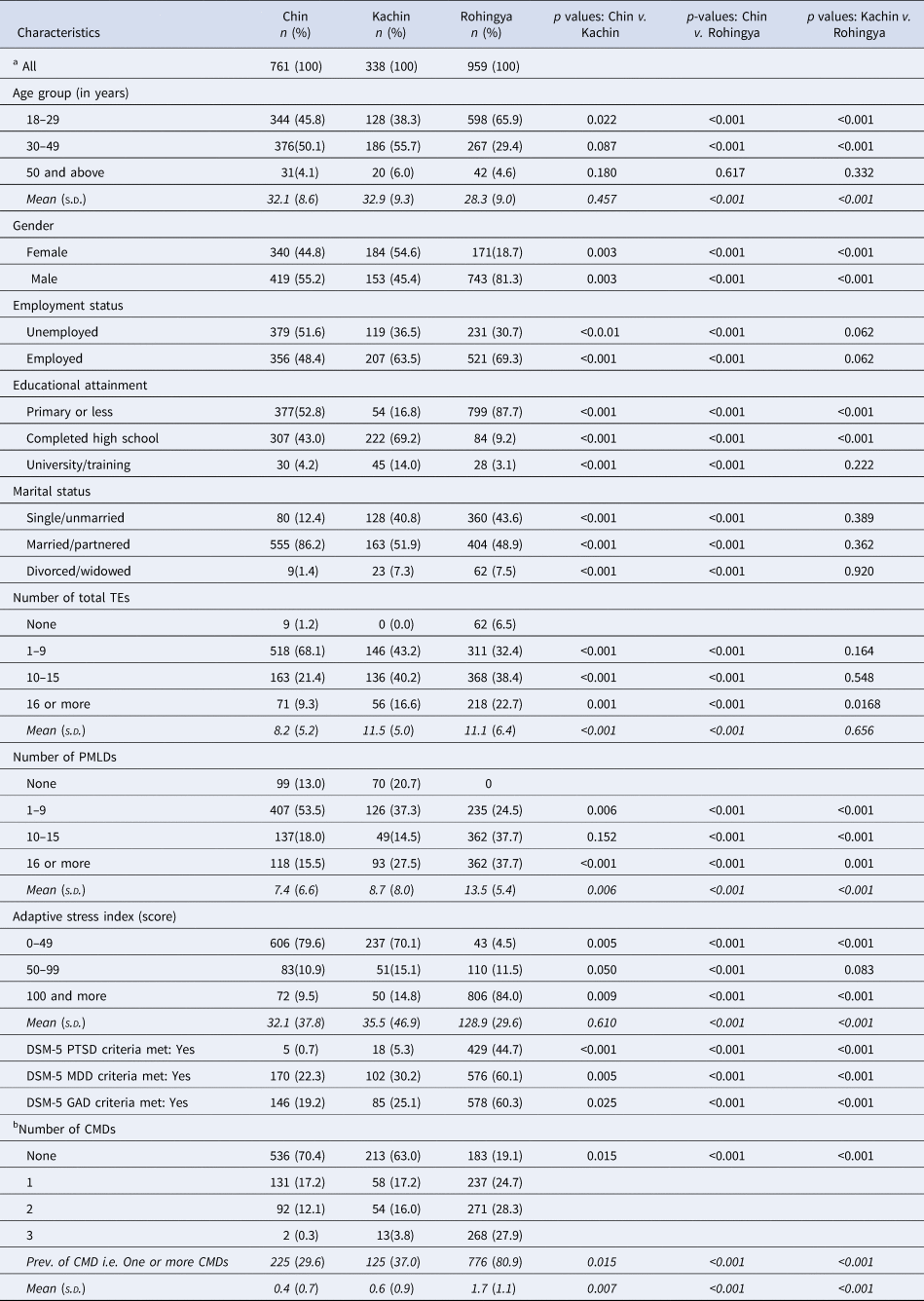
Table 1 indicates that on average, Rohingya were younger than both the Chin (mean = 28.3 years, s.d. = 9.0 v. 32.1 years, s.d. = 8.6) and Kachin (mean = 32.9, s.d. = 9.3) (both comparisons p < 0.001, respectively). Men predominated amongst the Rohingya (81.3%) compared to both the Chin (55.2%) and Kachin (45.4%) (Chin v. Kachin: 55.2% v. 45.4%, p = 0.022; Chin v. Rohingya: 55.2% v. 81.3, p < 0.001; Kachin v. Rohingya: 45.4% v. 81.3, p < 0.001). A higher proportion of Chin was married (86.2%) compared to both the Kachin (51.9%) and Rohingya (48.9%). Education levels were low across all three ethnic groups, with only 4.2% of Chin, 14.0% of Kachin and 3.1% of Rohingya completing some form of post-high school education. About half (48.2%) of Chin and two-thirds of the other two groups (63.5% of Kachin and 69.3% of Rohingya) were employed (Table 1).
Sociodemographic characteristics and mental health indices of three community samples of Chin (n = 761), Kachin (n = 338) and Rohingya (n = 959) refugees living in Malaysia
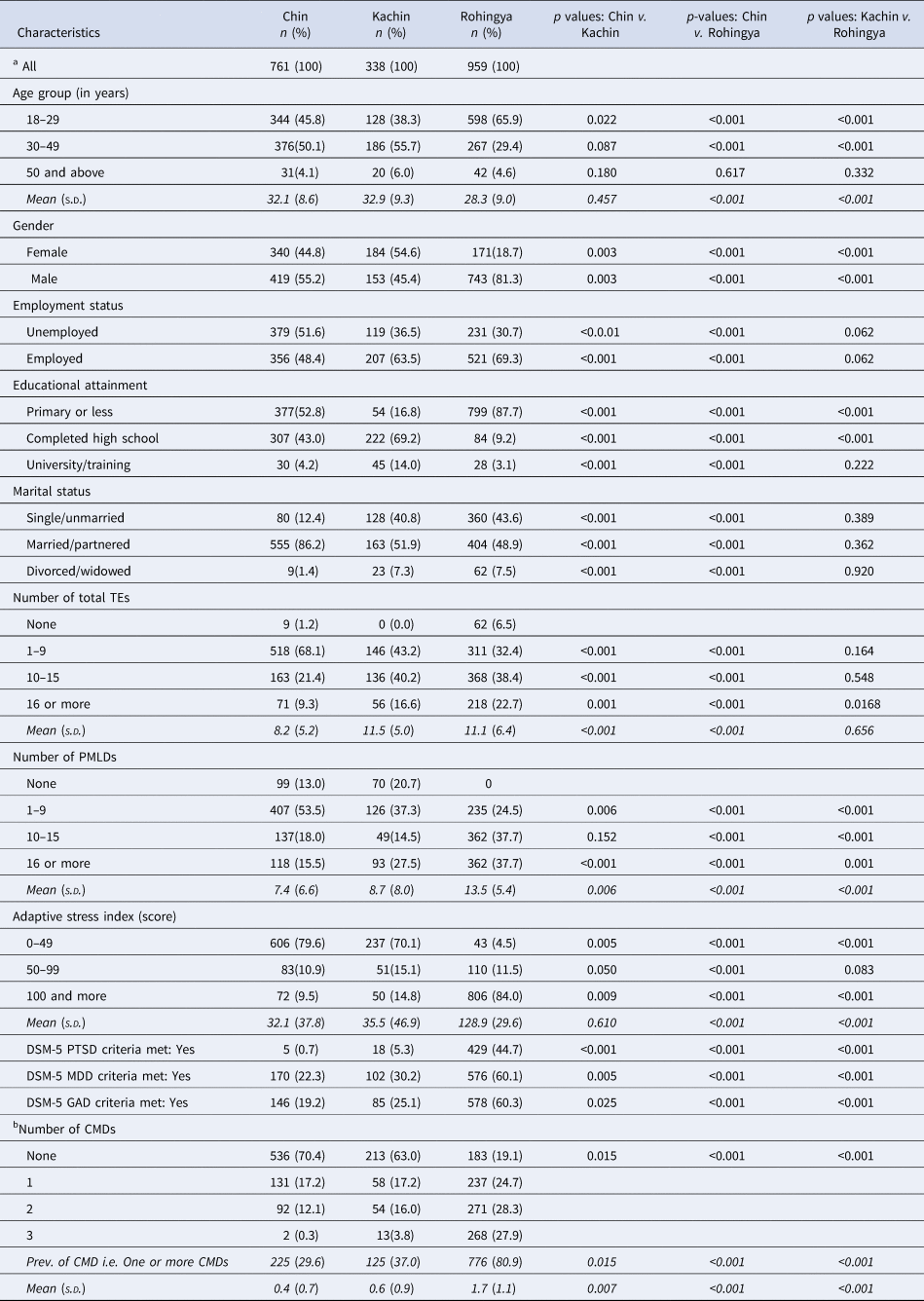
TEs, Pre-migration traumatic exposures; PMLDs, Post-migration living difficulties; DSM-5, Diagnostic and Statistical Manual for Mental Disorder (5th revision); PTSD, Post-traumatic stress disorder; MDD, Major Depressive Disorder; GAD, Generalised anxiety disorder; CMDs, Common Mental Disorders; s.d., Standard deviation.
a Notes: The numbers do not always add up to the exact total due to exclusion of missing/inadequately described’ data. The per cent of data excluded for specific variables and community samples are as follows: Age for Chin 1.3% (10), Kachin 1.2% (4), Rohingya 5.4% (52) and overall 3.2% (66); Gender for Chin 0.3% (2), Kachin 0.3% (1), Rohingya 4.7% (45) and overall 2.3% (48); Educational attainment for Chin 6.2% (47), Kachin 5.0% (17), Rohingya 5.0% (48) and overall 5.4% (112); Employment status for Chin 3.4% (26), Kachin 3.6% (12), Rohingya 21.6% (207) and overall 11.9% (245); Marital status for Chin 15.4% (117), Kachin 7.1% (24), Rohingya 13.9% (133) and overall 13.3% (274). This study included only the valid cases for each of the data items and assumed that missing occurred randomly across the observations. All the variables are included in the bivariate analysis; Variables with missing cases 5% or more are excluded from multivariate analysis.
b Number of CMDs are calculated based on combination PTSD, MDD and GAD.
Differences in prevalence of PTSD, MDD, GAD and composite CMD across ethnic groups
Rohingya recorded the highest prevalence of any CMDs (80.9% had at least one disorder), compared to the Kachin (37.0%) and Chin (29.6%) (all two-way group differences p < 0.01). The same pattern was evident for each CMD (PTSD, MDD and GAD), with the Rohingya recording the highest prevalence. Similarly, consistent with these findings, Rohingya had a higher mean number of CMDs (mean = 1.7, s.d. = 1.1) than the Chin (mean = 0.4, s.d. = 0.7) and Kachin (mean = 0.6, s.d. = 0.9). Over half of the Rohingya (56.2%) had two or more CMDs compared to 12.3% for the Chin and 19.8% for the Kachin (Table 1).
Differences in levels of exposure to premigration TEs across ethnic groups
Kachin (mean = 11.5, s.d. = 5.0) and Rohingya (mean = 11.1, s.d. = 6.4) reported similar levels of TEs, in both instances, higher than the Chin (mean = 8.2, s.d. = 5.2) (each comparison p < 0.001). More than half of the Kachin (58.6%) and Rohingya (61.1%) reported 10 or more exposures to premigration TEs, compared to 30.7% of the Chin (Table 1).
Differences in levels of exposure to PMLDs across ethnic groups
Rohingya refugees reported higher PMLDs (mean = 13.5, s.d. = 5.4) compared to the Chin (mean = 7.4, s.d. = 6.6) and Kachin (mean = 8.7, s.d. = 8.0) (both comparisons p < 0.001). Almost three-quarters of Rohingya (75.4%) reported 10 or more PMLDs, compared to 42.0% of Kachin and 33.5% of the Chin (Table 1).
ASI scores
Rohingya reported a four-fold higher levels of psychosocial disruption on the ASI score compared to both the Chin (mean = 128.9, s.d. = 29.6 v. mean = 32.1, s.d. = 37.8) and the Kachin (mean = 35.5, s.d. = 46.9). In relation to those reporting a score of 100 or more on the ASI, many more Rohingya (84.0%) reached this level compared to the Chin (9.5%) and Kachin (14.8%)
Bivariate analyses and PRs in comparisons of risk factors and CMDs
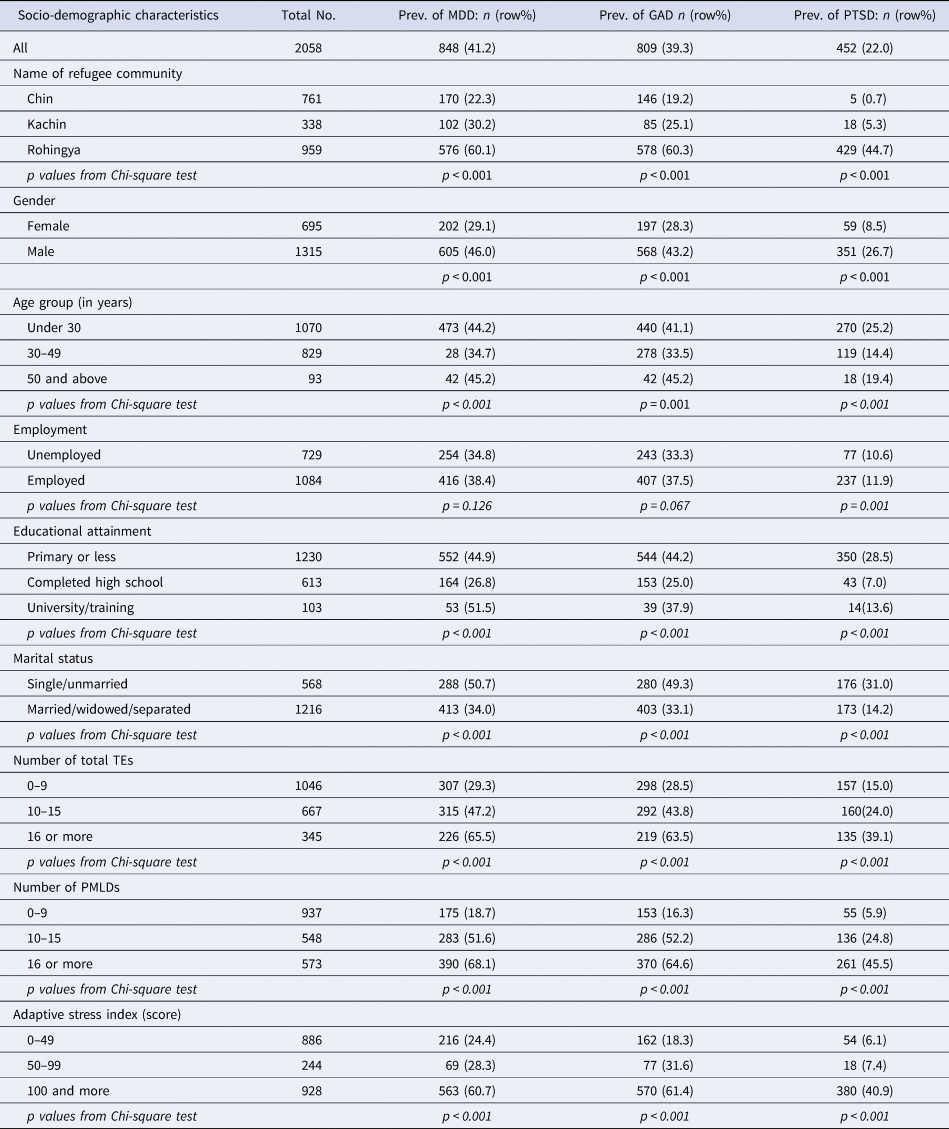
Bivariate analyses comparing possible risk factors (gender, age, employment, educational attainment, marital status, TEs, PMLDs and ASI) with the prevalence of MDD, GAD, PTSD and the composite CMD index are presented in Tables 2–5. Across groups, there was a consistent gradient in which higher TEs, PMLDs and ASI scores were each individually associated with a higher prevalence of MDD, GAD, PTSD, and overall CMD. These findings confirmed that the latter three factors (TEs, PMLDs and ASI scores) were consistent in their associations with CMDs across the three groups, as predicted (see online supplementary Tables 2, 3, and 4).
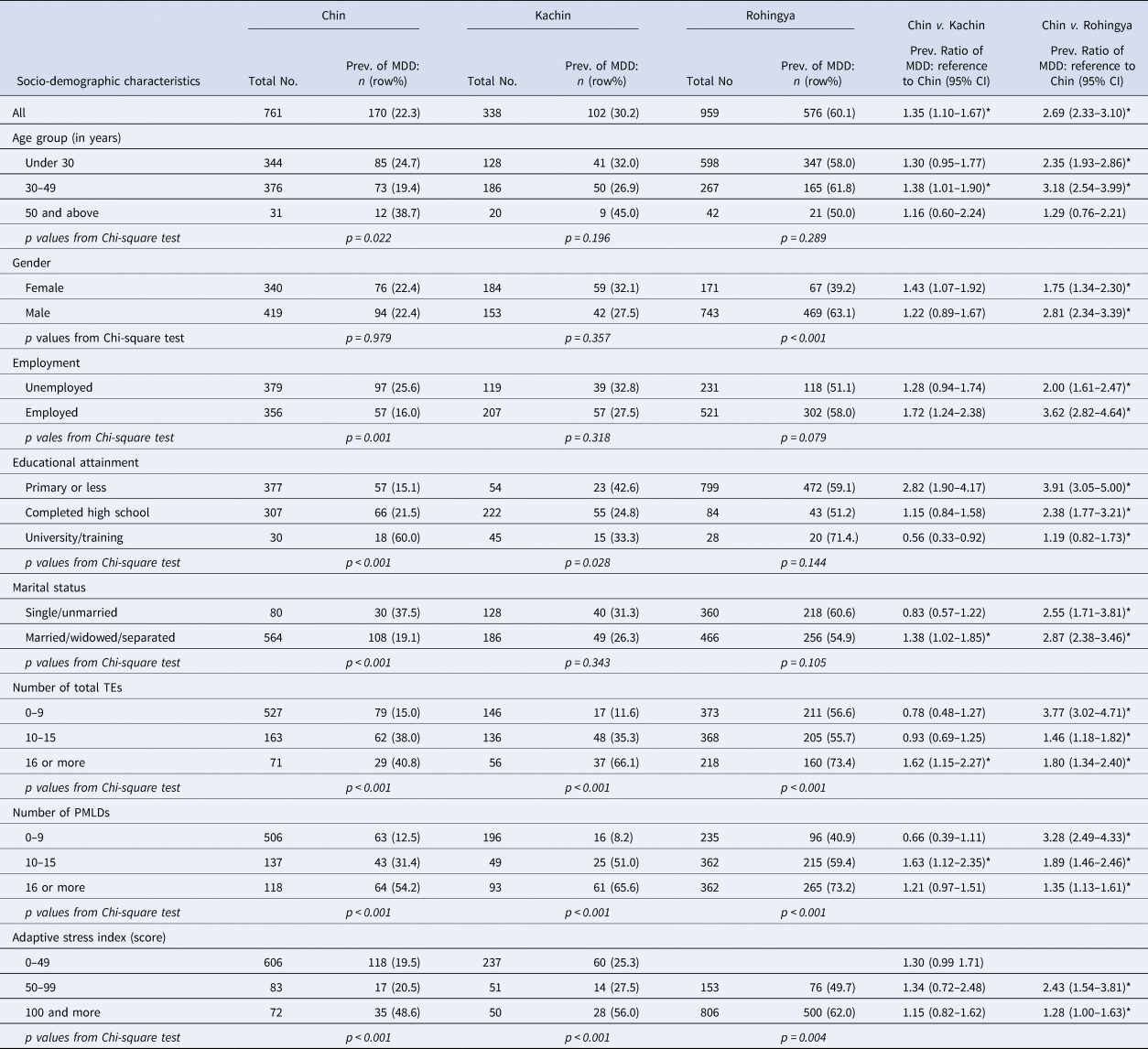
Prevalence of major depressive disorder (MDD) and prevalence ratios (aPRs) by sociodemographic characteristics of three community samples of Chin (n = 761), Kachin (n = 338) and Rohingya (n = 959) refugees living in Malaysia
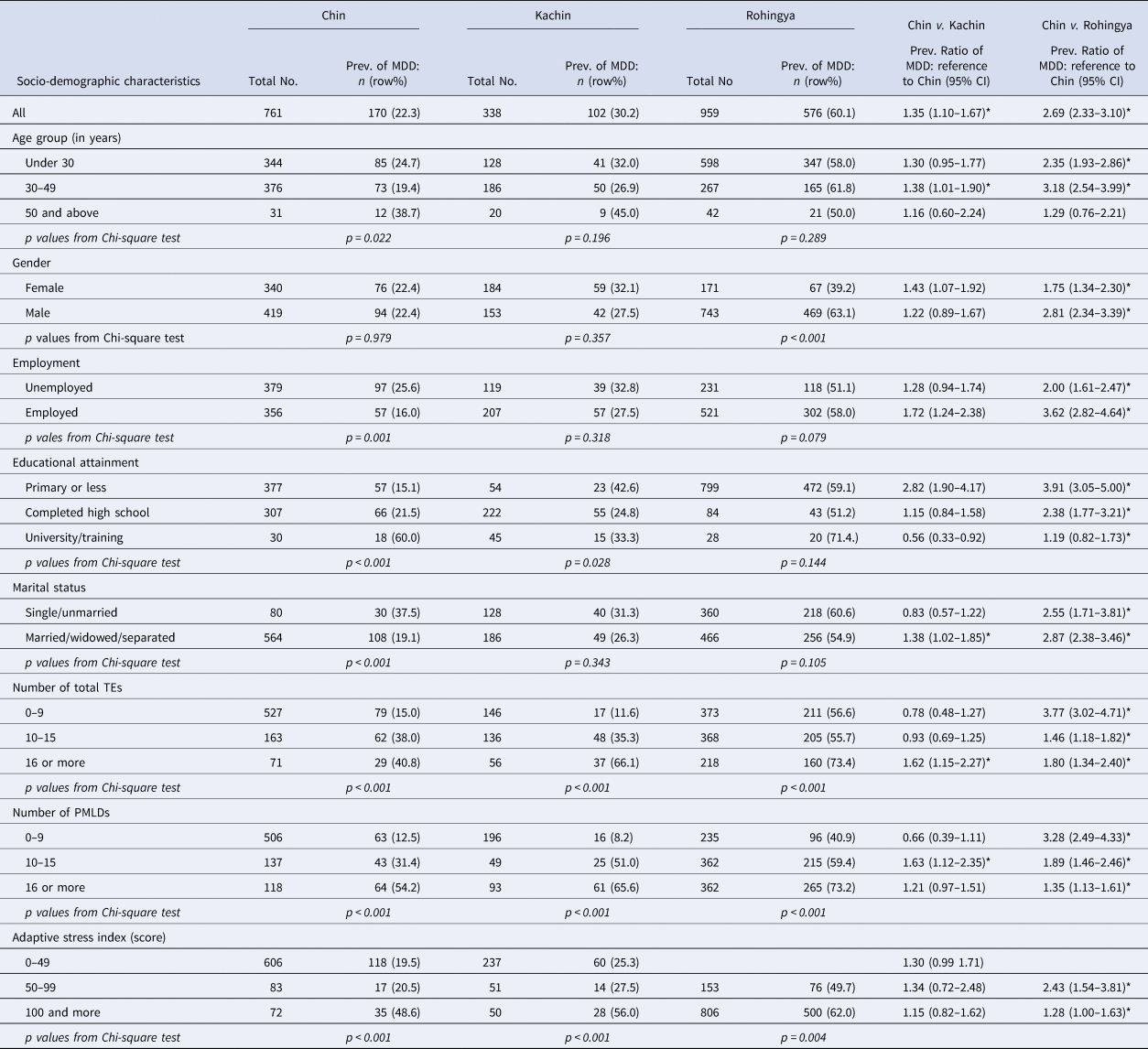
Note: p values derived from Chi-square (χ2) test conducted to examine the significant variation of prevalence of MDD for each factor within Chin, Kachin and Rohingya refugees; p values represent the significance level within the group.
a Prevalence ratios (PRs) with 95% confidence intervals (95% CI) indicate ethnic differences in MDD rates for each of the variable subgroups. In all instances, the reference category is Chin refugee; PRs >1.00 indicate a higher rate of MDD as compared to Chin Refugee and PRs< 1.00 indicate a lower rate of MDD as compared to Chin. Significance levels for PRs are reported at p < 0.05. Formula for 95% CI of Prevalence ratio (PR): log (PR) ± 1.96 s.e. where s.e. ≈p [(1-p1)/n1p1 + (1-p2)/(n2 p2)].
* p < 0.05.
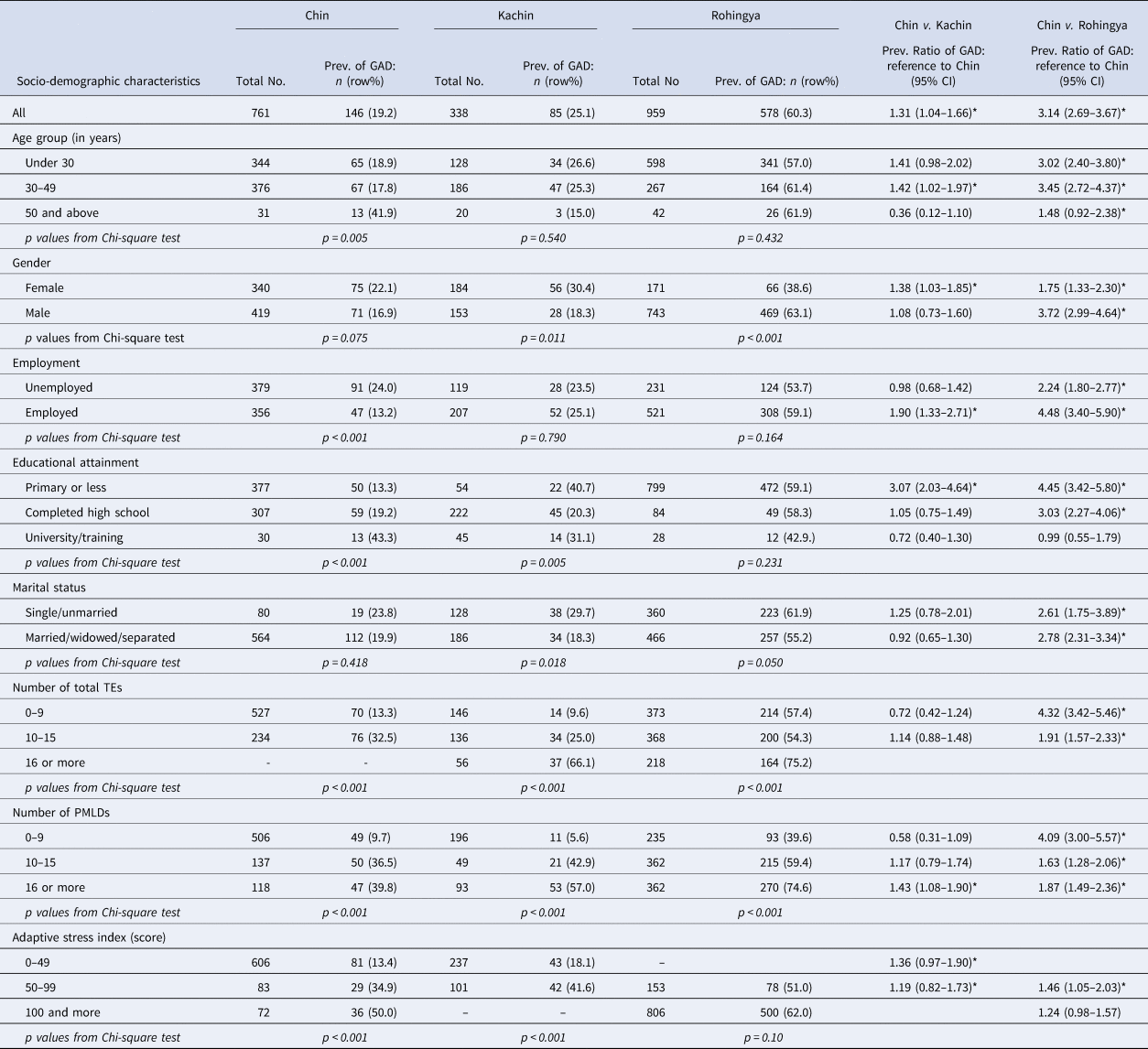
Prevalence of generalised anxiety disorder (GAD) and prevalence ratios (aPRs) by sociodemographic characteristics of three community samples of Chin (n = 761), Kachin (n = 338) and Rohingya (n = 959) refugees living in Malaysia
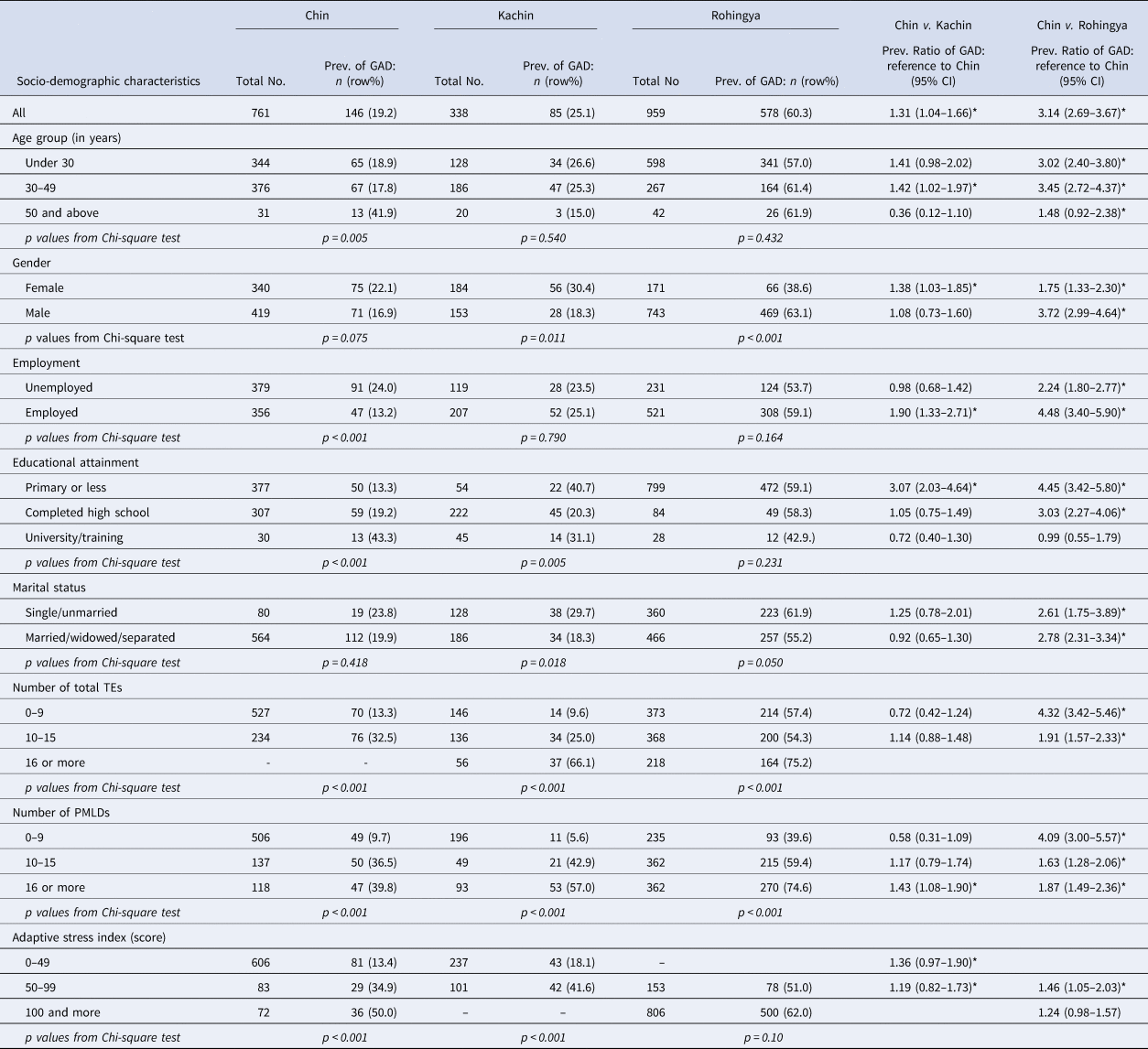
Note: p-values derived from Chi-square (χ2) test conducted to examine the significant variation of prevalence of GAD for each factor within Chin, Kachin and Rohingya refugees; p values represent the significance level within the group.
a Prevalence ratios (PRs) with 95% confidence intervals (95% CI) indicate ethnic differences in GAD rates for each of the variable subgroups. In all instances, the reference category is Chin refugee; PRs >1.00 indicate a higher rate of GAD as compared to Chin Refugee and PRs< 1.00 indicate a lower rate of GAD as compared to Chin. Significance levels for PRs are reported at p < 0.05.
* p < 0.05.
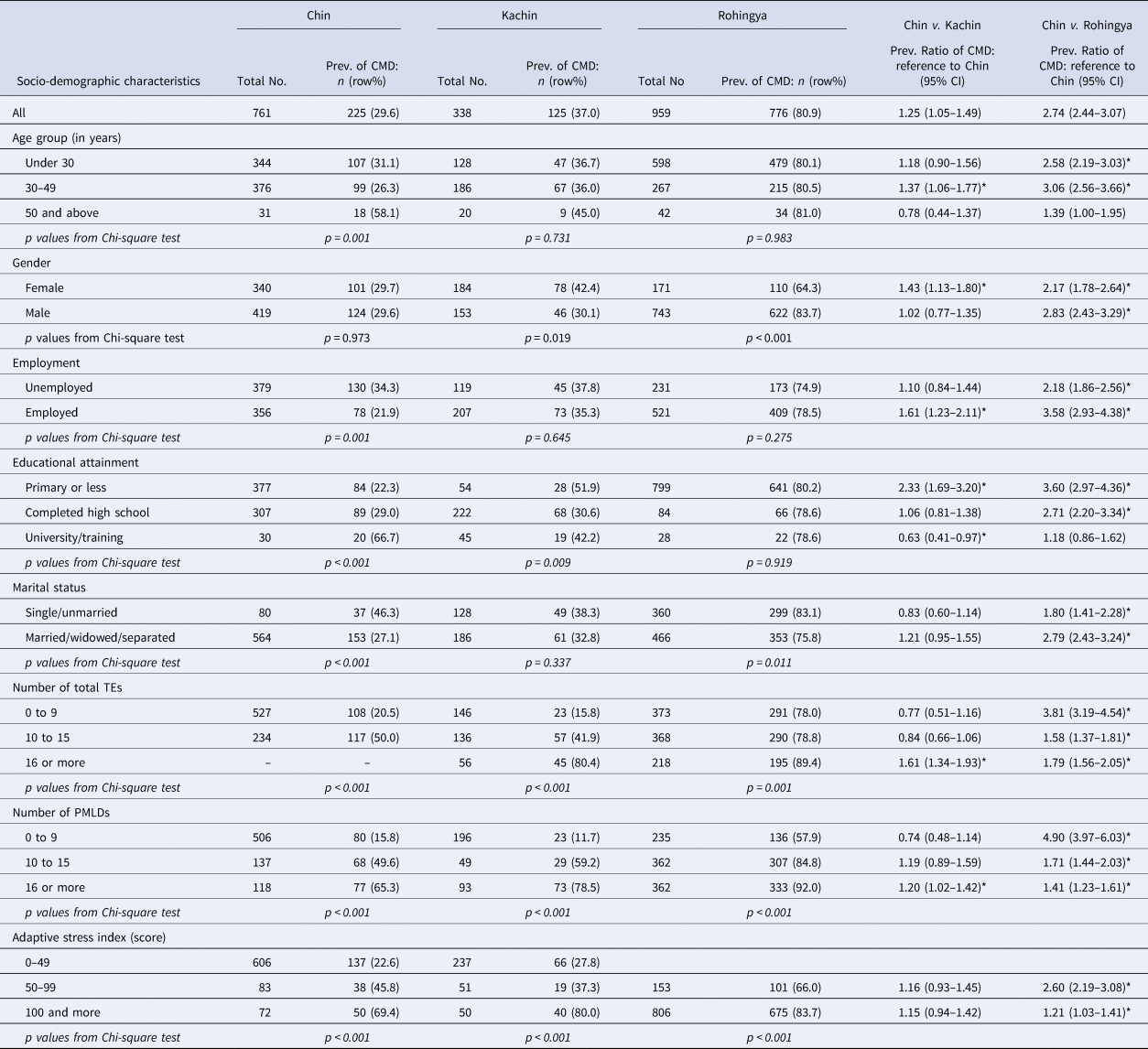
Prevalence of common mental disorder (CMD) and prevalence ratios (aPRs) by sociodemographic characteristics of three community samples of Chin (n = 761), Kachin (n = 338) and Rohingya (n = 959) refugees living in Malaysia
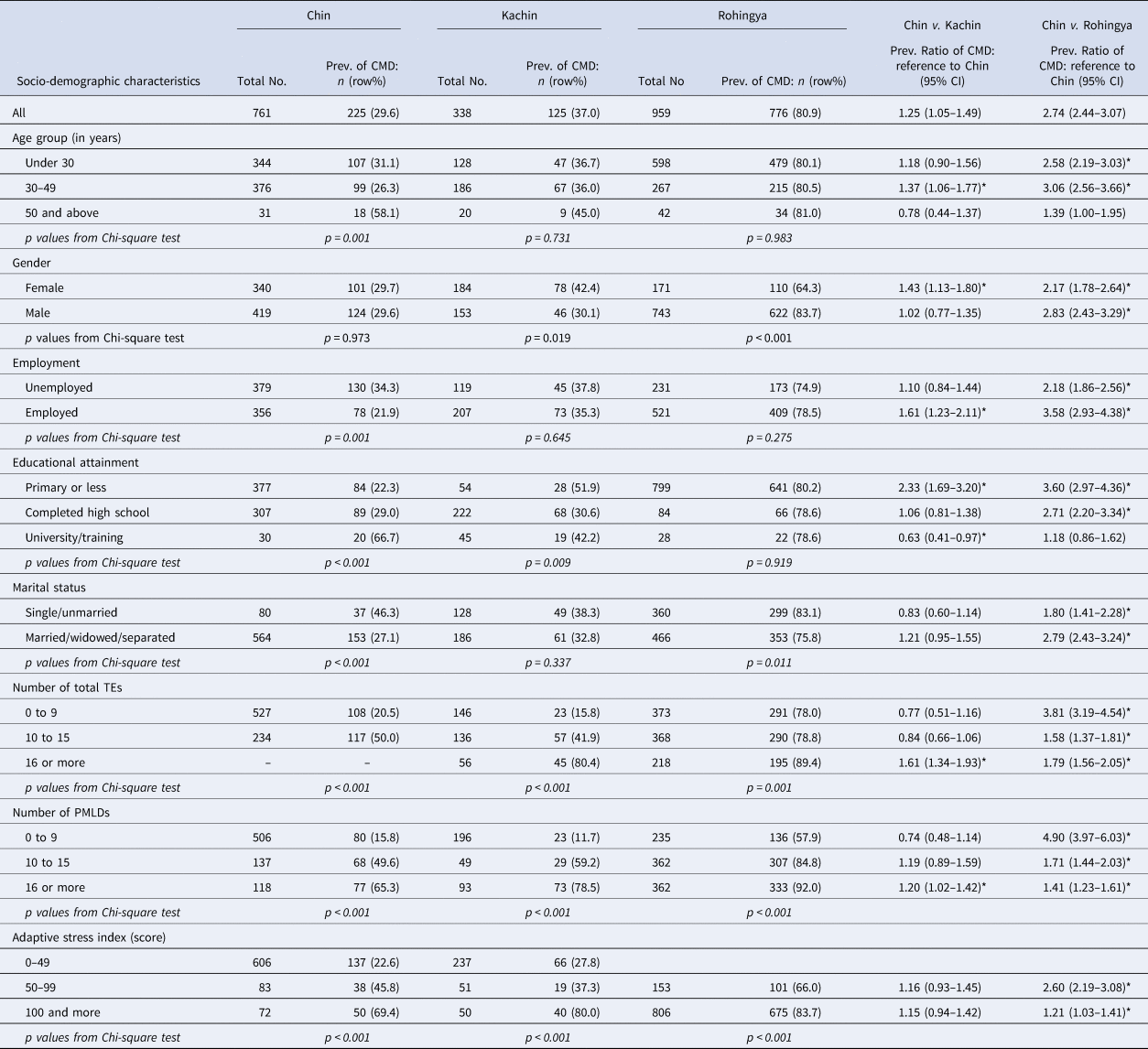
Note: p-values derived from Chi-square (χ2) test conducted to examine the significant variation of prevalence of CMD for each factor within Chin, Kachin and Rohingya refugees; p values represent the significance level within the group.
a Prevalence ratios (PRs) with 95% confidence intervals (95% CI) indicate ethnic differences in CMD rates for each of the variable subgroups. In all instances, the reference category is Chin refugee; PRs >1.00 indicate a higher rate of CMD as compared to Chin Refugee and PRs< 1.00 indicate a lower rate of CMD as compared to Chin. Significance levels for PRs are reported at p < 0.05.
* p < 0.05.
Prevalence of MDD, GAD and PTSD by sociodemographic characteristics of the pooled sample (n = 2058) of refugees living in Malaysia
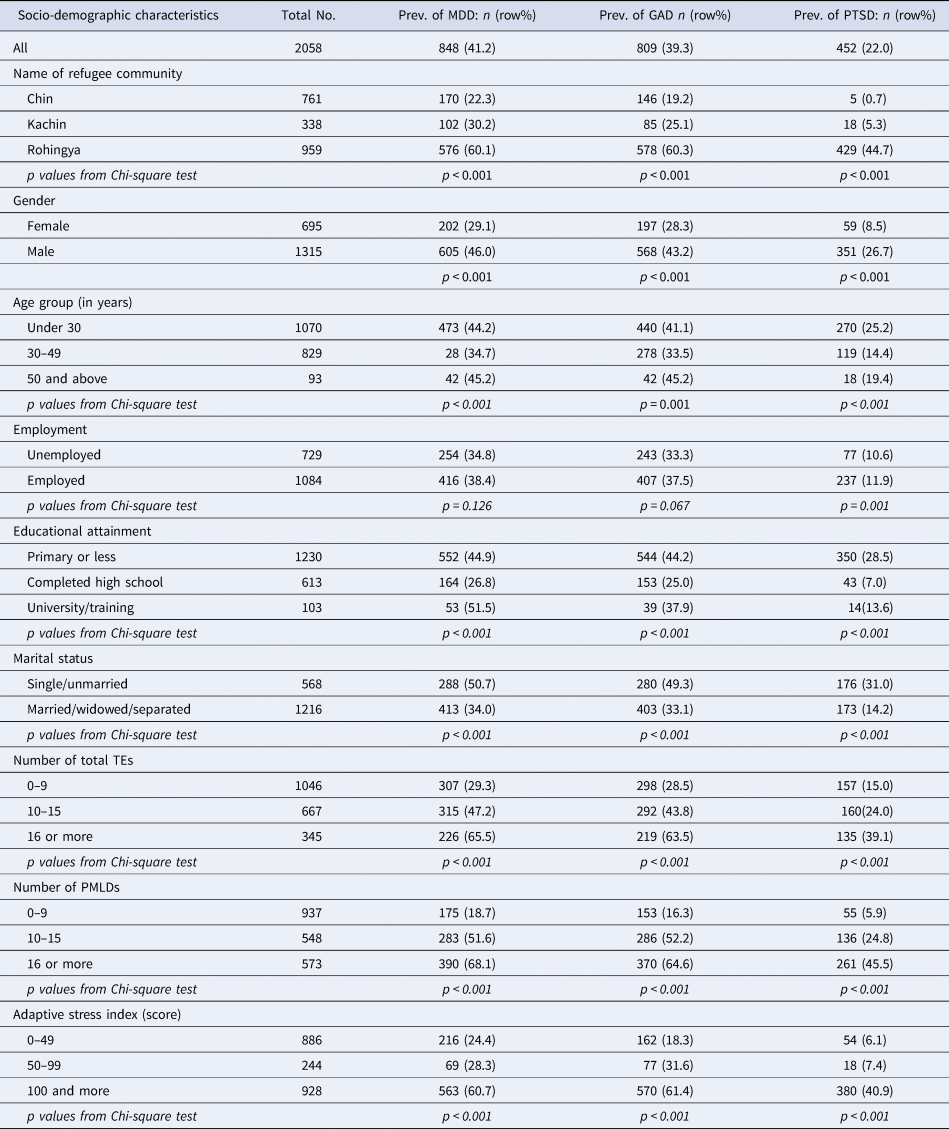
TEs, Pre-migration traumatic exposures; PMLDs, Post-migration living difficulties; PTSD, Post-traumatic stress disorder; MDD, Major Depressive Disorder; GAD, Generalised anxiety disorder.
Note: p values derived from Chi-square (χ2) test conducted to examine the significant variation of prevalence of MDD, GAD and PTSD for each factor respectively; p values represent the significance level for each factor.
We calculated the PR of each key outcome, that is, the relative frequency of TEs, PMLDs, and ASI scores when comparing (1) individuals with at least one CMD versus those with no CMDs (Table 2 for MDD, Table 3 for GAD) and (2) between those with and without the composite CMD (Table 4), noting that due to the small number of persons who met criteria for PTSD, we did not calculate the PR of PTSD.
Relative to each of the Chin and Kachin, the Rohingya with any CMD diagnosis recorded the highest PR on TEs, PMLDs and ASI. Moreover, as indicated in Table 2, PRs for TEs, PMLDs and ASI were influenced by ethnicity, gender, and marital status. These findings indicate that the nature and quantum of the relationship between risk factors and CMDs varied across ethnic groups, the Rohingya standing out in that regard.
Multiple logistic regression analyses for each ethnic group and the pooled sample
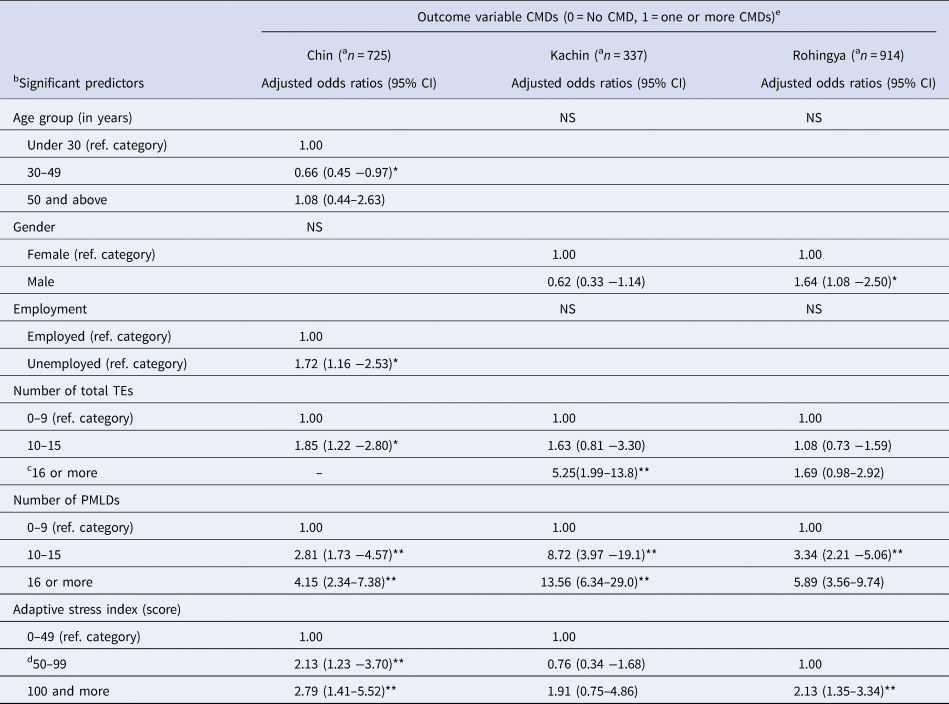
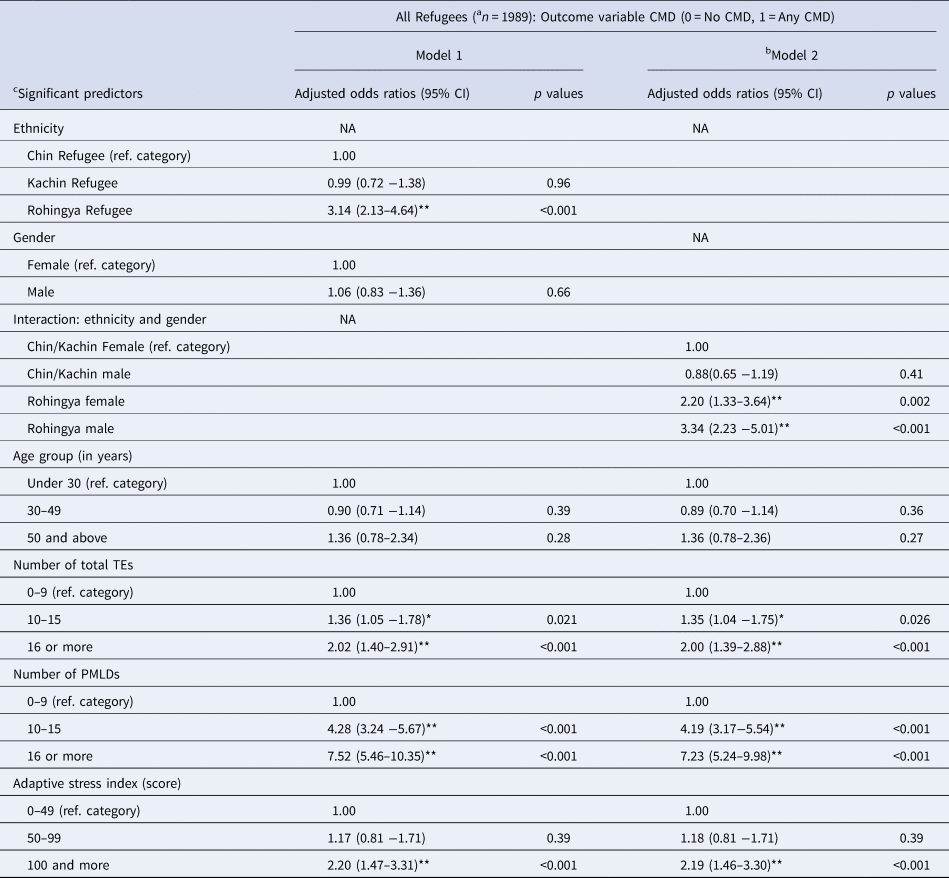
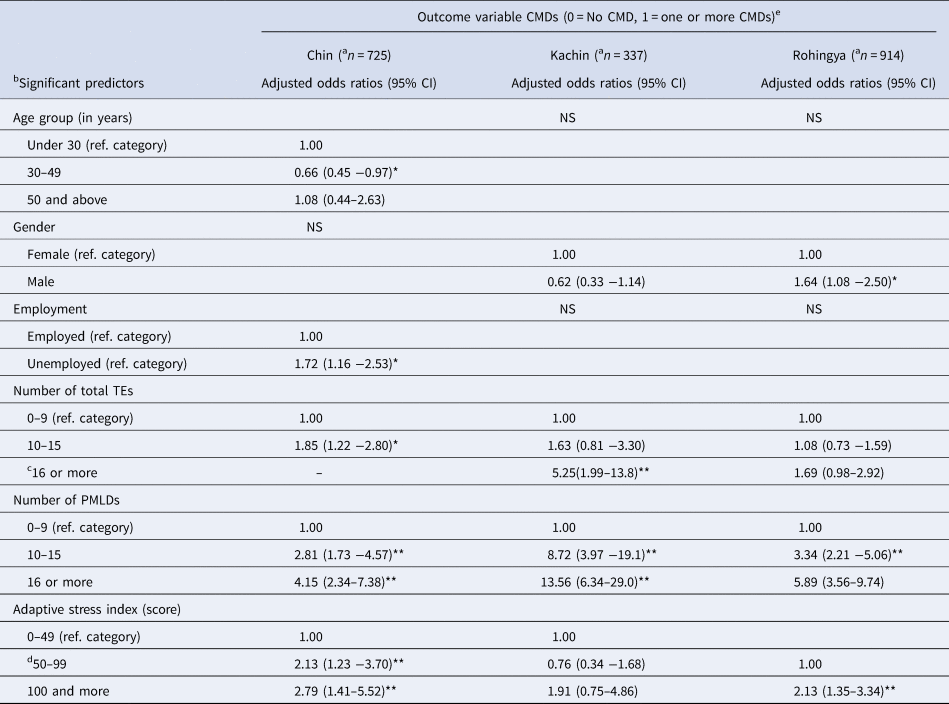
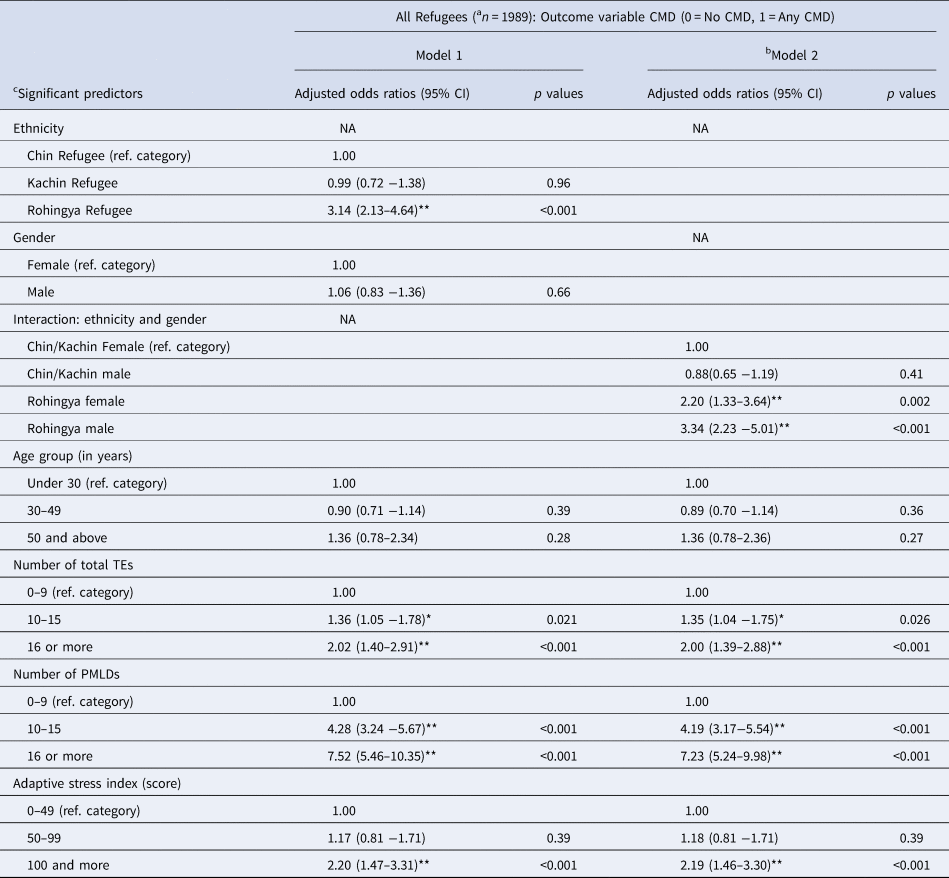
Each of the three multiple logistic regression analyses conducted independently for each ethnic group showed that higher TEs, PMLDs and the ASI score were associated with a higher prevalence of CMDs, indicating that the composite model was common to all ethnic groups (Table 6). Analysis of the pooled sample (Table 7) in which ethnic membership was included as a categorical variable (with Chin as the reference category) supported this finding in that higher TEs (16 or more TEs: OR, 2.00; 95%CI, 1.39–2.88; p < 0.001), PMLDs (16 or more PMLDs: OR, 7.23; 95% CI, 5.24–9.98; p < 0.001) and ASI score (100 or more ASI score: OR, 2.19; 95% CI, 1.46–3.30; p < 0.001) contributed to CMD prevalence. Importantly, being a member of the Rohingya ethnic group made an added contribution.
Results from multiple logistic regression analysis: associations of sociodemographic characteristics, premigration TEs, and PMLDs with CMDs across three community samples (Chin, Kachin, Rohingya) of refugees living in Malaysia
Notes.
a The numbers in brackets are included in multiple logistic regression analysis (variables with any missing values are automatically excluded from the logistic regression analysis): * Adjusted odds ratios are significant at p < 0.05; ** Adjusted odds ratios are significant at p < 0.01. NA, not applicable; NS, not significant was not found statistically significant (p < 0.05) in bivariate analysis.
b All the predictors included in multiple logistic regression model for each community sample was found to be statistically significant (p < 0.05) in bivariate analysis (Table 2); Significant predictors involving with missing data 5% or more were not included in logistic regression analysis.
Chin refugee: age, employment status, educational attainment, marital status, TEs, PMLDs and Adaptive stress index was found to be statistically significant in bivariate analysis; Educational attainment and marital status were not included in multiple logistic regression analysis due to 5% or more missing data involved with these two predictors.
Kachin refugee: gender, educational attainment, TEs, PMLDs and Adaptive stress index was found to be statistically significant in bivariate analysis; Educational attainment was not included in multiple logistic regression analysis due to 5% or more missing data in this predictor.
Rohingya refugee: gender, marital status, TEs, PMLDs and Adaptive stress index was found to be statistically significant in bivariate analysis Marital status was not included in multiple logistic regression due to 5% or more missing data involved with this predictor.
c 16 or more TEs: for Chin small number of participants had exposure to 16 or more TEs, due to very small cell frequency this group merged with 10–15 counts – can be read 16 or more TEs.
d 0–99 ASI score: For Kachin and Rohingya only number participants CMDs, due to very small cell frequency (<5) – for Kachin and Rohingya 0–49 merged with 50–99 score – can be read as 0–99 ASI score.
e The outcome variable CMDs for multiple logistic regression model was coded as: 0 = no CMDs and 1 = one or more CMDs.
Results from multiple logistic regression analysis: associations of sociodemographic characteristics, premigration TEs, and PMLDs with CMDs for combined samples of three refugee communities (Chin, Kachin and Rohingya) living in Malaysia
Notes.
a The numbers in brackets are included in multiple logistic regression analysis (variables with any missing values are automatically excluded from the logistic regression analysis). * Adjusted odds ratios are significant at p < 0.05; ** Adjusted odds ratios are significant at p < 0.01.
b Model 2 included an interaction variable constructed based on ‘Ethnicity and Gender’; Model 1 shows that there was no significant difference between Chin and Kachin refugee, so in order to construct interaction variable the ethnicity was coded as 0 = Chin/Kachin, 1 = Rohingya; Gender was coded as 0 = Female and 1 = Male.
c All the predictors included in multiple logistic regression model for each community sample was found to be statistically significant (p < 0.05) in bivariate analysis (Table 2); Significant predictors involving with missing data 5% or more were not included in logistic regression analysis. Combined sample: age, gender, educational attainment, marital status, TEs, PMLDs and Adaptive stress index was found to be statistically significant in bivariate analysis; Educational attainment, employment status and marital status were not included in multiple logistic regression analysis due to 5% or more missing data involved with these predictors.
Discussion
Our study is the first to investigate the possible reasons for large variations in CMD prevalence in refugee populations by examining different ethnic groups from the same country resettled in a common environment. The variation in CMD prevalence was considerable, especially when comparing the Rohingya with the other two groups. The prevalence and PR indices for what were postulated to be universal risk factors, that is, premigration trauma, PMLDs and psychosocial disruptions assessed by the ASI, followed a pattern that was entirely consistent with the difference in CMD prevalence rates across the groups, including when analysed according to individual diagnoses of MDD, GAD, and PTSD. Again, the Rohingya reported the highest scores on the relevant risk factors with the exception of TEs in which the Kachin recorded commensurate levels. In the pooled regression analysis, ethnicity, as a composite indicator of the individual biogenetic and environmental factors specific to each group, emerged as an independent index associated with CMD risk, over and above the universal risk factors of TEs, PMLDs and ASI score.
Prior to discussing the implications of our findings, we consider the strengths and limitations of the study. Strengths include the probabilistic approach to sampling and the use of consistent measures across studies. We followed a rigorous method for adapting and testing measures in each group, adding to the contextual and cultural validity of the instruments. Moreover, there was a high and comparable response rate across samples (over 80% in each study). Nevertheless, the potential for transcultural errors in measurement must be acknowledged. Retrospective bias in the recall of trauma events also may introduce inaccuracies in reporting. We note, however, that the traumas and stressors reported are consistent with the known history of each refugee group displaced in Malaysia. Furthermore, our inclusion of specific indices of premigration trauma, PMLDs and the psychosocial disruptions, each adapted to the history, culture and context of each group, provided a systematic framework for assessing these universal risk factors while taking into consideration the inter-group specificities.
The gender imbalance, especially amongst the Rohingya in which men predominated (over 80%) is consistent with the known history of displacement of this group.
Caveats notwithstanding, our study provided a sound foundation for examining the issues in question given the large differences in prevalence rates of CMDs observed across the three groups. In parallel, the three risk factor domains of premigration trauma, postmigration living difficulties and psychosocial disruptions showed a significant difference in prevalence across the three groups as well as corresponding variations in the strength of their individual associations with CMDs in bivariate analyses. This suggests that both the quantity and impact of these factors vary across refugee populations, thereby exerting differential effects on mental health in each group. The finding of a strong association of PMLDs with CMDs, with the Kachin group reporting the largest OR relative to the Chin and Rohingya groups, is consistent with reports of the severe daily living difficulties experienced by members of this ethnic group who are scattered across the rural areas of Malaysia. There was a higher risk of CMD in the Kachin group (HRW, 2018), relative to the Chin refugees. Follow-up analyses of the types of TEs endorsed by the three ethnic groups indicated that, relative to their Chin counterparts, both the Kachin and Rohingya refugees reported a greater number of conflict-related premigration TEs in their states.
Over and above these associations, there was an independent association with CMDs in relation to ethnic group membership, a proxy measure for a range of unmeasured factors such as biological, social, historical and cultural influences that together determine the balance between vulnerability and resilience to mental disorder in each community. As anticipated given their history of extreme persecution and exposure to mass violence, the Rohingya stood out in manifesting manifold higher prevalence rates of mental disorder. Overall, the pattern of findings may have more general significance in revealing some of the reasons for the large discrepancies in the CMD prevalence observed herein.
Our findings have several important implications. They provide further support for the association between both premigration trauma and postmigration stressors and CMDs in refugee populations from different ethnic backgrounds. Nevertheless, they add refinement to past observations by indicating that not only does the quantum of exposure to these factors vary substantially across populations, but that they have different patterns of impact on each group; both these factors, therefore, contribute to the variation in CMD prevalence observed across studies. Moreover, the addition of a measure of stress arising from the broader psychosocial disruptions experienced by refugee populations added substantially to the overall model, indicating that this factor exerts an independent effect, over and above trauma exposure and PMLDs, in shaping CMD prevalence. The observation that the ASI score was manifold higher amongst the Rohingya adds face validity to the findings given the known history of extreme persecution experienced by that group. Finally, the finding that group-specific factors, in this instance not subjected to detailed measurement, are instrumental in the expression of CMDs amongst refugees suggests the importance of investigating in a detailed manner all key aspects of each refugee population, including their overall vulnerability to mental disorder (based on prevalence rates of CMDs identified prior to conflict if available), their collective histories prior, during and following the conflict, and the elements of their culture and traditions that confer protection or, alternatively, susceptibility to the impact of adversity on mental health outcomes. In order to achieve a comprehensive understanding of these issues, information from multiple sources will be necessary, as gathered, for example, for the Rohingya community recently (Tay et al., Reference Tay, Islam, Riley, Welton-Mitchell, Duchesne, Waters and Ventevogel2018, Reference Tay, Riley, Islam, Welton-Mitchell, Duchesne, Waters and Ventevogel2019d).
More broadly, contrary to the concern that epidemiological studies may produce invalid findings when applied across cultures (De Jong, Komproe, & Van Ommeren, Reference De Jong, Komproe and Van Ommeren2003; Van Ommeren, Reference Van Ommeren2003), our results tend to provide support for the accuracy of the method as long as care is taken to ensure the cultural and contextual adaptation of measures. Although there is no absolute method for validating our findings, we note the consistency of the data obtained with the known history of the participating groups, the regularity of the associations identified, for example, in relation to comparisons of risk factors with each of the CMDs measured and their consistency with past research into the impact of trauma and PMLDs on the mental health of refugees (Silove et al., Reference Silove, Rees, Mohsin, Tam, Kareth and Tay2018; Tay et al., Reference Tay, Rees, Miah, Khan, Badrudduza, Morgan and Silove2019a), all add credibility to our findings and the inferences drawn from them.
In essence, our findings consolidate knowledge in the field by demonstrating that there are universal factors that influence CMD prevalence across refugee populations but that the quantum, impact and inter-relationship of these factors are context-specific; and that there are group-specific factors, some yet to be operationalized and measured in this field, that add considerably to the variation in expression of mental disorder in each group. Even though there are understandable reasons to use systematic reviews and related analyses to attempt to derive an average CMD prevalence rate across refugee populations worldwide for the purpose of global planning (Charlson et al., Reference Charlson, van Ommeren, Flaxman, Cornett, Whiteford and Saxena2019), our findings suggest that caution needs to be exercised in so doing, especially if aggregated data from past studies are applied to predict the needs of individual groups as humanitarian situations arise over time. Instead of regarding variation in CMD rates as an artefact to be corrected by statistical methods that hold risk factors constant in deriving averaged rates, the emphasis should be on examining the source of the differences identified in each population as the key to understanding and responding to the specific psychosocial and mental health needs of each group. Only then can the mental health and psychosocial needs of each community be accurately assessed, the necessary foundation for mobilizing appropriately tailored interventions for individual groups.
Our findings have implications for measurement, research, policy and clinical practice in the field of refugee mental health and psychosocial well-being. Past studies have focused primarily on trauma and ongoing adversity in explanatory models relating to common mental disorders in refugees (e.g. MDD, GAD, PTSD) (Porter & Haslam, Reference Porter and Haslam2005; Steel et al., Reference Steel, Chey, Silove, Marnane, Bryant and Van Ommeren2009a). From a practical perspective, data obtained from the ASI may prove helpful in planning mental health and psychosocial support services in acute and protracted refugee situations (Tol et al., Reference Tol, Barbui, Galappatti, Silove, Betancourt, Souza and van Ommeren2011a). For example, the ASI may assist in extending the scope of assessment and monitoring beyond the conventional indices of trauma, ongoing immediate living difficulties, and mental health outcomes such as PTSD and depression (Tol et al., Reference Tol, Rees and Silove2013). Specifically, as a measure, the ASI applies a general model of adaptation to identifying the psychosocial stressors that may lead to functional impairment amongst refugees which, with modification, can apply to displaced populations from a diversity of cultural backgrounds living in a variety of resettlement environments (Silove et al., Reference Silove, Ventevogel and Rees2017; Tay & Silove, Reference Tay and Silove2016).
In summary, our findings reinforce the maxim that differences in prevalence rates of CMDs and risk factor profiles across refugee populations should be the source of attention rather than regarded as an indicator of measurement error – except in studies using suboptimal methodologies. Although knowledge from aggregated data derived from past studies of other refugee groups provides an important foundation for the broad understanding of the needs of displaced persons in general, there is an imperative in each new setting to make a comprehensive assessment of the mental health and psychosocial support (MHPSS) status of each community in order to accurately match service provision to specific needs.
Supplementary material
The supplementary material for this article can be found at https://doi.org/10.1017/S0033291720003104.
Acknowledgement
National Health and Medical Research Council.
Conflict of interest
The authors declare no conflict of interest.