

1
The editorial essay, such as this one, in which incoming editors in chief to a reputed academic journal present their views of a field, their strategy for a journal, and how they are going to impact an ongoing ecology of academic discourses, is a strange genre. Its authors traverse the tightrope stretched between change and continuity, seeking to inspire and renew without alienating the community on whose efforts the reputation of the journal is built and without compromising the reputation of that journal. We accepted the honorable responsibility of leading BEQ because we admire its pluralism and welcoming of multiple perspectives, the rigor and quality of its editorial review process, and the high-quality work that results from that process. These are qualities to which we have committed ourselves and that we seek to advance.
We are well aware that the reputation of a respectable journal like BEQ has built up over time, as the result of the dedication and effort of many individuals: our predecessors, associated editors, reviewers, authors. It has thus become institutionalized; it has, over time, obtained a “life of its own” (Selznick Reference Selznick1949). In light of this, we see our role as being primi inter pares. On that same account, we are somewhat skeptical of the embellishment of the leadership of individual editors, a phenomenon that one may occasionally encounter in informal conversations. Editorial leadership is teamwork; it has multiple dimensions, including both gatekeeping and curating promising manuscript submissions to publication. Yet, and precisely because of institutionalization, the ability of editors—and their editorial essays—to influence authors’ decisions on what they study, how they write, and where they submit their work can easily be overstated. Consequently, in preparing for the professional and functional aspects of their new role, prospective editors are well advised to read, for example, Baruch et al.’s (Reference Baruch, Konrad, Aguinis and Starbuck2008) Opening the Black Box of Editorship, because of its considerate and practical advice. But alongside, they also may wish to read Lev Tolstoy’s War and Peace, for example, as a reminder that the ability of leadership to make a difference in the unfolding of the events that make up history can easily be exaggerated; the views, strategies, and plans of the generals of the various armies in the Napoleonic Wars were, according to Tolstoy, largely irrelevant for the outcomes of their battles (cf. March and Weil Reference March and Weil2005).
With these opening comments in mind, we take the opportunity to articulate some of our beliefs and sources of inspiration, not as an agenda for instigating major change, but as a means of introducing ourselves.
2
We believe, for example, that research and writing can be among the most fulfilling parts of academic life and that therefore our role as editors relates to maintaining publishing as a joyful endeavor. In many ways, writing can be and should remain serious fun. In other words, and even if at times writing can be hard work, it should also be an inspiring, gratifying activity such that it allows the blood to pulse more strongly and pleasurably through the veins of our authors and that its result interests and intrigues our readers. In this sense, we draw inspiration from Barthes’s (Reference Barthes and Miller1975) distinction between “texts of pleasure” and “texts of bliss.” A text of pleasure contents with tradition; it comes from a culture and does not break with it. A text of bliss, on the other hand, creates discomfort, elicits a state of loss, unsettles assumptions, and messes with the reader’s consistency of taste, memories, and values. We believe the field of business ethics and its related disciplines can do with a bit more of this kind of bliss. Celebrating writing that accomplishes its contributions to theory requires a kind of patience with difference and a discipline in crossing boundaries. This holds not only for authors but also for readers, reviewers, and editors.
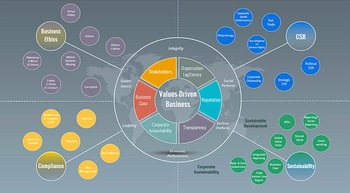
As we alluded to earlier, we perceive of the field of business ethics as having multiple beating hearts and many souls that animate it. Some parts of the ecosystem draw on the humanities, with a strong reliance on the discipline of philosophy, whereas for other parts, the social sciences provide structure and animation. Keeping the blood flowing and the spirits soaring requires engagement with multiple disciplines and methodologies. BEQ has built its reputation as leading business ethics journal in the American context by carefully honing its commitments to scientific rigor, while maintaining an openness to the full breadth of new developments in the field, constantly pushing methodological and philosophical boundaries. In terms of orientation, the journal publishes articles drawing from both analytical and continental philosophy and from positivist, interpretive, and critical traditions. Topic-wise, the journal covers research on business ethics, corporate social responsibility (CSR), sustainability, and a plethora of related topics (Figure 1), which coexist in an intricate, continually evolving ecosystem. This plurality in terms of orientation and topic allows for the making of important contributions. Yet, this situation also challenges writers, as they should not forget about and then speak past other parts of this rich tapestry of concepts and practices while engaging with their own preferred part. In this process, all disciplinary approaches and methodologies are important, as long as they remain open and accessible to others who may not be so familiar with their respective terminologies and preferences. In this way, a commitment to interdisciplinary research always requires the practices of translation, illustration, and even self-deprecation. After all, the disciplines are simply in service of helping us do that for which BEQ has always been known: offering significant and novel theoretical contributions to social scientific and philosophical theory in the broad field of business ethics.
Shared Vocabularies
Note. The diagram is the result of a United Nations Principles for Responsible Management Education project titled “Shared Vocabularies,” led by Nottingham Business School and IEDC-Bled School of Management on the request of the UN Global Compact Corporate Champions (Painter, Russon, and Karakilic Reference Painter, Russon and Karakilic2018). These practitioners explained that they were simply “lost in translation” and needed some conceptual clarification, a dictionary of sorts.

It is this commitment to theory that we intend to instigate, support, nurture, and defend. Yet, we do not see theory as opposed to practice but precisely as animated by it, emergent from it, and in critical relationship to it. It is this additional dimension of plurality that makes so-called applied work not only challenging but also meaningful. Many of us had to contend with being called a lesser philosopher, sociologist, linguist, and so on, for the mere fact of being focused on the workings of practice. But as an interdisciplinary community, we should perhaps cherish as a badge of honor our own status as parasites (Serres Reference Serres and Schehr1982) operating within the holy disciplines. Drawing from Serres’s work, Gasparin et al. (Reference Gasparin, Brown, Green, Hugill, Lilley, Quinn, Schinckus, Williams and Zalasiewicz2020) recently discussed the function of parasites in an ecosystem. The parasite is key to the health of the broader system on which it feeds, as it animates its defenses, while at the same time instigating the system’s renewal in relation to its environment as the parasite cuts away at the system’s excesses. Parasites shirk purity for the sake of practice and process. Seen in this way, there is value in remaining open to the reversibility of the parasitic life, that is, to becoming the host to other parasites and, as such, to not guarding too jealously what we consider to be our own disciplinary approaches and methodologies but rather remaining open to co-contamination.
Therefore, we consider theory to be significant, novel, and interesting when it has the capacity to engage relationally along the various dimensions of plurality—orientation, topic, theory/practice. The hope is that our authors manage to find ways to pursue their interests beyond the self-interest of academic careers and impact factors—however relevant these external goods associated with the practice of academic research may be (Macintyre Reference Macintyre1981)—and thus to maintain a sense of “inter-esse” (Oosterling Reference Oosterling2014, 104). To fully participate relationally means to explore the “inter-vidual,” rather than maintaining the individual; it means engaging with others who have similar interests (knowing the extant literature), while exploring what is interesting and novel (making a contribution) and aiming to reach audiences beyond the immediate circle of fellow specialists.
From our perspective, interesting theory engages beyond straitjackets and intrigues through its reframings and disruptions. In this commitment, we take issue with the types of binary distinctions that may lead to rifts, dispute, polarization, and—simply speaking—the perpetuation of blind spots and echo chambers. This would mean nurturing some of the in-between spaces, where much remains to be done to develop new thinking in our field. For instance, we would be interested in thinking in which the mind–body dualism gives way to understandings of the embodied mind, whether the approach is behavioral, philosophical, sociological, or institutional. And we welcome analyses that steer clear of normative versus descriptive divides but instead seek to understand processes of valuation, whether in organizational ethics, CSR, or sustainability. Such analyses may also help us engage more meaningfully with critiques regarding business ethics’ instrumental use in organizations, while at the same time not throwing out the proverbial baby with the bathwater in terms of underestimating the value of useful theorizations.
3
All of the preceding is in line with the tradition of the journal. While seeking to cover a broad ground, BEQ has built its reputation as being what our eminent predecessor Bruce Barry articulated as “small, stylish, and scintillating.” To this, we would add that BEQ is also selective. The very fact that BEQ is a quarterly journal with only a small number of spots for contributions demands selectivity, precisely to maintain its style and scintillation. So, what would be the criteria for this selectivity? We believe that in terms of defining what makes a contribution important, interesting, and useful, inspiration can be drawn from Rorty’s (Reference Rorty1991) distinction of three ways in which we can conceive of the Western philosophical tradition: as scientific, as poetic, and as political. We see these three ways as important dimensions or qualities in the full breadth of business ethics research (and not just its philosophical pillar) and consider them, not as mutually exclusive, but as complementary and mutually reinforcing. Let us elaborate and try to explain, because each of these three conceptualizations may easily lead to misunderstanding.
Philosophy of science has yielded much discussion on the way in which research should be done so that rigor and validity can be ensured. This has implications for methods and the way in which arguments are evidenced. Debate as to which approach offers the best way to conduct research has allowed multiple paradigms to emerge. Whereas some proceed from positivist assumptions about truth, other approaches are more interpretative or critical. We want to make it clear that BEQ accepts any approach on this wide spectrum, as long as the work conforms to the highest standards defined from within its own paradigm. When properly done, its results—whether presented as understanding, explanation, theory, knowledge—are “warranted assertions” (Dewey [1938] Reference Dewey and Boydston1980). This holds for both empirical and conceptual work. Making advances in social sciences or philosophical theory regarding business ethics requires a logically consistent argumentation whose premises are grounded in what is held as valid knowledge. We consider this a necessary condition.
We have, for example, since the start of our term, too frequently encountered research that endorses faith in scientific method but fails to make a significant novel contribution. It is not uncommon to encounter a manuscript that reports on the results of a research project that only make incremental advances in received understandings, such as when the project—in the traditions of quantitative research—merely adds a moderator or a mediator to a model or tests an established model in a new empirical context, or when it—in the case of qualitative research—slavishly follows the standard template of a commonly cited approach or is merely descriptive of its data and empirical context (cf. Reinecke, Arnold, and Palazzo Reference Reinecke, Arnold and Palazzo2016). Typically, the articles that are written from these research projects do little more than report findings and conclusions. They are monological. We might say that they forget about the need to speak with an audience. Such manuscripts will routinely be desk rejected (as, by the way, has been standing policy with our eminent predecessors).
Speaking with an audience may require that one helps others understand the particular “plane of immanence” from which the research operates. As Deleuze and Guattari (Reference Deleuze, Guattari, Tomlinson and Burchell1994) explain in What Is Philosophy?, we simply cannot engage with each other properly if we don’t acknowledge that each of our approaches to explanation is a very specific attempt, limited in space and time and informed by our own specific preoccupations. In fact, we would concur with Deleuze and Guattari’s (Reference Deleuze, Guattari and Massumi2007, 90) description of any form of agency as reliant on “all the attractions and repulsions, sympathies and antipathies, alterations, amalgamations, penetrations, and extensions that affect bodies of all kinds in their relations to one another.” We are, after all, only authors because of everything and everyone to which we have related over many years, yet these influences often function on the level of unarticulated assumptions. Writing is an opportunity to make them explicit for the sake of being dialogical.
This also means that we cannot rest assured that our own positions, whether as editors, authors, reviewers, or readers, are unassailable. Here we find inspiration, for instance, in Dewey and Bentley’s ([1949] Reference Dewey, Bentley and Boydston1980) Knowing and the Known, in de Beauvoir’s (Reference de Beauvoir and Frechtman2000) The Ethics of Ambiguity, and—more recently from among the pages of this journal—in Rosenthal and Buchholz (Reference Rosenthal and Buchholz2014) or even Gustafson (Reference Gustafson2000). These and other publications offer nuanced critiques of subjectivity and highlight the struggle in dealing with the messiness of developing any sort of claim or stance. The ongoing task of being dissatisfied with our attempt at finding the single best possible ethical stance is also well articulated in Derrida’s (Reference Derrida, Cornell, Rosenfield and Carlson1992) conviction that undecidability lies at the heart of ethics. None of this means, of course, that one cannot and should not make ambitious claims, make ethical decisions, propose normative judgment, and defend these to the extent that their defense is reasonable (and otherwise work to revise them); rather, it means that one does so with the awareness that one’s work is never quite done (Painter-Morland Reference Painter-Morland2010). Ethics is conditioned in the fundamental impossibility of knowing for sure and the awareness that things may turn out differently from how they were thought out, hoped for, or feared.
But then, as Arendt (Reference Arendt1971, 435) articulated it, “there are no dangerous thoughts; thinking itself is a dangerous activity.” It is in this spirit that we hope to encourage authors to take risks, to try our patience for working with a daring idea, rather than merely seeking evidence. As such, we are looking for manuscripts that go beyond stringing premises together toward a conclusion, by interrogating the way the premises are phrased, how they may be normatively defended, and how they may be refined or critically reevaluated.
4
Why would there be a need or demand for new vocabularies, for new articulations, explanations, and theories? They may be needed for various reasons: because the world in which we dwell has changed; because the problems that concern us have changed and new ones have emerged; because the old metaphors have become worn out and no longer inspire; but also, and importantly so, because business ethics is animated (not only by explaining what is but also) by helping us “to find out what may be, the possibilities now open to us” (Follett Reference Follett1924, xii), by a melioristic aspiration.
A word of caution is in place, however. We cannot assume that every new concept, articulation, or vocabulary is as “good”—that is, productive, helpful, plausible, inspiring, and so on—as any other. Indeed, “some vocabularies are … better tools [than other vocabularies] for dealing with the world for one or another purpose” (Rorty Reference Rorty1989, 21). It is in this regard that we believe that Alvesson and Blom’s (Reference Alvesson and Blom2021) critique of “hembigs”—their neologistic acronym for “hegemonic, ambiguous, big concepts”—is relevant. They offer a timely critique of how certain concepts—they elaborate on examples like leadership, strategy, and institution, but there are many more such concepts—may crowd out critical analysis and thinking as such. Although their critique addresses the field of organization studies, it has broader relevance for other, related fields, including business ethics. Instead of developing and strengthening the hegemony of these and other hembigs, we hope that BEQ authors will challenge the assumptions that underpin them and craft new concepts (cf. Deleuze and Guattari Reference Deleuze, Guattari, Tomlinson and Burchell1994). Nevertheless, one should also acknowledge the danger lurking in such explorations, as experimenting with new concepts does not entail an embrace of obscurity or unreadable denseness. Herein lies the challenge: how to renew thought rigorously, yet playfully. And therefore, but mindful of the word of caution, we would like to encourage authors to push against the boundaries of language and to dare to relate critically, experimentally, or poetically to tradition.
It is in the poetic spirit of enriching and developing our vocabularies for business ethics that we are planning the introduction of a new section of the journal, later in 2022. We call this new section “ARS,” the “Art Review Section,” whose first dedicated editor will be Daniel Hjorth (Copenhagen Business School). It will briefly feature an artist, a piece of their work, or an exposition and make a point about how it is relevant for business ethics.
Why do we wish to institute such a section? We have multiple reasons, which ultimately animate the same intention. For example, if Putnam (Reference Putnam2004) is correct, or if his hope is not too unfounded, that we are in the process of realizing a third, pragmatist enlightenment, and if enlightenment is properly defined as a novel way of thinking, one that stands back from both conventional opinion and the authority of revelation and dares to ask “why?” (92), then there is space for those who “are willing to be nonconformist, and willing to advocate radical reform” (96–97). We want to create such space and stimulate such nonconformism, perhaps even the exploring of pataphysical science (Gasparin et al. Reference Gasparin, Brown, Green, Hugill, Lilley, Quinn, Schinckus, Williams and Zalasiewicz2020). Art can be a great source of inspiration. After all, “for hundreds of years, in fact, there have been men [sic] whose function has been precisely to see and to make us see what we do not naturally perceive. They are the artists” (Bergson Reference Bergson and Andison1946, 158). If we are to follow the method of inquiry—instead of the methods of tenacity, authority, or a priori metaphysics (Peirce [1877] Reference Peirce, Hartshorne and Weiss2014)—then we need both critical and creative thinking. Dewey, with all his references to science as a model for (moral) inquiry, should be reproached for having adopted too frequently such a limited account of inquiry and, at the same time, be credited for having insisted on the relevance of affect and aesthetics to (moral) inquiry. In this sense, there is no significant contradiction between his Logic and his Art as Experience (Pappas Reference Pappas2008), just a difference of emphasis. Acknowledging the qualities of affect and aesthetics in (moral) inquiry makes it possible to transition from a “spectator point of view” to one that enables “seeing problems from the inside” (Parmar, Phillips, and Freeman Reference Parmar, Phillips, Freeman, Mir, Willmott and Greenwood2015). Artists can help us in this respect to see things differently, if not “from the inside,” then perhaps from another side, and thereby to enhance the moral imagination (Werhane Reference Werhane1999) of both ourselves as writers and our readers. We can invoke Robert Musil’s (Reference Musil, Wilkins and Pike1995, 10) The Man ohne Eigenschaften when he suggests that “if there is a sense of reality, there must also be a sense of possibility.”
5
If a sense of possibility, a new vocabulary, is to be more than idle fantasy or inflated hot air, then it would need to be connected to the sense of reality, to practice. Therefore Musil’s sense of possibility has a counterpoint in Rorty’s philosophy as political. In our interpretation, this political dimension refers to the melioristic ambitions of business ethics. The poetic dimension, taken on its own, may lead one to abstract poetry or to verbosity, but when connected to the political dimension, it may become a proposal for intervention, inspired by and engaging with practice (cf. Pouryousefi and Freeman Reference Pouryousefi and Freeman2021). It then offers a perspective that is emancipatory and affirmative rather than single-mindedly prescriptive or critical. In this understanding, research becomes perspectival in a second, additional sense: not only in the sense of being done from a particular perspective—as argued in section 3—but also in the sense of offering a perspective onto, or toward, “what may be” (Follett Reference Follett1924).
“Philosophy recovers itself when it ceases to be a device for dealing with the problems of philosophers and becomes a method, cultivated by philosophers, for dealing with the problems of men [sic]” (Dewey [1917] Reference Dewey and Boydston1980, 65). In the case of business ethics, this may seem like stating the obvious. Business ethics has long been described as a domain of applied ethics because it aims to engage with the practice of business, either activity in business or the development of normative standards for business. We are not convinced of the binary between theory and practice that too frequently is assumed to lie at the heart of the notion of applied work. In fact, we are skeptical of work that simply puts some theoretical idea in the service of business. Some work in organizational ethics unfortunately generates mere normative boxes for business to check while pursuing business as usual. Other work shows relationships between variables without actually helping us understand why this analysis of what is should inform how we ought to go about business. In our minds, such kinds of engagements with practice may be considered a worthwhile endeavor by other journals, but we believe in the possibility of moral progress and would like to challenge our authors to pursue this vigorously with us.
Our theorizing must be put to the test, by our colleagues, by our students, and in and through our engagement with practice. All this cannot be satisfied with the obligatory, add-on discussion that specifies—as part of the final paragraphs of the conclusion section of an article—the “implications for practice” or “managerial implications” of a finding or argument. Instead, such implications start from the motivation for the question or issue that is being addressed.
We also embrace theory development that takes account of how the broader political economy shapes and informs normative discussions and that seeks to engage meaningfully with social praxis. It is the way in which business ethics often operates in a vacuum and remains focused on micro- (individual) or meso-level (organizational) ethical issues that has led critics (e.g., Jones, Parker, and ten Bos Reference Jones, Parker and ten Bos2005; Rhodes and Pullen Reference Pullen and Rhodes2015) to challenge its commitment to real sociopolitical change. We therefore would like to challenge authors not only to contextualize their micro- and meso-level analyses but also to pursue topics that allow us to address the social, environmental, and development challenges that the world faces at this juncture. Without systemic change, our research will remain myopic in focus and superfluous in terms of impact. In this regard, it is also important to extend the reach of the journal’s analyses beyond its North American roots and its Anglo-European inspirations toward other parts of the world.
6
Back to the strangeness of the genre of this kind of editorial essay. In the dual understanding that the field and its community expect such an essay—this essay—first to offer a view, vision, or vista and second to inspire, if only momentarily so, we took incredible joy and pleasure in writing this essay, while at the same time, believing that, at the end of the day, it is unlikely to make too much of a difference in the day-to-day habits that inform and make up the regular work of business ethics scholarship writ large. Therefore, and beyond anything else, we hope to have the honor of receiving inspired manuscripts. As editors, our tasks are to identify reviewers who can be good conversation partners for authors of manuscripts submitted to the journal and to see through to publication those manuscripts that are the most promising in this respect. One should not bother to write if one is not dissatisfied with the answers and insights that are already available; making a contribution that advances understanding in a major way is essential even for entering the review process.
We are looking forward to a pleasant and productive collaboration with the wide diversity of people in this field: readers, authors, reviewers, associate editors, guest editors, managing editor Joanna Osiewicz-Lorenzutti, and the staff at Cambridge University Press.
Acknowledgment
We are grateful for the associate editors’ stimulating comments and discussion of an earlier version of this essay. The views expressed here are ours.