Introduction
Many mammals, birds and reptiles are susceptible to infection with one or more species of the genus Trichinella, but only humans become clinically affected. The main sources of human disease (trichinellosis) are pork, game and horse meat (or products) that contain muscle larvae, mostly of Trichinella spiralis (Gamble et al., Reference Gamble, Pozio, Bruschi, Nockler, Kapel and Gajadhar2004; Pozio, Reference Pozio2007; Gottstein et al., Reference Gottstein, Pozio and Nockler2009).
According to the recommendation of the World Organization for Animal Health (WHO/OIE, 2012a), two main methods are recommended for the laboratory diagnosis of Trichinella infection. The direct method includes the detection of Trichinella first-stage larvae in muscle tissue, while the indirect, serological method detects Trichinella-specific antibodies. Although the indirect methods are not recommended as a substitute for meat inspection of individual carcasses of animals at slaughter, Trichinella serology is considered to be suitable for the surveillance and epidemiological examination of domestic animals and wildlife (Nockler et al., Reference Nockler, Pozio, Voigt and Heidrich2000; Gamble et al., Reference Gamble, Pozio, Bruschi, Nockler, Kapel and Gajadhar2004; Gottstein et al., Reference Gottstein, Pozio and Nockler2009).
Since the mid-1970s, the indirect enzyme-linked immunosorbent assay (i-ELISA) has been the most commonly used serological method for the diagnosis of Trichinella infection. The initial ELISA was based on crude worm extracts (CWE) prepared from whole infective muscle larvae (L1), but cross-reactions with antibodies against other parasites (Ascaris suum, Toxocara canis, Trichuris suis and Nippostrongylus brasiliensis) produced false-positive results in many cases (Ruangkunaporn et al., Reference Ruangkunaporn, Watt, Karnasuta, Jongsakul, Mahannop, Chongsanguan and Chaicumpa2011). The specificity of the ELISA was improved by utilizing excretory–secretory antigens (ES L1 Ag) obtained from Trichinella muscle larvae cultivated in vitro (Gamble et al., Reference Gamble, Pozio, Bruschi, Nockler, Kapel and Gajadhar2004). This i-ELISA was reported to achieve 90–100% test sensitivity for the detection of antibodies in humans (Akisu et al., Reference Akisu, Delibacs and Ozkoc2005; Gomez-Morales et al., Reference Gomez-Morales, Ludovici, Amati, Cherchi, Pezzotti and Pozio2008) and 90–99.6% in swine (Forbes et al., Reference Forbes, Appleyard and Gajadhar2004; Nockler et al., Reference Nockler, Serrano, Boireau, Kapel and Pozio2005; Ribicich et al., Reference Ribicich, Gamble, Bolpe, Scialfa, Mundo, Pasqualetti, Cardillo, San Martin, Vizio, Borrás, Fariña and Rosa2011); however, the problem of cross-reactivity still remained. The use of synthetic glycan (β-tyvelose) or recombinant antigens (p53 antigen of T. spiralis) increased test specificity, but significantly reduced test sensitivity (Bruschi et al., Reference Bruschi, Moretti, Wassom and Piergili Fioretti2001; Forbes et al., Reference Forbes, Appleyard and Gajadhar2004; Jung et al., Reference Jung, Teifke, Karger, Michael, Venz, Wittmann, Kindermann, Nockler and Mundt2007; Nagano et al., Reference Nagano, Wu and Takahashi2008).
The use of monoclonal antibodies (mAb), specific against some components of ES L1 Ag (such as US4 and 7C2C5), for antigen preparation for i-ELISA or as competing antibodies in competitive ELISA (c-ELISA), has given excellent results in terms of test sensitivity and specificity. Still, none of these systems have yet been developed and validated for the detection of Trichinella-specific antibodies in different host species. The US4 ELISA was used to detect specific antibodies in humans (Escalante et al., Reference Escalante, Romarís, Rodriguez, Rodriguez, Leiro, Gárate and Ubeira2004), while the 7C2C5 ELISA was developed and validated for application in swine (Gamble & Graham, Reference Gamble and Graham1984a, Reference Gamble and Grahamb).
The monoclonal antibody 7C2C5 recognizes three ES L1 components that bear an immunodominant epitope specific for the muscle larvae stage of the whole Trichinella genus. Based on this unique characteristic of the mAb 7C2C5, the competitive c-ELISA, originally designed for the serodiagnosis of Trichinella infection in swine (Gamble & Graham, Reference Gamble and Graham1984a, Reference Gamble and Grahamb), has been modified with the aim of improving its characteristics, including additional simplification of test procedures and widening of the host-spectrum applicability.
The purpose of this report was to illustrate the development, validation and evaluation of a modified Trichinella c-ELISA through the analysis of a number of experimental and field sera from different species (human, swine and horse).
Materials and methods
Serum samples
Human sera
Four hundred and ten human serum samples were included in this study. All sera were analysed for anti-Trichinella antibodies by an indirect immunofluorescent antibody assay (IFA) (INEP, Serbia), an in-house ES L1 i-ELISA (Gamble et al., Reference Gamble, Pozio, Bruschi, Nockler, Kapel and Gajadhar2004) and Western blotting as a confirmatory test (Ilic et al., Reference Ilic, Gruden-Movsesijan, Zivojinovic and Sofronic-Milosavljevic2014). Eighty sera were collected from patients infected with T. spiralis and 20 sera from patients infected with Trichinella britovi, confirmed as suffering from acute trichinellosis on the basis of the algorithm proposed by Dupouy-Camet & Bruschi (Reference Dupouy-Camet, Bruschi, Dupouy-Camet and Murrell2007). Another 40 samples were collected during trichinellosis outbreaks in Serbia, but the diagnoses were not tested by the algorithm because of a lack of clinical information. A pool of serum samples collected from 100 human blood donors formed the negative control for development of the test, whereas individual serum samples were used for the determination of diagnostic test parameters. The sera from 65 patients with autoimmune diseases related to systemic disorders, containing anti-mitochondrial type-2 antibodies (n = 20), rheumatoid factor (n = 10), anti-nuclear antibodies (n = 20), anti-smooth muscle antibodies (n = 5) and anti-thyroid microsomal antibodies (n = 10) were used to assess cross-reactivity. Human sera from patients infected with other parasites (n = 105), from the phylum Coccidia (Toxoplasma gondii, n = 50), cestodes (Echinococcus granulosus, n = 45) and nematodes (Toxocara canis, n = 10) were also chosen for the investigation of cross-reactivity. The absence of Trichinella infection was confirmed in all patients.
Swine sera
These sera originated from the Serbian National Reference Laboratory for Trichinellosis (NRLT) bank of sera and were included as a part of the retrospective study. The sera from 45 naturally infected domestic swine (with a defined worm burden, but without species identification) and 70 sera collected from Trichinella-free swine (parasitologically confirmed) were used for the ELISA validation. For the estimation of assay cross-reactivity, ten swine sera were obtained by courtesy of M.A. Gomes-Morales (Istituto Superiore di Sanita, Rome, Italy). They were collected from swine infected with nematodes other than Trichinella, including Ascaris (n = 2), Hyostrongylus (n = 1), Trichiuris (n = 4), Oesophagostomum (n = 1), and mixed infections of Trichiuris, Oesophagostomum and Eimeria (n = 2). These sera were chosen for testing due to previously observed cross-reactivity in the Trichinella i-ELISA.
The sera from nine pigs (Yugoslav Meat Breed) of both sexes, experimentally infected with low (300 and 500 L1/animal) or high doses (10,000 L1/animal) of T. spiralis muscle larvae (three pigs/group), and four non-infected animals were used for ELISA evaluation. Blood was collected on days 0, 15, 21, 41 and 60. Worm burdens ranged from 1.1 to 11.45 larvae per gram (lpg) for the low-dose infection groups and 198–350 lpg for the high-dose group (Sofronic-Milosavljevic et al., Reference Sofronic-Milosavljevic, Cuperlovic, Ivanovska and Djordjevic1988).
Horse sera
The sera from 55 Trichinella-free horses (no larvae found by artificial digestion of 100 g of tongue muscle) were used for the evaluation of test performance.
The sera from three adult Serbian domestic mountain breed (DMB) horses (designated as Horses I–III), experimentally infected with T. spiralis, were used for the ELISA evaluation. The horses were infected by being fed with raw ground meat balls prepared from naturally infected pigs. Each meat ball contained approximately 1100 larvae. Serum samples from horses were obtained as follows: on day 0, then 4 weeks post infection (pi), and thereafter at 2-week intervals until the end of the experiment. The horses were slaughtered 32 weeks pi. The presence of an infection was confirmed by the digestion of their tongue muscles, which revealed the following worm burdens: Horse I, 0.97 lpg; Horse II, 0.11 lpg and Horse III, 0.81 lpg. (Sofronic-Milosavljevic et al., Reference Sofronic-Milosavljevic, Ilic, Djordjevic, Savic, Gruden-Movsesijan, Cuperlovic and Murrell2005).
Parasites and antigens
Trichinella spiralis muscle larvae (L1 larvae) were recovered from Wistar rats 2 months pi by digesting the carcasses in pre-warmed gastric juice (1% pepsin in 1% HCl, pH 1.6–1.8) (Gamble et al., Reference Gamble, Pozio, Bruschi, Nockler, Kapel and Gajadhar2004). Muscle larvae were then cultivated and ES L1 antigens (Ag) were separated and purified as described in Ilic et al. (Reference Ilic, Gruden-Movsesijan, Zivojinovic and Sofronic-Milosavljevic2014).
Monoclonal antibody 7C2C5
The monoclonal antibody 7C2C5 was produced and characterized by Dr H.R. Gamble, National Academy of Sciences, Washington DC, USA. This mAb belongs to the IgM class and is specific for an epitope unique for muscle larvae of the entire Trichinella genus. It occurs on the 45-, 49- and 53-kDa protein components of T. spiralis ES L1 antigens (Gamble & Graham, Reference Gamble and Graham1984a, Reference Gamble and Grahamb). The antibodies were coupled with horseradish peroxidase (HRP) according to a modified periodate procedure (Wisdom, Reference Wisdom2005). The performance of the mAb 7C2C5–HRP conjugate was evaluated by the in-house ES L1 i-ELISA and Western blot (WB) analysis.
A monoclonal antibody is considered to be a suitable candidate for use in c-ELISA if it is specific for the strictly conserved epitope that is also recognized by the specific antibodies raised during an infection. In order to examine whether the mAb 7C2C5 and T. britovi-specific serum antibodies bind to the same epitope on ES L1 protein components, standard WB analysis and an inhibition test were conducted, as described by Ilic et al. (Reference Ilic, Gruden-Movsesijan, Zivojinovic and Sofronic-Milosavljevic2014).
Development of the Trichinella c-ELISA
The monoclonal antibody 7C2C5 was used as the enzyme-labelled (HRP) competing antibody in the Trichinella c-ELISA. The optimal concentrations of ES L1 Ag, 7C2C5 mAb (HRP conjugated) and the serum sample were determined using a checkerboard titration. For the c-ELISA, the microtitre plates (Immunoplate; Nunc, Roskilde, Denmark) were coated with 100 μl/well of ES L1 antigen, in a concentration range of 1–10 μg/ml, prepared in 0.01 m carbonate/bicarbonate buffer (pH 9.6). The plates were incubated overnight at 4°C. Blocking was performed with 1% bovine serum albumin in 0.01 m phosphate-buffered saline (PBS, 150 μl) for 2 h at room temperature (RT). Equal volumes of the serum to be tested (dilution range 1:10–1:100, 50 μl/well) and the mAb 7C2C5–HRP (dilution range 1:1000–1:5000, 50 μl/well), prepared in blocking buffer, were dispensed at the same time into relevant wells and incubated at RT and 37°C, for 15, 30, 60 min and overnight, with or without shaking. After incubation, all unbound materials were removed with washing buffer (10 mm phosphate buffer (pH 7.4) with 0.05% Tween 20 (PBS-T)). Colour was allowed to develop for 10 min with a chromogenic solution (3,3′,5,5′-tetramethylbenzidine hydrogen peroxide (TMB substrate)). After stopping the reaction with 2 m H2SO4, optical densities (OD) were measured at 450 nm on an ELISA reader (Wallac Multilabel Counter 1420, Perkin Elmer, Italy). The OD reduction, provoked by the interaction of the serum antibodies that block mAb binding to the antigen, was calculated for each sample using the formula:
 $$\eqalign{&\%\;{\rm inhibition} \;\left( {{\rm PI}} \right) \cr & \quad = 100 - \left( {\hbox{OD of test sample}/\hbox{OD of monoclonal control} \times 100} \right)},$$
in which the OD of the monoclonal control was determined in the absence of the serum sample, i.e. maximal binding.
The optimal dilutions of the test components and the conditions for assay performance were determined in accordance with the OD values (recorded at 450 nm) for maximal binding of the enzyme-labelled mAb. This value was set at 1.4–1.5 since it enables a maximum distinction between the ODs for high and low positive samples and is in accordance with the characteristics of the equipment used for the measurements.
The Trichinella c-ELISA validation
The developed c-ELISA was validated according to the World Organization for Animal Health Recommendations (WHO/OIE, 2012b) by analysing 410 human and 125 swine sera. The cut-off points, analytical specificity, diagnostic sensitivity and specificity, and repeatability were determined.
The threshold (cut-off point) was determined through statistical analysis of the data obtained for the well-defined positive and negative sera in c-ELISA, using the MedCalc software, version 6.00.112 (MedCalc Software, Mariakerke, Belgium) and the Receiver Operator Characteristics curves (ROC) analysis (Zweig & Campbell, Reference Zweig and Campbell1993).
Evaluation of the Trichinella c-ELISA using serum samples from the experimentally infected pigs and horses
The sera from pigs and horses experimentally infected with T. spiralis were examined to determine whether the mAb 7C2C5-based c-ELISA consistently detected antibodies during T. spiralis infection, as well as to fix the earliest time post infection when detection was possible. The series of sera collected over the course of infection represented the different stages expected under field conditions.
Results
The inhibition of T. britovi antibody binding to ES L1 epitope by 7C2C5 mAb
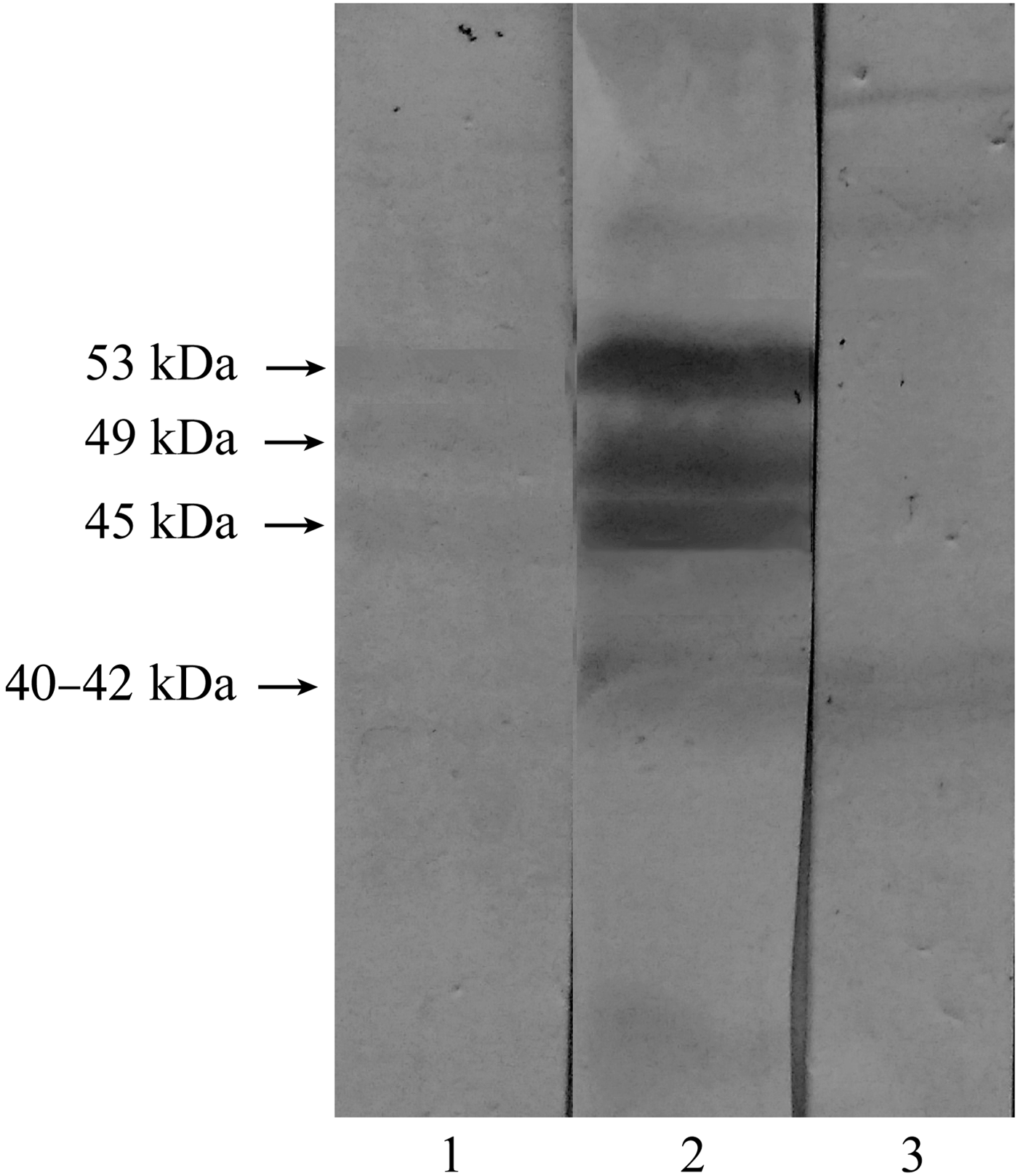
The results obtained by an inhibition test, showed that the pre-incubation of the blotted ES L1 antigens with the mAb 7C2C5 completely abolished the binding of anti-T. britovi antibodies from the examined sera, with a consequent absence of the characteristic band triad visible in the control lane (fig. 1, lane 1). This result proved, for the first time, that the antibodies from the T. britovi-infected sera and the mAb 7C2C5 compete for binding to the same epitope (fig. 1, lane 3), as has been shown for anti-T. spiralis antibodies (Ilic et al., Reference Ilic, Gruden-Movsesijan, Zivojinovic and Sofronic-Milosavljevic2014).
Reactivity of the mAb 7C2C5 with the T. spiralis ES L1 antigen and its capacity to inhibit binding of anti-T. britovi antibodies present in human sera. In the Western blot analyses, ES L1 antigen was blotted on nitrocellulose strips and incubated with: mAb 7C2C5 (lane 1) and a pool of highly positive human sera collected from T. britovi-infected patients who met the case-definition criteria (lane 2). Pre-incubation of the blotted ES L1 Ag with 7C2C5 mAb inhibited reactivity with T. britovi-specific antibodies (lane 3).

Development of the Trichinella c-ELISA
The optimal concentration of ES L1 antigens was 5 μg/ml. Equal volumes of the serum samples diluted 1:50 (50 μl/well) and the mAb–HRP diluted 1:3000 were selected as optimal for test performance, as well as an incubation time of 30 min and continuous shaking during the incubation step at RT. The correlation between different incubation conditions was higher than 95% (data not shown).
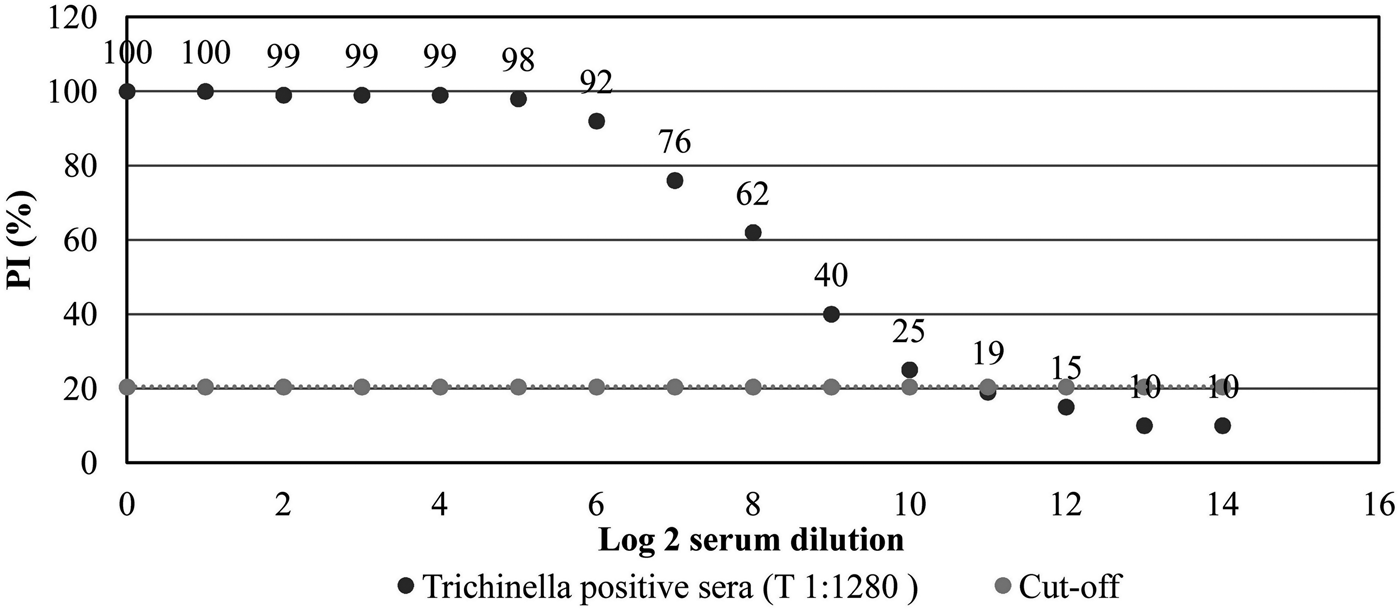
In order to confirm that the inhibition of the mAb 7C2C5–HRP binding to the immobilized ES L1 antigens is exclusively due to the presence of the host serum antibodies against Trichinella, serial twofold dilutions of highly positive human sera (IFA titre 1/1280) were tested in the c-ELISA (fig. 2).
Effects of various concentrations of antibodies from human sera on the percentage inhibition (PI) in the Trichinella c-ELISA (IFA titre of sera was 1:1280). The assay was run with continuous shaking at RT. In order to confirm that the inhibition of mAb 7C2C5–HRP binding to the immobilized ES L1 antigens was specific and resulted from antibodies against ES L1 antigen only, serial twofold dilutions of highly positive human sera were tested in the c-ELISA. The PI values decreased with the reduction in quantity of the anti-Trichinella antibody.
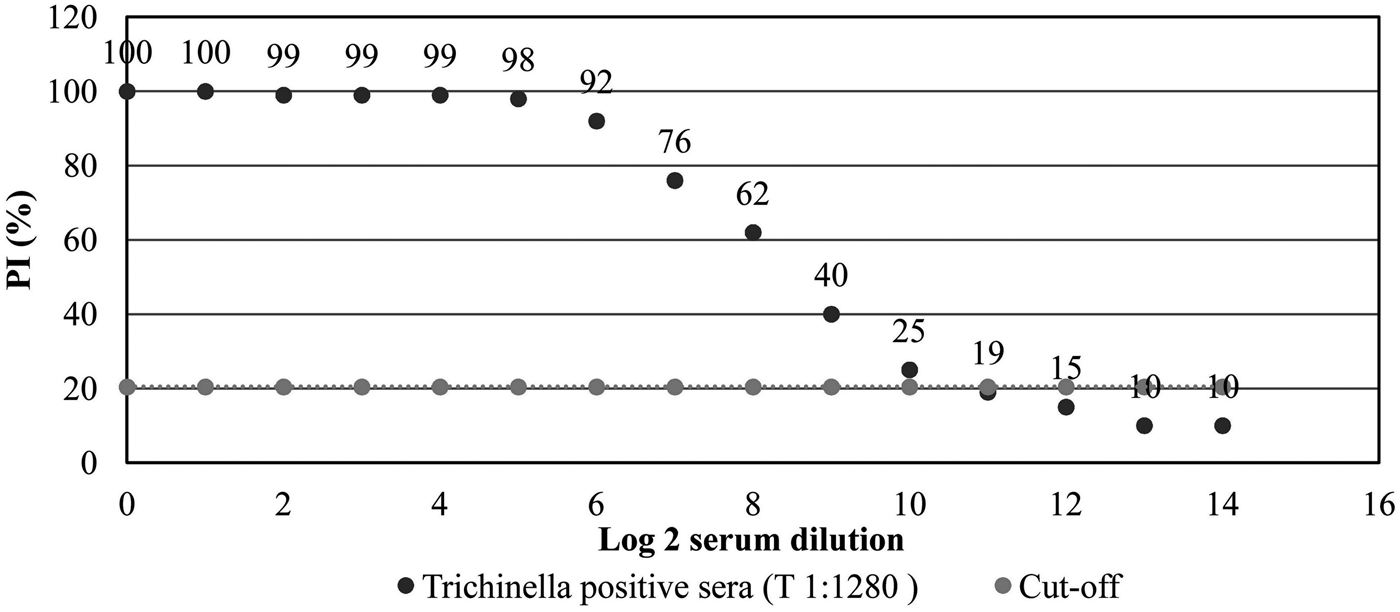
The PI values decreased with the reduction in the quantity of anti-Trichinella antibodies, indicating that the inhibition was dose dependent and due to the presence of the antibodies against Trichinella only.
The Trichinella c-ELISA validation
The samples with the defined status regarding the presence of Trichinella-specific antibodies were used for the determination of the cut-off point. For human sera, this was achieved by analysing 180 sera (80 from patients with confirmed trichinellosis and 100 from healthy blood donors as the negative controls) followed by the ROC curve analyses of the obtained ELISA results. For swine, this was achieved by analysing 115 sera (45 T. spiralis-positive sera and 70 Trichinella sp.-free sera).
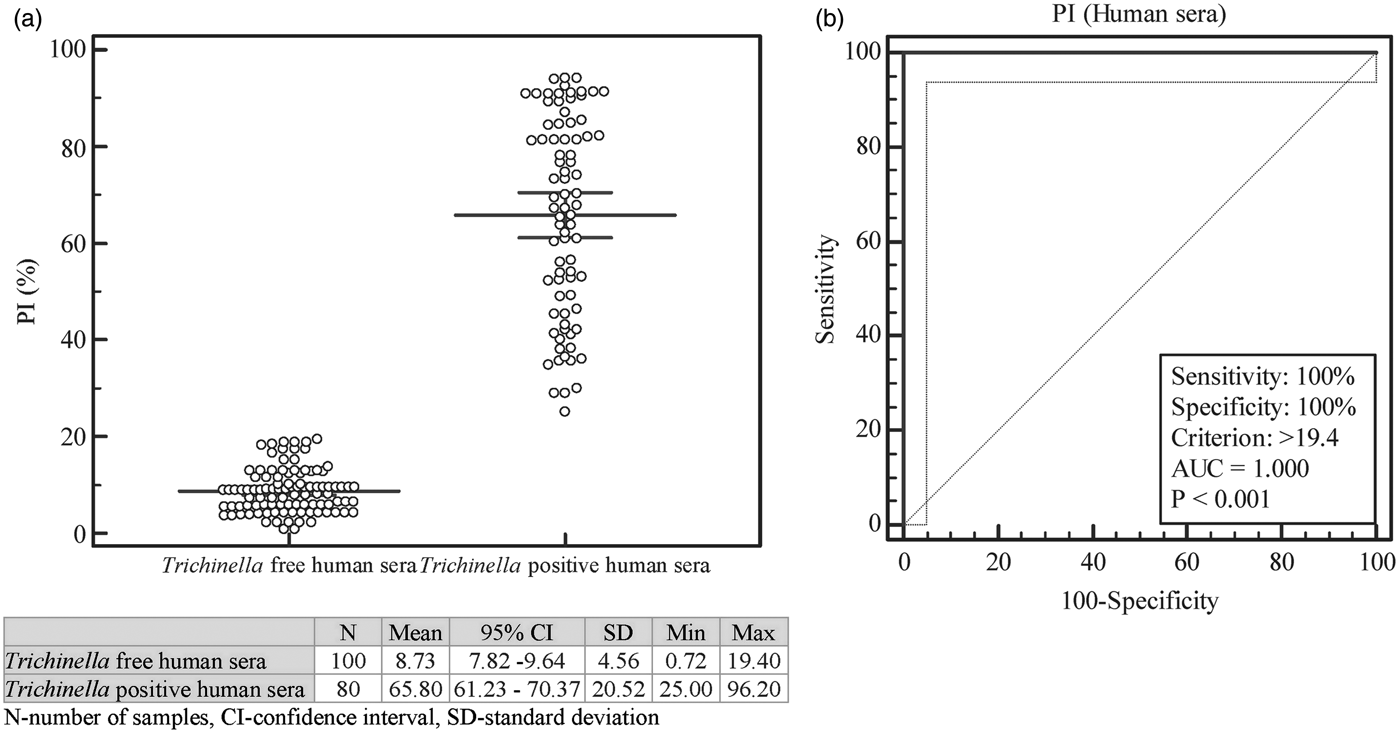
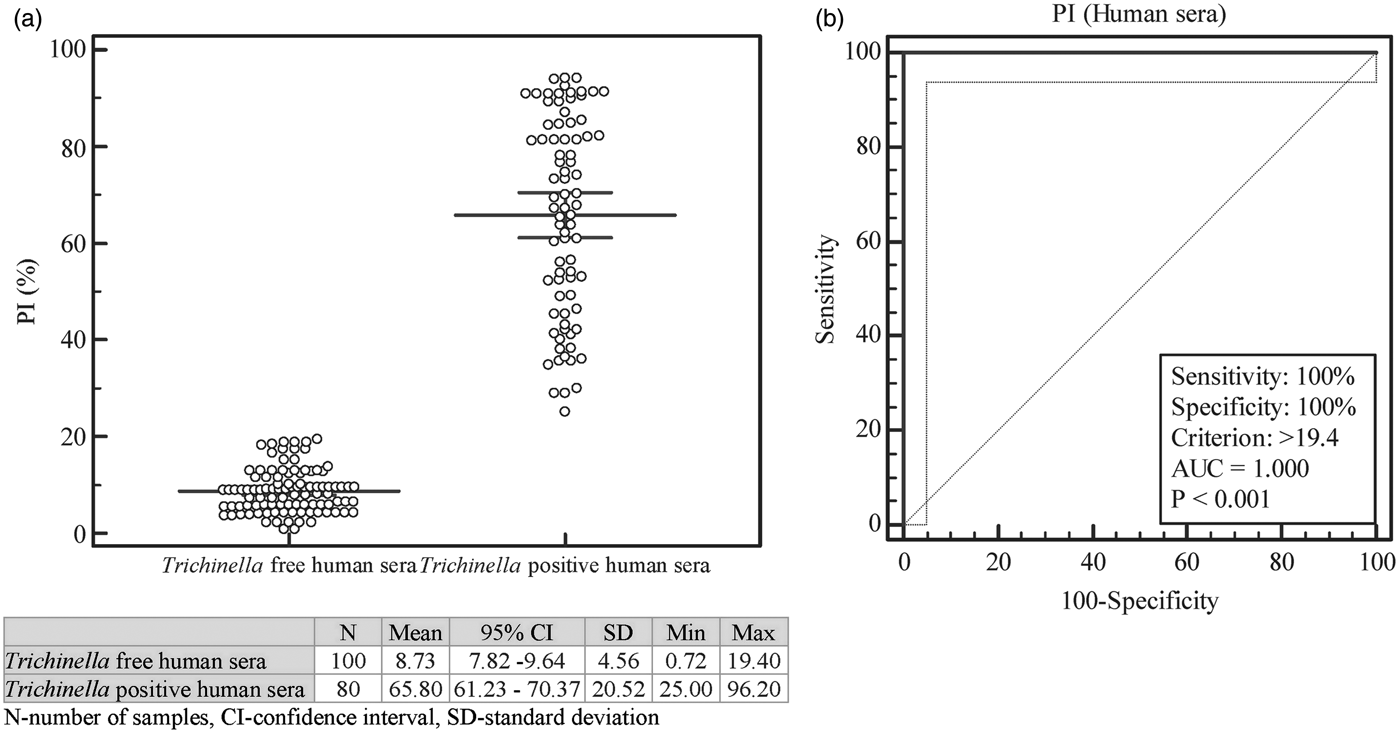
The distribution of the PI values for the Trichinella-free and Trichinella-positive human sera obtained using the c-ELISA is presented in fig. 3a. It indicated that the developed c-ELISA distinguished well between healthy persons and those with the confirmed infection. According to the ROC analysis (fig. 3b), the best cut-off values were 19.4% for PI (corresponding to 1.03 for OD); using these values, the relative sensitivity and specificity of the assay were 100% for both parameters. In this test, the area under the curve (AUC) for PI was 1.000, which suggests that the defined cut-off is suitable for interpreting ELISA results and the attainment of high accuracy in identifying the presence or absence of anti-Trichinella antibodies in human sera.
Receiver operating characteristic (ROC) analysis of the Trichinella c-ELISA using 100 Trichinella-free human sera (blood donors) and 80 Trichinella-positive sera. (a) Distribution of the percentage inhibition (PI) values for confirmed positive and negative sera. (b) ROC plot. The optimal cut-off value and area under the curve (AUC), determined for PI, were 19.4% and 1.000 respectively.
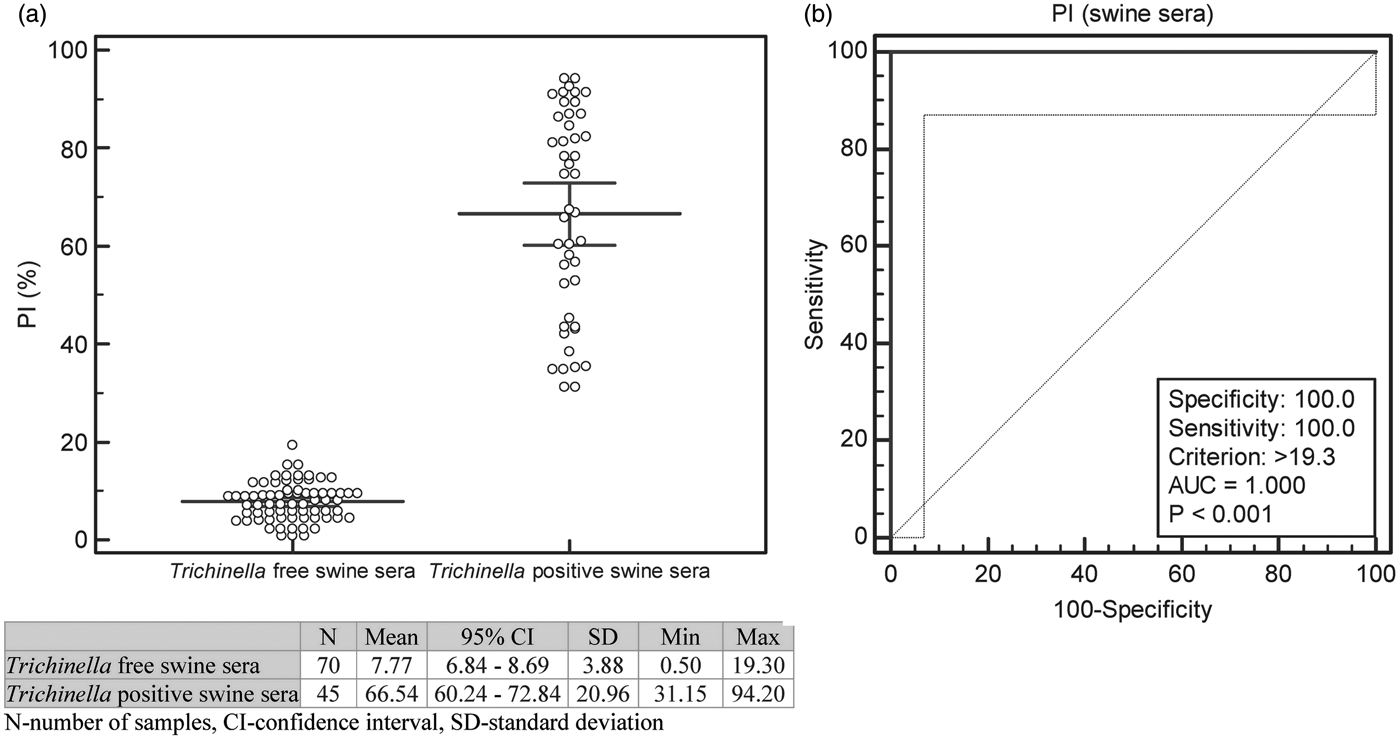
The distribution of the PI values for the Trichinella-free and Trichinella-positive swine sera obtained using the c-ELISA is presented in fig. 4a. According to the ROC analysis (fig. 4b), the best cut-off for swine sera was 19.3% for PI (corresponding to 0.95 for OD). With these values, sensitivity and specificity were 100% and the AUC was 1.000, which suggests that the defined cut-off point is suitable for interpreting ELISA results.
Receiver operating characteristic (ROC) analysis of the Trichinella c-ELISA using 70 Trichinella-free and 45 Trichinella-positive swine sera. (a) Distribution of the percentage inhibition (PI) values for confirmed positive and negative sera. (b) ROC plot. The optimal cut-off value and area under the curve (AUC), determined for PI, were 19.3% and 1.000 respectively.
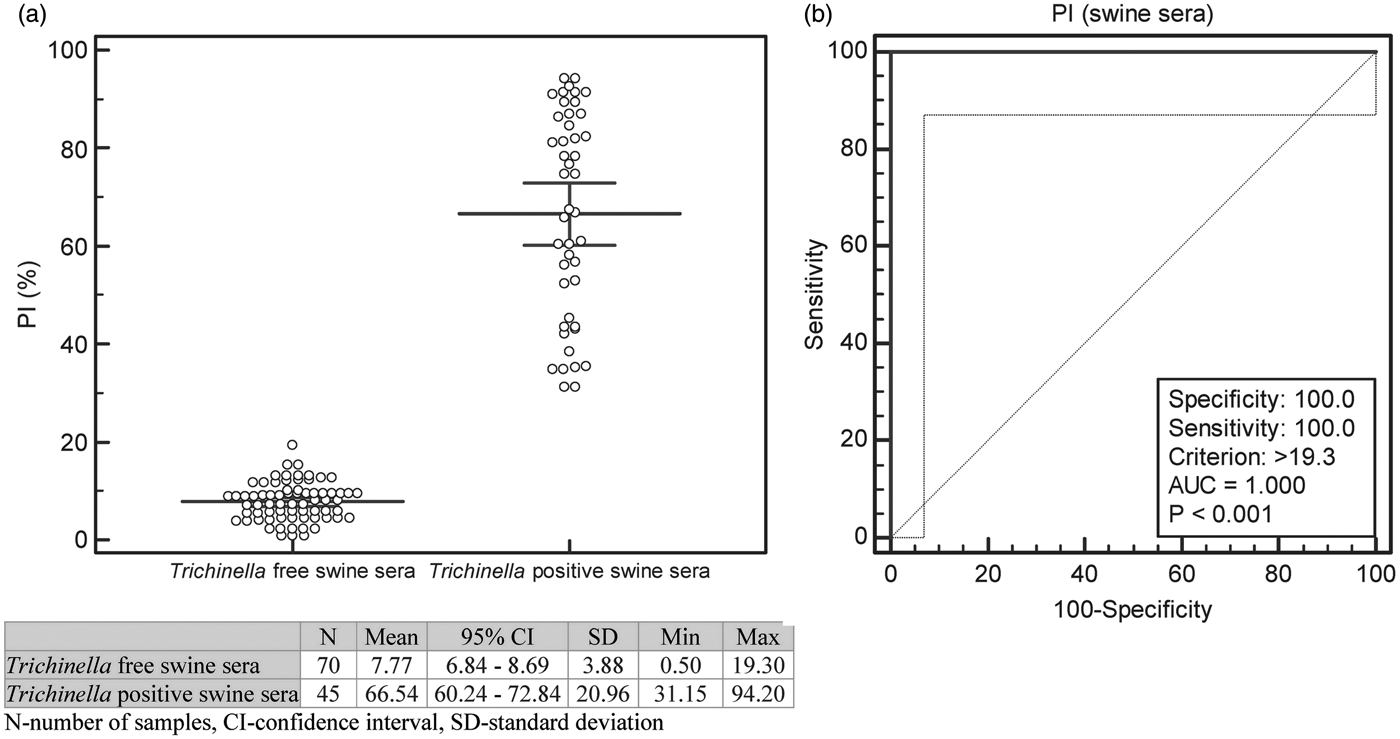
It can be concluded that when c-ELISA is performed under the same conditions, a single cut-off value set at 19.4% can be used for the determination of the serum status regarding Trichinella infection for both humans and swine.
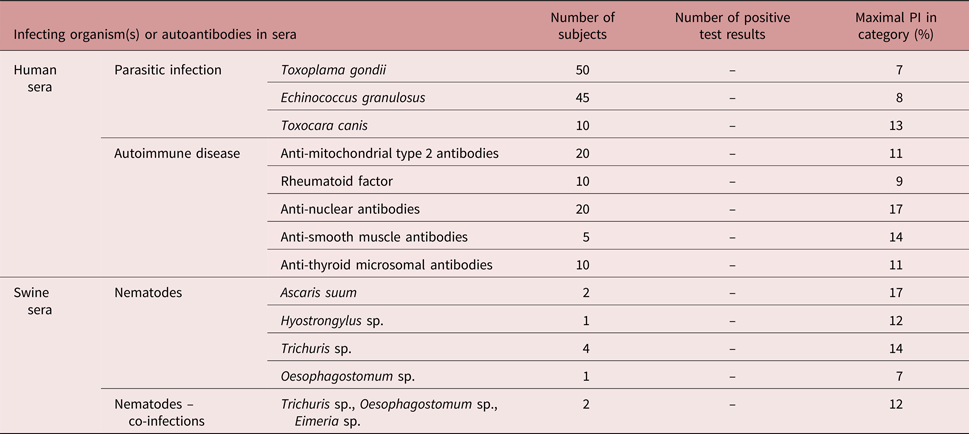
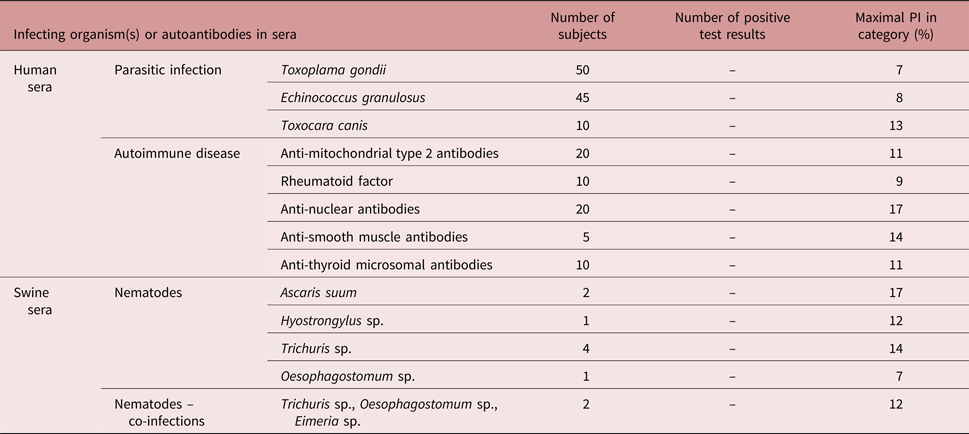
Analytical specificity was investigated using the sera from patients with autoimmune or different parasitic diseases and from swine (infected with nematodes other than T. spiralis). The results are presented as the maximal PI value per group (table 1). None of the examined sera from humans and swine exhibited a cross-reaction giving a false-positive result in the Trichinella c-ELISA. The highest observed level of the mAb binding inhibition was 17%, a value below the 19.4% threshold established for the samples containing Trichinella-specific antibodies. In this way, the c-ELISA correctly classified all potentially cross-reactive samples as negative.
Sera from humans and swine with parasitic infections other than Trichinella infection, or with other health disorders, analysed by the Trichinella c-ELISA.
The diagnostic efficacy of the assay in terms of sensitivity and specificity was calculated after testing an extensive palette of serum samples (n = 535) obtained from humans (n = 410) and swine (n = 125). The c-ELISA results for all known infected or non-infected sera were classified in a two-sided contingency table (Jacobson, Reference Jacobson1998) as true and false positive and negative categories (table 2.).
Classification of test results into true or false positive and negative categories with the known status of each sample in a two-way (2 × 2) table. The cut-off value used for classifications of test results was 19.4% PI.

The diagnostic specificity of the Trichinella c-ELISA was 100%, calculated as TN/(TN + FP), and the sensitivity was 100%, calculated as TP/(TP + FN). The positive predictive value was 100%, calculated as TP/(TP + FP), and the negative predictive value was 100% calculated as TN/(TN + FN), where TP is the number of true-positive, FN the number of false-negative, TN the number of true-negative and FP the number of false-positive results.
It is important to mention that five sera, collected from 40 persons during trichinellosis outbreaks in Serbia (which did not meet case-definition criteria and had no specific antibodies detected by the IFA and i-ELISA), were found to be positive in the c-ELISA, with PI values ranging from 20 to 45%. The presence of Trichinella-specific antibodies was confirmed by the WB analysis and reconfirmed in a second blood sample taken 2 weeks later. Therefore, regardless of the IFA and i-ELISA results, these sera were classified in the true-positive category. The Western blot analysis was done retrospectively for the rest of all serum samples from this group (n = 35) in order to confirm the negative finding obtained in the c-ELISA for the first blood sample. All these sera were negative in the WB.
Based on the analyses of all available serum samples, it could be concluded that the diagnostic specificity of the c-ELISA was 100% and the sensitivity was 100%. The positive predictive value was 100% and the negative predictive value was 100%. However, it is important to note that the diagnostic specificity is greatly influenced by the panel of tested sera (table 2).
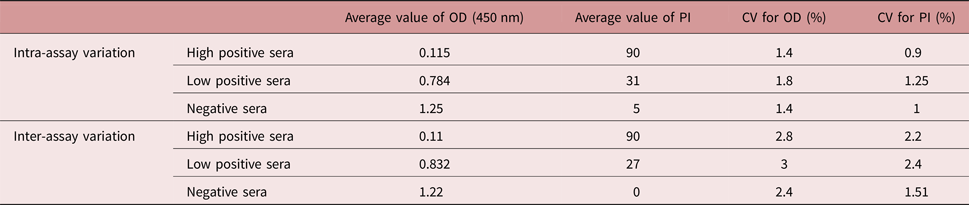
Repeatability of the c-ELISA was assessed by running the same lot of internal quality-control serum standards (n = 3) multiple times on the same plates and on different plates over time. The intra-assay repeatability was calculated using 15 replicates on a single plate and then repeated 10 times over a 4-year period for inter-assay repeatability assessment.
According to the results presented in table 3, it can be concluded that the repeatability of the assay is high, since the coefficient of variation (CV) for both PI and OD did not exceed 2%. The inter-assay reproducibility of the c-ELISA was also favourable, as indicated by the inter-assay CV which was less than 3%.
Intra- and inter-assay variation for the Trichinella c-ELISA.
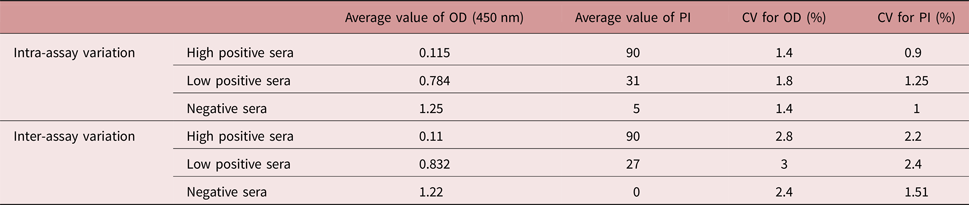
CV, coefficient of variation.
Internal quality-control serum standards – the sera with IFA titres ≥640 were defined as high positive, those with titres ranging from 160 to 320 were defined as medium positive and those with titres ranging from 40 to 80 were defined as low-positive sera.
Evaluation of the Trichinella c-ELISA using serum samples from swine and horses infected with T. spiralis
Swine sera
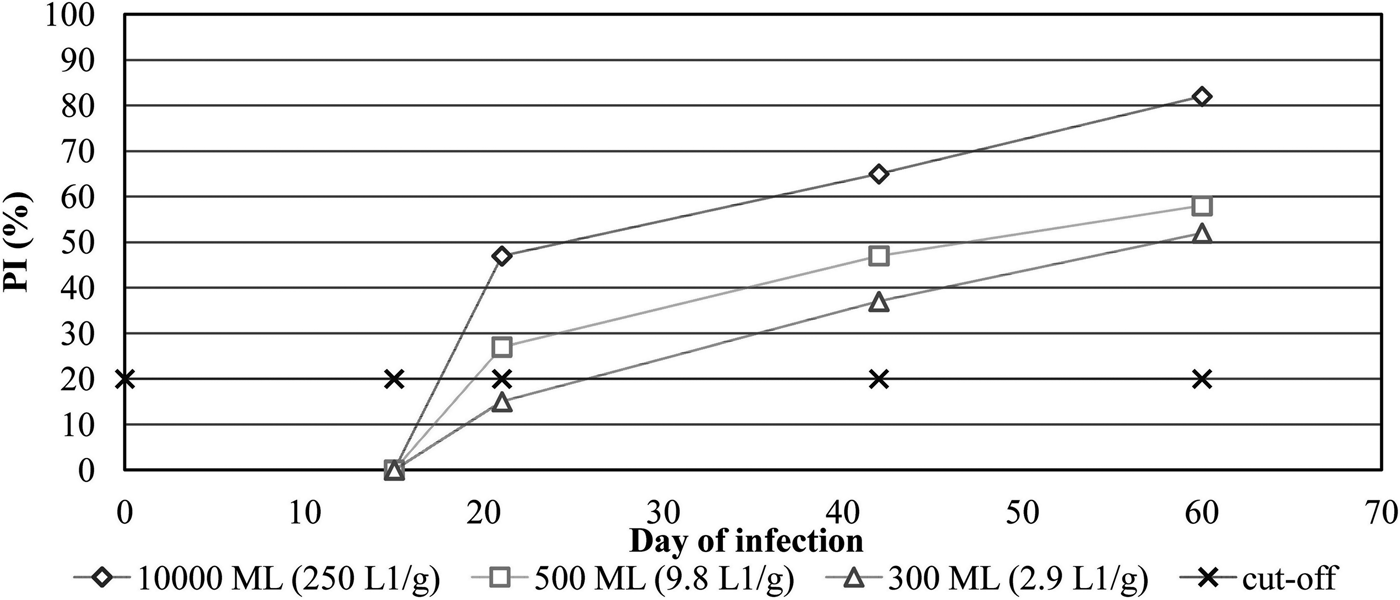
The anti-Trichinella antibody response of sera of experimentally infected pigs at different time points after infection is shown in fig. 5.
The time course of the antibody response in experimentally infected pigs, detected by the Trichinella c-ELISA. Three animals each were infected with 300, 500 or 10,000 muscle larvae (ML). Blood was collected on days 0, 15, 21, 41 and 60. The worm burden is presented in brackets.
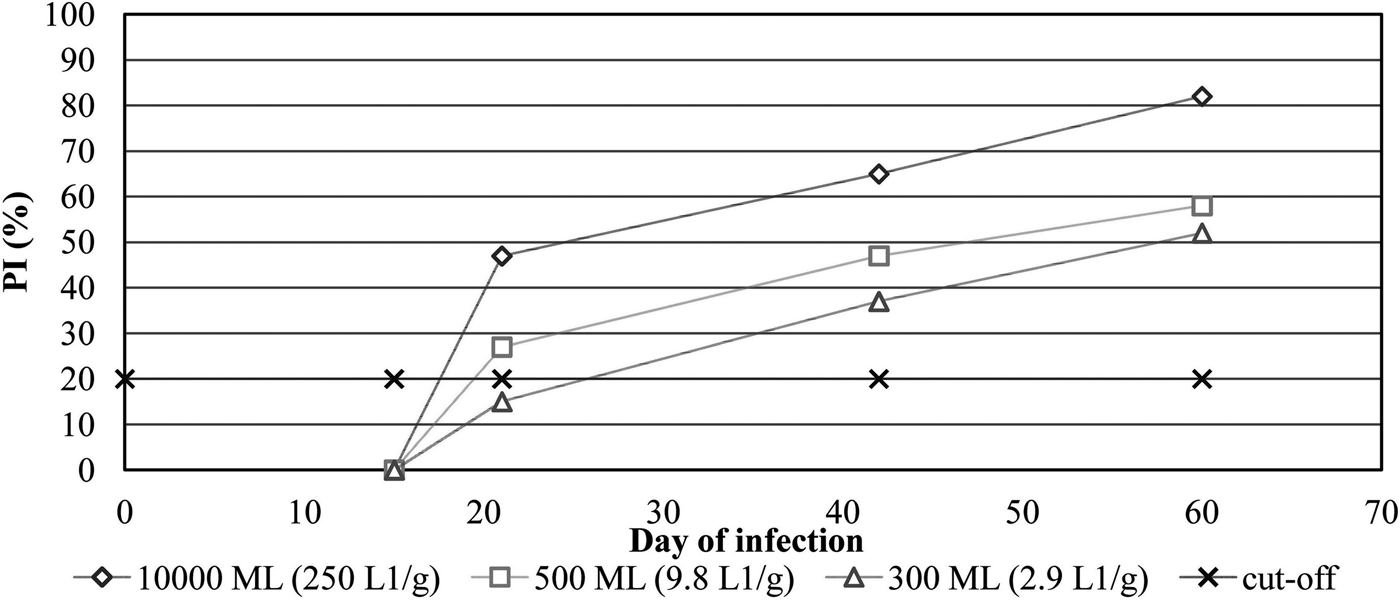
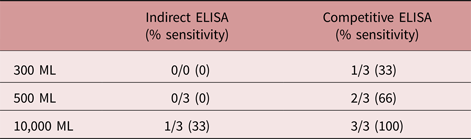
Serological responses in experimental groups given different numbers of larvae were detected between 21 and 40 days pi, depending on the infective dose. Antibodies in all animals continued to increase until the end of monitoring on day 60 pi. After the infection with 300 muscle larvae (ML), it was possible to detect antibodies from day 21 pi (1 out of 3 animals) with a sensitivity of 33%. The antibody positivity rates reached 100% on day 40 pi (3 out of 3; table 4). With 500 ML, antibodies were detected on day 21 pi in 2 out of 3 animals (sensitivity 66%), again reaching 100% positivity on day 40 pi. In swine inoculated with 10,000 ML, seroconversion was detected with 100% sensitivity on day 21 pi (table 4).
Sensitivity of the Trichinella i-ELISA and c-ELISA on day 21 pi for antibody detection in pigs (the number of sera with detectable antibodies/total number of sera per group). Relative sensitivity is shown in parentheses.
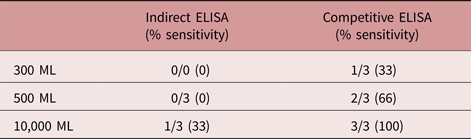
ML, muscle larvae.
In comparison with i-ELISA results for the same serum samples (Sofronic-Milosavljevic et al., Reference Sofronic-Milosavljevic, Cuperlovic, Ivanovska and Djordjevic1988), the c-ELISA detected seroconversion earlier in all experimental groups, with a higher proportion of positive animals on day 21 pi (table 4).
Horse sera
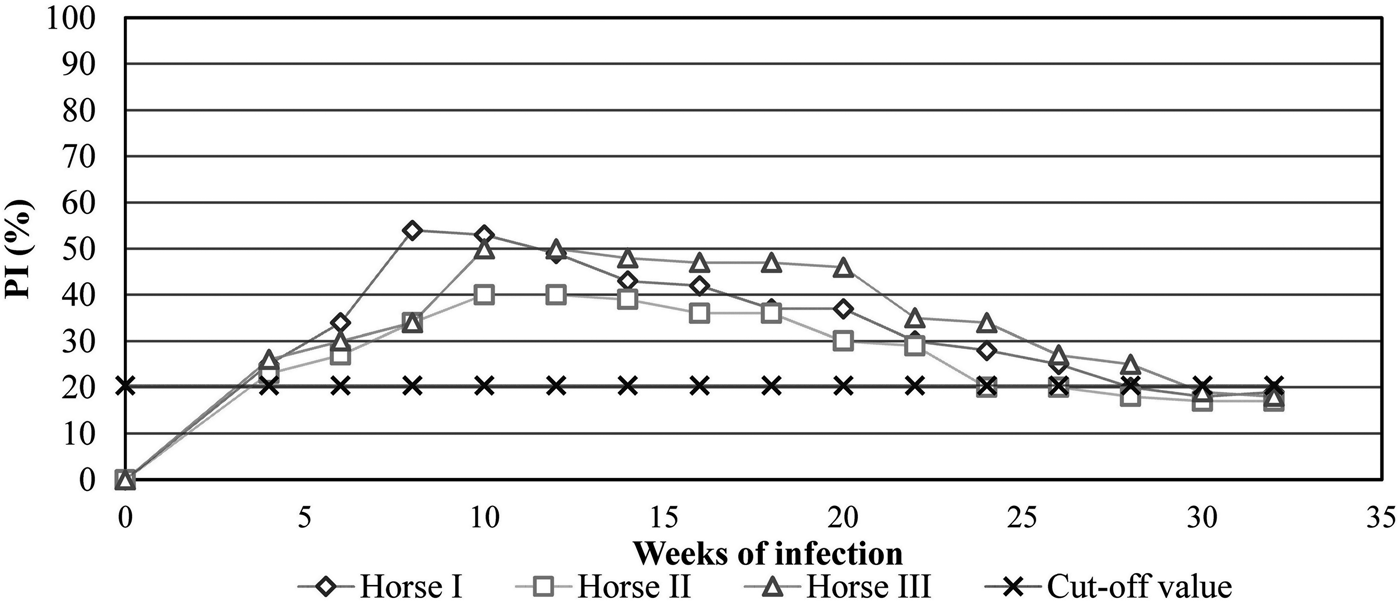
Using the cut-off value set for the human and swine sera (19.4%), all Trichinella-free horse sera analysed were scored negative by the c-ELISA. The mean PI (%) for 55 negative horses was 7.8% (SD = 4.2). The dynamics of the antibody response was analysed in three experimentally infected horses by the developed c-ELISA, and the results indicated that all three horses became low positive (22–24% PI) for anti-Trichinella antibodies 4 weeks pi. The highest PI values (35–54% PI) were recorded 6 weeks pi. Thereafter, the PI values of the specific antibodies decreased continuously, down to 20% in Horse II at 26 weeks pi and to 25 and 27% in Horses I and III, respectively, at 28 weeks pi (fig. 6). The results obtained in the i-ELISA for the same sera have been presented earlier by Sofronic-Milosavljevic et al. (Reference Sofronic-Milosavljevic, Ilic, Djordjevic, Savic, Gruden-Movsesijan, Cuperlovic and Murrell2005).
The time course of the antibody response in experimentally infected horses, detected by the Trichinella c-ELISA. The sera from three adult Serbian domestic mountain breed (DMB) horses (Horses I–III) were infected with 1100 larvae of T. spiralis. The samples were taken on day 0, then 4 weeks post infection (pi) and thereafter at 2-week intervals until the horses were slaughtered at 32 weeks pi.

Discussion
The Trichinella c-ELISA, based on 7C2C5 mAb, was developed to detect Trichinella-specific antibodies in the sera from humans and swine infected with T. spiralis, with the potential use for sera from other animal hosts (confirmed for horses) and other species of Trichinella (confirmed for T. britovi). The test employs a single antibody, mAb 7C2C5 (HRP labelled), as both the competing and detecting reagent, which allows the detection of specific antibodies irrespective of their isotype or host origin. The measurable signal in the developed c-ELISA is inversely proportional to the concentration of specific antibodies present in the examined sera and derives exclusively from the interaction of the mAb 7C2C5 and the target epitope. Due to the fact that this test proved to be rapid and easy to use, the possibility for handling errors to occur was minimized. The diagnostic potential of the complex mAb 7C2C5-immunodominant epitope to detect Trichinella-specific antibodies in human and horse sera was investigated for the first time in the c-ELISA. The Trichinella c-ELISA described here proved to be valuable for the detection of antibodies provoked by T. britovi infection in humans. Western blot analyses and an inhibition test confirmed, for the first time, the reactivity of anti-T. britovi antibodies with the 7C2C5 immunodominant epitope on ES L1 Ag of T. spiralis.
In validating a serological test, it is fundamental that the cut-off is defined. Based on the analyses of 180 human and 115 swine sera, the unique assay cut-off value was established. The c-ELISA under report provided a clear distinction between positive and negative sera, and achieved a high degree of sensitivity and specificity in both the host species tested.
Cross-reactivity is a major problem in immunodiagnosis of parasitic diseases, especially for the infections caused by nematodes. Preliminary evidence for c-ELISA specificity was obtained by examining potentially cross-reactive human and swine sera containing autoantibodies or antibodies against other parasites, including nematodes. We confirmed that the serum autoantibodies examined by Radovic et al. (Reference Radovic, Gruden-Movsesijan, Ilic, Mostarica-Stojkovic and Sofronic-Milosavljevic2012), some of which gave false-positive results in Trichinella i-ELISA, did not react in the developed c-ELISA. Moreover, the sera from patients with parasitoses, chosen because they are recognized as endemic (caused by E. granulosus), highly prevalent (caused by T. gondii) or present in Serbia (caused by T. canis) (Djurkovic-Djakovic et al., Reference Djurkovic-Djakovic, Bobic and Klun2010; Debeljak et al., Reference Debeljak, Boufana, Interisano, Vidanovic, Kulisic and Casulli2016; Gabrielli et al., Reference Gabrielli, Tasić-Otašević, Ignjatović, Fraulo, Trenkić-Božinović, Momčilović and Cancrini2017), did not give false-positive reactions in the c-ELISA. This is an advantage of this test, since the results presented by Gomez-Morales et al. (Reference Gomez-Morales, Ludovici, Amati, Cherchi, Pezzotti and Pozio2008) revealed a remarkable percentage of false-positive reactions in i-ELISA for the above-mentioned parasitoses. It can be concluded that a perfect discrimination between Trichinella-positive and Trichinella-negative sera was achieved with the Trichinella c-ELISA.
The determination of c-ELISA sensitivity for the detection of antibodies in the early stages of human infections is a problem in Trichinella serodiagnosis, since a limited number of samples can be obtained from individuals during this period pi. However, the positive finding of antibodies by the c-ELISA in five sera, collected approximately 1 month after meat consumption, which were declared Trichinella negative by i-ELISA and IFA, indicated increased sensitivity of c-ELISA in relation to i-ELISA. This could be explained by the ability of c-ELISA to detect all classes and subclasses of the specific antibodies bound to ES L1 antigens, and not primarily IgG as is the case for i-ELISA, since it is well known that, during the acute stage of human infection, elevated levels of the specific IgE, IgA and IgM can be detected prior to IgG antibodies (Bruschi et al., Reference Bruschi, Tassi and Pozio1990; Yang et al., Reference Yang, Caib, Tongc, Sunc, Xuana, Kanga, Valléed, Pascal, Chengc and Liu2016).
Higher sensitivity of c-ELISA in the early stage of the infection (21 days pi) was also observed for the sera from the experimentally infected pigs, when compared with i-ELISA (Sofronic-Milosavljevic et al., Reference Sofronic-Milosavljevic, Cuperlovic, Ivanovska and Djordjevic1988). In another study with experimentally infected pigs using i-ELISA, the first day of seroconversion was 25 days pi for a dose of 20,000 ML (Nockler et al., Reference Nockler, Serrano, Boireau, Kapel and Pozio2005).
The serodiagnosis of Trichinella infection in horses appears to be less reliable than that in humans and swine. Despite the persistence of infective larvae in muscles for at least 1 year, anti-Trichinella antibodies could not be detected with i-ELISA after 6–8 months pi (Gamble et al., Reference Gamble, Gajadhar and Solomon1996; Pozio et al., Reference Pozio, Sofronic-Milosavljevic, Gomez-Morales, Boireau and Nockler2002; Sofronic-Milosavljevic et al., Reference Sofronic-Milosavljevic, Ilic, Djordjevic, Savic, Gruden-Movsesijan, Cuperlovic and Murrell2005; Hill et al., Reference Hill, Forbes, Gajadhar and Gamble2007). Testing serum samples from experimentally infected horses by i-ELISA, Sofronic-Milosavljevic et al. (Reference Sofronic-Milosavljevic, Ilic, Djordjevic, Savic, Gruden-Movsesijan, Cuperlovic and Murrell2005) reported detectable antibodies for only up to 18 weeks pi. The Trichinella c-ELISA measured specific antibodies in the same sera for up to 26–28 weeks pi. It appears that the c-ELISA format provided a significantly higher sensitivity than i-ELISA for Trichinella antibody detection in horses; however, more studies on naturally infected horses are needed to determine precisely the suitable threshold and assay sensitivity.
Another advantage of c-ELISA over i-ELISA for testing the infection in horses is its independence from the class/subclass of Trichinella-specific antibodies, and therefore it should be convenient for the detection of at least four IgG subclasses (IgGa, IgGb, IgGc and IgG (T)) and five other isotypes (10Sg1, IgM, IgA, IgB and IgE) that exist in horses (Marti et al., Reference Marti, Horohov, Antzak, Lazary and Lunn2003).
In conclusion, the c-ELISA developed in this study has significant advantages relative to the indirect assay format in the detection of Trichinella-specific antibodies. The c-ELISA design enabled the use of the same test components and parameters for detection of antibodies in both humans and swine, with the potential for application in other hosts. Furthermore, c-ELISA appears to be suitable for detection of both T. spiralis- and T. britovi-specific antibodies. A comprehensive study, using the sera from different species hosting an infection with different Trichinella species, could reveal the true value of this test.
Acknowledgement
We would like to express our gratitude to H.R. Gamble for his generosity in providing us with the 7C2C5 hybridoma cell line.
Financial support
This study was a part of the project 173047, supported by the Ministry of Education, Science and Technological Development, Republic of Serbia.
Conflict of interest
None.
Ethical standards
The authors assert that all procedures contributing to this work comply with the ethical standards of the relevant national and institutional guides on the care and use of laboratory animals. This study involves the use of existing human specimens and therefore is not considered research on human subjects for which informed consent is required, according to the guidelines in ‘The rules of procedures of the Ethics Committee of INEP’ (No. 02-832/1).