INTRODUCTION
Over the last several decades, coral reef ecosystems have undergone widespread declines due to storms, predation, bleaching, disease and anthropogenic disturbances (Hughes et al., Reference Hughes, Baird, Bellwood, Card, Connolly, Folke, Grosberg, Hoegh-Guldberg, Jackson, Kleypas, Lough, Marshall, Nystrom, Palumbi, Landolfi, Rosen and Roughgarden2003; Pandolfi et al., Reference Pandolfi, Bradbury, Sala, Hughes, Bjorndal, Cooke, McArdle, McClenachan, Newman, Paredes, Warner and Jackson2003; Mumby et al., Reference Mumby, Dahlgren, Harborne, Kappel, Micheli, Brumbaugh, Holmes, Mendes, Broad, Sanchirico, Buch, Box, Stoffle and Gill2006; Bruno & Selig, Reference Bruno and Selig2007). Assessing these threats is essential to devise adequate management strategies. Destructive population outbreaks of the crown-of-thorns sea stars (COTS), Acanthaster planci (Linnaeus, 1758) are responsible for large-scale disturbance of coral reefs throughout the Indo-Pacific (Pearson & Endean, Reference Pearson and Endean1969; Moran, Reference Moran1986; Endean & Cameron, Reference Endean, Cameron and Dubinsky1990; Pratchett et al., Reference Pratchett, Schenk, Baine, Syms and Baird2009). Numerous attempts have been conducted to control outbreaks through direct predator removal, although the effectiveness remains controversial. In South-east Asia and the Coral Triangle, reports on the population status of COTS and evaluations of control efforts are especially lacking (Chou, Reference Chou and Wilkinson2000; Baird et al., Reference Baird, Pratchett, Hoey, Herdiana and Campbell2013).
Acanthaster planci is an obligate corallivore that consumes a wide variety of corals (Tokeshi & Daud, Reference Tokeshi and Daud2010) with a preference for Acropora and Montipora (De'ath & Moran, Reference De'ath and Moran1998b; Pratchett, Reference Pratchett2007; Pratchett et al., Reference Pratchett, Schenk, Baine, Syms and Baird2009); and COTS aggregations often cause as much as 90% local coral mortality (Chesher, Reference Chesher1969; Carpenter, Reference Carpenter and Birkeland1997). Despite the COTS' large appetite for corals and its significant influence on coral reef ecosystems, causes of population outbreaks are still poorly understood (e.g. Dulvy et al., Reference Dulvy, Freckleton and Polunin2004; Brodie et al., Reference Brodie, Fabricius, De'ath and Okaji2005; Houk et al., Reference Houk, Bograd and van Woesik2007; Fabricius et al., Reference Fabricius, Okaji and De'ath2010; Houk & Raubani, Reference Houk and Raubani2010; Timmers et al., Reference Timmers, Bird, Skillings, Smouse and Toonen2012). Meanwhile, the proliferation of outbreaks have initiated manual removals of several thousands of sea stars every year in the Indo-Pacific since the 1960s, with the most intense campaigns in Japan and Micronesia (Moran, Reference Moran1986; Yamaguchi, Reference Yamaguchi1986). More recently, an apparent increase of COTS outbreaks in South-east Asia (e.g. Vietnam, Malaysia, Indonesia and the Philippines) promoted removal programmes with volunteers collecting sea stars or injecting COTS with poison in attempts to control outbreaks in protected areas (Fraser et al., Reference Fraser, Crawford and Kusen2000; Pratchett et al., Reference Pratchett, Schenk, Baine, Syms and Baird2009).
A number of studies correlate the high density of COTS with a reduction in coral cover (e.g. Kenchington & Kelleher, Reference Kenchington and Kelleher1992; Wakeford et al., Reference Wakeford, Done and Johnson2008). However, effects of outbreaks on coral assemblages can vary greatly among regions (Endean & Cameron, Reference Endean, Cameron and Dubinsky1990). Reports of extensive coral depletion are mainly restricted to the Great Barrier Reef, Micronesia, southern Japan and Polynesia (Colgan, Reference Colgan1987; Pratchett et al., Reference Pratchett, Schenk, Baine, Syms and Baird2009; Pratchett, Reference Pratchett2010; Kayal et al., Reference Kayal, Vercelloni, De Loma, Bosserelle, Chancerelle, Geoffroy, Stievenart, Michonneau, Penin and Planes2012), while high densities of Acanthaster spp. in Hawaii (Branham et al., Reference Branham, Reed, Bailey and Caperon1971, but see Kenyon & Aeby, Reference Kenyon and Aeby2009) and Panama (Glynn, Reference Glynn1973) caused little damage to coral communities. The effect of A. planci on coral communities in South-east Asia remains poorly documented (Lane, Reference Lane1996; Tokeshi & Daud, Reference Tokeshi and Daud2010), although numerous control programmes are now occurring in this region (e.g. Vietnam, Malaysia, Indonesia and the Philippines).
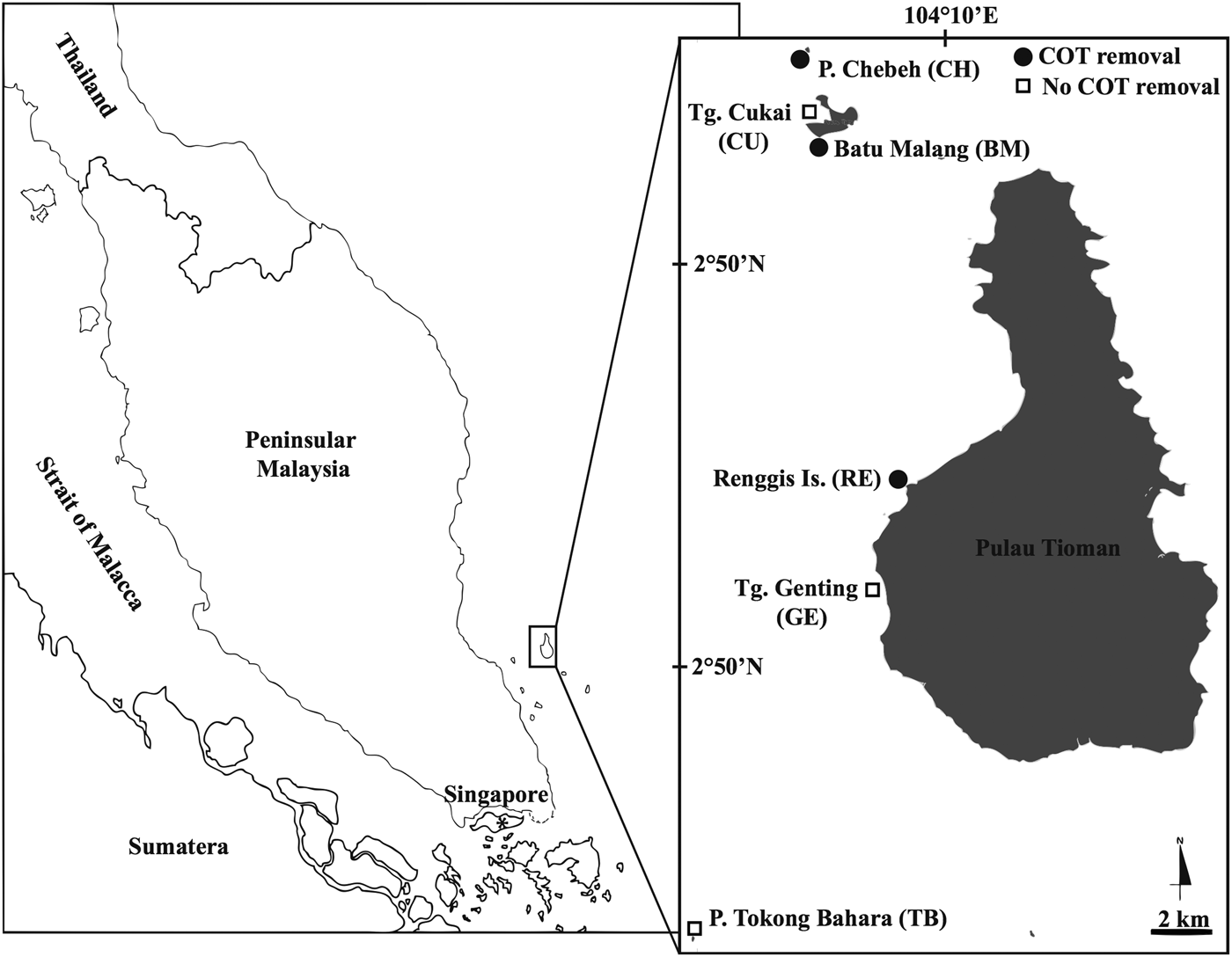
Here, we focus on the largest marine protected area (MPA) in Peninsular Malaysia – Pulau Tioman Marine Park (Figure 1), where a seasonal COTS control programme was initiated in 1998 by the Marine Park Department of Malaysia. COTS removal actions occur only during the south-west monsoon from March to September, which is characterized by relatively calm sea conditions (hereafter, the COTS removal season). The Marine Park Department has organized one short removal campaign every year around April–May, during which 50–80 volunteers collect COTS in the Pulau Tioman. Although we were unable to obtain reports of past removal efforts, during our study period volunteers collected a total of 1447 sea stars from 11 locations on 15–16 May 2009 (Marine Park Department, personal communication). Dive shops organized additional cleanups at popular dive sites throughout the COTS removal season by removing sea stars and occasionally injecting COTS with dry acid. During the north-east monsoon, from October to March, there is no COTS removal due to strong winds, rough seas and heavy rainfall (hereafter, the no-removal season). No data were available on whether COTS population could recover after this no-removal season.
Map of Peninsular Malaysia and the Marine Park Pulau Tioman showing the three sites where COTS removals occur (black circles) and the three sites free of COTS control for the last 10 years (open squares). The marine park was established in 1994 and includes nine islands (Pulau). BM, Batu Malang; CH, Chebeh; RE, Renggis; CU, Cukai; GE, Genting; TB, Tokong Bahara.

Programmes to control coral predators are rarely successful and may even prolong the damage to corals (Yamaguchi, Reference Yamaguchi1986; Johnson et al., Reference Johnson, Moran and Driml1990; Kenchington & Kelleher, Reference Kenchington and Kelleher1992; Yokochi, Reference Yokochi2006). Whether a successful control of COTS can be achieved by sea star removal remains to be more carefully evaluated before promoting such removal programmes. Therefore, the present study focuses on the impact of manual (hand-collecting) removal of the coral predator, A. planci on coral reefs in Malaysia. After the COTS removal season in 2009, we surveyed before and after a 6-month, no-removal season and tested whether COTS removal can (1) reduce sea star density, (2) change the size structure of sea star populations and (3) promote coral recovery.
MATERIALS AND METHODS
Coral reef surveys
To examine the spatial and temporal variation in size and abundance of A. planci, we conducted two field surveys on three coral reef sites (Batu Malang, Pulau Chebeh and Pulau Renggis) where COTS are regularly removed through the Marine Park programme and local dive shop initiatives, and three coral reef sites (Tg. Cukai, Tg. Genting and Pulau Tokong Bahara) where no COTS removal has been reported in the past 10 years (Figure 1). We acknowledge that removal from the control sites could have been unreported; however, the effect of those removal efforts should be minimal compared with sites where COTS are removed regularly by organized campaigns. For 2009, we were able to obtain the total number of COTS removed from organized trips of the Malaysia Marine Park Department and the NGO Blue Venture. This is a rough estimate of organized removal effort because the number of divers and area covered were not well documented; however, this is the best estimate we could obtain. We conducted the first survey in August 2009 at the end of the COTS removal season, and the second survey in April 2010 after the no-removal season. At each site, the abundance of COTS was quantified using eight haphazard belt transects (50 × 2 m) on the reef at 2–10 m depth during daytime. We measured the body diameter (from tips of the longest opposite arms) of each sea star to the nearest cm (in a few cases, the sea star could not be extracted from the coral branches and was not measured). In the April 2010 survey, we carefully removed each COTS from the substratum using a wire hook to determine the feeding status (stomach everted or not) and identified the prey coral species.
We estimated the baseline scleractinian coral diversity from the first survey (August 2009). We took 20 photo-quadrats (50 × 50 cm) per transect (the same transects were used to estimate COTS density) and analysed the photographs using the software Coral Point Count with Excel extensions (Kohler & Gill, Reference Kohler and Gill2006). Coral composition and per cent cover were estimated from 25 stratified random points (in a 5 × 5 cell grid) for each photo-quadrat. Corals were identified to the genus level, except for Acropora that was further classified into arborescent (staghorn), branching (bushy or bottlebrush) and digitate and tabulate (table and plate) forms according to Veron (Reference Veron2000). We calculated live coral cover (per cent out of 500 random points at each transect) from the two surveys and calculated the relative change in live coral cover between the two surveys. We calculated live coral cover for all corals, and separately for each of the four most abundant coral groups (i.e. arborescent Acropora, laminar Montipora, Pavona and Porites). To estimate the level of mortality for each of the four most abundant coral groups in the August 2009 survey, we calculated the relative percentage of dead coral as dead (standing skeleton) coral cover divided by the sum of dead and live coral cover of a named coral group.
Statistical analyses
To examine changes in abundance of COTS, we used generalized linear mixed-model (GLMM) with year (2009 and 2010) and COTS removal as fixed factors, and sites and transects (nested within site) as random factors. P-value was obtained from log-likelihood test. We performed a linear regression between COTS densities from our field survey and that reported from organized removal programmes. For COTS that were resting and feeding, we tested whether COTS were found evenly on the different coral group with the G-test of goodness of fit. To determine whether the population size structure of the sea stars differed with and without COTS removal, data for the three sites of each COTS removal treatment were pooled to perform Kolmogorov–Smirnov tests. We used a non-parametric test because population sizes are not normally distributed.
The difference in coral diversity among transects at each site in August 2009 was visualized with a non-metric multi-dimensional scaling (nMDS) plot using Primer 6 (Clarke & Warwick, Reference Clarke and Warwick2006). Relative abundance of each coral group was square-root transformed and converted to Bray–Curtis similarity distance matrix. Clusters of similar sites were identified with hierarchical cluster analysis and overlaid on the nMDS plot (with similarity over 40%). Analysis of similarity (ANOSIM) was used to test for differences in coral assemblages between sites with and without COTS removal (site nested within COTS removal).
To examine changes in per cent live coral cover, we used GLMM with binomial distribution, year and COTS removal as fixed factors, COTS density as covariate and sites and transects as random factors. We compared least-squared means using t-tests with Tukey adjustment to examine the interaction between year and COTS removal. Further, for the most abundant coral groups (arborescent Acropora, laminar Montipora, Pavona and Porites), we compared mortality (the relative per cent of dead corals) between sites with or without COTS removal using GLMM with binomial distribution and site and transect as random factors. GLMMs were performed using R v3.1.0 (R Development Core Team, 2014).
RESULTS
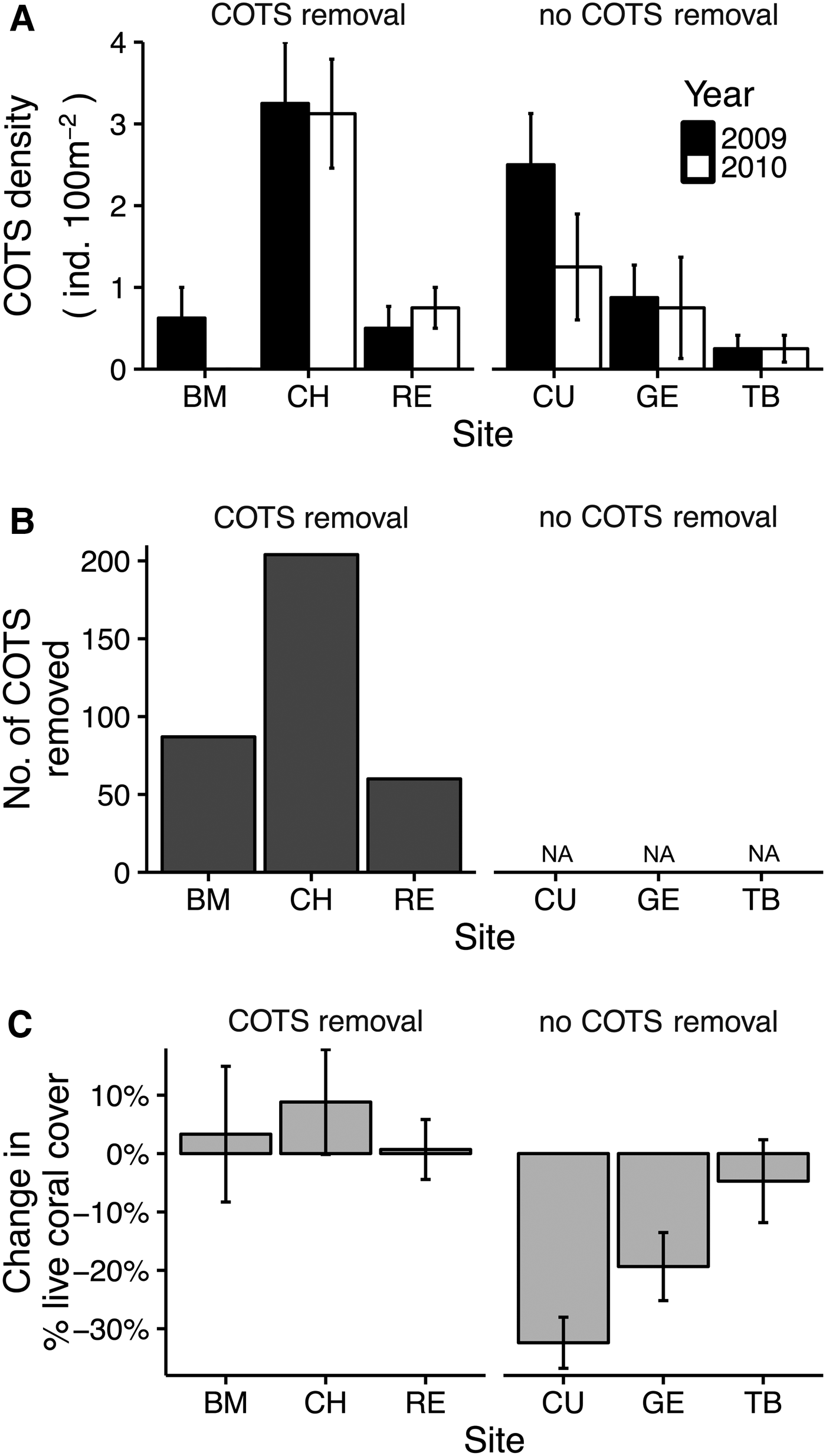
Densities of A. planci were variable among sites with the greatest densities at Pulau Chebeh with over 3 ind. per 100 m2 in both seasons (i.e. over 300 ind. ha−1 for comparison with similar studies) (Figure 2A). Our estimates of COTS densities in August 2009, right after the annual removal season, appear to reflect the number of COTS reported by organized removal programmes, because they were strongly correlated, despite marginal significance due to small sample size (Figure 2A, B; F 1,1 = 52.58, P = 0.087, adj. r 2 = 0.96). In the April 2010 survey, right after the no-removal season, we found very similar COTS densities at all sites except from Batu Malang, where no sea star was observed within the eight transects on the second survey in April 2010 (Figure 2A). Overall, we found no effect of COTS removal (chronic effect of COTS removal between sites with and without removal) on COTS densities (GLMM: χ2 1 = 0.96, P = 0.33) and no effect of year (effect of the no-removal period between the two surveys; GLMM: χ2 1 = 0.53, P = 0.22).
Spatial and seasonal variation in (A) COTS densities (±SE), (B) number of COTS removed as reported by organized removal by the Malaysian Marine Park and Blue Venture and (C) change in per cent live coral cover (±SE) before and after the 6-month period without COTS removal. Three sites were under a seasonal (March to September) COTS control programme and three sites were not. NA indicates no collection data were available, but removal efforts at these sites should be minimal.

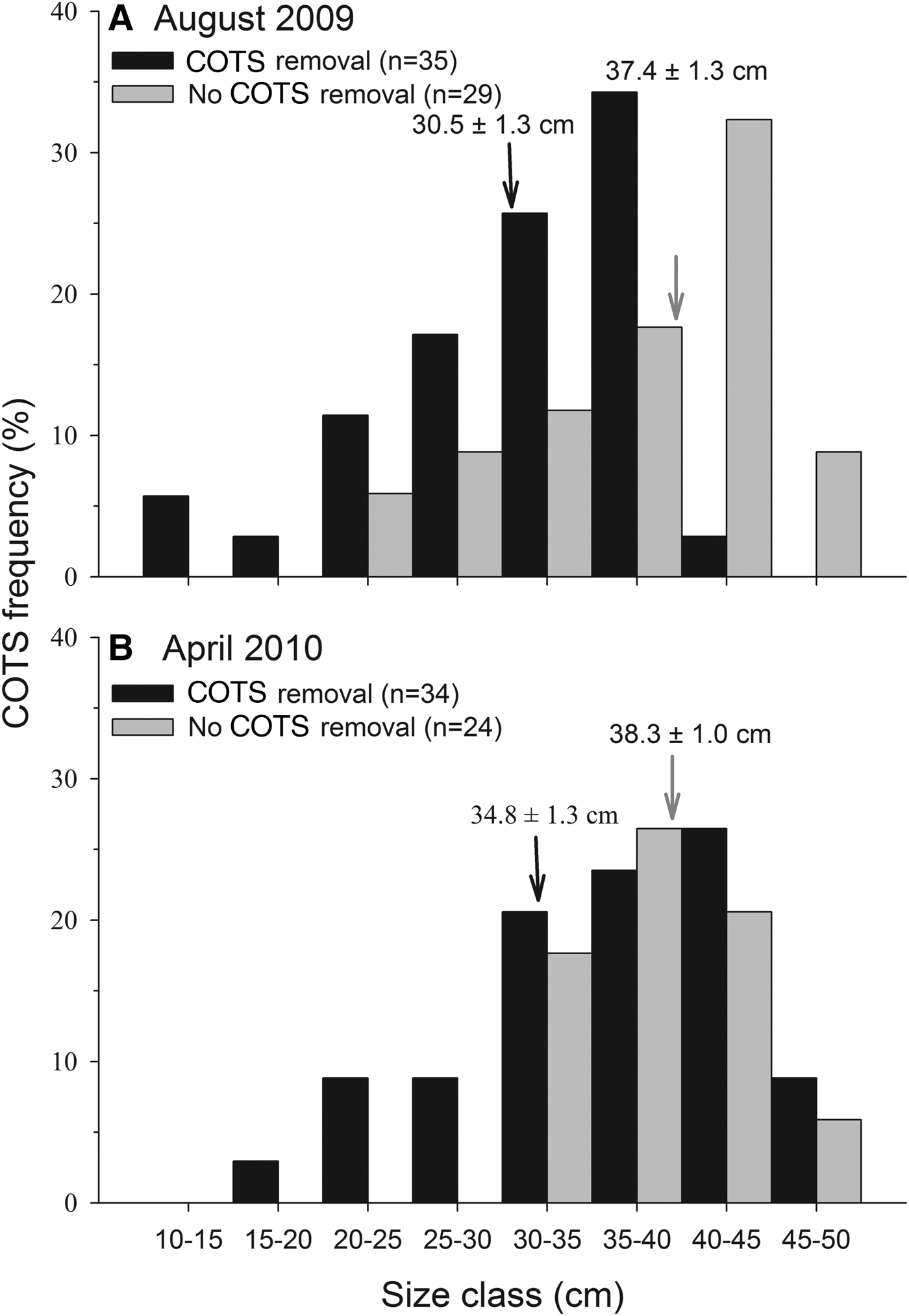
At the end of the COTS removal season (August 2009), the size structure of sea stars revealed only a few large individuals (>40 cm in diameter) at sites where COTS removal occurred, in contrast to sites with no COTS removal where large individuals dominated (K–S test: D = 0.45, P = 0.002; Figure 3A). However, after the no-removal season, no difference in size structure was observed (D = 0.34, P = 0.06). The sea star population at the COTS removal sites recovered with the presence of large individuals (>40 cm), but no small individuals (<15 cm) were observed (Figure 3B). The size structure at the no COTS removal sites was biased towards large individuals with an absence of small individuals.
Size structure of COTS (A) before (August 2009) and (B) after (April 2010) the no-removal season. Individuals from the three sites with no COTS removal were pooled, and similarly for the three sites where COTS were removed. Arrows indicate the mean (±SE) diameter of the sea stars. The numbers of individuals (N) are indicated.

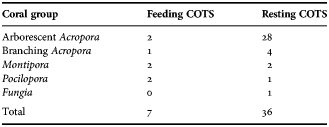
During daytime surveys, most COTS were resting (36 out of 43, 83.7%) and only a few were actively feeding. Coral groups where COTS were resting were not evenly distributed (G = 58.33, d.f. = 4, P < 0.0001) – most COTS were found resting on arborescent Acropora (28 out of 36; 78%) (Table 1). The few actively feeding individuals were found evenly on arborescent Acropora, Montipora and Pocillopora (G = 0.48, d.f. = 3, P = 0.92).
Feeding and resting substrates of COTS. Data excluded 13 individuals at unknown substrate and with unknown feeding status.

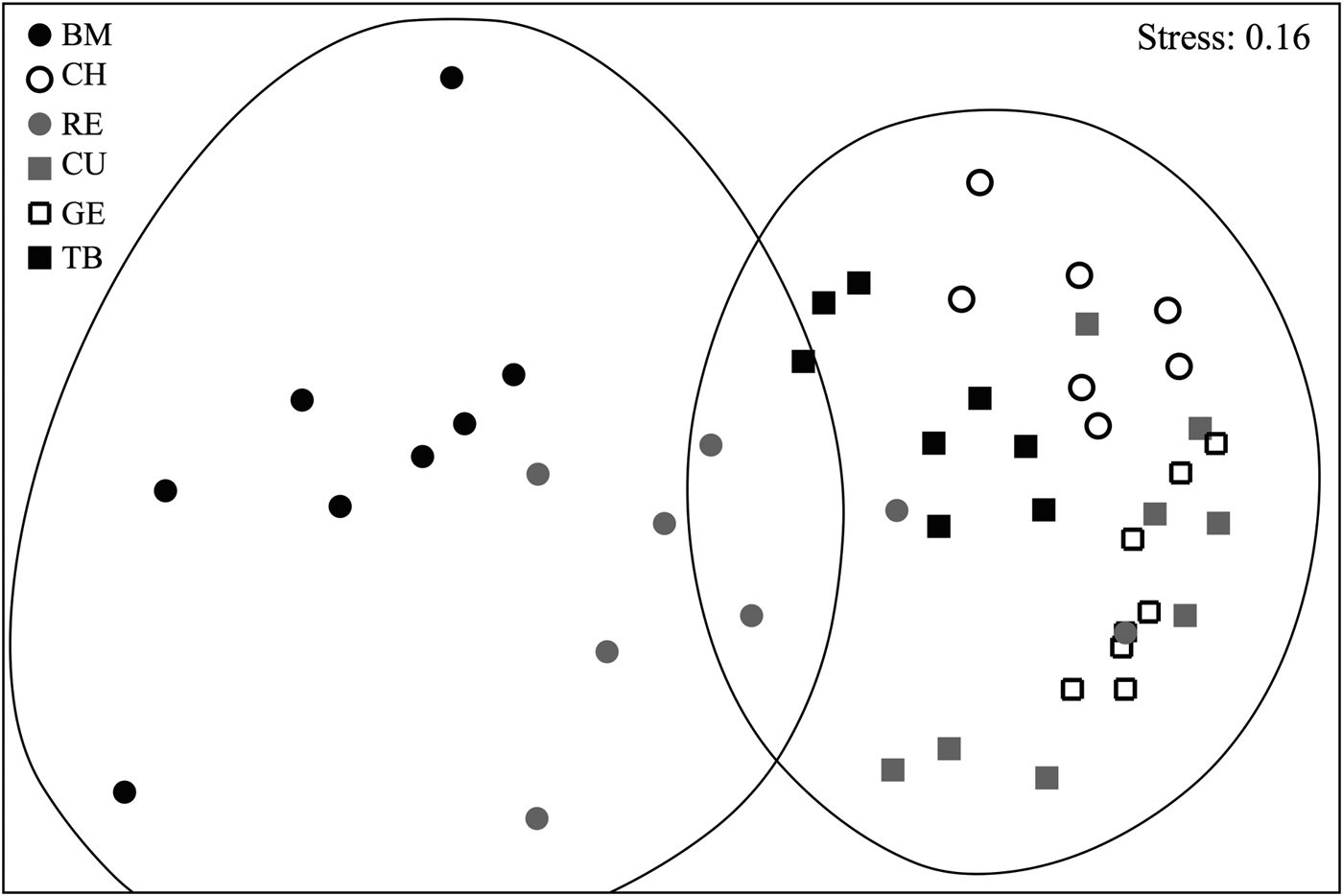
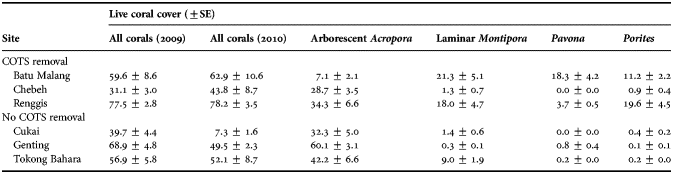
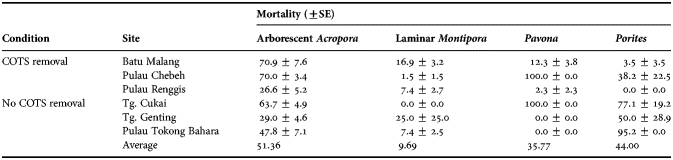
The coral assembly differed significantly among sites (ANOSIM: R = 0.62, P < 0.001). Arborescent Acropora dominated at all sites except Batu Malang and Pulau Renggis, where laminar Montipora, Pavona and massive Porites had high coverage (Figure 4, Table 2). Nonetheless, no effect of COTS removal was detected on the coral assembly (R = 0.11, P = 0.5). Live corals cover (per cent out of 500 random points at each transect) varied strongly among sites (range = 0.07–0.79, Table 2) and positively correlated with COTS density (GLMM: χ2 1 = 6.34, P = 0.012). Every unit increase in COTS (one individual per 100 m3) resulted in a 2.45% reduction in live coral cover. There was a significant interaction between year and COTS removal (GLMM: χ2 1 = 12.292, P = 0.00046): live coral cover increased slightly over the no-removal season (from the first to the second survey) at sites with COTS removal (Z = −5.81, P < 0.0001), but decreased sharply in sites with no COTS removal (Z = 32.54, P < 0.0001) (Figure 2C, Table 2). In particular, the site Tg. Cukai (no COTS removal) had a high reduction of live coral cover from 39.7 to 7.3% between the two surveys (Figure 2C, Table 2). However, COTS removal had no effect on mortality (the relative per cent of dead corals) in arborescent Acropora, laminar Montipora and Pavona (all χ2 1 > 1.83, all P > 0.09), except Porites (χ2 1 = 12.97, P = 0.00032) (Table 3).
Non-metric Multidimensional Scaling (nMDS) ordination of the coral community structures at three sites where COTS removal occurred (circles), and three sites where no COTS were removed (squares). Surrounding lines identify the clusters with a similarity >40%.

Live coral cover in 2009 and 2010 in Pulau Tioman Marine Park and contributions from the four most abundant coral groups in 2009.

Mortality (relative per cent of dead corals) of the four most abundant coral groups in Pulau Tioman Marine Park in 2009.

DISCUSSION
Our surveys show that in the largest MPA in Peninsular Malaysia – Pulau Tioman Marine Park, a seasonal organized removal did not change the density of the predatory crown-of-thorns sea star (COTS), A. planci, but a reduction of large individuals following the removal was apparent. Moreover, at sites with COTS removal, live corals increased over the no-removal season; but live corals decreased at sites without COTS removal. Therefore, our study suggests that COTS removal can promote coral health in Pulau Tioman, even though the sea star density remained high.
Despite the scale and intensity of the predatory crown-of-thorns sea star removal, evidence supporting this approach is lacking, and its application is often unsuccessful (Yamaguchi, Reference Yamaguchi1986; Pratchett et al., Reference Pratchett, Schenk, Baine, Syms and Baird2009). The control efforts of COTS on the Peninsular Malaysia have a limited effect on the density of the sea star, a temporary decrease of large individuals (>40 cm) was apparent at the end of the seasonal control programme. However, the 6-month period (October to March) without COTS removal was sufficient for the large individuals to recover. Since A. planci takes at least 2 years to reach adult size (Lucas, Reference Lucas1984), such rapid increases in size are likely due to immigration. Moreover, COTS density remains well above the outbreak levels defined in the literature (Moran & De'ath, Reference Moran and De'ath1992), in which healthy coral reefs with about 40–50% coral cover can support about 20–30 COTS per hectare (0.2–0.3 ind. per 100 m2). In Pulau Tioman, the sea star densities are among the highest reported, with up to 330 individuals per hectare (33 ind. per 100 m2) in Chebeh despite 10 years of COTS removal and the densities at most of our sites were several times above this suggested threshold. This COTS density is similar to Indonesian reefs where up to 260 sea stars per hectare were reported (52 ind. per 2000 m2), which was associated with 53% mortality in Acropora colonies (Baird et al., Reference Baird, Pratchett, Hoey, Herdiana and Campbell2013). However, the effect of COTS on coral reefs in South-east Asia remains poorly quantified, and a regional outbreak threshold is still lacking.
While the control effort was not reflected in COTS density, it was apparent in coral mortality after the no-removal season. Although sea star density explained part of the variation in live coral cover, sites with COTS removal attained a slight increase in live coral cover, but sites without COTS removal had a significant decrease in live coral cover. This suggests that the temporary absence of large sea stars due to the COTS removal may allow corals to recover, while the presence of large sea stars in sites without COTS removal may experience continuous degradation from the sea star population. Such pattern is more drastic in the two sites with the highest COTS densities (Pulau Chebeh and Tg. Cukai). At Pulau Chebeh with COTS removal, despite the high sea star density, live coral cover increased through the no-removal season. But at Tg. Cukai without COTS removal, the high sea star density has probably resulted in a substantial decline in live coral cover despite the already low coral cover in 2009; the decrease of the sea star density in 2010 suggests a terminal phase of an outbreak devastation (Pratchett, Reference Pratchett2005), where sea stars migrate away from this site. Interestingly, Glynn (Reference Glynn1973) predicted that a sea star abundance of >200 ind. ha−1 would be necessary to decimate a Pocillopora coral community in Panama, which is in accordance with our observations on Acropora communities. Indeed, Acropora was the dominant coral group in Pulau Tioman with also the highest mortality. This is in accordance with the observation that A. planci prefers to feed on Acropora (De'ath & Moran, Reference De'ath and Moran1998b; Pratchett, Reference Pratchett2007; Tokeshi & Daud, Reference Tokeshi and Daud2010). We observed several instances of COTS feeding on arborescent Acropora, but not at a higher frequency compared with other scleractinian corals (e.g. Porites and Montipora). However, our sampling is limited since most COTS were found resting during the day, in contrast to the daytime feeding reported from the Great Barrier Reef (De'ath & Moran, Reference De'ath and Moran1998a).
Marine protected areas (MPA) may be effective in reducing the frequency of sea star outbreaks (Sweatman, Reference Sweatman2008), yet effective MPA management in South-east Asia remains generally limited (Mora et al., Reference Mora, Andrefouet, Costello, Kranenburg, Rollo, Veron, Gaston and Myers2006). COTS control actions are usually considered after the report of outbreaks; but in the marine park Pulau Tioman, a seasonal sea star removal programme was conducted for the last 10 years at the popular dive sites, without monitoring the sea star abundance. The control effort is also diluted to numerous sites rather than focusing on sites with the highest COTS densities (e.g. Pulau Chebeh and Tg. Cukai). Given the limited resources available to conservation, it is essential to consider economic aspects of such control programmes that can rapidly become expensive (Yamaguchi, Reference Yamaguchi1986). ‘Upper-trigger harvest’ when a pre-determined threshold density is crossed is probably a better strategy than trying to completely eradicate the sea star population (Sabo, Reference Sabo2005; Baxter et al., Reference Baxter, Sabo, Wilcox, McCarthy and Possingham2008). Therefore, regular monitoring of COTS abundance is a prerequisite to establishing an effective control strategy and target areas. Determining the critical density threshold affecting the coral abundance and diversity is of major importance; but the threshold must be established locally since this threshold appears to vary greatly among regions (Moran, Reference Moran1986).
In conclusion, the seasonal A. planci removal in Pulau Tioman Marine Park, Malaysia, can temporarily reduce the number of large individuals on the reef and increase live coral cover through the no-removal season. There is a need to establish a local threshold of COTS density that would not significantly affect coral cover, and more focused removal efforts on reefs with COTS density above such threshold. The primary objective of the implementation of MPAs in Malaysia is the conservation and restoration of multi-species assemblages affected by human activities. This requires an understanding of species interactions in order to predict how protection (e.g. release from anthropogenic disturbance, including sea star control) may directly and/or indirectly influence these assemblages (Micheli et al., Reference Micheli, Amarasekare, Bascompte and Gerber2004).
ACKNOWLEDGEMENTS
We are grateful to Nicolas Ory, Shahrim Senik, Sim Wei Kwang and Blue Ventures volunteers for their help in the field. We are also grateful to Tioman Marine Park Officers, Mdm Izarenah Md. Repin and Manap B. Abdullah for their support, and the School of Environmental & Natural Resource Sciences, National University of Malaysia for equipment and logistics support. Shelby L. Ziegler provided constructive comments on the manuscript.
FINANCIAL SUPPORT
This work was supported by the University of Hong Kong grants (C.D.); and the Universiti Kebangsaan Malaysia (A.K., grant number UKM-GUP-ASPL-08-04-234, UKM-ST-FRGS0011-2010).