Introduction
While cognitive performance generally declines with rising age (Harada et al., Reference Harada, Natelson Love and Triebel2013), the progression and severity of this decline is far from evenly dispersed (de Frias et al., Reference de Frias, Lövdén, Lindenberger and Nilsson2007). Specifically, older adults with more education report higher cognitive performance, a deferred onset of cognitive damage, and a relatively reduced risk of dementia compared to their counterparts who are not as well-educated (Clouston et al., Reference Clouston, Glymour and Terrera2015). Nevertheless, how individuals perform cognitively in later life may be influenced not only by their own education but also by the educational attainment of their family, particularly their adult children. Empirical studies do reveal that older parents with well-educated adult children report fewer physical limitations, reduced psychological distress, greater life satisfaction and an overall improved life expectancy (Torssander, Reference Torssander2013; Friedman and Mare, Reference Friedman and Mare2014; Lee et al., Reference Lee, Glei, Goldman and Weinstein2017; Lee, Reference Lee2018; Yahirun et al., Reference Yahirun, Sheehan and Mossakowski2020a).
The cognitive health impact of adult children's education is far less explored. While a limited body of research (e.g. Lee, Reference Lee2018; Ma, Reference Ma2019; Yahirun et al., Reference Yahirun, Vasireddy and Hayward2020b) is beginning to assess this relationship, the extent to which the link between children's education and parents’ cognitive health varies by parents’ own social and relational assets remains to be tested empirically. According to the theory of resource substitution (Ross and Mirowsky, Reference Ross and Mirowsky2006), compared to their advantaged peers, those with fewer personal resources (e.g. education, income, power) are more likely to benefit from resources of others.
We employ the Health and Retirement Study (HRS), a nationally representative panel survey, to investigate the relationship between adult children's education and older parents’ cognitive health among individuals 50 years and older. Moreover, and more importantly, we assess whether this relationship is conditioned by parents’ own socio-economic status (SES) and marital status. Understanding what modifiable factors can prevent or protect against cognitive decline is important given that decline in cognition can negatively alter the nature of social roles and relationships (e.g. Aartsen et al., Reference Aartsen, Van Tilburg, Smits and Knipscheer2004); increase mental distress; and affect quality of life, mobility, morbidity and life expectancy (Ahn et al., Reference Ahn, Kim, Kim, Chung, Kim, Kang and Kim2009; Maki et al., Reference Maki, Yamaguchi, Yamagami, Murai, Hachisuka, Miyamae, Ito, Awata, Ura, Takahashi and Yamaguchi2014; Kim et al., Reference Kim, Park and An2019; Parikh et al., Reference Parikh, Troyer, Maione and Murphy2016). Also, unlike past generations, today's parents and children spend several more decades of life together, with adult children shouldering the important and often prolonged responsibility of care-giving. As such, research on later-life health should include examining the additive and interactive effects of attributes and assets of both older adults and their adult offspring.
Education and later-life cognitive functioning
The commodity theories of education posit that education positively affects cognition in part through its link to socio-economic resources of employment, income and health insurance. While socio-economic assets are consequential to cognitive health, theories of learned effectiveness suggest that education ‘develops habits, skills, resources, and abilities that enable people to achieve a better life’ (Ross and Mirowsky, Reference Ross, Mirowsky, Bird, Conrad, Fremont and Timmermans2010: 33). In addition to more sophisticated reading, writing, reasoning and problem-solving skills, which improve brain functioning through cognitive reserve (e.g. Stern, Reference Stern2012), higher education also is associated with greater belief in science, better access to health knowledge, early adoption of a health-promoting lifestyle and fewer risky health behaviours (Cutler and Lleras-Muney, Reference Cutler and Lleras-Muney2010; Pampel et al., Reference Pampel, Krueger and Denney2010; Margerison-Zilko and Cubbin, Reference Margerison-Zilko and Cubbin2013; Centers for Disease Control and Prevention, 2013), all of which reflect better self-care and reduced risk of chronic conditions, such as obesity, hypertension, diabetes, heart disease and stroke, which, in turn, are strong correlates of cognitive decline (Case et al., Reference Case, Fertig and Paxson2005; Clouston et al., Reference Clouston, Kuh, Herd, Elliott, Richards and Hofer2012; Leto and Feola, Reference Leto and Feola2014; Levine et al., Reference Levine, Galecki, Langa, Unverzagt, Kabeto, Giordani and Wadley2015; Dye et al., Reference Dye, Boyle, Champ and Lawton2017; Yohannes et al., Reference Yohannes, Chen, Moga, Leroi and Connolly2017; Taylor et al., Reference Taylor, Bouldin, Greenlund and McGuire2020). Education also means greater opportunities to meet people outside immediate kin and develop social skills that help not only to initiate but preserve social relationships (Kohli et al., Reference Kohli, Hank and Künemund2009; Fischer and Beresford, Reference Fischer and Beresford2015). Social relationships protect against cognitive distress (Kuiper et al., Reference Kuiper, Zuidersma, Zuidema, Burgerhof, Stolk, Oude Voshaar and Smidt2016). All these health benefits attached to education, nonetheless, can also spill over (Friedman and Mare, Reference Friedman and Mare2014) to members of a social network – especially one's family.
Adult children's education and older parents’ cognitive functioning
Repeated scientific inquiry finds support for the ‘downward’ flow of resources model showing us how educated parents prove immeasurably beneficial for the health and wellbeing of their children (Hayward and Gorman, Reference Hayward and Gorman2004; Mare, Reference Mare2011). Likewise, research on the ‘upward’ flow of resources model suggests how well-educated children positively impact the health of older parents (Friedman and Mare, Reference Friedman and Mare2014; Lee et al., Reference Lee, Glei, Goldman and Weinstein2017; Lee, Reference Lee2018; Yahirun et al., Reference Yahirun, Sheehan and Mossakowski2020a). According to the lifecourse perspective's ‘linked lives’ principle, the lives of family members are interdependently connected through shared expectations, experiences and resources (Elder et al., Reference Elder, Johnson, Crosnoe, Mortimer and Shanahan2003). Education is one such resource whose benefits extend beyond the individual to their social network. According to the social capital theory, educational accomplishments of one person may be consequential for the physical, mental and social wellbeing of others in that network (Song and Chang, Reference Song and Chang2012). Adult children, who are often a source of emotional, social and instrumental support (Hogan and Eggebeen, Reference Hogan and Eggebeen1995; Zarit and Eggebeen, Reference Zarit, Eggebeen and Bornstein2002), serve as a medium through which personal resources are transmitted to other family members, namely older parents. The ability to help effectively, however, may be influenced by assets such as education. Like children who benefit from having more-educated parents, parents in later life may benefit from having children who are well-educated.
Better-educated children may act as a mechanism of social control where they discourage risky health habits and instead push parents toward behaviours more beneficial to health, including proper diet, physical exercise, utilisation of health services and compliance with medication, which are linked to later-life cognition (Cadar et al., Reference Cadar, Pikhart, Mishra, Stephen, Kuh and Richards2012). Social learning theorists (e.g. Bandura, Reference Bandura and Jones1962) posit that children learn by observing their parents; it is just as likely then that parents are socialised into newer and healthier ways of living by observing their adult children (Friedman and Mare, Reference Friedman and Mare2014).
Better-educated children are in a better position to help parents in need. Recent research, for example, uncovers the physiological health benefits of having well-educated children by reporting an inverse association between adult children's education and older parents’ risk for inflammation (Lee, Reference Lee2018). Adult children's education also is linked to better physical functioning among older parents (Zimmer et al., Reference Zimmer, Hermalin and Lin2002). Moreover, according to the ‘linked lives’ principle, the stress felt by one family member often reverberates through the entire family (Elder et al., Reference Elder, Johnson, Crosnoe, Mortimer and Shanahan2003). Adult children who grapple with economic instability and unsteady relationships are a source of mental distress for older parents (Greenfield and Marks, Reference Greenfield and Marks2006). Alternatively, given that higher education is linked to economic and social stability (Hout, Reference Hout2012), parents of well-educated children are far less psychologically and physically distressed (Ryff et al., Reference Ryff, Lee, Essex and Schmutte1994; Lee et al., Reference Lee, Glei, Goldman and Weinstein2017). These very mechanisms that explain the physical and psychological effects of children's education on their parents have the potential to explain its impact on parents’ cognitive health. For instance, better-educated children may have knowledge of cognitively stimulating activities that could delay the onset of dementia; that knowledge may get transmitted to ageing parents, which consequently could positively shape their cognitive health. While Lee (Reference Lee2018), Ma (Reference Ma2019) and Yahirun et al. (Reference Yahirun, Vasireddy and Hayward2020b) do find cognitive health benefits of having well-educated children, the extent to which this relationship is conditioned by the parents’ own social and economic resources remains an empirically untested line of inquiry.
Resource substitution theory
The theory of resource substitution of education and health posits that education is more consequential to the health of individuals who are otherwise socially and economically disadvantaged (Ross and Mirowsky, Reference Ross and Mirowsky2006, Reference Ross, Mirowsky, Bird, Conrad, Fremont and Timmermans2010). Those with fewer personal, social and economic means depend more on education for health than their peers with other flexible resources (e.g. income, wealth, power):
Resource substitution theory predicts that education interacts with disadvantaged social origins, such that education has a larger effect on health for individuals who grew up in families with poorly educated parents than it does for the more advantaged. (Ross and Mirowsky, Reference Ross and Mirowsky2011: 592)
Based on this premise of the theory of resource substitution, we argue that adult children's education – an achieved asset – matters more for those parents who themselves are not as socio-economically well-situated. We posit that compared to their well-to-do counterparts, for older adults with fewer social and economic resources, the education of adult children becomes a substitutable or transposable resource that is consequential for their cognitive health.
Older parents’ own SES and marital status as moderators
Based on the resource substitution theory, there are a few reasons why adult children's education may matter more for older adults with fewer personal resources. Unlike their more-educated peers, older adults with fewer years of education may not have comparable access to health knowledge or cultural health capital (Shim, Reference Shim2010). They also may be more susceptible to other later-life stressors, including loss of income, insufficient income following retirement and chronic illnesses (Tsai, Reference Tsai2017). Having well-educated children, therefore, may mean more to the socio-economically disadvantaged than it does to advantaged older adults. Moreover, compared to lower-SES parents, parents of higher SES may rely more on their own human capital and hesitate to seek help from children. One caveat to this argument, however, is that children with more education are more likely to live farther away from their parents (Machin et al., Reference Machin, Salvanes and Pelkonen2012; Malamud and Wozniak, Reference Malamud and Wozniak2012), potentially limiting the care they can provide to ageing parents.
Like SES, marital relationship also represents a critical social resource upon which individuals depend for emotional, social and instrumental needs. As such, research shows that transitions such as separation, divorce and spousal death often result in physical and psychological distress, even if it is short-lived (Holmes and Rahe, Reference Holmes and Rahe1967; Amato, Reference Amato2000; Hansson and Stroebe, Reference Hansson and Stroebe2007). Both spousal death and divorce often represent loss of income, a confidant, a form of social control, and a source of emotional and instrumental support (Amato, Reference Amato2000; Utz et al., Reference Utz, Reidy, Carr, Nesse and Wortman2004). Unmarried older adults are more socio-economically disadvantaged than their married counterparts; and ample research has documented the psychological health benefit of married persons compared to their single counterparts (e.g. Umberson et al., Reference Umberson, Wortman and Kessler1992; Pudrovska et al., Reference Pudrovska, Schieman and Carr2006). Even after controlling for education, unmarried older adults are significantly poorer and endure a disproportionately higher risk of disability compared to their married peers (Lin and Brown, Reference Lin and Brown2012). As such, adult children are most likely to step in as support providers when parents encounter marital dissolution. For instance, studies have shown that while through most of their lives, parents give more support than they receive, this equation changes when parents become widowed (Ha et al., Reference Ha, Carr, Utz and Nesse2006; Ha, Reference Ha2008). Again, based on the theory of resource substitution, we assume that the positive impact of adult children's education on cognitive health is most foreseeable in the case of older parents without a partner as opposed to their partnered counterparts.
Summary, aims and hypotheses
Understanding how children's resources improve older parents’ cognitive functioning is important in identifying both older adults susceptible to cognitive decline and family-level resources that are most critical in preventing or slowing such a decline. This also is important as practitioners work to allocate health services and resources among those older adults with cognitive difficulties. We contribute to this task by assessing the relationship between adult children's education and older parents’ cognitive health in the United States of America (USA). We also explore whether this relationship is moderated by older parents’ own SES (namely educational attainment, income and occupation) and marital status. We have two hypotheses guiding our study.
• Hypothesis 1: Adult children's education positively affects parents’ episodic memory over time, such that those with better-educated children report a better memory trajectory than their counterparts with less well-educated offspring.
• Hypothesis 2: The positive impact of children's education on parents’ episodic memory trajectory is stronger for parents who are less socio-economically advantaged and those who are not living with a partner.
Methods
Data and sample
This study employs Waves 5 (2000) to 13 (2016) of the Health and Retirement Study (HRS). HRS, conducted by the University of Michigan, is a nationally representative longitudinal panel survey of approximately 20,000 individuals age 50 and above and their spouses in the USA (Sonnega et al., Reference Sonnega, Faul, Ofstedal, Langa, Phillips and Weir2014). It is supported by the National Institute on Aging (NIA U01AG009740) and the Social Security Administration. This cohort was first interviewed in 1992 (the response rate is 81.6%) and subsequently every two years since then. The sub-cohorts were added at different stages of the HRS. The HRS consists of seven sub-cohorts, including Initial HRS cohort (born 1931–1941); AHEAD (born before 1924); CODA (born 1924–1930); War Baby (born 1942–1947); and Early, Mid, and Late Baby Boomer (born after 1947). We did not use cohorts of Early, Mid, and Late Baby Boomer in our analysis because these cohorts were added after Wave 5. We began our analysis with Wave 5, as a complete ‘census’ of the schooling for all of the respondents’ children was taken in that year.
We presumed that the survival effect might be a problem for the oldest-old in particular, that is, participants in the HRS aged 90+ are much healthier and have better cognitive function than their peers (aged 90+) who were not interviewed in the HRS. Additionally, previous research has revealed different results on the association between cognitive reserve (e.g. own education) and cognition decline among the oldest-old (Peltz et al., Reference Peltz, Corrada, Berlau and Kawas2011; Cadar et al., Reference Cadar, Stephan, Jagger, Johansson, Hofer, Piccinin and Muniz-Terrera2016). For example, higher reserve is not associated with cognitive decline or incident dementia among the oldest-old (Lavrencic et al., Reference Lavrencic, Richardson, Harrison, Muniz-Terrera, Keage, Brittain, Kirkwood, Jagger, Robinson and Stephan2018). It is reasonable to assume that factors contributing to cognitive decline in the oldest-old may differ from causes attributed to cognitive decline in their young-old counterparts. Consequently, we chose not to include those aged 90+ in the main analysis.
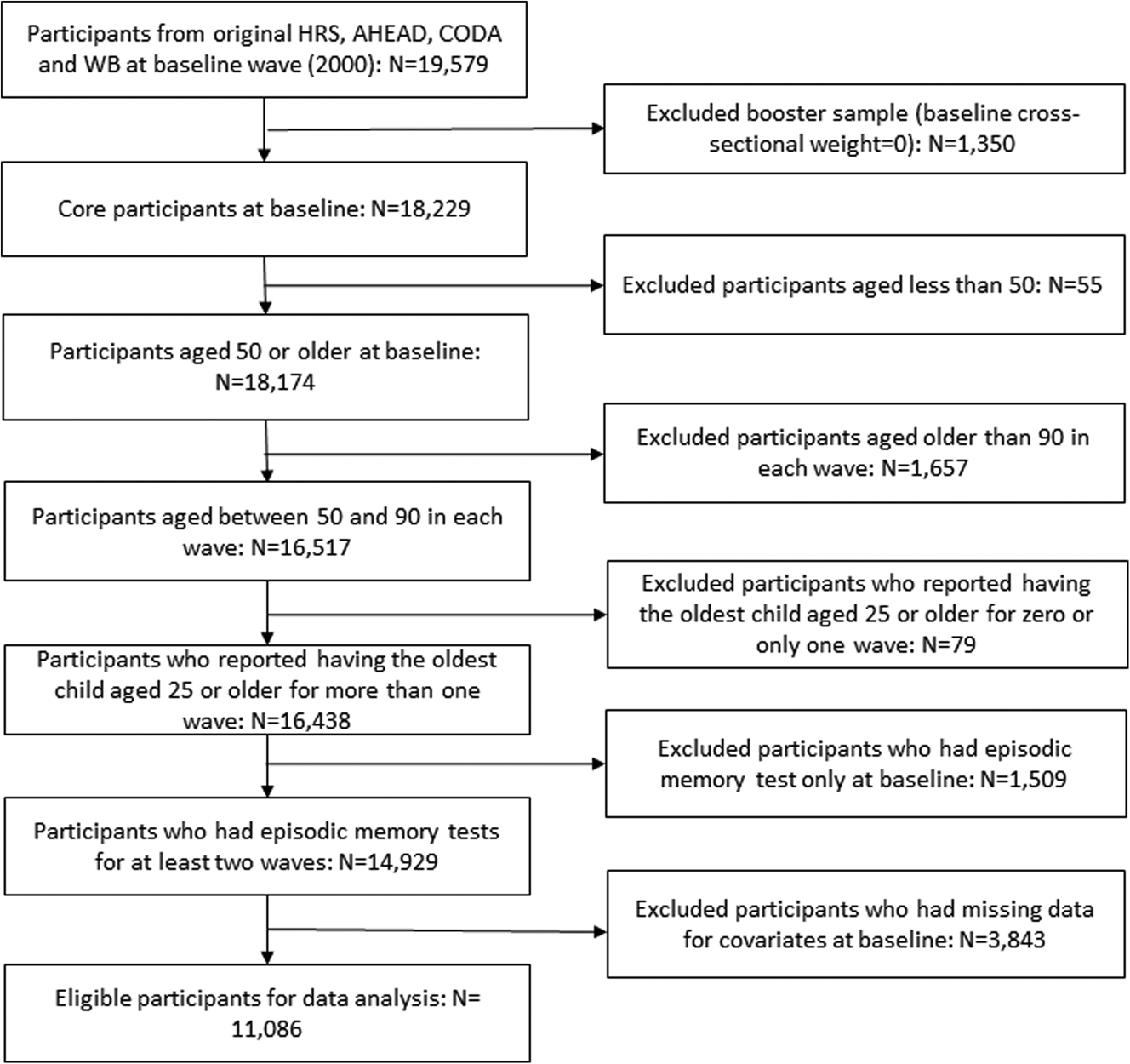
Our sample is, therefore, composed of older adults aged 50–90 who reported having at least one adult child (here, defined as aged 25 or above) between Waves 5 and 13. Wave 13 is the most recent wave used in present analysis. Cognitive measures when the oldest offspring was younger than 25 were excluded to ensure that the outcome transpired after the exposure. We included only participants who have at least two time-points of valid measures of cognition (maximum nine time-points), so as to contribute to the growth curve model. Participants with missing data at baseline were also excluded. The sample size for analysis was 11,086. See Figure 1 for the procedure of sample selection.
Procedure of Sample Selection.
Notes: HRS: Health and Retirement Study; AHEAD: Asset and Health Dynamics among the Oldest Old; CODA: Children of the Depression; WB: War Baby.

Measures
Older parents’ cognitive assessments in the HRS include a widely used measure of episodic memory (Ofstedal et al., Reference Ofstedal, Fisher and Herzog2005), which is deemed a reliable indicator of preclinical signs of dementia (Bäckman et al., Reference Bäckman, Jones, Berger, Laukka and Small2005). Episodic memory was assessed in a standardised way in each wave via two word recall tests: respondents were read a series of ten words and then asked to immediately recall as many words as possible in any order (immediate recall: range 0–10). After five minutes, respondents were asked to recall as many of the original words as possible in any order (delayed recall: range 0–10). From these we summed the number of words recalled (range 0–20), with higher scores indicating better episodic memory. Scores from the multiple waves were used to permit modelling of change in episodic memory over the follow-up period.
Our main independent variable of interest was adult children's education. Information on years of schooling of each child was collected in the HRS at Wave 5 (our baseline). For children under age 30 and in school at baseline, years of schooling were remeasured in following waves, and the latest information on schooling was used in this study. There are many ways to parameterise adult children's education. In this analysis, we averaged the years of schooling for all adult children of a respondent (continuous variable). Consistent with prior research (Friedman and Mare, Reference Friedman and Mare2014; Yahirun et al., Reference Yahirun, Vasireddy and Hayward2020b), we include information only for those adult children aged 25 or older. Although not all adults have completed their schooling by age 25, limiting the offspring to those aged 25 and older eliminates most of those who are still in school (Yahirun and Arenas, Reference Yahirun and Arenas2018).
We included a number of characteristics of older parents as covariates. Time-fixed covariates include gender, race, parental education and number of children. Race includes White/Caucasian and Black/African American/other (<3% are other). Parental education was measured using the International Standard Classification of Education 1997, including the first stage of tertiary education or above (associate degree, bachelor's degree or above); upper secondary education (general educational development or high school); lower secondary education (no degree but attained 8–12 years of schooling); and the primary education or below (no degree and attained <8 years of schooling). Time-varying covariates (at each wave) include parental occupation combined with labour forces status, household income per person (tertiles based on all HRS respondents in each wave), marital status (married/partnered, separated/divorced/spouse absent, widowed), smoking (non-smokers, ex-smokers, current smokers), days of alcohol consumption per week, vigorous physical activity (yes/no) and chronic conditions (high blood pressure, diabetes, lung disease, heart problems, stroke, cancer, arthritis, psychological problems). Medication and treatment for each chronic condition were accounted for as well.
Potential moderators we have tested are highest educational qualification, occupation, household income per person and marital status of each older parent. Measures of the four moderators were described in the covariates section above.
Statistical method
We applied linear growth curve models to estimate the association between adult children's education and older parents’ episodic memory over time. In our model, the joint distribution of the observed episodic memory scores across waves is characterised as a function of age, age-squared, adult children's education and other covariates. In the Basic Model, we controlled for covariates including personal characteristics (i.e. gender, race, marital status and number of children) and parental SES at individual (i.e. parental education and occupation) and household (i.e. household income per person) levels. In the Fully Adjusted Model, we additionally controlled for health behaviours (i.e. smoking, days of alcohol consumption, vigorous physical activity) and eight chronic conditions. Individual variation is expressed as random effects that are allowed to vary across individuals (Stata command, xtmixed). To visualise the results from these regressions, we show predicted trajectories of episodic memory across tertiles of adult children's schooling based on the Fully Adjusted Model (Stata command, margins and marginsplot).
The moderating effect of parents’ SES (i.e. parental education, parental occupation, household income) or marital status was tested by including an interaction term (adult children's education × parental SES or marital status) to build the Interaction Model. The likelihood ratio test was applied to test the significance of the interaction terms. In the next step, analysis was stratified by parental SES if the interaction term was statistically significant (p < 0.05). Predicted trajectories of episodic memory based on the Interaction Model are shown.
Sensitivity analyses
Several sensitivity analyses were performed to test the robustness of our results. We first conducted a sensitivity analysis using different constructions of adult children's education, including using the oldest child's years of schooling (Torssander, Reference Torssander2013) and the share of children with a college education (Yahirun et al., Reference Yahirun, Sheehan and Hayward2017). Second, we included an interaction term between race and adult children's schooling into our models to test the extent to which race moderated the association between adult children's schooling and older parents’ episodic memory. We did this because existing research reveals a higher incidence of dementia, including Alzheimer's disease, among Black Americans compared to their non-Hispanic White counterparts (Weuve et al., Reference Weuve, Barnes, Mendes de Leon, Rajan, Beck, Aggarwal, Hebert, Bennett, Wilson and Evans2018). At the same time, we are aware of race disparities in education, income and wealth (Williams et al., Reference Williams, Priest and Anderson2016). Education, particularly, is consequential to not just onset but progression of cognitive decline (Lövdén et al., Reference Lövdén, Fratiglioni, Glymour, Lindenberger and Tucker-Drob2020). Third, we conducted a sensitivity analysis by including in our sample adults aged 90+.
All analyses were performed using Stata SE 15.0.
Results
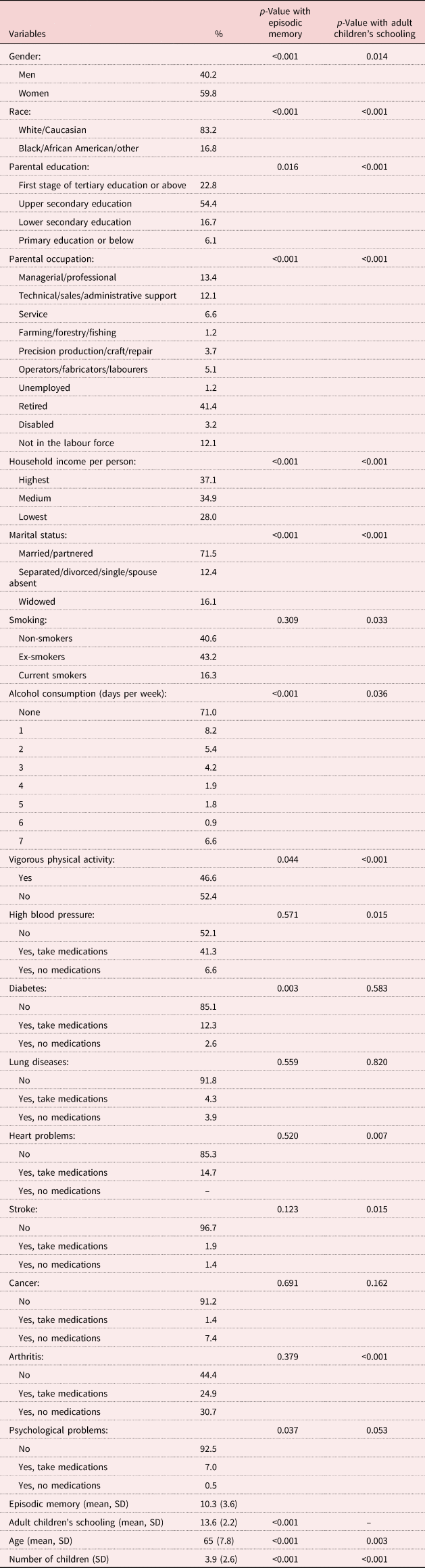
Table 1 shows the baseline descriptive characteristics of older parents. Their mean age was 65 years (standard deviation (SD) = 7.8). Of all selected older parents, 60 per cent were women and 83 per cent were White or Caucasian; 72 per cent were married and 16 per cent were widowed. On average, each parent had around 4 (SD = 2.6) children. More than half of the parents had an upper secondary educational qualification; 23 per cent had a first stage of tertiary education or above, while 6 per cent had only primary education or below. As for jobs, 13 per cent were in a managerial or professional occupation, one in eight had a technical/sales/administrative support occupation and 41 per cent were retired. At baseline, 16 per cent were current smokers and 29 per cent were drinkers. More than half of them had not done any vigorous physical activities per week during the previous 12 months. Arthritis was the most common (56%) chronic disease for these older parents, but less than half of those with arthritis were taking medications and/or treatments. Of the sample, 48 per cent had high blood pressure, and most cases were being treated. Less than 10 per cent of the sample had lung diseases, cancer, stroke or psychological problems, and about 15 per cent had diabetes or heart problems. The mean score of episodic memory was 10.3 (SD = 3.6), suggesting that around 10 out of 20 words were recalled correctly. The mean years of schooling for adult children were 13.6 (SD = 2.2). The univariate relationships suggested that all covariates were significantly associated with adult children's education and/or episodic memory, except for lung diseases and cancer.
Older parents’ characteristics at baseline

Notes: N = 11,086. SD: standard deviation.
Source: Health and Retirement Study, Waves 5–13.
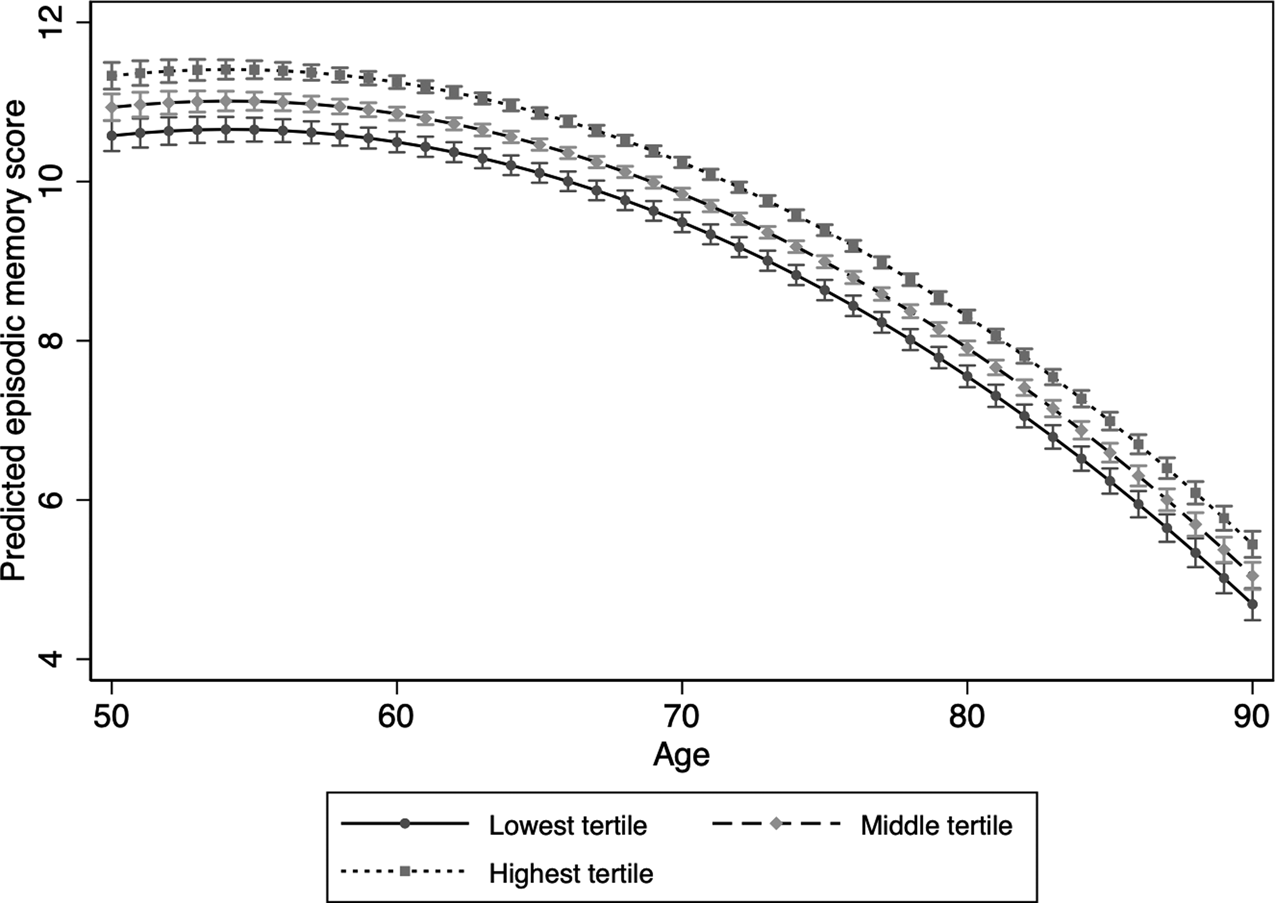
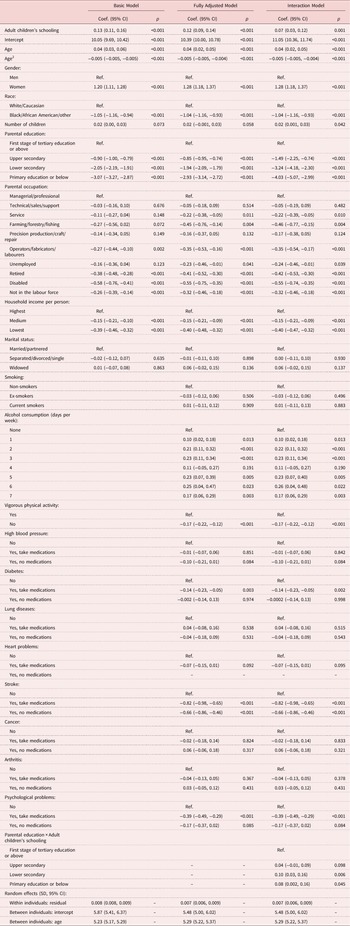
Table 2 shows the associations between adult children's education and older parents’ episodic memory from the linear growth curve models. In the Basic Model, the coefficient for adult children's schooling was 0.13 (95% confidence interval (CI) = 0.11–0.16), suggesting that older parents’ episodic memory score increased by 0.13 with every one extra year of adult children's schooling. After covariates were fully adjusted, the coefficient for adult children's schooling changed slightly to 0.12 (95% CI = 0.09, 0.14). In terms of covariates, women, White/Caucasian participants, drinkers and those in a managerial or professional occupation had higher memory scores. Parental education and household income were positively associated with memory scores while number of children was negatively associated with memory. Marital status and smoking were not associated with memory. Those who were currently taking medications or receiving treatments for diabetes or psychological problems had lower memory scores than those without the chronic conditions. Stroke was strongly associated with lower memory scores, regardless of whether the participant was taking medication/treatment. Older parents’ episodic memory scores changed with increasing age in a quadratic way. Predicted trajectories of episodic memory with increasing age (by tertiles of adult children's schooling) are shown in Figure 2.
Predicted Trajectories of Parents' Episodic Memory with Parents' Age Stratified by Adult Children's Schooling Tertiles (N = 11086).
Note: Source: waves 5 to wave 13 from the Health and Retirement Study.

Associations between adult children's schooling and older parents’ episodic memory scores

Notes: N =11,086. Coef.: coefficient. CI: confidence interval. Ref.: reference. SD: standard deviation.
Source: Health and Retirement Study, Waves 5–13.
We tested the interaction between adult children's education and parents’ marital status and SES (parental education, parental occupation and household income per person). We found that only parental education was a significant moderator (likelihood ratio test: p = 0.03). Interaction results in Table 2 show that the association between adult children's education and older parents’ cognitive function was stronger for those older parents who had a lower secondary education (coefficient = 0.10, 95% CI = 0.03, 0.16) or a primary education or below (coefficient = 0.08, 95% CI = 0.002, 0.16) than for those with first stage of tertiary education or above.
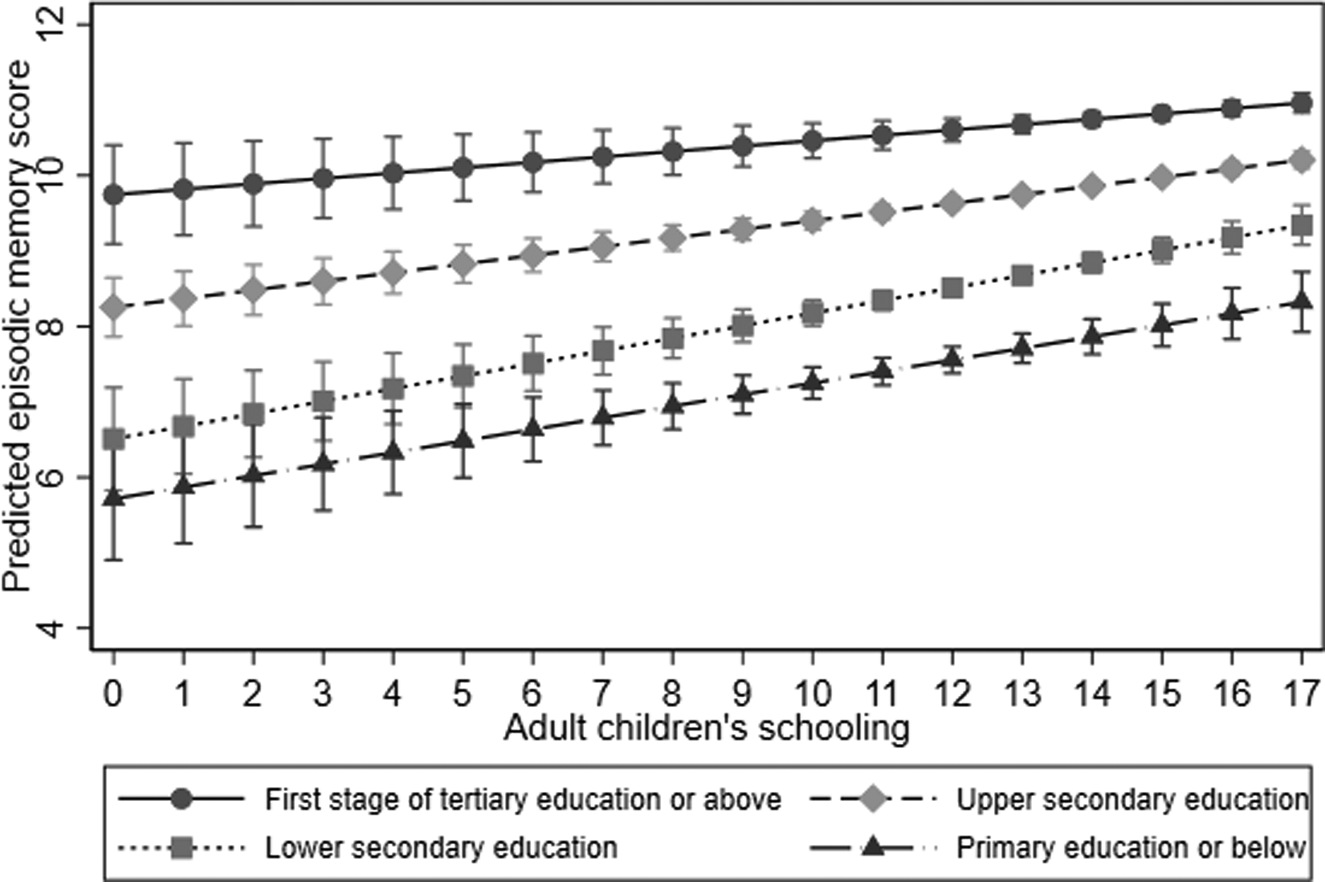
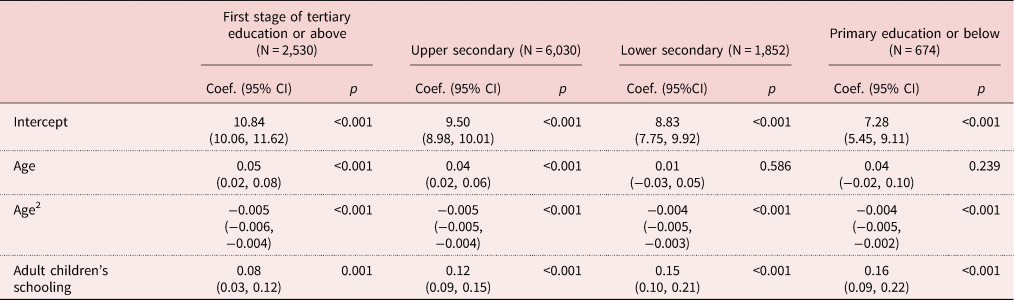
Stratified results by parental education are shown in Table 3. After accounting for all covariates, we found that every one extra year of adult children's schooling was associated with 0.08 (95% CI = 0.03, 0.12) higher memory score for parents with a first stage of tertiary education or above, 0.12 (95% CI = 0.09, 0.15) higher memory score for parents with an upper secondary education, 0.15 (95% CI = 0.10, 0.21) for lower secondary education and 0.16 (95% CI = 0.09, 0.22) for primary education or below. Predicted trajectories of episodic memory with adult children's schooling across parental education levels are shown in Figure 3. Older parents with first stage of tertiary education or above had on average the highest memory score (higher intercept), but older parents with lower levels of education benefited more from adult children's schooling (steeper slope): with the increase of adult children's schooling, episodic memory scores increased at quicker rates among older parents with lower levels of education compared with their counterparts with the first stage of tertiary education or above. Adult children's schooling helped to narrow the gap of memory score between older parents with different levels of education.
Predicted Trajectories of Parents’ Episodic Memory with Increasing Adult Children’s Schooling by Parental Education (N=11086).
Note: Source: waves 5 to wave 13 from the Health and Retirement Study.

Associations between adult children's schooling and older parents’ episodic memory scores by parental education1

Notes: 1. Model additionally adjusted for gender, race, number of children, parental occupation, household income per person, marital status, smoking, days of alcohol consumption, vigorous physical activity, high blood pressure, diabetes, lung diseases, heart problems, stroke, cancer, arthritis and psychological problems. Coef.: coefficient. CI: confidence interval.
For sensitivity analysis, Tables S1 and S2 (in the online supplementary material) show results for the associations between share of children with a college education, oldest child's years of schooling and parents’ episodic memory, respectively. Older parents with some or all children having a college degree had significantly higher episodic memory scores compared with those who had no children with a college degree (Table S1 in the online supplementary material); and older parents’ episodic memory scores increased significantly with the increase of the oldest child's years of schooling (Table S2 in the online supplementary material). Therefore, consistently, we found that different measures of adult children's education, as indicators of children's SES, were all positively associated with episodic memory of older parents in the USA. Table S3 (in the online supplementary material) presents results for the association between adult children's schooling and episodic memory scores, considering the interaction between race and adult children's schooling. This interaction was statistically non-significant (−0.02, 95% CI = −0.07, 0.03, p = 0.350), suggesting that race was not a moderator in the association between adult children's schooling and older parents’ episodic memory scores, and thus, stratified analysis by race was not conducted. Table S4 (in the online supplementary material) presents results for the association between adult children's schooling and older parents’ episodic memory scores, including participants aged 90+. Results for the association between adult children's schooling and episodic memory scores emerged comparable to the original findings. However, the moderating role of parents’ own education (parental education × adult children's schooling) was weakened, suggesting that factors contributing to cognitive decline in the oldest-old may differ from causes attributed to cognitive decline in their young-old counterparts.
Discussion
A growing body of work examines the ‘upward’ flow of resources model to understand the extent to which older parents’ health is influenced by adult children's resources. We contribute to this literature by assessing the impact of adult children's education on older parents’ cognitive health. Importantly, we also investigate whether this relationship between children's education and parents’ cognitive performance is moderated by parents’ own social and economic resources. Our analyses based on the HRS data reveal that parents with well-educated adult children have higher episodic memory trajectories than their peers whose children are relatively less educated (Hypothesis 1 is supported). We also find that the positive effect of children's education on parents’ memory trajectories is even stronger for parents who had lower levels of education (Hypothesis 2 is partially supported).
Our results are consistent with the recent findings that children's education is negatively and independently associated with cognitive functioning among older parents in the USA (Yahirun et al., Reference Yahirun, Vasireddy and Hayward2020b), in South Korea (Lee, Reference Lee2018) and in China (Ma, Reference Ma2019). They also mirror findings from studies that assess the link between children's schooling and other health outcomes for parents, including depressive symptoms (Lee et al., Reference Lee, Glei, Goldman and Weinstein2017; Yahirun et al., Reference Yahirun, Sheehan and Mossakowski2020a), physiological dysregulation (Lee, Reference Lee2018) and life expectancy (Torssander, Reference Torssander2013; Friedman and Mare, Reference Friedman and Mare2014). Moreover, our findings support the linked lives principle, which refers to the ways in which generations are linked to one another through their shared resources (Elder et al., Reference Elder, Johnson, Crosnoe, Mortimer and Shanahan2003). Parents, for instance, contribute to their children's health and wellbeing through their human, social and cultural capital; and through their genetic makeup, they shape their children's cognitive and non-cognitive assets. Parents also, however, make deliberate investments in their children by educating them. They do so knowing that education is the pathway to higher social status, independence and health. But findings from our study show that the benefits of educating children are not just limited to the children; instead, parents too are able to reap the dividends of this important investment. Future research should consider examining the relevance of children's education while also assessing the educational assets of other family members, including one's siblings and grandchildren. Given that an increasing number of the older adults are parenting their grandchildren (Choi et al., Reference Choi, Sprang and Eslinger2016), it would be interesting to discern the extent to which grandchildren's education shapes the cognitive health of grandparents.
Based on the resource substitution theory (Ross and Mirowsky, Reference Ross and Mirowsky2006), we assumed that having well-educated children would prove more valuable to socio-economically disadvantaged than to advantaged parents. Our results partially support this hypothesis. The strength of the relationship between children's education and parents’ cognitive health varies by parents’ SES, namely their own education. Parents with less education benefit more from the increase of adult children's schooling than their peers who are well-educated themselves: (a) well-educated parents may already have access to human capital accrued from their own education; (b) based on the concept of network homogeneity (McPherson et al., Reference McPherson, Smith-Lovin and Cook2001), it is reasonable to assume that well-educated parents may have friends who also are similarly educated and form a strong source of support for them; and (c) well-educated parents may refrain from asking for help from their children. Given that received support may undermine parents’ sense of worth and independence (Bolger and Amarel, Reference Bolger and Amarel2007), it is likely that well-educated parents who are in an advantaged position compared to their less-educated peers feel reluctant to rely on their children for support.
Although parents’ own education acted as a moderator, their income and occupation did not moderate the effect of their children's education on their cognitive health. This may reflect more broadly the differential roles played by education, income and occupation in shaping health (Herd et al., Reference Herd, Goesling and House2007). For instance, while income can slow the progression of health problems by enabling access to quality health care, education delays the onset of health hassles by shaping social and psychological resources, such as social support, mastery and self-esteem (Ross and Mirowsky, Reference Ross and Mirowsky2003), which are known to reduce stress, which correlates with higher cognition (Sandi, Reference Sandi2013; Scott et al., Reference Scott, Graham-Engeland, Engeland, Smyth, Almeida, Katz, Lipton, Mogle, Munoz, Ram and Sliwinski2015). Also, it is education that is more directly linked to the adoption of healthy lifestyles and the avoidance of risky health behaviours (Cutler and Lleras-Muney, Reference Cutler and Lleras-Muney2010; Pampel et al., Reference Pampel, Krueger and Denney2010; Centers for Disease Control and Prevention, 2013; Margerison-Zilko and Cubbin, Reference Margerison-Zilko and Cubbin2013). It is possible then that these benefits attached to education are shared between generations where parents of well-educated children feel more self-efficacious as they are able to benefit from the health knowledge that their educated children share. Given that education is associated with wider social network and greater social support (Kohli et al., Reference Kohli, Hank and Künemund2009; Fischer and Beresford, Reference Fischer and Beresford2015), it also is reasonable to assume then that parents with less education may benefit from the social capital that is accrued to their children who are more educated. Finally, it is not far-fetched to assume that different indicators of SES are differentially consequential for cognitive health at varying stages of the lifecourse.
Based on the resource substitution theory, we also expected marital status to moderate the relationship between children's education and parents’ cognitive functioning. Research suggests that the positive health consequences of social support are most evident among older adults who are most in need, including those who are single or in poor physical health (Silverstein and Bengtson, Reference Silverstein and Bengtson1994). Consequently, we expected having well-educated children would benefit single older adults more than their married counterparts, given that the latter tend to be socially and financially more advantaged than the former (Lillard and Waite, Reference Lillard and Waite1995). Contrary to this expectation, however, our study did not find significant interaction between parents’ marital status and children's education, and marriage itself was not associated with cognition. This is in line with the study by Lyu et al. (Reference Lyu, Lee and Dugan2014), where marital status is linked to cognition among older adults in South Korea but not the USA. This may reflect the reality that the efficacy of the intergenerational exchange of support is predicated on both the individual traits of parents and children, and the nature and quality of their relationship. Assessing the extent to which the cognitive health impact of children's personal assets, such as education, varies by parents’ marital status may require future research to also consider the ambiguities characteristic of parent–child relations. Moreover, given that geographic closeness is positively associated with parent–child relations and support exchange (e.g. Hank, Reference Hank2007; Mulder and van der Meer, Reference Mulder and van der Meer2009), future studies should consider the role played by parent–child geographical proximity, including co-residence, in conditioning the relationship between children's education and parents’ cognition and marital status.
In our effort to illuminate the link between children's education and parents’ cognitive health, we also adjusted for a variety of conceptually relevant health behaviours (smoking, alcohol consumption and regular physical exercise) and non-communicable health conditions (diabetes, stroke and psychological problems) that are likely related to both children's education and parents’ cognitive health. While we found support for assumptions of health-related behaviours including alcohol consumption and vigorous physical activity, as well as assumptions of chronic conditions including diabetes, stroke and psychological problems, findings also revealed that the primary relationship between children's education and older parents’ cognitive health did not change distinctly after adjusting for these covariates. Hence, while our findings do not undermine the relevance of health behaviours and lifestyles to later-life cognition, they do permit us to conclude with greater confidence that children's education plays a crucial role in shaping their older parents’ cognitive health over time.
Limitations
First, while we controlled for several behavioural and socio-demographic variables conceptually relevant to children's education and parents’ cognition, our analyses did not account for the quality of the parent–child relationship and parents’ personality. Since data to measure parent–child relationship quality and parents’ personality had been collected in the HRS only from 2006 onwards among two random 50 per cent panel sub-samples (Smith et al., Reference Smith, Ryan, Fisher, Sonnega and Weir2017), the present analysis was precluded from using these measures. It is reasonable to assume that older parents are more likely to rely on their children and that children are more likely to support their parents in a meaningful way if both share a positive relationship. Similarly, parents who score high on certain personality traits may be better positioned to make the most of having well-educated children. For example, parents who score high on openness may be in a better position to learn new habits, lifestyles and activities from their children who are well-educated. Similarly, parents who are highly agreeable may be willing to both give and seek help (McCrae and John, Reference McCrae and John1992). It is possible then that parents who are highly agreeable are better able to garner the advice and support well-educated children are in the position to offer. While the HRS does contain measures for intergenerational transfer of money, which potentially could reflect relationship quality, controlling for this in the analysis was not feasible given the significantly small proportion of participants responding to this question.
Second, we conducted analysis based on complete sample size at baseline (N = 11,086; see Figure 1). We excluded respondents represented by a proxy (about 10 per cent of the HRS sample in each wave), as the proxy was only asked to rate the respondent's memory subjectively. Therefore, distributions across the covariates and dependent variables of episodic memory might be affected by sample selection over the follow-up period, which may introduce bias in the relationship between children's educational attainment and older parents’ episodic memory found in our study. Third, we employed only word recall tests to measure cognitive health. Other cognitive measures in the HRS, such as the numeracy tests, date-naming tests to represent orientation to date, and the vocabulary measure to represent crystallised intelligence, were not considered in our study, since they were measured among those aged 60 and above only from Wave 5 onwards (e.g. N = 17,517 for word recall tests versus N = 9,504 for date-naming tests in Wave 5) (McCammon et al., Reference McCammon, Fisher, Hassan, Faul, Rogers and Weir2019).
Conclusion
Despite these limitations, our findings carry important public health implications. Our finding that children's education is associated with parents’ better episodic memory highlights that investing in children's education is critical to prolonging parents’ cognitive wellbeing. Put simply, the more educated children are, the more capable they are to shape positively the cognitive health trajectories of their parents. Moreover, our finding that the positive association between children's education and parents’ cognitive health is even stronger for parents with less education underscores the relevance of cultivating education as a family-level resource. These findings are particularly pertinent to a country like the USA, where families find it increasingly difficult to invest in their children, given the escalating costs of education (Bleemer et al., Reference Bleemer, Brown, Lee and Strair2017); where increasing numbers of older adults are living with debilitating cognitive illnesses, such as Alzheimer's; and where the relationship between SES and health remains strong and long-lasting (Link and Phelan, Reference Link and Phelan1995).
Supplementary material
The supplementary material for this article can be found at https://doi.org/10.1017/S0144686X21000775.
Author contributions
All authors contributed substantially to this article, and read and approved the final version.
Financial support
This work was supported by the ESRC International Centre for Lifecourse Studies in Society and Health (ICLS) (BX, ES/J019119/1); and the European Commission (WL, CETOCOEN Excellence, H2020-WIDESPREAD-2018-01, GA: 857560).
Conflict of interest
The authors declare no potential conflicts of interest with respect to either the research or order of authorship.
Ethical standards
Approval was obtained from the Institutional Review Board of Kent State University to utilise secondary data for this study.