




No CrossRef data available.
Article contents
Macrophages in the development of protective immunity against experimental Brugia malayi infection
Published online by Cambridge University Press: 23 August 2004
Abstract
The present report compares the macrophage function in rodent hosts susceptible and resistant to the human lymphatic filariid Brugia malayi. Macrophages from both mastomys (resistant) and gerbil (susceptible) infected intraperitoneally (i.p.) with the infective larvae (L3) of B. malayi were isolated from peritoneal lavage at different time-intervals and formation rate of NO, H2O2, O2−, TNF-α, glutathione peroxidase and reductase was assayed. NO release was found to be significantly increased in resistant mastomys as compared to gerbils and the release was markedly suppressed by i.p. administration of the NOS inhibitor aminoguanidine (AG). The AG-treated mastomys also demonstrated significantly greater establishment of larvae which correlated well with suppressed formation of NO. Nitric oxide synergizes with superoxide to form peroxynitrite radical (potent oxidant), which is known to be more toxic per se than NO. Results indicate the possible involvement of peroxynitrite in the rapid killing of larvae in the peritoneal cavity of mastomys. In contrast, the production of H2O2 was found to be enhanced in both species indicating that B. malayi L3 could withstand the toxic effects of H2O2. The higher level of glutathione peroxidase and reductase, as observed in mastomys compared with the gerbil after larval introduction, possibly protects the cell against the injurious effect of H2O2. The TNF-α level remained virtually unchanged in both the hosts, suggesting an insignificant role for this cytokine in parasite establishment.
Information
- Type
- Research Article
- Information
- Copyright
- © 2004 Cambridge University Press
INTRODUCTION
Lymphatic filariasis persists as a major cause of morbidity and significant impediment to socio-economic development. Of the 3 billion people infected with parasitic infections, nearly 250 million are infected with filarial species alone (Michael, 2000). The disease exists as a spectrum of manifestations ranging from endemic normal to elephantiasis, depending on the immune status of an individual (Ottesen, 1992). In the case of animals too, they are not equally susceptible to filarial infection even after being exposed to the same intensity of infection. Meriones unguiculatus (gerbil) and Mastomys coucha are highly susceptible to subperiodic B. malayi and are widely used in experimental investigations (McCall et al. 1973; Petranyi, Meith & Leitner, 1975). In both models, subcutaneous inoculation of L3 eventually results in the development of sexually mature adult worms. However, when the L3 are given intraperitoneally, an infection establishes in gerbils but not in mastomys. Although the peritoneal cavity is not the natural seat of predilection of adult parasites, it is, however, rich in immune effecter cells providing continuous and close interaction between these cells and different life-stages of filarial parasites (L3 to adult stage and microfilariae) in gerbil, thus offering an excellent system to explore the host–parasite interaction. The peritoneal cavity is rich in macrophages, which are the primary cells important in defence (Nathan, Murray & Cohn, 1980). The adherence of different populations of cells, namely macrophages, eosinophils, neutrophils and lymphocytes to infective larvae and microfilariae of different filarial species, resulting into their death, has been an observed phenomenon (Misra et al. 1990; Rajan et al. 2002). Interestingly, reactive oxygen species (ROS) and reactive nitrogen intermediates (RNI), which are produced by these cells, are highly deleterious to the larval form of helminth parasites including filariids (Callahan, Crouch & James, 1988). A comparative study has, therefore, been undertaken to explore effector mechanisms in the macrophages of the two rodent hosts with an aim of understanding their role in sustenance or elimination of filarial infection.
MATERIALS AND METHODS
Host animals
The animals used were 6-week-old male mastomys (Mastomys coucha, GRA Giessen strain) and gerbils (Meriones unguiculatus), which were maintained under proper hygienic and constant environmental conditions in the Institute's Animal House and given rodent feed and water ad libitum.
Parasite
Brugia malayi infective larvae (L3) were obtained by use of the Baermann apparatus (Baermann, 1917) from Aedes aegypti fed on infected mastomys 10±1 days previously. The larvae were cleaned free of mosquito tissues in Ringer's solution and 100 L3 were inoculated intraperitoneally in mastomys and gerbil (Ash & Riley, 1970; Singh et al. 1997).
Parasite recovery
A total of 33 mastomys and 20 gerbils were infected in groups of 6 and 4 respectively. The animals were sacrificed at different times after infection as appended in Table 1. Mastomys were sacrificed on days 1, 3, 7, 20, 30 and 40 while gerbils were autopsied on days 7, 30, 60 and 90 to observe the development and recovery of parasites after L3 exposure. The peritoneal cavity and scrotal sacs were washed thoroughly with PBS using a glass pipette. Lungs, heart, testes and lymph nodes were also isolated, teased in phosphate-buffered saline (PBS, pH 7·2) and observed microscopically to determine if parasites had migrated to these organs.

Chemicals
Heparin (sodium salt), lipopolysaccharide (from E. coli), Sigma cote, aminoguanidine, cytochrome-c, superoxide dismutase, horse-radish peroxidase (type VI A), phenolsulfonaphthalein (sodium salt), NADPH, glutathione reductase (GR), reduced and oxidized glutathione (GSH and GSSG), actinomycine D (Streptomyces species), MTT, trypsin (0·05% prepared in Ca2+ and Mg2+-free HBSS) were procured from Sigma Chemical Company (USA). The L929 murine fibroblast cell line was obtained from the tissue culture facility of the Institute. The rest of the chemicals were of analytical grade.
Isolation of macrophages from peritoneal exudate cells (PEC)
PEC were collected (Mosier, 1984) from both species of rodents at different periods after L3 inoculation. Three animals at each time-point were killed in deep ether anaesthesia and injected i.p. with 5 ml of ice-cold RPMI containing an antibiotic–antimycotic mixture (Sigma, USA) and heparin (5 U/ml). The abdomen was gently massaged and the medium containing PEC was collected into siliconized glass tubes. The cells were washed thrice by centrifugation at 400 g for 10 min and finally suspended at 3·0×106 cells/ml in complete RPMI supplemented with 10% foetal calf serum (heat-inactivated). Cells were also collected from the age- and sex-matched normal uninfected (control) animals of each species.
Assessment of number of adherent cells in the peritoneal cell population
Peritoneal cells were collected from 3 normal and 3 infected animals of both species and suspended at a concentration of 3·0×106 cells/ml. The cell suspension (1 ml/well) was dispensed in triplicates using a 24-well flat-bottomed culture plate (NUNC) and macrophages were allowed to adhere to the bottom of the wells at 37 °C for 90 min in 5% CO2 in air. Non-adherent cells were later collected by rinsing, leaving a macrophage monolayer. The non-adherent population in the two hosts was then counted after pelleting the non-adherent cells and resuspending it in the original volume of medium. Adherent cells of both mastomys and gerbil were thus counted to compare the results of the two hosts before and after infection.
Macrophage function assays
The cells of each species were plated in 2 triplicates and the adhered macrophages in 1 set of triplicate wells were stimulated overnight with the optimum concentration (1 μg/ml) of lipopolysaccharide (LPS) at 37 °C in the presence of 5% CO2 in air. Initially, we used 3 different concentrations of LPS (2 μg/ml; 1 μg/ml and 0·5 μg/ml) to stimulate macrophage monolayers and 1 μg/ml was found to be optimal in the case of mastomys cells. Macrophages of the gerbil did not show any stimulation at any of the three concentrations and therefore 1 μg/ml was used for this host also.
The release of nitric oxide (NO), hydrogen peroxide (H2O2), superoxide anion (O2−) and TNF-α, and the activities of glutathione peroxidase (GpX)/reductase (GR) were measured to assess macrophage function. The estimation of NO, TNF-α and H2O2 was performed in the supernatant of unstimulated and LPS-stimulated macrophages, while the levels of H2O2, O2−, glutathione peroxidase and reductase were assayed additionally in the macrophages.
Nitrite estimation
Nitrite estimation was done using the Griess reagent (Green et al. 1982). The reagent was prepared by mixing 0·1% N 1-naphthyl ethylenediamine dihydrochloride solution in distilled water and 1% sulfanilamide in 5% phosphoric acid in equal volume. To 100 μl of test supernatant from the macrophages an equal volume of Griess reagent was added. After 10 min the absorbance at 540 nm was measured using an automated micro-plate reader (Microscan, India). A standard curve was generated with sodium nitrite.
Effect of NOS inhibitor on parasite establishment
The role of inducible nitric oxide synthetase (iNOS) in parasite establishment was evaluated in mastomys by assessing larval recovery in aminoguanidine (AG), an iNOS inhibitor, treated animals with simultaneous measurement of NO release by macrophages. Out of 24 animals, 12 were treated with aminoguanidine (1 mg/animal prepared in 0·5 ml of saline) i.p. twice daily for 30 consecutive days while the other 12 were injected with 0·5 ml of the vehicle (saline) and kept as untreated controls. All the animals were infected by inoculation of 100 L3 by the i.p. route. Six mastomys from the treated and 6 from the control group were autopsied on day 15 while the remaining 6 in each group were autopsied on day 30 post-L3 inoculation. The peritoneal cavity and scrotal sacs were washed carefully with PBS to recover all the parasites. Lungs, heart, testes and lymph nodes were also teased and examined for parasites.
Nine mastomys, separately, were infected and treated with aminoguanidine as mentioned above, along with an identical number of untreated ones. Three animals from the treated group and 3 from the group control were autopsied on days 3, 7 and 21 post-L3 inoculation and peritoneal macrophages were collected for NO estimation as described above.
Superoxide anion (O2−)
The assay is based on SOD-inhibitable reduction of cytochrome-c by O2− (Pick & Mizel, 1981). In brief, to each well of a microtitre plate containing macrophages in 100 μl of cRPMI was added 100 μl of 160 μM solution of cytochrome-c in HBSS, except for the blank triplicate. For the reference blank, 300 U/ml of superoxide dismutase were also added to the reaction mixture. Each assay was done in triplicate wells. The plate was kept for 1 h at 37 °C in a CO2 incubator and the colour intensity was recorded at 550 nm using a micro-plate reader (Microscan, India).
Hydrogen peroxide (H2O2)
A solution containing 1000 U/ml horse-radish peroxidase (HRP) in phosphate buffer was prepared for the assay. The 10 ml of final assay volume contained 0·2 ml of phenol red (10 mg/ml), 0·2 ml of HRPO and 9·6 ml HBSS. The assay is based on the horse-radish peroxidase dependent oxidation of phenol red by H2O2, leading to the formation of a compound that, at an alkaline pH, exhibits increased absorbance at 600 nm (Pick & Mizel, 1981). The test was carried out in both macrophages and in macrophage cell culture supernatant. Samples of 100 μl of test supernatant/macrophage cell suspension were plated in triplicate in a 96-well plate to which 100 μl of phenol red–HRPO solution were added leaving the blank triplicates. To the reference blank wells, 10 μl of 1 M NaOH were quickly added and the plate was kept for 1 h at 37 °C in 5% CO2 in air. The reaction was stopped by adding 10 μl of 1 M NaOH to the experimental wells. Absorbance was measured at 600 nm in an automated micro-plate reader.
Glutathione peroxidase (GpX)
Unstimulated and LPS-stimulated macrophage monolayers were lysed by adding sterile distilled water followed by freezing and thawing. The final cell suspension was adjusted to 5×10⁶ cells/ml. Glutathione peroxidase activity was measured in the supernatant as described by Paglia & Valentine (1967). The reaction mixture, in a final volume of 1·0 ml, contained (in μ moles) phosphate buffer, 80, pH 7·5; NADPH, 0·2; glutathione reductase, 0·5 U; sodium azide, 6; reduced glutathione, 4·5 and the cell lysate 100 μl. The reaction was started by the addition of H2O2 (88 nM) and the decrease in absorbance at 340 nm was recorded in a spectrophotometer (Shimadzu 1601PC Corporation, Japan).
Glutathione reductase (GR)
The activity of this enzyme was measured in the macrophages lysed with distilled water and subsequent freezing and thawing, as described above following the method of Racker (1955). The reaction mixture in μM contained: phosphate buffer, 80, pH 7·5; NADPH, 0·2; oxidized glutathione 5 and cell lysate 100 μl. The decrease in absorbance at 340 nm was read in a spectrophotometer (Shimadzu).
Tumour necrosis factor-α (TNF-α)
The TNF-α bioactivity assay was performed using a fibroblast cell line (L-929) and MTT [3-(4,5-dimethylthiazol-2-yl)-2, 5-diphenyl tetrazolium bromide] (James et al. 1992). Confluent L-929 cells were trypsinized on the day of assay, counted and adjusted to 30000 cells/well in 100 μl of culture medium and seeded in the wells of 96-well microtitre plates. Overnight incubation was done at 37 °C in 5% CO2 in air. After washing, 100 μl of cRPMI and actinomycin D (5 μg/ml) were added to each well. After 1 h incubation 100 μl of test supernatant from macrophages were added to the wells. The plate was incubated overnight at 37 °C in 5% CO2 in air after which 10 μl of a stock solution of MTT (5 mg/ml stock) were added. After 4 h incubation 10% SDS in 0·01 M HCl was added. The plate was kept overnight at room temperature. Absorbance was measured at 570 and 630 nm in a micro-plate reader. Results have been expressed as % cytotoxicity, using the formula

Statistical analysis
Significance in the difference between and within normal and infected groups of mastomys and gerbil was evaluated by Student's t-test. P values <0·05 and <0·01 were considered significant and >0·05 as insignificant.
RESULTS
Parasite recovery from hosts after intraperitoneal (i.p.) infection
Infected mastomys and gerbils were autopsied at different time-intervals to assess the establishment and development of worms. On day 1 (24 h) post-L3 exposure, the mean percentage recovery of larvae from the peritoneal cavity of mastomys was 82·2±2·3 which declined subsequently. On day 3, larval recovery was markedly reduced to 14·2±3·27, which was almost maintained up to day 7. Thereafter most of the surviving larvae were dead with a very low recovery of 3·8±1·5 on day 20 and 0·17±0·41 on day 30. By day 40, all the developing larvae had died. On day 30, only 1 out of 6 mastomys inoculated with the larvae was found to harbour a single parasite. In contrast, the gerbils exhibited high worm recovery at all times, reflecting good survival and development of the infective larvae (Table 1). The mean values of parasite recovery in gerbils on days 7 and 30 was highly significant when compared to mastomys (P<0·01).
Adherent and non-adherent cell populations of both hosts
Similar numbers of cells isolated from the peritoneal cavity of both mastomys and gerbils (normal and infected) were plated in each well of the 24-well culture plate. The enumeration of adherent and non-adherent cells demonstrated that in infected animals of both the hosts, the adherent population increased to the same extent. However, the numbers of adherent cells were much lower in the well containing mastomys cells in comparison to cells from gerbils, irrespective of infection (Table 4).
Nitric oxide release
Nitric oxide release was always found to be much higher in infected mastomys, in comparison to uninfected animals. Maximum release of NO from the cells was observed on day 3 p.i., when the values were significantly higher (P<0·01) than those of uninfected animals. On day 7 also, the nitrite level appeared quite high, but the difference from uninfected animals was non-significant (P>0·05) because of wide variation in the release by individual animals. By day 15 onwards, the NO level declined but it still remained higher than in controls, although the difference was not significant (P>0·05). The stimulation of macrophages by LPS led to an increased production of NO, irrespective of the infected or uninfected condition of the host (Fig. 1A). Macrophages of both infected as well as normal gerbils behaved likewise (P>0·05) and produced a very low quantity of NO, even after overnight stimulation with LPS. The levels, however, were more or less comparable with the uninfected mastomys host (Fig. 1B).

Fig. 1. NO release in culture supernatant of peritoneal macrophages of (A) mastomys, (B) gerbil and (C) AG-treated mastomys. Bars represent standard deviations of the means of 6 animals.
Parasite recovery from AG-treated mastomys
The recovery of parasites from untreated and aminoguanidine-treated mastomys on days 15 and 30 post-i.p. inoculation of infective larvae is summarized in Tables 2 and 3. On day 15 post-infection the mean percentage worm recovery in treated and untreated mastomys was 18±6·57 and 3·8±1·72 respectively (P<0·01). Later, on day 30, the mean percentage worm recovery in treated and untreated mastomys was 4·5±3·33 and 0·17±0·41 respectively (P<0·05).


Table 4. Adherent cell population in the peritoneal cavity of normal and infected mastomys and gerbils (Total no. of peritoneal cells charged per well in a 24-well culture plate was 3×10⁶ in 1 ml of cell suspension done in triplicate.)

Nitric oxide release by AG-treated mastomys
Aminoguanidine treatment of mastomys led to a significant suppression (P<0·01) of NO release by peritoneal macrophages on day 3 post-larval infection. On days 7 and 20, the nitrite level still remained suppressed although the difference was insignificant (P>0·05) (Fig. 1C).
Superoxide anion (O2−) release
O2− release was always found to be higher in infected mastomys. On days 3 and 7 post-infection the difference was statistically significant (P<0·05). On days 20 and 30, however, the difference was only marginal and insignificant (P>0·05). Stimulation of macrophages by LPS led to an insignificant (P>0·05) production of O2− irrespective of the infected or uninfected condition of the host (Fig. 2A). In contrast to mastomys, gerbil macrophages demonstrated very low release of O2− in spite of overnight stimulation with LPS. The O2− level of infected gerbils was comparable with that of uninfected normal animals (P>0·05) (Fig. 2B).

Fig. 2. O2− release from peritoneal macrophages of (A) mastomys and (B) gerbil. Bars represent standard deviations of the means of 6 animals.
Release of hydrogen peroxide (H2O2)
H2O2 release was always found to be elevated in infected mastomys. Maximum H2O2 release was observed on day 7 post-infection (P<0·05). On days 3, 20 and 30 also, H2O2 levels appeared high but the difference from uninfected animals was not significant (P>0·05). LPS stimulation led to an enhanced release of H2O2 on days 3, 7, 30 post-infection (Fig. 3A). In gerbils, on days 3, 7 and 20 post-infection, H2O2 release was close to that of uninfected animals. However, on day 30, there was a significantly higher release (P<0·05) in infected animals and LPS could induce the level only on day 20 (Fig. 3B).

Fig. 3. H2O2 release from peritoneal macrophages of (A) mastomys, (B) gerbil, and in cell culture supernatants of (C) mastomys and (D) gerbil. Bars represent standard deviations of the means of 6 animals.
Release of H2O2 in cell culture supernatant
Supernatants of peritoneal macrophage cultures of both normal and infected mastomys at each time-period of observation demonstrated a very low release of H2O2, irrespective of overnight stimulation with LPS (Fig. 3C). Macrophages of infected gerbils, in contrast, showed a marked increase in release of H2O2. The difference between normal and infected gerbils was found to be statistically significant between days 3 and 30 (P<0·05 to 0·01) (Fig. 3D).
Glutathione peroxidase activity
Glutathione peroxidase activity was always found to be higher in infected mastomys. On days 3 and 30 post-infection, although the enzyme activity appeared elevated, the changes were insignificant (P>0·05) compared with control. LPS stimulation led to a greater enzyme activity (Fig. 4A). In contrast, gerbil peritoneal macrophages demonstrated very low enzyme activity at each time-point, even if stimulated with LPS (Fig. 4B).

Fig. 4. Glutathione peroxidase (A and B) and reductase (C and D) activity of peritoneal macrophages of mastomys (A and C) and gerbil (B and D). Bars represent standard deviations of the means of 6 animals.
Glutathione reductase activity
Macrophages of infected mastomys expressed greater activity of GR as compared to those of normal animals irrespective of LPS stimulation. The differences were significant on both day 3 (P<0·05) and day 7 (P<0·01) post-infection. On day 20, however, a decline in activity was noticed (P>0·05) (Fig. 4C). Gerbils, on the other hand, showed very low enzyme activity corresponding to the value recorded for uninfected cells even when stimulated with LPS (Fig. 4D).
Tumour necrosis factor-α (TNF-α) in cell culture supernatant
The percentage cytotoxicity in the case of mastomys was low, even after i.p. infection with B. malayi. The values of both normal and infected animals were almost similar and the difference was statistically insignificant (P>0·05) (Fig. 5A). On the other hand, the gerbil peritoneal cells showed much higher levels of TNF-α in comparison to mastomys, although the difference between normal and infected animals was negligible (P>0·05) (Fig. 5B).

Fig. 5. TNF-α release in culture supernatants of peritoneal macrophages of (A) mastomys and (B) gerbil. Bars represent standard deviations of the means of 6 animals.
DISCUSSION
The peritoneal cavities of mastomys and gerbils showed different abilities to support Brugia malayi. The peritoneal cavity of the latter host allowed favourable growth of infective larvae, while the peritoneal cavity of the former was resistant and did not allow the infection to establish. The inoculation of B. malayi infective larvae into the peritoneal cavity of mastomys led to the release of high amounts of NO which reduced considerably soon after killing of the majority of the inoculated larvae, thereby demonstrating a direct correlation of NO release by the peritoneal macrophages with the larval rejection. Maximum larval killing (85·8%) was observed on day 3, coinciding with the 6·5-fold higher release of NO by the macrophages isolated from the same animal in comparison to NO released from normal uninfected mastomys. The declining pattern after day 7 also paralleled the elimination of a majority of the introduced larvae. In contrast to this, the nitrite level in a susceptible host, the gerbil, remained unaltered allowing the majority (81·2%) of the inoculated L3 to establish and survive in the peritoneal cavity. Even LPS could not induce NO release from these cells in vitro. Normal jird macrophages were earlier shown to be incapable of producing nitric oxide on in vitro or in vivo stimulation (Nassare, Krahenbuhl & Klei, 1998). The entry of the infective larvae led to a marginal increase in the population of adherent cells. In spite of the significantly lower adherent cell population of mastomys as compared to gerbils, mastomys macrophages produced significantly higher levels of NO or O2−. The findings, therefore, clearly point towards the major role of NO in larval killing inside the peritoneal cavity of mastomys.
It is well known that ROI and RNI can be produced by cells of the immune system on appropriate stimulation and that these molecules are potentially toxic to nematodes or other pathogenic organisms (Selkrik et al. 1998). NO is generated in the body through the action of several isoforms of an enzyme referred to as NO synthase (James, 1995) which is expressed by immune cells, such as macrophages and eosinophils and is upregulated in response to IFN-γ, TNF-α and LPS (Xie et al. 1992; Oliveira et al. 1998). An arginine-dependent killing mechanism by activated peritoneal macrophages has been reported in the case of intracellular (Mellouk et al. 1991; Green et al. 1990; Adams et al. 1990) as well as extracellular parasites (James & Glaven, 1989). NO provided by chemical donors or activated macrophages has been demonstrated to reduce the motility and viability of microfilariae (mf) and adult worms of B. malayi (Taylor et al. 1996; Thomas, McCrossan & Selkrik, 1997; Winkler et al. 1998). AG has been reported to be a specific inhibitor of iNOS (Corbett et al. 1992). In the present study, AG injection into the peritoneal cavity of an otherwise resistant host, mastomys, resulted in significant larval development and survival with marked depression in the level of NO production. AG treatment of mastomys led to 78·9% and 95·6% increase in the establishment of larvae on days 15 and 30 respectively, however, this number was much less in comparison to the susceptible host, the gerbil. Thus, it becomes apparent that NO can not be the sole factor in larval killing and that some other factors released from activated macrophages may also contribute to, or synergize with, nitric oxide to mediate toxicity (Thomas et al. 1997). Nitric oxide reacts with oxygen to form a nitrogen dioxide radical (NO2−) and with super-oxide to generate the peroxynitrite (ONOO−) radical. Co-activation of the respiratory burst and nitric oxide synthesis in macrophages or granulocytes could result in peroxynitrite formation (Ischiropoulous, Zhu & Beckman, 1992; Carreras et al. 1994). A number of studies have verified the higher toxicity of peroxynitrites over NO towards several microorganisms (Denicola et al. 1993; Brunelli, Crow & Beckman, 1995; Vazquez-Torres, Jones-Carson & Balish, 1996). In mastomys, superoxide anion (O2−) production from peritoneal macrophages revealed increased levels with maximum effect on days 3 and 7 post-infection, unlike in the gerbil. Thus, the superoxide released from peritoneal macrophages of mastomys possibly may form the peroxynitrite anion (ONOO−), which itself is a potent oxidant (Radi et al. 1991). Rajan et al. (1996) had shown that nitric oxide plays an important role in host resistance to infection with Brugia malayi parasites, however, their later publication (Ganley, Babu & Rajan, 2001) demonstrated that NO itself was not an obligate requirement for the elimination of B. malayi from the peritoneal cavities of mice. There can be many reasons for these contradicting results. First, each study has used a different animal model for investigation and secondly, immunocompetent mice are completely refractory to L3-induced B. malayi infection apart from the very recent report from our laboratory on the susceptibility of NZB/BINJ strain of mice to L3-induced infection of subperiodic B. malayi (Gupta et al. 2003). The present study has used two rodent species, both of which are permissive and immunocompetent unlike non-permissive or immunodeficient mice used by the above group. An immunodeficient mouse or a non-permissive strain might not give a true picture of what really happens in permissive hosts, where the infective larvae are rejected if inoculated into the peritoneal cavity but are accepted if injected under the skin. Nasarre et al. (1998) revealed the down-regulation of macrophage activation in Brugia pahangi-infected jirds by monitoring the production of tumour necrosis-like factors and nitric oxide by the macrophages. Our approach in the present study is different from earlier authors and compares the macrophage functions in both mastomys and gerbil (jird), resistant and susceptible hosts respectively to intraperitoneal infection with B. malayi infective larvae. The present study also reports the production of H2O2 and glutathione peroxidase and glutathione reductase levels which are capable of influencing the response of a host to a parasite and includes both in vitro as well as in vivo analyses, more parameters and compares two rodents with opposite properties in contrast to the observations made by Nasarre et al. (1998).
Besides NO and O2−, H2O2 release was also found to be always higher in infected mastomys with a significant increase on day 7. Surprisingly, however, overnight incubation of cells in the presence of LPS could not induce detectable H2O2 in the cell culture supernatant. It therefore appears that H2O2 had already attained a threshold concentration in the peritoneal macrophages of mastomys which did not increase further. In contrast, gerbil cells per se do not contain detectable levels of H2O2, however, a release could be observed after stimulation with LPS. H2O2 at a concentration as low as 5 μM is toxic for Onchocerca cervicalis microfilariae (Callahan et al. 1990) while 1 μM can kill microfilariae of Dirofilaria immitis in vitro (Rzepczyk & Bishop, 1984). The absence of glutathione peroxidase activity and a lack of an appreciable level of catalase, was attributed to the cause of impaired ability of these filariae to metabolize H2O2, resulting into their death. B. malayi adult worms, on the other hand, have been reported to contain a high concentration of catalase and therefore are able to withstand a high concentration of H2O2 which possibly helps the parasite to escape death (Ou et al. 1995). Results of the present study thus reveal that, in spite of the presence of a significantly high concentration of H2O2 in the macrophages of both the host species, infective larvae could withstand its toxic effect and survived in the peritoneal cavity of the gerbil. In phagocytic cells under heavy oxidative stress during phagocytosis, the glutathione redox system has the potential to protect the cytosol against cell injury (Strauses et al. 1969; Noseworthy & Karnovsky, 1972). The present findings revealed an increase in glutathione peroxidase and reductase activity after L3 introduction only in mastomys, which denotes that in these species macrophages may be under heavy oxidative stress due to release of H2O2 and the glutathione cycle enzymes possibly protect them from injurious effects of these oxidants. A protective role of TNF-α has, though, been described through its toxicity for schistosomula (James et al. 1992) while in a murine Mesocestoides corti infection TNF-α is thought to play a role in promoting disease progression (Jenkins et al. 1992). However, TNF-α levels remained almost similar in both the hosts even after larval inoculation in the present study, thus ruling out the direct killing of filarial larvae.
It may, therefore, be summarized that greater production of NO and O2− by the peritoneal macrophages of mastomys results in a hostile intraperitoneal environment for B. malayi infective larvae. The other cell population also needs to be investigated and further studies are underway in this direction in our lab.
In conclusion, the present findings described the role of NO and O2− in killing of the infective larvae of B. malayi inoculated into the peritoneal cavity of mastomys. An intraperitoneal injection of these larvae into mastomys resulted in larval death while in gerbils the larvae survive and develop to adult parasites. AG (an iNOS inhibitor) treatment of mastomys led to decreased production of NO in vitro as well as in vivo resulting in increased establishment and survival of the larvae in mastomys and demonstrating the role of NO in parasite death. Peritoneal macrophages of mastomys were highly activated in spite of their lower adherent cell population as compared to those of gerbil, and resulted in release of high levels of NO and O2−.
We are grateful to Mr A. K. Roy and Mr R. N. Lal for technical assistance. Financial assistance in the form of a senior research fellowship (SRF) from the Council of Scientific and Industrial Research, India, to one of us (R.G.), is gratefully acknowledged.
References
REFERENCES
ADAMS, L. B.,
HIBBS, J.,
TAINTOR, R. R. &
KRAHENBUHL, J. S. (
1990).
Microbiostatic effect of murine activated macrophages for Toxoplasma gondii.
Journal of Immunology
144,
2726–2729.Google Scholar
ASH, L. R. &
RILEY, J. M. (
1970).
Development of subperiodic Brugia malayi in the jird, Meriones unguiculatus with notes on infections in other rodents.
Journal of Parasitology
56,
969–972.CrossRefGoogle Scholar
BAERMANN, G. (
1917).
Eine einfache Methode zur Auffindung von Ankylostomum (Nematoden) Larven in Erdproben.
Geneesk Tijdschr Ned-Indie
57,
131–137.Google Scholar
BRUNELLI, L.,
CROW, J. P. &
BECKMAN, J. S. (
1995).
The comparative toxicity of nitric oxide and peroxynitrite to E. coli.
Archives of Biochemistry and Biophysics
316,
327–334.CrossRefGoogle Scholar
CALLAHAN, H. L.,
CROUCH, R. K. &
JAMES, E. R. (
1988).
Helminth anti-oxidant enzymes: a protective mechanism against host oxidants?
Parasitology Today
4,
218–225.Google Scholar
CALLAHAN, H. L.,
CROUCH, R. K. &
JAMES, E. R. (
1990).
Hydrogen peroxide is the most toxic oxygen species for Onchocerca cervicalis microfilariae.
Parasitology
100,
407–415.CrossRefGoogle Scholar
CARRERAS, M. C.,
PARGAMENT, G. A.,
CATZ, S. D.,
PODEROSO, J. J. &
BOVERIS, A. (
1994).
Kinetics of nitric oxide and hydrogen peroxide production and formation of peroxynitrite during the respiratory burst of human neutrophils.
FEBS Letters
341,
65–68.CrossRefGoogle Scholar
CORBETT, J. A.,
TILTON, R. G.,
CHANG, K.,
HASAN, S.,
IDO, Y.,
WANG, L.,
SWEETLAND, L.,
LANCASTER, M. A.,
WILLIAMSON, J. R. &
McDANIEL, M. L. (
1992).
Aminoguanidine, a novel inhibitor of nitric oxide formation, prevents diabetic vascular dysfunction.
Diabetes
41,
552–556.CrossRefGoogle Scholar
DENICOLA, A.,
RUBBO, H.,
RODRIGUEZ, D. &
RADI, R. (
1993).
Peroxynitrite mediated cytotoxicty of T. cruzi.
Archives of Biochemistry and Biophysics
304,
279–286.CrossRefGoogle Scholar
GANLEY, L.,
BABU, S. &
RAJAN, T. V. (
2001).
Course of Brugia malayi infection in C57BL/6J NOS2+/+ and −/− mice.
Experimental Parasitology
98,
35–43.CrossRefGoogle Scholar
GREEN, L. C.,
WAGNER, D. A.,
GLOGOWSKI, J.,
SKIPPER, P. L.,
WISHNOK, J. S. &
TANNENBAUM, S. A. (
1982).
Analysis of nitrate, nitrite and [15N] nitrate in biological fluids.
Analytical Biochemistry
126,
131–138.CrossRefGoogle Scholar
GREEN, S. J.,
MELTZER, M. S.,
HIBBS, J. B. &
NACY, C. A. (
1990).
Activated macrophages destroy intracellular Leishmania major amastigotes by an L-arginine dependent killing mechanism.
Journal of Immunology
144,
278–283.Google Scholar
GUPTA, R.,
TYAGI, K.,
JAIN, S. K. &
MISRA-BHATTACHARYA, S. (
2003).
Brugia malayi: establishment in inbred and outbred strains of mice.
Experimental Parasitology
103,
57–60.CrossRefGoogle Scholar
ISCHIROPOULOUS, S. H.,
ZHU, L. &
BECKMAN, J. S. (
1992).
Peroxynitrite formation from macrophage derived nitric oxide.
Archives of Biochemistry and Biophysics
298,
446–451.CrossRefGoogle Scholar
JAMES, S. L. (
1995).
Role of nitric oxide in parasitic infections.
Microbiology Review
59,
533–547.Google Scholar
JAMES, S. L. &
GLAVEN, J. (
1989).
Macrophage cytotoxicity against schistosomula of Schistosoma mansoni involves arginine dependent production of reactive nitrogen intermediates.
Journal of Immunology
143,
4208–4214.Google Scholar
JAMES, S. L.,
GLAVEN, J.,
GOLDENBERG, S.,
MELTZER, M. S. &
PEARCE, E. (
1992).
Tumor necrosis factor (TNF) as a mediator of macrophage helminthotoxic activity.
Parasite Immunology
12,
1–13.Google Scholar
JENKINS, P.,
SPIERS, S.,
DIXON, J. B.,
CARTER, S. D. &
MAY, S. (
1992).
The effects of tumor necrosis factor on host–parasite relations in murine Mesocestoides corti (Cestoda) infection.
Parasitology
105,
453–459.CrossRefGoogle Scholar
McCALL, J. W.,
MALONE, J. B.,
AH, H. S. &
THOMPSON, P. E. (
1973).
Mongolian jirds (Meriones unguiculatus) infected with Brugia pahangi by the intraperitoneal route: a rich source of developing larvae, adult filariae and microfilariae.
Journal of Parasitology
59,
436.CrossRefGoogle Scholar
MELLOUK, S.,
GREEN, S. J.,
NACY, C. A. &
HOFFMAN, S. L. (
1991).
IFN-γ inhibits development of Plasmodium berghei exoerythrocytic stages in hepatocytes by an l-arginine dependent effector mechanism.
Journal of Immunology
146,
3971–3976.Google Scholar
MICHAEL, E. (
2000).
The population dynamics and epidemiology of lymphatic filariasis. In
Lymphatic Filariasis (
ed. Nutman, T. B.),
Imperial College Press,
London.
1,
41–82.CrossRef
MISRA, S.,
SINGH, D. P.,
MURTHY, P. K. &
CHATTERJEE, R. K. (
1990).
Mode of action of antifilarials: modulation of immune adherence of cells to microfilariae in vitro.
Tropical Medicine
32,
33–43.Google Scholar
MOSIER, D. F. (
1984).
Separation of macrophages on plastic and glass surfaces.
Methods in Enzymology
108,
294–299.CrossRefGoogle Scholar
NASSARE, C.,
KRAHENBUHL, J. L. &
KLEI, T. R. (
1998).
Down regulation of macrophage activation in Brugia pahangi infected jird (Meriones unguiculatus).
Infection and Immunity
66,
1063–1069.Google Scholar
NATHAN, C. F.,
MURRAY, H. W. &
COHN, Z. A. (
1980).
Current concepts: the macrophage as an effector cell.
New England Journal of Medicine
303,
622–626.CrossRefGoogle Scholar
NOSEWORTHY, J. Jr. &
KARNOVSKY, M. L. (
1972).
Role of peroxide in the stimulation of the hexose monophosphate shunt during phagocytosis by polymorphonuclear leukocytes.
Enzyme
13,
110–131.CrossRefGoogle Scholar
OLIVEIRA, O.,
FONSECA, S.,
ROMAO, P. R. T.,
FIGUEIREDO, F.,
FERREIRA, S. H. &
CUHNA, F. Q. (
1998).
Microbial activity of eosinophils is associated with activation of the arginine-NO pathway.
Parasite Immunology
20,
405–412.CrossRefGoogle Scholar
OTTESEN, E. A. (
1992).
Infection and disease in lymphatic filariasis: an immunological perspective.
Parasitology
104,
S71–S79.CrossRefGoogle Scholar
OU, X.,
THOMAS, G. R.,
CHACON, M. R.,
TANG, L. &
SELKRIK, M. E. (
1995).
Brugia malayi: differential susceptibility to and metabolism of hydrogen peroxide in adults and microfilariae.
Experimental Parasitology
80,
530–540.CrossRefGoogle Scholar
PAGLIA, D. E. &
VALENTINE, W. N. (
1967).
Studies on the quantitative and qualitative characterization of erythrocyte glutathione peroxidase.
Journal of Laboratory and Clinical Medicine
70,
158–169.Google Scholar
PETRANYI, G.,
MIETH, H. &
LEITNER, I. (
1975).
Mastomys natalensis as an experimental host for Brugia malayi sub periodic.
South East Asian Journal of Tropical Medicine and Public Health
6,
328–332.Google Scholar
PICK, E. &
MIZEL, D. (
1981).
Rapid micro assays for the measurement of superoxide and hydrogen peroxide production by macrophages in culture using an automatic enzyme immunoassay reader.
Journal of Immunological Methods
46,
211–219.CrossRefGoogle Scholar
RACKER, E. (
1955).
Glutathione reductase from Baker's yeast beef liver.
Journal of Biological Chemistry
217,
855–865.Google Scholar
RADI, R.,
BECKMAN, J. S.,
BUSH, K. M. &
FREEMAN, B. A. (
1991).
Peroxynitrite oxidation of sulphydryls.
Journal of Biological Chemistry
266,
4244–4250.Google Scholar
RAJAN, T. V.,
GANLEY, L.,
PACIORKOWSKI, N.,
SPENCER, L.,
KLEI, T. R. &
SHULTZ, L. D. (
2002).
Brugian infection in peritoneal cavities of laboratory mice: kinetics of infection and cellular responses.
Experimental Parasitology
100,
235–247.CrossRefGoogle Scholar
RAJAN, T. V.,
PORTE, P.,
YATES, J. A.,
KEEFER, L. &
SHULTZ, L. D. (
1996).
Role of nitric oxide in host defence against an extracellular metazoan parasite Brugia malayi.
Infection and Immunity
64,
3351–3352.Google Scholar
RZEPCZYK, C. &
BISHOP, C. J. (
1984).
Immunological and ultrastructural aspects of the cell mediated killing of Dirofilaria immitis microfilariae.
Parasite Immunology
6,
443–457.CrossRefGoogle Scholar
SELKRIK, M. E.,
SMITH, V. P.,
THOMAS, G. R. &
GOUNARIS, K. (
1998).
Resistance of filarial nematode parasites to oxidative stress.
International Journal for Parasitology
28,
1315–1332.CrossRefGoogle Scholar
SINGH, U.,
MISRA, S.,
MURTHY, P. K.,
KATIYAR, J. C.,
AGARWAL, A. &
SIRCAR, A. R. (
1997).
Immunoreactive molecules of Brugia malayi and their diagnostic potential.
Serodiagnosis and Immunotherapy and Infectious Disease
8,
207–212.CrossRefGoogle Scholar
STRAUSS, R. R.,
PAUL, B. B.,
JACOBS, A. A. &
SBARRA, A. J. (
1969).
The role of phagocytes in host parasite interactions. XIX. Leukocytic glutathione reductase and its involvement in phagocytosis.
Archives of Biochemistry and Biophysics
135,
265–271.CrossRefGoogle Scholar
TAYLOR, M.,
CROSS, H. F.,
MOHAMMED, A. A.,
TREES, A. J. &
BIANCO, A. E. (
1996).
Susceptibility of Brugia malayi and Onchocerca lienalis microfilariae to nitric oxide and hydrogen peroxide in cell free culture and from IFN-γ activated macrophages.
Parasitology
112,
315–322.CrossRefGoogle Scholar
THOMAS, G. R.,
McCROSSAN, M. &
SELKRIK, M. E. (
1997).
Cytostatic and cytotoxic effects of activated macrophages and nitric oxide donors on Brugia malayi.
Infection and Immunity
65,
2732–2739.Google Scholar
VAZQUEZ-TORRES, A.,
JONES-CARSON, J. &
BALISH, E. (
1996).
Peroxynitrite contributes to the candidacidal activity of nitric oxide producing macrophages.
Infection and Immunity
64,
3127–3133.Google Scholar
WINKLER, S.,
MENYAWI, I. E.,
LINNAU, K. F. &
GRANINGER, W. (
1998).
Total serum levels of the nitric oxide derivatives nitrite/nitrate during microfilarial clearance in human filarial disease.
American Journal of Tropical Medicine and Hygiene
18,
523–525.CrossRefGoogle Scholar
XIE, Q. W.,
CHO, H. J.,
CALAYCAY, J.,
MUMFORD, R. A.,
SWIDERICK, K.,
LEE, T.,
DING, A.,
TROSO, T. &
NATHAN, C. (
1992).
Cloning and characterization of inducible nitric oxide synthase from mouse macrophages.
Science
256,
225–228.CrossRefGoogle Scholar

Table 1. Recovery of Brugia malayi from mastomys and gerbil after intraperitoneal inoculation* of L3
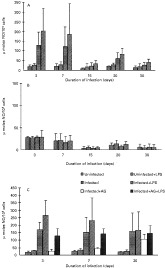
Fig. 1. NO release in culture supernatant of peritoneal macrophages of (A) mastomys, (B) gerbil and (C) AG-treated mastomys. Bars represent standard deviations of the means of 6 animals.

Table 2. Parasite recovery on day 15 post-L3 inoculation in mastomys treated with aminoguanidine

Table 3. Parasite recovery on day 30 post-L3 inoculation in mastomys treated with aminoguanidine

Table 4. Adherent cell population in the peritoneal cavity of normal and infected mastomys and gerbils

Fig. 2. O2− release from peritoneal macrophages of (A) mastomys and (B) gerbil. Bars represent standard deviations of the means of 6 animals.
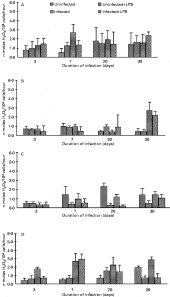
Fig. 3. H2O2 release from peritoneal macrophages of (A) mastomys, (B) gerbil, and in cell culture supernatants of (C) mastomys and (D) gerbil. Bars represent standard deviations of the means of 6 animals.
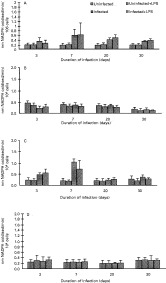
Fig. 4. Glutathione peroxidase (A and B) and reductase (C and D) activity of peritoneal macrophages of mastomys (A and C) and gerbil (B and D). Bars represent standard deviations of the means of 6 animals.

Fig. 5. TNF-α release in culture supernatants of peritoneal macrophages of (A) mastomys and (B) gerbil. Bars represent standard deviations of the means of 6 animals.
 You have
Access
- 17
- Cited by