INTRODUCTION
The distribution of species in the marine environment is limited mainly by temperature and by discontinuities or drastic changes in habitat types (MacPherson, Reference Macpherson2002; Allen et al., Reference Allen, Gillooly, Savage and Brown2006; Briggs, Reference Briggs2007). Several distribution patterns have been identified as a consequence, including latitudinal gradients in species richness (called the Humboldt rule or Wallace rule; Okolodkov, Reference Okolodkov2010), and biogeographic provinces determined by the presence of endemic species (Briggs, Reference Briggs1974; Spalding et al., Reference Spalding, Fox, Allen, Davidson, Ferdaña, Finlayson, Halpern, Jorge, Lombana, Lourie, Martin, McManus, Molnar, Recchia and Robertson2007; Briggs & Bowen, Reference Briggs and Bowen2012).
In the Eastern Tropical Pacific (ETP) the composition and distribution of the ichthyofauna have been determined to a large extent by several geological, historical and ecological events, including the formation of the Gulf of California ~25 million years ago (mya) (Holt et al., Reference Holt, Holt and Stock2000), and the emersion of the Central American Isthmus in the Pliocene about 3.5 mya (Coates & Obando, Reference Coates, Obando, Jackson, Budd and Coates1996), which favoured extinction and speciation processes, giving rise to the existing fish associations. Currently three biogeographic provinces are recognized for the ETP (Cortes, Mexican and Panamic, sensu Briggs, Reference Briggs1974). The borders of these provinces have been widely discussed and modified (Springer, Reference Springer1959; Dawson, Reference Dawson1975; Hastings, Reference Hastings2000; Robertson & Cramer, Reference Robertson and Cramer2009). The general species richness and endemic species richness have also presented important changes, with the descriptions of new species and the expansion of the geographic distribution of other species (Hastings, Reference Hastings2000; Briggs & Bowen, Reference Briggs and Bowen2012).
Traditionally, species richness has been considered an indicator of ecosystem health, relevant for conservation actions (Magurran, Reference Magurran2004). However, recent studies have shown that there is a stronger relationship between taxonomic diversity and species function, than between richness and species function when there is ecological redundancy (Walker, Reference Walker1992; Naeem, Reference Naeem1998). Taxonomic diversity indices have become a basic tool for community evaluation. These indices have been used efficiently to compare degraded and pristine marine areas (Gristina et al., Reference Gristina, Bahri, Fiorentino and Garofalo2006; Somerfield et al., Reference Somerfield, Cochrane, Dahle and Pearson2006), and have even been used to identify areas of elevated taxonomic diversity relevant for conservation (Walker, Reference Walker1995; Magurran, Reference Magurran2004).
In Mexico, the shrimp fishery occupies the third place in importance out of all fisheries in the country, the first place in foreign exchange earnings, and also further generates more than 37,000 direct and indirect jobs (López-Martínez et al., Reference López-Martínez, Morales-Bojórquez, Paredes-Mallón, Lluch-Belda, Cervantes-Valle, Lluch-Belda, Elorduy-Garay, Lluch-Cota and Ponce-Díaz2001; Lluch-Cota et al., Reference Lluch-Cota, Aragón-Noriega, Arreguín-Sánchez, Aurioles-Gamboa, Bautista-Romero, Brusca, Cervantes-Duarte, Cortés-Altamirano, Del-Monte-Luna, Esquivel-Herrera, Fernández, Hendrickx, Hernández-Vázquez, Herrera-Cervantes, Kahru, Lavín, Lluch-Belda, Lluch-Cota, López-Martínez, Marinone, Nevárez-Martínez, Ortega-García, Palacios-Castro, Parés-Sierra, Ponce-Díaz, Ramírez-Rodríguez, Salinas-Zavala, Schwartzlose and Sierra-Beltrán2007). However, the dragging nets used by the shrimp boats on the soft bottoms of the marine continental shelves capture a wide variety and amount of demersal species (Eayrs, Reference Eayrs2007; Guillett, Reference Guillett2008). Fish, due to its high diversity and abundance (Nelson, Reference Nelson2006), can reach over 70% of the volume capture of by-catch of the shrimp fishery, with an average of 200 thousand tonnes year−1 of fish, and potentially about 500 species (Young & Romero, Reference Young and Romero1979; Pérez-Mellado et al., Reference Pérez-Mellado, Romero, Young and Findley1981; Amezcua-Linares, Reference Amezcua-Linares and Yánez-Arancibia1985).
The fishes associated with this fishery in the ETP have been extensively studied at composition level (e.g. Aguilar-Palomino et al., Reference Aguilar-Palomino, Mariscal-Romero, González-Sansón and Rodríguez-Ibarra1996; Mariscal-Romero, Reference Mariscal-Romero2002), community structure (e.g. Nava-Romo, Reference Nava-Romo1994) and spatial distribution of biomass and density of dominant species (e.g. Amezcua-Linares, Reference Amezcua-Linares and Yánez-Arancibia1985; Rábago-Quiroz et al., Reference Rábago-Quiroz, López-Martínez, Valdez-Holguín, Nevárez-Martínez and Acevedo-Cervantes2012). However, most of the studies have been conducted in small areas hence the existence of latitudinal patterns, or of similarities among areas, are not known. In this research, we assume that communities can vary according to environmental conditions, thus latitudinal variations in biogeographic affinity, taxonomic composition and taxonomic diversity of the fishes associated with the shrimp fishery can be expected, relevant aspects due to the potential differential response of ecosystems to disturbance and in consequence of management actions to mitigate them. In our study, we consider five of the major fishing areas in the Mexican Pacific: the Upper Gulf of California with warm temperate conditions, the coast of Sinaloa-Nayarit, Jalisco-Colima coast and the coast of Michoacán-Guerrero, all of them with subtropical characteristics, and the Gulf of Tehuantepec, with tropical characteristics.
MATERIALS AND METHODS
Study area
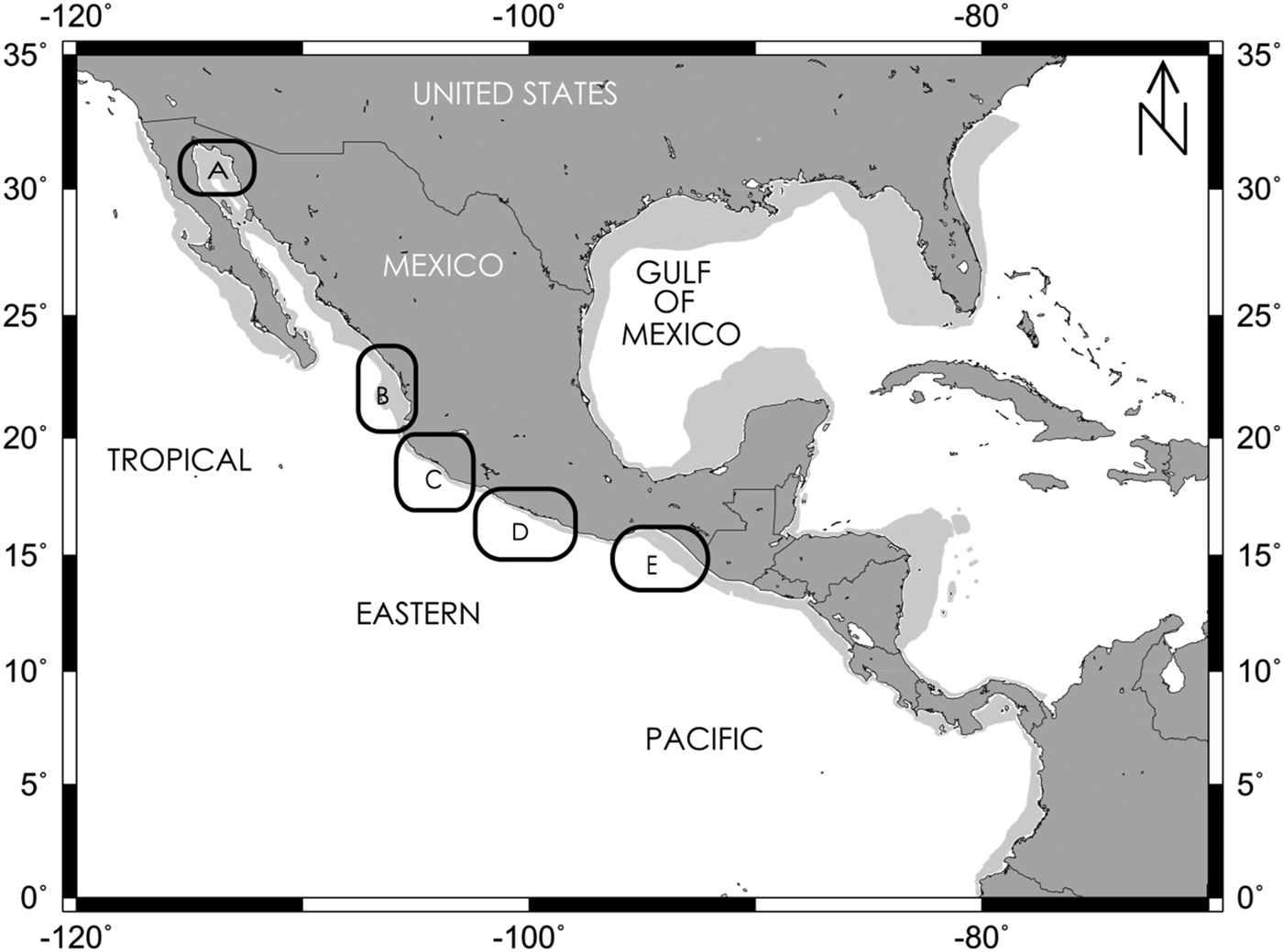
The Mexican Pacific coastline is relatively simple and continuous, with few oceanic islands (Figure 1). The Upper Gulf of California is characterized by a wide (125–150 km) and shallow (<50 m depth) continental shelf; the Colorado River delta flows into this area (Álvarez & Gaitán, Reference Álvarez, Gaitán, De la Lanza-Espino and Cáceres-Martínez1994). It is also subject to tidal ranges >7 m, high rates of evaporation and salinity, and extreme ranges in surface temperature (8°C in winter vs 38°C in summer) (Álvarez, Reference Álvarez and Ketchum1983; Soto-Mardones et al., Reference Soto-Mardones, Marinone and Parés-Sierra1999). The eastern Gulf coast has a wide continental shelf, important lagoon systems (e.g. Huizache-Caimanero), muddy bays and estuaries with large mangrove areas (71,225 ha in Sinaloa, Nayarit 66,977 ha; CONABIO, 2008), representing primary habitats for many species of demersal fishes during their ontogenetic development in functions such as feeding, growth, reproduction, protection and early juvenile nurseries (Flores-Verdugo et al., Reference Flores-Verdugo, González-Farías, Ramírez-Flores, Amezcua-Linares, Yáñez-Arancibia, Alvarez-Rubio and Day1990; Castro-Aguirre et al., Reference Castro-Aguirre, Espinosa-Pérez and Schmitter-Soto1999). The central Mexican Pacific continental shelf is very narrow (5–25 km wide) and fairly steep (Contreras-Espinosa, Reference Contreras-Espinosa1993; Álvarez & Gaitán, Reference Álvarez, Gaitán, De la Lanza-Espino and Cáceres-Martínez1994). The number of lagoons and estuarine areas increases towards the south, as does the mangrove coverage (2023 ha in Jalisco, 3192 ha in Colima, 1500 ha in Michoacán and 8093 ha in Guerrero; CONABIO, 2008). The coastal state of Guerrero is characterized by abundant coastal lagoons (approximately 189.5 km2) and rivers (Yáñez-Arancibia, Reference Yáñez-Arancibia1978), plus small rocky areas and coral. The continental shelf of the Gulf of Tehuantepec has a width of 100 km on average, from Salinas del Marqués, Oaxaca to Suchiate River, Chiapas, with a predominance of soft bottoms. The coastline comprises seven coastal lagoons (e.g. Laguna Superior) and several rivers (e.g. River Tehuantepec), with high percentages of mangrove coverage (15,718 ha for Oaxaca and Chiapas 39,707 ha; CONABIO, 2008).
Location of the five areas of study. A: Upper Gulf of California, B: Sinaloa-Nayarit, C: Jalisco-Colima, D: Michoacán-Guerrero and E: Gulf of Tehuantepec. The shaded area represents the extent of the continental shelf.

DATA DESCRIPTION
This research includes data on the composition of demersal fish species associated with shrimp trawl fishing in five typical grounds of the Mexican Pacific: (A) the Upper Gulf of California, with warm temperate conditions; (B) the coast of Sinaloa-Nayarit; (C) off the coast of Jalisco-Colima; and (D) the coast of Michoacán-Guerrero, with sub-tropical characteristics; and (E) the Gulf of Tehuantepec, with tropical characteristics (Figure 1). The data from the coast of Sinaloa-Nayarit come from research cruises conducted by the staff of the Escuela Nacional de Ingeniería Pesquera (ENIP-UAN) and the Centro Interdisciplinario de Ciencias Marinas (CICIMAR-IPN), whereas the data from the other ecosystems were obtained from the literature (Upper Gulf of California: Nava-Romo, Reference Nava-Romo1994; Jalisco-Colima: Mariscal-Romero & van der Heiden, Reference Mariscal-Romero, van der Heiden, Jiménez-Quiroz and Espino-Barr2006; Michoacán-Guerrero: Amézcua-Linares, Reference Amézcua-Linares1996; Gulf of Tehuantepec: Tapia-García & García-Abad, Reference Tapia-García, García-Abad and Tapia-García1998).
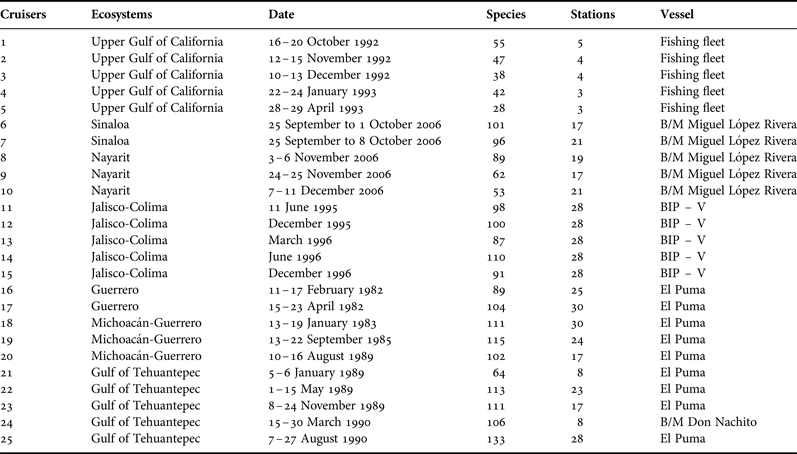
All sampling was performed in 24 h cycles (except Jalisco-Colima, which was nocturnal); the catches were made with a shrimp trawl in systematic periods of 30 min of effective drag at a speed of approximately 2 to 3 knots. The depth in the Upper Gulf of California ranges from 19 to 73 m, in Sinaloa-Nayarit from 12 to 90 m, in Jalisco-Colima from 20 to 80 m, in Michoacán-Guerrero 20 to 100 m, and in the Gulf of Tehuantepec from 15 and 80 m. Other features of the oceanographic campaigns for each zone are presented in Table 1.
Characteristics of the cruises along the coast of the Upper Gulf of California (Nava-Romo, Reference Nava-Romo1994), Sinaloa and Nayarit, Jalisco and Colima (Mariscal-Romero & van der Heiden, Reference Mariscal-Romero, van der Heiden, Jiménez-Quiroz and Espino-Barr2006) Michoacán and Guerrero (Amézcua-Linares, Reference Amézcua-Linares1996) and in the Gulf of Tehuantepec (Tapia-García & García-Abad, Reference Tapia-García, García-Abad and Tapia-García1998).
Fish collected from the coast of Sinaloa-Nayarit were identified using general keys (e.g. Fischer et al., Reference Fischer, Krupp, Schneider, Sommer, Carpenter and Niem1995; Robertson & Allen, Reference Robertson and Allen2002) and specific keys for some groups (e.g. Castro-Aguirre & Espinosa-Pérez, Reference Castro-Aguirre and Espinosa-Pérez1996 for rays; Chao, Reference Chao2001 for Stellifer). For the other sites, the validity of the genera and species was verified based on recent taxonomic and nomenclatural revisions, such as van der Heiden et al. (Reference van der Heiden, Aguilar-Zárate and Plascencia-González2009) for Citharichthys, among others. Family designations and higher hierarchical ranks follow Nelson (Reference Nelson2006). Genera and their respective species are presented alphabetically. Typical species of reef and pelagic oceanic systems for which reports were limited to one or two individuals were excluded from the analysis.
The reference specimens from Sinaloa-Nayarit coast are deposited in the Ichthyology Collection of the Escuela Nacional de Ingeniería Pesquera (ENIP-CI), San Blas, Nayarit (Appendix 1). The reference species from the Upper Gulf of California are found in the Marine Vertebrates Collection of the Instituto Tecnológico y de Estudios Superiores de Monterrey (ITESM), Campus Guaymas, Sonora (Nava-Romo, Reference Nava-Romo1994). The reference material from Jalisco-Colima coast was deposited in the Ichthyology Collection of the Centro de Ecologia Costera de la Universidad Autonoma de Guadalajara (CEC), in Guadalajara, Jalisco (Aguilar-Palomino et al., Reference Aguilar-Palomino, Mariscal-Romero, González-Sansón and Rodríguez-Ibarra1996). The Ichthyology Collection of the Instituto de Ciencias del Mar y Limnología (ICMyL) have vouchers of the coast of Michoacán-Guerrero (Amézcua-Linares, Reference Amézcua-Linares1996); and the Coleccion Ictiologica de la Universidad Autonoma Metropolitana, Unidad Xochimilco (UAM-X) have the biological material reference from the Gulf of Tehuantepec (Tapia-García & García-Abad, Reference Tapia-García, García-Abad and Tapia-García1998).
Data analysis
We built a matrix with taxonomic composition information and presence-absence data for each ecosystem, which was used for the analysis of zoogeographic affinity, the contrast of the systematic casts and taxonomic diversity indicators for each ecosystem.
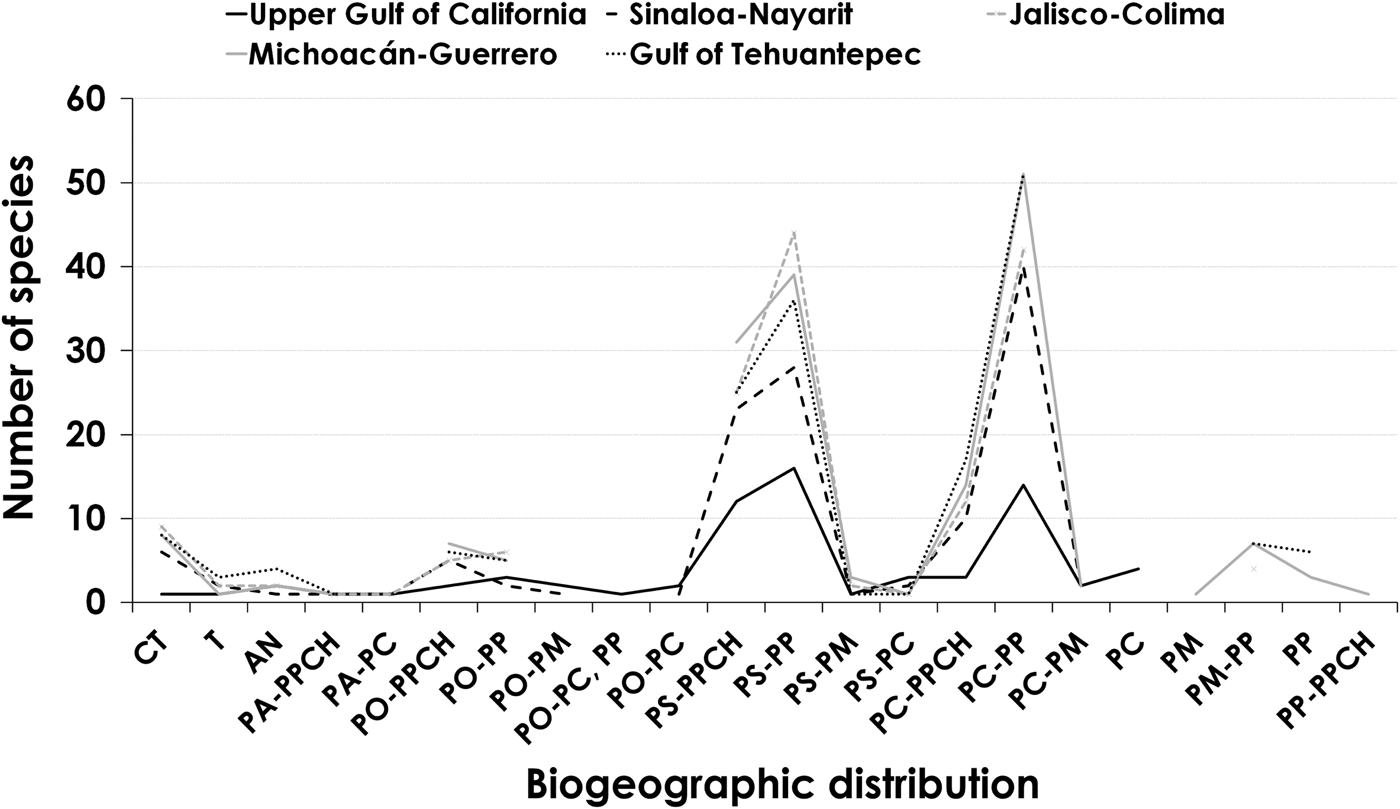
We performed an overview of the composition of fishes of the five ecosystems, and zoogeographic affinity was analysed according to the basic scheme of Briggs (Reference Briggs1974), with modifications by Hastings (Reference Hastings2000), Robertson et al. (Reference Robertson, Grove and McCosker2004) and Horn et al. (Reference Horn, Allen, Lea, Allen, Pondella and Horn2006). Accordingly, the species were grouped into the following classification, which considers their natural distribution area (Figure 2): PA: Aleutian Province extends from Nunivak Island to Puget Sound in Washington (temperate-cold). PO: Oregonian Province extends from Puget Sound in Washington to Point Conception in California (temperate-cold). PS: Province of San Diego, from Point Conception to Bahia Magdalena on the west coast of Baja California Sur, corresponding to warm-temperate waters, in which the temperature rarely drops below 10°C or exceeds 25°C. PC: Cortez Province includes the southern part of Bahia Magdalena (~25°N) and the central and northern Gulf of California. The water temperature in winter rarely descends below 13–15°C, but in summer it can increase to 25 or 30°C. Along the eastern Gulf coast, the PC is isolated from the Mexican province by the Sinaloa gap, a band of 370 km of sandy and muddy coastline extending between Topolobampo and Mazatlan. PM: Mexican Province includes the coast of Mexico from Mazatlan, Sinaloa to the Isthmus of Tehuantepec, Oaxaca. This province is located in the tropics, where water temperatures in winter rarely descend below 18–20°C. It is separated from the PC to the west by a 300 km expanse of open water between Mazatlan and the Peninsula of Baja California and to the north by the aforementioned Sinaloa gap. PP: Panamic Province extends south from El Salvador to near Cape Blanco in northern Peru. Between this province and the previous, there is an extensive section (the Central America gap) of sandy coastline (1000 km) between the Gulf of Tehuantepec and El Salvador. Along the southern boundary of this province (~6°S), there is a transition zone influenced by warm waters from Ecuador and cold coastal waters from the Peruvian Current coming from Chile (Chirichigno & Cornejo, Reference Chirichigno and Cornejo2001). This province also has a tropical environment. PPCH: Peruvian-Chilean Province extends from Sechura Bay to northern Chiloe Island in Chile. PMAG: Magellanic Province extends from Chiloé Island to 35°S in the south-west Atlantic. CT: Circumtropical are the fish species widely distributed in the tropical seas of the world. T: Transpacific species are distributed on both sides of the barrier of the Pacific, Eastern Tropical Pacific (ETP) and Central and Western Tropical Pacific. AN: Anfiamerican species are distributed on both sides of Central America: ETP and Western Atlantic.
Biogeographic affinity of the fish species of the five ecosystems (PA, Aleutian Province; PO, Oregonian Province; PS, San Diego Province; PC, Cortez Province; PM, Mexicana Province; PP, Panamic Province; PPCH, Peruvian-Chilean Province; PMAG, Magellan Province; CT, Circumtropical; T, Transpacific; AN, Anfiamerican). Rearranged in a gradient from north to south.
The similarity in the fish composition among the five ecosystems was evaluated through an agglomerative hierarchical cluster analysis. We used the Bray–Curtis similarity index as a distance measure, and the group averages as a grouping method. The Bray–Curtis index is considered robust because it does not give weight to absences (Field et al., Reference Field, Clarke and Warwick1982), and the group average method because it minimizes distortion of the original affinities (Herrera-Moreno, Reference Herrera-Moreno2000). In conjunction with the above analysis, we used non-metric multidimensional scaling (NMDS) as a non-parametric sorting method to strengthen the certainty groups (Field et al., Reference Field, Clarke and Warwick1982). To test the null hypothesis (H0) of no differences in the composition of the fish community among the five ecosystems, we applied one-way analysis of similarity (ANOSIM) to the similarity matrix obtained with the Bray–Curtis coefficient (Clarke, Reference Clarke1993).
Finally, we estimated the average taxonomic distinctness (Δ+) and the variation in taxonomic distinctness (Λ+). These indices regarding species richness allow the assessment of the taxonomic structure of lists of species of particular areas in relation to the species richness of the region to which they belong. They are not dependent on sample size and sampling effort and do not require the assumption of data normality (Warwick & Clarke, Reference Warwick and Clarke1995, Reference Warwick and Clarke1998). The taxonomic levels used were class, subclass, order, family, genus and species. For this study, we used the nomenclature and hierarchical classification proposed by Nelson (Reference Nelson2006).
The average taxonomic distinctness index (Clarke & Warwick, Reference Clarke and Warwic1998) is a qualitative indicator that considers only the presence/absence of species. It is calculated by adding the length of the routes through the taxonomic tree connecting all pairs of species on the list and then dividing by the number of routes in accordance with the following formula:
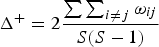 $$\Delta ^ +=2\displaystyle{{\sum {\sum\nolimits_{i{\rm \ne }j} {\omega _{ij} } } } \over {S(S - 1)}}$$
The variation in taxonomic distinctness (Clarke & Warwick, Reference Clarke and Warwick2001) considers the equity of the distribution of the taxonomic levels in the taxonomic tree so that, mathematically, it is the variance of Δ+. This index is a measure of the asymmetry of the taxonomic tree and is calculated as:
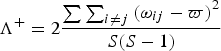 $$\Lambda ^ +=2\displaystyle{{\sum {\sum\nolimits_{i{\rm \ne }j} {(\omega _{ij} } - \varpi )} ^2 } \over {S(S - 1)}}$$
where S is the number of species in the sample and ωij is the distinctive weight or taxonomic distance between species i and j through a taxonomic tree; i.e. each taxonomic hierarchical level receives a proportional value scaled to 100. Thus, while ϖ = Δ+, ωij = 16.7 is used for organisms of the same species, ωij = 33.3 is assigned to different species in the same genus, ωij = 50 to the same family but different genus, ωij = 66.7 to the same order but different family, ωij = 83.3 to the same subclass but different order, and finally, ωij = 100 to the same class but different subclass.
RESULTS
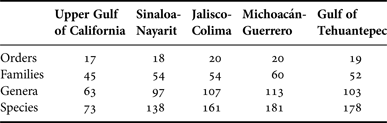
The overall composition for the five ecosystems included two classes, 20 orders, 65 families, 147 genera and 292 species (Appendix I). The families present that included a great number of species of bony fishes were Sciaenidae (33 species), Serranidae (22), Carangidae (21), Haemulidae (18) and Paralichthyidae (16); the elasmobranchs were from the Urotrygonidae family with nine species. However, in this study, 22 families were represented by a single species (e.g. Malacanthidae, Pleuronectidae). The genera with highest species richness were Anchoa with eight; Diplectrum and Symphurus with seven; Urotrygon with six; and Prionotus, Lutjanus, Eucinostomus, Cynoscion, Stellifer and Sphoeroides with five species each.
In general, 96.9% of the composition of demersal fishes for the Mexican Pacific coast was from families with circumtropical or cosmopolitan distribution; there were only two Anfiamerican families (Centropomidae and Achiridae). At the genus level, the circumtropical and anfiamerican groups had a higher number of species, with 67 and 62, respectively. Ten genera were endemic to the Eastern Tropical Pacific, two to the Eastern Pacific, and three genera were incomplete circumtropicals (absent from the Indo-Pacific). At the species-level, the fish community was dominated by a wide distribution of species from the Eastern Tropical Pacific: 88 species were distributed from the PC to the PP; 62 species had the same southern boundary, but with a northern range extended to the PS; and 40 species limited their distribution in the north to the PS, but its southern limit extended to the PPCH (Figure 2). Twelve species had circumtropical distribution, four were Transpacific, and an equal number were Anfiamerican. Regardless of richness, the fish community of these five ecosystems presented a similarity in the distribution patterns of several families, similar to those described in the overall analysis. In addition to the dominant groups, in the Upper Gulf of California four PC species should be noted, and in the Gulf of Tehuantepec, six PP species were found.
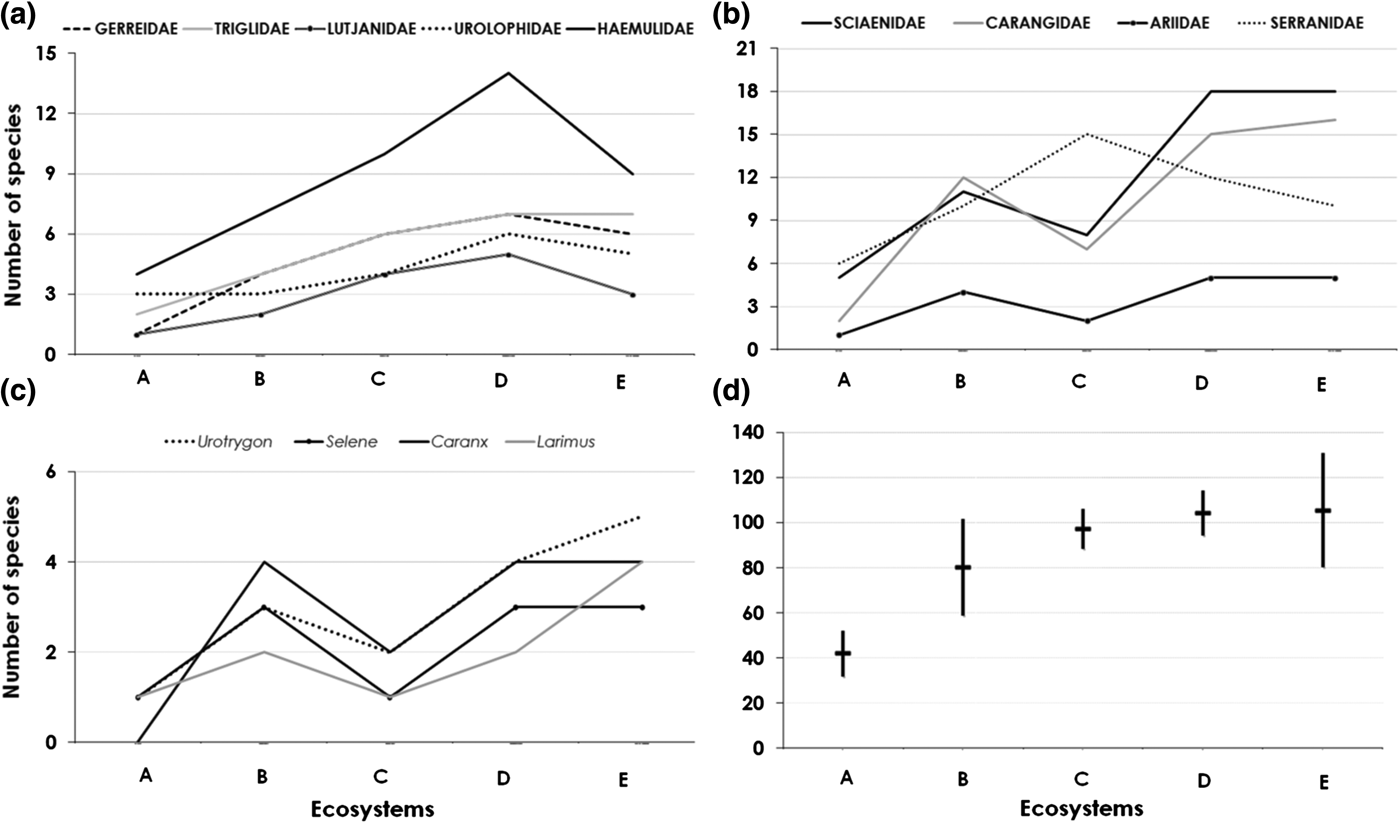
The numbers of species, genera and families were negatively correlated with latitude, increasing from the Upper Gulf of California towards the south (species richness: r = −0.838, P < 0.0001; genera: r = −0.811, P < 0.0001; families: r = −0.715, P < 0.0001) (Table 2; Figure 3d). This pattern was clearly exemplified in the families Gerreidae, Triglidae, Lutjanidae, Haemulidae and Urotrygonidae (Figure 3a). In the families Sciaenidae, Carangidae, Ariidae and the genera Urotrygon, Selene, Caranx and Larimus, this pattern was interrupted at the coast of Jalisco-Colima, where family Serranidae reaches greater richness (Figure 3b, c).
Latitudinal trend in family (a, b), genus (c) and species richness (mean±SD for cruise) (d) of fish of the five ecosystems. A: Upper Gulf of California; B: Sinaloa-Nayarit; C: Jalisco-Colima; D: Michoacán-Guerrero, and E: Gulf of Tehuantepec.
Taxonomic composition of the five ecosystems.
The average taxonomic distinctness index and the variation in taxonomic distinctness showed a significant positive correlation with latitude (Δ+: r = 0.673, P = 0.000, Λ+: r = 0.715, P < 0.0001), with a clear tendency to decrease from north to south; this pattern was interrupted by low values in Sinaloa-Nayarit, where similar values to those of the Gulf of Tehuantepec were observed (Figure 4). The Upper Gulf of California had values above the general average calculated, and three of the five cases were outside of the 95% probability limits of the simulation. In the central areas (Jalisco-Colima and Michoacán-Guerrero), the values were near the estimated mean (Figure 4).
Relationship between the average taxonomic distinctness index (A) and the variation in taxonomic distinctness (B) vs the species richness of the five ecosystems (Upper Gulf of California: ▲; Sinaloa-Nayarit: ◇; Jalisco-Colima: ○; Michoacán-Guerrero: *; Gulf of Tehuantepec: ●). The average (dotted line) and confidence intervals of 95% (solid lines) are shown for 999 random permutations of pairs from the list of species.
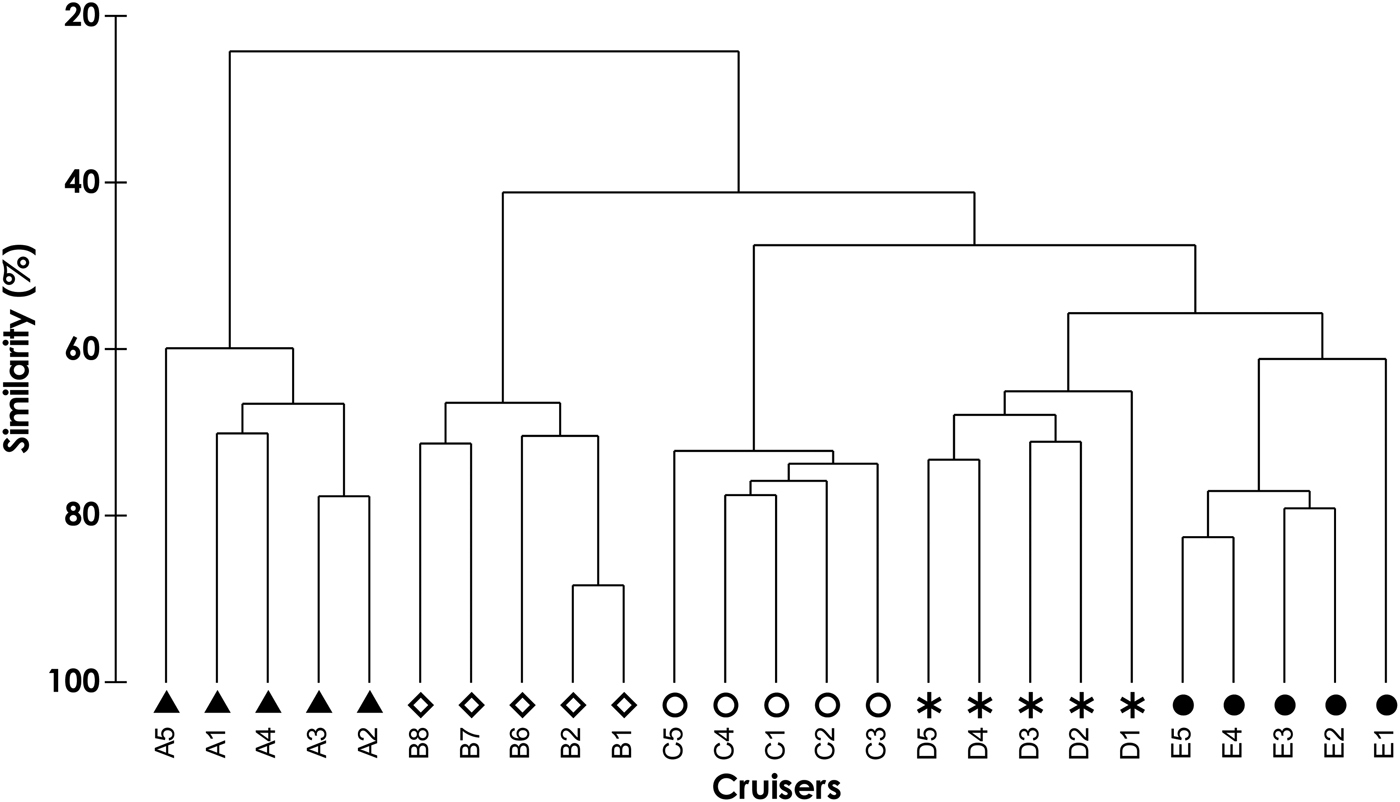
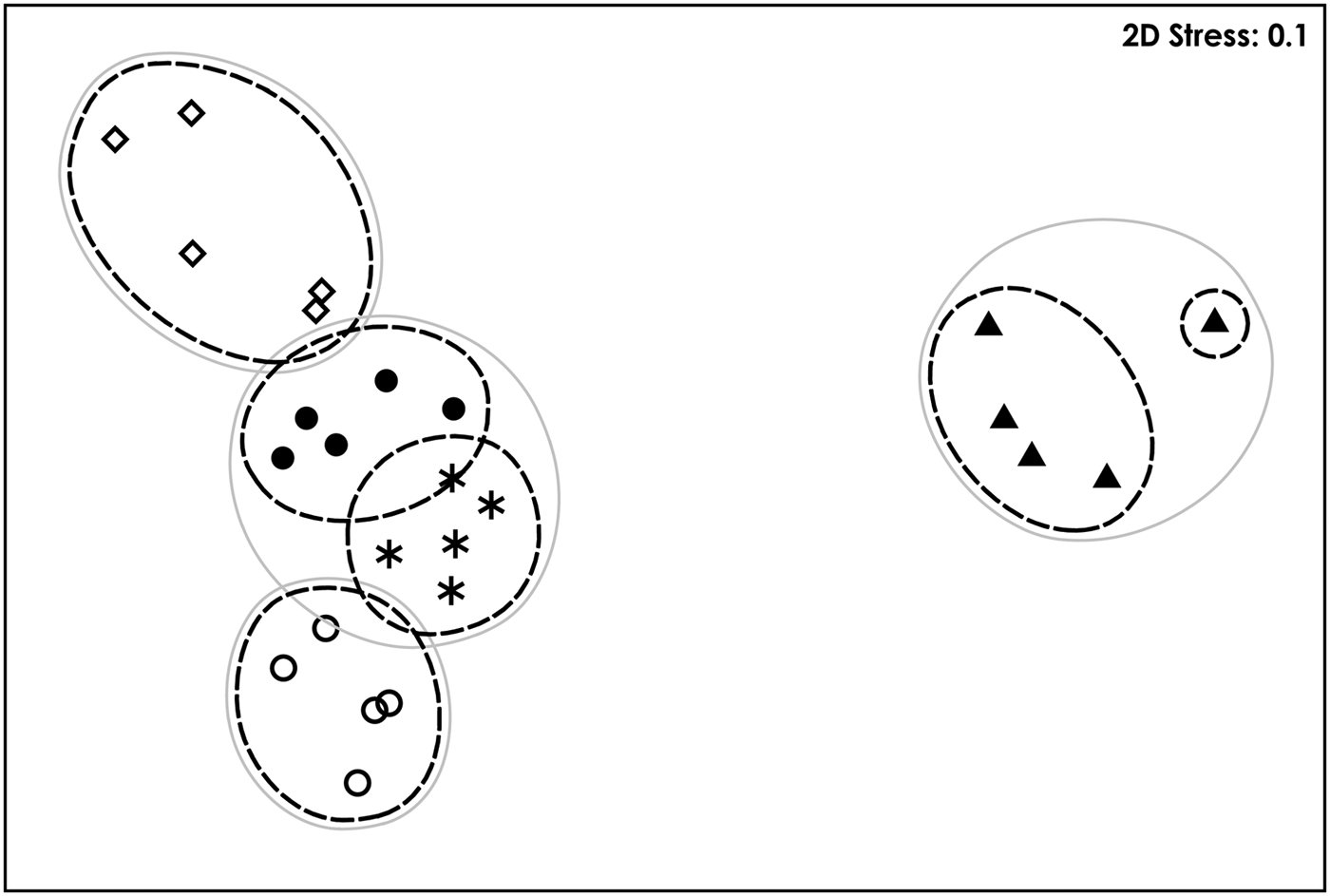
Cluster analysis based on species composition allowed the grouping of the cruises for each ecosystem (Figure 5). The NMDS showed the same pattern as the cluster analysis (Figure 6), with a low stress value (0.1). Both analyses showed greater similarity between the Michoacán-Guerrero and Gulf of Tehuantepec cruises, whereas the cruises for the Upper Gulf of California were kept clearly separated. The concordance in the results of the analysis enhances the reliability of the clusters, which is also supported by the ANOSIM (Global R = 0.99, P = 0.01%), indicating that each ecosystem is structured by a particular combination of species. The SIMPER analysis showed average percentages of similarity higher than 65% within each ecosystem and dissimilarity values of 44.33% between the less dissimilar ecosystems (Michoacán-Guerrero and the Gulf of Tehuantepec) to 79.67% between the more dissimilar (Upper Gulf of California and Sinaloa-Nayarit).
Dendrogram of similarity of the fish community of the five ecosystems, ordered from north to south (Upper Gulf of California: ▲; Sinaloa-Nayarit: ◇; Jalisco-Colima: ○; Michoacán-Guerrero: *; Gulf of Tehuantepec: ●) calculated with the Bray–Curtis similarity coefficient.
Non-metric multidimensional scaling (NMDS). The distances represent the ranks of the dissimilarities among the five ecosystems (Upper Gulf of California: ▲; Sinaloa-Nayarit: ◇; Jalisco-Colima: ○; Michoacán-Guerrero: *; Gulf of Tehuantepec: ●) in two dimensions with a low factor stress of 0.1. The ellipses represent the per cent similarity calculated with the Bray–Curtis similarity coefficient (Black = 50%, Grey = 60%).
DISCUSSION
The overall richness for the five ecosystems comprised 292 species, which constitute 81.6% of the known soft bottom fish species in the ETP (Mora & Robertson, Reference Mora and Robertson2005). The family Sciaenidae was the most diverse with 33 species, but it represents only 40.2% of all of the known species in the ETP (82 spp.). Twenty-two families with low richness in the ETP (e.g. Trichiuridae) or rich in species but dominant in other environments (e.g. Carcharhinidae: pelagic oceanic) were only represented by one species. The more diverse genera in the ETP, such as Anchoa with 19 species (which regularly inhabit estuaries, coastal lagoons and the coastal pelagic zone) and Symphurus with 18 species (with a preference for soft bottoms), were poorly represented in this study, with eight and seven species, respectively.
The composition and organization of the fish communities of the Mexican Pacific have been determined in great measure by a variety of geological and ecological factors that favour extinction processes and speciation, including the formation of the Gulf of California and the rise of Central America, which led to the current fish assemblages (Rosenblatt, Reference Rosenblatt1967; Castro-Aguirre et al., Reference Castro-Aguirre, Balart and Arvizu-Martínez1995; Robertson et al., Reference Robertson, Grove and McCosker2004). During the formation of the Gulf of California, it has been suggested that one or two channels connected the Gulf of California with the eastern Pacific for approximately 1 million years (Riddle et al., Reference Riddle, Hafner, Alexander and Jaeger2000). These channels have been used to explain the presence of disjunctive populations (Anfipeninsulares: Castro-Aguirre et al., Reference Castro-Aguirre, González-Acosta and de la Cruz-Agüero2005) of temperate species found both on the Pacific coast and in the northern Gulf of California (Hubbs, Reference Hubbs1960; De la Cruz-Agüero, Reference De La Cruz-Agüero2000; Riddle et al., Reference Riddle, Hafner, Alexander and Jaeger2000). In contrast, the emergence of the Central American isthmus occurred over approximately 3.5 million years (Coates & Obando, Reference Coates, Obando, Jackson, Budd and Coates1996) and interrupted the connection between the Pacific and Atlantic, isolating fish populations, generating species formation and causing the disappearance of other species on both coasts (Castro-Aguirre et al., Reference Castro-Aguirre, Balart and Arvizu-Martínez1995, Reference Castro-Aguirre, González-Acosta, de la Cruz-Agüero, Moncayo-Estrada, Jiménez-Quiroz and Espino-Barr2006). This process helps to explain the presence of two families (Centropomidae and Achiridae), 67 genera and four Anfiamerican species (e.g. Etropus crossotus) with representation on both sides of the American continent (Rosenblatt, Reference Rosenblatt1967). Robertson et al. (Reference Robertson, Grove and McCosker2004) suggested that 85% of coastal fish fauna of this region are derived from taxa present before the formation of the Isthmus of Panama. In addition, the existence of 10 genera endemic to the ETP and the low percentage of species common to both regions of the American continent are likely the result of an independent evolution of their faunas in very different environments over the past 3.5 million years (Rosenblatt, Reference Rosenblatt1967).
In general, the fish community of the five ecosystems was dominated by eurythermal tropical species widely distributed in the region of ETP (Robertson & Allen, Reference Robertson and Allen2008). The wide ranges of species distribution in the region are favoured by the longitudinal orientation of the coastline, which is relatively simple and straight, by the narrow and continuous continental shelf with few oceanic islands, and by the inter-annual variability associated with ENSO, El Niño-Southern Oscillation (Victor et al., Reference Victor, Wellington, Robertson and Ruttenberg2001; Robertson & Allen, Reference Robertson and Allen2008). During ENSO events of great magnitude and intensity, the currents are an extremely important mechanism in the dispersal of larvae (Lea & Rosenblatt, Reference Lea and Rosenblatt2000). Thus, some endemic species of the Eastern Tropical Pacific exhibit significant increases in their range, often invading the coast of California (Moore & Herbinson, Reference Moore and Herbinson2002; Walker et al., Reference Walker, Hastings and Steele2002). These factors, along with the oviparous reproduction method with pelagic eggs dominant in species of the ETP (Robertson & Allen, Reference Robertson and Allen2008), explain the continuous distribution of most species in the systems.
The transpacific fishes species group was represented only by four species, which is a low number considering that 190 species are known (165 are resident and 25 stray) of this component in the ETP (Robertson & Allen, Reference Robertson and Allen2002; Robertson et al., Reference Robertson, Grove and McCosker2004). However, most species of this group are reef inhabitants and have greater representation along the oceanic islands of the region (Robertson & Allen, Reference Robertson and Allen1996; Castro-Aguirre & Balart, Reference Castro-Aguirre, Balart and Lozano-Vilano2002), as well as in the southern Gulf of California and the coast between Costa Rica and Panama (Thomson et al., Reference Thomson, Findley and Kerstitch2000; Robertson & Allen, Reference Robertson and Allen2002). The circumtropical component was represented by 12 species, which in the ETP represents 7.1% of the species, although most are oceanic or neritic pelagic species (Robertson & Allen, Reference Robertson and Allen2002), which are under-represented in this study.
Despite the wide distribution of the demersal fish species of the Mexican Pacific, the five ecosystems presented singular associations of species, with only 20 species reported in the five areas. Each area presented approximately 18 exclusive species, and the other species were reported in two or more areas. The composition at the genera and species-levels was higher in the southern areas, with an increasing trend from high-latitude areas to low latitudes, with 73 species in the Upper Gulf of California and 178 in the Gulf of Tehuantepec. The latitudinal gradient in species richness is one of the most prevalent gradients in macroecological patterns (Willig et al., Reference Willig, Kaufman and Stevens2003; Macpherson et al., Reference Macpherson, Hastings, Robertson, Witman and Roy2009). Globally, the latitudinal gradient in species richness remains in terrestrial, marine and freshwater systems, with approximately 30 hypotheses attempting to explain it (Willig et al., Reference Willig, Kaufman and Stevens2003). This gradient is present in fish from the Atlantic (Macpherson et al., Reference Macpherson, Hastings, Robertson, Witman and Roy2009), Indo-Pacific reef fish (Mora et al., Reference Mora, Chittaro, Sale, Kritzer and Ludsin2003), Eastern Pacific molluscs (Jablonski & Valentine, Reference Jablonski, Valentine, Scudder and Reveal1981; Roy et al., Reference Roy, Jablonski and Valentine2000) and decapod crustaceans (Wicksten, Reference Wicksten1989). In California coastal fishes, Horn et al. (Reference Horn, Allen, Lea, Allen, Pondella and Horn2006) found maximum values of 243 species in the south and minimum values of 125 in the north; they attributed this change to the decrease in the ocean surface temperature.
In the Gulf of California, this latitudinal gradient has been reported in macrocrustaceans (Hendrickx et al., Reference Hendrickx, Brusca, Ramírez Reséndiz and Hendrickx2002), molluscs (Hendrickx et al., Reference Hendrickx, Brusca, Cordero and Ramírez2007) and cryptic fishes (Thomson & Gilligan, Reference Thomson, Gilligan, Case and Cody2002), with a clear decrease from south to north that has been primarily attributed to the tidal amplitude of the Upper Gulf of California and the winter low temperatures that limit the survival of some species of tropical affinity and prevent the establishment of resident populations (Walker, Reference Walker1960; Hastings & Findley, Reference Hastings, Findley, Felger and Broyles2007; Brusca & Hendrickx, Reference Brusca, Hendrickx and Brusca2010; Hastings et al., Reference Hastings, Findley, Van der Heiden and Brusca2010). Thomson & Lehner (Reference Thomson and Lehner1976) found that the intertidal fish community on the north-east coast of the northern Gulf (Puerto Peñasco) is characterized by large seasonal population fluctuations due to the periodic deaths of several tropical species. Therefore, the community is dominated by a few warm-temperate species able to survive the winter low temperatures of the sea, and these species in turn are rare or absent in the central Gulf area (Thomson et al., Reference Thomson, Findley and Kerstitch2000). Several studies have shown that temperature is an adequate predictor of the latitudinal gradient in species richness (Macpherson, Reference Macpherson2002; Thomson & Gilligan, Reference Thomson, Gilligan, Case and Cody2002; Horn et al., Reference Horn, Allen, Lea, Allen, Pondella and Horn2006). Additionally, the absence of some habitats present in the central and southern Gulf, such as deep water basins and rocky and coral reefs has also been considered limiting, as has the lack of a direct connection to marine waters to the north and west, which prevents easy movement of temperate fishes in the region (Hastings et al., Reference Hastings, Findley, Van der Heiden and Brusca2010).
In this study, the latitudinal richness pattern was maintained at different taxonomic levels (families, genera, species) but disrupted at the Jalisco-Colima coast for some families and genera, possibly due to the diminution of soft bottoms and increased rocky habits (Robertson & Allen, Reference Robertson and Allen2008), which are preferential habitats for most species of the Serranidae family (Heemstra, Reference Heemstra, Fischer, Krupp, Schneider, Sommer, Carpenter and Niem1995), which achieved greater richness in this area. For example, the leopard grouper (Mycteroperca rosacea) is primarily captured in association with hard bottoms in the peninsular coast of the Gulf of California and Sonora, whereas in Nayarit and Sinaloa, where soft bottoms dominate, the commercial catch of this species is very poor (Aburto-Oropeza et al., Reference Aburto-Oropeza, Erisman, Valdez-Ornelas, Danemann, Torreblanca-Ramírez, Silva-Ramírez and Ortuño-Manzanarez2008).
Our results indicate that the lack of suitable habitats for demersal fish species associated with soft bottoms limits the distribution or at least the abundance of these species. Contrary to what some authors proposed as a continuous habitat (Mora & Robertson, Reference Mora and Robertson2005; Macpherson et al., Reference Macpherson, Hastings, Robertson, Witman and Roy2009), rocky shores and areas are topographic barriers that are barely passable for these species (Castro-Aguirre et al., Reference Castro-Aguirre, Balart and Arvizu-Martínez1995), especially when combined with a narrow continental shelf dominated by rocky bottoms (Robertson & Allen, Reference Robertson and Allen2008; Gallegos et al., Reference Gallegos, Rodríguez, Márquez, Lecuanda, Zavala-Hidalgo, Jiménez-Quiroz and Espino-Barr2006). This condition is reflected in the interrupted distribution pattern for several groups in the coastal area of Jalisco-Colima and in the systematic lists of species associated with the by-catch of the shrimp fishery in this area, including several reef species (Aguilar-Palomino et al., Reference Aguilar-Palomino, Mariscal-Romero, González-Sansón and Rodríguez-Ibarra1996; Mariscal-Romero, Reference Mariscal-Romero2002).
The taxonomic diversity indicators showed an inverse latitudinal pattern to that found in the specific richness, with a gradual decrease in the values of both indices from north to south. The Upper Gulf of California was the most different of all of the systems, with greater taxonomic diversity despite its lower number of species. The central areas (Jalisco-Colima and Michoacán-Guerrero) had values within the average, whereas Sinaloa-Nayarit and the Gulf of Tehuantepec ecosystems, which are most similar in physiographic characteristics (e.g. estuarine-lagoon systems, discharges from rivers, dense mangrove areas), showed similar values. Similar trends were reported by Tolimieri & Anderson (Reference Tolimieri and Anderson2010) in the demersal fish community of the California Current along the coast of the United States (32°30′N to 48°10′N), with an increase in both latitudinal indicators (Δ+, Λ+) at depths of 50 to 150 m.
Taxonomic diversity indexes have traditionally been effectively used to compare degraded and non-degraded marine habitats using nematodes (Clarke & Warwick, Reference Clarke and Warwic1998), macrobenthos (Somerfield et al., Reference Somerfield, Cochrane, Dahle and Pearson2006) and fish (Rogers et al., Reference Rogers, Clarke and Reynolds1999; Gristina et al., Reference Gristina, Bahri, Fiorentino and Garofalo2006), among other groups, with convincing results. In impacted marine areas, benthic associations tend to be dominated by groups of closely related species (Warwick & Clarke, Reference Warwick and Clarke1995). This suggests that Sinaloa-Nayarit and the Gulf of Tehuantepec present signs of fishing alteration. However, because the other ecosystems have greater habitat heterogeneity, which has been associated with increased species richness (e.g. Roberts & Ormond, Reference Roberts and Ormond1987; Aburto-Oropeza & Balart, Reference Aburto-Oropeza and Balart2001; Brusca et al. Reference Brusca, Findley, Hastings, Hendrickx, Torre-Corsio, van der Heiden, Cartron, Ceballos and Felger2005; Gratwicke & Speight, Reference Gratwicke and Speight2005), the similarity in the low values of taxonomic diversity of these ecosystems could also be due to the more homogeneous habitat conditions. Homogeneous habitats are used by taxonomically closely related species with similar ecological requirements; in contrast, most diverse habitats allow the coexistence of taxonomically distant species with different ecological requirements (Ramos-Miranda et al., Reference Ramos-Miranda, Mouillot, Flores, Sosa, Do Chi and Ayala2005; Sosa-López et al., Reference Sosa-López, Ramos-Miranda, Flores-Hernández, Mouillot and Do Chi2005).
Additionally, taxonomic diversity indices allow the identification of areas of exceptional richness (Magurran, Reference Magurran2004), such as the Upper Gulf of California. In this area, tropical, subtropical, temperate and even arctic-boreal or temperate-warm species coexist (Walker, Reference Walker1960; Castro-Aguirre et al., Reference Castro-Aguirre, Balart and Arvizu-Martínez1995; Hastings et al., Reference Hastings, Findley, Van der Heiden and Brusca2010), in addition to the presence of endemic species (Diplectrum sciurus, Micropogonias megalops and Totoaba macdonaldi) and even a monotypic genus (Totoaba). Additionally, there is a high richness of cartilaginous fish (as opposed to other areas dominated by teleosts) representing 46% of the 88 known species in the Gulf of California (Hastings & Findley, Reference Hastings, Findley, Felger and Broyles2007) and contributing significantly to the high taxonomic diversity (Tolimieri & Anderson, Reference Tolimieri and Anderson2010).
In summary, the fish species composition associated with the shrimp fishery in the Mexican Pacific was diverse (65 families, 147 genera and 292 species), and a high percentage of the species had wide ranges of distribution. However, each ecosystem had a characteristic association of species. The wide distribution of the species was apparently favoured by the dominance of the oviparous reproduction type with pelagic eggs, dominant fish species in the ETP, and physiographic (e.g. simple and straight coastline) and oceanographic (e.g. currents) features in the region. Species richness showed a pronounced decrease from the Upper Gulf of California, with warm-temperate conditions, to the Gulf of Tehuantepec, with tropical conditions, whereas indicators of taxonomic diversity (Δ+ and Λ+) presented an opposite trend. This suggests greater taxonomic redundancy in tropical areas and greater taxonomic diversity in the Upper Gulf, despite the lower species richness. This is explained by the prevailing environmental conditions and isolation procedures generated during formation of the Gulf of California.
ACKNOWLEDGEMENTS
D.S.P.S. wishes to thank CONACyT's programme: ‘Complementary Support for the Institutional Strengthening Working Groups: Retention’.
FINANCIAL SUPPORT
The authors acknowledge the partial support of the project PROMEP, SEP-CONACyT (104974, 155900), SIP-IPN (20121444, 20120949 and 20140981), EDI programmes and COFAA National Polytechnic Institute.
Supplementary materials and methods
The Supplementary material referred to in this article can be found online at journals.cambridge.org/mbi.