Introduction
California has the largest population of mentally ill defendants nationwide, and on June 27, 2018, the governor signed into law Assembly Bill 1810 that offered every county the opportunity to establish diversion program procedures (section 15), and opened program access to all mental health diagnoses excluding antisocial personality disorder, borderline personality disorder, and pedophilia. 1 This measure thus reflects the increasing nationwide interest in channeling seriously mentally ill individuals away from traditional legal processes into pretrial diversion programs.Reference Case, Steadman and Dupuis 2 On an individual level the goal is to provide treatment for mental health conditions, decrease the legal burden and consequences of arrest, and facilitate integration with community support structures. Despite the expense of jail diversion, a fiscal benefit is realized immediately through reduced costs of custodial care, especially for defendants deemed incompetent to stand trial who may have faced lengthy detours through jail and state hospital competency restoration programs.Reference Renner, Newark and Bartos 3 The longer-term fiscal benefit is derived from those who successfully complete mental health court treatment, as diversion program completers experience fewer post-treatment arrests and days incarcerated.Reference Steadman, Redlich and Callahan 4 , Reference Gill and Murphy 5
While the use of community-based resources allows appropriate diversion clients to be managed as outpatients, provision of care outside controlled settings (e.g. jail and hospital) presents a set of challenges for monitoring treatment fidelity. Schizophrenia patients benefit from mental health court participation, and schizophrenia spectrum disorders remain the core group targeted by many diversion programs across the nation.Reference Comartin, Kubiak and Ray 6 For schizophrenia spectrum disorders antipsychotic medication is the foundation of treatment, and medication nonadherence not only increases illness relapse risk but is also associated with higher recidivism rates in forensic patients. Among a cohort of 63 prison parolees with a schizophrenia diagnosis previously found not guilty by reason of insanity, poor adherence to treatment increased the odds of reoffense by 10-fold (OR = 10.42; p = 0.001;).Reference Oueslati, Fekih-Romdhane and Mrabet 7 Importantly, in a large (n = 11462) Canadian study of offenders with schizophrenia and a mean follow-up of 10 years, lower antipsychotic adherence levels were significantly associated with increased adjusted risk ratios (ARR) of violent (ARR = 1.58; 95% CI = 1.46–1.71) and nonviolent (ARR = 1.41; 95% CI = 1.33–1.50) offenses compared to those with high adherence rates (≥ 80%).Reference Rezansoff, Moniruzzaman and Fazel 8 Although jail diversion programs must provide a comprehensive array of services, including supported housing, case management, substance use treatment, and appropriate rehabilitative options (i.e. cognitive, psychosocial, vocational), maintenance of participant psychiatric stability is key to the successful completion of mental health court dictates. Because antipsychotic nonadherence looms as one the biggest factors in psychiatric relapse and recidivism, measures to track and mitigate nonadherence must be incorporated into the treatment protocols of all diversion programs.Reference Lamberti 9 The purpose of this focused review is to provide a description of how evidence-based strategies, including pill counts, plasma antipsychotic levels, and long-acting injectable antipsychotics (LAIs), can be implemented in outpatient diversion programs with the goal of minimizing risks of treatment failure related to inadequate antipsychotic treatment.
Pill Counts to Track Nonadherence in Schizophrenia Patients
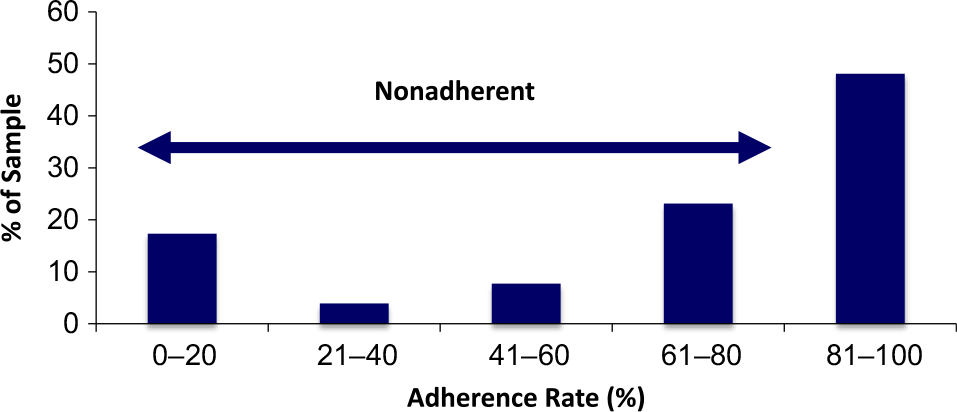
Although the cause may be lack of insight, cognitive dysfunction, or other aspects of the disorder (e.g. substance use and homelessness), antipsychotic nonadherence is exceedingly common among schizophrenia patients.Reference Dufort and Zipursky 10 Whether the adherence metric is pill count, medication possession ratio, or plasma antipsychotic levels, an estimated 50% of schizophrenia patients are nonadherent with antipsychotic therapy.Reference Dufort and Zipursky 10 Even for schizophrenia patients knowingly enrolled in studies employing specially designed Medication Event Monitoring System electronic chips (MEMSCap) to record each pill bottle opening,Reference Brain, Sameby and Allerby 11 adherence rates (by pill count) remain low. One MEMSCap study (n = 52) found that only 48% of schizophrenia patients took 80% of their doses over 4 weeks, with 17.3% of patients taking ≤ 20% of their antipsychoticReference Remington, Teo and Mann 12 (Figure 1). Employing 70% as the adherence threshold, another MEMSCap study noted a nonadherence rate of 57% among a group of chronic schizophrenia spectrum patients (n = 61).Reference Byerly, Thompson and Carmody 13 The latter study also illustrates the concept that patients and clinicians are poor judges of the extent of nonadherence: the patient self-report of nonadherence was 5%, and the physician estimate of nonadherence was only 7%.Reference Byerly, Thompson and Carmody 13 These MEMSCaps studies illustrate several important concepts: pill count is an excellent measure of adherence for patients on oral medication; plasma antipsychotic levels are not as well correlated with adherence as are pill counts; pill counts and plasma levels are superior to clinician estimates of adherence.Reference Brain, Sameby and Allerby 11 , Reference Velligan, Wang and Diamond 14 As will be discussed later, the additional value provided by plasma antipsychotic levels rests in allowing one to differentiate nonresponders due to inadequate drug levels from those who are treatment resistant.Reference McCutcheon, Beck and Bloomfield 15
Four-week MEMSCap data on 52 outpatients with schizophrenia.Reference Remington, Teo and Mann 12

For patients who respond to an antipsychotic that is available as an LAI, conversion to the depot formulation is appropriate and can be guided by manufacturer recommendations, and a recent review paper is dedicated to this topic.Reference Meyer 16 Unfortunately, most antipsychotics and the commonly used first-line mood stabilizers lithium and divalproex are available only in oral forms. The use of pill counts can rapidly identify poor oral medication adherence and permit interventions to avert the psychiatric and forensic consequences. Diversion programs typically have measures to assure that patients have a supply of oral psychiatric medication, so refill records are of less importance than in other outpatient programs. However, the fact that a patient has refilled a medication is not a guarantee that the medication is ingested, a fact borne out by numerous studies.Reference Velligan, Lam and Glahn 17 , Reference Xu, Gong and Gloyd 18 Pill counts are thus a critical tool for ensuring oral medication adherence. As diversion patients typically meet with a staff member every week, weekly pill counts are an appropriate interval, with the exact day of the week varying (if possible) to avert pill dumping by higher-functioning patients when the assessment day is preassigned. As diversion enrollees transition to more independent living situations and also demonstrate the ability to self-monitor, the frequency of pill counts can decrease.
Use of Long-Acting Injectable Antipsychotics
Despite the best efforts of diversion program staff, many patients will struggle with oral medication adherence, thus necessitating conversion to an LAI formulation. Moreover, diversion enrollees often have a historical pattern of oral medication nonadherence when not in supervised treatment, so instituting an LAI prior to exiting the diversion program is appropriate to forestall symptomatic relapse and recidivism.Reference Case, Steadman and Dupuis 2 That schizophrenia patients with criminal justice contact have high rates of treatment nonadherence served as the basis for a pragmatically informed randomized trial of usual oral medications versus an LAI (paliperidone palmitate) in adult schizophrenia patients who had been in custody within the prior 2 years.Reference Alphs, Mao and Rodriguez 19 The primary endpoint was time to treatment failure over 15 months defined by one of many outcomes: arrest or incarceration; psychiatric hospitalization; increased psychiatric services to prevent hospitalization; treatment discontinuation or supplementation due to inadequate efficacy, safety, or tolerability; completed suicide. Among the 444 subjects included in the final analysis, paliperidone palmitate was associated with a significant delay in time to first treatment failure compared to oral antipsychotics (hazard ratio 1.43; 95% CI, 1.09–1.88; p = 0.011). Treatment failure rates in the LAI and oral cohorts over 15 months were 39.8% and 53.7%, respectively, with arrest and psychiatric hospitalization the most common reasons for treatment failure (21.2% vs. 29.4% and 8.0% vs. 11.9%, respectively).Reference Alphs, Benson and Cheshire-Kinney 20 The superiority of an LAI versus comparable oral antipsychotics seen in that trial parallels conclusions from meta-analyses of other randomized and controlled study designs.Reference Kishimoto, Hagi and Nitta 21
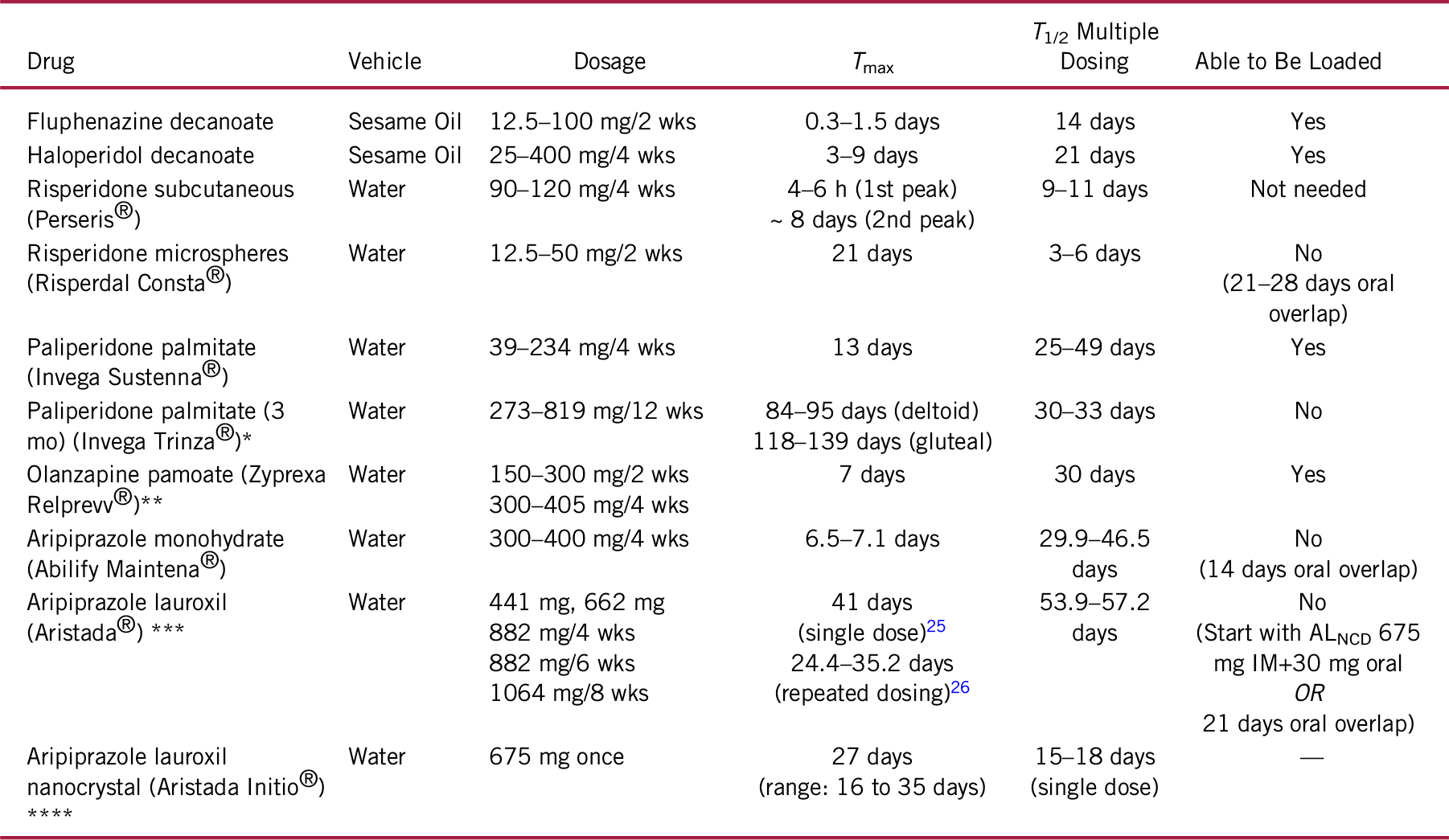
Table 1 provides basic kinetic details on the LAI antipsychotics available in the USA as of January 2019. Although there are 10 separate agents listed, these fall into 4 broad groups: the first-generation antipsychotics (FGAs) (haloperidol or fluphenazine decanoate), risperidone or its metabolite paliperidone (Consta®, Perseris®, Invega Sustenna®, Invega Trinza®), aripiprazole (Abilify Maintena®, Aristada®, Aristada Initio®), and olanzapine (Replrevv®). Detailed information on the use of these LAI antipsychotics and unique safety issues with olanzapine pamoate (Relprevv®) can be found in recent reviews.Reference Meyer 16 , Reference Meyer 27 While some patients will refuse an LAI, and others might not respond to or tolerate the available LAI options, successful conversion to an LAI vastly simplifies concerns about antipsychotic nonadherence. The failure of a patient to be seen at the prearranged time for the injection immediately alerts clinical staff that something is amiss. Unlike oral medications, the long half-lives of LAI preparations also provide a cushion of time to locate the patient before antipsychotic plasma levels become subtherapeutic.Reference Kishimoto, Hagi and Nitta 21
Kinetic properties of depot antipsychotics available in the United StatesReference Meyer 22 – 24

Abbreviation: IM = intramuscular.
* Only for those on paliperidone palmitate monthly for 4 months. Cannot be converted from oral medication.
** See US FDA bulletin: (http://www.fda.gov/Drugs/DrugSafety/ucm356971.htm).
*** 21 days oral overlap unless starting with aripiprazole lauroxil nanocrystal + single 30 mg oral dose.
**** Aripiprazole lauroxil nanocrystal (ALNCD) is only used for initiation of treatment with aripiprazole lauroxil, or for resumption of treatment. It is always administered together with the clinician determined dose of aripiprazole lauroxil, although the latter can be given up to 10 days after the aripiprazole lauroxil nanocrystal injection.
The choice of an LAI is dependent on patterns of response and tolerability during prior antipsychotic exposure. Use of FGA LAIs is necessary for patients who require higher levels of dopamine D2 antagonism than that provided by second-generation antipsychotics (SGAs); however, for those who are sensitive to D2 antagonism, risperidone/paliperidone and aripiprazole are better choices. Risperidone and paliperidone have a risk for hyperprolactinemia which exceeds that for any other antipsychotic, including FGAs and aripiprazole, but risperidone and paliperidone also have lower risk for parkinsonism, akathisia, and dystonia than an FGA.Reference Leucht, Cipriani and Spineli 28 Aripiprazole and the FGAs are the LAIs with the lowest weight-gain risk and therefore might be preferable for patients at higher risk for weight gain due to younger age or nonwhite race/ethnicity.Reference Meyer, Rosenblatt and Kim 29
Monitoring Plasma Antipsychotic Levels to Track Adherence and Optimize Antipsychotic Response
In certain circumstances there might be a suspicion of pill dumping by patients on oral antipsychotics, so plasma antipsychotic levels can be used to monitor adherence.Reference Brain, Sameby and Allerby 11 As noted later, fluctuations of more than 30% in trough plasma levels are usually indicative of adherence issues, assuming that levels are obtained at approximately the same time after the last dose and that no new medications have been introduced to influence antipsychotic kinetics.Reference Velligan, Wang and Diamond 14 The other important use of plasma antipsychotic levels is to guide dosing adjustments, especially in nonresponders. Even when adherence is assured on the basis of regular pill counts or use of an LAI formulation, there is extensive interindividual variation in antipsychotic metabolism, and a wide range of antipsychotic levels at which patients respond.Reference Meyer 16 When adherence is removed from the equation, inadequate response can only be due to one of two issues: subtherapeutic plasma antipsychotic levels (due to underdosing or kinetic interactions) or treatment resistance.Reference McCutcheon, Beck and D’Ambrosio 30 Before deciding that an adherent patient who failed two or more antipsychotics is treatment resistant, subtherapeutic antipsychotic levels must be ruled out. In a British study of 99 outpatients deemed to have treatment-resistant schizophrenia and in need of a clozapine trial, 35% had subtherapeutic antipsychotic levels, 34% of which (n=12) were undetectable.Reference McCutcheon, Beck and D’Ambrosio 30
Basic principles for obtaining plasma antipsychotic levels
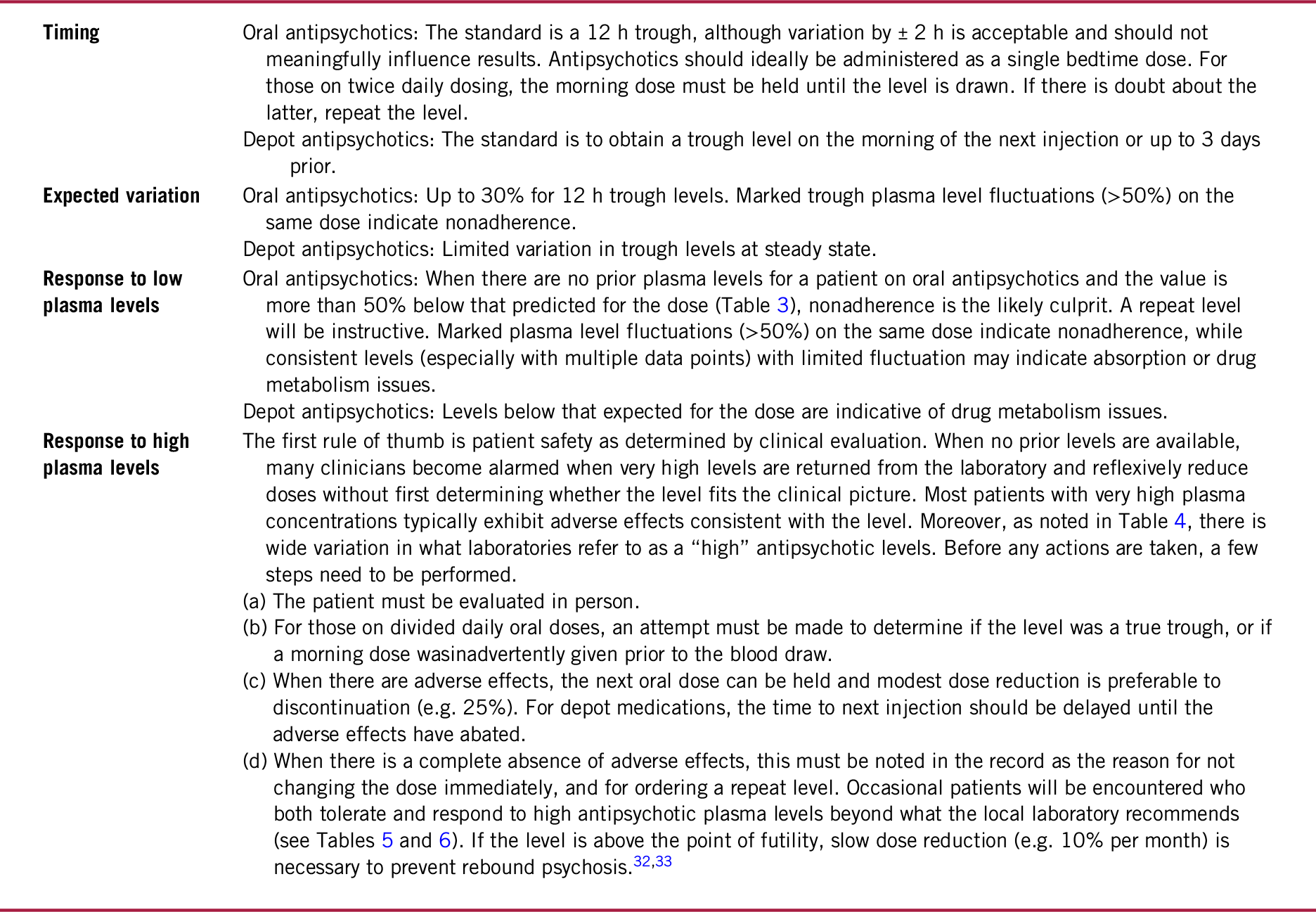
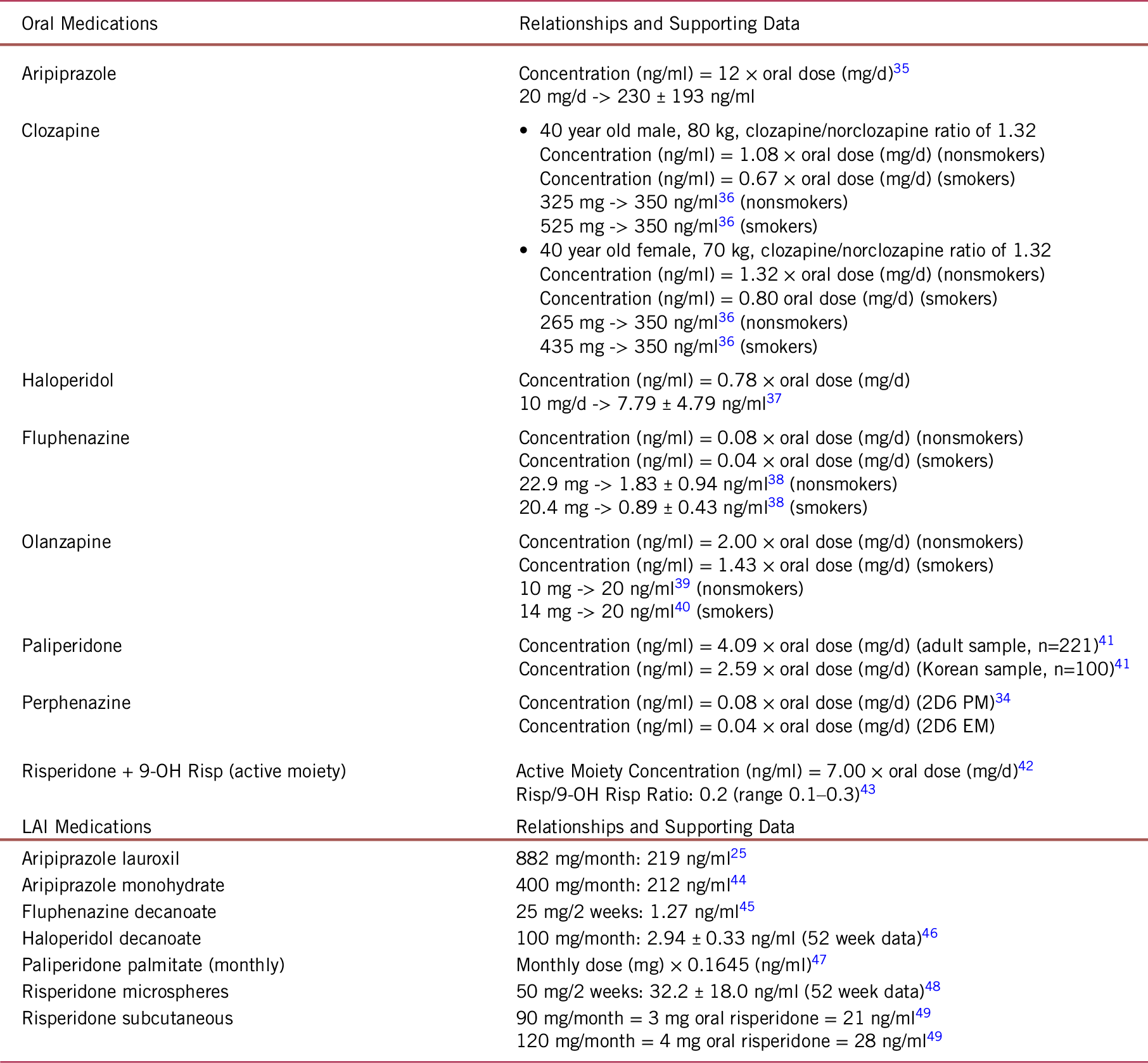
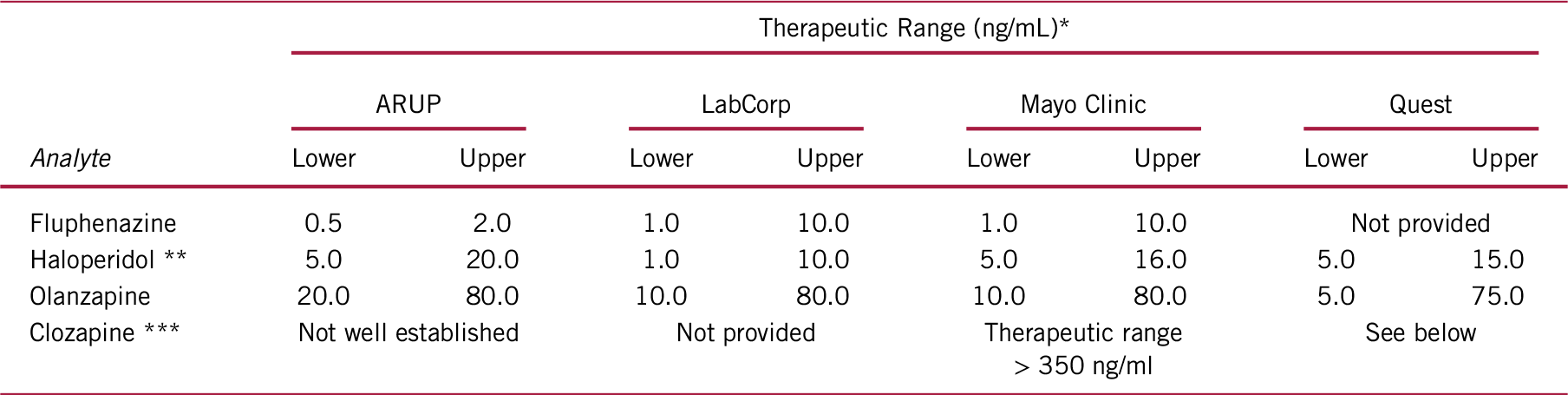
Table 2 outlines the important issues in obtaining plasma antipsychotic levels. For oral medication in particular, consistency in the time since last dose is critical to interpreting changes in levels over time. Table 3 provides estimated trough plasma levels for antipsychotics and commonly used LAI formulations. A single data point can be difficult to interpret, so when levels are unexpectedly high or low based on a given dose a repeat level must be ordered. How one reacts to a high plasma level will depend on the clinical scenario as described in Table 2. Embedded in the discussion of response to high plasma antipsychotic levels is the reality that there is no agreed-upon maximum level for antipsychotics, a fact reflected in the significant disparity between laboratory reference ranges (Table 4). The following section on managing antipsychotic nonresponse provides a nuanced discussion of the concepts that should underlie the use of plasma antipsychotic levels to pursue efficacy in nonresponders.
How to obtain and respond to plasma antipsychotic levelsReference Meyer and Stahl 31

Predicted steady-state trough plasma levels by dose for select antipsychoticsReference Meyer 16 , Reference Linnet and Wiborg 34

Abbreviations: C/D = concentration/dose; PM = poor metabolizers.
Variations in laboratory plasma antipsychotic reference ranges

* Sites accessed January 15, 2019:ARUP Laboratories: https://www.aruplab.comLabCorp: https://www.labcorp.com/test-menu/searchMayo Clinic Laboratories: https://www.mayomedicallaboratories.comQuest: http://www.questdiagnostics.com/testcenter/TestDetail.action(866-697-8378; for Cloz: 800-421-4449 x5440; for Flu: 866-522-6649)
** ARUP reports that the toxic haloperidol level is > 42.0 ng/mlLabCorp reports a potentially toxic haloperidol level is > 50.0 ng/mlMayo provides the following text: “A therapeutic window exists for haloperidol; patients who respond at serum concentrations between 5 and 16 ng/mL show no additional improvement at concentrations >16 to 20 ng/mL. Some patients may respond at concentrations < 5 ng/mL, and others may require concentrations significantly > 20 ng/mL before an adequate response is attained.”
*** ARUP reports that the toxic clozapine level is ≥ 1500 ng/mlQuest reports a level range only for norclozapine: 25–400 ng/ml. Patient reports contain the following referring to the plasma clozapine level: “The therapeutic response begins to appear at 100 mcg/L. Refractory schizophrenia appears to require a therapeutic concentration of at least 350 mcg/L (trough, at steady state). Toxic range: > 1000 mcg/L.” [NB: mcg/L = ng/mL].
Use of plasma levels to track adherence
Long-acting injectable antipsychotics are designed to have long half-lives and, with repeated dosing at the prescribed interval, should exhibit limited month-to-month variation in trough plasma levels.Reference Meyer 27 During the first year of treatment there may be an upward trend in plasma antipsychotic levels beyond that predicted by kinetic parameters, and this is related to the systemic delivery of the antipsychotic from its depot reserve, resulting in a greater fraction of medication available for redistribution into tissues.Reference Ereshefsky and Mascarenas 50 As the tissue compartment becomes saturated, plasma levels will increase, so antipsychotic levels should be monitored every 2–3 months during the first year of treatment, and dosing adjustments made as necessary.
Assuming that an oral antipsychotic is taken daily and the plasma level is obtained as a 12-h trough (±2 h), there should be less than 30% variation between determinations.Reference Velligan, Wang and Diamond 14 Variations ≥ 50% are typically due to nonadherence but may reflect the addition of an inhibitor or inducer that has altered the antipsychotic kinetics. A common example is the 50% drop in plasma clozapine levels seen in patients who resume smoking.Reference Meyer and Stahl 31 If no inhibitors or inducers have been added, nonadherence is the issue and it needs to be addressed by the combination of pill counts and repeat plasma levels to confirm that the patient is ingesting the medication and not discarding it. Although plasma antipsychotic levels may not return from the laboratory for as long as 2 weeks, repeated determinations will establish a range of expected levels when the patient is adherent.
Use of antipsychotic plasma levels to manage nonresponse
With respect to oral antipsychotic treatment, meta-analyses of numerous clinical trials have shown that minimal response to a given dose after 2 weeks portends low likelihood of response to that dose at week 6.Reference Samara, Leucht and Leeflang 51 For patients who fail to respond meaningfully to a given oral antipsychotic dose after 2 weeks, further dose escalation is indicated in the absence of limiting adverse effects. The time frame for dosing adjustments is markedly different for LAI antipsychotics and depends on the half-life of the agent. In general, antipsychotic titration should be terminated only for one of three reasons: (a) intolerable adverse effects, (b) marked improvement, and (c) plasma levels that indicate low likelihood of further improvement (i.e. levels are at the point of futility).Reference Meyer 32 Despite the known dose correlations (Table 3), even adherent patients or those on LAI antipsychotics may have surprisingly low plasma levels due to genetic variations that make the individual an ultrarapid metabolizer for specific cytochrome P450 enzymes.Reference Meyer 32 Determination of the antipsychotic level is the only means to distinguish those who are kinetic failures (as manifested by subtherapeutic plasma levels) and those who are treatment resistant and in need of clozapine.Reference McCutcheon, Beck and D’Ambrosio 30
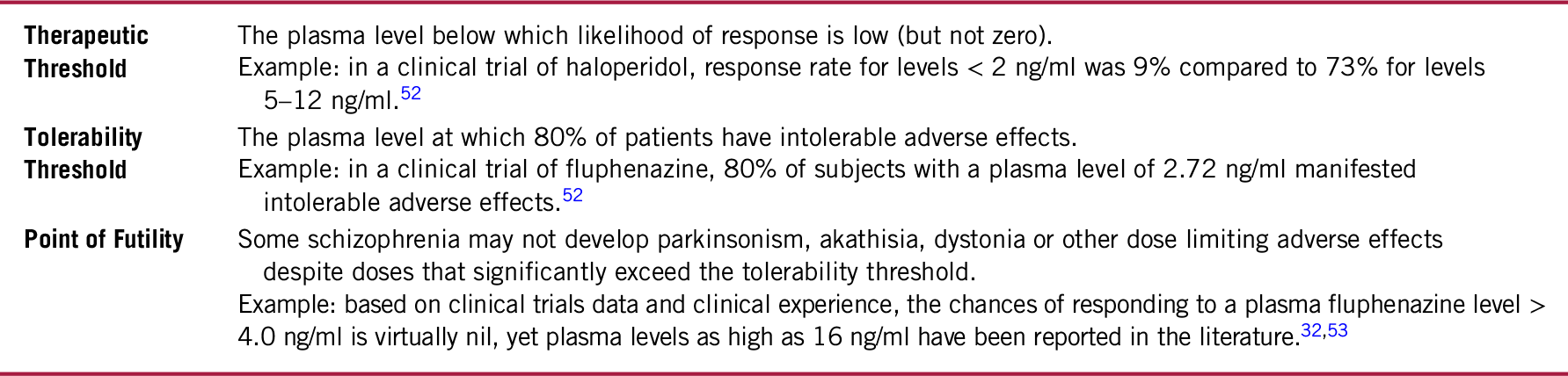
While there is limited agreement on the high end of the therapeutic range, most laboratories present a narrow range of values that represent the therapeutic threshold for antipsychotic therapy. Table 5 presents working definitions of therapeutic threshold, tolerability threshold, and point of futility to help guide treatment decisions, and evidence-based values derived from the literature are noted in Table 6.Reference Meyer 32 In inadequate responders without adverse effects, the plasma antipsychotic level is important in deciding whether the minimum response threshold has been met. Having a value at or slightly above the response threshold is no guarantee of response as the patient may need a plasma level at the high end of the range, but it does serve as a useful initial target for nonresponders with levels below the threshold.Reference Midha, Hubbard and Marder 52 As the titration proceeds to higher plasma levels in search of greater efficacy, most patients will not be able to tolerate levels above the tolerability threshold; however, for those who do, there is little clinical value in exceeding the point of futility beyond which response rates are close to zero.Reference Meyer 32 As laboratories present a wide range of values for the upper end of their reference range (or in some instances no value at all), the point of futility should serve as an evidence-based marker that the clinician can aim for, assuming tolerability, but once reached serves as the defining point to terminate that antipsychotic trial.
Concepts for use of plasma antipsychotic levels

Response, tolerability and futility thresholds for select antipsychoticsReference Meyer 32

Conclusions
Diversion programs offer an opportunity for patients to receive treatment for their psychiatric illness along with the possibility of having a criminal charge dismissed. The successful completion of diversion programs is associated with decreased recidivism rates, but when patients are treated outside of controlled settings medication nonadherence potentially undermines any gains made through diversion program participation. Nonadherence is the norm among patients with schizophrenia and starts at the time of initial diagnosis; moreover, those with a history of criminal contact comprise an enriched pool of treatment nonadherent patients necessitating the use of strategies to track antipsychotic therapy in all diversion enrollees. The use of LAI antipsychotics removes issues that surround oral medication nonadherence and should be considered for most diversion patients. When oral antipsychotic therapy is required (e.g. treatment resistant patients on clozapine), pill counts are highly correlated with medication adherence and must be implemented. While less familiar to many clinicians, antipsychotic plasma levels represent a useful tool to track medication adherence, and, importantly, to prevent treatment failures from subtherapeutic plasma levels. Through a combination of multiple tools, the odds of psychiatric stability increase, and with it the likelihood of diversion program completion.
Disclosures
Dr. Meyer reports having received speaking or advising fees from Acadia Pharmaceuticals, Alkermes, Allergan, Intra-Cellular Therapies, Janssen Pharmaceutica, Merck, Neurocrine, Otsuka America, Inc., Sunovion Pharmaceuticals and Teva Pharmaceutical Industries.