Introduction
In the past decades, following the general improvement of mental healthcare and introduction of effective antipsychotics into clinical practice, many schizophrenia patients live into older adulthood (Kohen et al., Reference Kohen, Lester and Lam2010). Given the higher likelihood of drug-induced side effects and poor general health in older compared to younger patients (Meyers and Jeste, Reference Meyers and Jeste2010), rational use of antipsychotics in this population has been gaining increasing attention.
Neuroimaging studies demonstrate that dopamine-2 occupancy, one of the principal targets of antipsychotics, decreases 5%–10% per decade with age, incurring the likelihood of greater susceptibility for antipsychotic-induced adverse effects (Uchida et al., Reference Uchida, Mamo, Mulsant, Pollock and Kapur2009a). In addition, age-related pharmacokinetic changes affect drug absorption and excretion, which may also exacerbate adverse effects (Masand, Reference Masand2000). Therefore, expert consensus guidelines suggest the use of lower doses of antipsychotics in older patients (Alexopoulos et al., Reference Alexopoulos, Streim, Carpenter and Docherty2004); for example, whereas the recommended therapeutic dose of risperidone is 4–8 mg for younger adult schizophrenia patients, expert consensus guidelines suggest a range of only 1.25–3.5 mg for older patients (Alexopoulos et al., Reference Alexopoulos, Streim, Carpenter and Docherty2004). To date, however, no large-scale, pharmaco-epidemiological surveys on patterns of antipsychotic dosing in older patients with schizophrenia have been reported in Asia.
In order to rationalize the use of psychotropic medications in Asian countries, a large-scale long-itudinal, observational pharmaco-epidemiological study titled Research on Asian Psychotropic Prescription Pattern (REAP) was initiated in 1999 in six Asian countries and territories including China, Hong Kong, Japan, Korea, Singapore, and Taiwan, and investigated prescription trends for psychotropic medications in hospitalized patients with schizophrenia in Asia.
This study is a secondary analysis of the data of the REAP project which aimed to (1) examine the prescribing pattern of low doses of antipsychotics (defined as 300 mg/day chlorpromazine equivalent (CPZeq) or less) (Sim et al., Reference Sim2009) in older Asian patients with schizophrenia during the period between 2001 and 2009, and (2) survey its demographic and clinical correlates. Due to the poorer general health status of older patients and heightened vulnerability to psychotropic-induced side effects (Uchida et al., Reference Uchida, Pollock, Bies and Mamo2009b; Meyers and Jeste, Reference Meyers and Jeste2010), we hypothesized that the majority of older patients with schizophrenia would be prescribed low doses of antipsychotics in the REAP project.
Methods
Settings, study design, and subjects
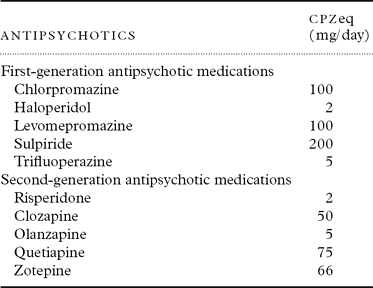
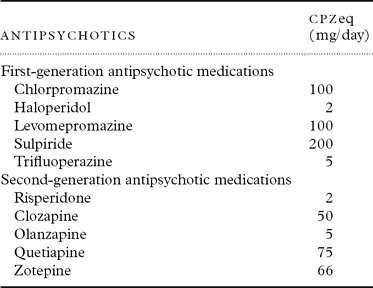
The first survey of the REAP project was carried out in July 2001 followed by investigations in July 2004 and October 2008 to March 2009 with the same study design and standardized protocol. Centers in India, Malaysia, and Thailand joined the surveys in 2009. Details of the REAP project have been described elsewhere (Chong et al., Reference Chong2004; Sim et al., Reference Sim2004; Shinfuku and Tan, Reference Shinfuku and Tan2008) and are summarized as follows. Data of patients were analyzed in this study if they satisfied the following criteria: (1) ICD-10 or DSM-IV schizophrenia, (2) aged 55 years or older, and (3) willingness to provide written or oral consent in case the consent was not waived according to the requirements of the Clinical Research Ethics Committee in the respective study sites. Patients with significant medical conditions were excluded. Doses of antipsychotic drugs were converted into CPZeq milligrams (APA, 1997; Kane et al., Reference Kane1998; Woods, Reference Woods2003) (see Table 1). Following an earlier study (Sim et al., Reference Sim2009), a low dose of antipsychotics was defined as 300 mg/day CPZeq or less.
Commonly used antipsychotic medications and their chlorpromazine equivalent (CPZeq) in milligrams per day (APA, 1997; Kane et al., Reference Kane1998; Woods, Reference Woods2003)
Eligible patients were recruited consecutively and their sociodemographic and clinical characteristics including age, sex, length of illness, type, and doses of antipsychotic medications, the presence or absence of significant psychotic symptoms in the past month, extrapyramidal side effects (EPS) and tardive dyskinesia (TD) were collected by a review of medical records in 2001, and by either a review of medical records only or a review of medical records supplemented by a patient interview in 2004 and 2009 using a questionnaire designed for the study. The data were collected by the attending psychiatrists or by members of the research team with the agreement of the patient's treating psychiatrist.
The study was approved by the Clinical Research Ethics Committees of the respective centers. Given the anonymous nature of this observational study and minimal risk to patients, the patients’ informed consent was exempted in some participating study sites according to the requirements of the local Clinical Research Ethics Committee (Shinfuku and Tan, Reference Shinfuku and Tan2008). The requirements of the Clinical Research Ethics Committee usually vary on a local basis.
Statistical analysis
The data were analyzed using SPSS 13.0 for Windows (SPSS, Inc., Chicago, IL). Comparisons of low doses of antipsychotics across the three surveys were made with χ2 tests. Multiple logistic regression analysis was used to determine the demographic and clinical variables influencing the receipt of low doses of antipsychotics in the pooled sample. Cross-sectional low dose of antipsychotics was the dependent variable, while independent variables included study site and survey time point, age, gender, symptom severity, length of illness, the presence of EPS and TD, and use of antipsychotics. The level of significance was set at 0.05 (two-tailed).
Results
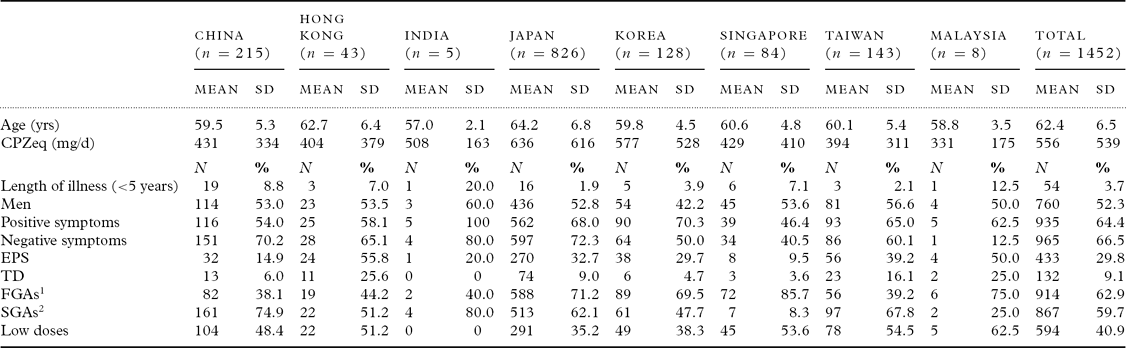
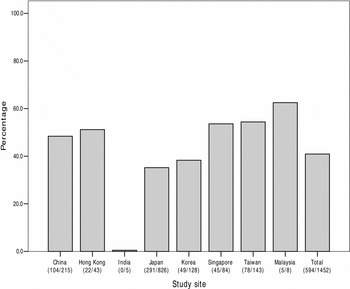
Thirty-one psychiatric institutions were involved in 2001, 25 in 2004, and 50 in 2009. A total of 1,452 patients met the study inclusion criteria; 490 in 2001, 446 in 2004, and 516 in 2009. A total of 594 patients of the 1,452 received low doses of antipsychotics (40.9%) in the three REAP surveys; 203 in 2001 (41.4%), 192 in 2004 (43.0%), and 199 in 2009 (38.6%). There was no significant difference across the three surveys in the use of low doses of antipsychotics (χ2 = 2.1, df = 2, p = 0.4). Of the patients on first-generation antipsychotics (FGAs) only (n = 561), 229 (40.8%) received low doses of antipsychotics; in patients on second-generation antipsychotics (SGAs) only (n = 514) 56.2% (n = 289) received them. In contrast, only 55 (15.6%) of those prescribed combinations of FGAs and SGAs (n = 353) received doses less than 300 CPZeq. Table 2 shows the sociodemographic and clinical characteristics of the whole sample and separately for patients by study site. Figure 1 presents the use of low doses of antipsychotics in participating countries and regions over the study period.
Sociodemographic and clinical characteristics of older Asian patients with schizophrenia in REAP surveys 2001–2009*
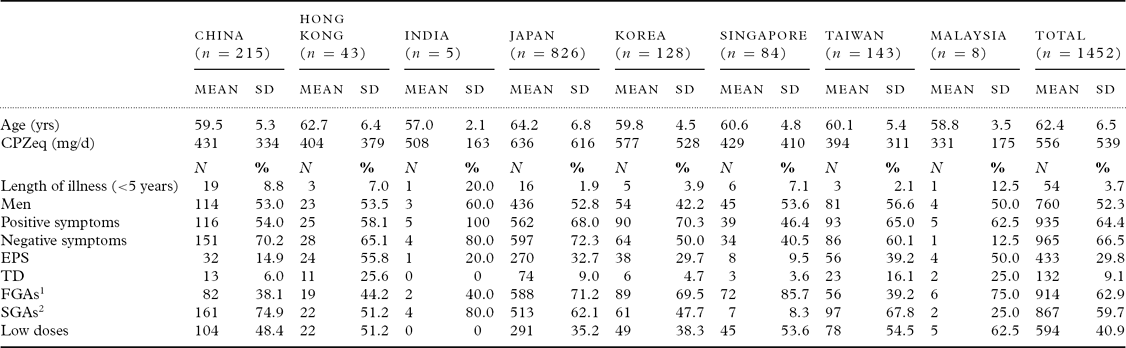
* There were no older patients in Thailand
1 any use of FGAs; 2 any use of SGAs
CPZeq = chlorpromazine equivalents; EPS = extrapyramidal symptoms; TD = tardive dyskinesia; FGA = first-generation antipsychotic; SGA = second-generation antipsychotic.
Percentage of older patients with schizophrenia receiving low doses of antipsychotic medications.

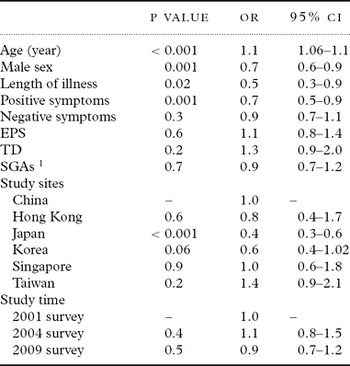
Table 3 displays the factors that were independently associated with low doses of antipsychotics. Patients on low doses of antipsychotics were more likely to be female, have an older age, a shorter length of illness, and less positive symptoms. Of patients in the six countries and territories that participated in the three surveys, those in Japan were less likely to receive low doses of antipsychotics.
Sociodemographic and clinical correlates associated with low antipsychotic doses in the combined sample (n = 1,439). Multiple logistic regression analysis with higher doses of antipsychotic medications (more than 300 mg/day CPZeq) as the reference group

Centers in India, Malaysia, and Thailand joined the survey in 2009; therefore, they were not included in multiple logistic regression analysis. There was co-linearity between the use of FGA and SGA; therefore use of FGA was not included in multiple logistic regression analysis.
OR = odds ratio; EPS = extrapyramidal symptoms; TD = tardive dyskinesia; SGA = second-generation antipsychotic medication.
1 any use of SGAs.
Discussion
Treatment recommendation in the USA suggests that maintenance doses of antipsychotics below 300 mg/day CPZeq usually increase the risk of relapse (Lehman et al., Reference Lehman2004). Based on the currently prevailing view, however, Asian patients require lower doses of antipsychotics and they are more sensitive to EPS than their Western counterparts (Chiu et al., Reference Chiu, Shum and Lam1991; Frackiewicz et al., Reference Frackiewicz, Sramek, Herrera, Kurtz and Cutler1997). For example, Chow et al. (Reference Chow, Ungvari, Chiu and Leung1999) reported that schizophrenia patients could be maintained on a median daily dose of 300 mg CPZeq of antipsychotic medications in Hong Kong. In another study, Okuma et al. (Reference Okuma1981) found that a median daily dose of 270 mg CPZeq was the usual dose in maintenance treatment of Japanese patients with schizophrenia. Considering that antipsychotic level may be also affected by age-related changes in renal excretion and hepatic metabolism in the elderly, even lower doses of antipsychotics should likely be considered in Asian older patients with schizophrenia.
To the best of our knowledge, there has been no previous international study investigating the use of low doses of antipsychotics in older patients with schizophrenia. The assumption that the majority of older patients with schizophrenia would receive low doses of antipsychotics in the current sample was not supported. The actual mean daily dose of antipsychotics was 556 mg CPZeq, and only 40.9% of the patients were given low doses of antipsychotics. Nearly half (50.1%; 234/467) patients aged 65 or older – the standard age definition for psychogeriatric patients in the international literature – received low doses of antipsychotics, a figure that also fails to support our hypothesis. The percentage of low antipsychotic doses was particularly small in Japan and India, although only a very small sample from the latter country was involved. The reasons for these differences between countries and for the limited use of low antipsychotic doses in older Asian patients need to be explored in future studies.
In this study, independent correlates of low doses of antipsychotics included being female, being older, having a shorter length of illness, and having less positive symptoms. There are significant sex differences in pharmacodynamics, pharmacokinetics, and subjective tolerability to antipsychotic drugs (Seeman, Reference Seeman2010). Relatively younger patients often present with more aggressive and impulsive behaviors (Alexopoulos et al., Reference Alexopoulos, Streim, Carpenter and Docherty2004). These two factors could possibly explain the association of male sex, and relatively younger age, with less use of low antipsychotic doses. Refractory symptoms are more often displayed by hospitalized patients with a longer length of illness, which could possibly explain the relationship between shorter length of illness and low doses of antipsychotics. Patients with prominent positive symptoms were more likely to receive relatively higher doses of antipsychotics in this study, which might be explained by the false assumption that higher doses can better optimize the dopamine-2 receptor occupancy (Ji, Reference Ji2005). In addition, we found that, not surprisingly, patients who were prescribed a combination of FGAs and SGAs were less likely to receive a low dose of antipsychotics relative to those prescribed monotherapy, which is in line with an earlier finding (Barbui et al., Reference Barbui2006).
There are a number of limitations to this study. First, the study targeted inpatients in eight selected Asian countries and territories in this huge continent with a wide variety of sociocultural, economic, and mental healthcare systems; therefore, the findings cannot be applied to all schizophrenia patients in Asia. Second, due to the cross-sectional design, the causal relationship between use of low antipsychotic doses and demographic and clinical variables cannot be explored. Third, a host of important variables likely to influence appropriate prescription, such as the length of antipsychotic treatment prior to the study and that of the schizophrenic illness, the effectiveness and the benefit/risk ratio of current prescriptions, separate examination of late-onset schizophrenia, local prescription guidelines, drug interactions, smoking, the type of psychiatric facilities, and mental healthcare policies were not evaluated. Fourth, length of the current admission was not taken into account in this study although it may have an impact on dosing; many clinicians titrate slowly in older patients (“start low, go slow”), which would influence cross-sectional evaluation of prescribing patterns. Fifth, the conversion of antipsychotic doses into CPZeq is not accurate, particularly for SGAs. Using the same conversion standard when comparing the two samples (lower dose vs. higher dose group) in the multivariate analysis could mitigate this limitation as it may reveal relative trends in prescription practices (Ungvari et al., Reference Ungvari, Chung, Chee, Fung-Shing, Kwong and Chiu2002). Finally, psychopathology and drug-induced side effects were not assessed using standardized rating instruments. The limitations of the present study are partly offset by its strengths including the large sample size and number of participating sites.
In conclusion, the findings of our study suggest that low doses of antipsychotics for Asian older patients with schizophrenia were prescribed only to a minority of patients overall and to an even smaller percentage of those prescribed more than one antipsychotic, a practice with limited evidence for its efficacy (Kreyenbuhl et al., Reference Kreyenbuhl, Buchanan, Dickerson and Dixon2010). Use of the lowest effective dose of antipsychotics in older individuals with schizophrenia should be encouraged in daily clinical practice in order to maximize the safety and tolerability of treatment in this at-risk population.
It should be noted that there are no gold-standard treatment guidelines for the use of antipsychotic drugs. Dose adjustment should be individualized and patients’ clinical condition should be carefully considered. For older patients, the old clinical wisdom of “start low and go slow” principle is probably still the best advice.
Conflict of interest
None.
Description of authors’ roles
Naotaka Shinfuku, Chay-Hoon Tan, Mian-Yoon Chong, Ee-Heok Kua, Gabor S. Ungvari and Norman Sartorius designed the study. Yu-Tao Xiang, Chuan-Yue Wang, Tian-Mei Si, and Gabor S. Ungvari undertook all statistical analyses and helped with their interpretation. Yu-Tao Xiang and Gabor S. Ungvari wrote the first draft of the paper. Faith Dickerson, Julie Kreyenbuhl, Chuan-Yue Wang, Tian-Mei Si, Edwin HM Lee, Yan-Ling He, Gabor S. Ungvari, Helen F.K. Chiu, Kelly Y. C. Lai, Shu-Yu Yang, Mian-Yoon Chong, Naotaka Shinfuku, Chay Hoon Tan, Ee Heok Kua, Senta Fujii, Kang Sim, Michael K.H. Yong, Jitendra K. Trivedi, Eun-Kee Chung, Pichet Udomratn, Kok-Yoon Chee, and Norman Sartorius contributed to the final writing of the paper. Naotaka Shinfuku, Mian-Yoon Chong and Shu-Yu Yang provided administrative, technical, or material support. All authors contributed to the final paper.
Acknowledgments
This study was supported in part by grants from the National Natural Science Foundation of China (81171270; 30800367; 30770776), the Beijing Nova Program of the Beijing Municipal Science and Technology Commission (2008B59), the Chinese University of Hong Kong (Direct Grant for Research; Project 2041454), the Institute of Mental Health Research Grant (CRC 249/2008) in Singapore, the Taiwan Bureau of National Health Insurance (DOH92-NH-1025), Chang Gung Memorial Hospital (CMRPG83043), and the Taipei City Government (97001-62-010) in Taiwan. The authors are grateful to the following clinicians involved in the data collection: Hong Deng and Wei Hao in China; Ajit Avasthi, Dipesh Bhagabati, Roy Abraham Kallivayalil, Shubhangi R. Parkar, and YC Janardhan Reddy in India; Tateno Masaru, Masamune Yayoi, Akiyama Tsuyoshi, Sato Soichirou, Nakagome Kazuyuki, Nakamura Jun, and Kuroki Toshihide in Japan; Tae-Yeon Hwang, Seok Hyeon Kim, Yo Wang Lee, and Jong- Il Lee in Korea; Tung-ping Su, Shih-ku Lin, Tzu-ting Chen, Chieh-hsin Chang, Hong-chieh Hsu, Chi-Fa Hung, and Cheng-chung Chen in Taiwan; Krisakorn Sukavatvibul, Jittima Kleawtanong, Tantawan Suradechasakul, Manote Lotrakul, and Usaree Srisutudsanavong in Thailand; and Norharlina Bahar in Malaysia. The authors also thank the clinicians who helped to organize the study at each study site.