

Introduction
Engraved, painted and embellished with ivory, precious metals and faience fittings, decorated ostrich eggs were traded and exchanged as luxury items during antiquity. They were deposited primarily in Bronze Age (c. third to second millennia BC) and Iron Age (c. first millennium BC) elite funerary contexts from Mesopotamia and the Levant across the wider Mediterranean region (Gönster Reference Gönster2014). Ostrich eggs, along with other decorative objects of ivory, bronze, silver and gold, were status markers shared among the elites of the connected and competing cultures of their respective ages (Aruz et al. Reference Aruz, Benzel and Evans2008, Reference Aruz, Graff and Rakic2014).
As ostriches are not indigenous to Europe, decorated eggs from Bronze and Iron Age archaeological contexts in Greece, Italy and Spain must have been imported from the Middle East and/or North Africa, where ostriches were indigenous during these periods (Brysbaert Reference Brysbaert2013). Interpretations of the provenance of the eggs, how they were exchanged and who decorated them have relied upon iconographic analysis and comparison with other worked media. Uncertainty, however, continues to prevail as to where exactly the eggs originated. While this study does not aim to resolve these questions definitively, it highlights potential avenues by which they might be addressed.
Five whole ostrich eggs in the British Museum's collection exemplify the problem (for detailed descriptions and illustrations, see Rathje Reference Rathje and Swaddling1986). They were found in the Isis Tomb, an elite burial at Etruscan Vulci (Italy) dated to c. 625–550 BC. Four of the eggs are carved and painted; one is painted only. Decorative motifs include animals, flora, geometric patterns, soldiers and chariots. All were fashioned into vessels with metal attachments, none of which survive. (Discolouration of the eggshell surface indicates where features such as spouts or jar necks made from metal were originally fixed.) Scholars have debated whether these objects represent decorated imports worked by migrant Phoenician craftsmen in Etruria, or whether they were made by local Etruscan craftsmen cognisant with Eastern Mediterranean styles and techniques (Torelli Reference Torelli1965; Rathje Reference Rathje and Swaddling1986: 400; Markoe Reference Markoe, Kopcke and Tokumaru1992: 78–80; Napolitano Reference Napolitano2007). The eggs’ motifs and working methods have been compared with those of contemporaneous Levantine and Mesopotamian ivory working, whereas, generally, the skill of ostrich-egg decorating is associated with North Africa and the Levant (e.g. Winter Reference Winter1976a & Reference Winterb, Reference Winter1982; Barnett Reference Barnett1982; Rathje Reference Rathje and Swaddling1986: 400; Hermann Reference Hermann and Uehlinger2000; Savio Reference Savio2004; Le Meaux Reference Le Meaux2013; Feldman Reference Feldman2014: 13–18). The origins of the five eggs prior to their decoration and working remain obscure.
Surprisingly little is known about the chaîne opératoire of decorated ostrich eggs in the ancient Mediterranean, and no carving sites have been identified to date. There has been some discussion, however, about whether the eggs were blown (emptied of their contents) before shipping, and how they might have been worked (Evely Reference Evely1993; Poplin Reference Poplin, Buitenhuis and Uerpmann1995; Phillips Reference Phillips, Nicholson and Shaw2000: 333; Kandel Reference Kandel2004: 383; Koehl Reference Koehl2006; Brysbaert Reference Brysbaert2013: 250–52). Much scholarship equates decorative style with cultural identity, which is tenuous at best, given how readily motifs can be copied or adapted (Conkey & Hastorf Reference Conkey and Hastorf1993), and especially challenging for periods when artisans were reliant on royal or elite patronage and were known to migrate (or be moved) between regions (Gunter Reference Gunter2009: 4–14; Feldman Reference Feldman2014: 11–41). Most importantly, the modern literature omits any systematic analysis of the source locations of the eggs (e.g. Bass Reference Bass, Laffineur and Betancourt1997: 165). Only an analysis of where ostrich eggs were laid, alongside a more refined understanding of working techniques and iconography, will enable full evaluation of their chaîne opératoire, trade routes and economic and social values across cultures.
Origin problems: ostrich habitats and habits
The first challenge when considering the eggs’ geographic origins is the vast area from where they could have been sourced. Ostriches are highly nomadic. Their ancient natural habitats covered North Africa, the Levant and the wider Middle East (Kingdon Reference Kingdon1990; Manlius Reference Manlius2001; Potts Reference Potts2001; Roots Reference Roots2006; Rowan & Golden Reference Rowan and Golden2009: 24). These areas supported perhaps two sub-species: the now-extinct Struthio camelus syriacus in the Arabian Peninsula and the Levant, and S. c. camelus across North Africa (Brown et al. Reference Brown, Urban and Newman1982: 32–33; Freitag & Robinson Reference Freitag and Robinson1993: fig. 1; Robinson & Matthee Reference Robinson and Matthee1999).
Assyrian royal texts mention ostrich exploitation. Ashurnasirpal II's (883–859 BC) Nimrud Banquet Inscription, for example, describes the king slaying and trapping numerous elephants, lions, wild bulls and ostriches. The live, captive animals seem to have been kept for breeding in order to stock the palace pleasure gardens (Grayson Reference Grayson1991: 291–92). As ostriches breed well in captivity, they may also have been exploited for their eggs, feathers, oil, leather and meat, in addition to sport. Ostriches were viewed as dangerous, and are depicted on seals, terracottas, ivories and vessels as lashing out, running at speed or being hunted (Herles Reference Herles2007: 180–98). Xenophon (Anabasis 1.5.3; Brownson Reference Brownson1922) observed “no ostrich was captured by anyone, and any horseman who chased one speedily desisted; for it would distance him at once in its flight”. Ostrich bones, however, are rarely found in excavated archaeological contexts (Tebes Reference Tebes and Tebes2014: 182–83), suggesting that the animals were not a significant source of food. In light of these considerations, any understanding of where the eggs were laid must be derived from the shells themselves.
Background, materials and methods
To assess the potential for the identification of geographic origins based on analyses of ancient ostrich eggshell, we selected those examples from the British Museum that met the following criteria:
1) They were either suitable for destructive analysis (i.e. fragmented) or were of an appropriate size for scanning electron microscopy (SEM).
2) They came from sites with plausible access into Mediterranean trade or exchange networks.
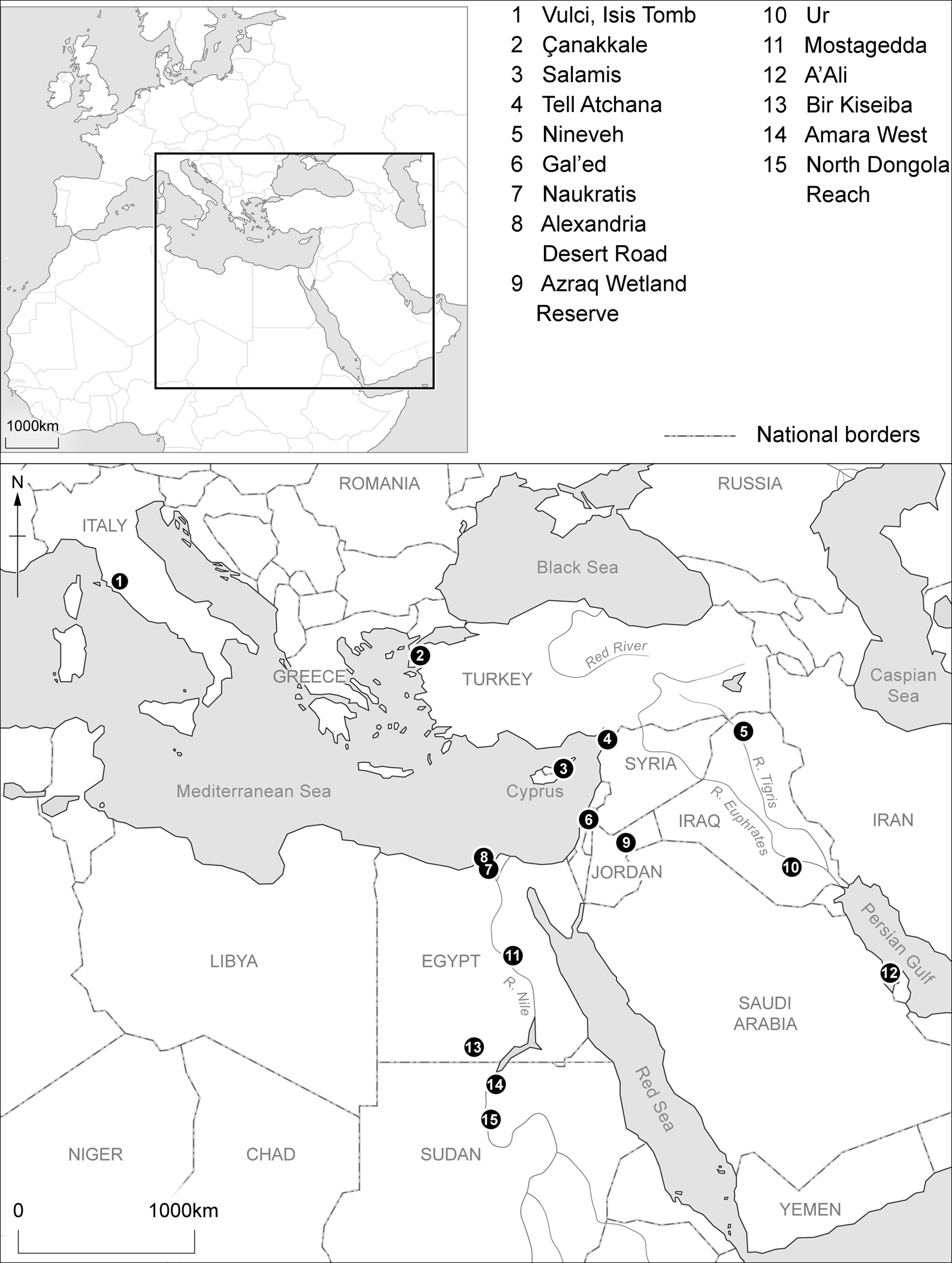
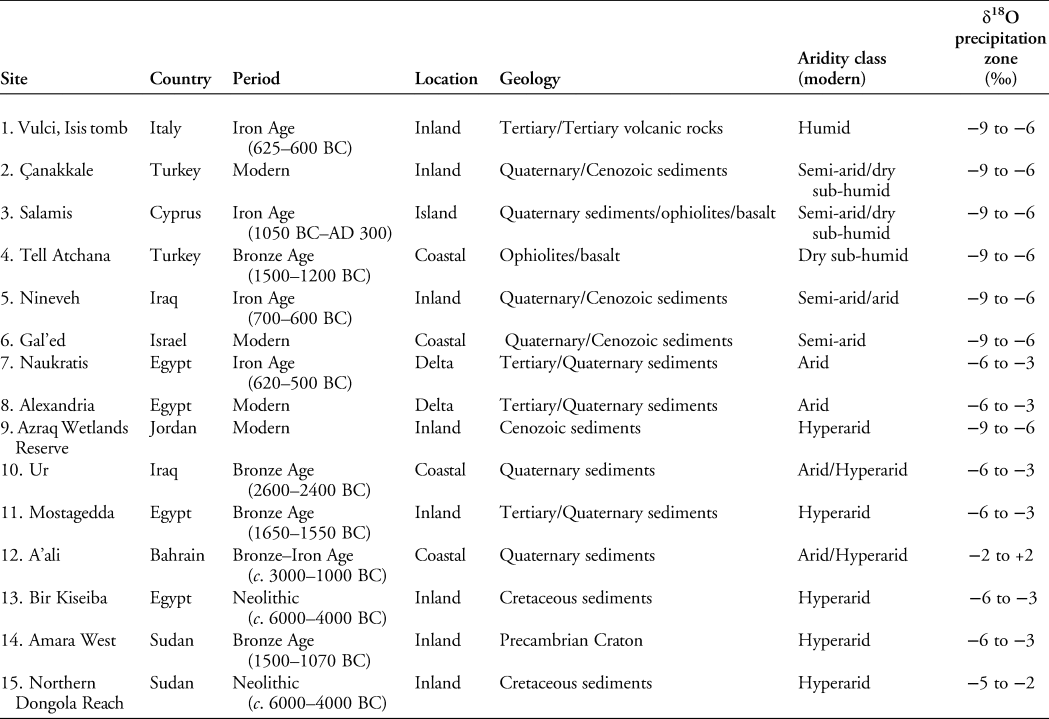
3) They dated to periods that could provide examples of wild and/or captive birds (fifth to first millennia BC; Figure 1 & Table 1).
A map of the sample sites; numbers 2, 6, 8 and 9 are modern farmed samples (map by K. Crowder).

List of sites with underlying geology (Derry Reference Derry1980; Asch Reference Asch2005), modern aridity indices and δ18O zones (International Atomic Energy Agency 2001).

We hypothesised that earlier examples were derived from wild ostriches, whereas later examples may have been from either captive or wild specimens. Strontium, carbon and oxygen isotope analyses were employed to establish whether the eggs had isotope ratios matching the region in which they were found. Modern ostrich eggs from Egypt, Israel, Jordan and Turkey were used to develop the sampling methodology, to assess elemental concentrations in order to establish minimum sampling masses for strontium isotope analysis, and to allow for multiple samples to be tested to ensure minimal variation across the matrix of each eggshell.
Isotopic indicators have previously been established to determine the ecology and climate of where an egg was laid, and to distinguish wild from captive birds for South African species (Johnson et al. Reference Johnson, Fogel and Miller1998). Such isotope analyses, however, have not previously been applied to Mediterranean species, nor have they been used in conjunction with an assessment of decorating techniques using microscopical documentation. Our methodology therefore offers an original combination of isotopic analyses, digital microscopy and SEM.
Isotopic analyses
Ostrich eggshell comprises approximately 95 per cent inorganic calcite (CaCO3) formed from the food and water ingested by the female bird immediately prior to egg laying, and by osteoclastic destruction of medullary bone. Combined analyses of strontium (87Sr/86Sr), oxygen (δ18O) and carbon (δ13C) isotope ratios of ostrich eggshell therefore have the potential to act as a palaeoenvironmental proxy and to provide evidence of the adult female's residential habitat (von Schirnding et al. Reference von Schirnding, van der Merwe and Vogel1982; Blum et al. Reference Blum, Taliaferro, Weisse and Holmes2000). Nitrogen isotopes in ostrich eggshell are also a potentially useful dietary proxy, but such analysis currently requires too great a mass of sample (approximately 50mg) to be removed from museum objects.
Strontium isotopes in ostrich eggshell derive from the underlying geology, via the consumption of water, grit and vegetation (Capo et al. Reference Capo, Stewart and Chadwick1998; Buzon et al. Reference Buzon, Simonetti and Creaser2007; Hartman & Richards Reference Hartman and Richards2014). Oxygen isotopes in precipitation and groundwater vary geographically with climate, latitude, altitude and distance from the coast (Bowen & Wilkinson Reference Bowen and Wilkinson2002). The expected oxygen isotope range of modern mean annual precipitation and aridity at each of the findspots (Table 1) is assumed to be sufficiently similar to ancient values to not be of concern to the present study. All of the sites examined here date to the Holocene and none to the 4.2 ky climatic event of increased aridity (Bini et al. Reference Bini2019). Nonetheless, given the wide temporal and spatial spread of the ostrich-eggshell samples analysed here, and the regional heterogeneity in aridity and temperature throughout the Holocene (Finne et al. Reference Finne, Woodbridge, Labuhn and Roberts2019), palaeoclimatic reconstruction was deemed to be outside the scope of this study. In particular, while the oxygen isotope ratios of body tissues in a range of animal species—including modern farmed ostriches—have been shown to correlate closely with those of their drinking water, no such correlation has been found for wild ostriches (Kohn Reference Kohn1996; Johnson et al. Reference Johnson, Fogel and Miller1998). The latter are non-obligate drinkers, tolerant of high aridity and can raise their body temperature to conserve water (Cooper et al. Reference Cooper, Horbanczuk, Villegas-Vizcaino, Sebei, Mohammed and Mahrose2010). Consequently, as wild ostriches can hydrate through consuming plant-leaf water, the oxygen isotope ratio of ostrich eggshell may reflect that of the plants consumed by the female while ovulating, rather than local water sources. Both the oxygen isotope ratio of plant-leaf water and plant-carbon isotope ratios are positively correlated with temperature and aridity; they are therefore regarded as proxies for diachronic climate change or movement between different climatic zones (Johnson et al. Reference Johnson, Fogel and Miller1998; Hartman & Danin Reference Hartman and Danin2010; Kohn et al. Reference Kohn2010).
Carbon isotope ratios of animal tissues also record the differential consumption of C3 and C4 plants, both of which grow in the study region. Ostrich-eggshell carbon isotope ratios therefore reflect both diet and environment (Johnson et al. Reference Johnson, Fogel and Miller1998). Ingesting rock carbonate is not thought to contribute to the calcite content of ostrich eggshell (von Schirnding et al. Reference von Schirnding, van der Merwe and Vogel1982). Modern ostriches are considered indiscriminate feeders, eating both C3 and C4 plants, the latter mostly comprising grasses adapted to conditions of drought, high temperature and low fertility. They also eat succulents (CAM plants), which use both C3 and C4 photosynthetic pathways (von Schirnding et al. Reference von Schirnding, van der Merwe and Vogel1982).
Used together at a range of sites, the isotope ratios of carbon, nitrogen, oxygen and strontium offer the potential to investigate individual variation in ostrich eggshell, and to characterise possible geographic origins based on diet, geology and climate. We conducted strontium isotope and concentration analyses, along with oxygen and carbon isotope analyses, on 40 samples of approximately 1–2mg of ancient ostrich eggshell from 11 sites, and on five modern, farmed eggs within the study region (Table 1). The methods are detailed in the online supplementary material (OSM), and the data tabulated in Table S1 (modern) and Table S2 (archaeological).
Optical microscopy and SEM
Ten ancient, decorated ostrich-eggshell examples were examined for tool marks and working techniques using a Leica MZ APO optical microscope at magnifications ranging from ×10–250. Five of these were also examined in a Hitachi S3700N variable pressure scanning electron microscope (VP SEM). Inorganic pigments were analysed via energy-dispersive X-ray spectroscopy (SEM-EDX). For SEM, the VP mode enables the observation of non-conductive specimens without the need for coating—a crucial factor for most museum objects. All specimens were examined with 40P chamber pressure, which was used to eliminate surface charging on (non-conducting) ostrich eggshell. Each specimen was placed on an aluminium SEM stub for examination and imaging using the backscatter electron detector, predominantly with an accelerating voltage of 15kV. Modern reference ostrich eggshell, along with some experimentally modified ostrich-eggshell fragments were also examined. For the modern ostrich eggshell, the accelerating voltage was often lowered to 10kV, due to the fresh condition of the specimens. For optimal visualisation of detail, the working distance varied from 38.5–12.0mm. The magnification ranged from ×12–500, depending on the fragment under examination. The data-bar on each SEM image records the operating details and the scale bar (in microns or mm). Although this model of SEM has a large chamber that can accommodate samples of up to 300mm in diameter and 110mm in height, whole (ancient) decorated ostrich eggs could not be rotated safely within the chamber to enable the decorative features to be examined or imaged. Instead, these were studied using an optical microscope. For the experimental fragments, we used steel tools, flint, bone and antler to make incision marks, and we buffed, smoothed and abraded using pumice and cuttlefish bone.
Results and discussion
Where was an egg laid?
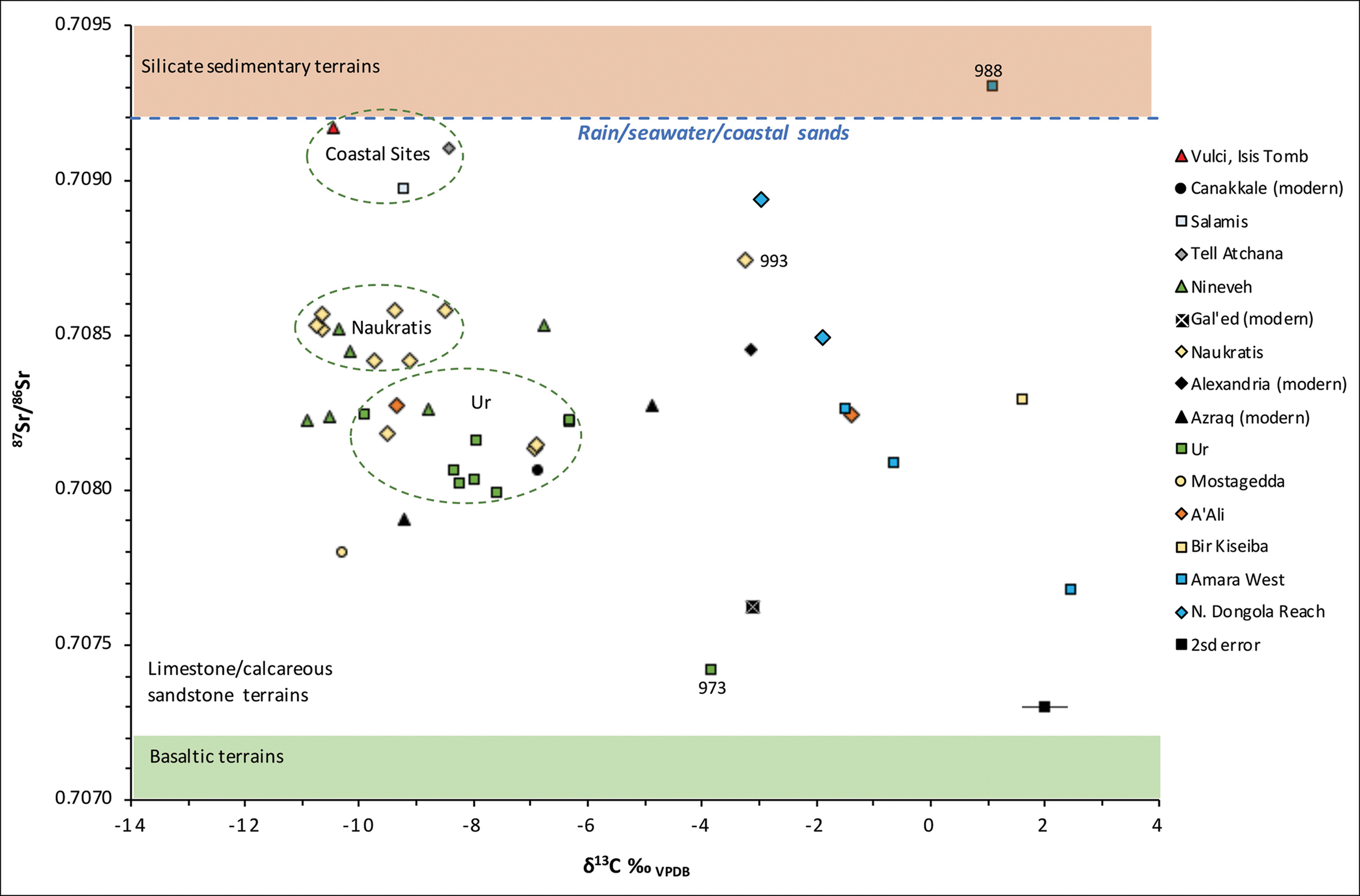
While a more in-depth discussion of the data can be found in the OSM, the key findings are summarised below. Much of the underlying geology of the study region comprises limestone, calcareous sandstone and basalt (Table 1), but in many areas, aeolian sediments overlie the bedrock, thus removing the connection between the bedrock geology and biosphere strontium. Despite the variation in bedrock at the sites from which ostrich eggshell were recovered, the small range of strontium isotopes (most are within 0.7080–0.7085) is consistent with sediments derived from limestone and calcareous sandstones (Figure 2). The strontium isotope ratios also correlate with previous studies of plants, animals and humans (see the OSM).
A plot of strontium and carbon isotope ratios of modern and archaeological ostrich eggshell (plot by J. Montgomery).

Sites with multiple ostrich eggshells offer the best opportunity for the identification of eggs originating from different sources. One ostrich eggshell (988) from Amara West, Sudan, had a higher strontium isotope ratio—i.e. higher than seawater—than other eggs excavated at the site, whereas example (973) from Ur, Iraq, had the lowest ratio and was particularly low ratio in comparison to other ostrich eggshells from Ur. This suggests that these particular eggs were laid by birds living in different geological, and hence geographic, environments than for the other ostrich eggshell at the same sites (Figure 2).
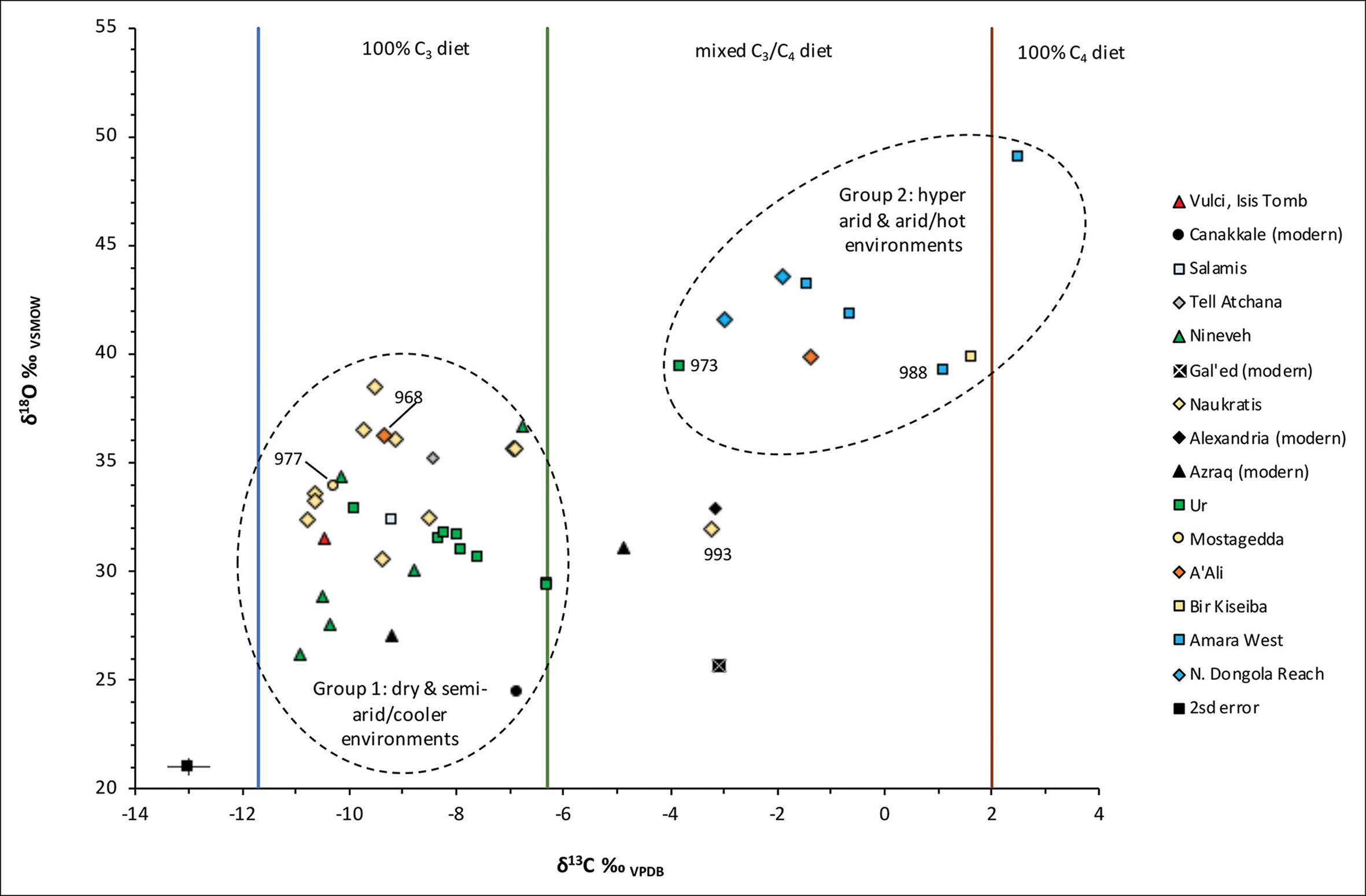
In contrast, the carbon and oxygen isotope data vary widely and are strongly correlated (r2 = 0.61). Despite the large temporal and spatial ranges of the ostrich eggshell, they cluster into two groups: group 1, characterised by examples from dry and semi-arid environments with predominantly C3 plant consumption; and group 2, characterised by examples from arid and hyperarid environments, and C4 plant consumption (Figure 3). There is no correlation between the date of the ostrich eggshell and oxygen isotope ratios (r2 = −0.13). Further statistical analysis is problematic at this stage, given the small number of samples from each site, the climatic zone covered in this study, ostrich physiology and the wide temporal and geographic ranges. Outliers, however, are identifiable (937 from Ur; 968 from A'Ali; 993 from Naukratis), suggesting that these eggs were laid elsewhere. The isotope data for ostrich eggshell excavated from regions where ostriches were not indigenous in the past (Vulci; Salamis) are inconsistent with origins in arid or hyperarid environments (Figures 1–3), and group with the majority of ostrich eggshell deriving from sites in cooler, semi-arid environments. While the ostrich-eggshell oxygen isotope ratios appear to be high in general, those for group 1 correspond with the range (30–41‰) obtained by Johnson et al. (Reference Johnson, Fogel and Miller1998) for wild ostriches in southern African regions that are broadly comparable in temperature and rainfall to sites 1–10 in this study, located above 30°N.
A plot of carbon and oxygen isotopes of modern and archaeological ostrich eggshell (plot by J. Montgomery). The vertical green line indicates the −27.4‰ lower limit for low-rainfall C3 zones (i.e. <800 mm/year); the blue line defines the −23‰ absolute upper limit of solely C3 plant-based diets (Kohn Reference Kohn2010); the brown line defines the lower limit for 100 per cent C4 diets, calculated using an offset between diet and ancient ostrich eggshell of −16.2±0.5‰ (Johnson et al. Reference Johnson, Fogel and Miller1998).

Were the eggs gathered from captive or wild birds?
We aimed to address the question of whether the birds were wild or captive through carbon and oxygen isotope evidence relating to diet, hypothesising that highly divergent data could indicate that eggs were taken from the wild. There was much less variation in the five modern ostrich eggshells than the archaeological shells, which may reflect the geographically and climatically limited range from which the farmed eggs were obtained, and possibly the long-distance transport of modern feedstuffs. It has been impossible to determine a clear pattern in this regard due to small sample numbers from each site.
Although there is a clear correlation in the ancient ostrich eggshell between location, aridity and temperature, this does not extend to the local precipitation values, which are generally too high when converted (Table S2). In contrast, those of the modern ostrich eggs do map onto local precipitation values when analytical uncertainty is taken into account (Table S1). The oxygen isotope ratios of eggs from modern, wild birds as non-obligate drinkers varied widely, and could not be correlated with precipitation due to body-water being primarily obtained from ingested plants (Johnson et al. Reference Johnson, Fogel and Miller1998). The high oxygen isotope ratios of the ancient ostrich eggshells therefore also suggest that these birds were not supplied with drinking water, and were thus wild.
Koyama and Tennyson (Reference Koyama and Tennyson2016) note that pronounced ridging and grooving of egg surfaces from wild birds may be due to the effects of environmental stresses and the subsequent need for stronger shells; by comparison, the surface of farmed eggs is mostly smooth. The SEM shows fine, intersecting lines on the ancient specimens that appear unrelated to decorative motifs or smoothing methods, which were identified separately. Such pronounced lines were not observed on the modern, farmed eggs examined here. We suggest, therefore, that our ancient examples came from wild birds—an interpretation that has implications for determining the relative value of ostrich eggs in the ancient world.
How were eggs decorated?
Using the Leica MZ APO optical microscope and Hitachi S-3700N VP SEM, we characterised different working methods used to produce decorative features on ostrich eggshell. Techniques include polishing, smooth scraping, abrading, pecking, scratching, scoring, picking and shaving. Macroscopically visible pigments are predominantly red and black. Examples identified using SEM-EDX include red ochre—identifiable because of the presence of iron—and carbon, respectively.
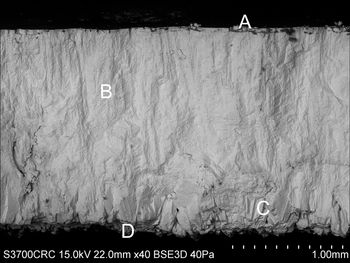
Ostrich-egg morphology consists of an external surface crystal layer; a palisade layer, which comprises most of the shell thickness; a cone layer towards the interior surface; and an organic membrane that covers the inner surface itself (Figure 4). Texier et al. (Reference Texier2010) have drawn attention to three factors that significantly influence the morphology of decorative features on ancient ostrich eggshell:
1) The heterogeneous orientation of the crystalline calcite that makes up 96 per cent of the structure (Richards et al. Reference Richards, Richards and Lee2000; Feng et al. Reference Feng, Zhu, Li and Kim2001).
2) The three different layers in ostrich eggshell, which vary in structure and in thickness and can be affected by thermal changes (Heredia et al. Reference Heredia, Rodríguez-Hernández, Lozano, Peña-Rico, Velázquez, Basiuka and Bucio2005).
3) The different tool types and materials used for incising or engraving.
Variable pressure scanning electron microscope (VP SEM) image of a cross-section of modern reference ostrich eggshell showing: A) crystal layer (outer surface); B) palisade layer; C) cone layer; D) organic membrane (inner surface). Scale bar is 1mm (image by C.R. Cartwright; © The Trustees of the British Museum).

Many of the technological features described by Texier et al. (Reference Texier2010) on engraved ostrich-eggshell container fragments dating to c. 60 000 years ago were seen on the later examples under discussion here. Despite the great chronological differences in the respective artefact assemblages between our studies, such similarities in technological and decorative modifications support the assertion that ostrich-eggshell structure is the principal determinant of decorative morphology, as are the nature and manner of the tool(s) used.
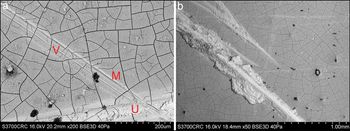
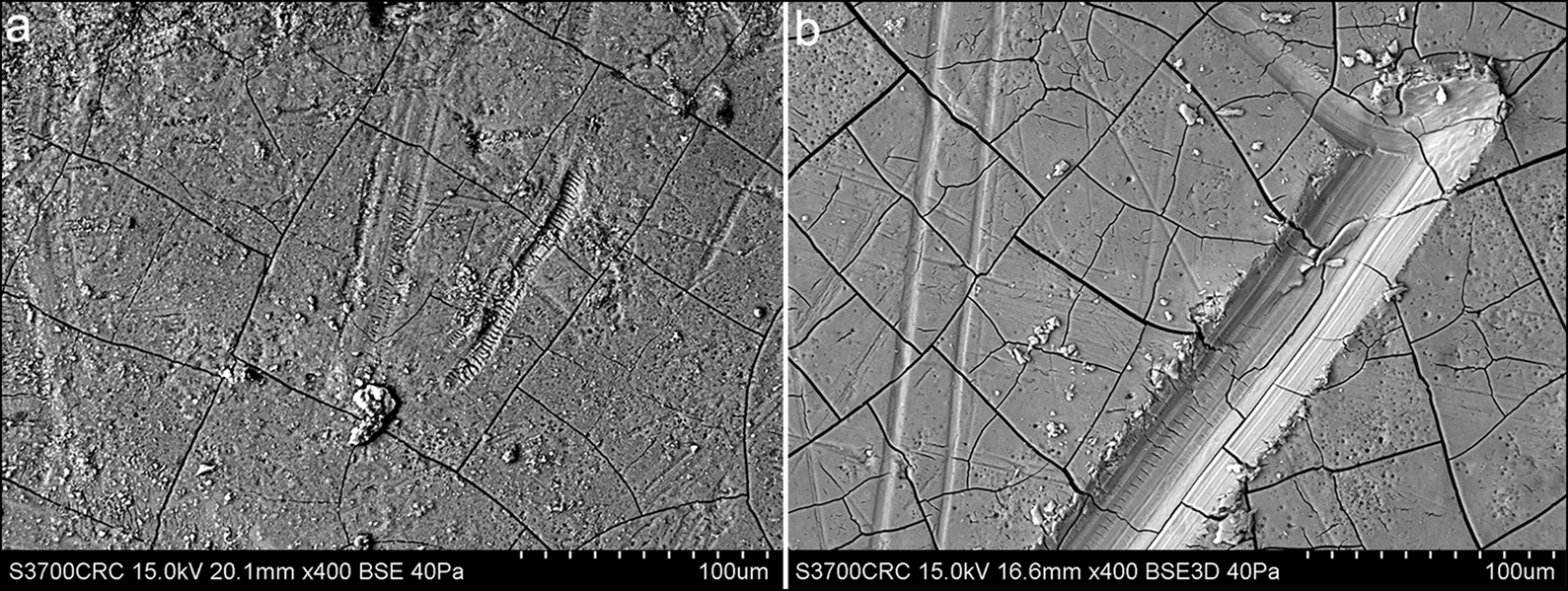
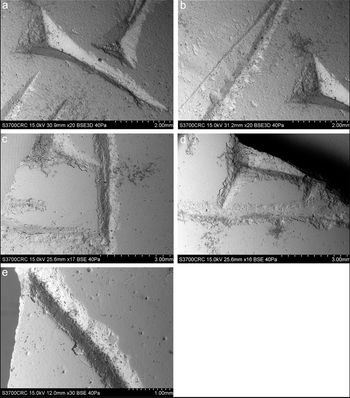
On ancient examples of decorated eggs (Texier et al. Reference Texier2010), superficial incisions usually exhibit a V-shaped profile, and do not penetrate beyond the external layer. Deeper, U-shaped incisions penetrate the palisade layer (Figure 5). Our experimental modifications were able to replicate only some of the methods that were macro- and microscopically visible in the ancient ostrich eggshell. Tools of different materials produced variations in these profiles, according to tool angle, effort expended in creating the incisions, pecking, preparatory buffing or abrading of the surface and post-incision smoothing of the decorated motifs or incised lines. Our superficial incisions in the outer surface of modern ostrich eggshell exhibited a similar V-shaped profile as seen in the ancient samples, while deeper incisions that penetrated the palisade layer also had a U-shaped profile (Figure 6). We were also able to recreate the scuffing or ‘judder’ marks observed on ancient examples (Figure 7). These presumably represent areas where minor imperfections in the surface have interrupted the action of the tool in the user's hand.
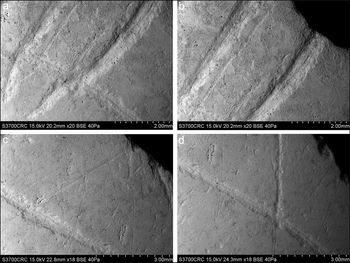
VP SEM images of EA85166; 2010, 1001.527 showing details of a triangular ancient ostrich-eggshell fragment with wide and narrow scored (incised) lines. Northern Dongola Reach, site H29 feature 3; SF 6236. Scale bars in mm (images by C.R. Cartwright; © The Trustees of the British Museum).

VP SEM images of modern reference ostrich-eggshell fragment experimentally modified on the outer surface showing incisions of varying depth with V-shaped profiles (marked V) and deeper incisions with a U-shaped profile (marked U) that penetrate into the palisade layer. M shows an incision with features of both profiles. The network surface crazing is a natural feature of the crystalline outer surface of ostrich eggshell. a) Scale bar in microns; b) scale bar is 1mm (images by C.R. Cartwright; © The Trustees of the British Museum).

VP SEM images: a) K8556 ostrich-eggshell fragment from Nineveh (Iron Age) showing some ancient superficial ‘scuffing’ or ‘judder’ marks, replicated experimentally within the broad U-shaped incision shown in b. Scale bars in microns (images by C.R. Cartwright; © The Trustees of the British Museum).

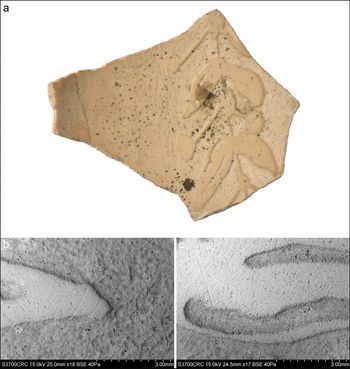
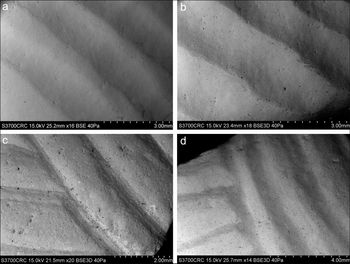
Variations in the quality of incision relate to the tool material, angle of application, effort expended and the amount of preparatory or post-carving buffing, abrading or smoothing. We were unable to replicate the range of technical skill displayed in the decorated archaeological examples (e.g. Nineveh: Figure 8; Naukratis: Figure 9), and, in some cases (e.g. Neolithic Bir Kiseiba: Figure 10) we were unable to suggest by what methods—or with what tools—the polishing was achieved. Further studies of experimentally modified modern ostrich eggshell must explore the scope and complexity of incision marks created by tools of different materials, including metal, flint, bone, antler and wood—sometimes in conjunction with buffing, smoothing or abrading with organic materials. Overall, the unexpected and considerable variability in techniques of modification and motifs observed did not correlate conclusively with egg findspots, but this was limited by the size of the dataset. Our experimental work and the analysed ancient examples highlight the diversity and variability of egg-carving techniques, and emphasise the skill of the ancient craftworkers. More data are required to ascertain whether certain techniques and decorative motifs can be associated with eggs from particular locations. The comparison of any such patterns with isotopically determined egg origins may help to resolve questions such as where or when an egg was decorated.
VP SEM images of K8556 ostrich-eggshell fragment from Nineveh (Iron Age), showing well-executed incised decorative shapes in relief as well as lines (with both V- and U-shaped profiles). Some subsequent buffing or polishing of the areas in higher relief may have been carried out to highlight the decoration. Scale bars in microns (images by C.R. Cartwright; © The Trustees of the British Museum).

a) 1886,0401.1600 fragment of ostrich eggshell with carved decoration on the inner surface (Twenty-seventh Dynasty, Sanctuary of Apollo, Naukratis, Egypt; © The Trustees of the British Museum); b–c) VP SEM images of the inner surface of this ostrich-eggshell fragment from Naukratis, showing details of the finely incised decorative motif, which appears to display surface preparation traces (possibly by abrasion or smoothing) of the higher relief areas, and pecking of the surrounding areas in lower relief. Scale bars in mm (images by C.R. Cartwright; © The Trustees of the British Museum).

VP SEM images: a–b) EA81421; 2004,0517.359; fragment of Neolithic ostrich eggshell, with widely incised and contoured decoration on the outer surface, Bir Kiseiba, Egypt; c–d) EA81430; 2004,0517.358; fragment (21) of Neolithic ostrich eggshell from Bir Kiseiba, with widely incised decoration on the outer surface. Scale bars in mm (images by C.R. Cartwright; © The Trustees of the British Museum).

Conclusions
This study has outlined the potential of isotopic analysis and digital microscopy for establishing the geographic origins of decorated ostrich eggs, and the techniques used to carve them. The results suggest that both avenues of analysis represent promising steps towards establishing a deeper understanding of the chaîne opératoire for this important category of luxury object desired by competing Mediterranean cultures (e.g. Hodos Reference Hodos2009). The results, however, also indicate the need for more work across many disciplines. The putative fluctuation in egg sources between relatively local and more distant locations in both the Bronze and Iron Ages implies that trade and exchange networks in these materials were more flexible, opportunistic and extensive than has been previously considered (e.g. Aruz et al. Reference Aruz, Graff and Rakic2014: xviii–xix). Our results also suggest that eggs were obtained from the wild, rather than through managed means. Additional experimental work, more comparative data and further study of decorating techniques are necessary to investigate discernible patterns regarding egg decoration and potential nest sites. Nevertheless, this project has demonstrated the unexpected complexity of the mechanisms by which luxury objects created from exotic organic materials were produced and exchanged during the Bronze and Iron Ages across the Mediterranean and Middle East.
Acknowledgements
This research was supported by the Gerda Henkel Foundation, The British Museum and the University of Bristol. We are grateful to colleagues from the British Museum for permission to sample; Andrew Meek and Barbara Wills for sample preparation; Hilary Sloane (NIGL) and Jo Peterkin (Durham University) for sample preparation and isotope measurements; Dan Lawrence for climatic discussion; Chris Jones for SEM advice; Antony Simpson for assistance with Figures 4–10; Matthew Collins for preliminary discussions; Joan Cutts for information on egg decoration; and Douglas Russell for species distinction clarifications.
Supplementary material
To view supplementary material for this article, please visit https://doi.org/10.15184/aqy.2020.14