Introduction
Members of the Cetraria aculeata group are fruticose, brownish black lichens and they include C. aculeata (Schreb.) Fr., C. australiensis W. A. Weber ex Kärnefelt, C. crespoae (Barreno & Vázquez) Kärnefelt, C. muricata (Ach.) Eckfeldt, C. odontella (Ach.) Ach., ‘C. panamericana’ and C. steppae (Savicz) Kärnefelt (Kärnefelt et al. Reference Kärnefelt, Mattsson and Thell1992; Thell et al. Reference Thell, Stenroos, Feuerer, Kärnefelt, Myllys and Hyvönen2002; Printzen et al. Reference Printzen, Domaschke, Fernández-Mendoza and Pérez-Ortega2013). Of these, C. aculeata and C. steppae have been considered as two closely related species (Savicz Reference Savicz1924; Kärnefelt Reference Kärnefelt1986; Kärnefelt et al. Reference Kärnefelt, Mattsson and Thell1993). Cetraria aculeata s. lat. was the subject of special taxonomic and phylogenetic studies (Kärnefelt Reference Kärnefelt1986; Kärnefelt et al. Reference Kärnefelt, Mattsson and Thell1992, Reference Kärnefelt, Mattsson and Thell1993; Thell et al. Reference Thell, Stenroos and Myllys2000, Reference Thell, Stenroos, Feuerer, Kärnefelt, Myllys and Hyvönen2002; Printzen et al. Reference Printzen, Domaschke, Fernández-Mendoza and Pérez-Ortega2013). The phylogeography of its symbionts has been investigated (Fernández-Mendoza et al. Reference Fernández-Mendoza, Domaschke, García, Jordan, Martín and Printzen2011; Domaschke et al. Reference Domaschke, Fernández-Mendoza, García, Martín and Printzen2012; Printzen et al. Reference Printzen, Domaschke, Fernández-Mendoza and Pérez-Ortega2013; Fernández-Mendoza & Printzen Reference Fernández-Mendoza and Printzen2013), as well as the anatomy and ecophysiology of extreme morphotypes (Pérez-Ortega et al. Reference Pérez-Ortega, Fernández-Mendoza, Raggio, Vivas, Ascaso, Sancho, Printzen and de los Ríos2012), and the bacterial communities within geographically distinct populations (Printzen et al. Reference Printzen, Fernández-Mendoza, Muggia, Berg and Grube2012). However, the taxonomic status of C. steppae as a distinct species has been questioned (Fernández-Mendoza et al. Reference Fernández-Mendoza, Domaschke, García, Jordan, Martín and Printzen2011; Lutsak et al. Reference Lutsak, Fernández-Mendoza, Nadyeina, Pérez-Ortega and Printzen2012) as its morphology varies greatly and its distribution range overlaps with that of C. aculeata (Poelt Reference Poelt1969; Randlane & Saag Reference Randlane, Saag, Lackovičova, Guttova, Lisicka and Lizoň2006).
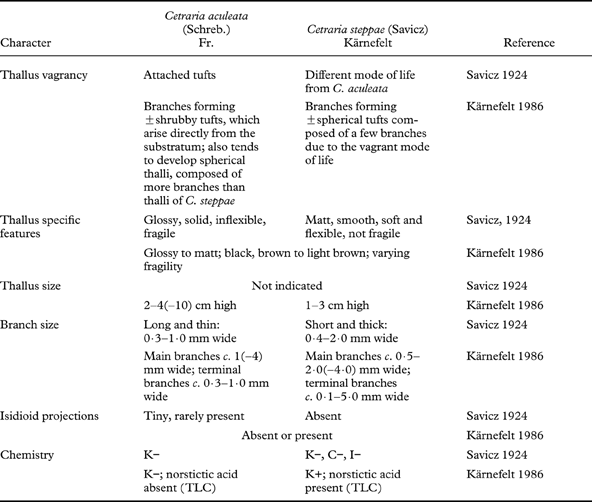
Distinguishing Cetraria steppae and C. aculeata as distinct species was traditionally based on visual morphological aspects (Savicz Reference Savicz1924; Oxner Reference Oxner1937; Poelt Reference Poelt1969), which include a vagrant mode of life, the surface characteristics of the thalli and morphological parameters of the main and terminal branches (Table 1). Mereschkowsky was the first to pay attention to vagrancy and the small number of branches among specimens from Crimea (Ukraine). His description is, however, very brief: “Thallus libertus, opacus, laciniis paullulum minus attenuatis” (Mereschkowsky Reference Mereschkowsky1921). The author of C. steppae at the species level is Savicz, who also gave a concise description (Table 1). He emphasized that both taxa are distinct species without intermediate forms, which implied that C. steppae occurs in the southern steppe biotopes and C. aculeata in the north (Savicz Reference Savicz1924). This statement guided lichenologists to distinguish the two species, when the vagrant mode of life or the thickness of branches were not well developed. In the 1980s, Kärnefelt performed a wide-scale survey of the brown Cetraria species (Kärnefelt Reference Kärnefelt1986) and revised the traits for morphological distinction of the two species. He introduced a new feature, the presence of norstictic acid in C. steppae, which was not considered in the original description of C. steppae (Savicz Reference Savicz1924; Table 1) and became crucial for the delimitation of the two species. Moreover, Kärnefelt extended the concept of C. steppae and also included specimens with isidioid projections and black, glossy thalli (Table 1). After being described by Savicz (Reference Savicz1924), the species was reported in other parts of southern Ukraine (Oxner Reference Oxner1937, Reference Oxner1993; Blum Reference Blum and Sheliag-Sosonko1996; Blum et al. Reference Blum, Kondratyuk, Khodosovtsev and Didukh2009) and Russia (Zhurbenko Reference Zhurbenko and Golubkova1996; Moutchnik & Zavarzin Reference Moutchnik and Zavarzin2005; Golubkova et al. Reference Golubkova, Dombrovskaia, Istomina, Makarova, Makryi, Muchnik, Pchelkin, Sedelnikova, Skirina, Tolpisheva and Trutnev2008; Urbanavichus Reference Urbanavichus2010), Kazakhstan (Wagner & Spribille Reference Wagner and Spribille2005), Turkey (John Reference John1999; John & Breuss Reference John and Breuss2004; Yazıcı et al. Reference Yazıcı, Aptroot, Aslan, Etayo, Spier and Karagöz2010), Iran (Sohrabi & Alstrup Reference Sohrabi and Alstrup2007; Seaward et al. Reference Seaward, Sipman and Sohrabi2008), and Spain (Llimona & Hladun Reference Llimona and Hladun2001).
Features used for the delimitation of C. aculeata and C. steppae according to Savicz's (Reference Savicz1924) and Kärnefelt's (Reference Kärnefelt1986) descriptions.
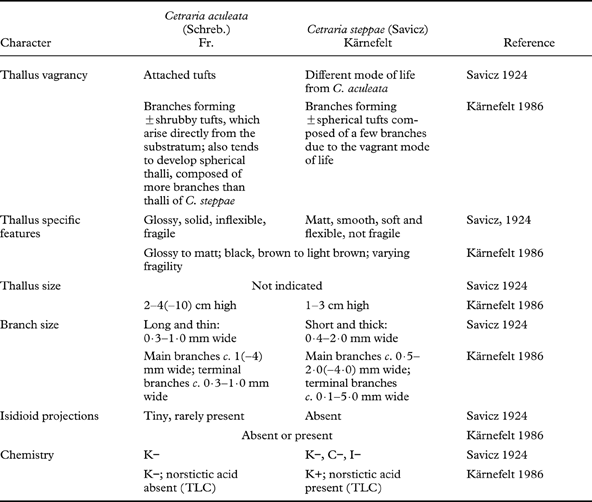
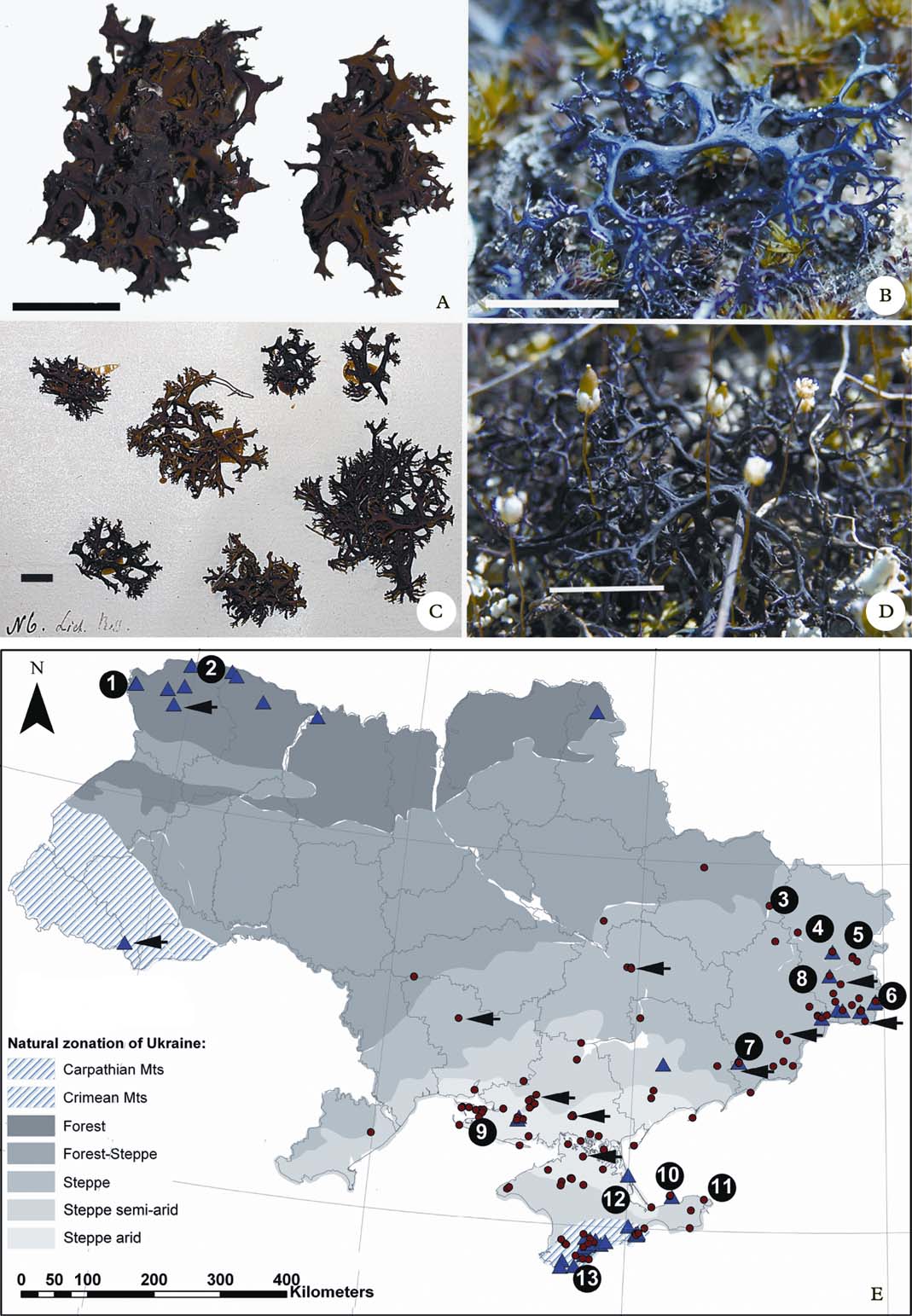
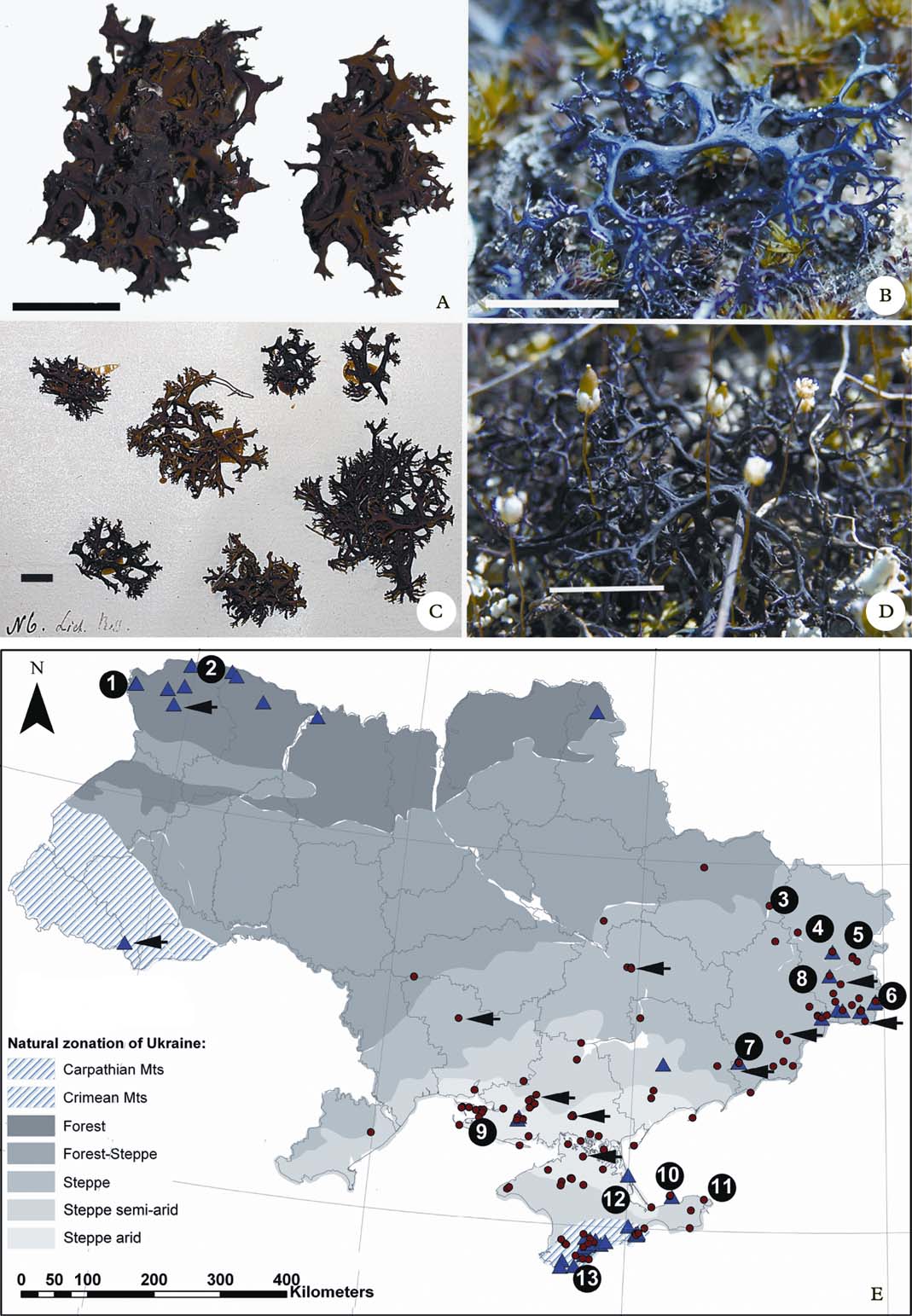
In our analysis of 247 herbarium specimens of C. aculeata s. lat., we were not able to classify all specimens as belonging to one or other of the two taxa because of contradictions or uncertainties in diagnostic traits (Table 1). The features traditionally used to distinguish them seemed to be quite subjective, such as the degree of vagrancy or the thickness of the branches. The vagrant life form and spherical tuft-like thalli are often difficult to designate, both on herbarium specimens and in the field. Specimens kept in herbaria are usually carefully separated, and could look ‘artificially vagrant’ (Fig. 1A & C). In the field, the recognizable vagrant thalli grow on bare soil or sand. However, a few centimetres away, individuals may often be attached, which changes their degree of vagrancy (Fig. 1B & D). Delimitation of individuals is also contentious because thalli in vagrant tufts or in mostly attached mats are often densely entangled (Fahselt Reference Fahselt and Nash2008).
Morphological diversity and distribution of Cetraria aculeata s. lat. A, Crimea, Dzhankoj region, norstictic acid minor; B, Luhansk region, norstictic acid minor; C, type specimen (LE 220), Kherson region, norstictic acid major; D, Donetsk region, norstictic acid major; E, distribution in Ukraine, based on the analysis of 247 specimens (KW, KHER, LE) tested by TLC, numbers correspond to the sampling sites of the populations given in Table 2. Arrows indicate specimens selected for HPLC analysis (listed in Table 4); red circles, norstictic acid present; blue triangles, norstictic acid absent. Scales: A–D=1 cm.
The above-mentioned difficulties motivated us to check the morphological variability within and between populations sampled from different regions in Ukraine. The present study aimed to test characters traditionally used for the delimitation of C. steppae and C. aculeata, and to elucidate their taxonomic value. We also wanted to study the impact of ecological and geographical factors on the morphological and chemical characteristics within this group. We hypothesized that specimens belonging to C. steppae contain norstictic acid in the medulla (Kärnefelt Reference Kärnefelt1986), have wider thallus branches, smaller thalli, a vagrant lifestyle, and a distribution limited to the south of Ukraine (Savicz Reference Savicz1924). The aim was also to test the correlation between the presence of norsticitic acid and the content of carbonates in the substrata of arid areas (Hauck et al. Reference Hauck, Jürgens and Leuschner2010). Finally, we assess and discuss the conservation status of C. aculeata s. lat. according to the IUCN Red List criteria for the next edition of the Red Data Book of Ukraine.
Materials and Methods
Materials and sampling design
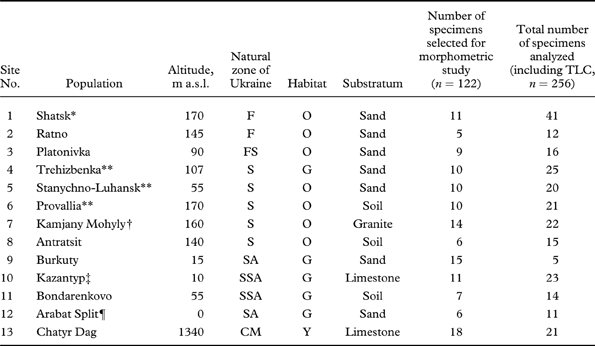
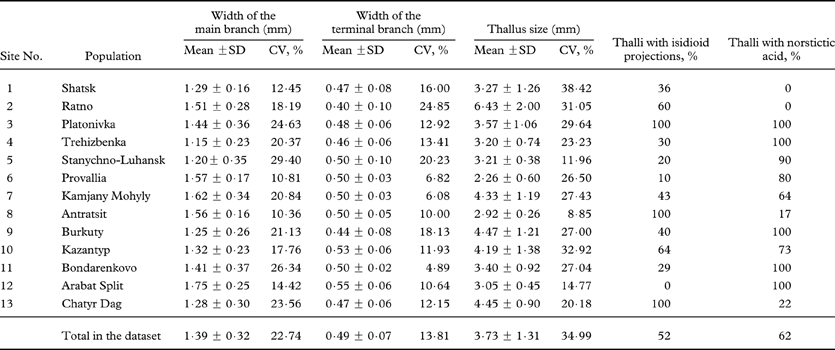
A total of 503 specimens of C. aculeata s. lat. from Ukraine were studied. First, we examined 247 specimens from different herbaria (KW, KHER, LE), according their morphological, chemical and ecological characteristics (Fig. 1E). We then collected 256 specimens from 13 local populations, representing different natural zones of Ukraine during 2010–2011. Their characteristics are summarized in Table 2 and locations shown in Fig. 1E. All specimens were classified a priori as Cetraria aculeata s. lat. A tuft c. 5–10 cm2 was considered to be one specimen (‘thallus’). To analyze the chemical variability among neighbouring thalli (which are probably vegetative clones), we sampled thalli at 0·5 m intervals along transects 10–25 m in length and 0·5 m in width within each population. As a result, 5–41 specimens per population were collected according to their availability, amounting to 256 thalli in total. To study the morphological variability within the local populations, we selected a subset of 122 specimens, sampled at distances of >1 m along the same transects, resulting in 5–18 specimens per population (Table 2). Because the species reproduces only asexually in Ukraine (no specimens with fruit bodies have been found so far in this area), we selected 1 m as the minimum distance to reduce the clones in our dataset because the range of dispersal through thallus fragments is considered to be less than 1 m (Heinken Reference Heinken1999).
Populations of Cetraria aculeata s. lat. examined with characteristics of their sites (natural zones of Ukraine: F – polissia (forest), FS – forest-steppe, S –steppe, SSA – steppe semi-arid, SA – steppe arid, CM – Crimean Mountains; Habitats: O – open places, clearings among pine forest plantation, G – grasslands and heaths, Y – yayla or mountain top, deforested by grazing).
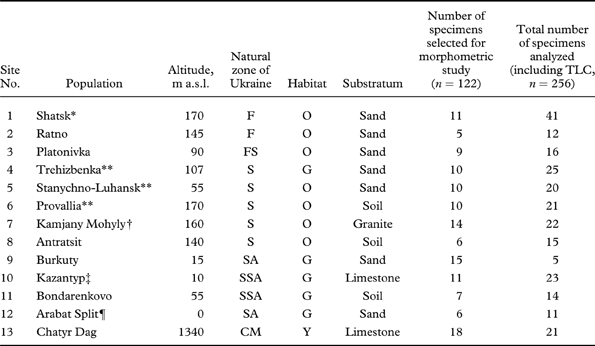
*Shatsk Lakes National Nature Park; **Branch of Luhansk Steppe Nature Reserve; †Branch of Ukrainian Nature Steppe Reserve; ‡Kazantyp Nature Reserve; ¶Arabat Split Botanical Reserve.
Morphological study
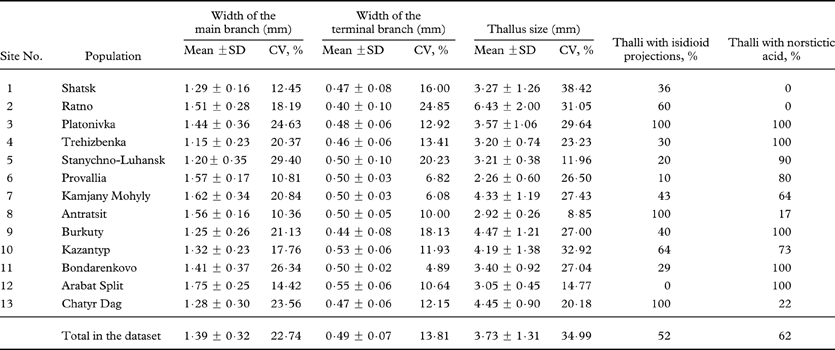
A subset of 122 air-dried specimens, collected from the 13 local populations mentioned above, was selected for morphometric measurements (Tables 2 & 3). For each specimen, we measured the size of the whole thallus, the width of the main branches at the basal bifurcations, and the width of terminal branches below the last bifurcation (Table 3). Five measurements of each trait per specimen were performed. The morphometric measurements are presented as (min–) mean ±Standard Deviation (–max). The presence or absence of isidioid projections was recorded for each specimen (Table 3).
Morphometric (n=122) and chemical (n=256) characteristics of the populations of C. aculeata s. lat. studied.
Chemical analyses
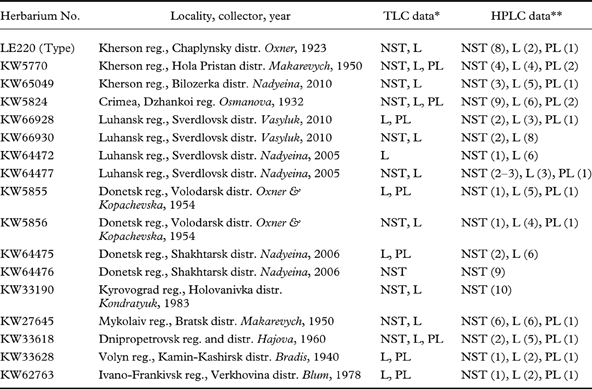
Each of the 247 herbarium specimens was tested by spot reactions with 10% aqueous solution of potassium hydroxide (K) and dissolved crystals of paraphenylenediamine in ethanol (Pd). The lichen substances were also analyzed using the microcrystal test method (Orange et al. Reference Orange, James and White2001) for a subset of 17 selected specimens (Table 4).
HPLC study of selected specimens of C. aculeata s. lat. from Ukraine
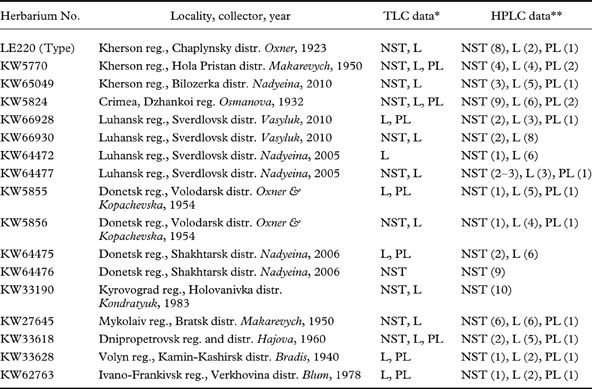
*NST – norstictic acid, L – lichesterinic acid, PL – protolichesterinic acid; **content of substances indicated in brackets are: 1 – traces, 2–3 – minor, 4–5 – medium, 6–10 – major.
Each of the 503 specimens studied were also analyzed by thin-layer chromatography (TLC), according to standard protocols (White & James Reference White and James1985; Orange et al. Reference Orange, James and White2001) using Sorbifil UV plates (Russia) and solvent A.
High performance liquid chromatography (HPLC) was applied to a subset of 17 specimens, which were selected according to the following criteria: 1) specimens originating from different parts of Ukraine (the Carpathians, north-west, south-east and south Ukraine, including Crimea); 2) individuals originating from localities where, according to the TLC analysis, specimens with and without norstictic acid were present. Localities for specimens analyzed by HPLC are indicated in Fig. 1E with arrows and listed in Table 4. HPLC analyses were carried out on the basis of methods described in Yoshimura et al. (Reference Yoshimura, Kinoshita, Yamamoto, Hunecks and Yamadan1994), Gupta et al. (Reference Gupta, Darokar, Shanker, Negi, Shrivastava, Gupta and Khanuja2007) and Manojlović et al. (Reference Manojlović, Vasiljević, Jusković, Najman, Janković and Milenković-Andjelković2010). The content of the lichen substances was quantified according to a 10-point scale using peak heights at 224 nm and 1000 mAU detector signal range for each specimen. A peak height between 500–1000 mAU was considered as “major” (5–10 points), 300–500 mAU as “medium” (3–5 points), 30–300 mAU as “minor” (1–3 points) and less than 30 mAU as “traces” (1 point).
Statistical analyses
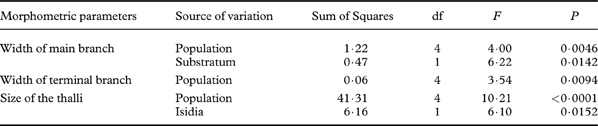
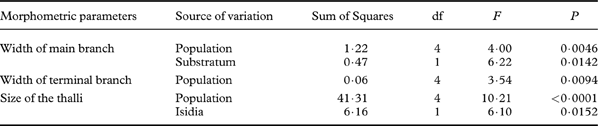
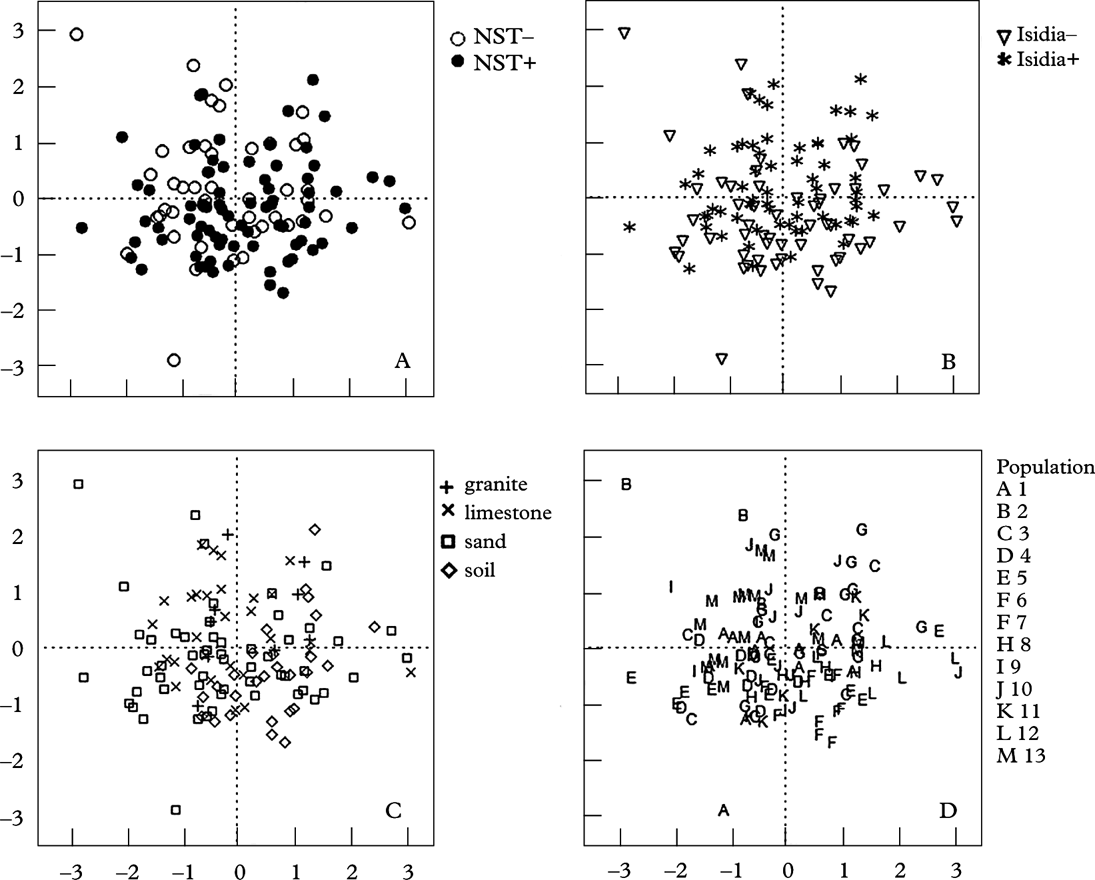
Basic statistics for the morphometric parameters of the C. aculeata s. lat. specimens collected from all 13 populations, an analysis of variance (ANOVA) and the principal component analysis (PCA) were run in JMP 9 (SAS Institute Inc., Cary, North Carolina). The coefficient of variation (CV) was calculated for the entire dataset and each population (Table 3). Values of CV were classified in five categories: minor variation (0–10%), little variation (11–20%), average variation (21–40%), high variation (41–60%) and very high variation (61–100%). To examine the effects of environmental, geographical, chemical and morphological variables on the quantitative morphometric thallus parameters (such as width of the main and terminal branches, and size of the thalli), we performed an analysis of variance (ANOVA). Nominal variables included in ANOVA were: occurrence in one of the 13 populations and five natural zones of Ukraine, in three specific habitats, at four substrata and three classes of altitude above sea level (Table 2), the presence of norstictic acid detected by TLC and presence of isidioid projections (Table 3). Only values with high support are shown in Table 5 and discussed. The variables included in the PCA were: width of the main branch, width of the terminal branch and size of the thalli. The resulting PCA biplots were selected according to the maximum variance of projection along each component (Fig. 3).
Results of an analysis of variance testing the effect of environmental, geographical and morphological variables on the morphometric parameters of Cetraria aculeata s. lat. individuals representing different parts of Ukraine (only significant values are shown, n=122).
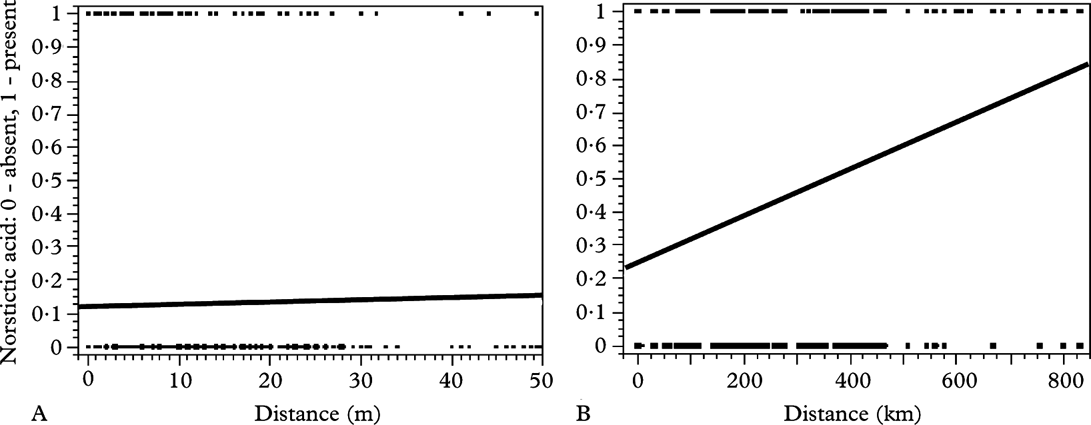
To analyze the pairwise correlation between the presence and absence of norstictic acid and the geographical distance between C. aculeata specimens, we performed a Mantel test with 99 permutations, as implemented in Genalex (Peakall & Smouse Reference Peakall and Smouse2006; Fig. 4). In total, 256 specimens of the C. aculeata s. lat. analyzed by TLC (Table 2) were included in this study.
The distribution map for the C. aculeata s. lat. specimens studied was drawn in ArcGis.10 (http://www.esri.com/software/arcgis). The natural zonation of Ukraine follows Prydatko (Reference Prydatko1998; http://biomodel.info/training-package/ukraine-nature-agricultural-zoning), and is shown in Fig. 1E.
Results
Morphology
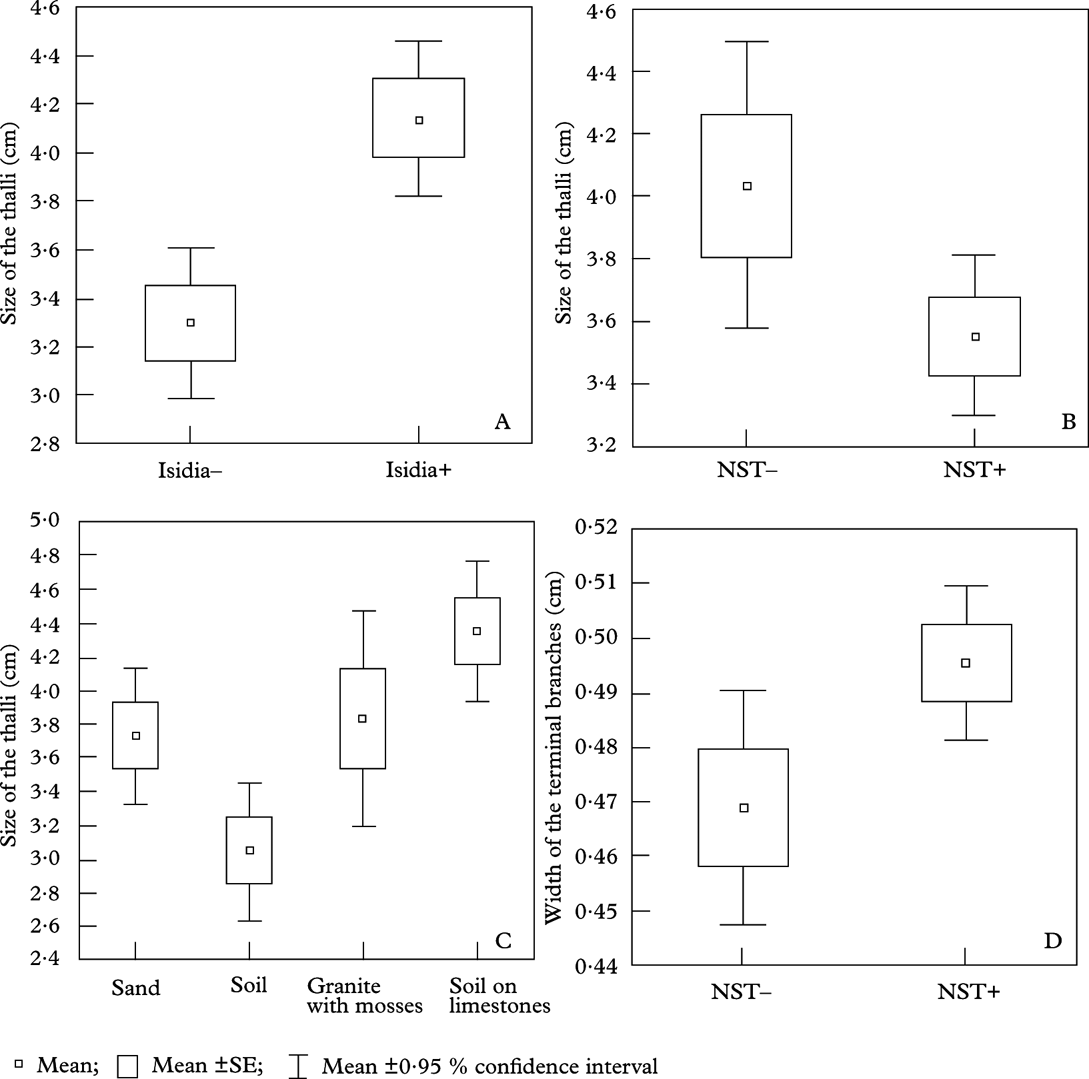
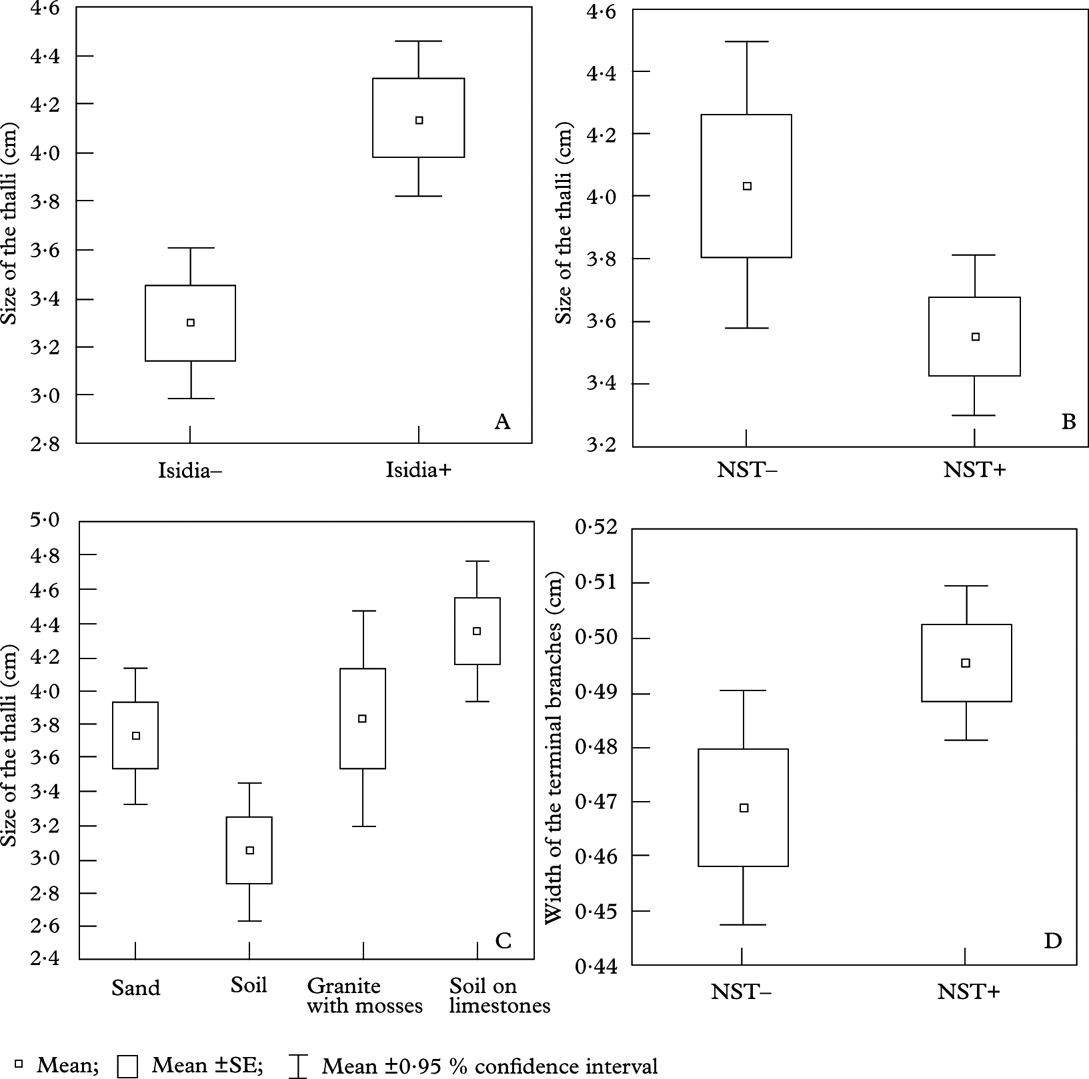
We found a strong correlation between the size of thalli and the presence of isidioid projections (Fig. 2, Table 5). Thalli without isidioid projections were smaller than thalli with this trait. However, we found no clear regional differentiation in the frequency of isidioid projections. The percentage of specimens with isidioid projections varied greatly among populations (0–100% of specimens per population, Table 3). While every specimen investigated in the populations of Antratsit and Chatyr Dag had isidioid projections, none of the specimens from Arabat Split Botanical Reserve had this characteristic (Table 3).
Relationships among the 122 specimens of Cetraria aculeata group between thallus size and presence or absence of isidioid projections (A, t=−3·751, P=0·0003, df=120), presence or absence of norstictic acid (B, t=1·996, P=0·048, df=74) and substratum groups (C, t=2·222, P=0·029, df=76), and between width of terminal branches and presence or absence of norstictic acid (D, t=−2·146, P=0·033, df=120).
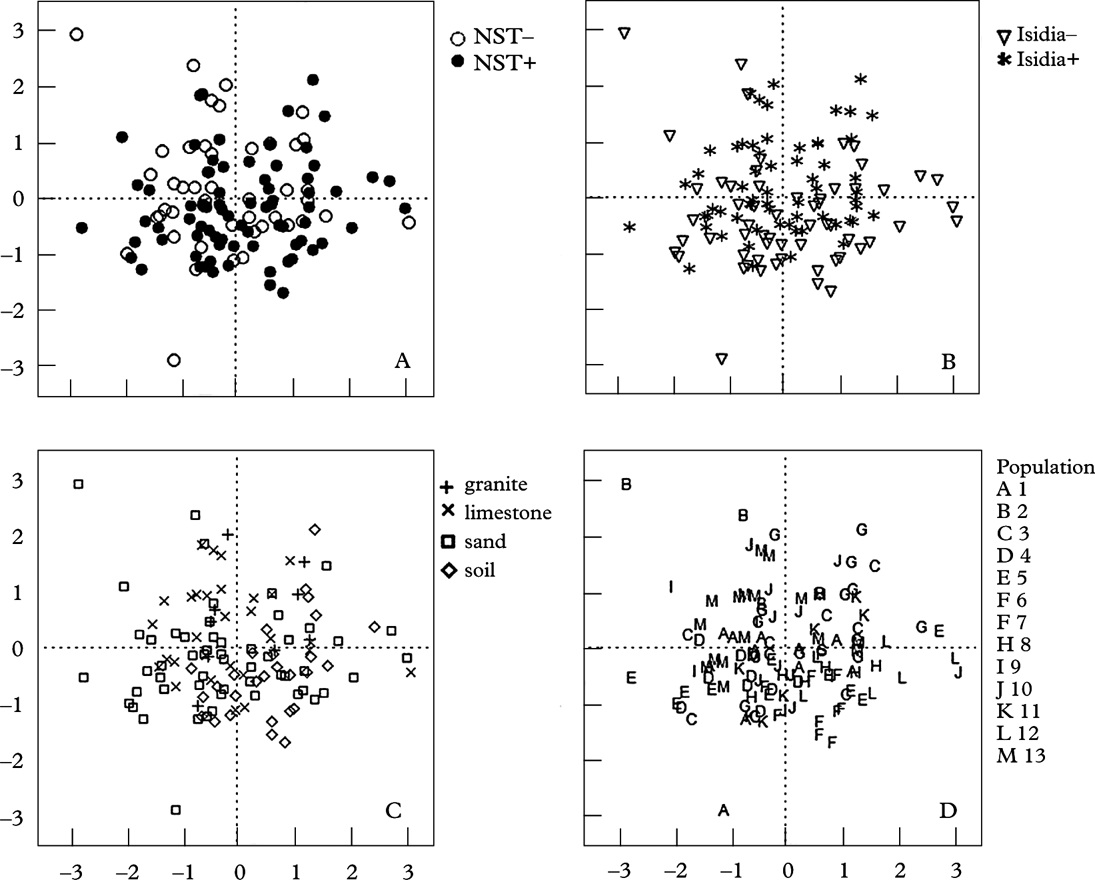
Our systematically sampled dataset revealed rather small differences in morphometric traits, that are essential for species identification, such as the width of the main and terminal branches or the size of the thalli (Table 3). The CV of these characteristics showed little or only average variation in the entire dataset, as well as within each population. However, an ANOVA applied to the morphometric variables of C. aculeata s. lat. in relation to regional effects revealed significant differences between populations (Table 5). Continuous variation within the three morphometric characteristics analyzed was also confirmed by PCA (Fig. 3). The first two components (axes) of PCA explained 77·8% of variance (the two axes explained 43·4% and 34·4% of the variance).
PCA results based on the morphometric characteristics of the C. aculeata s. lat. in Ukraine, n=122. A, specimens differing chemically are shown; B, specimens with and without isidioid projections are marked; C, specimens preferring different substrata are distinguished; D, specimens belonging to different populations are indicated.
Chemistry
The analysis of the specimens by TLC showed that the presence of norstictic acid among the populations varied considerably (Table 3). Specimens distributed in the Forest zone of Ukraine and in the Carpathians always lacked norstictic acid (Table 3, Fig. 1E). Additionally, we detected lichesterinic and/or protolichesterinic acids in the medulla of some of the specimens, as have others in the literature (Kärnefelt Reference Kärnefelt1986; Vainshtein et al. Reference Vainshtein, Ravinskaia and Shapiro1990). In contrast to the northern populations of C. aculeata s. lat., some of the specimens from the southern populations in the Steppe zone and the Crimean Mountains contained norstictic acid (17–100% of specimens per population; Table 3).
HPLC revealed a very broad range of norstictic acid content in each specimen (Table 4). The specimens collected from the same localities contained very different quantities, and some had only traces which could not be detected by TLC. Surprisingly, traces of norstictic acid were detected by HPLC even in specimens from northern Ukraine and the Carpathians, where no norstictic acid was detected by TLC (Table 4). With HPLC we also detected traces of fumarprotocetraric and connorstictic acids in several specimens, which have never been reported before for C. aculeata s. lat. Rangiformic acid was mentioned once for C. aculeata from New Zealand (Galloway Reference Galloway1985), and occasionally minor amounts of nephrosterinic and isonephrosterinic acids have been detected by HPLC (Thell & Kärnefelt Reference Thell and Kärnefelt2011).
The analyzed specimens of C. aculeata s. lat. showed no reactions with spot and microcrystal tests. As a control, we tested spot reactions and conducted microcrystal tests with K and Pd to detect norstictic acid in other lichen species: Aspicilia cinerea (L.) Körb., Cladonia symphycarpia (Flörke) Fr. and Pleurosticta acetabulum (Neck.) Elix & Lumbsch. These species developed red spots with K or Pd and displayed typical reddish crystals in the microcrystal tests. Therefore, we conclude that, in the case of Cetraria aculeata s. lat., spot reactions and the microcrystal test cannot be used to detect norstictic acid.
Relationship between morphology, chemistry, geographical and environmental factors
We found a significant correlation between thallus size and the presence of norstictic acid, as detected by TLC (Fig. 2). Samples containing norstictic acid were slightly smaller than samples where norstictic acid could not be detected by TLC. At the same time, specimens lacking norstictic acid had narrower terminal branches than specimens with norstictic acid (Fig. 2). Specimens growing on bare soil and sand had smaller thalli than specimens collected on granite or limestone outcrops (Fig. 2).
All three morphometric thallus variables differed between the populations of C. aculeata s. lat. The width of the main thallus branch also depended on the substratum, and the presence of isidioid projections was correlated with thallus size (Table 5). No correlations were found between morphometric features and the five natural zones of Ukraine, the three specific habitats, or the three classes of altitude above sea level (Table 5).
A continuous scatter plot from a PCA of the morphometric features of the C. aculeata s. lat. specimens (Fig. 3) had no structure when compared to the presence of isidioid projections, norstictic acid content, substrata preference and sampling in different populations.
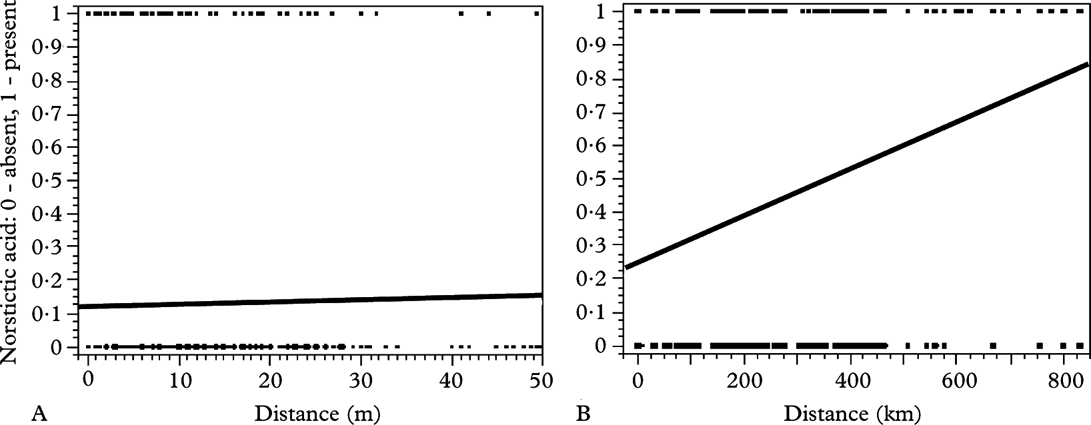
We found a weak positive correlation between the presence of norstictic acid and a large geographical distance up to 800 km. The overall linear fit of the Mantel test for geographical distance and chemical identity was 7·015–7 (P <0·001, Fig. 4B), but only 5·385–4 (P = 0·6, Fig. 4A) for short distances up to 50 m.
Linear fit of Mantel test of geographical distance and chemical identity (absence or presence of norstictic acid) among pairs of specimens, n=256. A, small distances up to 50 m, parameters estimated with a linear fit of 5·385–4, P<0·6; B, large distances up to 800 km, parameters estimated with a linear fit of 7·015–7, P<0·001.
Discussion
Taxonomic status
Our analyses of the morphological, chemical, ecological and geographical characteristics of C. aculeata s. lat. specimens, originating from 13 populations (Tables 2 & 3), showed a continuous variation in morphometric features, as well as in the presence of isidioid projections and norstictic acid. Differences between populations in the morphometric traits examined (Tables 3 & 5) explained local infraspecific variability and did not support subdivisions among the specimens of Cetraria aculeata s. lat. we studied (Fig. 3D).
Seven out of 13 populations were homogeneous in norstictic acid content when analyzed by TLC, while the other six populations contained chemically distinct individuals (Table 3). We found a general trend for specimens lacking norstictic acid to have larger thalli and narrower terminal branches (Fig. 2B & D). Therefore the presence of norstictic acid depends on the size of the thallus, which reflects the ontogenetic stage, and thus should not be considered for taxonomic purposes. An analogous trend has been found for perlatolic and usnic acids in another terricolous lichen species, Cladonia stellaris (Opiz) Pouzar & Vězda (Fahselt Reference Fahselt1984). We hypothesize that norstictic acid biosynthesis is active during the early stages of thallus development, appearing shortly after thallus fragmentation, and declines or becomes deactivated later, once the thalli have reached a certain size. We may also speculate that norstictic acid plays an important role in the complexation with heavy metals occurring in the substratum, which would otherwise be toxic for the small thalli. The ability of lichen thalli to incorporate heavy metal ions into oxalates is well-known, and seems to be a way of coping with the effects of toxic elements (Jones & Wilson Reference Jones and Wilson1985; Purvis Reference Purvis1996). Norstictic acid is also known to form complexes with other toxic metals, including copper (Purvis et al. Reference Purvis, Elix, Broomhead and Jones1987).
We found no correlation between the presence of norstictic acid and any of the environmental factors analyzed (Table 5), even though we expected specimens with norstictic acid (revealed by TLC) to prefer geographically different regions (according to Kärnefelt Reference Kärnefelt1986) or to occur mainly on carbonaceous substrata (according to Hauck et al. Reference Hauck, Jürgens and Leuschner2010). The distribution pattern of norstictic acid in C. aculeata s. lat. did not correlate with the natural zones of Ukraine, habitats, substrata or different altitudinal levels. However, specimens with norstictic acid (TLC) were limited to southern regions in Ukraine (the forest-steppe, steppe zones, and the Crimean Mountains), where they co-occur with specimens lacking norstictic acid. In contrast, specimens without norstictic acid (TLC) grow throughout all of Ukraine (Table 3, Fig. 1E). The sporadic presence of specimens with norstictic acid in southern, but not northern, areas supports the hypothesis that norstictic acid plays an adaptive role in lichens growing in an arid climate (Hauck et al. Reference Hauck, Jürgens and Leuschner2010). A similar trend has been identified in the terricolous lichen Flavocetraria nivalis (L.) Kärnefelt & A. Thell, which has higher concentrations of usnic acid in colder environments (Bjerke et al. Reference Bjerke, Joly, Nilsen and Brossard2004), and for the epiphytic Pseudevernia furfuracea (L.) Zopf, which contains olivetoric or physodic acids, depending on climate (Martellos Reference Martellos2003). These support Hale's theory (Hale Reference Hale1956) that the synthesis of lichen secondary compounds is governed by climatic gradients. Nevertheless, several other studies have found no evidence for a climatic dependency of lichens secondary chemistry (Halvorsen & Bendiksen Reference Halvorsen and Bendiksen1982; Fahselt Reference Fahselt1984).
Mantel tests revealed a significant spatial autocorrelation between the norstictic acid content (as detected by TLC) and the geographical distance between the individuals sampled (Fig. 4B). This reflects regional differences in norstictic acid content (as measured by HPLC) with only traces of norstictic acid (not detectable by TLC) in northern Ukraine and partly higher concentrations in the southern regions. However, we found no autocorrelation at local scales (Fig. 4A). This indicates that local habitat characteristics do not strongly influence the presence or absence of norstictic acid in C. aculeata s. lat. Pérez-Ortega et al. (Reference Pérez-Ortega, Fernández-Mendoza, Raggio, Vivas, Ascaso, Sancho, Printzen and de los Ríos2012) studied extreme cases of phenotypic plasticity in C. aculeata s. lat., including both distinctly vagrant specimens with thick thalli and ‘typical’ C. aculeata from the same habitats in Spain. These thick vagrant specimens did not contain norstictic acid and thus, according to Kärnefelt (Reference Kärnefelt1986), were classified as C. aculeata s. lat. (Pérez-Ortega et al. Reference Pérez-Ortega, Fernández-Mendoza, Raggio, Vivas, Ascaso, Sancho, Printzen and de los Ríos2012). The study of Pérez-Ortega et al. (Reference Pérez-Ortega, Fernández-Mendoza, Raggio, Vivas, Ascaso, Sancho, Printzen and de los Ríos2012) revealed anatomical and physiological differences between the thick vagrant and ‘typical’ individuals of C. aculeata s. lat. from the same habitats. The authors found, however, shared haplotypes between those morphs and thus emphasized that the vagrant morphs are adaptations to aridity. We consider this as further evidence for the morpho/chemical variability within populations of C. aculeata s. lat. being due to ecologtical (microclimate) and not taxonomic reasons.
The recent worldwide multigene studies of Cetraria aculeata s. lat. populations (Fernández-Mendoza et al. Reference Fernández-Mendoza, Domaschke, García, Jordan, Martín and Printzen2011; Fernández-Mendoza & Printzen Reference Fernández-Mendoza and Printzen2013; Printzen et al. Reference Printzen, Domaschke, Fernández-Mendoza and Pérez-Ortega2013)Footnote 1 revealed pleistocene diversification within the C. aculeata group into several genetic clusters. The only small population from Ukraine (Crimean Mountains) of five individuals with norstictic acid was included in the last two studies, and it appeared to be related to the Mediterranean phylogenetic clade. However, more extensive sampling of C. aculeata s. lat. from Ukraine, based on a subset of the specimens used in our study, revealed shared haplotypes with other genetic clusters, but no relationship between the genetic structures of populations with norstictic acid production (Lutsak et al. Reference Lutsak, Fernández-Mendoza, Nadyeina, Pérez-Ortega and Printzen2012).
Further evidence for the incomplete speciation within C. aculeata s. lat. comes from the gene flow between different phylogenetic clusters within C. aculeata (Fernández-Mendoza & Printzen Reference Fernández-Mendoza and Printzen2013), and shared haplotypes among different operational taxonomic units, such as C. steppae, C. crespoae and C. aculeata s. str. represented from geographically distinct areas (Printzen et al. Reference Printzen, Domaschke, Fernández-Mendoza and Pérez-Ortega2013). The speciation seems to be very slow for taxa with vegetative reproduction only, where natural selection is determined by random mutations but not recombinations. Cetraria aculeata s. lat. includes several genetically distinct clades related to the phylogeographical history of the species (Fernández-Mendoza & Printzen Reference Fernández-Mendoza and Printzen2013; Printzen et al. Reference Printzen, Domaschke, Fernández-Mendoza and Pérez-Ortega2013), but these do not correspond to secondary chemistry or morphological characteristics. Higher levels of norstictic acid production in C. aculeata s. lat. in southern Ukraine may be connected to the aridity of glacial permafrost (Hewitt Reference Hewitt1999). Acid production seems to be selectively activated depending on the microclimate and the developmental stage of thalli.
Possible reasons for the chemical variation in C. aculeata s. lat. populations may be the large-scale geographical and climatic dependence of gene expression, photobiont switching and microbial inhabitants (Muggia et al. Reference Muggia, Schmitt and Grube2009; Bates et al. Reference Bates, Cropsey, Caporaso, Knight and Fierer2011; Fernández-Mendoza et al. Reference Fernández-Mendoza, Domaschke, García, Jordan, Martín and Printzen2011; Hodkinson et al. Reference Hodkinson, Gottel, Schadt and Lutzoni2012). In a recent study, Printzen et al. (Reference Printzen, Fernández-Mendoza, Muggia, Berg and Grube2012) demonstrated that the composition of alphaproteobacterial communities in geographically distant populations of C. aculeata is affected by environmental factors, but no relationship between these communities and secondary metabolite production has so far been found.
Our results support a decision to merge C. steppae Savicz with C. aculeata (Schreb.) Fr. and to treat both names as synonyms. The features currently used for the delimitation at species level are not appropriate because the differences in the morphological features are too small, the presence and quantity of norstictic acid varies greatly, and the substrata and habitats occupied by lichens are very diverse. Cetraria steppae Savicz may be regarded as a chemotype only, reflecting an infraspecific variation, even though norstictic acid has been detected in the type material of C. steppae by both TLC and HPLC (Table 4). It is commonly accepted that variation in the concentrations of particular secondary lichen substances does not provide sufficient grounds for taxonomic differentiation (Hawksworth Reference Hawksworth, Brown, Hawksworth and Bailey1976; Elix & Stocker-Wörgötter Reference Elix, Stocker-Wörgötter and Nash2008). As a consequence, we recommend formally synonymizing C. steppae Savicz with C. aculeata (Schreb.) Fr.:
Cetraria aculeata (Schreb.) Fr.
Nov. Sched. Critic. Lich. 4: 32 (1826).—Lichen aculeatus Schreb., Spicil. Flor. Lipsiens. 125 (1771).
Cetraria steppae (Savicz) Kärnefelt, Bryologist 96: 400 (1993).—Coelocaulon steppae (Savicz) Barreno & Vázquez, Lazaroa 3: 329 (1982).—Cornicularia steppae Savicz, Notul. Syst. Inst. Cryptog. Horti bot. Petropol. 3: 187 (1924); type: Ukraine, Askania-Nova, Kherson reg., 1924, Oxner (LE, lectotype!).
Coelocaulon stepposa (Mereschk.) S. Y. Kondr., Flora Lyshajnykiv Ukraini 2(2): 296 (1993).—Cetraria tenuissima f. stepposa Mereschk., Annals and Magaz. Nat. History 9(8): 249 (1921); type: Rossia meridio-orientalis, Tauria, Mereschkowsky (KAZ).
Conservation status: Ukrainian case
We suggest including Cetraria aculeata s. lat. in the next edition of the Red Data Book of Ukraine, which will replace the entry of C. steppae (Blum Reference Blum and Sheliag-Sosonko1996; Blum et al. Reference Blum, Kondratyuk, Khodosovtsev and Didukh2009). Including C. aculeata s. lat. in the Red Data Book will highlight the importance of conserving sand dunes in the Forest natural zone of Ukraine, as well as rock outcrops in the Crimean and Carpathian Mountains, where the species is even rarer than in the steppes. Cetraria aculeata already has an approved national conservation status in neighbouring areas (Lőkös & Tóth Reference Lőkös, Tóth, Tóth and Horváth1996; Moutchnik & Zavarzin Reference Moutchnik and Zavarzin2005; Liška et al. Reference Liška, Palice and Slavíková2008). Moreover, the other member of C. aculeata s. lat., which is difficult to designate in the field, is C. muricata (Printzen et al. Reference Printzen, Domaschke, Fernández-Mendoza and Pérez-Ortega2013), a species that is also of conservation concern in neighbouring countries (Golubkov & Kobzar Reference Golubkov, Kobzar and Khoruzhik2005; Liška et al. Reference Liška, Palice and Slavíková2008).
To assess the national threat category of C. aculeata s. lat., we took into consideration that the area of occupancy by this taxon in Ukraine has been constant during recent decades. Just two localities have disappeared due to habitat destruction in the Odessa and Kharkiv regions during the last 100 years (according to herbaria data from KW and KHER), which corresponds to 2·4% of the total number of localities known for the taxon. However, the species inhabit vulnerable biotopes and recovery after disturbance is expected to be very slow because of vagrancy and the species' spatially limited vegetative reproduction (Heinken Reference Heinken1999).
We assessed the total national area of occupancy of C. aculeata s. lat. as nearly 0·136 km2 by adding: 1) the area of occupancy of 13 local populations (each covered very small patches of up to 1000 m2) equal to 0·013 km2, and 2) the area of occupancy of the other 123 localities known in Ukraine, as documented in herbaria (KW, KHER), which is equal to at least 0·123 km2. Thus, the total national area of occupancy of C. aculeata s. lat. is considerably less than the 20 km2 recommended for the ‘vulnerable’ threat category (VU) according to criterion D2 of IUCN (IUCN Standards and Petitions Subcommittee 2011). Finally, the threat category of C. aculeata s. lat. in Ukraine is assessed as vulnerable (VU). This corresponds with the status of C. steppae in the current edition of the Red Data Book of Ukraine (Blum et al. Reference Blum, Kondratyuk, Khodosovtsev and Didukh2009) and Russia (Golubkova et al. Reference Golubkova, Dombrovskaia, Istomina, Makarova, Makryi, Muchnik, Pchelkin, Sedelnikova, Skirina, Tolpisheva and Trutnev2008).
We thank Prof. O.Ye. Khodosovtsev (Kherson) for valuable advice and for sending herbarium materials (KHER), as well as Prof. S.Ya. Kondratyuk (Kyiv), Prof. C. Printzen (Frankfurt on Main) and three anonymous referees for their useful comments. We are grateful to Prof. M. P. Andreev (Saint-Petersburg) for sending the type specimen (LE220); Prof. V.P. Heluta and O.V. Vasyluk (Kyiv) for sampling the Ratno and Antratsit populations; Dr. F. Fernández-Mendoza (Frankfurt on Main) for help with the sampling design for population study; Dr. L. Lőkös (Budapest), Dr. A. Senkandeşler (Izmir), Dr. A. Tsurikov (Homel), and Dr. A. Yatsina (Minsk) for providing several references; and Dr. S. Dingwall (Birmensdorf) for revising the English of the manuscript. We thank the Rufford SGF for partial funding of this study, as well as the Swiss State Secretariat for Education and Research (SER).