Introduction
It is known that exposure to high volume sound has negative effects on hearing. The degree of these effects that occurs with exposure to loud sound is related to the severity of the sound, the duration of the exposure and the frequency range of the sound. Individual characteristics, such as noise sensitivity, age, and history of hearing loss, also have effects.Reference Collée, Legrand, Govaerts, Van Der Veken, De Boodt and Degrave1 The negative effects resulting from exposure to loud sounds can be listed as hearing loss and tinnitus.
Recurrent acoustic traumas and tinnitus are common in military personnel.Reference Muhr and Rosenhall2 Auditory problems are prevalent among both active military personnel and veterans. These problems are frequently linked to occupational exposure to loud noise, chemicals (such as solvents), or damage to the inner ear caused by explosions or traumatic brain injury experienced during military service.Reference Theodoroff and Konrad-Martin3, Reference Henry, Griest, Reavis, Grush, Theodoroff and Young4 Regardless of whether symptoms are present or not, hearing issues that arise during military service can be worsened by later exposure to risk factors that are unrelated to the military or employment.Reference Henry, Griest, Reavis, Grush, Theodoroff and Young4
In a world where wars continue with increasing intensity, the health conditions of military personnel working under great burden and risking their lives must be carefully monitored and necessary measures must be taken. The infantry class, which is the focus of this study, has the responsibility of engaging in combat using the tactics of fire, movement, and impact. Their duties include reducing the enemy’s combat effectiveness by causing casualties through the use of firepower, securing and defending a specific area, approaching the enemy through a combination of fire and manoeuvre, and neutralising the enemy through close combat. The primary equipment and weapon systems utilised by the infantry class include melee weapons. The primary close-combat weapons utilised by infantry include pistols, machine pistols, machine guns, infantry rifles, grenades, grenade launchers, sniper rifles, and specialist sniper rifles. Anti-tank weapons encompass a range of armaments designed specifically for countering tanks. These include light anti-tank weapons (e.g. law and rocket launchers), medium anti-tank weapons (e.g. recoilless cannons) and guided anti-tank weapons (e.g. Eryx, Milan, Tow and Kornet-E). The artillery heavy weapons consist of mortars with calibres of 60, 81, 106, and 120 mm. Armoured vehicles encompass various types, including armoured personnel carriers, armoured combat vehicles, armoured weapon systems carrier vehicles, and tactical wheeled armoured vehicles.5
Another category of focus in this investigation is the artillery. The primary objective of the artillery class is to deliver sustained fire support by suppressing, neutralising, or annihilating the adversary on the battlefield to guarantee successful execution of the commander’s objectives throughout various types of operations. The primary armaments utilised by the artillery classconsist of a diverse range of howitzers and self-propelled guns, featuring calibres of 105–203 mm. Additionally, the artillery class employs an assortment of multi-barrel rocket launcher systems, with diameters spanning 107–600 mm.6
Noise-induced hearing loss can also seriously affect the work performance of military personnel.Reference Luha, Merisalu, Reinvee, Kinnas, Jõgeva and Orru7 In ground operations, the negative consequences of noise can be even more pronounced, as soldiers have to accurately judge distance to a sniper and direction of a projectile, as well as needing to hear warning signals and means of communication.8 Therefore, it is important to monitor hearing levels in military personnel.
A c5 notch is regarded as characteristic of auditory trauma.Reference Mcbride and Williams9 However, there is no conclusive evidence on the extent to which high frequency audiometry results are affected in individuals who are continuously exposed to impulsive noise. Büchler et al. observed a notch between 11–14 kHz in addition to the c5 notch in individuals with acute acoustic trauma.Reference Büchler, Kompis and Hotz10 From this perspective, this study examined high frequency audiometry results in two military classes exposed to impulsive noise for longer periods of time.
The aim of this study is to determine the pure tone auditory thresholds in the artillery and infantry class, which are among the combat classes in the armed forces personnel, and to determine the degree of possible hearing loss, as well as to examine whether time spent in the military has an effect on the results.
Material and methods
This study was approved by the Ethics Committee (Project no: KA 19/180) and was conducted in accordance with the international Helsinki Declaration. Thirty-five infantry class and 30 artillery class military personnel who applied to the otorhinolaryngology outpatient clinic for periodic control examinations and agreed to participate in the study were included in the study groups. Forty-three healthy volunteers were included in the study as the control group. The selection of infantry troops for this study was based on their active engagement in tactical operations and their utilisation of lighter weaponry compared to artillery units. Artillery is typically regarded as the military unit that employs the most powerful weapons in terms of their potential for generating loud noise.
The participants were queried on their tinnitus condition, usage of hearing protection headphones, average annual bullets fired, and duration of active-duty service. After otological examination, hearing thresholds at frequencies of 125, 250, 500, 1000, 2000, 4000, 6000, 8000, 10000, 12500, 14000, and 16000 Hz were measured by conventional and high-frequency pure tone audiometry in all participants in the control and study groups. Hearing tests were performed with an Interacoustics AC40 (Middelfart, Denmark) audiometer in a double walled cabin. Supraural TDH-39 headphones were used for conventional audiometry and Koss R/80 headphones were used for high frequency audiometry. Pure tone averages were calculated by taking the arithmetic mean of pure tone thresholds at frequencies of 500, 1000 and 2000 Hz. Since all of the personnel who applied for the study group were male, the control group was also composed entirely of males.
Statistical analysis
Data were analysed with the R Project software 3.6.2 (https://www.r-project.org). The Shapiro–Wilk test was used to determine conformity of the groups to normal distribution. Since the data did not conform to a normal distribution, the Kruskal–Wallis test was used for the analysis between independent groups. When there was a significant difference between the groups, the Conover–Iman test, and Bonferroni correction were applied as post-hoc tests. The Wilcoxon rank-sum test was used to determine the differences between the right and left ears. The Mann–Whitney U test was used to investigate the difference between the two group averages. Spearman’s rank correlation coefficient was used in correlation analyses. Mean, standard deviation, median, minimum–maximum values, and interquartile range were used in descriptive statistics.
Results
One-hundred and eight participants, 35 in the infantry group, 30 in the artillery group, and 43 in the control group, were included in the study. There was no significant difference in age among the groups. The years of service were 9.8 ± 7.88 for the infantry group and 12 ± 7.1 for the artillery class. There was no significant difference between the two non-control groups in terms of years of service (p = 0.07). The rate of headphone use in infantry was 14 per cent (n = 5) for hearing protection. However, only two of these infantrymen stated that they used professional headphones (6 per cent). Others reported using foam earplugs (n = 3). There were no participants in the artillery class who used headphones for hearing protection. None of the participants reported complaints of tinnitus. Smoking rate in the infantry group was 45.71 per cent (n = 16). Smoking rate in the artillery group was 23.33 per cent (n = 7). In the control group, smoking rate was 39.53 per cent (n = 17).
Differences between left and right ears
In the infantry class participants, pure tone thresholds at frequencies of 125 Hz (p = 0.036), 250 Hz (p = 0.005) and 14000 Hz (p = 0.0037) were significantly higher in the left ear than in the right ear. No statistically significant difference was found between right and left ears in pure tone hearing thresholds of other frequencies (p > 0.05). When the pure tone averages (500 Hz, 1000 Hz, 2000 Hz) for the left and right ears were compared, the left ear pure tone average was significantly higher than the right ear pure tone average (p = 0.04) (Table 1).
Comparison of left ear and right ear thresholds in infantry class

* Wilcoxon rank-sum test, SD = standard deviation, Min = minimum, Max = maximum, PTA = pure tone average, IQR = interquartile range
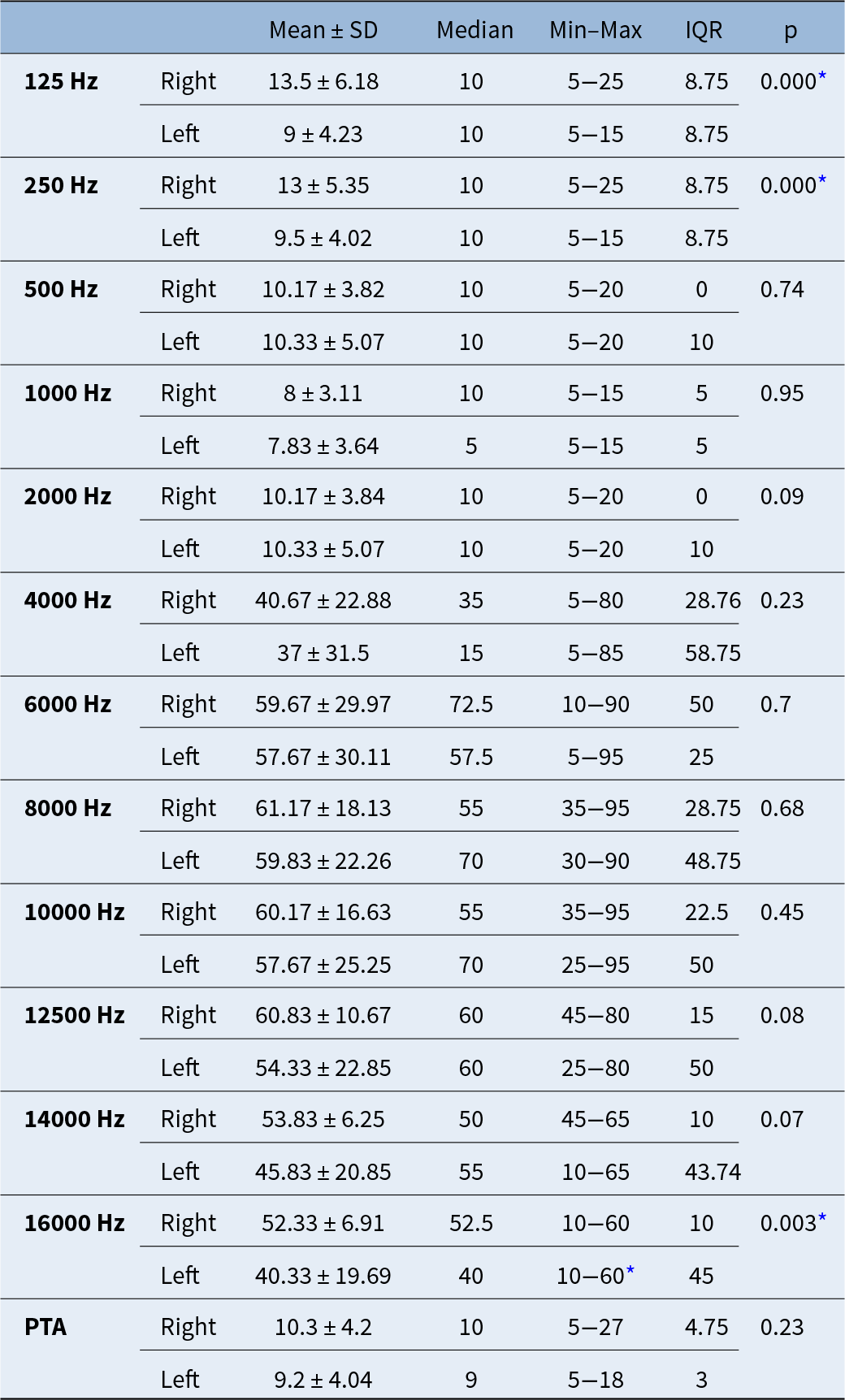
In the artillery class participants, pure tone thresholds at 125 Hz (p = 0.000), 250 Hz (p = 0.000), and 16000 Hz (p = 0.003) frequencies were significantly higher in the right ear than in the left ear. No significant difference was observed between the right and left ears in terms of other hearing thresholds and pure tone averages (p < 0.05) (Table 2).
Comparison of left ear and right ear thresholds in artillery class

* Wilcoxon rank-sum test, SD = standard deviation, Min = minimum, Max = maximum, PTA = pure tone average, IQR = interquartile range
In the control group, pure tone thresholds at 12500 Hz were significantly higher in the left ear than in the right ear (p = 0.03). No statistically significant difference was found between other hearing thresholds and pure tone averages (p > 0.05).
Differences among groups (general)
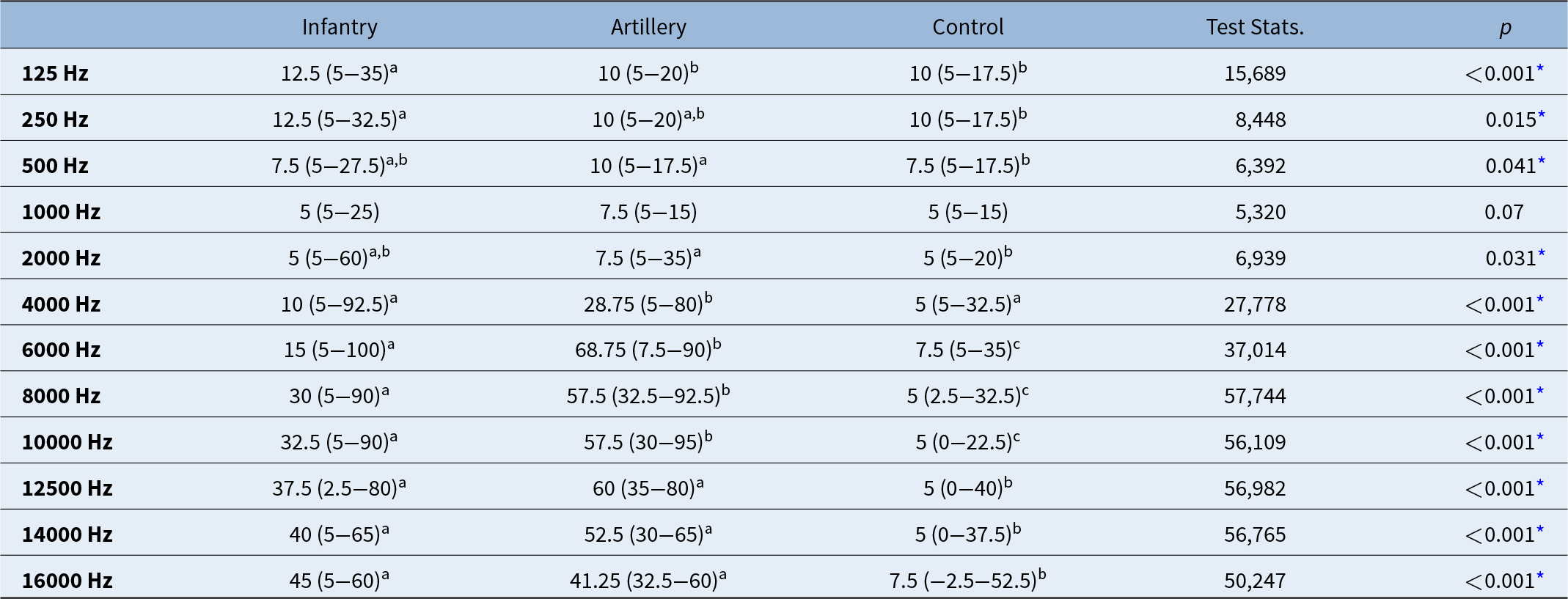
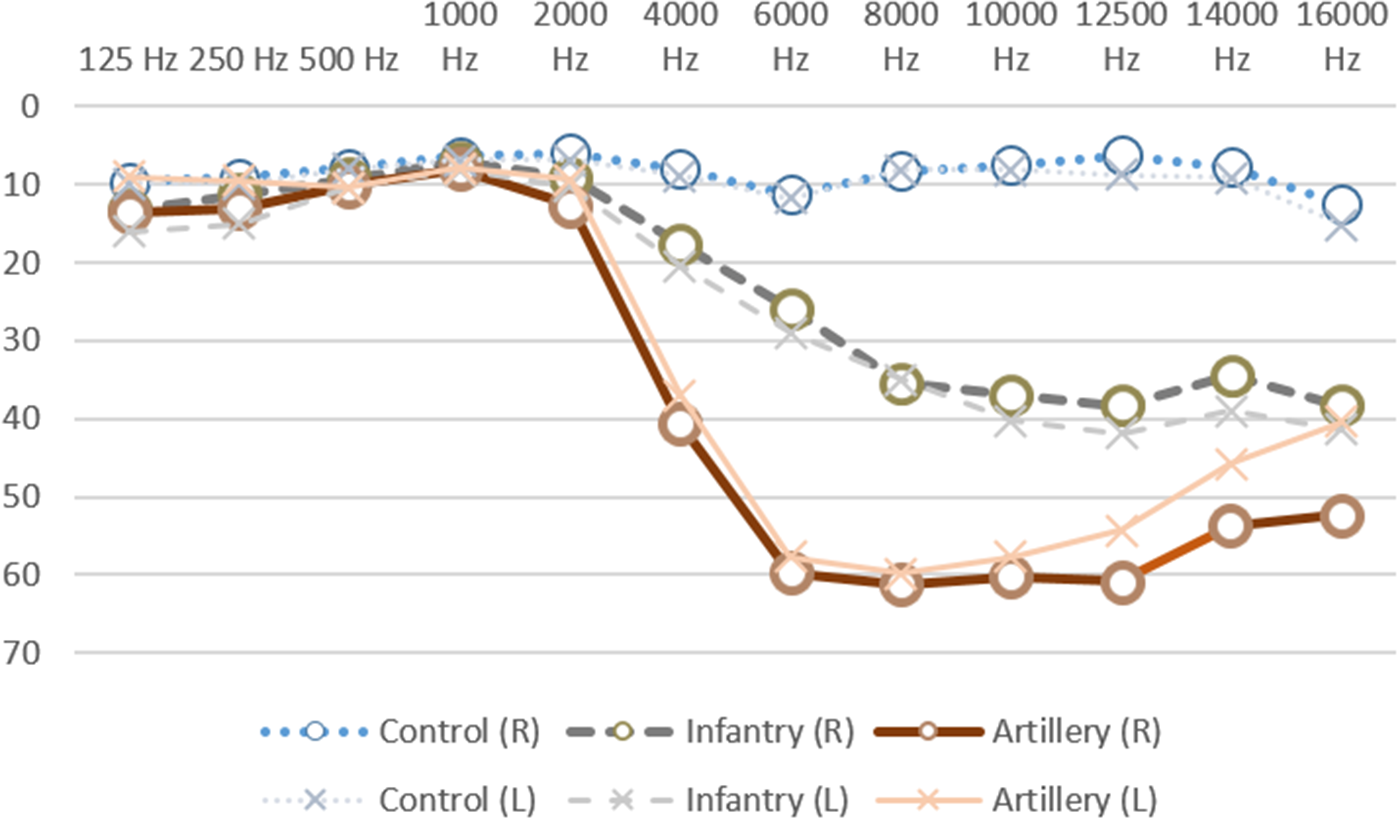
Right and left ear thresholds were averaged at all frequencies to evaluate the differences in hearing thresholds between the groups in general. According to this comparison, a significant difference was found between the groups at all frequencies except 1000 Hz. However, when the median values of the groups were analysed, it was seen that the values up to 2000 Hz were lower than 20 dB HL (i.e. within normal limits). At 4000 Hz, there was no difference between the infantry and control groups, and the median values were still within normal limits (< 20 dB HL), while the median value in the artillery group was 28.75 dB HL, significantly higher than the other two groups. At 6000 Hz, a significant difference was observed among all groups, with the lowest median value in the control group and the highest median value in the artillery group. However, although there was a significant difference among all groups, the median value observed in the infantry and control groups was still lower than 20 dB HL. In the artillery group, 68.75 dB HL was obtained. At frequencies of 8000–10000 Hz, a significant difference was observed among all groups, the highest median value was found in the artillery group, the lowest median value was found in the control group and the median hearing threshold values obtained in both artillery and infantry groups were higher than 20 dB HL. Between 12500 and 16000 Hz, there was no significant difference between infantry and artillery in terms of hearing thresholds, while the hearing threshold of the control group was significantly lower than these two groups. The median value of the control group was 7.5 and still within normal hearing thresholds. Hearing thresholds at all frequencies are shown in Table 3 and Figure 1.
Hearing thresholds obtained by averaging the right ear and left ear thresholds at all frequencies shown

Notes: p <0.05 indicates statistically significant results. Data were analyzed using the Kruskal–Wallis test. Superscript letters (a–c) represent post-hoc comparisons; groups sharing the same letter are not significantly different.
* Kruskal–Wallis test with Bonferroni correction; post-hoc Conover–Iman test was used (no significant difference between groups containing the same letter).
Comparison of hearing thresholds across frequencies by group. The diamonds in the plot indicate outliers.

Differences among groups (right ear)
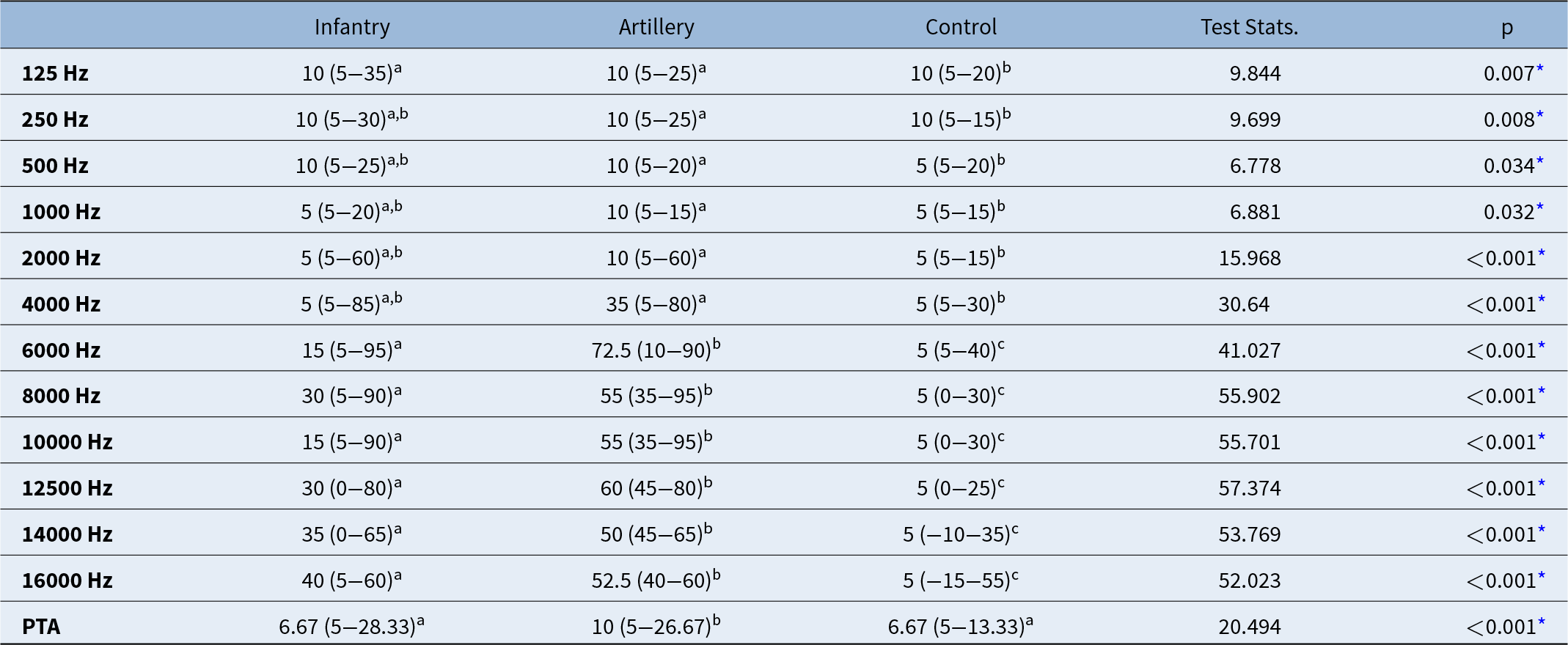
While there was no significant difference between the infantry and artillery groups in the intergroup comparisons made for the right ear 125 Hz pure tone thresholds, it was found that the thresholds were higher in both groups compared to the control group (p = 0.007). In the intergroup comparisons made for right ear 250 Hz (p = 0.007), 500 Hz (p = 0.03), 1000 Hz (p = 0.03) and 2000 Hz (p = 0.0003) pure tone thresholds, it was found that only the artillery group had significantly higher thresholds than the control group, while no statistically significant difference was found between the other groups. While there was no significant difference between the control and infantry groups in the intergroup comparisons made for the right ear 4000 Hz pure tone thresholds, the thresholds of the artillery and infantry groups were found to be significantly higher than the control group (p < 0.001). Significant differences were found between all groups for 6000 Hz, 8000 Hz, 10000 Hz, 12500 Hz, 14000 Hz and 16000 Hz pure tone thresholds in the right ear. In all these frequencies, the thresholds of the artillery group were significantly higher than the infantry group and the thresholds of the infantry group were significantly higher than the control group (p < 0.001). When the pure tone average determined for the right ear was compared between the groups, no significant difference was found between the control and infantry groups, while the artillery group was significantly higher than the other two groups (p < 0.001). Comparisons of right ear thresholds are given in Table 4.
Intergroup comparisons of thresholds and pure tone averages in right ear; values given as median (minimum–maximum)

Notes: p <0.05 indicates statistically significant results. Data were analyzed using the Kruskal–Wallis test. Superscript letters (a–c) represent post-hoc comparisons; groups sharing the same letter are not significantly different.
* Kruskal–Wallis test with Bonferroni correction; post-hoc Conover–Iman test was used. There is no significant difference between groups containing the same letter.
Differences among groups (left ear)
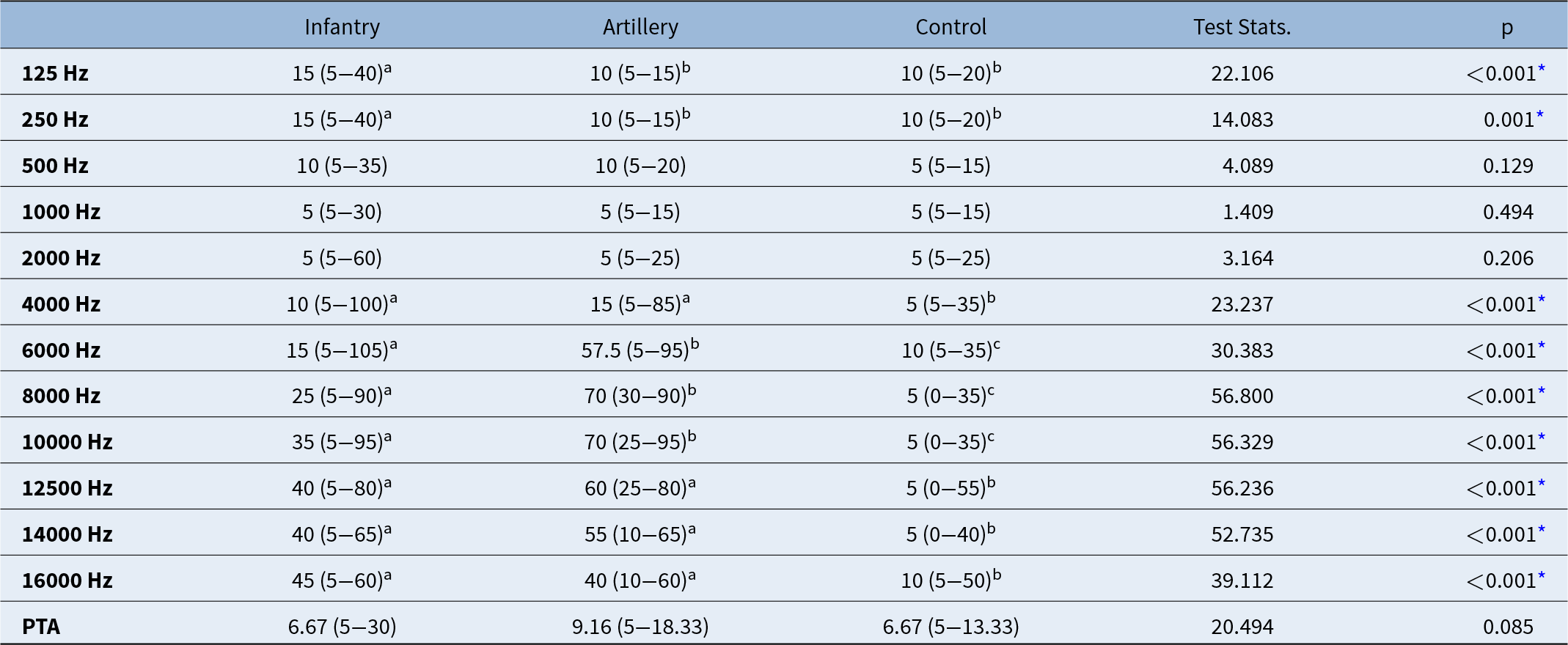
In the intergroup comparisons for left ear 125 Hz and 250 Hz pure tone thresholds, it was found that there was no difference between the control and artillery groups, but the thresholds of the infantry group were significantly higher than the other two groups at both frequencies (p < 0.001). There was no statistically significant difference among the groups in the inter-group comparisons for pure tone thresholds of 500 Hz (p = 0.12), 1000 Hz (p = 0.49) and 2000 Hz (p = 0.2) in the left ear. There was no significant difference between the artillery and infantry groups for the left ear 4000 Hz, 14000 Hz, and 16000 Hz pure tone thresholds, but the thresholds were found to be higher in both groups compared to the control group (p < 0.001). In the intergroup comparisons made for 6000 Hz, 8000 Hz, 10000 Hz, and 12500 Hz pure tone thresholds in the left ear, a significant difference was found among all groups for each frequency. At these frequencies, artillery group thresholds were higher than infantry group thresholds and infantry group thresholds were higher than control group thresholds (p < 0.001). When the pure tone averages determined for the left ear were compared, no statistically significant difference was found between the groups (p = 0.08). Comparisons of left ear thresholds are given in Table 5. Both left and right ear thresholds are shown between groups in Figure 2.
Intergroup comparisons of thresholds and pure tone average in left ear; values given as median (minimum–maximum)

* Kruskal–Wallis test with Bonferroni correction; post-hoc Conover–Iman test was used. There is no significant difference between groups containing the same letter.
Right ear and left ear hearing thresholds in all groups.

Correlations among years of service, number of shots fired and age
There was a very strong positive correlation between age and years of service (ρ = 0.84, p < 0.001) and a strong positive correlation between age and number of shots fired (ρ = 0.62, p < 0.001) in infantry. In infantry, there was no significant correlation between number of shots fired and right ear pure tone averages (ρ = 0.02, p = 0.905), and there was no significant correlation between number of shots fired and left ear pure tone averages (ρ = 0.27, p = 0.114).
In artillery, there is a very strong positive correlation between age and both years of service (ρ = 0.98, p < 0.001) and number of shots fired (ρ = 0.83, p < 0.001). A very strong positive correlation was also found between number of shots and years of service (ρ = 0.83, p < 0.001). In artillery, there was no significant correlation between number of shots fired and right ear pure tone averages (ρ = 0.156, p = 0.411), and there was no significant correlation between number of shots fired and left ear pure tone averages (ρ = −0.186, p = 0.324).
Discussion
Noise-induced hearing loss is one of the most common occupational diseases worldwide. It has been reported that 16 per cent of individuals with disability-level hearing loss have occupational noise exposure.Reference Nelson, Nelson, Concha-Barrientos and Fingerhut11, Reference Irgens-Hansen, Sunde, Bråtveit, Baste, Oftedal and Koefoed12 Military service is one of the occupations with high noise exposure, especially for those serving in the combatant classes. In a study conducted in the United States, it was reported that noise exposure was the most common occupational health hazard for military personnel serving in the naval forces and that 29 per cent of these personnel had impaired hearing thresholds.Reference Bohnker, Page, Rovig, Betts and Sack13 According to the US Department of Veterans Affairs, hearing loss is the second most common cause of disability in the US military. The most common cause of disability is reported as tinnitus.Reference Gordon, Griest, Thielman, Carlson, Helt and Lewis14 None of the military soldiers who took part in our study reported experiencing tinnitus. However, this could be attributed to their apprehension about being identified as sick during health assessments and thereby risking their employment. Hence, we suspect that the military personnel did not provide precise information regarding tinnitus.
In a study by Pelausa et al. the hearing thresholds of military personnel with completely normal hearing who were accepted to artillery, infantry and tank classes of the Canadian army were examined after three years; it was observed that a notch at 6000 Hz frequency was formed in these groups at the end of three years.Reference Pelausa, Abel, Simard and Dempsey15 In our study, the hearing thresholds of the infantry class were higher than the control group at 125 Hz and 250 Hz frequencies; at the 500 Hz and 1000 Hz frequencies, there was no significant difference between the groups. At 2000 Hz, there was a difference only between the gunner and control groups and the gunner group was significantly higher. Pure tone hearing thresholds at 4000–12500 Hz frequencies were highest in the artillery group and lowest in the control group. At 14000 and 16000 Hz frequencies, there was no significant difference between the artillery and infantry groups, while the thresholds in the control group were significantly lower than these two groups. The results obtained in our study showed that hearing can be adversely affected in a wide range of frequencies and that the effect was higher in artillery class. No notch was observed at 6000 Hz in our study; however, the occupational exposure time of the group included in our study was higher than the exposure time in the study by Pelausa et al.Reference Pelausa, Abel, Simard and Dempsey15
Different military classes use different weapons. Weapons are divided into three classes according to their energy: high, medium and low energy. For example, while the infantry rifle is a low-energy weapon, the cannon belongs to the high-energy class. Therefore, the noise levels to which the personnel using these weapons are exposed are also different from each other. İstanbulluoğlu et al.Reference İstanbulluoğlu and Kır16 reported on the noise levels generated by the weapons used by military personnel: an infantry rifle produced approximately 140–159 dB, while a mortar produced 190 dB. In addition, the fact that artillery firing is performed in mountainous areas further increases the acoustic energy to which the artillery class is exposed due to the reverberation effect.Reference Job, Cardinal, Michel, Klein, Ressiot and Gauthier17 In our study, the greatest amount of hearing loss was observed in the artillery class at frequencies between 4000 Hz and 12500 Hz. There was no significant difference between the artillery and infantry classes at 14000 and 16000 Hz frequencies, but the mean hearing thresholds of both classes were significantly higher than the control group.
Niebuhr et al. using periodic examination results of the United States Army, reported that there was more hearing loss in the left ear than in the right ear in the infantry class.Reference Niebuhr, Completo, Helfer and Chandler18 This was attributed to right-handed infantrymen tilting their heads towards the right shoulder to aim while firing their weapons and the resulting shadow effect.Reference Niebuhr, Completo, Helfer and Chandler18, Reference Meinke, Finan, Flamme, Murphy, Stewart and Lankford19 Nageris et al.Reference Nageris, Raveh, Zilberberg and Attias20 in a study with soldiers in the Israeli army, reported that hearing loss was more common in the left ear than in the right, but this was not related to right- or left-hand dominance. According to these authors, the higher incidence of hearing loss in the left ear is not related to the position of the head, but to the greater dominance of the efferent auditory system on the right side.Reference Nageris, Raveh, Zilberberg and Attias20
There are also authors who claim that asymmetric hearing loss is caused by asymmetric stapes reflex. Johnson and ShermanReference Johnson and Sherman21 stated that the right-sided acoustic reflex was more sensitive in children 6–12 years of age, regardless of the use of the right or left hand. In these children with normal hearing, reflex thresholds in the right ear were found to be 3–7 dB lower.Reference Johnson and Sherman21 However, considering that acoustic trauma mostly affects high frequencies, it is not possible to explain the asymmetry between the ears by the acoustic reflex alone, which provides protection at 2000 Hz and lower frequencies.Reference Nageris, Raveh, Zilberberg and Attias20
Pirilä et al.Reference Pirilä, Jounio-Ervasti and Sorri22 conducted a study with a group reflecting the normal population to determine the effect of hand dominance on hearing thresholds and found that hearing thresholds were worse in the left ear between 2000 Hz and 8000 Hz, and more pronounced at 4000 Hz. In the same study, it was reported that low frequency hearing thresholds were higher in the right ear, albeit to a very small extent, regardless of gender. When the mean frequencies between 125 Hz and 500 Hz were compared, it was observed that hearing in the left ear was better, but no significant difference was found between the groups.Reference Pirilä, Jounio-Ervasti and Sorri22 Based on these results, the authors concluded that there is no protective effect due to position of the head when aiming, especially in the gun-using population, but they could not completely exclude the role of hand dominance in interaural hearing asymmetry.Reference Pirilä, Jounio-Ervasti and Sorri22
In one of the studies to explain asymmetric hearing loss in military personnel, Job et al.Reference Job, Grateau and Picard23 examined the eye preferences of military personnel while aiming instead of hand dominance. It was found that 6000 Hz and 7000 Hz thresholds were especially worse in the left ear in those who used both right and left eyes while aiming. Again, low frequency thresholds were found to be better in the left ear than in the right ear, regardless of the aiming eye. In conclusion, the authors attributed the asymmetry in hearing to intrinsic properties of the cochlea and suggested that the right cochlea may be more resistant to noise than the left cochlea.Reference Job, Grateau and Picard23
In our study, hearing thresholds at frequencies of 125 Hz, 250 Hz, 14000 Hz and 16000 Hz were higher in the left ear in the infantry group. Low frequency pure tone thresholds (125 Hz, 250 Hz) and pure tone averages were also higher in the left ear. However, low frequency thresholds in the right ear were significantly higher in the artillery group than in the control group. This result suggests that the only factor in the interpretation of the effects of acoustic trauma is neither the dominance of the efferent auditory system nor the acoustic reflex, especially when low frequencies are considered.
In the artillery group evaluated in this study, hearing thresholds were higher in the right ear at 125 Hz, 250 Hz and 16000 Hz frequencies. However, no significant difference was found between the pure tone averages at three frequencies (500 Hz, 1000 Hz, 2000 Hz). This may be because the right ear of the artilleryman, who turns his back after placing the projectile in the barrel, is closer to the gun. Job et al. obtained better thresholds in the left ear at low frequencies in their study.Reference Job, Grateau and Picard23 These findings are also compatible with our study. However, when the infantry, artillery and control groups were evaluated together, although the left ear was more affected than the right ear in the infantry class, the hearing thresholds in the right ear at 125 Hz were found to be significantly higher than the control group. Again, at frequencies above 6000 Hz, a significant difference was found among all groups in the right ear, with the highest pure tone thresholds observed in the artillery group and the lowest pure tone thresholds observed in the control group.
High-frequency audiometry confirms the presence of hearing loss and provides the basis for understanding the pathophysiology underlying acoustic trauma. Research has indicated that acoustic traumas are more likely to present with typical audiometric patterns, such as c5 notches. Büchler et al.Reference Büchler, Kompis and Hotz10 mentioned another notch between 11 kHz and 14 kHz that is indicative of high-frequency hearing loss in the patient population. These audiometric patterns may be masked during a conventional audiometric evaluation and make high-frequency testing imperative for the provision of a correct diagnosis and management of this patient condition. Moreover, high-frequency thresholds are more sensitive to alterations in cochlear function; thus, they may provide a very important clue to early intervention strategies. It may therefore be one of the tests that should be included in routine examinations of military personnel.
• Repetitive exposure to firearm noise can lead to significant hearing loss across a broad frequency range
• Implementing comprehensive ear protection programs for military personnel is crucial to mitigate hearing loss risk
• The group with the highest rate of hearing loss is artillerymen
• Due to acoustic trauma, the left ear was mostly affected in the infantry class, while the right ear was mostly affected in the artillery class
Conclusion
Exposure to repetitive firing noise can lead to hearing loss over a wide frequency range. It is therefore recommended that all countries organise ear protection programs for their military personnel.
Funding statement
None declared.
Competing interests
None declared.