On 28 December 1934, a handful of Polish colonial activists set out on a pioneering voyage to the capital of Liberia, Monrovia. Boarding the trading vessel SS Poznań at the recently erected port city of Gdynia on the Baltic Sea, they launched a mission to open Liberia's market to Polish agricultural entrepreneurship, industrial products, and investments. Despite these commercial aims, however, many of the Polish expeditioners envisioned themselves as representatives of a nation that would draw from its own experiences under oppression to assist another nation in need. Liberia sought Polish assistance in the League of Nations to avoid becoming a Western mandate, struggling to preserve an independence that would soon seem even more threatened during the Italian invasion of Abyssinia.Footnote 1 In consequence, many Polish commentators and participants in the mission imagined their enterprise as an alternative not only to the established mode of empire but also to the violent colonial warfare ravaging Abyssinia. Yet, their grandiose visions of Liberia as a Polish colony and the delayed productivity of the Polish plantations proved troublesome to many Africans. The Polish mission ultimately ended in 1938, after questionable rumours of a planned Polish takeover of Liberia made the atmosphere too hostile for friendly commercial relations. The double-edged discourse of the Polish colonial lobby, which simultaneously claimed the superiority of Polish colonialism among Western powers and appealed to an alleged Polish-African brotherhood, did not convince Liberia to continue a partnership with Poland.
In this case-study, I examine the construction of Poland's colonial identity during the mission to Liberia (1934–8). The most likely motive for constructing such an identity was to rally many types of Polish patriots around the flag and to expand Poland's economic and political horizons in Africa. Nonetheless, the Polish colonial lobby obscured their pragmatic objectives with a complicated ideology. They married domestic Romantic traditionsFootnote 2 with discourses of empire and civilizing missionFootnote 3 popular in Western Europe to imagine a particular colonial identity for a particular, Polish, nation. They envisioned a colonialism that would take into account the interests of all European nations, distinct from what they described as European alternatives: in particular, the Franco-British colonial autarky and violent Italian colonial annexations. By the time of the mission to Liberia, however, many voices placed more emphasis on appealing to African sensibilities, suggesting that Poland's own past as a victim of imperialism would prevent it from asserting too much control in Africa. By imagining their emerging colonialism as exceptional, the Polish colonial lobby actually hindered their more pragmatic objectives to generate commercial and political relationships with Liberia and other African partners.
Since Poland's colonial mission to Liberia consisted of a series of diplomatic, commercial, and scientific initiatives common to the period, it should be considered historically ‘normal’Footnote 4 rather than ‘anachronistic’.Footnote 5 Despite a proliferation of independence movements in Asia and Africa, colonialism was not yet in twilight, but rather in transition, institutionalized in the form of the mandate system of the League of Nations.Footnote 6 In addition, normalizing the episode entails problematizing the Polish narrative. While the Poles desired to advertise their colonialism as original and anti-imperial, one might say that what they proposed resembled, for example, the idealized Wilsonian vision of the US-centred post-war world consisting of sovereign nations trading with one another without the formal structures of empire.Footnote 7
I do not assess whether Polish colonialism was indeed unique since such an assessment would extend beyond the scope of this study. Instead, I examine the Polish mission to Liberia, Poland's ultimate colonial undertaking that accompanied the country's most intense domestic and international colonial agitation. This first and last official interwar Polish venture into Africa exposed the contradictions of imagining a colonialism that simultaneously served the interests of Poland, the Western powers, and Africans. In Liberia, the colonial lobby produced a narrative of a Polish-African brotherhood, which complicated their earlier ideas of a Western colonial solidarity. In addition, the Polish institution in charge of the mission did not refrain from identifying as colonial and did not make a greater effort to explain its colonial ideology to the international public, thus undermining its own commercial and political activities in Liberia. Ultimately, the idea of colonialism obscured the mission's plausible objectives in Liberia and distracted it from fulfilling them.
The next section of this case-study explains why the Polish colonial lobby identified Poland as a colonial nation and what colonialism meant to them. The following two sections examine the evolution of the Polish colonial identity during the country's mission to Liberia. The final section of the article reiterates the real and imagined motives of Polish colonialism in the context of the mission's failure and offers conclusions.
I
After over a hundred years of partitions by neighbouring powers, the Polish state was resurrected at the end of the First World War in November 1918. Józef Piłsudski, Poland's most powerful leader, had withdrawn his military support for the Central Powers and had instead made an alliance with the Entente. Piłsudski then served as the head of the Polish state until 1922, waging victorious wars against the Bolsheviks and other forces threatening the territories he considered Polish. The new multi-cultural Poland, which Piłsudski helped to create, was ethnically Polish and Catholic only in little more than two-thirds and faced the enormous task of building modern state mechanisms on the ashes of three dismantled empires. The country entered a period of turbulent democracy and rapid government changes. Despite certain social and economic achievements of the period, Piłsudski was dissatisfied with the slow speed of reforms and fiery internal conflicts. He staged a coup d’état in May 1926 and became Poland's authoritarian Marshal until his death nine years later.Footnote 8
Piłsudski's regime, the Sanacja, was a medley of liberal nationalists, moderate socialists, and left-leaning peasants, which intended to ‘sanitize’ Poland's political life. Together, these groups formed governments that promoted gradual economic reforms and a relatively conservative social agenda, but also a rather broad definition of what it meant to be Polish. Piłsudski himself believed in a civic definition of the Polish nation modelled after the old Polish-Lithuanian Commonwealth, which had allowed linguistic and religious freedom to its noble citizens. This ‘Jagiellonian’ national identity referred to a great dynasty that once united Poland and Lithuania.Footnote 9 The Polish colonial movement, which solidified in the mid-1920s after Piłsudski came to power and the state became more centralized, included mostly Sanacja partisans. Still, many right-wingers, Catholic missionaries,Footnote 10 and patriots from assimilated Jewish families, for example, the soon-to-be-discussed Gustaw Orlicz-Dreszer and Ludwik Anigstein, found a niche in Polish colonialism.Footnote 11 The normalization that followed Piłsudski's coming to power provided a relatively broad segment of society the opportunity to realize several dormant ideas in Poland, including the colonial idea.
Already in 1919, many Polish enthusiasts believed that a window of opportunity was open for Polish colonial projects. With Germany's colonial losses in Africa and the disappearance of the Ottoman empire, a profound transformation of the imperial order took place in the aftermath of the First World War. Arguing that their nation had contributed to the development of Africa, the Polish colonial revisionists at the turn of the decade claimed that Poland was entitled to its share of the mandates carved out of the dismantled empires. They even made grandiose references to what they perceived as their nation's historical role in defending the Western civilization from the Turks and, more recently, the Bolsheviks.Footnote 12 Most colonial partisans in interwar Poland also believed that their country could offer a unique form of relationship between Europe and Africa. They suggested that Poland was a civilized nation that had itself suffered foreign domination. This would prevent it from threatening the established imperial order, but also from abusing any power it would be granted in Africa.Footnote 13
The first official Polish colonial proposal was submitted in March 1919 when a peasant representative to the Sejm, Tomasz Dąbal, suggested that Poland's delegation to the Versailles Conference should demand that former German colonies, Cameroon in particular, become League of Nations mandates under Polish jurisdiction.Footnote 14 Despite occasional petitions following Dąbal's, however, political instability and economic turmoil prevented a true colonial lobby from materializing before 1926; Polish colonial lobbying increased visibly only after Piłsudski's coup. In 1928, for example, a reconnaissance expedition was sent to Angola, unsuccessfully attempting to persuade Portugal to allow large Polish settlements in Portuguese Africa.Footnote 15 In another instance, in the early 1930s, the Polish colonial lobby established a settlement named ‘Morska Wola’ (‘Maritime Will’) in the Brazilian state of Paraná. This project resulted from a long-time desire to provide agricultural and professional support to the existing diaspora.Footnote 16
One social organization, in particular, was responsible for most Polish colonial projects in the interwar period. In 1924, a group of politicians, merchants, and military officers founded the Maritime and River League to promote the development of the port city of Gdynia and expansion of the Polish navy and merchant marine. In 1930, the organization changed its name to the Maritime and Colonial League (Liga Moska i Kolonialna, LMiK) and elected Piłsudski's right-hand man, Gustaw Orlicz-Dreszer, as its chairman.Footnote 17 The LMiK set the acquisition of colonies in the form of mandates and other types of international concessions as the core of its broader concept of ‘maritime Poland’. Moreover, the LMiK channelled emigration to particular destinations and facilitated contact between Poland and its diaspora in an attempt to turn Polish emigrants into political and economic agents of the metropole. In addition, the institution promoted Polish products in foreign countries, lobbied for the reopening of British and French colonial markets, and encouraged all undertakings related to the broadly understood sea. The LMiK boasted of close to a million members right before the outbreak of the Second World War.Footnote 18 Domestically, the LMiK produced school lectures, meetings, film productions, fundraisers, and physical activities for all interested in maritime and colonial affairs.Footnote 19 The official publication of the LMiK was the monthly Morze, renamed Morze i Kolonie in January 1939. The institution also published the monthly Polska na Morzu to appeal to youngsters and to teach them about sailing, colonial commerce, and geopolitical issues. The figure symbolizing the spirit of the LMiK was General Gustaw Orlicz-Dreszer,Footnote 20 chairman of the organization until his death in June 1936. Orlicz-Dreszer was simultaneously a military man distinguished in Piłsudski's wars and a social and political activist convinced that Poland should exert a world-wide commercial and political influence.Footnote 21
Orlicz-Dreszer, a scion of an assimilated Jewish family, was a pragmatist, believing that a combination of emigrant colonialismFootnote 22 and economic concessions in the colonies would build Poland's great-power status. In addition to these pragmatic aims, however, Orlicz-Dreszer was also a Romantic visionary, imagining the development of a Polish cosmopolitanism and furtherance of civilization through commercial pioneering in the colonial world. In his preface to a propaganda study of Polish Pomerania, Orlicz-Dreszer extolled the virtues of the vengeful sea, ‘magnificent and terrible, eternally pulsating with the endless life of its never-resting waters', and suggested that it had punished the Polish nation ‘like Moloch’, the ancient Semitic god associated with sacrifice, for having neglected its Baltic coastline and maritime values.Footnote 23 According to one contemporary observer, Orlicz-Dreszer envisioned a mysterious maritime power metaphysically punishing its negligent servants and believed in a new Polish man: ‘a pioneering type…, the conqueror of seas and oceans, mosquitoes and malaria;…a Pole building bridges and taming waterfalls, and carrying high and everywhere the banner of Poland’.Footnote 24
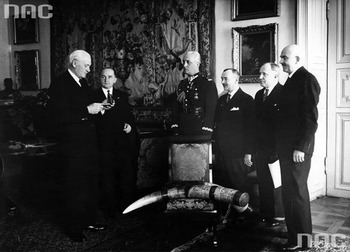
After 1930, the LMiK was closely allied to the Sanacja government (Figure 1).Footnote 25 It maintained an ambivalent relationship with Warsaw, often raising funds for maritime projects and serving as a proxy for carrying out colonial missions that the Ministry of Foreign Affairs was not willing to endorse officially. Likewise, many participants in the mission discussed in this article belonged to the broad socio-political coalition that supported the regime for a variety of financial and ideological reasons. Born at the turn of the century, the Polish figures in Liberia discussed in this article, namely Janusz Makarczyk (1901–60), Gustaw Orlicz-Dreszer's brother Zygmunt Dreszer (1888–1947), and Tadeusz Brudziński (1902–60), tied their personal careers as diplomats, publicists, and economists to the fate of the Polish state, which was resurrected as they entered the prime of their lives. Similarly, the scientists Ludwik Anigstein and Jan Hirschler treated their commissions to Liberia as professional opportunities.
2 January 1936: in a sign of close co-operation, LMiK delegates (with their uniformed chairman Gustaw Orlicz-Dreszer in the centre) present ivory tusks acquired by Polish planters in Liberia to the president of Poland, Ignacy Mościcki (National Digital Archive of Poland, no. 1–A–1341)

By virtue of its position as a virtual maritime and colonial branch of the Sanacja, the LMiK's ideology reflected Piłsudski's concept of international fraternity. Although ostensibly against colonialism as a form of direct domination, the Marshal's Promethean movement was an instrument in his grand scheme of creating the ‘Intermarium Confederation’ (Międzymorze) of nations located between Berlin and Moscow. The Promethean movement was supposed to activate and support national movements within the Soviet Union to make that empire implode.Footnote 26 In this struggle for other nations' freedom, Poland was to assume the role of a Prometheus, a messianic figure similar to Poland as Christ of Nations, popularized in Romantic, partitions-era literature.Footnote 27 It was unclear, however, whether Polish colonialism was to guarantee the freedom of all white nations to African resources or the right of indigenous Africans to the same resources. In fact, the contemporary Polish attitudes toward race, specifically toward blacks, complicated the application of Promethean ideas to Polish colonialism. Since whiteness was still understood as synonymous with culture and civilization, some interwar Polish statesmen struggling with the legacy of partitions looked down on Africans to confirm their own whiteness. Others, however, understood that what the blacks faced in colonial Africa was similar to their own fate under the partitioning powers.Footnote 28
To both create a sense of a Polish-African brotherhood and criticize the colonial conduct of Western powers, the Polish colonial lobby invoked the expeditions of historical travellers connected to Poland.Footnote 29 One historical figure invoked in Polish colonial discourse was Count Maurycy Beniowski (1746–86), a self-identified Polish aristocrat serving the French crown. In 1773, Beniowski was assigned the mission of exploring Madagascar as a future French colony. Three years later, according to his own account, the Malagasy people proclaimed him king (Ampansacabe) of the island. Eventually ousted by the alarmed French, Beniowski claimed to have promoted commercial agreements between Europeans and the locals, solved conflicts between tribes, and prohibited cruel native customs.Footnote 30 Another figure invoked was Stefan Szolc-Rogoziński, a lieutenant in the Russian navy. In 1882, Szolc-Rogoziński established a settlement in Cameroon as a new homeland for those oppressed in partitioned Poland: ‘the first sovereign Polish Colony’.Footnote 31 In 1936, his only surviving Polish companion, Leopold Janikowski, claimed that Szolc-Rogoziński envisioned a Polish civilizing mission. Szolc-Rogoziński was to have learned the most popular dialect spoken in Cameroon, endeared himself to tribal leaders, and mapped previously uncharted terrains until the Germans took over the territory after the Berlin Conference.Footnote 32
While many Polish statesmen drew historical connections between the past and present explorers from their country,Footnote 33 invoking historical precedents constituted only one way to depict Polish colonialism as better than its foreign and existing counterparts. In October 1936, for example, one Polish colonial activist, Aleksander Chrząszczewski, argued for an economic co-operation between European powers in the colonial world, which would prevent them from resorting to what he considered selfish autarky.Footnote 34 In fact, from the late 1920s onward, the demand for a fair distribution of mandates, protectorates, and economic concessions constituted the colonial lobby's response to the gradual closing of the British and French imperial markets. In 1928, Gustaw Załęcki from the Scientific Institute of Emigration in Warsaw not only believed that the mandate system should be governed by a rotating group of countries but also argued that the economies of the colonial powers had become too reliant on trade with the periphery. This reliance made the dissolution of the colonial order impossible and encouraged Załęcki to write an introductory text on Polish colonialism so that his country might participate in colonial trade.Footnote 35
In brief, the Polish colonial lobby believed that Poland needed to participate in colonial affairs in one way or another. They formed ideas suggesting that their nation was the only force able to offer a form of colonialism that would align the interests of Poland, the West, and perhaps even Africa. Polish colonialism, however, imagined as distinct in its benevolence, failed to persuade the international audience of its good intentions and prevented the Polish activists from pursuing tangible political and commercial objectives in Africa, especially in Liberia.
II
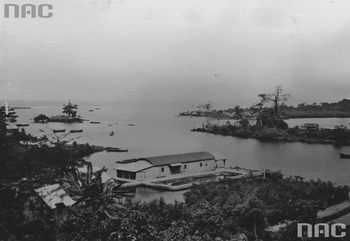
Independent Liberia, with the capital at Monrovia (Figure 2), originated as a settlement of former black slaves from the United States. The American Colonization Society sent freed American slaves to West Africa in the first half of the nineteenth century to create both a safe haven for blacks and a sphere of American influence. The descendants of the black settlers ruled Liberia from the country's declaration of independence in 1847 until the civil war in the late twentieth century. In the 1930s, Liberia was characterized by ongoing conflicts between indigenous tribes from the interior and the Libero-American elites on the coast who often coerced the former to perform slave labour.Footnote 36 In the early years of the decade, the problem of slavery in Liberia was raised in the forum of the League of Nations. By then, however, the socio-economic situation in the country had been dismal for nearly a decade. The old phenomenon of forced labour in the interior was exacerbated when Liberia was pressured to allow the large American rubber industry firm under Harvey S. Firestone to establish expansive plantations on its soil and to accept a large loan from the United States. The American exploitation of its natural resources and the mismanagement on the part of the collaborating Libero-American elites gradually brought Liberia to the brink of financial ruin and in danger of becoming a Western mandate.Footnote 37
Monrovia, 1941 (National Digital Archive of Poland, no. 2–16182)

In the early 1930s, the League of Nations devised a plan of action for Liberia to fix its crumbling economy, according to which the republic would maintain its sovereignty but would have to accept a new administrative division of its territory and several foreign experts to advise it in military, financial, and sanitary matters.Footnote 38 Liberia was at that time already aware of its precarious status as one of the last independent states in Africa: an article in Monrovia's the Weekly Mirror warned the country's politicians against rejecting the League plan, or else it would share the fate of the American-occupied Haiti.Footnote 39 By chance, or perhaps because it considered that country an impartial observer in African matters, the League of Nations appointed Poland as rapporteur of the situation in Liberia in 1932. Probably because Poland opposed an international takeover of Liberia,Footnote 40 the African republic seized the opportunity to build a beneficial relationship with its unexpected ally.
In the autumn of 1933, Liberia's representative, Leo Sajous, came to Poznań in order to establish a diplomatic connection with the Polish ruling circle. As a Haitian, Sajous was eager to help Liberia remain the last independent black state after his own country's fall to the Americans in 1915. Colonel Roman Abraham was the first Polish official to meet Sajous in Poznań but told the Haitian to negotiate with Gustaw Orlicz-Dreszer in Warsaw.Footnote 41 It is unclear why Abraham delegated Sajous to the LMiK and not to the Ministry of Foreign Affairs, but perhaps the colonel feared risking Poland's international reputation for the sake of what might turn into a colonial undertaking. In any case, Sajous himself wrote to the president of Liberia that Orlicz-Dreszer ‘accepted the clauses of the [drafted] Treaty’ but ‘Poland, however, would view with a certain amount of dislike its experts collaborating with experts under the jurisdiction of countries possessing colonies and who would be led to introduce methods of colonial government.’Footnote 42 In fact, the Polish Ilustrowany Kurier Codzienny implied that Sajous approached Poland because he thought that country ‘had never committed any violation against other nationalities’.Footnote 43 Instead, Sajous remembered meeting descendants of the Polish legionnaires, many of whom rebelled against Napoleon to support the anti-colonial uprising in his native Haiti.Footnote 44 Despite such historical references to heroic deeds appearing in the press, however, in the spring of 1934 the LMiK demonstrated pure pragmatism by sending a diplomatic delegation to West Africa under a certain Janusz Makarczyk to establish friendly commercial relations with that part of the continent.
On 28 April, Makarczyk signed the preliminary agreement on a bilateral ‘Treaty of Friendship’ with Liberia.Footnote 45 In the agreement, Liberia named Poland its most privileged business partner, promised to lease land to Polish planters, and asked for expertise assistance in infrastructure, finance, and medicine.Footnote 46 In exchange, the LMiK was required to educate selected Liberian students in Poland. Despite a certain inequality on paper, Liberia's stake in the negotiations was the neutralization of American influence in the country. The Liberians played one power off against another in the hope of reducing America's hegemony in their country, reflected in the expansive and exploitative rubber plantations of the Firestone Company.Footnote 47 In his report to President Barclay, Sajous suggested ‘the necessity of investing Polish capital in agricultural enterprises, in the construction of roads and bridges, derivation canals to make the rivers navigable and in the establishment of a bank’. Sajous added that ‘a Polish enterprise has accepted the principle of exploiting a gold mine and according 40% to the Liberian government’.Footnote 48
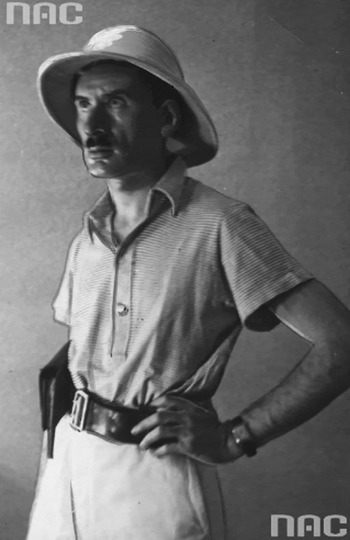
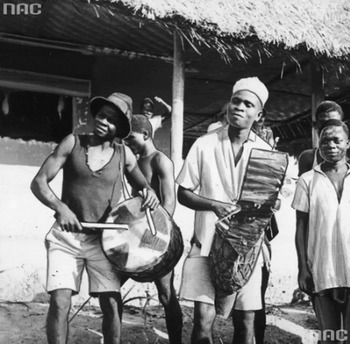
The chief Polish negotiator with Liberia, Janusz Makarczyk (Figure 3), shared many characteristics of his commissioner, Gustaw Orlicz-Dreszer. In his 1936 report from the journey, Makarczyk presented himself as a mighty colonial pioneer, more than a metre and eighty centimetres tall, with a ‘living weight’ of over sixty kilogrammes. Makarczyk was nevertheless capable of making an objective interpretation of colonial realities.Footnote 49 His outlook on the colonial world included not only a fascination with the tropics but also a vision of a peaceful co-existence between Africans and Polish settlers for mutual commercial benefits. Makarczyk appreciated Liberia's indigenous culture (Figure 4) and worked to overcome his prejudices against Africans. He did not dismiss Liberia as a parody of a state and appreciated the first African-American colonists for their desire to become ‘free gentlemen of colour’.Footnote 50 Makarczyk challenged a number of white stereotypes and mental shortcuts concerning Liberia. He dispelled the myth of cannibalism in Liberia and excused the country for the practice of forced labour in the interior, underlining the limited power of the government and the imposition of the white point of view.Footnote 51
Janusz Makarczyk in Liberia (National Digital Archive of Poland, no. 1–K–1621)

Street musicians in Monrovia, 1930s (National Digital Archive of Poland, no. 1–E–9377)

Makarczyk negotiated the terms of the treaty between the LMiK and Liberia in the presidential palace in Monrovia, where a banquet was organized for the visiting diplomats in late April 1934.Footnote 52 He found the festivity rather pleasant as he was dealing cards, eating ice cream, and dancing. The diplomatic protocol disappeared altogether when Makarczyk was taken, at the behest of the crowd outside, to the balcony of the palace to hear the Polish national anthem and to receive ovations alongside the Liberian secretary of state, Lorenzo Simpson, the other signatory of the treaty in the absence of President Edwin Barclay.Footnote 53 While most of the points of the political and economic co-operation between the LMiK and Liberia did not seem to be subject to much contestation, Makarczyk was eager to persuade the Liberians of the advantages associated with a Polish trading factory in the interior.Footnote 54 Since the establishment of such factories was forbidden to whites out of fear of colonialism, Makarczyk was, in fact, negotiating the recognition of Poland as a nation friendly to Liberia. The permission to build the Polish factory was indeed achieved in the following year (1935) thanks to the efforts of the Polish honorary consul in Liberia, Rudolf Rathaus.Footnote 55
Surprisingly, Edwin Barclay's commercial motives resembled those of the LMiK. On 26 October 1934, Barclay explained that a ‘trade agreement’ was signed with the ‘Maritime Commercial [sic] League of Poland’ so that Liberian merchants might explore ‘the markets of northern and central Europe’, which, unlike the familiar colonial markets, did not subject foreign products to ‘unfair tariffs’.Footnote 56 Similarly, Makarczyk claimed that Liberian officials hoped that Polish settlers would foster a commercial exchange between the interior of the country and the Atlantic coast,Footnote 57 an arrangement serving both Polish and Liberian interests. The opportunity to test if such an arrangement was possible would come during Makarczyk's tour of Liberia, whose purpose was to assess areas most suitable for future Polish establishments.
In the interior, Makarczyk paid particular attention to the village of Ba in the Montserrado county on the Little Cap Mount River, where he appeared for a palaver or council of elders.Footnote 58 The village was located at the very end of the navigable section of the river, which made it an excellent place to host a Polish factory that would purchase coffee from the surrounding areas. Makarczyk desired to place another Polish store at the estuary of the river, which would receive the coffee from upriver, and thus to assume economic control of the region. Contrary to his wishes, however, the LMiK decided to concentrate all planters in another region, Wreppu Town, which precluded the possibility of creating a commercial network. Makarczyk believed that Polish planters should cultivate coffee as their main crop, but might conduct commerce in coffee beans from other sources while they waited for four to six years to harvest the output. He observed that ‘coffee beans whose shells are removed in a primitive fashion lose their value’ and that ‘it was, therefore, logical to install a hulling machine for coffee and to export the undamaged beans as finished product’.Footnote 59
Makarczyk's description of his visit to the Montserrado county did not only aim to encourage Polish entrepreneurship, but also to argue for a peaceful co-existence between Poles and Africans. The diplomat quoted the chief of the village of Ba named Zukikandekey, who allegedly confirmed Poland's special mission in Africa: ‘Guest from distant Poland, I know that your country is wealthy and strong, but your country has been enslaved as well and knows what that word [slavery] means.’ Zukikandekey agreed to Poles ‘living and enriching themselves on our soil because we know that they will not hurt us’.Footnote 60
Nevertheless, Poland's intentions in Liberia might have disappointed Zukikandekey. Many years afterward, in communist Poland, Makarczyk claimed that the LMiK terminated its co-operation with him after his return from Liberia, apparently because his colleagues expected him to turn Liberia into a Polish protectorate and a base for Polish submarines, and accused him of damaging Poland's reputation by talking to the Liberians as if they were his equals.Footnote 61 It is difficult to assess the veracity of these statements since Makarczyk was undoubtedly conscious of communist censorship and would make redundant critiques of Western and Polish interwar ‘imperialism’ in line with the Soviet view of the capitalist world. There might have been a faction in the LMiK calling for the subjugation of Liberia, but turning the country into a Polish protectorate was an unlikely purpose of the mission – especially since so much effort was made to present Polish colonialism as distinct from its annexationist cousin. Instead, the Polish colonial lobby consistently stressed the need for a special commercial relationship with Liberia.Footnote 62
III
Despite ignoring Makarczyk's advice to establish a coffee-processing factory in Liberia's interior and to locate plantations by the Little Cap Mount River, the LMiK otherwise fulfilled the political and commercial terms of his treaty. Amid little fanfare, an expedition of Polish merchants sailed out from Gdynia on 28 December 1934, on board the steamer SS Poznań, a coal-trading ship. The funding for the expedition came mostly from the public resources of the LMiK and the Maritime Commerce Society (Towarzystwo Handlu Morskiego, Gdynia's maritime educational institution). The LMiK was forced to rent the Poznań from the Polish Shipping (Żegluga Polska) subsidiary, after the Elemka, the five-sailed schooner originally designated for the purpose, suffered a breakdown on its way back from Kiel.Footnote 63 Between 1934 and 1938, the LMiK continued to fund the mission in Liberia using its public money. Private companies and individuals contributed to particular projects in Liberia, but with a gradually decreasing alacrity, which Polish enthusiasts noticed with dismay.Footnote 64 Naturally, the Ministry of Foreign Affairs took the financial responsibility for running the Polish consulate in Monrovia.
The passengers of the Poznań included Zygmunt Dreszer and Stefan Paprzycki (of the LMiK), Tadeusz Karśnicki (of the Maritime Commerce Society), Stanisław Lipiński (a camera operator), Leon Rusiecki (captain), six officers, and twenty members of the crew. The purpose of the Poznań expedition was to deliver 2,000 tonnes of products of diverse categories to Monrovia to survey the Liberian market. Soon after the departure of the Poznań, the Ministry of Foreign Affairs delegated a Polish-Jewish diplomat, Rudolf Rathaus, to establish an honorary consulate at Monrovia. In turn, Leo Sajous became Liberia's consul in Warsaw in April 1935.Footnote 65 The planters-volunteers Kamil Giżycki, Jan Chmielewski, Edward Januszewicz, Stanisław Szabłowski, and Kazimierz Armin, who arrived in Liberia later in 1935, shared a common background as travellers with previous experience in the tropics. Most of them invested private resources in their plantations and came unaccompanied – not counting the wives of Szabłowski and Armin, likely the only Polish women in Liberia. In addition, the LMiK delegated medical and financial experts to improve Liberia's finances and sanitary conditions. In total, fewer than one hundred Polish citizens participated, and likely no more than twenty would have been present in Liberia at the same time.
The mission lasted until 1938 when the LMiK was forced to cease funding the project. Although the initial economic drawbacks contributed, the mission's ultimate failure was mostly in public relations. In 1936, American and Liberian newspaper articles accused Poland of attempting to turn Liberia into a Polish colony, and only one year later, Monrovia gossiped about a Polish planters’ coup. The first newspaper article that contradicted the Polish mission's self-image as serving African interests appeared on 28 August 1936, in Monrovia's Weekly Mirror, reprinted from the British African Morning Post published in Accra. The author was the future president of independent Nigeria, Nnamdi Azikiwe, then a radical African journalist. Azikiwe described what he considered to be an elaborate plan to infiltrate Liberia on the part of a country that had been a ‘former servant of Queen Maria Theresa of Austria, Queen Catherine II of Russia, and Frederick the Great of Prussia’. According to Azikiwe, Col. ‘John’ Beck [Józef Beck, Poland's foreign minister] endeared himself to the Liberian delegates at Geneva, pretending to advise them ‘how to get out of the octopus grip of the League of Nations’ Plan of Assistance’. The journalist proceeded to call Polish specialists from the LMiK, for example, Dr Ludwik (‘Louis’) Anigstein, ‘wolves in sheep's clothing’. The claim that proved most outrageous for Polish commentators, however, was Azikiwe's proclamation of a secret Polish–German agreement, whereby Poland would cede the ‘Polish Corridor’ to Nazi Germany in exchange for a free hand in Liberia. Azikiwe extorted the ‘world of greed’ and ‘thankless humanity’, hoping that ‘President Edwin Barclay was intelligent enough to realize the part certain foreign experts play in his country.’Footnote 66
The insinuation about the Polish–German scheme found eager listeners in the United States, where an African-American newspaper, the Pittsburgh Courier, published articles in a similar vein as late as the second half of 1937.Footnote 67 Undoubtedly, the Italian-Abyssinian War and the Spanish Civil War rallied Africans and African-Americans around Liberia, the last independent state on the continent. The accusations against Polish experts in Liberia likely resulted from this increased sensitivity, although Liberia originally encouraged their presence as a form of colonial containment.Footnote 68 Still, the exchange of the ‘Polish Corridor’ for Liberia would have been pointless for Poland, since an overseas colony would have been virtually useless to a landlocked country. In fact, one of the major aims of the LMiK was defending the Baltic coast from Germany, expressed in countless fiery articles proclaiming that ‘Poland will never allow itself to be pushed away from the Baltic.’Footnote 69
In the following issue, the Weekly Mirror published an apology for reprinting Azikiwe's article, which was addressed to ‘our Polish friends’ and regretted offending the Polish government. The editorial staff admitted that a Polish ‘independence without the corridor would be a mere farce’ and that to forego the investment in Gdynia ‘for a less certain and more expensive venture in colonies’ would bring a revolution to Poland similar to Spain's.Footnote 70 Despite this disclaimer, further accusations appeared in Liberian and African-American newspapers in the autumn of 1936, to which Polish diplomats reacted with more indignation and denial. Footnote 71 As reported by the American chargé d'affairs in Monrovia, Poland even threatened to withdraw its support for Liberia in the League of Nations, which was the implicit Polish obligation when the bilateral treaty was signed in 1934.Footnote 72 Certainly, the denial of aggressive intentions toward Liberia was crucial to preserving the legitimacy of the Polish mission.
Despite not being too accurate in their observations, the Liberians tapped into a broader discourse about ‘hungry’ European powers demanding their piece of the colonial cake. In June 1936, the British made suggestions that Poland might be a ‘hungry’ power when they discussed the measures that should be taken to placate such countries in the face of the Italian-Abyssinian crisis.Footnote 73 In the autumn of 1936, Polish representatives issued statements to the League of Nations arguing that only ‘a just division of raw materials, the opening of empty spaces for the expansion of overpopulated nations, the restoring of the freedom to capital and product exchange’ would solve the world crisis embodied in the Italian war.Footnote 74 Polish politicians criticized the West in the context of the Abyssinian crisis, angry at Britain and France for shedding crocodile tears over Abyssinia while forgetting the military ways in which they had acquired their own empires in the preceding decades.Footnote 75 Despite accusations from Africans and Westerners, they stuck to their guns and repeatedly suggested that their endeavours would not replicate those of the hypocritical West. Straddling two conflicting trains of thought, namely a condemnation of colonialism and a claim to produce a better version of it, the Poles bogged themselves down in ideological questions and failed to fulfil the commercial and political promises of their presence in Liberia.
The Polish activists might have been too occupied with constructing their own form of colonialism to notice the growing threat from the United States, which viewed Liberia as an important source of natural rubber, a resource crucial to its bourgeoning automobile industry. By the time the SS Poznań cast anchor at Monrovia in January 1935, the Firestone Rubber Company had emerged as the most powerful enterprise in Liberia and had caused enormous resentment in the exploited population.Footnote 76 It is somewhat likely that Polish planters alarmed the Americans, and Polish officials would later blame Firestone for unleashing a defamatory press campaign against their mission.Footnote 77 If real, the American antagonism was perhaps related to the Polish experts who usurped the role of their American counterparts by producing knowledge about Liberia and enjoying a good reputation, both among Africans and internationally.
The Polish experts occupied positions of prestige in Liberia, advising the government and publishing scientific treatises about the country's conditions of health and living. One outstanding expert was Tadeusz Brudziński, an economist who reformed Liberia's finances by increasing farming revenue and introducing the country's own bullion,Footnote 78 for which he received the Knight and Commander distinctions in the Liberian Humane Order of African Redemption.Footnote 79 Another expert was Ludwik Anigstein, a Polish-Jewish microbiologist with a Ph.D. from the University of Heidelberg, who served as the sanitary inspector of Liberia in the years 1935–6 under the auspices of both the LMiK and the League of Nations.Footnote 80 Before his delegation to Liberia as a health expert, Anigstein had dedicated his studies to the clinical and epidemiological features of typhus and malaria in Malaya.Footnote 81
In Liberia, Anigstein viewed his activities as balancing between a civilizing mission and understanding the locals. In 1935, he carried out three inspections in Liberia and reported on the country's health conditions, noting the dramatic shortage of hospitals, doctors, personnel, and medications. Anigstein described Liberia as a blank space on the epidemiological map of Africa, drawing a picture of a primitive country lagging behind more civilized colonies with his vignettes of enlarged spleens, thickened feet, and other deformities on bodies of children infected with malaria, leprosy, and smallpox.Footnote 82 Nevertheless, Anigstein was critical toward the whites’ civilizing attempts and considered many white interventions in the life of Liberia as more damaging than helpful. In 1935, the microbiologist stated in his journal that any ‘intervention of the white man, even the best-intended one,…must take into account his [black man's] completely different way of thinking from ours, which, nevertheless, does not point to the superiority of our psyche’.Footnote 83
The exaltation of Polish achievements in Poland's colonial press helped to instil a sense of national pride in the readership, but, despite the balanced tone of the experts themselves, other Polish participants in the mission could write less carefully. Zygmunt Dreszer was one correspondent whose cavalier attitude toward language reflected the Polish colonial lobby's distraction with ideology. Dreszer was the LMiK chairman's brother and a participant in the expedition of the SS Poznań to Monrovia.Footnote 84 In his journal, edited and published immediately after his return, Dreszer avoided making patriarchal statements about Africa but was nevertheless concerned about the great-power status of Poland.Footnote 85 Although careful to use the hyphenated adjective ‘colonial-commercial’ when describing the character of the mission, Dreszer considered the expedition of the SS Poznań as a ‘pioneering voyage’ that would open the doors of West Africa to Polish commerce (Figure 5). Yet, he often slipped into Romantic day-dreaming, imagining his SS Poznań leaving behind ‘the boundaries of the historical world and entering the regions…without history’ full of ‘the musings and soaring dreams (marzenia strzeliste) of the Arabs,…Christianity and Islam, Roland and the Spanish caliphates, the Maltese Knights and the rogue pirate from Algiers: Barbarossa; gen. Bougeaud and And-el-Kader, Lyautey and the sultans of Morocco’.Footnote 86
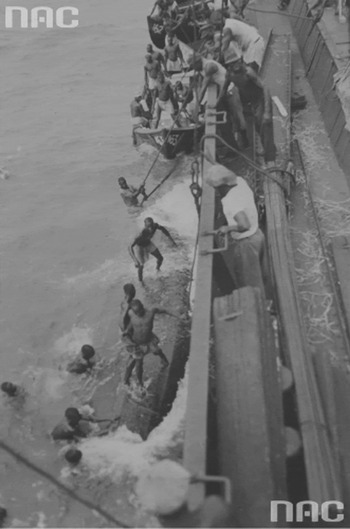
Accra, 1935: an accident during the unloading of iron from the SS Poznań (National Digital Archive of Poland, no. 1–G–5146–2)

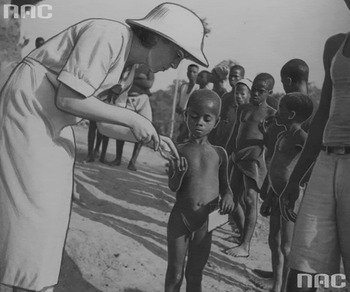
Dreszer was not the only participant whose colonial ideology obscured his tangible objectives. Jan Hirschler was a renowned zoologist from Lwów invited to create a scientific station on the Polish plantations in Liberia. Hirschler, accompanied in Liberia by his wife (Figure 6), envisioned Poland's presence in the country in both scientific and patriotic terms, dedicating his memoirs to one of his Polish hosts, ‘a Liberian planter, a Pole working in the most difficult conditions, in the unhealthiest of environments, with the stubbornness, perseverance and calmness worthy of the sons of the most powerful colonial nations’.Footnote 87 Hirschler presented the Polish pioneer as worthy of wearing the white colonial helmet and described his own scientific activities in the settlement of Batoli, near Wreppu Town, namely catching butterflies, hunting for pelts, preserving specimens, and identifying local pathogens. Nevertheless, while praising his and his country's prowess, Hirshler still possessed enough common sense to underline that Liberia's climate was ‘not well coped with by whites’, discouraging a massive emigration from Poland.Footnote 88 Echoing Makarczyk, Hirschler suggested that, instead of establishing large plantations, the Polish mission should focus on generating commerce in Liberia. The LMiK, however, had already turned a deaf ear to such reasonable proposals.
1936: in an act evoking the Polish vision of charity in Africa, the scientist Jan Hirschler's wife, Zofia, gives candy to children in Liberia (National Digital Archive of Poland, no. 1–N–992–3)

In January 1935, the SS Poznań had brought the first batch of Polish products to Liberia: a versatile load that included textiles, iron, nails, enamelled pots, soap, salt, sugar, cement, and canned food. Such an eclectic choice was supposed to allow the merchants on board to assess which might sell best in West Africa.Footnote 89 Nonetheless, it was more indicative of the lack of knowledge of African needs and tastes, which might have stemmed from the virtually non-existing Polish–Liberian commercial exchange before Makarczyk's original delegation.Footnote 90 In addition, the ‘Polish Syndicate’, established thanks to the profits generated by the Poznań expedition to facilitate bilateral trade and support the planters-volunteers financially, did not receive the funding it expected from private Polish companies. The LMiK likewise failed to establish a coffee-processing factory and carry out cabotage trade in the interior, which was what Makarczyk had advised his commissioners to do.Footnote 91 Neither did the location of the trading factory in the interior Wreppu Town make much sense economically because of its distance from major arteries of trade. Lastly, the Polish planters simply did not have sufficient knowledge of tropical agriculture. L. Castelli, a French agricultural engineer whom the LMiK commissioned to assess the Polish plantations, confirmed their unsatisfactory yield of cocoa and coffee in the years 1935–7, but also concluded in his report that ‘the application of rational agricultural methods will allow the planters (fermiers), better taught by experience, to successfully implement the program put forward by the Maritime and Colonial League of Poland’,Footnote 92 which indeed happened in 1938.
A renewed interest in Poland's colonial ambitions in Liberia added to the initial ignorance of tropical agricultural conditions to create a difficult situation for the LMiK. In 1937, the Liberian police found several Africans in possession of Polish firearms, which resulted in rumours of Polish planters smuggling weapons through Monrovia to stage a colonial coup. Józef Mańkowski, Poland's honorary consul in Monrovia whose term followed Rudolf Rathaus's and Stefan Paprzycki's, explained to Warsaw that ‘guns, hunting rifles, etc. of Polish origin were sold and given out to indigenous people and Europeans’ and that these events ‘gained notoriety, especially since there was once a quarrel between buyers and the case had to be settled in court’.Footnote 93 Mańkowski received word that Liberia instructed its consulates and embassies abroad to stop issuing visas to Polish citizens. While Polish planters probably sold rifles to the locals for profit, the sensitive Liberians likely distorted the story. Monrovia banned the sale of firearm weapons because indigenous tribes such as the Kru still waged war against the Libero-American elite, whose authority they had not recognized since the previous century.Footnote 94 In 1935, even Jan Hirschler was forced to ask the incumbent Polish consul, Stefan Paprzycki, for help in obtaining a permission to import his hunting rifle from Poland.Footnote 95
Another possibility might be that the sale of firearms was connected to a secret protocol of the LMiK–Liberia treaty, which was to be strongly desired in Warsaw, concerning the modernization of Liberia's border forces and Polish–Liberian military co-operation. This protocol, only mentioned in Makarczyk's post-war memoir, was to allow the General Staff of the Polish army to recruit the maximum of 100,000 Liberians for an Auxiliary Force in the case of a military emergency. Even though Poland never took advantage of the protocol, wrote Makarczyk, ‘this part of the treaty was immoral…, especially since one knows how a “voluntary recruitment” [of Liberians] would have proceeded’. Makarczyk also claimed that Warsaw was dissatisfied with his treaty – whose military protocols could not be published – because it was merely commercial: ‘Warsaw wanted a propagandist material, a symbol of our “great-power status” (mocarstwowość), briefly speaking: a protectorate.’Footnote 96
In the interwar period, Makarczyk had never mentioned this secret protocol, which has not been found. If one is to believe in its existence, however, it is possible that the LMiK did export weapons to Liberia as part of the Polish obligation to modernize the country's border forces, which Liberia probably ceased to desire after the LMiK failed to initiate cabotage trade in the interior and to meet other expectations. In any case, however, Makarczyk's divagations point to disagreements concerning the appropriate nature of Poland's emergent colonial identity, which could have been based as much on the idea of sacrifice for other nations as on the idea that other nations should sacrifice themselves for Poland.
Ironically, following the scandals concerning the alleged Polish–German intrigue and the planters’ coup, the plantations of the LMiK experienced increased productivity thanks to the agricultural changes implemented since Castelli's report.Footnote 97 In 1938, however, Stefan Paprzycki reported that the mission continued to face increasing pressure from the United States and accused the Americans of spreading harmful rumours about Poland's colonial designs.Footnote 98 The LMiK might have realized that it found itself in a precarious situation when it sent a representative to investigate the situation on the plantations in September. Afterwards, the LMiK decided that the mission would be ‘limited’,Footnote 99 and at least one planter returned to Poland for vacation.Footnote 100 Gen. Stanisław Kwaśniewski, Orlicz-Dreszer's successor as the LMiK's chairman, outlined the reasons for the retreat when he accused Liberia of encouraging a ‘special [public] campaign inimical to Polish economic activities in Liberia’.Footnote 101 In addition, the statement addressed to the Liberian president proclaimed that the environmental ‘sustainability of the concession area is not entirely satisfactory as far as the cultivation of those crops [by Polish planters] is concerned’.Footnote 102 It is not clear whether the note was ever submitted, but the LMiK-endorsed mission officially ended at the end of 1938. Instructed by the Ministry of Foreign Affairs, the LMiK sold most of its plantations to an international corporation and distanced itself from the remaining planters.Footnote 103
The termination of the mission was due to a hostile political atmosphere making friendly commercial relations difficult and, to a lesser extent, due to the unsatisfactory plantation yields and failure to link Liberia's interior to the Atlantic. The Polish participants and commentators could not agree whether the mission should have a more ‘maritime’ and ‘commercial’ as opposed to ‘colonial’ character because many of them imagined Polish colonialism as synonymous with free maritime commerce. Makarczyk wrote that ‘having colonies was especially immoral for a nation that has itself recently recovered its independent condition’,Footnote 104 but he worked for an institution that explicitly identified itself as colonial in name. Such participants in the mission as Makarczyk and Zygmunt Dreszer might have been able to imagine a colonialism that aligned the interests of Poland, Africa, and the West without distracting themselves from accomplishing tangible objectives in Liberia. Nevertheless, since the LMiK was a colonial institution in name, accusing it of all the vices associated with exploitative colonialism was not difficult for Liberians or Americans. The construction of a Polish colonial identity was a perfect means of flag-rallying and creating domestic support for Poland's maritime projects, but a colonial ideology was a double-edged sword in foreign affairs.
The termination of the Polish mission and other European enterprises in Liberia left the Firestone Company as the colonial master of the land. The rubber that Firestone extracted from Liberia's environment was crucial to the rapid production of tyres for American automobiles. At the beginning of 1940, the Polish state had already been dismantled by Nazi Germany and the Soviet Union, but Józef Mańkowski was still the nominal Polish consul in Liberia.Footnote 105 In February, his predecessor, Rudolf Rathaus, was summoned to Angers, France, to finalize the liquidation of the consulate in Monrovia. Rathaus observed the usefulness of Liberia to the United States as a source of raw materials and a strategic outpost linking Africa to Latin America.Footnote 106 He advised the Polish government-in-exile not to relinquish any of its rights and privileges stemming from the LMiK–Liberia treaty. Rathaus believed that Polish refugees should be immediately moved to Liberia for the Polish claim to maintain substance.Footnote 107 Unfortunately for him, it was too late for the Polish government-in-exile to implement his advice and interwar Poland's last mission to Africa was not resuscitated.
IV
This case-study demonstrates the construction and evolution of a Polish colonial identity in the context of the mission to Liberia. The Polish colonial lobby expressed their actions mostly in economic terms, with commerce indeed being the real reason behind their involvement in Africa. They invoked the ideal of co-operation and understanding, envisioning a world order that was commerce-oriented and lodged in international diplomacy. In other words, the Poles imagined a global system that would make colonial resources available to second-tier European powers like theirs. At the same time, however, they distanced Poland from the Western powers and claimed to act on behalf of supplicant Africans. Despite plausible economic objectives, this conflicted ideological makeup hindered, instead of facilitating, Poland's mission to Liberia and other similar projects in Africa and Latin America.
Building on these observations, I suggest that Poland's colonial adventures reflect its ambivalent position in the Wilsonian world of empires, nation-states, and mandates. Unable to access Western colonial markets, Poland worked both within and outside the framework of the League of Nations to secure its own interests in Africa. The Polish colonial lobby's occasional identification with Africans suited Poland's intermediary status as a newly independent state that, unlike Italy in Abyssinia, could not resort to hard power. Poland's colonial strategy was to provide economic and scientific incentives that would make Liberia dependent on its senior partner. Exposing the limits of the Versailles system, colonial autarky and the immutability of the mandate system encouraged Poland to seize its opportunity to acquire a commercial foothold in Africa through bilateral, instead of multilateral, agreements. Liberia's stake in the affair was not altogether different than Poland's, for Liberia wished to escape the clutch of the League of Nations and enter the modern world as a fully independent nation. The interwar story of the Polish expedition to Liberia, therefore, demonstrates the ways in which sovereign states look for their ‘third way’ of growth and development, which is truly a phenomenon still common in today's international communities.